‘Lax’ nuclear security leaving UK at risk of cyber attacks from hostile nations
Official figures show 20 per cent drop in nuclear inspections amid 45 per cent rise in security threats.
By Richard Vaughan, June 19, 2024 The i
The average number of inspections at UK nuclear facilities has plunged by a fifth in recent years despite a significant rise in the number of security incidents over the same period, official figures show.
The “unacceptable” numbers have prompted nuclear safety experts to warn that the Government has taken a “laissez-faire” approach to nuclear power inspection.
According to data from the Office for Nuclear Regulation (ONR), between 2015 and 2019 there were an average of 194 security inspections per year, a figure that dropped to 153 per year between 2020 and 2023 – a decline of 20 per cent.
This is despite a dramatic rise in the average number of major security incidents over the same period, with 531 such incidents per year between 2015 and 2019, rising to 771 between 2020 and 2023 – an increase of 45 per cent.
Security incidents reported to the ONR are both physical and cyber, with protesters and individuals gaining unauthorised access to the sites as well as hostile states targeting the UK’s nuclear infrastructure.
In December, it was revealed that cyber groups linked to Russia and China had hacked into the Sellafield site in Cumbria, prompting fears that sensitive information around how Sellafield moves radioactive waste may have been compromised.
It follows warnings from the National Cyber Security Centre of the heightened threat of “state-aligned groups against western critical national infrastructure” linked to Russia, including the UK’s nuclear power stations.
The National Risk Register, a government document which assesses “the most serious risks facing the UK”, recently highlighted the danger of both conventional and cyber attacks on UK civil nuclear infrastructure.
Nuclear safety experts said the drop in inspections coincided with the Covid pandemic that allowed for “at distance” virtual inspections, which have continued creating more “lax nuclear regulation”.
The overall number of inspections has fallen by 30 per cent since 2015, when there were 240 inspections, compared to 2023 when 153 checks were carried out.
Dr Paul Dorfman, the chair of the Nuclear Consulting Group and a former secretary of the government’s committee examining radiation risks of internal emitters (Cerrie), told i: “Covid allowed ONR to ramp ‘at-distance virtual inspection’. This is a problem because ONR needs to be in close, on-site touch with nuclear facilities to get a good view on what’s really going on – and they seem to be carrying on this ‘arms’-length’ inspection regime post-Covid.
“Basically, it looks like the ONR’s nuclear inspections are being hit by the current Govternment’s ‘laissez faire’ attitude – hence we seem to be seeing more lax nuclear regulation.”……………………………………… more https://inews.co.uk/news/politics/government-approach-nuclear-safety-drop-inspections-3120112
Nuclear power’s financial problems exposed in new report

Greenpeace European Unit, 19/06/2024, https://www.greenpeace.org/eu-unit/issues/climate-energy/47124/nuclear-powers-financial-problems-exposed-in-new-report/
Brussels, 19 June 2024 – Nuclear power is a risky gamble with taxpayers’ cash, according to a comprehensive review of financing models published as the European Investment Bank prepares to discuss new support for nuclear energy at a meeting on 21 June.
The report, Fission for Funds: The Financing of Nuclear Power Plants, gives an overview of financing models and reveals how the profitability of nuclear power plants heavily relies on government involvement in de-risking investments. The report was commissioned by Greenpeace Germany and carried out by Jens Weibezahn from the Copenhagen School of Energy Infrastructure, and Björn Steigerwald from the Technische Universität Berlin.
Greenpeace EU political campaigner Lorelei Limousin said: “Nuclear power is a black hole for taxpayers and consumers. High upfront costs, long construction times, and government bailouts make nuclear projects a burden on public coffers and a threat to credible climate action. Wind and solar energy are already much cheaper, and their cost is declining. Not a single euro of EU public money should go to nuclear power – it’s time to put people’s needs ahead of nuclear greed, and invest in a safer, cheaper future.”
The report shows that nuclear power plant projects are unreliable due to budget overruns, construction delays, and reliability problems in the operational phase, and therefore often lose investor interest. Hidden costs are also often not included in initial calculations, such as liability insurance, decommissioning and waste management. These become a burden for taxpayers in the future. The report highlights that the cost of solar and wind energy are already much lower than new nuclear projects.
Jens Weibezahn, Assistant professor Ph.D., Copenhagen Business School, co-author of the report, said: “In our review of current nuclear power plant projects, we found that almost all financing models rely – either directly or indirectly – on government support to make them viable. This places an unreasonable burden on either taxpayers or electricity ratepayers, as they, ultimately, bear a large part of the associated financial risks.”
Although most global economies are focusing on renewables to reach net-zero targets, some EU countries, such as France, the Netherlands, Poland, Sweden, Slovakia, Slovenia and the Czech Republic, are betting on nuclear power, despite major issues in securing funding for new projects and maintaining their existing ageing fleets. This report highlights that government support for these costly, long-term, and high-risk nuclear projects is becoming harder to justify, particularly at a time of high inflation and rising cost of living.
In the past two decades, the European Investment Bank (EIB) has invested €845 million in nuclear power activities. For the first time, the EIB intends to support research and development in so-called small modular reactors (SMRs), according to a draft strategic roadmap, which will be adopted on 21 June. Many uncertainties persist regarding the overall economic viability of SMRs, not to mention safety risks and the radioactive waste problem. Greenpeace calls on EU finance ministers, who govern the EIB, to oppose any funding for nuclear energy, including small modular reactors.
Please find more information about the various financing models used in European countries in this briefing and read more in the full report.
Corporations are influencing government policy on nuclear weapons, a damning report shows

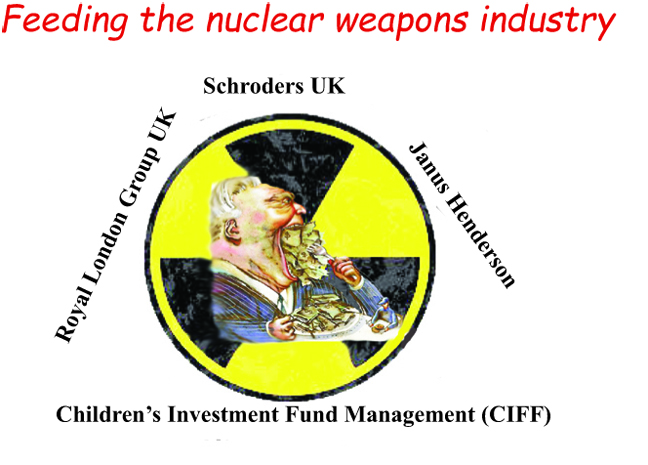
“This report also makes absolutely clear the influence of arms companies in the shaping of defence and foreign policy, their funding of think tanks, and their meetings with government officials.”
https://morningstaronline.co.uk/article/corporations-are-influencing-government-policy-on-nuclear-weapons-damning-report-shows 17 June 24
NUCLEAR weapons corporations have an “absolutely inappropriate” involvement in shaping government policy on the issue, a damning report shows.
It states that as Britain’s spending on nuclear weapons climbs inexorably, the companies who make and sell them spend millions of pounds funding think tanks that advise the government on the issue.
The report also reveals that nuclear manufacturers met top government officials last year ahead of its announcement of an increase in defence spending.
“Surge: 2023 Global Nuclear Weapons Spending” has been released today by the International Campaign to Abolish Nuclear Weapons (ICAN).
It states that global spending on nuclear weapons has surged by 34 per cent in the last five years and that the increase in British spending has risen by even more —over 43 per cent.
As schools across Britain crumble and the National Health Service teeters on the brink of collapse, the Tory government spent £6.5 billion of taxpayers’ money on nuclear weapons in 2023 alone, up 17.1 per cent on 2022, making Britain the fourth-highest nuclear spender after Russia, China and the United States — which spends more than the rest of the world combined.
The report was welcomed by the Campaign for Nuclear Disarmament, whose general secretary Kate Hudson said: “The billions of pounds being funnelled into these weapons of mass destruction are a gross misallocation of resources that could be used to address pressing issues such as climate change, biodiversity loss, and poverty alleviation.
“This report also makes absolutely clear the influence of arms companies in the shaping of defence and foreign policy, their funding of think tanks, and their meetings with government officials.
“This runs against all democracy and accountability, and must be exposed, investigated and ended.”
Labour has pledged to continue the Tories’ military spending increases if it is elected on July 4.
Ms Hudson said CND “urges voters to elect MPs who prioritise peace, disarmament, and justice.
“It is time for political parties to determine policy based on the interests of the people, not the arms companies,” she said.
“We want a decent peaceful future that does not include reckless expenditure on nuclear weapons but creates a safer, fairer world for all.
Propaganda vs. Pragmatism: Can US ATACMS Clear the way for F-16 Warplanes in Ukraine?
Update on the conflict in Ukraine for June 16, 2024… – Western media reports the shortcomings of both F-16s and French Mirage 2000-5 warplanes being transferred to Ukraine;
– Attempts by Ukraine to use ATACMS to “isolate” Crimea continue to fall far short of the required frequency and scale necessary to actually do so;
– Western media reports admit that Russia’s large inventory of air defense systems will not run out any time soon despite Ukrainian claims of successfully targeting S-300 and S-400 systems across the battlefield;
– The idea of ATACMS clearing a path for F-16s to conduct strikes behind enemy lines is betrayed by the reality of even Ukraine’s much more limited air defense capabilities still preventing Russian air power from operating freely across the whole of Ukraine;
For Daily Reports on Ukraine: The Duran (Telegram): https://t.me/thedurancom Scott of Kalibrated (Telegram): https://t.me/kalibrated Mark Sleboda (Telegram): https://t.me/TheRealPolitick
Nuclear black hole could deal a knock-out blow to UK Labour’s renewable targets

Labour’s ambitious target for offshore wind could be quietly shelved to make way for the giant funding commitment to pay for Sizewell C nuclear power plant
DAVID TOKE, JUN 17, 2024, https://davidtoke.substack.com/p/nuclear-black-hole-could-deal-a-knock?utm_source=post-email-title&publication_id=1068034&post_id=145716547&utm_campaign=email-post-title&isFreemail=true&r=ln98x&triedRedirect=true&utm_medium=email—
Much of Labour’s manifesto commitments for clean energy, a state-owned ‘Great British Energy’ company to promote new technologies and funds to support buildings-based insulation and low carbon measures, have been widely flagged already. But there’s not much attention being given to two big, interlinked, threats to Labour’s clean energy strategy. One is the looming black financial hole that the incoming Labour Government will trigger as it gives the financial go-ahead for Sizewell C. The second is the problem of organising a much more rapid build-up of renewable energy than the Conservatives have managed to achieve. Both will involve the Treasury having to commit themselves to supporting forward spending, and we know that money is tight!
The central problem is that the cost of Sizewell C could sink the prospects of the renewables target. It is not difficult to see the problem. The costs of building Hinkley C, the sister plant of Sizewell C, have been growing and growing, and the plant has a long way to go before it is finished. The costs have reached an astonishing £33 billion for just 3.2 GW. Few independent analysts can be found who would bet against this cost increasing a lot further.
Unlike Hinkley C, Sizewell C is, to cut a longer story short, mostly going to have to be financed by the taxpayer or energy consumers. These costs will increase the numbers for the Public Sector Borrowing Requirement. The Treasury will have serious indigestion over this.
EDF is responsible for the costs of building Hinkley C. However it has refused to take responsibility for financing more than a small portion of Sizewell C. Moreover, it is proving very difficult to get any private investors to take responsibility for paying the costs of Sizewell C (no surprises there!). Essentially that means the Government are going to have to take responsibility for paying for the large bulk of the projects, and large cost overruns are all but inevitable. A lot of billions worth of red ink is going to have to be written into Treasury estimates if Sizewell C is to be given the financial go-ahead.
Offshore wind, onshore and solar farms will be a lot cheaper for the consumer than nuclear power from Sizewell C. Nevertheless, if the Treasury allows tens of billions to be allocated to underwrite the costs of Sizewell C then this could blow a huge hole in any efforts to get Labour’s renewable energy programme funded. To meet Labour’s manifesto target of quadrupling offshore wind capacity by 2030 then the Government will need to get lots and lots of contracts and offshore wind project contracts and leases issued pretty damn quick. That is as well as contracting lots of onshore wind and solar farms which are likely to be cheaper than offshore wind for the next few years at least.
The offshore wind commitment (for around 45 GW of new capacity by 2030) is going to require some funds to be underwritten by the Treasury. How much depends on what the Treasury chooses as the future price, say in 2030, of power from natural gas-fired power plant. This is because energy consumers will fund the difference between the guaranteed contract prices to be paid for offshore wind power production and the wholesale power price.
Since we do not know the price of gas in 2030 now, since we do not know what the global price of natural gas (in the form of LNG) will be, the Treasury has to make a choice. This choice, of course, is heavily laced with political implications. But at the moment the Treasury has chosen quite a low number for the future cost of natural gas. This makes offshore wind look relatively expensive to fund. I discussed this in a post I did in March, see here: How the Government is gaslighting us about the cost of offshore wind.
Renewable energy is much more popular with the public compared to nuclear power. But big energy corporations, not to mention the GMB union, are going to be piling in to try and make sure that approval of Sizewell C is given priority ahead of Labour’s apparently ambitious renewable energy commitment. That could mean that the bold offshore wind target is going to be quietly thrown in the waste bin.
EDF Warns of ‘Huge’ Contract Losses If Convicted in Paris Criminal Trial
- EDF lawyer says probity conviction may affect Czech, UK deals
- Ex-EDF CEO also tried alongside consultants including Messier
At the heart of the trial is EDF’s former boss, Henri Proglio, who is suspected of
having set up the system to hire the consultants.
Electricite de France SA legal team warned at a Paris trial that the utility could end up losing
“huge contracts” abroad if convicted in a case over accusations it
favoured several consultants by awarding them advisory deals without
putting them up for tender.
The favouritism court case that began on
Tuesday centres on awards worth more than €20 million ($21.7 million)
given to 44 consultants, including the firm set up by former Vivendi SE
boss Jean-Marie Messier.
Bloomberg 21st May 2024
Ukraine, Continued Aid, and the Prevailing Logic of Slaughter
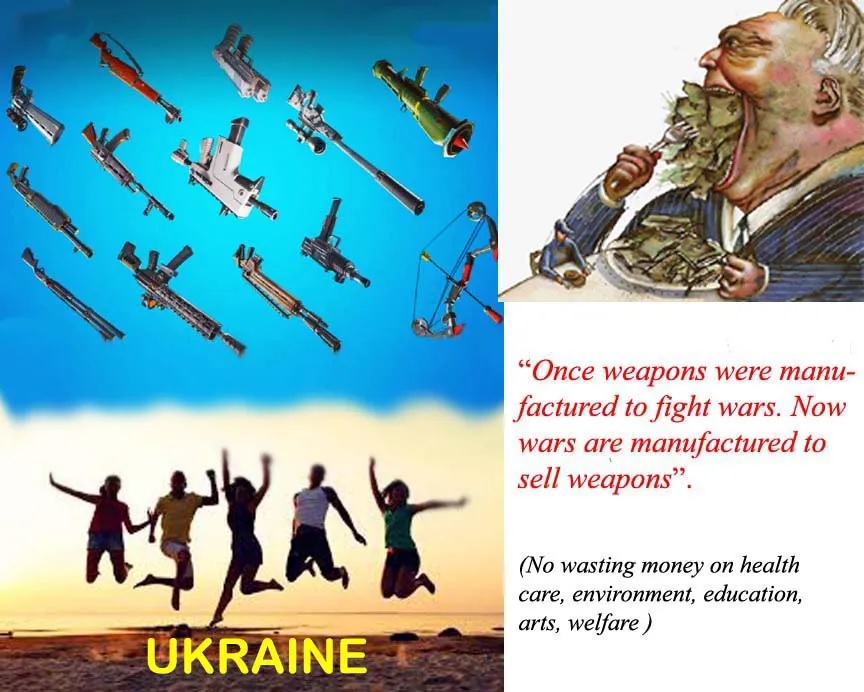
June 15, 2024, by: Dr Binoy Kampmark, https://theaimn.com/ukraine-continued-aid-and-the-prevailing-logic-of-slaughter/
War always commands its own appeal. It has its own frazzled laurels, the calling of its own worn poets tenured in propaganda. In battle, the poets keep writing, and keep glorifying. The chattering diplomats are kept in the cooler, biding their time. The soldiers die, as do civilians. The politicians are permitted to behave badly.

With Ukraine looking desperately bloodied at the hands of their Russian counterparts, the horizon of the conflict had seemingly shrunk of late. Fatigue and desperation had set in. Washington seemed more interested in sending such musically illiterate types as the Secretary of State Antony Blinken to Kyiv for moral cuddling rather than suitably murderous military hardware.
Russian President Vladimir Putin, mindful of the losses inflicted on his own side in the conflict, thought it opportune to spring the question of peace talks. On June 14, while speaking with members of the Russian Foreign Ministry, he floated the idea that Russia would cease combat operations “immediately” if Ukraine abandoned any aspirations of joining NATO and withdrew its troops from the regions of Donetsk, Luhansk, Kherson and Zaporizhzhia.
Rather than refrigerate the conflict into its previous frozen phase, Putin went further. It would end provided that Kyiv accepted Moscow’s sovereign control over the four regions as “new territorial realities”. Russian-speaking citizens in Ukraine would also be afforded protections; sanctions imposed by Western states would be lifted. “Today,” he stated, “we have put forward another concrete, genuine peace proposal. If Kyiv and Western capitals reject it as they have in the past, they will bear political and moral responsibility of the ‘continuation of the bloodshed.’”
He further added that, as soon as Ukraine began withdrawing its military personnel from Donbas and Novorossiya, with an undertaking not to join NATO, “the Russian Federation will cease fire and be ready for negotiations. I don’t think it will take long.”
Length and duration, however, remain the signal attributes of this murderous gambit. Ukraine’s defeat and humbling is unacceptable for the armchair strategists in the US imperium, along with their various satellites. NATO’s obsessive expansion cannot be thwarted, nor can the projection of Washington’s influence eastwards from Europe. And as for the defence contractors and companies keen to make a killing on the killings, they must also be considered.
This was unpardonable for the interests of the Biden administration. The Washington War Gaming Set must continue. Empires need their fill, their sullied pound of flesh. Preponderance of power comes in various forms: direct assault against adversaries (potentially unpopular for the voters), proxy enlistment, or the one degree removed sponsorship of a national state or entity as a convenient hitman. Ukraine, in this sense, has become the latter, a repurposed, tragic henchman for US interests, shedding blood in patriotic gore.
In keeping with that gore, US President Joe Biden, in announcing a funding package for Ukraine from the G7 group, promised that “democracies can deliver”. The amount on the ledger: $US50 billion. “We are putting our money to work for Ukraine, and giving another reminder to Putin that we are not backing down.” That particular amount is derived from frozen Russian assets outside Russian territory, most of it from the Russian Central Bank amounting to US$280 billion. The circumstances of such freezing will, in future, be the subject of numerous dissertations and legal challenges, but that very fact suggests that Ukraine’s allies are tiring from drawing from their own budgets. We support you, but we also hate to see the money of our taxpayers continually splurged on the enterprise.
Biden’s remarks from the Hotel Masseria San Domenico in Fasano have a haunting quality of repetition when it comes to US support for doomed causes and misguided goals. The fig leaf, when offered, can be withdrawn at any given movement: South Vietnam, doomed to conquest at the hands of North Vietnam; Afghanistan, almost inevitably destined to be recaptured by the Taliban; Kurds the Marsh Arabs, pet projects for US strategists encouraged to revolt only to be slaughtered in betrayal.
Thus goes Biden: “A lasting peace for Ukraine must be underwritten by Ukraine’s own ability to defend itself now and to deter future aggression anytime […] in the future,” Biden explains, drawing from the echo of Vietnamisation and any such exultation of an indigenous cause against a wicked enemy. The idea here: strengthen Ukrainian defence and deterrence while not sending US troops. In other words, we pay you to die.
Biden’s remarks from the Hotel Masseria San Domenico in Fasano have a haunting quality of repetition when it comes to US support for doomed causes and misguided goals. The fig leaf, when offered, can be withdrawn at any given movement: South Vietnam, doomed to conquest at the hands of North Vietnam; Afghanistan, almost inevitably destined to be recaptured by the Taliban; Kurds the Marsh Arabs, pet projects for US strategists encouraged to revolt only to be slaughtered in betrayal.
Thus goes Biden: “A lasting peace for Ukraine must be underwritten by Ukraine’s own ability to defend itself now and to deter future aggression anytime […] in the future,” Biden explains, drawing from the echo of Vietnamisation and any such exultation of an indigenous cause against a wicked enemy. The idea here: strengthen Ukrainian defence and deterrence while not sending US troops. In other words, we pay you to die.
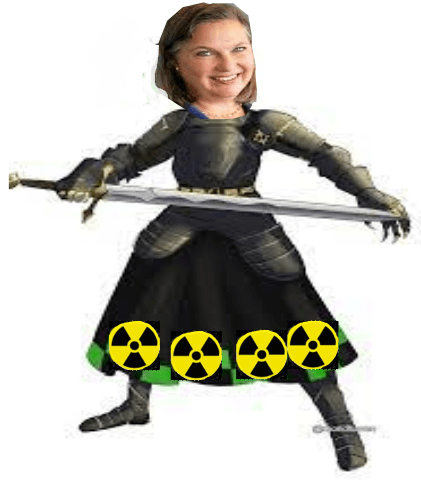
While Putin has turned his nose up at the UN Charter in its solemn affirmation of the sovereignty of states, Washington has taken its own wrecking ball to the text. It has meddled, fiddled and tampered with the internal affairs of states while accusing Russia of the very same thing. Spiteful of history and its bitter lessons, it has employed such saboteurs as former Assistant Secretary of State Victoria Nuland to undertake such tasks, poking the Russian Bear while courting and seducing the Ukrainian establishment. The horror is evident for all to see, and unlikely to halt.
NATO chief says members considering deployment of more nuclear weapons, Kremlin warns it’s an ‘escalation of tension’
Reuters, Mon, 17 Jun 2024
The Kremlin said on Monday a remark by NATO chief Jens Stoltenberg that the military alliance was holding talks on deploying more nuclear weapons was an “escalation of tension”.
Stoltenberg told Britain’s Telegraph newspaper that NATO members were consulting about deploying more nuclear weapons, taking them out of storage and placing them on standby in the face of a growing threat from Russia and China.
Kremlin spokesman Dmitry Peskov said Stoltenberg’s comments appeared to contradict a communique issued at a weekend conference in Switzerland that said any threat or use of nuclear weapons in the Ukraine context was inadmissible.
The talks, held at the behest of Ukrainian President Volodymyr Zelenskiy, were billed as a “peace summit” although Moscow was not invited.
“This is nothing but another escalation of tension,” Peskov said of the NATO secretary general’s remarks………………………………………………………… https://www.reuters.com/world/europe/kremlin-says-nato-chiefs-nuclear-weapons-remarks-are-an-escalation-2024-06-17
Judges Named for Assange Appeal

By Joe Lauria / Consortium News June 14, 2024, https://consortiumnews.com/2024/06/14/judges-named-for-assange-appeal/
Consortium News will be back inside the courtroom in London July 9-10 to cover Julian Assange’s appeal against extradition
The judges in Julian Assange’s two-day appeal hearing on July 9-10 are the same who granted Assange a rare victory last month: his right to appeal the Home Office’s extradition order to the United States.
Justices Jeremy Johnson and Victoria Sharp granted Assange the right to appeal on only two of nine requested grounds, but they are significant:
1). his extradition was incompatible with his free speech rights enshrined in the European Convention on Human Rights; and 2.) that he might be prejudiced because of his nationality (not being given 1st Amendment protection as a non-American).
However the denial of his rights in an American courtroom would go beyond the First Amendment to all of his U.S. constitutional rights, according to the 2020 U.S. Supreme Court ruling in USAID v. Alliance for Open Society International Inc., which says that a non-U.S. citizen acting outside the U.S. has no constitutional protections at all.
The United States was unable to provide assurances that the European equivalent of his constitutional rights would be protected, required under British extradition law. That raises hopes for Assange in his appeal.
Assange has been imprisoned in London’s notorious Belmarsh Prison for more than five years on remand pending the outcome of his extradition. He has been charged in the United States for publishing classified documents that revealed prima facie evidence of U.S. state crimes.
CN has received an award and many accolades for our coverage of the Julian Assange case. We will be inside the courtroom and outside the Royal Courts of Justice in London for both days of the hearing, bringing you the latest news, analysis and commentary.
Surging Renewables Push French Energy Prices Negative, Shutting Down Nuclear Plants
by Rahul Kumar, June 15, 2024, in Business and Finance, https://theubj.com/business/surging-renewables-push-french-energy-prices-negative-shutting-down-nuclear-plants/
French energy prices recently plunged into negative territory, reaching a four-year low of -€5.76 per megawatt-hour in an Epex Spot auction, Bloomberg reported. This unusual occurrence was driven by an excess of renewable energy production combined with reduced demand, particularly over the weekend. The surplus in renewable power led to some French nuclear plants going offline.
Renewable Energy Surge and Market Impact
The drop in day-ahead energy prices underscores the profound impact that renewable energy, particularly wind and solar power, is having on the European energy market. As renewable energy production surged, especially during periods of low demand, it created an oversupply that forced prices down. This imbalance pressured Electricité de France (EDF), the state-owned utility company, to temporarily shut down several nuclear reactors to avoid generating excess power that could not be sold profitably. Initially, three nuclear plants were halted, with plans to take three more offline.
A Pan-European Issue
This phenomenon is not isolated to France. Other European countries, including Spain and those in the Scandinavian region, also experience similar shutdowns of nuclear reactors due to excess renewable energy generation. The continent’s push to decarbonize energy grids has accelerated the deployment of renewable infrastructure. However, the lack of adequate battery technology and investment to store surplus energy has created pricing inefficiencies, leading to occurrences of negative prices.
Germany’s Experience
Germany, a leader in renewable energy adoption, has also faced negative energy prices. SEB Research reported in May that solar power generation in Germany had outpaced demand, leading to similar pricing challenges. Despite these issues, Germany has been more aggressive in its rollout of renewable energy compared to France. This aggressive approach has helped Germany mitigate some of the market inefficiencies seen in France.
France’s Renewable Energy Rollout
In contrast, France’s rollout of renewable energy has been slower. Paris has installed around 45 gigawatts of wind and solar capacity, which is behind the targets set by the European Commission. The slower adoption rate has contributed to the country’s struggle to balance its energy supply and demand efficiently.
Political and Economic Implications
The political landscape in France could further impact the renewable energy sector. The far-right National Rally party, which is poised to make significant gains in upcoming domestic elections, has pledged to slash renewable subsidies and halt the expansion of the wind power industry. Such political developments could slow down the already modest pace of France’s renewable energy rollout, potentially leading to more significant market inefficiencies and continued reliance on traditional energy sources.
Broader Challenges
The situation in France highlights the broader challenges associated with transitioning to renewable energy. While the shift towards cleaner energy is essential for reducing carbon emissions and combating climate change, it also necessitates advancements in energy storage solutions and a more balanced energy mix to ensure market stability and efficiency. Without these advancements, countries may continue to experience negative pricing and the associated operational challenges.
Conclusion
The recent plunge into negative energy prices in France due to an oversupply of renewable energy underscores the complex dynamics of the modern energy market. As Europe continues to push towards decarbonization, the need for robust energy storage solutions and strategic market management becomes increasingly critical. The experiences of France and other European countries serve as a reminder of the growing pains associated with the global shift towards sustainable energy.
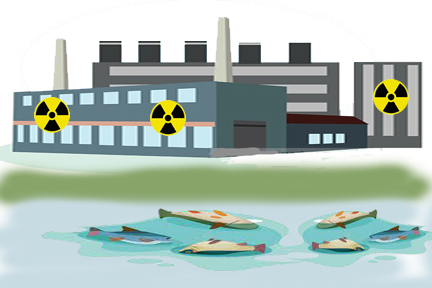
French-Chinese nuclear power plant could put 200m UK fish at risk
By Freddie Sandford | 14 06 2024https://www.anglingtimes.co.uk/news/stories/french-chinese-power-plant-could-put-200m-uk-fish-at-risk/
Builders of a new nuclear power plant are applying to remove fish protection measures, putting the lives of nearly 200 million fish at risk.
Earlier this year, concerns grew around the new power plant at Hinkley Point, in Somerset, as it was revealed that an incredible 178 tonnes of fish would be sucked into its pipes every year.
Initially, an acoustic fish deterrent was to be added, but the plant’s builders, NNB Generation Company Limited, co-owned by French and Chinese energy giants EDF and CDN, are applying to remove this safeguarding measure.
Fish Legal questioned the company’s plans, but they were rejected, as NNB claimed it wasn’t subject to UK laws.
“It is extremely concerning that a French and Chinese-owned company believes itself to be above our laws,” says Fish Legal’s Penny Gane.
“The British public have a right to know the impact this nuclear power plant will have. This fight is not over yet.”
Uncle Sam cool with arming, training Neo-Nazi Azov Brigade in Ukraine.

Walt Zlotow, West Suburban Peace Coalition, Glen Ellyn IL 16 June 24
Back in 2018, the US banned military assistance to the Azov Brigade due to its neonazi and white supremacist ideology.
Azov was founded by Andriy Biletsky in 2014 to assist Kyiv’s destruction of Ukraine’s breakaway Donbas region, Biletsky also led related group Social National Assembly whose goal was “to prepare Ukraine for further expansion and to struggle for the liberation of the entire White Race from the domination of the internationalist speculative capital…and to punish severely sexual perversions and any interracial contacts that lead to the extinction of the white man.” Ouch.
But with Ukraine near collapse from America’s proxy war against Russia, the Biden administration decided that Azov wasn’t that bad after all. Doesn’t matter that current head Denis Prokopenko has been associated with its neonazi idology since its founding, not that Azov still uses the Wolfsangel neonazi symbol
When the US initially banned Azov, Rep. Ro Khanna (D-CA) praised the decision: “I am very pleased that the recently passed omnibus prevents the US from providing arms and training assistance to the neonazi Azov Battalion fighting in Ukraine.”
But that was before the US provoked an unnecessary war in Ukraine, spiraling it into a failed state. Desperate to achieve victory without shedding any US blood, the Biden administration, with not of peep of protest from Khanna, has suddenly turned neonazi Azov into the Sons of Liberty
German MPs snub Zelensky
Sat, 15 Jun 2024 https://www.sott.net/article/492290-German-MPs-snub-Zelensky—
Lawmakers from two German opposition parties, the right-wing Alternative for Germany (AfD) and the new left-wing populist Sahra Wagenknecht Alliance (BSW), refused to attend a speech by Ukraine’s Vladimir Zelensky in the Bundestag on Tuesday. Both parties have expressed opposition to Kiev’s policies, warning they will only lead to further bloodshed.
Zelensky’s speech was the second he has delivered to the German parliament since the start of the conflict with Russia, although it was the first address he has made in person, rather than via video link. The Ukrainian leader thanked Berlin for its support and called on the country to ensure Russian President Vladimir Putin “loses this war.” The outcome of the conflict should leave no doubt about “who had won,” he insisted.
The event, however, was boycotted by all BSW MPs and most AfD lawmakers. Four members of the right-wing party, which placed second with 16% of the vote in last week’s EU parliamentary elections, did attend Zelensky’s speech, calling it “basic courtesy,” though party leaders sharply criticized the Ukrainian leader ahead of the session.
“We refuse to listen to a speaker in a camouflage suit,”Alice Weidel and Tino Chrupalla said, referring to Zelensky’s habit of wearing the military-style clothes. The two politicians also stated that his term has “expired” and that he now only remains “a president of war and beggary.” Ukraine was due to hold presidential elections in March, but Zelensky cancelled the vote, citing martial law. His term formally expired in May.
Ukraine doesn’t need a “president of war” but a “president of peace, [who] is ready to negotiate,” the AfD parliamentary leaders said. The BSW, a party formed by the German left-wing icon Sahra Wagenknecht, also issued a statement ahead of the event, in which it announced a boycott of the speech.
Zelensky is promoting “very dangerous” escalation, the document warned, arguing that the Ukrainian leader was ready to risk a nuclear conflict to achieve his goals. Such policies “should not be honored with a special event in the German Bundestag,” the statement said. The BSW maintained that it condemned Moscow’s military operation against Kiev but still pointed to Russia’s readiness for peace negotiations.
The parliamentary snub drew strong criticism from the German political establishment. Chancellor Olaf Scholz’s office condemned it as a “lack of respect,” adding that the Social Democrat was “very disturbed but not surprised” by the development.
A member of the parliament’s defense committee, Marie-Agnes Strack-Zimmermann, was quick to accuse both parties of doing Moscow’s bidding.
Russia has repeatedly stated that it is ready to engage in peace talks, as long as the situation on the ground is taken into account. In autumn 2022, four former Ukrainian regions joined Russia following a series of referendums. Kiev never recognized the vote, and continues to demand that Moscow withdraw its troops from all the territories Ukraine claims as its own, including Crimea, before any talks start.
Comment: The level of “disobedience” shown by most of the AfD and all of the BSW lawmakers is unthinkable in most other European parliaments who in few cases do not have even a single elected member that dare to deviate from the much touted support for the western war efforts in Ukraine. The two German parties gained 22.1 % (15.9 % and 6.2 % respectively) of the votes at the recent European elections and had their best results in area of the former East Germany. For Germany as a whole this leaves Zelensky with the backing of more than 75 %, so for now he has little to worry about when it comes to milking more aid money out of Germany.
World leaders to gather in Swiss resort in attempt to forge Ukraine peace plan
More than 100 leaders at two-day conference to discuss Kyiv’s proposals to end war – but Russia and China absent
Comment: Two thumbs down. Without Russia and China, the rest is back patting and re-convincing the pre-convinced.
Lisa O’Carroll, The Guardian, Sat, 15 Jun 2024, https://www.theguardian.com/world/article/2024/jun/15/world-leaders-to-gather-in-swiss-resort-in-attempt-to-forge-ukraine-peace-plan
More than 100 leaders, including the US vice-president, Kamala Harris, and the presidents or heads of the EU, South American, Middle East and Asian countries, will gather in Switzerland on Saturday for one of the most ambitious attempts yet to forge a peace plan for Ukraine.
The summit comes as G7 leaders gathering in Italy clinch a new deal for a €50bn loan for Ukraine, securitised through use of the windfall profits from the interest on Russian central bank assets frozen by the EU and other western nations after the 2022 invasion of Ukraine.
The two-day peace conference, which will take place at the luxury Bürgenstock resort outside Lucerne, will discuss Kyiv’s proposed 10-point plan to end the war along with three other themes: the nuclear threat, food security and humanitarian needs in Ukraine.
It follows the Russian president, Vladimir Putin, on Friday demanding that Kyiv cede more land, withdraw troops deeper inside its own country and drop its Nato bid in order for him to end his war in Ukraine – proposals that were rejected by Ukraine, the US and Nato.
A joint communique on Sunday is expected to centre on the importance of the UN principles on maintaining and respecting “sovereignty and territorial integrity”.
While this is not seen as advancing peace in itself, it is designed to “reduce the space for any unhelpful initiatives”, say those with knowledge of the conference.
This will be seen as a success for Volodymyr Zelenskiy who is aiming to build international support for his peace plan that includes a full withdrawal of Russian troops from Ukraine and return to its 1991 post-Soviet borders.
Organisers of the peace summit played down China’s decision not to attend, a move that prompted Zelenskiy to accuse Beijing of helping Moscow undermine the meeting, which China’s foreign ministry denied.
Kyiv had been pushing hard for a Chinese delegation to attend the summit to give the conference further legitimacy and drive a wedge between Moscow and Beijing.
There were also hopes that Saudi Arabia may attend after what Zelenskiy described as “productive and energetic” talks with the Saudi crown prince Mohammed bin Salman on Wednesday.
Moscow has dismissed the meeting as futile.
China, which has close ties to Russia, said it would not attend because the conference did not meet its requirements, including the participation of Russia.
That dozens of leaders will be in Switzerland at a time when Ukraine is on the back foot militarily, and with talk of war fatigue growing, is an impressive feat, senior US figures said.
“It’s rather remarkable that there’s 100 countries showing up to a peace summit at which the main instigator of that conflict is not participating,” said Max Bergmann, a former US state department official.
“It’s a diplomatic masterstroke,” said Bergmann, who now heads the Europe, Russia and Eurasia Program at the Center for Strategic and International Studies.
William Courtney, a former US diplomat, called the Swiss outreach a “huge success”.
The summit follows several previous gatherings, including one in Saudi Arabia attended by 40 countries including China, which has been trying to enlist support for its own six-point peace plan.
As the summit approaches, China has intensified its outreach through meetings with visiting foreign dignitaries, phone calls and messages to foreign missions on China’s WeChat platform, diplomats told Reuters reporters.
But sources said organisers were not concerned, as there had been “no concretisation” of any Chinese diplomatic manoeuvres, with many global south countries, including Colombia, Chile, Argentina and Ecuador, attending on Saturday.
Others attending include Thailand, Singapore, the Philippines and Japan, while Malaysia and Cambodia, which have close ties to China, are not thought to be going.
G7 Leaders Agree To Provide Ukraine With $50 Billion Using Frozen Russian Assets
The step will mark a significant escalation in the economic war against Russia
by Dave DeCamp June 13, 2024
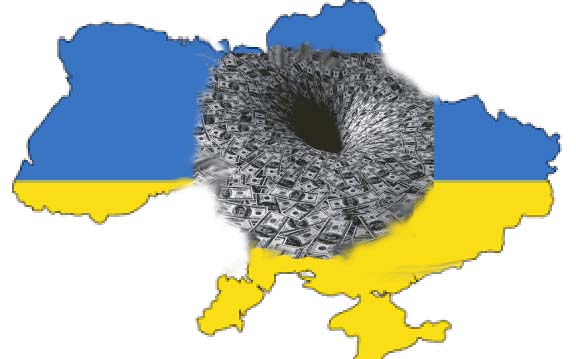
Group of Seven leaders agreed at a summit in Italy on Thursday to give Ukraine $50 billion using frozen Russian Central Bank assets, a step that marks a significant escalation in the economic war against Russia.
The plan is to provide the $50 billion to Ukraine by the end of the year in the form of a loan, which will be paid back using profits from the approximately $280 billion in frozen Russian assets held by the US and its allies.
The idea is seen as a compromise between the US and Europe, as President Biden wanted to steal all of the frozen Russian funds to give to Ukraine. But the vast majority of the money is held in Europe, and EU leaders were hesitant to do that.
Instead, the EU devised a separate plan to provide Ukraine with about $3 billion per year using the interest made by the Russian assets. Ukraine said that amount wasn’t enough, and the US proposed the $50 billion loan.

“This has been something that the United States has put a lot of energy and effort into,” National Security Advisor Jake Sullivan told reporters. “We see proceeds from these assets as a valuable source of resources for Ukraine at a moment when Russia continues to brutalize the country, not just through military action on the front but through the attempted destruction of its energy grid and its economic vitality.”
Russia has made clear it would view either plan as the theft of its sovereign funds and is preparing to retaliate. Stealing the money makes reconciliation between Russia and the West even less likely since lifting sanctions would mean having to give assets back to Moscow that have already been spent. The move will also reduce faith in the Western banking system and speed up global de-dollarization.
1 This Month
26 April – Chernobyl: Inside the Meltdown airs on National Geographic on Sunday 26th April from 4pm


29 April – Nuclear Expert Webinar #1 – Radiation Impacts on Families with Mary Olson and Cindy Folkers
- 12:15 PM MT – 1:45 PM MT
- Location: Virtual – REGISTER TODAY

4 May -West Suburban Peace Coalition to discuss Iran war at May Educational Forum
Monday, May 4, 7:00 – 8:00 PM Central Standard Time
Title: : How Trump’s Narrative Tries to Shape the Reality of the War on Iran.
Contact Walt Zlotow, zlotow@hotmail.com 630 442 3045 for further information
14 May – online event From Bombs to Data Centres: the Face of Nuclear Colonialism

Pine Ridge Uranium is the real threat, not Tehran- Tell Burgum: Stop the Extraction.
Chernobyl: The Lost Tapes – A good documentary on Chernobyl on SBS available On Demand for the next 3 weeks– https://www.sbs.com.au/ondemand/tv-program/chernobyl-the-lost-tapes/2352741955560
To see nuclear-related stories in greater depth and intensity – go to https://nuclearinformation.wordpress.com
-
Archives
- May 2026 (25)
- April 2026 (356)
- March 2026 (251)
- February 2026 (268)
- January 2026 (308)
- December 2025 (358)
- November 2025 (359)
- October 2025 (376)
- September 2025 (257)
- August 2025 (319)
- July 2025 (230)
- June 2025 (348)
-
Categories
- 1
- 1 NUCLEAR ISSUES
- business and costs
- climate change
- culture and arts
- ENERGY
- environment
- health
- history
- indigenous issues
- Legal
- marketing of nuclear
- media
- opposition to nuclear
- PERSONAL STORIES
- politics
- politics international
- Religion and ethics
- safety
- secrets,lies and civil liberties
- spinbuster
- technology
- Uranium
- wastes
- weapons and war
- Women
- 2 WORLD
- ACTION
- AFRICA
- Atrocities
- AUSTRALIA
- Christina's notes
- Christina's themes
- culture and arts
- Events
- Fuk 2022
- Fuk 2023
- Fukushima 2017
- Fukushima 2018
- fukushima 2019
- Fukushima 2020
- Fukushima 2021
- general
- global warming
- Humour (God we need it)
- Nuclear
- RARE EARTHS
- Reference
- resources – print
- Resources -audiovicual
- Weekly Newsletter
- World
- World Nuclear
- YouTube
-
RSS
Entries RSS
Comments RSS
 nuclear-news