IAEA: Cooling pond water levels decreasing at Ukraine nuclear plant

Aug 6, 2024, https://www.ans.org/news/article-6266/iaea-cooling-pond-water-levels-decreasing-at-ukraine-nuclear-plant/
The water level in Ukraine’s Zaporizhzhia nuclear power plant cooling pond continues to decrease, creating a serious safety threat.
“If this trend continues, ZNPP staff confirmed that it will soon become challenging to pump water from the pond. Maintaining the level of the pond is made more difficult by the hot summer weather,” said Rafael Mariano Grossi, director general of the International Atomic Energy Agency, in an update issued August 2.
Zaporizhzhia—Europe’s largest nuclear plant—has been under Russian control since March 2022, shortly after the military invasion of Ukraine. The plant stopped producing power in September 2022, and all six of its units currently are in cold storage.
Water issues: Following the destruction of the Kakhovka dam in 2023, Zaporizhzhia workers dug 11 groundwater wells to provide approximately 250 cubic meters of cooling water per hour to support the plant’s sprinkler ponds. These ponds cool all six reactors.
“Dwindling water levels in the cooling pond remains a potential source of concern, and we will continue to closely monitor and observe the situation at the site to ensure the availability of a sufficient supply of cooling water for the plant’s needs at all times,” Grossi said.
During a site walkdown last week, IAEA inspectors stationed at the plant observed proper function in the sprinkler ponds, with water at nominal levels. But any compromise to the availability of water to the sprinkler ponds might necessitate using the cooling pond as a backup source.
Safety concerns: The IAEA team continue to hear military activity at varying distances from the plant.
On April 30, they reported hearing over 100 rounds of gunfire in the vicinity of the Zaporizhzhia, allegedly in response to drones flying near the plant’s training center. The “kamikaze” drones, some measuring 11 feet long and 8 feet wide, were observed in video evidence from Ukraine’s defense intelligence. The drones do not fire missiles but are equipped with explosives and can strike with precision.
Separately, the team reported three direct drone strikes on the plant on April 7 and April 9, resulting in one casualty. Ukrainian military intelligence spokesperson Andrii Cherniak said the Russians are using space around Zaporizhzhia because the Security and Defense Forces of Ukraine cannot return fire in a 1.5-kilometer zone around the plant.
IAEA report: In a letter from the permanent mission of the Russian Federation to the IAEA’s secretariat the following issues were highlighted.
- During a span of six days (July 22–28), 77 aerial vehicles launched with the aim of attacking and provoking ZNPP and the nearby town of Energodar.
- On July 29, Ukrainian armed forces launched three artillery strikes at the checkpoint entrance to Energodar, injuring three Russian Guard employees.
- The plant has enough diesel fuel to operate on emergency power for 19 days.
- Recruitment of personnel for the plant is ongoing, though the current number of employees is sufficient to continue cold shutdown operations and scheduled maintenance tasks.
Support for Zaporizhzhia: Starting in April 2022, the IAEA developed a broad assistance program at Zaporizhzhia. The agency recently organized four remote workshops with a focus on mental health. The sessions were geared toward supervisors, managers, and mental health teams to help recognize signs of distress and support those dealing with stress or trauma.
The United States and United Kingdom have lent support by delivering equipment and hosting workshops.
Nuclear weapons can never bring peace or security – only mass death
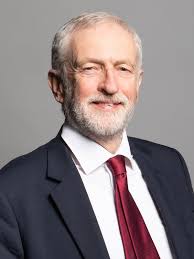
With the risk of all-out war ever-increasing, JEREMY CORBYN MP calls on Britain to lead by example, by signing the Global Nuclear Ban Treaty
AUGUST 6 is a poignant day. On this day in 1945, hundreds of thousands of people died in Hiroshima as the first atomic bomb was used as a weapon of war. A few days later, it was used again in Nagasaki.
The huge death toll from people being fried alive was compounded by death from cancers and the slow destruction of those who survived the initial attack. Others developed cancers later on and death was visited upon a whole generation by the two bombs.
The use of the atomic bomb set off the nuclear age as the United States expanded its nuclear arsenal. A few years later, the Soviet Union developed its own system, followed by others.
Britain, reeling from the economic destruction of World War II, tested its first atomic bomb in 1952. Clement Attlee, the prime minister, managed to expend, in complete secrecy, enough money to build an independent system. Not even the Cabinet was told, never mind Parliament or the people.
For two decades after the second world war there were atmospheric tests of nuclear weapons, with the resultant fallout killing people in the Pacific and beyond.
The nuclear Non-Proliferation Treaty has helped to stem the flow of nuclear weapons, which are restricted to the five declared nuclear weapons states (the US, Britain, France, Russia, China) and to India, Pakistan, Israel and North Korea, which are not treaty signatories.
The danger of a nuclear war is now greater than it has been for decades, as the Ukraine war drags on. Both Russia and Ukraine’s Nato backers have nuclear weapons at their disposal. Meanwhile, military spending is now rising around the world.
Britain has already committed to increasing defence spending to at least 2.5 per cent of GDP. Globally the number of nuclear warheads is also rising.
In the case of the war in Ukraine we see conscripted soldiers on both sides being slaughtered, and more and more weapons being delivered, and fewer and fewer politicians anywhere even raising the possibility of ending this appalling war. The language of peace is absent and there are few efforts being made now to broker a discussion that could lead to a ceasefire.
Nuclear weapons can never bring peace or security, only the assurance of deaths of millions followed by global climate catastrophe, nuclear winter and famine.
If Britain wanted to be a global leader, it would sign the Global Nuclear Ban Treaty and make the case for world peace.
Those used in 1945 were very small compared to the warheads of today; isn’t it time to remember the deaths of 1945 and ensure Hiroshima is never repeated?
Jeremy Corbyn is independent MP for Islington North.
UK Government refuses to release Sizewell C’s predicted price tag

The Department for Energy rejected a freedom of information request from BusinessLive on the Suffolk nuclear project’s costs.
BusinessLive, By Hannah Baker, South West Business Editor, 4 Aug 24
The government is refusing to reveal how much the planned Sizewell C nuclear plant in Suffolk is expected to cost. The Department for Energy turned down a freedom of information (FOI) request by BusinessLive asking for data on the project’s price tag.
Sizewell C, which is being partly funded by French-owned energy giant EDF, is reported to cost in the region of £20bn, though it has been suggested that it could cost more than £30bn.
The Suffolk nuclear station will be a replica of EDF’s Hinkley Point C plant in Somerset, which has been plagued by delays and funding issues over the course of its construction.
The government told BusinessLive that Sizewell’s costs are “subject to ongoing and commercially sensitive negotiations”…………………………….
“The commercial sensitivities mean that on this occasion we consider that the public interest would not be served by its release.”
The FOI request was made before Keir Starmer’s government came to power, but the new Labour-run department said it had “nothing to add” to the response.
…………………….. In 2022, the government was forced to pay state-owned China General Nuclear (CGN) to exit the Suffolk project over growing geo-political tensions. CGN had a 20% stake in Sizewell at the time. Since its removal, the Chinese firm has also halted payments on Hinkley Point C.
It is not known how many companies the current government is courting over Sizewell. In February, Centrica – the parent company of British Gas – confirmed it was in discussions with the previous administration over the project…………..https://www.business-live.co.uk/economic-development/government-refuses-release-sizewell-cs-29655312
Lemon socialism? – Rolls Royce might like to gracefully get out of Small Nuclear Reactors (SMRs)?

Lemon socialism is a pejorative term for a form of government intervention in which government subsidies go to weak or failing firms (lemons; see Lemon law), with the effective result that the government (and thus the taxpayer) absorbs part or all of the recipient’s losses.[1][2] The term derives from the conception that in socialism the government may nationalize a company in its entirety, while in lemon socialism the company is allowed to keep its profits but its losses are shifted to the taxpayer. – Wikipedia.

Many sources I had found online over the past half year said Rolls Royce (RR) SMR would be going down soon – because they’d be out of cash before the end of 2024.
This last ditch effort at fundraising appears to be futile.
Because private money (as opposed to public money) looks at the balance sheet….assets vs. liabilities.
A free open competitive energy marketplace will definitely kill SMRs. Even the UK gov’t won’t buy their SMR – so, RR is losing their “Lemon Socialism” card. (Ralph Nader uses that term to describe nuclear power) Oh well, Rolls Royce has many other engineering ventures … which they are very successful at.
This SMR thing could distract from, and draw funds from, those.
It must be no to nuclear – whether energy or weapons
Tor Justad: I REFER to recent articles in the National and Sunday
National regarding nuclear power and nuclear weapons in Scotland. The first
was headlined “Safety warnings as cracks rise at Torness nuclear plant”
(Sunday National, Jul 21) which reported on the increase to 46 of cracks
which have appeared in the Torness nuclear reactor.
It is extremely concerning that at the launch of the Cromarty Firth and Inverness Freeport,
Steve Chisholm, operations & Innovations director at Global Energy stated
that the area was ideally placed for a move into manufacturing small
modular reactors.
The National 5th Aug 2024
https://www.thenational.scot/community/24496800.must-no-nuclear—whether-energy-weapons/
Britain’s net zero dream could be crushed by big tech

As demand for data storage grows, so does the need for giant data centres – which pose a threat to our landscape and our energy supply
Jim Norton, 4 August 2024
Gigantic facilities represent the very real physical cost of our
unquenchable thirst for the internet and, increasingly, these facilities
pose a threat not only to our landscape but our energy supply too.
This year, big tech has started to sound the alarm that the boom in artificial
intelligence (AI) – which is even more power hungry than the normal web
– is putting the world in danger of missing its ambitious net zero
targets.
Tech leaders from Amazon CEO Andy Jassy and OpenAI boss Sam
Altman, to the billionaire owner of X (formerly Twitter) Elon Musk, have
warned this year about generative AI’s voracious use of power. Musk
warned it could lead to a global electricity shortage as early as next
year.
Some studies suggest the AI industry alone could consume as much
energy as a country the size of the Netherlands by 2027. AI’s thirst for
power has led to fears that the technology is jeopardising the ambitious
climate targets set by both governments and tech giants.
Renewable energy is not yet consistent nor plentiful enough to keep up with AI demand,
meaning officials and companies will likely have to fall back on fossil
fuels. This year, both Google and Microsoft admitted their ambitious
targets of reaching net zero by 2030 were under threat; revealing their
greenhouse emissions had risen by 48 per cent and a third, respectively,
over the past few years, largely due to the explosive growth of AI.
So what does this mean for the UK? The National Grid has predicted that AI will
drive a spike in energy use, with the amount of power demanded by data
centres expected to increase six-fold over the next decade. Given
Britain’s energy infrastructure is already struggling under the weight of
existing demand, and is in dire need of an upgrade, Labour’s aims of
decarbonising the power supply by 2030 will certainly be put under immense
pressure.
Telegraph 4th Aug 2024
https://www.telegraph.co.uk/environment/2024/08/04/big-tech-ai-green-belt-destruction/
A DUBIOUS PROSPECT? Rolls-Royce looks to sell stake in small nuclear reactor business.

I will be following this U.K. story. Similar to here in Canada, the SMR proponents in Europe (in the U.K. the frontrunner is Rolls-Royce) are struggling to find private capital to develop their designs. The big nuclear industry extravaganza in Brussels in March (organized by the IAEA nuclear-boosters) was a flop, with investment bankers telling the SMR companies they lack a business case and need to look for government (taxpayer) dollars.
In Canada, the only SMR design to receive significant government funding is the BWRX-300 project at Darlington, which received $970 million in a “low-interest loan” from the Canada Investment Bank (CIB) shortly after the CIB had its operating scope changed which then allowed it to give money to nuclear companies. Politics. Scam. Anyway, the two designs planned for here in New Brunswick (ARC-100 and Moltex SSR + WATSS) last year said they will each need $500 million to develop their designs, and after six years of looking for it, they have come up with only a fraction of that. To be continued…
By: Guy Taylor, CITY AM, https://www.cityam.com/rolls-royce-looks-to-sell-stake-in-small-nuclear-reactor-business/ 5 Aug 24
Rolls-Royce is preparing to sell off a stake in its mini-nuclear power business as it looks to raise fresh funding.
Chief executive Tufan Erginbilgic said the firm was in discussion with possible investors, with cash set to run out by early next year, The Sunday Telegraph reported.
One source familiar with discussions told the paper that the FTSE 100 giant was looking to raise hundreds of millions pounds.
Some £280m has already been pumped into the operation by its current backers, which include the Qatar Investment Authority and BNF Resources. A further £210m government grant was also announced by the former Conservative government in November 2021.
The company is being advised by bankers at BNP Paribas and is understood to have received approaches from “across the board,” including infrastructure investors, clean energy funds, hedge funds and other nuclear power companies, the report said.
It comes as Rolls-Royce closes in on winning a government tender, led by Great British Nuclear (GBN), to develop so-called Small Modular Reactors, which are essentially scaled-down versions of nuclear power plants. GBN will pick two designs from a host of competitors including Rolls, GE Hitachi, Holtec Britain, Nuscale and Westinghouse.
Asked about the funding situation, Erginbilgic told The Sunday Telegraph he was “very comfortable”.
“I won’t go into specific deals. But obviously our SMR is an attractive proposition and it’s got a great future and some investors potentially recognise that,” he said.
A spokesman for Rolls-Royce SMR added: “Our first mover advantage, combined with the significant growth in demand for small modular reactors, puts Rolls-Royce SMR in a leading position to capitalise on this global decarbonisation opportunity.
“Naturally, this is attracting investor interest and we continue to consider a range of options to support our future growth.”
Is the dream of nuclear fusion dead? Why the international experimental reactor is in ‘big trouble’
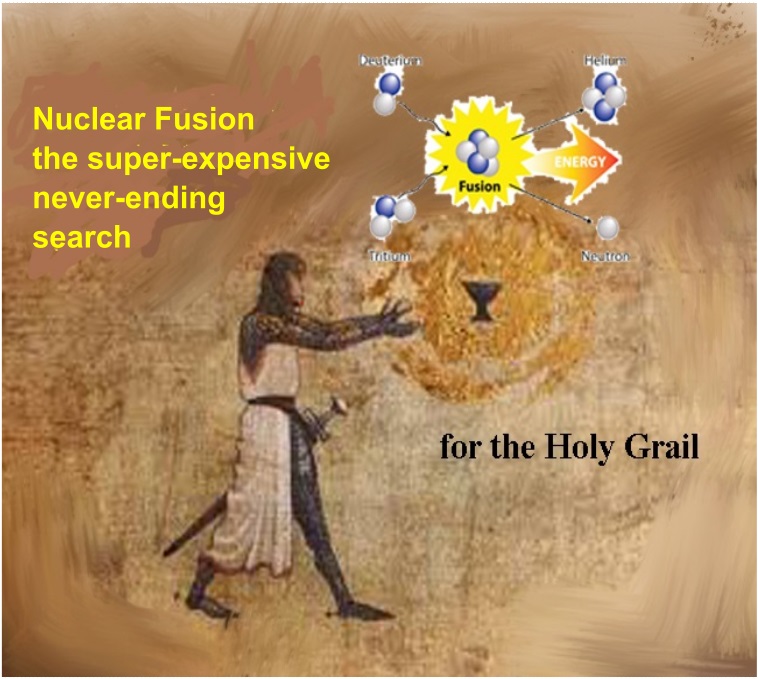
The 35-nation Iter project has a groundbreaking aim to create clean and limitless energy but it is turning into the ‘most delayed and cost-inflated science project in history’
Guardian, Robin McKie Science Editor, 4 Aug 24
It was a project that promised the sun. Researchers would use the world’s most advanced technology to design a machine that could generate atomic fusion, the process that drives the stars – and so create a source of cheap, non-polluting power.
That was initially the aim of the International Thermonuclear Experimental Reactor (Iter) which 35 countries – including European states, China, Russia and the US – agreed to build at Saint-Paul-lez-Durance in southern France at a starting cost of $6bn. Work began in 2010, with a commitment that there would be energy-producing reactions by 2020.
Then reality set in. Cost overruns, Covid, corrosion of key parts, last-minute redesigns and confrontations with nuclear safety officials triggered delays that mean Iter is not going to be ready for another decade, it has just been announced. Worse, energy-producing fusion reactions will not be generated until 2039, while Iter’s budget – which has already soared to $20bn – will increase by a further $5bn.
Other estimates suggest the final price tag could rise well above this figure and make Iter “the most delayed and most cost-inflated science project in history”, the journal Scientific American has warned. For its part, the journal Science has stated simply that Iter is now in “big trouble”, while Nature has noted that the project has been “plagued by a string of hold-ups, cost overruns and management issues”.
Dozens of private companies now threaten to create fusion reactors on a shorter timescale, warn scientists. These include Tokamak Energy in Oxford and Commonwealth Fusion Systems in the US.
“The trouble is that Iter has been going on for such a long time, and suffered so many delays, that the rest of the world has moved on,” said fusion expert Robbie Scott of the UK Science and Technology Facilities Council. “A host of new technologies have emerged since Iter was planned. That has left the project with real problems.”
A question mark now hangs over one of the world’s most ambitious technological projects in its global bid to harness the process that drives the stars. It involves the nuclei of two light atoms being forced to combine to form a single heavier nucleus, while releasing massive amounts of energy. This is nuclear fusion, and it only occurs at colossally high temperatures.
To create such heat, a doughnut-shaped reactor, called a tokamak, will use magnetic fields to contain a plasma of hydrogen nuclei that will then be bombarded by particle beams and microwaves. When temperatures reach millions of degrees Celsius, the mix of two hydrogen isotopes – deuterium and tritium – will fuse to form helium, neutrons and a great deal of excess energy.
Containing plasma at such high temperatures is exceptionally difficult. “It was originally planned to line the tokamak reactor with protective beryllium but that turned out to be very tricky. It is toxic and eventually it was decided to replace it with tungsten,” said David Armstrong, professor of materials science and engineering at Oxford University. “That was a major design change taken very late in the day.”
Then huge sections of tokamak made in Korea were found not to fit together properly, while threats that there could be leaks of radioactive materials led the French nuclear regulators to call a halt on the plant’s construction. More delays in construction were announced as problems piled up………………………………………………………….
For its part, Iter denies that it is “in big trouble” and rejects the idea that it is a record-breaking science project for cost overruns and delays. Just look at the International Space Station or for that matter the UK’s HS2 rail link, said a spokesman.
Others point out that fusion power’s limited carbon emissions would boost the battle against climate change. “However, fusion will arrive too late to help us cut carbon emissions in the short term,” said Aneeqa Khan, a research fellow in nuclear fusion at the University of Manchester. “Only if fusion power plants produce significant amounts of electricity later in the century will they help keep our carbon emissions down – and that will become crucial in the fight against climate change.” https://www.theguardian.com/technology/article/2024/aug/03/is-the-dream-of-nuclear-fusion-dead-why-the-international-experimental-reactor-is-in-big-trouble
Where Is the Biden Plan to End the War in Ukraine?

On the face of it, the Biden administration would appear to be asking the American people to spend indefinitely tens of billions of dollars a year on an endless war for an unachievable goal.
Biden team blows off deadline for Ukraine war strategy
Perhaps the administration can’t admit it doesn’t have one.
Anatol Lieven, Aug 02, 2024, https://responsiblestatecraft.org/biden-ukraine-strategy/
Almost 100 days have now passed since the Congress passed $61 billion in emergency funding for Ukraine, a measure that included a condition that required the Biden Administration to present to the legislative body a detailed strategy for continued U.S. support.
When the funding bill was passed with much fanfare on April 23, Section 504, page 32 included the following mandate:
“Not later than 45 days after the date of enactment of this Act, the Secretary of State and the Secretary of Defense, in consultation with the heads of other relevant Federal agencies, as appropriate, shall submit to 18 the Committees on Appropriations, Armed Services, and Foreign Relations of the Senate and the Committees on 20 Appropriations, Armed Services, and Foreign Affairs of the House of Representatives a strategy regarding United States support for Ukraine against aggression by the Russian Federation: Provided, That such strategy shall be multi-year, establish specific and achievable objectives, define and prioritize United States national security interests…”
It is now August and There is still no sign on the part of the Biden Administration of any intention to submit such a strategy to Congress. This inevitably leads to the suspicion that no such strategy in fact exists. It also suggests that without a massive change of mindset within the administration, it is not even possible to hold — let alone make public —serious and honest internal discussions on the subject, as these would reveal the flawed and empty assumptions on which much of present policy is based.
This relates first of all to the requirement “to define and prioritize United States national security interests.” No U.S. official has ever seriously addressed the issue of why a Russian military presence in eastern Ukraine that was of no importance whatsoever to the U.S. 40 years ago (when Soviet tank armies stood in the center of Germany, 1,200 miles to the West) should now be such a threat that combating it necessitates $61 billion of U.S. military aid per year, a significant risk of conflict with a nuclear-armed Russia, and a colossal distraction from vital U.S. interests elsewhere.
Instead, the administration, and its European allies, have relied on two arguments. The first is that if Russia is not defeated in Ukraine, it will go on to attack NATO and that this will mean American soldiers going to fight and die in Europe.
In fact, there is no evidence whatsoever of any such Russian intention. Russian threats of escalation and (possibly) minor acts of sabotage have been outgrowths of the war in Ukraine, and intended to deter NATO from intervening directly in that conflict — not actions intended to lay the basis for an invasion of NATO.
Moreover, given the acute difficulties that the Russian military has faced in Ukraine, and the Russian weaknesses revealed by that conflict, the idea of them planning to attack NATO seems utterly counter-intuitive. For Russia has been “stopped” in Ukraine. The heroic resistance of the Ukrainian army, backed with Western weapons and money, stopped the Russian army far short of President Putin’s goals when he launched the war. They have severely damaged Russian military prestige, inflicted enormous losses on the Russian military, and as of today, hold more than 80% of their country’s territory.
The Biden administration has issued partly contradictory statements about the purpose of U.S. aid to Ukraine: that it is intended to help Ukraine “win”, and that it is intended to help “strengthen Ukraine at the negotiating table.” They have not however fulfilled their legal obligation to define to Congress what “winning” means, nor why if the war will end in negotiations, these negotiations should not begin now — especially since there is very strong evidence that the Ukrainian military position, and therefore Ukraine’s position at the negotiating table, are getting worse, not better.
As Samuel Charap and Jeremy Shapiro have written in response to the latest US despatch of weapons to Ukraine:
“[A]daptation and adjustment do not constitute strategy, and reactive escalation absent a strategy is not sound policy. Escalating U.S. involvement in this conflict—or any conflict—should be guided by an idea about how to bring the war to an end.”
As with U.S. campaigns in Vietnam and elsewhere, the administration and its allies have tried to play the “credibility” card: the argument that it is necessary to defeat Russia in Ukraine because otherwise, China, Iran and other countries will be emboldened to attack the United States or its allies. But like the line about Russian ambitions beyond Ukraine, this is simply an assumption. There is no actual evidence for it at all.
It can, with equal or greater validity, be assumed that the governments of these countries will make up their minds according to calculations of their own interests and the military balance in their own regions.
The final administration line of argument is a moral one: that “Russian aggression must not be rewarded” and that “Ukrainian territorial integrity must be restored.” Since, however, any realistic negotiations towards a peace settlement will have to involve de facto recognition of Russian territorial gains (not de jure recognition, which the Russians do not expect and even the Chinese will not grant), this statement would seem to rule out even the idea of talks. On the face of it therefore, the Biden administration would appear to be asking the American people to spend indefinitely tens of billions of dollars a year on an endless war for an unachievable goal.
If this is a mistaken picture of the administration’s position, then once again, it has a formal obligation under the bill passed by Congress in April to tell the American people and their elected representatives what their goals in Ukraine in fact are. Then everyone will be able to reach an informed judgment on whether they are attainable, and worth $61 billion a year in American money.
Unfortunately, it seems that the administration’s actual position is to kick this issue down the road until after the presidential election. Thereafter, either a Harris administration will have to draw up new plans, or a Trump administration will do so. But given the length of time it takes a new administration to settle in and develop new policies, this means that we could not expect a strategy on Ukraine to emerge for eight months at best.
If the Ukrainians can hold roughly their present lines, then this approach could be justifiable in U.S. domestic political terms (though not to the families of the Ukrainian soldiers who will die in the meantime). There is however a significant risk that given the military balance on the ground, and even with continued aid, Ukraine during this time will suffer a major defeat. Washington would then have to choose between a truly humiliating failure or direct intervention, which would expose the American people to truly hideous risks.
There is an alternative. Since President Biden will in any case step down next January, he could take a risk and try to bequeath to his successor not war, but peace. In terms of domestic politics, to open negotiations with Russia now would deprive Donald Trump and JD Vance of a campaigning position, and would spare a future Democrat administration (if elected) from a very difficult and internally divisive decision.
The first step in this direction is for the Biden administration clearly to formulate its goals in Ukraine, and — as required by law — to submit these goals to the American people.
Rolls-Royce to sell stake in mini-nukes arm.

Engineering giant seeks fresh funds as backers’ £280m and government’s £210m due to run out.
Rolls-Royce is poised to sell a stake in its mini-nuclear power stations
venture as it races to become the first company to deploy the technology in
Britain. Tufan Erginbilgic, the chief executive of the FTSE 100 engineering
giant, said it was talking to potential investors about its small modular
reactor (SMR) business as it looks to raise fresh funding.
Around £280m has
been put into the venture by the current backers including Rolls, BNF
Resources, Constellation and the Qatar Investment Authority. On top of
this, the company has received £210m in grant funding from the Government.
But funds are due to run out by early next year, meaning Rolls and its
fellow backers must either put in more money, sell equity to outside
investors or potentially do a combination of both. One source familiar with
the discussions said Rolls-Royce SMR would look to raise hundreds of
millions of pounds, probably based on a valuation of at least $2bn (£1.6bn)
– the current market value of US rival NuScale.
Interest in the business
has grown since Rolls emerged as the unofficial frontrunner in the
Government’s SMR design competition, which is being run by Great British
Nuclear (GBN) and is expected to conclude in late autumn. The GBN
competition is expected to select two viable designs before awarding them
contracts next year to build the first demonstrator SMRs at as-yet-unnamed
sites. They would be expected to come online in the early 2030s. Along with
Rolls, the other contenders are GE Hitachi Nuclear Energy, Westinghouse,
Holtec Britain and NuScale. However, Rolls has also advanced further
towards regulatory approval than any other SMR developer so far.
Telegraph 3rd Aug 2024
https://www.telegraph.co.uk/business/2024/08/03/rolls-royce-sell-stake-mini-nukes-arm/
UK Electricity System Operator (ESO)s Future Energy Scenarios for a green UK – nuclear power is uncertain.
In its new Future Energy Scenarios report, National Grid’s Electricity
System Operator (ESO) maps three potential pathways to meet the UK’s 2050
net-zero target. Electric Engagement is weighted towards the
electrification of sectors such as heating, transport & heavy industry.
Hydrogen Evolution prioritises the use of hydrogen instead. Holistic
Transition is a mix. Renewables dominate across the board, with wind and
solar at 150-250 GW by 2050, depending on the scenario. Total energy supply
and demand is highest in the Hydrogen Evolution pathway. Electrifying
sectors is seen as inherently more efficient than producing hydrogen, since
doing so can be energy-intensive, using scarce green energy to make
expensive fuel, or carbon-intensive fossil gas.
Indeed, as Edie notes,
though natural gas supply in the Hydrogen Evolution pathway is two-thirds
lower in 2050 than at present, it is still over double the level in the
Electric Engagement/Holistic Transitions. But in Holistic Transition,
hydrogen is nevertheless used for hard-to-decarbonise sectors like heavy
industrial manufacturing, though light road transport and building heating
are mainly electric.
ESO says that it will be possible to get to zero net
power before 2035, if Biomass with Carbon Capture and Storage (BECCS) is
also used. They say all their new zero pathways ‘achieve a decarbonised
power sector by 2035 at the latest. Holistic Transition & Electric
Engagement achieve this in 2033 and 2034 respectively. This is driven by
high levels of wind & solar uptake, reduced use of unabated gas & initial
deployments of bioenergy with carbon capture & storage (BECCS).’ And ESO
insist that ‘negative emissions with power BECCS from 2030 onwards are
essential to achieving net zero power.’
However, the ESO doesn’t see nuclear expanding very much until around 2040 and even on the Electric Engagement scenario it only reaches 151 TWh from 22GW by 2050 (less than
the government’s target of 24GW), compared with 380 TWh for offshore wind.
But not everyone sees it that way. The growth-orientated Sci-Tech lobby
group UKDayOne is pushing for nuclear, and says ‘the Government should
aim to have built or begun constructing 8-10 additional gigawatt-scale
nuclear plants by 2040.’ It points to modelling by Carbon Free Europe (CFE)
which it says suggests that ‘the most cost-effective path to net zero for
the UK involves building 61GW of nuclear by 2050, due to reduced
requirements for grid balancing’.
That would certainly cut back on offshore
wind. Or as CFE puts it ‘failure to reach this level of [nuclear]
deployment will require building significantly more offshore wind &
increase transition costs,’ adding that ‘a breakthrough in nuclear costs
could unlock additional opportunities for nuclear applications’.
But will that happen? No sign yet with the £20bn Sizewell C plan still stalled and
novel SMRs at best some way off. The new government may not be willing to
also push ahead just now with a decision on Sizewell C. It is certainly
interesting that the claim made by the last government that nuclear was a
‘sustainable and environmentally friendly energy generation solution’ has
not yet been backed up by DESNZ research. It’s evidently still ‘work in
progress’. Given also its high cost, and the governments money shortage,
maybe it’s time for a U turn?
Renew Extra 3rd Aug 2024
https://renewextraweekly.blogspot.com/2024/08/in-its-new-future-energy-scenarios.html
Eastern Europe’s purchase of US nuclear reactors is primarily about military ties, not climate change

Military linkages. For countries like Romania and Poland, the rationale offered for supporting nuclear energy, namely climate mitigation, is just one face of the coin. A parallel set of military developments are also at play.
Poland also tied itself militarily to the United States by becoming part of US missile defense infrastructure.
It should be clear who would profit most at the expense of the Polish public.
By Maha Siddiqui, M.V. Ramana | August 2, 2024, https://thebulletin.org/2024/08/eastern-europes-purchase-of-us-nuclear-reactors-is-primarily-about-military-ties-not-climate-change/
The nuclear industry hasn’t been so excited in a while. From the pledge to triple nuclear energy by 2050 made by around 20 countries during the 28th UN climate summit in Dubai, United Arab Emirates to the recent report to the G20 by the International Atomic Energy Agency on speeding up investment into nuclear power to meet net zero goals, there is much talk about a new round of nuclear reactor construction.
Countries in Eastern Europe, such as Poland, are active participants in this effort to rebrand nuclear energy as clean and climate friendly. Poland’s inclusion in this list should be surprising: Its electricity primarily comes from fossil fuels, and the country has not committed to any net-zero target, making it “the lowest-placed EU nation” in its ability to reach net zero emissions by 2050. Nevertheless, in 2023, Poland’s government announced plans to import nuclear reactors.
Even though it promotes nuclear power as a way to meet climate goals, Poland and other countries in Eastern Europe seem to be using nuclear purchases for geopolitical leverage with the United States. That desire is evident in their parallel actions in the military front. Given the ongoing war in Ukraine and tensions in multiple parts of the world, the combination of geopolitics and nuclear technology may prove dangerous, even as it is ineffective at mitigating climate change.
Nuclear talk. In recent years, Poland has entered into a number of agreements to build nuclear reactors, including the in-vogue small modular reactors (SMRs) from the United States and large reactors from South Korea. Poland has attempted to build nuclear reactors in the past—in 2009, then-Prime Minister Donald Tusk announced plans to build two nuclear plants, with the first to begin operating in 2020. Those plans went nowhere.
Seen in that light, the rash of recent announcements have a desperate ring to them. Not surprisingly, Tusk has continued to advocate for building nuclear reactors, stating in November 2023 that Poland had to pursue nuclear energy “as quickly as possible.” But he has pushed back plans to start construction: The “first pour of concrete”—which is the traditional marker of project initiation—is now scheduled for 2028, two years after the earlier projected date of 2026.
Romania has taken a somewhat similar path. In 2021, on the sidelines of the 26th UN climate conference in Glasgow, Romanian officials signed a cooperation agreement on small modular reactors with NuScale Power. At that time, Romanian Energy Minister Virgil Popescu talked about developing SMRs “to meet [Romania’s] critical energy demand and green targets and to secure a quality future for the generations to come.” (Since then, NuScale’s first proposed SMR project in the United States has collapsed because of massive cost increases, and it is uncertain if the Romanian project will move forward.)
Military linkages. For countries like Romania and Poland, the rationale offered for supporting nuclear energy, namely climate mitigation, is just one face of the coin. A parallel set of military developments are also at play.
In April, Poland President Andrzej Duda publicly expressed a readiness to host NATO nuclear weapons. In an interview published in a Polish news outlet, he revealed that nuclear sharing had been discussed with the United States “for some time.” Although not widely noted at that time, the previous Prime Minister Mateusz Morawiecki had also indicated an “interest in hosting nuclear weapons under NATO’s nuclear-sharing policy.”
The interest in hosting nuclear weapons aligns with Poland’s efforts to position itself as close to the West ever since the collapse of the Soviet Union. Among countries that were formerly part of the Warsaw Pact with the Soviet Union, Poland was among the first three countries to join NATO, together with Hungary and the Czech Republic.
Poland also tied itself militarily to the United States by becoming part of US missile defense infrastructure. The process started during the George W. Bush administration and continued through the successive US presidencies. Most recently, as part of the Biden administration’s 2024 budget for defense, the Missile Defense Agency requested funding to complete construction of a site in Poland to deploy the Aegis Ashore missile defense system and purchase missiles for this site.
Poland has emerged as one of Europe’s largest importers of military equipment, second only to Ukraine, buying military equipment worth billions of dollars from the United States. In the 2023 fiscal year alone, Poland purchased Apache Helicopters ($12 billion), High Mobility Artillery Rocket System ($10 billion), Integrated Air And Missile Defense Battle Command System ($4 billion), and M1A1 Abrams Main Battle Tanks ($3.75 billion).
Such significant imports are a good indicator that the country is seeking to ally with the United States. While Poland still lags far behind traditional US allies and arms importers like Saudi Arabia, South Korea, and Australia, Poland is rapidly expanding such imports. The country’s military spending in 2023 was 75 percent higher than in 2022 and 181 percent higher than in 2014. Poland was also among the world’s 20 largest importers of weapons in the 2019-2023 period, with its share of imports jumping four-fold compared to the previous 2014-2018 period. Of these imports, nearly half came from the United States.
US officials see the purchase of military equipment as one of the many ways the United States can bring Poland closer in geopolitical terms. Another is to have them buy US nuclear reactors.
In its “Integrated Country Strategy” for Poland from June 2022, the US State Department’s top two mission goals were stated to involve military engagement and adoption of new energy technology, including nuclear power. The document praises the “potential partnership with the United States to develop large-scale nuclear power plants with US technology” because it “could result in over $18 billion dollars in US exports and strategically tie our two countries even more tightly together over the coming century.” It should be clear who would profit most at the expense of the Polish public.
The United States has historically tried to use nuclear development to expand its empire and influence. During the Cold War, US nuclear power companies “had a specific agenda to promote the advancement of nuclear technology in non-communist countries,” which was one reason they exported nuclear reactors to South Korea.
By all evidence, the focus on nuclear energy in Eastern Europe appears not to be driven mainly by climate change but by old-fashioned geopolitics in significant proportion. Were the urgency of climate change really driving investment in nuclear energy, Poland should have considered purchasing reactors also from Russia or China. In fact, over the past decade, Russia has dominated the export market for nuclear power plants and China has built more nuclear plants than any other country.
Why it matters. The geopolitical framing of imports of nuclear energy is a problem, especially in Eastern Europe where there is an active war in neighboring Ukraine. Building up military forces using US technology and expanding US military presence in the region, even possibly basing nuclear weapons in Poland, may increase the likelihood of a catastrophic war between Russia and NATO. Such a war would be compounded by the potential for radioactive contamination from deliberate or inadvertent attacks on nuclear reactors, as illustrated by the Zaporizhzhia nuclear plant in Ukraine, which Russia has occupied since March 2022 and used as a source of leverage.
Such geopolitical games also make dealing with climate change much more difficult. A geopolitical view, by its very nature, conceives of problems essentially as a zero-sum competition: Countries will avoid cooperating with each other. But as happened with the global response to the COVID-19 pandemic, the lack of cooperation will undermine the chances of quickly reducing global emissions.
The analyst and disarmament activist Andrew Lichterman recently explained that anyone interested in a more fair, peaceful, and ecologically sustainable global society should avoid using “the conceptual frame of geopolitics” which “is limited to the imperatives of holding and deploying power in what is portrayed as an endless, inevitable struggle for dominance among the world’s most powerful states.”
Investments in nuclear power in Eastern Europe hide geopolitical and military motivations behind a smoke screen of fighting climate change. When these motivations result in the massive acquisition of military equipment, manufacturing and operating them will increase carbon dioxide emissions. Worse, military buildups will also increase the risk of conflict, potentially leading to a catastrophic war that could involve nuclear weapons.
Generic Design Assessment Step 1 of the Holtec SMR: statement of findings
Holtec International’s SMR-300 small modular reactor design has
completed Step 1 of the UK’s generic design assessment (GDA) process and
will now progress to Step 2, which is expected to last for 14 months. The
Environment Agency, the Office for Nuclear Regulation, and Natural
Resources Wales announced on 1 August that they are progressing to the next
phase of their assessment of the design.
Holtec has now launched a comments
process, enabling anyone to submit comments and questions about the reactor
design to the company for its response.
Nucnet 1st Aug 2024
First NATO F-16’s delivered to Ukraine (nuclear capable)

Bruce K. Gagnon, 2 Aug 24, https://space4peace.blogspot.com/2024/08/first-nato-f-16s-delivered-to-ukraine.html
Reports indicate that six F-16’s have been sent to Ukraine (UAF) from the Netherlands to be used against Russia.
Doesn’t this mean that US-NATO are fully at war with Russia? Of course the US-NATO deny that fact but we are surely used to their endless lies by now!
It appears the war planes will be based in western Ukraine – far from the front lines in eastern Ukraine which is closest to the Russia border.
Previously, a number of NATO states, including the US, France, Bulgaria, Denmark, the Netherlands, Belgium, Canada, Luxembourg, Norway, Poland, Portugal, Romania, and Sweden, formed a so-called ‘F-16 coalition’, pledging to provide Kiev with 79 of the American-made fighter jets as well as to train Ukrainian pilots to operate the aircraft.
While Ukraine is pinning high hopes on the fighter jets, the truth is that NATO is only supplying them to make up for the heavy losses of the UAF and prolong the conflict.
In addition the US-NATO war mongering ‘coalition’ must supply the weapons for the planes as well as the maintenance crews since Ukraine does not have the technical capacity to keep the planes in the air by themselves. The west will also likely need to supply the repair parts and the jet fuel for the planes.
Because it takes years to properly train pilots some have speculated that US-NATO pilots (wearing Ukraine military uniforms) might end up being the ones flying in combat against Russia. Especially after the first six planes get shot down and the Ukrainian F-16’s crews might be quickly erased.
There are reports that Moldova could be used as the main base for F-16 fighters. This will allow NATO countries to avoid becoming targets for Russian missiles, but at the same time provoke the Kremlin to a harsh reaction. (Any F-16 that enters Ukraine from a NATO country and continues to fly on to its combat area will be seen as an attack by NATO enabling Russia to legally attack the country of origin. Theoretically, this could start WW III – with a nuclear power no less. Note, however, that Moldova is not a NATO member. At any rate, the West is courting disaster.) This will increase the escalation and take the conflict in Ukraine to a new level, using Moldova for this purpose.
These planes will have the capability to carry US supplied nuclear weapons and fire them from a distance at ‘Russian targets’ that often means nothing more than population centers as Ukraine has been doing since the war began in 2014 after the US orchestrated coup d’état in Kiev. Moscow has said that it must conclude that any F-16’s in the air heading toward Russia could be carrying nukes and will respond accordingly.
The US long ago positioned nuclear weapons throughout Europe as you can see in the graphic just below. [on original]
Out of their complete desperation, as the US-NATO lose the war in Ukraine, they very well could decide to use these nukes now deployed in Europe. If that decision is made (and it would be made in Washington) then we are without a doubt off to the nuclear war races.
Now is the time for people not suffering from terminal imperial insanity to speak loudly – publicly and with determination – if we hope to survive the decline of the US-NATO killing project
Replacing the UK’s nuclear deterrent: The Warhead Programme- without appropriate Parliamentary scrutiny.
https://commonslibrary.parliament.uk/research-briefings/cbp-9777/ 2 Aug 24
Since 2006 work has been underway on several programmes that will maintain the UK’s nuclear deterrent beyond the life of the current system. Much of the focus in that time has been on the delivery of a new class of ballistic missile submarine (the Dreadnought class), which are expected to enter service from the early 2030s. However, a decision on replacing the UK’s Mk4/A nuclear warhead was also awaited and work on possible options had been ongoing. After a decision was deferred in 2010, one was widely expected to be taken as part of the Government’s Integrated Defence and Security Review in 2021.
In February 2020, however, a US official disclosed the existence of a UK replacement warhead programme, which the Government subsequently confirmed in a Statement to the House. That revelation prompted widespread criticism that a decision appeared to have been taken without an official Government announcement or appropriate Parliamentary scrutiny.
The programme is currently in its concept phase (the first phase in any Ministry of Defence procurement project). Details on timeframe and costings are expected to be matured as the programme progresses.
1 This Month
26 April – Chernobyl: Inside the Meltdown airs on National Geographic on Sunday 26th April from 4pm


29 April – Nuclear Expert Webinar #1 – Radiation Impacts on Families with Mary Olson and Cindy Folkers
- 12:15 PM MT – 1:45 PM MT
- Location: Virtual – REGISTER TODAY

4 May -West Suburban Peace Coalition to discuss Iran war at May Educational Forum
Monday, May 4, 7:00 – 8:00 PM Central Standard Time
Title: : How Trump’s Narrative Tries to Shape the Reality of the War on Iran.
Contact Walt Zlotow, zlotow@hotmail.com 630 442 3045 for further information
14 May – online event From Bombs to Data Centres: the Face of Nuclear Colonialism

Pine Ridge Uranium is the real threat, not Tehran- Tell Burgum: Stop the Extraction.
Chernobyl: The Lost Tapes – A good documentary on Chernobyl on SBS available On Demand for the next 3 weeks– https://www.sbs.com.au/ondemand/tv-program/chernobyl-the-lost-tapes/2352741955560
To see nuclear-related stories in greater depth and intensity – go to https://nuclearinformation.wordpress.com
-
Archives
- April 2026 (356)
- March 2026 (251)
- February 2026 (268)
- January 2026 (308)
- December 2025 (358)
- November 2025 (359)
- October 2025 (376)
- September 2025 (257)
- August 2025 (319)
- July 2025 (230)
- June 2025 (348)
- May 2025 (261)
-
Categories
- 1
- 1 NUCLEAR ISSUES
- business and costs
- climate change
- culture and arts
- ENERGY
- environment
- health
- history
- indigenous issues
- Legal
- marketing of nuclear
- media
- opposition to nuclear
- PERSONAL STORIES
- politics
- politics international
- Religion and ethics
- safety
- secrets,lies and civil liberties
- spinbuster
- technology
- Uranium
- wastes
- weapons and war
- Women
- 2 WORLD
- ACTION
- AFRICA
- Atrocities
- AUSTRALIA
- Christina's notes
- Christina's themes
- culture and arts
- Events
- Fuk 2022
- Fuk 2023
- Fukushima 2017
- Fukushima 2018
- fukushima 2019
- Fukushima 2020
- Fukushima 2021
- general
- global warming
- Humour (God we need it)
- Nuclear
- RARE EARTHS
- Reference
- resources – print
- Resources -audiovicual
- Weekly Newsletter
- World
- World Nuclear
- YouTube
-
RSS
Entries RSS
Comments RSS
 nuclear-news