Europe Economic Panic
Lorenzo Maria Pacini, January 18, 2026, https://strategic-culture.su/news/2026/01/18/europe-economic-panic/
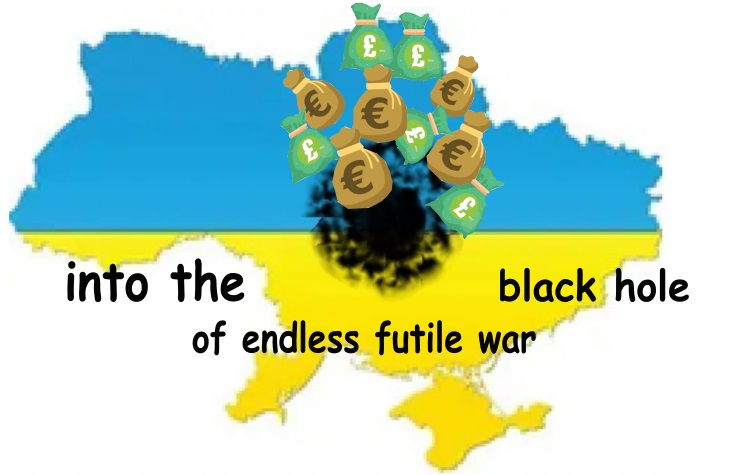
Europeans are tired. They want peace, stability, and the quiet dignity of prosperity.
When a prime minister advises his staff to rest because the coming year will be much more difficult, it is neither black humor nor fatigue. It is a moment of sincerity, the kind that only emerges when internal projections no longer support the public narrative.
Giorgia Meloni was not addressing the electorate. She was addressing the machinery of the state itself, the administrative core charged with implementing decisions whose effects can no longer be hidden. Her observation was not about a normal increase in workload. She was talking about constraints, about limits being reached, about a Europe that has moved from crisis response to a phase of controlled contraction, fully aware that 2026 is the year when deferred costs will eventually converge.
What has leaked out is what European ruling circles have already understood: the Western strategy in Ukraine has run up against material limits. Not with Russian messages, not with disinformation, not with populist dissent, but with steel, ammunition, energy, manpower, and time. Once these realities assert themselves, political legitimacy begins to erode.
The EU cannot sustain this war economically. Europe can strike poses of readiness. It cannot manufacture war.
After years of high-intensity conflict, both the US and Europe are rediscovering a long-forgotten truth: wars of this nature cannot be sustained with speeches, sanctions, or the abandonment of diplomacy. They require bullets, missiles, trained personnel, maintenance cycles, and industrial production that consistently exceeds battlefield losses. None of this exists, not in sufficient quantities, and it is not feasible in the timeframe preached in Brussels.
Russia is producing artillery ammunition in quantities that Western officials now openly admit exceed NATO’s total production. Its industrial base has shifted to near-continuous wartime production, with centralized procurement, streamlined logistics, and state-led manufacturing, without even total mobilization. Estimates place Russian production at several million artillery shells per year, already delivered, not just projected.
Europe, meanwhile, spent 2025 congratulating itself on targets it is structurally incapable of achieving. The EU’s stated commitment of two million shells per year depends on facilities, contracts, and labor that will not be available by the decisive period of the war, if ever. Even if achieved, the figure would still be less than Russian production. The US, despite emergency expansion, expects about one million shells per year once full ramp-up is complete, and only if that happens. Even on paper, combined Western production struggles to match what Russia is already producing in practice. The imbalance is clear.
This is not just a deficit, but a misalignment of timing. Russia is producing now. Europe is planning for the future. And time is the only factor immune to sanctions.
Washington, in fact, cannot indefinitely compensate for Europe’s eroded capacity because it faces its own industrial difficulties. Patriot interceptor production remains in the order of a few hundred per year, while demand simultaneously concerns Ukraine, Israel, Taiwan, and the replenishment of US stocks: an imbalance that, as Pentagon officials admit, cannot be resolved quickly. Shipbuilding tells a similar story: submarines and surface ships are years behind schedule due to labor shortages, aging infrastructure, and skyrocketing costs, pushing significant expansion toward 2030. The assumption that America can indefinitely support Europe is no longer in line with reality. This is a systemic Western problem.
Unfounded war rhetoric
European leaders talk about a “state of war” as if it were a rhetorical position, but in reality, it is an industrial condition that Europe does not meet.
New artillery lines take years to reach stable production. Air defense interceptors are produced in long, batch-based cycles, not in sudden spikes. Even basic components such as explosives remain a critical issue, with plants that closed decades ago only now reopening and some not expected to reach full capacity until the late 2020s. This timeline is in itself an admission.
Europe’s weakness is not intellectual, but institutional: huge sums have been authorized, but procurement inertia, fragmented contracts, and a depleted supplier base have meant that deliveries are years behind schedule. France, often described as Europe’s most capable arms manufacturer, is capable of building advanced systems, but only in limited quantities, counted in dozens, while a war of attrition requires thousands. EU ammunition initiatives have expanded capacity on paper, while the front has exhausted ammunition in a matter of weeks.
These are not ideological shortcomings, but administrative and industrial failures, which are exacerbated in stressful situations. It is yet another example of the failure of European Community policy, so much so that the structural contrast is stark. Western industry has been optimized for shareholder returns and peacetime efficiency, while Russian industry has been reoriented to withstand pressure. NATO announces aid packages. Russia counts deliveries. You can already guess what the outcome of this situation will be, right?
This industrial reality explains why the debate on asset freezing was so important and why it failed. Europe did not pursue the seizure of Russian sovereign assets out of legal ingenuity or moral determination, but because it needed time: time to avoid admitting that the war was unsustainable in Western industrial terms, time to replace production with financial maneuvers.
When the effort to confiscate some €210 billion in Russian assets failed on December 20, blocked by legal risks, market repercussions, and opposition led by Belgium, with Italy, Malta, Slovakia, and Hungary opposing total confiscation, the Brussels technocracy settled for a reduced alternative: a €90 billion loan to Ukraine for 2026-27, with interest payments of around €3 billion per year. This further mortgages Europe’s future. This is not a strategy, but emergency triage. A collapsing political hospital. Pure panic.
Narrative, crisis, disaster
The deeper reality is that Ukraine is no longer primarily a military dilemma, it is a question of solvency. Washington recognizes this, because it cannot absorb the reputational discomfort, but they cannot take on unlimited responsibility forever. A way out is being explored, discreetly, inconsistently, and shrouded in rhetorical cover.
Europe cannot admit the same necessity, because it has ultimately adopted ‘Putin’s version’, i.e. it has framed the war as existential, civilising, moral – but do you remember when European politicians enjoyed calling Putin crazy for talking about a clash of civilisations?
Compromise has become appeasement, negotiation surrender. In doing so, Europe has eliminated its own escape routes. Well done, ladies and gentlemen!
On the narrative front, greetings to all. The aggressive enforcement of the EU’s Digital Services Act has less to do with security than with containment: building an information perimeter around a consensus that cannot survive open scrutiny. Translated: censorship as a solution. The truth of the matter must not be made known, and those who try to do so must be suppressed in an exemplary manner. This also explains why regulatory pressure now extends beyond European borders, generating transatlantic friction over freedom of expression and jurisdiction. Confident systems welcome debate. Fragile ones suppress it. In this case, censorship is not ideology, but a form of insurance.
The information crisis, rest assured, will very soon become… a social crisis ready to detonate into domestic conflict.
And the crisis is also one of resources and energy. We are witnessing the securitization of decline, whereby obligations are postponed while the productive base needed to sustain them continues to shrink. It’s a cat chasing its tail. Here too, you know how it will end, don’t you?
Europe has not only sanctioned Russia. It has sanctioned itself. European industry will continue to pay energy prices well above those of its competitors in the United States or Russia throughout 2026. Take a trip around Europe, read the headlines in local newspapers, look at people’s faces: the fabric of small and medium-sized enterprises, the true beating heart of entire EU countries, is quietly disappearing. And this is logically reflected in large companies too. This is why Europe cannot increase its production of ammunition and why rearmament remains an aspiration rather than a concrete operation.
Energy, we said. Low-cost energy was not a convenience, it was essential. If it is eliminated through self-inflicted damage, the entire structure is emptied. Even the most ambitious plans preached for years, such as the IMEC corridor, are still a mirage. There is a stampede towards Turkey, Azerbaijan, and Georgia to try to scrape together a few kilowatts. A ridiculous attempt to save what is now tragically unsalvageable.
China, observing all this, represents the other half of Europe’s strategic nightmare. It controls the world’s deepest manufacturing base without having entered into a position of war. Russia does not need China’s full capacity, only its strategic depth in reserve. Europe has neither.
A frightening 2026
2026 therefore looks set to be a terrible year, I’m sorry to say. The European elites find themselves losing control on three fronts at once. On finance, because the budget will be bitter and the money for the insane support to Kiev will no longer be the same. On narrative, because the question citizens will ask themselves will be ‘what was the point of all this?’. On the cohesion of the Alliance, both NATO and the EU, because Washington’s disengagement will force a review of the balance of power on the European continent to the point of no return and, perhaps, a break between the two sides divided by the ocean.
Panic, again. Not a sudden defeat, but the slow erosion of legitimacy as reality creeps in through gas that costs as much as gold, closed plants, empty stockpiles, obsolete rifles, and a future that is turning away.
This is not just a difficult situation for Europe, but a matter of civilization. A system incapable of producing, supplying, speaking honestly, or retreating without collapsing in credibility has reached its limit. When leaders begin to prepare their institutions for worse years, they are not anticipating inconveniences, but recognizing structural failure.
Empires proclaim victory loudly. Declining systems quietly lower expectations or, in this case, momentarily say the quiet part out loud. But the truth is that nothing is the same as before, and it is obvious.
For most Europeans, the reckoning will not come as an abstract debate about strategy or supply chains, but as a simple realization: this was never a war they consented to. It did not defend their homes, their prosperity, or their future. And so, again, how do you think it will end?
An ideological war has been fought in the name of imperial ambition and financed through declining living standards, industrial decline, and the prospects of their children. In the name of big pro-European capital, of the privileged few with robes, stars, and crowns.
For months, even years, it was said that “there was no alternative” and that this was the only course of action. And now?
Europeans are tired. They want peace, stability, and the quiet dignity of prosperity: affordable energy, a functioning industry, and a future unencumbered by conflicts they NEVER chose and, above all, they do not want the decline of millennia-old civilizations.
And when this awareness has taken hold, when the fear has faded and the spell has been broken, the question Europeans will ask themselves will not be technical or ideological. It will be existential. And all existential questions lead to radical choices, even terrible ones.
May this dramatic fear keep the mad leaders of this Europe awake at night.
Britain to extend life of ageing nuclear plants to keep the lights on.
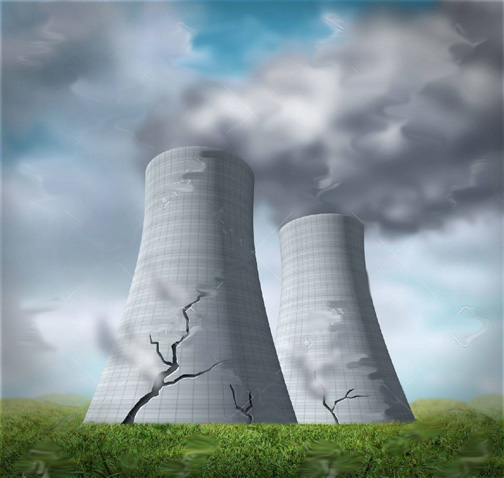
Hartlepool and Heysham 1 licenses prolonged to 2030 due to ‘dangerous gap’ in power supplies.
Jonathan Leake, Energy Editor, 21 January 2026
Two of Britain’s oldest nuclear power plants
could be kept running for an extra two years because of an acute
electricity shortage in the UK. Hartlepool and Heysham 1, owned by EDF,
were due to shut down in 2028, but ministers want to extend the operating
licences to at least 2030 because the UK faces “a dangerous gap” in
power supplies if they shut.
Both have already been operating for 42 years
despite being scheduled to close for safety reasons in 2008. EDF,
France’s state-owned power utility, which operates all five UK nuclear
stations, said it was working to keep the stations operational without
compromising safety. Mark Hartley, from EDF, said: “In November, the UK
Government said that the retirement of these Advanced Gas-Cooled Reactors
(AGRs) risks leaving a dangerous gap in Britain’s low-carbon energy
supply. “It is our ambition to generate from the remaining AGR stations
for as long as it is safe and commercially viable to do so, and we will
keep their lifetimes under review to assess whether further life extensions
can be achieved.”
Sizewell B, the UK’s largest nuclear plant, is
already due to operate until 2035, and EDF hopes to extend this to 2055.
Two other stations, Torness and Heysham 2, were originally scheduled to
close in 2023 and have been cleared to generate until March 2030 after EDF
invested £8.6bn in the fleet.
The fate of Heysham 1 and Hartlepool is less
certain and will depend on the results of safety assessments. AGR reactors
contain radioactive uranium fuel pellets surrounded by massive graphite
blocks that absorb the high-energy neutrons emitted by the fuel, thereby
controlling the nuclear reaction.
However, over time, these blocks tend to
crack due to the intense radiation and heat to which they are exposed. Such
cracks have already forced the closure of several other UK power stations.
EDF’s safety assessment will need to be ratified by the Office for
Nuclear Regulation, which will need to approve the extensions as safe.
Telegraph 21st Jan 2026, https://www.telegraph.co.uk/business/2026/01/21/britain-extend-life-ageing-nuclear-plants-keep-lights-on/
Chernobyl cooling systems have lost power but meltdown risk is low
An electrical outage at Chernobyl nuclear power plant risks dangerous fuel overheating, but experts say that the chances are extremely slim due to the age of the reactors, which were shut down over two decades ago
New Scientist, By Matthew Sparkes, 20 January 2026
An electrical outage at Ukraine’s Chernobyl Nuclear Power Plant has taken spent fuel cooling systems offline, leading to a potential risk of overheating and the release of dangerous levels of radiation – but due to the age of the fuel, it should be safe until power is restored.
The International Atomic Energy Agency (IAEA) reports that several Ukrainian electrical substations have been hit by Russian military strikes, causing power outages at Chernobyl. “The IAEA is actively following developments in order to assess impact on nuclear safety,” wrote IAEA director general Rafael Grossi in a post on X.
Spent nuclear fuel from reactors continues to emit radiation for years, creating heat that must be shed, or else the fuel can melt and emit a spike of dangerous radiation. The fuel from Chernobyl’s former reactors is stored in a large cooling pond that is constantly replenished with fresh, cold water to keep its temperature down.
But without an electricity supply – which the IAEA says the site now lacks – this cooling has stopped, which will allow the water temperature to rise and increase the rate of evaporation.
“When the fuel comes out of a reactor, it will be hot for a while, because there will be fission products and there will be radioactive and giving off gammas and betas and alphas – just emitting energy, which needs to be removed, otherwise it will eventually melt,” says Paul Cosgrove at the University of Cambridge.
Working in Chernobyl’s favour, however, is that its stored fuel is older and therefore has already had time to emit much of its radioactive energy and cool down. The risk now is lower than the risk was in 2022, for example, when New Scientist reported on similar power outages at Chernobyl.
“It is always a worry when a nuclear site loses power, but worry about nuclear risks is often several orders of magnitude above the risks associated with other events with similar consequences,” says Ian Farnan, also at Cambridge.
Chernobyl’s reactor 4 exploded in 1986, but reactor 2 was shut down in 1991, reactor 1 ceased generating power in 1996 and reactor 3 – the final one at the site – was decommissioned in 2000.
The exact specifications of the storage pools that contain the fuel left over from those reactors at Chernobyl are kept classified, says Cosgrove. But he is aware of an inspection by regulators in 2022, which found that the risk of spent fuel overheating in the case of a power outage was low. “This fuel has been sat in there for 20 years, so it will have decayed. More and more of that energy will be gone,” he says………………. https://www.newscientist.com/article/2512468-chernobyl-cooling-systems-have-lost-power-but-meltdown-risk-is-low/
IAEA chief says nuclear accident risk in Ukraine outweighs fear of atomic weapons.

Rafael Grossi says fighting around Zaporizhzhia nuclear power plant has left Europe’s largest facility in ‘extremely fragile, volatile condition’ –
Beyza Binnur Donmez |16.01.2026 GENEVA, https://www.aa.com.tr/en/russia-ukraine-war/iaea-chief-says-nuclear-accident-risk-in-ukraine-outweighs-fear-of-atomic-weapons/3801135
The head of the UN nuclear watchdog said he is more worried about the risk of a nuclear accident in Ukraine than the potential use of atomic weapons, stressing the fragile situation at Europe’s largest nuclear power plant.
In an interview published on Friday, International Atomic Energy Agency Director General Rafael Grossi told RTVE that while the possibility of nuclear weapons being used in the Ukraine war cannot be fully ruled out, it remains unlikely.
“I believe that the possibility of the use of nuclear weapons in the context of this conflict is not very high,” Grossi said. “Therefore, we are immediately more concerned about the possibility of a nuclear accident than about the use of the nuclear weapon itself.”
Grossi underlined the dangers surrounding the Zaporizhzhia Nuclear Power Plant, which he described as “the most important nuclear power plant in Europe,” noting that it once supplied 20% of Ukraine’s electricity. The plant, located in a combat zone and occupied by Russia, remains highly vulnerable to military activity and power outages that could disrupt cooling systems.
“The situation today is extremely fragile. It is a combat zone,” he said, adding: “We are exercising this function of permanent observation and mediating between both belligerents to achieve, for example, specific ceasefires. We have already successfully negotiated four that allow us to carry out, for example, repairs on the high voltage lines that surround the plant, in order to precisely avoid radiological emergency situations.”
“It is an extremely fragile and volatile situation that we follow day by day,” he stressed.
Iran holds ‘significant amount’ of enriched uranium
Turning to Iran, Grossi said the country continues to hold a “significant amount” of highly enriched uranium, amid tensions and suspended inspections following attacks on nuclear facilities.
“There is still a significant amount of uranium enriched to 60% isotopic purity in Iran, which is practically the level required for the manufacture of nuclear weapons,” he said.
Grossi also warned against any Iranian move to withdraw from the Treaty on the Non-Proliferation of Nuclear Weapons, saying: “This would only aggravate the situation of tension that is already being experienced.”
To a question, the IAEA chief said the agency remains engaged in dialogue with Tehran and other key actors, including the US, to restore monitoring and prevent further escalation.
60 years since the Palomares incident “The residents were constantly misinformed”.
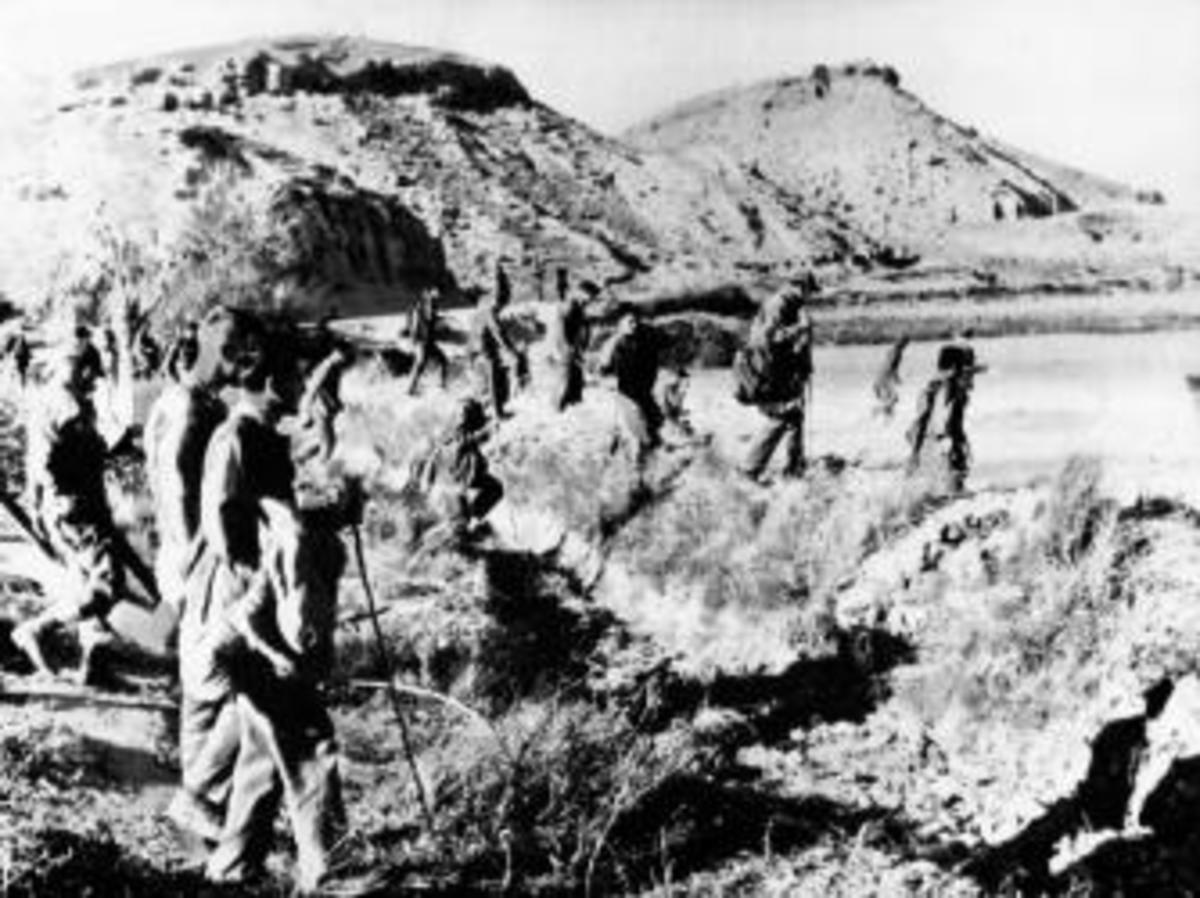
On the Palomares nuclear accident, symbolic decontamination actions, and the lasting damage to people and the environment. A conversation with José Herrera Plaza.Interview: Norbert Suchanek
Sixty years ago, on January 17, 1966, one of the most serious nuclear accidents of the Cold War occurred over southern Spain. A US Air Force tanker collided with a B-52 bomber carrying four hydrogen bombs. Both aircraft exploded; the debris and the dangerous cargo fell from the sky over the small coastal village of Palomares in Andalusia. The parachutes on two of the four bombs failed to deploy. They shattered on impact, contaminating the air and soil around Palomares with plutonium and uranium. The fourth bomb fell into the Mediterranean Sea and was not recovered for 80 days. Where were you in January 1966 when the hydrogen bombs fell from the sky?
I was just starting school in Almería at the time. That’s about 90 kilometers from Palomares. Like most people in Andalusia, I had no idea about the hydrogen bombs hanging over our heads.
When and why did you begin your research on the Palomares accident and make it your main topic?
On January 13, 1986, I attended a meeting of the residents of Palomares. It was three days before the 20th anniversary of the accident, and their claims for compensation for health damages were about to expire. I wanted to make a documentary about this little-known, almost unbelievable story, but at the time, the source material relevant for a documentary was classified. I waited 21 years, gathering all available documents, until I was finally able to complete the documentary “Operation Broken Arrow: The Palomares Nuclear Accident.”
What does “Operation Broken Arrow” stand for?
“Broken arrow” is a code word used by the US military. It refers to an incident involving nuclear weapons, such as an accidental or unexplained nuclear explosion, or the loss or theft of nuclear weapons.
How did the local Spanish authorities react in January 1966? Were they aware of the plutonium danger?
The local authorities reacted according to the standard protocol for an aircraft accident and were without information for several days regarding the involvement of nuclear weapons and consequently also regarding the widespread contamination.
How and when did the Madrid government react?
Spanish authorities learned of the crash almost immediately, thanks to warnings transmitted by a Spanish Navy helicopter via emergency channels. Also on the same day, they learned from the US ambassador that the aircraft was carrying four hydrogen bombs. However, both governments remained silent until the media informed the public three days later.
How was it possible that the media reported on it so quickly during the Franco dictatorship?
Two days after the accident, the Spanish-American journalist André del Amo, working for United Press, was in Palomares and confirmed the involvement of nuclear weapons as well as the ground measurements taken with Geiger counters. His report appeared in major media outlets worldwide the following day. The dictatorship reacted in its usual manner: it confiscated newspapers from kiosks and at the airports in Madrid and Barcelona as soon as international flights landed.
What were the direct consequences of the hydrogen bombs bursting? Was there a risk of a nuclear explosion?
The two Mk-28-FI bombs had 68 times the explosive power of the atomic bomb dropped on Hiroshima. Upon impact in Palomares, the bombs exploded because the conventional explosive charge detonated in the fuse. An area of 635 hectares was subsequently contaminated with fissile fuel: approximately ten kilograms of plutonium-239 and -241, as well as slightly more than ten kilograms of uranium-235 and depleted uranium-238. While the risk of an accidental nuclear detonation was very low, it did exist. These hydrogen bombs were among the most technologically advanced in the US arsenal at the time. Their safety systems were quite good—with the exception of the conventional explosive, which was sensitive to shocks. Due to this accident and a similar one two years later in Greenland, the US military replaced this explosive with a shock- and fire-resistant alternative.
Was the population warned about the plutonium contamination and the consumption of potentially contaminated food such as tomatoes?
The inhabitants of Palomares were continually and insidiously misinformed for fifty years, both under the Franco dictatorship and in democratic Spain. They learned about their precarious situation largely through banned shortwave radio stations such as the communist Radio España Independiente , as well as through the BBC and Radio Paris with their nightly Spanish-language programs. A prominent member of the Spanish nobility, the Duchess of Medina Sidonia, also contributed to informing the local population about their situation and their rights, for which she was imprisoned by the fascist dictatorship.
Are there any data or estimates on the number of people who became ill or died as a result of the radioactive contamination?
No, because a comprehensive epidemiological study was never permitted. Independent attempts failed miserably. At the same time, the governments in Madrid and Washington maintain the official narrative that there has never been a single case of cancer caused by plutonium. In reality, however, Palomares is an environmental disaster zone with significant health risks for its inhabitants. Yet Palomares is not an exception compared to similar incidents elsewhere in the world: an invisible minority, invisible consequences.
Did the nuclear incident have any impact on tourism in southern Spain, which was then becoming an important economic factor?
In 1966, tourists visited other parts of Spain, but not this region. The province of Almería was very poor at the time and virtually isolated due to its poor transport infrastructure. However, there were fears that the accident could negatively impact tourism in the rest of the country, as the international press—especially the British and Italian press in Europe—reported on it. In Australia, a newspaper owned by the young Rupert Murdoch claimed there had been a nuclear explosion, that thousands of people were fleeing, and that the entire Spanish Mediterranean coast was contaminated. This led to the Spanish Minister of Information and the American ambassador swimming in the sea at Palomares beach in front of the media.
The US military conducted a large-scale search and cleanup operation after the crash in Palomares. How did the local population react?
The main priority of the extensive military operation was the search for the missing bomb on land and underwater. The search on land lasted over 45 days, the search at sea 80 days. Second priority was the recovery of the flight recorder and the classified B-52 components, primarily the radio equipment used for the combat log. Thirdly, over 125 tons of wreckage from the bomber and the tanker aircraft were to be recovered and sunk off the coast in the Mediterranean Sea. Finally, a symbolic decontamination operation was carried out for the international community. After the disaster, some people likely suffered from a kind of post-traumatic stress. Subsequently, a collective paranoia gripped the city, exacerbated by the contradictions between the statements of the authorities of both countries. The population was suddenly catapulted into the nuclear age and had to grapple with a new concept: radioactivity.
Was the military able to remove all the plutonium from the region?
After lengthy and asymmetrical negotiations between the hegemonic power, the USA, and the Franco dictatorship, they agreed to remove the plutonium, which had been scattered to the winds, and return it to the USA. However, they transported only 650 cubic meters of contaminated soil and 350 cubic meters of contaminated crop residue to the USA. The agreement was not honored because the excavated soil, stored in metal drums, was not the most heavily contaminated. It is estimated that less than one percent of the plutonium, just under 100 grams, returned to the USA in the 4,810 metal drums, each holding 208 liters. The remaining contaminated fields were plowed to inject the plutonium 30 centimeters into the soil. Forty years later, two secretly constructed pits containing approximately 4,000 cubic meters of radioactive waste were discovered in the region.
What happened to the contaminated material from Palomares in the USA?
Two metal drums were sent to the Los Alamos National Laboratory for plant experiments. 4,808 metal drums were transported to Aiken, South Carolina, to the Savannah River Nuclear Complex of the U.S. Atomic Energy Commission and buried at a depth of six meters. This was accompanied by a comprehensive, worldwide propaganda campaign. The fact that 99 percent of the plutonium and uranium remained in the soil of Palomares was kept secret from the public, and especially from the residents and farmers who cultivated these radioactively contaminated areas. The U.S. Air Force and the Spanish government assured them that the land was completely decontaminated and that there was no danger. Meanwhile, the U.S. Atomic Energy Commission and the Junta de Energía Nuclear in Spain used the situation to conduct a secret experiment program on the local population. The aim was to investigate the uptake and storage of plutonium and uranium in the human body by a representative number of individuals from a population potentially exposed to inhaling plutonium oxide aerosol. This was the secret program codenamed “Indalo Project,” which was carried out without the informed consent of the local population.
What is the current situation in Palomares? Are there still contaminated areas and radioactive hazards in the region?
Despite assurances from Spain and the US that there was no longer any danger to farmers and their families, the plowing of the soil with plutonium in 1966 led to the stirring up and release of numerous aerosols containing radioactive elements. For forty years, the residents of Palomares were exposed to radioactive nuclides. It wasn’t until 2006 that the first radiation protection measures were implemented for the population, restricting access to and agricultural use of a 40-hectare area through fencing and marking. Now, sixty years later, we are still waiting for the central government in Madrid to carry out the decontamination. It has never prioritized the issue, even though it is documented that more than 210 residents exhibited symptoms of internal lung contamination. The actual number of those affected, however, remains unknown. After all, the political elites of the central government live over 520 kilometers away in Madrid.
Why did the B-52 bomber fly over southern Spain with nuclear weapons back then?
This occurred as part of Operation Chrome Dome, which began on January 18, 1961. From then on, four to six strategic bombers flew round-trip missions over Spain every day, year after year. During the Cuban Missile Crisis of 1962, 42 bombers were in the air daily. They came from the East Coast of the United States, crossed Spanish airspace, approached southern Italy, and returned to their bases over Spain. Each B-52 carried four thermonuclear bombs. In an attack scenario, they could reach and attack their targets within one to two hours, depending on whether the target was in the USSR or another Warsaw Pact state. For five years, more than 17,000 bombers flew over Spain and were refueled 26,000 times. No other country in Europe permitted such dangerous maneuvers in its airspace. Almost 35,000 hydrogen bombs flew over our heads. The collisions over Palomares and two years later over Thule in Greenland occurred because the law of probability came into play.
How will you commemorate the 60th anniversary of this never-ending Palomares disaster?
I am planning a photo exhibition and a panel discussion at the Villaespesa Library in Almería entitled “Palomares – 60 Years of Government Failure.” I also expect to present my new book at the end of January. It is titled “The Year of the Bombs: Stories from Palomares.” The book brings together the testimonies of 27 Spaniards and Americans who were involuntarily involved in the Palomares disaster. It is written in the style of a documentary narrative, similar to Svetlan Alexievich’s “Voices from Chernobyl,” a work to which it thus pays homage. It is about counteracting oblivion. The story of Palomares is not yet over. It continues to be written.
Ukraine and Russia agree temporary ceasefire to allow repairs to Zaporizhzhia nuclear power line.
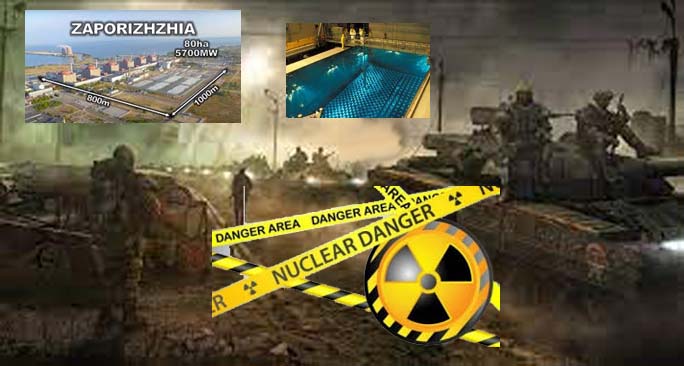
The IAEA director warned that attacks on Ukraine’s power infrastructure have “direct implications on the nuclear safety of its nuclear facilities”.
Mirror UK, Emma O’Neill Content Editor, 16 Jan 2026
Ukraine and Russia have agreed a temporary ceasefire to allow urgent repair work on a damaged power line at Europe’s largest nuclear plant, the Zaporizhzhia Nuclear Power Plant (ZNPP), IAEA officials confirmed today……….
The 330 kV backup line was disconnected on 2 January during military activity, leaving the plant reliant on a single 750 kV main power line. Technicians from Ukraine’s electrical grid operator are expected to begin repairs under the short-term truce in the coming days.
An IAEA team has departed Vienna to travel to the frontline and monitor the work, ensuring that safety measures are strictly followed during the repairs.
The agency confirmed that winter protection measures are in place at the plant, including temperature controls to prevent freezing in groundwater wells that supply cooling systems for reactors and spent fuel pools. Emergency diesel generators are also fully operational should the plant lose off-site power again.
The situation highlights the ongoing risks to Ukraine’s nuclear facilities, with military activity recently damaging a substation at the Chernobyl plant and forcing temporary power reductions at other sites.
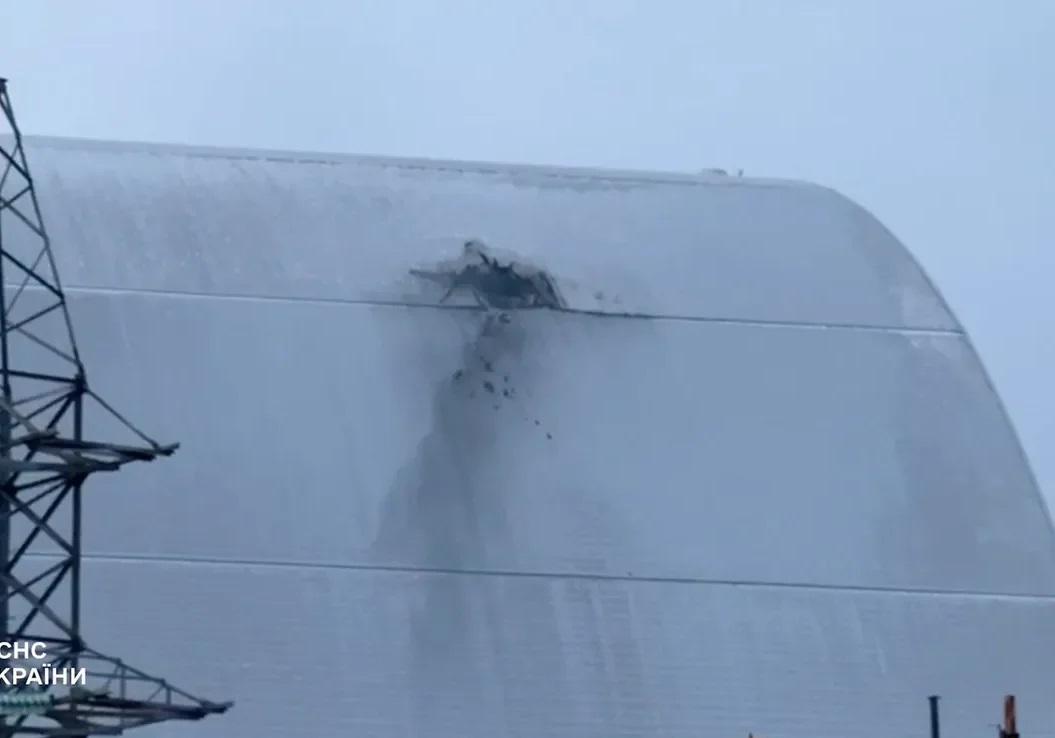
Grossi warned that attacks on Ukraine’s power infrastructure have “direct implications on the nuclear safety of its nuclear facilities” and announced plans for another IAEA mission to assess 10 critical substations supplying electricity for reactor cooling systems and safety equipment.
Over the past week, IAEA teams reported air raid alarms and military activity near all five nuclear sites in Ukraine, including explosions and flying objects close to Zaporizhzhia, Khmelnitsky, South Ukraine, and Chernobyl plants.
The temporary ceasefire now allows repairs to the ZNPP backup line to go ahead, providing a vital safeguard for Europe’s largest nuclear facility and reducing the risk of a serious nuclear incident. https://www.mirror.co.uk/news/world-news/ukraine-russia-agree-temporary-ceasefire-36566368
US aggression, UK support: The ‘special relationship’
From Iran to Libya, from Panama to Venezuela, there is a history of the UK supporting illegal US military interventions
MARK CURTIS, 12 January 2026, https://www.declassifieduk.org/us-aggression-uk-support-the-special-relationship/
Forty years ago, US warplanes bombed Libya, attempting to assassinate its leader Muammar Gaddafi. Failing in that task, they managed to kill dozens of civilians in Tripoli, Libya’s capital.
The attacks, which were in response to the bombing of a Berlin nightclub blamed on Gaddafi, were strongly supported by Margaret Thatcher’s government. Indeed, she allowed some of the US jets to take off from bases in Britain.
In the face of widespread public opposition to the US raid, a defiant Thatcher told parliament it was “a necessary and proportionate response to a clear pattern of Libyan terrorism” and to “uphold international law”.
However, the UN General Assembly, and most world opinion, condemned the attack as a violation of international law.
But for the British prime minister: “The United States has stood by us in times of need, as we have stood by her. To refuse their request for the use of bases here would have been to abandon our responsibilities as an ally and to weaken the fight against terrorism.”
Fast forward two decades, and we find ourselves in a not dissimilar situation over US attacks on Venezuela.
UK ministers give their backing to the kidnapping of a foreign head of state amidst a military intervention, condemned in the wider world but supported in Whitehall because of the so-called “special relationship”.
‘Our full support’
It was always thus. Three years after the attack on Libya, the US invaded Panama in December 1989. US aggression killed up to 3,000 people in this instance, and overthrew President Manuel Noriega, who had been on the CIA’s payroll for decades.
The invasion was widely considered to be illegal and in violation of the charters of both the UN and the Organization of American States.
A Foreign Office legal adviser wrote on the day of the invasion that “it is not possible to conclude that the American action was justified in international law”.
This didn’t matter in the British corridors of power. In a private phone call, Thatcher assured US president George W Bush that the intervention “was a very courageous decision which would have our full support”.
In the days that followed, Britain even vetoed a UN Security Council resolution which “strongly deplores” the invasion.
Clinton/Blair double act
A change in leadership in London and Washington made little difference to this pattern in the 1990s when the double act became Bill Clinton and Tony Blair.
In August 1998, Clinton launched a wave of cruise missile attacks on targets in Afghanistan and Sudan in retaliation for Al Qaeda’s bombing of US embassies in Kenya and Tanzania earlier that month.
Al Qaeda’s bombings were horrific, killing over 300 people. But while the US retaliation struck terrorist training camps in Afghanistan, its target in Sudan was a pharmaceuticals factory that produced medicines for the country’s population.
The US claimed the plant was manufacturing chemical weapons but no strong evidence ever emerged for this.
Amid the controversy, Bill Clinton blocked proposals for a UN investigation into the matter while Tony Blair strongly backed his ally’s attacks — against the advice of some British diplomats reportedly being appalled at them.
‘Proper legal authority’
It was only a few months later, in December 1998, that Bill and Tony worked even more closely together in a new bombing campaign.
They authorised four days of air strikes on Iraq, ostensibly to degrade dictator Saddam Hussein’s ability to store and produce weapons of mass destruction (which, of course, never materialised).
The declassified files show that Blair and his closest advisers were consistently informed by UK legal advisers that attacking Iraq would not be lawful.
The only exception would be if a new UN Security Council resolution were to be passed saying Saddam was in “material breach” of Iraq’s previous commitments – which London and Washington never secured.
In a sign of Blair’s attitude towards legal requirements, he privately wrote at the time that he found his law officers’ legal advice “unconvincing”.
When he announced military action to parliament in November 1998, Blair misled the house by saying: “I have no doubt that we have the proper legal authority, as it is contained in successive Security Council resolution documents”.
‘Act of war’
Over 20 years later, it was the turn of Boris Johnson to acquiesce to Donald Trump in an overtly illegal US act of aggression.
In January 2020, Trump ordered a drone strike that killed Iranian General Qasem Soleimani, the commander of the Quds force, a branch of Iran’s Islamic Revolutionary Guard Corps which the US had designated a terrorist organisation.
Washington tried to justify the killing by claiming it had intelligence that Soleimani was plotting imminent attacks on US interests across the Middle East.
But a UN report found that the assassination was illegal. Indeed, the then UN special rapporteur on extrajudicial executions, Agnes Callamard, said it marked a watershed in international law.
“It is hard to imagine that a similar strike against a Western military leader would not be considered as an act of war, potentially leading to intense action, political, military and otherwise, against the State launching the strike”, she wrote.
By contrast, Johnson defended the US action and said that “we will not lament” Soleimani’s death. He added that “the strict issue of legality is not for the UK to determine since it was not our operation” — precisely what Keir Starmer has just said about Venezuela.
London’s support for Washington also came in the form of Johnson’s equally belligerent foreign secretary, Dominic Raab, who added that the US “had a right to exercise self-defence”.
Bombing Iran
Trump attacked Iran again after Keir Starmer had been in office for nearly a year. In June last year, the US launched air strikes on nuclear-related sites in the country, ostensibly to prevent Tehran developing a nuclear arms programme.
A group of UN experts condemned the intervention, stating: “These attacks violate the most fundamental rules of world order since 1945 – the prohibition on the aggressive use of military force and the duties to respect sovereignty and not to coercively intervene in another country.”
Yet Starmer’s response was a rehearsal of his reaction to Trump’s recent kidnapping of Nicolas Maduro in Venezuela. The British prime minister failed to condemn the US intervention, instead going along with it by saying it was “clear Iran cannot have a nuclear weapon”.
Similarly, foreign secretary David Lammy was repeatedly asked whether the US attacks were illegal, and refused to say.
Backing the law by violating it
By the time the US under Trump overthrew the Venezuelan government earlier this month, the UK response was utterly predictable.
Starmer and other ministers welcomed Maduro’s overthrow, failed to identify it as an obvious violation of international law and even had the audacity to claim they remained strong supporters of that law.
Foreign secretary Yvette Cooper said in a parliamentary debate on Venezuela that “we will always argue for the upholding of international law”, precisely at a time she was supporting an obvious violation of it.
It was the same with her deputy. A day after telling parliament she welcomed the illegal US removal of Maduro, foreign minister Jenny Chapman told parliament the UK’s “support for international law… is unwavering”.
Maduro’s kidnapping was strongly condemned by UN experts while its human rights chief, Volker Turk, said it “violates the country’s sovereignty and the UN charter”.
This failed to deter the UK immediately proceeding with military collaboration with Trump’s rogue state. Four days after the kidnapping, the UK provided military support to Washington to help it seize a Russian-flagged oil tanker near the northwest waters of the UK.
Declassified asked legal experts to comment on Trump’s latest military intervention and many are concluding it is yet another violation.
The decades-long cycle goes on. The US and UK have long been repeatedly undermining what exists of a rules-based international order – while claiming to uphold it.
Who knows where it will lead us in terms of future wars and what price will be paid by ordinary people for the world’s leading states creating a global law of the jungle.
Who Needs CO2 to Heat the Planet When You Have Nuclear?

Letter in Westmorland Gazette January 15th 2026, https://lakesagainstnucleardump.com/2026/01/19/who-needs-co2-to-heat-the-planet-when-you-have-nuclear/?page_id=1745
Dear Editor
EDF is brazenly heralding the new year with their hype about how much CO2 Heysham’s dodgy old reactors have “saved.’ What they don’t say is that Heysham’s old reactors with their cracked graphite cores have used a vanishingly small amount of the vicious ongoing heat they have produced.
A vicious radioactive heat that will continue to be produced for thousands of years with the proposal to use the Lake District geology as a giant heat sink for this nuclear heat which cannot be turned off. Who needs CO2 to heat the planet when the nuclear industry is heating it up directly at great expense to the public in every way.
Yours sincerely,
Marianne Birkby
Lakes Against Nuclear Dump (a Radiation Free Lakeland campaign)
Miliband’s ‘green energy’ sea cable risks spreading nuclear waste across Orkney
Miliband’s ‘green energy’ sea cable risks spreading nuclear waste
across Orkney. Project could disturb radioactive particles on the seabed
which were created by the now-decommissioned Dounreay nuclear power plant.
The Orkney Link Transmission Project will enable renewable electricity to
be sent from the Scottish mainland to Orkney via an undersea cable that was
first approved in 2019. The project, overseen by the Department for Energy
Security & Net Zero, has already been criticised by locals for being
unsightly. It has now also emerged that the cable could disturb
“irradiated particles” on the seabed which were created by the
now-decommissioned Dounreay nuclear power plant decades ago. There is a
risk these radioactive particles, including radioactive forms of cobalt,
Americium and niobium, could wash ashore if disturbed. While official
documents state the risk is “extremely small”, the Government has
approved a £20m taxpayer-backed insurance policy to cover the cost of any
possible clean up operation.
Telegraph 17th Jan 2026, https://www.telegraph.co.uk/news/2026/01/17/milibands-green-sea-cable-risk-spreading-nuclear-waste/
Biden knew Ukraine would lose proxy war with Russia….provoked it anyway

Yet..and yet, President Zelensky is refusing to accept the reality of Ukraine’s defeat, even demanding return of territory lost forever. NATO countries led by delusional leaders Starmer in UK, Merz in Germany and Macron in France, claiming they’re Russia’s next target, are still pledging war resources they don’t have and never will
Walt Zlotow, Jan 17, 2026, Walt Zlotow West Suburban Peace Coalition Glen Ellyn IL
The US proxy war against Russia destroying Ukraine has largely disappeared from mainstream news. US warfare with Venezuela, possible renewed war with Iran, seizing Greenland from Denmark have put a virtual blackout on Ukraine war reporting.
But a bigger reason is the war is lost with no chance of reversing the destruction of Ukraine short of nuclear war with Russia. If that happens we’re all destroyed.
So Trump, his advisors, the national security state (A.K.A. war party) and the aforementioned mainstream news have moved on. They realize the war has become a spectacular defeat for America’s goal of bringing Ukraine into NATO to further weaken Russia and isolate it from the European political economy. Publically admitting defeat and failure is something none of them will dare not speak its name.
Trump, to his credit, is trying to get both Ukraine and NATO to give up and settle on Russia’ sensible terms: no NATO for Ukraine, Ukraine to be forever neutral between Europe and Russia, no return of land containing mainly Russian leaning Ukrainians brutalized by Kyiv for 8 years before Russia intervened.
How badly has Ukraine lost? Over a million and a half dead, wounded or MIA, a quarter million soldiers deserted and over 9 million fled to safer climes. The economy down by a third surviving on European life support. Reconstruction costs once war ends at a half trillion dollars and rising.
Russia meanwhile is thriving, economy up by pivoting away from trade with Europe to the Global South and others only too happy to degrade both US and European hegemony. Result is a tripling of NATO energy costs, collapse of leaders support with nationalist, antiwar opposition poised to take over next election.
Could it get any worse for Ukraine and NATO?
Yet..and yet, President Zelensky is refusing to accept the reality of Ukraine’s defeat, even demanding return of territory lost forever. NATO countries led by delusional leaders Starmer in UK, Merz in Germany and Macron in France, claiming they’re Russia’s next target, are still pledging war resources they don’t have and never will
The only logical explanation is that they know the inevitable defeat facing Ukraine and NATO but are terrified to admit it and do the right thing. Trump, while sensibly pushing Ukraine and NATO, refuses to pull all US support for the lost war. He’s cynically telling NATO to keep the weapons flowing…just as long as they buy them from America. For Trump, lost war can still be a profitable business deal. He’s also refuses to pull the plug on massive weapons Biden foolishly authorized in his last days knowing Trump had no stomach to continue the war.
Speaking of Biden, he knew Ukraine could not prevail when he provoked the Russian Special Military Operation in February, 2022. But he viewed Ukraine’s destruction as collateral damage to so degrading Russia in the process that they would be forever weakened and out of the European political economy. Biden likely viewed US/NATO Ukraine support as a repeat of US meddling that defeated Russia in Afghanistan in 1989. Big mistake as history didn’t repeat.
Biden’s Mother of all Sanctions and $150 billion in weapons backfired spectacularly. So not only did Biden destroy Ukraine by provoking war, he’s likely destroyed America’s dominance leading NATO in Europe. In fact he may have put NATO on the path to history with their impending defeat flailing away at a lost cause.
The only question, besides how badly the rump state of Ukraine will end up at war’s end, is whether Ukraine and NATO’s futile perseverance will end up in nuclear war with Russia still possible every day this nightmare continues.
However it ends, Joe Biden’s legacy will be making the greatest foreign policy mistake so far in America’s 250 years.
Say it wasn’t so, Joe.
Fears over plan for ‘biggest data centre cluster on earth’ in Scotland

RESIDENTS in East Ayrshire are growing extremely concerned about whether they will be consulted on a hyperscale data centre that is set to become part of “the biggest cluster in the world”.
Local concerns come after
it was revealed to residents that the developer of the site, the ILI group,
had never booked any venue for public consultations. Further, both East
Ayrshire Council and the developers set out dates for residents to attend
public consultations that were later cancelled with short notice. Local mum
Lisa Beacham said: “Councillors had been actively telling residents to
make themselves available for these public consultations, but I’ve
received confirmation that there were never any venue bookings made by the
developer.”
The National 15th Jan 2026, https://www.thenational.scot/news/25766423.east-ayrshire-residents-speak-hyperscale-data-centre/
Russia says it awaits US response on ‘important’ issue of expiring nuclear treaty

By Dmitry Antonov, January 15, 2026, Reporting by Dmitry Antonov Writing by Mark Trevelyan and Andrew Osborn Editing by Andrew Osborn, https://www.reuters.com/world/europe/russia-says-it-awaits-us-response-important-issue-expiring-nuclear-treaty-2026-01-15/
MOSCOW, Jan 15 (Reuters) – Russia is still waiting for the United States to respond to President Vladimir Putin’s proposal to informally extend for a year the provisions of the last remaining nuclear arms pact between the two countries, the Kremlin said on Thursday.
The New START treaty is due to expire in three weeks, and President Donald Trump has not formally responded to the offer that Putin made last September.
The Reuters Daily Briefing newsletter provides all the news you need to start your day. Sign up here.
“No, we have not received a response. We are certainly awaiting a response to Putin’s initiative; we consider this a very important topic,” Kremlin spokesman Dmitry Peskov told reporters.
New START, which was signed by presidents Barack Obama and Dmitry Medvedev in 2010, sets limits on the strategic weapons that each side would use to target the other’s critical political and military centres in the event of a nuclear war. It caps the number of deployed strategic warheads at 1,550 on each side, with no more than 700 deployed ground- or submarine-launched missiles and bomber planes to deliver them.
It is the last in a series of treaties dating back to the early 1970s that have enabled Moscow and Washington to maintain a stable nuclear balance even at times of acute international tension.
Trump told the New York Times this month that “if it expires, it expires”, and that he wanted to replace it with a more ambitious treaty including China.
China, whose arsenal is growing fast but remains a fraction of the size of Moscow’s or Washington’s, says it is unreasonable and unrealistic to ask it to join three-way disarmament talks.
Asked about Trump’s comments on a successor treaty, Peskov said this would be good for everyone but would involve a “very complex and drawn-out process”.
“As for our Chinese friends, their position is well known, and we respect it.”
Peskov reasserted Russia’s position that any discussion of strategic stability and security must take into account the nuclear arsenals of Britain and France.
Spectral Threats: China, Russia and Trump’s Greenland Rationale

Were Russia or China to attempt an occupation of Greenland through military means, Article V of the North Atlantic Treaty would come into play, obliging NATO member states, including the United States, to collectively repel the effort.
“There are no Russian and Chinese ships all over the place around Greenland,”
“Russia and/or China has no capacity to occupy Greenland or to take control over Greenland.”
14 January 2026 Dr Binoy Kampmark, https://theaimn.net/spectral-threats-china-russia-and-trumps-greenland-rationale/
The Trump administration’s mania about Greenland, a self-governing territory of Denmark, is something to behold. Its untutored thuggery, its brash assertiveness, and the increasingly strident threats to either use force, bully Denmark into a sale of the island, or simply annex the territory, have officials and commentators scrambling for theories and precedents. The Europeans are terrified that the NATO alliance is under threat from another NATO member. The Greenlanders are anxious and confused. But the ground for further action by Washington is being readied by finding threats barely real and hardly plausible.
The concerns about China and Russia seizing Greenland retells the same nonsense President Donald Trump promoted in kidnapping the Venezuelan President Nicolás Maduro and his wife. Looking past the spurious narcoterrorism claims against the former leader, it fell to the issue of who would control the natural resources of the country. If we don’t get Venezuelan oil now and secure it for American companies, the Chinese or the Russians will. he gangster’s rationale is crudely reductionist, seeing all in a similar veinThe obsession with Beijing and Moscow runs like a forced thread through a dotty, insular rationale that repels evidence and cavorts with myth: “We need that [territory],” reasons the President, “because if you take a look outside Greenland right now, there are Russian destroyers, there are Chinese destroyers and, bigger, there are Russian submarines all over the place. We are not gonna have Russia or China occupy Greenland, and that’s what they’re going to do if we don’t.” On Denmark’s military capabilities in holding the island against any potential aggressor, Trump could only snort with macho dismissiveness. “You know what their defence is? Two dog sleds.”
This scratchy logic is unsustainable for one obvious point. Were Russia or China to attempt an occupation of Greenland through military means, Article V of the North Atlantic Treaty would come into play, obliging NATO member states, including the United States, to collectively repel the effort. With delicious perversity, any US effort to forcibly acquire the territory through use of force would be an attack on its own security, given its obligations under the Treaty. In such cases, it becomes sound to assume, as the Danish Prime Minister Mette Frederiksen does, that the alliance would cease to exist.
Such matters are utterly missed by the rabidly hawkish Deputy Chief of Staff Stephen Miller, who declared that, “Nobody’s going to fight the United States militarily over the future of Greenland.” It was up to the US “to secure the Arctic region, to protect and defend NATO and NATO interests” in incorporating Greenland. To take territory from a NATO ally was essentially doing it good.
Given that the United States already has a military presence on the island at the Pituffik Space Base, and rights under the 1951 agreement that would permit an increase in the number of bases should circumstances require it, along with the Defence Cooperation Agreement finalised with Copenhagen in June 2025, much of Miller’s airings are not merely farcical but redundant. Yet, Trump has made it clear that signatures and understandings reflected in documents are no substitute for physically taking something, the thrill of possession that, by its act, deprives someone else of it. “I think ownership gives you a thing that you can’t do, whether you’re talking about a lease or a treaty,” he told the New York Times. “Ownership gives you things and elements that you can’t get from just signing a document.”
What, then, of these phantom forces from Moscow and Beijing, supposedly lying in wait to seize the frozen prize? “There are no Russian and Chinese ships all over the place around Greenland,” states the very convinced research director of the Oslo-based Fridtjof Nansen Institute, Andreas Østhagen. “Russia and/or China has no capacity to occupy Greenland or to take control over Greenland.”
Danish Foreign Minister Lars Lokke Rasmussen is similarly inclined. “The image that’s being painted of Russian and Chinese ships right inside the Nuuk fjord and massive Chinese investments being made is not correct.” Senior “Nordic diplomats” quoted in the Financial Times add to that version, even if the paper is not decent enough to mention which Nordic country they come from. “It is simply not true that the Chinese and Russians are there,” said one. “I have seen the intelligence. There are no ships, no submarines.” Vessel tracking data from Marine Traffic and LSEG have so far failed to disclose the presence of Chinese and Russian ships near the island.
Heating engineer Lars Vintner, based in Greenland’s capital, Nuuk, wondered where these swarming, spectral Chinese were based. “The only Chinese I see,” he told Associated Press,“ is when I go to the fast food market.” This sparse presence extends to the broader security footprint of China in the Arctic, which remains modest despite a growing collaboration with Russia since the 2022 invasion of Ukraine. These have included Arctic and coast guard operations, while the Chinese military uses satellites and icebreakers equipped with deep-sea mini submarines, potentially for mapping the seabed.
However negligible and piffling the imaginary threat, analysts, ever ready with a larding quote or a research brief, are always on hand to show concern with such projects as Beijing’s Polar Silk Road, announced in 2018, which is intended as the Arctic extension of its transnational Belt and Road initiative. The subtext: Trump should not seize Greenland, but he might have a point. “China has clear ambitions to expand its footprint and influence in the region, which it considers… an emerging arena for geopolitical competition.” Or so says Helena Legarda of the Mercator Institute for China Studies in Berlin.
The ludicrous nature of Trump’s claims and acquisitive urges supply fertile material for sarcasm. A prominent political figure from one of the alleged conquerors-to-be made an effort almost verging on satire. “Trump needs to hurry up,” mocked the Deputy Chairman of the Russian Security Council and former President Dmitry Medvedev. “According to unverified information, within a few days, there could be a sudden referendum where all 55,000 residents of Greenland might vote to join Russia. And that’s it!” With Trump, “that’s it” never quite covers it.
Challenge to Latest Sellafield Discharges to the Rivers Calder, Ehen and the Irish Sea
By mariannewildart, on behalf of Lakes Against Nuclear Dump, https://lakesagainstnucleardump.com/2026/01/16/still-waiting-for-judge-to-make-decision-on-our-challenge-to-latest-sellafield-discharges/
The hearing on whether our Judicial Review into the challenge of Sellafield’s latest discharges to the rivers Calder and Ehen took place at the end of November. Incredibly we are still waiting for the decision on whether our Judicial Review can go forward. In the meantime here is a lovely photo [on original] of Rowbank Farm.
This is just one of the many farms and grand houses in the once fertile plain between the Lake District mountains and the Irish Sea to be obliterated by Sellafield’s nuclear waste sprawl along the once meandering and braided river Calder. This photo [on original] along with many more can be found on the Calderbridge and Ponsonby Parish Council website (no endorsement of our challenge by the Parish Council is implied – the photos are in the public domain)
Onwards and Upwards
‘Wall of money’ to invest in Scottish nuclear power if Labour win election
Prime Minister Keir Starmer said the SNP were saying Scotland was ‘shut for business’.
Danyel VanReenen, Politics Reporter, Jan 15th, 2026
The Prime Minister said the UK Labour Government is ready and willing to invest in nuclear power in Scotland if Anas Sarwar wins the Holyrood election in May.
The current SNP Government has consistently been against the creation of new nuclear power stations north of the border, with control of planning laws giving ministers an effective veto.
Keir Starmer said there is a “wall of money” Labour wants to invest in Scottish nuclear power, but he said the SNP are saying no “for ideological reasons”.
“If there’s a Labour Government in Scotland, we’ll be back the day after the election to make sure that money is translated into good, well-paying jobs in renewables and nuclear,” Starmer said.
“That can’t happen at the moment because the SNP is basically saying ‘we’re shut for business’.”…………………………………………………………………………………………. https://news.stv.tv/politics/wall-of-money-to-invest-in-scottish-nuclear-power-if-labour-win-election
1 This Month
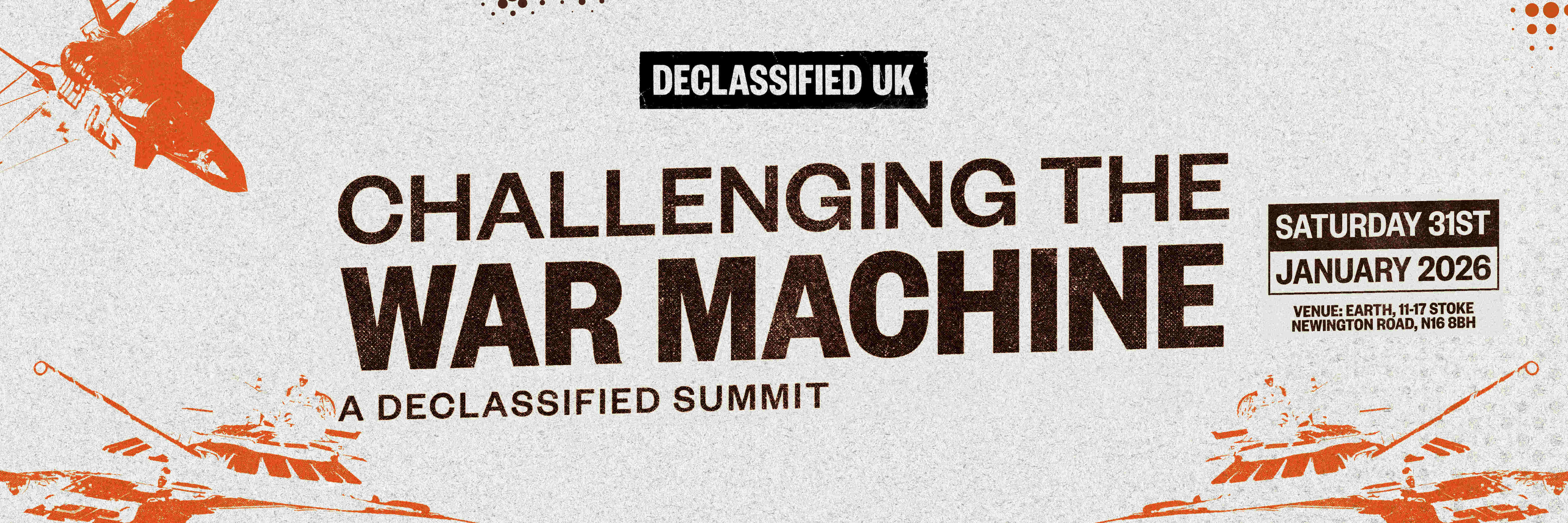
31st January – Challenging the War Machine – a DECLASSIFIED UK SUMMIT



Website of the Week
Now until to February 10, 2026 Radioactive waste storage in France: the debate is finally open! How to participate?
-
Archives
- January 2026 (220)
- December 2025 (358)
- November 2025 (359)
- October 2025 (377)
- September 2025 (258)
- August 2025 (319)
- July 2025 (230)
- June 2025 (348)
- May 2025 (261)
- April 2025 (305)
- March 2025 (319)
- February 2025 (234)
-
Categories
- 1
- 1 NUCLEAR ISSUES
- business and costs
- climate change
- culture and arts
- ENERGY
- environment
- health
- history
- indigenous issues
- Legal
- marketing of nuclear
- media
- opposition to nuclear
- PERSONAL STORIES
- politics
- politics international
- Religion and ethics
- safety
- secrets,lies and civil liberties
- spinbuster
- technology
- Uranium
- wastes
- weapons and war
- Women
- 2 WORLD
- ACTION
- AFRICA
- Atrocities
- AUSTRALIA
- Christina's notes
- Christina's themes
- culture and arts
- Events
- Fuk 2022
- Fuk 2023
- Fukushima 2017
- Fukushima 2018
- fukushima 2019
- Fukushima 2020
- Fukushima 2021
- general
- global warming
- Humour (God we need it)
- Nuclear
- RARE EARTHS
- Reference
- resources – print
- Resources -audiovicual
- Weekly Newsletter
- World
- World Nuclear
- YouTube
-
RSS
Entries RSS
Comments RSS
 nuclear-news