Chernobyl at 40: The World’s Worst Nuclear Power Accident and Where It Stands Now
Alice Marchuk, Jack Goras, and Aaron Larson, Wednesday, April 1, 2026
At 1:23 a.m. local time on April 26, 1986, a sudden and
uncontrollable power surge destroyed Unit 4 of the Chernobyl Nuclear Power
Plant, located about 130 kilometers (km, 81 miles) north of Kyiv and just
20 km (12.5 miles) south of the Belarusian border. The explosion—followed
by fires that burned for 10 days—released up to 5% of the radioactive
reactor core into the atmosphere, scattering contamination across Belarus,
Ukraine, Russia, and much of Europe
. It remains the only accident in the
history of commercial nuclear power reactors where radiation-related
fatalities occurred, and its consequences—human, environmental,
political, and technical—continue to reverberate four decades later.
The 40th anniversary arrives at a moment when the Chernobyl site is anything
but a static memorial. Decommissioning of the plant’s three undamaged
reactors is underway. A massive dry spent fuel storage facility—the
largest of its kind in the world—is in the midst of a multi-year fuel
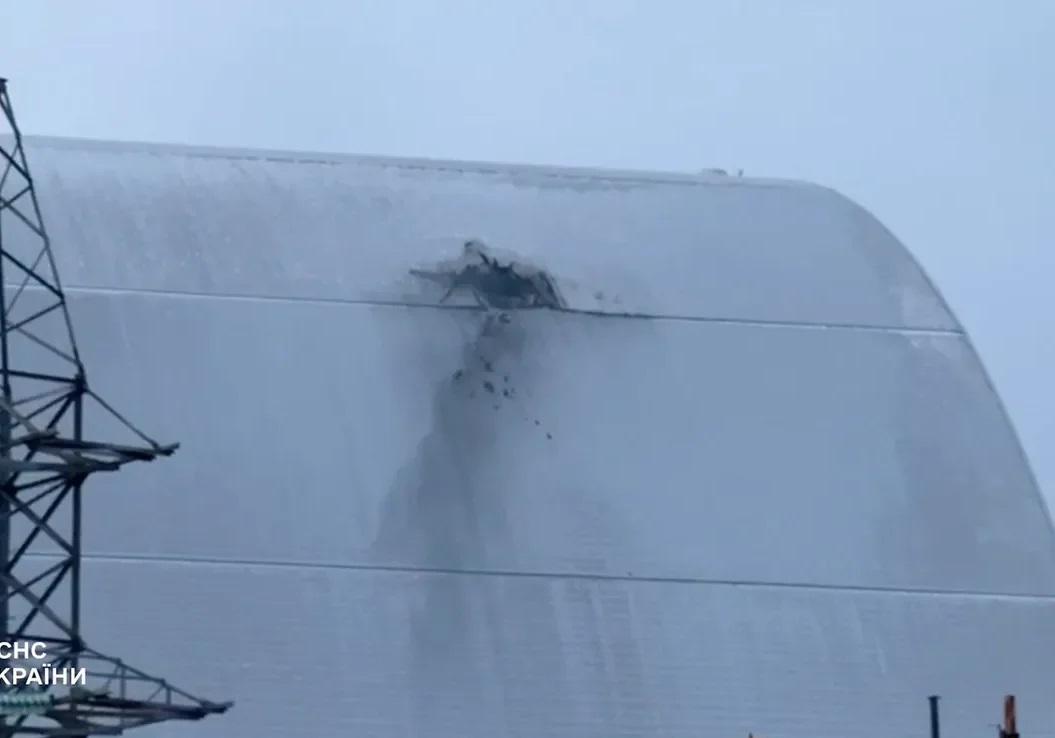
transfer campaign. And the New Safe Confinement (NSC, Figure 1), the
enormous arch-shaped structure that took more than a decade to design and
build, sustained significant damage from a drone strike in February 2025,
raising urgent questions about the long-term security of the site in a
country still at war.
Power Magazine 1st April 2026, https://www.powermag.com/chernobyl-at-40-the-worlds-worst-nuclear-power-accident-and-where-it-stands-now/
Ukraine actively involved in US-Israeli aggression against Iran: Envoy to UN
Monday, 30 March 2026, https://www.presstv.ir/Detail/2026/03/30/766089/Ukraine-actively-involved-in-US-Israeli-aggression-against-Iran–Envoy-to-UN-
A senior Iranian diplomat condemns Ukraine’s admission to the dispatch of “hundreds of experts” to the region to confront Iran, saying Kiev is actively participating in the military aggression launched by the United State and the Israeli regime against the Islamic Republic.
Iranian Ambassador and Permanent Representative to the United Nations Amir Saeid Iravani made the remark in a letter to Secretary General of the United Nations Antonio Guterres and president of the UN Security Council on Monday.
“Ukraine’s admission that it has dispatched ‘hundreds of experts’ to the region apparently to help some Persian Gulf governments to confront Iran is in its essence considered to be providing financial and operative support for an unlawful military aggression, led by the United States of America and the Israeli regime, against Iran, which began on February 28, 2026.”
He said Iran rejects all unfounded accusations leveled by the Ukrainian ambassador to the UN which are devoid of any credible evidence and have been made with the clear aim of diverting attention from the ongoing US-Israeli war of aggression against Iran’s sovereignty and territorial integrity.
Such allegations also intended to whitewash the horrific crimes committed by the US and Israel against civilians and non-military infrastructure, he said.
“Such interference is not accidental. It exposes active participation in and facilitation of the illegal use of force against a sovereign state and raises serious concerns within the framework of international law, including the principles governing state responsibility and the prohibition of aiding or abetting in the commission of internationally wrongful acts.”
“Ukraine’s illegal acts constitute participation in an act of aggression and violate the fundamental prohibition on the use of force enshrined in Article 2, paragraph 4, of the United Nations Charter,” he added.
Furthermore, the envoy reiterated, Ukraine’s attempt to justify or normalize the targeting of critical infrastructure is deeply concerning and inconsistent with fundamental principles of international humanitarian law.
Earlier on Monday, Iranian Foreign Ministry spokesman Esmaeil Baghaei told reporters that linking the conflict in Ukraine to the current developments in West Asia, particularly after the US-Israel military aggression against Iran, is a “very catastrophic miscalculation.”
In response to a question about Ukrainian President Volodymyr Zelenskyy’s offer to provide military assistance to the US allies in the region, Baghaei expressed hope that the countries in the region will be wise enough not to allow such a person, who exposed his country to a very destructive war over the past four years, to pursue his objectives.
France plans inquiry as cost of nuclear waste project hits €33bn

After France raised the cost of its Cigéo nuclear waste storage project to €33.3 billion, an increase of more than €8 billion, authorities are preparing to open a public inquiry into the plan – which has long faced opposition from anti-nuclear groups.
01/04/2026 , By:RFI,
https://www.rfi.fr/en/france/20260401-france-plans-inquiry-as-cost-of-nuclear-waste-project-hits-%E2%82%AC33bn-cig%C3%A9o
The new estimated cost replaces a €25 billion figure set in 2016. It reflects updated costs and sits within a €26.1 to €37.5bn range set in May 2025 by the National Agency for Radioactive Waste Management, which is leading the project.
The government order, signed by Economy Minister Roland Lescure and Energy Minister Maud Brégeon, covers the entire lifespan of the site – from design and construction to operation and closure – over 151 years.
It puts the initial construction cost at €9.74 billion. Taxes linked to the project are estimated at €3.66 billion.
The revised estimate will be used as a reference by EDF, Orano and the Atomic Energy Commission, the three nuclear operators that fund the project under the “polluter pays” principle.
Deep underground
Cigéo is designed to store France’s most radioactive nuclear waste 500 metres underground at a site in Bure in eastern France. The site would hold 10,000 cubic metres of high-activity waste and 73,000 cubic metres of long-lived medium-activity waste produced by nuclear power plants.
When the cost was first set at €25 billion in 2016, based on earlier economic conditions, campaigners said it was “largely underestimated”.
The National Agency for Radioactive Waste Management filed a formal request for authorisation in January 2023. A final government decision is not expected before late 2027 or early 2028.
French media reports said the public inquiry had initially been planned for autumn and was still expected in early December when the ASNR, France’s nuclear safety and radiation watchdog, issued its final opinion on the construction authorisation request.
Race against the calendar
Speaking at a meeting of public inquiry commissioners in Euville on Thursday, Meuse prefect Xavier Delarue said the public inquiry would begin on 18 May.
He said around 50 elected officials had been consulted before the schedule was brought forward, with a strong response rate and 75 percent of the opinions returned favourable.
“There was every reason to launch the public inquiry,” he said.
Three commissioners, along with three alternates, have been appointed to examine the roughly 10,000-page file.
They will produce a report, which the agency must respond to by the end of the summer. “In September, I will write an overall report and send it to the ministry,” Delarue said.
Opposition pushback
Nine environmental organisations have criticised the decision and called for the consultation to be delayed.
In a joint statement, groups including Greenpeace France, France Nature Environnement and the Nuclear Phase-Out Network denounced “an unacceptable new attempt to push the project through” and said the file does not show that the project would be feasible and safe.
They also said the timetable reflects an electoral aim, with the goal of approving Cigéo before next year’s presidential election.
EBRD donors back plan to repair Chornobyl’s protective shield
Donors to the International Chornobyl Cooperation Account (ICCA), managed by the
European Bank for Reconstruction and Development (EBRD), have endorsed
plans for early engineering and procurement works that will pave the way
for potential repairs to the New Safe Confinement (NSC) at the Chornobyl
Nuclear Power Plant in Ukraine.
A Russian drone strike in February 2025
damaged the NSC, the giant structure built to contain the remains of
Reactor Four and enable the safe dismantling of the original sarcophagus,
which was hastily built after the 1986 accident.
Preliminary assessments by
Novarka 2 (comprising the original NSC designer-builder Bouygues Travaux
Publics and Vinci Construction Grands Projets) estimated that the corrosion
of the steel arch threatened the long-term safety of the NSC, and that work
was needed to restore the structure to full functionality by 2030. Repairs
could cost at least €500 million.
EBRD 1st April 2026, https://www.ebrd.com/home/news-and-events/news/2026/ebrd-donors-back-plan-to-repair-chornobyl-s-protective-shield.html
UK submarine captain steps down after link to Chinese spy case
Navy previously conducted investigation into senior officer to examine potential
blackmail risk. The captain of one of Britain’s nuclear-armed submarines
has stepped back from his role this week after being investigated over his
relationship with Joani Reid, the Labour MP whose husband has been arrested
on suspicion of spying for China.
FT 31st March 2026,
https://www.ft.com/content/93beaf9c-e1c8-4875-b446-2cd148529f6a
Massacre of UK aid workers: two years of obfuscation from Britain

Hamza Yusuf, Declassified UK, Apr 3, 2026
April 1st marked the two year anniversary of Israel’s massacre of World Central Kitchen (WCK) aid workers in Gaza. Seven members of the organisation were killed by Israeli drones while travelling in a convoy in Deir el-Balah in Central Gaza, after unloading 100 tonnes of food aid at its Gaza warehouse. The group was travelling in a “deconflicted zone” in two armoured vehicles that were clearly branded with the WCK logo and had coordinated their movements with the Israeli military. |
| The attack was not an anomaly, but a feature of Israel’s systematic targeting of aid workers in Gaza. The United Nations said that 383 aid workers were killed in 2025, with nearly half of them in Gaza. As Declassified previously revealed, Britain’s Ministry of Defence holds video footage of Gaza from the day of the attack but is refusing to publish it – footage taken by a Royal Air Force surveillance plane which spent approximately five hours above Gaza that day. |
n December 2025, the family of James Henderson renewed their demand for the MoD to release the recording. “The reason for not supplying that footage from the Ministry of Defence is a bit of an insult,” his father told Declassified.
The cousin of another of the victims, James Kirby, said in a statement released on the anniversary of his killing: “It is especially difficult to see that men who were so loyal and committed to their country have not yet received the justice they deserve.
The cousin of another of the victims, James Kirby, said in a statement released on the anniversary of his killing: “It is especially difficult to see that men who were so loyal and committed to their country have not yet received the justice they deserve.”Two years on, communication from the government has been limited, and the family remains unsure whether a full and formal investigation is underway.” A tepid statement from the UK’s Middle East Minister Hamish Falconer published on the two-year anniversary saidthe UK “will continue to push for justice”. But Falconer is only calling on Israel to investigate itself. “I urge Israel to swiftly conclude and publish their findings into this attack. The families of those killed must know why this happened. Lessons must be learnt”, Falconer said. |
But the accountability the British government is demanding would be much clearer if it released its own spy flight footage.
True to form, however, where Israel is involved, Britain prefers at best silence in the face of crimes and at worst smokescreens and deceit.
Legal challenge against nuclear site plan rejected
BBC 2nd April 2026,
https://www.bbc.co.uk/news/articles/cy01wkgw2z8o
A judge has thrown out a legal challenge against a plan to extract water at the UK’s largest nuclear site.
Sellafield, in Cumbria, was given permission last May by the Environment Agency (EA) to extract water from its site, as part of the process to build a new radioactive waste storage facility.
Campaigners for Lakes Against Nuclear Dump (LAND) submitted a legal challenge against this, amid fears for the impact on nearby rivers. A high court judge said there was “no credible evidence” to allow the challenge to go ahead.
A Sellafield spokesman said the outcome would allow it to focus on its “mission to deal with the hazards on our site safely and sustainably”.
The licence granted to Sellafield would allow the company to extract up to 77,077,224 gallons (350,400 cubic metres) of water a year until 2031.
The EA previously said it had considered all the potential impacts on the environment before giving permission.
Marianne Birkby, who submitted the challenge for LAND, said the group disagreed with the decision and would be looking to lodge an appeal.
It argued the environmental impacts of the licence had not been properly assessed and feared contaminated water would end up in the rivers Calder and Ehen.
“We feel we must challenge the Environment Agency’s continual rubberstamping of Sellafield’s wish lists,” Birkby said.
Sellafield said removing water from a construction site was standard practice when preparing land for a building project.
A spokesman said: “This water will not be discharged to the rivers Calder or Ehen. It is pumped to on-site storage tanks for testing prior to being discharged direct to sea.”
Scenario Analysis for Partitioning and Transmutation(P&T) in a Phase-out Scenario
In February 2025, the German Federal Agency for Disruptive Innovation
(SPRIN-D) published the “Implementation Study on an Accelerator-Driven
Neutron Source at the Site of a Former Nuclear Power Plant” (Houben et
al. 2025), proposing an alternative waste management option. This type of
radioactive waste management is often summarized under the broader term of
Partitioning and Transmutation (P&T).
The SPRIN-D study has been critically
assessed with respect to its assumptions, feasibility, and expected
benefits for Germany e.g. by the German Federal Ministry for the Safety of
Nuclear Waste Management (Bundesamt für die Sicherheit der nuklearen
Entsorgung (BASE) 2025).
The P&T scenarios in the SPRIN-D study address
only a narrow and highly constrained case. They do not provide a
transparent, reproducible nationwide system description for the treatment
of the full German high-level waste inventory (HLW). Additionally key
modelling parameters and interim results are only partly documented. Under
the explicit assumption of hypothetical technical feasibility, based on
documented parameters and literature values, this INRAG study estimates
what a national implementation of a P&T scenario in Germany based on
Transmutex’ START concept could entail.
After briefly outlining the
background, we define a consistent set of scenario parameters and
justifying the chosen values. We then present the modelling results, such
as the number of facilities and time periods required under the stated
boundary conditions, followed by a discussion of selected potential safety
implications of operating a full-scale system over multiple decades.
The analysis is limited to technical and system-dimension aspects. Overall, the
results indicate that the optimistic assumptions in Houben et al. (2025) do
not provide a transparent, reproducible nationwide mass-balance model and
results change drastically if parameter ranges are applied as reported in
the scientific literature.
Even under optimistic modelling assumptions, P&T
does not remove the need for a geological repository. Rather, the burden of
nuclear waste is shifted into a long-lived multi-site nuclear industrial
system with additional facilities, operational waste streams, and prolonged
institutional requirements.
INRAG 11th March 2026,
https://www.inrag.org/wp-content/uploads/2026/03/inrag_put_publication_V2.pdf
Manchester Professor appointed expert reviewer for Government nuclear decommissioning review
A University of Manchester Professor has been appointed by Lord Vallance,
Minister of State for Science, Innovation, Research and Nuclear, as an
Expert Reviewer for an independent assessment of the Nuclear
Decommissioning Authority (NDA); an executive non-departmental public body
that is charged with, on behalf of government, the mission to clean-up the
UK’s earliest nuclear sites safely, securely and cost effectively.
Professor Zara Hodgson FREng is an internationally recognised expert in
nuclear energy policy and research, and Director of the University’s
Dalton Nuclear Institute. She has been appointed to support the NDA 2026
Review, which has been commissioned by the Government to provide assurance
on the NDA’s performance and governance, and to make recommendations on
improvements.
The Review is led by Dr Tim Stone CBE, a senior expert
adviser to five previous Secretaries of State in two successive UK
governments and the Chair of Nuclear Risk Insurers. Professor Hodgson will
join a team of three other independent experts to support Dr Stone. The
review will focus on the NDA’s strategic planning and management, project
and programme delivery, and financial management. It will assess how
effectively the NDA delivers value for money for the taxpayer while
maintaining the highest standards of safety, transparency and governance
across the UK’s civil nuclear legacy. Reviewers will challenge current
practices, propose bold value-for-money recommendations, and highlight good
practice while identifying areas for improvement.
Manchester University 1st April 2026, https://www.manchester.ac.uk/about/news/manchester-professor-appointed-expert-reviewer-for-government-nuclear-decommissioning-review/
Ukrainian Economy ‘Collapsing’
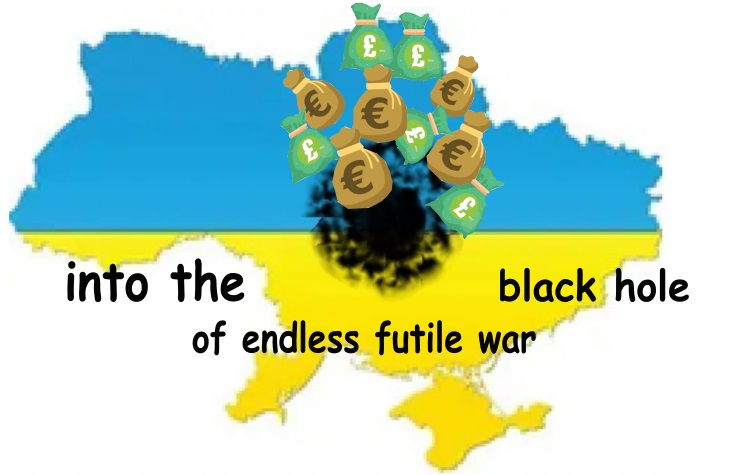
The only real solution to the Ukrainian problem is to accept the Russian peace terms.
By Lucas Leiroz de Almeida, Global Research, March 29, 2026, https://www.globalresearch.ca/ukrainian-economy-collapsing/5920470
Even Ukrainian authorities are beginning to admit the serious crisis affecting the country.
Recently, the head of the Kiev regime’s finance sector confirmed that the country is going through a catastrophic situation, showing deep concerns about the regime’s future.
This clearly shows how the nationalist junta in Kiev is rapidly destroying the country – something that could be avoided if the authorities agreed to make peace with Russia.
During a speech to the Ukrainian parliament on March 26, Daniil Getmantsev, chairman of the Finance, Tax and Customs Committee of the Verkhovna Rada, said that Ukraine is indebted and unable to pay all the expenses accumulated since the beginning of the conflict. He expressed concerns about the future of the Ukrainian economy and “sovereignty,” considering the country’s growing debts with major global financial institutions.
Getmantsev primarily denounced the country’s debts to the EU, the IMF, and the World Bank. He emphasized that Ukraine is already indebted to these organizations and does not appear to be in a position to repay this debt anytime soon. Therefore, the tendency is for the country to continue contracting more loans and becoming increasingly indebted.
The official explained some of the numbers behind the crisis. Ukraine failed to pay the installments of the loan from the EU’s “Ukraine Facility” program. Thus, the country missed out on part of the expected funding, as it failed to fulfill its part of the agreement.
He drew attention to the situation and warned Ukrainian parliamentarians about the current dangers. According to Getmantsev, it is possible that Ukrainians are close to “losing” the country because of this crisis. Therefore, he urges local politicians to act quickly to prevent the worst-case scenario. He believes immediate reforms are necessary, as well as greater integration with the EU, an audit of public spending, and a reform of the Ukrainian social security system.
“In 2025, we failed to meet 14 indicators of the Ukraine Facility. And because of this, we did not receive 3.9 billion euros (…) Moreover, 300 million of that amount is being lost completely in the first quarter [as] we have already failed to meet 5 out of 5 indicators (…) We can lose the country like this (…( Today is not the time to hide from responsibility, not the time for populism, not the time to look for popular decisions (…) It is the time for systematic work, European integration, deregulation, pension reform, an audit of state expenditures, and bringing the economy out of the shadows” he said.
This makes it clear that not even the regime’s own officials can hide the Ukrainian reality anymore. The country’s crisis has reached such a critical point that all sides are gradually admitting that it is impossible to maintain the current situation in the long term. With the decrease in international aid and constant losses on the battlefield, Ukraine has entered a critical phase in the conflict – being extremely vulnerable and close to collapse on several levels, mainly militarily and economically.
The previous attitude of Ukrainian and Western propaganda was to deny the crisis and claim that Ukraine had the economic and military situation under control. These lies helped keep the Ukrainian war machine active for a long time, but Ukraine’s losses caused European public opinion to change its attitude on the subject – which generated popular pressure in the West against continued aid programs.
Furthermore, Europe itself has reduced its capacity for aid. With the energy and economic crisis resulting from anti-Russian sanctions, added to constant international instability, Europe is entering a phase of social insecurity, making it more prudent to control spending than to continue systematically sending money to Ukraine. Although this money is often delivered in the form of loans, it seems certain that Ukraine will not be able to repay it. And even loans secured by the delivery of rare earth minerals and natural resources are unsafe, since exploration will be hampered during hostilities.
In fact, the pro-war lobby in the EU is still strong, which is why aid continues, but the material circumstances have forced the bloc to significantly reduce assistance – which has further worsened the crisis for Ukrainians. Now, there is no longer any way to disguise reality. Ukraine is trapped in a crisis from which it cannot easily emerge. No matter how much local authorities speak of “urgent measures” or “necessary reforms,” the country will certainly not be able to overcome its current difficulties while the conflict with Russia continues.
In this sense, the correct course of action for Kiev would be simply to accept the Russian peace terms and establish an agreement to end hostilities. Any other “measure” would be a mistake, incapable of saving the country from absolute collapse.
No Three Mile Island in Suffolk!
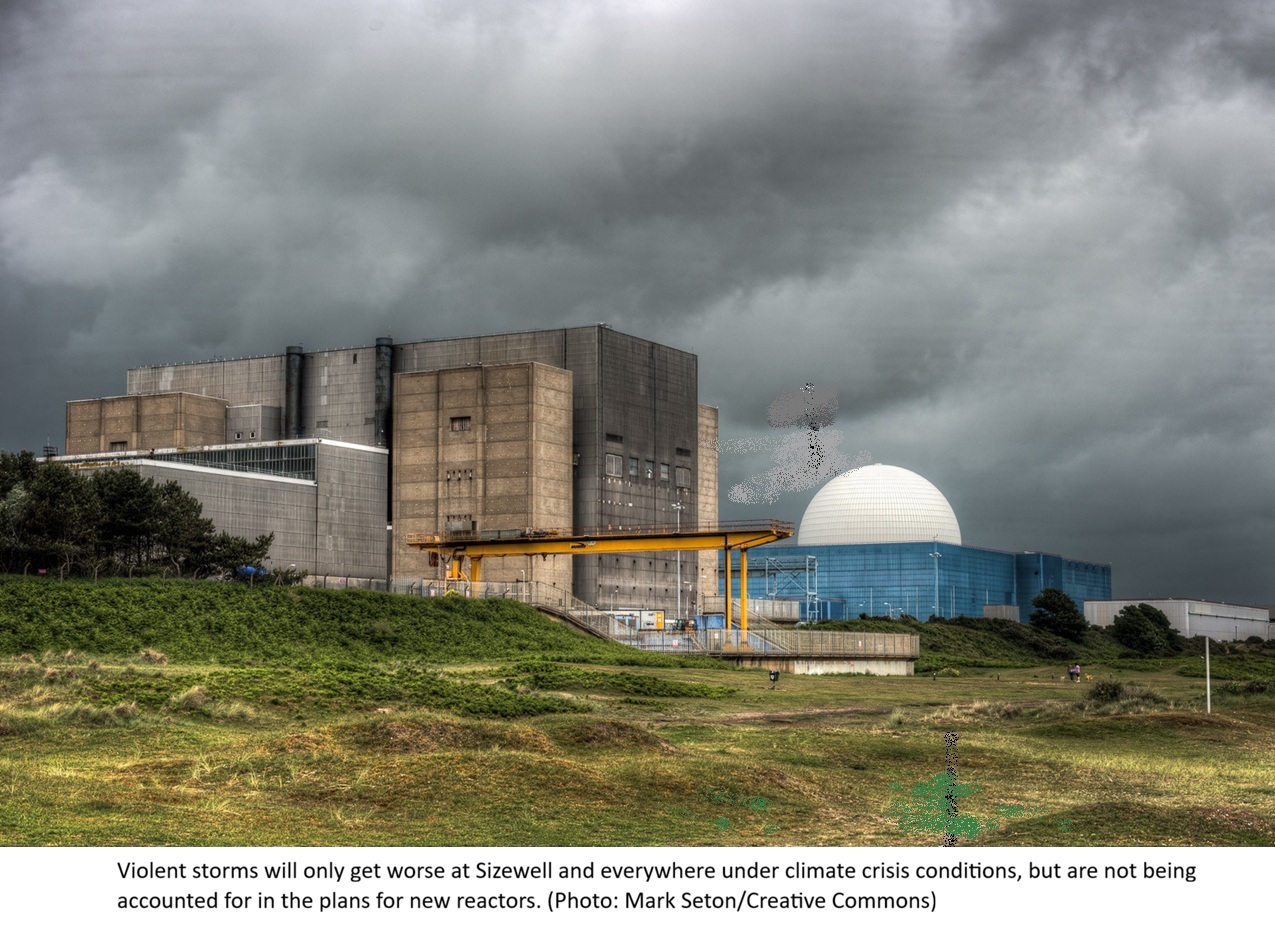
A new nuclear review will ignore the obvious perils of new reactors on a UK beach, warns Together Against Sizewell C
The following is a statement from Together Against Sizewell C (TASC) in response to the “Fingleton Nuclear Review” adopted by the UK government, entirely influenced by the nuclear power industry and its lobbyists in a frantic effort to copycat the US model of accelerating approval of dangerous, expensive and entirely unnecessary nuclear power projects.
Together Against Sizewell C (TASC) is appalled that the UK government plans to adopt all 47 recommendations of the ‘Fingleton Nuclear Review’. This review is based on a false premise that nuclear is ‘clean energy’ [see Note 1] and ‘needed to power Britain’s future’[see Note 2]. Neither of these assertions stand up to public scrutiny, the review being driven by the nuclear industry, big business and lobbyists for commercial and ideological reasons. Claims that nuclear is ‘homegrown power’ conveniently overlook the fact that the UK do not have any indigenous supplies of uranium needed to fuel the reactors, that market currently being dominated by Russia.
Those trying to convey a false impression of nuclear as clean are merely gaslighting the British public. While nuclear may be able to claim relatively low carbon production during the operational period, the long deployment times for new gigawatt nuclear reactors such as Hinkley and Sizewell C means a lot of additional carbon is produced from burning more fossil fuels while we must wait for new nuclear to become operational when compared with far cheaper, quicker to deploy renewables and energy storage.
The review makes unsubstantiated claims that nature will benefit from adopting these recommendations but in TASC’s view this is an irresponsible assumption for this government to accept, especially as environmental experts were excluded from the review team. The UK is already one of the most nature depleted nations on the planet – we cannot afford to degrade our environmental protections any further.
In TASC’s opinion, Sizewell C demonstrates that regulations need to be strengthened, not weakened – Sizewell C is sited in a National Landscape, surrounded by designated wildlife sites, in the UK’s most drought-prone region and on one of Europe’s fastest eroding coastlines. Despite this, it received DCO approval from the Secretary of State against the recommendation of the 5 independent planning experts.
£40 billion Sizewell C is proceeding at pace, even though the project has still not secured a guaranteed sustainable supply of potable water essential for its 60 years of operation. Nor has it demonstrated that the site can be kept safe for its full lifetime in a credible maximum sea level rise scenario – after DCO approval TASC discovered that Sizewell C have committed to install two huge additional sea defences in an extreme climate change scenario, the need for which EDF knew about since 2015 yet chose not to include them in their DCO application, meaning the additional sea defences have had no public scrutiny or impact assessment on the receiving environment.
TASC fear for the safety of our descendants and the precious, rapidly eroding Suffolk coastline because future generations have been left to rely on the developer’s unassessed sea defences to protect Sizewell C and its 3,900 tonnes of spent nuclear fuel from flooding in an extreme sea level rise scenario over the next 150 years or longer if a geological disposal facility is not available [see Note 3]. Hardly responsible ancestry from this government.
Notes:-
1. The myth that nuclear is ‘clean energy’ In TASC’s view, the reasons why nuclear power can’t be legitimately labelled as ‘clean’ include:-
a) The pollution generated from the mining, milling, fabrication and enrichment to produce the nuclear fuel which mainly affects indigenous peoples in producer countries,
b) The pollutants discharged to air and water from an operational nuclear power station, including the thousands of tonnes of dead fish, heavy metals, chlorine and the cocktail of other pollutants that will be discharged to the sea annually from the plant’s cooling water system, and
c) The legacy of highly radioactive spent fuel and other radioactive waste from nuclear power plants currently has no universally agreed management programme, nor any waste repository and which will be an environmental, as well as financial, burden for future generations for thousands of years – see N Scarr Report, ‘Plutonium—the complex and ‘forever’ radiotoxic element of nuclear waste. How exactly should we manage its containment?’
2. Various reports have demonstrated that the UK can fulfil its low carbon energy requirements without new nuclear, and at lower cost than new nuclear e.g. the January 2023 report by LUT University, Finland, ‘100% Renewable Energy for the United Kingdom’ and the 2022 UCL report ‘The role of new nuclear power in the UK’s net-zero emissions energy system’. Regarding national security, events in Ukraine have demonstrated that nuclear plants and their associated infrastructure are both a target and a weapon (see iNews article, ‘Attacks on nuclear plants are being normalised – and the consequences could be disastrous’ and the recent direct drone attacks on Zaporizhzhya NPP which have led to fires at the plant) so are a threat to national scrutiny. Scattering SMRs throughout the country will only increase the risk of a malicious attack (or accident).
3. TASC press release 12.01.26, ‘Escalating Erosion on East Suffolk Coast should be a huge worry for Sizewell C’
Scotland won’t pursue ‘unproven’ SMRs and ‘experimental’ fusion as focus remains renewables
30 Mar, 2026 By Thomas Johnson, https://www.newcivilengineer.com/latest/scotland-wont-pursue-unproven-smrs-and-experimental-fusion-as-focus-remains-renewables-30-03-2026/
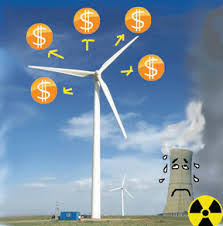
Scotland plans to focus on investing in renewables as nuclear fusion and small modular reactors (SMRs) remain “unproven technology”, a Scottish Minister has said.
The Scottish National Party (SNP), the ruling party in Scotland, has banned the development of any new nuclear in the country – and seems set to maintain this even as promising new technologies emerge.
Speaking in Scottish Parliament last week, MSP for Aberdeenshire East and cabinet secretary for climate action and energy Gillian Martin outlined how even with the buzz around fusion at the moment, the Scottish government will not be pursuing new opportunities within the nuclear sector.
“The Scottish Government recognises the increasing interest in fusion energy. However, fusion remains experimental, with no commercial deployment and uncertainties around cost, safety and timescales,” she said.
“The UK Government’s prototype fusion plant is not expected to be operational until 2040, but the climate emergency demands proven, deployable solutions now.”
Martin explained how this policy extends to the deployment of SMRs.
“We do not plan to build small nuclear reactors, which are unproven technology that has not been deployed,” she said.
“The Scottish Government has a policy against new nuclear fission.”
The topic arose in Scottish Parliament after MSP for South Scotland Martin Whitfield quizzed Martin regarding any impact on Scottish energy policy could expect in light of plans Torness nuclear power station will close by 2030.
Torness, the East Lothian‑based nuclear power plant operated by EDF, is one of the UK’s four remaining advanced gas‑cooled reactor (AGR) stations. It was due to close in 2028 but EDF announced in 2024 it would be extending its life for a further two years.
IDF threatens ‘elimination’ for Russian leaders who ‘wish Israel ill’
Wyatt Reed·March 18, 2026, https://thegrayzone.com/2026/03/18/idf-threatens-elimination-for-russian-leaders-who-wish-israel-ill/
Israel’s veiled threat to Moscow came just after Russian media warned traffic cameras in Moscow were vulnerable to the same exploits that Israel reportedly used to monitor Ayatollah Khamenei’s residence before assassinating him.
Israeli military spokeswoman Anna Ukolova has drawn outrage in Moscow after threatening that Russian authorities who “wish Israel ill” could be subject to “elimination,” while suggesting Israel could hack into Russian closed-circuit television cameras to identify and track targets.
Asked by a journalist with Russian radio broadcaster RBC whether Israel had access to Russian traffic cameras, Ukolova declined to answer directly but warned that “Khamenei’s elimination shows our capabilities are serious” and that “no one who wishes us harm will be left aside.”
She added, ominously, “I hope Moscow does not wish Israel ill right now – I’d like to believe that.”
In response to a post by Russian philosopher Alexander Dugin, who wrote that the IDF spokeswoman threatened that “Russian authorities [will] be killed if they take [an] anti-Israel position,” Ukolova claimed Dugin was spreading “fake news.” But she declined to clarify how her remarks had been incorrectly interpreted.
Ukolova’s statements came just days after it was revealed that a large number of Russian CCTVs were potentially using BriefCam – an Israeli video analysis software that closely matches the description of a program the Netanyahu regime reportedly deployed to track Iranian movements outside the home of Iran’s Supreme Leader before they assassinated him during their February 28 sneak attack.
On March 12, Russian outlet Mash revealed that the Israeli software BriefCam “has been used in Russia by private providers since the 2010s.” Founded at Israel’s Hebrew University in 2007, BriefCam uses AI to let users “review hours of video in minutes” and “make [their] video searchable, actionable and quantifiable.” In 2024, BriefCam was absorbed by a Dutch subsidiary of the Canon Group named Milestone Systems, which publicly pledges to “amplify what organizations of any size can see, do and achieve with video.”
“Our patented VIDEO SYNOPSIS® technology condenses hours of surveillance into a short summary by overlaying multiple events—each tagged with its original timestamp—onto a single frame, letting you filter them by object type and attributes,” the company’s BriefCam page crows. An analysis by Al Jazeera revealed those attributes include “gender, age group, clothing, movement patterns and time spent in a given location.”
Originally deployed by Israel’s Ministry of Housing and Construction to safeguard illegal settlements in occupied East Jerusalem, BriefCam has been used by governments all over the world, including those in the United Kingdom, New Zealand, Pakistan, Israel, Mexico, United Arab Emirates, Canada, Indonesia, Singapore, Thailand, Brazil, Germany, South Africa, Netherlands, Australia, Japan, India, Spain, Taiwan. It’s also been deployed in the US, with police in Hartford, Connecticut adopting the software in 2022. In 2025, a French court found the government’s use of BriefCam was illegal, citing multiple violations of French and European privacy laws.
As of publication, BriefCam appears to be incorporated into dozens of so-called “video monitoring systems,” including Milestone’s own VMS XProtect surveillance system.
According to the Russian outlet Mash, a number of prominent Moscow businesses, institutions, and buildings use VMS XProtect surveillance system, including the Institute of Theoretical and Experimental Biophysics of the Russian Academy of Sciences, a 72-story skyscraper named “Eurasia,” and a huge exhibit space known as the Zotov Center. Though Milestone officially ended operations in Russia in 2022 amid the war in Ukraine, Mash reports that some software distributors in Russia “still offer to install the hacked software and hide this in the documents.”
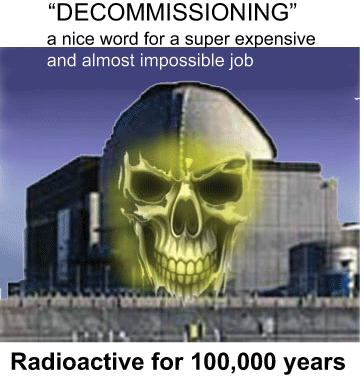
Nuclear decommissioning in the UK
Corporate report: The NDA group Technical Baseline Review
This report provides a high-level overview of the processes and associated technologies used or planned to be used to deliver our mission.
NDA 26th March 2026 Nuclear Decommissioning Authority NDA group Technology Baseline Review 2026
PDF, 4.76 MB, 67 pages
The UK’s nuclear energy programme, dating from the post-war years, has left a challenging decommissioning legacy to the country: numerous prototype reactors, fuel-manufacturing plants, research centres, reprocessing plants and 11 power stations. The Sellafield site in west Cumbria houses more than 200 nuclear facilities and 1,000 buildings, making it one of the world’s most complex environmental decommissioning challenges. Across the UK many ‘never-done-before’ decommissioning projects will need to be completed. The Nuclear Decommissioning Authority (NDA) was established under the Energy Act (2004) to ensure that the UK’s nuclear legacy sites are decommissioned and cleaned up safely, securely, cost-effectively and in ways that protect people and the environment.
This document provides a high-level overview of the current technology landscape across the NDA group. It outlines the NDA group technology baseline, current technologies being deployed, and the technology opportunities requiring development or adoption to underpin the delivery of our decommissioning mission……………
https://www.gov.uk/government/publications/nuclear-decommissioning-authority-rd-technical-baseline
A Great British Nuke-Off in Wales?

25 March 2026, https://morningstaronline.co.uk/article/great-british-nuke-wales
Quintessentially British Rolls-Royce wants to put its small new reactors on Anglesey, but it turns out they’re not so small or even particularly British, writes LINDA PENTZ GUNTER
THERE is something about Rolls-Royce that is quintessentially British. Not necessarily in a good way. The name tends to bring to mind tweedy toffs or rock stars with more money than sense, driving too fast in shiny and extravagantly baubled motor cars.
It’s the cars that made the Rolls-Royce name synonymous with luxury and class, specifically upper-class. It’s even entered the lexicon. Something can be called “the Rolls-Royce of….;” fill in the blank.
Of course, Rolls-Royce is now much bigger than just a car manufacturer. Frequent fliers will have spotted the company logo on many a jet engine.
Less well known is that Rolls-Royce makes the reactors for nuclear submarines, specifically the British Trident nuclear fleet. The company is set to produce a new propulsion reactor, PWR3, for the Dreadnought-class ballistic deterrent submarine, expected to be operational in the early 2030s, and whose missiles are capable of destroying all life on Earth multiple times over.
More recently, Rolls-Royce has entered the commercial nuclear reactor market, proposing its own small modular reactor (SMR) design — which, at 470 megawatts, isn’t actually very small at all. Many of Britain’s old Magnox reactors, now all permanently closed, were smaller than that. Two of the largest, at Wylfa in Anglesey, were each 490 megawatts.
Ironically, it is to Wylfa that Rolls-Royce is looking to site its first not so small modular reactors. It is planning for three there — with the capacity to extend to eight — and even won a competition conducted by Great British Energy-Nuclear to become the preferred bidder to place SMRs at the Wylfa site, purchased by the government from Hitachi in March 2024 after the Japanese company ditched plans to build two full-size reactors there.
The prize for Rolls-Royce’s winning bid was £2.5 billion in public funding (ie taxpayer money) toward the cost of the first three SMRs, not such good news for people who can’t afford to drive Rolls-Royces.
Another £25 million is to be shelled out to two engineering consultancies, WSP and Mott MacDonald, who will advise on environmental assessments, permitting and regulatory compliance.
As Linda Clare Rogers, co-deputy leader of the Welsh Green Party, asked in a letter to her Anglesey MP Llinos Medi of Plaid Cymru: “Why does Rolls-Royce need £25m of our money to spend on advisers and engineers to help it meet environmental and legal requirements, if they are confident what they’re doing is serviceable? As this is public money, will we have a say in proceedings? If not, why not? Other public services involve public engagement.”
That £25m just happens to be equal to the price tag for the Rolls-Royce La Rose Noire Droptail luxury car, unveiled in August 2023. So why not just sell one of those to pay for the advisers and engineers instead of fleecing British taxpayers?
Appropriately, the multi-billion pound Rolls-Royce triumph (to mix motoring metaphors), was lauded by a lord — it is unknown if he was wearing tweeds for the occasion — during a debate last July in the House of Lords.
Reading the transcript of what takes place in that neo-gothic edifice makes you wonder if you have time-travelled back a few centuries. Everyone is addressed as “my lords” even though there are ladies, too, and “my noble friend” and phrases such as “I thank the noble Earl for that question,” and “I thank the noble Viscount.”
It was Labour peer Lord Wilson of Sedgefield — real name Philip — who was beating the drum most loudly for nuclear power in general and Rolls-Royce in particular during that July debate.
This same “noble lord,” as we must perforce address him according to tradition, was also one of the “Famous Five” who helped Tony Blair get selected as a Labour candidate. Later, before he ascended to “The Lord Wilson,” he became an enthusiastic Jeremy Corbyn backstabber when Corbyn was Labour Party leader. So not really all that “noble.”
The lone voice of reason during the Lords nuclear debate came not from a “lord” but a woman, the Green Party’s Baroness Jones of Moulsecoomb who said: “My lords, the minister said that everybody around the House supports nuclear. No, the Green Party does not support nuclear. It is a dinosaur technology and it is really very expensive, when you look at the planetary impact and the cost to the Exchequer. It is going to be a disaster and it will be overtaken by sea-level rises as well. Why do the government not take some good advice on this instead of believing in nuclear all the time?”
The good Lord Wilson quickly and condescendingly dismissed her ideas as “a bit on the fringe,” then repeatedly referred to new nuclear in Britain as “clean, secure, homegrown energy.”
But just as it is obvious that nuclear power is neither clean nor secure, whether great and British or not, it is most certainly not “homegrown” either, given that no uranium, the raw material needed to fuel reactors, is mined in the UK.
And, as it turns out, even Rolls-Royce isn’t quite so very British after all.
Rolls-Royce SMR (Small Modular Reactors), the company’s subsidiary focused on future nuclear energy, is not solely owned by the parent group. It has investors including the Qatar Investment Authority, BNF Resources (connected to the French Perrodo family that owns European oil and gas company Perenco), Constellation (a US energy company and part of Exelon), and CEZ, a Czech company.
Of course, even the Rolls-Royce car division isn’t actually British. It is a wholly owned subsidiary of Germany’s BMW.
In addition to the Perrod family’s investments in oil and gas companies, Constellation owns oil and gas plants in the US. And while the Qatar Investment Authority has said it will not finance new fossil fuel projects, it has not divested from all of its existing oil and gas interests. CEZ continues to maintain coal plants and is supporting natural gas infrastructure.
This is a quiet reminder about the level of greenwashing that seeks to paint nuclear power as environmentally friendly when many of the companies involved in nuclear power are also still heavily invested in fossil fuels.
The partner Rolls-Royce has chosen to oversee delivery of the Wylfa reactors is the US-based engineering firm Amentum, which has around 6,000 staff in the UK. The small modular reactor is an old concept that has been around for decades and was consistently rejected due to poor economies of scale. Yet Amentum’s chief executive officer, John Heller, describes SMRs as a “transformational technology, a critical enabler in strengthening energy security in the UK and continental Europe.”
However, that “energy security” will be delivered largely by Russia, in order to meet the needs of the fast-reactor designs targeted for Britain. These include the Newcleo 200 MWe lead-cooled fast reactor and the Natrium, TerraPower’s sodium-cooled fast reactor, two US companies looking to secure contracts in the UK. Russia is currently the only country that manufactures the High-Assay Low Enriched Uranium fuel needed for these reactor designs.
When star footballer Marcus Rashford totalled his £700,000 Rolls-Royce in a September 2023 accident, the car was entirely written off. That’s exactly what should happen to the company’s SMR plans before consumers and taxpayers are forced to foot the bill.
Linda Pentz Gunter is a writer based in Takoma Park, Maryland. She is the author of the book, No to Nuclear: How Nuclear Power Destroys Lives, Derails Climate Progress And Provokes War, published by Pluto Press.
1 This Month

Chernobyl: The Lost Tapes – A good documentary on Chernobyl on SBS available On Demand for the next 3 weeks– https://www.sbs.com.au/ondemand/tv-program/chernobyl-the-lost-tapes/2352741955560

of the week–London Campaign for Nuclear Disarmament

Tell the Ukrainian Government to Drop Prosecution of Peace Activist Yurii Sheliazhenko
To see nuclear-related stories in greater depth and intensity – go to https://nuclearinformation.wordpress.com
-
Archives
- April 2026 (189)
- March 2026 (251)
- February 2026 (268)
- January 2026 (308)
- December 2025 (358)
- November 2025 (359)
- October 2025 (376)
- September 2025 (257)
- August 2025 (319)
- July 2025 (230)
- June 2025 (348)
- May 2025 (261)
-
Categories
- 1
- 1 NUCLEAR ISSUES
- business and costs
- climate change
- culture and arts
- ENERGY
- environment
- health
- history
- indigenous issues
- Legal
- marketing of nuclear
- media
- opposition to nuclear
- PERSONAL STORIES
- politics
- politics international
- Religion and ethics
- safety
- secrets,lies and civil liberties
- spinbuster
- technology
- Uranium
- wastes
- weapons and war
- Women
- 2 WORLD
- ACTION
- AFRICA
- Atrocities
- AUSTRALIA
- Christina's notes
- Christina's themes
- culture and arts
- Events
- Fuk 2022
- Fuk 2023
- Fukushima 2017
- Fukushima 2018
- fukushima 2019
- Fukushima 2020
- Fukushima 2021
- general
- global warming
- Humour (God we need it)
- Nuclear
- RARE EARTHS
- Reference
- resources – print
- Resources -audiovicual
- Weekly Newsletter
- World
- World Nuclear
- YouTube
-
RSS
Entries RSS
Comments RSS
 nuclear-news