Fukushima: Radioactive waste bags still missing after Typhoon Hagibis

In many municipalities in the prefecture, a lot of radioactive waste, including soil, was generated through decontamination work after the 2011 nuclear disaster at Tokyo Electric Power Company Holdings Inc.’s Fukushima No. 1 power plant. Numerous bags containing the waste are kept outdoors in temporary storage areas around the prefecture.
Heavy rains from the 19th typhoon of the year flooded storage space in many locations, sweeping away 44 bags in Kawauchi, 30 in Tamura, 15 in Nihonmatsu and one in Iitate.
By the end of October, 50 bags had been recovered. The contents had leaked from half of them. “We had far heavier rains than we expected. We did not cover bags of radioactive waste,” said an official of the Tamura Municipal Government.
The ministry and other organizations have mobilized 20 to 30 workers to look for the missing bags, wading into rivers when necessary and using drones to search areas that cannot physically be entered.
An aerial survey was conducted by helicopter on Oct. 23. On Friday, 29 workers searched the Furumichi River and areas along it in Tamura. Four bags were collected, but their contents had been lost.
“There has been no confirmation of any environmental impact due to the loss of the bags,” a ministry official said.
“We’ll continue searching in cooperation with local municipalities.”
Japan still has land space to store radioactive waste tanks, but tries to justify dumping into ocean
 Japan accused of trying to justify nuclear dump http://www.taipeitimes.com/News/taiwan/archives/2019/11/07/2003725403COVER? Tokyo Electric Power Co has said new storage tanks could be built to hold radioactive water at its stricken plant, a Greenpeace Germany member said Japan accused of trying to justify nuclear dump http://www.taipeitimes.com/News/taiwan/archives/2019/11/07/2003725403COVER? Tokyo Electric Power Co has said new storage tanks could be built to hold radioactive water at its stricken plant, a Greenpeace Germany member said
By Lin Chia-nan / Staff reporter The Japanese government’s claim that it will run out of room to store radiation-contaminated water at the Fukushima Dai-ichi nuclear power plant in two years is not true, and is simply an attempt to justify discharging polluted water into the Pacific Ocean, a Greenpeace International member said yesterday.
Shaun Burnie, senior nuclear specialist at Greenpeace Germany who has conducted long-term surveys in Japan, was invited by Greenpeace Taiwan to talk about the issue at a news conference in Taipei. An earthquake and a tsunami in March 2011 caused the plant’s reactor fuel rods to melt and large amounts of radioactive-contaminated water was released into the Pacific. As of Oct. 22, more than 1 million cubic meters of processed polluted water was stored at the treated water storage tank, while the current storage capacity is nearly 1.1 million cubic meters, Burnie said. Tokyo Electric Power Co in August said the tank would reach full capacity by the summer of 2022 and that there is no room for expansion at the site, he said. However, the company in a meeting in September said that land is available to build additional tanks, Burnie added. The claim of insufficient capacity is just an excuse to cover the Japanese government’s political agenda, Burnie said, adding that Tokyo has the option of storing contaminated water for a longer period. If Japan approves the discharge, radioactive tritium and other radionuclides in the water will likely enter the East China Sea, and eventually the waters surrounding Taiwan through the subtropical gyre, he said. However, even if the Japanese government decides to discharge polluted water into the ocean, it would not be able to carry out the plan immediately, as it might take years to build outflow pipelines, he said. In addition to protests from local fishers, especially those living along Japan’s Tohoku coast, the Japanese government would face strong pressure from the international community for discharging polluted water, he said, adding that it is a long-term problem that should be approached more cautiously. The Fukushima Dai-ichi disaster has led to catastrophic results, and the Taiwanese government should be lauded for making the “brave and correct” decision to phase out nuclear power plants, Burnie said. Taiwan should call on the Japanese government, via diplomatic or non-governmental channels, to shoulder its responsibility as a Pacific nation and not discharge radiation-contaminated water into the sea, National Nuclear Phase-out Action Platform spokesperson Tsuei Su-hsin (崔愫欣) said. As Taiwan generates less than 10 percent of its electricity from nuclear power — much lower than the ratio in Japan before the 2011 disaster, it should persist in its goal of phasing out all nuclear power plants by 2025, Tsuei said. |
|
TEPCO needs to make its case for bailing out aging nuclear plant

United Nations adopts Japan’s nuclear disarmament resolution
|
They call for increased transparency of policies of nuclear-armed powers to build mutual trust between countries. The resolution urges the promotion of educational programs such as interaction with atomic bomb survivors. It also proposes a framework to facilitate dialogue between nuclear-armed nations and others. Members of the committee approved the resolution by a majority, with 148 of 178 countries voting in favor. Four countries objected and 26 abstained. The United States abstained, saying the plan does not reflect the world’s changing security environment. Brazil also abstained on the grounds that the resolution should call for stronger commitments from nuclear-armed nations to disarm. Brazil supports the UN Treaty on the Prohibition of Nuclear Weapons, which Japan has not joined. Members of the committee approved the resolution by a majority, with 148 of 178 countries voting in favor. Four countries objected and 26 abstained. The United States abstained, saying the plan does not reflect the world’s changing security environment. Brazil also abstained on the grounds that the resolution should call for stronger commitments from nuclear-armed nations to disarm. Brazil supports the UN Treaty on the Prohibition of Nuclear Weapons, which Japan has not joined. |
|

Radiation map of Fukushima now launched in English, in lead-up to Olympic Games

 Citizens’ group in Fukushima puts out radiation map in English, Asahi Shimbun, By SHINICHI SEKIN E/ Staff Writer, November 3, 2019 FUKUSHIMA—A citizens’ group here has released an English radiation-level map for eastern Japan created with input from 4,000 volunteers in response to requests from abroad ahead of the Tokyo Olympics.
“We want people outside Japan to understand the reality of radioactive contamination following the nuclear accident,” said Nahoko Nakamura, a representative of Minna-No Data Site (Everyone’s Data Site), which published the map……
Titled “Citizens’ Radiation Data Map of Japan,” the 16-page booklet summarizes the content of the original Japanese map, released in November last year. It also shows projected declines in radiation levels by 2041.
The Japanese version was based on results of land contamination surveys conducted over three years at the request of Everyone’s Data Site.
About 4,000 volunteers took soil samples at 3,400 locations in 17 prefectures in eastern Japan, including Fukushima and Tokyo, and measured radiation levels. The map was compiled with advice from experts…… http://www.asahi.com/ajw/articles/AJ201911030001.html
A Govt panel to decide on dumping Fukushima waste water
Panel deciding whether to dump radioactive water from Fukushima into the ocean https://www.seafoodsource.com/news/environment-sustainability/panel-deciding-whether-to-dump-radioactive-water-from-fukushima-into-the-ocean By Chris Loew October 30, 2019
The Japanese government may allow Tokyo Electric Power Company (TEPCO) to dump more than 250 million gallons of contaminated water accumulated in tanks around its Fukushima nuclear power plants into the ocean.
Environment Minister Yoshiaki Harada commented in September that he supports the plan, as it may be the only solution for the wastewater. An expert panel is now studying the options, and its recommendation is likely to become policy.
The contaminated water was used to cool the superheated fuel rods in the Fukushima Daiishi facility prior to and during the nuclear meltdown that occurred as a result of the Tōhoku earthquake and tsunami in March 2011. The water has already been treated by multiple facilities, including a multi-nuclide removal facility (an advanced liquid processing system, or “ALPS”), which removed most of the radioactive materials, including cesium and strontium, but not tritium. Tritium is difficult to separate from water, because it closely resembles hydrogen, which is a natural component of water.
Many methods, both practically tried and theoretical, do exist for separation and removal of tritium, and they were assessed in a report presented by the International Research Institute for Nuclear Decommissioning in 2013. But all of them had the drawback of requiring a large amount of energy and equipment. Also, performance is poor for the low concentrations in the water at Fukushima Daiichi.
Last year, a team of researchers from Kindai University and private companies in western Japan developed an aluminum filter with holes of five nanometers or less in diameter. Steam of water containing tritium can be stopped, while that of water can pass. However, another issue is that 400 cubic meters of groundwater flowing into the basements of the buildings every day needs to be pumped and treated, necessitating treatment on a very large scale. This may not be justified when considering the actual danger of release to the ocean, according to the report.
Before the accident, tritium in cooling water was thinned with circulated sea water so that the allowable concentration might not be exceeded, and the diluted tritium was routinely released into the sea. Releasing the water at a rate that would allow it to be well diluted may be the best option, the report said.
While tritium has a radioactive half-life of 12.3 years, its biological half-life in the human body is only 10 days, and in fish it is less than two days. This is because tritium easily bonds to water, replacing the hydrogen atom. So as we drink and expel water, the tritium is carried away rather than accumulating in tissues. While some radioactive materials become concentrated as they move up the food chain, tritium is diluted.
The main danger of the policy is not actual harm, but rather public perceptions about the safety of seafood from Fukushima and its neighboring prefectures. Countries that have been gradually relaxing restrictions on imports of Japanese seafood may be forced by public fears to take a wait-and-see approach before further easing—a setback to local seafood firms, which have waited for years to return to their pre-disaster export figures.
Regulators to review Fukushima Daiichi plant work
Regulators to review Fukushima Daiichi plant work, NHK. 30 Oct 19, Japan’s nuclear regulators plan to look into work management at the crippled Fukushima Daiichi nuclear plant, which is being decommissioned following the 2011 accident.
The move follows a series of mistakes and violations. In June this year, smoke came out when workers misconnected power lines at the No.5 and No.6 reactors.
It has also come to light that water servers were placed for the past four years in restricted areas where radioactive materials are stored.
The commissioners at the Nuclear Regulation Authority on Wednesday certified both incidents as safety violations.
In addition, work to remove nuclear fuel from the No.3 reactor’s storage pool has been delayed due to repeated mechanical problems…..https://www3.nhk.or.jp/nhkworld/en/news/20191030_40/
Warning on Fukushima fallout for Tokyo 2020 Olympians,
Warning on Fukushima fallout for Tokyo 2020 Olympians, https://www.theaustralian.com.au/sport/olympics/warning-on-fukushima-fallout-for-tokyo-2020-olympians/news-story/ed7bf1f0415ca7eb05ce9587b6d1989f, VICTORIA LAURIE. SENIOR REPORTER. OCTOBER 29, 2019
The Australian Olympic Committee has been urged to inform its athletes and team members about the ongoing health effects of the 2011 Fukushima nuclear reactor disaster for those attending the 2020 Tokyo Games.
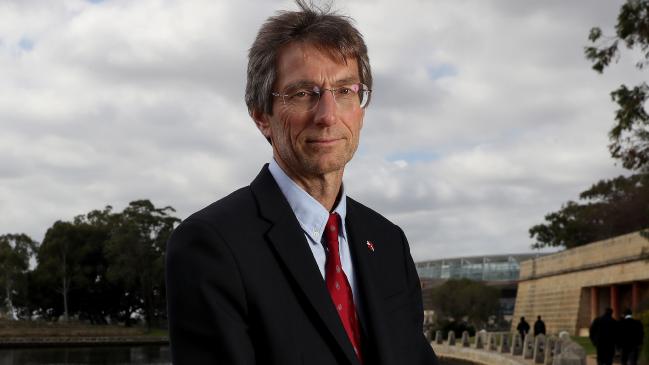 Tilman Ruff, a public health expert who co-founded the Nobel Peace Prize-winning International Campaign to Abolish Nuclear Weapons (ICAN) in Melbourne, said he had written to the AOC to warn that levels of radioactivity in certain areas could be above the recommended maximum permissible exposure level. He said the Japanese Olympic Committee planned to host baseball and softball competitions and part of the torch relay in Fukushima City, 50km away from the ruins of the Fukushima Dai-ichi nuclear power plant.
In 2011, multiple nuclear meltdowns at the damaged facility caused radioactivity to leak out across Japan and the Pacific.
“It was a catastrophe comparable only to the nuclear meltdown of Chernobyl,” he said. While contamination was not as severe as at Chernobyl, “it was widespread and persists”.
At least 50,000 residents have not yet been able to return to the most affected areas in Fukushima prefecture. “The Japanese government is making a concerted effort to present the Fukushima nuclear disaster as over and effectively dealt with in the lead-up to the Olympics. Some of these efforts are misleading and should not be accepted at face value,” Dr Ruff said.
He said thyroid cancers had notably increased among young people in Fukushima, with a total of about 200 cases.
He has made several visits to Fukushima since 2011, the latest in May when he provided radiation health advice to the Fukushima prefectural government.
Dr Ruff said he then wrote to the AOC urging it to “properly inform and safeguard the best interests of the Australian staff and team, and their accompanying families, especially women who may be pregnant and young children”.
He said short-term visits to areas contaminated by radioactive fallout “now involve low to minimal risk”.
“However, if any (AOC) members or athletes plan to be based in Fukushima or neighbouring contaminated prefectures for weeks or months, they should be informed about the health risks of radiation exposure,” Dr Ruff said.
International physician groups have criticised the Japanese government’s decision shortly after the 2011 disaster to increase the maximum permissible radiation dose for Japanese citizens from one to 20 millisieverts. “Eight years later, it has not reversed that decision,” Dr Ruff said. “No other government in the world has ever accepted such a high level of radiation beyond the immediate emergency phase of a nuclear disaster for its citizens.”
An AOC spokesman said Tokyo 2020 provided regular updates to the IOC regarding the situation. “We have been given assurances that radiation levels in Fukushima City are safe, noting that the IOC Co-ordination Team has made several visits to the region and that ongoing monitoring is conducted independently of the Japanese government,” the spokesman said.
Fukushima’s continued struggle with radioactive waste
 How Japan still struggles with the Fukushima nuclear waste http://www.ejinsight.com/20191028-how-japan-still-struggles-with-the-fukushima-nuclear-waste/ Kenji Cheung, Oct 28, 2019 It’s been more than eight years since the nuclear disaster occurred at the Fukushima Daiichi power plant in Japan.
Yet even to this day, the Japanese government is struggling with the issue of nuclear cleanup, waste disposal and storage. To say the least, the threat is still very much there.
Earlier this month, Typhoon Hagibis swept across the Kanto region of Honshu, leading to deadly floods and landslides across the area.
The Asahi Shimbun reported that a temporary repository where some 2,667 bags of highly radioactive nuclear cleanup waste collected from the Fukushima Daiichi nuclear power plant were stored was completely flooded.
It’s been more than eight years since the nuclear disaster occurred at the Fukushima Daiichi power plant in Japan.
Yet even to this day, the Japanese government is struggling with the issue of nuclear cleanup, waste disposal and storage. To say the least, the threat is still very much there.
Earlier this month, Typhoon Hagibis swept across the Kanto region of Honshu, leading to deadly floods and landslides across the area.
The Asahi Shimbun reported that a temporary repository where some 2,667 bags of highly radioactive nuclear cleanup waste collected from the Fukushima Daiichi nuclear power plant were stored was completely flooded. To make matters worse, many local workers who handled the bags were cutting corners, and didn’t tie them tightly, not to mention that most of the bags, which totaled over 10 million in 2015, were only piled outdoors, unlike other nuclear waste handling plants which generally have facilities to store or cover the nuclear waste inside.
According to Japanese media reports, most of the bags containing the nuclear cleanup waste from the Fukushima Daiichi nuclear plant have not been handled properly. This suggests that the Japanese government and the subcontractors were negligent on the nuclear issue.
It may be a matter of time before the waste poses a huge threat to the environment again.
Given the fact that environmental damage caused by nuclear waste contamination can be both catastrophic and limitless, it is of utmost importance for mankind to learn the lesson of history and not to repeat the mistakes of the 1986 Chernobyl disaster.
This article appeared in the Hong Kong Economic Journal on Oct 18 Translation by Alan Lee
New plan for dealing with Fukushima’s radioactive water
FoE Japan 5th Oct 2019, Fukushima, On October 3, the Citizens’ Committee on Nuclear Energy, whose members include academics, technical experts, and NGOs, made a new proposal to deal with contaminated water from the damaged Fukushima Daiichi Nuclear Plant after the water has been treated.
The proposal, submitted to Ministry of Economy, Trade and Industry (METI), the Ministry of the Environment (MOE), and the Nuclear Regulation Authority, is to convert the treated water to solid form by mixing with mortar, and storing it on land. Citizens’Comittee on Nuclear Energy (CCNE).
340,000 to evacuate Fukushima, landslide fears(- and what about the nuclear waste bags?)
 Why doesn’t the news media explore the question of what is happening to Fukushima’s bags of radioactive nuclear debris?
|
Fukushima evacuation: 340,000 people told to leave over landslide fears after flooding, Mirror UK , By Bradley Jolly, Online journalist, 25 OCT 2019The 143,699 households in Fukushima, Japan, have been evacuated over flooding fears after Typhoon Hagibis lashed across the area. More than 340,000 people were today told to leave their homes over landslide fears due to flooding .
Many low-lying towns and cities east of Tokyo, Japan, were left inundated after Typhoon Hagibis swept across the region . Some 143,699 households in Fukushima, one of the worst affected cities, were evacuated today.
Fukushima Prefecture, the evacuation advisory, fears the danger of landslides remains very high. Alarming photos show muddy water spill from rivers and pedestrians wade through waist-deep floods. Almost 30,000 soldiers and rescue workers have been sent in to save stranded residents across the region. The recent typhoons have so far killed 24 people. More than 9,000 homes, including 6,000 in the Chiba prefecture and 2,500 in the nearby Ibaraki prefecture, were without electricity, according to Tokyo Electric Power Company. Local media reported two dams were expected to release built-up water and urged downstream residents to evacuate as a precaution. A motorway toll gate near Narita International Airport was temporarily closed for safety reasons. Heavy rain also washed out the second round of the PGA Tour’s first tournament held in Japan, the Zozo Championship in Inzai City, where Tiger Woods was tied with Gary Woodland at 64 after Thursday’s opening round. Fukushima is on Honshu, Japan’s largest island. It is about 40 miles away from Japan’s idyllic east coast. Soma, in particular, is a coastal city nearby popular with tourists.https://www.mirror.co.uk/news/world-news/fukushima-evacuation-340000-people-told-20721981 And the Meteorological Agency has predicted up to seven inches of rain over the next 24 hours. |
|
Activists urge Japan to avoid Fukushima in Tokyo Olympics

Hiroshima residents exposed to A-bomb ‘black rain’ developed health problems: lawyers
October 16, 2019 (Mainichi Japan) HIROSHIMA — Nearly all of the 85 plaintiffs in a class action lawsuit who claim to have been exposed to radioactive “black rain” that fell on Hiroshima and surrounding areas in the immediate aftermath of the U.S. atomic bombing of the city in 1945 have been diagnosed with health problems that could be related to radiation, their lawyers said.
The plaintiffs, of whom eight have already died, and their representatives have brought the case to the Hiroshima District Court, demanding the Hiroshima prefectural and municipal governments provide them health care benefits on the basis that they were exposed to the radioactive rain outside the designated area set by the central government. Research by the legal team representing the plaintiffs have revealed that almost all of the plaintiffs have been diagnosed with health issues that “radiation cannot be ruled out” as their causes.
The state has issued certificates for A-bomb survivors who were in the designated area near the epicenter. These certificates enable them to receive free medical care. As the actual health damage caused by the radioactive black rain remains unclear, however, the central government in 1976 named a 19-kilometer by 11-kilometer area northwest from the state-designated radiation exposure area “a special health checkup zone.” Those who were in this zone are subject to free health checkups, and if they develop illnesses involving at least one of 11 kinds of disorders that the government lists as potentially radiation-related, such as cardiovascular diseases, they are given the certificates…….https://mainichi.jp/english/articles/20191016/p2a/00m/0na/006000c
Hurricane Hagibis Spreads Fukushima Radiation (But No, 2,667 Bags of Decontaminated Waste were NOT Washed Away!)
 Nuclear HotSeat BY NHADMIN OCTOBER 16, 2019 Fukushima Hurricane Hagibis Flooding – deluge of water washes full bags of “decontaminated” soil, plants, and other radioactive matter into Furumichi river near the Japanese city of Tamura in Fukushima Prefecture (above). No report yet on how much radioactive material from the decomposing, torn waste bags was washed back into the environment. http://nuclearhotseat.com/2019/10/16/fukushima-hurricane-hagibis-flooding-spreads-radiation-risks/
|
Below are brief extracts – transcript from this important podcast.
Hurricane Hagibis – Alarms went off – City said an unknown number of radioactive waste bags were lost…
Each bag weighs more than one tonne…. some bags not swept away but still damaged
Nancy Faust of SimplyInfo.org. “- not enough information yet… Tepco did have time to prepare for the typhoon.
Tepco phrased it vaguely about the readings of radioactivity – equipment is monitored – readings showed that rain-water was leaking in to various facilities. They measured only the water itself, not radiation. Tepco has not talked about how much water is coming in to the reactor. We worry about how much water is coming in , and then washing things out.”
Question: Do we know how many bags of radioactive material were washed away?
“One report from one city Tamara City – has 2667 bags onsite – did not say how many were washed away -said that 6 were found….. We don’t know yet how many were washed away
We also don’t know the condition of these bags at the storage site. Older bags at higher risk of breaking. They have a lifespan of about 6 years. Also we don’t know what the level of radioactivity is in these bags.
We may get some bits of information about how much radiation was dispersed over the next weeks. Simply Info will be looking for differences in radiation level reports. Tepco not legally obliged to give this information.
From Arnie Gunderson.
Sean McGee reminds that there will be dispersal of radiatioactive material after the area dries out, and from the mountains.
The story that all 2667 bags were swept away is incorrect . That imprecision in the report was in the headline.
The Japanese government and Tepco will try to obscure the facts. It’s incumbent upon us to be accurate. |
|
Distribution of highly radioactive microparticles in Fukushima revealed
Distribution and origin of highly radioactive microparticles in Fukushima revealed, Science Daily
- Date:
- October 16, 2019
- Source:
- University of Helsinki
- Summary:
- New method allows scientists to create a quantitative map of radioactive cesium-rich microparticle distribution in soils collected around the damaged Fukushima Daiichi Nuclear Power Plant Nuclear Power Plant (FDNPP). This could help inform clean-up efforts in Fuksuhima region.
A large quantity of radioactivity was released into the environment during the 2011 Fukushima Daiichi Nuclear Power Plant accident. The released radioactivity included small, poorly soluble, cesium-rich microparticles. The microparticles have a very high radioactivity per unit mass (~1011 Bq/g), but their distribution, number, source, and movement in the environment has remained poorly understood. This lack of information has made it hard to predict the potential impact of the radioactive microparticles.
However, a study just published in the scientific journal Chemosphere, involving scientists from Japan, Finland, France, and the USA, addresses these issues. The team, led by Dr. Satoshi Utsunomiya, Ryohei Ikehara, and Kazuya Morooka (Kyushu University), developed a method in 2018 that allows scientists to quantify the amount of cesium-rich microparticles in soil and sediment samples.
1 This Month

22 June – Virtual Event –Climate Change: New Data, New Debate

Monday, June 22, 2026 2:30 p.m. – 3:15 p.m. CT
YouTube. Register here
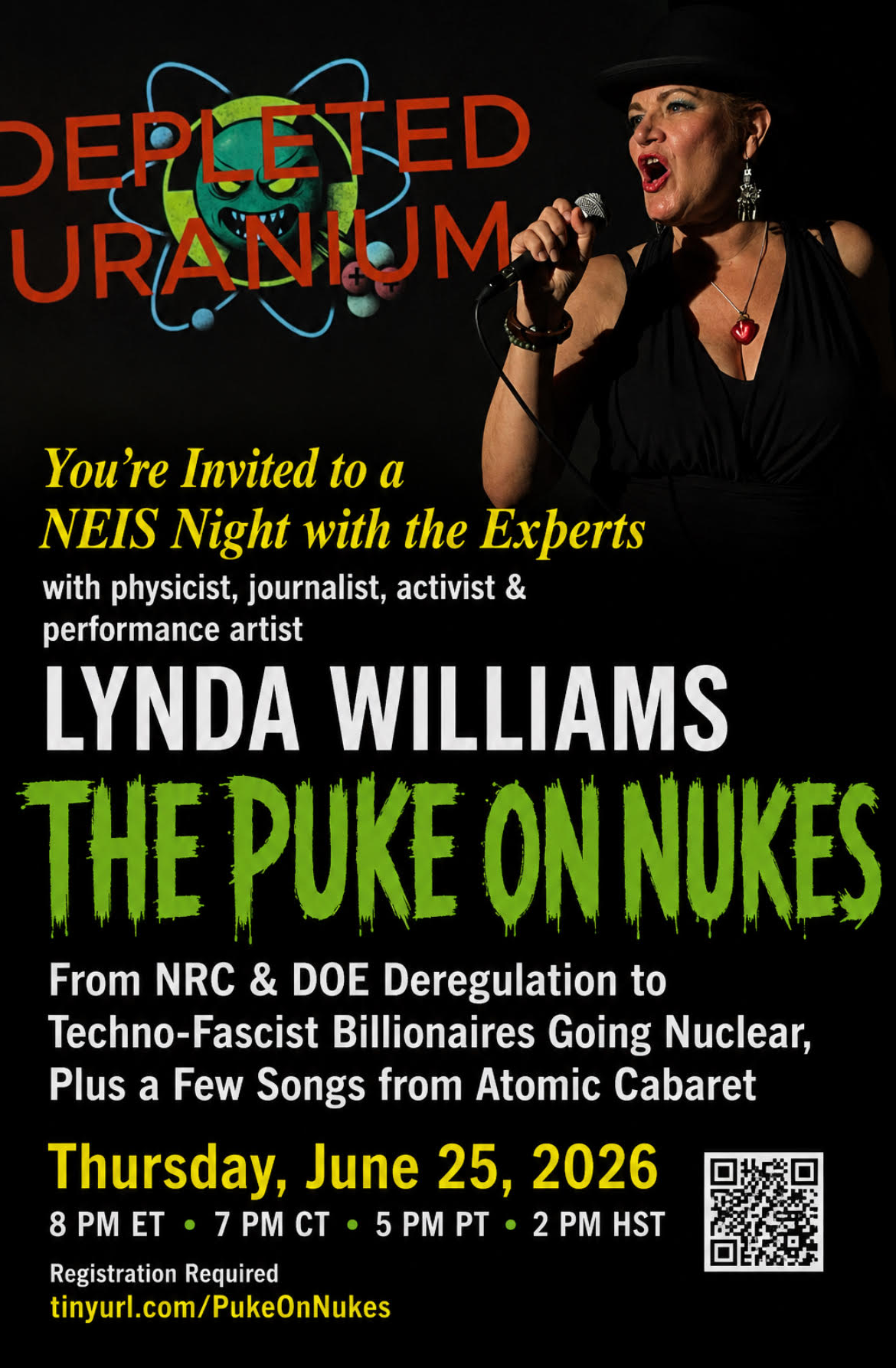
25 June- THE PUKE ON NUKES
Thursday, June 25, 2026
7pm Central Time (8pm ET, 6pm MT, 5pm PT) UTC – 5
From NRC & DOE Deregulation to Techno-Fascist Billionaires Going Nuclear, Plus a Few Songs from Atomic Cabaret REGISTER
26 June – Radiation Trainwreck at the NRC / Join the Protect Better Campaign – https://us02web.zoom.us/meeting/register/4ZlZ5_qLSHGiLSCg8FF6Bg#/registration
1st July – Webinar Waste of Space: The Environmental Harm of Military and Civil Space Activity st July, 7 pm
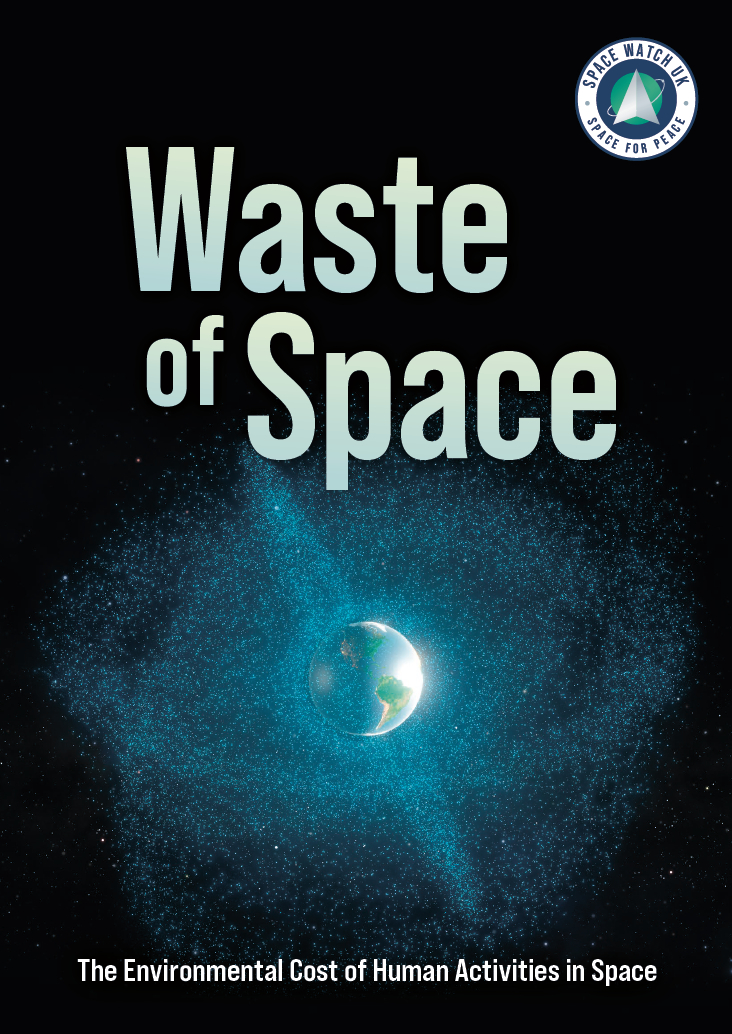
Report Launch Online: We are seeing an increasing exploitation of space for military and commercial purposes. This must change.

Protect Sazan Island from the Trump family! https://secure.avaaz.org/campaign/en/protect_sazan_island_from_the_trump_family_loc/?bqFCVab&v=174511&cl=22707147157&_checksum=5e9dde668860e8231c33699735e16a1fbf22ab2cb01da50c999fe8732b9775ef&utm_source=email&utm_medium=blast_email&utm_campaign=174511

Cuba Is Not a Failed State – It Is a Besieged State
PETITION: “Global Appeal to Endorse Palestinian Right of Return of Refugees”
To see nuclear-related stories in greater depth and intensity – go to https://nuclearinformation.wordpress.com
-
Archives
- June 2026 (221)
- May 2026 (306)
- April 2026 (356)
- March 2026 (251)
- February 2026 (268)
- January 2026 (308)
- December 2025 (358)
- November 2025 (359)
- October 2025 (376)
- September 2025 (257)
- August 2025 (319)
- July 2025 (230)
-
Categories
- 1
- 1 NUCLEAR ISSUES
- business and costs
- climate change
- culture and arts
- ENERGY
- environment
- health
- history
- indigenous issues
- Legal
- marketing of nuclear
- media
- opposition to nuclear
- PERSONAL STORIES
- politics
- politics international
- Religion and ethics
- safety
- secrets,lies and civil liberties
- spinbuster
- technology
- Uranium
- wastes
- weapons and war
- Women
- 2 WORLD
- ACTION
- AFRICA
- Atrocities
- AUSTRALIA
- Christina's notes
- Christina's themes
- culture and arts
- Events
- Fuk 2022
- Fuk 2023
- Fukushima 2017
- Fukushima 2018
- fukushima 2019
- Fukushima 2020
- Fukushima 2021
- general
- global warming
- Humour (God we need it)
- Nuclear
- RARE EARTHS
- Reference
- resources – print
- Resources -audiovicual
- Weekly Newsletter
- World
- World Nuclear
- YouTube
-
RSS
Entries RSS
Comments RSS
 nuclear-news