Will coronavirus cancel the Tokyo 2020 Olympics?
March 6, 2020
Games on? Or Games over?
It would be one of the biggest sports news stories ever.
The postponement – or cancellation – of the world’s greatest sporting mega-event because of coronavirus would be unprecedented in peacetime.
The 2020 Olympics are due to take place in Tokyo from 24 July to 9 August – here are some of the key questions as the Olympic movement faces up to unchartered territory.
What is the latest in Japan?
There is inevitably mounting concern; Japan’s proximity to China where the outbreak began, the postponement of Tokyo 2020 volunteer training, the restrictions placed on last weekend’s Tokyo marathon where only elite runners were allowed to participate, the suspension of J-League matches and other sports events, and the country’s closure of schools.
The Asia Sevens rugby tournament, which was due to be a pre-Games test event held in Tokyo next month, was cancelled on Wednesday.
The news came just as International Olympic Committee (IOC) president Thomas Bach was facing the media in Lausanne, after a two-day executive board meeting.
Tokyo 2020 organisers had also agreed to scale back the torch relay in response to coronavirus, with the lighting of the flame due to take place in Greece next week.
Japan’s Olympics minister broke ranks on Tuesday, saying that Tokyo’s contract with the IOC allowed for the Games to be postponed until later this year.
What has the IOC said?
 President Thomas Bach says the IOC remains ‘fully committed’ to Tokyo 2020
At the news conference on the banks of Lake Geneva, Bach fended off a barrage of questions about whether the Olympics could be delayed.
The admission 24 hours earlier from Japan’s Olympics minister perhaps forced Bach into a hastily arranged and unscheduled statement, in which he tried to make clear his confidence the event would proceed as planned, and urged athletes to prepare “full steam”.
At his news conference the following day, Bach struck an even more defiant tone.
He denied having a ‘Plan B’, refused to be drawn on when any decision could be made and remarkably insisted that the words “cancellation” and “postponement” were not even mentioned during the meeting.
The president did admit to a “challenge” when it came to the cancelling of some qualifying events, as has the International Paralympic Committee (IPC), which has also said qualification criteria will be reviewed as a result.
In a letter to athletes on Thursday, Bach seemed to reveal a little more realism, admitting the coronavirus was “a major concern for all of us” and was “a major subject of discussion” at the executive board meeting.
When asked what exactly his confidence was based on, Bach referred to the guidance the IOC is receiving from the World Health Organisation, part of a dedicated task-force that is now in regular dialogue, without explaining what that advice actually was.
Why no ‘Plan B’?
Bach’s reassuring messaging will no doubt be welcomed by many in Japan, the Olympic movement, its stakeholders, and many athletes.
But some may wonder whether the president is in denial. Or merely delaying the inevitable. Others will ask if it is irresponsible or naive not to have a contingency plan.
The reality is the IOC almost certainly does have a ‘Plan B’. Insiders explain that it always does for unforeseen events at the Olympics, ranging from terrorism and war to natural disasters and boycotts.
As Bach – a man who never gives the impression of panicking – explained in Lausanne, he has been faced with challenges ahead of previous Games before – from the Zika virus and Russia’s state-sponsored doping scandal before Rio 2016, to the threat of nuclear war on the Korean peninsular in the build-up to Pyeongchang 2018.
So perhaps his calm exterior should not come as too great a surprise. The IOC operates in something of a bubble after all, and will not be pushed into an expression of alarm just because some in the outside world expects it.
Perhaps this is wise. This crisis comes with the IOC facing a challenge to persuade cities to bid to host Games at the best of times. Bach is hardly going to rush into cancelling or delaying Tokyo 2020 – and perhaps in doing so deter other cities from bidding in the future – until it becomes absolutely necessary.
Why no decision yet?
 The 2020 Olympics are due to run from 24 July to 9 August
Firstly, because it may be premature. If the Games were being held now, it is hard to see how it could proceed as planned given the current approach of the Japanese authorities to mass gatherings and thousands of athletes in close proximity to each other in the village. But if, as many hope, the outbreak peaks, and then eases in the summer months, then it would be Games on.
And secondly, if the IOC were to publicly countenance a delay or cancellation, it would almost certainly have a detrimental effect, harming sales of tickets and hospitality packages, worrying athletes, and harming the all-important broadcast and sponsorship partners who ultimately bankroll the Olympic movement.
The only exception to this stance so far has come from long-serving IOC member Dick Pound, who last week admitted a decision to cancel could be made as late as May.
Ultimately, the situation is fluid and developing all the time, and just because Bach is confident now, it does not mean the situation will not change. So his words should be viewed with that in mind.
Who decides?
Under the heading ‘Termination’, clause 66 of the official Tokyo 2020 host city contract gives the IOC the authority to “withdraw the Games from the city” in the event of war (as happened in 1916, 1940 and 1944), civil disorder or boycott, or if the organisation believes that the safety of participants would be threatened “for any reason whatsoever”.
Significantly perhaps, the document states the IOC can also terminate if the Games do not take place in 2020. There is no reference to postponement.
The IOC then, is in control. But ultimately it will act on the advice of the experts at the World Health Organisation – and the Japanese government.
And with so much at stake, until they tell the IOC that to proceed would be irresponsible, expect the show of confidence to be maintained for as long as possible.
Could there be a short delay?
The distinct sense I picked up in Lausanne this week was that the kind of short-term three to four-month delay mooted by Japan’s Olympic Minister is highly unlikely. In fact, almost impossible.
It would certainly be very difficult trying to fit an autumn or winter Games into an already crowded sporting calendar, with so many other international events planned years in advance and potentially impacted.
Under a deal agreed four years ago, more than 5,000 apartments in the athletes’ village are due to be sold to private residents after the Paralympics, so it is unclear whether it would even be possible to accommodate 11,000 competitors and thousands more support staff at a later date in the event of a postponement. The availability of hotel rooms and volunteers would be uncertain.
The IOC’s most important live broadcast partner NBC – which has just announced it has sold a record £970m of advertising for Tokyo 2020 – may also take a dim view of the prospect of the Games clashing with the professional US basketball and NFL seasons, with the obvious negative knock-on effect that would have on audiences.
What are the other options?
- Stage the Games without fans and behind closed doors, as suggested this week by British Cycling performance director Stephen Park.
Intriguingly, this suggestion was not ruled out by a senior IOC insider when it was put to him in Lausanne as a possible worst-case scenario this week, and the medical directors of international federations have been consulted on their thoughts about this option.
It would make for a strange and diminished Olympic experience of course. TV cameras would be told to focus on the athletes, rather than the empty seats. The Tokyo authorities would have to refund the cost of millions of tickets, at a cost of hundreds of millions of pounds.
But at least the athletes would get to compete. And the IOC would have honoured its commitment to its broadcast partners to stage the event. In Japan, as elsewhere in the world, sports like baseball and sumo wrestling are currently being staged behind closed doors. Could this be the authorities preparing for and learning about how to handle such an approach later in the year? Is Plan B already being rehearsed?
- Delay it by a whole year.
- Try to re-locate the event elsewhere.
- Or cancel it altogether, which as Pound suggested last week, actually feels like the most likely outcome in the event the outbreak prevents the Games taking place as planned.
That may seem unthinkable. The impact would be hard to quantify, But interestingly, it may not be as cataclysmic to the IOC as you may imagine.
The host city contract states that in the event of a cancellation, the local organising committee “waive any claim and right to any form of indemnity, damages or other compensation or remedy of any kind”. So Tokyo could not sue the IOC for damages.
The IOC has built up reserves of about £700m in case a Games is lost, and which would enable it to still support international sports federations and national Olympic committees.
The IOC is thought to have spent about £20m on insurance to cover most of the £800m investment it pumps into each summer Olympics.
On the assumption that its policy covers diseases like coronavirus, the IOC could claim for lost income.
Who would be the biggest losers in the event of cancellation?
The insurance industry, which would suddenly face hundreds of millions of pounds’ worth of claims from broadcasters, advertisers, sponsors, hotels, and of course the local organisers themselves, all trying to claw back some of the losses they would incur.
Japan, which may have insurance for lost ticket sales, but would be unable to reclaim the estimated £10bn it has spent on infrastructure and preparation for the Games over the past seven years as it tries to use the event as a means of kickstarting a recovery from the 2011 Tohoku disaster. And it is too late to scale back now. The investment has been made. The loss in tourism revenue would also be a major blow to the country’s struggling economy.
And finally the athletes, men and women who have spent years dreaming of and training for the Games. For many, Tokyo will be their only chance of experiencing the Olympics.
When one considers just how much is at stake, perhaps it is no surprise that Bach seems so reluctant to even contemplate the suggestion of a delay or cancellation, and is in no rush to take a decision before he needs to.
High Courts in Japan to assess government liability for Fukushima nuclear disaster
|
Attention is on how the courts will assess the liability of the government, which has flatly denied responsibility over the accident at Tokyo Electric Power Company Holdings Inc.’s Fukushima No. 1 nuclear plant. The plant suffered meltdowns in three of its reactors after being hit by a massive earthquake and tsunami on March 11, 2011, forcing many residents to evacuate. So far, six of 10 district courts have found the government responsible for the nuclear accident, while the other four did not recognize government liability. The key issues are whether the government was able to predict the huge tsunami and was able to avert the catastrophe by taking preventive measures. The plaintiffs claim that the government could have prevented the accident if it had urged Tepco to take measures by exercising its regulatory power, based on its long-term earthquake prediction issued in 2002. All of the 10 district courts recognized Tepco’s responsibility to pay damages to the plaintiffs based on a law obliging a plant operator to pay damages over a nuclear accident, regardless of whether it was negligent or not. The Maebashi District Court and five others found that the long-term earthquake assessment was reliable, saying it was a reasonable prediction that should have been taken into account when considering tsunami countermeasures. The courts thus recognized the government’s responsibility, finding that it acted illegally by neglecting to order Tepco to take preventive measures — such as relocating power sources to a higher location at the plant. By contrast, two separate rulings issued by the Chiba District Court did not support the claim of government responsibility, reaching verdicts that the nuclear accident could not have been avoided even if preventive measures had been taken. Still, all district court rulings found that the government had been able to foresee the possibility of a huge tsunami hitting the plant. “Based on the premise that a nuclear plant should be protected at any cost, the government should exercise its regulatory power soon after it predicts a tsunami,” said Izutaro Managi, a lawyer involved in a case filed with the Fukushima District Court. The Fukushima case involves some 3,800 plaintiffs — the largest number among suits filed against Tepco and the government over the nuclear accident. The first high court ruling is expected later this year. “If high courts issue rulings in succession recognizing state responsibility over the nuclear accident, the Japanese government as a perpetrator should act to address damages from the accident,” Managi said. Specifically, he called on the government to review its compensation guidelines, which include measures such as monthly payments of ¥100,000 to each resident in evacuation zones. |
|

Negative reputation for Fukushima fishing industry – recovery is a long way away
 Fukushima Fishing Industry Still Far from Recovery https://www.nippon.com/en/japan-data/h00664/fukushima-fishing-industry-still-far-from-recovery.html Mar 9, 2020 [excellent graphs] While fishing ports and other infrastructure in Fukushima Prefecture have made progress toward recovery, the area still suffers from a negative reputation.
The coastal area off Ibaraki and Fukushima Prefectures, where the Oyashio and Kuroshio Currents meet in the Pacific Ocean, is an excellent fishing ground. The seafood caught in this area became known as Jōban-mono and was prized by professional chefs and Tsukiji Market connoisseurs. However, the 2011 Great East Japan Earthquake had a profound effect on the local fishing industry, when it caused a tsunami that destroyed all the fishing ports and led to an accident at the Fukushima Daiichi Nuclear Power Plant that damaged the reputation of the waters.
According to Fukushima Prefecture sea-fishing industry statistics, the total catch in 2010 stood at 38,600 tons, before plummeting in 2011. While fishing ports and other infrastructure have steadily recovered since, catches remain low. In 2018, 5,900 tons of fish were caught, equivalent to only 15% of the volume prior to the earthquake. This was worth ¥796 million, or only 7.3% of the ¥11.0 billion generated in 2010. (Aggregated data for 2019 is due to be released later in March 2020.)
After the nuclear accident, the fishing industry in Fukushima came to a standstill for approximately one year. Then, in June 2012, trial fishing operations began. Currently, there are still no catches within a 10-kilometer radius of the Daiichi plant and any made outside that area are subject to prefectural inspections for radioactive materials, alongside inspections by the fishing cooperatives themselves, in order to ensure safety. Although there have been zero cases of results for prefectural inspections outside acceptable levels for more than four years, the area’s negative reputation remains, so full recovery in the fishing industry is yet to be seen .
Japan may have to cancel the Olympics – a “cruise ship on land”
|
Covid-19 could scupper Prime Minister Abe Shinzo’s pet project “……. To contain the damage to his reputation as well as the coronavirus, on February 27th Mr Abe took the initiative, telling all schools to close until April. Preparing for the worst, he rushed through legislation this week allowing a state of emergency to be declared. And he unveiled an emergency spending package…… The government claims that Japan will return to normal in April. That seems implausible. A state visit by China’s president, Xi Jinping, which was supposed to put the two countries’ listing relationship on an even keel, has already been postponed. ….. Much more rides on the Olympic Games in Tokyo this summer. Mr Abe intends them to foster the patriotism whose absence among ordinary Japanese he laments. He wants the games to make Japan seem open, global and even multicultural. And, though vastly over budget, they are to crown the prime minister’s seven-year rule. To cancel the games would generate not only disappointment among ordinary Japanese but anger at the wasted expense they have already had to bear. But a pandemic would take the decision out of his hands—not least, says Nakano Koichi of Sophia University, because the Olympic village would be “a cruise ship on land”. Bet on a postponement of the games at the very least, and on a long delay before the prime minister’s popularity shines again.https://www.economist.com/asia/2020/03/07/japan-may-have-to-cancel-the-olympics?cid1=cust/ednew/n/bl/n/2020/03/5n/owned/n/n/nwl/n/n/EU/420030/n |
|
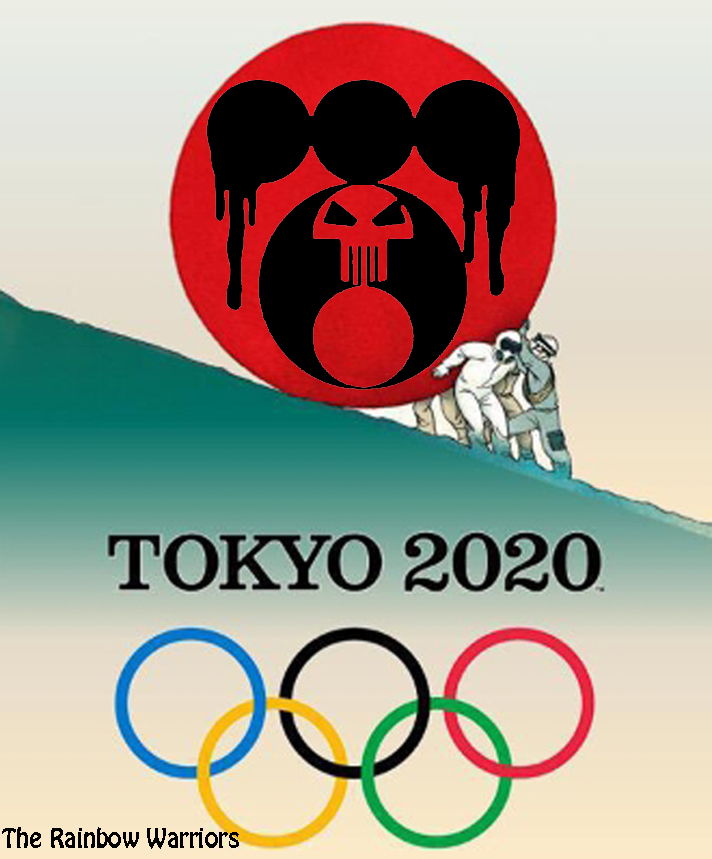
Coronavirus: Tokyo 2020 Olympics could be postponed?
 Seiko Hashimoto says Tokyo 2020 organisers are “doing all we can” to make sure the Games go ahead as planned
Coronavirus: Tokyo 2020 could be postponed to end of year – Japan’s Olympic minister
March 3, 2020
Japan’s Olympic minister says the Tokyo 2020 Games could be postponed from the summer until later in the year amid fears over the coronavirus outbreak.
In a response to a question in Japan’s parliament, Seiko Hashimoto said Tokyo’s contract with the International Olympic Committee (IOC) “calls for the Games to be held within 2020”.
She added that “could be interpreted as allowing a postponement”.
The Games are due to be held from 24 July to 9 August.
“We are doing all we can to ensure that the Games go ahead as planned,” Hashimoto added.
Under the hosting agreement the right to cancel the Games remains with the IOC.
IOC president Thomas Bach says his organisation remains “very confident with regard the success” of the Games in Tokyo.
“I would like to encourage all the athletes to continue their preparations with great confidence and full steam,” added the German.
A number of high-profile sporting events have already been cancelled or postponed as a result of the coronavirus outbreak, including the World Athletics Indoor Athletics Championships and the Chinese Grand Prix, which was scheduled for 19 April.
Coronavirus, which originated in China, has spread to more than 60 countries and claimed more than 3,000 lives so far.
The IOC executive board met in Lausanne, Switzerland on Tuesday and in a statement “expressed its full commitment to the success of the Olympic Games Tokyo 2020 taking place from 24 July to 9 August”.
It said a “joint task force” was started in mid-February, involving the IOC, Tokyo 2020 organisers, the host city of Tokyo, the government of Japan and the World Health Organization.
The executive board added that it “appreciates and supports the measures being taken, which constitute an important part of Tokyo’s plans to host safe and secure Games”.
“We will continue to support the athletes and their NOCs with regular updates of information, which we will provide,” Bach added.
 The Olympic rings outside the International Olympic Committee headquarters in Lausanne, Switzerland, where leaders discussed the Tokyo Games and the threat of the coronavirus outbreak
Japanese official raises possibility of postponing 2020 Summer Olympics
March 3, 2020
Even as Olympic leaders reiterated their confidence that the coronavirus outbreak will not force the cancellation of the upcoming 2020 Tokyo Games, a Japanese official suggested the host city has a contractual right to postpone the competition until the end of the year.
The dueling pronouncements came Tuesday as the International Olympic Committee’s executive board convened for a regularly scheduled meeting in Lausanne, Switzerland. Board members devoted much of the day to discussions on the matter.
“We remain very confident with regard to the success of these Olympic Games,” IOC President Thomas Bach said.
Half a world away, a question in the Japanese parliament prompted that country’s Olympic minister to discuss nuances of the contract that all host cities must sign when they are awarded the Games.
“The IOC has the right to cancel the Games only if they are not held during 2020,” Seiko Hashimoto told parliament, according to the Associated Press. “This can be interpreted to mean the Games can be postponed as long as they are held during the calendar year.”
Hashimoto added that officials “are making the utmost effort so that we don’t have to face that situation.”
Since the COVID-19 virus was detected in China late last year, more than 92,000 people have been infected and 3,100 have died worldwide. Still, as of early Tuesday, the World Health Organization had yet to classify the outbreak as a pandemic because it has severely affected only a handful of countries.
Some health experts have questioned the wisdom of holding any mass public gathering in light of the outbreak; others have said it is too early to make any such decisions,
The modern Olympics have been canceled only three times, during the first and second World Wars. In other instances, they have endured through various concerns, including the spread of the Zika virus around the time of the 2016 Summer Games in Rio de Janeiro.
This time, there is concern because the coronavirus has caused events such as international soccer games and a major car race to be postponed, moved or canceled.
Tokyo is expecting more than 10,000 athletes and an estimated 600,000 tourists from around the globe. Organizers have devoted billions of dollars to venue construction and other preparations but would likely have insurance to cover cancellation for unforeseeable reasons.
American broadcasters said Tuesday they also would be covered in case of cancellation.
“We try to anticipate for big events what might happen so that we’re protected there, and we also have insurance for any expenses we make,” Comcast chairman Brian Roberts, adding: “We’re optimistic the Olympics are going to happen.”
As for postponement, any date later this year or into 2021 could conflict with world championships and other competitions already scheduled. There is an additional, historical perspective.
The Spanish flu pandemic of 1918 was relatively light when it first appeared during the winter and spring. But after a dormant summer, it returned with greater force in the fall, ultimately infecting as many as 500-million people and killing 20 million to 50 million worldwide.
Last month, the IOC formed a task force that includes representatives from the WHO, the Tokyo 2020 organizing committee and the Japanese government.
“Of course we will continue this regular consultation with this joint task force to be able to address any developments which may occur,” Bach said.
Olympic leaders dismissed suggestions of a postponement, repeating their expectation that the Tokyo Games will begin as scheduled on July 24.
“You can come up with all sorts of speculation, all sorts of doomsday scenarios,” IOC spokesman Mark Adams told reporters. “We would prefer to stick to the advice from the experts.”
Japan pushes to remove Fukushima references from U.N. exhibition
 Protesters hold placards during a demonstration against the Olympics, Prime Minister Shinzo Abe and nuclear energy, near the crippled Fukushima No. 1 nuclear power plant on Feb. 29, 2020.
Mar 3, 2020
The Foreign Ministry has pushed for references to the Fukushima nuclear disaster to be removed from an upcoming exhibition at the United Nations, an anti-nuclear group said Tuesday.
The Japan Confederation of A- and H-Bomb Sufferers Organizations is slated to mount the exhibition during the review conference for the Nuclear Non-Proliferation Treaty from April 27 to May 22.
The ministry, which has supported the confederation’s three previous exhibitions, suggested it could withdraw its backing unless the requested changes are made, said Sueichi Kido, the group’s secretary general.
The exhibition in the lobby of the U.N. headquarters in New York will consist of around 50 panels mainly describing the horrors of nuclear weapons, including the aftermath of the 1945 atomic bombings of Hiroshima and Nagasaki.
Two of the panels will touch on the nuclear disasters at the Fukushima No. 1 power plant in 2011 and Ukraine’s Chernobyl power plant in 1986.
According to Kido, the ministry argues the panels contradict the spirit of the nonproliferation treaty, which allows for the peaceful use of nuclear technology.
A ministry official said its support for the exhibition was under review and declined to confirm whether any pressure had been applied to change its content.
Kido said there had been a “breach of trust” and the confederation, which represents survivors of the atomic bombings, plans to hold the exhibition as planned with or without the ministry’s support.
“Atomic bombs and nuclear accidents are the same in the sense that they cause harm through radiation. As a victim of atomic bombing, Japan has a responsibility to work toward the elimination of nuclear weapons,” Kido added.
In pre-Olympics propaganda, Japan’s govt opens just 4% of Futaba town
 Japan opens part of last town off-limits since Fukushima nuclear disaster, Japan Times, AP, JIJI, MAR 4, 2020 The government on Wednesday opened part of the last town that had been off-limits due to radiation since the Fukushima nuclear disaster nine years ago, in a symbolic move to show the region’s recovery ahead of the Tokyo Olympics.
The entire population of 7,000 was forced to evacuate Futaba after three reactors melted down, when the nuclear plant in the town was damaged by a magnitude 9 earthquake and tsunami on March 11, 2011.
The partial lifting of the entry ban comes weeks before the Olympic torch is carried through another town in Fukushima. The torch could also pass through Futaba, about 4 kilometers (2.4 miles) from the wrecked nuclear plant.
The town also saw the first easing of the evacuation order that was issued after the nuclear disaster. The move also marked the first such loosening of restrictions for a “difficult-to-return” zone with relatively high radiation levels.
Unrestricted access, however, is only being allowed to an area in the northeastern part of Futaba, or 4 percent of the town’s total area, as well as difficult-to-return zones around Futaba Station on East Japan Railway Co.’s Joban Line. The station will reopen later this month to reconnect it with the rest of the region for the first time since the accident. Access to the vast majority of Futaba is restricted to those who can secure permission for a day visit.
The three reactor meltdowns at the town’s Fukushima No. 1 nuclear power plant caused the release of massive amounts of radiation that contaminated the surrounding area and, at the disaster’s peak, forced more than 160,000 people to flee.
At midnight on Tuesday, the gate at a checkpoint was opened, and Futaba officials also placed a signboard at their new town office……
Town officials say they hope to see Futaba’s former residents return, but prospects are grim because of lingering concern about radiation. Many residents also found new jobs and ties in other communities after evacuating, and only about 10 percent say they plan to return.
The number of residents registered in Futaba has already decreased by 1,000 from the town’s pre-disaster population of 7,000. After long bus trips, stopovers and time spent staying in shelters at an athletic arena and an abandoned high school, many evacuees ended up remaining in the city of Kazo, Saitama Prefecture. Futuba’s government reopened in a makeshift office in Iwaki, another Fukushima town…….. https://www.japantimes.co.jp/news/2020/03/04/national/japan-opens-part-of-futaba-fukushima/#.XmANQKgzbIU
The Olympic torch relay promoting “radiation recovery” – not so popular in Fukushima
In Fukushima, Olympic torch relay faces cool welcome from nuclear evacuees WTVB,
FUTABA, Japan (Reuters) – Dressed in protective plastic coveralls and white booties, Yuji Onuma stood in front of the row of derelict buildings that included his house, and sighed as he surveyed his old neighborhood.
On the once-bustling main street, reddish weeds poked out of cracked pavements in front of abandoned shops with caved-in walls and crumbling roofs. Nearby, thousands of black plastic bags filled with irradiated soil were stacked in a former rice field.
“It’s like visiting a graveyard,” he said.
Onuma, 43, was back in his hometown of Futaba to check on his house, less than 4 kilometers from the Fukushima nuclear power plant, which suffered a triple meltdown in 2011 following an earthquake and tsunami, leaking radiation across the region.
The authorities say it will be two more years before evacuees can live here again, an eternity for people who have been in temporary housing for nine years. But given the lingering radiation here, Onuma says he has decided not to move back with his wife and two young sons.
Most of his neighbors have moved on, abandoning their houses and renting smaller apartments in nearby cities or settling elsewhere in Japan.
Given the problems Futaba still faces, many evacuees are chafing over the government’s efforts to showcase the town as a shining example of Fukushima’s reconstruction for the 2020 Tokyo Olympics.
While there has been speculation that the global spread of the coronavirus that emerged in China last month might force the cancellation of the Olympics, Japanese officials have said they are confident the Games will go ahead.
The Olympic torch relay will take place in Fukushima in late March – although possibly in shortened form as a result of the coronavirus, Olympic organizers say – and will pass through Futaba. In preparation, construction crews have been hard at work repairing streets and decontaminating the center of town.
I wish they wouldn’t hold the relay here,” said Onuma. He pointed to workers repaving the road outside the train station, where the torch runners are likely to pass. “Their number one aim is to show people how much we’ve recovered.”
He said he hoped that the torch relay would also pass through the overgrown and ghostly parts of the town, to convey everything that the 7,100 residents uprooted of Futaba lost as a result of the accident.
“I don’t think people will understand anything by just seeing cleaned-up tracts of land.”
UNDER CONTROL”
In 2013, when Prime Minister Shinzo Abe was pitching Tokyo as the host of the 2020 Games to International Olympic Committee members, he declared that the situation at the Fukushima nuclear plant was “under control”.
The Games have been billed as the “Reconstruction Olympics” – an opportunity to laud Japan’s massive effort to rebuild the country’s northeastern region, ravaged by the earthquake and tsunami, as well as the meltdowns at the nuclear plant owned by Tokyo Electric Power Co.
After the disaster, the government created a new ministry to handle reconstruction efforts and pledged 32 trillion yen ($286.8 billion) in funding to rebuild affected areas.
Signs of the reconstruction efforts are everywhere near the plant: new roads have been built, apartment blocks for evacuee families have sprouted up, and an imposing tsunami wall now runs along the coastline. An army of workers commutes to the wrecked plant every day to decommission the reactors.
In March, just days before the Olympic relay is scheduled to be held across Fukushima, Japan will partially ease a restriction order for Futaba, the last town that remains off-limits for residents to return.
This means that residents like Onuma will be able to freely come and go from the town without passing through security or changing into protective clothing. Evacuees will still not be able to stay in their homes overnight.
After a few years bouncing between relatives’ homes and temporary apartments, Onuma decided to build a new house in Ibaraki, a nearby prefecture. His two sons are already enrolled in kindergarten and primary school there.
“You feel a sense of despair,” said Onuma. “Our whole life was here and we were just about to start our new life with our children.”
When Onuma was 12, he won a local competition to come up with a catchphrase promoting atomic energy. His words, “Nuclear Energy for a Brighter Future” was painted on an arch that welcomed visitors to Futaba.
After the nuclear meltdowns, the sign was removed against Onuma’s objections.
“It feels like they’re whitewashing the history of this town,” said Onuma, who now installs solar panels for a living.
The organizing committee for the Tokyo 2020 Olympics did not respond to requests for comment from Reuters.
“BACK BURNER”
Other residents and community leaders in nearby towns say the Olympics may have actually hindered the region’s recovery.
Yasushi Niitsuma, a 60-year-old restaurant owner in Namie, said the Olympics stalled local reconstruction projects because of surging demand and costs to secure workers and materials ahead of the games in Tokyo.
“We need to wait two years, three years to have a house built because of the lack of craftsmen,” said Niitsuma. “We are being put on the back burner.”
Fukushima’s agriculture and fisheries industries have also been devastated.
“I was astonished by the “under control” comment made in a pitch to win the Olympic Games,” said Takayuki Yanai, who directs a fisheries co-op in Iwaki, 50 kilometers south of the nuclear plant, referring to Abe’s statement.
“People in Fukushima have the impression that reconstruction was used as a bait to win the Olympic Games.”
A government panel recently recommended discharging contaminated water held at the Fukushima plant to the sea, which Yanai expects to further hurt what remains of the area’s fisheries industry……..
Radiation readings in the air taken in February near Futaba’s train station were around 0.28 microsieverts per hour, still approximately eight times the measurement taken on the same day in central Tokyo.
Another area in Futaba had a reading of 4.64 microsieverts per hour on the same day, meaning a person would reach the annual exposure upper limit of 1 millisievert, recommended by the International Commission on Radiological Protection, in just nine days.
Despite the official assurances, it’s hard to miss the signs of devastation and decay around town.
The block where Takahisa Ogawa’s house once stood is now just a row of overgrown lots, littered with concrete debris. A small statue of a stone frog is all that remains of his garden, which is also scattered with wild boar droppings.
He finally demolished his house last year after he failed to convince his wife and two sons to return to live in Futaba.
Ogawa doubts any of his childhood friends and neighbors would ever return to the town.
“I’ve passed the stage where I’m angry and I’m resigned,” he said.
(Reporting by Mari Saito and Kiyoshi Takenaka; Writing by Mari Saito; Editing by Philip McClellan) https://wtvbam.com/news/articles/2020/mar/02/in-fukushima-olympic-torch-relay-faces-cool-welcome-from-nuclear-evacuees/990039/
Japan to close temporary all schools nationwide to control spread of virus
 Prime Minister Shinzo Abe announces the government’s plan to ask all schools in Japan to cancel classes from March 2 until spring break amid the spread of the new coronavirus in the country, during a meeting of the coronavirus task force headquarters at the prime minister’s office in Tokyo, on Feb. 27, 2020.
Abe asks all schools in Japan to temporarily close over coronavirus
February 27, 2020
TOKYO (Kyodo) — Prime Minister Shinzo Abe said Thursday the government will request all elementary, junior high and high schools in Japan to close from Monday until the end of a spring break through early April amid concern over the spread of the new coronavirus.
In a meeting of a government task force to fight the virus, Abe cited “children’s health and safety” as the top priority and said the measure, which also includes schools for special needs education across Japan, is intended to better cope with a risk of infection to be generated by students and teachers spending long hours together.
Abe also asked schools to take the best possible steps to prevent infection, such as minimizing the number of participants, if they are to hold entrance exams and graduation ceremonies in the coming weeks.
Japan’s school year ends in March and a new academic year typically starts in early April.
Abe announced the measure as opposition parties have stepped up criticism of his administration for not responding quickly enough, with the number of confirmed COVID-19 patients continuing to rise in Japan and the end of the outbreak of the China-originated, pneumonia-causing virus not yet in sight.
The number of confirmed infections in Japan topped 900 on Thursday, including over 700 from the Diamond Princess, a virus-hit cruise ship docked in Yokohama near Tokyo.
Given that schoolchildren are expected to stay home in the coming weeks, Abe requested that government agencies and companies allow workers to take days off so they can spend more time with their families.
Nursery schools will be excluded from the nationwide closure request, according to the Ministry of Health, Labor and Welfare.
Abe also instructed the government to “prepare necessary legislation to curb the spread of infections and minimize the impact on the lives of people as well as the economy.”
Meanwhile, some schoolteachers expressed concern about the prime minister’s request as they have to adjust class and event schedules.
“A one-month closure is unheard of and its impact will be significant,” said a teacher at a public elementary school in Tokyo.
“I’m in the middle of discussions with my colleagues on how to determine grades for students and distribute them,” he said.
Abe’s announcement came as a number of schools have already decided to close or scale down their activities.
Earlier Thursday, the Osaka city government said it will temporarily close all city-run elementary and junior high schools, and kindergartens from the following day through March 13 amid the coronavirus outbreak.
It will diminish the scale of graduation ceremonies scheduled during the closure period by limiting the number of participants and shortening program hours as well, according to the most populated city in Japan outside the Tokyo metropolitan area.
“We will conduct a simultaneous shutdown to ensure safety and prevent expansion of infections,” Osaka Mayor Ichiro Matsui said at a meeting with senior city officials.
During the closure, schools will gather information on health conditions of students from parents and report to the education board if they find any concerns.
In Tokyo, Ochanomizu University said the state-run institution will close affiliated kindergarten, elementary school, and junior and senior high schools from Friday for about a month until early April, following a spring break.
Prince Hisahito, the 13-year-old nephew of Emperor Naruhito, attends the junior high school affiliated with the university.
“I believe it’s an unprecedented closure for such an extended period of time,” a university official said.
Similarly, most of the 1,600 elementary and junior high schools on Japan’s northernmost main island of Hokkaido were already closed Thursday for a week.
The action came a day after the Hokkaido board of education urged local authorities to temporarily close all public and private elementary and junior high schools in an effort to contain the spread of the virus.
Machiko Inari, a 40-year-old resident of Hakodate, said she will take a week off to look after her daughter, a fifth-grader, and son, a kindergarten student.
“Although it will affect my work and co-workers, it’s better if it reduces the risk of infection for children as the disease is still relatively unknown,” she said.
 Japan’s Prime Minister Shinzo Abe, center, speaks during a meeting of a task force on the new coronavirus at his official residence in Tokyo Thursday, Feb. 27, 2020. Abe was asking all elementary, middle and high schools to remain shut until spring holidays begin in late March.
Japan to close schools nationwide to control spread of virus
February 27, 2020
TOKYO — Japan will close schools nationwide to help control the spread of the new virus, the government announced Thursday.
Prime Minister Shinzo Abe asked all elementary, middle and high schools to remain shut until spring holidays begin in late March.
The measure affects 12.8 million students at 34,847 schools nationwide, the education ministry said.
It does not affect DODEA schools for now, said Todd Schlitz, the DODEA-Pacific chief of staff.
Abe’s announcement came hours after several local governments announced their own decisions to suspend classes.
“The coming week or two is an extremely important time,” Abe said. “This is to prioritize the health and safety of the children and take precautions to avoid the risk of possible large-scale infections for many children and teachers who gather and spend hours together every day.”
The decision comes amid growing concern about the rise in the number of untraceable cases of the virus in northern Japan and elsewhere. Japan now has more than 890 cases, including 705 from a quarantined cruise ship. An eighth death from the virus was confirmed Thursday in Japan’s northernmost island of Hokkaido, now considered a site of growing cluster.
Officials in the northernmost main island of Hokkaido said they were closing all 1,600 elementary and middle schools. Hokkaido now has 54 confirmed cases, the largest in in the country outside the cruise ship.
The emergency school closures come as schools were busy preparing for graduation ceremonies at the end of the school year. Koizumi primary school Vice Principal Norinobu Sawada said the decision to suspend classes was unavoidable.
“The most important thing is to prevent infections, so there aren’t many other options,” he said.
Rise in COVID-19 cases in Japan prompts 9 countries to restrict travel to and from Japan
A significant uptick in COVID-19 cases across Japan has triggered a flurry of advisories worldwide about travel to the country, with at least nine governments calling on their citizens to refrain from nonessential visits or to exercise increased caution during trips.
Foreign Minister Toshimitsu Motegi confirmed Friday that the nine countries — Israel, the Solomon Islands, Thailand, Samoa, Tonga, Micronesia, Kiribati, Bhutan and South Korea — had issued warnings against travel to Japan, one of the nations hit hardest by the new coronavirus epidemic.
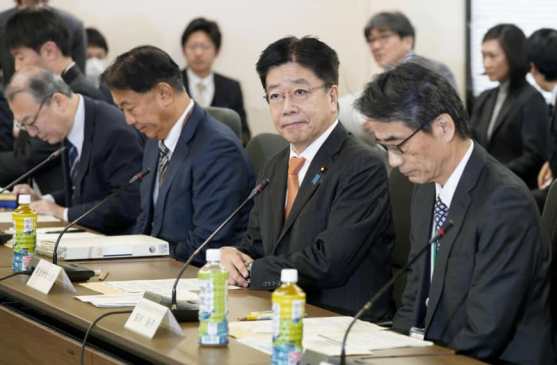 Health minister Katsunobu Kato (second from right) attends a meeting of infectious disease experts held Monday at the ministry to discuss measures to tackle the new coronavirus outbreak in Japan
Rise in COVID-19 cases in Japan prompts travel advisory revisions
Feb 24, 2020
A significant uptick in COVID-19 cases across Japan has triggered a flurry of advisories worldwide about travel to the country, with at least nine governments calling on their citizens to refrain from nonessential visits or to exercise increased caution during trips.
Foreign Minister Toshimitsu Motegi confirmed Friday that the nine countries — Israel, the Solomon Islands, Thailand, Samoa, Tonga, Micronesia, Kiribati, Bhutan and South Korea — had issued warnings against travel to Japan, one of the nations hit hardest by the new coronavirus epidemic.
On its official website, the Samoan government strongly recommends that all persons intending to travel to China and any country affected by the coronavirus “postpone their travel arrangements unless necessary.” Samoa also warned that Japanese passport-holders must self-quarantine for at least 14 days at their point of departure, and must undergo medical clearance within three days prior to their trip to Samoa.
Thai media outlets have widely reported that the country’s Public Health Ministry is advising Thais planning to visit Japan to postpone their trips. The Thai government said the coronavirus outbreaks in Japan and Singapore had reached “the third stage” in which a growing number of infected residents have no record of contact with Chinese people or any history of traveling to China, where the virus is thought to have originated.
Israel’s safety measures follow reports that two Israelis were found to have contracted the virus after they were evacuated from the virus-hit Diamond Princess cruise ship docked in Yokohama Port, where they had spent around two weeks under quarantine.
About 10 Israelis were aboard the ship. Israel was one of about a dozen countries that arranged chartered flights to bring their citizens home last week, in an emergency measure aimed at protecting the evacuees from the virus.
All the evacuees had boarded the charter planes on condition that they tested negative for COVID-19. But at least 14 Americans, six Australians, four U.K. nationals and two Israelis have tested positive so far after returning home from Japan.
On Sunday, after the viral infections were confirmed in the evacuees from the Diamond Princess, Israel announced its entry ban for Japanese travelers and residents of Japan who had visited Japan or South Korea 14 days prior to their arrival, effective from Monday.
Micronesia has also barred direct entry for people from Japan.
Until last weekend, the Diamond Princess remained the biggest COVID-19 cluster outside of China with nearly 700 people found to have developed symptoms of COVID-19 or been infected with SARS-CoV-2, the new coronavirus that causes the disease.
On Monday, the total number of 763 cases reported in South Korea, which is struggling to contain a snowballing coronavirus outbreak of its own, surpassed that of the Diamond Princess.
But with 149 cases reported within Japan as of Monday evening the nationwide total including those from the ship was brought to 840, prompting other governments to upgrade their health advisories concerning travel to the nation.
The U.S. Centers for Disease Control has also issued a low-level travel advisory for Japan, warning of “sustained community spread” of the virus across the country through unknown routes of transmission.
In its notice, the CDC suggested older adults and those with chronic medical conditions — who may be at higher risk from severe disease — should discuss their plans with a health care provider and consider postponing nonessential travel. They also warned Americans considering trips to Japan of possible travel delays, quarantine and extremely expensive medical costs if they are suspected to have become infected with the virus.
Australia has also adjusted its advice for Japan. The Australian Government announced Sunday on Twitter that it recommends Australians exercise a high degree of caution in Japan due to an increased risk of sustained local transmission of the new coronavirus.
https://www.japantimes.co.jp/news/2020/02/24/national/japan-covid-19-travel-advisories/#.Xlf7OEpCeUl
 A tea ceremony is held during an ume-viewing festival at Kitano Tenmangu shrine in Kyoto, western Japan, on Feb. 25, 2020.
7 countries restrict entry from Japan to thwart new virus spread
February 25, 2020
TOKYO (Kyodo) — Seven countries have restricted entry to Japanese nationals and those traveling from Japan in an effort to prevent the spread of the novel coronavirus, Foreign Minister Toshimitsu Motegi said Tuesday.
The countries are Israel, Samoa, Micronesia, Kiribati, Comoros, Tuvalu, and the Solomon Islands, Motegi said at a news conference.
The virus, which originated in China and causes a disease known as COVID-19, has spread across the globe infecting more than 78,000 people. There are over 800 confirmed cases of infection in Japan, with many from a cruise ship docked in Yokohama.
Japan has asked Israel to remove the travel restrictions, and briefed each country about Tokyo’s fight against the virus outbreak.
Motegi asked people to check the Japanese Foreign Ministry’s website before making travel plans.
International Atomic Energy Agency, run by 5 nuclear weapons nations, backs Fukushima water emptying to the Pacific
China , France , Russia , UK , and the USA, oversee the IAEA – International Atomic Energy Agency, this was expected.
UN SC P5 nuclear nations is a fully integrated system inclusive of the Military-Industrial Complex.
An ecosystem that includes weapons of mass destruction, for peace, a leadership group in a state of cultural cognitive dissonance.
Who as a group know gene sheering radionuclides, have an effect on DNA X10 times half-life of any alpha particles out of nuclear reactors.
IAEA backs release of Fukushima water into sea, AsiaTimes, 27 Feb 20,
Most of the radioactive isotopes have been filtered out, but one – tritium, which has long half-life – remains, The world’s nuclear watchdog gave its backing Thursday to Japanese plans to release contaminated water from the damaged Fukushima nuclear plant into the ocean.
Japan has around a million tonnes of contaminated water stored in tanks at the site of the Fukushima Daiichi plant, whose reactors went into meltdown after a huge tsunami in 2011.
A government panel last month recommended the water be released into the ocean or vaporized, but no final decision has been taken, with all solutions deeply unpopular with sections of the Japanese public.
International Atomic Energy Agency (IAEA) director Rafael Grossi told journalists in Tokyo the panel’s recommendations both appeared suitable…….
“Releasing into the ocean is done elsewhere, it’s not something new, there is no scandal here,” Grossi added.
“But what is important is to do it in a way that is not harmful and you need somebody to monitor before, during and after release, to check that everything is okay.”
The radioactive water comes from several different sources – including water used for cooling at the plant, and groundwater and rain that seeps into the plant daily – and is put through an extensive filtration process.
Most of the radioactive isotopes have been removed by the filtration system, but one – tritium, which has a long half-life – remains…….. https://asiatimes.com/2020/02/iaea-backs-release-of-fukushima-water-into-sea/
No. 2 reactor at Onagawa nuclear plant in Miyagi, halted by 2011 tsunami, passes safety screening
 People protest Wednesday in Tokyo over the Nuclear Regulation Authority giving its approval for the safety measures implemented at the No. 2 unit of the Onagawa nuclear power plant in Miyagi Prefecture.
February 26, 2020
A nuclear reactor in Miyagi Prefecture damaged by the 2011 earthquake and tsunami disaster formally cleared screening by a national nuclear watchdog on Wednesday, paving the way for it to restart after anti-disaster measures are completed by the end of March next year.
The No. 2 unit of Tohoku Electric Power Co.’s Onagawa plant won the approval of the Nuclear Regulation Authority, becoming the second disaster-damaged reactor, after the Tokai No. 2 power plant in Ibaraki Prefecture, to pass stricter safety standards introduced after the Fukushima nuclear crisis.
Construction of an 800-meter seawall is among anti-disaster measures that still need to be completed at the plant, which straddles the town of Onagawa and the city of Ishinomaki. The operator also needs to obtain consent from local residents before it can restart the plant.
On March 11, 2011, all three reactors at the Onagawa complex shut down when a massive earthquake rocked northeastern Japan and a 13-meter tsunami hit the area, flooding the underground floors of the No. 2 unit.
However, the facility’s emergency cooling system operated correctly and there was no meltdown of the type that occurred at Tokyo Electric Power Company Holdings Inc.’s Fukushima No. 1 plant.
Tohoku Electric applied for safety screening for the No. 2 unit in December 2013 and has been constructing the seawall that will top out at 29 meters above sea level. It expects to spend about ¥340 billion ($3.08 billion) in total on the anti-disaster measures.
The company has already decided to scrap the No. 1 reactor, which began operations in 1984, and is considering applying for the restart of the No. 3 unit, which started power generation in 2002.
When it restarts, the Onagawa No. 2 reactor, which began commercial operations in 1995, will be the first boiling water reactor — the same type used at the Fukushima No. 1 plant — to resume operations since the 2011 earthquake and tsunami hit. The disaster claimed nearly 16,000 lives and left more than 2,500 missing.
Other boiling water reactors at Tepco’s Kashiwazaki-Kariwa plant in Niigata Prefecture and the Tokai No. 2 plant of Japan Atomic Power Co. have already secured approval to resume operations from the regulator, but have yet to obtain local consent.
https://www.japantimes.co.jp/news/2020/02/26/national/miyagi-nuclear-reactor-safety/#.Xlare0pCeUk
Could the 2020 Tokyo Olympics Be a Victim of COVID-19?

February 20, 2020
In a promotional video featuring Japanese tennis superstar Naomi Osaka, as well as fans of different nationalities, the organizing committee for the Tokyo 2020 Olympic and Paralympic Games revealed on Feb. 17 the event’s official motto: United by Emotion.
Yet if there’s one emotion linking the world today, it might be fear. The COVID-19 outbreak shows little sign of weakening. As of Feb. 19, the disease has infected more than 75,000, killed 2,014 and prompted over 50 countries and territories to close their borders to arrivals from China. The “devil” virus, as Chinese President Xi Jinping has called it, has already surpassed the combined death toll of SARS and MERS and lies on the cusp of becoming a pandemic that spreads around the globe. The next few weeks will determine whether containment efforts can prevent COVID-19 becoming the “black swan event” that Alibaba CEO Daniel Zhang has warned may derail the global economy.
The economic repercussions already look severe. According to analysis by research firm Capital Economics, COVID-19 will cost the world economy over $280 billion in the first quarter of this year, meaning that global GDP will not grow from one quarter to the next for the first time since 2009. China’s growth is expected to slow to 4.5% over the same period. Some 5 million companies have Chinese suppliers, according to data company Dun & Bradstreet, and all are under threat from slashed manufacturing capacity.
Korean automaker Hyundai has shut its huge factory in Ulsan due to a shortage of parts. Apple has told investors it will fail to meet quarterly revenue targets and warned of global “iPhone supply shortages” from the shutting of Chinese factories. The slowdown may also undermine U.S. plans to massively boost exports of agricultural goods, energy and services to China, hampering any potential recovery in farming communities and the Rust Belt.
Travel in and around the region has ebbed significantly. Some 21 airlines have cancelled all flights to mainland China. Hong Kong-based Cathay Pacific has cut 40% of network capacity and asked 27,000 employees to take unpaid leave to help it stay afloat. Events from the Hong Kong Rugby Sevens to K-Pop concerts have been cancelled or postponed.
Now, speculation is mounting about one of the year’s biggest events due to take place directly in the orbit of the outbreak—the 2020 Olympic Games, which are to be held in Tokyo beginning July 24. Japan has the second highest rate of COVID-19 infections after China, with 695 people testing positive for the virus, most of them on a cruise ship docked at the city of Yokohama. Yet the Olympics torch relay is due to begin next month and traverse to all of Japan’s 47 prefectures over 121 days, coinciding with its popular cherry blossom bloom.
The chill on visitor numbers across Asia already risk making the Games a subdued affair. Japan received 9.6 million visitors from China in 2019, accounting for a third of foreign tourist expenditure, but Chinese arrivals have virtually ceased since the outbreak. According to Japanese public broadcaster NHK, Tokyo 2020 organizing committee chief executive Toshiro Muto said on Feb.5 he was “extremely worried that the spread of the infectious disease could throw cold water on the momentum toward the Games.”
Officials have since closed ranks as speculation about the Games has increased. Organizing committee president Yoshiro Mori insisted Feb. 13, “we are not considering a cancelation or postponement of the Games—let me make that clear.” As he spoke, some 3,700 people remained quarantined on the Diamond Princess cruise liner, anchored less than two miles from Yokohama Baseball stadium, a key Tokyo 2020 venue. (Those uninfected were scheduled for release beginning Feb. 19.)
Four days later, the city canceled the Tokyo Marathon due to take place on March 1 for all except elite runners. Dick Pound, a former Olympian swimmer and member of the International Olympic Committee, told TIME the organisation was monitoring the situation closely but said no one was talking about relocation or cancelation with five months still to go. “If there’s a legitimate pandemic that is potentially a lot more lethal than normal illnesses of flu, that’s when you need to start thinking about it. But not at this stage.”
Mori’s confidence is in line with projections that COVID-19 will fade during warmer and more humid summer months, as SARS did in 2003. But it’s still not clear why SARS declined as temperatures rose. Some coronavirus strains—like MERS—thrive in the heat, says Prof. Michael Osterholm, an epidemiologist at the University of Minnesota. The theory of COVID-19’s summer regress is simply “based on wishful thinking,” he says. “There is no data to support it.”
It’s hard to overstate the economic impact on Japan were the Olympics forced to be canceled or relocated. The investment surrounding the event is staggering; the Games are set to cost $25 billion, according to latest predictions, nearly four times the original estimate. According to hospitality research firm CBRE Hotels, 80,000 hotel rooms were forecast to open across Japan’s nine major cities between 2019 and 2021. Tokyo’s Okura hotel reopened in September after a $1 billion renovation. In May, national carrier Japan Airlines is due to launch a low cost subsidiary, Zipair Tokyo, at a cost of around $200 million, to meet increased demand surrounding the Olympics. It will be based at Tokyo Narita International Airport, which is currently undergoing an expansion to nearly double capacity. (Tokyo’s other main airport, Haneda, is also due to boost capacity by 70%.)
The coronavirus is already keeping international visitors away beyond China. Capital Economics research suggests tourism arrivals in Japan will fall by 40% this quarter due to COVID-19, knocking off 0.4 percentage points from growth. The U.N.’s International Civil Aviation Organization forecasts that Japan could lose $1.29 billion in tourism revenue over the same period. Koichiro Takahara, CEO of Tokyo-based ride-sharing app nearMe, says he fears the Olympics could get cancelled if the outbreak worsens. That, he says, “would have a big impact on my business, so I am keeping my fingers crossed.”
It would also impose a political cost on Japan’s Prime Minister Shinzo Abe. Already, his insistence during the bidding process that radiation from the 2011 Fukushima Daiichi Nuclear Power Plant meltdown would be tackled has been called out after Greenpeace found radiation hotspots in December near where the Olympic torch relay will pass. Similar assurances that COVID-19 will not disrupt the Games will be treated with skepticism, says Jules Boykoff, a politics professor at Pacific University, Oregon who studies the Olympics and played soccer for Team USA. “For many, when they hear Abe and other officials saying that COVID-19 will not affect the Olympics, they hear the unmistakable ring of previous empty promises.”
But it’s unclear what a Plan B might look like. Simon Chadwick, professor of the Eurasian Sport Industry at France’s Emlyon business School, suggests a networked event held across different countries is a more likely alternative. (The 2020 UEFA European Soccer Championships and 2022 Commonwealth Games are slated for such a format.) Yet there will be considerable resistance from sponsors and broadcasters who have already ploughed vast resources into securing rights deals and promotional activities. NBC alone spent $1.4 billion on broadcasting rights for Tokyo 2020. In this regard, both host and business interests will be furiously resisting any deviation. “The Japanese government is surely lobbying the IOC hard as it seeks to protect its multitude of investments,” says Chadwick.
That might explain an apparent unwillingness to address the uncertainty. Asked what contingency plans were in place for moving or postponing the Games, the Tokyo Metropolitan Government told TIME, “We cannot provide a definitive answer to a hypothetical situation.” Yet as the virus spreads its tendrils further into the Asia region, the risks are only becoming more tangible
Survey finds most Japanese do not want to attend live Olympic or Paralympic events
 People pass a countdown clock for the 2020 Olympics in Tokyo last Tuesday. Most Japanese have no desire to attend Olympic or Paralympic events, according to a recent Jiji Press poll.
Feb 23, 2020
Fewer than 40 percent of Japanese want to watch live Tokyo Olympic or Paralympic events at venues, a recent Jiji Press opinion poll found.
According to the survey, 9.2 percent of those questioned said they definitely want to watch the Olympic or Paralympic opening or closing ceremonies or competitions at event venues, while 27.4 percent want to attend such events only if possible.
The total figure of 36.7 percent is down from 37.1 percent in July last year, the last time the survey covered the subject, and 45.6 percent in 2018.
As many as 62.8 percent said they do not want to attend such events. The figure includes 23.2 percent who said they do not want to watch any live events and 39.5 percent who do not want to attend them so much.
Asked about reasons, with multiple answers allowed, 70.0 percent said they will be satisfied with watching different events via television broadcasts and other types of coverage, 38.5 percent said event venues are too far away to travel to and 22.0 percent said they are worried about heatstroke and other problems due to expected high temperatures during the games.
The low level of interest in attending live events is also believed to reflect concerns over the growing coronavirus outbreak.
Regarding Olympic and Paralympic tickets, only 1.3 percent said they had won tickets in the lottery.
The largest group, or 69.6 percent, said they do not plan to buy tickets, followed by 15.8 percent who did not join the lottery and have not decided whether they will buy them in the future and 5.6 percent who did not enter the lottery and have not yet decided what they are planning to do.
Also, 4.7 percent said they did not apply for the lottery but want to buy tickets, while 2.4 percent said they entered the lottery but failed to win so they want to purchase tickets.
On issues of concern about the Tokyo Olympics and Paralympics, the largest proportion or respondents, at 39.9 percent, cited concern over transportation inconveniences that may result from traffic jams and congestion.
Some 38.0 percent said costs for the Tokyo Games may increase, causing more taxpayers’ money to be used to finance the event, while 37.2 percent are worried that Japan may be targeted by criminals or terrorists.
The interview-based survey was conducted on 2,000 people aged 18 or older across Japan for four days through Feb. 9. Valid responses were collected from 61.1 percent of those questioned.
Replace Tokyo by London as Host of 2020 Olympics
London Seems Ready to Replace Tokyo as Host of 2020 Olympics
Feb 20, 2020
London, Feb. 19 (Jiji Press)–Two major candidates in the London mayoral election in May suggested Wednesday that the city is ready to host the 2020 Summer Olympics if Tokyo is forced to give up hosting the Games due to a possible epidemic of the new coronavirus in Japan.
London, which hosted the 2012 Games, “can host the Olympics in 2020,” Conservative challenger Shaun Bailey said on Twitter.
“We have the infrastructure and the experience. And due to the coronavirus outbreak, the world might need us to step up,” Bailey said.
“As Mayor, I will make sure London is ready to answer the call and host the Olympics again,” he said.
Local newspaper City A.M. reported a comment by a spokesman for Labour incumbent Sadiq Khan that London will do its best in the unlikely event that it be required, although everyone is working toward the success of the Tokyo Games.
 John Coates, chairman of the Tokyo 2020 Olympic Games coordination committee (left), and Tokyo 2020 President Yoshiro Mori
Tokyo Olympics have no ‘Plan B’ for coronavirus, organizers say
February 14, 2020
There is no “Plan B” for the 2020 Tokyo Olympics if the event is affected by the coronavirus outbreak in nearby China, organizers said.
“There’s no case for any contingency plans or canceling the Games or moving the Games,” John Coates, head of an International Olympics Committee inspection team, said at a press conference in Tokyo Thursday.
Coates, who had just wrapped up a two-day trip to investigate possible risks, said the World Health Organization has advised him that a back-up plan isn’t necessary.
He added that the starting date of July 24 “remains on track.”
The rapidly spreading virus has infected nearly 64,000 people worldwide and claimed the lives of 1,400 people, with only one fatality reported in Japan.
At the press event, elected officials were also asked if there are any “organizational changes” planned for rolling out the games in light of the virus.
“This stage, no. We are not thinking of any such possibility,” said Yoshiro Mori, a former Japanese prime minister who is heading the Olympic planning committee.
But outside experts warned that coronavirus-related health risks to Japan are hard to predict.
“There is no guarantee that the outbreak will come to an end before the Olympics because we have no scientific basis to be able to say that,” Shigeru Omi, a former regional director of the WHO.
“We should assume that the virus has already been spreading in Japan.”
https://nypost.com/2020/02/14/tokyo-olympics-have-no-plan-b-for-coronavirus-organizers-say/
1 This Month

22 June – Virtual Event –Climate Change: New Data, New Debate

Monday, June 22, 2026 2:30 p.m. – 3:15 p.m. CT
YouTube. Register here

25 June- THE PUKE ON NUKES
Thursday, June 25, 2026
7pm Central Time (8pm ET, 6pm MT, 5pm PT) UTC – 5
From NRC & DOE Deregulation to Techno-Fascist Billionaires Going Nuclear, Plus a Few Songs from Atomic Cabaret REGISTER
26 June – Radiation Trainwreck at the NRC / Join the Protect Better Campaign – https://us02web.zoom.us/meeting/register/4ZlZ5_qLSHGiLSCg8FF6Bg#/registration
1st July – Webinar Waste of Space: The Environmental Harm of Military and Civil Space Activity st July, 7 pm

Report Launch Online: We are seeing an increasing exploitation of space for military and commercial purposes. This must change.
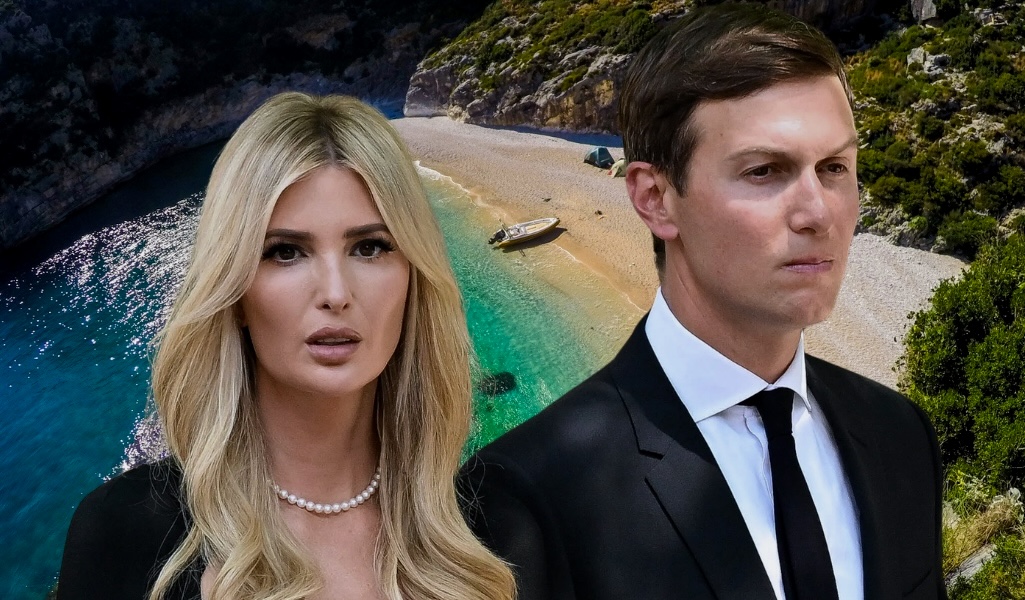
Protect Sazan Island from the Trump family! https://secure.avaaz.org/campaign/en/protect_sazan_island_from_the_trump_family_loc/?bqFCVab&v=174511&cl=22707147157&_checksum=5e9dde668860e8231c33699735e16a1fbf22ab2cb01da50c999fe8732b9775ef&utm_source=email&utm_medium=blast_email&utm_campaign=174511


Cuba Is Not a Failed State – It Is a Besieged State
PETITION: “Global Appeal to Endorse Palestinian Right of Return of Refugees”
To see nuclear-related stories in greater depth and intensity – go to https://nuclearinformation.wordpress.com
-
Archives
- June 2026 (221)
- May 2026 (306)
- April 2026 (356)
- March 2026 (251)
- February 2026 (268)
- January 2026 (308)
- December 2025 (358)
- November 2025 (359)
- October 2025 (376)
- September 2025 (257)
- August 2025 (319)
- July 2025 (230)
-
Categories
- 1
- 1 NUCLEAR ISSUES
- business and costs
- climate change
- culture and arts
- ENERGY
- environment
- health
- history
- indigenous issues
- Legal
- marketing of nuclear
- media
- opposition to nuclear
- PERSONAL STORIES
- politics
- politics international
- Religion and ethics
- safety
- secrets,lies and civil liberties
- spinbuster
- technology
- Uranium
- wastes
- weapons and war
- Women
- 2 WORLD
- ACTION
- AFRICA
- Atrocities
- AUSTRALIA
- Christina's notes
- Christina's themes
- culture and arts
- Events
- Fuk 2022
- Fuk 2023
- Fukushima 2017
- Fukushima 2018
- fukushima 2019
- Fukushima 2020
- Fukushima 2021
- general
- global warming
- Humour (God we need it)
- Nuclear
- RARE EARTHS
- Reference
- resources – print
- Resources -audiovicual
- Weekly Newsletter
- World
- World Nuclear
- YouTube
-
RSS
Entries RSS
Comments RSS
 nuclear-news