Protesters call for abolition of nuclear weapons
Protesters call for abolition of nuclear weapons, https://www3.nhk.or.jp/nhkworld/en/news/20220102_02/ Protesters in the Japanese city of Nagasaki took part in a sit-in on New Year’s Day and called for the abolition of nuclear weapons. A sit-in is held in the city every year on January 1. Nagasaki was hit by an atomic bomb during World War Two.
More than 60 people participated in the protest in the city’s Peace Park on Saturday.
The protesters observed a moment of silence at 11:02 a.m. The atomic bomb exploded in Nagasaki at that time on August 9, 1945. The participants held up pieces of paper with the word “peace” written on them in Japanese.
Atomic bomb survivor Tanaka Yasujiro said 2022 will be an important year. He said he wants non-nuclear countries to surround nuclear states, so that the number of nuclear warheads can be reduced.
The states, which signed the UN treaty that bans nuclear weapons, are scheduled to meet for the first time in March 2022.
The Review Conference of the Treaty on the Non-Proliferation of Nuclear Weapons may be held in August.
Parties to the NPT meet every five years to review the accord. A meeting was scheduled to take place in January. But the participants agreed to postpone it for the fourth time, due to the coronavirus pandemic. Various options are now being considered. A gathering in August is a possibility.
Japan’s plan for dumping nuclear waste-water into the sea
Japan’s government on Tuesday mapped out a plan for releasing contaminated
water from the crippled Fukushima nuclear plant into the sea, including
compensation standards for local industry and the compilation of a safety
assessment report. Japan said in April it would discharge more than 1
million tonnes of contaminated water in stages after treatment and
dilution, starting around spring 2023. The announcement provoked concerns
from local fishermen and objections from neighbouring China and South
Korea.
Reuters 28th Dec 2021
Kashiwazaki-Kariwa nuclear powerplant out of action for many months due to 74 instances of defective welding
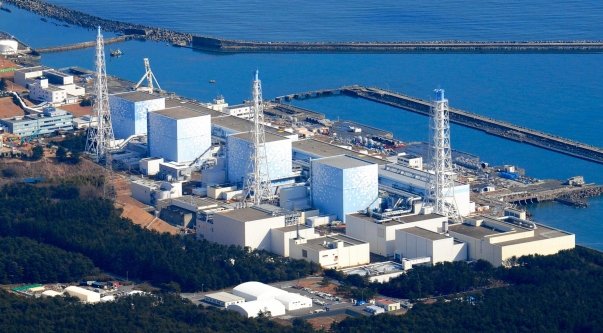
| Shoddy welding maintenance work at the Kashiwazaki-Kariwa nuclear power plant in Niigata Prefecture will push back moves to bring the facility back online by many months, perhaps longer, its operator Tokyo Electric Power Co. acknowledged. The No. 7 reactor has been plagued by problems to do with installing safeguards against terrorist attacks that required further work and a new round of inspections by the Nuclear Regulation Authority, the nation’s nuclear watchdog body. TEPCO announced Dec. 24 that it had uncovered 74 instances of defective welding that is essential to safe operations of the nuclear reactor. The utility said it had been tipped off anonymously on several occasions since March about shoddy welding work done by a subcontractor. In its latest announcement, TEPCO acknowledged the problem and said welding would have to be redone at 1,200 or so sections, a process that will likely take until next summer. Asahi Shimbun 25th Dec 2021 https://www.asahi.com/ajw/articles/14510525 |
TEPCO files for approval of Fukushima plant water release.
Operator Files For Approval of Fukushima Plant Water Release, Claims Journal, By Mari Yamaguchi | December 22, 2021 TOKYO (AP)–The operator of the wrecked Fukushima nuclear plant said Tuesday it has applied for approval from safety authorities to construct an undersea tunnel and other facilities needed for the planned release of large amounts of treated radioactive water into the sea.
The operator, Tokyo Electric Power Company Holdings, said it hopes to obtain approval from the Nuclear Regulation Authority to begin constructing the facilities in June and start releasing the water in April 2023.
The approval would cover the basic plan and design of the undersea tunnel, equipment to dilute the water with sea water and other necessary materials. https://www.claimsjournal.com/news/international/2021/12/22/307711.htm
TEPCO plans to release massive amounts of treated but still radioactive water into the ocean about 1 kilometer (0.6 mile) from the plant to ensure safety and minimize the impact on local fishing and the environment.
The contaminated water is to be diluted with large amounts of seawater to reduce the concentration of radioactive materials below allowable limits.
About 1,000 storage tanks at the plant currently filled with radioactive water need to be removed to make room for facilities necessary for the plant’s decommissioning, TEPCO says.
An official in charge of the water discharge project, Junichi Matsumoto, said TEPCO will construct the undersea tunnel by drilling through bedrock in the seabed.
Under the plan TEPCO submitted to the nuclear authority, the water will be released about 12 meters (40 feet) below the ocean’s surface……….
The government in April approved the decision to start discharging the water into the Pacific Ocean under safety standards set by regulators, calling it the most realistic option. The idea has been fiercely opposed by fishermen, residents and neighboring countries including China and South Korea. https://www.claimsjournal.com/news/international/2021/12/22/307711.htm
Plight of Fukushima’s fishermen
In April 2021, the Japanese government decided to discharge radioactive
water stored inside the TEPCO Fukushima Daiichi Nuclear Power Station into
the Pacific Ocean. TEPCO’s plan is to build a pipeline along the ocean
bed and release diluted processed radioactive water 1 km off the coast of
Fukushima. In November, Greenpeace conducted its 33rd Fukushima radiation
survey since the nuclear disaster, during which we had the opportunity to
interview local fisherman Mr. Haruo Ono. Mr. Ono opens up about the pain he
feels, saying that discharging radioactive water into the ocean will throw
Fukushima’s fishing industry back down into the abyss.
Greenpeace 20th Dec 2021
Greenpeace says that TEPCO ignored risks to South Korea when assessing radiological impact of releasing Fukushima nuclear water waste.
The international environmental organization called TEPCO’s radiological
impact assessment “highly selective” in its use of IAEA guidelines. The
international environmental group Greenpeace sent an opinion to the Tokyo
Electric Power Company (TEPCO) on Thursday stating that the company’s
radiological impact assessment of contaminated water from the Fukushima
Nuclear Power Plant made convenient use of International Atomic Energy
Agency (IAEA) guidelines without considering the potential damages to
residents of neighboring countries such as South Korea.
The opinion from Greenpeace was based on its review of the draft version of a contaminated
water radiological impact assessment report released by TEPCO last month.
Hankyoreh 18th Dec 2021
http://english.hani.co.kr/arti/english_edition/e_international/1023823.html
A lonely evening at home for Fukushima man retracing past
Unsurprisingly, concerns about radiation levels are still on the minds of many former residents. His wife, Mikiko, 64, refused to accompany him for that reason. Ikeda was the only individual in his neighborhood who took up the offer to return home.

December 11, 2021
OKUMA, Fukushima Prefecture–Settling in for the night, Mitsuhide Ikeda poured sake into a glass and raised a toast to framed photos of his deceased parents: “I finally made it back home. Let’s drink together.”
The last time the 60-year-old cattle farmer spent a night at home was 10 years and nine months ago.
Large parts of this town that co-hosts the Fukushima No. 1 nuclear power plant were declared “difficult-to-return” zones after the triple meltdown triggered by the 2011 earthquake and tsunami disaster.
Ikeda’s parents died after the nuclear accident.
The Shimonogami district where the Ikeda’s home is located lies about five kilometers southwest of the Fukushima nuclear facility.
As part of efforts to rebuild the areas around the plant, the government recently began letting residents return home for an overnight stay as a means of preparing for the day when they can do so permanently.
Unsurprisingly, concerns about radiation levels are still on the minds of many former residents. His wife, Mikiko, 64, refused to accompany him for that reason. Ikeda was the only individual in his neighborhood who took up the offer to return home.
Dangerously high radiation levels registered immediately after the disaster that made it impossible for anybody to live in the area have gradually fallen. The government spent vast sums on the time-consuming process of decontaminating topsoil as a way of reducing radiation levels.
It intends to lift the evacuation order for some parts of Okuma in spring. That would be the first step for setting the stage for residents to return home.
The temporary overnight stay program began in Katsurao on Nov. 30 and is gradually being expanded to five other municipalities, including Okuma.
A check for radiation in November on the Ikeda plot found one spot with a reading of 3.8 microsieverts per hour, above the level deemed safe enough for the government to lift the evacuation order.
Even though the Environment Ministry is planning additional decontamination work, Mikiko was unsettled by the reading and concluded it would be impossible to pick up the threads of their past life in Okuma.
Other changes in the close to 11 years since the nuclear disaster make a return to Okuma unrealistic.
While a large supermarket, hospital and bank branch remain standing in the town, there is no indication when those facilities might resume operations.
In the interim, the Ikedas plan to commute to Okuma from the community they moved to as evacuees.
The overnight stay program is restricted to an area close to what was once the bustling center of the town. About 7,600 residents lived there before the nuclear disaster.
The town government envisions that as many as 2,600 people will reside in the town within five years of the evacuation order being finally lifted if plans proceed to rebuild social infrastructure.
But the writing is on the wall for many people.
According to the Environment Ministry, about 1,150 homes in the district had been torn down as of the end of September.
And as of Dec. 8, only 31 residents in 15 households applied for the overnight stays.
Even Ikeda admits that Okuma will likely never return to the community he knew before 2011.
“Too much time has passed,” he said.
Japan PM to push for progress at NPT meet to scrap nuclear weapons
Japan PM to push for progress at NPT meet to scrap nuclear weapons
TOKYO, Dec 9 (Reuters) – Japanese Prime Minister Fumio Kishida vowed on Thursday to do his utmost to push for meaningful progress at a January meeting to review the Non-Proliferation Treaty and encourage action to rid the world of nuclear weapons.
The comment by Kishida, who hails from the nuclear memorial city of Hiroshima, comes after the previous such meeting, in New York in 2015, failed to adopt a final document following disagreement over a plan for a nuclear-free Middle East………… https://www.reuters.com/business/energy/japan-pm-push-progress-npt-meet-scrap-nuclear-weapons-2021-12-09/
Tepco to repair Fukushima nuclear station’s partially melted protective ice wall.

Ice Wall to Halt Groundwater Flow at Japan’s Fukushima Nuclear Plant to Be Repaired https://thewire.in/world/ice-wall-to-halt-groundwater-flow-at-japans-fukushima-nuclear-plant-to-be-repaired
Tokyo Electric Power Co (Tepco) will launch remedial works at the stricken plant after ice wall tests indicated partial melting. Tokyo: Tokyo Electric Power Co (Tepco) will launch remedial works at the stricken Fukushima Daiichi nuclear plant to strengthen an ice wall intended to halt the flow of groundwater after testing indicated partial melting.
The work could begin as early as the start of December, according to a presentation from the plant operator dated Thursday, part of a costly and troubled effort to secure the site following the 2011 earthquake and tsunami.
The ice wall is intended to limit the seepage of groundwater into the plant, which has created large amounts of toxic water being stored by Tepco in tanks.
Japan plans to release more than 1 million tonnes of water into the sea after treating it. The water contains the radioactive isotope tritium, which cannot be removed.
Japan’s nuclear regulator inspecting seismic risks at Shika nuclear power station.
NRA looking into fault risks at nuclear plant https://www3.nhk.or.jp/nhkworld/en/news/20211118_26/ Japan’s nuclear regulator is inspecting the Shika nuclear power plant on the Sea of Japan coast to determine whether a fault beneath a reactor building is active.
The two-day inspection by the Nuclear Regulation Authority began at the plant in Ishikawa Prefecture on Thursday with 14 NRA experts taking part.
They went into a ditch dug for the survey, observed cross sections of geological strata and touched soil walls to confirm the layers’ conditions near faults.
Hokuriku Electric Power Company, which operates the plant, applied for screenings of the Number 2 reactor, which has been offline since 2011.
The NRA launched the screenings in 2014 with a focus on whether 10 faults at the plant, including one beneath the building that houses the Number 2 reactor, are active. In 2016, a panel of the authority said it could not deny that some of the faults could move.
In response, the firm insisted that the faults are not active, citing new data on constituents of mineral samples collected from the faults.
New guidelines for nuclear safety do not allow operators to build important facilities such as reactor buildings above active faults that could move.
If the fault beneath the Number 2 reactor is found to be active, operation of the facility cannot resume and it may eventually be dismantled.
The experts are expected to confirm on Friday the length of an active fault that runs near the complex.
Japanese municipalities are finding resistance to hosting nuclear waste dump, despite substantial government bribes.
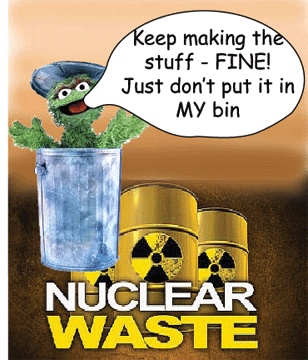
The two municipalities are meeting strong resistance from residents and nearby local governments.
Since Suttsu and Kamoenai expressed their willingness to accept the first-stage survey, the assemblies of some nearby municipalities have enacted ordinances declaring a rejection of nuclear waste and their governments have declined state grants related to the survey.
One year on, outlook for nuclear waste storage unclear Japan Times, 17 Nov 21, The outlook for the possible hosting of a final storage facility for nuclear waste in two Hokkaido municipalities remains uncertain, with Wednesday marking one year since a first-stage survey for the site’s selection started there, for the first time in Japan.
The town of Suttsu, along with the nearby village of Kamoenai, is undergoing the first-stage survey, known as literature investigation, to check whether it is suited to host a permanent underground storage site for high-level radioactive waste from nuclear power plants across the country.
The two municipalities are meeting strong resistance from residents and nearby local governments.
The government is seeking a location for the dump site, which will hold nuclear waste, or the remnants of spent nuclear fuel that has been treated, for a long period said to extend for 100,000 years.
The literature investigation, conducted by the Nuclear Waste Management Organization of Japan, or NUMO, will take about two years to confirm that there is no volcanic activity or active faults in the area by reviewing geological literature and data. The first-stage survey does not involve drilling.
Up to ¥2 billion in subsidies from the state will be paid to each location, as well as surrounding municipalities, for the first-stage investigation. The two municipalities plan to use the grants to set up regional revitalization funds.
Suttsu held a mayoral election last month in which the survey became a central topic of debate. Incumbent Mayor Haruo Kataoka, who decided to accept the first-stage research a year ago in line with what he felt was the will of the residents, won re-election.
However, his opponent, who called for a halt to the survey, gained about 80% of Kataoka’s vote count, suggesting that public opinion is still split.
The town government will decide whether to proceed to the second stage of the survey, called preliminary investigation, in a referendum.
Since Suttsu and Kamoenai expressed their willingness to accept the first-stage survey, the assemblies of some nearby municipalities have enacted ordinances declaring a rejection of nuclear waste and their governments have declined state grants related to the survey.
Suttsu and Kamoenai initially planned to have monthly opportunities for residents to exchange opinions on the issue, but the novel coronavirus crisis has limited such sessions to four each so far. The second-stage survey requires the consent of not only the municipal mayors, but also of Hokkaido Gov. Naomichi Suzuki, who is opposed to the investigation on the grounds that a prefectural ordinance rejects nuclear waste being brought to the prefecture.
U. N. nuclear agency team to review plans for release of Fukushima water
U. N. nuclear agency team to review plans for release of Fukushima water, The Hindu, AP TOKYO:, NOVEMBER 15, 2021
The experts from IAEA are to meet with Japanese officials and visit the Fukushima Daiichi plant to discuss technical details of the planned release, Japanese officials said.
A team from the U.N. nuclear agency arrived in Japan on Monday to assess preparations for the release into the ocean of treated radioactive water from the wrecked Fukushima nuclear plant.
The experts on the team from the International Atomic Energy Agency (IAEA) are to meet with Japanese officials and visit the Fukushima Daiichi plant to discuss technical details of the planned release, Japanese officials said.
The government and the plant’s operator, Tokyo Electric Power Company (TEPCO) Holdings, announced plans in April to start gradually releasing the treated radioactive water in the spring of 2023 to allow the removal of hundreds of storage tanks to make room for facilities needed for the destroyed plant’s decommissioning.
The plan has been fiercely opposed by fishermen, local residents and Japan’s neighbours, including China and South Korea.
Japan has requested assistance from the IAEA to ensure the discharge meets international safety standards and to gain the understanding of the international community. A larger 11-member IAEA mission is expected next month.
Japanese Economy and Industry Minister Koichi Hagiuda pledged last week that Japan will explain the outcome of the IAEA reviews to the international community “in a courteous and transparent manner.” A separate IAEA taskforce on water testing earlier collected fish samples from the Fukushima coast as part of a routine review along with technical assistance for the plant’s decommissioning. The team included an expert from South Korea…………https://www.thehindu.com/news/international/u-n-nuclear-agency-team-to-review-plans-for-release-of-fukushima-water/article37498602.ece
Japan’s PM Kishida resolved to achieve nuclear-free world
Kishida resolved to achieve nuclear-free world, https://www.japantimes.co.jp/news/2021/11/15/national/kishida-un-disarmament-chief/ Prime Minister Fumio Kishida on Monday voiced his commitment to leading efforts to realize a world free of nuclear weapons in a meeting with the U.N. disarmament chief, ahead of next year’s U.N. conference on nuclear nonproliferation.
In a 15-minute meeting in Tokyo with Izumi Nakamitsu, U.N. undersecretary general and high representative for disarmament affairs, the two agreed on the importance of meaningful results at the review conference on the Nuclear Non-Proliferation Treaty, to be held in New York from Jan. 4 to 28, according to the Foreign Ministry.
As the leader of the only country to have suffered atomic bombings, in Hiroshima and Nagasaki in 1945, Kishida voiced his “determination to lead international efforts to realize a world without nuclear weapons” during the meeting, the ministry said. The prime minister’s family hails from Hiroshima Prefecture and he represents a constituency in the prefecture.
Nakamitsu expressed hope Japan will play a proactive role as a bridge between nations with differing stances.
Nakamitsu also met with Foreign Minister Yoshimasa Hayashi later in the day and invited him to attend the NPT review conference. Hayashi told her that “as the only country in the world to have suffered wartime atomic bombings, Japan has a very important responsibility” to push forward nuclear disarmament.
‘No One Died From Radiation At Fukushima’: IAEA Boss Statement Met With Laughter At COP26

‘No One Died From Radiation At Fukushima’: IAEA Boss Statement Met With Laughter At COP26, Forbes, Sofia Lotto Persio Forbes Staff Sustainability I oversee sustainability coverage and curate the Daily Dozen. Nov 21, The tsunami-triggered destruction of the Fukushima nuclear power plant in 2011 provoked a rethink of nuclear power across the world—and remains a sore spot for the industry even as it tries to champion its low-carbon energy source status to gain prominence in the fight against climate change.
On Thursday, the day dedicated to discussing energy at the COP26 UN Climate Conference in Glasgow, Scotland, the International Atomic Energy Agency (IAEA) was given a prominent spot, with director general Rafael Mariano Grossi being interviewed on stage by Financial Times journalist Gillian Tett.
It was an opportunity for Grossi to highlight the benefits of nuclear power, its appeal as part of a country’s energy mix, and dispel concerns about nuclear waste and safety, but his assertion that the multiple nuclear meltdowns at the Fukushima Daiichi Nuclear Power Plant in the town of Okuma—which forced the evacuation of more than 160,000 residents—resulted in no deaths from exposure to radiation was met with skepticism from the audience………
For years since the disaster, Grossi’s statement held true. But in 2018, the Japanese government recognized the death of one Fukushima plant worker to be attributable to radiation exposure, disbursing compensation to his family. The worker, a man in his 50s who had spent nearly 29 years working at nuclear stations in Japan until September 2015, was in charge of measuring radiation at the Fukushima plant. In the period of December 2011 and September 2015, the amount of radiation he was exposed to more than doubled from roughly 34 millisieverts to around 74 millisieverts, as the Japanese newspaper Mainichi reported. The maximum level of radiation exposure workers should be exposed to is 100 millisieverts every five years—an annual exposure to that level of radiation is linked to an increase in cancer risk. The worker was diagnosed with lung cancer in 2016 and died of the disease.
| Fukushima nuclear plant operator Tokyo Electric Power Company Holdings Inc. (Tepco) is still facing lawsuits for its failure to safeguard the nuclear complex. In February, the company and the Japanese government were ordered to pay $2.6 million in compensation to 43 evacuees for failing to enact preemptive measures against the disaster. Establishing a clear link between exposure radiation and cancer in a court of law can be more difficult. Tepco won one case in May because the plaintiff, who had worked on removing debris from the Fukushima complex between July and October 2011, developed three cancers between 2012 and 2013, whereas government guidelines stipulate the minimum latency period for a disease to develop following radiation exposure is five years…. https://www.forbes.com/sites/sofialottopersio/2021/11/04/no-one-died-from-radiation-at-fukushima-iaea-boss-statement-met-with-laughter-at-cop26/?sh=241acac17a47 |
Fukushima farmers fear nuclear-tainted water’s impact on business
A decade on, Fukushima farmers fear nuclear-tainted water’s impact on business, Channel Newa Asia, 5 Nov 21, WAKI, Japan: Fukushima farmers fear the Japanese government’s planned release of water from the crippled power plant could revive concerns about contamination and again hit the price of their produce, undoing a decade of slow recovery from nuclear disaster.
Japan plans to release more than one million tonnes of contaminated water from the plant in the country’s northeast into the sea after treating it, as the site reaches storage limits for the water. Although international authorities support the plan, it has sparked concern from neighbours China and South Korea and worried local fisherman and farmers.
“We’re just about seeing our prices go back to normal after a big drop following the disaster, but now we will have to deal with the potential reputational damage all over again because of the release of the water,” said Hiroaki Kusano, a pear farmer and vice-leader of the local agricultural co-operative.
The water is to be processed to remove radioactive contamination other than from tritium, which cannot be removed. Water with the radioactive isotope diluted to one-seventh of the World Health Organization’s guidelines for drinking water will be released into the Pacific a kilometre out from the plant around spring 2023, under a government plan.
Nuclear plants worldwide routinely release water containing tritium, considered the least-toxic byproduct of atomic power…………….
DECOMMISSIONING
The Daiichi plant is being decomissioned as part of a clean-up by operator Tokyo Electric Power Company Holdings (Tepco) expected to take decades,
Some 1,000 tanks, each 12m tall, crowd the site and hold enough radioactive water to fill around 500 Olympic-sized swimming polls. The release of water that once passed through contaminated areas of the plant marks a milestone in decommissioning and will free up space for the clean-up.
……………… Tepco will compensate for damages related to the water release, said Junichi Matsumoto, a company official overseeing decommissioning work. Tepco says it has so far paid out some ¥10.1 trillion (US$89 billion) in damages from the crisis…
There are additional concerns because the Fukushima water has been sitting around for years, said Toru Watanabe, a radioactivity researcher at the Fukushima Fisheries and Marine Science Research Center.
“The water has been in those tanks for a long time. The quality of that water needs to be thoroughly understood before it’s released,” he said.
Farmers say there is not much they can do once the water is released. They worry about their tough customers – Japanese shoppers are famously picky about produce and pay close attention to freshness and place of origin… https://www.channelnewsasia.com/asia/decade-fukushima-farmers-fear-nuclear-tainted-waters-impact-business-2293361
1 This Month

Protect Sazan Island from the Trump family! https://secure.avaaz.org/campaign/en/protect_sazan_island_from_the_trump_family_loc/?bqFCVab&v=174511&cl=22707147157&_checksum=5e9dde668860e8231c33699735e16a1fbf22ab2cb01da50c999fe8732b9775ef&utm_source=email&utm_medium=blast_email&utm_campaign=174511

25 June- THE PUKE ON NUKES
Thursday, June 25, 2026
7pm Central Time (8pm ET, 6pm MT, 5pm PT) UTC – 5
From NRC & DOE Deregulation to Techno-Fascist Billionaires Going Nuclear, Plus a Few Songs from Atomic Cabaret REGISTER
26 June – Radiation Trainwreck at the NRC / Join the Protect Better Campaign – https://us02web.zoom.us/meeting/register/4ZlZ5_qLSHGiLSCg8FF6Bg#/registration


Cuba Is Not a Failed State – It Is a Besieged State
PETITION: “Global Appeal to Endorse Palestinian Right of Return of Refugees”
To see nuclear-related stories in greater depth and intensity – go to https://nuclearinformation.wordpress.com
-
Archives
- June 2026 (152)
- May 2026 (306)
- April 2026 (356)
- March 2026 (251)
- February 2026 (268)
- January 2026 (308)
- December 2025 (358)
- November 2025 (359)
- October 2025 (376)
- September 2025 (257)
- August 2025 (319)
- July 2025 (230)
-
Categories
- 1
- 1 NUCLEAR ISSUES
- business and costs
- climate change
- culture and arts
- ENERGY
- environment
- health
- history
- indigenous issues
- Legal
- marketing of nuclear
- media
- opposition to nuclear
- PERSONAL STORIES
- politics
- politics international
- Religion and ethics
- safety
- secrets,lies and civil liberties
- spinbuster
- technology
- Uranium
- wastes
- weapons and war
- Women
- 2 WORLD
- ACTION
- AFRICA
- Atrocities
- AUSTRALIA
- Christina's notes
- Christina's themes
- culture and arts
- Events
- Fuk 2022
- Fuk 2023
- Fukushima 2017
- Fukushima 2018
- fukushima 2019
- Fukushima 2020
- Fukushima 2021
- general
- global warming
- Humour (God we need it)
- Nuclear
- RARE EARTHS
- Reference
- resources – print
- Resources -audiovicual
- Weekly Newsletter
- World
- World Nuclear
- YouTube
-
RSS
Entries RSS
Comments RSS
 nuclear-news