The existing accord, officially called the Agreement for Cooperation Between the Government of the United States of America and the Government of Japan Concerning Peaceful Uses of Nuclear Energy, recognizes Japan’s extraction of plutonium from spent nuclear fuel and use of mixed oxide (MOX) fuel as part of its “nuclear fuel cycle.” Renewing the pact will enable Japan to continue with its nuclear fuel cycle policy.
However, after the pact is renewed, if either Japan or the U.S. gives notice, then the agreement will be halted after six months — which would mean that Japan’s nuclear policy would be more easily affected by the will of the U.S.
The nuclear energy agreements that the U.S. has in place with other countries control the handling of nuclear materials and related equipment — from the standpoint of non-proliferation — whenever the U.S. provides nuclear technology to those other nations.
Under the existing agreement between Japan, a non-nuclear nation, and the U.S., nuclear fuel cycle operations such as the reprocessing of spent nuclear fuel and also uranium enrichment are recognized, in what is considered an exceptional case.
With the pact coming into effect in July 1988, the 30-year deadline of the current agreement will be reached on July 16, 2018. As long as neither Japan nor the U.S. give notice to withdraw six months prior to the deadline, the pact will be automatically renewed.
The Japanese government did try to negotiate with the U.S. about maintaining the agreement as it is. However, the administration under U.S. President Donald Trump has not been in a position to negotiate, and so the pact looks set to renew automatically, without any serious negotiations taking place.
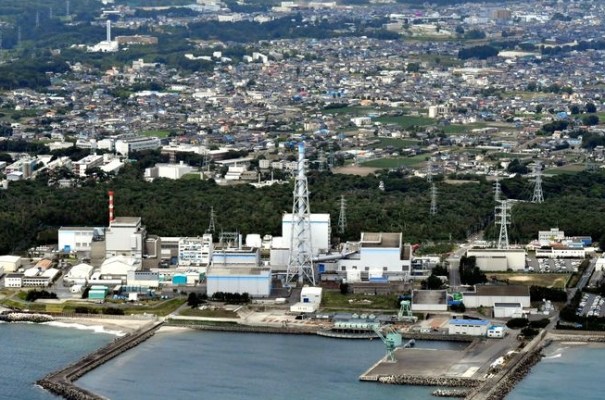
The Tokai No. 2 nuclear power plant in Tokai village, Ibaraki Prefecture, which is operated by Japan Atomic Power Co.
July 5, 2018
The Nuclear Regulation Authority has concluded that the Tokai No. 2 nuclear power plant in Ibaraki Prefecture, operated by Japan Atomic Power Co., meets improved safety standards for a restart.
The watchdog body’s decision effectively paves the way for bringing the idled facility back online.
But a slew of questions and concerns cast serious doubt on the wisdom of restarting this aging nuclear plant located at the northern tip of the Tokyo metropolitan area, given that it is approaching the end of its 40-year operational lifespan.
There is a compelling case against bringing the plant back on stream unless these concerns are properly addressed.
The first major question is how the project can be squared with the rules for reducing the risk of accidents at aging nuclear facilities.
The 40-year lifespan for nuclear reactors is an important rule to reduce the risk of accidents involving aging reactors that was introduced in the aftermath of the disaster at the Fukushima No. 1 nuclear power plant in 2011.
Although a reactor’s operational life can be extended by up to 20 years if approved by the NRA, the government, at the time of the revision to the law, said it would be granted only in exceptional cases.
Despite this caveat, Kansai Electric Power Co.’s applications for extensions for its three aging reactors all got the green light.
The NRA has yet to approve the requested extension of the Tokai No. 2 plant’s operational life. But it is obvious that the nuclear watchdog’s approval will cause further erosion of the rule. It will also undermine the regulatory regime to limit the lifespan of nuclear facilities per se.
Local communities have also raised objections to restarting the Tokai No. 2 plant. Some 960,000 people live within 30 kilometers of the plant, more than in any other 30-km emergency planning zone.
The local governments within the zone are struggling to develop legally required emergency evacuation plans to prepare for major accidents.
This spring, an agreement was reached between Japan Atomic Power and five municipalities around the plant, including Mito, that commits the operator to seek approval from local authorities within the 30-km zone before restarting the plant.
Winning support from the local communities for the plant reactivation plan is undoubtedly a colossal challenge, given strong anxiety about the facility’s safety among local residents. The gloomy situation was brought home by the Mito municipal assembly’s adoption of a written opinion opposing the plan.
But Japan Atomic Power is determined to carry through the plan as its survival depends on the plant continuing operation.
The company was set up simply to produce and sell electricity by using atomic energy. Its nuclear reactors are all currently offline, which has placed the entity in serious financial difficulty.
Since the company is unable to raise on its own funds to implement the necessary safety measures at the Tokai No. 2 plant, which are estimated to exceed 170 billion yen ($1.54 billion), Tokyo Electric Power Co. (TEPCO) and Tohoku Electric Power Co., which are both shareholders and customers of the company, will provide financial support.
But TEPCO has been put under effective state control to deal with the costly consequences of the Fukushima disaster.
It is highly doubtful that the utility, which is kept alive with massive tax-financed support, is qualified to take over the financial risk of the business of another company in trouble.
TEPCO claims the Tokai No. 2 plant is promising as a source of low-cost and stable power supply, although it has not offered convincing grounds for the claim.
Some members of the NRA have voiced skepticism about this view.
TEPCO and the Ministry of Economy, Trade and Industry, which supervises the power industry, have a responsibility to offer specific and detailed explanations about related issues to win broad public support for the plan to reactivate the Tokai No. 2 nuclear plant.
A hard look at the grim situation surrounding the plant leaves little doubt that restarting it does not make sense.
Japan Atomic Power and the major electric utilities that own it should undertake a fundamental review of the management of the nuclear power company without delaying efforts to tackle the problems besetting the operator of the Tokai No. 2 plant.
A plaintiff and a lawyer hold signs on July 4 criticizing a ruling by the Nagoya High Court’s Kanazawa branch that nullified an injunction intended to halt operations at the Oi nuclear plant in Fukui Prefecture.
Court overturns injunction, says Oi nuclear plant safe to operate
KANAZAWA–A high court branch here overturned a lower court order to halt operations of two reactors at a nuclear plant in Fukui Prefecture, saying it poses no tangible danger to residents there.
“The danger is within negligible levels in light of social norms,” Presiding Judge Masayuki Naito of the Nagoya High Court’s Kanazawa branch said on July 4, nullifying an injunction against Kansai Electric Power Co., operator of the Oi nuclear plant.
Plaintiffs sought the injunction to block the restarts of the No. 3 and No. 4 reactors at the plant in Oi. They argued that dangers from the plant violated their right to protect their lives and sustain their livelihood.
The Fukui District Court sided with the plaintiffs in 2014, saying the plant was not thoroughly prepared to withstand a powerful earthquake.
The district court focused more on whether a tangible danger existed that could result in a serious accident similar to the one that hit Tokyo Electric Power Co.’s Fukushima No. 1 nuclear plant in March 2011, not on the Nuclear Regulation Authority’s decision to clear the Oi reactors for operations.
However, the high court said its decision was based on whether the NRA’s new safety regulations were appropriate, and whether the watchdog’s assessment that the two Oi reactors passed the safety regulations was reasonable.
The stricter regulations took effect in July 2013 based on lessons learned from the Fukushima nuclear disaster.
“They were established by incorporating the latest scientific and technological expertise,” the high court said of the new standards.
The court supported both the NRA’s regulations and its decision to clear the No. 3 and 4 reactors as meeting the requirements.
Kunihiko Shimazaki, a seismologist and a former NRA member, raised doubts about the safety of the plant as a witness in the court proceedings.
He said the NRA’s current formula for calculating the scope of sway in an earthquake may have underestimated the expected maximum shaking from a powerful earthquake that could strike the plant.
The high court rejected Shimazaki’s argument.
“The extent of the maximum shaking was not underestimated because (the calculations) used an active geological fault zone larger than it should be in reality to provide an extra safety cushion,” the judge said.
The court also supported the NRA’s decision that the Oi reactors meet the new regulations concerning measures against tsunami and volcanic eruptions.
As for evaluating the soundness of nuclear power generation, the court said that is not its role.
“It will be possible to abolish and ban the operation of nuclear power plants in light of the grave consequences of the Fukushima nuclear disaster, but judging on the issue goes beyond the jurisdiction of the judiciary,” the court said. “(The nuclear issue) should be widely debated by the public and left to a political judgment.”
The Japan Atomic Power Co.’s Tokai No. 2 Nuclear Power Station, front, and the Tokai Power Station, right back, which is currently being decommissioned, are seen from a Mainichi Shimbun helicopter
Nuclear watchdog OKs restart of aging nuclear plant hit by tsunami
The Japan Atomic Power Co.’s Tokai No. 2 Nuclear Power Station, front, and the Tokai Power Station, right back, which is currently being decommissioned, are seen from a Mainichi Shimbun helicopter
July 4, 2018
TOKYO (Kyodo) — Japan’s nuclear watchdog on Wednesday gave the green light to the restart of an aging nuclear power plant northeast of Tokyo, idled since it was hit by the tsunami that caused meltdowns at the Fukushima Daiichi plant.
The Tokai No. 2 plant is the first nuclear plant affected by the March 2011 earthquake and tsunami disaster to have cleared screening by the Nuclear Regulation Authority, part of the steps required before it can actually resume operations.
The plant, located in the village of Tokai in Ibaraki Prefecture, suffered an emergency automatic shutdown of its reactor and was cut off from its external power source following the quake.
After being hit by a 5.4-meter tsunami, one of its three emergency power generators was incapacitated. But the other two remained intact and allowed the reactor to cool down three and a half days after the disaster.
Despite the approval by the NRA, the Tokai plant still needs to clear two more screenings by regulators by November, when it will turn 40 years old, otherwise it could face the prospect of decommissioning.
Tougher safety rules introduced in the post-Fukushima years prohibit in principle the operation of nuclear reactors beyond 40 years. But extending a unit’s life for an additional 20 years is possible if operators make safety upgrades and pass regulators’ screening.
Actual plant operation is unlikely before March 2021 when construction to bolster safety measures is scheduled to be completed. The restart plan also needs to be approved by local municipalities.
The Tokai No. 2 plant, operated by Japan Atomic Power Co., uses a boiling water reactor, the same type as those used at the crisis-hit Fukushima Daiichi plant, which saw core meltdowns and spewed a massive amount of radioactive materials into the atmosphere in the 2011 disaster.
It is the eighth plant approved of a restart under the stricter safety rules introduced after the 2011 Fukushima nuclear crisis and the second with a boiling water reactor following the Kashiwazaki-Kariwa nuclear plant run by Tokyo Electric Power Company Holdings Inc.
The plant’s evacuation plan — which covers 960,000 residents, the largest number of potential evacuees for a nuclear plant in Japan due to its location in a metropolitan area — has yet to be compiled.
The operator filed for a safety screening to restart the plant in May 2014. It predicts a potential tsunami as high as 17.1 meter and expects some 180 billion yen ($1.63 billion) is needed to construct coastal levees and beef up power sources among other safety measures.
Japan Atomic Power solely engages in the nuclear energy business but none of its reactors has been online since the 2011 quake. Given its financial problems, the NRA has asked it to show how it will finance the safety measures and Tokyo Electric Power and Tohoku Electric Power Co. have offered to financially support the company.
Ibaraki citizens demonstrate against the restart of the Tokai No. 2 nuclear power plant outside the Nuclear Regulation Authority headquarters in Tokyo’s Minato Ward on Wednesday.
Nuclear watchdog OKs restart of aging tsunami-hit Tokai nuclear plant
Jul 4, 2018
Ibaraki unit needs to clear two more screenings by November, when it will turn 40
The Nuclear Regulation Authority on Wednesday gave the green light to the restart of an aging nuclear power plant northeast of Tokyo, idled since it was hit by the tsunami that caused meltdowns at the Fukushima No. 1 plant.
The Tokai No. 2 plant is the first nuclear plant affected by the March 2011 earthquake and tsunami disaster to have cleared screening by the nuclear watchdog. Other steps are still required before it can resume operations.
Due to the quake, the plant in the Ibaraki Prefecture village of Tokai suffered an emergency automatic shutdown of its reactor and was cut off from its external power source.
After then being hit by a 5.4-meter tsunami, one of its three emergency power generators was incapacitated. But the other two remained intact and allowed the reactor to cool down 3½ days after the disaster.
Despite the approval by the NRA, the plant still needs to clear two more screenings by regulators by November, when it will turn 40 years old. If it fails, it could face the prospect of decommissioning.
Following the decision, Ibaraki Gov. Kazuhiko Oigawa told reporters he intends to “closely monitor the remaining screenings” and called on the NRA “to conduct strict examinations.”
Tougher safety rules introduced after the Fukushima disaster in principle prohibit the operation of nuclear reactors beyond 40 years. But extending a unit’s life for an additional 20 years is possible if operators make safety upgrades and it passes screenings.
Actual operation is unlikely before March 2021, when construction to bolster safety measures is scheduled to be completed. The restart plan also needs to be approved by local municipalities.
On Wednesday morning, a group of about 10 citizens protested the restart outside the NRA’s offices in Tokyo’s Minato Ward.
Mika Tsubata, a 47-year-old resident of Tokai who observed the NRA meeting, blasted the decision. “The Tokai No. 2 plant is old and was damaged in the 2011 disaster,” she said. “It’s evident to everyone that (the restart) is highly risky — I don’t think the NRA made the appropriate decision.”
But Eiji Sato, the 69-year-old chair of the village’s chamber of commerce, said the plant’s resumption is key to Tokai’s future. “The village has thrived on nuclear power generation,” he said.
The Tokai No. 2 plant, operated by Japan Atomic Power Co., uses a boiling-water reactor, the same type as those used at the Fukushima No. 1 plant, which suffered core meltdowns and spewed a massive amount of radioactive material into the atmosphere in 2011.
It is the eighth plant to get approval for a restart under the stricter safety rules and the second with a boiling-water reactor, following the Kashiwazaki-Kariwa plant, run by Tokyo Electric Power Company Holdings Inc.
The plant’s evacuation plan — which covers 960,000 residents, the largest number of potential evacuees for a nuclear plant in Japan due to its location near a metropolitan area — has yet to be compiled.
“Because of the large number of residents around the plant, compiling effective anti-disaster measures and an evacuation plan in a wide area is a huge challenge,” Oigawa said.
The operator filed for a safety screening to restart the plant in May 2014. It predicts a potential tsunami as high as 17.1 meters and expects ¥180 billion ($1.63 billion) will be needed to construct coastal levees and beef up power sources, among other safety measures.
Although Japan Atomic Power’s sole business is nuclear energy, none of its reactors has been online since the 2011 quake. Given its financial problems, the NRA has asked the utility to show how it will finance the safety measures. Tepco and Tohoku Electric Power Co., which had been receiving electricity from the plant when it was in operation, have offered to financially support the company.
The NRA decided at the meeting to seek industry minister Hiroshige Seko’s views on whether Tepco’s financial contribution could affect the costs of scrapping the Fukushima No. 1 plant and enhancing safety at the Kashiwazaki-Kariwa plant.
Make US-Japanese nuclear cooperation stable again: End reprocessing, Bulletin of the Atomic Scientists, By Victor Gilinsky, Henry Sokolski, June 27, 2018
In a little-noticed but remarkable statement last week, Japanese Foreign Minister Taro Kono described a key pillar of the Japanese-American alliance—US-Japanese peaceful nuclear cooperation—as “unstable.” His pronouncement comes on the eve of the automatic renewal of the 1988 US-Japan peaceful nuclear cooperation agreement in July and days after US officials privately pressured Tokyo to reduce its vast plutonium holdings (some 45 tons —which translates to nearly 9,000 nuclear bombs’ worth).
The starting point in dealing with this massive plutonium stockpile: Keep it from growing. That means Tokyo needs to freeze plans to open its large Rokkasho reprocessing plant, which can separate eight more tons of plutonium a year.
The United States and Japan got to this awkward spot in the 1970s and ‘80s, when Tokyo insisted it needed plutonium to fuel a future generation of fast breeder reactors and sought permission to extract it from irradiated US-supplied uranium fuel. We had earlier allowed the Euratom countries to do this and so President Reagan, hesitating to distinguish among close allies, relented. As Under Secretary of State Richard T. Kennedy told the Senate in 1982 in explaining blanket approvals for Japan and Euratom, “The US will not inhibit or set back civil reprocessing and breeder reactor development abroad in nations with advanced nuclear programs where it does not constitute a proliferation risk … nations which regard the uses of plutonium as crucial to meeting their future nuclear energy needs.”
The 1988 understanding with Japan was the only US nuclear cooperation agreement with an individual country that granted blanket reprocessing approval for the duration of the agreement (which, with automatic extensions, effectively meant forever). The agreement approved reprocessing for Japan both in British and French reprocessing plants and in any that Japan itself might build. Meanwhile, Japan’s fast breeder development faltered (as did other such breeder programs around the world), and Japan installed no commercial reactors of this type. Because it has a large fleet of nuclear power plants that produce spent nuclear fuel containing plutonium and reprocessing arrangements at home and abroad, Japan has amassed an enormous plutonium stockpile.
The legal basis of this blanket approval was problematic from the start. The General Accounting Office (GAO) told Congress that the agreement was so permissive it violated the strict nonproliferation requirements in Section 131 of the US Atomic Energy Act. For this reason, the Senate Foreign Relations Committee urged the Reagan administration to renegotiate the agreement, but the administration overrode Congressional opposition.
In Section 131 b 2, the Atomic Energy Act requires that reprocessing of nuclear reactor fuel supplied by the United States, and extraction of plutonium, take place only with US permission and sets forth the standard for granting reprocessing approvals: The secretaries of Energy and State must find that the action “will not result in a significant increase of the risk of proliferation.” The “foremost consideration” in making that finding is whether the United States will have “timely warning,” that is, “well in advance of the time at which the non-nuclear weapon state could transform the diverted material into a nuclear explosive device.”………..
The official justification for allowing nuclear power systems based on plutonium—a fuel that is also a nuclear explosive—argued that they would be subject to IAEA inspections, which are intended to deter diversion of fissile material to military use by providing warning in time to thwart any such diversion. But the IAEA couldn’t do that in the case of separated plutonium, so something had to give. What buckled was the definition of timely warning, which was rationalized to be met if we had sufficient confidence that the recipient of our exports would not build nuclear weapons. Hence, Under Secretary of State Kennedy could speak in 1982 of countries like Japan where nuclear explosive materials do “not constitute a proliferation risk.”
The situation today, though, is radically different. The economic prospects of civilian nuclear power are now generally far less favorable than they were then; the rationale for plutonium-fueled breeder reactors, once widely believed to be the energy source of the future, has essentially evaporated.
There is no longer any reason to twist the plain meaning of the Atomic Energy Act’s requirement for timely warning. It effectively rules out approvals for plutonium separation, and therefore for reprocessing. Whereas one could have once plausibly argued that this would impose a severe cost on Japan, the situation is now completely reversed: If Japan shut down its Rokkasho reprocessing plant, it would now be freed from an outdated policy and would save a great deal of money.
The Rokkasho decision is of course up to Japan. But the United States should make clear where it stands, which it has not yet done. Such a step should be part of an overall US approach to end plutonium separation throughout the world, for which current nuclear power programs have no need. Nonproliferation and economics point in the same direction: no reprocessing provisions in future 123 agreements and urging other countries that sell nuclear material and technology to include such provisions in their agreements. The recent Korean summits emphasizing denuclearization and Secretary Pompeo’s recent stand against reprocessing in the United Arab Emirates, Saudi Arabia, and Iran are steps in the right direction. They underline the importance of Japan ending its reprocessing. https://thebulletin.org/2018/06/make-us-japanese-nuclear-cooperation-stable-again-end-reprocessing/
In Case of a Nuclear Emergency, This New AI Shows Where Radioactive Fallout Will Spread Head upwind. Science Alert, DAVID NIELD 4 JUL 2018
One of the areas where artificial intelligence really excels is in working out scenarios with a huge number of complex variables – like how radiation might spread after an accident at a nuclear power plant.
This is the focus of a new AI system developed in Japan, and it’s showing us more accurately than ever before where the safest (and most dangerous) points could be following a meltdown. Spoiler: stay upwind.
While it’s obviously better if nuclear plants don’t fail in the first place, knowing which way the fallout will travel can be crucial in organising emergency responses and keeping people safe. It can quite literally save lives – and a lot of them.
The new AI, developed by a team from the Institute of Industrial Science at the University of Tokyo, is able to factor in accident variables and prevailing weather patterns to work out where the threat of radiation could be worst, up to 33 hours in advance.
“Our new tool was first trained using years of weather-related data to predict where radioactivity would be distributed if it were released from a particular point,” says one of the team, Takao Yoshikane.
“In subsequent testing, it could predict the direction of dispersion with at least 85 percent accuracy, with this rising to 95 percent in winter when there are more predictable weather patterns.”
You can see the model in action below:
……..The new prediction model can provide useful information about which areas will be worst affected and need evacuating, and which areas have a lower risk – in these areas the residents might just get warnings about being careful what they eat and drink.
With the high temperatures associated with nuclear disaster, radioactive material can travel up to 2,000 metres (6,562 feet) into the air, the scientists report – reaching winds in the upper troposphere that can spread fallout all across the world.
The Nuclear Regulation Authority has concluded that the Tokai No. 2 nuclear power plant in Ibaraki Prefecture, operated by Japan Atomic Power Co., meets improved safety standards for a restart.
The watchdog body’s decision effectively paves the way for bringing the idled facility back online.
But a slew of questions and concerns cast serious doubt on the wisdom of restarting this aging nuclear plant located at the northern tip of the Tokyo metropolitan area, given that it is approaching the end of its 40-year operational lifespan.
There is a compelling case against bringing the plant back on stream unless these concerns are properly addressed.
The first major question is how the project can be squared with the rules for reducing the risk of accidents at aging nuclear facilities.
The 40-year lifespan for nuclear reactors is an important rule to reduce the risk of accidents involving aging reactors that was introduced in the aftermath of the disaster at the Fukushima No. 1 nuclear power plant in 2011.
Although a reactor’s operational life can be extended by up to 20 years if approved by the NRA, the government, at the time of the revision to the law, said it would be granted only in exceptional cases.
Despite this caveat, Kansai Electric Power Co.’s applications for extensions for its three aging reactors all got the green light.
The NRA has yet to approve the requested extension of the Tokai No. 2 plant’s operational life. But it is obvious that the nuclear watchdog’s approval will cause further erosion of the rule. It will also undermine the regulatory regime to limit the lifespan of nuclear facilities per se.
Local communities have also raised objections to restarting the Tokai No. 2 plant. Some 960,000 people live within 30 kilometers of the plant, more than in any other 30-km emergency planning zone.
The local governments within the zone are struggling to develop legally required emergency evacuation plans to prepare for major accidents.
This spring, an agreement was reached between Japan Atomic Power and five municipalities around the plant, including Mito, that commits the operator to seek approval from local authorities within the 30-km zone before restarting the plant.
Winning support from the local communities for the plant reactivation plan is undoubtedly a colossal challenge, given strong anxiety about the facility’s safety among local residents. The gloomy situation was brought home by the Mito municipal assembly’s adoption of a written opinion opposing the plan.
But Japan Atomic Power is determined to carry through the plan as its survival depends on the plant continuing operation.
The company was set up simply to produce and sell electricity by using atomic energy. Its nuclear reactors are all currently offline, which has placed the entity in serious financial difficulty.
Since the company is unable to raise on its own funds to implement the necessary safety measures at the Tokai No. 2 plant, which are estimated to exceed 170 billion yen ($1.54 billion), Tokyo Electric Power Co. (TEPCO) and Tohoku Electric Power Co., which are both shareholders and customers of the company, will provide financial support.
But TEPCO has been put under effective state control to deal with the costly consequences of the Fukushima disaster.
It is highly doubtful that the utility, which is kept alive with massive tax-financed support, is qualified to take over the financial risk of the business of another company in trouble.
TEPCO claims the Tokai No. 2 plant is promising as a source of low-cost and stable power supply, although it has not offered convincing grounds for the claim.
Some members of the NRA have voiced skepticism about this view.
TEPCO and the Ministry of Economy, Trade and Industry, which supervises the power industry, have a responsibility to offer specific and detailed explanations about related issues to win broad public support for the plan to reactivate the Tokai No. 2 nuclear plant.
A hard look at the grim situation surrounding the plant leaves little doubt that restarting it does not make sense.
Japan Atomic Power and the major electric utilities that own it should undertake a fundamental review of the management of the nuclear power company without delaying efforts to tackle the problems besetting the operator of the Tokai No. 2 plant.
Japan’s nuclear policy-setting body on Thursday endorsed a call for stricter management of its fuel recycling program to reduce its plutonium stockpile.
The annual “nuclear white paper” approved by the Atomic Energy Commission is an apparent response to intensifying pressure from Washington as it pursues denuclearization in North Korea. It says Japan’s fuel recycling program should continue, but minimize the amount of plutonium extracted from spent fuel for reuse in power generation to eventually reduce the stockpile.
Japan has pledged to not possess plutonium that does not have a planned use, but the promise increasingly sounds empty because of the slow restarts of Japanese power-generating reactors that can burn plutonium amid setbacks from the 2011 Fukushima disaster.
Though Japanese officials deny any possible misuse of the material and reprocessing technology, the large stockpile of plutonium that can make atomic bombs also raises security concerns as the U.S. wants North Korea to get rid of its nuclear weapons.
Commission chairman Yoshiaki Oka said the effort to tackle the stockpile is Japan’s own initiative underscoring its commitment to a peaceful nuclear program, and not because of the U.S. Oka said he was not aware of any outstanding problem between the two countries over the plutonium issue, but that Japan is taking into consideration the importance of maintaining “relationship of trust with the U.S.”
The commission is compiling guidelines to better manage and reduce the plutonium stockpile. Measures would include some government oversight in setting a cap on plutonium reprocessing and a study into how to steadily reduce the plutonium processed abroad.
Oka declined to cite a numerical target, but he said reducing the stockpile is a “must.”
Japan has nearly 47 tons of plutonium — 10 tons at home and the rest in France and Britain, where spent fuel from Japanese nuclear plants has been reprocessed because Japan is not able to reprocess it into plutonium-based MOX fuel at home.
The amount is enough to make 6,000 atomic bombs, but at Japan’s Rokkasho reprocessing plant denies any risk of proliferation, citing its safeguards and close monitoring by the International Atomic Energy Agency .
After years of delay due to technical issues, the Rokkasho plant is in the final stages of safety approvals by the regulators ahead of its planned launch in 2021. Critics, however, say that starting up the plant only adds to the stockpile.
The plant at full capacity can annually produce 8 tons of plutonium, and burning that would require 16-18 reactors — a long shot given the slow pace of restarts and public resistance. Japanese utility operators are also opting to decommission aged reactors rather than making costly safety upgrades to meet the post-Fukushima standards.
Only four reactors have restarted since the Fukushima crisis, using stricter safety requirements and despite resistance of neighbors.
Another setback for Japan’s plutonium balance is a failure of Monju, a plutonium-burning reactor built as the centerpiece of Japan’s fuel recycling program. Monju had been suspended after a major accident in 1995 and is now being scrapped.
A new wave of nuclear reactor restarts became more likely as the government approved the new Basic Energy Plan on July 3, confirming that nuclear power will remain a key component of Japan’s energy strategy.
But by rubber-stamping the plan, the government also strengthened its commitment to giving renewables such as solar and wind power a major role in energy generation.
The latest Basic Energy Plan, which charts the nation’s mid- and long-term energy policy, marks the fifth in a series that is required by law to be reviewed about every three years.
The second plan to be revised under the administration of Prime Minister Shinzo Abe stated for the first time that the country will strive to make renewable energy a major power source, although it noted fluctuations in output due to weather conditions.
Renewables can become a viable source of a stable power supply when they are combined with rechargeable batteries and hydrogen, according to the plan.
The plan also maintained the reliance on coal-fired thermal power as a base-load energy source despite high emissions of carbon dioxide.
The Abe administration decided to promote nuclear energy when it revised the plan in 2014, reversing the policy of the previous government led by the then-Democratic Party of Japan, which pledged to phase out nuclear power by 2039 in the face of mounting public concern over the safety of nuclear power following the 2011 Fukushima nuclear disaster.
Under the latest plan, the ratio of nuclear energy, renewables and coal thermal power in the nation’s overall energy as of fiscal 2030 will remain at 20-22 percent, 22-24 percent and 26 percent, respectively, in line with the government’s target set three years ago.
Experts say about 30 reactors need to be reactivated to achieve the 20-22 percent target, but only nine have gone back on line so far after they cleared the more stringent reactor regulations that took effect after the Fukushima accident.
The plan did not touch on the need for building a new nuclear plant in light of the widespread public opinion against nuclear energy. The last Basic Energy Plan did not mention the subject, either.
The latest plan re-endorsed using the nuclear fuel cycle, in which plutonium extracted from spent nuclear fuel at nuclear plants is used to generate power.
But the plan, noting calls from the United States, said that Japan “will make efforts to cut the stockpile of plutonium.”
Japan holds a total of 47 tons of plutonium, equivalent to 6,000 Nagasaki-type atomic bombs, a source of criticism from the United States and other countries.
The country has failed to reduce its plutonium stockpile due to little progress in the nuclear fuel cycle over decades.
The project to operate the Monju prototype fast-breeder reactor in Fukui Prefecture, the core part of the nuclear fuel cycle, rarely worked over 20 years due to numerous glitches. The government finally decided to pull the plug on it in 2016.
Burning a mixed oxide form of plutonium and uranium has not spread among conventional nuclear reactors, although it was considered a way to reduce the plutonium stockpile.
In its attempts to export nuclear plants, the country has hit major problems wherever it has pitched them.
But the government will maintain the export policy as a key component of the administration’s strategy for expanding the Japanese economy.
According to the Basic Energy Plan, “Japan is determined to make a positive contribution to enhancing the safety of nuclear energy and the peaceful use of nuclear energy” through exports of nuclear plants.
TEPCO is conducting an independent geological survey to confirm the absence of active faults in Aomori Prefecture, where it wants to resume the construction of a Fukushima-type nuclear plant, frozen following the 2011 disaster.
“It’s necessary to form a consortium for building a nuclear plant that is excellent in safety, technology and economy,” TEPCO President Tomoaki Kobayakawa said in Tokyo, announcing the decision to conduct a survey of the Aomori Prefecture nuclear site.
The Higashidori Nuclear Power Plant hosts two adjoining sites administered by Tohoku Electric Power Company and Tokyo Electric Power Company (TEPCO). While Tohoku Unit 1 began commercial operations in December 2005, TEPCO never got a chance to finish their unit, the construction of which began only in January 2011. All activity at the site has ceased since the March 2011 Fukushima nuclear meltdown.
TEPCO’s survey, scheduled for completion by 2020, will check the fault structure under the site using a two-kilometer-long tunnel, Kobayakawa said on Friday. Previous studies of terrain beneath the area by the Nuclear Regulation Authority (NRA) found the likely presence of multiple active, seismogenic faults. However, both TEPCO and the Tohoku Electric Power Company decided to conduct further ‘independent’ investigations to review the validity of the NRA findings.
The energy company wants to build two reactors at the site and is exploring ways to meet the stricter government regulations introduced following the Fukushima disaster. Higashidori units, however, would still use the same type of boiling-water, light-water reactors that suffered meltdown at the Fukushima plant, Japan Times noted.
“As we restart the (Higashidori) project, I want to make sure that a new plant would excel in safety,” Kobayakawa told a press conference. “The geological survey is a very significant step to move forward on the joint development of Higashidori,” he noted, adding that TEPCO has asked major utility companies in the country to contribute to the construction and operation of the Higashidori plant.
Three of the Fukushima plant’s six reactors were hit by meltdowns in 2011, after a 9.0-magnitude earthquake and subsequent tsunami struck the facility, resulting in the world’s worst nuclear disaster since Chernobyl in 1986.
Fuel removal from Fukushima reactor may be delayed, https://www3.nhk.or.jp/nhkworld/en/news/20180629_14/The operator of the damaged Fukushima Daiichi nuclear power plant says work to remove spent nuclear fuel from a cooling pool at one of its reactors may be delayed.
A total of 566 fuel units remain in the cooling pool at the No.3 reactor, which suffered a meltdown in 2011. Tokyo Electric Power Company, or TEPCO, planned to start removing the fuel as early as this autumn, as part of the decommissioning of the nuclear complex.
But on Thursday, TEPCO revealed the control board of a crane used in the removal malfunctioned during a test run last month. It blamed a voltage error and said the board will be replaced.
The company said the test run may be delayed by one or 2 months, pushing back the start date for fuel removal.
TEPCO’s chief decommissioning officer, Akira Ono, says he takes the glitch seriously as it shows key equipment was not handled properly.
He says that although safety must come first, his team still aims to stick to the original timetable and start the removal of nuclear fuel by around the middle of the current fiscal year, which ends in March next year.
Nine power companies said they are eager to restart their nuclear plants at their shareholder meetings on June 27, shunning calls to move toward renewables despite skepticism about the safety of relying on nuclear energy.
At the Kansai Electric Power Co. meeting, major shareholders such as the Kyoto and Osaka city governments called for nuclear power plants to be decommissioned.
“Kansai Electric should stop relying on nuclear power as soon as possible,” said Kyoto Mayor Daisaku Kadokawa.
In reply, Shigeki Iwane, president of Kansai Electric, said, “While giving top priority to the safety of nuclear plants, we intend to continue utilizing nuclear plants.”
He did not rule out the possibility of constructing new reactors.
Kyushu Electric Power Co., which is now operating four reactors, showed reluctance about a major shift to renewables.
A proposal to “significantly bolster” renewable energy was turned down at its shareholder meeting.
We cannot ensure the stability of frequency if we accept solar power more than at the current level,” said Michiaki Uriu, president of Kyushu Electric, noting the output of solar energy generated within the utility’s jurisdiction has reached the ceiling of 8.17 gigawatts.
At the Tokyo Electric Power Company Holdings Inc. meeting, a proposal was made to freeze preparatory work toward the planned resumption of its Kashiwazaki-Kariwa nuclear plant in Niigata Prefecture.
“Why does TEPCO bother to pursue nuclear power generation despite the Fukushima nuclear disaster?” said one shareholder. However, the proposal was rejected.
“The nuclear plant will continue to play an important role,” said Tomoaki Kobayakawa, president of TEPCO Holdings, referring to the Kashiwazaki-Kariwa plant, one of the largest in the world. “We will strive toward the restart by soul-searching and taking a lesson from the unprecedented accident.”
Some shareholders hailed the company’s decision to decommission the Fukushima No. 2 nuclear plant, announced by Kobayakawa, although they said the decision came belatedly.
But others voiced their regret over the decision, saying the plant is too good to be decommissioned.
The Fukushima No. 2 nuclear plant was damaged in the 2011 Great East Japan Earthquake and tsunami, but it managed to avert a meltdown, unlike the Fukushima No. 1 nuclear power plant nearby, where a triple meltdown occurred.
Another shareholder proposal concerned an end to providing financial support to Japan Atomic Power Co., which intends to resume operations at the Tokai No. 2 nuclear plant in Ibaraki Prefecture.
The same proposal was also made and rejected at a shareholder meeting of Tohoku Electric Power Co. the same day. Both TEPCO Holdings and Tohoku Electric fund Japan Atomic Power.
“We have offered debt guarantee to Japan Atomic Power due to the company’s efforts to ensure sustainability and cut fuel costs by restarting the nuclear plant,” said Jiro Masuko, vice president of Tohoku Electric.
All of Japan’s active nuclear power plants were shut down as part of precautionary measures after the 3/11 Fukushima disaster. Since then, nine have been restarted, and further 26 that remain idle could potentially be restarted.
A 150-meter marine wind turbine is seen being towed off the coast of Awajishima Island. It is being used for an experimental study on offshore wind generation
June 2, 2018
TOKYO – While Japan’s government clings to atomic power even after the Fukushima nuclear crisis, its private sector is moving ahead with more use of renewables to power their operations amid growing international awareness of global warming.
Daiwa House Industries Co, for instance, became in March a member of both RE100 (Renewable Electricity) and EP100 (Energy Productivity), two global initiatives by the Climate Group.
RE100 is a global, collaborative initiative of influential businesses committed to using 100 percent renewable electricity, while EP100 brings together companies committed to doubling energy productivity to lower greenhouse gas emissions.
Among RE100’s 136 members are U.S. General Motors Co and Dutch consumer goods giant Unilever.
Printer maker Ricoh Co, the first Japanese firm to join RE100, was followed by five firms such as online stationery retailer Askul Corp and retail giant Aeon Co., aiming to meet the electricity needs of their global operations with renewable energy between 2030 and 2050.
Daiwa House says it is the world’s first company in the construction and housing sectors to join both campaigns and the first to declare it is taking bold action as part of EP100 among Japanese firms. Currently, there are 15 EP members. Daiwa aims to achieve the both by 2040.
Katsuhiro Koyama, general manager of Daiwa’s environment department, spurred debate to achieve the targets after returning to Japan from the COP23 global climate round in Germany last November.
He had previously taken a cynical view of such tech giants as Apple Inc, Google Inc and Microsoft Corp participating in the RE100 clean energy initiative, seeing it as an “atonement for their sins” of consuming huge amounts of electricity.
But Koyama, one of the Japanese delegate members to the global conference, said he was “inspired” by the firms’ “serious aspirations to leverage clean energy producers” after hearing various discussions.
The Osaka-based Daiwa group has invested an estimated 46.6 billion yen (about $424 million) in the construction of its own solar, hydro and wind power plants nationwide since 2007, producing power equivalent to about 60 percent of the group’s annual use of 481 million kilowatt hours. Meanwhile, it doubled its electricity use efficiency in fiscal 2016 compared to fiscal 2005.
Japanese businesses became much more aware of renewable energy in the wake of the Hokkaido Toyako summit in 2008 in which the Group of Eight countries set a long-term target to reduce greenhouse gas emissions.
The 2011 Great East Japan Earthquake, which triggered the suspension of all nuclear power plants in Japan, also sparked public concerns over the country’s energy mix.
The ratio of renewable energy to the nation’s entire power output capacity has risen from 10 percent in fiscal 2010 to 15 percent in fiscal 2016, according to the Agency for Natural Resources and Energy, boosted by a feed-in tariff system that obliges utilities to buy electricity generated by renewable energy at fixed prices.
The scheme has attracted businesses large and small, even individuals, to pour money into the photovoltaic field as it requires less effort to install and operate in a shorter period of time compared to other types of energy sources, said Yushi Inoue, a research director at Mitsubishi Research Institute, a think tank.
Individual power producers are actively trying to connect with grids in northeastern Japan, and sought to supply “more than three times what we can accept” in a recent offering, said a spokesman of Tohoku-Electric Power Co, the regional utility.
The region, part of which was devastated by the mega quake seven years ago and the subsequent nuclear disaster, has a number of favorable locations for wind power plants. “A vast majority of the seekers are renewable-energy oriented,” he said.
Meanwhile, a similar scheme in Europe that utilizes renewable energy certificates under a guarantee of origin of electricity generated from such sources has gained momentum among environmentally conscious firms, particularly after the 2008 summit on Japan’s northernmost island.
The tradable green certificate proves “environmental added value” created by renewable energy producers and can be purchased by electricity users.
Despite the financial burden, Ajinomoto Co switched its energy source to renewable energy for its entire annual electricity use of 4.5 million kilowatt hours at the Tokyo headquarters and major sales bases at home in the business year to March 2018.
Japan’s major seasoning and food maker extended the move to its four group arms in April, aiming to boost its renewable energy use to 50 percent of the group’s total energy consumption by fiscal 2030.
The targeted figure is part of various non-financial targets compiled for the first time in its three-year business management plan that started in fiscal 2017, said Mototsugu Shiratsuchi, general manager of the environment management support group of Ajinomoto.
Although the size of renewable energy certified is fairly small relative to the entire clean energy output in Japan, it has been steadily on the rise, reaching 378 million kilowatt hours in the year to March 2018, according to the Japan Quality Assurance Organization, the accreditation body.
Japan Natural Energy Co, the leading certificate issuer, has over 150 firms as long-term clients, such as Sony Corp and Asahi Breweries Ltd, and about 300 customers on a one-time contract basis.
The company is the pioneer in the field with about an 80 percent market share, according to the accreditation body.
President Masaru Terakoshi said that one of Japan’s global carmakers employed the certificate as part of its corporate social responsibility policy for 15 years but terminated a contract with the issuer two years ago.
The automaker, however, is set to repurchase the warrant this year following re-examination of how it can apply the certificate to its production activity.
Terakoshi declined to specify which automaker but indicated how Japan’s multinational corporations are becoming more aware of taking leadership roles in the fight against climate change.
“Otherwise, companies face a risk of losing clients,” he said, as the most of the world backs the landmark Paris accord of effectively reducing net CO2 and other greenhouse gas emissions to zero in the second half of this century.
The tradable certificate is widely used. Some hotels, for example, buy the warrants to claim their banquets are sustained by clean energy.
The Ministry of Economy, Trade and Industry drafted the latest energy mix plan due to be finalized this summer, calling nuclear power “an important baseload energy source.” This stance appears to conflict with public opinion which shifted after the 2011 Fukushima disaster. In addition to public sentiment against nuclear power plants, the government’s tougher safety standards led to the shutdown of all the countries reactors.
In the fiscal year through March 2017, fossil fuels accounted for 83 percent of Japan’s electricity output capacity. Renewables are currently at 15 percent.
The ministry proposes nuclear power should account for 20-22 percent of the country’s power source and renewables 22-24 percent in 2030, which still lagged behind the equivalent figures of major European nations in 2015.
Unfortunately: pro-nuclear fuel cycle incumbent mayor was reelected…
June 24, 2018
The mayoral election took place in Rokkasho, Japan, on Sunday June 24th.
Here are the results :
The number of inhabitants having the right to vote: 8637
The number of votes: 5379
Invalid votes: 35
Voter turnout: 62.28%
M. Mamoru Toda, pro-nuclear fuel cycle incumbent mayor was reelected with 5021 votes.
Ms Junko Endo, anti-nuclear fuel cycle candidate gained 323 votes.
The results show the extreme difficulty of anti-nuclear movements in local elections. However, thanks to the courage of Junko Endo, 323 voters were able to express their desire to stop the nuclear fuel cycle, and many people in the world became aware of what is happening in Rokkasho Village.
Thank you Ms ENDO for your courage!
Thanks to all of you who sent encouraging messages to Ms Endo that were gratefully forwarded to her.
Let’s keep on following events in Rokkasho from all over the world!
Japanese firms shift to clean energy despite state’s cling to nuclear power, Japan Today , By Hidetoshi Takada, TOKYOWhile Japan’s government clings to atomic power even after the Fukushima nuclear crisis, its private sector is moving ahead with more use of renewables to power their operations amid growing international awareness of global warming.
Daiwa House Industries Co, for instance, became in March a member of both RE100 (Renewable Electricity) and EP100 (Energy Productivity), two global initiatives by the Climate Group.
RE100 is a global, collaborative initiative of influential businesses committed to using 100 percent renewable electricity, while EP100 brings together companies committed to doubling energy productivity to lower greenhouse gas emissions.
Among RE100’s 136 members are U.S. General Motors Co and Dutch consumer goods giant Unilever.
Printer maker Ricoh Co, the first Japanese firm to join RE100, was followed by five firms such as online stationery retailer Askul Corp and retail giant Aeon Co., aiming to meet the electricity needs of their global operations with renewable energy between 2030 and 2050.
Daiwa House says it is the world’s first company in the construction and housing sectors to join both campaigns and the first to declare it is taking bold action as part of EP100 among Japanese firms. Currently, there are 15 EP members. Daiwa aims to achieve the both by 2040.
Katsuhiro Koyama, general manager of Daiwa’s environment department, spurred debate to achieve the targets after returning to Japan from the COP23 global climate round in Germany last November.
He had previously taken a cynical view of such tech giants as Apple Inc, Google Inc and Microsoft Corp participating in the RE100 clean energy initiative, seeing it as an “atonement for their sins” of consuming huge amounts of electricity.
But Koyama, one of the Japanese delegate members to the global conference, said he was “inspired” by the firms’ “serious aspirations to leverage clean energy producers” after hearing various discussions.
The Osaka-based Daiwa group has invested an estimated 46.6 billion yen (about $424 million) in the construction of its own solar, hydro and wind power plants nationwide since 2007, producing power equivalent to about 60 percent of the group’s annual use of 481 million kilowatt hours. Meanwhile, it doubled its electricity use efficiency in fiscal 2016 compared to fiscal 2005.
Japanese businesses became much more aware of renewable energy in the wake of the Hokkaido Toyako summit in 2008 in which the Group of Eight countries set a long-term target to reduce greenhouse gas emissions.
The 2011 Great East Japan Earthquake, which triggered the suspension of all nuclear power plants in Japan, also sparked public concerns over the country’s energy mix.
The ratio of renewable energy to the nation’s entire power output capacity has risen from 10 percent in fiscal 2010 to 15 percent in fiscal 2016, according to the Agency for Natural Resources and Energy, boosted by a feed-in tariff system that obliges utilities to buy electricity generated by renewable energy at fixed prices.
The scheme has attracted businesses large and small, even individuals, to pour money into the photovoltaic field as it requires less effort to install and operate in a shorter period of time compared to other types of energy sources, said Yushi Inoue, a research director at Mitsubishi Research Institute, a think tank.
Individual power producers are actively trying to connect with grids in northeastern Japan, and sought to supply “more than three times what we can accept” in a recent offering, said a spokesman of Tohoku-Electric Power Co, the regional utility.
The region, part of which was devastated by the mega quake seven years ago and the subsequent nuclear disaster, has a number of favorable locations for wind power plants. “A vast majority of the seekers are renewable-energy oriented,” he said.
Meanwhile, a similar scheme in Europe that utilizes renewable energy certificates under a guarantee of origin of electricity generated from such sources has gained momentum among environmentally conscious firms, particularly after the 2008 summit on Japan’s northernmost island………
The Ministry of Economy, Trade and Industry drafted the latest energy mix plan due to be finalized this summer, calling nuclear power “an important baseload energy source.” This stance appears to conflict with public opinion which shifted after the 2011 Fukushima disaster. In addition to public sentiment against nuclear power plants, the government’s tougher safety standards led to the shutdown of all the countries reactors. ……..https://japantoday.com/category/business/feature-japan-firms-shift-to-clean-energy-despite-state%27s-cling-to-nuclear-power
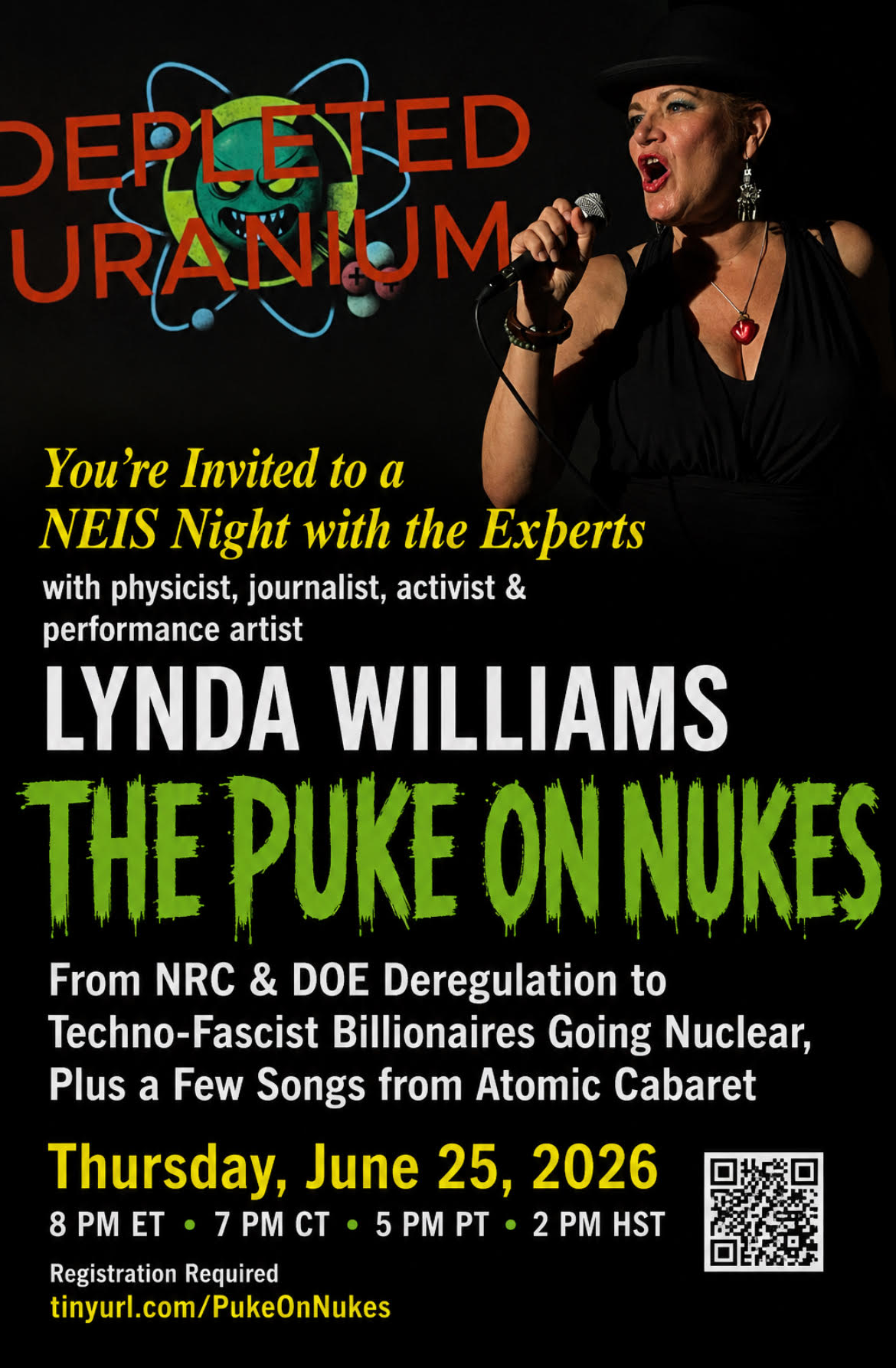
7pm Central Time (8pm ET, 6pm MT, 5pm PT) UTC – 5 From NRC & DOE Deregulation to Techno-Fascist Billionaires Going Nuclear, Plus a Few Songs from Atomic Cabaret REGISTER








 nuclear-news