The Health Costs of U.S. Nuclear Weapons
The Costs of U.S. Nuclear Weapons
mil.news.sohu.com 29 July 09……………….Environmental and Health Costs
“…………..one great irony of the Cold War is that although the United States produced nuclear weapons en masse to destroy the Soviet Union, and vice-versa, the principal victims of each country’s nuclear weapons were its own citizens.From the very beginning, nuclear officials dealt with the problem of nuclear waste by devising interim rather than long-term solutions…………………..
………millions of gallons of wastes leaked into the ground. Hanford officials insisted for years that it would take centuries for the waste to reach the groundwater underneath the site. In fact, it was only a matter of decades before their optimistic assumptions were proven wrong.
“…………………..A major reason why the United States today faces a “cleanup” bill of at least $300 billion is that problems such as the Hanford waste tanks were ignored in favor of maintaining or increasing production of nuclear weapons. Production was the first priority of the government. Making sure it was done in a manner that did not unnecessarily hurt people or destroy the environment was a distant second. Had the government thought through more carefully the consequences of unrestrained production of plutonium and highly-enriched uranium, many of the problems—and bills—we face today could have been avoided or substantially mitigated. It now appears that in a number of cases, no effective “cleanup” will be possible and highly-contaminated sites will simply have to be fenced off and monitored for generations………….…A number of the 600,000 people who worked in a nuclear weapons facility were exposed to unnecessarily high levels of radiation. Exposure to toxic chemicals was also high. At several facilities, no consistent records were kept of employee radiation exposures. At at least one, plant officials entered false readings into dosimetry logs. When workers fell ill and applied for worker’s compensation, the DOE spent millions of dollars on lawyer’s fees to avoid paying out even a single claim, out of fear that paying one claim would open the floodgates to lawsuits and increase calls for stricter health and safety measures, which would necessarily drive up costs and impede production of more weapons………………
……..Uranium miners, many of whom were Navajo, developed lung cancer after working in unvented mines without respirators or any sort of protective gear. Government officials were well aware of the dangers to the workers, but chose to ignore them to keep production high and the price of uranium low.
Extreme secrecy on U.S. Nuclear Weapons impedes democracy
The Costs of U.S. Nuclear Weapons
mil.news.sohu.com 29 July 09
“……………………The extreme secrecy surrounding almost everything concerning nuclear weapons impeded effective democratic debate for decades. During the earliest years of the program, the AEC simply presented a budget to Congress with little or no detailed justification for how the money would be spent and why. The fundamental issue of how U.S. nuclear weapons would be used and how the requirements for deterrence were developed was never adequately explored during the early years when the basic framework for the program was being established. One result of this is that U.S. officials systematically failed to anticipate how the Soviet Union would perceive the U.S. buildup and how it would drive the Soviets to respond with its own provocative programs. Finally, pork barrel politics (the use of government programs by elected representatives to enrich their constituents) was an important underlying factor as well…………………………..Funding something connected to the defense of the nation required less justification and was more immune to careful scrutiny than a non-military program. Nuclear weapons programs became an important means of support for the otherwise poor and mostly rural communities where production facilities were located. In time, these communities became dependent, to varying degrees, on their local nuclear facilities, to the extent that local officials (and many workers) often downplayed the health and environmental risks they posed……………..
………..As a result of the Cold War and the imperatives of the nuclear standoff, this aspect of the American economy resembled the economy of the Soviet Union, in which decisions were made on a planned basis by a remote government, without reference to market forces, behind closed doors, for reasons that would not be made public
US Lawmakers Concerned about ‘Reset’ of US-Russia Relations
US Lawmakers Concerned about ‘Reset’ of US-Russia Relations
Voice of America
By Dan RobinsonCapitol Hill31 July 2009
“………………Questions about where the U.S.-Russia relationship is going are many, ranging from arms control, missile defense and nonproliferation and Iran’s nuclear program, to cooperation in counter-terrorism and U.S. concerns about human rights and media freedom in Russia.Among questions: How can the U.S. work with Russia to persuade Iran to end its uranium enrichment program?……………………………
Assistant Secretary Gordon told lawmakers that the Obama administration has told Russia that sales of sophisticated arms, including an anti-aircraft system, to Iran would be a real problem in bilateral ties.On Iran’s nuclear program, Gordon noted that Russia has agreed to a joint threat assessment on ballistic and nuclear issues to include an examination of Iranian efforts.
He said one of the objectives of a U.S government inter-agency team visiting Moscow is to share the U.S. analysis, and persuade Russia that pressure must be increased if Iran fails to respond positively and soon on the issue.
VOA News – US Lawmakers Concerned about ‘Reset’ of US-Russia Relations
Nuclear reprocessing does not belong in a Climate bill
STOP GLOBAL WARMING
Bill Fowlie
1 August 09
Some members of Congress think they have the answer to what to do with high-level radioactive waste: “reprocessing”. Nuclear reprocessing separates plutonium and uranium from spent nuclear reactor fuel. Supporters of this costly and dangerous technology want to add reprocessing provisions to the Senate climate bill that is planned to be debated this fall.Reprocessing would cost taxpayers hundreds of billions of dollars, undermine U.S. nonproliferation policy, pollute the environment, and threaten public health. According to the National Academy of Sciences, the cost of reprocessing existing spent fuel in the United States would total more than $500 billion.
The development of reprocessing technology in the US would make it harder to prevent other countries from pursuing this nuclear weapons technology. Moreover, reprocessing complicates the nuclear waste problem, rather than solves it. Reprocessing is the most polluting part of the nuclear fuel cycle and actually increases the amount of waste that must be managed.
Radiation danger to Denver Federal Center workers
Denver Federal Center workers may be putting health at risk
FOX 31 Heidi Hemmat KDVR Investigative ReporterJuly 30, 2009
“……………..Dean says many of his co-workers died of the same type of cancer.Dean believes the cancer was caused the contamination at his work site.
The Denver Federal Center used to be a burial ground for radioactive waste. Uranium, arsenic and other toxins are still present in the soil. The ground water is also radioactive and filled with the cancer causing chemical TCE.
But many of the workers there didn’t know about the hazardous waste until they saw our report on FOX 31 News……………..
FOX 31 medical analyst Doctor John Torres says the health risks of working in a contaminated environment are very real. He says long term exposure to TCE can cause, ” lung cancer, liver cancer, testicular and lymphoma.”
He also says arsenic and uranium can lead to heart problems, central nervous system issues, even death.
Denver Federal Center workers may be putting health at risk – KDVR
GThe folly of ‘magical solutions’ for targeting carbon emissions
The folly of ‘magical solutions’ for targeting carbon emissionsSetting unattainable emissions targets such as in the UK is not a policy — it’s an act of wishful thinking, argues one political scientist.
guardian.co.uk 31 july 09
“…………………..What is missing from the debate over targets and timetables is any conception of the realism of such proposals. If a proposal is not realistic, it is not really a policy proposal but an exercise in symbolism, a “magical solution.”…………..
…………………outcome is highly problematic for those who actually care about the substance of climate policy proposals.…………The U.K. targets are a perfect example of what happens when symbols become disconnected from reality. To achieve a 34 percent reduction from 1990 emissions by 2022…………….ritain would have to achieve the equivalent of deploying about 30 new nuclear power plants in the next six years, just to get part way to its target. One does not need a degree in nuclear physics to conclude that is just not going to happen…………………..
…Emissions reduction has its own simple arithmetic. In the context of modest economic growth, emissions are reduced when energy efficiency improves and/or when energy supply is decarbonized. A direct approach to efficiency and expansion of low-carbon energy is much preferable to the indirect approach enshrined in current policies. A low carbon tax (priced as high as politically possible) could be used to raise funds to invest in technological innovation and deployment.
Nuclear plans hurting power companies’ credit ratings
FACING SOUTH 31 July 09
Power companies pursuing construction of new nuclear plants may find it harder to get credit — meaning ratepayers could end up shouldering a greater financial burden for the costly and environmentally harmful projects.Moody’s Investors Service, a leading independent credit rating firm, recently released a report that says it’s considering taking a “more negative view” of debt obligations issued by companies seeking to build new nuclear plants.
Titled “New Nuclear Generation: Ratings Pressure Increasing,” the report raises concerns that investing in new nuclear plants involves significant risks and huge capital costs at a time when national energy policy is uncertain. Yet companies investing in new nuclear projects — cost estimates for which are hovering in the $6 billion range — haven’t adjusted their finances accordingly, according to Moody’s:
‘Few, if any, of the issuers aspiring to build new nuclear power have meaningfully strengthened their balance sheets, and for several companies, key financial credit ratios have actually declined. Moreover, recent broad market turmoil calls into question whether new liquidity is even available to support such capital-intensive projects.’…………………………
The financing problems have already caused some companies to back away from nuclear projects. Earlier this month, AmerenUE announced that it was suspending plans to build a new reactor at its Callaway plant in Missouri. A factor was that state’s ban of “Construction Work in Progress,” a financing scheme that allows a nuclear utility to recover the construction costs of a reactor from ratepayers before the reactor is up and running.
Nuclear startup costs high, safety low
TENNESSEAN.com 31 July 09 By John McFadden, Ph.D.
”….does nuclear power offer a safe, affordable domestic solution?
Unfortunately, the facts suggest otherwise. The industry is dependent on subsidies and is not economically viable. Nuclear waste is problematic at best.The technology is not safe despite billions of tax dollars spent on research to try to make it safe.The claims from nuclear energy’s proponents have always been too good to be true. “Too cheap to meter” was the first. Inaccurate power projections led to TVA’s first nuclear plant construction program in the 1970s and ’80s, leaving more than $25 billion in debt, which Tennessee Valley residents are still paying.
Current estimated cost for one new 1,200-megawatt reactor is $7.5 billion. From 1950 to 1999, federal subsidies totaled around $145 billion. Cleanups of radioactive federal Superfund’ sites are expensive, difficult and proceeding slowly. The fact is that they may never be cleaned up.
Many of those who believe in and trust free-market economics are pushing for increased nuclear power, citing France as a model of nuclear power success, but the French utility is government-owned.
The market is unwilling to fund construction or provide insurance without federal subsidies — too much risk! Nuclear power is not economically viable, and has no plan for long-term storage for waste.On-site storage of the radioactive waste is currently the default plan, and it is more of a problem than most recognize.
Startup costs high, safety low | tennessean.com | The Tennessean
California’s nuclear reactor “reliable”?
San Onofre Nuclear Generating Station (SONGS)…………… Reliability Questioned
Examiner.com by Shirley Vaine July 30, 2009
“…………the latest completed performance review by The US Nuclear Regulatory Commission (NRC) on March 4, 2009, for San Onofre Nuclear Generating Station (SONGS)……………the NRC was concerned that “the continuing performance problems are not being effectively addressed,…………..“
……………No one knows how long the reactor will be down even if the replacement goes perfect. Southern California could have an “unknown timetable” of a dismantled reactor …………….
The good news is that California has control over reliability and economics of our power generation, and these issues are not pre-empted by the Nuclear Regulatory Commission. We already endured an “energy crisis” in 2000. Let’s plan not to have another one.An earthquake shut down Japan’s new nuclear reactors in 2007 and they are still down today, costing the company to buy power elsewhere to meet demand and costing the country billions of yen.
Not only is nuclear power financially unpredictable, the safety risk is an intrical part of that harmful fuel. Additional losses would also come from tourist avoiding visiting this potential health hazard area……”
Nuclear Disarmament More Urgent Than Ever
Nuclear Disarmament More Urgent Than Ever
IPS by By Mikhail Gorbachev 31 July 09 “………………. Nothing fundamentally new has been achieved in the area of nuclear disarmament in the past decade and a half. Twenty years after the end of the Cold War, the arsenals of the nuclear powers still contain thousands of weapons, and the world is facing the very real possibility of a new arms race………………..The Comprehensive Test Ban Treaty (CTBT) has not entered into force. The quantities of nuclear weapons held by Russia and the United States still far exceed the arsenals of all other nuclear powers combined, thus making it more difficult to bring them into the process of nuclear disarmament.
The nuclear non-proliferation regime is in jeopardy. While the two major nuclear powers bear the greatest responsibility for this state of affairs, it was the U.S. that abrogated the Anti-Ballistic Missile Treaty (ABM Treaty), has failed to ratify the CTBT, and refused to conclude with Russia a legally binding, verifiable treaty on strategic offensive arms.
Only recently have we seen indications that the major nuclear powers understand the current state of affairs is untenable…………………………….
The use and the threat of force, which, of course, are illegal under the UN Charter, were reasserted as a “normal” mode of solving problems. Official documents rationalized doctrines of pre-emptive strike and the need for U.S. military superiority.Humanity must be wary of a new arms race. Priority is still being given to financing of military programmes, and “defence” budgets far exceeding reasonable security requirements keep growing, as does the weapons trade. U.S. military expenditures are almost as high as those of the rest of the world combined.
Disregard for international law and for peaceful ways of settling disputes, for the United Nations and its Security Council, is being proclaimed as a kind of policy………………….
……. If the holders of the largest stocks of nuclear weapons embark upon real reductions, others will no longer be able to sit it out and conceal their arsenals from international control. This is an issue that we must raise now if we are to have the kind of trust without which common security cannot be achieved.
GLOBAL PERSPECTIVES: OPINION: Nuclear Disarmament More Urgent Than Ever
Uranium weapons – Does anyone care?
Peter Eyre Middle East Consultant USA, July 29, 2009 (Pal Telegraph)- Our planet is truly a wonderful place but under the umbrella, that we call our atmosphere, lies a cocktail of uranium aerosols waiting to claim its next victim. Many countries donate to this contamination such as the US, UK, Israel, NATO member states, China and Russia etc
Why would the UN, WHO, US, UK, NATO and IDF allow this to happen and why do they continue manufacturing and using weapons containing uranium?…………………
A conference took place in Sweden: INTERNATIONAL CONFERENCE ON ENVIRONMENTAL EFFECTS OF WAR – The examples of Agent Orange and Depleted Uranium – Stockholm • 23-24 April 2004 in which various experts gave speeches, two of those being Doug Rokke and Tedd Weyman.
Dr Douglas L. Rokke, Ph.D. Former Head of U.S. Army Radiological Laboratory and Former Director U.S. Army Depleted Uranium Project, U.S. Army major (retired), and former Assistant Professor of Environmental Science at Jacksonville State University, Florida, USA. During an interview with John Pilger, Doug gave a summary of his work experience: “Prior to the Gulf War, I was responsibility for the training and educating of all the medical professionals and combat soldiers on the effects of nuclear, biological, and chemical warfare. More importantly what type of medical care and treatment was required and what decontamination is needed for those that may be injured or wounded during the war”.
After the ground war he was tasked as a health physicist responsible for cleaning up the depleted uranium or uranium 238 contamination…………………………..- what we’re seeing now are respiratory problems, breathing problems, kidney problems, and cancers. We have individuals of our team that were actually known exposed and they have died of cancer. We have other individuals right now that have cancer. We have rashes, neurological problems. A lot of people – and again this is out of the whole complex toxic battlefield where DU contributes – lost fine motor function, individuals have neural psychology problems, short term memory losses. The uranium is a heavy metal poison and also a radiological poison, so we have to look at a conglomeration of potential health effects that then mix with other causes to create serious problems”…………….
The recent Iraqi field samples collected by UMRC were analysed by plasma mass spectrometer by Dr Axel Gerdes, Institute of Petrology and Geochemistry, JW Goethe University, Frankfurt. The human and environmental samples have been found to contain Depleted Uranium and abnormally high levels of the artificial transuranic isotope, 236U. The isotope composition of Depleted Uranium found in civilians as well as in surface soils and water courses shows the weapons used in Iraq were manufactured from two and perhaps three different metallurgical sources (stockpiles of uranium metals). The soil and water samples indicate DU was deployed in both mechanized battlefields and urban neighbourhoods where aerial bombing took place………………………
For almost 40 years we have all been let down a path of total deception by the US Government, US Department of Defense, US Military and the Nuclear Industry. This deception later extended to the US Institute of Medicine, UN (especially the UNEP), WHO, NATO and their respective Governments and many other institutions that all failed in their duty of care for our planet and its inhabitants…
..http://www.paltelegraph.com/world/world-news/1620-uranium-weapons-does-anyone-care-about-our-planet
Germany’s nuclear waste problem shows long term danger for waste storage
Salting it Away (and Other Problems with Nuclear Waste)
Miller McCune By: Michael Scott Moore | July 29, 2009
Germany’s vaunted salt mine solution for low-level nuclear waste has proven to be full of holes……………………….
Around 12,000 liters of groundwater leak into the mine every day. Some of it mixes with the radioactive waste. A few weeks ago, the Federal Office for Radiation Protection (BfS) finally admitted that some brine collected in Asse II had traces of tritium and caesium 137.
But last year the German public learned that the group in charge of maintaining Asse II at the time had known about the accumulation of suspect water since 2005…………………….The public outrage led German politicians to take the mine out of the Helmholtz Institute’s hands and place it under the BfS. But Asse II has also leaked groundwater since at least 1988 — meaning, at the very least, that decades of Cold War research conducted there failed to solve some of the most basic problems of nuclear storage……………….Along with 120,000-odd barrels of radioactive slop, according to a report last year, highly radioactive plutonium waste and even a few spent fuel rods were dumped in the mine………….
It’s hubris for a government to think it can safely store nuclear waste beyond the lifetime of the government itself. The trouble with Asse II has been a chastening example. Political promises, stern-sounding policies, and even scientific assessments from 1989 (which said the mine had no leaks) all proved to be as full of holes as the mine itself.
Environmentalists show no confidence in nuclear waste site’s safety
Environmentalists show no confidence in nuclear waste site’s safety THE HANKYOREH, 30 July 09
Lawmaker Cho and environmental researchers disclose prior site assessment reports on Gyeongju waste facility site that reveal base rock instability
Environmental organizations asked for further investigation into the safety of the nuclear waste disposal site currently under construction in the Gyeongju area on Tuesday. The organizations are basing its demands for a complete stop to construction on a review of previously released reports. The completion of the facility’s construction originally set for the end of 2009, has already been delayed by some two and a half years due to problems in the site’s base rock.
Cho Seung-soo, a lawmaker with the New Progressive Party, and members the Korean Federation for Environmental Movement (KFEM) and other environmental organizations, held a press conference at the National Assembly and said, “We cannot confirm the safety of the site because a site assessment (in 2005) confirms the condition of the base rock is unstable and weak.”
USEC scraps uranium plant
USEC scraps uranium plant, mulls options
Jul 28, 2009By Matt Daily and Michael Erman (Editing by Lisa Von Ahn, Maureen Bavdek, Phil Berlowitz)
NEW YORK (Reuters) – USEC Inc said on Tuesday it would scrap plans to build a new uranium enrichment plant and may now seek a partner or buyer after the U.S. Department of Energy denied its request for a loan guarantee, sending its stock plummeting.
USEC’s planned American Centrifuge Plant in Piketon, Ohio, was one of four new facilities proposed that would be built to supply enriched uranium to the nuclear power sector, which industry experts believe is poised for a renaissance in the United States……………..The company had so far sunk $1.5 billion into the ACP project, using funds from the equity and debt markets, but still needed another $2 billion………………………..USEC’s shares plunged 36 percent to $3.97 on the New York Stock Exchange.
USEC scraps uranium plant, mulls options | Green Business | Reuters
Nuclear power? – financially a failure
Following the Money
THE ENERGY GRID July 27, 2009 by James Hrynyshyn
“………………….Just about every time I give a presentation on climate change, someone in the audience will ask why I haven’t devoted much attention to the potential contribution of nuclear power. After all, it’s (almost) carbon neutral and it’s one of the only existing technologies that can produce baseload electricity (unlike PV solar and wind).My response is always the same: Assuming we are willing to find a way to deal with the relatively modest waste and weapons proliferation issues, we still have to acknowledge that nuclear power generation is hideously expensive.Joe Romm’s posts are among the best at laying out just how expensive. The cost of a gigawatt of generating capacity for a new plant just keeps going up. From $4 billion, to $7 billion to $10 billion, depending on the technology involved. There’s a reason why no nuclear power plants have been ordered in 30 years and Three Mile Island isn’t an excuse anymore………………………..
Wind is now cheaper the nuclear, even though you have to build three times the capacity to account for the fact that the wind only blows strong enough a third of time. And baseload power can be supplied by concentrated solar-thermal plants, in which heat is stored in fluids for release at night. So why spend the extra money when competing technologies are less expensive?
A related problem is the ever-changing regulatory and economic context. In order to invest the huge upfront sums of money required by nuclear plants, utilities need to know what kind of world they’ll be operating in for decades to come. They simply don’t have that when it comes to nuclear power. Costs are always rising, and environmental restrictions are ever tightening.
1 This Month
To see nuclear-related stories in greater depth and intensity – go to https://nuclearinformation.wordpress.com/
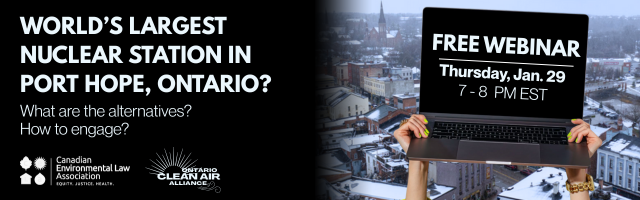
29 Jan. Thursday 7-8 p.m. Webinar – World’s Largest Nuclear Station in Port Hope, ON?

31st January – Challenging the War Machine – a DECLASSIFIED UK SUMMIT


Website of the Week
Now until to February 10, 2026 Radioactive waste storage in France: the debate is finally open! How to participate?
-
Archives
- January 2026 (259)
- December 2025 (358)
- November 2025 (359)
- October 2025 (376)
- September 2025 (258)
- August 2025 (319)
- July 2025 (230)
- June 2025 (348)
- May 2025 (261)
- April 2025 (305)
- March 2025 (319)
- February 2025 (234)
-
Categories
- 1
- 1 NUCLEAR ISSUES
- business and costs
- climate change
- culture and arts
- ENERGY
- environment
- health
- history
- indigenous issues
- Legal
- marketing of nuclear
- media
- opposition to nuclear
- PERSONAL STORIES
- politics
- politics international
- Religion and ethics
- safety
- secrets,lies and civil liberties
- spinbuster
- technology
- Uranium
- wastes
- weapons and war
- Women
- 2 WORLD
- ACTION
- AFRICA
- Atrocities
- AUSTRALIA
- Christina's notes
- Christina's themes
- culture and arts
- Events
- Fuk 2022
- Fuk 2023
- Fukushima 2017
- Fukushima 2018
- fukushima 2019
- Fukushima 2020
- Fukushima 2021
- general
- global warming
- Humour (God we need it)
- Nuclear
- RARE EARTHS
- Reference
- resources – print
- Resources -audiovicual
- Weekly Newsletter
- World
- World Nuclear
- YouTube
-
RSS
Entries RSS
Comments RSS
 nuclear-news