The Armageddon Agenda
Kamala Harris, Donald Trump, and the Race to Oblivion
mong the first major decisions the next president has to make in January 2025 will be what stance to take regarding the future status of New START (or its replacement).
By Michael Klare, Tomgram, 13 Sept 24
The next president of the United States, whether Kamala Harris or Donald Trump, will face many contentious domestic issues that have long divided this country, including abortion rights, immigration, racial discord, and economic inequality. In the foreign policy realm, she or he will face vexing decisions over Ukraine, Israel/Gaza, and China/Taiwan. But one issue that few of us are even thinking about could pose a far greater quandary for the next president and even deeper peril for the rest of us: nuclear weapons policy.
Consider this: For the past three decades, we’ve been living through a period in which the risk of nuclear war has been far lower than at any time since the Nuclear Age began — so low, in fact, that the danger of such a holocaust has been largely invisible to most people. The collapse of the Soviet Union and the signing of agreements that substantially reduced the U.S. and Russian nuclear stockpiles eliminated the most extreme risk of thermonuclear conflict, allowing us to push thoughts of nuclear Armageddon aside (and focus on other worries). But those quiescent days should now be considered over. Relations among the major powers have deteriorated in recent years and progress on disarmament has stalled. The United States and Russia are, in fact, upgrading their nuclear arsenals with new and more powerful weapons, while China — previously an outlier in the nuclear threat equation — has begun a major expansion of its own arsenal.
The altered nuclear equation is also evident in the renewed talk of possible nuclear weapons use by leaders of the major nuclear-armed powers. Such public discussion largely ceased after the Cuban Missile Crisis of 1962, when it became evident that any thermonuclear exchange between the U.S. and the Soviet Union would result in their mutual annihilation. However, that fear has diminished in recent years and we’re again hearing talk of nuclear weapons use. Since ordering the invasion of Ukraine, Russian President Vladimir Putin has repeatedly threatened to employ nuclear munitions in response to unspecified future actions of the U.S. and NATO in support of Ukrainian forces. Citing those very threats, along with China’s growing military might, Congress has authorized a program to develop more “lower-yield” nuclear munitions supposedly meant (however madly) to provide a president with further “options” in the event of a future regional conflict with Russia or China.
Thanks to those and related developments, the world is now closer to an actual nuclear conflagration than at any time since the end of the Cold War. And while popular anxiety about a nuclear exchange may have diminished, keep in mind that the explosive power of existing arsenals has not. Imagine this, for instance: even a “limited” nuclear war — involving the use of just a dozen or so of the hundreds of intercontinental ballistic missiles (ICBMs) possessed by China, Russia, and the United States — would cause enough planetary destruction to ensure civilization’s collapse and the death of billions of people.
And consider all of that as just the backdrop against which the next president will undoubtedly face fateful decisions regarding the production and possible use of such weaponry, whether in the bilateral nuclear relationship between the U.S. and Russia or the trilateral one that incorporates China.
The U.S.-Russia Nuclear Equation
The first nuclear quandary facing the next president has an actual timeline. In approximately 500 days, on February 5, 2026, the New Strategic Arms Reduction Treaty (New START), the last remaining nuclear accord between the U.S. and Russia limiting the size of their arsenals, will expire. That treaty, signed in 2010, limits each side to a maximum of 1,550 deployed strategic nuclear warheads along with 700 delivery systems, whether ICBMs, submarine-launched ballistic missiles (SLBMs), or nuclear-capable heavy bombers. (That treaty only covers strategic warheads, or those intended for attacks on each other’s homeland; it does not include the potentially devastating stockpiles of “tactical” nuclear munitions possessed by the two countries that are intended for use in regional conflicts.)
At present, the treaty is on life support. On February 21, 2023, Vladimir Putin ominously announced that Russia had “suspended” its formal participation in New START, although claiming it would continue to abide by its warhead and delivery limits as long as the U.S. did so. The Biden administration then agreed that it, too, would continue to abide by the treaty limits. It has also signaled to Moscow that it’s willing to discuss the terms of a replacement treaty for New START when that agreement expires in 2026. The Russians have, however, declined to engage in such conversations as long as the U.S. continues its military support for Ukraine.
Accordingly, among the first major decisions the next president has to make in January 2025 will be what stance to take regarding the future status of New START (or its replacement). With the treaty’s extinction barely more than a year away, little time will remain for careful deliberation as a new administration chooses among several potentially fateful and contentious possibilities…………………………………………………………………………. more https://tomdispatch.com/the-armageddon-agenda/
United Nations relief agency Says 6 Workers Among at Least 18 Killed in Israeli Strikes on Gaza School

“This school has been hit five times since the war began. It is home to around 12,000 displaced people, mainly women and children. No one is safe in Gaza. No one is spared.”
Brett Wilkins, Sep 11, 2024, https://www.commondreams.org/news/unrwa-school-bombed-again
The United Nations relief agency for Palestine said Wednesday that six of its workers are among the at least 18 people killed in a pair of Israeli airstrikes targeting a U.N. school in the Gaza Strip where thousands of forcibly displaced Palestinians were sheltering.
The United Nations Relief and Works Agency for Palestine Refugees in the Near East (UNRWA) said the Israeli strikes on one of its schools, located in Nuseirat in central Gaza, resulted in “the highest death toll among our staff in a single incident” since Israeli forces began bombarding the strip following last October’s Hamas-led attack on Israel.
“Among those killed was the manager of the UNRWA shelter and other team members providing assistance to displaced people,” the agency said. “Sincere condolences to their families and loved ones. This school has been hit five times since the war began. It is home to around 12,000 displaced people, mainly women and children.”
Victims of the strikes included women and children.
Earlier on Wednesday the United Nations said the school had been “previously deconflicted with the Israeli forces.”
“No one is safe in Gaza. No one is spared,” UNRWA stressed. “Schools and other civilian infrastructure must be protected at all times, they are not a target.”
Responding to the attacks, U.N. Secretary-General António Guterres said on social media that “these dramatic violations of international humanitarian law need to stop now.”
Israel is currently on trial for genocide at the International Court of Justice, a U.N. body. International Criminal Court Prosecutor Karim Khan is also seeking arrest warrants for Israeli Prime Minister Benjamin Netanyahu, Israeli Defense Minister Yoav Gallant, and three Hamas leaders—at least one of whom, Ismail Haniyeh, has been assassinated.
Over the past 341 days, Israel’s assault on Gaza has left more than 145,000 Palestinians dead, maimed, or missing, according to Palestinian and international officials. Nearly all of Gaza’s 2.3 million people have been forcibly displaced, while Israel’s “complete siege” of Gaza has starved and sickened millions of Palestinians, dozens of whom have died of malnutrition, dehydration, and lack of medical care.
UNRWA says around 200 of its staff members have been killed in more than 450 Israeli attacks on agency facilities since October. More than 500 Palestinians have been killed while seeking shelter under the U.N. flag.
Responding to Israeli claims—reportedly extracted from Palestinian prisoners in an interrogation regime rife with torture and abuse—that a dozen of the more than 13,000 UNRWA workers in Gaza were involved in the October 7 attack, numerous nations including the United States cut off funding to the agency. Almost all of them have restored funding as Israeli lies have been debunked.
Bucking this trend, U.S. President Joe Biden in March signed a bill prohibiting American funding for UNRWA.
US, UK to announce expansion of NATO weapons strikes inside Russia
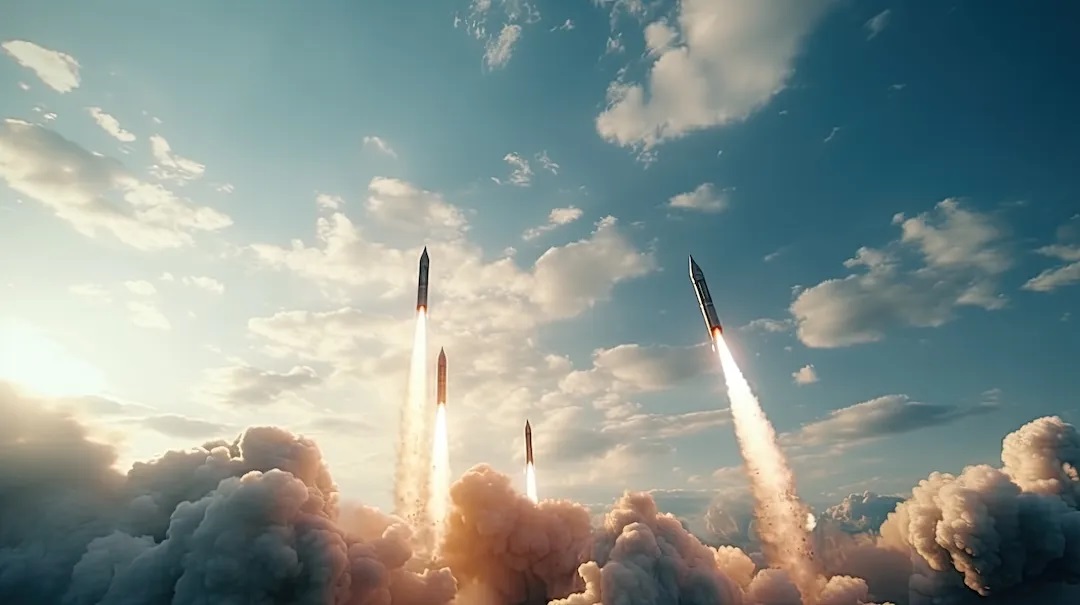
Andre Damon, 11 Sept 24 https://www.wsws.org/en/articles/2024/09/12/lsqq-s12.html
The United States and United Kingdom will imminently announce a major expansion of Ukrainian strikes deep inside Russia using NATO weapons, the Guardian and Politico reported on Wednesday.
The announcement will come just days after Ukraine launched its largest drone barrage deep inside Russian territory on Monday, for the first time killing someone in Moscow and destroying dozens of homes in the capital city of a nuclear-armed state.
The move was discussed between US Secretary of State Antony Blinken and British Foreign Minister David Lammy during their meetings with Ukrainian officials in Kiev on Wednesday.
When asked whether “Ukraine needs this long-range capability of striking into Russian territory,” Blinken replied that “we discussed long-range fires” with Ukrainian officials and that it would be further discussed when US President Joe Biden meets UK Prime Minister Keir Starmer in Washington on Friday.
He continued, “From day one, as you heard me say, we have adjusted and adapted as needs have changed, as the battlefield has changed, and I have no doubt that we will continue to do so as this evolves.”
Regarding the discussions, the Guardian reported, “British government sources indicated that a decision had already been made to allow Ukraine to use Storm Shadow cruise missiles on targets inside Russia, although it is not expected to be publicly announced on Friday when Starmer meets Biden in Washington DC.”
When asked on Tuesday about allowing expanded strikes inside Russia, Biden replied, “We’re working that out now.”
Politico cited Senate Foreign Relations Committee Chair Ben Cardin as saying he “would not be surprised” if the decision had already been made. The report continued, “Wednesday’s joint visit to Kyiv by Blinken and Lammy to meet Zelenskiy would not be taking place had there been no positive decision regarding Storm Shadow, the sources added.”
The news outlet noted, “But it would be considered unnecessarily provocative to make a public announcement about long-range missiles in Kyiv.”
In other words, the announcement will take place in a proverbial “Friday night news dump” to make the fact that NATO weapons will be raining down on Russian cities appear less “provocative” and to keep this development, which threatens to dramatically escalate the war, out of public consciousness.
In a statement on X, Lammy declared, “I am in Kyiv today with @SecBlinken to reiterate our united and ironclad support for Ukraine. We must stand up to Vladimir Putin’s imperialism. Our collective security depends on it.”
Blinken framed the massively provocative action being prepared by the US and UK as a response to an “escalation” by Russia. “And we’ve now seen this action of Russia, Russia acquiring ballistic missiles from Iran, which will further empower their aggression in Ukraine. So if anyone is taking escalatory action, it would appear to be Mr. Putin and Russia,” Blinken said.
On Monday, a group of leading House Republicans published a letter to President Biden calling for the lifting of all remaining restrictions on the use of NATO-provided weapons from Ukraine.
The letter demanded, “We write to urge you to lift the remaining restrictions on Ukraine’s use of U.S.-provided long-range systems, specifically Army Tactical Missile Systems (ATACMS), against legitimate military targets deeper inside Russia.”
The letter declared that “concerns about escalation” have been “consistently invalidated since day one of the war.” It asserted, “Neither Ukraine’s use of U.S.-provided weapons in Russia nor its military incursion into Russia’s Kursk region—the first foreign occupation of Russian territory since World War II—has triggered a Russian escalatory response.”
Commenting on the reporting by the Guardian, Russian Senator Aleksey Pushkov wrote on Telegram, “The decision to strike Russian territory is clearly being prepared. … There are too many conversations and hints about it for it to be reversed. Even if it has not been made yet, it looks like it will be a matter of days. The leak via The Guardian is not accidental. Public opinion is being prepared.”
Anatoly Antonov, the Russian Ambassador to the US, declared that Washington “continues to test the limits of our tolerance for hostile steps” and is “paving the way to World War III.”
On Wednesday, former Kremlin adviser Sergey Karaganov gave an interview to the Kommersant daily in which he urged the country to be prepared to use nuclear weapons in response to NATO attacks. “We have allowed the situation to deteriorate to a point when our adversaries believe we will not use nuclear weapons under any circumstances. … Having nuclear weapons without being able to convince your enemies that you are ready to use them is suicide.”
He added, “The main goal of a doctrine should be in convincing all current and future enemies that Russia is ready to use nuclear weapons.” He added, “It’s high time we stated that any massive strikes against our territory give us a right to respond with a nuclear strike.”
The massive escalation of the US-NATO war against Russia forms the backdrop of Wednesday’s presidential debate in which Vice President Kamala Harris pledged that her candidacy would be dedicated to “ensuring we have the most lethal fighting force in the world” in order to defend America’s “standing” in the world.
White House finalizing plans to expand where Ukraine can hit inside Russia
The talks have been closely held among a small group of officials inside the White House.
Gunners fire at a Russian position in the Kharkiv region, on April 21, 2024, amid the Russian invasion in Ukraine. | Anatolii Stepanov/AFP via Getty Images
Politico, By Erin Banco, Joe Gould and Paul McLeary 09/11/2024
The White House is finalizing a plan to ease some restrictions on how Ukraine can use U.S.-donated weapons and better protect itself from Russian missiles, according to a Western official and two other people familiar with the discussions.
The talks have been closely held among a small group of officials inside the White House, one of the people involved in the debate said. All were granted anonymity because they were not authorized to speak publicly about the conversations.
The details of the plan are still coming together. But officials in Washington, London and Kyiv have in recent days discussed expanding the area inside Russia that Ukraine can hit with American and British-made weapons. They’ve also discussed how to prevent additional cross-border attacks by Russia, including the U.S. agreeing to allow Ukraine to use U.K. long-range missiles that contain American parts to strike inside Russia.
The current conversations between Washington and Kyiv mark a significant change in tenor from the ones the two countries held earlier this summer. And it signals the Biden administration may be ready to finally agree to Kyiv’s requests to enable Ukraine’s military to more forcefully defend itself and to make more aggressive moves inside Russia.
The National Security Council declined to comment.
In an interview with PBS Newshour in June, national security adviser Jake Sullivan indicated that the U.S. might be willing to expand the area it would allow Ukraine to use U.S. weapons in Russia.
“It is not about geography. It is about common sense,” he said. “If Russia is attacking or about to attack from its territory into Ukraine it only makes sense to allow Ukraine to hit back.”
When asked if the administration would lift restrictions on long-range weapons, Biden told reporters Tuesday: “We’re working that out now.”…………………………………………………………..
U.S. officials have also pointed out that since the Army no longer buys Army Tactical Missile Systems, the inventory is limited and is drawing close to where the U.S. would be concerned about its own stockpile. The maker of the missile, Lockheed Martin, is still producing several hundred a year but they are slated for sale to allies overseas. The replacement for the weapon, the Precision Strike Missile, is only beginning to be fielded and not in numbers to fully replace the missiles currently being expended.
Secretary of State Antony Blinken and his British counterpart David Lammy were in Kyiv on Wednesday to huddle with Ukrainian President Volodymyr Zelenskyy to discuss the weapons issue, along with Ukraine’s incursion into Russia and recent Russian advances in Ukraine.
British defense leaders have been in discussions with their U.S. counterparts for weeks about getting the U.S. to sign off on Ukraine using British Storm Shadow missiles to strike inside Russia. No decision has been reached, according to one person familiar with the talks, but the issue will be a part of the discussion between President Joe Biden and U.K. Prime Minister Keir Starmer when the two meet at the White House on Friday………………………………………..
It’s unclear if the Biden administration has decided to lift its restrictions on long-range Army Tactical Missile Systems, which the U.S. has transferred to Ukraine. It has previously told Ukraine it does not want its military using those weapons to strike deep inside Russia………………..
Biden’s earlier decision to allow Ukraine the ability to conduct limited strikes inside Russia came with several caveats, including that Kyiv could only use the weapons in and around the Kharkiv region. The U.S. eventually expanded that geographic plane largely so that Ukraine could shoot down Russian glide bombs………………………………………………………………….. more https://www.politico.com/news/2024/09/11/white-house-weapons-ukraine-00178673
Biden administration split over Ukraine’s use of US weapons inside Russia
Pentagon and intelligence community caution against deployment of ATACM missiles by Kyiv
Ft.com Felicia Schwartz in Washington, September 11 2024
US President Joe Biden has said he is considering a request by Ukraine to use weapons provided by the US to strike deep inside Russian territory. Biden’s admission on Tuesday comes as his government is split over whether to allow the use of US weapons, with the state department, which is more open to Kyiv’s request, pitted against the Pentagon and the US intelligence community. “We’re working that out right now,” Biden said when asked by reporters whether he would allow Ukraine to use American long-range Army Tactical Missile System, or ATACMS, to target sites inside Russia.
Ukrainian President Volodymyr Zelenskyy has repeatedly called for restrictions on western-supplied, long-range weapons to be lifted so his military can strike Russian airfields and missile launchers, as well as the ammunition depots, fuel storage and command and control centres that are critical to Moscow’s war. Washington in recent months has shifted away from a blanket ban on the use of US-supplied weapons to attack Russian territory, allowing Ukraine to deploy them for defensive strikes. But Zelenskyy is pressing the US and other western countries to permit the use of long-range weaponry deep inside Russia as part of his strategy of increasing the cost of the invasion for President Vladimir Putin.

Antony Blinken, US secretary of state, is travelling to Ukraine this week with UK foreign secretary David Lammy to meet Zelenskyy and discuss his request and show support for their ally. Ahead of the visit, Blinken told a press conference in London “we’ll be listening intently to our Ukrainian partners. We’ll both be reporting back to the [British] prime minister, to President Biden in the coming days.” He added that Biden would discuss the matter with Keir Starmer, the UK prime minister, when he visits Washington on Friday.
The UK has urged the US to grant Ukraine permission to use long-range weapons provided by its western allies deep inside Russia and believes Kyiv should be able to target Russian sites and assets. US sign-off is needed in order for Ukraine to use the Storm Shadow missiles provided by the UK for long-range strikes inside Russia. While the US state department is more receptive to arguments from Ukraine and many of its western allies, the Pentagon and US intelligence community have cautioned against the use of the long-range weapons deep inside Russia.
The latter recently assessed that 90 per cent of Russian aircraft have been relocated to airfields at least 300km away from Ukrainian-controlled territory, outside of the range of ATACMS………………………………………. https://www.ft.com/content/48289996-e1bf-4c3e-befb-031698e89e1b
‘Let’s Just Fight’: How Britain Prefers War Over Peace in Ukraine

Boris Johnson avoided promoting a compromise peace in Ukraine after Russia invaded. Now, Labour continues to help prolong the conflict to secure British interests.
DECLASSIFIED UK, MARK CURTIS, 9 September 2024
Last week, defence secretary John Healey announced that the UK “will continue to step up our support to help Ukraine achieve victory” in its war with Russia.
Both he and foreign secretary David Lammy have repeatedly said “Labour will stand with Ukraine for as long as it takes to win”.
When President Volodymyr Zelensky’s Ukrainian forces conducted an incursion into Russia’s Kursk region last month, Healey praised the move as “bold”, saying it put Russian president Vladimir Putin “under pressure”.
Equipment used in that offensive included UK-supplied Challenger tanks sent to Ukraine last year.
Prime minister Keir Starmer has also told Zelensky he is willing to allow Ukraine’s use of UK-supplied long-range missiles to hit targets inside Russia – provided the US agrees to it.
Despite Labour’s public relations about “change” during the general election, Lammy has consistently said that “with Labour there will be no change in the UK’s financial, military, diplomatic and political support for Ukraine”.
The consequences of this are hard to overstate. Since Russia’s brutal invasion, inflicting untold misery on millions of Ukrainians, bombarding civilians and committing war crimes, UK governments have been overwhelmingly focused on one thing – “winning” the war.
Yet one thing Whitehall has conspicuously avoided is making serious attempts at promoting a compromise peace that would end the fighting.
Indeed, one casualty of Ukraine’s recent incursion into Russia is that it derailed secret talks to negotiate an agreement halting strikes on energy and power infrastructure, according to the Washington Post.
There are specific reasons Whitehall prefers war over peace in Ukraine. It is worth going back to the very first chance negotiators had to end this devastating conflict soon after Russia invaded.
Scuppering peace prospects
There is considerable evidence showing the UK helped scupper the prospects for peace within a few weeks of Russia’s invasion in February 2022.
The following month, direct peace negotiations between Ukrainian and Russian delegations and mediation efforts by the then Israeli prime minister, Naftali Bennett, created a genuine chance for ending the war peacefully.
Meeting in Turkey, the two sides produced the Istanbul communiqué in late March 2022 in which Ukraine promised not to join Nato or allow foreign military bases on its soil. For its part, Russia promised to withdraw its occupation troops from Ukraine, although not from the Donbas region or the Crimea.
David Arakhamia, the parliamentary leader of Zelensky’s “Servant of the People” party who led Ukraine’s delegation in the talks, later revealed that Moscow was “ready to end the war if we took neutrality… and made commitments that we would not join Nato”.
This was the key point”, he said in an interview in 2023.
Reports suggest Zelensky was then prepared to give up Nato membership and that he understood this was the key issue for Moscow. “And as far as I remember, they started a war because of this”, he said at the time.
‘Permanent neutrality’
Russia and Ukraine appeared relatively close to a deal that would “have ended the war and provided Ukraine with multilateral security guarantees, paving the way to its permanent neutrality and, down the road, its membership in the EU”, according to one detailed study…………………………………………………………………………………………………………..
‘Keep fighting and dying’
In their summit in Brussels on 24 March 2022, Nato decided to oppose peace negotiations until Russia had fully withdrawn all its troops from Ukraine.
By early April, the Washington Post was reporting that “For some in Nato, it’s better for Ukrainians to keep fighting and dying than to achieve a peace that comes too soon or at too high a price for Kyiv and the rest of Europe.”
Former German chancellor Gerhard Schröder, who acted as one of the mediators in the Istanbul talks, later said that “nothing could happen because everything else was decided in Washington…. the Ukrainians did not agree to peace because they were not allowed to. They first had to ask the Americans about everything they discussed.”
Enter Boris Johnson
As talks were approaching a possible agreement, UK prime minister Boris Johnson arrived unannounced in Kyiv on 9 April 2022.
A report in Ukrainska Pravda noted that Johnson brought two messages: “The first is that Putin is a war criminal, he should be pressured, not negotiated with”, and “the second is that even if Ukraine is ready to sign some agreements or guarantees, they [the collective West] are not”.
Before his visit, Johnson “instructed” Zelensky “not to make any concessions to Putin”, columnist Simon Jenkins wrote in the Guardian.
David Arakhamia said that Johnson had come to Kyiv to inform Ukrainian officials the West wouldn’t sign any agreement with Moscow, instead urging: “let’s just fight.”……………………………………………..
Peace feelers
The March/April 2022 negotiations may have produced the best opportunity to bring about a compromise peace, but there have been others since.
It is difficult to gauge whether the peace feelers put out by the Kremlin over the past two and half years are simply part of its propaganda strategy or serious attempts to end the fighting. The reason is that they have never been seriously tested by Washington and London……………………………………………………………..
Total war
The US and UK have long publicly rejected talks based on anything other than Russia’s complete withdrawal from Ukraine.
This principled position might have merit but for the real world intervening. Aggressors should surely not be rewarded in international relations, but this is something that applies as much to the US/UK in Iraq or Libya, or Israel in the occupied Palestinian territories, as to Russia in Ukraine.
Only in the case of Ukraine, however, has the UK held to the high-minded position that Moscow must withdraw all its forces before any peace moves can be considered.
The second obvious truth is that holding to the position of regaining full control over all Ukrainian territory – including the disputed areas in the Donbas and the Crimea – is simply a recipe for ongoing war.
As leading analyst Anatol Lieven has written, “To recover everything it has lost since 2014 looks impossible. It would require the total defeat of the Russian military.”
Yet this appears to be what Keir Starmer wants. “This terrible conflict must end with the defeat of Putin in Ukraine”, the then UK opposition leader said in the House of Commons in 2023.
Although Zelensky vows to fight on, some senior Ukrainian figures are more than aware of the need for pragmatism. ………………………………………………….
What does Britain want?
To the UK establishment, the Ukraine war is a proxy one against Russia, its key rival for influence in Europe.
With Ukraine as the latest battleground in a modern great game, Whitehall’s main goal is to maintain Russia as a pariah state and end its independent foreign policy, which challenges Nato’s supremacy in Europe and, to an extent, the Middle East.
The war has enabled the UK to cement relations with an important new ally. UK officials have barely hidden their glee at overcoming their European competitors to get to Kyiv first. ……………………………………………………
MI6 in Ukraine
It turns out that British intelligence was increasingly active in Ukraine for years before Russia’s invasion – a remarkable turnaround from the blackout of the Cold War years.
A bombshell New York Times investigation in February 2024 notes that the CIA established 12 secret “forward operating bases” along Ukraine’s border with Russia in the decade before 2022…………………………………………………..
According to the New York Times, in the run-up to the 2022 invasion, the head of one of Russia’s intelligence services reported to Putin that CIA and MI6 were controlling Kyiv and were turning the neighbouring country “into a beachhead for operations against Moscow.”
In other words, “Ukraine was drawn into a Western coalition for the purpose of waging a broad-based shadow war against Russia”, comments Mark Episkopos, a fellow at the Quincy Institute.
He adds: “Moscow repeatedly warned — for many years before 2014 — that it was and remains prepared to take drastic action to prevent Ukraine from being used by the West as a forward operating base against Russia. Yet that, as recounted in lurid detail by the New York Times, is precisely what has happened over the past 10 years”.
This budding intelligence relationship has been cemented by the war itself. US Defense Department documents leaked in March 2023 showed Britain then had the largest number of special forces operating in the country, with 50 troops.
War profits
Courting Ukraine as a new ally has major benefits for the UK arms industry, which exerts enormous influence over Whitehall’s foreign policies. War is good for them, peace not so much.
In the ten years before Russia’s invasion of Ukraine, UK arms companies sold only £35m in military equipment to Kyiv. That figure has skyrocketed since February 2022 to over £800m.
UK arms corporations have secured a new, lucrative market……………………………………….
The war is a boon right across the UK’s substantial military industry: Britain has sent around 400 different military capabilities to Ukraine since 2022.
For US arms companies, the prize has been even greater. Washington has provided over $150bn worth of military equipment and aid to Ukraine since 2022.
Endgame
Journalist Branko Marcetic has long documented reports highlighting Western opposition to Ukraine peace prospects.
“It’s becoming increasingly difficult to deny the war in Ukraine could have been ended mere months into the Russian invasion — and that the US and UK governments worked to prevent this from happening”, he writes.
If a compromise peace holds little value for the British elite, what does “winning” mean? A war with Russia?
In May this year the UK and US publicly gave Ukraine the go-ahead to use British-supplied weapons to strike targets inside Russia, saying it was up to Kyiv whether to do so.
That decision appeared to cross a line. With senior British military figures saying the UK must be prepared to fight a war with Russia, who knows what endgame is being planned in Whitehall, or what Keir Starmer’s limits might be. https://www.declassifieduk.org/lets-just-fight-how-britain-prefers-war-over-peace-in-ukraine/
US Militarism Is a Leading Cause of the Climate Catastrophe

US military interventions are not just wars on people — they’re also wars on the climate.
By Marjorie Cohn , Truthout, September 10, 2024
This week marks 23 years since George W. Bush declared a U.S.-led “war on terror” and the people of Afghanistan and Iraq are still suffering its consequences.
After the U.S. invaded Iraq, an estimated half a million Iraqis were killed and at least 9.2 million were displaced. From 2003-2011, more than 4.7 million Iraqis suffered from moderate to severe food insecurity. Over 243,000 people have been killed in the Afghanistan/Pakistan war zone since 2001, more than 70,000 of them civilians. Between 4.5 and 4.6 million people have died in the post-9/11 wars.
The U.S.’s “war on terror” also escalated the climate catastrophe, resulting in local water shortages and extreme weather crises that are only getting worse. In 2022, Afghanistan had its worst drought in 30 years and it is facing a third consecutive year of drought. “The war has exacerbated climate change impacts,” Noor Ahmad Akhundzadah, a professor of hydrology at Kabul University, told the New York Times.
Meanwhile in the current moment, U.S. military assistance to Israel’s genocidal campaign is also intensifying the climate crisis.
As we look back across more than two decades of the “war on terror,” it is clear that many lives will be saved if we can bring a halt to U.S. military interventions throughout the world and simultaneously target the U.S. military’s catastrophic contributions to the climate crisis that threaten us all.
“The U.S. military is the single largest institutional consumer of fossil fuels in the world,” Taylor Smith-Hams, U.S. senior organizer at 350.org, a global climate justice organization, said at a workshop on the Impact of Current Wars on Climate Crisis at the Veterans For Peace (VFP) Convention on August 17. “Militarism and war are key drivers of the climate crisis,” she added, citing fighter jets, warships and the U.S.’s massive constellation of military bases throughout the world.
Climate Effects of the “War on Terror”
On September 11, 2001, 19 men committed suicide and took roughly 3,000 people with them by flying two airliners into the World Trade Center, one into the Pentagon and one into a field in Pennsylvania. None of the hijackers hailed from Afghanistan or Iraq; 15 came from Saudi Arabia. Nevertheless, the Bush administration illegally invaded Afghanistan and Iraq and overthrew their governments, then killed, injured and tortured nearly three-quarters of a million of their people.
Beyond the terrible death tolls in both countries, a lesser known consequence of the “war on terror” was the exacerbation of the climate catastrophe, both in the countries targeted by the war and globally.
Since the 1997 Kyoto Protocol excluded military emissions from the counting of national emissions figures, U.S. military emissions are significantly undercounted. Although militaries are a significant source of carbon emissions, little is understood about their carbon footprint.
Beyond the terrible death tolls … a lesser known consequence of the “war on terror” was the exacerbation of the climate catastrophe, both in the countries targeted by the war and globally.
One of the first studies to expose direct and indirect military emissions as a result of combat was conducted by Benjamin Neimark, Oliver Belcher, Kirsti Ashworth and Reuben Larbi. They examined the use of concrete “blast walls” by U.S. forces in Baghdad, Iraq, from 2003-2008, the first five years of Bush’s “Operation Iraqi Freedom,” to measure the carbon footprint of the war. Concrete walls and barriers were also used in U.S. counterinsurgency operations in Kandahar and Kabul, Afghanistan, from 2008-2012 during “Operation Enduring Freedom.” (Although these two wars did not bring freedom, their effects on the climate crisis are enduring.)
While occupying Baghdad, the U.S. military erected hundreds of miles of blast walls in order to control the urban population pursuant to its counterinsurgency strategy. “Effective weaponisation of concrete has an extraordinary carbon footprint,” Neimark, Belcher, Ashworth and Larbi wrote. “The large carbon footprint comes mainly from the amount of heat and energy in cement production, the main ingredient in concrete.”
The logistical movement of troops, convoys, weapons, supplies and equipment, as well as firepower itself, carry a direct carbon cost. Jet propulsion fuel for fighter jets is a major culprit. U.S. military fuel use is “one of the largest single institutional carbon polluters in modern history,” the researchers wrote. But the indirect emissions in blast walls that result from the concrete supply chains that furnish the U.S. military are also substantial, Neimark and his coauthors argue.
“Parts of Afghanistan have warmed twice as much as the global average” New York Times international climate reporter Somini Sengupta wrote in 2021, and the war has intensified the impact of climate change.
Afghanistan ranks in the top 10 countries undergoing extreme weather conditions, including droughts, storms and avalanches, the United Nations Office for the Coordination of Humanitarian Affairs (OCHA) reported a year ago. Afghanistan ranks fourth among countries with the highest risk of a crisis and eighth on the Notre Dame Global Adaptation Index of nations most vulnerable and least prepared to deal with climate change.
The story of what happened in Afghanistan provides a chilling example of the long-term consequences of war on climate change. Decades from now, Gaza, which was already vulnerable to the climate crisis before October 7, 2023, will invariably suffer increased climate effects from Israel’s current genocidal campaign. “Climate consequences including sea level rise, drought and extreme heat were already threatening water supplies and food security in Palestine,” Nina Lakhani wrote in a January article in The Guardian. “The environmental situation in Gaza is now catastrophic.”
Emissions From U.S.-Aided Israeli Genocide Have “Immense” Effect on Climate Crisis
Israel’s ongoing genocide in Gaza has killed at least 41,000 Palestinian people, and likely many more. During the first two months of Israel’s genocidal campaign, emissions that warmed the planet exceeded the annual carbon footprint of over 20 of the world’s most climate-vulnerable countries, according to a study by Benjamin Neimark, Patrick Bigger, Frederick Otu-Larbi and Reuben Larbi. Roughly 281,000 metric tons of war-related carbon dioxide were emitted in the first two months of the war following October 7, 2023. More than 99 percent of these emissions resulted from Israel’s bombing campaign and ground invasion of Gaza and U.S. supply flights to Israel. The climate cost was equivalent to the burning of at least 150,000 tons of coal. Almost half of the emissions were caused by U.S. cargo planes flying military supplies to Israel. Hamas rockets fired into Israel accounted for the equivalent of 300 tons of coal, an indicator of the asymmetry of Israel’s war on Palestine.
“The role of the US in the human and environmental destruction of Gaza cannot be overstated,” said Patrick Bigger, coauthor of the study and research director at the thinktank Climate + Community Project (CCP). During the VFP workshop, Bigger called it an “environmental Nakba.”
The story of what happened in Afghanistan provides a chilling example of the long-term consequences of war on climate change.
David Boyd, UN special rapporteur for human rights and the environment, said, “This research helps us understand the immense magnitude of military emissions — from preparing for war, carrying out war and rebuilding after war. Armed conflict pushes humanity even closer to the precipice of climate catastrophe, and is an idiotic way to spend our shrinking carbon budget.”
“From an ecological perspective, there is no such thing as an ‘effective’ or ‘green’ technology or military,” Neimark, Belcher, Ashworth and Larbi, coauthors of the concrete blast wall study, found. While Israel touts itself as a global leader in climate change adaptation and mitigation, it is actually engaged in “greenwashing” — misleading marketing practices to make policies appear more environmentally friendly. Indeed, “Israel’s green technologies are fundamentally structured by the Zionist project of appropriating Palestinian lands,” Sara Salazar Hughes, Stepha Velednitsky and Amelia Arden Green argue in their 2022 article, “Greenwashing in Palestine/Israel: Settler colonialism and environmental injustice in the age of climate catastrophe.”
Israel’s systems of waste management, renewable energy and agricultural technologies (“agritech”) are actually mechanisms for appropriation and dispossession of Palestinian territory, according to Hughes, Velednitsky and Green. Although Israel promotes itself as a responsible steward of Palestinian lands, “Israeli sustainability sustains settler colonialism.”
“Climate crisis in Palestine cannot be detached from the Israeli occupation. The brutal and extensively documented apartheid regime that Israel imposes and maintains over Palestinians is fundamentally incompatible with the tenets of climate justice,” Patrick Bigger, Batul Hassan, Salma Elmallah, Seth J. Prins, J. Mijin Cha, Malini Ranganathan, Thomas M. Hanna, Daniel Aldana Cohen and Johanna Bozuwa wrote for the think tank CCP.
Bigger and his coauthors cite Israel’s settler-colonial campaign to replace native olive groves with nonnative plants that reduce biodiversity, increase susceptibility to fire and put unsustainable pressure on natural resources. Palestinians, they write, are much more vulnerable than Israelis to the effects of climate change. “While Palestinians are displaced to support Israel’s renewable energy industry, Palestinian solar projects are destroyed as ‘illegal constructions,’ having failed to secure permits from Israeli authorities.”
As the largest provider of military hardware to the Israeli regime, the U.S. government is “directly complicit” in Israel’s genocide, ethnic cleansing and apartheid. “An immediate, permanent ceasefire and the end of US funding for Israeli apartheid and occupation is needed to halt the ongoing violence and address the driving forces of climate breakdown in Palestine,” Bigger and coauthors wrote.
About 20 percent of the U.S. military’s annual operational emissions is devoted to protecting fossil fuel interests in the Gulf, which is warming twice as rapidly as the rest of the world, according to Neta Crawford, author of The Pentagon, Climate Change and War. Nevertheless, the U.S. and other NATO countries are largely concerned with climate change as a national security threat. They don’t focus on their contributions to it.
“Here in the U.S., our government continues to dump enormous amounts of money into death and destruction at home and around the world, while cutting social programs and refusing to adequately contribute to international climate finance commitments, always with the excuse that there isn’t enough money,” Smith-Hams said at the VFP workshop.
Our anti-militarism work should target the U.S. military’s devastating contributions to the climate crisis. Our future depends on it.
For more information, see the Climate Crisis & Militarism Project of Veterans For Peace.
Marjorie Cohn is professor emerita at Thomas Jefferson School of Law, dean of the People’s Academy of International Law and past president of the National Lawyers Guild. She sits on the national advisory boards of Assange Defense and Veterans For Peace. A member of the bureau of the International Association of Democratic Lawyers, she is the U.S. representative to the continental advisory council of the Association of American Jurists. Her books include Drones and Targeted Killing: Legal, Moral and Geopolitical Issues.
Israel kills 40 in Gaza “humanitarian zone”
Electronic Intafada Maureen Clare Murphy, 10 September 2024
Israel massacred at least 40 Palestinians by bombing tents housing people displaced from other areas of Gaza in al-Mawasi, west of Khan Younis, early Tuesday, according to the government media office in the territory.
The health ministry in Gaza recorded the deaths of 19 individuals whose bodies were brought to hospitals. The media office explained that its higher fatality count includes 21 people whose bodies were not recovered because they were totally obliterated by the heavy weapons dropped on them.
Crews were still searching for missing persons, the government media office added. Video of the aftermath of the strike in al-Mawasi shows a 30-foot-deep crater in the sand where tents once stood:
Israel claimed without proof that it targeted a command center belonging to Hamas, which denied that any of its fighters were present.
This is a clear lie that aims to justify these ugly crimes,” Hamas stated. The resistance has denied several times that any of its members exist within civilian gatherings or use these places for military purposes.”
UN “deplores” attack
The UN human rights office stated that it “deplores” the attack on al-Mawasi, which Israel had unilaterally designated as a “humanitarian zone.”
Instead of ensuring the safety of displaced Palestinians, the Israeli military “continues to choose to use weapons with wide area effects in these increasingly densely populated areas … suggesting a complete disregard for the lives of Palestinian civilians.”
The vast majority of Gaza’s population, which stood at 2.3 million before the genocide, has been displaced from their homes. Many people have been displaced multiple times, with no safe place to go.
Even if Israel’s claims that Hamas fighters had embedded themselves in the camp were true, the UN office said, this would not relieve its military of its obligation “to comply with the fundamental international humanitarian law principles of distinction, proportionality and precautions in attack.”
Israel has instructed civilians to move to al-Mawasi, an open coastal area lacking infrastructure to meet the needs of displaced people, when issuing evacuation orders in other areas of Gaza. Israel most recently ordered Palestinians to evacuate to al-Mawasi on 24 August, the UN human rights office said.
In July, Israeli warplanes dropped bombs on al-Mawasi, killing dozens of Palestinians. Israel claimed that it had targeted Muhammad Deif, the head of the Qassam Brigades, the armed wing of Hamas, and the commander of Qassam’s Khan Younis Brigade.
Hamas has not confirmed whether Deif, who survived several previous attempts on his life, was killed.
American officials may have been involved in the July massacre in al-Mawasi. The New York Times reported last month that the US has been involved with intercepting the communications of Hamas leader Yahya Sinwar and has also “provided ground-penetrating radar to Israel to help in the hunt for him and other Hamas commanders.”
Attacks on shelters in north
Israel has repeatedly struck facilities being used as shelters for displaced people in Gaza, often claiming without evidence that they were being used as command centers by Hamas and other resistance groups, despite the vast tunnel networks used by Palestinian fighters.
On 7 September, the Israeli military attacked the Halima al-Sadia school sheltering hundreds of displaced Palestinians in Jabaliya al-Nazla, northern Gaza. The attack, which occurred without warning, killed four people and injured several others, according to the Euro-Med Human Rights Monitor.
That same day, four Palestinians, including a child, were killed when Israeli warplanes bombed the Amr Ibn al-Aas school north of Gaza City, which was also being used as a shelter.
“Since the beginning of August, the Israeli occupation army has bombed 16 schools being used as shelters in the Gaza Strip,” Euro-Med Monitor stated. All but one of the targeted schools are in the northern half of Gaza.
More than 215 Palestinians were killed in those attacks and hundreds more were injured, the rights group added, noting that Israel has escalated its targeting of civilians in Gaza City and the northern governorates of the territory.
The deliberate destruction of civilian infrastructure in Gaza’s north, including facilities serving as shelters, is part of Israel’s strategy to create a coercive environment in order to forcibly transfer the population to central and southern Gaza, according to Euro-Med Monitor.
Israeli plan to depopulate northern Gaza
The rights group pointed to reports in Israeli media about a plan drafted by Israeli reservist commanders and soldiers to depopulate northern Gaza.
The scheme, reportedly presented to Israel’s cabinet and other senior officials, was spearheaded by Giora Eiland, the retired major general and close advisor to Israel’s defense minister who called for creating conditions for the spread of epidemics in Gaza as a form of biological warfare.
It calls for an estimated 300,000 civilians to evacuate northern Gaza in a one-week period, after which the area would be besieged and Hamas fighters would be made to surrender or be killed.
According to Aluf Benn, chief editor of the Tel Aviv daily Haaretz, Israel has entered the second phase of its war, during which it “will strive to complete its takeover of the northern Gaza Strip.”
Benn added that Prime Minister Benjamin Netanyahu’s right-wing government will subject Palestinians in northern Gaza to “the fate of the Armenians in Nagorno-Karabakh: They were expelled from the region a year ago, overnight, in a rapid move by Azerbaijani President Ilham Aliyev, Israel’s close ally.”
According to Benn, steps taken toward this new phase include Israel’s recent tapping of a colonel to head the Gaza equivalent of the Civil Administration in the West Bank and Netanyahu’s instruction for the military to prepare to distribute aid in lieu of humanitarian organizations.
“The motive is obvious: whoever distributes the food and medicine has their hand on the power switch,” Benn said.
He added that Netanyahu’s “relinquishment of the return of the Israeli hostages” is intended to deprive Sinwar of leverage in negotiations. Meanwhile, their continued captivity in Gaza will provide “Israel’s justification for continued warfare, siege and occupation.”
The ongoing warfare and siege in turn will compel Palestinians to leave Gaza for good, Benn projects…………………………….
At least 41,020 Palestinians have been killed in Gaza since 7 October 2023, and some 94,925 have been injured, according to the health ministry in the territory.
Thousands more are missing and an unknown number of people have died as a result of Israel’s blockade and systematic attacks on Gaza’s hospitals and sanitation and water infrastructure. https://electronicintifada.net/blogs/maureen-clare-murphy/israel-kills-40-gaza-humanitarian-zone
CNN Shared A Glimpse Of Just How Bad Everything Has Become For Ukraine

The ideal solution for Kiev would be to reach a ceasefire for facilitating its voluntary withdrawal from part of Donbass (ex: Pokrovsk’s surroundings) in parallel with pulling out of Kursk, which are terms that Russia might entertain since they’d advance some of its political and military goals.
Andrew Korybko, Sep 09, 2024, https://korybko.substack.com/p/cnn-shared-a-glimpse-of-just-how
Outgunned and outnumbered, Ukraine’s military is struggling with low morale and desertion
By Ivana Kottasová and Kostya Gak, CNN, 8 Sept 24
The Ukrainian Armed Forces are in the midst of converging crises caused by the failed counteroffensive, the forcible conscription policy, and Zelensky’s Kursk blunder, which are leading to more desertions, defeats, and ultimately more desperation.
CNN carried out a rare act of journalistic service with their detailed report about how “Outgunned and outnumbered, Ukraine’s military is struggling with low morale and desertion”. It candidly describes the numerous problems afflicting the Ukrainian Armed Forces (UAF) at this pivotal moment in the conflict as they continue to occupy part of Kursk but are still losing ground in Donbass. Their story begins by introducing a battalion commander who lost most of the around 800 men under his control.
This figure couldn’t take it anymore and thus transferred to a cushy military administrative job in Kiev. He and the five others who CNN spoke to when researching their report informed them that “desertion and insubordination are becoming a widespread problem, especially among newly recruited soldiers.” In the words of one commander, “Not all mobilized soldiers are leaving their positions, but the majority are…They either leave their positions, refuse to go into battle, or try to find a way to leave the army.”
The reader is then informed that these troops are forcibly conscripted, thus adding context to why they desert, but they also claimed that morale problems began to infect the armed forces’ ranks during the now-resolved impasse over more American aid to Ukraine. While that likely played a role, CNN conspicuously omits to mention last summer’s failed counteroffensive, which proved that Ukraine is unable to reconquer its lost lands despite all the hype and the aid that it received up until that point.
Moving along after having clarified the real reason behind the UAF’s plunging morale over the past year, drones have made the battlefield more unbearable than before, and the amount of time between rotations has grown since some troops simply can’t leave their positions without risking their lives. CNN then added that “In just the first four months of 2024, prosecutors launched criminal proceedings against almost 19,000 soldiers who either abandoned their posts or deserted”.
They also acknowledged that “It’s a staggering and – most likely – incomplete number. Several commanders told CNN that many officers would not report desertion and unauthorized absences, hoping instead to convince troops to return voluntarily, without facing punishment. This approach became so common that Ukraine changed the law to decriminalize desertion and absence without leave, if committed for the first time.”
The impending Battle of Pokrovsk, which could be a game-changer for Russia on the Donbass front, risks turning into a total disaster for the UAF since “some commanders estimate there are 10 Russian soldiers to each Ukrainian.” Just as alarming is the claim from one officer that “There have even been cases of troops not disclosing the full battlefield picture to other units out of fear it would make them look bad.” Communication problems are also reportedly rife between Kiev’s varied units there too.
The Kursk front isn’t as bad, but it might not have served its political purpose of boosting morale among the UAF unlike what Zelensky has claimed. CNN quoted some sappers who were unsure of the strategy involved, questioning why they were redeployed from defending Pokrovsk to invade Russia when the Donbass front is experiencing such difficulties as was already reported. The piece then ends with a psychological support expert declaring that he’s no longer going to be emotionally attached to anyone.
Reflecting on CNN’s surprisingly critical report, it’s clear that the UAF is in the midst of converging crises caused by the failed counteroffensive, the forcible conscription policy, and Zelensky’s Kursk blunder, which are leading to more desertions, defeats, and ultimately more desperation. In such circumstances, Ukraine can either stay the course by remaining in Kursk at the expense of losing more ground in Donbass, withdraw from Kursk to help hold Donbass, or asymmetrically escalate.
The first two scenarios are self-explanatory while the last could concern expanding the conflict into other Russian regions, Belarus, and/or Moldova’s breakaway Transnistria region, seriously damaging Russian nuclear power plants out of desperation to provoke a nuclear response, and/or assassinating top Russians. There are only a few months left before the winter impedes combat operations on both sides, after which the status quo will persist until spring, when one or both sides might go on the offensive.
This timeline adds urgency to the impending Battle of Pokrovsk, which Russia wants to win as soon as possible in order to push through the fields beyond, capture more territory, threaten the Kramatorsk-Slavyansk agglomeration from the south, and possibly prepare to make a move on Zaporozhye city from the northeast. If Ukraine can hold out into next year, then it could have more time to build more defenses beyond Pokrovsk, thus reducing the pace of Russia’s advance if it comes out on top there.
Even if Ukraine holds on for at least several months or perhaps as long as half a year longer there, the problems touched upon in CNN’s piece will likely only exacerbate seeing as how more forcibly conscripted troops will be thrown into what might by then become the next infamous meat grinder. Morale will probably continue plummeting while defections could spike, both of which could combine to cripple the UAF and create an opening for Russia to exploit in Pokrovsk or elsewhere along the front.
The ideal solution for Kiev would be to reach a ceasefire for facilitating its voluntary withdrawal from part of Donbass (ex: Pokrovsk’s surroundings) in parallel with pulling out of Kursk, which are terms that Russia might entertain since they’d advance some of its political and military goals. It’s better for Ukraine from the perspective of its regime’s interests to have an orderly withdrawal than a chaotic one if Russia achieves a breakthrough, but Zelensky and his ilk aren’t known for their rational decisions.
Nevertheless, those like India and Hungary who are want to help politically resolve this conflict could propose something of the sort, perhaps also suggesting the revival of last month’s reported Qatari-mediated partial ceasefire proposal for eschewing attacks against the other’s energy infrastructure. Zelensky is unlikely to agree, especially since he’s under the influence of uber-hawk Yermak, but it would still be best to informally circulate some variant of the aforementioned proposal sooner than later.
Regardless of well-intentioned third parties’ proposals, the conflict appears poised to continue raging into the next year absent a complete military and/or political breakdown in Ukraine, neither of which can be ruled out though considering how bad everything has become per CNN’s latest report. Ukraine and its Anglo-American “deep state” allies could also stage a major provocation aimed at desperately “escalating to de-escalate” on more of their terms, so observers shouldn’t rule that scenario out either.
Ukrainian Tipping Points: UPDATE 2
Russian and Eurasian Politics, by Gordonhahn, September 11, 2024
Outgoing US President Joe Biden has said his administration is working on approval of Ukrainian use of U.S. long-range missiles against targets deep inside Russia (https://www.ft.com/content/48289996-e1bf-4c3e-befb-031698e89e1b). The UK is pressuring the US to approve such use, and US Secretary of State and UK’s foreign minister have just arrived in Kiev (https://ctrana.news/news/471869-blinken-i-hlava-mid-britanii-pribyli-v-kiev.html).
UPDATE 1:
Reuters reports US is just about se to send long-range missiles to Ukraine for attacks deep inside Russia:
US close to agreeing on long-range missiles for Ukraine; delivery to take months.
Summary
-Stealthy JASSM weapons have range to hit targets inside Russia
-Decision expected in autumn, U.S. officials say
-Pentagon trying to integrate JASSMs on Soviet-era Ukrainian jets
WASHINGTON, Sept 3 (Reuters) – The U.S. is close to an agreement to give Ukraine long-range cruise missiles that could reach deep into Russia, but Kyiv would need to wait several months as the U.S. works through technical issues ahead of any shipment, U.S. officials said.The inclusion of Joint Air-to-Surface Standoff Missiles (JASSM) in a weapons package is expected to be announced this autumn, three sources said, though a final decision has not been made (https://www.reuters.com/world/us-close-agreeing-long-range-missiles-ukraine-delivery-take-months-2024-09-03/).
ORIGINAL ARTICLE:
The NATO-Russia Ukrainian war is at a tipping point; one that leads to a Russian march to the Dniepr River and the relocation of what remains of pro-NATO Ukraine’s populace to right bank Ukraine and its Maidan government away from the western banks of the Diner and deeper into western Ukraine, likely Lvov. Not surprisingly, Kiev therefore is desperate and trying to escalate in ways that implicate or bring deeper, more direct NATO involvement, which has been deep and escalating on NATO’s part for years. For Kiev, ideal would be a full-scale NATO military intervention. The West’s previous strategy of gradual escalation – ‘boiling the frog’ by providing redlined air defense systems, then short-range missile/artillery systems, then tanks, then F-16s – hasd run its course.
The only options now are permitting Kiev to use Western missiles to hit deep inside Russia and target Russian President Vladimir Putin and other top leaders. Until now neither Kiev nor the West has crossed any Russian or ‘Putin red lines’ because there have not been any Russian-declared ‘red lines’ but Western MSM-set red lines. One would-be hard-pressed to cite even one clearly expressed Putin ‘red line.’
I fear the Western escalation will continue up to crossing an actual ‘red line’ that Russians have indirectly hinted at – Ukraine’s use of long-range Western missiles such as American ATACMs and British Storm Shadows to strike deep into Russia – will be crossed one way or another, likely after the U.S. presidential election on November 5th.……………………………………………………………………………………………………………… more https://gordonhahn.com/2024/09/11/ukrainian-tipping-points-update-2/—
The US Empire Can Exist Only In A Continuous State Of Mass Military Violence
Caitlin Johnstone, Sep 10, 2024
I shouldn’t be able to do this for a living. Criticizing the warmongering of a single power structure shouldn’t be anyone’s full-time job. No government should be murdering people so consistently and reliably that people can plan their whole lives around it.
Yet here we are. Not only are people like me able to focus on commentary about the mass military violence of the US and its satellite states as a full-time gig, but we usually find there’s too much to talk about from day to day.
Just today we’re getting reports that at least 40 people have been killed in an IDF massacre on a tented encampment in southern Gaza near Khan Younis, which Israel had previously designated as a humanitarian safe zone. There are videos of families digging frantically in the sand trying to rescue loved ones who were buried by the blast, which was reportedly so forceful that bodies are being found some thirty feet down.
Antiwar’s Dave DeCamp has taken to typing up daily updates on the documented Israeli massacres of Palestinian civilians in Gaza, often with dozens of victims added to the official death toll in a single day.
Kamala Harris has finally announced a foreign policy platform, and it contains nothing but a promise of more of the same. She promises to “ensure that the United States remains the strongest, most lethal fighting force in the world,” to “make sure that America, not China, wins the competition for the 21st century,” to “strengthen, not abdicate, our global leadership,” to “stand up for Israel’s right to defend itself,” and to “protect U.S. forces and interests from Iran and Iran-backed terrorist groups,” and boasts that she “has worked with our allies to ensure NATO is stronger than ever” in the face of “Vladimir Putin’s brutal aggression.”
In other words, more unrelenting violence and militarism to ensure that the US empire continues dominating the planet. It’s not hard to see why Harris is winning endorsements from some of the worst warmongers on the planet.
Bloodthirsty empire manager Victoria Nuland is now openly admitting that the US sabotaged a peace deal in Ukraine in the early weeks of the war, saying in an interview that Washington pushed Kyiv to reject the deal because it “included limits on the precise kinds of weapons systems that Ukraine could have” if it were agreed to.
This is something people like myself used to get called Russian propagandists for saying happened, despite all the overwhelming evidence that it had.
The horrors in Ukraine are happening because the US-centralized power alliance refused easy off-ramp after easy off-ramp. This whole war could’ve easily been avoided, and it could have easily been ended shortly after it began. But they kept pushing on, because they wanted this war………………………………………………………………………………
there are plenty of others like me. And for every person there is making a living from opposing US warmongering, there are thousands making a living from facilitating it. In the military. In the arms industry. In think tanks. In the media. In politics. In government agencies. There is much, much more money to be made from war than from peace. That’s one of the main reasons the capitalist empire we live under exists in a constant state of mass military violence. Endless violence and the threat thereof is the glue which holds the empire together.
In a healthy world, none of these jobs would exist — people working for peace or people working for war. Peace would just be the natural order of things.
But until that healthy world has emerged, we fight on. Day after day after day after day, for however long such work is necessary. https://www.caitlinjohnst.one/p/the-us-empire-can-only-exist-in-a?utm_source=post-email-title&publication_id=82124&post_id=148710143&utm_campaign=email-post-title&isFreemail=true&r=1ise1&triedRedirect=true&utm_medium=email
Japan PM hopeful Kono calls for US assurances to deter nuclear ambitions
By Tim Kelly and Yukiko Toyoda, September 9, 2024
TOKYO, Sept 9 (Reuters) – Tokyo should seek stronger assurances from Washington about its commitment to Japan’s nuclear defence, in order to deflect concerns that could fuel domestic calls for an independent nuclear arsenal, Taro Kono, a prime ministerial contender, said.
Kono, who oversees Japan’s digital transformation and has been both foreign and defence minister, made the comment amid uncertainty over November’s U.S. presidential election fought by Vice President Kamala Harris and former President Donald Trump.
“If the U.S. government becomes unstable, some people in Japan might suggest that Japan develop an independent nuclear deterrent,” Kono told Reuters in an interview on Friday.
“However, if Japan were to declare its intention to abandon nuclear disarmament, South Korea and others might follow suit.”
The only nation to have suffered atomic bomb attacks, Japan has long renounced nuclear weapons, relying instead on the United States to deter potential nuclear-armed rivals such as China, North Korea and Russia.
In the past, however, Trump has stoked concern about that U.S. commitment by suggesting that Japan pay the United States to defend it, including with nuclear weapons.
Japan’s large plutonium stockpile and access to advanced technology, such as rockets developed for its space program, means it has many of the components to build nuclear missiles.
Doing so would hurt rather than strengthen Japan’s national security, said Kono, because apart from proliferation risks, it would probably cut off access to the nuclear fuel Japan needs for its power plants at a time of tight energy supplies………………………………… https://www.reuters.com/world/asia-pacific/japan-pm-hopeful-kono-calls-us-assurances-deter-nuclear-ambitions-2024-09-09/
North Korea’s Kim Jong Un says country to increase number of nuclear weapons, KCNA says
By Reuters, September 10, 2024,
Reporting by Joyce Lee Editing by Chris Reese, https://www.reuters.com/world/asia-pacific/north-koreas-kim-jong-un-says-country-increase-number-nuclear-weapons-kcna-says-2024-09-09/
SEOUL, – North Korean leader Kim Jong Un said the country is now implementing a nuclear force construction policy to increase the number of nuclear weapons “exponentially,” state media KCNA said on Tuesday.
Kim gave a speech on North Korea’s founding anniversary on Monday, KCNA said.
North Korea must more thoroughly prepare its “nuclear capability and its readiness to use it properly at any given time in ensuring the security rights of the state,” Kim said, according to KCNA.
A strong military presence is needed to face “the various threats posed by the United States and its followers,” Kim added.
Project 2025’s stance on nuclear testing: A dangerous step back

By Tom Armbruster | September 6, 2024,
https://thebulletin.org/2024/09/project-2025s-stance-on-nuclear-testing-a-dangerous-step-back/
There are few places more peaceful than a Pacific island. At 6:45 am on a March morning in 1954, that peace was shattered by the largest nuclear test in American history: Operation Bravo.
The Bravo test was a thousand times more powerful than the Hiroshima bomb. Now, 70 years later, Project 2025 is proposing a resumption of testing. That should alarm every military service member, downwinder, Pacific Islander, and taxpayer.
As US Ambassador to the Republic of the Marshall Islands, I joined in the solemn observance of “Remembrance Day,” the Marshallese national holiday that pays tribute every March 1 to those who lost their homeland, fell victim to cancer, or were otherwise affected by the Bravo shockwave and fallout.
The shorthand for the 67 nuclear tests from 1946 to 1958, including two undersea tests that wiped out rich Pacific marine life, is the “Nuclear Legacy.” It would be more accurate to call it the “Nuclear Wound.” The tests on Bikini, Enewetak, and Kwajalein wounded the land and the ocean, the people—both Marshallese and American servicemen—and the relationship between our two countries. Healing is marked in decades, if not centuries.
We’ve had the nuclear tiger by the tail for a long time. No leader of any country would want their legacy to be the use of such indiscriminate and destructive weapons. When I joined the Foreign Service from Hawaii, Ronald Reagan was President. A chance for nuclear disarmament came and went with his summit with Soviet leader Mikhail Gorbachev in Reykjavik. Today, the Soviet Union is gone but nuclear weapons are still here. We’ve made progress, but Reagan’s vision of a nuclear-free world remains out of reach. Until we achieve that goal, maintaining a test ban is in everyone’s interest. It is part of the legacy we leave our children.
I’ve stood on the Runit Dome concrete cap that covers the nuclear scrap that was bulldozed into a pit. That is also part of the legacy. As Nuclear Affairs Officer at the US Embassy in Moscow, I also visited some of the vast Russian nuclear architecture. I joined the late Sen. Pete Domenici (R-New Mexico) on a trip to Arzamas-16, a once-secret Russian nuclear city now known as Sarov. We saw abandoned ballrooms with torn curtains and dusty grand pianos, a testament to the empty result of spending on nuclear weapons. A waste of millions of dollars, rubles, or whatever currency used by the nuclear actor.
On page 431, Project 2025 calls for the United States to “Reject ratification of the Comprehensive Test Ban Treaty and indicate a willingness to conduct nuclear tests in response to adversary nuclear developments if necessary. This will require that the National Nuclear Security Administration be directed to move to immediate test readiness… .”
The Project 2025 proposal is a tremendous step backwards. We should be negotiating further cuts in the world’s nuclear arsenals, a prohibition of weapons in outer space, and cleanup of the “legacy” test sites around the world. It would help if Russia were a responsible partner in denuclearization but sadly that is not the case. We could be working together to find ways to mend the planet, rather than inflict further damage that will last for thousands of years.
The planet is resilient. Even sharks have returned to Bikini, although the sons and daughters of those displaced by testing have not. Pacific Islanders would never allow a return to testing in the Pacific, but no one on Earth should ever wake up again to a test like Bravo.
White House pushes for AUKUS to move to ‘pillar two’ weapons focus
SMH, By Peter Hartcher, September 9, 2024
The US is pushing for the AUKUS partnership to launch some world-leading new military technology projects before Joe Biden’s presidency ends, amid signs of growing impatience with the initiative.
The US National Security Adviser, Jake Sullivan, revealed in an interview at the White House that he wanted to see “two or three signature projects launched and under way by the time the administration finishes” on January 20.

While he expressed satisfaction with progress on so-called pillar one of AUKUS, the submarine program, his timeline for pillar two’s cutting-edge tech scheme puts new pressure on the three countries’ military and scientific agencies to deliver in the next five months.
It is three years ago this month that the leaders of the US, UK and Australia announced the joint technology initiative. In the meantime, China has extended its advantage in critical technologies, according to a report last week by the Australian Strategic Policy Institute.
A former senior official in the Trump administration expressed frustration: “On the science and technology side, I think there are problems because we’re not moving fast enough,” said Nadia Schadlow, Deputy National Security Adviser to the former president.
“If AUKUS doesn’t perform, if it doesn’t do what it’s supposed to do and what we said it would do, we almost might be better off without it because if we can’t fulfil our objectives, we almost look weaker.”
Pillar two of AUKUS was assigned eight priority research fields: advanced cyber, artificial intelligence, quantum technologies, undersea capabilities, hypersonics, electronic warfare, innovation, and information sharing……………………
officials said privately that there were problems of co-ordination, that each of the country’s systems was different and moved at different speeds…………………………. https://www.smh.com.au/politics/federal/white-house-pushes-for-aukus-to-move-to-pillar-two-weapons-focus-20240908-p5k8s5.html
1 This Month
26 September – International Day for the Total Elimination of Nuclear Weapons





PLEASE OPPOSE HR 8255 AND S.3639 – bills would accelerate satellite deployment, with no environmental review or safeguards – https://ncstd5li.quorum.us/campaign/169331/
To see nuclear-related stories in greater depth and intensity – go to https://nuclearinformation.wordpress.com
-
Archives
- September 2026 (281)
- August 2026 (330)
- July 2026 (355)
- June 2026 (287)
- May 2026 (306)
- April 2026 (356)
- March 2026 (251)
- February 2026 (267)
- January 2026 (308)
- December 2025 (358)
- November 2025 (359)
- October 2025 (375)
-
Categories
- 1
- 1 NUCLEAR ISSUES
- business and costs
- climate change
- culture and arts
- ENERGY
- environment
- health
- history
- indigenous issues
- Legal
- marketing of nuclear
- media
- opposition to nuclear
- PERSONAL STORIES
- politics
- politics international
- Religion and ethics
- safety
- secrets,lies and civil liberties
- spinbuster
- technology
- Uranium
- wastes
- weapons and war
- Women
- 2 WORLD
- ACTION
- AFRICA
- Atrocities
- AUSTRALIA
- Christina's notes
- Christina's themes
- culture and arts
- Events
- Fuk 2022
- Fuk 2023
- Fukushima 2017
- Fukushima 2018
- fukushima 2019
- Fukushima 2020
- Fukushima 2021
- general
- global warming
- Humour (God we need it)
- Nuclear
- RARE EARTHS
- Reference
- resources – print
- Resources -audiovicual
- Weekly Newsletter
- World
- World Nuclear
- YouTube
-
RSS
Entries RSS
Comments RSS

