Is Israel using depleted uranium to bomb Lebanon?
Israel’s unprecedented use of a massive number of bunker-buster bombs in Lebanon has raised concerns that it is using depleted uranium in its ongoing bombardment. We need an impartial investigation given the potentially disastrous consequences.
By Anis Germani November 4, 2024, https://mondoweiss.net/2024/11/is-israel-using-depleted-uranium-to-bomb-lebanon/?ml_recipient=137165956795335710&ml_link=137165936887072401&fbclid=IwY2xjawGXei9leHRuA2FlbQIxMAABHeMNKVpn62nSWqD9WDPP1iK1N2YJzh9qBDM7m78ZRp5LF5KqhzhsYn_ILg_aem_EcuA81vJxztXtRoa8hJsGw
Following Israel’s violent bombing of the southern suburb of Beirut, the Syndicate of Chemists in Lebanon issued a statement on October 5 warning against Israel’s possible use of depleted uranium. The Syndicate cited the extensive urban destruction and the penetrative capacity of Israeli missiles, capable of burrowing through buildings and creating craters tens of meters deep as grounds for suspecting depleted uranium use.
The following day, the Lebanese Ministry of Public Health quickly warned against making assumptions without verified evidence, stating no solid proof had been collected so far. The Lebanese Atomic Energy Commission also urged caution, acknowledging the legitimacy of these concerns and planning field radiation surveys with the Lebanese army once security allowed. It was not until October 19 that the Atomic Energy Commission was able to extract two samples from the southern suburb of Beirut, one of them being from the site of the assassination of Hassan Nasrallah. Preliminary results were supposed to be announced on October 25, but to this day, no such announcement has been made.
The potential repercussions of depleted uranium (or DU) use for human health and the environment are so severe that any suspicion, however remote, must be thoroughly investigated. DU is typically suspected when bunker-buster or armor-piercing ammunition is deployed. Israel is particularly suspect given its historical record of using prohibited weapons — including during its current war on Lebanon — and its means to use DU. Although only a scientific investigation can conclusively confirm or refute Israel’s use of DU in Lebanon, how likely is it that Israel deployed DU in its recent attacks?
What is depleted uranium, and why is it dangerous?
Uranium is a rare, radioactive element found naturally in the crust of the earth requiring costly extraction. It consists of three isotopes (U-234, U-235, and U-238), only two of which are useful for producing nuclear energy and bombs. The third isotope, U-238, is unsuitable for nuclear fission, but because the former two are rare, raw uranium must be “enriched” by extracting these components, leaving U-238 as waste — uranium that has been depleted, or DU.
In the 1970s, DU properties were found useful for military use. Its high density (1.7 times that of lead) and low cost (since it is a byproduct of uranium enrichment) incentivized its use in tank armor and armor-piercing ammunition. Israel is thought to have tested DU on Egyptian forces during the 1973 October War, and the U.S. added it to its arsenal in 1977. DU rose to prominence in the military as well as public debates during the 1991 Gulf War and subsequent conflicts.
DU poses significant health and environmental risks. While not classified as a nuclear weapon, it emits alpha radiation, which can cause severe cancers, birth defects, and organ failure if ingested, inhaled, or embedded in the body through shrapnel. Radioactive particles from fired munitions disintegrate to dust on impact and contaminate the air, water, soil, and food chain, making radiation difficult to contain.
Small radioactive particles can be carried far from the battlefield. A 2006 study detected radioactive contamination in Europe following the use of DU in Iraq. DU has a half-life of 4.5 billion years, meaning its radioactivity persists indefinitely, making it a long-term environmental hazard.
Confirming Israel’s definitive use of DU in Lebanon can only be done through sample analysis. However, the likelihood of its use can still be gauged based on the strategies used by the anti-DU movement in the 1990s.
Israel’s arsenal
Assessing the likelihood of DU use starts by identifying the bombs deployed by Israel. This can be done through records of weapon shipments, images of bombs on fighter jets, and bomb patents.
The UN documented Israel’s use of GBU-31, GBU-32, and GBU-39 bunker-buster bombs in Gaza. In December 2023, the U.S. sent 100 BLU-109 warheads to Israel (having also sent DU munitions to Ukraine two months prior). Patents reveal that BLU-109 warheads are a component of GBU-31 bombs and can be made of DU or tungsten, the former being the cheaper option. An analysis of the footage of the F-15 jets that carried out the assassination of Hassan Nasrallah revealed they were carrying GBU-31 bombs.
War correspondent Elijah Magnier argues that Israel does not need to use DU, given its use of advanced cluster and thermobaric bombs, which can cause equivalent destruction. The economic motivations are also not there since the U.S. and other Western countries are supplying it with ample funds and weapons.
During the 2003 Iraq invasion, the U.S. dropped a total of 24 GBU bombs alongside 440-2,200 tons of DU. On the other hand, Israel dropped around 80 GBU bombs in its operation targeting Nasrallah alone. This suggests an inverse relationship: as the use of modern bunker-buster bombs increases, the need for DU bombs to achieve similar outcomes decreases.
Israel’s history with DU
Israel was among the first to use DU in 1973 and its nuclear program is an open secret. It was also suspected of using DU in the 2006 Lebanon War, though the evidence is murky. In 2006, experts also raised alarms about the extent of the destruction — which couldn’t be attributed to other bombs at the time — and detected elevated radiation levels around two bomb craters, though these were never officially documented.
The former director of the Pentagon’s DU program, Dr. Doug Rokke, who was later accused of promoting conspiracy theories in an attempt to discredit him, stated that all the evidence needed to convict Israel was there: from the U.S. sending DU weapons to Israel at the outbreak of the 2006 war, to its documented use in a photo taken of Israeli soldiers on the Lebanese border loading DU shells into a tank.
In response, the UN Environment Programme analyzed 32 samples from southern Lebanon and found no evidence of DU. However, Magnier argues that investigations into the use of prohibited weapons are often highly politicized, making it difficult to rely on these findings.
Iraq as a case study
Environmental expert and anti-DU activist, Dr. Rania Masri, stated that “in the case of Iraq, the challenge was not in confirming the use of DU in Iraq, but getting the U.S. administration to admit its catastrophic health and environmental impact.” Many U.S. veterans returned from Iraq with increased cancer rates and fathered children with birth defects, raising alarm bells about the long-term consequences of exposure to DU.
Studies confirmed that DU exposure increased miscarriage rates by 1.62 times and birth defects by 2.8 times among Iraq War veterans, with cancer cases in Iraq surging fivefold between 1990 and 2013. NATO attempted to dismiss these findings, attributing them to a psychiatric illness it dubbed “Gulf War Syndrome.” To this day, the NATO website states that “the scientific and medical research continues to disprove any link between Depleted Uranium and the reported negative health effects.”
Masri believes “it is not unlikely that Israel could have used DU weapons” since “its violations of international law and known possession of these weapons make it highly suspect.” Magnier agrees, citing Israel’s documented use of banned weapons such as white phosphorus and cluster bombs, adding that Israel’s army is “the least moral and most criminal army in the world. That is why we cannot disqualify its use of any banned weapon.
The way forward
Radiation contamination is extremely challenging to contain as atomic particles can contaminate vast areas. Countries like the U.S. and U.K. have often shirked responsibility for cleaning up after using DU, as seen in Iraq and Afghanistan. The precedent set by these nations raises concerns about accountability and justice for affected populations.
After the first Gulf War, Kuwait pressured the U.S. to clean contaminated sites, eventually leading to partial cleanup efforts 13 years later; 6,700 tons of contaminated sand, 25 tanks, and 22 tons of DU munitions were buried in Idaho despite local opposition. Some contaminated tanks were deemed too costly to remove and were simply wrapped in plastic and buried in the Kuwaiti desert.
A thorough and impartial investigation in Lebanon seems unlikely, considering the complete exposure of state authorities to foreign influence. Even if positive results were found, Lebanon would face significant challenges, including taking legal action against Israel and organizing a costly radiation cleanup. Consequently, Lebanese state neglect and Israel’s lack of accountability may find “common ground” in sweeping the matter under the rug, leaving the Lebanese population to fend for itself against this silent killer.
Biden, Zelensky ponder face saving off ramp from failed US proxy war against Russia
Tho they’re loath to admit, Biden and Zelensky are likely preparing a face saving response to the inevitable end to the war which will return no captured territory to Kyiv.
Walt Zlotow, West Suburban Peace Coalition, Glen Ellyn IL, 6 Nov 24
For 33 months the Biden administration and its sycophantic media have been portraying the war raging in Ukraine as unprovoked Russian aggression that would be repelled.
The US and NATO allies have poured over $200 billion in weaponry, but not a single fighting soldier, for Ukraine to regain the Crimea and roughly 20% of Donbas and neighboring oblasts Russia has captured.
The US government and media narrative endlessly proclaimed a weakened Russia and weaponized Ukraine would turn the war in Ukraine’s favor.
No more. The reality of Ukraine’s inevitable collapse as a defensive fighting force is too stark to ignore. This became clear last week when the New York Times, a staunch media supporter of US/ Ukraine prospects against Russia, abruptly pivoted to truth telling.
In an article titled “Russia’s Swift March Forward in Ukraine’s East” the Times reports Ukraine’s defensive lines “buckled” and that its Kursk offensive in Russia has “weakened” Ukraine’s defenses in the much more vital Donbas. Furthermore “Russia’s attacks gradually weakened the Ukrainian army to the point where its troops are so stretched that they can no longer hold some of their positions.” Serious personnel shortages” and stretched defensive lines allow “Russia to quickly advance whenever it finds a weak spot.”
Tho they’re loath to admit, Biden and Zelensky are likely preparing a face saving response to the inevitable end to the war which will return no captured territory to Kyiv.
Zelensky can claim his that the loss of territory is due to the US and NATO refusing to provide the weaponry and support needed to repel Russia. He will pretend that his valiant defense in the absence of all out US/NATO support prevented Russia from conquering all of Western Ukraine. He will never concede the lost territory is part of sovereign Russia which keeps alive the dream of eventually unifying all of Ukraine. Of course, ending up with a shattered country having lost a quarter of its population, 20% of its most fertile land, hundreds of thousands dead and disabled does not bode well for Zelensky’s political future.
Once Ukraine capitulates and withdraws from Donbas, Biden, or Trump might have a tougher face saving sell. They’ll likely claim the $200 billion was well spent because it insured most of Ukraine remained free and stopped Russian’s inexorable march into Western Europe to recreate the Soviet Union. Of course nobody with an iota of political savvy will buy into that preposterous delusion.
Just like everybody else knows, both Volodymyr and Joe know the war is over…...
Fifty two nations call for global arms embargo on Israel
Turkiye is leading the call for the embargo despite its ongoing trade with, and oil deliveries to, Israel
The Cradle, NOV 4, 2024
The Foreign Ministry of Turkiye sent the UN a letter signed by 52 nations and two organizations calling for a halt in military transfers to Israel, stating the Israeli army is committing genocide against Palestinians in Gaza.
Turkish Foreign Minister Hakan Fidan called for the arms embargo on Israel while speaking at a news conference in Djibouti on 1 November.
While attending the Turkiye–Africa collaboration meeting, Fidan announced that the group letter was sent to the UN and that it must be “repeated at every opportunity that selling arms to Israel means participating in its genocide.”
Ahmet Yildiz, Turkiye’s permanent ambassador to the UN, stated that Israel’s actions have pushed the region to the brink of war……………………………………………..more https://thecradle.co/articles/fifty-two-nations-call-for-global-arms-embargo-on-israel
Trump has a strategic plan for the country: Gearing up for nuclear war.


The erosion of the arms control and non-proliferation regime is not a defect of the proposals; it is one of its central goals.
By Joe Cirincione | July 2, 2024, https://thebulletin.org/2024/07/trump-has-a-strategic-plan-for-the-country-gearing-up-for-nuclear-war/
President Joe Biden has a terrible nuclear policy. A re-elected President Donald Trump’s would be much worse.
Biden has authorized the largest nuclear weapons budgets since the Cold War, delayed then squandered his chance to contain Iran’s nuclear program, and apparently has no policy for containing North Korea’s missiles and weapons. But a re-elected Trump would put nuclear weapons programs on steroids, trash what remains of the global arms control regime, and likely trigger new nuclear weapons programs in more other nations than we have seen at any time since the early 1960s.
Trump’s nuclear policy is all spelled out in a new conservative manifesto by Project 2025, a coalition of over 100 far-right groups led by the Heritage Foundation, which is widely seen as the template for a possible Trump 2.0 administration. If readers of the Bulletin have heard of Project 2025, chances are that they did not go through its 900-page book “Mandate for Leadership.” They should. This policy agenda, dubbed the “Conservative Promise,” is a blueprint for the most dramatic take-over and transformation of the US democracy in history.
The Project 2025 coalition members are staffed by over 200 former officials of the first Trump administration. These sophisticated Trump-movement MAGA operatives now know how to work the levers of government and have learned from what they see as their main mistake during Trump’s first term: leaving the “deep state” intact. These conservatives proudly served Donald Trump through his administration and attempted insurrection. They are now ready to help him complete the job and their plan is here for everyone willing to see.
“Our goal is to assemble an army of aligned, vetted, trained and prepared conservatives to work on Day One to deconstruct the Administrative State,” writes Paul Dans, a former chief of staff of the Office of Personnel Management during the Trump administration and now the director of Project 2025, in his foreword to the report. Russ Vought, the chief of staff of the Office of Management and Budget under Trump and now the president of the conservative think tank Center for Renewing America, agrees: “We have to be thinking mechanically about how to take these institutions over.” Vought vows to be “ready on Day One of the next transition,” adding, “Whatever is necessary to seize control of the administrative state is really our task.”
In the nuclear realm, “seizing control” would mean implementing the most dramatic build up of nuclear weapons since the start of the Reagan administration, some four decades ago. If this hawkish political coalition gets its way in November, the scope, pace, and cost of US nuclear weapons programs would increase all at once. Their plan, which seeks to significantly increase budgets and deployments of nuclear weapons and related programs and destroy the remaining arms control agreements, would dramatically increase the risks of nuclear confrontation as a result.
Nuclear proposals. The nuclear proposals are a key part of the Project 2025 coalition’s recommendations to reshape the Defense Department. This chapter is led by Christopher Miller, a former US Army special forces colonel who served as Trump’s last defense secretary. As Michael Hirsch reports in Politico, the agenda “is far more ambitious than anything Ronald Reagan dreamed up.” (In 1980, President Reagan ordered a massive nuclear buildup, which scholars now consider to have greatly escalated the Cold War.)
In condensed and translated form, Project 2025 proposes that a second Trump administration:
- Prioritize nuclear weapons programs over other security programs.
- Accelerate the development and production of all nuclear weapons programs.
- Reject any congressional efforts to find more cost-effective alternatives to current plans.
- Increase funding for the development and production of new and modernized nuclear warheads, including the B61-12, W80-4, W87-1 Mod, and W88 Alt 370.
- Develop a new nuclear-armed, sea-launched cruise missile, even though neither the administration nor the Navy has requested such a weapon, and the Navy has not fielded this type of weapon since they were retired by President George H.W. Bush in 1991.
- Increase the number of nuclear weapons above current treaty limits and program goals, including buying more intercontinental ballistic missiles (ICBMs) than currently planned.
- Expand the capabilities of the National Nuclear Security Administration’s weapons production complex, including vastly increasing budgets, shedding non-nuclear weapons programs at the national laboratories (such as those devoted to the climate crisis) and accelerating production of the plutonium pits that are the cores of nuclear weapons.
- Prepare to test new nuclear weapons, even though the United States has signed the Comprehensive Nuclear Test Ban Treaty that prohibits such tests and has not tested a full-scale nuclear device since 1992.
- Reject current arms control treaties that the coalition considers being “contrary to the goal of bolstering nuclear deterrence” and “prepare to compete in order to secure US interests should arms control efforts continue to fail.”
- Dramatically expand the current national missile defense programs, including deploying as-yet-unproven directed energy and space-based weapons, or as the report puts it: “Abandon the existing policy of not defending the homeland against Russian and Chinese ballistic missiles.”
- Invest in a sweeping, untested “cruise missile defense of the homeland.”
- Accelerate all missile defense programs, national and regional.
These proposals would add unnecessary new weapons to an already expansive nuclear arsenal. If implemented, these new and expanded programs would accelerate the nuclear arms race the United States is already engaged in and encourage the expansion—or initiation—of new nuclear weapons programs in other nations around the globe.
It is not as if the United States needs to spend more on nuclear weapons.
At $70 billion, President Joe Biden’s Fiscal Year 2025 budget request is already the most the country will have spent on nuclear weapons since the Cold War. Under Trump and now Biden, the United States has engaged in a sweeping replacement of nearly all existing nuclear weapons systems, including a new generation of strategic bombers (the B-21), strategic missile submarines (the Columbia class), intercontinental ballistic missiles (the Sentinel), several new warhead programs, and the development of new nuclear weapons, including smaller, “more usable” nuclear warheads and air-launched cruise missiles.
The Congressional Budget Office estimates that the currently planned nuclear weapons programs will cost $750 billion over the next decade (2023-2032). And the costs will rise every year: Biden’s requested $70 billion for the next budget is a 22 percent increase from last year. The total cost of the programs will approach $2 trillion. And there is more. The Biden administration also requested $30 billion for Fiscal Year 2025 for missile defense programs, much of which will be devoted to weapons designed to intercept long-range, nuclear-armed missiles.
The policy recommendations made by the Project 2025 coalition would substantially increase these costs. Unlike other generalized calls for more weapons, these conservative authors have developed a detailed plan for how to implement their apocalyptic vision and minimize any opposition. It is a far more specific plan than any before it, and more developed than anything groups trying to save what remains of the global arms control regime have even attempted.
Implementation plan. In March, the Heritage Foundation detailed the steps necessary to implement these proposals in asking the president to “revitalize the US strategic arsenal.” The authors propose that the next US president—meaning Donald Trump, but never mentioning him—immediately upon assuming office:
- Make a major speech soon after inauguration to “make the case to the American people that nuclear weapons are the ultimate guarantor of their freedom and prosperity.”
- Direct the National Nuclear Security Administration (NNSA), which is charged with producing all nuclear weapons fissile materials and the manufacture of all warheads, to provide monthly briefings in the Oval Office and to submit its budgets separately from the Energy Department, within which department the agency resides.
- Direct the Office of Management and Budget to submit to Congress a supplemental budget request to accelerate key NNSA projects and Defense Department nuclear weapons delivery systems (missiles, bombers, and submarines).
- Increase the number of deployed nuclear warheads by directing the placement of multiple warheads on each of the currently deployed Minuteman III intercontinental ballistic missiles. (Each missile in the current fleet of 400 ICBMs holds one warhead. Under this plan, the next president would order each missile to deploy multiple warheads by 2026. The new, replacement ICBM, the Sentinel, would also be fielded with multiple warheads.)
- Direct the production and deployment of new nuclear weapon types, including the sea-launched cruise missile (SLCM-N) and putting nuclear warheads on Army ground-launched missiles. (Both capabilities were eliminated by President George H.W. Bush in 1991.)
- Add nuclear capabilities to several hypersonic systems currently under development as non-nuclear missiles.
- Direct the Air Force to examine a road-mobile version of the Sentinel ICBM. (President Reagan investigated such a program in the early 1980s and found it to be highly controversial, expensive, and impractical.)
- Direct the expansion and enhancement of US nuclear weapons capability across the globe, including by pre-positioning nuclear bombs and aircraft in Europe and Asia. (The United States currently deploys 100 nuclear bombs abroad at five bases in NATO Europe.)
- Direct the NNSA to “transition to a wartime footing,” including the expansion and construction of facilities to produce plutonium and plutonium cores for nuclear weapons.
Implications for national security. Should these recommendations be implemented, they will result in a sharp decline in the security of Americans and a dramatic increase in the risk of regional and global conflicts. At the very least, the proposed programs will explode the national debt. With the defense budget already at $850 billion for Fiscal Year 2025 and the budget for nuclear weapons and related programs at over $100 billion, these new projects could add hundreds of billions of dollars to weapons development, production, and deployment costs. The Heritage Foundation estimates that these additional programs will cost “tens of billions,” but this is a gross underestimate.
The existing US strategic arsenal already exceeds what is required for any conceivable nuclear mission. The United States currently maintains a stockpile of some 3,708 nuclear warheads for delivery by missiles and aircraft. Of those, approximately 1,770 warheads are deployed, ready for use within minutes of an order to launch. The rest of the operational stockpile (1,938 warheads) is held in reserve for potential use. In addition, the United States has approximately 1,336 retired, intact warheads in storage awaiting dismantlement. The explosive yields of most of these weapons are 10 to 30 times greater than the bombs that destroyed Hiroshima and Nagasaki.
To put the power of this arsenal in perspective, one city destroyed by just one nuclear weapon would be a level of destruction not seen since World War II. Ten weapons burning 10 cities would be a catastrophe unprecedented in human history. One hundred such weapons would destroy not only the targeted nation but likely unleash a nuclear winter and subsequent famine that could destroy virtually all human civilizations—even those far from the conflict.
Increasing the US arsenal at the scale recommended by the Project 2025 would likely compel rival nations—including Russia, China, Iran, and North Korea—to increase their defense budgets, warfighting plans, and nuclear weapons developments and deployments to match what they will see as an increasing threat from the United States. Allied nations will also be caught up in the competition, fueling an already existing nuclear arms race: Japan, South Korea, and even Germany could be pushed over the nuclear line.
This would be the unintended consequence of an unleashed nuclear modernization. While each nuclear-armed state sees its programs as defensive, their adversaries see them as offensive programs striving for a military advantage. Each move engenders a countermove; each nation believes it is responding to the other. That’s how the security dilemma has spiraled since World War II. But the Project 2025’s recommendations go one step further: They are based on the belief that the United States would win any arms contest through superior technology, resources, and political will.
In 2019, former President Trump’s arms control negotiator Marshall Billingslea said: “We know how to win these races and we know how to spend the adversary into oblivion. If we have to, we will.”
But such programs would further weaken nuclear guardrails that are already gutted by the withdrawals from major arms control agreements—including most significantly, Trump’s withdrawal from the Joint Comprehensive Plan of Action that reduced, contained, and controlled the Iranian nuclear program and his withdrawal again from Reagan’s Intermediate Nuclear Forces agreement that eliminated most nuclear weapons deployed by the United States and Russia in Europe.
The erosion of the arms control and non-proliferation regime is not a defect of the proposals; it is one of its central goals. The Project 2025 authors believe that arms control has failed, and that treaties negotiated with both allies and rivals weaken Americans, rather than are protecting them. These views are not shared by most US allies. Those allied nations committed to restraining or eliminating nuclear risks will, therefore, increasingly doubt US leadership in international relations, weakening the alliance system so essential to US national security since the end of World War II.
Importantly, these proposed programs and activities will almost certainly have the United States abandon its commitment not to test nuclear weapons under the 1996 Comprehensive Test Ban Treaty. Should the United States conduct new nuclear tests, other nations will almost immediately follow suit, adding more fuel to the nuclear fire.
Taken together, the policies and programs advocated by the Project 2025’s self-proclaimed “mandate for leadership” would push the United States onto the precipice of an expensive, dangerous, and destabilizing nuclear confrontation—something not seen since the darkest days of the Cold War.
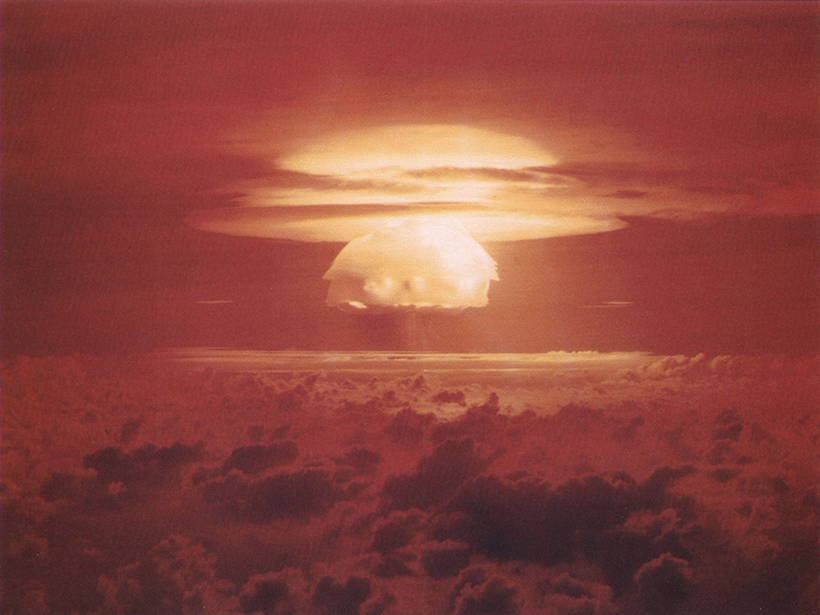
United Nations to study impact of nuclear war for first time since 1989 amid ‘elevated risk’
ABC By Lachlan Bennett, 7 Nov 24
In short:
The United Nations will set up an expert panel to investigate how nuclear war would impact all facets of society.
It’s the first study of its kind since 1989 and has been prompted by concerns about geopolitical tensions.
What’s next?
The panel will deliver its final report in 2027 and make recommendations for future research.
You don’t need to watch too many apocalyptic blockbusters to realise that nuclear war would be devastating.
But when it comes to understanding the impact of a modern nuclear exchange, our data is nearly as old as The Terminator.
The last comprehensive United Nations study into nuclear war was published in 1989, back before the Soviet Union collapsed and before the first internet browser was released.
In the decades since, new nuclear powers have emerged and weapons technology has advanced.
The lack of holistic research into the consequences of nuclear conflict has the scientific community worried.
An atomic fact-finding mission
In light of these concerns, the UN First Committee last week voted to establish a panel of 21 international experts to assess how nuclear war would impact all facets of life, from public health and population to economics and agriculture.
The panel will harness the expertise of UN agencies, such as the International Atomic Energy Agency, while also soliciting data from governments and organisations like the Red Cross.
It will explore the role of new technology, such as artificial intelligence, and new risks, such as cyber-attacks.
And after consulting with “the widest range of scientists and experts”, a final report will be delivered in 2027.
Australia was one of 144 voters to support the move, while 30 abstained and three nuclear-armed nations opposed: the UK, France and Russia.
New Zealand and Ireland introduced the resolution.
“At a time of elevated risk of nuclear conflict, there is a clear need to publicly establish an accurate and up-to-date understanding of the impacts of a nuclear war,” they said.
Is nuclear war more likely today?
Nuclear war may seem a fading relic of the Cold War era, with global stockpiles declining from around 70,000 weapons in the 1980s to just over 12,000 today.
But many disarmament treaties are no longer in force, and new nuclear powers are expanding their arsenals.
Historic rivals India and Pakistan had only just established their nuclear programs when the last UN report was released.
They now have more 300 weapons between them.
……………………………………………………..Nuclear powers ‘don’t want the world to know’ the real risks
Nuclear disarmament advocates have welcomed Australia’s support for the UN study, especially given the opposition of its ally, the UK.
The UK Foreign Office told The Guardian the world did not need an independent scientific panel to know that “nuclear war would have devastating consequences”.
But Dr Hanson said the nuclear powers “don’t want the world to know just how devastating a nuclear war will be”.
“Or indeed the fact that we’ve had numerous close calls,” she said.
One of the most famous close calls occurred in 1983, when a Soviet early-warning system falsely reported missiles flying towards Russia from the US.
Despite Soviet protocol, the officer on duty did not report the false alarm to his superiors, preventing a potential retaliation.
According to the memoirs of former US Secretary of State Mike Pompeo, there was a more recent close call in 2019 when India launched strikes against militants in Pakistan following an attack in Kashmir.
Dr Hanson said the world had been “extremely lucky” to avoid a nuclear conflict.
“Our luck is not going to hold out forever,” she said.
Why do we need another study?
Various governments and institutions have studied aspects of nuclear weapons in recent decades.
But a lot of research has focused on areas of “military relevance”, according to International Campaign to Abolish Nuclear Weapons founding member Tilman Ruff.
“We really understand very little about the psychological, climatic, economic, social, political and infrastructure implications of nuclear weapons in the modern era,” he said.
Dr Ruff said the UN panel would provide authoritative and transparent research, without the “bias or needs of any particular country”.
“It gives it much more credibility and currency. Nations can’t say, ‘Oh, this doesn’t apply to us’,” he said…………………………………more https://www.abc.net.au/news/2024-11-07/un-votes-for-nuclear-weapons-scientific-panel/104564126
Israeli Scholar Lays Out ‘True Brutality’ of Ethnic Cleansing Now Underway in Gaza
“Such dehumanization cannot help but trigger our associations with scenes depicting the Nazis loading Jews into cattle cars.”
Jake Johnson, Nov 01, 2024, https://www.commondreams.org/news/israeli-scholar-northern-gaza
Much alarm has been raised over the so-called “Generals’ Plan,” an ethnic cleansing proposal for northern Gaza that has reportedly garnered attention in the highest reaches of the Israeli government.
But Israeli scholar Idan Landau argued in a column published in English by +972 Magazine on Friday that what the Israeli military is actually doing in northern Gaza “is even more appalling” than the plan outlined by a group of retired generals. Landau argued that focus on the details of the Generals’ Plan has served to obscure the “true brutality” of Israel’s deadly operations in northern Gaza, which has been rendered a hellscape of death and destruction by the military assault and siege.
Landau, a professor of linguistics at Tel Aviv University, opened his column—first published in Hebrew on his blog—by pointing to two photos: one showing a celebratory event at a camp built by an Israeli settler organization just outside of the Gaza Strip, and the other showing displaced Palestinians lined up at gunpoint amid the ruins of northern Gaza.
“These photos tell a story that is unfolding so rapidly that its harrowing details are already on the brink of being forgotten,” wrote Landau. “Yet this story could start from any point during the past 76 years: the Nakba of 1948, the ‘Siyag Plan‘ that followed it, the Naksa of 1967. On one side, displaced Palestinians with all the belongings they can carry, hungry, wounded, and exhausted; on the other, joyful Jewish settlers, sanctifying the new land that the army has cleared for them.”
The Israeli military’s dehumanization of the people of Gaza, Landau wrote, “cannot help but trigger our associations with scenes depicting the Nazis loading Jews into cattle cars.”
Landau wrote that what the Israeli army has been implementing in northern Gaza in recent weeks is “not quite” the Generals’ Plan, which entails giving Palestinians still in the region a week to leave before declaring the area a closed military zone—and designating everyone who remains a militant who can be denied humanitarian assistance and killed.
The actual strategy Israeli soldiers have been deploying in northern Gaza is “an even more sinister and brutal version” of the Generals’ Plan “within a more concentrated area.”
“The first, most immediate distinction is the abandoning of provisions for reducing harm to civilians, i.e. giving residents of northern Gaza a week to evacuate southward,” Landau wrote. “The second departure concerns the real purpose of emptying the area: while portraying the military operation as a security necessity, it was, in fact, an embodiment of the spirit of ethnic cleansing and resettlement from day one.”
“As opposed to the picture painted by the army, implying that residents in the northern areas were free to move south and get out of the danger zone, local testimonies presented a frightening reality: Anyone who so much as stepped out of their home risked being shot by Israeli snipers or drones, including young children and those holding white flags,” Landau noted. “Rescue crews trying to help the wounded also came under attack, as well as journalists trying to document the events.”
The scholar cites one “particularly harrowing video” in which a Palestinian child is seen “on the ground pleading for help after being wounded by an airstrike; when a crowd gathers to help him, they are suddenly hit by another airstrike, killing one and wounding more than 20 others.”
“This is the reality amid which the people of northern Gaza were supposed to walk, starved and exhausted, into the ‘humanitarian zone,” Landau wrote. “Since the Israeli army began its operation in northern Gaza, it has killed over 1,000 Palestinians. The Israeli Air Force usually bombs at night while the victims are sleeping, slaughtering entire families in their homes and making it more difficult to evacuate the wounded. And on October 24, rescue services announced that the intensity of the bombardment left them with no choice but to cease all operations in the besieged areas.”
The deadly military assault, Landau stressed, has been accompanied by a “starvation policy” that has severely hindered the flow of humanitarian assistance to northern Gaza.
The heads of prominent United Nations agencies and human rights organizations warned Friday that conditions on the ground in the region are “apocalyptic” and that “the entire Palestinian population in North Gaza is at imminent risk of dying from disease, famine, and violence.”
Landau noted that on October 16, following pressure from the Biden administration, the Israeli government reportedly allowed 100 aid trucks to enter northern Gaza.
“But journalists in the north were quick to correct the record: Nothing at all had entered the besieged areas,” Landau wrote. “On October 20, Israel denied a further request by U.N. agencies to bring in food, fuel, blood, [and] medicines. Three days later, in response to a request for an interim order by the Israeli human rights group Gisha, the state admitted to the High Court that no humanitarian aid had been allowed into northern Gaza up to that point. By this time, we are already talking about a three-week-long food siege.”
Addressing the question of “what is left for us to do” in the face of such a catastrophe, Landau wrote that “the consensus concerning the war of extermination poisons Israeli society and blackens its future so profoundly that even small pockets of resistance can proliferate stamina and hope to those who have not yet been carried away by the currents of madness.”
“We can also look for partners in this fight abroad, where the critical lever of pressure is the pipeline of American weapons,” he added. “The struggle to end this intensifying war of extermination and transfer in Gaza, particularly in the north, is first and foremost a human fight. It is a fight for life, both in Gaza and Israel: for the very chance that life can continue to exist in this blood-soaked land. Nothing could be more patriotic.”
+972 Magazine published Landau’s column a day after Francesca Albanese, the U.N. special rapporteur on the occupied Palestinian territories, warned in a statement that “time is running out” to stop the far-right Israeli government’s attempt to “erase the Palestinians from their own land and allow Israel to fully annex Palestinian territory.”
“Genocide and a man-made humanitarian catastrophe are unfolding in front of us and in Gaza,” said Albanese. “I regret to see so many member states are avoiding acknowledging the suffering of the Palestinian people and instead look away.”
Israel’s attacks on Iran were an apocalyptic error by Netanyahu. Here’s why

Martin Jay, Strategic Culture Foundation, Thu, 31 Oct 2024,
https://www.sott.net/article/495896-Israels-attacks-on-Iran-were-an-apocalyptic-error-by-Netanyahu-Heres-why
We see that Israel has no longer term military strategy, only short term excursions which will drain both its resources and the morale of its frontline soldiers.
While the whole world now waits with bated breath as to the result of the U.S. elections in only a matter of days, many are also waiting to see what are the implications for Israel’s recent strike on Iran. Despite being told by Joe Biden that it could not strike military installations it went against the advice of its chief sponsor and did precisely that. Perhaps there has never been a better example of western diplomacy failing than this incident, given that while Israel lies to its own people and the western world via news outlets more than happy to spin a yarn about the reality of the attacks, Iran now has to look at a number of options in how it will respond. But respond it surely will.
Yet this singular act is probably the most reckless to date from Netanyahu. Never before has the Israeli PM gone so far out on a limb and taken such a gambit which not only pushes the U.S. to the brink of a war with Iran but also throws a spotlight on the existential question of Israel itself. The next strike on Israel’s military infrastructure might be the final blow for Israel to function as a military entity forcing the U.S., or the next president, to intervene with Trump’s critics already pointing out that he owes a number of favours to the Zionists which they will certainly call in.
Netanyahu is desperate to keep wars on all fronts alive simply so he can remain relevant. But what is hardly talked about is the state of Israel itself, with an economy in pieces. Just how far will the next U.S. president go in supporting Israel’s new war with Iran, both in terms of military spending and breathing new life into the economy which has seen 40,000 businesses go under since October 7th 2023 and almost a million Israelis leave the country.
Netanyahu now is like a poker player who has used up all his IOUs at the table and is holding two pairs. How can he even believe he can take on Iran when even in Gaza and in Lebanon he is losing soldiers at a rate which should worry him and his generals. Yes, he has struck Hezbollah and reduced its capabilities but by no stretch of the imagination has he taken out the Iranian proxy which is still sending missiles and drones into Israel making the Israelis run to their air raid shelters even to this day.
The decision to strike Iran was surely out of an act of a gross political dilemma. However, the act itself has backfired on a level that neither he nor his entourage could imagine. Most of the targets were not even significantly damaged with a very low percentage of Israel’s missiles getting through Iran’s air defence which is so efficient that even Israel’s air force were too afraid actually fly into Iran’s airspace. Many in the west will be taken in by the spin from Israel’s lobby and impressive PR machine that it was a great victory and many sites were taken out, regardless of the fact that the IDF can’t provide one single shred of video evidence to back up such ludicrous claims, as it did previously in Gaza and Lebanon.
But the real defeat for Israel under Netanyahu is yet to come. Iran now has all the hard evidence it needs to strategize and hit Israel even harder than before. The erroneous strike on Iran by Netanyahu is not so much measured by the minor harm it did to a couple of weapons sites. It is by how now the myth of Israel’s military strength has been debunked once and for all. For decades Israel claimed superiority to everyone else, including Iran, and this was taken for granted by partisan western journalists who kept the dream alive. Remarkably, the strike on Israel by Iran on October 1st showed even Israelis that their air defence systems were hopelessly inadequate against Iran’s hypersonic missiles. That should have been enough to cool down the hot heads which straddle Netanyahu. At this point, the message he delivered at the UN, that there is “no place in Iran which Israel’s missiles cannot reach” should have been taken at face value and interpreted literally. Reaching Iranians sites is one thing. Actually taking them out is another.
Now, as the dust settles and Israel now waits for Iran’s response, the second myth that Israel’s strike capability was highly effective against Iran’s air defences is also blown. It seems like now Netanyahu’s folded as he has no more bluffs to play at the poker table. Unless of course he is deliberately coaxing his own country into a suicide strategy where Iran will completely desecrate Israel’s military leaving the U.S. little choice but to install itself on a grand scale. This so-called suicide strategy can’t be ruled out but seems hard to believe. The truth is that until Israel struck Iran, it didn’t know whether its own missiles and aircraft had the capability to penetrate Iran’s air defence system, supported heavily by Russia which sent it S-400 systems in August.
For the moment the Israeli press, as an act of desperate patriotism one can only assume, has indulged itself in a flurry of fake news stories about Iran’s air defence systems being destroyed as well as missile factories. But the jubilation will not last long. Oddly, the same media are becoming more pragmatic about Israel’s operations in Lebanon which has gone on for well over a month and in just two days managed to send over 80 body bags back to Israel, spurning a narrative which already is beginning to question the decision to cross the Lebanese border. The Jerusalem Post, in an oped, actually is admitting that the campaign is losing its credibility due to the number of lost lives of IDF soldiers. “The number of soldiers being killed in southern Lebanon also appears to be rising instead of falling over time” it opines. “The strikes against Hezbollah, such as the killing of Radwan commanders in September and the elimination of Hezbollah leader Hassan Nasrallah, should have weakened the group’s command and control”.
The article is a remarkable admission of Israel’s strategy being misconceived and poorly planned, just like the 2006 invasion. But getting IDF soldiers out of southern Lebanon will be much harder than sending them there as Netanyahu has pushed his arm into a hornet’s nest. Israel cannot consider a war of attrition against Hezbollah as even Netanyahu knows he cannot win. His only means to scoring points are assassinations and bombing civilians in southern Beirut, a strategy which many would call terrorism. His team of military goons have not learnt the lesson that aerial bombardment is not a deal breaker in a war against a disciplined guerrilla outfit. It failed in Iraq. It even failed in Vietnam. Again, we see that Israel has no longer term military strategy, only short term excursions which will drain both its resources and the morale of its frontline soldiers.
Iran says it can produce nuclear weapon if faced with existential threat
Nov 2, 2024, https://www.iranintl.com/en/202411011480
ran is capable of producing nuclear weapons and an existential threat could cause a rethink of the Supreme Leader’s injunction against them, one of his top foreign policy advisors told Lebanese news outlet Al Mayadeen.
“If the Islamic Republic of Iran faces an existential threat, we would have no choice but to adjust our military doctrine,” Former foreign minister Kamal Kharrazi said in an interview with the pro-Tehran channel.
“We already have the technical capabilities to produce weapons; only a religious decree forbidding nuclear weapons prevents us from doing so,” he added, referring to a religious decree by the country’s ultimate decision maker Ali Khamenei.
Kharrazi heads the Strategic Council on Foreign Relations and has hinted before that Iran could ditch its stated opposition to acquiring nuclear weapons but was offering his first public remarks since Israeli air strikes on Iran on Oct. 26.
Members of the body he leads are by handpicked by Khamenei and its reports and advisories have often presaged major policy shifts by the ruling system.
Iran has maintained that it will not pursue nuclear arms because the 2010 fatwa banned all weapons of mass destruction including nuclear bombs. The decree could potentially be interpreted by Iranian decision-makers as an advisory opinion lacking legal status, however.
Israel launched air strikes on military targets in Iran over the weekend in response to a missile barrage Tehran fired on the Jewish state on Oct. 1.
The attack hit missile facilities and air defense capabilities, killing four Iranian soldiers and a civilian.
Kharrazi told Al Mayadaeen that Iran would seek to expand the reach of weapons. “There’s a possibility that Iran may increase its missile range,” he said.
Upping Iran’s official rhetoric, all three top leaders of Iran’s Islamic Revolutionary Guard Corps on Thursday said a damaging counterstrike to Israel by Tehran was assured.
Israel Killed Over 50 Children in Jabalia in 48 Hours: UN

Four children were wounded by an Israeli strike on a vaccination center in northern Gaza
by Dave DeCamp November 3, 2024, https://news.antiwar.com/2024/11/03/israel-kills-over-50-children-in-jabalia-within-48-hours-un/
Israeli strikes in Jabalia, northern Gaza, killed over 50 children in just 48 hours, the UN’s child relief agency, UNICEF, said in a statement on Saturday.
“This has already been a deadly weekend of attacks in North Gaza. In the past 48 hours alone, over 50 children have reportedly been killed in Jabalia, where strikes leveled two residential buildings sheltering hundreds of people,” said UNICEF Executive Director Catherine Russell.
Jabalia has been the focus of an Israeli ethnic cleansing campaign in northern Gaza that began in early October. The campaign has involved a starvation blockade and massive strikes on civilians, and Israeli troops are preventing the approximately 50,000 Palestinians who have been forced out of Jabalia from returning.
Russell said Israeli strikes included an attack on UNICEF staff working on a polio vaccination campaign for children and an attack on a vaccination center. The World Health Organization said at least six people, including four children, were wounded in the Israeli strike on the vaccination center.
“The attacks on Jabalia, the vaccination clinic, and the UNICEF staff member are yet further examples of the grave consequences of the indiscriminate strikes on civilians in the Gaza strip,” Russell said. “Taken alongside the horrific level of child deaths in North Gaza from other attacks, these most recent events combine to write yet another dark chapter in one of the darkest periods of this terrible war.”
Israeli strikes continued to pound northern, central, and southern Gaza on Sunday. Medical sources told Al Jazeera that at least 35 Palestinians were killed, including 16 in the north. An Israeli attack on a residential building in the southern city of Khan Younis killed seven members of the same family, including four children.
Gaza’s Health Ministry said in its death toll update on Sunday that at least 27 Palestinians were killed and 86 were injured in the previous 24-hour period. The latest violence brought the ministry’s death toll since October 2023 to 43,341 and the number of wounded to 102,105.
The Health Ministry’s numbers are considered an undercount since they don’t account for Palestinians missing and presumed dead under the rubble or indirect deaths caused by the Israeli siege. A group of American healthcare workers who volunteered in Gaza have estimated the US-backed Israeli bombing campaign and siege has killed at least 118,908 Palestinians, including over 60,000 who have starved to death.
The genocidal slaughter would not be possible without US military aid, as Israeli officials have acknowledged they couldn’t sustain operations in Gaza for more than a few months without US support. The Israeli news site Calcalist has estimated the US has funded about 70% of Israel’s military operations over the past year.
US Bombers Arrive in Middle East as Part of New Deployment for Israel

The US has reportedly warned Iran not to respond to Israel’s attack
by Dave DeCamp November 3, 2024, https://news.antiwar.com/2024/11/03/us-bombers-arrive-in-middle-east-as-part-of-new-deployment-to-protect-israel/
US B-52 bombers arrived in the Middle East on Saturday as part of a new deployment to “defend” Israel amid speculation over whether or not Iran will respond to Israel’s October 26 attack.
“B-52 Stratofortress strategic bombers from Minot Air Force Base’s 5th Bomb Wing arrived in the US Central Command area of responsibility,” US Central Command wrote on X.
The Pentagon announced it was beefing up its military presence in the region on Friday, saying Secretary of Defense Lloyd Austin ordered the “deployment of additional ballistic missile defense destroyers, fighter squadron and tanker aircraft, and several US Air Force B-52 long-range strike bombers to the region.”
The Pentagon said the purpose of the deployment is the “protection of US citizens and forces in the Middle East, the defense of Israel, and de-escalation.” The US also recently deployed a THAAD missile defense system and about 100 troops to Israel.
Iranian officials have been vowing there will be a response to Israel’s attack, which killed four Iranian soldiers and one civilian. Israel launched the airstrikes on Iran in retaliation for the October 1 Iranian missile barrage that was fired into Israel in response to a string of Israeli escalations and assassinations in the region.
Axios has reported that Israeli intelligence suggests Iran is planning to launch a major attack from Iraqi territory and that it could happen before the US presidential election on November 5. However, a report published by The Wall Journal on Sunday said that Iran didn’t want to influence the US election and would likely wait until after.
The Journal report, which cited unnamed Arab and Iranian officials, said Iran has told Arab diplomats it’s planning a complex response against Israel that would involve more powerful warheads and other weapons not used in its previous attacks on Israeli territory. One source said Iran would likely target military facilities again “but much more aggressively than last time.”
Another Axios report said the US warned Iran that if it attacked, the US wouldn’t be able to restrain Israel. “We told the Iranians: We won’t be able to hold Israel back, and we won’t be able to make sure that the next attack will be calibrated and targeted as the previous one,” a US official told Axios.
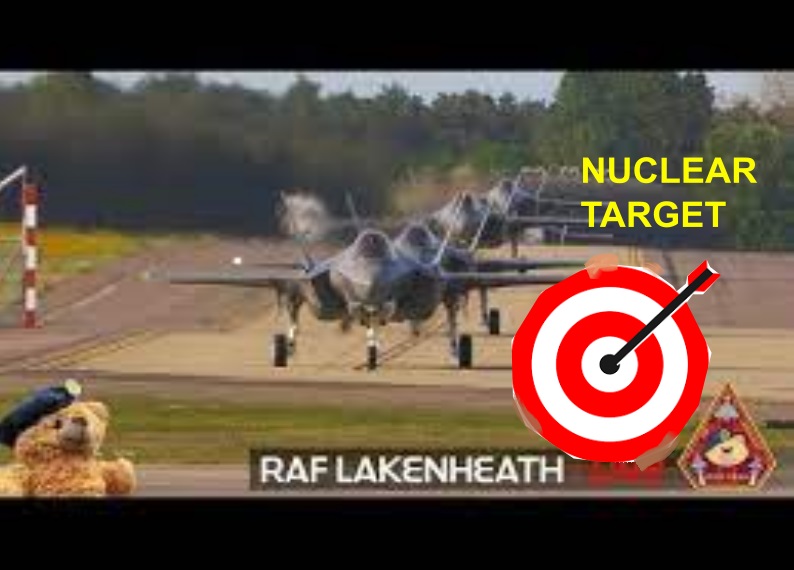
US nuclear weapons could be sited in RAF Lakenheath in spring, CND protest hears
“We are standing on the edge of the nuclear abyss. And our governments have the responsibility to keep us safe; and what are they doing? They are pushing us over the edge.”
US nuclear weapons could be sited at RAF Lakenheath as early as spring, the Campaign for Nuclear Disarmament (CND) has warned.
The CND’s new general secretary Sophie Bolt told dozens of protesters outside the Suffolk airbase on Saturday: “We are very very concerned about the threat of a nuclear escalation between nuclear-armed Nato and nuclear-armed Russia.
“What’s happening here at this base is absolutely central to this growing nuclear threat in eastern Europe.
“It’s also the horrific genocidal war we are seeing in the Middle East because again it’s F35-A jets here and fighter pilots based here that are involved in that war.
“This base completely ties the UK to the complicity of genocide that is being carried out against Palestinian people.”
Green Party peer Jenny Jones said it is “obviously incredibly dangerous” to site nuclear bombs in Britain due to its size and international importance.
She added: “If Russia decide to get really heavy not just with Ukraine but other countries, then we could be a target even if they just think we have nuclear weapons here.
“Secondly, it’s really undemocratic. We need a public debate about the common sense or the lack of it in siting nuclear weapons in Britain.
“We should have a debate in Parliament about this and it should be a free vote as well so we can see exactly what all MPs say about this issue.”
Former Australian minister Melissa Parke, executive director of the International Campaign to Abolish Nuclear Weapons, noted last month’s serious fire at BAE Systems nuclear submarine shipyard in Cumbria; Sellafield nuclear processing plant’s fines for cyber security failings; and maintenance issues on Britain’s nuclear fleet.
She said: “So fires, cyber security failings, maintenance problems on nuclear subs, I mean what could possibly go wrong?
“We are standing on the edge of the nuclear abyss. And our governments have the responsibility to keep us safe; and what are they doing? They are pushing us over the edge.”
Nuke Watch’s Peter Burt described detailed analysis of official documents by scientists, plane spotters and campaigners.
He said: “It’s very clear that we need to keep a close eye on what’s happening here.
“What there is no substitute for is eyes on the ground … in the same way we had in the 1980s we had the Cruise Watch Network, who kept tabs on what’s happening at Greenham Common.”
New Paper: Nuclear Weapons and Our Climate

Today, we are launching a new briefing paper: ‘Nuclear Weapons and Our Climate’ written by ICAN co-founder, A/Prof Tilman Ruff AO.
In the lead up to the climate COP29, this timely paper sharply lays out how the “two paramount human-made existential threats we confront—nuclear weapons and climate change—exacerbate each other and need to be addressed together—with utmost urgency,” writes A/Prof Ruff. “One harms us and our biosphere every day, the other could deplete it irrevocably and end human civilisation and many species in less than a day.”
The paper’s key findings are:
- Smoke from burning cities ignited by a nuclear war involving 2% of the global arsenal would suddenly plummet temperatures worldwide to ice age levels, decimate agriculture, disrupt ocean food chains and starve to death over two billion people.
- Militaries are large and mostly unconstrained greenhouse gas emitters. Growing conflicts and nuclear threats undermine international cooperation needed to address the climate crisis. Rising military spending and nuclear arsenals have huge opportunity costs and make conflicts more dangerous. An increased risk of war leading to nuclear escalation is the greatest danger of the climate crisis.
- Nuclear power inseparably creates the capacity to build nuclear weapons. In most nuclear-armed states, the infrastructure, personnel, expertise, industrial capacity and government investments in nuclear power are also key to their nuclear weapons programs.
- Nuclear reactors, spent fuel storage ponds and reprocessing plants are effectively pre-positioned large radiological weapons, vulnerable to direct attack or disruption of power and water for essential cooling. Russia’s invasion of Ukraine has seen, for the first time, multiple nuclear power plants attacked and weaponised in war, risking a radiological disaster.
| The paper is a call to action, as “everyone everywhere, everything we treasure and our living planet is threatened by nuclear weapons, this is everyone’s business.” Please share the report with your friends and networks and discuss how you can help prevent climate disruption and nuclear war in your work and daily lives. |
F-35 components sent to Israel from Royal Air Force base
Parts for Israel’s most advanced fighter jet have been secretly shipped from a British military base during the assault on Gaza.
Declassified UK JOHN McEVOY, 31 October 2024
- The shipments have continued under Keir Starmer’s Labour government
Reported in partnership with Irish news site The Ditch
F-35 fighter jet parts have been secretly transported to Israel from a British air force base in Norfolk, it can be revealed.
At least seven arms shipments have been sent from RAF Marham to Israel’s F-35 airbase at Nevatim since the Gaza bombing began.
Two of the deliveries took place this summer shortly after Keir Starmer became UK prime minister.
The information is contained within cargo documents reviewed by The Ditch and Declassified.
The documents show that the UK government has not only been approving F-35 export licences to Israel, but actively facilitating their transportation through British military sites.
F-35 supplies have become particularly controversial after it emerged that Israel used one of the planes to bomb a designated safe zone in Gaza, Al-Mawasi, killing 90 people.
Campaign Against Arms Trade’s Sam Perlo-Freeman told Declassified: “The F-35 plays a major part in Israel’s ongoing genocide in Gaza and brutal bombardment and invasion of Lebanon”.
He added that “the UK is not only licensing the supply of spare parts, but actively using UK military assets to facilitate their delivery. This makes UK ministers and potentially even military personnel complicit in war crimes”.
The International Criminal Court is currently considering arrest warrants for Israel’s prime minister Benjamin Netanyahu and defence minister Yoav Gallant. Human Rights Watch has warned that countries supplying Israel with arms could be complicit.
F-35 shipments
The seven shipments of F-35 parts from RAF Marham took place on 11 November 2023, 13 January, 21 January, 7 February, 28 April, 28 July, and 6 August 2024.
In six of those cases, the registered sender was the Lockheed Martin UK Integrated Systems office which is based in Havant, a town near Portsmouth.
Lockheed Martin is a major US arms corporation and the lead player in the international consortium that produces the F-35 fighter jets.
The Havant site is Lockheed Martin’s main headquarters in Britain, employing over 500 staff and working on the F-35 programme.
The components were transferred from RAF Marham to Heathrow Airport, and then transported to Tel Aviv on cargo flights operated by Israeli airline El Al……………………………………………………………………………………………………………………………………………
Munitions for Israel
Labour suspended some arms export licences to Israel last month but will continue to allow shipments of F-35 components to Israel through “global hubs”.
The UK Ministry of Defence did not dispute that F-35 parts had been supplied directly to Israel from RAF Marham on the dates found by The Ditch and Declassified………………………………………………………………..more https://www.declassifieduk.org/f-35-components-sent-to-israel-from-royal-air-force-base/?utm_source=drip&utm_medium=email&utm_campaign=ICYMI+-+Weekly+Roundup
South has raised risk of nuclear war, North Korea says
Canberra Times, By Josh Smith, 3 Nov 24
A white paper released by North Korean state media has accused South Korean President Yoon Suk-yeol of exposing his country to the danger of nuclear war through his policies toward the North.
The document, compiled by North Korea’s Institute of Enemy State Studies and released on Sunday by state news agency KCNA, criticised Yoon’s “reckless remarks” about war, abandoning elements of an inter-Korean agreement, engaging in nuclear war planning with the United States, and seeking closer ties with Japan and NATO.November 3 2024
“Its ever-worsening military moves resulted only in the paradoxical consequences of pushing (North Korea) to stockpile its nuclear weapons at an exponential rate and further develop its nuclear attack capability,” the paper said……………………………………………
The two Koreas have also clashed over balloons of trash floated since May from North Korea.
Pyongyang has said the launches are a response to balloons sent by anti-regime activists in the South…………………………..
Meanwhile, the US on Sunday deployed B-1B bombers for joint aerial drills with South Korea and Japan, in response to North Korea’s recent launch of an intercontinental ballistic missile, according to South Korea’s Joint Chiefs of Staff.
The military exercise showed the three countries’ strong commitment to responding to the North’s nuclear and missile threats through co-operation, the Joint Chiefs of Staff said in a statement.
This is the second time this year that the three countries conducted joint air drills and the fourth time in 2024 that the US deployed its strategic bombers on the Korean peninsula, the Joint Chiefs of Staff said. https://www.canberratimes.com.au/story/8809775/south-has-raised-risk-of-nuclear-war-north-korea-says/
Why ‘British’ nuclear weapons are really very American
But the idea that this weapon system is “independent” involves just as much magical thinking and is more myth than fact. Unfortunately, such myths are not harmless but deadly dangerous for every one of us and for the future of our planet.
Lakenheath is RAF in name only as it is primarily populated by US personnel and equipment. US sources have revealed that permission has been given once again for Lakenheath to host US nuclear bombs without prior consultation with the population.
By Lynn Jamieson, Scottish CND, The National 3rd Nov 2024
THE approach of a US election is a good time to consider the reality of the so-called British nuclear weapon system – its integration with and dependence on the United States of America.
Since the first test and use of nuclear bombs in 1945, the heads of the UK Government have brushed aside efforts at international agreement to ban nuclear weapons.
After the Second World War, British prime ministers wanted Britain to have nuclear bombs to keep up with America. Now the British nuclear program can only exist because of “sharing” with America.
The UK Government ignores new efforts at banning nuclear weapons. This is despite knowing that any nuclear war will end comfortable liveable life across most of this planet and that the majority of non-nuclear countries in the world disagree with their viewpoint and support the UN Treaty on the Prohibition of Nuclear Weapons.
Deviating from this blinkered commitment to nuclear weapons would rupture the “special relationship” with the USA.
The so-called British nuclear weapon system includes four nuclear-powered submarines each ready to simultaneously launch at least 40 nuclear bombs in clusters, fanning out from eight independently targeted missiles. That is eight regions to be totally obliterated by five bombs each.
This is the system described by this government and governments before it as “Britain’s independent nuclear deterrent”. This name combines the idea that the UK Government alone controls the nuclear weapon system – hence “independent” – and that it will stop any aggressor ever attacking – hence “deterrent”. Both the independent and the deterrent ideas are deeply flawed.
Many things are written about the failures and problems of deterrence, including the possible catastrophic mistakes in games of bluff and counter-bluff, the tendency towards constant escalation in nuclear arms, the target it puts on our back, the absurd costs, and the very real risks created by nurturing mass death machines in your own back yard.
But the idea that this weapon system is “independent” involves just as much magical thinking and is more myth than fact. Unfortunately, such myths are not harmless but deadly dangerous for every one of us and for the future of our planet.
The United States is involved at every level of the so-called British nuclear weapon system, from design and procurement to operation and targeting.
The flow of knowledge, technology, materials and military personnel between the US and the UK is made possible by a number of treaties, most importantly the Mutual Defence Agreement treaty. It was first signed in 1958 and has been extended and expanded multiple times since.
Nuclear bombs assembled in Britain are based on a US design and have components shipped from the USA. The USA also builds, supplies, and maintains the missiles used to “deliver” the bombs to their targets……………………………………………..
Neither the US base nor the subsequent development of the Faslane Royal Navy into a nuclear-armed, nuclear-powered submarine base involved consultation or agreement with Scottish people, a situation that many have resisted ever since………………………………………………………………………………………………
Lakenheath is RAF in name only as it is primarily populated by US personnel and equipment. US sources have revealed that permission has been given once again for Lakenheath to host US nuclear bombs without prior consultation with the population…………………………………………………….. https://www.thenational.scot/politics/24696487.british-nuclear-weapons-really-american/
1 This Month



26 September – International Day for the Total Elimination of Nuclear Weapons


PLEASE OPPOSE HR 8255 AND S.3639 – bills would accelerate satellite deployment, with no environmental review or safeguards – https://ncstd5li.quorum.us/campaign/169331/
To see nuclear-related stories in greater depth and intensity – go to https://nuclearinformation.wordpress.com
-
Archives
- September 2026 (269)
- August 2026 (330)
- July 2026 (355)
- June 2026 (287)
- May 2026 (306)
- April 2026 (356)
- March 2026 (251)
- February 2026 (267)
- January 2026 (308)
- December 2025 (358)
- November 2025 (359)
- October 2025 (375)
-
Categories
- 1
- 1 NUCLEAR ISSUES
- business and costs
- climate change
- culture and arts
- ENERGY
- environment
- health
- history
- indigenous issues
- Legal
- marketing of nuclear
- media
- opposition to nuclear
- PERSONAL STORIES
- politics
- politics international
- Religion and ethics
- safety
- secrets,lies and civil liberties
- spinbuster
- technology
- Uranium
- wastes
- weapons and war
- Women
- 2 WORLD
- ACTION
- AFRICA
- Atrocities
- AUSTRALIA
- Christina's notes
- Christina's themes
- culture and arts
- Events
- Fuk 2022
- Fuk 2023
- Fukushima 2017
- Fukushima 2018
- fukushima 2019
- Fukushima 2020
- Fukushima 2021
- general
- global warming
- Humour (God we need it)
- Nuclear
- RARE EARTHS
- Reference
- resources – print
- Resources -audiovicual
- Weekly Newsletter
- World
- World Nuclear
- YouTube
-
RSS
Entries RSS
Comments RSS

