Trump Rejects Intel on Iran’s Nuclear Program, Raising War Fears

19 June 2025 Michael Taylor, https://theaimn.net/trump-rejects-intel-on-irans-nuclear-program-raising-war-fears/
In a move that’s barely registering in Australian media, President Trump has publicly dismissed U.S. intelligence assessments concluding Iran is not actively building a nuclear weapon, prompting concerns he may be leaning toward military conflict. The story carries significant global implications, including for Australia as a U.S. ally in the Indo-Pacific.
While returning from the G7 summit in Canada, Trump told reporters aboard Air Force One, “I don’t care what [U.S. intelligence] said. I think [Iran] were very close to having one.” This directly contradicted Director of National Intelligence Tulsi Gabbard’s March 2025 congressional testimony, where she stated Iran’s supreme leader had not restarted the nuclear weapons program suspended in 2003. Gabbard noted Iran’s enriched uranium stockpile was at historic highs but maintained it was not pursuing a bomb. U.S. intelligence, including a November 2024 report under President Biden, similarly found no evidence of an active Iranian nuclear weapons program, though it highlighted activities such uranium enrichment that could position Iran to build one if it chose.
Trump’s remarks align him closely with Netanyahu, who has long warned of an “imminent” Iranian nuclear threat and recently advocated for pre-emptive strikes. Israel launched airstrikes on Iranian facilities last week, citing an International Atomic Energy Agency report that Iran breached non-proliferation obligations and had enough near-weapons-grade uranium for multiple bombs, despite U.S. intelligence sources countering that Iran is “not actively pursuing a nuclear weapon” and is up to three years away from producing one.
Trump’s dismissal of his own intelligence community has fueled speculation about his intentions. His frustration with stalled diplomatic efforts to curb Iran’s nuclear ambitions was evident when he said, “I’m not too much in the mood to negotiate with Iran.” The U.S. has deployed additional military assets to the region, including a carrier group and fighter jets, to provide Trump with “more options” for intervention.
The White House has reiterated Trump’s long-standing stance: “Iran cannot have a nuclear weapon.” A June 17 statement listed over a dozen instances since February 2025 where Trump emphasised this, framing it as a non-negotiable red line. Yet, his recent rhetoric, including a social media post demanding “UNCONDITIONAL SURRENDER” from Iran, suggests a hardening position.
Trump may be under pressure from pro-Israel hawks in his circle, who downplay the risk of Iranian retaliation and frame strikes as a limited operation against nuclear sites. Others, such as former CIA analyst Ray McGovern, argue Trump’s threats are “mainly bluster” to project strength, predicting he’ll back off to avoid derailing U.S.-Russia détente or triggering a global economic crisis. Still, the absence of Gabbard from key national security discussions signals a possible sidelining of voices advocating restraint.
Australia’s strategic alignment with the U.S. through AUKUS and its role in Middle East operations (e.g., past deployments in Iraq) mean a U.S.-Iran conflict could draw Canberra into logistical or political support, yet public discourse hasn’t engaged. The Australian government has not commented publicly on Trump’s stance (that I am aware of), and local coverage of Iran remains limited to brief mentions of Israel’s strikes.
A U.S. military strike on Iran could destabilise the Middle East, spike global oil prices, and strain Australia’s economy, which relies heavily on energy markets. It risks escalating into a broader conflict, potentially involving China or Russia, both of which have ties to Iran. Australia’s alliance obligations could also pressure it to back U.S. actions, complicating its Indo-Pacific balancing act. Either Trump is flexing his military muscle to deter Iran without war, or he’s being nudged toward a catastrophic conflict by Israel’s agenda.
The bottom line: The disconnect between Trump’s rhetoric and U.S. intelligence underscores a volatile decision-making process, with implications Australia can’t afford to ignore.
US Reportedly Assesses Only a Nuclear Bomb Could Destroy Iran Nuclear Facility
One expert has warned that attacks on nuclear facilities “should never take place” because of the radioactive fallout.
By Sharon Zhang ,
The Pentagon has reportedly assessed that the only weapon that could
destroy a nuclear facility in Iran deemed by war hawks to be a key part of
Iran’s nuclear program is a nuclear bomb — an intensely ironic finding
in a war fought over the pretense of stopping nuclear proliferation.
According to U.S. sources cited by The Guardian, defense officials have
been told that only a “tactical nuclear weapon” could penetrate deep
enough underground to destroy Fordow, a nuclear facility reportedly built
inside a mountain in northwestern Iran.
Truthout 20th June 2025, https://truthout.org/articles/us-reportedly-assesses-only-a-nuclear-bomb-could-destroy-iran-nuclear-facility/
Israeli missile defense at risk of collapse in coming days: WashPo
- ByAl Mayadeen English
- Source: The Washington Post
- 18 Jun 2025 https://english.almayadeen.net/news/politics/israeli-missile-defense-at-risk-of-collapse-in-coming-days
A Washington Post report reveals that “Israel’s” missile defense could fail within days under sustained Iranian attacks, as costs skyrocket and interceptor supplies dwindle.
A long war of attrition between “Israel” and Iran may not be sustainable for Tel Aviv, according to a new report by The Washington Post, which highlights mounting costs and dwindling interceptor supplies as critical vulnerabilities in “Israel’s” air defense network.
The report, published Monday, cites assessments from US and Israeli intelligence officials indicating that without urgent resupply or direct US military intervention, “Israel” may only be able to sustain its current level of missile defense for another 10 to 12 days.
“They will need to select what they want to intercept,” one source briefed on the matter said. “The system is already overwhelmed.”
The Post’s analysis aligns with recent warnings by military-focused open-source intelligence (OSINT) account @METT_Project, which projected that Iran’s sustained ballistic missile salvos could begin heavily breaching “Israel’s” multi-layered missile shield around Day 18 of the war. That projection, based on interceptor usage rates and known inventories, suggested that daily missile penetrations would increase significantly as the Israeli grid begins to ration munitions and prioritize critical zones.
Read more: Analysis finds Israeli missile defenses may crumble by day 18 of war
High cost of BMD necessitates quick end to war
The economic strain of defending against Iran’s heavy missile barrages is also becoming untenable. According to The Marker, an Israeli financial outlet, the cost of operating missile defense systems has soared to approximately one billion shekels per night, about $285 million. “Israel’s” reliance on high-end systems like the Arrow-2 and Arrow-3, whose interceptors cost roughly $3 million apiece, has raised alarms over the sustainability of its current escalation.
High cost of BMD necessitates quick end to war
The economic strain of defending against Iran’s heavy missile barrages is also becoming untenable. According to The Marker, an Israeli financial outlet, the cost of operating missile defense systems has soared to approximately one billion shekels per night, about $285 million. “Israel’s” reliance on high-end systems like the Arrow-2 and Arrow-3, whose interceptors cost roughly $3 million apiece, has raised alarms over the sustainability of its current escalation.“It’s like shooting a 9-millimeter pistol at a freight train,” said Israeli strategic analyst Efraim Inbar, describing the mismatch between cheaper, widely deployed Iron Dome interceptors and the supersonic ballistic missiles used by Iran. While Iron Dome is optimized for short-range rocket threats, such as those from Gaza, it is virtually ineffective against long-range Iranian missiles that travel through the upper atmosphere.
The Washington Post report adds that US officials are closely monitoring the pace of Iran’s strikes and the strain on Israeli systems. As Iranian salvos continue, Israeli commanders are increasingly forced to make difficult decisions about which targets to protect, a scenario that could soon expose strategic infrastructure and population centers to successful hits.
Read more: Iran’s heavy barrages impact multiple Israeli targets overnight
Cross your fingers, Australia, and hope the AUKUS deal collapses

he Americans agreed to the deal because they saw it to be in their strategic interest, not ours. As then-U.S. Deputy Secretary of State Kurt Campbell observed (indiscreetly) last year, “we have them locked in now for the next 40 years.”
All that AUKUS and its associated alliance commitments have done for Australia is paint more targets on our back.
The crazy irony is that we are spending huge sums to build a new capability intended to defend us from military threats that are most likely to arise simply because we have that capability
The U.S. sub purchase was a bad deal then and it makes even less sense now.
By Gareth Evans, Project Syndicate, https://www.japantimes.co.jp/commentary/2025/06/18/world/australia-should-hope-for-aukuss-collapse/
MELBOURNE –
The AUKUS partnership, the 2021 deal whereby the United States and the United Kingdom agreed to provide Australia with at least eight nuclear-propelled submarines over the next three decades, has come under review by the U.S. Defense Department.
The prospect of its collapse has generated predictable handwringing among those who welcomed the deepening alliance, and especially among those interested in seeing Australia inject billions of dollars into underfunded, underperforming American and British naval shipyards. But in Australia, an AUKUS breakdown should be a cause for celebration.
After all, there has never been any certainty that the promised subs would arrive on time. The U.S. is supposed to supply three or possibly five Virginia-class submarines from 2032, with another five newly designed SSN-AUKUS-class subs (built mainly in the U.K.) coming into service from the early 2040s. But the U.S. and the U.K.’s industrial capacity is already strained, owing to their own national submarine-building targets and both have explicit opt-out rights.
Some analysts assume that the Defense Department review is just another Trumpian extortion exercise, designed to extract an even bigger financial commitment from Australia. But while comforting to some Australians (though not anyone in the Treasury), this interpretation is misconceived.
There are very real concerns in Washington that even with more Australian dollars devoted to expanding shipyard capacity, the U.S. will not be able to increase production to the extent required to make available three — let alone five — Virginia-class subs by the early 2030s. Moreover, Elbridge Colby, the U.S. under-secretary of defense for policy who is leading the review, has long been a skeptic of the project and he will not hesitate to put America’s own new-boat target first.
Even in the unlikely event that everything falls smoothly into place — from the transfers of Virginia-class subs to the construction of new British boats, with no human-resource bottlenecks or cost overruns — Australia will be waiting decades for the last boat to arrive. But given that our existing geriatric Collins-class fleet is already on life support, this timeline poses a serious challenge. How will we address our capability gap in the meantime?
Cost-benefit analysis should have killed the project from the outset. But in their eagerness to embrace the deal, political leaders on both sides of parliament failed to review properly what was being proposed. Even acknowledging the greatly superior speed and endurance of nuclear-powered subs and accepting the heroic assumption that their underwater undetectability will remain immune from technological challenge throughout their lifetimes, the final fleet size seems hardly fit for the purpose of national defense.
Given the usual operating constraints, Australia would have only two such subs deployed at any one time. Just how much intelligence gathering, archipelagic chokepoint protection, sea-lane safeguarding or even deterrence at a distance will be possible under such conditions? Moreover, the program’s eye-watering cost will make it difficult to acquire the other capabilities that are already reshaping the nature of modern warfare: state-of-the-art drones, missiles, aircraft and cyber defense.
The remaining reason for believing, as former Australian Prime Minister Paul Keating put it, that an American opt-out “will be the moment Washington saves Australia from itself,” concerns AUKUS’s negative implications for Australia’s sovereignty. The Americans agreed to the deal because they saw it to be in their strategic interest, not ours. As then-U.S. Deputy Secretary of State Kurt Campbell observed (indiscreetly) last year, “we have them locked in now for the next 40 years.”
It defies credibility to believe that the U.S. would transfer such a sensitive technology to us — with all the associated emphasis on the “interchangeability” of our fleets and new basing arrangements in Australia — unless it could avail itself of these subs in a future war. I have had personal ministerial experience of being a junior U.S. ally in a hot conflict situation — the first Gulf War in 1991 — and my recollections are not pretty.
Alongside the Pine Gap satellite communications and signals intelligence facility — which has always been a bull’s-eye — one can add Perth’s Stirling submarine base, the Northern Territory, with its U.S. Marine and B-52 bases and possibly a future east-coast submarine base.
The crazy irony is that we are spending huge sums to build a new capability intended to defend us from military threats that are most likely to arise simply because we have that capability — and using it to support the U.S., without any guarantee of support in return should we ever need it.
If the AUKUS project does collapse, it would arguably still be possible for Australia to acquire replacements for its aging submarine fleet within a reasonable time frame — and probably at less cost, while retaining real sovereign control — by purchasing off-the-shelf technology elsewhere. One can even imagine us going back to France, which was snubbed in the AUKUS deal, and making a bid for its new-generation Suffren-class nuclear-powered sub.
But a better defense option may simply be to recognize that the latest revolution in military technology is real and that our huge continent and maritime surroundings will be better protected by a combination of self-managed air, missile, underwater and cyber capabilities than by a handful of crewed submarines. There is no better time to start thinking outside the U.S. alliance box.
Gareth Evans was Australia’s foreign minister (1988-1996), president of the International Crisis Group (2000-2009) and chancellor of the Australian National University (2010-2019). © Project Syndicate, 2025
Israel’s Bombing Won’t Stop Iran from Going Nuclear
NPEC – Non Proliferation Policy Education Center, June 17, 2025
Spotlighting Greg Jones‘ latest research on the difficulty of targeting Iran’s nuclear program. Mr. Jones is one of the nation’s top nuclear analysts and has had close ties to NPEC for more than three decades.
Most of the analyses of Israel’s air campaign against Iran’s nuclear program have focused on two questions: Can Israel destroy Iran’s enrichment plants on its own? Or does Israel need Washington’s help to knock them out?
The question too infrequently asked, however, is can any bombing campaign, with or without U.S. assistance, keep Iran from getting a bomb? Greg’s short answer is no.
As he points out, bombing Iran’s enrichment plants may temporarily put them out of commission, but the centrifuges and cascades can be repaired. Tehran, he argues, can remove undamaged centrifuges, build new cascades, and be back in business in four to six months.
Fordow, for now, remains untouched. Conservatively, Fordow could produce a bomb’s worth of nuclear fuel every 2.5 weeks. Again, the centrifuges there can be removed to other locations.
Then, there’s the matter of the 440 kgs. of 60 percent enriched uranium that Iran already has – conservatively, enough to build 12 bombs. This material, Greg points out, is stored in hardy metal cylinders that are extremely difficult to destroy via bombing attacks and can be moved by truck to remote locations. Meanwhile, the International Atomic Energy Agency has determined that Iran has all but developed the nonnuclear components necessary to build a nuclear weapon.
This is why Greg concludes that any quick military fix to prevent Iran from going nuclear is impractical and that the threat of an Iranian nuclear weapon will remain until and unless Iran agrees to relinquish its entire stockpile of enriched uranium and eliminates its centrifuge enrichment program.
You can read Greg’s full, footnoted analysis here.
…………………………………………………………………………………………………… https://npolicy.org/israels-bombing-wont-stop-iran-from-going-nuclear/
Report: Trump Privately Approved Plans To Attack Iran But Has Withheld Final Order
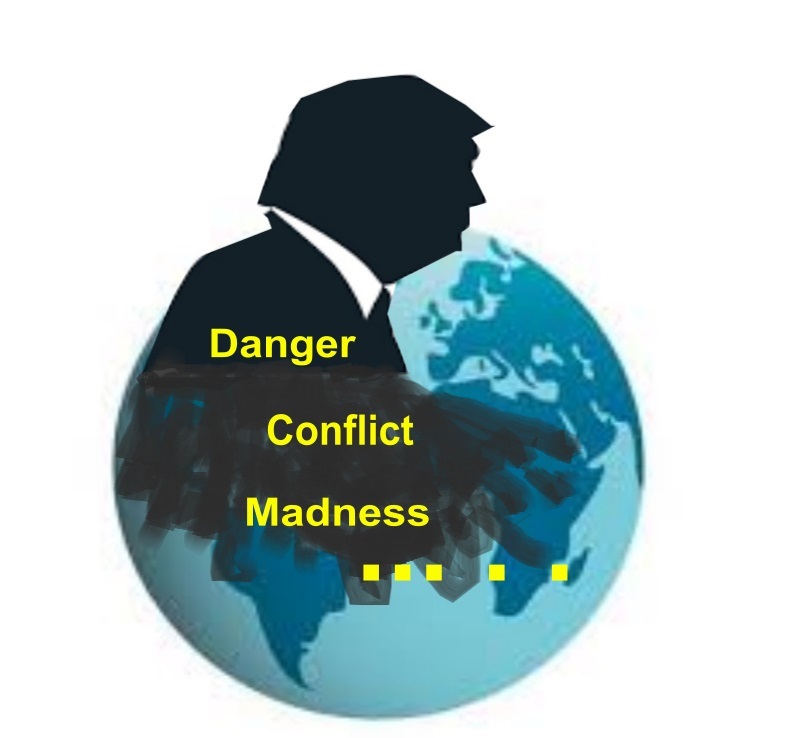
Iran has made clear it will hit US bases in the region if the US attacks
by Dave DeCamp | Jun 18, 2025, https://news.antiwar.com/2025/06/18/report-trump-privately-approved-plans-to-attack-iran-but-has-withheld-final-order/
The Wall Street Journal reported on Wednesday that President Trump has told his top officials that he approved plans to attack Iran but is holding off on giving the final order for now.
Sources told the Journal that Trump was waiting to see if Iran would agree to give up its nuclear program, which is almost certainly not going to happen. Iranian Supreme Leader Ayatollah Ali Khamenei has rejected the US president’s calls for surrender, and Tehran’s position is that it won’t negotiate while under Israeli attack.
Iran also has no reason to trust the US at the moment since Trump backed Israel’s attack amid negotiations between Washington and Tehran. Trump has refused to say if he will launch airstrikes on Iran, telling reporters on Wednesday, “I have ideas on what to do, but I haven’t made a final—I like to make the final decision one second before it’s due.”
The Journal report didn’t specify what attack plans Trump approved, but it would likely involve US airstrikes on the Fordow nuclear plant, which is buried deep underground, making it impossible to do significant damage without US bunker buster bombs and the US heavy bombers needed to drop them.
Iran has made clear it would hit back if the US launches airstrikes, and many US bases in the region are in range of Iranian missiles. Trump could be planning to launch limited airstrikes to damage Fordow, but American casualties could lead the US into deeper involvement in the war.
Israeli officials are expecting the US to intervene with direct attacks on Iran soon. “The whole operation is premised on the fact that the US will join at some point,” an Israeli official told CNN on Tuesday.
Israeli Prime Minister Benjamin Netanyahu launched the war based on the pretext of preventing Iran from obtaining nuclear weapons, but US intelligence had assessed that Tehran wasn’t seeking a nuclear bomb.
‘We now have complete and total control of the skies over Iran’: Trump
June 17, 2025, https://www.middleeastmonitor.com/20250617-we-now-have-complete-and-total-control-of-the-skies-over-iran-trump/
US President Donald Trump claimed to have “complete and total control” of Iranian airspace Tuesday after five days of Israel’s bombing that targeted military and nuclear sites, Anadolu reports.
“We now have complete and total control of the skies over Iran,” Trump said in a social media post. “Iran had good sky trackers and other defensive equipment, and plenty of it, but it doesn’t compare to American made, conceived, and manufactured ‘stuff.’ Nobody does it better than the good ol’ USA.”
The comments come one day after Defense Secretary Pete Hegseth confirmed that the US deployed additional military assets to the Middle East, a move he and other senior Trump administration officials have maintained is “defensive” in nature amid speculation that American forces could join Israel’s military campaign.
A defense official told Anadolu on Monday that Hegseth directed the Nimitz Carrier Strike Group to the CENTCOM area of responsibility to sustain “our defensive posture and safeguard American personnel.”
Regional tensions have escalated since Friday when Israel launched airstrikes on multiple sites across Iran, including military and nuclear facilities, prompting Tehran to launch retaliatory strikes.
Israeli authorities said at least 24 people have been killed and hundreds injured since then in Iranian missile attacks. Iran said at least 224 people have been killed and more than 1,000 wounded in the Israeli assault.
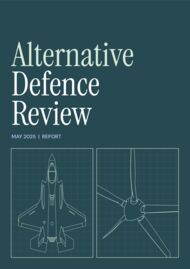
Alternative Defence Review
CND 23rd May 2025, https://cnduk.org/ADR/
The UK’s 2025 Strategic Defence Review comes at a moment of intensifying global conflict, escalating climate crisis and soaring UK inequality. Yet, rather than rethinking the country’s militarised foreign policy in response to these pressures, the Government proposes to dramatically increase defence spending, a move that risks worsening each of these crises.
This Alternative Defence Review challenges the dominant war narrative—cultivated by political elites, the military-industrial complex, and the mainstream media—and offers a new vision for peace, justice, and security.
It was proposed by CND in response to the RMT union’s decision to ‘… campaign with other trade unions and peace organisations to convene a labour and peace movement summit to work out the basis of a new foreign policy with the promotion of peace and social justice at its heart’. The Alternative Defence Review is intended to be a contribution towards this.
It examines how militarisation has distorted national priorities, fuelled global instability, undermined international law, harmed the environment, and diverted investment from public services and social infrastructure. It shows that increased military expenditure will be economically inefficient, environmentally destructive, and socially regressive, offering limited job creation while stifling a more sustainable and just economy. The review calls for a shift toward a significantly demilitarised defence strategy rooted in human security and common security—prioritising diplomacy, global cooperation, conflict prevention, and investment in health, education, climate resilience, social care, and the creation of well-paid, secure, unionised and socially useful jobs. It advocates for a significant reduction in military spending, an immediate halt to arms exports to countries involved in active conflict or human rights abuses (including Israel and Gulf states), and a Just Transition for defence-dependent workers and communities. This report offers a credible, democratic alternative to militarism: a sustainable economy grounded in social justice, global solidarity, and the urgent need to build peace—not war—for the 21st century.
You can download the report here.
You can order a copy of the report here.
NewsReal: Israel Attacks Iran, Seeks Regime Change. Will Trump Take US Into War?
Sott.net, 16 Jun 2025
Israel’s brazen attack against Iran on June 13th could result in the culmination of the NeoCons’ plan for the ‘New American Century’: the toppling of the last regime resisting them in the Middle East. The US and Israel would thus fully control the world’s primary ‘energy spigot’ and cement their joint role as global hegemon(s) for decades to come.
Israel intends for this ‘short war’ to last a couple of weeks, after which Iran will be ruled by a new government with a new ideology, having submitted to US-raeli domination.
Wishful thinking?
Well, it depends on what capabilities Iran has to withstand Israel’s onslaught, whether its population is psychologically committed to resisting, and whether the US will have to directly intervene to fully realize Netanyahu’s dream of deposing the Ayatollah and defeating Iran’s military.
If the latter comes about, Trump will have shot MAGA – and his devoted followers, who are extremely hostile about the US engaging in another major Middle East war – through the heart. He isn’t so psychopathic and stupid, is he? https://www.sott.net/article/500130-NewsReal-Israel-Attacks-Iran-Seeks-Regime-Change-Will-Trump-Take-US-Into-War
WHAT I HAVE BEEN TOLD IS COMING IN IRAN
The initial battle plan for a new war
Seymour Hersh, Jun 20, 2025, Seymour Hersh Substack
This is a report on what is most likely to happen in Iran, as early as this weekend, according to Israeli insiders and American officials I’ve relied upon for decades. It will entail heavy American bombing. I have vetted this report with a longtime US official in Washington, who told me that all will be “under control” if Iran’s Supreme Leader Ali Khamenei “departs.” Just how that might happen, short of his assassination, is not known. There has been a great deal of talk about American firepower and targets inside Iran, but little practical thinking, as far I can tell, about how to remove a revered religious leader with an enormous following.
I have reported from afar on the nuclear and foreign policy of Israel for decades. My 1991 book The Samson Option told the story of the making of the Israeli nuclear bomb and America’s willingness to keep the project secret. The most important unanswered question about the current situation will be the response of the world, including that of Vladimir Putin, the Russian president who has been an ally of Iran’s leaders.
The United States remains Israel’s most important ally, although many here and around the world abhor Israel’s continuing murderous war in Gaza. The Trump administration is in full support of Israel’s current plan to rid Iran of any trace of a nuclear weapons program while hoping the ayatollah-led government in Tehran will be overthrown………………………………. ………….(Subscribers only) https://seymourhersh.substack.com/p/what-i-have-been-told-is-coming-in?utm_source=post-email-title&publication_id=1377040&post_id=166335210&utm_campaign=email-post-title&isFreemail=true&r=ln98x&triedRedirect=true&utm_medium=email
Jeffrey D. Sachs: Stop Netanyahu Before He Gets Us All Killed
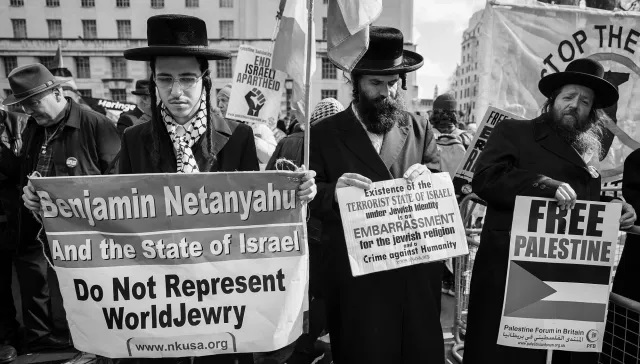
We could soon see several nuclear powers pitted against each other and dragging the world closer to nuclear annihilation.
Jeffrey D. Sachs, Sybil Fares, Jun 16, 2025, Common Dreams, https://www.commondreams.org/opinion/netanyahu-war-on-iran
For nearly 30 years, Israel’s Prime Minister Benjamin Netanyahu has driven the Middle East into war and destruction. The man is a powder keg of violence. Throughout all the wars that he has championed, Netanyahu has always dreamed of the big one: to defeat and overthrow the Iranian Government. His long-sought war, just launched, might just get us all killed in a nuclear Armageddon, unless Netanyahu is stopped.
Netanyahu’s fixation on war goes back to his extremist mentors, Ze’ev Jabotinsky, Yitzhak Shamir, and Menachem Begin. The older generation believed that Zionists should use whatever violence–wars, assassinations, terror–is needed to achieve their aims of eliminating any Palestinian claim to a homeland.
The founders of Netanyahu’s political movement, the Likud, called for exclusive Zionist control over all of what had been British Mandatory Palestine. At the start of the British Mandate in the early 1920s, the Muslim and Christian Arabs constituted roughly 87% of the population and owned ten times more land than the Jewish population. As of 1948, the Arabs still outnumbered the Jews roughly two to one. Nonetheless, the founding charter of Likud (1977) declared that “between the Sea and the Jordan there will only be Israeli sovereignty.” The now infamous chant, “from the River to the Sea,” which is characterized as anti-Semitic, turns out to be the anti-Palestinian rallying call of the Likud.
Israel’s war on Iran is the final move in a decades-old strategy. We are witnessing the culmination of decades of extremist Zionist manipulation of US foreign policy.
The challenge for Likud was how to pursue its maximalist aims despite their blatant illegality under international law and morality, both of which call for a two-state solution.
In 1996, Netanyahu and his American advisors devised a “Clean Break” strategy. They advocated that Israel would not withdraw from the Palestinian lands captured in the 1967 war in exchange for regional peace. Instead, Israel would reshape the Middle East to its liking. Crucially, the strategy envisioned the US as the main force to achieve these aims—waging wars in the region to dismantle governments opposed to Israel’s dominance over Palestine. The US was called upon to fight wars on Israel’s behalf.
The Clean Break strategy was effectively carried out by the US and Israel after 9/11. As NATO Supreme Commander General Wesley Clark revealed, soon after 9/11, the US planned to “attack and destroy the governments in seven countries in five years—starting with Iraq, then Syria, Lebanon, Libya, Somalia, Sudan, and Iran.”
The first of the wars, in early 2003, was to topple the Iraqi government. Plans for further wars were delayed as the US became mired in Iraq. Still, the US supported Sudan’s split in 2005, Israel’s invasion of Lebanon in 2006, and Ethiopia’s incursion into Somalia that same year. In 2011, the Obama administration launched CIA operation Timber Sycamore against Syria and, with the UK and France, overthrew Libya’s government through a 2011 bombing campaign. Today, these countries lie in ruins, and many are now embroiled in civil wars.
Netanyahu was a cheerleader of these wars of choice–either in public or behind the scenes–together with his neocon allies in the U.S. Government including Paul Wolfowitz, Douglas Feith, Victoria Nuland, Hillary Clinton, Joe Biden, Richard Perle, Elliott Abrams, and others.
Testifying in the U.S. Congress in 2002, Netanyahu pitched for the disastrous war in Iraq, declaring “If you take out Saddam, Saddam’s regime, I guarantee you that it will have enormous positive reverberations on the region.” He continued, “And I think that people sitting right next door in Iran, young people, and many others, will say the time of such regimes, of such despots is gone.” He also falsely told Congress, “There is no question whatsoever that Saddam is seeking, is working, is advancing towards to the development of nuclear weapons.”
The slogan to remake a “New Middle East” provides the slogan for these wars. Initially stated in 1996 through “Clean Break,” it was popularized by Secretary Condoleezza Rice in 2006. As Israel was brutally bombarding Lebanon, Rice stated:
“What we’re seeing here, in a sense, is the growing — the birth pangs of a new Middle East and whatever we do we have to be certain that we’re pushing forward to the new Middle East not going back to the old one.”
In September 2023, Netanyahu presented at UN General Assembly a map of the “New Middle East” completely erasing a Palestinian state. In September 2024, he elaborated on this plan by showing two maps: one part of the Middle East a “blessing,” and the other–including Lebanon, Syria, Iraq, and Iran–a curse, as he advocated regime change in the latter countries.
The premise of Israel’s attack on Iran is the claim that Iran is on the verge of acquiring nuclear weapons. Such a claim is fatuous since Iran has repeatedly called for negotiations precisely to remove the nuclear option in return for an end to the decades of US sanctions.
Since 1992, Netanyahu and his supporters have claimed that Iran will become a nuclear power “in a few years.” In 1995, Israeli officials and their US backers declared a 5-year timeline. In 2003, Israel’s Director of Military Intelligence said that Iran will be a nuclear power “by the summer of 2004.” In 2005, the head of Mossad said that Iran could build the bomb in less than 3 years. In 2012, Netanyahu claimed at the United Nations that “it’s only a few months, possibly a few weeks before they get enough enriched uranium for the first bomb.” And on and on.
This 30-year-plus pattern of shifting deadlines has marked a deliberate strategy, not a failure in prophecy. The claims are propaganda; there is always an “existential threat.” More importantly, there is Netanyahu’s phony claim that negotiations with Iran are useless.
Iran has repeatedly said that it does not want a nuclear weapon and that it has long been prepared to negotiate. In October 2003, Supreme Leader Ayatollah Ali Khamenei issued a fatwa forbidding the production and use of nuclear arms—a ruling later officially cited by Iran at an IAEA meeting in Vienna in August 2005 and referenced since as a religious and legal barrier to pursuing nuclear weapons.
Even for those skeptical of Iran’s intentions, Iran has consistently advocated for a negotiated agreement supported by independent international verification. In contrast, the Zionist lobby has opposed any such settlements, urging the US to maintain sanctions and reject deals that would allow strict IAEA monitoring in exchange for lifting sanctions.
In 2016, the Obama Administration, together with the UK, France, Germany, China, and Russia, reached the Joint Comprehensive Plan of Action (JCPOA) with Iran—a landmark agreement to strictly monitor Iran’s nuclear program in exchange for sanctions relief. Yet, under relentless pressure from Netanyahu and the Zionist lobby, President Trump withdrew from the deal in 2018. Predictably, when Iran responded by expanding its uranium enrichment, it was blamed for violating an agreement that the US itself had abandoned. The double-standard and propaganda is hard to miss.
On April 11, 2021, Israel’s Mossad attacked Iran’s nuclear facilities in Natanz. Following the attack, on April 16, Iran announced that it would increase its uranium enrichment further, as bargaining leverage, while repeatedly appealing for renewed negotiations on a deal like the JCPOA. The Biden Administration rejected all such negotiations.
At the start of his second term, Trump agreed to open a new negotiation with Iran. Iran pledged to renounce nuclear arms and to be subject to IAEA inspections but reserved the right to enrich uranium for civilian purposes. The Trump Administration appeared to agree to this point but then reversed itself. Since then, there have been five rounds of negotiations, with both sides reporting progress on each occasion.
The sixth round was ostensibly to take place on Sunday, June 15. Instead, Israel launched a preemptive war on Iran on June 12. Trump confirmed that the US knew of the attack in advance, even as the administration was speaking publicly of the upcoming negotiations.
Israel’s attack was made not only in the midst of negotiations that were making progress, but days before a scheduled UN Conference on Palestine that would have advanced the cause of the two-state solution. That conference has now been postponed.
Israel’s attack on Iran now threatens to escalate to a full-fledged war that draws in the US and Europe on the side of Israel and Russia and perhaps Pakistan on the side of Iran. We could soon see several nuclear powers pitted against each other and dragging the world closer to nuclear annihilation. The Doomsday Clock is at 89 seconds to midnight, the closest to nuclear Armageddon since the clock was launched in 1947.
Over the past 30 years, Netanyahu and his US backers have destroyed or destabilized a 4,000-km swath of countries stretching across North Africa, the Horn of Africa, the Eastern Mediterranean, and Western Asia. Their aim has been to block a Palestinian State by overthrowing governments supporting the Palestinian cause. The world deserves better than this extremism. More than 170 countries in the UN have called for the two-state solution and regional stability. That makes more sense than Israel bringing the world to the brink of nuclear Armageddon in pursuit of its illegal and extremist aims.
Hidden History: How Israel Acquired Nukes
We have the capability to take the world down with us. And I can assure you that that will happen before Israel goes under.”
Kit Klarenberg, Jun 14, 2025, https://www.kitklarenberg.com/p/hidden-history-how-israel-acquired
On June 13th, the Zionist entity carried out a wide-ranging, unprovoked, criminal military strike on Iran, purportedly to dent the Islamic Republic’s quest to develop nuclear weapons. Tehran has consistently repudiated any suggestion it harbours such ambitions. A November 2007 US National Intelligence Estimate concurred, expressing “high confidence that in fall 2003,” the country “halted” any and all research in the field. This assessment remained unchanged for several years subsequently, and was reportedly shared by Mossad.
By contrast, Benjamin Netanyahu has for decades declared almost annually Iran is mere years away from becoming a nuclear power, urging military action as a result. The longtime Israeli leader’s anxieties are sickly ironic, given Tel Aviv’s own nuclear weapons program is the worst kept ‘secret’ in international affairs. Over many years, multiple entity officials and prominent figures have effectively – or even directly – admitted this monstrous capacity. Moreover, Israel is avowedly committed to the ‘Samson Option’.

Under its horrifying auspices, if the entity feels sufficiently threatened, it reserves the right to carry out preemptive nuclear strikes not merely on regional adversaries, but its Western sponsors into the bargain. As Dutch-born Israeli military theorist Martin van Creveld boasted in September 2003:
“We possess several hundred atomic warheads and rockets and can launch them at targets in all directions, perhaps even at Rome. Most European capitals are targets…We have the capability to take the world down with us. And I can assure you that that will happen before Israel goes under.”
Despite such flagrant disclosures, the Zionist entity rigidly sticks to a policy of “deliberate ambiguity”, refusing to formally confirm or deny it possesses nuclear weapons. When one of Netanyahu’s ministers openly advocated nuking Gaza in November 2023, they were reprimanded and suspended. Such punishment pales in comparison to the fate of Mordechai Vanunu, a former Israeli nuclear technician who revealed details of Tel Aviv’s nuclear weapons program to the British media in 1986.
Lured to Rome by Mossad, he was then rendered to the Zionist entity and convicted in a secret trial. Vanunu subsequently spent 18 years in prison, the majority of which in solitary confinement. Since release in 2004, he has been subject to a broad array of restrictions on his speech and movement, and repeatedly arrested and jailed for violating the stringent terms of his parole. All along, organisations including Amnesty International have condemned Tel Aviv’s brazen breaches of Vanunu’s basic human rights.
At the time of Vanunu’s heroic whistleblowing, Western governments and intelligence agencies had been aware of – and deeply concerned by – Israel’s development of nuclear weapons for almost three decades. How the Zionist entity acquired nukes is a little-known tale, of theft, deception, shadowy spy games, dangerous connivances, and more. Its full dimensions remain indeterminate today. However, given current events, it is vital what’s known about this sordid hidden history is told.
‘Face Value’
Israel’s nuclear weapons program was, from inception, “a secret within a secret”. In 1957, France inked a covert agreement with the Zionist entity, leading to the creation of the Dimona nuclear power facility. Paris was apparently unaware the complex would soon form the basis of a clandestine underground reprocessing facility, capable of producing weapons-grade plutonium. The US was seemingly ignorant of Dimona’s existence, let alone its utility for producing nukes, until December 1960.
That month, a classified CIA assessment outlined “implications of the acquisition by Israel of a nuclear weapons capability.” The document expressed little doubt that a “major purpose” of Dimona was “plutonium production for weapons,” and detailed multiple grave outcomes of Tel Aviv’s push for nukes. For one, exposure of the program would inevitably cause “consternation” in North Africa and West Asia, potentially prompting “threatened” Arab and Muslim states to turn to the Soviet Union for military assistance.
Furthermore, the CIA predicted Western interests in the region more widely could come under attack, and the Israeli initiative “might remove some of the inhibitions to development of nuclear weapons” elsewhere in the world. On January 19th 1961, the day before his inauguration, John F. Kennedy and his incoming administration visited the White House to meet with outgoing President Dwight D. Eisenhower. Israel’s nuclear program loomed large in discussions between the two statesmen.
On January 31st that year, Kennedy met with Eisenhower’s departing ambassador to Israel Ogden Reid, for a comprehensive briefing. Declassified records refer to the President’s “special interest” in Dimona. While a member of Congress during the 1950s, Kennedy had repeatedly taken a righteously robust stand against not only nuclear proliferation, but testing, believing the latter encouraged the former. He was implacably opposed to Tel Aviv securing nukes, and immediately upon taking office began intensely pressuring then-Israeli premier David Ben-Gurion to allow regular US inspections of Dimona.
Reid told Kennedy he believed Ben-Gurion’s “assurances” Dimona was a mere “research reactor”, intended to “serve the needs of industry, agriculture, health, and science”, could be taken at “face value”. The President strongly disagreed, and informed the Israeli Prime Minister in no uncertain terms regular inspections of Dimona were a core condition for harmonious US-Israeli relations. Tel Aviv finally folded in May 1961, and an American inspection team was dispatched to the site.
Their report concluded Dimona was strictly intended for nuclear power generation purposes, without military application. This false finding was achieved by French and Israeli technicians outright lying to US inspectors, while undertaking extensive efforts to camouflage and conceal areas of the plant dedicated to research and development of nukes. It was not until March 1967 that a State Department Intelligence and Research report uncovered this rank subterfuge, and that Tel Aviv had the ability to produce nuclear weapons at the complex.
‘Atrociously Incompetent’
In the intervening time, multiple US investigations of Dimona reached the same conclusion as the first. Yet, until his death in November 1963, Kennedy remained convinced the Zionist entity was determined to develop nuclear weapons, and may have already done so. Six months before his assassination, he wrote a private telegram to Ben-Gurion, warning of “the disturbing effects on world stability which would accompany the development of a nuclear weapons capability by Israel.” He also stressed the “urgency” of regular Dimona inspections.
Given the President’s visceral hostility to Israel’s nuke ambitions, it is hardly surprising theories have abounded for years Tel Aviv was one way or another involved in his murder. In 2004, Mordechai Vanunu explicitly levelled the charge, stating there were “near-certain indications” Kennedy was assassinated due to “pressure he exerted” on Ben-Gurion to “shed light on Dimona’s nuclear reactor.” No smoking gun evidence supporting this allegation has emerged since, although sensitive documents recently released upon Donald Trump’s order unambiguously point in this direction.
In 1992, investigative journalist Samuel Katz posited veteran CIA counterintelligence chief James Jesus Angleton secretly directed clandestine Agency assistance to Israel’s nuclear weapons program for years. Fast forward to today, and the freshly-declassified JFK records amply expose how Angleton, one of the Agency’s founders, systematically abused his position to assist the Zionist entity throughout his lengthy tenure. Among the newly-declassified files is a June 1953 memo stating Angleton’s primary intelligence source was Israel.
Other declassified documents indicate Angleton was effectively running an agency within an agency in the CIA, with Tel Aviv the ultimate beneficiary. A June 1975 FBI report on “Israeli intelligence collection capabilities” in the US outlines Angleton’s “special relationship” with the entity in some detail, noting he routinely delivered “extremely sensitive information” in person to Israel’s Washington DC embassy. Simultaneously, the Bureau was into the 10th year of its probe into how 93 kilograms of highly-enriched uranium mysteriously vanished from Washington’s Nuclear Materials and Equipment Corporation.
Centre of the CIA-instigated FBI investigation was NUMEC president Zalman Shapiro, a hardcore Zionist with high-level government contacts and significant business interests in Israel. This included a contract to build nuclear-powered generators. Officially, the NUMEC scandal remains unsolved today, despite dedicated inquiries by the Atomic Energy Commission, Bureau, CIA, and other US government agencies lasting many years. A scathing 1978 review by Washington’s Comptroller General concluded investigating authorities deliberately sabotaged their probes into the uranium loss, for the Zionist entity’s benefit:
“The NUMEC incident and its associated 13-year investigation highlight this country’s current inability to effectively deal with possible diversions of nuclear material…The US needs to improve its efforts for effectively responding to and investigating incidents of missing or unaccounted for weapons-grade nuclear materials…We believe a timely, concerted effort on the part of these…agencies would have greatly aided and possibly solved the NUMEC diversion questions, if they desired.”
There was an obvious motivation for the CIA, FBI et al not “desiring” to solve the riddle of where NUMEC’s missing highly-enriched uranium ended up. As Kennedy assassination expert Jefferson Morley has told mainstream news networks, Israel’s man in Langley James Jesus Angleton placed the President’s alleged killer Lee Harvey Oswald under Agency surveillance in November 1959. This amounted to intensively “monitoring his politics, his personal life, his foreign travels, his contacts” until the day the President was killed. Morley explained the significance of this thus:
“Angleton had a 180-page file on Oswald on his desk a week before Kennedy went to Dallas in November 1963…So what this story raises is the question: was the CIA incredibly, atrociously incompetent when it comes to Lee Harvey Oswald, or was Angleton actually running an operation involving Oswald?”
Israel publicly confirms its military involvement in Ukraine
Lucas Leiroz. June 13, 2025, Strategic Culture Foundation,
In the end, the Zionist entity and the Kiev regime are instruments of the same Western hegemony project
While global attention remains focused on the rising tensions between Israel and Iran, a significant development has been largely ignored by Western media in recent days: the revelation of Israel’s involvement in the arming campaign for Ukraine.
Despite publicly maintaining an appearance of military neutrality in the conflict between Moscow and Kiev, the State of Israel has quietly deepened its collaboration with Western military interests in Ukraine. Recent statements from Israeli diplomatic representatives make it clear that Tel Aviv not only politically supports Kiev but also directly participates in the military effort against Russia.
In an interview with Ukrainian media, the Israeli ambassador in Kiev confirmed that air defense systems originally supplied by the United States to Israel were transferred to Ukraine. According to him, the delivery was deliberately kept secret and away from international headlines, demonstrating Israel’s attempt to participate in the conflict without attracting negative consequences.
The omission of logistical details about the delivery reveals a clear attempt to preserve an appearance of neutrality before the public. It remains unclear whether the equipment was sent directly by Israel or through third parties, suggesting an internationally coordinated operation to avoid diplomatic friction with Moscow.
Until recently, Tel Aviv claimed a stance of non-involvement in the Ukraine conflict, citing concerns about potential Russian retaliation—particularly in Syria, where Russian forces maintain a strategic presence. However, this justification is becoming increasingly obsolete in light of Israel’s actual behavior…………………………………..
The recent neutralization of Shiite militias in Syria, which were aligned with Tehran, and the rapprochement between the new Syrian government and Israel have created a more favorable environment for Tel Aviv’s foreign military maneuvers. Feeling less vulnerable to indirect retaliation, Israel now appears more willing to expand its involvement in conflicts beyond the Middle East, such as the one in Ukraine……………………………………………..
Israel’s decision to more openly support the Kiev regime marks a significant shift in its foreign policy, abandoning previous caution in favor of a stance more aligned with the interests of the Collective West. However, this move may bring unforeseen consequences — not only at the regional level but also in the structure of its bilateral relationship with Moscow…………………………. https://strategic-culture.su/news/2025/06/13/israel-publicly-confirms-its-military-involvement-in-ukraine/
US assisted Israeli war on Iran just another US regime change operation
16 June 2025 AIMN Editorial, By Walt Zlotow https://theaimn.net/us-assisted-israeli-war-on-iran-just-another-us-regime-change-operation/
In the 80 years since WWII, the US has engaged in roughly 80 regime change operations, an average of one per year. Some utilized outright war. Some used proxies. Some consisted of crippling economic sanctions designed to hurt the people so severely they would overthrow the targeted ruler.
Some succeeded immediately. Some took years to achieve regime change. Many failed.
The 1960 regime change operation in Cuba initially used sanctions. When that failed the US used Cuban dissident proxies in an invasion ending in catastrophe. Cuba brought in Russian missiles to prevent further regime change shenanigans. That nearly blew up the whole world simply to change out the Cuban communist regime in a tiny land 1/90th America’s size with a population just 3% of the American behemoth. After 65 years US embargo still makes life horrible for Cubans but does nothing to achieve regime change.
Then there is the current US regime change operation targeting Iran. The US has been itching to change out the Islamic theocracy ruling Iran since their 1979 revolution kicked out the US puppet we installed after our 1953 regime change operation deposed the democratically elected Prime Minister Mohammad Mosaddegh.
But the current Iran regime change operation is truly unique. It’s being conducted by our best buddies in the Middle East, Israel, who launched a ferocious attack against Iran wholly supported, indeed cheered on by the US. Israel is ecstatic the US enabled their war since they’re even more committed to Iran regime change than America.
In possibly the most despicable, duplicitous act of diplomatic treachery in US history, the US lulled Iran from being on alert for attack by scheduling a sixth negotiating session on Iran’s nuclear program while knowing the bombs were about to fall. An Israeli official admitted to the Jerusalem Post; “The round of US-Iranian nuclear negotiations scheduled for Sunday was part of a coordinated US-Israeli deception aimed at lowering Iran’s guard ahead of Friday’s attack.”
Besides keeping Iran’s defenses from preparing for attack, the deception was designed to keep military, political and nuclear scientists from moving to safety. Some were killed in their imagined safe homes.
Israel claims their attacks were defensive to keep Iran from building a nuclear bomb. Poppycock. That argument was simply a MacGuffin, a Hitchcock style directorial plot device to keep the narrative moving. And that narrative is regime change of the theocracy ruling Iran and inflicting massive devastation so Iran will no longer be a hegemonic rival to Israel for Middle East supremacy.
The US is delighted that it may finally achieve its first Iran regime change since deposing Moseddgegh 72 years ago. And it will do so without dropping a single bomb or losing a single soldier or civilian. Firing the bombs and burying their dead will fall to its proxy Israel which, in their lust to topple Iran, is only too happy to fill that proxy role.
On December 6-7, 1941, two Japanese diplomats were still negotiating with US officials in DC when Japan attacked Pearl Harbor. The US charged Japan with dastardly deception to enable their attack. But history later attributed the two events as unrelated due to the slow, poor communication methods of 84 years ago. Not so with America’s grotesque use of diplomacy to achieve, as Sen. Lindsay Graham gloated “Game on” for regime change in Iran.
Next time the US wants to negotiate a sensitive issue of war and peace, the opposition will not say; ‘Remember Pearl Harbor.’ They’ll proclaim; ‘Remember Iran.’
How Iran Turned Israel’s Iron Dome Against Itself Using Clever Jamming
Sputnik International, Ekaterina Blinova 16.06.2025
New evidence suggests that Iran successfully compromised Israel’s vaunted air defense systems during recent attacks — forcing Tel Aviv to fire on its own positions. How?
Iran overwhelmed Israeli defenses by breaching the data transmission and correction system early in flight, explains military expert and historian of the Air Defense Forces Yuri Knutov.
Based on the footage that was released, it seems that the Iranians were able to breach the data transmission and correction signal system at the early stage when the missiles were flying, using an inertial guidance system. As a result, the system misdirected the missiles, not toward their intended target, but toward Israel’s own surface-to-air missile batteries, leading to a strike on them.”
The attack included:
100+ Shahed drones (swarming tactics)
Decoy ballistic missiles (old models to waste interceptors)
Fattah hypersonic missiles (unstoppable by Israeli Arrow/PAC-3)
As a result, the Iron Dome’s interception rate dropped drastically to just 10-15%.
“The use of jamming against surface-to-air missiles and missile defense systems is actually a fairly old tactic. During the Vietnam War, the Americans used jamming to mislead missiles by range, angle, and many other active interference methods. Special transmitters were deployed to create the illusion of aircraft presence on the radar screens of Vietnamese missile guidance stations,” Knutov says.
………………………..Masterful deception
Iran’s hypersonic Fattah missiles and Haj Qassems guided ballistics hit critical Israeli targets, including the Defense Ministry HQ and a major airbase housing F-35 and F-16 fighters. Despite Israel’s marketing of its advanced defense systems, the Arrow and Patriot systems failed to stop them.
Iran also deployed decoys so effectively that Israeli strikes repeatedly hit fake targets. The Iron Dome, which covers only 144 sq km and is good for single rockets, but seemingly couldn’t handle mass attacks or the hypersonic gap — Fattah missiles reach Israel in 7 minutes, while the Iron Dome needs 11 minutes to reload.
Iran has learned from past Israeli strikes and improved tactics, establishing backup command centers and more efficient maneuvering to increase its chances of success. https://sputnikglobe.com/20250616/how-iran-turned-israels-iron-dome-against-itself-using-clever-jamming-1122265685.html
1 This Month



19 November – Webinar – The Reality of Reprocessing
Time: 11:00 AM Pacific Time (US & Canada) / 2:00 PM Eastern / 7:00 PM UK / 8:00 PM CET
Register for the Zoom Event Here



Shut down the radiation-damaged Heysham nuclear reactors now
To see nuclear-related stories in greater depth and intensity – go to https://nuclearinformation.wordpress.com

Say No to NASA’s Reckless Nuclear Reactor on the Moon
Say No to NASA’s Reckless Nuclear Reactor on the Moon
-
Archives
- November 2026 (22)
- October 2026 (302)
- September 2026 (339)
- August 2026 (330)
- July 2026 (355)
- June 2026 (287)
- May 2026 (306)
- April 2026 (356)
- March 2026 (251)
- February 2026 (267)
- January 2026 (308)
- December 2025 (358)
-
Categories
- 1
- 1 NUCLEAR ISSUES
- business and costs
- climate change
- culture and arts
- ENERGY
- environment
- health
- history
- indigenous issues
- Legal
- marketing of nuclear
- media
- opposition to nuclear
- PERSONAL STORIES
- politics
- politics international
- Religion and ethics
- safety
- secrets,lies and civil liberties
- spinbuster
- technology
- Uranium
- wastes
- weapons and war
- Women
- 2 WORLD
- ACTION
- AFRICA
- Atrocities
- AUSTRALIA
- Christina's notes
- Christina's themes
- culture and arts
- Events
- Fuk 2022
- Fuk 2023
- Fukushima 2017
- Fukushima 2018
- fukushima 2019
- Fukushima 2020
- Fukushima 2021
- general
- global warming
- Humour (God we need it)
- Nuclear
- RARE EARTHS
- Reference
- resources – print
- Resources -audiovicual
- Weekly Newsletter
- World
- World Nuclear
- YouTube
-
RSS
Entries RSS
Comments RSS

