‘Are we safe, if nuclear weapons are here?’: trepidation in Norfolk village over new jets
Some in Marham are troubled by news that its airbase could host nuclear warplanes, but others are relaxed
Matthew Weaver, Guardian, Sat 28 Jun 2025
The genteel west Norfolk village of Marham does not seem to be at the forefront of Britain’s military might. A dance class is about to start in the village hall, a game of crown green bowls is under way and swallows are swooping around the medieval church tower as wood pigeons coo.
“It’s a lovely, quiet little village,” says Nona Bourne as she watches another end of bowls in a match between Marham and nearby Massingham.
Like many, Bourne is troubled by the news that this week thrust Marham to the frontline of UK’s nuclear arsenal, in the biggest expansion of the programme for a generation.
Without consultation, RAF Marham is to be equipped with new F-35A jets capable of carrying warheads with three times the explosive power of the bomb dropped on Hiroshima.
Bourne said: “When they spread it all over the news that these planes are going to come here from America with these bombs, it makes you think we’re going to be targeted. My bungalow is five minutes from the base.”
The Campaign for Nuclear Disarmament is planning a protest in Marham on Saturday. Bourne, whose son-in-law used to work at the base, is tempted to take part. “I might join in,” she says. “My daughter says we’ve always been a target here, but I am concerned. If I was younger I’d think about moving, but I’m 83, I’m not going anywhere.”
Sisters Becky, 29, and Katherine Blakie, 31, are heading to a friend’s house for a plunge in their hot tub. “I read about the weapons on Facebook,” says Becky. “It’s strange to think they’ll be here in little old Marham.”
Becky, who works in fundraising, is annoyed that the village was not consulted about the decision. She says: “Marham and the RAF base are intertwined so we should definitely have had a say.”
Katherine, a medical student, says: “It makes you think, ‘Are we safe, if people know nuclear weapons are here?’”
At this stage it is unclear where the nuclear warheads will be housed, but new jets to be based at Marham have the capacity to drop them. Wherever they are stored, the fear Marham will be a target is widespread in the village.
“Look what happened at Pearl Harbor,” says Patricia Gordon after finishing her bowls match. “We’d be obliterated here.”
She adds: “And with Donald Trump’s finger on the button, does it matter that we’ve got nuclear weapons or not?”…………………………………………………………https://www.theguardian.com/uk-news/2025/jun/28/are-we-safe-nuclear-weapons-trepidation-norfolk-village-jets-marham
How Trump dumped the Ukraine war into Europe’s lap
it appears clear that any future Ukrainian purchases of American military materiel, if they happen, will in any case be made with European money…………… , Rutte appears single handedly trying to keep the European gravy train chugging forward.
President Zelensky has not given up on his aspiration for Ukraine to join NATO which renders any peace deal, and possibly any durable ceasefire with Russia, impossible.
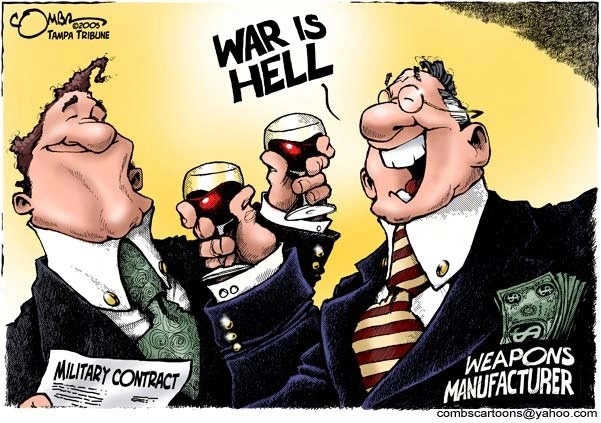
One thing is clear, U.S. defense contractors will arguably benefit the most from The Hague Summit.
Daddy says, ‘spend more on defence, pay for the war yourselves, but buy American kit’
Ian Proud, Jun 28, 2025, https://thepeacemonger.substack.com/p/how-trump-dumped-the-ukraine-war?utm_source=post-email-title&publication_id=3221990&post_id=166996238&utm_campaign=email-post-title&isFreemail=true&r=1ise1&triedRedirect=true&utm_medium=email
The NATO Summit was a coup for Trump. Cajoling the Europeans into upping defence spend to 5%, something most countries, Britain included, can’t afford. I was pleased therefore to see that Lord McDonald, the former Head of the Diplomatic Service, coming out today to suggest that the 5% target might wreck the UK economy.
Either way, it would take most countries time to ramp up their spending and military industrial capacity to even near this level. But it does raise questions about whether, as Mark Rutte suggested in his meeting with Zelensky, that NATO can fund the war in Ukraine for another decade.
That statement was far more concerning that his calling Donald Trump ‘daddy’, given the continued losses Ukraine is facing on the battlefield. And its ongoing quest to force unwilling Ukrainian men into fighting. More videos continue to emerge of recruitment officers fighting off mothers and wives in the street, as they force more recruits into minibuses headed for the front. How many men would Ukraine have left if NATO kept the fight going for another decade?
Really not clear that Rutte has considered that, which is disgraceful.
The aerial war between Israel and Iran over the past two weeks sucked most of the world’s attention away from the war in Ukraine.
The Hague NATO Summit confirms that President Donald Trump now sees paying for the war as Europe’s problem. It’s less clear that he will have the patience to keep pushing for peace.
One of the biggest diplomatic casualties of Israel and Iran’s aerial war was U.S. focus on and media coverage of the war in Ukraine. Despite continued exchanges of dead bodies and prisoners of war, there has been no further progress in peace talks between both sides that commenced in Istanbul in early June.
However, there has been talk of a third round of talks as early as next week. Before then, The Hague NATO Summit offered an opportunity to keep Ukraine on the U.S. radar. It didn’t quite happen that way.
Instead, if the NATO Summit showed any real purpose, it was to lock in European allies’ commitment to spend 5% of GDP on defense, a key priority for President Trump since he assumed office.
Mission accomplished. With the exception of Spain, NATO allies have now made that commitment.
Chipper as ever, NATO Secretary General, Mark Rutte, sent a message to President Trump, so eye-wateringly obsequious that it might even make some pro-war neocons cringe and reach for a sick bag. “Mr President, dear Donald… you have driven us to a really, really important moment for America and Europe, and the world. You will achieve something NO American president in decades could get done.” He was then chided for making remarks like he was calling Trump “daddy” at the summit.
But there was nevertheless no escaping the feeling that Ukraine has fallen some way down Trump’s priority list, and therefore NATO’s.
While the 2024 Washington Summit Communique ran to over 5300 words rich in normative intent and bureaucratic babble, the 2025 Hague Summit Declaration ran to a pithy 425 words focused almost exclusively on the NATO spending goal.
Whereas, the Washington Communique said, “we will continue to support it [Ukraine] on its irreversible path to full Euro-Atlantic integration, including NATO membership,” The Hague Declaration did not, which has already been seized upon as a softening of NATO’s stance by some mainstream commentators.
European ire was further provoked by Secretary of State Marco Rubio’s indication that the U.S. would not support further Russia sanctions at this time.
The declaration simply said, “Allies reaffirm their enduring sovereign commitments to provide support to Ukraine, whose security contributes to ours, and, to this end, will include direct contributions towards Ukraine’s defence and its defence industry when calculating Allies’ defence spending.”
For those not familiar with interpreting the subtleties of communique language, this language said two things. First, including the word “sovereign” means that while some allies may make sovereign choices to fund Ukraine, others may choose not to.
This is a clear indication of what we have observed for some time, that President Trump sees paying for the Ukraine war as Europe’s problem, not America’s. Second, and more obviously, that funding for Ukraine can contribute to Allies’ 5% target although, at least for the UK, this is already the case.
During their meeting, it is understood that Ukrainian President Volodymyr Zelensky asked President Trump about the possibility of purchasing additional Patriot missiles. While Trump was non-committal on this point, it appears clear that any future Ukrainian purchases of American military materiel, if they happen, will in any case be made with European money.
For his part, Rutte appears single handedly trying to keep the European gravy train chugging forward. Speaking ahead of the Summit, he referred to pledges of $35 billion in additional support to Ukraine so far this year without providing specifics.
However, we do know that over half of the earlier April pledge of $24 billion included funds from Germany to be paid over 4 years. In reality, therefore, NATO has only, so far, secured a maximum total of $22 billion for 2025, adding further pressure to Ukraine’s huge war financing needs.
What we haven’t seen in The Hague is any impetus behind efforts to bring the war in Ukraine to a close. Instead, and on the back of a Hague Declaration that rowed back any condemnation of Russia, Sir Keir Starmer continues to insist that allies remain resolved to “push again to get Putin to the table for the unconditional ceasefire.”
Like the proverbial scratched record, the British Prime Minister still believes that with U.S. offering no new money, with Ukraine continuing to lose ground on the battlefield, and with Europe struggling to make up the difference, that Russia will make unconditional concessions from a position of strength.
For his part, President Zelensky has not given up on his aspiration for Ukraine to join NATO which renders any peace deal, and possibly any durable ceasefire with Russia, impossible.
If the Hague Summit proved one thing, it may have been that getting European allies to spend more on defense is a bigger priority to President Trump than bringing peace to Ukraine. More focussed on the conflict in the Middle East, President Trump has once again conceded the difficulty of bringing the war in Ukraine to an end.
“It’s more difficult than people would have any idea,” he said. “Vladimir Putin has been more difficult, and frankly, I had some problems with Zelensky, you might have read about them. It’s been more difficult than other wars.”
One thing is clear, U.S. defense contractors will arguably benefit the most from The Hague Summit. To hit 5% of GDP, Britain would need to increase its spending by around $114 billion per year by 2035 and Germany has already pledged to hit the 5% target six years early, in 2029, hiking spending by $128 billion per year.
To kick off the spending spree, the UK has agreed to purchase twelve of the most modern F35A aircraft at a cost of $700 million. The F-35A is capable of delivering U.S. provided B61 nuclear bombs that were first designed in 1963. Keeping us safer, in this regard, relies on aircraft being able to fly far enough into Russia through its sophisticated air defences, to deliver a gravity nuclear bomb to target.
The most recent upgrade to the B61, during the Obama Administration, involved addition of a tail assembly to provide limited stand-off capability; it was so over-priced that every Sixties-era nuke is now worth more than its weight in gold, perhaps, the perfect allegory for Western defence spending.
With the fanfare of The NATO Summit starting to subside, the big question now is how much patience President Trump will have to push a peace agenda in Ukraine now that European allies have stepped up to spend more and buy American kit? My worry is, not much.
Why Israel caved quickly without achieving any of its war goals

28 June 2025 AIMN Editorial, By Walt Zlotow, West Suburban Peace Coalition, Glen Elly, https://theaimn.net/why-israel-caved-quickly-without-achieving-any-of-its-war-goals/
While Israel inflicted significant death and destruction on Iran in its two-week bombing campaign, it achieved nary a war objective.
Tho likely severely damaged, It didn’t eliminate Iran’s nuclear enrichment program. It didn’t topple the apparently-hated Iranian regime. It didn’t demolish Iran as a powerful hegemonic rival to Israel in the Middle East.
Then why did Israel fold its missile launchers, ground its planes and agree to a ceasefire without a whimper?
Simple. Israel took an unprecedented pounding from Iranian missiles it could not shoot down. Indeed, it was running out of defensive interceptors because it took multiple such missiles to shoot down a single incoming missile. Israel’s modern air defenses still ‘allowed’ 10 to 15% of incoming missiles to strike.
While little info of substantial Israeli damage emerges from heavily censored Israeli media, the impact on was significant.
The war comes with a price. Israeli Finance Minister Smotrich estimates the war has cost $12 billion. The economy has virtually stalled and non-essential schools and businesses have been shuttered. The Weizmann Institute of science, a main Israeli research facility and its largest refinery in Haifa were both badly damaged.
Israel may have more offensive and defensive firepower than Iran, but it quickly realized it had no ability to stop the bleeding which could have become catastrophic if its interceptors become depleted.
The one-off US attack did not achieve any of the three Israeli goals. Only all out US war to obliterate Iran can do the job which Trump appears unwilling to initiate even for his Israeli puppet masters.
We can hope that the quickly agreed upon ceasefire will hold. It could of course collapse, especially if Israel becomes self-destructive from its humiliation of not achieving a single war objective. Israel has a history of breaking ceasefires, most notably their blowing up the March ceasefire in Gaza so they could continue their genocidal ethnic cleansing of Palestinians there.
But breaking the Iran war ceasefire is likely a bridge too far compared to the defenseless Palestinians Israel slaughters daily at their pleasure.
Hopefully, the missiles that rained down on Israel in their failed two-week war may motivate Israel to pivot to peace instead of resuming an unwinnable and pointless war to destroy Iran.
Netanyahu Says It’s Antisemitic For Israeli Soldiers To Describe Their Own Atrocities
Caitlin Johnstone, Jun 28, 2025, https://www.caitlinjohnst.one/p/netanyahu-says-its-antisemitic-for?utm_source=post-email-title&publication_id=82124&post_id=167017991&utm_campaign=email-post-title&isFreemail=true&r=1ise1&triedRedirect=true&utm_medium=email
Sometimes I’ll write a headline that looks odd on its face, but then I’ll lay out facts and arguments which allow the reader to understand the validity of the claim by the end of the essay. This is not one of those times.
This headline is just me saying the thing that happened. Israeli Prime Minister Benjamin Netanyahu and Defense Minister Israel Katz are publicly denouncing a report from an Israeli newspaper quoting Israeli soldiers who describe atrocities they were ordered to commit in the Israeli military, accusing the report of “blood libels”.
The Israeli newspaper Haaretz has published an article titled “‘It’s a Killing Field’: IDF Soldiers Ordered to Shoot Deliberately at Unarmed Gazans Waiting for Humanitarian Aid”, subtitled “IDF officers and soldiers told Haaretz they were ordered to fire at unarmed crowds near food distribution sites in Gaza, even when no threat was present. Hundreds of Palestinians have been killed, prompting the military prosecution to call for a review into possible war crimes.”
One Israeli soldier attests that civilians seeking aid are “treated like a hostile force — no crowd-control measures, no tear gas — just live fire with everything imaginable: heavy machine guns, grenade launchers, mortars.”
“We open fire early in the morning if someone tries to get in line from a few hundred meters away, and sometimes we just charge at them from close range. But there’s no danger to the forces,” the soldier says, adding, “I’m not aware of a single instance of return fire. There’s no enemy, no weapons.”
IDF sources tell Haaretz that Gaza has become “a place with its own set of rules” where they are interacting with civilians with whom “your only means of interaction is opening fire”. Deadly military weapons are used as crowd control to steer the starving populace wherever it’s determined they’re supposed to be, routinely killing desperate aid seekers.
Another soldier describes being instructed to fire artillery shells at a crowd to keep them at a distance, saying, “Every time we fire, there are casualties and deaths, and when someone asks why a shell is necessary, there’s never a good answer. Sometimes, merely asking the question annoys the commanders.”
In quote after quote after quote we read Israeli soldiers describing atrocities they were ordered to commit which they knew were wrong. I guess Israel’s PR machine never counted on some of the soldiers they sent in to perpetrate the Gaza holocaust having an actual conscience.
A joint statement from Netanyahu and Katz denounced the report, accusing Haaretz of publishing “blood libels”.
“The State of Israel absolutely rejects the contemptible blood libels that have been published in the Ha’aretz newspaper, according to which ‘IDF Soldiers Ordered to Shoot Deliberately at Unarmed Gazans Waiting for Humanitarian Aid.’ These are malicious falsehoods designed to defame the IDF, the most moral military in the world,” the statement reads.
“Blood libel” refers to the way medieval Europeans used to falsely accuse Jews of murdering Christian children in blood sacrifices — an early form of atrocity propaganda used to justify the persecution of Jews.
So again, just to be absolutely clear, the leader of the Israeli government is claiming that an Israeli newspaper quoting Israeli soldiers describing their own atrocities is antisemitic. And that mountains of testimony from inside the IDF is “designed to defame the IDF, the most moral military in the world.”
What can I even say about that here? It speaks for itself. I have nothing to add.
The more exposed Israel’s criminality becomes, the more absurd the arguments made in its defense are getting.
“Midnight Hammer” – a Fordow’s Bunker Buster or just Busted [i]
The reality is that the location of Iran’s 60% enriched uranium, along with key components of the program, is known only to a select few within Iran. Moreover, there are underground facilities believed to be even deeper than those at Natanz or Fordow — capable of continuing enrichment activities beyond the reach of current conventional weapons.
In short, the nuclear game is far from over.
The USA bombing the Iranian Nuclear facilities – Aftermath
– EXCELLENT ILLUSTRATIONS on original
Mike Mihajlovic, Jun 28, 2025, Black Mountain Analysis
The United States has conducted a series of airstrikes targeting key Iranian nuclear facilities – specifically, three high-value sites, with at least three B-2 Spirit bombers as well as a salvo of Tomahawk cruise missiles launched from submarines. In total, 14 GBU-57A/B Massive Ordnance Penetrators (MOPs) ( 12 for Fordow and 2 for Natanz) were deployed, along with 30 cruise missiles.
According to President Trump, who often portrays himself as a strongman unafraid to use force, the operation was extremely successful and all goals achieved, meaning the Iranian nuclear program went up in ashes. However, beneath the rhetoric and posturing, serious doubts remain about whether such strikes could meaningfully degrade Iran’s nuclear capabilities, especially when it comes to deeply embedded sites like Fordow. cspsbilities
At best, this could amount to little more than strategic theater, a carefully orchestrated display of power aimed at sending a political message rather than achieving lasting military results. In effect, the U.S. may have executed a strike based on an Israeli wish list: using bombs to project strength while avoiding actions that could trigger broader conflict.
For neoconservatives and proponents of an aggressive foreign policy, such a scenario would be hailed as a success—proof that decisive military action can shape geopolitical outcomes. Yet, Iran, a nation known for its strategic patience and resilience, chose to respond publicly in a controlled manner, targeting the US bases in Qatar. What will happen next is that they quietly assess the damage, reinforce their underground infrastructure, and continue their nuclear work beyond the reach of even the most powerful conventional weapons.
The world may be led to believe that the “threat” has been neutralized, for now. But history suggests that such illusions rarely last. Eventually, the same concerns will resurface, bringing the crisis back into the global spotlight.
“The roaring mountain just gave birth to a mouse.”
In the case of a high-profile strike, such as the one on Fordow, the symbolic value often overshadows the physical outcome. A site as hardened and deeply buried as Fordow—originally constructed within a mountain to withstand conventional attacks. It can’t be easily neutralized even with specialized munitions like the MOP or a direct hit from a hypersonic ballistic missile.
Yet, even then, the effectiveness depends on:
- Intelligence accuracy: Was the target still active?
- Timing: Was the infrastructure recently evacuated or relocated?
- Munition capability: Did the weapon used have sufficient penetration depth and explosive yield?
If the facility was decommissioned, emptied, or redundant, then the operation becomes more about message than material damage, a geopolitical performance aimed at deterring adversaries and reassuring allies.
Optical Effect Over Outcome
Such events often produce more theater than transformation. The media cycle amplifies the action, leaders issue statements of resolve, flags are waved, and bombs and missiles are launched – but the real question remains: What was actually destroyed?
This is where the gap between perception and reality widens. If core infrastructure remains intact or the targeted regime adapts quickly, the long-term strategic balance may not shift significantly. In this light, the operation resembles a symbolic punctuation mark in an ongoing diplomatic struggle rather than a decisive blow.
While political rhetoric and military parades dominate headlines, financial markets often act as the first honest arbiter of whether a crisis has real economic consequences, including:
A spike in oil prices could signal concerns over regional stability.- Currency fluctuations could reflect investor confidence (or lack thereof) in involved nations.
- Defense stocks may rise on expectations of increased military spending.
Markets don’t care about slogans or intercepted missiles shown in shaky phone videos; rather, they react to risk, uncertainty, and real shifts in power dynamics. So far, as the punches were exchanged, the market is not reacting “violently”.
The Depth
How deep is Fordow?
Open sources provide at least three distinct estimates for the depth of the Fordow facility: approximately 60–90 meters, 80–100 meters, and even up to 500–800 meters. These discrepancies arise from differences in measurement methodologies, limitations of satellite imagery, and deliberate information obfuscation by the Iranian government. Until engineering plans are leaked or the IAEA gains direct access to the site for inspection, the precise depth of Fordow remains uncertain.
Still, it is worth examining why Iran might engineer such a deeply buried facility, possibly extending toward the half-kilometer mark, and why that possibility alarms the Pentagon more than it does Israel.
The 60–90 Meter Estimate:
Outlets such as Deutsche Welle, Economic Times, and the Foundation for Defense of Democracies (FDD) estimate Fordow’s depth based on the thickness of the mountain rock layer above the main halls. In practical terms, this reflects the vertical cover, like measuring the height of “floor-1” from the surface. Their estimates place the depth at 60–90 meters.
The 80–100 Meter Estimate:
Moneycontrol cites a slightly deeper figure, likely accounting for a broader interpretation of structural depth rather than just the overhead rock.
The ~100 Meter Estimate via Satellite DEM:
Bloomberg reportedly used digital elevation models (DEMs) from commercial satellite imagery (Planet Labs and Maxar) to measure the distance from the entrance tunnel’s opening to the presumed facility roof. This method places Fordow around 100 meters deep. However, it should be noted that small angular errors, such as a ±3° deviation in tunnel slope, can introduce measurement discrepancies of dozens of meters. Additionally, some sources introduce further variance when rounding feet to meters.
Given these limitations, depth estimates are best treated as approximations unless corroborated by direct data……………………………………………………………………………………………………………………..
……………………………………………………………………………………………………………………………..Conclusion
Israel, acting without direct U.S. involvement, does not possess the necessary means to guarantee the destruction of the Fordow facility, even if its depth is “only” around 90 meters. While Israel has advanced airpower and precision munitions, it lacks the deep-penetration capability required to reach and neutralize such hardened underground infrastructure.
By contrast, the United States is undoubtedly capable of achieving a “mission kill”—disabling the site by targeting entrances, ventilation systems, and power nodes. However, a “layout kill” (the complete structural destruction of the underground halls) can only be reliably achieved if the facility is no deeper than approximately 35-40 m. Beyond that depth, even the GBU-57 MOP’s effectiveness is significantly reduced by the geological protection offered by dense rock formations.
So, how does the MOP manufacturer claim penetration of 60 m of concrete?
The U.S. spent considerable time and resources developing the MOP. Testing was conducted not far from the site where the first nuclear bomb test was previously carried out.
I am not aware of the Pentagon publicly sharing extensive results of these tests, but it is reasonable to believe that the intention was to demonstrate the MOP’s ability to penetrate to a depth comparable to the estimated depths of key Iranian nuclear sites, as well as underground facilities in North Korea and China.
It is reasonable to assume that U.S. assessments of destruction are based not only on classified intelligence but also on rudimentary analysis of test results shown in publicly released videos. However, the question remains: who should we believe?
The media landscape offers little clarity, with both pro-Trump and anti-Trump outlets presenting conflicting narratives. Analysts continue to assess the situation from multiple angles, and it may take time before a more definitive picture emerges.
Iranian sources contribute to the confusion, often contradicting themselves, with reports ranging from minimal damage to claims of major destruction. This inconsistency raises questions about intent: Is Iran attempting to downplay the impact of any strikes, or is it deliberately obscuring the true status of its nuclear infrastructure?
From a strategic perspective, there are clear incentives for each side to shape the narrative in their favor. By asserting total destruction, the U.S. can project military dominance and suggest the permanent end of Iran’s nuclear ambitions, at least for public consumption.
Meanwhile, Iranian claims of localized damage could serve as a deliberate distraction, shifting attention away from deeper, more resilient parts of its program. In this context, everyone has a stake in letting the dust settle, allowing ambiguity to work in their favor.
The reality is that the location of Iran’s 60% enriched uranium, along with key components of the program, is known only to a select few within Iran. Moreover, there are underground facilities believed to be even deeper than those at Natanz or Fordow — capable of continuing enrichment activities beyond the reach of current conventional weapons.
In short, the nuclear game is far from over. If anything, it has merely entered a new phase—one marked by strategic misdirection, information warfare, and long-term resilience planning.
The bottom line, summed up in one sentence about the current equation between the U.S., Israel, and Iran: “the wolves are fed, and all the cattle are accounted for”.
Edited by Piquet (EditPiquet@gmail.com)
References…. https://bmanalysis.substack.com/p/midnight-hammer-a-fordows-bunker?utm_source=post-email-title&publication_id=1105422&post_id=166540747&utm_campaign=email-post-title&isFreemail=true&r=1ise1&triedRedirect=true&utm_medium=email
Why Trump’s Golden Dome must be opposed – Bruce Gagnon & Dae-Han Song
19 Jun 2025
In January 2025, Donald Trump signed an executive order directing the US armed forces to construct a missile defense system – the ‘Golden Dome’ – a proposed multi-layer defense system, comparable to the Iron Dome system in Israel. It aims to place and maintain space weapons orbit, for the first time in history.
The proposed system will be exorbitant. According to US Congress sources it could cost several trillion dollars. This would require the US to cut every one of its remaining social programs. Such a military system would inflict ever more damage to the environment both on and around our planet.
Trump wants such a system, so that the US can launch a nuclear attack on another nuclear armed country and the US be confident that it has sufficient defenses to reduce the impact of any retaliatory missiles launched against US to levels deemed acceptable to US military planners. As the US advances its war drive, it is developing its military alliances with other countries and locking them into its war preparations.
Military coordination is being stepped up with increased ‘interoperability’ of hardware. In these alliances, such as NATO, it is always the US that is ‘in charge of the tip of the spear’.
Bruce Gagnon, in discussion with Dae-Han Song, explains why the proposed Golden Dome should be opposed. Bruce Gagnon has been organizing to stop the new arms race in space (Star Wars) since 1982. He began by coordinating the Florida Coalition for Peace and Justice from 1983-1998. During those years, in 1992, he co-founded the Global Network Against Weapons & Nuclear Power in space that he now coordinates. Bruce began his organizing career working for the United Farm Workers Union. He is a Vietnam war era veteran. He lives in Brunswick, Maine.
Website of The Global Network Against Weapons & Nuclear Power in Space: https://space4peace.org/ The petition against the Golden Dome is here: https://space4peace.org/global-networ… Dae-Han Song is a part of the International Strategy Center and the Korea Policy Institute. He is a member of the international No Cold War collective.
The Chris Hedges Report: Starvation and Profiteering in Gaza (w/ Francesca Albanese)
Francesca Albanese joins Chris Hedges to break down the current starvation campaign in Gaza, and her upcoming report detailing the profiteering corporations capitalizing on the erasure of Palestinians
Chris Hedges, Jun 26, 2025
This interview is also available on podcast platforms and Rumble.
There is not much more that can be said about the unfathomable levels of devastation the genocide in Gaza has reached. Francesca Albanese, the United Nations Special Rapporteur on the Occupied Palestinian Territories, has been chronicling the genocide and joins host Chris Hedges on this episode of The Chris Hedges Report to shed light on the current situation in Gaza, including parts from her upcoming report on the profiteers of the genocide.
Israel’s siege on the Palestinians is leaving the population starving, and Albanese lambasts other nations for not stepping up and completing their obligations under international law. “[Countries] have an obligation not to aid, not to assist, not to trade with Israel, not to send weapons, not to buy weapons, not to provide military technology, not to buy military technology. This is not an act of charity that I’m asking you. This is your obligation,” she explains.
Albanese compares Gaza and Israel’s siege to a concentration camp, stating it is unsustainable but also allows the world to witness how a Western settler colonial entity functions. “There is a global awareness of something that has for a long time been a prerogative, a painful prerogative of the global majority, the Global South, meaning the awareness of the pain and the wounds of colonialism,” Albanese tells Hedges.
In her forthcoming report, Albanese will detail exactly how Palestine has been exploited by the global capitalist system and will highlight the role certain corporations have played in the genocide. “[T]here are corporate entities, including from Palestine-friendly states, who have for decades made businesses and made profits out of the economy of the occupation, because Israel has always exploited Palestinian land and resources and Palestinian life,” she says.
“The profits have continued and even increased as the economy of the occupation transformed into an economy of genocide.”……………………………………………TRANSCRIPT………………………………….. …………..https://scheerpost.com/2025/06/25/the-chris-hedges-report-starvation-and-profiteering-in-gaza-w-francesca-albanese/
Iran Shows Us Why The US And Israel Should Not Be Allowed To Have Nukes.
Caitlin Johnstone, Jun 25, 2025
Well it’s been a crazy couple of days.
Trump bombed Iran’s civilian nuclear energy facilities in an attack that CNN reports did no lasting damage, and Iran exercised extraordinary restraint with symbolic retaliatory strikes on US military bases coordinated to avoid American casualties — a move many are comparing to Iran’s non-lethal response to the US assassination of General Qassem Soleimani in 2020.
After pumping out deception and fake diplomacy for weeks in order to assist Israel’s unprovoked war on Iran and launch an unprovoked attack on his own, Trump took to social media to proudly celebrate his administration’s facilitation of a ceasefire to the war he himself needlessly started, like an arsonist giving himself a trophy for extinguishing one of his own house fires.
And, for the moment at least, the ceasefire appears to be holding. Which is good. There are a lot of terrible people who did everything they could to get Iran to kill US troops and spark a horrific war, but Iran didn’t take the bait. Iran doesn’t want war at all. Trump found out that Americans disapproved of the airstrikes and opposed war with Iran. And Israel found out that fighting an actual military force is a lot less easy than fighting hospital patients and children.
So for now we’ve got a ceasefire.
We have never been shown any evidence that Iran was working on obtaining nuclear weapons, which given the US empire’s extensive history of lying about this sort of thing means we should assume it was not. But it has certainly been given every incentive to obtain them now, given that that’s probably the only thing that can stop the US and Israel from casually committing these egregious acts of aggression whenever they feel like it.
And isn’t it interesting how Iran keeps demonstrating a degree of restraint that we all know we’d never see from the United States or Israel if another country bombed their energy infrastructure or assassinated their military leaders, and yet Iran is the country we’re told can never be trusted with nuclear weapons?
The US empire and Israel both exist in a perpetual state of war and attack other countries constantly; Iran never invades other countries and avoids war like Melania Trump avoids missionary position. But we’re meant to accept that it’s fine for the US and Israel to have nukes and do anything necessary to prevent Iran from getting any?
Even if you accept the evidence-free premise that Iran would do crazy and reckless things if it became a nuclear-armed state, there is no rational argument that Trump and his handlers have been going about preventing this outcome intelligently. As Joe Lauria explains in Consortium News, the Iran nuclear deal was a remarkable achievement of international diplomacy that was working fine until Trump shredded it in 2018. Iran was following all the agreed upon rules and its nuclear enrichment was capped at 3.67 percent, but Trump killed it because the Zionists and warmongers who brought him to power want more aggression toward Iran instead of less.
It’s so intensely stupid that we have to keep doing this horrifying dance every few years just because there are too many war-horny freaks with way too much power inside the US empire. And every time they get closer to getting their wish. Iran is being given more and more reasons to view the US and Israel as an existential threat, more and more motive to obtain nuclear weapons, and less and less reason to negotiate anything with Washington.
These bastards keep pushing us toward something very ugly. Let’s hope people keep waking up to the depravity of Israel and the US empire before the warmakers succeed in obtaining their long-sought prize.
2
Aukus will cost Australia $368bn. What if there was a better, cheaper defence strategy?

Jonathan Barrett and Patrick Commins, Guardian, 15 June 25
As questions swirl around the nuclear submarine deal, some strategists are pushing for an alternative, ‘echidna’ policy that focuses less on offensive capability
As Australia’s nuclear submarine-led defence strategy threatens to fray, strategists say it’s time to evaluate whether the military and economic case of the tripartite deal still stacks up.
The defence tie-up with the US and UK, called Aukus, is estimated to cost up to $368bn over 30 years, although the deal could become even more costly should Donald Trump renegotiate terms to meet his “America first” agenda.
The current deal, struck in 2021, includes the purchase of three American-made nuclear-powered submarines, the construction of five Australian-made ones, as well as sustaining the vessels and associated infrastructure.
Such a price tag naturally comes with an opportunity cost paid by other parts of the defence force and leaves less money to address societal priorities, such as investing in regional diplomacy and accelerating the renewable energy transition.
This choice is often described as one between “guns and butter”, referring to the trade-off between spending on defence and social programs.
Luke Gosling, Labor’s special envoy for defence and veterans’ affairs, last year described Aukus as “Australia’s very own moonshot” – neatly capturing both the risks and the potential benefits.
Opportunity cost
Sam Roggeveen, director of the Lowy Institute’s international security program, says there are cheaper ways to replicate submarine capabilities, which are ultimately designed to sink ships and destroy other submarines.
These include investing in airborne capabilities, more missiles, maritime patrol aircraft and naval mines, he says.
“If you imagine a world without Aukus, it does suddenly free up a massive portion of the defence budget,” says Roggeveen.
“That would relieve a lot of pressure, and would actually be a good thing for Australia.”
Roggeveen coined the term “echidna strategy” to argue for an alternative, and cheaper, defence policy for Australia that does not include nuclear-powered submarines.
Like the quill-covered mammal, the strategy is designed to build defensive capabilities that make an attack unpalatable for an adversary. The strategy is meant to radiate strength but not aggression.
“The uncertainty that Aukus introduces is that we are buying submarines that actually have the capabilities to fire Tomahawk cruise missiles on to an enemy land mass,” says Roggeveen.
“That is an offensive capability that’s ultimately destabilising. We should be focusing on defensive capabilities only.”
Those advocating for a more defensive approach, including Albert Palazzo from the University of New South Wales, point out that it is more costly to capture ground than it is to hold it…………………..
Social cost
…………………..Saul Eslake, an independent economist, says higher defence spending is coming at a time of substantially higher demands on the public purse across a range of areas, from aged care, to disability services and childcare………………………..
Political cost
While expert opinion divides over whether nuclear-powered submarines are the best strategic option for Australia’s long-term defence strategy, there’s a separate question over whether the submarines will be delivered……………………………….. https://www.theguardian.com/world/2025/jun/15/aukus-will-cost-australia-368bn-what-if-there-was-a-better-cheaper-defence-strategy?fbclid=IwY2xjawLHNQpleHRuA2FlbQIxMQBicmlkETFyMEl3YVlwYXlzdE5HaUFzAR7t2VVyRqzmPs-WhsC_dhvz9susqUAqTdxsascsmPSKfkWBQ93MS4DJ24z_9Q_aem_lR5byRgSjQDcUUkIsx-k0w
US didn’t destroy Iran’s nuclear programme: Here’s what new intel says
US President Trump doubles down on his assertion that the Iranian nuclear programme has been set back by decades.
By Al Jazeera Staff, 25 Jun 2025, https://www.aljazeera.com/news/2025/6/25/us-didnt-destroy-irans-nuclear-programme-heres-what-new-intel-says
The United States’ strikes on three key Iranian nuclear sites on Sunday failed to destroy underground facilities, and set Tehran’s nuclear programme back only by a few months, according to an assessment of a confidential American intelligence report.
The “top secret” document prepared by the Defense Intelligence Agency (DIA) – the intelligence arm of the Pentagon – and published by major US news outlets on Tuesday is at odds with President Donald Trump’s claims about the strikes. Trump has insisted that the nuclear facilities at Fordow, Natanz, and Isfahan were “obliterated” by a combination of bunker busting and conventional bombs.
Trump and his administration’s senior officials are dismissing the intelligence report and calling out the reporting over the DIA’s assessment as “fake news”.
Speaking at a NATO summit in The Hague, the US president said he believed Iran’s nuclear programme was set back by decades.
So, what did the DIA assessment say about US strikes? What has Iran said about the attacks? And how does the intelligence report contrast with the Trump administration’s public claims?
What did the DIA report say?
A preliminary report prepared by the DIA noted that rather than obliterating Iran’s nuclear programme, the US bombings had only set it back by a few months.
Before Israel attacked Iran on June 13, US agencies had noted that if Iran rushed to assemble a nuclear weapon, it would take it about three months.
The DIA’s five-page report now estimates this to be delayed by less than six months, reported The New York Times. As per the early findings, the US strikes blocked the entrances to two of the facilities but did not collapse the underground facilities.
The DIA report also reveals that the US agency believes that Iran’s stockpile of enriched uranium was moved before the strikes, which destroyed little of the nuclear material.
Shortly after the US strikes on June 22, Mehdi Mohammadi, an adviser to the chairman of the Iranian parliament, claimed that the authorities had evacuated the Fordow facility in advance. “Iran has been expecting strikes on Fordow for several days. This nuclear facility was evacuated, no irreversible damage was sustained during today’s attack,” Mohammadi had said.
The US president on Wednesday said he doesn’t buy Iranian claims that they moved enriched uranium out of the Fordow nuclear facility. “I believe they didn’t have a chance to get anything out because they acted fast,” said Trump. “If it would have taken two weeks, maybe, but it’s very hard to remove that kind of material… and very dangerous.
“Plus, they knew we were coming,” Trump added. “And if they know we’re coming, they’re not going to be down there.”
CNN first reported on the DIA report, quoting unnamed officials that the US strikes’ effect on all three sites – Fordow, Natanz, and Isfahan – was largely restricted to aboveground structures, which were severely damaged.
On Tuesday, the Trump administration told the United Nations Security Council that the US strikes had “degraded” the Iranian facilities – short of Trump’s earlier assertion that the attacks had “obliterated” the sites.
The strikes have reportedly badly damaged the electrical system at the Fordow facility. However, it was not immediately clear how long Iran could take to gain access to the underground facilities and repair these systems.
On Monday, Rafael Grossi, the head of the UN nuclear watchdog IAEA, said that while “no one, including the IAEA, is in a position to have fully assessed the underground damage at Fordow”, it is expected to be “very significant”.
Two people familiar with the DIA’s assessment told CNN that Iran’s stockpile of enriched uranium was not destroyed and the centrifuges are largely “intact”.
Some analysts cautioned against drawing final conclusions. Analysts told the Reuters news agency that the extent of damage to the Fordow uranium enrichment facility would not necessarily be revealed if the assessment was based on satellite imagery.
How did the US strike Iranian nuclear sites?
After 10 days of fighting between Israel and Iran, the US had militarily intervened on June 22 by hitting the Iranian nuclear sites.
Fordow is a highly fortified underground uranium enrichment facility reportedly buried hundreds of metres deep in the mountains in northwestern Iran. While Natanz is Iran’s largest and most central enrichment complex, containing vast halls of centrifuges, some underground, Isfahan is a major nuclear research and production centre that includes a uranium conversion facility and fuel fabrication plants.
The US forces dropped 14 30,000-pound (13,000kg) bunker-buster bombs, while Navy submarines are said to have coordinated strikes by cruise missiles at the Natanz and Isfahan sites.
The GBU-57 Massive Ordnance Penetrator (MOP) – the most powerful bunker-buster bomb in the US military arsenal weighing nearly 13,000kg (30,000lb) – was used in the strike.
The US intervention was understood to be critical for the Israeli campaign against Iranian nuclear facilities, especially Fordow, due to its depth that kept it out of reach for the Israeli military.
How did the DIA report contrast with Trump’s claims?
In March this year, the US spy chief Tulsi Gabbard had informed Congress that there was no evidence Iran was building a nuclear weapon, and Iranian Supreme Leader Ali Khamenei had not authorised the nuclear weapons programme that he had earlier suspended in 2003.
On June 17, as Israel and Iran continued to trade ballistic missiles, Trump was returning to Washington from the G7 summit in Canada, when he snubbed his own administration, including the spy chief Gabbard, saying she and the intel agencies had gotten it “wrong”.
He claimed that Iran was “very close” to having a nuclear weapon. On June 22, the US struck Iranian nuclear facilities. “The strikes were a spectacular military success,” Trump said in a televised address. “Iran’s key nuclear enrichment facilities have been completely and totally obliterated.”
The next day, Trump wrote on his Truth Social platform, “The damage to the Nuclear sites in Iran is said to be ‘monumental.’ The hits were hard and accurate. Great skill was shown by our military. Thank you!”
On Wednesday, at the NATO summit, he reiterated his stance. “The last thing they [Iran] want to do is enrich anything right now… They’re not going to have a bomb and they’re not going to enrich,” he said at The Hague.
Top officials from his administration, including Vice President JD Vance and Defense Secretary Pete Hegseth, have repeated the obliteration claims since then.
“Based on everything we have seen – and I’ve seen it all – our bombing campaign obliterated Iran’s ability to create nuclear weapons,” Hegseth said in a statement provided to Reuters.
“Our massive bombs hit exactly the right spot at each target – and worked perfectly. The impact of those bombs is buried under a mountain of rubble in Iran; so anyone who says the bombs were not devastating is just trying to undermine the President and the successful mission.”
How has Trump, the White House reacted?
Trump spent a good amount of time letting off steam on his Truth Social platform after the DIA report dropped.
“THE NUCLEAR SITES IN IRAN ARE COMPLETELY DESTROYED! BOTH THE TIMES AND CNN ARE GETTING SLAMMED BY THE PUBLIC!” Trump wrote in all-caps, referring to the reporting by The New York Times and CNN.
“FAKE NEWS CNN, TOGETHER WITH THE FAILING NEW YORK TIMES, HAVE TEAMED UP IN AN ATTEMPT TO DEMEAN ONE OF THE MOST SUCCESSFUL MILITARY STRIKES IN HISTORY,” Trump said in a post.
The US president also posted a series of apparently bizarre videos, including one of B-2 bombers taking off to a “bomb Iran” song in the background.
Trump is currently in the Netherlands, attending this week’s NATO summit, and reiterated to reporters that the damage from the strikes was significant. “I think it’s been completely demolished,” he said, adding, “Those pilots hit their targets. Those targets were obliterated, and the pilots should be given credit.
“That place is under rock. That place is demolished,” Trump responded to a question on the possibility of Iran rebuilding its nuclear program.
He took further shots at CNN, saying: “These cable networks are real losers. You’re gutless losers. I say that to CNN because I watch it – I have no choice. I got to watch it. It’s all garbage. It’s all fake news.”
He said the intelligence following the strikes in Iran was “inconclusive”. “The intelligence says we don’t know. It could’ve been very severe. That’s what the intelligence suggests.”
“It was very severe. There was obliteration,” he reiterated on Wednesday.
The White House press secretary, Karoline Leavitt, called the DIA assessment “flat-out wrong” and leaked to the press “by an anonymous, low-level loser in the intelligence community”.
“The leaking of this alleged assessment is a clear attempt to demean President Trump, and discredit the brave fighter pilots who conducted a perfectly executed mission to obliterate Iran’s nuclear program,” she said in a statement. “Everyone knows what happens when you drop 14 30,000 pound bombs perfectly on their targets: Total obliteration.”
Israeli, US bombing of Iran a failure of epic proportions

25 June 2025 AIMN Editorial, By Walt Zlotow West Suburban Peace Coalition, Glen Ellyn IL https://theaimn.net/israeli-us-bombing-of-iran-a-failure-of-epic-proportions/
The illegal, criminal bombings on Iran which killed over 800 and wounded over 2,500 have failed spectacularly.
While still going on, there are indications from the Trump administration a ceasefire may soon be possible.
What has 11 days of bombings accomplished?
It has not destroyed Iran’s nuclear facilities or its enriched uranium. It has not achieved regime change in Iran. It has not shattered Iran into failed state status. It has likely rallied Iran’s population to coalesce around besieged Iranian leadership.
It has brought retaliation bombings to Israel killing dozens and wounding hundreds, the largest such attacks in its 77 year existence.
It has likely motivated Iran to repair and rebuild its nuclear capabilities outside of oversight of nuclear inspectors. Iran may decide to withdraw from the Nuclear Non-Proliferation Treaty (NPT) designed to give signatories the inalienable right to civilian nuclear development. When they observe how Israel and the US cavalierly bomb non-nuclear weapons states, Iran may decide they have no choice but to join the nuclear club. Since Iran was not developing nuclear weapons, the Israeli, US misadventure may speed up the very thing they claimed urgency in preventing.
Possibly the worst bombing campaign failure was to obliterate US credibility as a responsible diplomatic partner. By using the duplicity of negotiating an end to the imagined nuclear crisis to enable Israel’ sneak attack, US now ranks dead last of all 194 other countries to negotiate anything of consequence. Check that, the US can still negotiate with Israel which has complete trust in US backing of their ongoing genocide in Gaza and lust to topple Iran as their only hegemonic rival in the Middle East.
The US has made of shambles of international law. It has substituted its Orwellian ‘Rules Based Order’ allowing it to wage regime change, including outright war, on any targeted state at the point of a smart bomb fired by dumb, international war criminals.
But no matter how badly deranged US policy turns out, the current CICW (Commander in Criminal War) will call it “a spectacular success.”
UK to purchase US jets capable of carrying nuclear weapons
Britain will join Nato’s airborne atomic mission in a significant overhaul of the
country’s defence strategy. The UK is to purchase 12 US-made F-35 stealth
fighter jets capable of carrying nuclear weapons, in a sweeping overhaul of
the country’s defence strategy. Under the plans, Britain will join
Nato’s airborne nuclear mission, and the F-35A jets are expected to carry
American atomic bombs, as the military alliance contends with the growing
threat of Russia.
FT 24th June 2025, https://www.ft.com/content/1b779329-18c5-4984-a308-58a2afd12746
The Growing Nuclear Arsenals and Sharpened Rhetoric

By Alice Slater* https://indepthnews.net/the-growing-nuclear-arsenals-and-sharpened-rhetoric/
NEW YORK | 20 June 2025 (IDN) — The recent report from the Stockholm International Peace Institute (SIPRI), despite its assertion that “understanding the conditions for peaceful solutions to international conflicts is a key part of their work”, has just issued alarming news that there is a “clear trend of growing nuclear arsenals, sharpened nuclear rhetoric and the abandonment of arms controls agreements!
The report then goes on to count the many ways that nuclear arsenals are expanding and new and more lethal technology is being developed in a growing number of nuclear weapons states and nuclear wannabe weapons states, bemoaning the “abandonment of arms control agreements”.
But it is precisely because these arms “controllers” never advocate for nuclear elimination, abolition, or disarmament and fail to promote the many missed opportunities to achieve an end to the bomb while repeatedly proposing step-by-step measures for an infinite number of various controls on arsenals, that we never get to see the end to nuclear weapons.
Indeed, scholars writing of the repeated proposals for insufficient steps have nowhere coined a term for these meaningless measures—antipreneurism—the action was taken for only illusory progress in finally banning the bomb.
Since SIPRI correctly notes that it is the US and Russia who have 90% of the total 2025 global inventory of some 12,241 warheads on the planet, it is really up to those countries to make the first move.
The US has rejected many opportunities over the years, starting from the very beginning of the nuclear age when Stalin proposed to Truman that the US put its new and terrifying nuclear weapons under the control of the newly formed United Nations, devoted to “ending the scourge of war” with its first resolution calling for nuclear disarmament. Truman refused, and Russia got the bomb!
The US walked out of the 1972 Anti-Ballistic Missile Treaty in 2002, which it had negotiated with the USSR and put new missile bases in Romania and Poland.
Russia and China repeatedly urge the US to move forward on nuclear abolition; they need to preserve their “strategic security”, which would require the US to enter into treaties to ban weapons in space and cyber war. The US refuses to support those treaties and has vetoed negotiating proposals for draft treaties tabled by Russia and China in the consensus-bound UN Committee on Disarmament in Geneva.
When Gorbachev dissolved the Warsaw Pact and freed all of occupied Eastern Europe, he proposed to Reagan that the countries could eliminate their nuclear arsenals provided the US would end its Star Wars program to dominate and control the military use of space.
The US refused, and Gorbachev withdrew his offer. He was also very concerned that a united Germany would be a member of NATO since the USSR lost 27 million people to the Nazi onslaught.
The US assured Gorbachev and Yeltsin that we would not expand NATO one inch to the east. Still, Clinton began the expansion with the annexation of Poland, Hungary, and the Czech Republic in1999, followed by Bulgaria, Estonia, Latvia, Lithuania, Romania, Slovakia, and Slovenia in 2004; Albania, Croatia, Montenegro. and North Macedonia between 2009 and 2917, and most recently, Sweden and Finland during the Ukraine War.
The US keeps nuclear weapons in five NATO states: Turkey, Germany, Italy, Netherlands and Belgium. Russia recently placed its nuclear weapons in Belarus during the Ukraine War. Indeed, some kind of deal should be urged to remove the US weapons in Europe in return for Russia taking its newly placed nuclear weapons out of Belarus.
Despite SIPRI’s assertion that its mission includes “understanding the conditions for peaceful solutions to international conflicts is a key part of their work”, history shows that there have been many possible solutions to genuine nuclear disarmament and abolition, repeatedly rejected by the US in the awful grip of what has now been described as the MICIMATT—the Military, Industrial, Congressional, Intelligence, Media, Academic Think Tank complex!
Perhaps a more thorough and emphatic discussion and understanding of all the possible solutions over the years by SIPRI would enable more progress than the meaningless steps to “arms control” that are constantly being promoted and have brought us to this burgeoning new arms race today!
*Alice Slater serves on the Board of World BEYOND War and is a UN Representative of the Nuclear Age Peace Foundation. [IDN-InDepthNews]
Image: In this handout photo released by Roscosmos Space Agency Press Service on April 20, 2022, a Sarmat intercontinental ballistic missile is launched from Plesetsk in Russia’s northwest. (Roscosmos Space Agency Press Service via AP, File)
Did the US wipe out Iran’s nuclear programme? What researchers know
Nuclear-policy specialist David Albright told Nature how his organization is monitoring for damage to nuclear sites following US and Israeli strikes.
By , Davide Castelvecchi, Nature, 23 June 25
On 22 June, many people woke to the news that the United States had bombed nuclear sites in Iran, with the goal of destroying its ability to produce nuclear weapons. The raids targeted Iran’s uranium-enrichment facilities in Fordow and Natanz, and its nuclear research centre in Esfahan, using stealth bombers — which dropped massive ‘bunker-busters’ — and cruise missiles.
Although Iran says its nuclear programme is for peaceful purposes, experts have long assessed that Iran was close to having the capability of building nuclear weapons, if it chose to do so. The US attacks followed a bombing campaign by Israel, which has since carried out further attacks on Iranian nuclear facilities. On 23 June, the International Atomic Energy Agency (IAEA) reported that “very significant damage is expected to have occurred” at the underground Fordow site.
Researchers at academic institutions and think tanks are also assessing the potential impacts of the attacks on Iran’s nuclear capabilities. Analysts have said that the attacks probably set the nuclear programme back substantially, but not permanently. In particular, Iran could have moved stockpiles of highly-enriched uranium, and perhaps some enrichment centrifuges, elsewhere. David Albright, a nuclear-policy specialist and president of the Institute for Science and International Security in Washington DC, spoke to Nature about what researchers know.
How do you assess the impact of the bombings on Iran’s nuclear capabilities?
There aren’t many researchers who are able to assess the impact of the bombings. We have decades of experience with the Iranian nuclear programme, so we know their facilities and activities very well. And we have great access to satellite imagery — which we have to buy. We try to buy some every day. And we utilize analysts who have decades of experience to analyze these images. We also have lots of contacts with governments, and we have colleagues who also have contacts with governments.
A lot of the damage is on the surface, so it’s a question of knowing what the building did [in terms of its role in the nuclear program]. We rely on our repository of information about the sites that are attacked. So it’s pretty straightforward.
Obviously, more problematic are the underground sites. When we initially assessed Israel’s bombing of Natanz, three days later I saw a very small crater above the underground hall. I could work out and link it to a type of Earth-penetrating weapon that Israel is known to have. It would leave a really small crater when it went in, and the damage would be underground. The United States bombed it with a much more powerful Earth penetrator, so the damage is probably more extensive.
How and when will the extent of the damage be known for sure?
As nuclear experts, we’d like to see this done with diplomatic agreements, where Iran would allow intrusive inspections into its programme. If that does not happen, then it’s the job of US and Israeli intelligence to assess the damage. They’re looking at communications intercepts, or trying to recruit people on the inside to reveal information.
Would radioactive material be detected outside Natanz, Esfahan and Fordow if the attacks were successful?
So far, the IAEA reports no such leaks. And it appears that Iran had moved the enriched uranium stockpiles in the days before the bombings. The United States has said that the target of its bombings was the facilities, so they understand they are not getting at the nuclear material………………………….… (Subscribers only)
https://www.nature.com/articles/d41586-025-01992-2
William Hague: Long term, this makes an Iran bomb likelier.
We do not know how much of the regime’s nuclear material and knowledge survives and how quickly it can be put to use. In the long term, the efforts to prevent Iran
possessing nuclear weapons are more likely to have been weakened than
strengthened.
This is the key judgment. It is why we did the deal with Iran
a decade ago and why it should have been renegotiated now. It is why Trump
was pursuing a diplomatic strategy until diverted from it. We do not know
what has happened to the 400kg of uranium that Iran has enriched. But we
should not be surprised if future Iranian leaders will have drawn the
lesson from recent events that the case for a nuclear bomb has now been
demonstrated beyond all doubt.
Times 23rd June 2025,
https://www.thetimes.com/comment/columnists/article/long-term-this-makes-an-iran-bomb-likelier-wrnvnx90w
1 This Month



19 November – Webinar – The Reality of Reprocessing
Time: 11:00 AM Pacific Time (US & Canada) / 2:00 PM Eastern / 7:00 PM UK / 8:00 PM CET
Register for the Zoom Event Here



Shut down the radiation-damaged Heysham nuclear reactors now
To see nuclear-related stories in greater depth and intensity – go to https://nuclearinformation.wordpress.com

Say No to NASA’s Reckless Nuclear Reactor on the Moon
Say No to NASA’s Reckless Nuclear Reactor on the Moon
-
Archives
- November 2026 (22)
- October 2026 (302)
- September 2026 (339)
- August 2026 (330)
- July 2026 (355)
- June 2026 (287)
- May 2026 (306)
- April 2026 (356)
- March 2026 (251)
- February 2026 (267)
- January 2026 (308)
- December 2025 (358)
-
Categories
- 1
- 1 NUCLEAR ISSUES
- business and costs
- climate change
- culture and arts
- ENERGY
- environment
- health
- history
- indigenous issues
- Legal
- marketing of nuclear
- media
- opposition to nuclear
- PERSONAL STORIES
- politics
- politics international
- Religion and ethics
- safety
- secrets,lies and civil liberties
- spinbuster
- technology
- Uranium
- wastes
- weapons and war
- Women
- 2 WORLD
- ACTION
- AFRICA
- Atrocities
- AUSTRALIA
- Christina's notes
- Christina's themes
- culture and arts
- Events
- Fuk 2022
- Fuk 2023
- Fukushima 2017
- Fukushima 2018
- fukushima 2019
- Fukushima 2020
- Fukushima 2021
- general
- global warming
- Humour (God we need it)
- Nuclear
- RARE EARTHS
- Reference
- resources – print
- Resources -audiovicual
- Weekly Newsletter
- World
- World Nuclear
- YouTube
-
RSS
Entries RSS
Comments RSS

