Trump Pauses All Military Aid to Ukraine

The pause applies to weapons that are already in transit
by Dave DeCamp March 3, 2025, https://news.antiwar.com/2025/03/03/trump-pauses-all-military-aid-to-ukraine/
President Trump has paused all military aid to Ukraine, Bloomberg reported on Monday, citing a senior Pentagon official.
The pause applies to all US military equipment bound for Ukraine that’s not currently in the country, including weapons that are in transit on aircraft and ships or waiting in Poland to be delivered.
The Pentagon official said the US was pausing all military to Ukraine until the country’s leadership demonstrates a good faith commitment to peace. A senior Trump administration official told Fox News, “This is not permanent termination of aid, it’s a pause.”
The move comes a few days after Ukrainian President Volodymyr Zelensky clashed with President Trump and Vice President JD Vance in the Oval Office, an argument that started after Zelensky questioned the administration’s push for diplomacy with Russia.
News of the pause comes after reports said the Trump administration was holding a meeting on Monday afternoon on the possibility of pausing military aid to Ukraine. Before the meeting, the US had already frozen weapons sales to Ukraine under the State Department’s Foreign Military Financing program, which only accounted for a small portion of the US weapons supply to Ukraine.
While the Trump administration hasn’t approved any new military aid for Ukraine, President Biden signed off on a massive number of arms packages during his final months in office that would take years to deliver.
The aid approved by Biden came in two forms: the Presidential Drawdown Authority (PDA), which ships weapons straight from US military stockpiles, and the Ukraine Security Assistance Initiative (USAI), which allows the Pentagon to purchase arms for Ukraine.
US poised to house nuclear weapons in Britain for first time in two decades

Mothballed bunkers in Suffolk undergo extensive upgrade as America eyes ‘special weapons’ sites
US nuclear weapons could be set to return to British soil almost two decades after Washington removed its last warheads, satellite images have revealed.
The images, published in a report from the Federation of American Scientists (FAS), indicate that 22 previously mothballed nuclear bunkers at RAF Lakenheath in Suffolk have
undergone extensive upgrade work. A decision to reactivate Lakenheath’s
nuclear capability for US aircraft was made as long ago as 2021, the report
suggests, with the proposals gathering force following Russia’s invasion
of Ukraine three years ago.
Telegraph 4th March 2025, https://www.telegraph.co.uk/business/2025/03/04/us-readies-british-air-base-house-nuclear-weapons/
Israel seen as likely to attack Iran’s nuclear programme by midyear
Reuters, February 13, 2025, https://www.theglobeandmail.com/world/article-israel-seen-as-likely-to-attack-iran-by-midyear/?fbclid=IwY2xjawIweXtleHRuA2FlbQIxMQABHTyVoerHeMoOkbmz2sR-4a0lveMK8ur9BHOtpEZn2L3SWnF0gbx4LTMdwQ_aem_FR1Zy_kD1oyRJKFZoi095Q
U.S. intelligence warns that Israel is likely to launch a pre-emptive attack on Iran’s nuclear program by midyear, the Washington Post reported on Wednesday, citing multiple intelligence reports.
Such an attack would set back Iran’s nuclear program by weeks or months while escalating tension in the region and risking a wider conflict, according to multiple intelligence reports from the end of the Biden administration and start of the Trump administration, the newspaper reported.
Reuters could not immediately confirm the report. The White House declined to comment. The Post said the Israeli government, CIA, Defense Intelligence Agency and Office of the Director of National Intelligence declined to comment.
Brian Hughes, a spokesman for the White House National Security Council, told the Post that President Donald Trump “will not permit Iran to get a nuclear weapon.”
“While he prefers negotiating a resolution to American’s long-standing issues with the Iranian regime peacefully, he will not wait indefinitely if Iran isn’t willing to deal, and soon,” Hughes told The Post.
The most comprehensive of the intelligence reports came in early January and was produced by the intelligence directorate of the Joint Chiefs of Staff and the Defense Intelligence Agency, the Post said.
It warned that Israel was likely to attempt an attack on Iran’s Fordow and Natanz nuclear facilities.
Current and former U.S. officials familiar with the intelligence said Israel has determined its bombing of Iran in October degraded Iran’s air defences and left the country exposed to a follow-on assault, said the Post, which did not name the officials.
Iran and Israel engaged in tit-for-tat strikes last year amid wider tensions over Israel’s war in Gaza.
The intelligence reports envisioned two potential strike options that each would involve the United States providing aerial refuelling support and intelligence, the Post said.
Trump told Fox News in an interview that aired on Monday he would prefer to make a deal with Iran to prevent it from obtaining a nuclear weapon, saying he also believed Iran would prefer a deal over an armed conflict.
“Everyone thinks Israel, with our help or our approval, will go in and bomb the hell out of them. I would prefer that not happen,” Trump said.
The United States under President Barack Obama and European allies negotiated an agreement with Iran to halt its nuclear program, but Trump in his first term in office, encouraged by Israeli Prime Minister Benjamin Netanyahu, withdrew the United States from the landmark accord and ordered sanctions reimposed on Tehran in 2018.
Iran has since restarted its nuclear program and is enriching uranium, according to the U.N. International Atomic Energy Agency.
Iran, Britain, France and Germany have met in Geneva to search for a way to resume nuclear talks, Iran Foreign Minister Abbas Araqchi told Iran’s state TV in January.
As Freed Palestinians Describe Torture, Trump OKs $3 Billion Arms Package for Israel
Like the Biden administration, Trump is claiming an “emergency” in order to bypass Congress.
Common Dreams, Brett Wilkins, 28 Feb 25
As Palestinians released from Israeli imprisonment recount torture and other abuse suffered at the hands of their former captors, the Trump administration on Friday approved a new $3 billion weapons package for Israel.
The new package, reported by Zeteo‘s Prem Thakker, includes nearly $2.716 billion worth of bombs and weapons guidance kits, as well as $295 million in bulldozers. The Trump administration said that “an emergency exists that requires the immediate sale,” allowing it to bypass Congress, as the Biden administration did on multiple occasions. However, the weapons won’t be delivered until 2026 or 2027.
From October 2023 to October 2024, Israel received a record $17.9 billion worth of U.S. arms as it waged a war of annihilation against the Gaza Strip that left more than 170,000 Palestinians dead, maimed, or missing and millions more displaced, starved, or sickened. Israel is facing genocide allegations in an International Court of Justice case brought by South Africa. The International Criminal Court has also issued arrest warrants for Israeli Prime Minister Benjamin Netanyahu and former Israeli Defense Minister Yoav Gallant.
Reporting on the new package came after U.S. Sen. Bernie Sanders (I-Vt.) on Monday announced an effort to block four other arms sales totaling $8.56 billion in offensive American weaponry to Israel.
Meanwhile, some of the approximately 1,000 Palestinians released by Israel as part of a prisoner swap described grim stories of abuse by Israeli forces. The former detainees, who were arrested but never charged with any crimes, “have returned visibly malnourished and scarred by the physical and psychological torture they say they faced in Israeli prisons,” according toThe Washington Post. Some returned to what were once their homes to find them destroyed and their relatives killed or wounded by Israeli forces.
Eyas al-Bursh, a doctor volunteering at al-Shifa Hospital in Gaza City when he was captured by Israeli troops, was held in Sde Teiman and the Ofer military prison in the illegally occupied West Bank for 11 months.
“The places where we were held were harsh, sleep was impossible, and we remained handcuffed and blindfolded,” al-Bursh told the Post……………………………………………………………………
Rahdi also said that Mohammed al-Akka, a 44-year-old detainee held with him, died last December. Al-Akka is one of dozens of Palestinian prisoners who have died in Israeli custody, some from suspected torture and, in at least one case, rape with an electric baton. A number of Israeli reservists are being investigated for the alleged gang-rape of a Sde Teiman prisoner. https://www.commondreams.org/news/trump-arms-to-israel
Reawakening a Nuclear Legacy: The Potential Return of the US Nuclear Mission to RAF Lakenheath
Federation of American Scientists 26th Feb 2025, by Eliana Johns & Hans Kristensen, https://fas.org/publication/potential-return-of-the-us-nuclear-mission-to-raf-lakenheath/
In the spring of 2022, researchers at the Federation of American Scientists began reading newly released U.S. Defense Department budget documents to look for updates concerning the Pentagon’s priorities for the next fiscal year. As the researchers poured over hundreds of pages, two words suddenly captured their attention: the Biden administration’s Fiscal Year (FY) 2023 budget request had added “the UK” to a list of countries receiving upgrades to their “special weapons” storage sites under a 13-year NATO investment program. The term “special weapons” is often used by the U.S. government when referring to nuclear weapons. However, the United States has not deployed nuclear weapons in the United Kingdom for nearly two decades. Those two words sparked dozens of questions, years of continued research, and a new local movement of protests against the return of a potential nuclear mission to RAF Lakenheath.
This new report provides an account of the nuclear history of RAF Lakenheath and the role it played in the US nuclear mission until nuclear weapons were withdrawn in 2008. The report then explains the mounting evidence from three years of collection of documentation and observations that show the United States Air Force is re-establishing its nuclear mission on UK soil for the first time in nearly two decades.
As of February 2025, there are no known public indications that nuclear weapons have been deployed to RAF Lakenheath – we assess that the return of the nuclear mission is intended primarily as a backup rather than to deploy weapons now. However, if this were to happen, it would break with decades of policy and planning and reverse the southern focus of the European nuclear deployment that emerged after the end of the Cold War. Even without weapons present, the addition of a large nuclear air base in northern Europe is a significant new development that would have been inconceivable just a decade-and-a-half ago.
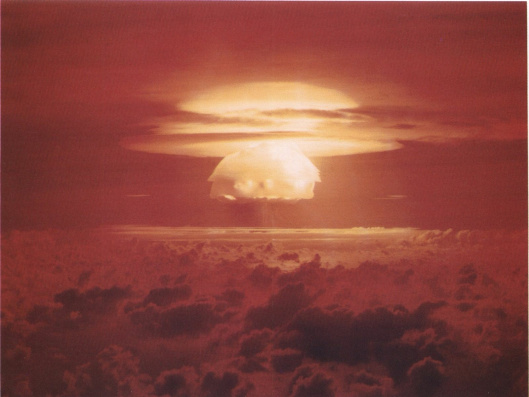
More powerful than Hiroshima: how the largest ever nuclear weapons test built a nation of leaders in the Marshall Islands.
Shiva Gounden and Shaun Burnie , Greenpeace 28th Feb 2025, https://www.greenpeace.org/international/story/65565/nuclear-victims-remembrance-day-united-states-must-comply-with-marshall-islands-demands-for-recognition-and-nuclear-justice/
71 years ago, on Bikini Atoll in the Marshall Islands, a nuclear bomb with the codename “Castle Bravo”, exploded with an energy of 15 megatons. The mushroom cloud reached 40 kilometres into the atmosphere, resulting in thousands of square kilometres of the Pacific Ocean being contaminated by radioactivity. Its explosive yield was 1000 times more powerful than the Hiroshima bomb; and within four hours of the explosion, radioactive fallout made up of crushed coral, water, and radioactive particles, rained down over inhabited atolls, including Rongelap Atoll, which was 150 kilometres away. A fine white ash landed on the heads and bare arms of people standing in the open, dissolving into water supplies and drifting into houses. Witnesses of the Bravo nuclear fireball described seeing a second sun rising in the west, just before the terrifying shock waves hit them.
For the people of the Marshall Islands, that day on March 1 1954 will forever be known as Remembrance Day – the anniversary of Castle Bravo, the largest ever nuclear weapons ‘test’ conducted by the United States military.
In the 1950s, after the explosion, U.S. government scientists warned that the people of Marshall Islands were subjected to “high sub-lethal dose of gamma radiation, extensive beta burns of the skin, and significant internal absorption of fission products”. They were subjected to decades of medical experiments run by secretive U.S. laboratories, later to be discovered as “Project 4.1”.
71 years after the detonation, there remains no cancer clinic in the whole country. Many of the citizens still live in permanent exile, with some of the islands vaporised by nuclear weapons, while others remain too radioactive for safe return. The consequences of Castle Bravo have echoed through generations of the people in the Marshall Islands who have been denied the right to justice, proper medical care, and full reparation for loss and damage.
“After centuries of colonial rule, the people of the Marshall Islands and the wider Pacific, were made 20th century victims of a nuclear arms race which for them was never a ‘Cold War’,” said Shiva Gounden, Head of Pacific at Greenpeace Australia Pacific. “But all through this, their decades of resilience, resistance and refusal to be silenced in their quest for nuclear justice, has been an inspiration across generations. The proud people of the Marshall Islands have retained their profound and deep connection to their Pacific home, despite all efforts to destroy that connection through displacement and contamination. That same determination is now evident in their response to the devastating impacts of climate change. The refusal of the U.S. to meet in full their obligations, is matched today by the neo-colonial forces which deny the right of Pacific islanders to climate justice, funds for climate adaptation and mitigation, and financing for loss and damage. Today, we pay our deepest respects to the people of the Marshall Islands and their demands for nuclear and climate justice.”
The Marshall Islands government continues its strenuous efforts to secure compensation and justice from the U.S. government. It received US$150 million in nuclear compensation under its 1986 Compact of Free Association (COFA) with the U.S. The COFA established a tribunal to adjudicate compensation claims. The tribunal sought over US$3 billion in today’s dollars that the U.S. has never paid. In addition the US government has left the Marshallese with a “ticking time bomb” – the Runit Dome. After years of nuclear testing, a concrete dome measuring 114 meters in diameter and filled with radioactive waste has been left to the Marshallese. Climate change and rising sea levels have caused cracks to appear; and since the Marshall Islands independence in the late 70s, the US has absolved all responsibility of the maintenance of the Dome and have left it to the Marshall Islands government.
Like the resilient people of the Marshall Islands who refuse to give up, Greenpeace stands in genuine and deep solidarity by elevating the voices and stories of the communities impacted by the testing of nuclear weapons and the dangers it imposes. As their people are today pursuing those responsible for their suffering through the human rights institutions of the United Nations, Greenpeace will also continue to highlight this injustice. Jimwe im Maron
This article was originally published in 2024, to mark the 70 year anniversary of the Castle Bravo test. In 1957, just three years after the detonation, the people of Rongelap were told by the US government their island was deemed safe and asked to return. Decades later, after experiencing too many health complications and finding the island unsafe to live in, the people of Rongelap asked for assistance from Greenpeace; and in 1985, the Rainbow Warrior helped evacuate them from their home and move them to Mejatto Island.
In 2025, the Rainbow Warrior will be visiting again – this time to support and amplify the Marshall Islands’ courageous ongoing call for justice and fight for systemic change at a global level.
Shiva Gounden is the Head of Pacific at Greenpeace Australia Pacific
Shaun Burnie is International Climate & Nuclear Campaigner for Greenpeace International.
ELON AND THE MILITARY-INDUSTRIAL-COMPLEX

Bruce Gagnon, Feb 28, 2025, Pentagon and StarLink
“…………………………………………………………………………………………….Until he entered the Trump White House, many still perceived Musk as a radical tech industry outsider. Yet this was never the case. From virtually the beginning of his career, Musk’s path has been shaped by his exceptionally close relationship with the U.S. national security state, particularly with Mike Griffin of the CIA.

From 2002 to 2005, Griffin led In-Q-Tel, the CIA’s venture capitalist wing. In-Q-Tel is an organization dedicated to identifying, nurturing, and working with tech companies that can provide Washington with cutting-edge technologies, keeping it one step ahead of its competition.
Griffin was an early believer in Musk. In February 2002, he accompanied Musk to Russia, where the pair attempted to purchase cut-price intercontinental ballistic missiles to start SpaceX. Griffin spoke up for Musk in government meetings, backing him as a potential “Henry Ford” of the tech and military-industrial complex.
After In-Q-Tel, Griffin became the chief administrator of NASA. In 2018, President Trump appointed him the Under Secretary of Defense for Research and Engineering. While at NASA, Griffin brought Musk in for meetings and secured SpaceX’s big break. In 2006, NASA awarded the company a $396 million rocket development contract – a remarkable “gamble,” in Griffin’s words, especially as it had never launched a rocket. National Geographic wrote that SpaceX “never would have gotten to where it is today without NASA.” And Griffin was essential to this development. Still, by 2008, both SpaceX and Tesla Motors were in dire straits, with Musk unable to make payroll and assuming both businesses would go bankrupt. It was at that point that SpaceX was savedby an unexpected $1.6 billion NASA contract for commercial cargo services.
Today, the pair remain extremely close, with Griffin serving as an official advisor to Castelion. A sign of just how strong this relationship is that, in 2004, Musk named his son “Griffin” after his CIA handler.
Today, SpaceX is a powerhouse, with yearly revenues in the tens of billions and a valuation of $350 billion. But that wealth comes largely from orders from Washington. Indeed, there are few customers for rockets other than the military or the various three-letter spying agencies.
In 2018, SpaceX won a contract to blast a $500 million Lockheed Martin GPS into orbit. While military spokespersons played up the civilian benefits of the launch, the primary reason for the project was to improve America’s surveillance and targeting capabilities. SpaceX has also won contracts with the Air Force to deliver its command satellite into orbit, with the Space Development Agency to send tracking devices into space, and with the National Reconnaissance Office to launch its spy satellites. All the “big five” surveillance agencies, including the CIA and the NSA, use these satellites.
Therefore, in today’s world, where so much intelligence gathering and target acquisition is done via satellite technology, SpaceX has become every bit as important to the American empire as Boeing, Raytheon, and General Dynamics. Simply put, without Musk and SpaceX, the U.S. would not be able to carry out such an invasive program of spying or drone warfare around the world.

The repugnantly infantile libertarian extremist Elon Musk
An example of how crucial Musk and his tech empire are to the continuation of U.S. global ambitions can be found in Ukraine. Today, around 47,000 Starlinks operate inside the country. These portable satellite dishes, manufactured by SpaceX, have kept both Ukraine’s civilian and military online. Many of these were directly purchased by the U.S. government via USAID or the Pentagon and shipped to Kiev.
In its hi-tech war against Russia, Starlink has become the keystone of the Ukrainian military. It allows for satellite-based target acquisition and drone attacks on Russian forces. Indeed, on today’s battlefield, many weapons require an internet connection. One Ukrainian official told The Times of London that he “must” use Starlink to target enemy forces via thermal imaging.
The controversial mogul has also involved himself in South American politics. In 2019, he supported the U.S.-backed overthrow of socialist president Evo Morales. Morales suggested that Musk financed the insurrection, which he dubbed a “lithium coup.” When directly charged with his involvement, Musk infamously replied, “We will coup whoever we want! Deal with it!” Bolivia is home to the world’s largest lithium reserves, a metal crucial in producing batteries for electric vehicles such as the ones in Musk’s Tesla cars.
In Venezuela last year, Musk went even further, supporting the U.S.-backed far-right candidate against socialist president Nicolás Maduro. He even went so far as to suggest he was working on a plan to kidnap the sitting president. “I’m coming for you Maduro. I will carry you to Gitmo on a donkey,” he said, referencing the notorious U.S. torture center.
More recently, Musk has thrown himself into American politics, funding and campaigning for President Trump, and will now lead Trump’s new Department of Government Efficiency (DOGE). DOGE’s stated mission is to cut unnecessary and wasteful government spending. However, with Musk at the helm, it seems unlikely that the billions of dollars in military contracts and tax incentives his companies have received will be on the chopping block.

At Trump’s inauguration, Musk garnered international headlines after he gave two Sieg Heil salutes – gestures that his daughter felt were unambiguously Nazi. Musk – who comes from a historically Nazi-supporting family – took time out from criticizing the reaction to his salute to appear at a rally for the Alternative für Deutschland Party. There, he said that Germans place “too much focus on past guilt” (i.e., the Holocaust) and that “we need to move beyond that.” “Children should not feel guilty for the sins of their parents – their great-grandparents even,” he added to raucous applause.
The tech tycoon’s recent actions have provoked outrage among many Americans, claiming that fascists and Nazis do not belong anywhere near the U.S. space and defense programs. In reality, however, these projects, from the very beginning, were overseen by top German scientists brought over after the fall of Nazi Germany. Operation Paperclip transported more than 1,600 German scientists to America, including the father of the American lunar project, Wernher von Braun. Von Braun was a member of both the Nazi Party and the infamous elite SS paramilitary, whose members oversaw Hitler’s extermination camps.
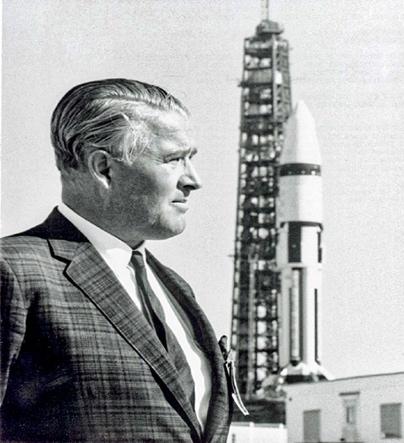
Thus, Nazism and the American empire have, for a long time, gone hand in hand. Far more disturbing than a man with fascist sympathies being in a position of power in the U.S. military or space industry, however, is the ability the United States is seeking for itself to be impervious to intercontinental missile attacks from its competitors.
On the surface, Washington’s Iron Dome plan may sound defensive in nature. But in reality, it would give it a free hand to attack any country or entity around the world in any way it wishes – including with nuclear weapons. This would upend the fragile nuclear peace that has reigned since the early days of the Cold War. Elon Musk’s help in this endeavor is much more worrying and dangerous than any salutes or comments he could ever make. https://brucegagnon177089.substack.com/p/the-pentagon-and-starlink-satellites?utm_source=post-email-title&publication_id=3720343&post_id=158057576&utm_campaign=email-post-title&isFreemail=false&r=c9zhh&triedRedirect=true&utm_medium=email
The Pentagon and Starlink Satellites
it is only the existence of a credible deterrent that tempers Washington’s actions around the world. Since the end of the Second World War, the United States has only attacked relatively defenseless countries. The reason the North Korean government remains in place, but those of Libya, Iraq, Syria, and others do not, is the existence of the former’s large-scale conventional and nuclear forces. Developing an American Iron Dome could upset this delicate balance and usher in a new age of U.S. military dominance.
The stakes are high. If successful, the US could again intimidate the world through nuclear blackmail
Bruce Gagnon, Feb 28, 2025
Donald Trump has announced his intention to build a gigantic anti-ballistic missile system to counter Chinese and Russian nuclear weapons, and he is recruiting Elon Musk to help him. The Pentagon has long dreamed of constructing an American “Iron Dome.” The technology is couched in the defense language – i.e., to make America safe again. But like its Israeli counterpart, it would function as an offensive weapon, giving the United States the ability to launch nuclear attacks anywhere in the world without having to worry about the consequences of a similar response. This power could upend the fragile peace maintained by decades of mutually assured destruction, a doctrine that has underpinned global stability since the 1940s.
A NEW GLOBAL ARMS RACE
Washington’s war planners have long salivated at the thought of winning a nuclear confrontation and have sought the ability to do so for decades. Some believe that they have found a solution and a savior in the South African-born billionaire and his technology.
Neoconservative think tank the Heritage Foundation published a video last year stating that Musk might have “solved the nuclear threat coming from China.” It claimed that Starlink satellites from his SpaceX company could be easily modified to carry weapons that could shoot down incoming rockets. As they explain:
Elon Musk has proven that you can put microsatellites into orbit, for $1 million apiece. Using that same technology, we can put 1,000 microsatellites in continuous orbit around the Earth, that can track, engage and shoot down, using tungsten slugs, missiles that are launched from North Korea, Iran, Russia, and China.”
Although the Heritage Foundation advises using tungsten slugs (i.e., bullets) as interceptors, hypersonic missiles have been opted for instead. To this end, a new organization, the Castelion Company, was established in 2023.
Castelion is a SpaceX cutout; six of the seven members of its leadership team and two of its four senior advisorsare ex-senior SpaceX employees. The other two advisors are former high officials from the Central Intelligence Agency, including Mike Griffin, Musk’s longtime friend, mentor, and partner.
Castelion’s advisors and leadership team are extensively connected to SpaceX and the CIA
Castelion’s mission, in its own words, is to be at the cutting edge of a new global arms race. As the company explains:
Despite the U.S. annual defense budget exceeding those of the next ten biggest spenders combined, there’s irrefutable evidence that authoritarian regimes are taking the lead in key military technologies like hypersonic weapons. Simply put – this cannot be allowed to happen.”
The company has already secured gigantic contracts with the U.S. military, and reports suggest that it has made significant strides toward its hypersonic missile goals.
WAR AND PEACE
Castelion’s slogan is “Peace Through Deterrence.” But in reality, the U.S. achieving a breakthrough in hypersonic missile technology would rupture the fragile nuclear peace that has existed for over 70 years and usher in a new era where Washington would have the ability to use whatever weapons it wished, anywhere in the world at any time, safe in the knowledge that it would be impervious to a nuclear response from any other nation.
In short, the fear of a nuclear retaliation from Russia or China has been one of the few forces moderating U.S. aggression throughout the world. If this is lost, the United States would have free rein to turn entire countries – or even regions of the planet – into vapor. This would, in turn, hand it the power to terrorize the world and impose whatever economic and political system anywhere it wishes.
If this sounds fanciful, this “Nuclear Blackmail” was a more-or-less official policy of successive American administrations in the 1940s and 1950s. The United States remains the only country ever to drop an atomic bomb in anger, doing so twice in 1945 against a Japanese foe that was already defeated and was attempting to surrender.
President Truman ordered the destruction of Hiroshima and Nagasaki as a show of force, primarily to the Soviet Union. Many in the U.S. government wished to use the atomic bomb on the U.S.S.R. President Truman immediately, however, reasoned that if America nuked Moscow, the Red Army would invade Europe as a response…………………………………………………………………………………………………………………………………………………..
In the end, the Soviet Union was able to successfully develop a nuclear weapon before the U.S. was able to produce hundreds. Thus, the idea of wiping the U.S.S.R. from the face of the Earth was shelved. Incidentally, it is now understood that the effects of dropping hundreds of nuclear weapons simultaneously would likely have sparked vast firestorms across Russia, resulting in the emission of enough smoke to choke the Earth’s atmosphere, block out the sun’s rays for a decade, and end organized human life on the planet.
With the Russian nuclear window closing by 1949, the U.S. turned its nuclear arsenal on the nascent People’s Republic of China.
The U.S. invaded China in 1945, occupying parts of it for four years until Communist forces under Mao Zedong forced both them and their Nationalist KMT allies from the country. During the Korean War, some of the most powerful voices in Washington advocated dropping nuclear weapons on the 12 largest Chinese cities in response to China entering the fray. Indeed, both Truman and his successor, Dwight D. Eisenhower, publicly used the threat of the atomic bomb as a negotiating tactic.
Routed on the mainland, the U.S.-backed KMT fled to Taiwan, establishing a one-party state. In 1958, the U.S. also came close to dropping the bomb on China to protect its ally’s new regime over control of the disputed island – an episode of history that resonates with the present-day conflict over Taiwan.
However, by 1964, China had developed its own nuclear warhead, effectively ending U.S. pretensions and helping to usher in the détente era of good relations between the two powers—an epoch that lasted well into the 21st century.
In short, then, it is only the existence of a credible deterrent that tempers Washington’s actions around the world. Since the end of the Second World War, the United States has only attacked relatively defenseless countries. The reason the North Korean government remains in place, but those of Libya, Iraq, Syria, and others do not, is the existence of the former’s large-scale conventional and nuclear forces. Developing an American Iron Dome could upset this delicate balance and usher in a new age of U.S. military dominance.
NUKING JAPAN? OK. NUKING MARS? EVEN BETTER!
Musk, however, has downplayed both the probability and the consequences of nuclear war. On The Lex Friedman Podcast, he described the likelihood of a terminal confrontation as “quite low.” And while speaking with Trump last year, he claimed that nuclear holocaust is “not as scary as people think,” noting that “Hiroshima and Nagasaki were bombed, but now they are full cities again.” President Trump agreed.
According to the International Campaign to Abolish Nuclear Weapons, there are over 12,000 warheads in the world, the vast majority of them owned by Russia and the United States. While many consider them a blight on humanity and favor their complete eradication, Musk advocates building thousands more, sending them into space, and firing them at Mars.
Musk’s quixotic plan is to terraform the Red Planet by firing at least 10,000 nuclear missiles at it. The heat generated by the bombs would melt its polar ice caps, releasing carbon dioxide into the atmosphere. The rapid greenhouse effect triggered, the theory goes, would raise Mars’ temperatures (and air pressure) to the point of supporting human life.
Few scientists have endorsed this idea. Indeed, Dmitry Rogozin, then-head of Russian state space agency Roscosmos, labeled the theory completely absurd and nothing more than a cover for filling space with American nuclear weapons aimed at Russia, China, and other nations, drawing Washington’s ire.
“We understand that one thing is hidden behind this demagogy: This is a cover for the launch of nuclear weapons into space,” he said. “We see such attempts, we consider them unacceptable, and we will hinder this to the greatest extent possible,” he added.
The first Trump administration’s actions, including withdrawing from multiple international anti-ballistic missile treaties, have made this process more difficult.
ELON AND THE MILITARY-INDUSTRIAL-COMPLEX……………………………………………………………. more https://brucegagnon177089.substack.com/p/the-pentagon-and-starlink-satellites?utm_source=post-email-title&publication_id=3720343&post_id=158057576&utm_campaign=email-post-title&isFreemail=false&r=c9zhh&triedRedirect=true&utm_medium=email
Nuclear weapons are ‘one-way road to annihilation’ warns Guterres

By Vibhu Mishra, 24 February 2025, https://news.un.org/en/story/2025/02/1160441
UN Secretary-General António Guterres on Monday warned that the risk of nuclear conflict is rising – as global security arrangements unravel and military spending soars – urging governments to push for total disarmament.
“The nuclear option is not an option at all,” he said, addressing the UN Conference on Disarmament in Geneva.
“It is a one-way road to annihilation. We need to avoid this dead-end at all costs.”
Arms race spreading to space
Mr. Guterres warned delegates of heightened global security concerns, noting that trust between nations is crumbling, international law is being undermined and multilateral treaties are under strain.
The so called “Doomsday Clock” – a metaphorical indicator of how close humanity is to destroying the world – moved one second closer to midnight last month, underscoring the growing peril.
“Others are expanding their inventories of nuclear weapons and materials. Some continue to rattle the nuclear sabre as a means of coercion. We see signs of new arms races including in outer space,” Mr. Guterres said.
“And the weaponization of Artificial Intelligence is moving forward at an alarming pace.”
Sign of hope
Despite the grim picture, the Secretary-General highlighted the Pact for the Future adopted by world leaders at the General Assembly last September, as a sign of hope.
It marked the first new international nuclear disarmament agreement in over a decade.
“Through the Pact, Member States also committed to revitalizing the role of the United Nations in disarmament,” he continued, calling also for holding accountable anyone who uses chemical or biological weapons.
Alongside, he urged delegates to prevent an arms race in outer space through new negotiations, calling for the UN’s role in disarmament and global security to be strengthened.
“Humanity is counting on us to get this right. Let us keep working to deliver the safe, secure and peaceful world that every person needs and deserves,” Mr. Guterres said.
The Conference on Disarmament
The Conference on Disarmament (CD) is the world’s sole multilateral forum for negotiating arms control and disarmament agreements.
Comprising 65 member states, including nuclear and militarily significant nations, the Conference has played a key role in shaping treaties such as the Nuclear Non-Proliferation Treaty (NPT) and the Comprehensive Nuclear-Test-Ban Treaty (CTBT).
Its agenda includes nuclear disarmament, preventing an arms race in outer space, and addressing new weapons of mass destruction. Non-member States also attend its sessions, with 50 joining discussions in 2019, the highest in two decades.
Starmer drags Britain deeper into war drive

February 25, 2025, Sophie Bolt, CND General Secretary,
https://cnduk.org/starmer-drags-britain-deeper-into-war-drive/?link_id=2&can_id=0a448bf4278898648e02a8f6dea4650f&source=email-starmer-drags-britain-deeper-into-war-drive&email_referrer=email_2633766&email_subject=starmer-drags-britain-deeper-into-war-drive
Starmer’s announcement to increase military spending to 2.5% by 2027 – an additional £13.4 billion annually – at the expense of overseas aid, reflects a Trump-style of international priorities: driving war and militarism whilst abandoning international obligations to halt global hunger and climate devastation. It represents a much more dangerous and damaging role for Britain in the world.
The spending announcement has clearly been rapidly organised ahead of Starmer’s meeting with Trump on Thursday. Nailing his colours very firmly to the Trump mast, Starmer reasserted Britain’s special relationship with the US, and pledged to increase military spending to 3% of GDP after the next election.
These increases are to fund a reckless war drive that risks plunging Europe into decades-long confrontation with Russia, whilst ratcheting up nuclear tensions globally.
Presenting Britain as the European leadership in NATO, Starmer reiterated his so-called peace-keeping operation in a post-settlement Ukraine. In it, 30,000 European troops would be deployed to Ukraine, underwritten by US military might should the ceasefire collapse. The plan has failed to win unity across Europe.
Meanwhile Friedrich Merz, the newly elected Germany Chancellor, has called for France and Britain to share their nuclear weapons to ‘defend’ Europe against Russia. This has also renewed the debate about the use of tactical or ‘battlefield’ nuclear weapons – and whether Britain should develop them on behalf of Europe.
These reckless and terrifying debates around greater nuclear armament for Europe fail to note that Trump has made no statement that US nuclear weapons will be withdrawn from Europe. Or that new ‘battlefield’ nuclear bombs won’t be deployed in Britain. They also fail to acknowledge that, as Britain is totally dependent on the US for its nuclear weapons system, Starmer would have to get permission from Trump if he were to offer them to Europe.
But, of course, whether US, French or British, nuclear weapons deployed in Europe are a disaster. Far from offering protection, the weapons are a constant threat – from the risk of nuclear accidents to nuclear confrontation.
This obscene spending spree on weapons of war won’t bring peace to Ukraine. On the contrary, the £205bn that Europe has pledged to Ukraine since 2022 has contributed to prolonging this terrible conflict, sustaining the huge death toll and pushing the region to the brink of nuclear war. And the impact of the conflict has driven the worsening economic crisis in Britain, across Europe and globally. And if Trump gets his way, the majority of Ukraine’s vast mineral wealth will be siphoned off to the US.
Whilst it is presented as defending Ukraine, this NATO war drive is global. We know that Trump’s ‘America First’ policies are still about maintaining US dominance over the rest of the world. From calls to seize Greenland, Canada and Panama, to ethnically cleanse Palestinians from Gaza, Trump has no respect for sovereignty, human rights and international law. His plans to expand the US Missile Defence System, or ‘the Iron Dome for America’, would enable the Trump administration to use its nuclear weapons without fear of a retaliatory strike. British bases already play a central role in this ‘Iron Dome for America’, making us a target in any global confrontation, yet offering no protection.
This is a very chilling prospect.
Instead of vying for Trump’s approval over which NATO state can increase its military spending highest, Britain and Europe should instead be using this opportunity to reshape the region’s security approach, towards one that is genuinely sustainable and secure. This means Britain ending its military and nuclear alliance with the US. A first step in this would be to scrap the replacement of Britain’s nuclear weapons system. With the government’s own watchdog concluding that the replacement is ‘unachievable’, Rachel Reeves should cut her losses and direct the hundreds of billions into rebuilding crumbling public services and investing in sustainable energy sources.
Iran on ‘high alert’ amid fears of attack on nuclear sites
Officials say measures are in response to growing concerns of potential joint military action by Israel and US
Iran has put its defence systems around its nuclear sites on high alert amid fears of an attack by Israel and the US, The Telegraph has learnt…
According to two high-level government sources, the Islamic Republic has
also been bolstering defences around key nuclear and missile sites, which
include the deployment of additional air defence system launchers.
Officials say the measures are in response to growing concerns of potential
joint military action by Israel and the United States.
Telegraph 25th Feb 2025, https://www.telegraph.co.uk/world-news/2025/02/25/iran-missile-defences-high-alert-attack-fears-us-israel/
What Trump got right about nuclear weapons—and how to step back from the brink

By Lucas Ruiz, Geoff Wilson | February 24, 2025, https://thebulletin.org/2025/02/what-trump-got-right-about-nuclear-weapons-and-how-to-step-back-from-the-brink/
President Donald Trump’s recent remarks about nuclear weapons are 100-percent correct.
Speaking to a room of reporters in the White House on February 13, President Trump signaled his interest in restarting arms control negotiations with Russia and China. “There’s no reason for us to be building brand new nuclear weapons. We already have so many,” Trump said. “You could destroy the world 50 times over, 100 times over. And here we are building new nuclear weapons, and they’re building nuclear weapons.”
He continued, “We’re all spending a lot of money that we could be spending on other things that are actually, hopefully, much more productive.”
The United States is already spending $75 billion annually—the equivalent of two Manhattan Projects every year—on new nuclear weapons until at least 2032. In total, the country is set to spend over $1.7 trillion on nuclear modernization over 30 years—which is about the same amount as all student loan debt in the United States.
But what will the country have to show for it?
Counterproductive upgrades. The United States already spends more on national security than the next nine nations combined, and China and Russia have also started expanding and modernizing their arsenals, respectively. But the US arsenal is already more than capable of retaliating against a simultaneous nuclear strike by both countries—which would not change even in a scenario in which China reached numerical nuclear parity with the United States and Russia. Instead, as President Trump suggests, US political leaders must consider how engaging in a massive, new nuclear build-up will waste limited taxpayer dollars and undermine national security by diverting the federal budget from more useful national investments like pursuing infrastructure and electrical grid resiliency.
The current US nuclear modernization program attempts to replace every leg of the US strategic triad—that is, the land-based intercontinental ballistic missiles, strategic bombers, and ballistic missile submarines—all at once. This wildly ambitious program is already massively over budget and years behind schedule. It has also forced the United States to extend the service lives of current systems while waiting for the new systems to come online—something the US military claimed to be infeasible when the process started. The advanced age of the previous generation of nuclear delivery vehicles was a major justification for modernization in the first place.
More fundamentally, the current modernization push is fueled by a pathology of nuclear superiority brinkmanship, which is accelerating a headlong rush into a new nuclear arms race and increasing the odds of a confrontation between nuclear powers. If the United States continues down this path, it will not only be a waste of taxpayer dollars but also weaken strategic stability and increase the risk of nuclear war. The world was lucky to have escaped what President John F. Kennedy called the “nuclear sword of Damocles”—and the United States should be in no hurry to test that fate again.
Stepping toward the brink—and back. While President Trump’s remarks offer hope for a more reasonable nuclear path, his administration is also espousing “peace through strength”—Ronald Reagan’s mantra—as one of the foundations of its foreign policy. The administration’s Republican allies in Congress—including notably Sen. Roger Wicker, a Republican of Mississippi who now chairs the Senate Armed Services Committee—have adopted this framing and proposed doubling down on the arms race by adding $200 billion to an already historically high US defense budget.
Other conservatives are pushing Trump to adopt Reagan’s playbook for US-Soviet relations by demonstrating US supremacy internationally, which includes accelerating the nuclear arms race. Most concerning, some allege winning this arms race necessitates being prepared to resume US explosive nuclear testing. And some within the military establishment have called for the reintroduction of tactical nuclear weapons into the US arsenal despite being hugely destabilizing.
But these hawkish policies are only the first part of Reagan’s nuclear weapons chapter.
In 1982, after boosting defense spending by 35 percent, Reagan suddenly reversed course and famously declared in a radio address that “a nuclear war cannot be won and must never be fought.” His reversal on nuclear weapons would be confirmed after witnessing the infamous Pentagon war game Proud Prophet, viewing the cataclysmic effects of nuclear war in the movie “The Day After,” and nearly triggering a catastrophic war with the Soviets. Reagan’s idiom became the bedrock of efforts to avoid mutual destruction through nuclear war, which has been repeated by many officials in the four decades since, including just five years ago at the start of the Biden administration.
In hindsight, Trump can skip to the productive portion of Reagan’s strategy. His intuition is already pointing him in this direction. The president should not be listening to those around him who would like to see the United States embrace a nuclear arms race by chasing after the illusion of strategic superiority and expanding the nuclear arsenal—which Trump already said made no sense. Instead, President Trump should pursue a course of hard-nosed diplomacy like Reagan did to secure the Intermediate-Range Nuclear Forces Treaty (INF), which eliminated US and Soviet intermediate- and shorter-range missiles in 1985.
The Trump administration could renew Reagan’s crowning achievement by negotiating with Russia and China to limit the growing numbers of new nuclear weapons in the world today. The president has the opportunity to push the United States and other nuclear-weapon states to abide by their disarmament promises regarding nuclear weapons. Should he succeed, Trump could even win a Nobel Peace Prize—becoming just the fifth US president to do so.
President Trump, the United States, and the world would be well served by taking steps to decrease the threats posed by the new nuclear arms race. One question remains: Does he have the courage to stick to his convictions to shut out those around him who would prefer to gamble on Armageddon?
Global security arrangements “unravelling”, UN chief warns nuclear disarmament conference.
OLIVIA LE POIDEVIN David Adams, , https://sightmagazine.com.au/news/global-security-arrangements-unravelling-un-chief-warns-nuclear-disarmament-conference/
Security arrangements that have supported global peace for decades are unravelling, the head of the United Nations warned on Monday as he urged countries to work together towards a nuclear free world.
“The bilateral and regional security arrangements that underwrote global peace and stability for decades are unravelling before our eyes,” UN Secretary General Antonio Guterres told the Conference on Disarmament that gathered in Geneva.
“Trust is sinking, while uncertainty, insecurity, impunity and military spending are all rising,” Guterres added.
Such factors were weakening the spirit of “mutual restraint”, he said, as he called on countries to implement nuclear disarmament and non-proliferation commitments agreed at a summit in New York last September.
Sixty-five states, including the United States, China and Russia, are members of the Conference which was established in 1979 and is overseen by the United Nations Office for Disarmament Affairs.
It focuses on negotiating deals to end the nuclear arms race and stop countries building up weapons in space, on top of pursuing general disarmament.
Artificial Intelligence was becoming weaponised at an alarming pace and there were signs of new arms races, including in outer space, Guterres warned.
He condemned countries that “outrageously rattle the nuclear sabre as a means of coercion”.
In September last year Russian President Vladimir Putin told the United States and its allies that Moscow could respond with nuclear weapons if they allowed Ukraine to strike deep inside Russia with long-range Western missiles.
Earlier this month Moscow said the outlook for extending the New Strategic Arms Reduction agreement with the US did not look promising.
The agreement, which caps the number of strategic nuclear warheads that the two biggest nuclear superpowers can deploy, is due to expire on February 5, 2026.
Donald Trump wants to end nuclear weapons funding
“THERE’S no reason for us to be building brand-new nuclear weapons, we
already have so many you could destroy the world 50 times over, 100 times
over … We’re all spending a lot of money that we could be spending on
other things that are actually, hopefully much more productive.”
The quoted statement is a sensible one. Indeed, it broadly aligns with Scottish
CND’s longstanding case against nuclear weapons: that the exorbitant
expenditure on building weapons that would be illegal ever to use is sheer
waste, and that our society could be profoundly regenerated by investing
such resources in the public sphere.
But the above quote is not a Scottish
CND press release. In fact, these are the words of US president Donald
Trump, spoken to reporters in the Oval Office only last week. At that same
meeting with the press, Trump also mentioned his hopes to meet with the
presidents of China and Russia: “And I want to say, ‘let’s cut our
military budget in half’. And we can do that. And I think we’ll be able
to.”
The National 21st Feb 2025, https://www.thenational.scot/politics/24952282.donald-trump-wants-end-nuclear-weapons-funding-listen/
New Zealand’s Rocket Lab ‘ready to serve’ Pentagon

RNZ Phil Pennington, Reporter 19 Feb 25
Rocket Lab is poised to launch a satellite from Mahia Peninsula for a US company which is looking to bolster military and spying operations.
BlackSky’s plan is to add laser optic links later to its Gen-3 satellites to give “war-fighters real-time access to imagery during time-sensitive military operations worldwide”.
This comes shortly after Rocket Lab won a part in a mega-deal to help develop hypersonic weapons for the Pentagon, prompting the firm to state it was “ready to serve the US Department of Defense”.
The New York-listed, New Zealand-born company has also completed a design review for 18 military satellites in a contract worth more than $800 million, for the Proliferated Warfighter Space Architecture (PWSA), which is putting up a web of low-orbit satellites for missile tracking and battlefield comms.
That deal, which was signed last year, cemented Rocket Lab as a “prime” – or lead – defence contractor in the US.
The Mahia launch is set down for some time from Tuesday, and will be the first of several Gen-3s for BlackSky, which has used the site near Gisborne since 2019.
The government last year dismissed pro-Palestinian protesters complaints it breached rules on launches…………………………………..
Six months ago, BlackSky said it would make Gen-3s compatible with military networks. It won a $175m satellite contract with an unnamed international defence customer last month.
Its constellation of small satellites also has civilian uses, such as in mapping natural disasters.
Rocket Lab’s share price in the US has surged since it won big Pentagon contracts………………………………………………………….. more https://www.rnz.co.nz/news/national/542305/rocket-lab-ready-to-serve-pentagon
—
1 This Month

of the week – Shut Down Drone Warfare!


Tell the Ukrainian Government to Drop Prosecution of Peace Activist Yurii Sheliazhenko

Petition to revoke the licensing of the Near Surface Nuclear Disposal Facility (NSDF) at Chalk River. https://www.ourcommons.ca/petitions/en/Petition/Details?Petition=e-7247
To see nuclear-related stories in greater depth and intensity – go to https://nuclearinformation.wordpress.com
-
Archives
- March 2026 (251)
- February 2026 (268)
- January 2026 (308)
- December 2025 (358)
- November 2025 (359)
- October 2025 (376)
- September 2025 (257)
- August 2025 (319)
- July 2025 (230)
- June 2025 (348)
- May 2025 (261)
- April 2025 (305)
-
Categories
- 1
- 1 NUCLEAR ISSUES
- business and costs
- climate change
- culture and arts
- ENERGY
- environment
- health
- history
- indigenous issues
- Legal
- marketing of nuclear
- media
- opposition to nuclear
- PERSONAL STORIES
- politics
- politics international
- Religion and ethics
- safety
- secrets,lies and civil liberties
- spinbuster
- technology
- Uranium
- wastes
- weapons and war
- Women
- 2 WORLD
- ACTION
- AFRICA
- Atrocities
- AUSTRALIA
- Christina's notes
- Christina's themes
- culture and arts
- Events
- Fuk 2022
- Fuk 2023
- Fukushima 2017
- Fukushima 2018
- fukushima 2019
- Fukushima 2020
- Fukushima 2021
- general
- global warming
- Humour (God we need it)
- Nuclear
- RARE EARTHS
- Reference
- resources – print
- Resources -audiovicual
- Weekly Newsletter
- World
- World Nuclear
- YouTube
-
RSS
Entries RSS
Comments RSS
 nuclear-news