South Korea’s preparation for pre-emptive nuclear strike against North Korea

 FROM THE POPE TO WAR GAMES IN SOUTH KOREA ORGANISING NOTES, BRUCE GAGNON , AUGUST 19, 2014
Global Network board member Sung-hee Choi, long time activist on Jeju Island, wrote today:
Recently, Pope Francis has visited Korea from Aug. 14 to 18. He left us many moving messages of peace and justice, but the South Korean (ROK) conservative Park Geun-Hye government started the World-biggest war exercise Ulji Freedom Guardian (In government drill, about 480,000 personnel join. In military drill, about 50,000 Korean soldiers and 30,000 US soldiers) started along with the United States on his leaving day. It ends on Aug. 21.
The exercise targets North Korea and the strategy includes preemptive nuclear strike against her. The exercise will be a passage for the US to push for the US-Japan-ROK trilateral military alliance and Missile Defense system. http://space4peace.blogspot.com.au/2014/08/from-pope-to-war-games-in-south-korea.html
Israel’s military big-wigs want increased nuclear weaponry – nuclear stealth submarines
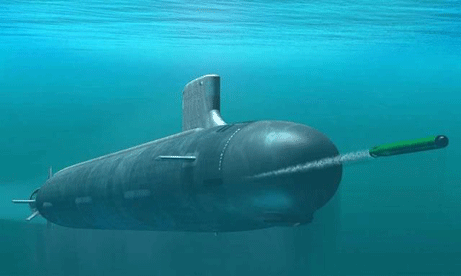
 Israel’s nuclear strategy – a larger role for submarine-basing, Jerusalem Post, 08/17/2014 By PROFESSOR LOUIS RENÉ BERES,ADMIRAL LEON “BUD” EDNEY“……….From the early days of the country’s first prime minister, David Ben-Gurion, Israel has understood the need to rely upon a “great equalizer,” that is, on nuclear weapons and (implicit) strategy. Of course, there are a great many circumstances in which a nuclear option would be unsuited – most obviously, in any forms of regional counter-terrorism – but, in the end, there can be no substitute for such a residual option. Doctrinally, Israel has already rejected any notions of theater nuclear deterrence, and/or nuclear war-fighting; nonetheless, there are still some identifiable circumstances wherein a nuclear exchange might not be prevented.
Japan developing a university-military-industrial nuclear complex
Japan plans fund to develop military technology with universities, Japan Times 17 Aug 14 Ministry plans fund to aid schools engaged in military research The Defense Ministry plans to set up a fund to develop military technology by aiding research projects at universities and other civilian institutions, government sources have revealed.
In a move aimed at keeping down development costs and bolstering civilian-military cooperation, the ministry plans to seek roughly ¥2 billion for the fund in its budget request for fiscal 2015 beginning next April, raising it to ¥6 billion in three years, the sources said Saturday.
The fund, which will be modeled after the U.S. Defense Advanced Research Projects Agency, is part of Prime Minister Shinzo Abe’s drive to expand the nation’s military capabilities……..
A group of university researchers has recently organized a petition opposed to civil-military cooperation, citing the bitter history of academia contributing to the nation’s militarization during World War II……… http://www.japantimes.co.jp/news/2014/08/17/national/japan-plans-fund-develop-military-technology-universities/#.U_KmJsVdUnk
Relocating Trident nuclear missile systems from Scotland could be afforded
Trident missiles ‘could be relocated to Plymouth from independent Scotland‘ Devonport is obvious alternative to Faslane for Britain’s nuclear missiles, says Rusi thinktank, despite risk of ‘accidental ignition’ Richard Norton-Taylor The Guardian, Thursday 14 August 2014 There would be no insurmountable technical or financial obstacle to relocating Britain’s Trident nuclear missile base to England out of an independent Scotland, a report by a leading thinktank says on Thursday.
Any local opposition might delay but not stop relocation, and the favoured site would be Devonport in Plymouth, it says.
Some opponents of Scottish independence have suggested it would mean the end of the Trident nuclear weapons system and that the cost of moving the submarine base at Faslane and the nuclear warhead depot at Coulport would be prohibitive.
The study by the Royal United Services Institute (Rusi) says that relocating Trident would add up to £3.5bn to the cost of retaining the UK’s nuclear forces. The cost of the overall nuclear deterrent programme over 25 years is estimated to be £80bn………
The study acknowledges there would be safety concerns: “Introducing nuclear-armed [submarines] to Devonport will unavoidably introduce a new risk that an accidental ignition of one or all of a submarine’s Trident D5 missiles could spread radioactive material over some of Plymouth’s 260,000 inhabitants.”
Though there would be opposition on safety grounds, it notes that the Ministry of Defence is reported to have waived safety requirements at Coulport in the 1970s to allow that base to continue operating……>It adds: “The various challenges of relocation would probably trigger a wider national discussion in the [rest of the UK] on whether or not the strategic benefits of retaining nuclear weapons exceeded the costs involved.” http://www.theguardian.com/uk-news/2014/aug/14/trident-missiles-relocate-plymouth-independent-scotland-rusi-report
The nuclear bombing of Nagasaki
The day the bomb fell on Nagasaki BRIAN MCKENNA The Globe and Mail Aug. 07 2014, The atomic bomb destined for the ancient trading port of Nagasaki was called Fat Man. Sister Regina McKenna, my grandfather’s sister, was close enough to ground zero to feel the death wind on her face. She might have preferred another name: Terror. Or, as the Japanese call it: Slaughter.
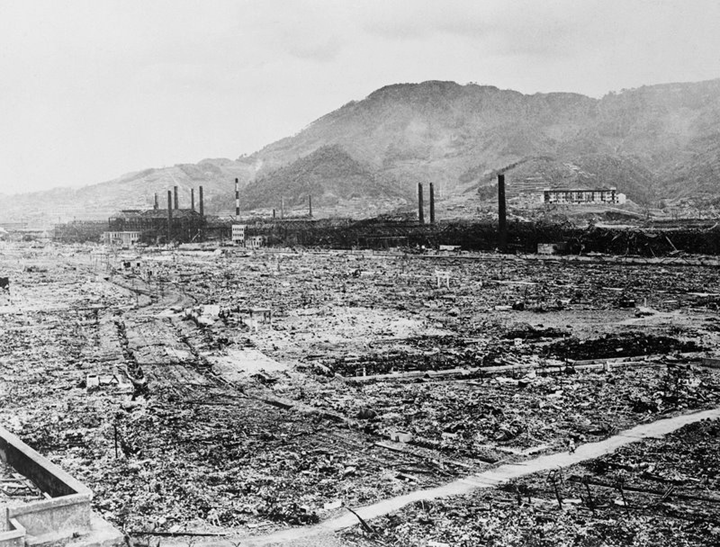
We knew her as Aunt Reggie, a nun with Montreal’s order of the Sacred Heart. She was teaching in Japan when war broke out. She was imprisoned in an internment camp outside Nagasaki.
Boasting some beautiful churches, Nagasaki was home to Japan’s biggest colony of Christians. Thus far, the city had been spared the U.S. Army Air Force campaign of annihilation. Under General Curtis LeMay, armadas of B-29s were systematically bombing Japan “back to the stone age.”………
……….Fat Man was released, flying like an angel of death toward an unsuspecting population. The bomb exploded at 500 metres at precisely 11:02 a.m.
“It seemed as though the sun had burst and I was lost in its midst. I threw myself at once into a clump of young bamboo trees. I was lying on a big bag of grass. My face only felt hot.”
She was spared the worst of the physical blast, shielded by the tall hills encircling Nagasaki. She ran back to the camp. All the windows had imploded. The shattering glass inflicted minor wounds. Downtown Nagasaki was another story.
The city burned for days. Almost all of the churches were destroyed. The survivors wrote of unspeakable suffering, 70,000 dead within 90 days, and everywhere a stench of death and corruption.
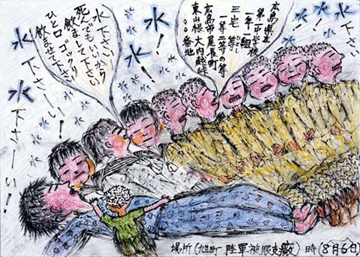 Sister McKenna wrote that the medical system is overwhelmed. “Two-thirds of the population of Nagasaki are dead. The city itself is a mass of ruins. They are still burning the dead. The hospitals having been destroyed, the wounded are not being cared for.”
In 1945, the medical world knew little of radiation poisoning, so her next line resonates. “Some patients apparently recover, then suddenly die from hemorrhages.”
All reporting from Nagasaki was censored.
A Japanese and American film crew rushed to the site. But their footage was suppressed for more than 50 years. When footage finally aired, the impact on public policy (“why two bombs?”) that the nuclear attack should have triggered was diminished by the passage of time.
For Sister McKenna, the imprint of that explosion was like a gigantic X-ray, searing her body and mind for a lifetime. Her fellow teaching sisters said “she was never quite right” after experiencing that cataclysm. And in the end she succumbed to a cancer brought on by radiation poisoning……http://www.theglobeandmail.com/life/facts-and-arguments/the-day-the-bomb-fell-on-nagasaki/article19959476/
Independent Scotland would scrap Trident nuclear deterrent, save tax-payers £billions
 Trident nuclear deterrent would be scrapped by an independent Scotland Rt August 07, 2014 Scottish voters face the choice between a multibillion-pound tax bill to fund a new generation of nuclear weapons, or the chance to completely disarm in an independent Scotland.
Veterans Minister Keith Brown warned Scottish taxpayers could face an almighty burden if the UK Government decides to renew the program in 2016. In a move that could garner greater support for Scottish independence, the Scottish government set out plans to remove Trident from Scotland if September’s referendum secures a ‘Yes’ vote.
Speaking during a debate at Holyrood, Brown said the decision on renewal “appears to have already been made,” with the Conservatives, Liberal Democrats and Labour backing the retention of Trident. He also said the cost of renewal will also have implications for the UK’s conventional defense forces.
“The Scottish Government position is that Trident should be removed from an independent Scotland by 2020 – before we are hit with a share of the further £100 billion in lifetime costs, at 2012 prices, which are estimated for its replacement,” he said.
“We will also propose a constitutional prohibition on nuclear weapons being based in Scotland, ensuring they would never return.”
The Trident Commission reports that taxpayers will be spending nearly £4 billion a year on nuclear weapons at 2012 prices, when spending reaches its peak in the next decade. This is the equivalent of almost one third of the entire current defense budget. The costs would impact on other defense spending, such as helicopter support and equipment for troops.
“That is money which could and will be far better spent on other priorities – something underlined by statistics showing one million people in Scotland are living in relative poverty,” added Brown……..http://rt.com/uk/178692-trident-scrapped-independent-scotland/
Massive, decaying, dangerous, weapons empire at Oak Ridge
Y-12: Poster child for a dysfunctional nuclear weapons complex Robert Alvarez, Bulletin of the Atomic Scientists 6 Aug 14 “……The United States halted production of new nuclear weapons in 1989, with the end of the Cold War. But the US nuclear weapons complex—composed of eight key facilities that have an annual budget exceeding $8 billion—has stumbled on, in the form of a massive, decaying empire that in many cases does its work poorly or dangerously, or both. The Y-12 National Security Complex is the poster child for much of what ails the weapons complex. Although Y-12 has not produced weapons for some 25 years, its annual budgets have increased by nearly 50 percent since 1997, to more than $1 billion a year.

For decades, the Energy Department—which manages the weapons complex through the National Nuclear Security Agency (NNSA)—has not been able to reconcile competing objectives at the 811-acre Y-12 site, whether they involve storage areas for HEU and other fissile materials, the restarting of old weapons facilities, environmental cleanup, the building of new weapons facilities, or the downsizing of the site. As a result, costs have significantly increased, and long-standing problems have continued, unresolved, for years that have run into decades. For every dollar spent to maintain and modernize the US nuclear weapons stockpile, nearly three dollars is spent “to provide the underlying infrastructure” for maintenance and modernization at Y-12.
Long-term secrecy and isolation have created a dangerous form of hoarding at Y-12; a panoply of severe hazards continues to build up, constantly awaiting ever more costly mitigation in the future. But the stark reality is that there are no more cans to kick down the road. Y-12 has inexorably caught up with its future. Its environmental and security problems are too threatening to leave unaddressed, and questions about its mission will have to be answered definitively in an age of budgetary austerity and relatively little need for new nuclear weapons…….
During its heyday, Y-12 produced some 1,000 CSAs per year. Now, its annual production capacity has dwindled to less than 100. Though the NNSA declares that Y-12 has multiple missions, including non-proliferation efforts that involve the downblending of HEU and the provision of fuel for the Navy’s nuclear-powered submarines, nearly 99 percent of its budget comes from funds dedicated to maintain the US nuclear weapons stockpile. More than anything, Y-12 serves to stockpile thousands of CSAs from discarded nuclear weapons, as well as depleted uranium, lithium, and other hazardous chemicals…….. the Government Accountability Office finds that “NNSA’s decision to retain many CSAs … poses significant challenges to Y-12’s ability to plan its disassembly workload.” Although exact numbers have been classified since the 1990s, there are likely several thousand excess CSAs, containing hundreds of tons of HEU, awaiting dismantlement at Y-12. ……
Around New Year’s Eve of 1996, a long-awaited vulnerability assessment of HEU storage at Energy Department sites was released. Y-12 had the most significant problems. Even though fires posed the greatest danger of radiation and chemical exposure to workers and the public, buildings, mostly constructed in the 1940’s, had deteriorated and had insufficient or non-existent fire-protection systems, despite the very real possibility of a truly catastrophic fire and resulting release of radiation. It wasn’t until 14 years later that a replacement facility for the aged wooden structure serving as the main HEU storage warehouse was opened; it cost five times the original construction estimate. That facility gained notoriety in August 2012, after nonviolent peace protestors, including an 84-year-old nun, penetrated its security barriers……..
From 1997 to 2006, there were 21 fires and explosions at Y-12 involving electrical equipment, glove boxes, pumps, waste containers, and nuclear and hazardous chemicals. Several resulted in worker injuries and destruction of property. ……….. In March 2014, a large portion of a concrete ceiling collapsedin a building that was once part of the weapons operation. It was a near miss: Foot-long concrete pieces bounced onto walkways and an area where welders had been working just a day before. …..
In April 2014, the NNSA released a “red team” report, led by the director of Oak Ridge National Laboratory, on the troubled UPF. The team’s most significant recommendation was to rethink a basic, “big-box” approach that would create a UPF to serve multiple functions in one structure. Instead, to hold the line at an estimated $6.5 billion for design and construction costs, the team recommended going back to the drawing board to effectively reduce the size and scope of the project. Meanwhile, in recognition of the growing hazards associated with a deteriorating infrastructure for storing “materials at risk,” the team recommended that greater emphasis should be given to safe consolidated storage of materials, deferred maintenance, and safety upgrading……….
Regardless of the wisdom of or need for an asteroid-protection program, the future of Y-12 should be focused on earthly realities: cleaning up the environment, decontamination and decommissioning of facilities, stabilizing nuclear and other hazardous materials, and the dismantlement of a large excess stockpile of weapons components. There is a very real need to replace the collapsing infrastructure at Y-12 with facilities that can accomplish these goals.
Protecting the planet from asteroids is a poor rationale for failing to deal with the environmental, safety, financial, and health challenges the Y-12 site poses to the people who live in the area, and to the country as a whole. http://thebulletin.org/y-12-poster-child-dysfunctional-nuclear-weapons-complex7361
USA’s unprecedented nuclear arsenal – the road to mass suicide
 Why We Must Disarm the U.S.’s Unprecedented Nuclear Arsenal http://time.com/3080077/why-we-must-disarm-the-u-s-s-unprecedented-nuclear-arsenal/ Elaine Scarry The potential for so vast a massacre has never before existed.
August 6 is the 69th anniversary of the day the United States dropped an atomic bomb on Hiroshima. The bombing of Nagasaki took place on August 9. An appropriate way to reflect on these events might be to contemplate our current nuclear arsenal and ask why it is being kept in place.The U.S. has by far the most powerful nuclear arsenal on Earth. Our 14 Ohio-class submarines together carry the equivalent of at least 56,000 Hiroshima blasts. These ships are not a remnant of the Cold War. Eight were made after the opening of the Berlin Wall during the presidencies of George H.W. Bush and Bill Clinton.
A fleet of 12 new Ohio-class submarines is currently undergoing design and construction: the first is scheduled for completion in 2021, the last in 2035. Also underway are a next-generation intercontinental ballistic missile and a next-generation heavy bomber, land-based and air-based delivery systems initiated by George W. Bush and continued by Barack Obama.
The country’s nuclear planners do not wait for a crisis to choose possible targets. Thousands of designated targets exist right now, often involving cities whose populations have no quarrel with us. Specific missiles have been assigned to each target city.
The U.S. citizenry cannot stop nuclear missiles once they are fired. Nor can we undo injuries—to humans, animals, plants and to the earth and sky themselves—once they are inflicted. Only by acting now— before they are fired and while the danger seems remote—can missiles be stopped and the injuries cancelled.
Polls conducted at the University of Maryland’s Center for International and Security Studies show that 73% of the U.S. population wants total elimination of nuclear weapons. But anonymous polls require no courage and carry no force. Making audible the population’s voice requires that people speak in their own voices and write their names, putting their opposition on record.
We have freedom over the ways we choose to express our opposition to these weapons. We have no freedom to determine what the stakes are or what happens if opposition fails.
Four factors make openly registering our opposition this summer and fall urgent:
1. Right now we have what we may never have again: a president who, in his Prague speech, put himself on record as saying nuclear weapons have to be eliminated. Furthermore, he acknowledged that because the U. S. is the only country to have used them, we are morally obligated to take the lead in eliminating them. So far Obama has failed to act. But if the U.S. population makes its will clear, he may act.
2. Next spring the Treaty on the Non-Proliferation of Nuclear Weapons will undergo its next five-year review at the United Nations. Article 6 requires that nuclear states give up their nuclear arms. Many of the treaty signers have expressed dismay and disgust with the failure of progress on Article 6. If by April 2015 the nuclear states have—after 45 years—still made little progress, the countries that have so far abstained from acquiring them may become convinced that a nuclear-free world is impossible. The dream of non-proliferation will end.
3. We have at present an ambassador to the United Nations, Samantha Power, who has written extensively about the moral horror of genocide inflicted on Armenians, Rwandans and others. She has criticized the United States for failing to act to stop genocide. Surely our citizenry can convince her that our own nuclear architecture is the genocide-ready instrument most in need of elimination.
4. The U.S. constitution makes Congress (through the requirement for a declaration of war) and the citizenry (through the second amendment) responsible for overseeing the country’s war making. A citizenry that turns its back on this responsibility is infantilized and marooned, severed from all governance. No one can take from us the authority over the country’s defense the constitution gives us; but if we do not act on it, it’s gone.
There are ways of honoring this responsibility that most of us might find too costly. Right now, Megan Rice, an 84-year old nun, is serving a three-year prison sentence for cutting through the security fences at the Oak Ridge, Tenn. nuclear facility. She and two companions set out in the middle of the night, crossing wilderness ground for several hours before they reached and broke through the fences. They risked not just prison sentences; they risked their lives.
The U.S. arsenal has taken away the right of self-defense from all creatures everywhere. Arrangements for so vast a massacre have never before existed on Earth. These arrangements must be unmade. They will not be unmade unless each of us steps forward and insists that it happen.
Elaine Scarry, who teaches at Harvard, is the author ofThermonuclear Monarchy: Choosing Between Democracy and Doom.
Obama cuts back on nuclear security, spends up big on nuclear weaponry
 Obama curbs nuclear security goals as bomb-building budget grows, http://news.yahoo.com/obama-curbs-nuclear-security-goals-005500310.html by Douglas Birch, 30 July 14 Since the start of his presidency, Barack Obama has been clear that one of his major goals was to secure nuclear weapons and materials, and as recently as March, at the Nuclear Security Summit in Holland, the president declared that “it is important for us not to relax but rather accelerate our efforts over the next two years.”
According to a new analysis of nuclear security spending by a bipartisan group at Harvard’s Kennedy School of Government, the administration in its proposed 2015 budget chose to cut nuclear nonproliferation programs in the Energy Department by $399 million while increasing spending on nuclear weapons by $534 million.
In addition, despite missing a self-imposed deadline of April 2013 for ensuring that nuclear materials were safe from terrorists across the globe, the White House at about the same time rejected a confidential Energy Department-sponsored plan to accelerate those efforts by 2016, the year Obama is slated to convene a fourth international summit on the issue.
The proposal, which appears in a May 2013 report obtained recently by the Center for Public Integrity, was intended to address the huge amount of unfinished work in the Obama administration’s nonproliferation plan.It said that more than two tons of portable, easily-weaponized uranium were still being held in scores of nuclear research reactors, while the world’s supply of another nuclear explosive, plutonium, was growing at a rate of about 740 bombs’ worth a year.
Despite progress, there remained enough nuclear explosive material in the hands of civilians to cobble together 40,000 atomic bombs.
Russia considers leaving 1987 intermediate range nuclear forces (INF) treaty
Moscow may walk out of nuclear treaty after US accusations of breach http://www.theguardian.com/world/2014/jul/29/moscow-russia-violated-cold-war-nuclear-treaty-iskander-r500-missile-test-us
Russia may be on the point of walking out of a major cold war era arms-control treaty, Russian analysts have said, after President Obama accused Moscow of violating the accord by testing a cruise missile.
There has been evidence at least since 2011 of Russian missile tests in violation of the 1987 intermediate range nuclear forces (INF) treaty, which banned US or Russian ground-launched cruise missiles with a 500 to 5,500-mile (805 to 8,851km) range. But the Obama administration has been hesitant until now of accusing Moscow of a violation in the hope that it could persuade Vladimir Putin, the Russian president, to stop the tests or at least not deploy the weapon in question, known as the Iskander, or R-500.
Washington has also been reticent because of the technical differences in definition of what constitutes the range of a missile under the INF treaty. That ambiguity now seems to have dropped away. According to Pavel Felgenhauer, a defence analyst and columnist for the independent Russian newspaper Novaya Gazeta, Russia has indeed broken the treaty by testing the R-500 which has a range of more than 1,000km.
“Of course, this is in gross violation of the 1987 treaty, but Russian officials including Putin have said this treaty is unfair and not suitable for Russia,” Felgenhauer said. “The United States doesn’t have [medium-range missiles] but other countries do have them, such as China, Pakistan and Israel, so they say this is unfair and wrong.”
Russian press reports have suggested the missile may even be in deployment, with state news agency RIA Novosti reporting in June that the “Russian army currently uses its Iskander-M and Iskander-K variants.” Felgenhauer said he doesn’t believe the missile has been deployed, although he said it’s entirely possible that Russia will leave the treaty amid tensions with the US.
“The present situation of a new cold war in Europe – and not even cold, at least not in Ukraine right now – it’s a situation in which Russia can abrogate the 1987 treaty, and the possibilities are rather high,” Felgenhauer said.
Russian officials have previously criticised the 1987 treaty, including former defence minister Sergei Ivanov. In 2013, Ivanov, then presidential chief of staff, said of the treaty: “We are fulfilling it, but it can’t last forever.”
- According to Kremlin-linked analyst Sergei Markov, Russia has a far greater need for medium-range cruise missiles than the |US, because military rivals including China are located near its borders and because Moscow lacks the Americans’ long-range bombing capabilities.”Russia would be happy to leave this agreement, and I think Russia is using the Ukraine crisis to leave the agreement,” Markov said.
As for Russia’s complaints about US aegis missiles, Felgenhauer said they reflect the genuine belief among Kremlin top brass that the US missile defence has a secret attack capability and poses a threat to Russia.
“This was a normal Soviet practice that missile interceptors had the in-built capability to be used as an attack missile,” Felgenhauer said.
Secret new nuc lear weapons deal between UK and USA
UK-US sign secret new deal on nuclear weapons, Guardian 29 July 14,
• Vital for Britain’s Trident nuclear weapons system
• MPs also demand debate on UK’s future world role A new agreement critical to Britain’s Trident nuclear weapons system, was signed the other day by British and US officials.
Whitehall was silent. We had to rely on the White House, and a message from Barack Obama to the US Congress, to tell us that the 1958 UK-US Mutual Defence Agreement (MDA) had been updated.
A new amendment to the treaty will last for 10 years. Obama told Congress it will “permit the transfer between the United States and the United Kingdom of classified information concerning atomic weapons; nuclear technology and controlled nuclear information; material and equipment for the development of defense plans; training of personnel; evaluation of potential enemy capability; development of delivery systems; and the research, development, and design of military reactors.”
The UK, Obama added, “intends to continue to maintain viable nuclear forces into the foreseeable future.” It was in America’s interest, to continue to help Britain “in maintaining a credible nuclear deterrent”.
There was no word from the Foreign and Commonwealth Office, the Whitehall department responsible updating the UK-US treaty. Parliament, a spokesperson said in response to questions, would be informed “at an appropiate time”. MPs would have a 21 day window before the end of the year in which they could debate the issues involved.
However, the content of the new agreement will remain secret. To reveal them, Whitehall officials say, could “assist proliferation” of nuclear weapons.
That is a curious comment given that both the US and UK insist the agreement does not in any way breach their obligations under the nuclear non-proliferation treaty (NPT).
The updated agreement, as I described last month, means that Britain is stepping up its cooperation with the US over the design of nuclear warheads, raising new questions about the independence of the UK deterrent. Increased cooperation with the US on warhead design and the exchange of material crucial in the manufacture and stockpiling of nuclear weapon is vital to the Trident system.
Though the agreement is incorporated in US law, it has no legal status in Britain.
Paul Ingram, executive director of the British American Information Security Council (BASIC) says that though the agreement is an international treaty that requires regular ratification, it has never been debated in the Commons. Questions from MPs were met with “cursory information”.
He adds: “With the deepening of technical collaboration that shapes the procurement decisions here in London over nuclear weapons programmes, in a manner that stretches or breaks Article 1 of the NPT, it is high time we took this relationship and its consequences for international security seriously.”…….
Climate consequences of nuclear war shown by computer models
 Computer Models Show What Exactly Would Happen To Earth After A Nuclear War Let’s take a detailed look at some of these super-fun conclusions, shall we? Francie Diep Australian Popular Science
Jul 19 2014 You’ve seen what a nuclear winter looks like, as imagined by filmmakers and novelists. Now you can take a look at what scientists have to say. In a new study, a team of four U.S. atmospheric and environmental scientists modeled what would happen after a “limited, regional nuclear war.” To inexpert ears, the consequences sound pretty subtle—two or three degrees of global cooling, a nine percent reduction in yearly rainfall. Still, such changes could be enough to trigger crop failures and famines. After all, these would be cooler temperatures than the Earth has seen in 1,000 years.
First, what happened?
The team imagines 100 nuclear warheads, each about the size of the atomic bomb the U.S. dropped on Hiroshima, detonate over the Indian subcontinent. The team members are imagining an India-Pakistan nuclear war. It seems unfair to single out these nations, but I guess they’re the poster children because they have relatively small nuclear stockpiles compared to countries such as the U.S., Russia and China. The idea is, If these lightweights can do this to Earth, imagine what the bigwigs can do.
After the Indian-Pakistani nuclear exchange…
- Five megatons of black carbon enter the atmosphere immediately. Black carbon comes from burned stuff and it absorbs heat from the sun before it can reach the Earth. Some black carbon does eventually falls back to Earth in rain…………..
Comparison between USA and China’s management of their nuclear arsenals
Sino-American rivalry: Energy consumption, nuclear energy and deadly nukes Dr. Can Erimtan is an independent scholar residing in İstanbul, with a wide interest in the politics, history and culture of the Balkans and the Greater Middle East. He tweets at @theerimtanangle July 10, 2014
“………Just the other day, the Associated Press (AP) released a timely report on America’s still-existing nuclear arsenal, in which Robert Burns insightfully explained that the “nuclear missiles hidden in plain view across the prairies of northwest North Dakota reveal one reason why trouble keeps finding the nuclear Air Force. The ‘Big Sticks’, as some call the 60-foot-tall Minuteman 3 missiles, are just plain old. The Air Force asserts with pride that the missile system, more than 40 years old and designed during the Cold War to counter the now-defunct Soviet Union, is safe and secure. None has ever been used in combat or launched accidentally. But it also admits to fraying at the edges: time-worn command posts, corroded launch silos, failing support equipment and an emergency-response helicopter fleet so antiquated that a replacement was deemed ‘critical’ years ago. The Minuteman is no ordinary weapon. The business end of the missile can deliver mass destruction across the globe as quickly as you could have a pizza delivered to your doorstep.”Even as the Minuteman has been updated over the years and remains ready for launch on short notice, the items that support it have grown old, Burns also writes.
In 2012, Michelle Spencer, Aadina Ludin and Heather Nelson compiled a troubling report for the USAF Counterproliferation Center. The report’s title illustrates just how dangerous these remnants from the Cold War on US soil today are: The Unauthorized Movement of Nuclear Weapons and Mistaken Shipment of Classified Missile Components. The authors present a narrative of frolic and detour that is unsettling to say the least: “[o]n August 31, 2007, a US Air Force B-52 plane with the call sign ―Doom 99‖ took off from Minot Air Force Base (AFB), North Dakota, inadvertently loaded with six Advanced Cruise Missiles loaded with nuclear warheads and flew to Barksdale AFB, Louisiana. After landing, Doom 99‖ sat on the tarmac at Barksdale unguarded for nine hours before the nuclear weapons were discovered… While the Air Force was reeling from the investigations of the unauthorized movement of nuclear weapons, it was revealed that Taiwan had received classified forward sections of the Minuteman III intercontinental ballistic missile rather than the helicopter batteries it had ordered from the US, bringing to light a second nuclear-related incident”. Particularly, the phrase “inadvertently loaded with six Advanced Cruise Missiles loaded with nuclear warheads” should make everyone’s blood boil.
In contrast, the up-and-coming superpower of the 21st century China does not seem to dispose of such a wide array of technical and/or other difficulties besetting its nuclear arsenal. In 2011, the Washington Post ran a story indicating that the Chinese (or rather the CCP) constructed “a vast network of tunnels designed to hide their country’s increasingly sophisticated missile and nuclear arsenal”, called the“Underground Great Wall”. An associate professor of strategy at the US Naval War College, James Holmes, then, writes that in “March 2008, China’s state-run CCTV network broke the news about a 5,000 kilometer network of hardened tunnels built to house the Chinese Second Artillery Corps’s increasingly modern force of nuclear-tipped ballistic missiles. Tunneling evidently commenced in 1995. Located in, or rather under, mountainous districts of Hebei Province, in northern China, the facility is reportedly hundreds of meters deep”
In the end, the US as the only nation to have ever exploded a nuclear device during wartime appears to be experiencing difficulties managing its now-aging stockpile of nuclear warheads. While China, on the other hand, seems to have devised a novel way of controlling its own nuclear arsenal. In a way, these two different stories of nuclear arms’ storage could be understood as a metaphor for the waning and the rising of fortunes … Does the dragon ascend to ever-loftier heights as the eagle is slowly touching down? Will the ongoing yet somewhat unseen rivalry between Obama’s America and Xi Jinping’s China determine the course of humanity in the coming year or will the large-scale food shortages expected by 2050 combined with the ill-effects of climate change make the continuation of such competitions utterly futile and pointless? http://rt.com/op-edge/171824-sino-american-rivalry-energy/
Israel’s nuclear reactors targeted by Hamas rockets
 Hamas Commits Act Of Nuclear Terrorism, According To U.N Definition The Daily Caller 10 July 14, In the latest step in a war of attrition with Israel, Hamas targeted one of the country’s nuclear reactors with rockets — an act which escalates the recent outburst of violence in the area to the level of nuclear combat.
An act of terrorism against a nuclear reactor in any form is defined as terrorism, as set out by the United Nation’s 2005 International Convention for the Suspicion of Acts of Nuclear Terrorism.
According to the United Nations, “any nuclear reactor, including reactors installed on vessels, vehicles, aircraft or space objects for use as an energy source in order to propel such vessels, vehicles, aircraft or space objects or for any other purpose,” or “any plant or conveyance being used for the production, storage, processing or transport of radioactive material.”
Three rockets were fired towards Israel’s nuclear reactor in Dimona, but the rockets were intercepted, and there are no signs of damage to the reactor. Immediately after the attack, Hamas claimed responsibility for the rockets, stating that they launched long range M-75 rockets towards the reactor in southern Israel……..: http://dailycaller.com/2014/07/10/hamas-commits-act-of-nuclear-terrorism-according-to-u-n-definition/#ixzz37JCyTK6G
Threat of nuclear strike against Ukraine ?
Russia Threatens Nuclear Strikes Over Crimea http://thediplomat.com/2014/07/russia-threatens-nuclear-strikes-over-crimea/ Russian FM Lavrov warned that Russia could resort to nuclear weapons if Ukraine tried to retake Crimea.By Zachary Keck July 11, 2014 A senior Russian official appeared to issue a nuclear threat against Ukraine over Crimea on Wednesday.
In recent weeks, numerous senior level Ukrainian officials have promised to return Crimea to Ukraine despite Russia’s decision to annex it earlier this year. Following his appointment as Ukraine’s new minister of defense, Colonel General Valeriy Heletey promised the parliament in Kiev he would work to retake Crimea from Russia.
“Believe me, there will be a victory parade — there will be for sure — in Ukraine’s Sevastopol,” Heletey said, referring to the capital city of Crimea. At the same hearing, Heletey pledged he “will work day and night for restoring the military capability of our armed forces.” Similar pledges have been made by Ukraine President Petro Poroshenko, who has promised to oversee the “revival of the army,” as well as Ukraine Foreign Minister Pavlo Klimkin.
When asked about these comments at a press conference on Wednesday, Russian Foreign Minister Sergey Lavrov responded, “If it comes to aggression against Russian territory, which Crimea and Sevastopol are parts of, I would not advise anyone to do this.” He then added, “We have the doctrine of national security, and it very clearly regulates the actions, which will be taken in this case.”
This is a not-so-subtle threat to use nuclear weapons to retain Crimea. Since the collapse of the Soviet Union, Russia’s conventional military capabilities have deteriorated significantly. As a result, it has come to be increasingly reliant on nuclear weapons to protect its national security. This has been reflected in its post-Cold War military doctrines, particularly the ones since 2000. These military doctrines have greatly reduced the threshold that would needed to be crossed before Russia would resort to the use of nuclear weapons.
Most notably, Russia’s military doctrines starting in 2000 introduced the concept of de-escalation, which is “a strategy envisioning the threat of a limited nuclear strike that would force an opponent to accept a return to the status quo ante.” In other words, Russian military doctrines have said that Moscow will use limited nuclear strikes in response to conventional military attacks against it. The most recent military doctrine issued in 2010, for example, states:
“The Russian Federation reserves the right to utilize nuclear weapons in response to the utilization of nuclear and other types of weapons of mass destruction against it and (or) its allies, and also in the event of aggression against the Russian Federation involving the use of conventional weapons when the very existence of the state is under threat.”
It was this military doctrine that Lavrov was referring to at the press conference this week. As quoted above, Lavrov began by emphasizing that Moscow sees Crimea as an integral part of Russian territory. He then stated that Moscow has a military doctrine that “very clearly” outlines how Moscow would respond to threats to its territorial integrity. The military doctrine “very clearly” states that the “Russian Federation reserves the right to utilize nuclear weapons” in these situations. This is not the first time a Russian official has issued a nuclear threat against its neighboring states. For example, as tensions rose between Russian and several former Soviet Union and Warsaw states in 2011, General Staff Chief Gen. Nikolai Makarov warned a Russian legislative body that:
“The possibility of local armed conflicts virtually along the entire perimeter of the border has grown dramatically. I cannot rule out that, in certain circumstances, local and regional armed conflicts could grow into a large-scale war, possibly even with nuclear weapons.”
To enhance the credibility of its threat to use nuclear weapons, Russia’s armed forces have conducted regular military drills since 2000 in which a limited nuclear strike is simulated. These drills have become increasinglycommon since the Ukraine crisis began. In some cases, Vladimir Putin has ordered snap drills simulating nuclear strikes.
1 This Month
23-25 October – on Zoom – World BEYOND War’s annual global conferenc


Shut down the radiation-damaged Heysham nuclear reactors now
To see nuclear-related stories in greater depth and intensity – go to https://nuclearinformation.wordpress.com

Say No to NASA’s Reckless Nuclear Reactor on the Moon
Say No to NASA’s Reckless Nuclear Reactor on the Moon

-
Archives
- October 2026 (199)
- September 2026 (339)
- August 2026 (330)
- July 2026 (355)
- June 2026 (287)
- May 2026 (306)
- April 2026 (356)
- March 2026 (251)
- February 2026 (267)
- January 2026 (308)
- December 2025 (358)
- November 2025 (359)
-
Categories
- 1
- 1 NUCLEAR ISSUES
- business and costs
- climate change
- culture and arts
- ENERGY
- environment
- health
- history
- indigenous issues
- Legal
- marketing of nuclear
- media
- opposition to nuclear
- PERSONAL STORIES
- politics
- politics international
- Religion and ethics
- safety
- secrets,lies and civil liberties
- spinbuster
- technology
- Uranium
- wastes
- weapons and war
- Women
- 2 WORLD
- ACTION
- AFRICA
- Atrocities
- AUSTRALIA
- Christina's notes
- Christina's themes
- culture and arts
- Events
- Fuk 2022
- Fuk 2023
- Fukushima 2017
- Fukushima 2018
- fukushima 2019
- Fukushima 2020
- Fukushima 2021
- general
- global warming
- Humour (God we need it)
- Nuclear
- RARE EARTHS
- Reference
- resources – print
- Resources -audiovicual
- Weekly Newsletter
- World
- World Nuclear
- YouTube
-
RSS
Entries RSS
Comments RSS

