UK and USA tried to develop nuclear land mines


 The Ultimate Weapon of War: Nuclear Land Mines? National Interest, Matthew Gault, 20 Sept 15 Land mines and nukes are two of the most terrifying weapons of war — for two very different reasons. Nuclear weapons can wipe out entire cities, and land mines wait buried in the earth, ready to harm anyone who wanders too close.
In the 1950s, Britain tried to combine the two into a nuclear mine … with chickens as a heating source. Yes, this was actually proposed. But we’ll get to the chickens in a moment. The Blue Peacock would have been one of the worst kinds of Cold War weapons — a nuke the enemy doesn’t know you have. The United Kingdom sought to develop and deploy 10 nuclear mines. Once completed, it would ship the nightmare weapons to the British Army of the Rhine — the U.K.’s occupation force in Germany.
The BAOR would then plant the landmines along the East German border in the north and detonate them should the Soviets ever try to cross the Iron Curtain. The project’s primary goal wasn’t to kill Soviet soldiers — though the blasts certainly could — but to irradiate and contaminate the North German Plain so Moscow’s troops couldn’t occupy it.
“A skillfully sited atomic mine would not only destroy facilities and installations over a large area, but would deny occupation of the area to an enemy for an appreciable time due to contamination,” explained a Cold War era policy paper unearthed by Discovery.
Scientists based the Blue Peacock’s design on Britain’s first atomic weapon — the Blue Danube. The Danubes were 10 to 12 kiloton bombs designed to free fall from planes. They looked cartoonish, like a bomb Wile E. Coyote might drop on the roadrunner.
The Blue Danubes packed less of a punch than Fat Man and Little Boy, so in 1954, the British Army decided to adapt that tiny nuclear punch into a land mine.
The War Office ordered development and the Royal Armament Research and Development Establishment set to work converting the Danube into the Peacock. In a few years, the researchers had a prototype. The nuclear land mine used a plutonium core surrounded by conventional explosives with twin firing pins. Steel encased the entire contraption.
The project had several problems.
First, compared to a conventional land mine, the Blue Peacock was massive………
The U.S. Army developed and deployed nuclear bazookas — the Davy Crockett — in the ‘60s, but the tiny nuke was still a nuke. It takes miles for the fallout from even a small nuclear blast to dissipate. The Pentagon thought better and shelved the project.
Britain had a similar problem with its Blue Peacock. How could it detonate a nuclear land mine without being anywhere near the device? It came up with two solutions, one ingenious and the other bizarre……….
The British Army shelved the project. One of the prototype Blue Peacocks is currently on display at the Atomic Weapons Establishment Historical Collection in England.
Britain’s attempts to develop a nuclear land mine were crazy, but it wasn’t the only time a nuclear power attempted to develop mines and smaller, more tactical nuclear munitions. It was just one reflection of the mad logic that was 1950s atomic war planning.
This piece first appeared in WarIsBoring here. http://nationalinterest.org/blog/the-buzz/the-ultimate-weapon-war-nuclear-land-mines-13890
Russian bombers began to arm NUKE near UK airspace
How close we came to Armageddon: Russian bombers began to arm NUKE near UK airspace PILOTS in  one of the two Russian supersonic bombers intercepted near UK skies last week had started the countdown to arm a nuclear bomb, sources revealed last night. By MARCO GIANNANGELI, SUNDAY EXPRESS, 20 Sept 15 after RAF specialists analyzed a four-second signal transmitted from one of the Tupolev Tu-160 bombers, known by Nato as “Blackjacks”, in the days following Thursday’s incursion.
Analysts at RAF Boulmer, Britain’s Control and Reporting Centre, confirmed that the Russian bombers had begun the sequence to arm nuclear weapons while carrying out the incursion.
It is not the first time they have done this and comparison with a similar signal transmitted by a TU-95 “Bear” bomber revealed Russian air crew had begun the countdown during an incursion last year, as well.
The Sunday Express revealed that the bomber involved in the February 2014 incident had been carrying a submarine-busting nuclear depth charge designed to attack Britain’s Trident-carrying Vanguard submarines.
“All I can say is that we now know it related to the first stage of arming a nuclear device,” said a senior RAF source last night. “There are several additional arming procedures which, thankfully, were not carried out.”
Last week’s air incursion, which was intercepted by Two RAF Typhoon jets, was the seventh this year by Russian forces.
RAF Boulmer, in Longhoughton. Northmberland, is the headquarters of the Air Surveillance and Control System force and the nerve centre of UK air security operations. Once a target is tracked the information is fed into the NATO network operated by the Combined Air Operations Centre at Uedem, Germany and the RAF’s Air Defence Operations Centre at Air Command, High Wycombe.
However it was only when a female analyst decoded last week’s transmission that it was realised Russia had carried out a similar exercise last year.
Aviation expert Justin Bronk, of the Royal United Services Institute think tank, said the revelation confirmed a “worrying” development in Russian strategy.
“Putin does not allow his air force to fly with cruise missiles because he is so worried about defections, but dual purpose bombs such as nuclear depth charges are a different matter. And these are designed to be a direct threat to our nuclear deterrent. “It is entirely probable that Russian crews have been practicing arming drills. The whole process can take several minutes, and it is important to be able to carry out quickly.”………http://www.express.co.uk/news/uk/606505/Armageddon-Russian-bombers-arm-nuclear-bomb-UK-airspace
North Korea – same old nuclear weapons threats – and how to break them

 Why North Korea’s Latest Nuclear Threats Are Like Groundhog Day All Over Again An expert explains why we’ve been here before, and how to break the cycle. Charlotte Alfred World Reporter, The Huffington Post , 19 Sept 15 North Korean officials sent a defiant message to the world over their nuclear and missile programs this week, as the reclusive regime gears up to celebrate the ruling party’s 70th anniversary.
The head of Pyongyang’s space agency said on Monday it was preparing to send a new earth observation satellite into space on a long-range rocket. The U.S. has warned this would violate United Nations resolutions against Pyongyang conducting ballistic missile tests, because of the similarity of the technology involved. Meanwhile, analysts and South Korean officials are skeptical of the announcement, saying there is little sign that Pyongyang is readying a satellite launch.
A day later, the director of North Korea’s Atomic Energy Institute announced that the country’s main Nyongbyon nuclear complex was fully operational again and reiterated threats to use nuclear weapons against the U.S. The complex was closed in 2007 during six-party talks with the U.S., China, Russia, Japan and South Korea. But the talks collapsed, and North Korea said in 2013 that it would resume nuclear enrichment. Tuesday’s announcement accords with recent analysis by 38 North, a project of the U.S.-Korea Institute at John Hopkins University, which concluded, based on satellite imagery, that North Korea is “expanding its capacity to mine and mill natural uranium.”
The WorldPost spoke to Chad O’Carroll, the founder of specialist news and media service NK News, about what’s behind the latest warning signs from Pyongyang.
Did North Korea’s announcements this week about the rocket launches and nuclear reactivation come out of the blue?
The statement about the satellite launch did not come out of the blue. North Korea has made at least two or three announcements this year about upcoming satellite launches, leading many analysts to suggest that there will likely be a satellite launch to coincide with the 70th anniversary of the ruling party. This has been a narrative building up to those events.
The nuclear announcement did not necessarily come out of the blue either. Pyongyang had already announced that they would reactivate the nuclear processing plant, and that’s been underway for a while. This week’s statement was potentially triggered by 38 North recently publishing satellite imagery that shows activity at the Nyongbyon nuclear complex. The North Korean media may be responding to that, amid the general build-up to the Oct. 10 anniversary.
What do we know about the current state of North Korea’s nuclear and missile programs, and how concerned should the world be about them?
The technology for long-range ballistic missiles has not been fully mastered yet. It takes North Korea several weeks, if not months, to set up a satellite launch. So this is not much of a military threat because that’s a long window of time for the U.S. to take that threat out.
The real threat is two-fold: usage of short-range to medium-range ballistic missiles — which North Korea has a lot of and have been proven to work — and low-end applications of nuclear technology. The problem is that as long as the status quo continues, the better North Korea’s technology becomes. Five or six years ago, no one would have thought that in 2015 North Korea would be showcasing submarine technology to launch ballistic missiles………
We have seen that the way that world leaders are currently responding to North Korea leads to Groundhog Day: complaints to the U.N., limited sanctions on North Korea, complaints from Pyongyang that it has been unfairly singled out, followed by further tensions and a new nuclear test, and then we’re back where we started.
Understandably, democratically elected leaders need to be seen to be responding to things, but having seen the cycle repeat itself so many times, it seems that there does need to be some fresh thinking. And there are only really two options on the table: one is military — and there doesn’t seem to be much appetite for that — and the other is of a different diplomatic response.
If you want to reduce the threat that North Korea’s weapons pose, the best solution is some kind of settlement and diplomatic agreement. Unfortunately, everything seems very far away in that regard right now. http://www.huffingtonpost.com.au/entry/north-korea-nuclear-weapons_55facf48e4b0fde8b0cd2596?section=australia&adsSiteOverride=au
North Korea warned by USA – ‘severe consequences’ if it flouts nuclear ban,
US threatens North Korea with ‘severe consequences’ if it flouts nuclear ban Guardian, 18 Sept 15
The US secretary of state, John Kerry, says his country’s position is clear: ‘We will not accept North Korea as a nuclear weapons state’ North Korea would face “severe consequences” if it continued with its announced decision to restart a nuclear reactor, the US secretary of state, John Kerry, has said.
Pyongyang has said it is restarting the long-mothballed Yongbyon reactor, which is capable of producing weapons-grade plutonium, and has threatened to launch a rocket, a move seen internationally as a test of ballistic missile technology.
Asked whether Washington could respond credibly to North Korea after striking a deal to allow Iran’s nuclear program to continue, Kerry insisted it could.
“There will be severe consequences as we go forward if North Korea does not refrain from its irresponsible provocations that aggravate regional concerns, make the region less safe, and if it refuses to live up to its international obligations,” he said.
“Our position is clear: we will not accept a DPRK – North Korea – as a nuclear weapons state, just as we said that about Iran.”
Asked what the US could do if North Korea continued to flout bans on its nuclear and missile programs, Kerry said Kim Jong-un’s regime was already experiencing growing diplomatic isolation………
North Korea mothballed the Yongbyon reactor in 2007 under a six-nation aid-for-disarmament accord but began renovating it after its latest nuclear test in 2013.
When fully operational the reactor is capable of producing about 6kg (13lb) of plutonium a year – enough for one nuclear bomb, experts say. http://www.theguardian.com/world/2015/sep/17/us-threatens-north-korea-with-severe-consequences-if-it-flouts-nuclear-ban
Despite widespread protests, Japan set to pass new laws on defense policy
Japan set to pass security bills despite widespread protests, Japan Times , 18 Sept 15
Critics say the bills could herald the biggest shift in Japan’s defence policy in half a century, and tens of thousands have taken to the streets in anger Japan is expected to pass controversial security bills on Friday that critics say could herald the biggest shift in its defence policy for half a century, despite public anger that has seen tens of thousands protest.
The bills are expected to be passed in the upper house controlled by prime minister Shinzo Abe’s ruling coalition after days of fraught debates that at times descended into scuffles, tears and tantrums.
Opposition lawmakers tried every delaying tactic at their disposal, even resorting to physically blocking a vote in a special committee, but it now looks like all of their options have been exhausted.
The controversial laws have seen tens of thousands take to the streets in almost daily rallies for the past few weeks, in a show of public anger on a scale rarely seen in Japan.
Opponents argue the new laws – which would allow the tightly restricted military to intervene overseas to defend its allies – violate Japan’s pacifist constitution and could see the country dragged into American wars in far-flung parts of the globe…….
there are growing signs the campaign has taken a political toll – opinion polls show the vast majority of the public is against the bills, and Abe’s once sky-high approval rating is dropping.
Protesters, including a Nobel-Prize winner, popular musicians and other prominent figures, fear the changes could fundamentally alter Japan’s character as a pacifist nation.
“Japanese are often seen as modest and humble, but it’s not the case this time,” said Ryoko Ikeda, a 36-year-old mother at one of the daily rallies against the bills held near parliament for the past weeks.
“It is our children and future generations who pay the price.”
Keiko Nagao, in her 40s, added: “A pacifist image is Japan’s treasure and if we lose it, it will be a big loss for our country.”
Security experts said the bills would also force a reevaluation of Japan’s place on the world stage.
“The bills are a psychological message to the world that an era in which Japan should not be involved in conflicts because of its exclusively defence-oriented policy is over,” said Hideshi Takesada, a professor at Takushoku University in Tokyo. http://www.theguardian.com/world/2015/sep/17/japan-to-pass-security-bills-despite-protests?CMP=twt_gu
Jeremy Corbyn and Britain’s nuclear weapons plans
Britain’s nuclear plans: the Corbyn factor https://www.opendemocracy.net/paul-rogers/britains-nuclear-plans-corbyn-factor
In the debate about replacing the Trident nuclear system, there is space for options that link British to international experience. Jeremy Corbyn, the new leader of Britain’s Labour Party, has long been opposed to the country’s possession of nuclear weapons. But he has also made it clear that this personal commitment does not extend to forcing this policy on the party he now heads. What he does want is an open debate and to convince others of the value of his views.
The replacement of the country’s Trident nuclear system is now being discussed (see “Britain’s defence policy: the path to change“, 7 May 2015). If this were to go ahead and a similar system put in place, the development and lifetime costs will approach £100 billion. Almost everyone in the Conservative government and parliamentary party, and many Labour MPs themselves, believe that a replacement should be built and that Britain should remain a nuclear-weapons power. Yet there is a substantial minority across the electorate that agrees with Corbyn. This view has gained far more traction since it was adopted by the Scottish National Party, a shift prompted not least by the persistent campaigning of nuclear disarmers north of the border, including the Faslane 365 initative. Yet political polarisation means it will be difficult to realise Corbyn’s aims.
The pro-Trident position has an uncompromising military rationale. It entails keeping a ballistic-missile submarine on station and ready to launch at all times – what is called “continuous at-sea deterrence” (CASD). In turn this requires maintaining four submarines, in order to allow one available for round-the-clock patrol, as well as substantial naval back-up. The latter includes what is euphemistically called “deterrence support”, an element that isn’t much talked about in polite circles.
The reason why is that deterrence support is onerous. There is a certain assumption that a Vanguard-class Trident-armed missile-submarine can disappear from its base at Faslane in western Scotland and go on secret patrol almost independently of the rest of the system. The reality is different: there is a continual need to protect Faslane, the Clyde estuary and the seas close to Scotland. Moreover, it is usual practice to have on patrol an attack-submarine, such as one of the new Astute-class boats (nuclear-powered but not nuclear-armed) between the general region of the Trident submarine’s area of operation and the perceived direction of threat. That, of course, means having several such attack-submarines available, which demands a substantial commitment.
The anti-Trident argument tends to the view that Britain’s nuclear weapons are little more than an historical anachronism (see “Britain’s nuclear endgame“, 28 September 2012). The ability to kill 5 million or more people in forty minutes may represent an inkling of great-power status, or a delusion of post-imperialgrandeur (of a kind shared with France). In practice, though, sufficient numbers of people still stick to the old thinking that the choice can be other than “all or nothing”. Corbyn’s supporters may need to recognise this.
A two-stage strategy
An earlier column in this series pointed to one way forward (see “Two steps to zero“, 17 July 2008). This was to scale down Britain’s nuclear forces to a background capability, involving the following steps:
* Cancel the plans to replace the current Vanguard-class boats and a new generation of nuclear warheads
* Reduce warhead numbers from around the current 160 to 30 (an 80% reduction); then have modified warheads available to deploy, if this were ever thought necessary, with cruise-missiles on attack-submarines, such as the new Astute-class (which can already deploy such missiles with conventional warheads)
* Phase out the entire Trident system as soon as this much-reduced force is available
* Adopt an openly stated policy of “no first use” of nuclear weapons and aspire to the elimination of nuclear weapons in Britain when international progress allows.
This would essentially be a residual force. If embraced, it could be less than a decade or so before the very idea of maintaining nuclear forces might be dropped, with Britain then joining the ranks of the 186 member-states of theUnited Nations out of 195 which do not possess nuclear weapons.
What is often forgotten here, including by anti-nuclear activists, is that several countries have given up nuclear weapons on their territory. South Africa actually developed its own small arsenal and then dismantled it. Furthermore, a number of states have in the past decided against developing their own nuclear arsenals after active consideration; they include Argentina, Brazil, Sweden and Switzerland, and probably also South Korea and Taiwan.
At the level of elite power, British nuclear weapons are a symbolic indication of standing in the world. The habit is so strong that it would be easier to give them up in two stages: a radically scaled down and far cheaper force that could then be allowed to wither away.
Whether that becomes an option depends very much on domestic party politics. But the point about revisiting Britain’s nuclear-weapons policy is that the starting-point does not have to be a rigid “for” or “against”. The option just outlined is just one among several. Their very existence means that the debatenow getting underway can be much better informed and less hidebound by increasingly meaningless issues of imaginary great-power status
Stanislav Petrov , the man who saved the world from nuclear war
‘I was only 50/50’: Russian who saved world from nuclear war, New York Post, 17 Sept 15 FRYAZINO, Russia — The elderly former Soviet military officer who answers the door is known in the West as “the man who saved the world.”
A movie with that title, which hits theaters in the United States on Friday, tells the harrowing story of Sept. 26, 1983, when Stanislav Petrov made a decision credited by many with averting a nuclear war.
An alarm had gone off that night, signaling the launch of US intercontinental ballistic missiles, and it was up to the 44-year-old lieutenant colonel to determine, quickly, whether the attack on the Soviet Union was real.
“I realized that I had to make some kind of decision, and I was only 50/50,” Petrov told the Associated Press. Despite the data coming in from the Soviet Union’s early-warning satellites over the United States, Petrov decided to consider it a false alarm. Had he done otherwise, the Soviet leadership could have responded by ordering a retaliatory nuclear strike on the United States.
What made this even more dangerous was that the Soviet Union appears genuinely to have feared a surprise US nuclear attack during what was an exceptionally tense period of the Cold War. That month, the Soviets had shot down a passenger plane flying to South Korea from the US, suspecting it of spying. The United States, after a series of provocative military maneuvers, was preparing for a major NATO exercise, called Able Archer, which simulated preparations for a nuclear attack……….
Petrov reported to his commander that the system was giving false information. He was not at all certain, but his decision was informed by the fact that Soviet ground radar could not confirm a launch. The radar system picked up incoming missiles only well after any launch, but he knew it to be more reliable than the satellites.
The false alarm was later found to have been caused by a malfunction of the satellite, which mistook the reflection of the sun off high clouds for a missile launch.
Petrov was not rewarded for his actions, most likely because doing so would have brought to light the failure of the Soviets’ early-warning satellites………….. http://nypost.com/2015/09/17/i-was-only-5050-russian-who-saved-world-from-nuclear-war/
Experts guessing about meaning of North Korea’s renewed nuclear threat
North Korea’s renewed nuclear threat keeps experts guessing, Guardian, Julian Borger, 15 Sept 15
Pyongyang’s nuclear weapons complex relaunch seen as sabre rattling – or the prerequisite for another nuclear test. North Korea’s announcement that it had revamped and relaunched its nuclear weapons complex a day after threatening new launches is meant to signal a renewed determination to build long-range nuclear missiles.
The statement on state media on Tuesday warned that US hostility would be met with “nuclear weapons at any time”. However, while many anticipate that the regime will try to launch a satellite with long-range missile technology on 10 October to mark the 70th anniversary of the founding of the Workers party, few are less certain on how significant the announcement really is.
One western expert described it as being of little practical importance since it could be seen as no more than a morale-boosting exercise for the regime, while another said it could presage a fourth nuclear test by the Pyongyang regime. The North Korean nuclear complex at Yongbyon contains a 5 megawatt reactor, capable of producing plutonium as a byproduct, and a newly extended plant for enriching uranium. Both have the capacity for producing weapons-grade fissile material for a bomb, and the announcement, attributed to the director of the nation’s atomic energy institute, said that both had been “rearranged, changed or readjusted and they started normal operation”.
David Albright, president of the Washington-based Institute for Science and International Security, said that trying to estimate what is really going on in Yongbyon from satellite imagery can be a guessing game.
“There is heat coming from the enrichment plant, but that’s not direct evidence that it is functioning. They could just have the heat on,” he said.
He added: “We will have to wait to see if there are signs of normal operation. We could see water being discharged and steam coming off the turbine.”
Albright said that although there were signs that the North Koreans had not been able to get the reactor to work at full capacity, it was still capable of producing three to four kilograms of plutonium a year, once the spent fuel had been reprocessed – enough for a single warhead. He added that it is likely the regime had mastered the science of making warheads small enough to put on missiles…….. http://www.theguardian.com/world/2015/sep/15/north-koreas-renewed-nuclear-threat-keeps-experts-guessing
International conferences in Hiroshima: call for disarmament measures is weakened by USA, Britain and Canada
 Nuclear disarmament needs a push, Japan Times SEP 3, 2015
Former U.S. Secretary of Defense William Perry, a member of the group pushing the CTBT who took part in both conferences, said moves to abolish nuclear weapons have been on the decline and warned against a growing complacency, citing dwindling worldwide concern about a potential nuclear conflict. Given such a situation, it is all the more important for Japan, the sole country to suffer nuclear attacks, and all other nations and civil society to consider what they should do to remove the danger of such a conflict and take concrete steps to abolish nuclear arms.
A draft for the final document of the NPT review conference, which was held under U.N. auspices, contained positive measures, including steps to increase transparency by nations possessing nuclear weapons and setting up a working group to efficiently push for nuclear disarmament. But the conference ended without adopting the document as the United States, Britain and Canada opposed a proposal in the draft by Egypt and other Arab countries to hold a regional conference on banning weapons of mass destruction in the Middle East because it was viewed as being aimed at Israel’s nuclear arsenal.
The aborted document would have expressed for the first time a serious concern over the catastrophic effects of nuclear weapons. It contained this phrase: “The Conference expresses its deep concern at the continued risk for humanity represented by the possibility that these weapons could be used and the catastrophic humanitarian consequences that would result from the use of nuclear weapons.”……..
Now is the time for the nuclear weapons powers — and countries like Japan and some NATO member that rely on the nuclear umbrella provided by the U.S. — to seriously consider whether they should continue to depend on nuclear deterrence, which cannot be separated from the risk of nuclear war, for their security.
The declaration issued by the Group of Eminent Persons for the CTBT should provide a clue for these countries. It called the CTBT “one of the most essential practical measures for nuclear disarmament and nonproliferation.” It also urged North Korea, which has conducted three nuclear tests, to “join the international community’s efforts toward nuclear disarmament and nonproliferation by refraining from conducting any further nuclear tests.”
The treaty, which aims to establish a verifiable global ban on tests of all types of nuclear explosives, has been signed by 183 countries and ratified by 164. For it to enter into force, the treaty must be signed and ratified by the 44 countries that have nuclear reactors for research or power generation. Of these countries, eight, including the U.S., China and India, have not yet ratified it. It’s the U.S. that holds the key for the CTBT to take effect. However, ratification there remains difficult due to opposition by Republicans in Congress………http://www.japantimes.co.jp/opinion/2015/09/03/editorials/nuclear-disarmament-needs-push/#.VeoIStKqpHw
Ukraine’s Neo Nazi unit The Azov Battalion is training child soldiers, and getting USA funding
Military Training for Young Children at Ukraine’s “Neo-Nazi Summer Camp”. Recruitment of Ukraine’s “Child Soldiers” Financed by US “Nonlethal” Military Aid?, Global Research [excellent photos] By Prof Michel Chossudovsky Global Research, August 30, 2015 Unknown to most Americans, the US government is channeling financial support, weapons and training to a Neo-Nazi entity –which is part of The Ukraine National Guard– The Azov Battalion (Батальйон Азов). Canada and Britain have confirmed that they also are providing support to the National Guard.
The Azov Battalion -which “officially” displays the Nazi SS emblem– is described by the Kiev regime as “a volunteer battalion of territorial defense”. It’s a National Guard battalion under the jurisdiction of the Ministry of Internal Affairs, the equivalent of America’s Homeland Security.
Officially based in Berdyank on the Sea of Azov, the Azov battalion was formed by the regime to fight the opposition insurgency in the Donbass region. (Eastern and Southern Ukraine). The Azov battalion supported by its Western partners is not only involved in para-military operations in Eastern Ukraine. According to reports including the Kyiv Post (Ukraine mainstream media), it is running a Summer Camp military training project for young children as part of its broader training and indoctrination program.
According to RT:
“The camp was established to show the children that there are things in life besides school and mobile devices and to “give them our love,” Oleksii, a platoon commander in the Azov battalion and instructor at the camp, told Ukrainian ICTV channel. “One has to be strong; has to be courageous to defend the territorial integrity of our motherland,” he added.” (RT report)
Western media sources (quoted by the Kyiv Post) confirm that children as young as six years old (see images below) are participating in the Azov Summer Camp located in the Vodytsya district outside Kyiv.
The Kyiv Post –which blames the Western media for its biased coverage– nonetheless acknowledges the diabolical nature of the military training project:
… this particular camp is run by the Azov Battalion founded by lawmaker Andriy Biletsky, its former commander. Located in the wooded area of Kyiv’s Pushcha Vodytsya district, kids at this summer camp aren’t just playing soldiers – they’re getting actual military training from soldiers who have fought on the front line in Russia’s war against Ukraine.
Named Azovets, the camp has been the subject of negative coverage in the Russian media, pro-Russia websites and even U.K. tabloid The Daily Mail.
“Neo-Nazi summer camp: Ukrainian kids taught to shoot AKs by Azov battalion members (PHOTOS),” reads Kremlin-controlled RT’s headline for its story about the camp.
“Shocking pictures from inside neo-Nazi military camp reveal recruits as young as SIX are being taught how to fire weapons (even though there’s a ceasefire),” reads the headline in the Daily Mail’s sensationalized and inaccurate article. (Kiev Post, August 29, 2015)
While the Kiev regime denies that Azov is a Neo-Nazi entity, the logos of both the Azov batallion as well as the Avovets Summer Camp (displayed on the Summer Camp T shirts) bear the symbol of the Nazi SS Wolfsangel with shadows of “the Nazi Black Sun” in the background.
Recruitment of Child Soldiers
The Summer Camp training program constitutes the first stage of the recruitment of child soldiers in derogation of international law.
Invariably, the recruitment of child soldiers implies a training program which familiarizes young children with the use of light automatic weapons.
The military trainers are part of the Azov paramilitary dispatched to the Summer Camp The Kyiv Post article describes in detail the nature of the “Neo-Nazi Summer Camp”. What the reports confirm is that an entity under the jurisdiction of Ukraine’s National Guard (financed by the Ukraine Ministry of internal Affairs) is training and indoctrinating small children in the art of warfare:
The Azovets summer camp accepts children of Azov Battalion members, as well as kids from Kyiv’s nearby Obolon district and further afield. It opened on June 22, runs weeklong programs of activities for groups of 30 to 40 kids. Officially, it is for children aged from nine to 18, but there are kids as young as seven there. A few of the kids had already attended it for several weeks in a row.
What makes the camp most controversial is that it’s run by Azov fighters, some of whom have been labeled as far-right supporters and neo-Nazis. Critics say the battalion’s symbol is an inverted Wolfsangel that has oblique but uncomfortable associations with Nazism.
In previous interviews with Ukrainian media, Biletsky says the symbolism is misunderstood. The letters “N” and “I” make up Azov’s insignia, which he says stand for “national idea.”
Biletsky founded a neo-Nazi group in Ukraine called the Social-National Assembly, and there certainly are neo-Nazis among the battalion’s ranks, some sporting Nazi tattoos. Some media have reported that up to 20 percent of Azov’s fighters are neo-Nazis, though the battalion’s press officers are always at pains to emphasize that Azov, as a military formation, does not share the ideology of its founder Biletsky, or indeed have any ideology other than fervent patriotism.
When the Kyiv Post visited the Azovets camp on Aug. 19 the kids were busy with a range of activities, including stripping down and assembling AK-47 assault rifles, target practice (with air guns), tackling assault courses, and practicing combat poses and patrolling. They also take part in various sports and games, do rappelling and climbing, and practice other more traditional scouting and woodcraft skills like tying knots……….
US Military Aid
This diabolical endeavor, which incites hate by innocent children against ethnic Russians as well as opponents of the Kiev regime is broadly supported by US military aid channelled to the Ukraine National Guard via the Ministry of Internal Affairs. The MIA coordinates the “anti-terrorism operation” (ATO) in Donbass.
While the US Congress has adopted amendments to its “Department of Defense Appropriations Act of 2015.” to block the training of the Azov battalion’s Neo-Nazis, in practice the money trickles down.
Moreover, in addition to military aid channelled under the jurisdiction of the Pentagon, the California National Guard has established a partnership with the Ukraine National Guard, which includes the Azov Battalion:……..http://www.globalresearch.ca/military-training-for-young-children-at-ukraines-neo-nazi-summer-camp-recruitment-of-ukraines-child-soldiers-financed-by-us-nonlethal-military-aid/5472801
UK govt pre-empts Parliament on more money for Trident nuclear weapons
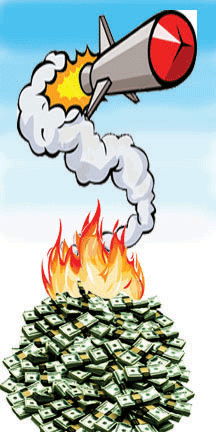 Trident: pre-empting Commons vote on new nuclear weapons project, Guardian, Richard Norton-Taylor, 1 Sept 15 Key questions remain over relevance of nuclear weapons to Britain’s security. George Osborne’s carefully-timed announcement that the government will spend £500m more on the Trident nuclear missile submarine base at Faslane in Scotland – on top of the £3bn already spent on replacing the existing Trident fleet – appears designed to pre-empt a parliamentary vote and close down a much-needed debate.
It was, as Osborne made clear on Monday, a politically-motivated announcement, whatever defence officials may say about the need to spend early on such long-lead items as components for nuclear missile submarines…….
Which country, now or in the future, threatens our national security with a nuclear attack? Russia, as concerned as the UK is about what both nations consider to be a real threat – violent Islamist terror groups?
China, a country with no interest apart from a commercial one, in Britain, a country also deeply concerned about terrorism? Are the Scandinavian countries, or Germany, less secure, because they do not posses nuclear weapons ?
Would the US sit back and happily give a green light to Britain firing a nuclear weapon in a conflict in which it was not a protagonist?
I ask these questions in the spirit of inquiry around the key issue, namely, is the UK’s nuclear arsenal a credible deterrent? (Is the French nuclear arsenal, for that matter?)
The biggest threat to Britain’s national security is from terror groups (who might get their hands on chemical and biological ones, though not nuclear ones). They are unlikely to be deterred by Britain’s long-range Trident intercontinental ballistic missiles.
Or is it a question of Britain’s status and prestige?…….http://www.theguardian.com/news/defence-and-security-blog/2015/sep/01/trident-pre-empting-commons-vote-on-new-nuclear-weapons-project
#Nuclear submarines bring increasing danger to Indo-Pacific region
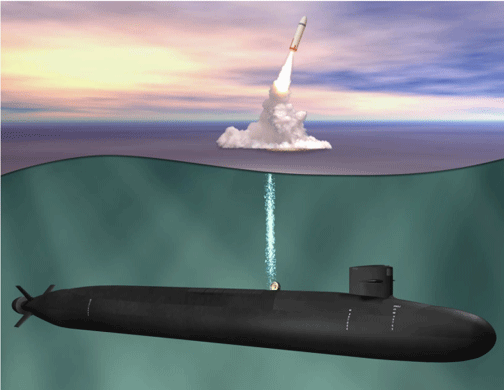 the more submarines you put in the same body of water, the higher the probability they might collide’.
Indo-Pacific nuclear sub threat to rival Cold WarAFR, by John Kerin, 3 Sept 15 The Indian and Pacific Oceans are becoming increasingly crowded with nuclear armed and conventional submarines increasing the risk of collision and nuclear conflict.
The warning is contained in a new Lowy Institute of International Affairs paper to be released on Friday which argues the region faces the greatest threat of a miscalculation involving nuclear armed submarines since the Cold War era.
“The regional contests for influence between the United States and China and China and India do not yet have the existential or ideological ‘life or death character’ of the Cold War,” the paper by Professor Rory Medcalf of the ANU based National Security College and Brendan-Thomas Noone from the Lowy International Security Program says.
“But quite literally below the surface a new and dangerous competition is emerging as China and India in particular start deploying nuclear weapons at sea……….
The paper says during the Cold War there were estimated to have been between 20 and 40 submarine collisions at sea.
“Dangerous submarine incidents can occur even among allies in the post Cold War world, as shown by a potentially disastrous clash between British and French nuclear armed boats in 2009,” the paper says.
“With the number of submarines operating in the Indo Pacific growing, particularly around choke points, the chances are such encounters will increase.
The paper says the risk of triggering a nuclear conflict remains low but could occur as countries such as China and India field long range nuclear weapons aboard their submarines for the first time – but crews lack sufficient experience with training and nuclear doctrine.
“There will likely be a long phase of initial instability as China and India start deploying nuclear submarines without the full command and communications systems and the training and doctrine so vital to a credible and secure deterrent,” the paper says.
“Unless these systems are in place nuclear submarines could be a strategic liability, rather than a stabilising presence, particularly during conflict or crisis situations,” it says……….
The first Australia-India naval exercise will be held later this month and the countries are also expected their first joint airforce exercises.: http://www.afr.com/news/policy/indopacific-nuclear-sub-threat-to-rival-cold-war-20150903-gjerpm#ixzz3kiBWLtw1
USA’s super costly new bomb could ignite anew arms race
 Inside the Most Expensive Nuclear Bomb Ever Made http://www.motherjones.com/politics/2015/07/nuclear-weapon-obama-most-expensive-ever
Could America’s latest atomic weapon ignite a new arms race?
—By Len Ackland and Burt Hubbard
Using “Dial-a-yield” technology, the bomb’s explosive force can be adjusted before launch from a high of 50,000 tons of TNT equivalent to a low of 300 tons—that’s 98 percentsmaller than the bomb dropped on Hiroshima 70 years ago.
Despite these innovations, the government doesn’t consider the B61-12 to be a new weapon but simply an upgrade. In the past, Congress has rejected funding for similar weapons, reasoning that more accurate, less powerful bombs were more likely to be used. In 2010, the Obama administrationannounced that it would not make any nuclear weapons with new capabilities. The White House and Pentagon insist that the B61-12 won’t violate that pledge.
The B61-12 could be deployed by the new generation of F-35 fighter jets, a prospect that worries Hans Kristensen, a nuclear weapons expert at the Federation of American Scientists. “If the Russians put out a guided nuclear bomb on a stealthy fighter that could sneak through air defenses, would that add to the perception here that they were lowering the threshold for the use of nuclear weapons?” he asks. “Absolutely.”
So far, most of the criticism of B61-12 has focused on its price tag. Once full production commences in 2020, the program will cost more than $11 billion for about 400 to 480 bombs—more than double the original estimate, making it the most expensive nuclear bomb ever built.
This story comes from our friends at Reveal. Read more of their coverage of the B61-12 and national security.
Len Ackland is a former newspaper reporter and editor of the Bulletin of the Atomic Scientists magazine. He is the author of Making a Real Killing: Rocky Flats and the Nuclear West.
Burt Hubbard is the editorial director of I-News. His numerous awards include two prestigious Best of the West awards, a National Education Award for investigative reporting, and Reporter of the Year in Colorado.
All States must sign, ratify Nuclear Test Ban – call from United Nations
 UN urges all States to sign, ratify Nuclear Test Ban as ‘critical step on road to nuclear-free world’ http://www.un.org/apps/news/story.asp?NewsID=51744#.VeDS4SWqpHw 28 August 2015 – For the fifth International Day against Nuclear Tests, United NationsSecretary-General Ban Ki-moon has welcomed voluntary moratoria on testing imposed by nuclear-armed states but stressed that these cannot substitute for a legally-binding treaty.
“The Comprehensive Nuclear-Test-Ban Treaty (CTBT) is essential for the elimination of nuclear weapons,” Mr. Ban said in a message. “It is a legally-binding, verifiable means by which to constrain the quantitative and qualitative development of nuclear weapons.”
The UN General Assembly declared 29 August the International Day against Nuclear Testsin December 2009, adopting a unanimous resolution that calls for increasing awareness and education “about the effects of nuclear weapon test explosions or any other nuclear explosions and the need for their cessation as one of the means of achieving the goal of a nuclear-weapon-free world.” 2010 marked the inaugural commemoration of the International Day against Nuclear Tests.
Reminding the world that this year marks the 70th anniversary of the dawn of the nuclear age, the UN chief said 70 years ago in 1945, “the Trinity Test unleashed the power of more than 20,000 tons of TNT and precipitated over 2,000 additional nuclear tests.”
“Pristine environments and populated communities in Central Asia, North Africa, North America and the South Pacific were hit,” he said. “Many have never recovered from the resulting environmental, health and economic damage. Poisoned groundwater, cancer, leukaemia, radioactive fallout – these are among the poisonous legacies of nuclear testing.”
“The best way to honour the victims of past tests is to prevent any in the future,” he said, noting that two decades after the CTBT was negotiated, “the time has long past for its entry-into-force.” “I welcome the voluntary moratoria on testing imposed by nuclear-armed States,” Mr. Ban said “At the same time, I stress that these cannot substitute for a legally-binding Treaty.”
“On this International Day, I repeat my longstanding call on all remaining States to sign and ratify the Treaty – especially the eight necessary for its entry-into-force – as a critical step on the road to a nuclear-weapon-free world,” he said.
The General Assembly resolution that established the world day was initiated by Kazakhstan, together with a large number of sponsors and cosponsors with a view to commemorate the closure of the Semipalatinsk Nuclear Test site on 29 August 1991.
In his remarks, Assembly President Sam Kutesa said the recently held 2015 Review Conference of the Treaty on the Non-Proliferation of Nuclear Weapons (NPT) had highlighted the stark reality of the increasing divisions between the States parties over the future of nuclear disarmament.
“It is now time to bridge the gap and work with more resolute political will to ensure that the NPT continues to remain the cornerstone of global security,” he declared.
Mr. Kutesa applauded the efforts of the Government of Kazakhstan, not only for initiating the International Day, but also for its continuing leadership in efforts to end nuclear weapons testing and to promote a world free of nuclear weapons.
He also commend the recent announcement of the Joint Comprehensive Plan of Action (JCPOA) on Iran’s nuclear programme, reached in Vienna between the international negotiators and Iran as an important step forward on this critical issue.
“I hope this agreement will benefit the non-proliferation regime and will lead to greater mutual understanding and cooperation on the many serious security challenges in the Middle East and beyond,” he said.
He also announced that on 10 September, he plans to convene an informal meeting of the General Assembly to mark the International Day under the overall theme ‘Towards Zero: Resolving the Contradictions.’
Pakistan building up nuclear weapons in fear of India’s nuclear weapons

 Pakistan stockpiling nuclear arms due to fears over India: U.S. report, National Post, Tim Craig, Washington Post | August 28, 2015 SLAMABAD, Pakistan – A new report by two American think tanks asserts that Pakistan may be building 20 nuclear warheads annually and could have the world’s third-largest nuclear stockpile within a decade.
The report by the Carnegie Endowment for International Peace and the Stimson Center concludes that Pakistan is rapidly expanding its nuclear capabilities because of fear of its arch-rival, India, also a nuclear power. The report, released Thursday, says Pakistan is far outpacing India in the development of nuclear warheads.
Analysts estimate that Pakistan has about 120 nuclear warheads, while India has about 100.
In the coming years, the report states, Pakistan’s advantage could grow dramatically because it has a large stockpile of highly enriched uranium that could be used to quickly produce low-yield nuclear devices. India has far larger stockpiles of plutonium, which is needed to produce high-yield warheads, than Pakistan does. But the report says India appears to be using most of its plutonium to produce domestic energy.
Pakistan could have at least 350 nuclear weapons within five to 10 years, the report concludes. Pakistan would then possess more nuclear weapons than any country except the United States and Russia, which each have thousands of the bombs.
“The growth path of Pakistan’s nuclear arsenal, enabled by existing infrastructure, goes well beyond the assurances of credible minimal deterrence provided by Pakistani officials and analysts after testing nuclear devices,” the report states.
Pakistani military officials were not available to comment on the report.
Western officials and analysts have struggled for years to get an accurate assessment of Pakistan’s nuclear capabilities. Several Pakistani analysts questioned the findings of the report, saying it is based on a faulty assumption that Pakistan is using all of its existing stockpiles of fissile material to make nuclear weapons.
Mansoor Ahmed, a nuclear expert at Quaid-i-Azam University in Islamabad, said he suspects that a more accurate assessment of Pakistan’s capability is that it can develop no more than 40 to 50 new warheads over the next several years.
Ahmed, however, doesn’t dispute that Pakistan’s military is seeking to expand its nuclear capabilities………
India and Pakistan, which have fought three major wars, became declared nuclear powers in 1998. Since then, Western leaders have been increasingly alarmed about the potential for a nuclear exchange between the rivals.
India has adopted a no-first-use policy on nuclear weapons. Pakistani leaders have repeatedly declined to take a similar stance, saying they might be forced to resort to using the weapons should India’s larger army ever invade Pakistan.
India views nuclear weapons “as a political tool, a prestige item, not something you use on a battlefield,” Krepon said. In Pakistan, he said, nuclear weapons are seen as “things you have to be willing to use” to guarantee stability.
But Krepon and Dalton said there is still time for Pakistan to slow down the development of its nuclear arsenal. If it does, they said, the international community should consider what steps it can take to recognize it as a responsible nuclear state. http://news.nationalpost.com/news/world/pakistan-stockpiling-nuclear-arms-due-to-fears-over-india-u-s-report
1 This Month
23-25 October – on Zoom – World BEYOND War’s annual global conferenc


Shut down the radiation-damaged Heysham nuclear reactors now
To see nuclear-related stories in greater depth and intensity – go to https://nuclearinformation.wordpress.com

Say No to NASA’s Reckless Nuclear Reactor on the Moon
Say No to NASA’s Reckless Nuclear Reactor on the Moon
-
Archives
- October 2026 (190)
- September 2026 (339)
- August 2026 (330)
- July 2026 (355)
- June 2026 (287)
- May 2026 (306)
- April 2026 (356)
- March 2026 (251)
- February 2026 (267)
- January 2026 (308)
- December 2025 (358)
- November 2025 (359)
-
Categories
- 1
- 1 NUCLEAR ISSUES
- business and costs
- climate change
- culture and arts
- ENERGY
- environment
- health
- history
- indigenous issues
- Legal
- marketing of nuclear
- media
- opposition to nuclear
- PERSONAL STORIES
- politics
- politics international
- Religion and ethics
- safety
- secrets,lies and civil liberties
- spinbuster
- technology
- Uranium
- wastes
- weapons and war
- Women
- 2 WORLD
- ACTION
- AFRICA
- Atrocities
- AUSTRALIA
- Christina's notes
- Christina's themes
- culture and arts
- Events
- Fuk 2022
- Fuk 2023
- Fukushima 2017
- Fukushima 2018
- fukushima 2019
- Fukushima 2020
- Fukushima 2021
- general
- global warming
- Humour (God we need it)
- Nuclear
- RARE EARTHS
- Reference
- resources – print
- Resources -audiovicual
- Weekly Newsletter
- World
- World Nuclear
- YouTube
-
RSS
Entries RSS
Comments RSS

