Why can’t we live with a nuclear North Korea?, The Week, GracyOlmstead 6 Dec 17 How do you “solve” the North Korea problem? This question has dominated U.S. foreign policy discussions for years. Former President Barack Obama warned President Trump before his inauguration that the small, poor, nuclear-armed country could pose the most urgent foreign policy challenge of his presidency.
Despite extensive economic sanctions and diplomatic pressure, North Korea continues to advance its military power. Last week, North Korea tested an intercontinental ballistic missile (ICBM) that could potentially reach the entire continental U.S. American politicians are scrambling to figure out how to respond.
Unfortunately, the first and primary position on the part of most U.S. policymakers has been panicked overreaction. Sen. Lindsey Graham (R-S.C.) told CNN, “If we have to go to war to stop this, we will. If there’s a war with North Korea it will be because North Korea brought it on itself, and we’re headed to a war if things don’t change.”…….
North Korea is an oppressive and dictatorial country, one that has committed a plethora of human rights atrocities against its citizens, and which uses propaganda and antagonism to anger its opponents on the world stage. We know this. But while concerning, this new step by North Korea is neither unexpected nor revolutionary. The fundamentals of the situation remain unchanged. Policymakers need to take a deep breath.
Calling for war or military strikes to remove their nuclear capabilities is a counterproductive and dangerous policy. U.S. resources and presence in the region are already considerable — as American University scholar Joshua Rovner explains, “The best way to deter nuclear powers from using their arsenals to act more conventionally aggressive is by maintaining local conventional superiority. This enhances deterrence without risking escalation, which in turn reduces questions about credibility and alleviates stress on alliances.”
South Korea’s President Moon Jae-in opposes preventive strikes in response to North Korea’s recent tests, and has expressed some concern that the U.S. might act prematurely. “We must stop a situation where North Korea miscalculates and threatens us with nuclear weapons or where the United States considers a pre-emptive strike,” he said at a recent emergency meeting in Seoul.
Attempting to overthrow or undermine North Korea’s regime would have massive implications for South Korea, as well as for China and North Korea’s vulnerable citizenry. In this instance, preventive military action would result in a bevy of unintended consequences, yet nobody in the Trump administration talks about this…….
Calling for war or military strikes to remove their nuclear capabilities is a counterproductive and dangerous policy. U.S. resources and presence in the region are already considerable — as American University scholar Joshua Rovner explains, “The best way to deter nuclear powers from using their arsenals to act more conventionally aggressive is by maintaining local conventional superiority. This enhances deterrence without risking escalation, which in turn reduces questions about credibility and alleviates stress on alliances.”
South Korea’s President Moon Jae-in opposes preventive strikes in response to North Korea’s recent tests, and has expressed some concern that the U.S. might act prematurely. “We must stop a situation where North Korea miscalculates and threatens us with nuclear weapons or where the United States considers a pre-emptive strike,” he said at a recent emergency meeting in Seoul.
Attempting to overthrow or undermine North Korea’s regime would have massive implications for South Korea, as well as for China and North Korea’s vulnerable citizenry. In this instance, preventive military action would result in a bevy of unintended consequences, yet nobody in the Trump administration talks about this.
…….”Maximum pressure” will not work with North Korea. The U.S. must instead consider a strategy that acknowledges North Korea’s purpose and personality — and one that inspires confidence and respect in our allies, most especially South Korea, whose confidence in usseems to have been shakenby recent events…….
Although a nuclear North Korea is far from ideal, descending into panic will not serve U.S. interests abroad, and it won’t keep America safe. The Trump administration must consider the dangerous ramifications of their belligerent stance toward North Korea, before they make a catastrophic miscalculation. http://theweek.com/articles/740247/why-cant-live-nuclear-north-korea
Radioactive Waste And The Hidden Costs Of The Cold War, Forbes, David Rainbow, Assistant Professor, Honors College, University of Houston, 4 Dec 17, Hanford,a dusty decommissioned plutonium production site in eastern Washington state, is one of the most polluted places in the country. The disaster is part of the inheritance of the Cold War.
A few months ago, a 110-meter-long tunnel collapsed at the site, exposing an old rail line and eight rail cars filled with contaminated radioactive equipment. This open wound in the landscape, which was quickly covered over again, is a tiny part of an environmental and human health catastrophe that steadily unfolded there over four decades of plutonium production. Big Cold War fears justified big risks. Big, secretive, nuclear-sized risks.
Hanford and other toxic reminders of the Cold War should serve as a cautionary tale to those who have a say in mitigating geopolitical tensions today, as well as to those who promote nuclear energy as an environmentally sustainable source of electricity. The energy debate must balance the downside – not just the risk of a nuclear meltdown but also the lack of a permanent repository for the still-dangerous spent fuel rods – with the environmental benefits of a source of electricity that produces no greenhouse gases. People on both sides of the issue have a vested interest in how the current geopolitical tussling over nuclear weapons plays out……
Nuclear refinement at Hanford began as a part of the Manhattan Project during World War II, the highly secretive plan to develop a nuclear bomb.
Initially, the drive to mobilize for war justified substantial costs, among them significant damage to human and environmental health in the U.S. resulting from the nuclear program. Hanford was integral to the program: its plutonium fell on Nagasaki. But after the end of the war, the scale of production at the site increased to a fevered pitch thanks to the ensuing competition for global influence between the U.S. and the Soviet Union that became the Cold War.
Our gargantuan stockpiles of nuclear arms demanded gargantuan quantities of plutonium. Forty-five years of work at Hanford – from 1943 to 1987 – yielded 20 million uranium metal plugs used to generate 110,000 tons of fuel. The process also generated 53 million gallons of radioactive waste, now stored in 177 underground tanks at the facility, and created 450 billion gallons of irradiated waste water that was discharged onto “soil disposal sites,” meaning it went into the ground. Some of the irradiated discharge simply ran back to where it had originally been taken from, the nearby Columbia River. The Office of Environmental Management at the Department of Energy is currently overseeing a cleanup project involving 11,000 people. It is expected to take several decades and cost around $100 billion.
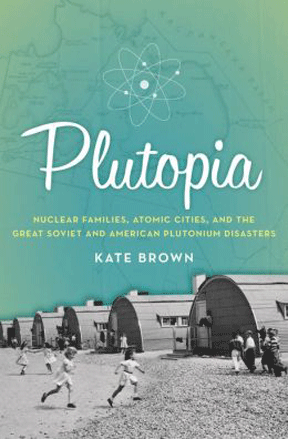
Kate Brown’s award-winning book, “Plutopia: Nuclear Families, Atomic Cities, and the Great Soviet and American Plutonium Disasters,” is a history of the Hanford plant and its Soviet doppelgänger, a plant in the Ural Mountains called Maiak. Brown points out that over the course of a few decades, the two nuclear sites spewed two times the radiation emitted in the Chernobyl explosion. Yet few Americans at the time, even those involved in plutonium production, realized this was going on or how dangerous it was.
Naturally, the hidden nature of the project meant that information was hard to come by. As Brown shows, even the experts, managers and scientists involved directly in overseeing the production process knew little about the seriousness of the risk. Doctors studying the effects of radiation on people didn’t have access to the research related to environmental pollution. Scientists studying fish die-offs had no way of connecting their findings to the deteriorating immune systems of humans in the same areas. Most poignantly, researchers measuring the effectiveness of nuclear bombs on the enemy did not communicate with researchers measuring the threat of nuclear bombs on the workers making them.
Consequences for the workers were grave. Hanford and Maiak’s hidden mega-pollution was collateral damage in the fight to win the Cold War. Russia, like the U.S., is still living with the damage, and trying to bury it, too.
Within two days of the tunnel collapse at the Hanford site this past May, workers filled the breach with 53 truckloads of dirt and narrowly avoided a radiological event. However, these eight railcars are hardly the only waste left behind in the U.S. from our cold conflict with the Soviet Union, in which our willingness to risk human and environmental health was proportionate to our fears. It’s going to be a while before it’s all cleaned up. In the meantime, hopefully our leaders will work to keep the new Cold War from getting any worse. https://www.forbes.com/sites/uhenergy/2017/12/04/the-hidden-costs-of-cold-war/#a3593c1136ff
Air drills put region on ‘brink of nuclear war’, warns North Korea, 9 News, By Richard Wood
The comments by North Korea represent rising escalation on the Korean peninsula and came as US National Security Adviser HR McMaster declared the possibility of war was “increasing” daily. Pyongyang described the drill as ‘warmongering’.
The five-day air drill called Vigilant Ace kicks off today over the Korean peninsula and involves 230 advanced warplanes from the South Korean and US air forces.
Commentary by Pyongyang’s Rodong Sinmun newspaper, carried by North Korea’s state media agency, criticised the exercise as a “dangerous provocation” propelling the region to “the brink of nuclear war”.
A total of 12,000 US personnel from the marines, navy and air force will take part in Vigilant Ace, reports The Wall Street Journal.
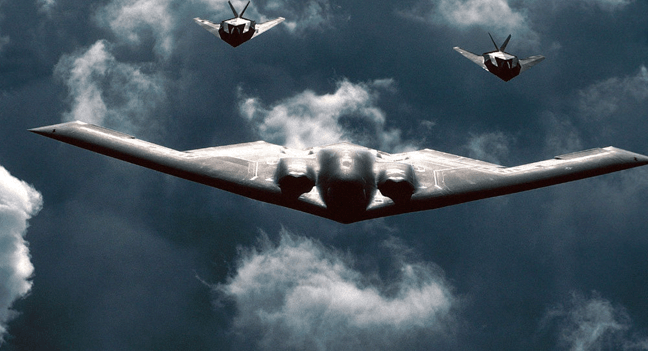
The aircraft flying from eight bases include the hi-tech F-22 Raptor and F-35 Lightning.
Both aircraft are more than a match for anything in North Korea’s largely Soviet-era air force and are cloaked in stealth coating, making them virtually invisible to enemy radar. Flying at 1930km/h, the F-35s can carry nuclear bombs and bunker-busting munitions, regarded as vital for targeting and destroying North Korea’s complex of military tunnels……. https://www.9news.com.au/world/2017/12/04/11/54/us-and-south-korean-air-drills-risk-war-north-warns
Those of us in the field of emergency preparedness shudder with the realization that a growing number of nations are joining the global thermonuclear arms race.
This reality is fraught with consequences that most people do not recognize, and frankly do not want to know.
In a nutshell, thermonuclear weapons, colloquially known as H-bombs, produce much larger yields of destructive power than the nuclear weapons that countries tested in the early days of nuclear weapon development.
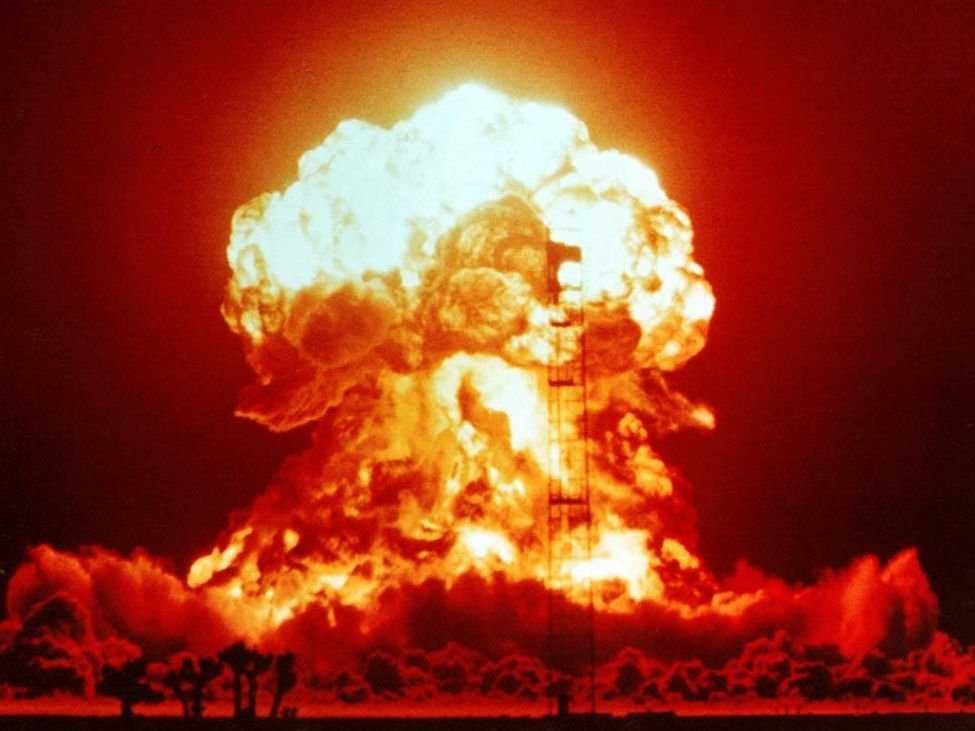
For example, the nuclear bombs that the U.S. dropped on Japan in 1945 were in the 15 to 20 kiloton yield. This means that they had the destructive power of an equivalent of 15,000 to 20,000 tons of dynamite.
In addition to killing about 100,000 people, these weapons cause thousands of traumatic injuries, thousands of radiation injuries and hundreds of thermal burn victims.
Compare that to a thermonuclear weapon which is in the range of 75 to 49,000 kilotons of destructive power. Used on a densely populated urban center like New York City or Tokyo, just one weapon would kill millions of people and produce millions of casualties.
Those numbers are devastating enough, but the real nightmare is that the number of thermal burn casualties greatly multiply with a thermonuclear weapon relative to a simple nuclear weapon.
A typical serious thermal burn injury in a well staffed hospital takes three to four medical personnel per patient to provide adequate care. When we have hundreds of thousands of surviving burn patients due to an urban thermonuclear detonation, we are not going to be able to treat even a tiny fraction of them.
Until now, only wealthy and advanced nations – the United States, Russia, China, the United Kingdom, France and Israel – were able to produce these massively destructive thermonuclear weapons.
Now, with poor and unstable North Korea joining the thermonuclear club, other small nations may realize that this previously difficult threshold may be within their technical reach.
Even worse, nations around the world know that the Earth is getting to be a much more dangerous place when a nation like North Korea has such weapons, and many will perceive that their national safety now depends on procuring these terrible devices as well.
In academic journals and in the media, there is talk of Indiaacquiring thermonuclear weapons on the fast track, which will pressure Pakistan to do the same. The sense of urgency is even touching nations that previously eschewed the development of nuclear weapons.
Even Japan – which by its constitution is significantly restricted in its armaments and has no nuclear weapons at all – could use its enormous stockpile of nuclear waste to rapidly develop an equally enormous stockpile of thermonuclear weapons.
Despite repeated headlines about the growing possibility of nuclear war, most people, curiously, avoid thinking or talking about it. In over a thousand lectures on nuclear war medical response, I find even medical audiences do not want to address the issue.
In fact, I recently published an assessment of U.S. and Asian emergency medical responders’ hypothetical response to a nuclear event which found a striking lack of knowledge about patients affected by radiation after nuclear war and a strong reluctance to treat them, even though it is far less dangerous than treating infectious disease patients.
This fear of radiation is just as pronounced in the general population. We had a very hard time getting the medical and public health community to adequately address this issue even when we were focused on the smaller, Hiroshima-sized weapons, where it is feasible to mount a credible response. Now, we have to discuss the grim prospect of responding to the global thermonuclear arms race that we are now in – and currently losing.
While nuclear nonproliferation remains a top priority, the preparation for responding to the actual use of these terrible weapons is now a regrettable necessity that we must confront.
Cham Dallas is the director of the Institute for Disaster Management at the University of Georgia.
Air drills put region on ‘brink of nuclear war’, warns North Korea, 9 News, By Richard Wood
The comments by North Korea represent rising escalation on the Korean peninsula and came as US National Security Adviser HR McMaster declared the possibility of war was “increasing” daily. Pyongyang described the drill as ‘warmongering’.
The five-day air drill called Vigilant Ace kicks off today over the Korean peninsula and involves 230 advanced warplanes from the South Korean and US air forces.
Commentary by Pyongyang’s Rodong Sinmun newspaper, carried by North Korea’s state media agency, criticised the exercise as a “dangerous provocation” propelling the region to “the brink of nuclear war”.
A total of 12,000 US personnel from the marines, navy and air force will take part in Vigilant Ace, reports The Wall Street Journal.
The aircraft flying from eight bases include the hi-tech F-22 Raptor and F-35 Lightning.
Both aircraft are more than a match for anything in North Korea’s largely Soviet-era air force and are cloaked in stealth coating, making them virtually invisible to enemy radar. Flying at 1930km/h, the F-35s can carry nuclear bombs and bunker-busting munitions, regarded as vital for targeting and destroying North Korea’s complex of military tunnels……. https://www.9news.com.au/world/2017/12/04/11/54/us-and-south-korean-air-drills-risk-war-north-warns
US seeking new missile defence sites on West Coast as North Korea nuclear attack fears grow, congressmen say Pressure grows on government to respond to increasing likelihood Kim Jong-Un regime has missiles that could hit mainland America, Independent Mike Stone 3 Dec 17 The US agency tasked with protecting the country from missile attacks is scouting theWest Coast for places to deploy new anti-missile defences, two Congressmen said on Saturday, as North Korea’s missile tests raise concerns about how the United States would defend itself from an attack.
West Coast defences would likely include Terminal High Altitude Area Defense (THAAD) anti-ballistic missiles, similar to those deployed in South Korea to protect against a potential North Korean attack.
The United States on Wednesday warned that North Korea’s leadership will be “utterly destroyed” if war breaks out as it called on countries to cut all diplomatic and trade ties with North Korea — including Chinese oil shipments to Pyongyang.
Washington urged tough action at an emergency meeting of the Security Council called to respond to North Korea’s launch of an intercontinental ballistic missile (ICBM).
“The dictator of North Korea made a choice yesterday that brings the world closer to war, not farther from it,” US Ambassador Nikki Haley told the council.
“If war comes, make no mistake: The North Korean regime will be utterly destroyed.”
US President Donald Trump derided Kim Jong-Un as a “sick puppy” and threatened “major” new sanctions after Pyongyang tested its third ICBM — which it claimed was capable of striking anywhere in the United States.
The test ended a two-month lull in missile tests that had raised hopes for the opening of diplomatic talks.
North Korean leader Kim said the test of the Hwasong-15 weapons system had helped his country achieve the goal of becoming a full nuclear power, as the international community expressed outrage.
“We call on all nations to cut off all ties with North Korea,” Haley told the council.
The US ambassador said Trump had called Chinese President Xi Jinping and urged him to “cut off the oil from North Korea”, a move that would deal a crippling blow to North Korea’s economy………
There are concerns in Seoul that Trump might be considering military action against the North that could trigger a full-scale war.
Seoul is home to 10 million people and only about 50 kilometers from the border — well within range of Pyongyang’s artillery.
Russia urged the United States to scrap military exercises planned with South Korea in December, arguing they would exacerbate tensions.
“It is essential to take a step back,” said Russian Ambassador Vassily Nebenzia, who urged Washington “to revise its policy of mutual threats and intimidation.”
North Korea celebrates becoming a nuclear state with huge rally and firework display
Troops cheered, laughed and smiled as a beautiful firework display lit up Kim Il-Sung Square in Pyongyang
North Korea is celebrating the declaration by dictator Kim Jong-Un that the Stalinist state is a nuclear power
It comes after the dramatic launch of the long-range Hwasong-15 intercontinental ballistic missile on Tuesday
By Iain Burns Daily Mail. UK,
Thousands of North Korean soldiers have appeared at a rally today to celebrate after dictator Kim Jong-Un declared the Stalinist regime a nuclear power.
Troops cheered, laughed and smiled as a huge firework display lit up Kim Il-Sung Square in Pyongyang following the successful test of the Hwasong-15 intercontinental ballistic missile on Tuesday.
State media reported that North Korea‘s leader Kim Jong-Un had declared the country had achieved the ‘historic cause’ of becoming a nuclear state on November 29……..
The Pentagon said the test missile traveled about 620 miles and landed within 200 nautical miles of Japan’s coast.
In a broadcast on state TV, North Korea said the missile reached an altitude of around 2,780 miles – more than 10 times the height of the international space station – and flew 600 miles during its 53 minute flight.
North Korea deliberately fires its missile on a near-vertical trajectory to artificially limit the range.
A ‘preventive strike’ against North Korea would trigger ‘nuclear retaliation’
On Tuesday, North Korea test fired what experts believe is its most advanced long range, nuclear-capable missile yet.
In response, Sen. Lindsey Graham told CNN “If we have to go to war to stop this we will.”
A preventive strike against North Korea is not feasible and would have devastating consequences. The best path is still diplomacy. Lt. Col. Daniel L. Davis, USA, Ret. CNBC , 1 December 17,
On Tuesday, North Korea test fired what experts believe is its most advanced long range, nuclear-capable missile yet. In response, U.S. Sen. Lindsey Graham (R-SC) bluntly told CNN’s that Trump will not allow North Korea to even possess a nuclear missile capable of hitting the U.S.”If we have to go to war to stop this we will,” he said. “We’re headed towards a war if things don’t change.”If Sen. Graham’s binary choice accurately reflects the president’s thinking, then war will come, and millions could die, including thousands of Americans. Such a war is too costly to seriously consider absent an imminent attack.
It is difficult to overstate the negative consequences that would result should President Trump order any type of “preventive” military strike—that is, an attack to deprive them of a capability rather than to stop an actual, imminent launch—against North Korea.
Choe Kang-il, Deputy Director General for North American affairs at North Korea’s foreign ministry recently told the New York Times, “If the United States even hints at a strike on North Korea, we will proceed with a preemptive attack on the U.S.”In case some are tempted to think these threats are merely bluster by the Kim regime, they were echoed almost precisely last month in congressional testimony by the highest ranking North Korean official ever to defect.
Former diplomat Thae Yong-ho told members of Congress North Korean officers are trained to fire their weapons “without any further instructions from the general command if anything happens on their side.” Their response would be immediate and devastating.
Consider the most dangerous course of action: this latest test, reportedly fired from a mobile launcher, indicates North Korea has the ability to launch nuclear-tipped missiles. If the United States tries to take out launch points, or even a massive and sustained bombing campaign in an attempt to destroy their ability to retaliate, we will inflict extraordinary damage—but it is unlikely our attacks would successfully penetrate all their mountain bunkers.
That leaves the possibility that Kim Jong-un would order a mobile launcher to emerge from its protective bunker, and in retaliation, send a nuclear missile crashing into Guam, Hawaii, or Seattle.
Such an act would not be a fringe possibility were the U.S. to launch any type of “preventive” armed attack; it would be a likely outcome.
The window of opportunity to strike North Korea without risk of nuclear retaliation closed many years ago. For more than a decade, it has been impossible to take out North Korea’s ability to launch conventional and nuclear retaliatory strikes against our allies—the only recent development is that our homeland may now also be at risk of a counterstrike.
North Korea reveals images of new ballistic missile – it’s a monster, SMH, 1 Dec 17, North Korea released numerous images Thursday that it says are of the new intercontinental ballistic missile it claims is capable of striking “the whole mainland of the US.”
Dozens of photos of the Hwasong-15 missile were published in state media. North Korea claims to have achieved its goal of becoming a nuclear state with the missile launch Wednesday.
Michael Duitsman, a researcher at the Centre for Nonproliferation Studies in Monterey, California, tweeted soon after the photos were published: “This is very big missile … And I don’t mean ‘Big for North Korea.’ Only a few countries can produce missiles of this size, and North Korea just joined the club.”
Duitsman suggested the new ICBM appears to have a different engine arrangement and improved steering from the the smaller Hwasong-14 ICBM that the North tested twice in July.
“They wanted (to be able) to hit all of the US and they wanted something big to hit it with. This seems on the surface level to be that missile,” David Schmerler, a research associate at the James Martin Centre for Nonproliferation Studies, told CNN.
The Hwasong-15 appears to be the longest-range missile ever tested by North Korea, which said it reached an altitude of 2,780 miles (4473 km) and flew a distance of 590 miles (949 km) in 53 minutes.
Ambassadors of Western nuclear powers to snub Nobel ceremony
Head of anti-nuke group set to receive prize says decision by US, UK and France not to send top envoys shows its campaign is working, Times of Israel, OSLO, Norway, 30 Nov 17, — Breaking with tradition, nearly all ambassadors of the world’s nuclear powers will not attend this year’s Nobel Peace Prize ceremony which honors efforts to ban atomic weapons, the Nobel Institute said Thursday.
“We are disappointed that the ambassadors from the United Kingdom, the United States and France won’t be there,” the head of the International Campaign to Abolish Nuclear Weapons Beatrice Fihn told AFP.
“They claim to be committed to a world without nuclear weapons, and they should be celebrating civil society’s work on the issue,” she said, regretting their “defensive” position, yet noting that it “shows that this treaty and the campaign is already having an impact on them.”
The Peace Prize was awarded on October 6 to ICAN, a coalition of non-governmental organizations lobbying for a historic treaty banning atomic weapons, which was signed in July by 122 countries though none of the nuclear powers.
ICAN will formally receive its prize at a lavish ceremony in Oslo on December 10.
During a meeting in the Norwegian capital last week, the United States, France and Britain all informed the Nobel Institute of their joint decision to be represented by their embassy’s second-in-charge.
“They clearly received instructions to express their reservations towards ICAN and the global treaty” to ban weapons of mass destruction, the head of the Nobel Institute, Olav Njolstad, told AFP.
Of the nine countries believed to have nuclear weapons capabilities, Russia and Israel, which has never acknowledged having nuclear weapons, will be the only ones sending their ambassadors to the ceremony………
The Nobel Institute said the ambassadors of India and Pakistan will be travelling at the time of the ceremony, while China has not attended the prize-giving since 2010, when a Chinese dissident was awarded the honor.
North Korea does not have an embassy in Oslo. The Nobel Institute said the ambassadors of India and Pakistan will be travelling at the time of the ceremony, while China has not attended the prize-giving since 2010, when a Chinese dissident was awarded the honor.
It was in the 1950s when the British began testing nuclear weapons at Maralinga in the South Australian outback.
The legacy of the bombs dropped continues to haunt the 67-year-old Aboriginal grandmother. “We weren’t on ground zero at Maralinga, otherwise we would all be dead,” she told AAP. “I was born and grew up on a mission at Koonibba, but the winds came to us.”
Ceduna, the main township before the Nullarbor, is the cancer capital of Australia, Ms Coleman-Haseldine says. She’s had her thyroid removed and will be on medication for the rest of her life.
Her 15-year-old granddaughter is also battling thyroid cancer..
There are birth defects and cancers right across the community. “It’s changed our genes,” she said.”These diseases weren’t around before the bombs.”
On December 10, Ms Coleman-Haseldine will be in Oslo for the Noble Peace Prize award ceremony.
The International Campaign to Abolish Nuclear Weapons (ICAN) is being recognised for its work to achieve a treaty-based ban on nuclear weapons.
So far 122 countries have adopted the treaty, excluding Australia and countries with nuclear weapons – the US, UK, Russia, China, France, India, Pakistan, North Korea and Israel.
Only three countries have ratified the treaty and 50 are needed for it to become international law.
ICAN is a grassroots movement that began in Carlton, Melbourne more than a decade ago.
In Norway, Ms Coleman-Haseldine will tell the story of her people and their contaminated land.”You’ve got to keep the past alive to protect the future,” she said.
Ms Coleman-Haseldine hopes Australia will reverse its opposition and sign the treaty.
The Turnbull government has ruled that out but the Labor Party will debate the issue at its national conference next year.
Trump on North Korean missile launch: ‘We will take care of it’, By Zachary Cohen, Ryan Browne, Nicole Gaouette and Taehoon Lee, CNN, November 29, 2017 Washington North Korea issued a direct challenge to President Donald Trump with the launch of an ICBM missile that Defense Secretary James Mattis said demonstrates it has the ability to hit “everywhere in the world.”
Pyongyang blasted a missile that flew higher and farther than any of its past tests, despite repeated warnings from Trump, who has said he would counter the isolated north Asian country with “fire and fury” if it threatened the US.
Hours after the launch, Trump sounded more restrained, telling reporters Tuesday at the White House that the US “will handle” the situation. “We will take care of it,” the President said, adding later that North Korea “is a situation that we will handle.”……..
Prior to today’s launch, lawmakers on both sides of the aisle had warned of devastating consequences if the US takes military action against North Korea. Pyongyang can batter Seoul with a barrage of conventional weapons, putting millions of South Koreans and more than 28,000 US troops stationed there within easy target range…….. http://edition.cnn.com/2017/11/28/politics/north-korea-missile-launch/index.html
It was supposed to be a trip to paradise, instead it sealed their fatehttp://www.abc.net.au/news/2017-11-28/the-toxic-legacy-of-a-deadly-paradise/9168422 These soldiers were ordered to clean up the toxic legacy of America’s nuclear program, now they’re dying, and their Government has abandoned them.Foreign Correspondent, By Mark Willacy When Jim Androl landed on a remote central Pacific atoll to take part in the biggest nuclear clean-up in United States history, the only extra items his military superiors gave him were some flea powder and a pamphlet on how to avoid heat stroke.
The army did have special radiation suits and respirators for handling the left-over atomic waste on the atoll, but the young soldiers were only allowed to wear them on special occasions.
“The [protective suits] were for photo ops,” the former communications specialist with the US Army’s 84th Engineer Battalion recalls.
“I know once when I believe 60 Minutes was there, they did [let us wear them]. We were just issued our normal warm weather gear … shorts, tee-shirts, hats and jungle boots and that’s it.”
Androl was one of about 4,000 US troops sent to Enewetak Atoll in the Marshall Islands between 1977 and 1979 to scrape up the contaminated remnants of the United States’ atomic testing program.
The US government decided to use soldiers for the clean-up, because employing specialist nuclear workers would have doubled the cost.
“I’d never even heard of Enewetak. I never knew that there were 43 nuclear tests out there,” Androl, who was 22-years old when he was deployed to the atoll, says.
Some of those bombs were the among the most powerful ever detonated, and they left behind a toxic legacy that will live on for thousands of years.
“One of the attempted nuclear weapons explosions didn’t work,” Michael Gerrard, the director of the Earth Institute at New York’s Columbia University, says. “So the plutonium was just broken apart by the conventional explosion, leading to about 400 little chunks of plutonium that were spread around the atoll.”
The plutonium on Enewetak has a radioactive half-life of more than 24,000 years, and the US clean-up troops were ordered to place the shattered pieces into plastic bags and dump them into a crater left behind by an old atomic bomb test.
One-millionth of a gram of plutonium is potentially harmful, and can cause cancer decades after first exposure.
“They’d have us walk around and pick up loose pieces, and just gather up whatever we could, throw it in a pile,” Androl says.
It’s estimated that 85,000 cubic metres of radioactive material was collected and dumped, including contaminated soil, concrete, and military equipment.
“It was a very dirty operation,” Ken Kasik, another of the men sent to Enewetak as part of the clean-up, says. “[The veterans are] all sick, they’re all dying, and it’s because of the radiation.”
Kasik can barely rise from his chair to greet me when I arrive to see him.
We were supposed to meet at his home in Hawaii.
But by the time I land, he is seriously ill in the intensive care unit in Honolulu’s Straub Medical Centre, and is tethered to drips and monitoring machines.
“About three-and-a-half years ago I had so many cancers on me, I couldn’t work anymore. They ripped me apart,” he says.
This time it’s not cancer that has forced Ken Kasik to be rushed to the ICU, but a brain aneurism he says is directly linked to his time on Enewetak and the atomic fall-out there.
“When those bombs go off, in Enewetak, that’s coral sand,” Kasik says. “That just gets pulverised and comes back down as baby powder, and it was on everything, everywhere. The guys would come home, take off their sunglasses, [and their faces] would be white.”
“I never had any clue that dust could literally get into your lungs,” Jim Androl says from his home in the suburbs of Las Vegas. “You breathe it, you drink it, you eat it, you swim in it. Every day for six months, 24/7.”
The problem for Enewetak clean-up veterans like Androl and Kasik, is that successive United States governments have refused to recognise them and their comrades as atomic veterans. This means they cannot access health benefits or radiation exposure compensation.
Other atomic veterans, like those involved in the original atomic testing program in the Pacific in the 1940s and 1950s that left behind the waste on Enewetak and Bikini atolls, were covered for more than 20 specific types of cancers.
“Our boys worked six-month tours on a dirty island, and the government says, ‘You were never there’,” Kasik says. “We were never acknowledged…we don’t exist.”
Like Kasik, Androl has suffered serious health problems over the years that he blames on his six-month tour at Enewetak.
“He had his gall bladder out … two weeks [later] they found a seven-and-a-half-pound tumour, cancerous tumour in his abdomen,” Androl’s wife Bev says.
“I suffer from roughly 40 to 45 residuals from the cancer,” Androl says. “I’ve got pancreatitis, I’ve got a spot on my liver that they’re watching.”
As well as cancers, veterans complain of brittle bones and even of birth defects in their children.
The US military insists there is no connection between veterans’ illnesses and the clean-up on Enewetak, saying their radiation exposure was well within safe limits.
A two-year campaign by Enewetak veterans to get Congress to give them medical benefits has been unsuccessful.
“I think mostly they’re trying to get health coverage, medical care because they’ve got terrible bills. Really high bills from hospitals, because of their treatment,” Giff Johnson, the publisher of the Marshall Islands Journal, the country’s only newspaper, says.
There has never been a formal study of the health of these men, many of whom are now in their late 50s and early 60s.
But an unofficial social media survey of more than 400 Enewetak clean-up veterans found that 20 percent had reported cancers of some type.
The life they live is a far cry from the photos Ken Kasik took at the time, of young men in their prime.
“It just breaks our heart, You know, they’re dying before they’re 60. It’s ridiculous,” Bev Androl says.
The Marshall Islands is once again grappling with its nuclear legacy, as the threat of climate change threatens to break open the dome.
“God, there’s been so many [who have died],” Androl says of his former comrades. “We just lost one two weeks ago. We lost one about six months before that. They told me I’d be dead by now. We’re nobody, we don’t matter, our family’s lives don’t matter.”
The people of the Marshall Islands also suffered terrible heath impacts from 12 years of atomic testing in their homeland, including increased rates of thyroid and other cancers, as well as birth defects.
Whole islands were evacuated, and many people are still not allowed to return to live in their home villages decades on.
Like the US clean-up veterans, the Marshallese who suffered were never properly compensated.
A nuclear claims tribunal set up by the Marshall Islands and the United States awarded more than $2 billion dollars to victims of the atomic testing program — less than $4 million was ever paid.
“America dumped all of their worst rubbish to the Marshallese, and abandoned them with it. And we don’t want to hear about it,” Kasik says.
“Experts think North Korea will take two to three more years but they are developing their nuclear capabilities faster than expected and we cannot rule out the possibility Pyongyang may declare the completion of their nuclear program in a year,” said Unification Minister Cho Myoung-gyon at a media event in Seoul.