“Storm clouds are gathering”: Nuclear expert warns of new arms race
A New Nuclear Arms Race: As NATO Marks 70th Anniversary, Threat of Nuclear Confrontation Grows
DEMOCRACY NOW APRIL 08, 2019Commemorations—as well as protests—were held last week to mark the 70th anniversary of the formation of NATO, the North Atlantic Treaty Organization. President Trump used the anniversary to push for NATO countries to increase military spending. During an Oval Office meeting with NATO Secretary General Jens Stoltenberg, Trump demanded Germany and other NATO countries increase their military spending from 2 to 4 percent of GDP. The push for more military spending could benefit U.S. weapons manufacturers including Boeing. This comes as Acting Pentagon Chief Patrick Shanahan is under investigation for improperly advocating on behalf of Boeing, where he worked for 30 years. We speak with Joe Cirincione, president of the global security foundation Ploughshares Fund……….
JOECIRINCIONE: We’re cursed in this discussion by a very narrow definition of national security. We’ve all come to accept that national security equals military forces and weapons, when, in fact, as you point out, a national security is more often determined by the health and welfare of its citizenry, the system of justice, whether citizens feel that they’re engaged in the country and have a role in the governance of that country. And spending on military is just one small part of national security, but this has become the test of whether a country is carrying its fair burden. So, burden sharing with NATO countries has been an issue in this town for decades. Republicans and Democrats have both harped on it, because it’s kind of an easy way for them to show that they’re tough, that they’re strong.
But let’s put this in perspective. What are we talking about here? The world as a whole, every year, spends about $1.7 trillion on military weapons and forces. One-point-seven. The United States and our NATO allies account for $1 trillion of that. So more than half of all global spending is spent by the United States and our NATO allies. The NATO allies alone account for about $240 billion. That’s what they spend. What are they spending it to guard against? Well, if you think that Russia is the main threat, Russia only spends about $66 billion every year on defense. In fact, its spending dropped by 20% between 2016 and 2017, the last year we have figures for. So, its spending is going down.
So why this demand for the NATO allies to spend more, when they’re beset with all kinds of problems that have nothing to do with military, all kinds of internal, economic, immigration problems, social justice problems, health and welfare problems? Why? Well, one, it’s simple. The 2% solution, it’s a simple mantra that is repeated. And, two, this directly benefits military contractors.
Who makes the money off of this? Well, most of the money that we spend in this country on defense, and that the Europeans spend, go to a relative handful of defense contractors: Boeing, Lockheed Martin, Northrop Grumman, Raytheon, etc. And they lobby incessantly for these kind of increases, in Washington, in NATO headquarters, in the capitals of Europe.
And now we have the absurd situation where a 31-year veteran of Boeing, a corporate executive, Patrick Shanahan, is the acting secretary of defense. I mean, this is such an obvious conflict of interest, you would think that people would say, “Well, no, you can’t do that.” But, of course, this is Trump’s Washington, where oil industry executives are running the EPA, and pharmaceutical companies run the FDA, so it’s become accepted. But it’s not right. It’s not fair. And it distorts us.
And it’s dangerous. Just one last fact: If you take Trump at his word that he wants them to contribute 4%, well, that means you want Europe to double their defense spending, from about $230 billion to $460 billion. For what? To do what? What does this go towards? We’ve lost track of the real security needs we face, and we’ve become obsessed with spending more and more on military weapons that in fact have only a minor role to play in the national security of a country.-year veteran of Boeing, a corporate executive, Patrick Shanahan, is the acting secretary of defense. I mean, this is such an obvious conflict of interest, you would think that people would say, “Well, no, you can’t do that.” But, of course, this is Trump’s Washington, where oil industry executives are running the EPA, and pharmaceutical companies run the FDA, so it’s become accepted. But it’s not right. It’s not fair. And it distorts us.
And it’s dangerous. Just one last fact: If you take Trump at his word that he wants them to contribute 4%, well, that means you want Europe to double their defense spending, from about $230 billion to $460 billion. For what? To do what? What does this go towards? We’ve lost track of the real security needs we face, and we’ve become obsessed with spending more and more on military weapons that in fact have only a minor role to play in the national security of a country…….
AMYGOODMAN: Joe, you’ve written several books, one of them Nuclear Nightmares: Securing the World Before It Is Too Late, and Bomb Scare: The History and Future of Nuclear Weapons. Do you think it’s too late? And what do you think needs to happen?
JOECIRINCIONE: All the arrows are pointing in the wrong direction, so nuclear storm clouds are gathering. For example, John Bolton, the national security adviser, has been very successful in sabotaging talks with North Korea. The one benefit of the Trump presidency might be that he could negotiate a solid deal with Kim Jong-un. It now appears, according to reports this week, that at the Hanoi summit John Bolton sabotaged those talks by presenting a list of unacceptable demands, an all-or-nothing offer to the North Koreans that caused them to call off the talks.
He has killed the Intermediate Nuclear Forces Treaty. This is a Ronald Reagan treaty, that successfully pulled out and destroyed 3,000 nuclear weapons from Europe. You may have been covering this in the ’80s, Amy. When we were pouring nuclear weapons into Europe, massive demonstrations. The biggest rift in the NATO alliance until this point was that crisis. Ronald Reagan and Mikhail Gorbachev negotiated a treaty. Bolton never liked it. He killed it.
And why did he kill it? He used the excuse of a Russian violation, which I believe is real but the kind of thing that can be fixed within the treaty framework. And what—but why did they kill it? Because there are elements in the U.S. military and the defense industry that want to build new nuclear weapons that were prohibited by that treaty, to deploy against China and to put into Europe.
So, weeks after we announced we were withdrawing from the treaty, it was revealed that the Department of Defense is starting manufacturing, research and development and production of a new ground-launched cruise missile, a so-called GLCM. You may remember this phrase from the ’80s. It was GLCMs and Pershing IIs that we were pouring into Europe. And so, Secretary General Stoltenberg sought to assure the Congress that NATO would not accept a new intermediate nuclear forces nuclear weapon in Europe.
So Bolton is doing this a little cleverly. It’s like a Trojan horse. It’s going to be a conventionally armed ground-launched cruise missile, a conventionally armed GLCM, that will go into Europe, perhaps in the next couple of years. But, of course, you can easily swap out the conventional warhead for a nuclear warhead. So I think they’re planning to put these weapons in to avoid the kind of mass demonstrations, and later, possibly, equip them with nuclear weapons.
This is the kind of Cold War policy that we thought was behind us. We thought the arms race was over. It’s not over. We are in a new arms race. Every single nuclear-armed country is building new nuclear weapons and heading towards a confrontation point. You’ve got to be a real optimist to think that you can keep thousands of nuclear weapons in fallible human hands indefinitely and something terrible is not going to happen. I am very worried about the direction of the arms race, the direction of our policies.
AMYGOODMAN: Joe Cirincione, president of Ploughshares Fund, author of Nuclear Nightmares: Securing the World Before It Is Too Late and Bomb Scare: The History and Future of Nuclear Weapons. To see Part 1 of our interview, go to democracynow.org. This is Democracy Now!
South Asia’s nuclear-armed neighbors pull back from the abyss…barely
India and Pakistan have created the most perilous place on Earth. Salon DILIP HIRO, APRIL 7, 2019 This piece originally appeared on TomDispatch.
It’s still the most dangerous border on Earth. Yet compared to the recent tweets of President Donald Trump, it remains a marginal news story. That doesn’t for a moment diminish the chance that the globe’s first (and possibly ultimate) nuclear conflagration could break out along that 480-mile border known as the Line of Control (and, given the history that surrounds it, that phrase should indeed be capitalized). The casus belli would undoubtedly be the more than seven-decades-old clash between India and Pakistan over the contested territory of Kashmir. Like a volcano, this unresolved dispute rumbles periodically — as it did only weeks ago — threatening to spew its white-hot lava to devastating effect not just in the region but potentially globally as well.
The trigger for renewed rumbling is always a sensational terrorist attack by a Pakistani militant group on an Indian target. That propels the India’s leadership to a moral high ground. From there, bitter condemnations of Pakistan are coupled with the promise of airstrikes on the training camps of the culprit terrorist organizations operating from the Pakistan-controlled part of Kashmir. As a result, the already simmering relations between the two nuclear-armed neighbors are quickly raised to a boiling point. This, in turn, prompts the United States to intervene and pressure Pakistan to shut down those violent jihadist groups. To placate Washington, the Pakistani government goes through the ritual of issuing banning orders on those groups, but in practice, any change is minimal.
And in the background always lurks the possibility that a war between the two neighbors could lead to a devastating nuclear exchange. Which means that it’s time to examine how and why, by arraying hundreds of thousands of troops along that Line of Control, India and Pakistan have created the most perilous place on Earth.
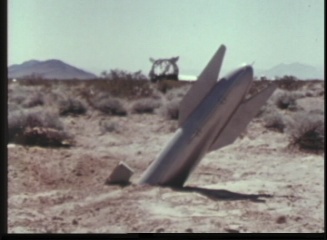
Since the early 1950s, the United States and Russia have had numerous accidents with their nuclear bombs, and a number have even gone missing. By Marcia Wendorf, April, 06th 2019 “Broken Arrow” is the name given to nuclear weapon accidents, whether they be by accidental launching, firing, detonating, theft or loss of the weapon. The U.S. admits to having 32 broken arrows worldwide, with six nuclear weapons having been lost and never recovered.
In the simplest terms, the way a nuclear weapon works is that a chemical high explosive compresses nuclear material until a critical mass is reached and fission is achieved. During fission, the nuclei of certain heavy atoms split into smaller, lighter nuclei, and release excess energy in the process. In some elements, such as certain isotopes of uranium and plutonium, the fission process releases excess neutrons which trigger a chain reaction if they’re absorbed by nearby atoms.
Thermonuclear weapons (hydrogen bombs) utilize a different process, that of fusion. When exposed to extremely high temperatures and pressures, some lightweight nuclei can fuse together to form heavier nuclei, releasing energy in the process. Those high temperatures and pressures are achieved by fission, so the trigger for a thermonuclear weapon is a nuclear weapon.
The 1950s
The first broken arrow occurred on February 14, 1950, when a U.S. Convair B-36 en route from Eielson Air Force Base near Fairbanks, Alaska to Carswell AFB in Fort Worth, Texas, crashed in northern British Columbia after jettisoning a Mark 4 nuclear bomb into the Pacific Ocean. The bomb was never found, and it contained a substantial amount of natural uranium plus 5,000 pounds (2,300 kg) of high explosives. According to the U.S. Air Force, the bomb didn’t contain the plutonium core necessary for a nuclear detonation. This was the first loss of a nuclear weapon in history.
On April 11, 1950, a B-29 bomber carrying a nuclear weapon, four spare detonators, and a crew of 13 crashed into a mountain near Albuquerque, New Mexico. The bomb’s high explosives detonated and the nuclear capsule was damaged but it was recovered. All thirteen crew members onboard the aircraft died.
On August 5, 1950 at Fairfield-Suisun AFB, California, a B-29 bomber carrying a Mark 4 nuclear bomb experienced problems with two of its propellers and crashed while attempting an emergency landing. In the ensuing fire, the bomb’s high explosives detonated and killed 19 crew members and rescue personnel.
On November 10, 1950, near Riviere-du-Loup, Quebec, Canada, which is about 300 miles northeast of Montreal, a U.S. B-50 aircraft jettisoned a Mark 4 nuclear bombover the St. Lawrence River. The weapon’s high explosive detonated on impact, but the core was lacking a necessary component and did not detonate. The explosion did scatter almost 100 pounds (45 kg) of uranium. The airplane went on to land safely.
On March 10, 1956, a a B-47 aircraft, carrying three crewmen and two nuclear cores from MacDill Air Force Base near Tampa, Florida, was en-route to Ben Guerir Air Base, Morocco, and had completed its first aerial refueling without incident. It failed to make contact with the tanker for a second refueling somewhere over the Mediterranean Sea, and it was reported missing. The kind of weapons the plane was carrying remains undisclosed, but the type of nuclear bombs commonly carried by B-47s was the Mark 15, which would have had a combined yield of 3.4 megatons. No trace of the plane or the two nuclear cores has ever been found.
On July 27, 1956, a U.S. B-47 bomber was on a training exercise when it crashed into a nuclear weapons storage facility at the Lakenheath Air Base in Suffolk, England. The entire crew of the aircraft was killed. Known as an “igloo”, the storage facility contained three Mark 6 nuclear bombs, one of whose detonators had been sheared off in the accident. Investigators concluded that it was a miracle that the bomb hadn’t exploded.
On May 22, 1957, a plane was transporting a nuclear bomb to Kirtland Air Force Base when suddenly, the bomb fell through the bomb bay doors and crashed into a field near Albuquerque, New Mexico. The bomb’s high explosives detonated, creating a crater 12 feet deep and 25 feet wide, however, the nuclear capsule was found intact. The only casualty was a cow who had been grazing close to the crash site.
On July 28, 1957, a U.S. Air Force C-124 aircraft from Dover Air Force Base, Delaware was carrying three nuclear bombs over the Atlantic Ocean. The plane experienced a loss of power, and the crew jettisoned two nuclear bombs into the ocean, and they have never been recovered.
On October 11, 1957, a plane carrying a nuclear bomb crashed on takeoff at Homestead Air Force Base, Florida. The plane burned for four hours, and the high explosives detonated, however, the nuclear capsule and its carrying case were found intact and only slightly damaged.
On February 5, 1958, near Savannah, Georgia, during a practice exercise, an F-86 fighter plane collided with a B-47 bomber that was carrying a 7,600-pound (3,400 kg) Mark 15 nuclear bomb. The F-86 crashed after the pilot ejected from the plane. The crew of the B-47 requested permission to jettison the bomb in order to reduce weight and prevent the bomb from exploding during an emergency landing. The bomb was jettisoned at 7,200 feet (2,200 m) over the Wassaw Sound off the shores of Tybee Island. Subsequent searches failed to locate the weapon.
It is not known if the bomb had its plutonium trigger, but if it did, the blast effects of a detonation would have been a fireball having a radius of 1.2 miles (2 km) and thermal radiation causing third-degree burns for 12 miles.
On March 11, 1958, a U.S. Air Force Boeing B-47E-LM Stratojet took off from Savannah, Georgia, and was scheduled to fly to the U.K. The aircraft was carrying nuclear weapons in case a war with the Soviet Union broke out. Captain Earl Koehler noticed a fault light in the cockpit, indicating that the bomb harness locking pin had not engaged. He sent Captain Bruce Kulka to the bomb bay area to fix the problem.
As Kulka reached around the bomb to pull himself up, he mistakenly grabbed the emergency release pin, and the Mark 6 bomb dropped onto the bomb bay doors. The bomb’s weight forced the doors open, and the bomb dropped 15,000 ft (4,600 m) to the ground. Two sisters, six-year-old Helen and nine-year-old Frances Gregg, along with their nine-year-old cousin Ella Davies, were playing 200 yards (180 m) from a playhouse their father had built for them.
The bomb struck the playhouse, its high explosives detonated and it created a crater 70 feet (21 m) wide and 35 feet (11 m) deep. Fortunately, the fissile nuclear core had been stored elsewhere on the plane. All three children were hurt, as were their father, mother and brother. The family sued the Air Force and received US $54,000. Today, the crater is still visible although overgrown by vegetation.
Sometime in 1958, a B-47 aircraft carrying a nuclear weapon inadvertently released the bomb over Mars Bluff, South Carolina. Luckily, the bomb lacked the fissile nuclear core, but the conventional explosives detonated, injuring six people and damaging buildings.
At a U.S. air base at Greenham Common, England on February 28, 1958, a B-47 carrying a nuclear weapon caught fire and completely burned. While the weapon didn’t explode, in 1960, a group of scientists found high levels of radioactive contamination at the base. The U.S. government has disclosed no further information about the incident.
On November 4, 1958, at Dyess Air Force Base in Texas, a plane carrying a nuclear weapon burst into flames during takeoff. The weapon’s high explosives detonated, killing a crewman, but the nuclear core remained intact. Only half a mile from the crash site was Butterfield Elementary School.
On November 26, 1958, at Chennault Air Force Base, Louisiana, a B-47 carrying one nuclear weapon caught fire while on the ground. This fire damaged the nuclear capsule and its protective case, and there was nuclear contamination of the area.
In Hardinsberg, Kentucky, on October 15, 1959, a B-52 carrying two nuclear weapons and a KC-135 refueling plane collided midair. Both planes and both bombs fell to the ground. The crash killed four crew members, and the two nuclear weapons were only slightly damaged. No radiation leakage was detected.
The 1960s
On January 24, 1961, a B-52 carrying two three- or four-megaton nuclear bombs was over Goldsboro, North Carolina when it suffered the structural failure of its right wing. The aircraft broke apart and the two nuclear weapons were released. On one bomb, three of its four arming mechanisms had activated.
In 2013, a Freedom of Information Act request confirmed that only a single switch out of four had prevented the bomb’s detonation. One of the recovery team recalled, “Until my death, I will never forget hearing my sergeant say, ‘Lieutenant, we found the arm/safe switch.’ And I said, ‘Great.’ He said, ‘Not great. It’s on arm.'”
The second bomb plunged into a muddy field, and its tail was discovered 20 feet below ground. A decision was made to leave the uranium and plutonium in place, and The United States Army Corps of Engineers purchased a 400-foot (120 m) circular easement over the buried components. Had either of the bombs gone off, everyone within an 8.5 mile (13.7km) radius would have been killed.
On March 14, 1961 a B-52F-70-BW Stratofortress bomber carrying four nuclear weapons experienced a problem with its cabin temperature. After temperatures climbed to between 125 degrees F and 160 degrees, the crew descended to 12,000 feet and depressurized the plane. After all four engines flamed out, the pilot put the plane into a dive and all crew members bailed out.
The plane crashed into a barley field near Yuba City, California, and the nuclear weapons were released. The weapons’ multiple safety measures protected against a nuclear explosion or release of radioactive material. A fireman was killed and several others were injured while rushing to the accident scene.
On July 4, 1961, a K-19 “Hotel”-class Soviet nuclear-powered ballistic missile submarine was off the coast of Norway. The cooling system of one of its two nuclear reactors failed, and the temperature of the nuclear core climbed to 800 degrees Celsius, threatening to melt down its fuel rods. The crew and the submarine itself were contaminated by radiation and several fatalities were reported.
On October 25, 1962, at the Duluth Sector Direction Center near Duluth, Minnesota, an intruder was shot while scaling a fence around the facility. This triggered a “sabotage alarm”, which triggered a warning at Volk Field in Wisconsin. This alarm triggered nuclear armed F-106A interceptor aircraft to be sent to the source of the original alarm – Duluth.
Because of the Cuban Missile Crisis, the U.S. was at DEFCON 3, and there were no practice drills, everything was the real deal. When Duluth communicated that nothing was seriously wrong, the planes were only stopped by a car that raced down the runway after them. The intruder turned out to have been a black bear.
On January 13, 1964, a U.S. B-52 carrying two nuclear bombs suffered severe turbulence, and its vertical stabilizer broke off. The crew bailed out and the plane crashed near Savage Mountain outside Barton, Maryland. The bombs were found “relatively intact in the middle of the wreckage”. Three crewmen were killed as a result of the accident.
On December 8, 1964, at Bunker Hill Air Force Base, Indiana, several Strategic Air Command (SAC) aircraft were taxiing down a runway. The jet blast from one aircraft caused the plane behind it to slide off the runway and catch fire. The five nuclear weapons onboard the plane burned, but radioactive contamination was limited to the immediate area of the crash and was subsequently removed.
On December 5, 1965, an A-4E Skyhawk attack aircraft carrying a 1-megaton thermonuclear weapon, rolled off the deck of the U.S.S. Ticonderoga and fell into the Pacific Ocean. The plane, its pilot, Douglas Webster, and the weapon sank in 16,000 feet of water and were never found. It wasn’t until 15 years later that the U.S. Navy finally admitted that the accident had taken place only 80 miles from Japan’s Ryuku island chain, and this caused an uproar in Japan, which prohibits nuclear weapons from being brought into its territory.
Sometime during the mid-1960s, in the Kara Sea, the Soviet nuclear-powered icebreaker Lenin encountered problems with its nuclear reactors, possibly experiencing a meltdown. It was forced to dump the reactors into the sea and they have never been found.
The most well-known broken arrow occurred on January 17, 1966 near Palomares, Spain. A U.S. B-52 aircraft, carrying four nuclear weapons, collided with its refueling tanker, a KC-135, at 31,000 feet (9,450 m) and crashed over the Mediterranean Sea. Of the four Mk28-type hydrogen bombs, three were found on land near the fishing village of Palomares. The high explosives in two of the bombs had detonated and released plutonium contamination across a 0.77-square-mile (2 km2) area. The fourth bomb, was recovered intact after a 2 ½ month-long search. During the U.S. cleanup effort, over 1,400 tons of soil were sent to a nuclear storage site.
On January 21, 1968, a fire erupted onboard a B-52 bomber operating out of Thule Air Base in the Danish territory of Greenland. The plane was carrying four B28FI thermonuclear bombs, and it crashed onto the sea ice in North Star Bay. The conventional explosives detonated and the nuclear capsules ruptured and dispersed their contents, resulting in radioactive contamination.
The U.S. and Denmark launched a clean-up operation, but the secondary stage of one of the nuclear weapons was never found. Workers involved in the clean-up operation have been experiencing radiation-related illnesses, and they have sought compensation.
On April 11, 1968, a Soviet diesel-powered “Golf”-class ballistic missile submarine sank 750 miles northwest of the Hawaiian island of Oahu. U.S. intelligence determined that the submarine had been carrying three nuclear-armed ballistic missiles and several nuclear-tipped torpedoes. The U.S. Central Intelligence Agency (CIA), partnered with industrialist Howard Hughes to build a specially-designed deep-water salvage ship, the “Glomar Explorer” to recover the lost sub. They were only partly successful when the Glomar raised approximately half of the submarine.
Also during the Spring of 1968, the U.S.S. Scorpion, a nuclear attack submarine, mysteriously sank about 400 miles southwest of the Azores islands. Besides the tragic loss of all 99 crew members, the Scorpion was carrying two nuclear-tipped weapons with yields of up to 250 kilotons.
The 1970s
On April 12, 1970, in the Atlantic Ocean about 300 miles northwest of Spain, a Soviet “November”-class nuclear-powered attack submarine experienced a problem with its nuclear propulsion system. A merchant ship attached a tow line and attempted to pull the submarine to safety, but the submarine sank, killing all 52 crew members on board.
Off the coast of Sicily, Italy on November 22, 1975, twelve years to the day of his assassination, the U.S. aircraft carrier John F. Kennedy collided with the cruiser USS Belknap during an exercise. The collision occurred at night and during high seas. One, or possibly both ships, contained nuclear weapons, but no nuclear contamination was detected by rescue personnel.
The 1980s
On September 19, 1980, near Damascus, Arkansas, crewman were performing maintenance on a Titan II Inter-continental Ballistic Missile (ICBM). A crewman accidentally dropped a wrench into the silo, and it punctured the missile’s fuel tank. The missile leaked fuel for over eight hours before finally exploding, killing one and injuring 21 others. The blast destroyed the entire compound, but the nuclear warhead was recovered intact.
On October 3, 1986, 480 miles east of Bermuda, a Soviet “Yankee I”-class nuclear-powered ballistic missile submarine suffered an explosion and fire in one of its missile tubes. An attempt was made to tow the submarine, but it sank on October 6, 1986 in 18,000 feet of water, taking its two nuclear reactors and approximately 34 nuclear weapons down to the bottom of the sea.
About 300 miles north of the Norwegian coast on April 7, 1989, a Soviet nuclear-powered attack submarine, the “Komsomolets”, caught fire and sank. The vessel’s two nuclear reactors and two nuclear-armed torpedoes were lost, along with 42 of the 69 crew members.
On August 10, 1985, at the Chazhma Bay repair facility, about 35 miles from the city of Vladivostok, Russia, an “Echo”-class Soviet nuclear-powered submarine suffered a reactor explosion that released a cloud of radioactivity. Fortunately, the cloud never reached Vladivostok, but ten Soviet officers were killed by the explosion.
The 1990s
Also in the White Sea, on September 27, 1991, a “Typhoon”-class nuclear-powered ballistic missile submarine suffered a missile launch malfunction during a test. No other information is available about this incident.
In the Barents Sea on February 11, 1992a collision occurred between a CIS (Commonwealth of Independent States) “Sierra”-class nuclear-powered attack submarine and the U.S. nuclear-powered attack submarine “Baton Rouge”. The Commonwealth of Independent States is comprised of Armenia, Azerbaijan, Belarus, Georgia, Kazakhstan, Kyrgyzstan, Moldova, Russia, Tajikistan, Turkmenistan, Ukraine, and Uzbekistan. The vessels reportedly suffered only minor damage, but a dispute arose over whether the incident had happened inside or outside of Russian territorial waters.
On August 12, 2000, also in the Barents Sea, a CIS “Oscar II” class submarine, the “Kursk”, suffered a torpedo failure and explosion. The ship sank with all 118 men onboard. No evidence of radiation contamination was detected.
On August 29, 2007, at Minot Air Force Base in North Dakota, six AGM-129 ACM cruise missiles, each loaded with a W80-1 variable yield nuclear warhead, were mistakenly loaded onto a B-52H bomber, and transported to Barksdale Air Force Base in Louisiana. The nuclear warheads were supposed to have been removed before transport, but they weren’t..
Once at Barksdale, the missiles with the nuclear warheads remained mounted to the aircraft for 36 hours and were not protected by the various mandatory security precautions for nuclear weapons. The missiles were never reported as missing, by Minot.
Living with the legacy of British Nuclear testing: Bobby Brown
Maralinga No More: The British Nuclear Bombing of First Nations Lands , Sydney Criminal Lawyers, By Paul Gregoire 31/03/2019“……..Around 800 kilometres northeast of Adelaide, Maralinga was chosen as the main nuclear testing site, as the government found that the Maralinga Tjarutja people – who’d been living there since time immemorial – weren’t actually using the land.
The local Indigenous peoples were never consulted about the testing. Many were forcibly removed from their lands and taken to Yalata mission in SA, which effectively served as a prison camp. Some remained in the vicinity of the test site. Signs written in English were erected warning them to leave.
Indeed, on 27 September 1956, when the first nuclear device, One Tree, was detonated at Maralinga, First Nations peoples had no rights under Commonwealth Law. The vote didn’t come until 1962, while citizenship rights weren’t granted until the 1967 Referendum.
A toxic legacy
The Menzies Liberal government passed the Defence (Special Undertakings) Act 1952, which effectively allowed the British to access remotes parts of Australia to test atomic weapons. The general public for the most part had no awareness or understanding of what would take place.
British and Australian servicemen built a test site, airstrip and township at Maralinga known as Section 400. Australian troops signed documents under Australian secrecy laws that required them never to divulge any operational information, with the threat of harsh prison sentences.
Between September 1956 and October 1957, the British set off seven above ground nuclear bombs ranging from 1 to 27 kilotons. The first four were part of Operation Buffalo, while the last three made up Operation Antler.
Following these tests, the British continued to carry out around 600 minor nuclear warhead tests up until 1963. And it was these that caused the greatest contamination. The most dire being the Vixen B tests that led to massive contamination of plutonium, which has a half-life of over 24,000 years.
The impact upon First Nations
Around 1,200 Aboriginal people were exposed to the radioactive fallout of the tests. This could lead to blindness, skin rashes and fever. It caused the early deaths of entire families. And long-term illnesses such as cancer and lung disease became prevalent amongst these communities.
As for those who were moved away from their homelands, their way of life was destroyed. The Maralinga Tjarutja Land Rights Act was passed by the SA parliament in 1984, which ensured the damaged land was handed back freehold to traditional owners, as soon as it became “safe” again.
The Maralinga Tjarutja people, as well as other First Nations peoples, gradually returned to their homelands. Australia and reluctant British governments carried out initially terribly shonky clean-ups, that got progressively better, of the Maralinga site in 1967, 2000 and 2009.
And the British government eventually paid affected Aboriginal peoples $13.5 million in compensation for the loss and contamination of their lands in 1995.
Prior to Maralinga
The late Yankunytjatjara elder Yami Lester was just a boy living at Walatinna in the South Australian outback, when at 7 am on 15 October 1953, the British detonated a nuclear bomb at a test site at Emu Fields, northeast of Maralinga.
Mr Lester watched as a long, black cloud of smoke stretched out from the bomb site towards his homelands. In the wake of two tests carried out at Emu Fields within 12 days of each other, Yemi permanently lost his site, sudden deaths occurred, and his people suffered long-term illnesses.
The Emu Fields blasts were not the first on Australian soils. The initial nuclear bomb blast was carried out on the Monte Bello Islands in October 1952, while two more blasts took place in this Indian Ocean region in 1956.
And just like the Maralinga and Emu Fields blasts, the radioactive waste from these islands travelled across the entire continent. Two hotspots of excessive radioactive fallout resulting from the Emu Fields blasts were the NSW towns of Lismore and Dubbo.
Adding insult to injury
In 1989, the federal government announced it was establishing a nuclear waste dump near Coober Pedy in SA on the lands the Kupa Piti Kungka Tjuta, a senior women’s council representing the local peoples, many of whom had directly suffered the impacts of British nuclear testing.
As opposition to the dump grew, the government used the provisions of the Land Acquisition Act 1989 to seize the land, where it proposed to store the waste that was being produced at Sydney’s Lucas Heights reactor.
n July 2004, after a six year long battle the Kungka Tjuta senior women brought a stop the nuclear waste repository being situated on their land. And the federal government then turned to the NT’s Muckaty Station to dump the NSW waste. However, after that fell through, it’s still looking for a site.
The global threat continues
Maralinga took place at the height of the Cold War, after the US government refused to continue its nuclear program with British participation. And following World War Two, the crumbling empire sought to develop its own nuclear capacities in its faraway colonial backyard.
But, while many believe the threat of nuclear war faded with the end of the Cold War, renowned political analyst Noam Chomsky still warns that the two major threats in the world today are climate change and nuclear war.
Chomsky has pointed to a March 2007 article published in the Bulletin of the Atomic Sciences that revealed the “extremely dangerous” threat the Trump administration’s nuclear forces modernisation program is creating.
U.S. nuclear regulators do not recognize real danger of dirty bombs, watchdog says
Besides killing people with radiation, a dirty bomb would spread panic, prompt evacuations, require cleanup and undermine the economy, says a new report. NBC News, By Dan De Luce,5 Apr19
WASHINGTON — The Nuclear Regulatory Commission is failing to recognize the full range of dangers posed by a potential dirty bomb attack and needs to take more action to secure high-risk radioactive material, according to a government watchdog report released Thursday.
In assessing the possible effect of a radioactive dirty bomb detonated in an American city, the U.S. nuclear regulator has only focused on the possible health effects caused by the spread of radiation, the Government Accountability Office report said. But the NRC has not taken into account the potential consequences of a panic-driven evacuation and costly decontamination effort, according to the report.
“NRC’s regulatory approach in many ways is based on the idea that a dirty bomb would not be a high consequence event,” said David Trimble, director of the National Resources and Environment office at the GAO.
“Their view of what the risk is is very circumscribed, it’s very narrow.”
Rather than deaths or harm caused by radiation, the most significant impact of a radioactive dirty bomb would be its disruptive effect, by spreading panic, prompting evacuations, requiring cleanup work and undermining economic activity, said the report, citing experts convened by the National Academy of Sciences as well as other studies.
A chaotic evacuation could cause more deaths than any radiation released in an attack, and the results of the disruption and contamination could cause billions of dollars in damage, the report said………
The NRC’s staff operates under guidelines that require it to only evaluate the risk of a dirty bomb based on immediate deaths and other health effects of the radiation released.
“If you’re using that as a criteria to regulate, you’re kind of missing the boat,” Trimble said.
IAEA Director General Yukiya Amano, Washington, DC, USA Center for Strategic and International Studies, 5 Apr 19 “………Despite positive developments such as the introduction of the additional protocol, we face some challenges in our nuclear verification work.
The world in which the IAEA implements safeguards today is very different from that envisaged by our founding fathers in 1957. Nuclear proliferation is now easier than it has ever been. Globalization, new technology and modern communications have made it possible to access knowledge, materials and expertise that were previously not widely available.
Many countries, both developed and developing, have made great technological progress. Technology that could be used for the development of nuclear weapons is no longer out of reach.
The steady increase in the amount of nuclear material and the number of nuclear facilities under IAEA safeguards, and continuing pressure on our regular budget, are among the key challenges facing the Agency today.
The amount of nuclear material in the world is growing every year as countries make more use of nuclear power and other peaceful applications of nuclear technology. Nuclear material no longer in use, and nuclear facilities that have been shut down, also remain under safeguards……….
for some years, the IAEA has had to undertake verification activities against a background of close to zero budget increases. This year, our budget has actually been cut.
Pressure on the regular budget is a particularly serious problem for the IAEA. ………
Our safeguards budget last year was around 142 million euros. Since 2010, it has increased by only 6.3 percent in real terms.
However, in the same period, the number of nuclear facilities under safeguards rose by 12 percent to just over 1,300, while the number of so-called significant quantities of nuclear material under safeguards – that means enough material to make a nuclear explosive device – grew by 24% to 213,000. The number of nuclear material accounting reports from Member States which we process has gone up by more than a third since 2010 to 880,000……… https://www.iaea.org/newscenter/statements/challenges-in-nuclear-verification
Dumbest Idea Ever: A ‘Small’ Nuclear War, Millions would die. National Interest,
by WarIsBoring 5 Apr 19, It just takes one nuclear weapon to start Armageddon.
n the event of a rapidly escalating conflict with the Russians, should the United States conduct a “limited” nuclear strike to coerce the enemy to back down? Or, in Cold War nukespeak, should the United States “escalate to deescalate” the situation?
Believe it or not, that is a real question that is being debated in the Pentagon today. And the answer is no. Thinking we can use nuclear weapons in a “limited” way without inviting nuclear catastrophe is a dangerous fantasy.
Here is the hypothetical scenario. Russia decides to annex part, or all of, NATO ally Latvia, much like it did with the Crimean Peninsula. Russian forces cross the border, and NATO is forced to respond with a mixed force of U.S. Army brigades, U.S. Marines, air wings, special forces and allied personnel.
All of the sudden, a full-fledged war is threatening to engulf Northern Europe.
Fearing that the fighting will spill over into the rest of Europe, or even break out in Poland or the Ukraine, the United States launches a “tactical” nuclear strike against Russian forces on the border of Latvia.
The hope is that this will cause Russian commanders to pause amidst the destruction, and take a second to reconsider their options now that nuclear force has been used.
In theory, that pause would be enough time for cooler heads to prevail — and for the State Department to cable the Kremlin and hammer out some kind of ceasefire.
To Pentagon planners, this scenario is a legitimate one.
The Air Force already has plans to field a new, low-yield, air-launched nuclear cruise missile that it refers to as the Long Range Standoff Weapon, which critics argue is tailored for limited nuclear war fighting.
“Beyond deterrence, an LRSO-armed bomber force provides the president with uniquely flexible options in an extreme crisis, particularly the ability to signal intent and control escalation,” Frank Kendall, the Pentagon’s top weapons-buyer, told Congress.
But once we’ve opened Pandora’s Box, is it possible to close it again? With thousands of Russian soldiers dead or dying on the Latvian border, would the Russians really just stand down?
Would the United States?
There’s no way to know for sure. But the little data that exists suggests no………..
After being briefed on the operational need for the new nuclear cruise missile, Sen. Dianne Feinstein, a California Democrat, told her colleagues in Congress that “the so-called improvements to this weapon seemed to be designed, candidly, to make it more usable, to help us fight and win a limited nuclear war. I find this a shocking concept.”
The notion that nuclear weapons can be used for anything “beyond deterrence” is reckless and dangerous thinking. It is an option that should be taken off the table entirely. Reagan recognized as much after witnessing the disastrous results of Proud Prophet.
“A nuclear war cannot be won and must never be fought,” Reagan said in his subsequent state-of-the-union address.
Even contemporary American officials recognize as much, albeit indirectly. At a hearing where he criticized the Russian doctrine of “escalate to de-escalate,” Deputy Secretary of Defense Robert Work noted that “anyone who thinks they can control escalation through the use of nuclear weapons is literally playing with fire. Escalation is escalation, and nuclear use would be the ultimate escalation.”
Yet that is precisely the capability that American defense planners are seeking to enhance with the new air-launched nuclear cruise missile……….
It just takes one nuclear weapon to start Armageddon. We maintain an arsenal of nearly 7,000. Let’s make sure we avoid building the more “usable” ones.
Geoff Wilson is a Research Associate at Ploughshares Fund, a global security foundation that has supported War Is Boring in the past. Will Saetren is the author of Ghosts of the Cold War: Rethinking the Need for a New Cruise Missile, and an alumnus of the Roger L. Hale Fellowship at Ploughshares Fund. https://nationalinterest.org/blog/buzz/dumbest-idea-ever-small-nuclear-war-50642
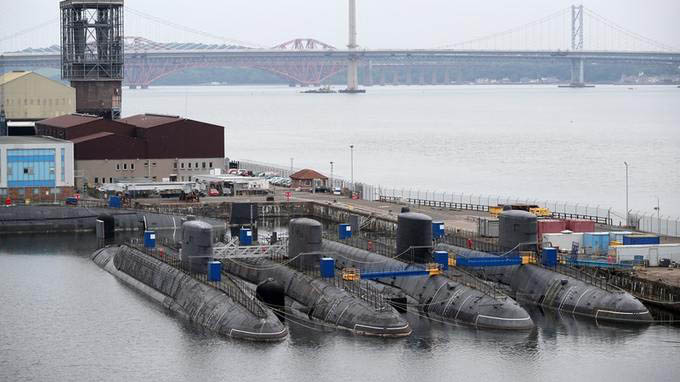
REVELATIONS that the Ministry of Defence has failed to dispose of any of the 20 nuclear submarines it has decommissioned in nearly 40 years underlines the unique risks associated with nuclear weapons.
What passes for debate in Parliament on our nuclear arsenal is deeply frustrating.
Ministers airily dismiss concerns about the staggering cost of Trident renewal (over £200 billion), ignore advice from top brass that these “useless” weapons swallow up money that would be better spent on conventional equivalents, sidestep questions about whether the ability to incinerate whole cities at the push of a button is a relevant deterrent to modern threats from terrorism to climate change.
Even Tony Blair has said the utility of a nuclear arsenal was “non-existent in terms of military use,” admitting in his memoirs that he only supported renewal when PM because he felt foreigners would see it as “too big a downgrading of our status as a nation” if we voluntarily abandoned it.
Yet his successors portray any attempt to discuss these questions rationally as evidence of being soft on Britain’s security.
They could not be more wrong, as the National Audit Office’s investigation into how we dispose of decommissioned submarines attests.
We have not disposed of a single one since 1980. The MoD has not been in a position to remove radioactive fuel from retired submarines since 2004, when the Office for Nuclear Regulation ordered it to stop as its facilities for doing so — at the Devonport naval base in Plymouth — were not safe enough.
An original plan to have a new disposal process operational by 2011 has now been postponed to 2026; the MoD stores twice as many mothballed nuclear subs as it operates and some have been cooling off in retirement for longer than they ever roamed the seas.
This is not simply a matter of bad organisation or rising costs.
Dr Philip Webber of Scientists for Global Responsibility (SGR) warned in 2017 that of the 12 retired submarines docked at Devonport, eight still contained fuelled nuclear reactors.
These “have to be continually cooled using external power and water to avoid overheating, which could lead to a fire, meltdown or a release of radioactive particles and gases.”
The risks involved in defuelling nuclear reactors are considerable – that’s why the MoD has felt unable to do so safely for 15 years — and older reactors (as we would expect to find on vessels that haven’t been operational for up to 40 years) tend to pose a greater risk of igniting, exploding or releasing radiation if anything goes wrong in the process than newer ones.
In an excellent article published in the SGR newsletter of winter 2017, Dr Webber points out that the MoD is actually aware of how dangerous keeping decommissioned subs knocking around is: following freedom of information requests, minutes of a Defence Board Meeting of 2011 were released.
The MoD’s senior nuclear safety regulator Commodore Andrew McFarlane notes that “all pressurised water reactors are potentially vulnerable to … structural failure,” which could lead to “release of highly radioactive fission products outside the reactor core.”
This would be a public safety hazard “out to 1.5 kilometres” (almost a mile) from the submarine.
Dr Webber estimates that 32,000 residents of Plymouth would fall within that range.
Safely defuelling and disposing of these radioactive hulks should be a priority for any government that takes public
safety seriously.
The enormous difficulties of doing so are a warning of exactly what risks we take on by blithely opting to renew our nuclear weapons programme.
It’s tragic that for most of our politicians “national security” rests on our ability to harm the peoples of other nations, rather than keep people on these shores safe.
Deadly Dust: US Spreading Radiation and No One Wants to Raise the Issue – Author https://sputniknews.com/analysis/201904031073767110-us-radiation-spread/ In a new book named “Deadly Dust – Made in the USA: Uranium Weapons Contaminating the World” German author Frieder Wagner gives a detailed account of how the US has contaminated vast territories using depleted uranium (DU) ammunition and the cover-up strategy of the military, industry and governments, as well as those in the media and politics.
Sputnik: Mr Wagner, in your book “Deadly Dust — Made in the USA: Uranium Weapons Contaminating the World” you talk about the use of uranium ammunition. What is especially dangerous about these weapons?
Frieder Wagner: Weapons containing uranium are produced from nuclear industry’s waste (byproducts of uranium enrichment). If, for example, you want to produce a ton of natural uranium fuel rods for nuclear power plants, you get about eight tons of depleted uranium. It is a source of alpha radiation — radioactive and, moreover, very poisonous. It needs to be stored somewhere, and it is not very cheap.
Sputnik: How can it be used in weapons?
Frieder Wagner: About 30-40 years ago, military scientists made a discovery: uranium is almost twice as dense as lead. If you turn depleted uranium into a projectile and give it proper acceleration, then within a fraction of a second it will pierce through tank armor, concrete or cement.This, of course, was an important discovery. Furthermore, when a shell hits an armored tank the impact produces dust caused by the detonation and the subsequent release of heat energy causes it to ignite and it explodes at a temperature of 3000 to 5000 degrees — incinerating the tank’s interior and destroying it.
Sputnik: But what happens afterwards is also a problem — after the use of DU ammunition, isn’t it?
Frieder Wagner: Yes! After its use depleted uranium, which, as I have already said, is a source of alpha radiation (that is, a radioactive and very toxic substance), burns down to nano-particles that are a hundred times smaller than a red blood cell.
This way, I would say, a sort of metallic gas forms that people can inhale, and which is released in the atmosphere and can be carried anywhere by wind. People who inhale it are at risk for developing cancer.These nano-particles can also penetrate the body of a pregnant woman, overcoming the barrier between a child and a mother, and affect the health of an unborn baby, can infiltrate the brain and by travelling through the bloodstream end up in any human or animal organ. Everything that goes around the planet, sooner or later settles and, of course, contaminates, in particular, drinking water and everything else.
Sputnik: In what wars have DU weapons been used so far?
Frieder Wagner: It was actively used during the first Gulf war in 1991 against Iraq. The military has admitted that about 320 tons were used. Then in the second war in Iraq in 2003 over 2,000 tons were used. In between, it was used during the war in Kosovo, in Yugoslavia (1999), and in Bosnia in 1995, and after 2001 in Afghanistan, where it still used today.
Sputnik: Your book title says Made in the USA, were these weapons only used by the United States?
Frieder Wagner: They were being developed in several countries at the same time. In Germany, they were also working on these weapons, as, of course, in Russia. However, it was used and on such a large scale, only by the US. They were reckless and they did not pay attention to any possible side effects — just as it was back when the first atomic bombs were used. That’s why I called the book: “Deadly Dust — Made in the USA”.
Sputnik: How did you manage to prove the use of these ammunitions in the course of your research?
Frieder Wagner: For example, the Serbs gave us maps where they showed the locations where depleted uranium was used. When we were in Iraq, we talked to the locals. We traveled to places where large tank battles took place and took soil samples there, as well as dust samples from tanks. Looking at the tank, you can see whether it was hit by an ordinary projectile or a uranium munition.
Uranium munition leaves dust that burns everything around the hole made by the projectile. So you can determine the use of uranium ammunition. In all soil samples, we found depleted uranium. Unfortunately, uranium-236 was also found in most of the soil and dust samples — it is even more intense and poisonous. Its radiation is even stronger and does not occur in nature. It can only be produced artificially during reprocessing of fuel rods. This means that we were able to prove that the military, the United States and its coalition allies used uranium munitions made from spent uranium fuel rods.
Sputnik: Your book is based on the films The Doctor, the Depleted Uranium, and the Dying Children of Basra (Der Arzt und die verstrahlten Kinder von Basra, 2004) and Deadly Dust (Todesstaub, 2007). What did you see in Basra during your work on the documentary?
Frieder Wagner: It was horrific and still sometimes haunts me in my dreams. These were children with deformities, which we saw in orphanages in Basra and Baghdad. Some of them had such deformities that they had almost nothing human anymore.
There were children without a head or a nose, either with one eye or without eyes at all, with internal organs in a kind of “sack” outside their body. These ‘creatures’ can live only for a few hours, experiencing terrible pain, and then die.
putnik: The film “Deadly Dust” is linked to the book, but it is no longer distributed. WDR channel after this film did not make any more orders? Why is that?
Frieder Wagner: My exposes which I sent to WDR, as well as to the ZDF channels were rejected. Then I contacted an editor at WDR, for which I always made good films and with which I always had good relations with, because these films had doubled or trippled their ratings, and asked him: “What’s going on here?”” And after some hesitation he said: “Yes, Frieder Wagner, someone must tell you this. WDR considers you a ‘difficult’ person. And most importantly, the topics you suggest are especially hard. Right now I’ve got nothing more to tell you.” And that when I understood everything. It was in 2005.
I can also tell you the story of how, for example, a female editor at ZDF offered the TV channel a story on the use of these weapons during the war in Yugoslavia and also in Croatia. She wanted to talk about it with me prior so I could share my experiences. But when her boss found out that she wanted to talk to Frieder Wagner, he refused to pay for her trip — without any further explanation.
Sputnik: The so-called “deadly dust” is, as you have already described it, is spread by the wind. So should the use of uranium ammunition, in fact, be considered a war crime and banned?
Frieder Wagner: This is definitely a war crime. The dust from southern Iraq is carried to the north by the constant storms, the so-called desert storms — for example, to Erbil, where it meets the mountains and can’t travel further as the mountains make it difficult for it to go past towards Turkey. So this huge mass of dust settles in Erbil.We, for example, took samples of beef from around Erbil, and this is what we found out: depleted uranium used in ammunition has a characteristic atomic “fingerprint”. In northern Iraq we found the same “uranium fingerprint” as in the south. This means that the uranium dust that had originally settled in the south of Iraq is now also in the north, and children are now getting sick there and are born with deformities. It is now spreading all over the world.
Sputnik: Have the victims of uranium munition use in Kosovo or, for example, in Iraq, tried to go to court?
Frieder Wagner: So far no such attempts have been made in Kosovo or Iraq. Now in Kosovo, a whole group of lawyers are working on a lawsuit against NATO, because after the war they unleashed, people were injured, fell ill and died. The morbidity rate has increased by 20 to 30 percent, and there are more effected each year. So there will be an attempt to file a lawsuit.
Out of the approximately two thousand Italian soldiers stationed in Iraq and Kosovo, 109 have later developed cancer and died — this is proven information. 16 families, out of the 109 dead, filed lawsuits and won their cases. The courts ordered the Italian state or the country’s Ministry of Defence to pay them compensation. Since each cancer was of a different type, the payout amounts differed. But they ranged between 200,000 and 1,4 million euros.
Sputnik: How are things in Germany? Have there been lawsuits filed by the soldiers of the Bundeswehr?
Frieder Wagner: The German Ministry of Defense constantly denies any connection to this. Our soldiers are stationed in Afghanistan and Kosovo. About 100,000 soldiers served in Afghanistan, and we found out that about 30% of those who returned got sick, although at first, of course, they do not notice this. If they subsequently marry and have children, then there’s a great risk that their children will have disabilities.
These children will have the same toxic substances in their DNA as their parents. And this will be passed on for several generations — from children to grandchildren and to great-grandchildren.
Sputnik: But none of these people ever filed a lawsuit?
Frieder Wagner: In Germany there were no such precedents. About 600 servicemen went to court in the United States who could not appeal on their own behalf, but they filed lawsuits on behalf of their children who were born with developmental disabilities. And we’re not talking about a mere 90 or even 900 million pay out, but about billions of dollars now. The United States, of course, will try to delay the adoption of a ruling as much as it is possible and hope for a “biological” resolution of the situation — that is, that the plaintiffs will simply die.
Prospect of nuclear weapons use ‘higher than it has been in generations,’ U.N. disarmament chief says, Japan Times, KYODO. APR 3, 2019
NEW YORK – The head of disarmament at the United Nations warned the international community on Tuesday that the threat of nuclear weapons use has increased because the headway made in the post-Cold War era toward denuclearization has “come to a halt.”
“The disarmament and arms control framework upon which the gains of the post-Cold War era were made is eroding, but we have nothing else yet with which to replace it,” Izumi Nakamitsu, the U.N. undersecretary general and high representative for disarmament affairs, told Security Council members.
The warning was issued at a meeting to discuss the 1970 Nuclear Non-Proliferation Treaty ahead of the next NPT review conference to be held in 2020, when the landmark pact marks the 50th year since its entry into force. The NPT is reviewed every five years.
“As a result, the prospect of the use of nuclear weapons is higher than it has been in generations,” Nakamitsu said.
In February, the United States said it is withdrawing from the 1987 bilateral Intermediate-Range Nuclear Forces Treaty with Russia in response to alleged violations by Moscow, a move that could fuel concerns about a new arms race possibly involving other parties such as China.
The situation has been further exacerbated by the trend of nations increasingly modernizing their nuclear arsenals, as well as relying more on rapidly emerging technology that makes acquiring the dangerous weapons easier, the undersecretary general said………
The Ferret. Rob Edwards, 2nd April 2019 Plans by the Ministry of Defence (MoD) to rethink the disposal of radioactive waste from 27 defunct nuclear submarines have come under fierce fire from campaigners.
A recent meeting of local authority advisors was told that the MoD is “considering alternative options for the management of the waste”. This is despite previous decisions made after an exhaustive, 16-year public consultation process.
Those who were involved in the consultations are alarmed that the MoD is thinking of changing what has been agreed – and are pressing for more information. It was “incredibly frustrating”, said one critic.
Since the 1980s seven aged nuclear-powered submarines have been taken out of service and laid up at the Rosyth naval dockyard in Fife. Since the 1990s, thirteen more have been laid up at Devonport naval dockyard in Plymouth, nine of them still containing radioactive fuel.
A further three reactor-driven submarines are due to be retired in the next few years. They will be followed by the four Vanguard-class submarines, currently armed with Trident nuclear missiles and based at Faslane on the Clyde.
The MoD began a public submarine dismantling project in 2000. It announced in 2016 that a nuclear plant at Capenhurst in Cheshire had been chosen as an “interim storage site” for radioactive waste.
A proposal to store the waste on a former nuclear site at Chapelcross near Annan in south west Scotland was rejected after objections from the Scottish Government. The Ferret revealed in December that in the past the MoD has contemplated dumping the submarines on the seabed near Scotland.
Work on dismantling the first “demonstrator” submarine, Swiftsure, began at Rosyth in 2016. The MoD said in December 2018 that over 70 tonnes of radioactive and non-radioactive waste had been removed, and that dismantling of a second submarine, Resolution, would start in 2019.
But now future plans have been thrown into confusion by the MoD reportedly having second thoughts. The change of heart was disclosed by the Nuclear Legacy Advisory Forum (NuLeAF), an expert group working with 113 local planning authorities in England and Wales.
A report posted online for a steering group meeting on 20 March outlined NuLeAF’s role in previous submarine dismantling consultations. “The Ministry of Defence, working with the regulators, has now indicated it is considering alternative options for the management of the waste,” it said.
“It is understood that they are in discussion with the Nuclear Decommissioning Authority who will be managing an engagement process to gain stakeholder input.”…….
Campaigners have reacted angrily. “Given the amount of time, effort and public money that went into the consultation process, it is alarming to hear that the MoD now appear to be changing its mind,” said Jane Tallents, who was an advisor to the MoD’s submarine dismantling project.
“I can only guess that in the three years that they have been dismantling the first submarine they have come across problems not anticipated by all the experts who informed the public during the consultation.”
She and others had urged the MoD to extend its “unprecedented openness” on the submarine dismantling project to other areas of policy-making. “It would be disappointing if the project itself does not come clean and tell us what alternative options they are now looking at.”
Edinburgh-based nuclear consultant and critic, Pete Roche, accused the MoD of undermining its prolonged public consultations. “Communities and environmentalists thought the MoD had pulled off the impossible and come up with a consensus on what to do with nuclear waste from submarines,” he told The Ferret.
“Now it seems they want to pour all this hard work down the drain. This is incredibly frustrating and makes you wonder if banging your head against a wall would be more fruitful than getting involved in these consultation processes.”
In January a group including former naval staff campaigning to “Save The Royal Navy” described the failure to promptly deal with submarine waste as “a national scandal”. Progress had been “painfully slow” because “successive governments have avoided difficult decisions and handed the problem on to their successors,” it argued.
The MoD has submarines which have been in storage longer than they have been in service and the UK now has twice as many submarines in storage as it does in service.
The National Audit Office (NAO) said the department has not disposed of any of the 20 boats no longer in service since 1980.
Some of these vessels still contain nuclear fuel and the failure to address the issue risks damaging the UK’s international reputation as a “responsible nuclear power”.
The issue was raised during Prime Minister’s Questions by Labour MP Luke Pollard who asked whether the prime minister will extend the nuclear clean up to include all the royal navy submarines.
Mrs May responded to say the MoD will continue to work with the nuclear decommissioning service to achieve “steady state disposal of our laid up submarines.”
The estimated cost of disposing of a submarine is £96 million, the NAO said.
Decommissioned vessels are being stored at Devonport and Rosyth, while arrangements are made to safely dispose of them and the radioactive waste they contain.
No submarines have been defuelled since 2004, when regulators said facilities did not meet required standards.
The process is not due to start again until 2023 and has been delayed for 11 years, with a £100 million cost increase to £275 million, a £12 million annual bill for maintaining and storing the nine fuelled submarines and pressure on dock space at Devonport.
The MoD has put its total future liability for maintaining and disposing of the 20 stored and 10 in-service nuclear-powered boats at £7.5 billion over the next 120 years, underlining the long-term nature of nuclear waste.
The Government said the ministry “needs to get a grip urgently” on the matter.
Meg Hillier, chairwoman of the Commons Public Accounts Committee, said: “For more than 20 years the Ministry of Defence has been promising to dismantle its out-of-service nuclear submarines and told my committee last year that it would now address this dismal lack of progress.
“It has still not disposed of any of the 20 submarines decommissioned since 1980 and does not yet know fully how to do it.
“The disposal programmes have been beset by lengthy delays and spiralling costs, with taxpayers footing the bill.
“The ministry needs to get a grip urgently before we run out of space to store and maintain submarines and we damage our reputation as a responsible nuclear power.”
The vessels being stored include the first submarines used to carry the UK’s nuclear deterrent – the Polaris boats HMS Revenge, HMS Renown, HMS Repulse and HMS Resolution.
Attack submarine HMS Conqueror, which sank the Argentine cruiser General Belgrano during the Falklands War is another of the boats in storage.
A Ministry of Defence spokesman said: ““The disposal of nuclear submarines is a complex and challenging undertaking.
“We remain committed to the safe, secure and cost-effective de-fuelling and dismantling of all decommissioned nuclear submarines as soon as practically possible.”
Fans of the history of the UK’s submarine fleet will be pleased to know we have numerous classic old nuclear-powered subs in various storage sites around the country, although government financial watchdogs aren’t best pleased about it, as the lifetime cost to the Ministry of Defence for storing these ancient subs has now breached the £500m mark.
They’re not being stored for the greater good or to teach future generations about war etc. — they’re being stored because decommissioning 1960s and 1970s nuclear technology is extremely hard. Hence, 20 of our retired nuclear-powered subs have been sitting around, some since 1980, waiting to be dismantled and have their insides made safe.
This collection also includes all four of the Resolution class submarines that were designed and built in the 1960s to carry the Polaris nuclear missiles, and continued notionally defending us until the 1990s. The National Audit Office says nine of the 20 decaying subs in long-term storage still contain some nuclear material, and suggests there’s a total decommissioning cost of £96m to be found to make them all safe and recycle the clean bits into drones. [NAO via BBC]
Times 3rd April 2019 Delaying the disposal of the Royal Navy’s retired submarine fleet has
cost the taxpayer £900 million, according to the Whitehall spending
watchdog. None of the 20 submarines that have left service since 1980 has
been fully defuelled or dismantled.
They include HMS Conqueror, which sank
the General Belgrano in the Falklands conflict in 1982, and the four
Polaris vessels that carried Britain’s nuclear deterrent until the
mid-1990s.
A National Audit Office report published today says that while
it is expensive to scrap the submarines, at £96 million per boat, delaying
the disposal programme is also costly, adding £900 million to the total
bill so far. Each decommissioned submarine costs £12 million a year to
store and maintain.
Meg Hillier, chairman of the Commons public accounts
committee, heaped scorn on the “dismal lack of progress” and
“spiralling costs”. She told the Ministry of Defence (MoD) to “get a
grip urgently before we run out of space to store and maintain submarines
and we damage our reputation as a responsible nuclear power”.
The budget
for the programme to dismantle retired submarines and remove their
radioactive parts has soared by £800 million, or 50 per cent, due to a
15-year delay in rolling out a tested approach. In addition, the 11-year
delay in the project to remove irradiated fuel from the nine retired
nuclear submarines has seen the budget rise by £100 million, or 57 per
cent. Regulators halted the defuelling of submarines in 2004 after
government facilities failed to meet required standards. The process is not
due to start again until 2023.
The demise of the only U.S.-Russia arms control pact limiting deployed nuclear weapons would make it harder for each to gauge the other’s intentions, giving both incentives to expand their arsenals, according to a study to be released on Monday.
The expiration of the New START accord also may undermine faith in the Nuclear Non-Proliferation Treaty, which calls on nuclear states such as the United States and Russia to work toward nuclear disarmament, as well as influence China’s nuclear posture, historically one of restraint.
The study, produced by the CNA Corp non-profit research group and seen by Reuters, is the most comprehensive public examination to date of the consequences of New START’s demise. It argues for extending the 2011 treaty, which expires in February 2021 but can be extended for five years if both sides agree.
The Trump administration is deliberating whether to extend the pact, which President Donald Trump has reviled as a bad deal and his national security adviser, John Bolton, has long opposed. Russia has said it is prepared to extend New START but wants to discuss what it regards as U.S. violations first.
The State Department did not immediately respond to a request for comment on the administration’s deliberations.
Trump has said Washington will withdraw from another arms pact, the 1987 Intermediate-range Nuclear Forces Treaty, this summer unless Moscow ends its alleged violations, compounding tense ties. Russia denies violating the INF treaty.
The New START treaty required the United States and Russia to cut their deployed strategic nuclear warheads to no more than 1,550, the lowest level in decades, and limit delivery systems – land- and submarine-based missiles and nuclear-capable bombers.
It also includes extensive transparency measures requiring each side to allow the other to carry out 10 inspections of strategic nuclear bases each year; give 48 hours notice before new missiles covered by the treaty leave their factories; and provide notifications before ballistic missile launches.
Both sides must also exchange data declaring their deployed strategic nuclear warheads, delivery vehicles and launchers, as well as breakdowns of how many of each are located at individual bases.
All of that would end if the treaty expires.
“Neither country would have the same degree of confidence in its ability to assess the other’s precise warhead levels,” CNA’s Vince Manzo wrote in the study. “Worst-case planning is also more likely as a result.
“Increased opacity between U.S. and Russian strategic nuclear forces would unfold within the broader context of growing mistrust and diverging perceptions about strategy, intentions, and perceptions,” he added.
Without the data, the United States would have to reassign its overworked satellites, possibly devoting more surveillance to Russia and less to China, Iran and North Korea.
Another casualty of the treaty’s expiration could be global nonproliferation, making non-nuclear states doubt the United States and Russia will keep working toward nuclear disarmament under the NPT, the study said.
While it was impossible to predict how China – estimated to have about 280 nuclear warheads – would react to New START’s expiry, the study cites factors that could make Beijing expand its capability.
Without a treaty limiting U.S. and Russian nuclear forces, China could overestimate their arsenals. Unconstrained U.S. and Russian forces could also strengthen voices in China that view a large arsenal as symbolically important, as well as those already advocating for more nuclear weapons.
The study recommends steps for the United States and Russia to mitigate the risks from the treaty’s expiration, including voluntarily sticking to its limits and continuing to exchange data. It also recommends Washington propose annual exchanges of nuclear weapons information and dialogue with Beijing.