100 days into ceasefire Gaza still deliberately deprived of water as aid groups forced to scavenge under illegal blockade
14 January 2026 AIMN Editorial https://theaimn.net/100-days-into-ceasefire-gaza-still-deliberately-deprived-of-water-as-aid-groups-forced-to-scavenge-under-illegal-blockade/
Oxfam Australia
Oxfam and partners restore limited water access for 156,000 amid near-total water and sanitation infrastructure collapse.
100 days into the ceasefire announcement, in a week that has seen more severe weather hitting Gaza, needs remain desperate. Oxfam and dozens of other INGOs working in Gaza have had to further adapt their operations to keep life-saving work continuing, even as they face uncertainty over new registration requirements imposed by Israeli authorities.
Oxfam and partners restore limited water access for 156,000 amid near-total water and sanitation infrastructure collapse.
100 days into the ceasefire announcement, in a week that has seen more severe weather hitting Gaza, needs remain desperate. Oxfam and dozens of other INGOs working in Gaza have had to further adapt their operations to keep life-saving work continuing, even as they face uncertainty over new registration requirements imposed by Israeli authorities.
Despite months of severely restricted aid inflows, amidst power disruptions, access shutdowns and repeated rejection of essential materials, work has continued. Oxfam has worked around the clock with experts from local partner organisations, to restore vital water wells – even sifting through rubble to salvage and repurpose damaged materials, including sheet metal.
According to assessments carried out by Oxfam’s partner, the Coastal Municipalities Water Utility (CMWU), the total cost to rebuild all of the water and sanitation facilities, systems and infrastructure which have been destroyed or damaged by Israel in Gaza will be around $800 million. However, the figure could be even higher, since parts of Gaza remain inaccessible and construction costs have also doubled, due to the lack of materials being allowed in.
The wells restored by Oxfam and partners are located in Gaza City and Khan Younis, and are now providing at least 156,000 people with a life-saving and sustainable water supply. Work continues on a further eight wells and two water pumping stations, which should be working again by February, providing continuous fresh water for 175,000 more people.
Wassem Mushtaha, Oxfam Gaza Response lead, said: “We did not just re-open these wells. We have been solving a moving puzzle under the siege and restrictions to make the wells operational – salvaging parts, repurposing equipment, and paying inflated prices to get critical components, all while trying to keep our teams safe.
“For as long as systematic policies and practices preventing aid agencies from getting essential supplies into Gaza persist, we will have to keep finding a way to reach people in need. It’s not an acceptable situation, but as humanitarians, we can never give up trying to save lives.
So much more could have been achieved if our efforts had not been undermined at every turn – which continues to this day. Oxfam alone has over 2 million dollars’ worth of aid and water and sanitation equipment ready to enter Gaza, but these supplies have been repeatedly rejected since March 2025.”
Israeli authorities have made a meaningful humanitarian response impossible by design. Israel defends threats to deregister up to 37 international NGOs – claiming humanitarian organisations’ impacts have been “inconsequential.” But NGOs have repeatedly appealed to Israel to be allowed to do their jobs, calling on Israel to lift restrictions undermining civilian survival. In reality, Israel continues to block effective relief efforts and the restoration of essential infrastructure.
In response to the challenges, Oxfam has increased its procurement of aid from local markets where possible, and continues to expand services in areas such as social-psychological support and health promotion, WASH, emergency livelihoods, multi-purpose cash transfer, food voucher distribution, and public health promotion – essential areas, with less reliance on materials that Israel continues to systematically reject.
Monther Shoblaq, Director General of CMWU, said aid agencies should not have to operate in a way that is needlessly time consuming and exhausting:
“While it’s commendable that dedicated staff are going to such lengths to bring water access to those who need it so desperately, the equipment needed is just across the border, blocked from entry. Agencies are having to resort to salvaging materials from the rubble of bombed water infrastructure and the remains of people’s homes, repurposing parts, and paying inflated prices. This is the direct result of Israeli restrictions, last-resort measures forced by siege conditions.
Needs in Gaza exceed far beyond the aid and reconstruction materials Israel is allowing in and the situation will worsen if Israel’s collective punishment and illegal blockade continues. Water deprivation is just one of the many human rights violations Israel has undertaken with impunity. Oxfam and other organisations who have operated in Gaza for decades must be allowed to respond at the scale.
Report: Military Tells Trump It Needs More Time to Prepare for War With Iran.

Military commanders in the Middle East want more time to prepare for Iranian counterattacks
by Kyle Anzalone | January 11, 2026 , https://news.antiwar.com/2026/01/11/report-military-tells-trump-it-needs-more-time-to-prepare-for-war-with-iran/
Senior Department of War officials have told President Donald Trump they need more time to consolidate American troops deployed to the Middle East before the US launches an attack on Iran.
According to The Telegraph, “Trump has been warned that the US military needs more time to prepare for strikes against Iran.” Military commanders in the Middle East stated they need to “consolidate US military positions and prepare defences” in anticipation of an Iranian retaliatory attack.
Parliament Speaker Mohammad Baqer Qalibaf said that if it attacks Iran, the Islamic Republic will strike Israel and US bases in the Middle East/
Trump has threatened Iran several times in recent weeks. “If Iran [shoots] and violently kills peaceful protesters, which is their custom, the United States of America will come to their rescue. We are locked and loaded and ready to go,” Trump said earlier this month.
Demonstrations began in Iran two weeks ago, and some protests have escalated into riots. Some groups report that 200 people have been killed during the demonstrations, including over 40 members of Iranian security forces.
Iranian authorities have reportedly used live ammunition to break up protests, and Tehran has cut off internet service in an attempt to quell the movement.
Israel Hayom spoke with American officials who said the White House is preparing a range of actions against Iran, including using Starlink to provide protesters with internet access, a cyber attack, new sanctions, and kinetic military action.
The Telegraph reports that potential targets of US strikes include non-military targets in Tehran and Iranian security forces.
At the end of last year, Israeli Prime Minister Benjamin Netanyahu traveled to the US to lobby Trump to restart the war with Iran. In June, Israel launched a surprise attack on Iran that ignited a 12-day war.
During the conflict, Trump ordered American bombers to strike three Iranian nuclear sites. The Islamic Republic responded by striking a US military base in Qatar. The Iranian response was viewed as symbolic, and a ceasefire between the US, Israel, and Iran was reached shortly after.
British Ministry of Defense developing ballistic missile for Ukraine to make “deep strikes into Russia”
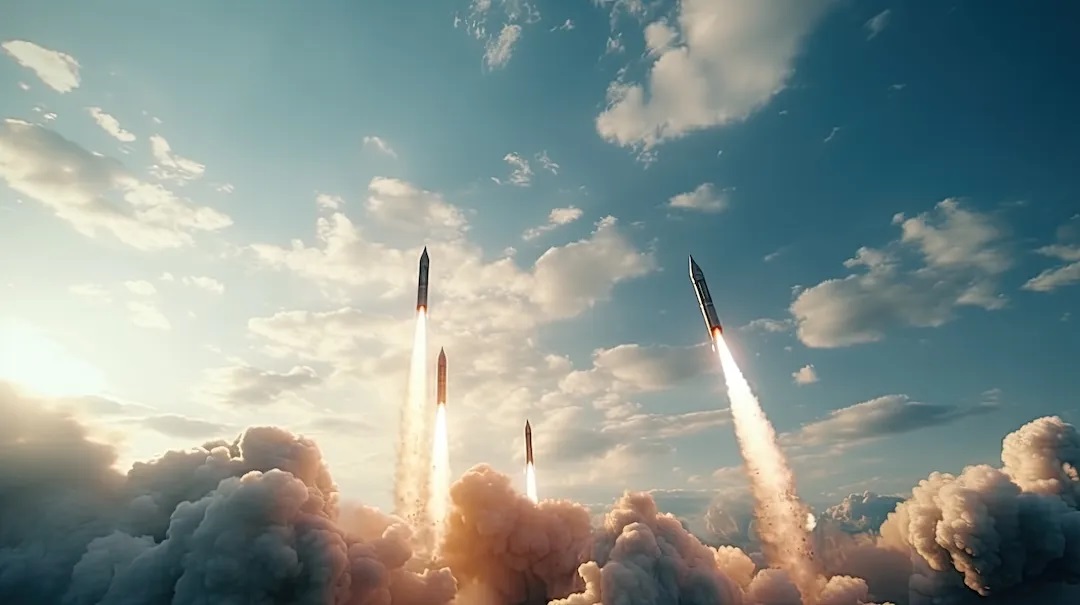
Steven Starr , 13 Jan 26
The missile is only in the developmental stage. The delusional British imagine that Russia will not strike Britain if they pursue this folly.
The UK has formally launched Project Nightfall, a competition to develop a new ground-launched tactical ballistic missile intended primarily for use by Ukrainian forces, while also shaping future British long-range strike programmes.
The government has moved ahead with Project Nightfall, a competitive effort to rapidly develop a ground-launched ballistic missile designed to give Ukraine a long-range strike capability against Russian forces. The programme builds directly on work first disclosed by the UK Defence Journal in December, when the Ministry of Defence published an initial contract notice outlining the requirement.
While the project is being run by the UK, ministers have been clear that the missile is not intended as a near-term addition to Britain’s own arsenal. Instead, Nightfall is designed around Ukrainian operational use, with British industry acting as the developer and manufacturer and the UK Armed Forces positioned as a future beneficiary of lessons learned rather than the immediate end user.
The December notice, published on 9 December 2025, confirmed that the MOD was seeking industry partners to “procure a future tactical ballistic missile through a short-term development programme”. That followed parliamentary confirmation in November that officials were assessing industry feedback ahead of launching a formal competition.
According to the published requirement, Nightfall is one of the most ambitious missile programmes pursued by the UK in decades. The MOD specified a cost-effective, ground-launched ballistic missile with a range greater than 500 kilometres, capable of operating in high-threat and heavily contested environments, including under intense electronic warfare and degraded or denied satellite navigation.
Mobility and survivability are central to the concept. The system is required to support salvo firing from a single launcher, with multiple missiles launched in quick succession before the crew withdraws rapidly. The MOD specified that launch units must be able to leave the firing area “within 15 minutes of launching all effectors”, with each missile reaching its target within approximately 10 minutes of launch.
Scalability is another key requirement. Subject to future contracts, production must be capable of delivering at least 10 missiles per month, with scope to increase output. Designs are also expected to allow future upgrades to range, accuracy and manoeuvrability, while minimising reliance on foreign export controls.
This week’s announcement adds political weight and funding detail rather than altering the core technical requirement. Under the current plan, the government intends to award up to three competing development contracts, each worth £9 million. Each team would be expected to design, develop and deliver three missiles within 12 months for test firings. Proposals are due by 9 February, with development contracts targeted for award in March.
Defence Secretary John Healey framed the programme as a response to continued Russian attacks, saying the UK was determined to place advanced weapons “into the hands of Ukrainians as they fight back.” In ful, he said:
The missile must be “capable of being safely ground launched from a mobile platform in a high threat tactical environment, navigating to and accurately striking a user-programmed fixed target co-ordinate.” Each effector is expected to carry a conventional high-explosive payload of around 200 kilograms and follow a supersonic ballistic trajectory, with a stated accuracy requirement of striking within 10 metres of a target coordinate for 50 per cent of launches.
Mobility and survivability are central to the concept. The system is required to support salvo firing from a single launcher, with multiple missiles launched in quick succession before the crew withdraws rapidly. The MOD specified that launch units must be able to leave the firing area “within 15 minutes of launching all effectors”, with each missile reaching its target within approximately 10 minutes of launch.
Scalability is another key requirement. Subject to future contracts, production must be capable of delivering at least 10 missiles per month, with scope to increase output. Designs are also expected to allow future upgrades to range, accuracy and manoeuvrability, while minimising reliance on foreign export controls.
This week’s announcement adds political weight and funding detail rather than altering the core technical requirement. Under the current plan, the government intends to award up to three competing development contracts, each worth £9 million. Each team would be expected to design, develop and deliver three missiles within 12 months for test firings. Proposals are due by 9 February, with development contracts targeted for award in March
Defence Secretary John Healey framed the programme as a response to continued Russian attacks, saying the UK was determined to place advanced weapons “into the hands of Ukrainians as they fight back.” In ful, he said:
“The attacks overnight on Thursday just go to show how Putin thinks he can act with impunity, targeting civilian areas with advanced weaponry. Instead of seriously negotiating a peace, he’s seriously escalating his illegal war. We were close enough to hear the air raid sirens around Lviv on our journey to Kyiv, it was a serious moment and a stark reminder of the barrage of drones and missiles hitting Ukrainians in sub-zero conditions. We won’t stand for this, which is why we are determined to put leading edge weapons into the hands of Ukrainians as they fight back.”
Defence Minister Luke Pollard said the missiles would “keep Ukraine in the fight” while also strengthening longer-term European security.
“A secure Europe needs a strong Ukraine. These new long-range British missiles will keep Ukraine in the fight and give Putin another thing to worry about. In 2026, we will continue to stand shoulder to shoulder with Ukraine. Providing equipment to keep them in the fight today, whilst working to secure the peace tomorrow.”
While the formal launch underscores the government’s intent, the substance of Project Nightfall remains closely aligned with the requirement outlined in December. As that original notice made clear, the MOD still reserves the right to amend or cancel the programme at any stage, stating that “the Authority reserves the right not to award any Contract to any supplier at any stage during the procurement.”
For now, Nightfall represents a rare case of the UK pursuing a ground-launched ballistic missile explicitly for a partner nation’s use, while using the programme to accelerate domestic expertise in deep-strike systems that Britain itself currently lacks.
Faslane nuclear base tugboats may be built in China
UK Defence Journal By George Allison, January 12, 2026
New tugboats intended to support operations at HM Naval Base Clyde, the UK’s nuclear submarine hub at Faslane, may be constructed in China under a major fleet replacement programme, depending on how the contractor applies its global production model.
The vessels form part of the Defence Maritime Services Next Generation programme, under which Serco is replacing a wide range of Royal Navy harbour and support craft. The programme covers tugs, pilot boats and barges used at naval bases across the UK, including Faslane, which hosts the UK’s continuous at-sea nuclear deterrent.
Under the current arrangements, the Ministry of Defence pays Serco to provide support services at the Royal Navy’s principal bases, and allows Serco, as the prime contractor, to determine its own supply chain for vessel replacement.
Build locations and Damen’s production model
Damen operates a distributed shipbuilding model, with construction spread across a network of yards in Europe and Asia depending on vessel type and production capacity. The company has historically built a range of smaller commercial and support vessels at yards in China and Vietnam, including certain classes of tugboats, while other workboat types are constructed at European facilities in countries such as Poland and Romania. Final outfitting, integration and delivery preparation are often carried out in the Netherlands or at European partner yards, depending on the contract.
Neither Serco nor Damen has publicly confirmed the specific build locations for individual vessels within the programme. However, Damen’s established production model suggests that some tugboats could be built outside Europe, including at shipyards in China that form part of Damen’s wider manufacturing network……………………………………………………………………………………………….
Not the first time
A similar issue emerged in Australia in 2025, when the national broadcaster ABC reported that a new fleet of tugboats ordered for the Royal Australian Navy had been built in China under a contract awarded to Dutch shipbuilder Damen. The report said certification documents showed the vessels were constructed at Damen’s Changde shipyard in China, before being delivered to Australia under a civilian-operated support arrangement.
In response to the reporting, Australia’s Department of Defence confirmed that the tugboats had been built in China, while stating that they were not commissioned naval vessels and would be operated by a civilian contractor. Defence officials emphasised that sustainment activity would take place domestically and that the vessels were intended for harbour support roles rather than frontline operations…………………….
Wider security context
In a separate but related context, the Ministry of Defence has in recent months issued internal guidance concerning the use of vehicles containing Chinese-manufactured components, amid broader concerns about information security and connected systems. Media reporting has said warning notices were placed in some MoD-leased vehicles advising personnel not to discuss sensitive matters inside them or connect official devices, and that certain vehicles were restricted from accessing sensitive military sites. The measures were described as precautionary, with no publicly confirmed security breach.
Parliamentary questions have also raised wider issues about reliance on overseas-manufactured systems within defence and government operations. Ministers have acknowledged the need to assess potential vulnerabilities linked to global supply chains, while maintaining that decisions are taken on a case-by-case basis and that there has been no evidence of compromise.
Competing views on cost, transparency and social value
Those defending the programme argue that the arrangements reflect commercial shipbuilding norms rather than a deliberate policy decision. They note that hull construction in Asia can reduce costs and production timelines, with final outfitting, systems integration and acceptance carried out later in Europe under established regulatory oversight. Critics argue that the lack of transparency over build locations risks undermining confidence, especially where vessels operate at nuclear sites. They contend that clearer public disclosure is needed on where vessels are constructed and what safeguards apply during the build process.
Louise Gilmour, secretary of GMB Scotland, said the decision to source the workboats overseas represented a missed opportunity to support domestic shipbuilding capacity, particularly at Ferguson Marine, where the union represents the largest section of the workforce. She said the vessels were well suited to the type of work the yard had carried out for generations and argued that contracts of this scale could play a role in sustaining skills and employment in Scotland.
https://ukdefencejournal.org.uk/faslane-nuclear-base-tugboats-may-be-built-in-china/
Lost Opportunities to Halt Rising Military Spending
By Alice Slater, https://www.ipsnews.net/2026/01/lost-opportunities-to-halt-rising-military-spending/?utm_source=email_marketing&utm_admin=146128&utm_medium=email&utm_campaign=Skyrocketing_Military_Spending_Undermines_Development_Aid_to_Worlds_Poor_Consent_Ignored_Convictions
NEW YORK, Jan 6 2026 (IPS) – The United Nations issued a year end Fact Sheet: Rising global military expenditures, starkly illuminating that last year’s record high of $2.7 trillion in military expenditures, caused a cascade of devastating consequences to human well-being, the environment, possibilities for avoiding climate collapse, as well as blows to employment, ending hunger and poverty, providing health care, education, and other ills, due to a lack of adequate funding support.
The Fact Sheet does an admirable job of illustrating the shocking maldistribution of States massive military expenditures and what that money could buy in many instances, such as to end hunger and malnutrition, provide clean water and sanitation, education, environmental remediation, and so much more.
But isn’t it time for the UN to issue a Fact Sheet: Lost Opportunities to Halt Rising Military Expenditures and Heal the Earth? After all, just this summer on the 80th Anniversary of WWII, Russia and China issued a Joint Statement by the Russian Federation and the People’s Republic of China on Global Strategic Security in which they urged that in acknowledging that anniversary and the founding of the United Nations, States and their associations “should not seek to ensure their own security at the expense and to the detriment of the security of other States.” adding that ”the destinies of the peoples of all countries are interrelated.”
Even a cursory examination of the sorry history of the United States and its nuclear alliance, in seeking to secure military domination at the expense of Russia and China, shows a sad list of missed opportunities to accept Russia and China’s offers to negotiate for peace and disarmament, which would have freed up trillions of dollars over the years to address the crisis we now face for preserving all life on earth.
The most recent opportunity that should be on the list, (met with deafening silence by the corrupt western media, laboring under the heavy thumb of their corporate military sponsors, who delight in the billions lining their pockets to produce the burgeoning war machine) was China and Russia’s Joint Statement criticizing the US misbegotten Golden Dome space project and opposing any countries use of outer space for armed confrontation.”
They urged negotiations based on the Russian-Chinese draft treaty to prevent weapons and use of force in outer space, proposed at the UN Committee on Disarmament in 2008 and 2014, where consensus is required to negotiate a treaty and the United States vetoed it each time, preventing any discussion. Amazingly, they further pledged that to prevent an arms race in outer space and promote peace in space, they would “agree to promote on a global scale the international initiative/political commitment not to be the first to deploy weapons in outer space.” In other words, No First Use.
While peace in space is the most recent Lost Opportunity, the first Lost Opportunity happened in 1946 when President Truman rejected Stalin’s proposal that the US turn the bomb over to international supervision at the newly formed UN, so Russia got the bomb.
President Reagan rejected Gorbachev’s plea to give up Star Wars as a condition for both countries to eliminate all their nuclear weapons when the wall came down and Gorbachev released all of Eastern Europe from Soviet occupation, thus losing the opportunity to abolish our nuclear arsenals.
More Lost Opportunities: the expansion of the North Atlantic Treaty Organization (NATO) up to Russia’s border despite promises made when the wall came down that NATO would not expand east of a reunified Germany:
President Clinton’s refusal of Putin’s offer to go down to 1000 bombs each, and then call all nuclear states to negotiate for their elimination, provided the US stopped developing missile sites in Romania.
President Bush walked out of the 1972 Anti-Ballistic Missile Treaty and put the new base in Romania; President Trump put one in Poland.
President Obama rejected Putin’s offer to negotiate a treaty to ban cyber war! [i]
Had the US been more open over the years to cooperation, instead of losing so many opportunities to make peace, we would be so much more able to deal with the urgency of preserving a livable planet for all and avoiding the dire consequences enumerated in the new UN Fact Sheet on global military expenditures. It’s still not too late to take up the Russian-Chinese proposal for peace in space. May wiser heads prevail.
Alice Slater serves on the Boards of World BEYOND War and the Global Network Against Weapons and Nuclear Power in Space, and is a UN NGO Representative for the Nuclear Age Peace Foundation.
Cuba Vows to Defend Itself Against Trump to ‘The Last Drop of Blood’
“Cuba is a free, independent, and sovereign nation. Nobody dictates what we do,” said Cuba’s President Miguel Diaz-Canel in response to the latest threat from the authoritarian US president.
Jon Queally, Jan 11, 2026, https://www.commondreams.org/news/trump-threatens-cuba
President Donald Trump was ripped by humanitarians and anti-war voices on Sunday after he again threatened Cuba by saying the US military would be used to prevent oil and other resources from reaching the country, threats that come just over a week after the American president ordered the unlawful attack on Venezuela and the kidnapping of President Nicolas Maduro and his wife, Cilia Flores.
In a social media post Sunday morning, Trump declared:
Cuba lived, for many years, on large amounts of OIL and MONEY from Venezuela. In return, Cuba provided “Security Services” for the last two Venezuelan dictators, BUT NOT ANYMORE! Most of those Cubans are DEAD from last weeks U.S.A. attack, and Venezuela doesn’t need protection anymore from the thugs and extortionists who held them hostage for so many years. Venezuela now has the United States of America, the most powerful military in the World (by far!), to protect them, and protect them we will. THERE WILL BE NO MORE OIL OR MONEY GOING TO CUBA – ZERO! I strongly suggest they make a deal, BEFORE IT IS TOO LATE. Thank you for your attention to this matter. President DJT
Cuba’s President Miguel Diaz-Canel rejected Trump’s latest comments and threat of military force, saying the island nation was ready to defend itself.
“Cuba is a free, independent, and sovereign nation. Nobody dictates what we do,” Diaz-Canel said in a social media post. “Cuba does not attack; it has been attacked by the US for 66 years, and it does not threaten; it prepares, ready to defend the homeland to the last drop of blood.”
Progressive critics of the US president were also quick to hit back. Medea Benjamin, co-founder of the anti-war group CodePink, said the “true extortionist” in this situation is Trump himself, as she detailed the mutual benefit of the relationship between the Venezuelan and Cuban governments over recent decades:
“What is extortion?” Benjamin asks. “It’s what Donald Trump is doing: taking over those oil tankers, confiscating 30-50 million tons of oil—that is extortion. And saying to Venezuela, ‘We’re going to run your country.” Donald Trump is the greatest extortionist our country has seen.“
Reuters reports Sunday, citing shipping data, that Venezuela has been Cuba’s “biggest oil supplier, but no cargoes have departed from Venezuelan ports to the Caribbean country since the capture of Maduro.
Speaking with CBS News on Sunday, Rep. María Elvira Salazar (R-Fla.) said that Trump’s threats to strangle the people of Cuba by enforcing a resource blockade were “like magical” in her ears and those of her right-wing constituents who live in Miami’s large community of Cuban exiles.
Welcoming Trump’s efforts to bully Cuba into submission, Salazar claimed that Cuba’s government is “hanging by a threat” she said, before correcting herself, “a thread, I should say.”
Oddly—but notably—Salazar continued her remarks by saying it was Cuba that has been an “immense” threat to the United States, as she described it as a nation “with no water; they have no electricity; they have no food—nothing. So if you think Maduro is weak, Cuba is even weaker. And now they do not have one drop of oil coming from Venezuela.”
But progressive voices opposed to Trump’s authoritarian violations of international law, his bullying of allies and enemies alike with claims that the US can do whatever it likes in the name of national security and claims of national interest, are warning that the threats against Cuba and other nations represent a chilling development that must be met with international opposition and condemnation.
“The US blockade of Cuba is the longest-standing act of collective punishment in the world,” said David Adler, co-general coordinator of Progressive International, pointing to Trump’s remarks. “It is condemned by the entire international community every year at the UN. And now, the US president is doubling down on this cruel and illegal punishment. Enough.”
“This is an emergency,” Progressive International explained in a dispatch last week, warning about Trump’s overt hostility toward Cuba, Colombia, Mexico, and other nations in the wake of the US attack on Venezuela and the kidnapping of Maduro and Flores.
“The United States is rapidly escalating its assault on the Americas—and the principle of self-determination at large,” warned the international advocacy group. “Under the banner of the Monroe Doctrine, Donald Trump and his cronies are leading a campaign of imperial aggression that stretches from Caracas to Havana, Mexico City to Bogotá.”
According to the dispatch:
What we are witnessing today is class struggle played out through imperial violence. The United States stands as the political and military instrument of capital: Big Oil bankrolling politics; arms manufacturers profiting from destruction; and financial power thriving on plunder and permanent war. These sections of capital pay for the policies they desire and are richly rewarded. The share prices of US oil majors soared around 10% following Maduro’s kidnapping, representing a return of around $100 billion on an investment of $450 million in the last US elections.
The government serves its donors, so aggression can proceed without consent. Public opinion has repeatedly shown opposition to U.S. military action in Venezuela — a gap between elite appetite and popular will bridged by force, not democracy.
Venezuela — like many nations before it — represents a different possibility: that the popular classes might govern themselves, control their resources, and chart a future beyond imperial command. And that possibility represents an existential threat to empire.
The group said Sunday’s latest threat by Trump against Cuba—openly saying that the US military might will be used to prevent life-sustaining resources from reaching the island nation—should be seen for what it is: a coercive “threat to strangle Cuba of critical energy and resources” at the end of a barrel of a gun.
“Through manipulation, coercion, and now direct military action,” the group warns, the US government under Trump “has made absolutely clear its intention to dominate Latin America.”
‘Vomiting blood’: Witness claims US used powerful mystery weapon during Maduro raid
January 11th, 2026, https://www.couriermail.com.au/technology/innovation/vomiting-blood-witness-claims-us-used-powerful-mystery-weapon-during-maduro-raid/news-story/598d8a6d39bc5a8dc5f9d129e6e0e80c
The US used a powerful mystery weapon that left Venezuelan soldiers “bleeding through the nose” and vomiting blood during the Maduro raid, a witness claims.
Don’t miss out on the headlines from Innovation. Followed categories will be added to My News.follow
The US used a powerful mystery weapon that brought Venezuelan soldiers to their knees, “bleeding through the nose” and vomiting blood during the daring raid to capture dictator Nicolas Maduro, according to a witness account posted Saturday on X by the White House press secretary.
In a jaw-dropping interview, the guard described how American forces wiped out hundreds of fighters without losing a single soldier, using technology unlike anything he has ever seen — or heard.
“We were on guard, but suddenly all our radar systems shut down without any explanation,” the guard said. “The next thing we saw were drones, a lot of drones, flying over our positions. We didn’t know how to react.”
Moments later, a handful of helicopters appeared — “barely eight”, by his count — deploying what he estimated were just 20 US troops into the area.
But those few men, he said, came armed with something far more powerful than guns.
“They were technologically very advanced,” the guard recalled. “They didn’t look like anything we’ve fought against before.”
What ensued, he said, was not a battle, but a slaughter.
“We were hundreds, but we had no chance,” he said. “They were shooting with such precision and speed — it felt like each soldier was firing 300 rounds per minute.”
Then came the weapon that still haunts him.
“At one point, they launched something — I don’t know how to describe it,” he said. “It was like a very intense sound wave. Suddenly I felt like my head was exploding from the inside.”
The effects were immediate and horrific.
“We all started bleeding from the nose,” he said. “Some were vomiting blood. We fell to the ground, unable to move. We couldn’t even stand up after that sonic weapon — or whatever it was.”
The White House did not immediately respond to a question regarding whether Karoline Leavitt’s sharing of the post — captioned, “Stop what you are doing and read this …” — indicated the administration was verifying the veracity of the eyewitness account.
An estimated 100 Venezuelan security forces were killed in the January 3 attack, according to the country’s Interior Ministry.
It is unclear if any of those were caused by the mystery weapon.
The outmatched defenders were helpless as the small US unit wiped them out, the guard said.
“Those 20 men, without a single casualty, killed hundreds of us,” he claimed. “We had no way to compete with their technology, with their weapons. I swear, I’ve never seen anything like it.”
The US has had so-called directed energy weapons technology for years, an ex-US intelligence source told The Post, noting that some systems have the capability to produce at least some of the symptoms, including “bleeding, inability to move or function, pain and burning”.
“I can’t say all of those symptoms. But yes, some,” the source said. “And we’ve had versions for decades.”
After the raid, the message couldn’t be more clear — don’t tread on Uncle Sam, the Maduro loyalist said.
“I’m sending a warning to anyone who thinks they can fight the United States,” he said. “They have no idea what they’re capable of. After what I saw, I never want to be on the other side of that again. They’re not to be messed with.”
The guard said the raid has already sent shockwaves across Latin America — especially after President Donald Trump recently warned that Mexico is now “on the list”.
“Everyone is already talking about this,” he said. “No one wants to go through what we went through. What happened here is going to change a lot of things — not just in Venezuela, but throughout the region.”
This article originally appeared on NY Post
Here’s who really weaponizes children in the Russia-Ukraine conflict
As accusations of abductions resurface, it’s clear the West doesn’t care about facts on the ground if they contradict the narrative.

By Eva Bartlett, a Canadian independent journalist. She has spent years on the ground covering conflict zones in the Middle East, especially in Syria and Palestine (where she lived for nearly four years). 9 Jan, 2026 https://www.rt.com/news/630762-russia-ukraine-abducted-children/
For the last three years, Ukraine and concerted legacy media campaigns have been screaming that Russia has abducted, or forcibly displaced, thousands of Ukrainian children – even up to 1.5 million!
The accusations resurged in December, with a UN General Assembly vote on a draft resolution on the return of Ukrainian children.
During the meeting, Ukraine’s Deputy Foreign Minister Mariana Betsa once again pushed claims that “at least 20,000 Ukrainian children have been deported to Russia,” in spite of the fact that months prior, during the June Istanbul talks, the Ukrainian side finally provided a list of the children it accuses Russia of abducting: 339 children, surprisingly far fewer than the number alleged for years.
The absence of over 19,500 on the list indeed leads to many questions, mainly: is Ukraine lying again? Recall that in 2022, the accusations by the (now former) Ukrainian ombudswoman, Lyudmila Denisova, about “sexual atrocities” allegedly committed by Russian soldiers, were revealed to be lies and propaganda. So much so that Denisova was sacked. But before her dismissal, legacy media and the UN all backed the lies.
Some recent accusations are that children were being sent to labor camps in Russia – “165 re-education camps where Ukrainian children are militarized and Russified” – or even of being sent to North Korea, as Katerina Rashevskaya of the Ukrainian Regional Center for Human Rights told the US Subcommittee on State, Foreign Operations, and Related Programs on December 3.
The footnotes of the claims made by Rashevskaya, instead of a source for the information, say “The Regional Human Rights Center can provide information upon request.” In other words, her sources are “trust me, bro.”
Regarding the North Korean camp in question, if two Russian teens were sent there, they’d potentially be made to enjoy water slides, basketball and volleyball courts, an arcade room, a rock climbing wall, art and performance halls, an archery range, a private beach, and hikes in the mountains.
Regarding the list of 339 children Ukraine says were abducted by Russia, Russian Foreign Ministry Spokeswoman Maria Zakharova remarked, “30 percent of the names on the list could not be verified, as most of those children were never in Russia, are now adults, or have already returned to their families. As for the Ukrainian children who are actually in our country, they are under state care in appropriate institutions. They are safe now; in many cases, their evacuation from combat zones saved their lives. Local children’s rights commissioners are now working to reunite them with their relatives.”
Just as legacy media has whitewashed the eight years of Ukraine’s war against Donbass civilians prior to Russia commencing its military operation in 2022, including the Ukrainian shelling which killed 250 children starting in 2014, media likewise ignore the children Russia says are missing.
During the talks in Istanbul, Zakharova noted, “the Russian side presented Ukraine with a list of 20 Russian children who are either currently in Ukraine or relocated from Ukraine to Western Europe, including to countries that endorsed this very statement. Now, the burden falls on these states to provide Russia with a substantive response regarding our ‘list of 20.’”
Over 500 Ukrainian orphans abused in Türkiye
Recently, Donbass-based journalist Christelle Néant wrote about a report published on a pro-Ukrainian website which broke the story of 510 Ukrainian children who had been evacuated by a Ukrainian oligarch in 2022 from Dnepropetrovsk to Türkiye, where the benevolent foundation which brought them there allegedly allowed its staff to beat the children, sexually assault them, and deny them food if they refused to perform on camera to raise funds for their lodging. These are just some of the reported violations of the orphans’ rights.
The details of the report show that the children suffered physically and psychologically. Additionally, two underage teens were impregnated by staff at the hotel they stayed in, with educators allegedly aware of the interactions.
According to Néant, the orphanage director’s response to the fact of one of the teens in her care becoming pregnant was to blame the girl: “This young girl comes from an asocial family. Well, this way of life is already inscribed in every cell, in the blood of these children.”
“In almost 10 years of work in Donbass,” Néant wrote, “I have conducted or filmed many humanitarian missions to orphanages in the region. And never ever have I heard a director make such vile remarks about one of the children in her care. Even the most difficult and recalcitrant were cared for with pedagogy, love, and patience.”
Ukraine hunting down children
In April 2023, Christelle Néant and I interviewed Artyomovsk civilians who had recently been rescued by Russian soldiers. In addition to being deliberately shelled by Ukrainian forces who knew they were sheltering in the basement of a residential building, the civilians we spoke to told us about Ukrainian military police hunting for children.
The evacuees told us some of these police went by the name ‘White Angels’, and were taking childrenaway without their consent or that of their parents.
Around that time, more reports came out about these abductions or attempted abductions, including an 11-year-old girl who spoke of how White Angels, who introduced themselves as military police, came to the basement she was sheltering in with a photo of her, looking for her, and saying they needed to take her away, because “Russia killed her mother.” According to the girl, her mother was alive and with her.
Reports of these abductions also emerged in Avdeyevka, Kupyansk, Slavyansk, Chasov Yar and Konstantinovka, as well as in Ukrainsk and Zhelannoye.
Néant wrote of a July 2023 conference on Ukraine’s crimes against the Donbass children, in which Liliya and her daughter Kira from Schastye, in the Lugansk People’s Republic, spoke.
They gave evidence of how, “at the start of the special military operation (when Ukraine controlled Schastye), around ten children were taken from a school in Schastye to western Ukraine by the headmistress of the school, on orders from Kiev, without informing their parents.”
The children were even forbidden to call their parents, Néant wrote, “But Kira knew her mother’s telephone number by heart and managed to call her to let her know that they were in Lviv and then Khoust. Thanks to Liliya’s determination to find her daughter, we discovered how Kiev ‘exports’ the children it abducts.” Ukraine had forged a new “original” birth certificate for Kira. The girl said she and the other children were to be sent to Poland.
Former SBU officer Vasily Prozorov spoke at the same conference, where he explained, according to Néant, “that one of his investigations had revealed that some of the children abducted by Ukraine are sent to pedophile networks in Great Britain, via a whole network of Ukrainian and British officials or former officials who work together. On the British side, members of MI6 and the Foreign Office are involved.”
Prozorov, she wrote, spoke of “another of his investigations on organizations registered in EU countries involved in ‘exporting’ children from Ukraine under the pretext of providing them with shelter. These organizations take unaccompanied Ukrainian children out of Ukraine. What happens to them afterwards is unknown.”
Evacuees from Kherson reject ‘abduction’ claims
In November 2022, in the southern Russian seaside city Anapa, I met numerous people displaced from Kherson who were being lodged in hotels and apartments in the city.
The first site I visited was a few minutes by taxi outside of the city, one of many hotels along the coast. The hotel director showing me around said they don’t call them refugees, “we call them guests of the building,” and spoke affectionately of them, how grateful they were to be there, far from any shelling. Just under 500 refugees had been living there since October, she told me.
No guards monitored the entrance/exit; the refugees walked around tidy grounds. But in any case, I asked about their freedom of movement, or lack thereof.
“They move freely, of course. We don’t prohibit them from going out. Many aren’t here now because they’re in town, looking for jobs, getting documents. Children are at school.”
With my hired translator, I spoke with two Kherson women, a young mother and her own mother, to hear their stories.
“We were living with explosions at night, it was very scary, not only for myself, but for my children and for my grandchildren,” the older woman said. “When you go to bed, you don’t know if you will get out of bed in the morning. We were forced to leave.”
I asked who was shelling them. “Word of mouth transmits very clearly, and people around us spoke about it. We were bombed by the Armed Forces of Ukraine. Russian soldiers protected us.”
The younger woman said she used to speak with the Russian soldiers there. “They are friendly. We wanted to hug them, because we felt protected. They helped us, gave us humanitarian aid, brought it to the house.”
Some minutes’ taxi ride away, I visited an apartment complex that could have served tourists in summer. There, fifty buildings housed around 1,500 refugees who had also arrived in October, mostly from Kherson Region.
My translator and I walked around, passing playgrounds, a pharmacy, a library, a swimming pool, a gym, a small petting zoo with peacocks, and a kindergarten. Near a playground, I spoke with a mother sitting on a bench with two of her four children.
“In the early days, there was bombing. We spent two and a half weeks in the basement. It was unbearable, the children were very afraid.” One of her daughters became ill. “She had acute inflammation of the lower jaw, we think due to hypothermia. We took her to Simferopol and she had surgery.”
In Anapa, she said, her children had full medical examinations. “We were helped by the mayor of the city of Anapa. We are grateful for everything.”
I mentioned that according to Western media, she and her family were kidnapped by Russia. She replied that her husband’s parents had demanded to see the children, having been told that children were being separated from their parents in Russia.
“His mother called three days in a row, saying, ‘Where are the children?’ We answered, ‘They went to the cinema. They’re playing, etc.’ She said, ‘Show me the children, they say that they took your children from you.’”
Details matter
Whereas legacy media continue to push the “Evil Russia child kidnapper” narrative, there is ample evidence that Ukraine is guilty of doing precisely what it accuses Russia of. The is also a significant absence of evidence regarding the ‘20,000 kidnapped children’ claims still being pushed.
Will media investigate the reports of abuse of Ukrainian children in Türkiye? Surely not. It wouldn’t suit their scripted anti-Russia bias.
‘We’ll Hit Them Very Hard’: Trump Threatens Iran Again as Protest Death Toll Rises

Critics pointed out that Trump has often endorsed violence against protesters when they opposed him.
Stephen Prager, Common Dreams, Jan 08, 2026
President Donald Trump doubled down on his threats to attack Iran on Thursday in response to its government’s increasingly violent crackdown on ongoing protests.
“If they start killing people, which they tend to do during their riots—they have lots of riots—if they do it, we’re going to hit them very hard,” he said.
Addressing the Iranian people, he added: “You must stand up for your right to freedom. There is nothing like freedom. You are a brave people. It’s a shame what’s happening to your country.”
The Norway-based Iran Human Rights (IHR) reported on Thursday that Iranian security forces have killed at least 45 protesters since demonstrations against the regime began in late December. Wednesday was the bloodiest day yet, with 13 people reportedly killed.
On Thursday, Iranian authorities shut down internet access for the population, which has limited the flow of information in and out of the country.
The protests kicked off in response to the sudden collapse in the value of Iran’s currency, the rial, which exacerbated the country’s already spiraling cost-of-living crisis, heightening inflation and putting many basic goods out of reach for many Iranians.
This economic crisis has been shifted into hyperdrive since Trump returned to office last year and re-implemented his “maximum pressure” strategy against Iran, including more severe economic sanctions and a 12-day war in June during which the US struck several Iranian nuclear sites. Over the past year, the average cost of food has increased by 70%, while the cost of medicine has increased by 50%……………………………………..
Iran has blamed the unrest on “interference in Iran’s internal affairs” by the United States. The nation’s president, Masoud Pezeshkian, has urged authorities to exhibit the “utmost restraint” in handling protesters. But earlier this week, Supreme Leader Ayatollah Ali Khameini said “rioters” must be “put in their place,” while a top judge accused demonstrators of being agents of the US and Israel.
The latest swell of protests began after Reza Pahlavi, the former crown prince and son of Iran’s former US-backed shah, called for demonstrators to take to the streets. On Thursday, Pahlavi, who has lived most of his life in the US after the royal family was run out of Iran during the 1979 revolution, met with Israeli leaders, including Prime Minister Benjamin Netanyahu and President Isaac Herzog.
On Thursday, Iranian authorities shut down internet access for the population, which has limited the flow of information in and out of the country.
The protests kicked off in response to the sudden collapse in the value of Iran’s currency, the rial, which exacerbated the country’s already spiraling cost-of-living crisis, heightening inflation and putting many basic goods out of reach for many Iranians.
This economic crisis has been shifted into hyperdrive since Trump returned to office last year and re-implemented his “maximum pressure” strategy against Iran, including more severe economic sanctions and a 12-day war in June during which the US struck several Iranian nuclear sites. Over the past year, the average cost of food has increased by 70%, while the cost of medicine has increased by 50%.
The rial has lost 95% of its value since 2018, when Trump withdrew the US from the nuclear agreement with Iran, which included sanctions relief.
Last Friday, just one day before he bombed Venezuela as part of an operation to overthrow its leader Nicolás Maduro and seize the nation’s oil reserves, Trump wrote on Truth Social that “if Iran shoots and violently kills peaceful protesters, which is their custom, the United States of America will come to their rescue. We are locked and loaded and ready to go.”
On Tuesday, US Sen. Lindsey Graham (R-SC), a leading proponent of regime change, warned Iran’s leaders that “if you keep killing your people who are demanding a better life—Donald J. Trump is going to kill you.” Just days before, Graham said that Iran’s “weakened” state was thanks in part to Trump’s efforts to “economically isolate” the country.
Iran has blamed the unrest on “interference in Iran’s internal affairs” by the United States. The nation’s president, Masoud Pezeshkian, has urged authorities to exhibit the “utmost restraint” in handling protesters. But earlier this week, Supreme Leader Ayatollah Ali Khameini said “rioters” must be “put in their place,” while a top judge accused demonstrators of being agents of the US and Israel.
The latest swell of protests began after Reza Pahlavi, the former crown prince and son of Iran’s former US-backed shah, called for demonstrators to take to the streets. On Thursday, Pahlavi, who has lived most of his life in the US after the royal family was run out of Iran during the 1979 revolution, met with Israeli leaders, including Prime Minister Benjamin Netanyahu and President Isaac Herzog.
Critics pointed out that Trump has often endorsed violence against protesters when they opposed him. Just a day before he issued his latest threat, he defended a federal immigration agent who fatally shot an unarmed mother in Minneapolis, while members of his administration falsely described her as a “domestic terrorist.”
He has previously advocated for the US military to be deployed to use force against protesters and threatened to invoke the Insurrection Act to quell peaceful protests, including the No Kings demonstrators who mobilized nationwide in October. https://www.commondreams.org/news/trump-hit-iran-protests
New owners of Canadian Nuclear Laboratories have extensive nuclear weapons connections.
| By hendricksonjones on January 10, 2026, https://concernedcitizens.net/2026/01/10/new-owners-of-canadian-nuclear-laboratories-have-extensive-nuclear-weapons-connections/ |
Nuclear weapons are an existential threat to life on Earth and need to be abolished.
Concerned Citizens and other civil society groups are concerned about the nuclear weapons connections of US-based multinational corporations contracted to operate Canadian Nuclear Laboratories. Some new facilities being built or proposed at Chalk River Laboratories are aimed at handling tritium and plutonium, both of which are key ingredients in nuclear warheads.
The current owner/operator of Canadian Nuclear Laboratories, “Nuclear Laboratory Partners of Canada,” assumed ownership in December 2025 under a 6-year, multibillion dollar contract with the Government of Canada. It consists of three US-based corporations: BWXT, Amentum, and Battelle. A fourth corporation, Kinectrics, was recently acquired by BWXT.
Here is what Perplexity Pro told us about nuclear weapons connections of BWXT, Amentum and Batelle.
BWXT
BWXT has significant connections to U.S. nuclear weapons programs through its work with government agencies and defense contracts.bwxt+1
Key Contracts
BWXT manages high-consequence nuclear operations for the U.S. Department of Energy (DOE) and National Nuclear Security Administration (NNSA), which oversees the U.S. nuclear weapons stockpile. In 2025, it secured a $1.5 billion contract from NNSA to build a uranium enrichment facility for defense applications, including tritium production—a key component in nuclear weapons.reuters+2
Naval and Defense Roles
The company manufactures nuclear reactor components for U.S. Navy submarines and aircraft carriers, including Virginia-class and Columbia-class vessels, under multi-billion-dollar contracts like a $2.6 billion award in 2025. BWXT holds licenses for depleted uranium fabrication for defense and has handled highly enriched uranium from down-blended nuclear weapon cores.reddit+3
Historical Context
BWXT was previously involved in tritium production for the U.S. nuclear arsenal. Subsidiaries like Nuclear Fuel Services support these government programs.dontbankonthebomb+1
Amentum
Amentum has substantial nuclear weapons connections through U.S. and UK defense contracts for weapons facilities, plutonium processing, tritium operations, and national security sites.amentum+2
U.S. Weapons Complex
Amentum manages the Pantex Plant (nuclear weapons assembly/disassembly) and Y-12 National Security Complex (uranium components for weapons) under a $28 billion NNSA contract via NPOne JV. It supports Los Alamos plutonium facilities, Savannah River pit production, and naval nuclear propulsion for ballistic missile submarines.amentum+3
Plutonium and Remediation
The company decommissions plutonium-contaminated facilities at U.S. sites like Hanford’s Plutonium Finishing Plant and UK’s Low Level Waste Repository, plus Portsmouth uranium enrichment for weapons.amentum+2
UK AWE (Atomic Weapons Establishment)Involvement
Amentum serves as Delivery Partner for AWE’s Enriched Uranium Components Programme at Aldermaston, handling enriched uranium for UK nuclear warheads, decommissioning gloveboxes, and program management.amentum+2
Battelle
Battelle Memorial Institute has deep historical and ongoing connections to nuclear weapons programs, including direct contributions to the Manhattan Project and management of key NNSA national laboratories involved in weapons research.battelle+2
Manhattan Project Role
During World War II, 400 Battelle researchers fabricated plutonium from uranium for atomic bomb cores. This work positioned Battelle as a leader in nuclear research, including extruding uranium fuel for early reactors at Oak Ridge.wikipedia+2
National Labs Management
Battelle manages or co-manages eight DOE national labs central to nuclear security, such as Los Alamos National Laboratory (plutonium pits for weapons via Triad National Security, LLC), Pacific Northwest National Laboratory, and Savannah River National Laboratory (nuclear materials management). These labs support stockpile stewardship, pit production, and nuclear deterrence under NNSA.battelle+4
Additional Ties
Battelle developed nuclear fuel rods for naval reactors like the USS Nautilus and provided Environment, Health and Safety support at Pantex Plant, the primary site for weapons assembly/disassembly. It oversees chemical weapons demilitarization and biodefense tied to nuclear security missions.battelle+3
References:
Plunging Toward Armageddon: U.S. and Russia on the Brink of a New Nuclear Arms Race

Beginning on February 6th, Russian and American leaders will face no barriers whatsoever to the expansion of those arsenals or to any other steps that might increase the danger of a thermonuclear conflagration.
Both the United States and Russia have already committed vast sums to the “modernization” of their nuclear delivery systems
By Michael Klare. 8 Jan 26, https://tomdispatch.com/plunging-into-the-abyss/
Plunging Into the Abyss. Will the U.S. and Russia Abandon All Nuclear Restraints?
For most of us, Friday, February 6, 2026, is likely to feel no different than Thursday, February 5th. It will be a work or school day for many of us. It might involve shopping for the weekend or an evening get-together with friends, or any of the other mundane tasks of life. But from a world-historical perspective, that day will represent a dramatic turning point, with far-reaching and potentially catastrophic consequences. For the first time in 54 years, the world’s two major nuclear-weapons powers, Russia and the United States, will not be bound by any arms-control treaties and so will be legally free to cram their nuclear arsenals with as many new warheads as they wish — a step both sides appear poised to take.
It’s hard to imagine today, but 50 years ago, at the height of the Cold War, the U.S. and Russia (then the Soviet Union) jointly possessed 47,000 nuclear warheads — enough to exterminate all life on Earth many times over. But as public fears of nuclear annihilation increased, especially after the near-death experience of the 1962 Cuban Missile Crisis, the leaders of those two countries negotiated a series of binding agreements intended to downsize their arsenals and reduce the risk of Armageddon.
The initial round of those negotiations, the Strategic Arms Limitation Talks I, began in November 1969 and culminated in the first-ever nuclear arms-limitation agreement, SALT-I, in May 1972. That would then be followed in June 1979 by SALT-II (signed by both parties, though never ratified by the U.S. Senate) and two Strategic Arms Reduction Treaties (START I and START II), in 1991 and 1993, respectively. Each of those treaties reduced the number of deployed nuclear warheads on U.S. and Soviet/Russian intercontinental ballistic missiles, submarine-launched ballistic missiles, and long-range bombers.
In a drive to reduce those numbers even further, President Barack Obama and Russian President Dmitry Medvedev signed a New Strategic Arms Reduction Treaty (New START) in April 2010, an agreement limiting the number of deployed nuclear warheads to 1,550 on each side — still enough to exterminate all life on Earth, but a far cry from the START I limit of 6,000 warheads per side. Originally set to expire on Feb. 5, 2021, New START was extended for another five years (as allowed by the treaty), resetting that expiration date for February 5, 2026, now fast approaching. And this time around, neither party has demonstrated the slightest inclination to negotiate a new extension.
So, the question is: What, exactly, will it mean for New START to expire for good on February 5th?
Most of us haven’t given that a lot of thought in recent decades, because nuclear arsenals have, for the most part, been shrinking and the (apparent) threat of a nuclear war among the great powers seemed to diminish substantially. We have largely escaped the nightmarish experience — so familiar to veterans of the Cold War era — of fearing that the latest crisis, whatever it might be, could result in our being exterminated in a thermonuclear holocaust.
A critical reason for our current freedom from such fears is the fact that the world’s nuclear arsenals had been substantially diminished and that the two major nuclear powers had agreed to legally binding measures, including mutual inspections of their arsenals, meant to reduce the danger of unintended or accidental nuclear war. Together, those measures were crafted to ensure that each side would retain an invulnerable, second-strike nuclear retaliatory force, eliminating any incentive to initiate a nuclear first strike.
Unfortunately, those relatively carefree days will come to an end at midnight on February 5th.
Beginning on February 6th, Russian and American leaders will face no barriers whatsoever to the expansion of those arsenals or to any other steps that might increase the danger of a thermonuclear conflagration. And from the look of things, both intend to seize that opportunity and increase the likelihood of Armageddon. Worse yet, China’s leaders, pointing to a lack of restraint in Washington and Moscow, are now building up their own nuclear arsenal, only adding further fuel to the urge of American and Russian leaders to blow well past the (soon-to-be-abandoned) New START limits.
A Future Nuclear Arms Race?
Even while adhering to those New START limits of 1,550 deployed nuclear warheads, both Russia and the United States had taken elaborate and costly steps to enhance the destructive power of their arsenals by replacing older, less-capable intercontinental ballistic missiles (ICBMs), submarine-launched ballistic missiles (SLBMs), and nuclear bombers with newer, even more capable ones. As a result, each side was already becoming better equipped to potentially inflict catastrophic damage on its opponent’s nuclear retaliatory forces, making a first strike less inconceivable and so increasing the risk of precipitous escalation in a crisis.
The Russian Federation inherited a vast nuclear arsenal from the former Soviet Union, but many of those systems had already become obsolete or unreliable. To ensure that it maintained an arsenal at least as potent as Washington’s, Moscow sought to replace all of the Soviet-era weapons in its inventory with more modern and capable systems, a process still underway. Russia’s older SS-18 ICBMs, for example, are being replaced by the faster, more powerful SS-29 Sarmat, while its remaining five Delta-IV class missile-carrying submarines (SSBNs) are being replaced by the more modern Borei class. And newer ICBMs, SLBMs, and SSBNs are said to be in development.
At present, Russia possesses 333 ICBMs, approximately half of them deployed in silos and the other half on road-mobile carriers. It also has 192 SLBMs on 12 missile-carrying submarines and possesses 67 strategic bombers, each capable of firing multiple nuclear-armed missiles. Supposedly, those systems are currently loaded with no more than 1,550 nuclear warheads (enough, of course, to destroy several planets), as mandated by the New START treaty. However, many of Russia’s land- and sea-based ballistic missiles are MIRVed (meaning they’re capable of launching multiple independently targetable reentry vehicles) but not fully loaded, and so could carry additional warheads if a decision were ever made to do so. Given that Russia possesses as many as 2,600 nuclear warheads in storage, it could rapidly increase the number of deployed nuclear weapons at its disposal beginning on February 6, 2026.
Rather than confront such challenges, the leaders of both countries may instead choose to retain the New START limits voluntarily. Indeed, Vladimir Putin has already agreed to a one-year extension of this sort, if the United States is willing to do likewise. But pressures (which are bound to increase after February 5th) are also building to abandon those limits and begin deploying additional warheadsmost missile-tracking radars.
The United States is engaged in a comparable drive to modernize its arsenal, replacing older weapons with more modern systems. Like Russia, the U.S. maintains a “triad” of nuclear delivery systems — land-based ICBMs, submarine-launched SLBMs, and long-range bombers, each of which is now being upgraded with new warheads at an estimated cost over the next quarter century of approximately $1.5 trillion.
The existing New START-limited U.S. nuclear triad consists of 400 silo-based Minuteman-III ICBMs, 240 Trident-II SLBMs carried by 14 Ohio-class submarines (two of which are assumedly being overhauled at any time), and 96 strategic bombers (20 B-2s and 76 B-52s) armed with a variety of gravity bombs and air-launched cruise missiles. According to current plans, the Minuteman-IIIs will be replaced by Sentinel ICBMs, the Ohio-class SSBNs by Columbia-class ones, and the B-2s and B-52s by the new B-21 Raider bomber. Each of those new systems incorporates important features — greater accuracy, increased stealth, enhanced electronics — that make them even more useful as first-strike weapons, were a decision ever made to use them in such a fashion.
When initiated, the U.S. nuclear modernization project was expected to abide by the New START limit of 1,550 deployed nuclear warheads. After February 5th, however, the U.S. will be under no legal obligation to do so. It could quickly begin efforts to exceed that limit by loading all existing Minuteman-IIIs and future Sentinel missiles on MIRVed rather than single-warhead projectiles and loading the Trident missiles (already MIRVed) with a larger number of warheads, as well as by increasing production of new B-21s. The United States has also commenced development of a new delivery system, the nuclear-armed sea-launched cruise missile (SLCM-N), supposedly intended for use in a “limited” regional nuclear conflict in Europe or Asia (though how such a conflagration could be prevented from igniting a global holocaust has never been explained).
In short, after the expiration of the New START agreement, neither Russia nor the United States will be obliged to limit the numbers of nuclear warheads on their strategic delivery systems, possibly triggering a new global nuclear arms race with no boundaries in sight and an ever-increasing risk of precipitous nuclear escalation. Whether they choose to do so will depend on the political environment in both countries and their bilateral relations, as well as elite perceptions of China’s nuclear buildup in both Washington and Moscow.
The Political Environment
Both the United States and Russia have already committed vast sums to the “modernization” of their nuclear delivery systems, a process that won’t be completed for years. At present, there is a reasonably broad consensus in both Washington and Moscow on the need to do so. However, any attempt to increase the speed of that process or add new nuclear capabilities will generate immense costs along with significant supply-chain challenges (at a time when both countries are also trying to ramp up their production of conventional, non-nuclear arms), creating fresh political disputes and potential fissures.
Rather than confront such challenges, the leaders of both countries may instead choose to retain the New START limits voluntarily. Indeed, Vladimir Putin has already agreed to a one-year extension of this sort, if the United States is willing to do likewise. But pressures (which are bound to increase after February 5th) are also building to abandon those limits and begin deploying additional warheads.
In Washington, a powerful constellation of government officials, conservative pundits, weapons industry leaders, and congressional hawks is already calling for a nuclear buildup that would exceed the New START limits, claiming that a bigger arsenal is needed to deter both a more aggressive Russia and a more powerful China. As Pranay Vaddi, a senior director of the National Security Council, put it in June 2024, “Absent a change in the trajectory of the adversary arsenal, we may reach a point in the coming years where an increase from current deployed numbers is required, and we need to be fully prepared to execute if the president makes that decision.”
Those who favor such a move regularly point to China’s nuclear buildup. Just a few years ago, China possessed only some 200 nuclear warheads, a small fraction of the 5,000 possessed by both Russia and the U.S. Recently, however, China has expanded its arsenal to an estimated 600 warheads, while deploying more ICBMs, SLBMs, and nuclear-capable bombers. Chinese officials claim that such weaponry is needed to ensure retaliation against an enemy-first strike, but their very existence is being cited by nuclear hawks in Washington as a sufficient reason for the U.S. to move beyond the New START limits.
Russian leaders face an especially harsh quandary. At a moment when they are devoting so much of the country’s state finances and military-industrial capacities to the war in Ukraine, they face a more formidable and possibly expanded U.S. nuclear arsenal, not to mention the (largely unspoken) threat posed by China’s growing arsenal. Then there’s President Trump’s plan for building a “Golden Dome” missile shield, intended to protect the U.S. from any type of enemy projectile, including ICBMs — a system which, even if only partially successful, would threaten the credibility of Russia’s second-strike retaliatory capability. So, while Russia’s leaders would undoubtedly prefer to avoid a costly new arms buildup, they will probably conclude that they have little choice but to undertake one if the U.S. abandons New START.
Racing to Armageddon
Many organizations, individuals, and members of Congress are pleading with the Trump administration to accept Vladimir Putin’s proposal and agree to a voluntary continuation of the New START limits after February 5th. Any decision to abandon those limits, they argue, would only add hundreds of billions of dollars to the federal budget at a time when other priorities are being squeezed. Such a decision would also undoubtedly provoke reciprocal moves by Russia and China. The result would be an uncontrolled arms race and a rising risk of nuclear annihilation.
But even if Washington and Moscow were to agree to a one-year voluntary extension of New START, each would be free to break out of it at any moment. In that sense, February 6th is likely to bring us into a new era — not unlike the early years of the Cold War — in which the major powers will be poised to ramp up their nuclear war-fighting capabilities without any formal restrictions whatsoever. That comfortable feeling we once enjoyed of relative freedom from an imminent nuclear holocaust will also then undoubtedly begin to dissipate. If there is any hope in such a dark prognosis, it might be that such a reality could, in turn, ignite a worldwide anti-nuclear movement like the Ban the Bomb campaigns of the 1960s, 1970s, and 1980s. If only.
Genocide in Gaza, Apartheid in the Palestinian West Bank: UN Report.

Juan Cole, 01/08/2026, https://www.juancole.com/2026/01/genocide-apartheid-palestinian.html
Ann Arbor (Informed Comment) – The UN Office of Human Rights, headed by Volker Türk, on Wednesday issued an extensive report on the Israeli military occupation of the Palestinian West Bank in which it for the first time described Israeli policies there as Apartheid. The executive summary says, “The report warns that Israel is violating international law requiring States to prohibit and eradicate racial segregation and apartheid.”
Türk told the UN, “There is a systematic asphyxiation of the rights of Palestinians in the West Bank. Whether accessing water, school, rushing to hospital, visiting family or friends, or harvesting olives – every aspect of life for Palestinians in the West Bank is controlled and curtailed by Israel’s discriminatory laws, policies and practices.”
“This is a particularly severe form of racial discrimination and segregation, that resembles the kind of apartheid system we have seen before.” He is referring to racial discrimination in Apartheid South Africa from the late 1940s through the early 1990s.
He concluded, “Every negative trend documented in the report has not only continued but accelerated. And every day this is allowed to continue, the consequences worsen for Palestinians.”
The report ( PDF here) stresses how drastically the human rights situation for Palestinians in the West Bank has deteriorated since 2022:
* Palestinians in the West bank live under a different and harsher set of laws than do the Israeli squatters who have flooded into the territory
* Palestinians therefore have less access to resources, including land and water, than do the squatters
* The report notes that the International Court of Justice in the Hague found in 2024 that “the systemic discrimination against Palestinians living in the Occupied Palestinian Territory, together with the restrictions of movement imposed on Palestinians through checkpoints, as well as limited access to roads, natural resources, land and basic social facilities, amounted to a situation of racial segregation.” The ICJ noted then that the situation verged on Apartheid and would be properly so characterized if the Israelis did not take immediate ameliorating steps (they did not). The ICJ, indeed, ruled the Israeli occupation of the Palestinian Territories it seized in 1967 to now be illegal, since it had departed so extensively from International Humanitarian Law in its rule of these people. Moreover, IHL had envisioned occupations to be short and to endure only during an active war, not to stretch into decades.
* Palestinians’ land and homes are routinely taken away from them by the Israeli authorities or are arbitrarily and lawlessly encroached on by the Israeli squatters. In Jenin, Tulkarem and Tubas Governorates, some 32,000 people were recently expelled by Israeli troops from the refugee camps in which they had lived. The report adds, “Thousands of Palestinians have also been evicted from their homes across the West Bank, which may amount to unlawful transfer, a war crime.” That is, the Geneva Conventions and the Rome Statute forbid transferring people in militarily occupied territories out of their homes. When the Nazis occupied Poland they expelled a lot of Poles from it in hopes of replacing them with Germans, and these laws were designed prevent a repeat of such policies. The IHRA people can jump up and down all they like, but the Nazi plan for Poland and the Zionist plan for Gaza and the West Bank are very similar.
* Palestinians face “criminal prosecution in military courts during which their due process and fair trial rights are systematically violated.” This treatment is only accorded Palestinians. Israeli squatters on the West Bank who do get into trouble with the law are tried in Israeli civil courts as though they were living in Israel.
* The UN says, “The report concludes that there are reasonable grounds to believe the separation, segregation and subordination are intended to be permanent, to maintain oppression and domination of Palestinians. ‘Acts committed with the intention to maintain such a policy amount to a violation of Article 3 of ICERD (the International Convention on the Elimination of All Forms of Racial Discrimination), which prohibits racial segregation and apartheid,’ it finds.”
* Israeli troops and squatters sometimes just shoot down innocent Palestinians. They don’t treat Israelis that way, an obvious sign of discrimination. The High Commission on Human Rights, the report says,”has consistently documented patterns of unlawful killings of Palestinians, including apparent extra- judicial executions by the ISF [the Israeli military], with almost complete impunity.” Elsewhere the report notes, “ISF [Israeli Security Forces] have killed 2,321 Palestinians (1,760 men, 65 women, 496 children) in the occupied West Bank, including East Jerusalem, in the absence of hostilities there, and injured thousands more, in many instances causing life-long injuries and disabilities. In the same period, 205 Israelis (including 148 men, 32 women, 25 children) have been killed in the occupied West Bank,” In the old days, the Israelis maintained a ten to one ration of Palestinians killed to Israelis. The report doesn’t say so, but that ratio has been raised to 100 to one or 1000 to one in some cases.
* The Israelis have demolished the infrastructure of water for the Palestinian West Bank, and then confiscated the water. They make the Palestinians buy back their own water from an Israeli corporation.
Venezuela today. Greenland tomorrow?
9 Jan 26, https://secure.declassifieduk.org/page/email?mid=8c66e2426c734ac1a627c6af5564d142
During the early hours of Saturday morning, US forces bombed Venezuela and kidnapped its president, Nicolás Maduro.
The objective, according to US president Donald Trump, was to secure access to Venezuela’s massive oil reserves and assert US domination over the hemisphere, pushing out geopolitical rivals like China, Russia, and Iran.
Venezuelan authorities will soon be “turning over between 30 and 50 MILLION Barrels of High Quality Oil… to the United States of America”, Trump wrote on social media.
The Trump administration also told Venezuela’s interim president Delcy Rodriguez that “the country must kick out China, Russia, Iran, and Cuba and sever economic ties”, according to ABC News.
Keir Starmer, a former human rights lawyer, has repeatedly refused to be drawn on whether the kidnapping of a foreign head of state was a violation of international law.
“Are we willing to risk damaging our most important economic and national security partnerships as a result [of condemning Trump]?”, the prime minister reportedly asked colleagues.
Yvette Cooper, Britain’s foreign secretary, could only bring herself to say that she had “raised the importance of complying with international law” with her US counterpart, Marco Rubio.
Yet pressure is mounting on Starmer’s government to respond in concrete terms to the attack, with UN human rights chief Volker Turk now spelling out its brazen illegality.
“It is clear that the operation undermined a fundamental principle of international law – that States must not threaten or use force against the territorial integrity or political independence of any state”, he said in a statement on Wednesday.
With the dust still settling in Caracas, Trump has now turned his imperial gaze to Greenland, a semi-autonomous Arctic territory of the kingdom of Denmark, which is a member of NATO. The White House says it has been discussing “a range of options” to acquire Greenland, including military force, referring to the issue as a “national security priority”. Greenland might seem quite apart from Venezuela in geographical, political, and cultural terms, but the US government has long folded both regions into its designs for hemispheric domination. After the German invasion of Denmark in April 1940, US secretary of state Cordell Hull declared “Greenland is within the area embraced by the Monroe Doctrine”, an 1823 doctrine which has been repeatedly relied upon to assert US hegemony in the Americas During the Cold War, the US army stationed 48 surface-to-air nuclear weapons and air-to-air missiles at Thule air base on Greenland, while a US army research and development facility was established beneath the territory’s icecap. Washington’s current interest in Greenland, however, has more to do with its location for military purposes, the opening of trade routes in the Arctic Ocean (which will increase in importance amid climate change) and the island’s richness in critical minerals like lithium and cobalt. While Starmer reserved judgment on Trump’s illegal attack on Venezuela, he has signed a joint statement alongside France, Germany, Italy, Poland, Spain, and Denmark, affirming “Greenland belongs to its people”. But will Starmer actually take any meaningful action to stand up to Trump? “Nobody’s going to fight the US over the future of Greenland”, said Trump’s aide Stephen Miller on Tuesday. He might just be right. |
‘Year of bloodshed’: West Bank authorities record nearly 24,000 army, settler attacks on Palestinians in 2025
Around 35,000 trees have been uprooted or destroyed by illegal settlers this year, while 14 Palestinian citizens have been killed
News Desk, JAN 6, 2026, https://thecradle.co/articles-id/35236
Head of Palestine’s Colonization and Wall Resistance Commission (CWRC), Minister Muayyad Shaaban, said in a new report that over 23,000 attacks have been carried out on Palestinians by settlers and the Israeli army in the occupied West Bank this year.
According to the CWRC report, 2025 saw Israeli troops and illegal settlers commit 23,827 attacks across the territory.
“The attacks were categorized as follows: 1,382 targeted land and trees, 16,664 attacks targeted individuals, while 5,398 attacks targeted property,” the report reads.
“The Israeli army was responsible for 18,384 attacks, while colonizers carried out 4,723 attacks, and both parties together were involved in an additional 720 attacks,” Shaaban is quoted as saying during a press conference at CWRC headquarters in Ramallah.
The minister said 2025 was “a year marked by bloodshed.”
“The occupying power did not simply expand colonies; it aimed to redefine the very concept of control. That is, domination is no longer limited to physical land, but rather, it extends to reshaping geography, symbolism, and the entire existence of the Palestinian people,” he added.
As a result of this year’s violence in the occupied West Bank, 14 Palestinian citizens have been killed.
Shaaban went on to say that 35,000 trees have been destroyed this year, and that settlers have caused 434 fires, which impacted Palestinian property and agriculture.
Meanwhile, land confiscation and settlement expansion are surging.
“Israeli occupation authorities effectively control approximately 41 percent of the West Bank, maintain a tight grip on nearly 70 percent of Area C, and control over 90 percent of the Jordan Valley through a comprehensive system of military orders and expropriation measures,” according to CWRC.
The 1993 US-sponsored Oslo Accords established the Palestinian Authority (PA) and its security forces, and gave the Palestinians limited autonomy in some parts of the occupied West Bank. This was said to be in preparation for the eventual establishment of a Palestinian state.
However, the accords did not end Israel’s military occupation and gave the Israeli government time to confiscate more Palestinian land and continue illegally expanding West Bank settlements.
The agreement resulted in the splitting of the West Bank into areas A, B, and C. Area A gave the PA authority over civil and security matters, while Area B gave it control only over civil matters. In Area C, Israel was granted full control.
Since then, illegal settlements have continued to expand, including in Areas A and B.
Since the start of 2025, Israel has been occupying multiple West Bank refugee camps and has been carrying out a systematic campaign of destruction and displacement.
Tens of thousands of Palestinians have been uprooted from their homes in the occupied West Bank since the start of the year, mainly in Jenin, Tulkarem, and Tubas.
As army and settler violence surges, the government also continues to advance plans for illegally annexing the territory.
Bezalel Smotrich, Israel’s finance minister and staunch backer of the illegal settler movement, said on 30 December that Washington has given Tel Aviv “full support” to expand settlements in the occupied West Bank.
Analysts Warn Venezuela Invasion Could Empower Trump to Take Actions Elsewhere.
“The invasion of Venezuela is a blatant violation of international law,” “It is a prelude, potentially, to a long and violent conflict within Venezuela. And it’s a throwback to other times when leaders who had broken democracy, who had exploited their peoples in Haiti in 1915 or in Panama in 1989, became the fodder for further U.S. invasions and occupation.”
“We’re ready to go again if we have to,” Trump said in a press conference after the invasion. And not just against Venezuela. Trump has threatened military action in Colombia, Cuba, and Mexico.
The US’s first unilateral invasion in South America is Trump’s testing ground for military supremacy in the region.
By Michael Fox , Truthout, January 6, 2026
The bombs fell in the early hours of January 3. They cascaded over the city, one and then another. The bright orange explosions rocked Venezuela’s capital, Caracas, shaking people awake.
“The bombs lasted a while,” Caracas resident and community organizer Yanahir Reyes told Truthout. “And you could hear the helicopters, the planes. It was terrifying.”
The U.S. forces rained down fire — focused on the military barracks in the capital and nearby states, but also hitting surrounding neighborhoods.
Videos of the invading forces spiraled quickly onto social media. Countless videos of the bombs falling, people screaming, trying to make sense of it all, while the explosions shook buildings and destroyed homes. And the sound of the arrival of the U.S. forces echoed across the city.
Shock. Fear. Confusion………………………………………
This was the invasion that Donald Trump had vowed for months. An invasion that U.S. administrations had threatened for years and decades, going all the way back to President George W. Bush.
And it marked the U.S. once again deploying direct military action in other countries in the region. A return to President Theodore Roosevelt’s gunboat diplomacy, where the United States pushes its agenda and its interests by force. The Monroe Doctrine on steroids, or what Trump has called it his own “Donroe Doctrine” — Donald plus Monroe.
It is a terrifying precedent. It is the first time the United States has taken unilateral military action against a nation in Latin America in more than 35 years. Many analysts and Latin Americans had hoped this bellicose foreign policy and direct U.S. aggression had been relegated to the history books.
But those playbooks have been dusted off and are being used again, echoing the December 20, 1989, U.S. invasion of Panama. And it was a copy and paste job — give or take some minor alterations.
“The invasion of Venezuela is a blatant violation of international law,” John Lindsay-Poland told Truthout. He’s the author of the book Emperors in the Jungle, about the history of U.S. intervention in Panama and the 1989 invasion. “It is a prelude, potentially, to a long and violent conflict within Venezuela. And it’s a throwback to other times when leaders who had broken democracy, who had exploited their peoples in Haiti in 1915 or in Panama in 1989, became the fodder for further U.S. invasions and occupation.”
As the 1989 invasion of Panama would be considered a training exercise for the ensuing U.S. wars in the Middle East, the Venezuelan invasion on January 3 was Trump’s testing ground for military supremacy in the region.
“We’re ready to go again if we have to,” Trump said in a press conference after the invasion. And not just against Venezuela. Trump has threatened military action in Colombia, Cuba, and Mexico.
“We should be concerned,” says Steve Ellner, an associate managing editor of the journal Latin American Perspectives, who taught for decades at the Universidad de Oriente in Venezuela. “And we should be concerned because this is meant to send a message way beyond Venezuela, not only way beyond Venezuela in the region, but worldwide.”
1989 Panama Invasion
On December 20, 1989, U.S. President George H.W. Bush ordered the U.S. invasion of Panama. Twenty-six thousand U.S. troops invaded the country. They rained down fire and bombs — attacking the barracks of the Panama Defense Forces in the capital of Panama City and other areas.
The U.S.’s goal was to capture President Manuel Noriega on drug trafficking charges.
Neighborhoods like Panama City’s El Chorrillo went up in smoke. Twenty-thousand homes burned. U.S. forces killed hundreds of people. They dumped bodies into mass graves.
When I visited El Chorrillo in late 2023 to report for the episode of my podcast Under the Shadow about the U.S. invasion, I saw the open wounds that still remain. The bullet holes left by U.S. troops. The pain in people’s voices as they remember that night and the subsequent U.S. occupation.
“So many innocent people died,” said resident Omar Gonzalez, who was only 12 at the time and watched fires engulf homes. “Friends of ours. Children we knew. People. Men and women. Some people who were sleeping at that moment. Elderly people who couldn’t stand up or run away because they lived close to the barracks. And this is the history. It’s painful, more than anything else.”
U.S. forces killed more than 500 people. Victims and their families are still demanding justice. Large murals cover walls, like one depicting a U.S. helicopter flying over rubble engulfed in flames. It reads: “Never forget. Never forgive.”
The Panama invasion marked a new era for U.S. foreign policy in the region in a number of ways………………………………………………………………………………………………………………………………………………. https://truthout.org/articles/analysts-warn-venezuela-invasion-could-empower-trump-to-take-actions-elsewhere/?utm_source=Truthout&utm_campaign=7f1612e76d-EMAIL_CAMPAIGN_2026_01_06_10_12&utm_medium=email&utm_term=0_bbb541a1db-7f1612e76d-650192793
1 This Month



26 September – International Day for the Total Elimination of Nuclear Weapons


PLEASE OPPOSE HR 8255 AND S.3639 – bills would accelerate satellite deployment, with no environmental review or safeguards – https://ncstd5li.quorum.us/campaign/169331/
To see nuclear-related stories in greater depth and intensity – go to https://nuclearinformation.wordpress.com
-
Archives
- September 2026 (245)
- August 2026 (330)
- July 2026 (355)
- June 2026 (287)
- May 2026 (306)
- April 2026 (356)
- March 2026 (251)
- February 2026 (267)
- January 2026 (308)
- December 2025 (358)
- November 2025 (359)
- October 2025 (375)
-
Categories
- 1
- 1 NUCLEAR ISSUES
- business and costs
- climate change
- culture and arts
- ENERGY
- environment
- health
- history
- indigenous issues
- Legal
- marketing of nuclear
- media
- opposition to nuclear
- PERSONAL STORIES
- politics
- politics international
- Religion and ethics
- safety
- secrets,lies and civil liberties
- spinbuster
- technology
- Uranium
- wastes
- weapons and war
- Women
- 2 WORLD
- ACTION
- AFRICA
- Atrocities
- AUSTRALIA
- Christina's notes
- Christina's themes
- culture and arts
- Events
- Fuk 2022
- Fuk 2023
- Fukushima 2017
- Fukushima 2018
- fukushima 2019
- Fukushima 2020
- Fukushima 2021
- general
- global warming
- Humour (God we need it)
- Nuclear
- RARE EARTHS
- Reference
- resources – print
- Resources -audiovicual
- Weekly Newsletter
- World
- World Nuclear
- YouTube
-
RSS
Entries RSS
Comments RSS
 nuclear-news