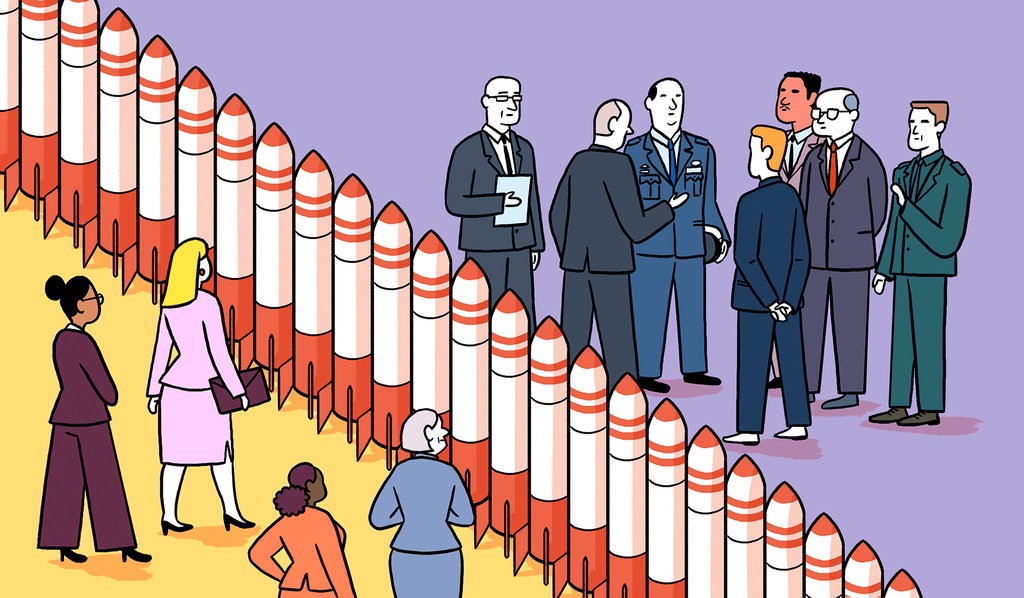
Anne Harrington is a Lecturer in International Relations at Cardiff University.
Design problems delay development of Russia’s High-Tech Nuclear Submarine
|
Russia’s High-Tech Nuclear Submarine Delayed By Design Flaws The auxiliary systems onboard the Yasen-M class submarine “Kazan” do not meet the Defense Ministry’s requirements. Moscow Times, 24 May 19, By The Barents Observer The delivery of Russia’s most expensive and technically advanced nuclear submarine to the Russian Navy is being delayed by design flaws, Russian media have reported. “Kazan” (K-561) is the first modernized multipurpose submarine of the Yasen-M class after “Severodvinsk” was handed over to the Northern Fleet in 2013. There are considerable changes in the auxiliary systems on “Kazan” compared with “Severodvinsk.” While construction on “Severodvinsk” started just after the breakup of the U.S.S.R. in 1993, “Kazan” was laid down 16 years later, in 2009. Serious technical challenges will need to be fixed before the Sevmash yard in Arkhangelsk region can hand the submarine over for active duty, several Russian media have reported. “According to the results of mooring tests, as well as the test sailings during the winter, it was concluded that a number of auxiliary parts and assemblies of the vessel do not meet the tactical and technical requirements set by the Defense Ministry,” a source in the defense industry was quoted by the state-run TASS news agency as saying…….. When completed, the Yasen-M class submarines will be able to carry the advanced sea versions of the Kalibr and Onyz cruise missiles, in addition to mines and torpedoes. Some of these weapons can be armed with nuclear warheads. …. Nezavisimaya Gazeta reports the cost of Yasen-M class to exceed 200 billion rubles (2.76 billion euros).https://www.themoscowtimes.com/2019/05/24/russias-high-tech-nuclear-submarine-delayed-by-design-flaws-a65739 |
|
Despite misogyny, women continue to fight the reckless spending on nuclear weapons
|
The founder of a women’s peace group recalls being dismissed by male nuclear experts in the 1980s. May 24, 2019 To the Editor: Thank you, Carol Giacomo, for your support for female experts on nuclear weapons (“The Nuclear Weapons Sisterhood,” Editorial Observer, May 19). Let someone try starting a women’s antinuclear weapons group, as I did with Dr. Helen Caldicott in the 1980s. The insults we took from male experts were legion, but we persisted and are still strong today, fighting enormous sums pledged to our defense budget for recklessly dangerous “smaller, more usable” new nuclear weapons. As women we learn the facts and send our members out to challenge the so-called experts. Sayre Sheldon |
|
Washington now a great place for warmongers
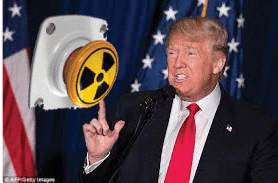 Donald Trump needs to reclaim control over his policy toward Iran. National Interest, he current crisis atmosphere in U.S.-Iranian relations, in which the risk of open warfare appears greater than it has been in years, is solely, unequivocally due to the policies and actions of the Trump administration. To point this out does not mean that actions of the Iranian regime have not come to be part of the crisis atmosphere as well. It instead means that such an atmosphere would never have existed in the first place if the administration had not turned its obsession with Iran into the relentless campaign of stoking hostility and tension that has become one of the single most prominent threads of the administration’s foreign policy.Without that campaign, and without the administration’s assault on the Joint Comprehensive Plan of Action (JCPOA)—the agreement that restricts Iran’s nuclear program—Iran would continue to comply with its obligations under the JCPOA and all possible paths to an Iranian nuclear weapon would remain closed.
The channels of communication established during negotiation of the JCPOA would continue to be available to address other issues and to defuse any incidents that threatened to escalate into war (as was done during the previous U.S. administration). Whatever Iran has been doing for years in the Middle East, such as assisting Iraq in defeating the Islamic State and assisting its longtime ally in Syria, it would continue to do. In short, there would be no new threat and no crisis.
Some of the current discourse about Iran nonetheless makes it sound not only as if there is something new and threatening but that the Iranian regime is the initiator of the threat. At least seven reasons account for this misconception.
One is the demonization of Iran that is rooted in genuinely nefarious things the Iranian regime did in the past and dates back to when Ted Koppel was talking to Americans every weeknight about U.S. diplomats held hostage in Tehran. Over the years other factors have contributed to the demonization, including domestic American political pressures connected to certain regional rivals of Iran that want to keep it weak and isolated. The result is lasting and pervasive suspicion that colors American perceptions of everything involving Iran, regardless of the facts of whatever is the issue at hand………. https://nationalinterest.org/blog/paul-pillar/washington-has-become-warmongers-paradise-58832
Hibakusha: Nagasaki activist, 79, looks to entrust nuclear movement to next generation
|
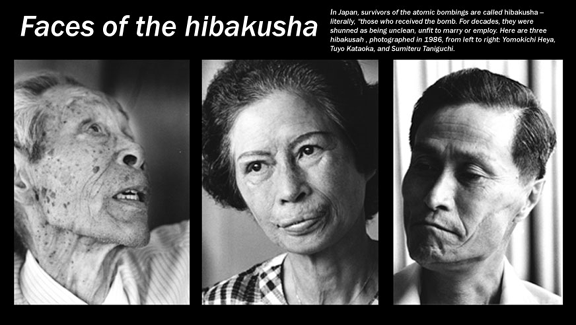
https://mainichi.jp/english/articles/20190522/p2a/00m/0na/013000c May 22, 2019 (Mainichi Japan) NAGASAKI — On May 9, there was a sit-in hibakusha gathering in front of the Peace Statue at Nagasaki Peace Park. The meeting takes place on the ninth of every month, marking the Aug. 9, 1945, U.S. atomic bombing of Nagasaki. This month’s congregation marked the 444th time for such an event. Koichi Kawano, 79, took to the microphone to speak about the stand-off between the United States and Iran. “This is a crisis,” he said to the around 100 people in attendance, continuing, “Our hearts are one when wishing for the abolition of nuclear weapons.” Born in North Pyongan Province on the Korean Peninsula, now part of North Korea, Kawano was brought back to his parents’ hometown Nagasaki as a child. Aged 5 in August 1945, he was around 3.1 kilometers away from the atomic bomb’s hypocenter. Now a resident of the nearby town of Nagayo, he has been an activist for the end of nuclear weaponry in roles including his long tenure as chairman of the Hibakusha Liaison Council of the Nagasaki Prefectural Peace Movement Center. “While enduring untold misery, we have won our rights with our own strength,” he says, looking back on the messages their hibakusha meetings have sent against the government’s constitutional amendment policies and security legislation designed to allow Japan to exercise the right to collective self-defense in a limited manner. “Perseverance is power” has been Kawano’s guiding motto in engaging in the movement’s activities, but this spring he faced a difficult reality. Masanori Nakashima, president of the Nagasaki Prefecture A-bomb Health Handbook Friendship Society, died aged 89 on March 15. The two men were allies in peace activism. Representatives of five local hibakusha groups, including Nakashima and Kawano, announced a joint statement on peace issues and handed a written request to the prime minister on Aug. 9. Of the five hibakusha group representatives who were alive in 2015 on the 70th anniversary of the bombing, three including Nagasaki Atomic Bomb Survivors Council chair Sumiteru Taniguchi have passed away. Taniguchi died in 2017 at 88 years of age. “Even with his limp, he dragged himself to that office to hear other hibakusha speak,” Kawano reminisced, while looking ahead to an uncertain future, saying, “What will happen to these groups after we die?” Kawano himself underwent surgery for esophageal cancer in 2017. Due to ill health he was forced to pull out of a survey of hibakusha in North Korea as a member of the Japan Congress Against A- and H-Bombs in fall 2018. Despite setbacks, his drive for peace remains unchanged. Kawano confronted Prime Minister Shinzo Abe over the Japanese government’s disinclination to sign and ratify the United Nations Treaty on the Prohibition of Nuclear Weapons in a face-to-face meeting in 2017, asking, “What country’s prime minister are you?” As time marches on from the events of August 1945, Kawano is putting his faith in the next generation. “The increasingly quiet voices of the hibakusha must not be drowned out,” he says. At the monthly sit-ins in Nagasaki Peace Park, the number of high school age attendees has increased. As he welcomes the last summer of his 70s, Kawano’s resolve remains strong. “Peace activism is powered by people. I want the movement to continue, to carry on the wish never to see another generation of hibakusha in this world.” (Japanese original by Yuki Imano, Nagasaki Bureau) |
Nothing to stop angry, entitled Donald Trump, from making a nuclear attack
 There Is No Check on Trump’s Rage Going Nuclear An angry, entitled man has total control over devastating weapons. Foreign Policy, BY ANNE HARRINGTON, CHERYL ROFER, MAY 22, 2019, DONALD TRUMP IS TAKING THE UNITED STATES BACK TO AN EARLIER TIME – ONE MOST PEOPLE THOUGHT HAD BEEN LEFT BEHIND. HIS AGGRESSIVE BOORISHNESS, ENTITLEMENT, AND BELIEF THAT HE CAN DO WHATEVER HE WANTS ARE QUALITIES FROM AN AGE WHEN MEN’S CONTROL WAS ASSUMED, AND OTHERS STAYED SILENT. AND NOWHERE IS HIS RETROGRADE MASCULINITY MORE DANGEROUS THAN IN HIS CONTROL OF THE NUCLEAR BUTTON.
As president of the United States, Trump has absolute authority to launch nuclear weapons – without anyone else’s consent. In the past, it was taken for granted that the president would follow an established protocol that included consultation with the military, his cabinet, and others before taking such a grave step, but Trump is not legally bound to these procedures. Presidential launch authority is a matter of directive and precedent rather than specific law.
Trump’s bravado, penchant for inflated rhetoric, and impulsive decision-making style—including catching his leadership off guard by informing them of policy directives via tweet—have stoked old fears about placing the authority to launch in the wrong hands. So has his constant violation of once cherished presidential norms, including refusing to make public his tax returns and failing to read his daily intelligence brief.
Debates about launch authority have always been intimately bound up with whether we consider nukes’ function to be primarily military or political. Nuclear weapons are so destructive that, since the bombs were dropped on Hiroshima and Nagasaki, even the explicit threat of their use has been sparing. They have been used as political deterrents and levers, instead of direct weapons of war.
Reserving launch authority for the president was a key way to emphasize the political nature of the nuclear mission.
Historians trace the precedent of presidential launch authority to President Harry Truman’s decision to check his generals’ use of nuclear weapons.
After destroying Hiroshima and Nagasaki, they planned to bomb a third Japanese city, but Truman forbade them to carry out the attack without his express consent and ultimately decided against it. According to Truman’s commerce secretary, Henry Wallace, the president thought killing “another 100,000 people was too horrible.” By assuming personal responsibility for the launch order, Truman started a tradition of differentiating this new technology from conventional weapons.
Reserving launch authority for the president not only underscored the special status of nuclear weapons as a political asset, but it also took them out of the hands of the generals—men like Gen. Curtis LeMay. LeMay was a laconic man’s man, known for his ruthlessness and impolitic statements. During World War II, he directed the firebombing of 63 Japanese cities, killing hundreds of thousands of people. It was LeMay who relayed the orders for the atomic bombing of Hiroshima and Nagasaki and later, as the head of Strategic Air Command (SAC), oversaw the war plans for an all-out nuclear attack against the Soviet Union. LeMay had no patience for subordinating operational effectiveness to moral concerns, or what he referred to as an American “phobia” against the use of nuclear weapons.
LeMay resented the fact that SAC was subject to presidential launch authority. According to the historian Richard Rhodes, he had his own launch plans, ignoring national policy. While LeMay continued to believe that the United States could obliterate the Soviet Union while minimizing its own losses, in the civilian world ideas about the use of nuclear weapons were evolving. A new breed of defense intellectual was pushing the idea that the primary purpose of nuclear weapons was not to decimate U.S. adversaries but to prevent such weapons being used at all. Anchored in a game theoretic approach, these intellectuals assumed that the holders of nuclear weapons would be rational and that what each side believed about the other—credibility—was central to deterring nuclear use.
Robert McNamara, who served as President John F. Kennedy’s defense secretary, was emblematic of this new approach and responsible for introducing this new breed of defense intellectual into the Pentagon. …….
Where LeMay’s approach openly celebrated slaughter, McNamara’s bloodlessness could lead to just as much destruction. The fact that teams of scientists provided mathematical justifications for the Cold War buildup in nuclear arms did not make the possibility of their use any less brutal……….
McNamara’s approach prevailed—not only politically but culturally. The 1964 movie Dr. Strangelove rejected LeMay’s approach to nuclear weapons. The cigar-chomping Gen. Jack D. Ripper is portrayed as insane, his paranoia leading him to release an airborne nuclear strike against the Soviet Union. Maj. T.J. “King” Kong rides the bomb down, brandishing his cowboy hat.
LeMay and McNamara not only represent two different approaches to nuclear strategy but two different ideals of masculinity. The election of Trump has reversed the usual stereotypes of generals and civilians. In the Trump White House, generals like H.R. McMaster and James Mattis inspired confidence in their respect for social norms and display of restraint, while Trump represents the rejected LeMay model of masculinity—without the virtues of actual service and endurance that LeMay also exemplified.
Trump’s personal manner is like LeMay’s—belligerent, inarticulate, refusing meaningful discussion, and deflecting criticism. And, like LeMay, his statements about nuclear weapons prioritize use over doctrine………
Trump’s focus on the individual, the leader is not just narcissistic but also deeply patriarchal. For Trump’s supporters, it is precisely the hope that Trump might “make America great again” by restoring their social world to its “natural” order, one in which the (white) man’s home is once again his castle. His masculine bravado and willingness to eschew social norms in favor of social aggression and emotional combativeness are his attractive qualities, but it is precisely these characteristics that lead to senseless and irrational conflicts—conflicts that could quickly become global catastrophes in the nuclear era. These days Trump not only brags about grabbing women by the pussy but also boasts about how his nuclear button is bigger than North Korean leader Kim Jong Un’s………..
‘
Would Trump be willing to use nuclear weapons? That’s unknowable—but he certainly doesn’t need your, or anyone else’s, consent to do it.
Cheryl Rofer writes scientific and political commentary. She was a chemist at the Los Alamos National Laboratory for 35 years. https://foreignpolicy.com/2019/05/22/theres-no-check-on-trumps-rage-going-nuclear/
UN arms research c hief warns that nuclear war risk is at highest since WWII
 Nuclear war risk highest since WWII, UN arms research chief warns https://www.aljazeera.com/news/2019/05/nuclear-war-risk-highest-wwii-arms-research-chief-warns-190522010914869.html 22 May 19, Nuclear war risk highest since WWII, UN arms research chief warns https://www.aljazeera.com/news/2019/05/nuclear-war-risk-highest-wwii-arms-research-chief-warns-190522010914869.html 22 May 19,
Senior UN security expert says all states with nuclear weapons have nuclear modernisation programmes under way. A top security expert at the United Nations has warned that the risk that nuclear weapons could be used is at its highest since World War II, calling it an “urgent” issue that the world should take more seriously. Speaking to reporters in the Swiss city of Geneva on Tuesday, Renata Dwan, director of the UN Institute for Disarmament Research (UNIDIR), said the arms-control landscape was changing – partly due to strategic competition between the United States and China – and noted that all states with nuclear weapons have nuclear modernisation programmes under way. Traditional arms-control arrangements were also being eroded by the emergence of new types of war, with an increasing prevalence of armed groups and private sector forces and new technologies that blurred the line between offence and defence, Dwan said. With disarmament talks at a stalemate for the past two decades, 122 countries have signed a treaty to ban nuclear weapons, partly out of frustration and partly out of a recognition of the risks, she said. “I think that it’s genuinely a call to recognise – and this has been somewhat missing in the media coverage of the issues – that the risks of nuclear war are particularly high now, and the risks of the use of nuclear weapons, for some of the factors I pointed out, are higher now than at any time since World War II”.
The treaty has so far gathered 23 of the 50 ratifications that it needs to come into force, including from South Africa, Austria, Thailand, Vietnam and Mexico. It is strongly opposed by the US, Russia and other states with nuclear arms. Cuba also ratified the treaty in 2018, 56 years after the Cuban missile crisis, a 13-day Cold War face-off between Moscow and Washington that marked the closest the world had ever come to nuclear war. Dwan said the world should not ignore the danger of nuclear weapons. “How we think about that, and how we act on that risk and the management of that risk, seems to me a pretty significant and urgent question that isn’t reflected fully in the (UN) Security Council,” she said. |
|

Illness and death legacy of employment in America’s nuclear weapons business
Government workers were kept in the dark about their toxic workplace
As US modernizes its nuclear weapons, NCR looks at the legacy of one Cold War-era plant, National Catholic Reporter, May 20, 2019 by Claire Schaeffer-Duffy
As US modernizes its nuclear weapons, NCR looks at the legacy of one Cold War-era plant, National Catholic Reporter, May 20, 2019 by Claire Schaeffer-Duffy
Danger of war – Israel vs Russia – could lead to nuclear war
  Israel vs. Russia: The Middle East War That Could Become a Nuclear Train Wreck Israel vs. Russia: The Middle East War That Could Become a Nuclear Train WreckYes, this could happen. The National Interest, by Michael Peck 20 May 19, As always with the Arab-Israeli (or Iranian-Israeli) conflict, the real danger isn’t the regional conflict, but how it might escalate. In the 1973 war, the Soviets threatened to send troops to Egypt unless Israel agreed to a cease-fire. The United States responded by going on nuclear alert. |
|
Donald Trump says he would not allow Iran to develop nuclear weapons
 Trump warns Iran it will never be allowed to build nuclear arsenal, US president insists he wants to avoid Tehran conflict after weeks of escalating tensions, Ft.com 20 May 19 Trump warns Iran it will never be allowed to build nuclear arsenal, US president insists he wants to avoid Tehran conflict after weeks of escalating tensions, Ft.com 20 May 19
Donald Trump said he would not allow Iran to develop nuclear weapons, while insisting he wanted to avoid war with the Islamic republic after weeks of escalating tensions. The US president has kept Tehran on edge by mixing threats with statements playing down the odds of a conflict, as foreign policy analysts speculate that Mr Trump is less keen on military conflict than some of his hawkish advisers. “I don’t want to fight. But you do have situations like Iran, you can’t let them have nuclear weapons — you just can’t let that happen,” Mr Trump said in an interview with Fox News. He had earlier warned Tehran to stop threatening America, and suggested that the US would destroy Iran if there was a military conflict. “If Iran wants to fight, that will be the official end of Iran. Never threaten the United States again!” he tweeted.
Tensions have risen sharply in recent few weeks, with Iran saying it will no longer comply with elements of the 2015 nuclear accord it signed with world powers, including the US, and Washington deploying an aircraft carrier strike group to the region. …….
Mr Trump’s key foreign policy advisers, national security adviser John Bolton and secretary of state Mike Pompeo, have referred to unspecified “escalatory action” from Tehran, fuelling speculation that the hawkish pair are trying to convince the president to go to war with Iran.
This has led some lawmakers to grow concerned that the administration is seeking to enter into a conflict without congressional approval. Several senators were last week given details of the administration’s intelligence on Iran, with more lawmaker briefings expected this week. …… https://www.ft.com/content/0192edae-7b0a-11e9-81d2-f785092ab560
|
|
|
Warning to U.S. govt to pull U.S. nuclear weapons out of Turkey
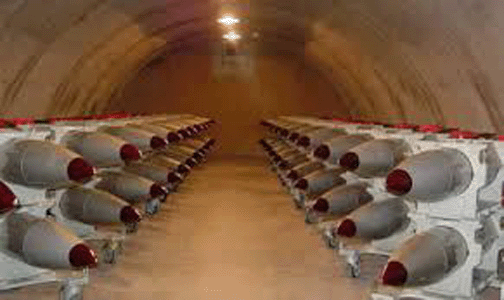 Washington must pull U.S. nuclear weapons out of Turkey – analyst https://ahvalnews.com/us-turkey/washington-must-pull-us-nuclear-weapons-out-turkey-analyst# 19 May 19,
The United States must quickly reconsider storing nuclear weapons in Turkey and giving Ankara a shared finger on the nuclear trigger under the NATO nuclear sharing programme, wrote Harvey M. Sapolsky, Professor Emeritus at MIT and the former Director of the MIT Security Studies Program, for Defense One website.
The NATO nuclear sharing programme keeps American nuclear bombs in five NATO countries, namely Belgium, the Netherlands, Germany, Italy and Turkey, while training host air forces to use them, Sapolsky highlighted.
As tensions continue to rise between Washington and Ankara over an array of issues, including war-torn Syria and Turkey’s planned purchase of the Russian S-400 missile system, the United States must make changes to current arrangements with its NATO ally, it said.
Turkey’s Incirlik Air Base in Turkey, located 100 miles from the Syrian border, stores 20 to 80 B61 U.S. nuclear weapons for delivery by Turkish or American aircraft, the article highlighted, noting that is time for Washington to bring them home.
Nuclear sharing began in the 1960s as a way to assure European members of NATO of America’s commitment to their defense, and to ward off any temptation to acquire nuclear weapons of their own,’’ the article highlighted, adding however that decades later much has changed globally.
Nuclear weapons aren’t the temptation they once were for Europeans, it noted, and sharing of the weapons’ delivery would give these countries a direct role in the nuclear enterprise without requiring them to actually build weapons.
Particularly a Turkey that is flirting with Russia and has list of issues with the United States
U.S Air Force is not Testing an ‘Earth-Penetrating’ Nuclear Bomb
|
Is the Air Force Really Testing an ‘Earth-Penetrating’ Nuclear Bomb? Nope. And here is why. National Interest
|
|
U.S. national security adviser, John Bolton and his quest for war against Iran

picture is from Financial Times https://www.ft.com/content/d35f0566-787b-11e9-be7d-6d846537acab
John Bolton Has Wanted War With Iran Since Before You Were Born
“I actually temper John,” Trump said, “which is pretty amazing.” Mother Jones, DAN SPINELLI, Fourteen months into his tenure as national security adviser, John Bolton has become a central figure in the run-up to what could be the most extensive American military offensive since the invasion of Iraq. Tensions between Iran and the United States have been high for weeks, beginning with a menacing video Bolton released in February targeting the Iranian supreme leader and reached a boil last week when, according the New York Times, he ordered the Pentagon to prepare to send as many as 120,000 troops to the Middle East to counter Iran. ……
The escalating danger and unpredictability of nuclear weapons
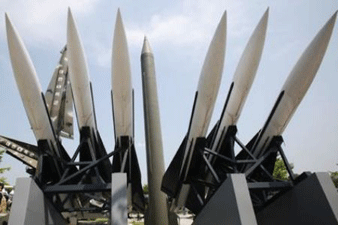 Nuclear Weapons Are Getting Less Predictable, and More Dangerous Defense One, MAY 16, 2019 Facing steerable ICBMs and smaller warheads, the Pentagon seeks better tracking as the White House pursues an unlikely arms-control treaty.
On Tuesday, U.S. Secretary of State Mike Pompeo met his counterpart, Russian Foreign Minister Sergey Lavrov, to discuss, among many things, the prospect of a new, comprehensive nuclear-weapons treaty with Russia and China. At the same time, the Pentagon is developing a new generation of nuclear weapons to keep up with cutting-edge missiles and warheads coming out of Moscow. If the administration fails in its ambitious renegotiation, the world is headed toward a new era of heightened nuclear tension not seen in decades.
That’s because these new weapons are eroding the idea of nuclear predictability.
Since the dawn of the nuclear era, the concept of the nuclear triad — bombers, submarines, and intercontinental ballistic missiles — created a shared set of expectations around what the start of a nuclear war would look like. If you were in NORAD’s Cheyenne Mountain Complex in Colorado and you saw ICBMs headed toward the United States, you knew that a nuclear first strike was underway. The Soviets had a similar set of expectations, and this shared understanding created the delicate balance of deterrence — a balance that is becoming unsettled.
Start with Russia’s plans for new, more-maneuverable ICBMs. Such weapons have loosely been dubbed “hypersonic weapons” — something of a misnomer because all intercontinental ballistic missiles travel at hypersonic speeds of five or more times the speed of sound — and they create new problems for America’s defenders. …….
The United States is starting to build a new generation of smaller nukes of its own. The reasoning was laid out in the 2018 Nuclear Posture Review, and the weapons have been rolling off the assembly line since January……
But Selva also noted that low-yield weapons present the same sort of ambiguity as hypersonic weapons.
“We don’t know what they launched at us until it explodes,” he said.
The U.S. military has responded to Russian weapons development with several other key moves: building a next-generation air-launched cruise missile, hiring Northrop Grumman to build a new penetrating bomber, lowering the nuclear yield on some sub-launched ballistic missiles, and exploring bringing back a sea-launched cruise missile, or SLCM, that could have a nuclear tip……
Lynn Rusten, vice president of the Global Nuclear Policy Program at the Nuclear Threat Initiative, said that the ambiguity problem would apply to the SLCMs effort as well. “We use conventional SLCMs a lot in our normal warfare. If you start having nuclear SLCMs deployed as well, there will be a real discrimination in terms of when one of those things is launched, what is that thing coming at you? Where is it going?”……..
Many arms control experts say the first and most important step that the U.S. could take in navigating this far more unpredictable future is to extend New START. Even Selva, who declined to offer a public recommendation about such an extension, said that the United States benefits in multiple ways from the treaty’s mechanisms for keeping track of the parties’ strategic arsenals. ……
A collapse of New START might also cause China to embrace a more aggressive nuclear stance to hedge against rising unpredictability…….
As uncertainty increases, misperceptions become more dangerous. And there is reason to believe the United States is already looking at the situation through various imperfect lenses. One is the belief that China has any interest in trilateral arms control. Another is “escalate to de-escalate.” Some Russia experts, such as Olga Oliker, the Europe and Central Asia director at the International Crisis Group, call it a fiction dreamed up in the West after a misreading of a Russia’s 2017 Naval Doctrine.
“Moscow continues to believe, and Russian generals in private conversations emphasize, that any conventional conflict with NATO risks rapid escalation without ‘de-escalation’ — into all-destroying nuclear war. It must therefore be avoided at all costs,” she wrote in February.
“If anything, U.S. emphasis on new lower-yield capabilities — effectively an ‘escalate to de-escalate’ strategy of the sort many attribute to Russia — would undermine the deterrent balance, potentially triggering the very sorts of crises low-yield proponents hope to avert.”
Michael Kofman, a senior research scientist at CNA, says the “escalate to de-escalate” debate obscures a more fundamental truth about Russian strategic doctrine. “Russia has never accepted the proposition that a war with the United States could be conventional only. Hence, Russian nuclear strategy has a firm place for scalable employment of nuclear weapons, for demonstration, escalation management, warfighting, and war termination if need be,” he told Defense One. “The gist of the problem is that the Pentagon believes that nuclear weapons are some kind of gimmick that can be deterred in conventional war, but actually the prospect for conventional-only war with Russia is somewhat limited from the outset.”
Bottom line: the U.S., Russia, and China, may be entering into a high-stakes discussion on nuclear arms with each suffering from severe misconceptions about the others’ intent. The price of failure of the new negotiation effort, if New START is not re-affirmed, would be a new period of heightened nuclear tensions and less predictability.
Rusten believes the arms race has already begun.
“We don’t want to be where that trajectory will take us five years from now,” she said. https://www.defenseone.com/technology/2019/05/everyones-nuclear-weapons-are-getting-less-predictable-and-more-dangerous/157052/
With belligerent John Bolton as National Security, Trump could take USA to the brink of war with Iran
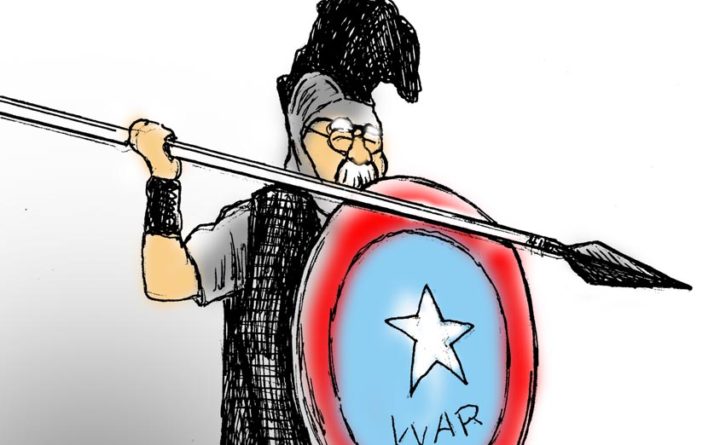 With Bolton whispering in Trump’s ear, war with Iran is no longer unthinkable, Guardian, Owen Jones 16 May 19, Antiwar activists must do everything they can to prevent it, and that includes pressuring US allies
It was a deception that would lead to millions of civilian deaths, and the deaths of nearly 60,000 US soldiers. In August 1964 President Lyndon B Johnson solemnly declared that, after two apparent North Vietnamese attacks on US navy destroyers in the Gulf of Tonkin, military action would take place.
Four years later, Senator Albert Gore – father of Bill Clinton’s future vice-president – warned in a closed Foreign Relations Committee session that, “If this country has been misled … the consequences are very great.” His suspicions were correct. The second Gulf of Tonkin attack might never have happened – and perhaps neither did. Communications to make it look like the attack occurred had been falsified. But US policy was already set on a dramatic escalation of the Vietnam war: and here was the perfect pretext.
This week it emerged that the US government is discussing sending up to 120,000 troops to the Middle East for possible military action against Iran. “We’ll see what happens with Iran,” declared President Trump. “If they do anything, it will be a bad mistake.” The principal driving force behind this is Trump’s national security adviser, John Bolton, a man who thinks there is no problem to which the answer isn’t war: in the Bush era, his militarism was too much for the commander-in-chief who laid waste to Iraq. You can see them scrabbling for excuses already: the Trump administration says Iran-backed proxy groups are preparing attacks on US forces in Iraq and Syria, a claim forcefully denied this week by British major-general Christopher Ghika, the deputy commander of counter-terror operations in both countries. The US has blamed Iran, without evidence, for damage to Saudi oil tankers in the Gulf of Oman. Could an Iranian Gulf of Tonkin be looming?
It is easy to dismiss these fears as alarmist. Is Trump not the man who confounded his critics by seeking peace on the Korean peninsula? Trump boasts that he “actually tempers” Bolton; Iran’s supreme leader, Ayatollah Ali Khamenei, states: “There won’t be any war.” As Sanam Vakil, a research fellow at Chatham House, tells me: “Both sides are posturing, sending [threats] back and forth, and I don’t think heading for any direct military interventions.” Bolton, she reassures me, is just one of many voices in the room, and US secretary of state Mike Pompeo himself says that the US is not seeking war……..
A senior Senate aide tells me that the triumph of Bolton’s plans is all too conceivable: Bolton could exploit Trump’s ignorance of policy, an area in which he excels. While any war would not be popular with Trump’s base he could be convinced by Bolton that it is possible to escalate up to a point, then pull back at the brink: but by then it may be impossible to do so. Rightwing thinktanks and broadcasters are already hyping up links between Iran and al-Qaida.
The consequences of an Iranian conflagration should horrify us. Dan Plesch – a specialist at Soas University of London’s Centre for International Studies and Diplomacy – details the US air and naval power potentially ranged against Iran: it’s what one of his colleagues describes as “a tsunami of precision-guided molten metal”. The “lethality of US force”, says Plesch, “to very rapidly destroy military, civil, political and economic infrastructure is hugely underestimated” – and is far greater than in 2003. The US would seek to impose a government-in-exile with no roots in the country; a bloody balkanisation could follow. Iran would mobilise its regional influence – dramatically increased by the Iraq catastrophe – raising the prospect of wider regional conflict.
The risk is already too real for us to wait and see before acting. Pressure must be exerted by the public on US allies to declare their total opposition to any war with Iran, including not permitting their military bases to be used. The mass protests that will greet Trump’s visit in three weeks’ time must include demands that no British support for such a bloody adventure be offered. Feeling blasé about the danger? Well, consider this: all that stands between Bolton’s violent fantasy being executed is Donald Trump himself. https://www.theguardian.com/commentisfree/2019/may/15/war-with-iran-john-bolton-donald-trump-usa?CMP=share_btn_tw
UK covering up the records on nuclear bomb testing in Australia and the Pacific. Why?
|
Unusual secrecy around 1950s nuclear testing , The Saturday Paper, Martin McKenzie-Murray 18 May 19 Between 1952 and 1957, Britain tested 12 nuclear weapons in Australia – on the Montebello Islands off the Pilbara coast, and at Maralinga and Emu Fields in the South Australian outback. The tests were hurried, incautious and showed extraordinary disregard for Australian assistance and the local Indigenous people who had been forcibly but imperfectly evacuated from their land. It was a clusterfuck,” says Elizabeth Tynan, an Australian historian, and the award-winning author of Atomic Thunder: The Maralinga Story. “The disregard was partly driven by the fact they were in a rush. They cut corners. They did it on the cheap – and it showed. They had very little regard for safety. Cavalier. They knew about the risks. There were international protocols. Many were disregarded. I met one man, he was a technician with the British effort in Australia, and he said of Indigenous Australians that they were ‘nothing to do with us – it was the Australian government’s responsibility’.”
For Susanne Roff growing up in Melbourne in the 1950s was uneventful. But later, living in Scotland with her husband, William Roff, an eminent historian, she developed a dogged, almost obsessive interest in this chapter of British history that remains cloaked in secrecy.
Once a month, Roff takes the train south from her home in a Scottish fishing village – to archives in London, Birmingham and Cambridge. She’s still looking for answers. “Why was the purportedly Australia-controlled Atomic Weapons Tests Safety Committee so ineffective?” she asks. “Why was the UK able to continue testing at Maralinga until barely six weeks before opening of the 1956 Olympics despite the known hazards to east coast populations? Why didn’t [Sir Mark] Oliphant ever speak out against the tests and contamination, including when he was governor of South Australia?” Late last year, Roff had another question: Why, more than 60 years after the last nuclear test in Australia, had the British government suddenly vanished previously declassified documents about the tests from its national archives? Roff wasn’t alone in her surprise. The Campaign for Freedom of Information, a British not-for-profit organisation, described it as worrying. All that was certain was that the files had been removed on the order of the Nuclear Decommissioning Authority. “WE CAN BUT WONDER WHY THE WORLD’S THIRD ATOMIC AND THERMONUCLEAR POWER HAS SUDDENLY BECOME SO NERVOUS ABOUT EVENTS THAT HAPPENED DECADES AGO.”“The secrecy is arguably even worse today,” Tynan tells me. She is working on a second book about the British tests. “British service personnel have run into brick walls at every turn [in seeking compensation and acknowledgement]. One of the clues to the attitude of the British government is that it has not really ever properly acknowledged what they did. They were nuclear colonialists and they buggered up a part of our country. One former British personnel I met burst into tears when he thought about how Britain had never said sorry. The secrecy … seems incomprehensible. They continue to be secretive.” But not all documents are closeted. Susanne Roff has some, which she shared with me – British intelligence files on Dr Eric Burhop, an Australian physicist who had worked on the Manhattan Project, which ran from 1939 to 1946. ……. Robert Menzies agreed to the testing immediately, without bothering to consult cabinet. For a time, only three people in the country knew of the agreement: the prime minister, treasurer and defence minister. He asked few questions of the British. “But it wasn’t pure patriotic sycophancy,” Tynan says of Menzies’ decision. “The pragmatic response was: vast reserves of uranium in Australia. It’s central to weaponry and power. It was completely valueless until the Manhattan Project. Then it became a valuable commodity. Australia had a lot of it. That was a very significant part of his reasoning. The other thing that would’ve informed Menzies’ thinking was that he was anxious to ensure Britain and America would protect Australia.” They were also without the counsel of the Australians who had worked on the American tests – notably, Mark Oliphant and Eric Burhop. Both Susanne Roff and Elizabeth Tynan agree Oliphant would have been a strong head of the safety authority, which was otherwise feckless. Both men were long suspected of being Communist spies, and may have been excluded to mollify US doubts about British security. The files on Burhop that I’ve seen are voluminous. The FBI, MI5 and ASIO all had records on him. In England and America, he was aggressively surveilled. His phone was tapped. Even Joseph Rotblat had his doubts about his former colleague. The British intelligence historian Andrew Brown has written: “Rotblat remained convinced that Burhop and other left-wing scientists … opposed the [proposed nuclear] moratorium not for their stated reasons but because it would perpetuate the USA’s monopoly and place the USSR at a dangerous disadvantage.”…… In 1984, Australia held a royal commission into the British tests. It found a litany of negligence and cover-ups. “Britain had to be dragged, kicking and screaming, to it,” Elizabeth Tynan says. Today, their attitude is much the same. In 2015, Fiji – frustrated by Britain’s refusal to compensate its people who suffered radiation poisoning during the Pacific tests – declared it would compensate citizens itself. “We are bringing justice to a brave and proud group of Fijians to whom a great injustice was done,” Fiji’s prime minister said. “Fiji is not prepared to wait for Britain to do the right thing.” Meanwhile, in Britain’s national archives, the nuclear files are still gone. “The UK government has always [downplayed] risks to the servicemen who took part in the tests, the Aboriginal community in the immediate vicinity of them, and the general population downwind … as well as possible genetic effects on subsequent generations,” Susanne Roff says. “We see similar responses in relation to Fukushima in Japan. All the operational and scientific documents relating to the Australian tests that have been on open access in the National Archives have suddenly gone walkabout. We can but wonder why the world’s third atomic and thermonuclear power has suddenly become so nervous about events that happened decades ago.” https://www.thesaturdaypaper.com.au/news/law-crime/2019/05/18/unusual-secrecy-around-1950s-nuclear-testing/15581016008158 |
|
-
Archives
- October 2026 (120)
- September 2026 (339)
- August 2026 (330)
- July 2026 (355)
- June 2026 (287)
- May 2026 (306)
- April 2026 (356)
- March 2026 (251)
- February 2026 (267)
- January 2026 (308)
- December 2025 (358)
- November 2025 (359)
-
Categories
- 1
- 1 NUCLEAR ISSUES
- business and costs
- climate change
- culture and arts
- ENERGY
- environment
- health
- history
- indigenous issues
- Legal
- marketing of nuclear
- media
- opposition to nuclear
- PERSONAL STORIES
- politics
- politics international
- Religion and ethics
- safety
- secrets,lies and civil liberties
- spinbuster
- technology
- Uranium
- wastes
- weapons and war
- Women
- 2 WORLD
- ACTION
- AFRICA
- Atrocities
- AUSTRALIA
- Christina's notes
- Christina's themes
- culture and arts
- Events
- Fuk 2022
- Fuk 2023
- Fukushima 2017
- Fukushima 2018
- fukushima 2019
- Fukushima 2020
- Fukushima 2021
- general
- global warming
- Humour (God we need it)
- Nuclear
- RARE EARTHS
- Reference
- resources – print
- Resources -audiovicual
- Weekly Newsletter
- World
- World Nuclear
- YouTube
-
RSS
Entries RSS
Comments RSS

