Some western pundits claim that, well, Russia is advancing so it is collecting its dead as it moves forward. But those same pundits are the ones who also claim that Russia is barely moving forward at all. In a different breath, you might also hear them claim that Russia is about to invade Estonia at any moment.
Those western pundits who also tell you that Russia will run out of money tomorrow – it really won’t – never talk about the fact that Ukraine is functionally bankrupt and totally dependent on financial gifts which the EU itself has to borrow.
Since the war started, voices in the alternative media have said that Ukraine cannot win a war against Russia. Indeed, John Mearsheimer has been saying this since 2014.
Four years into this devastating war, those voices feel at one and the same time both vindicated and unheard. Ukraine is losing yet western leaders in Europe appear bent on continuing the fight.
Nothing is illustrative of this more than Kaja Kallas’ ridiculous comment of 10 February that Russia should agree to pre-conditions to end the war, which included future restrictions on the size of Russia’s army.
Comments such as this suggest western figures like Kallas still believe in the prospect of a strategic victory against Russia, such that Russia would have to settle for peace as the defeated party. Or they are in denial, and/or they are lying to their citizens. I’d argue that it is a mixture of the second and third.
When I say losing, I don’t mean losing in the narrow military sense. Russia’s territorial gains over the winter period have been slow and marginal. Indeed, western commentators often point to this as a sign that, given its size advantage, Russia is in fact losing the war, because if it really was powerful, it would have defeated Ukraine long ago.
And on the surface, it might be easy to understand why some European citizens accept this line, not least as they are bombarded with it by western mainstream media on a constant basis.
However, most people also, at the same time, agree that drone warfare has made rapid territorial gains costly in terms of lost men and materiel. There is a lot of evidence to suggest that since the second part of 2023, after Ukraine’s failed summer counter-offensive, Russia has attacked in small unit formations to infiltrate and encircle positions.
Having taken heavy losses at the start of the war using tactics that might have been conventional twenty years ago, Russia’s armed forces had to adapt and did so quickly. Likewise, Russia’s military industrial complex has also been quicker to shift production into newer types of low cost, easy build military technology, like drones and glide bombs, together with standard munitions that western providers have been unable to match in terms of scale.
And despite the regular propaganda about Russian military losses in the tens of thousands each month, the data from the periodic body swaps between both sides suggest that Ukraine has been losing far more men in the fight than Russia. And I mean, at a ratio far greater than ten to one.
Some western pundits claim that, well, Russia is advancing so it is collecting its dead as it moves forward. But those same pundits are the ones who also claim that Russia is barely moving forward at all. In a different breath, you might also hear them claim that Russia is about to invade Estonia at any moment.
Of course, the propaganda war works in both directions, from the western media and, of course, from Russian. I take the view that discussion of the microscopic daily shifts in control along the line of contact is a huge distraction.
The reality of who is winning, or not winning, this war is in any case not about a slowly changing front line. Wars are won by economies not armies.
Those western pundits who also tell you that Russia will run out of money tomorrow – it really won’t – never talk about the fact that Ukraine is functionally bankrupt and totally dependent on financial gifts which the EU itself has to borrow, in order to provide. War fighting for Ukraine has become a lucrative pyramid scheme, with Zelensky promising people like Von der Leyen that it is a sold investment that will eventually deliver a return, until the day the war ends, when EU citizens will ask whether all their tax money disappeared to.
Russia’s debt stands at 16% of its GDP, its reserves over $730 billion, its yearly trade surplus still healthy, even if it has narrowed over the past year.
Russia can afford to carry on the fight for a lot longer.
Ukraine cannot.
And Europe cannot.
And that is the point.
The Europeans know they can’t afford the war. Ukraine absolutely cannot afford the war, even if Zelensky is happy to see the money keep flowing in. Putin knows the Europeans and Ukraine can’t afford the war. In these circumstances, Russia can insist that Ukraine withdraws from the remainder of Donetsk unilaterally without having to fight for it, on the basis that the alternative is simply to continue fighting.
He can afford to maintain a low attritional fight along the length of the frontline, which minimises Russian casualties and maximises Ukraine’s expenditure of armaments that Europe has to pay for.
That constant financial drain of war fighting is sowing increasing political discord across Europe, from Germany, to France, Britain and, of course, Central Europe.
Putin gets two benefits for the price of one. Europe causing itself economic self-harm while at the same time going into political meltdown.
That is why western leaders cannot admit that they have lost the war because they have been telling their voters from the very beginning that Ukraine would definitely win.
At the start of the war, had NATO decided to back up its effort by force, to facilitate Ukrainian accession against Russia’s expressed objection, then the war might have ended very differently.
NATO would simply not have been able to mobilise a ground operation of sufficient size quickly enough to force Russia back from the initial territorial advances that it had made in February and March of 2022. That means, the skirmishes at least for the first month would have largely been in the form of air and sea assets, including the use of missiles.
There is nothing in NATO doctrine to suggest that the west would have taken the fight to Russia, given the obvious risk of nuclear catastrophe.
While it is pointless to speculate now, my view is that a short, hot war between NATO and Russia would have led to short-term losses of lives and materiel on both sides that forced a negotiated quick settlement.
Europe avoided that route because of the risk of nuclear escalation and the great shame of the war is that our leaders were nonetheless willing to encourage Zelensky to fight to the last Ukrainian, wrecking our prosperity in the process.
Who will want to vote for Merz, Macron, Tusk, Starmer and all these other tinpot statesmen when it becomes clear that they have royally screwed the people of Europe for a stupid proxy war in Ukraine that was unwinnable?
What will Kaja Kallas do for a job when everyone in Europe can see that she’s a dangerous warmonger who did absolutely nothing for the right reason, and who failed at everything?
Zelensky is wondering where he can flee to when his number’s up, my bet would be Miami.
So if you are watching the front line every day you need to step back from the canvas.
There is still a chance that European pressure on Russia will prevail, which makes this whole endeavour a massive gamble with poor odds.
More likely, when the war ends, Putin will reengage with Europe but from a position of power not weakness.
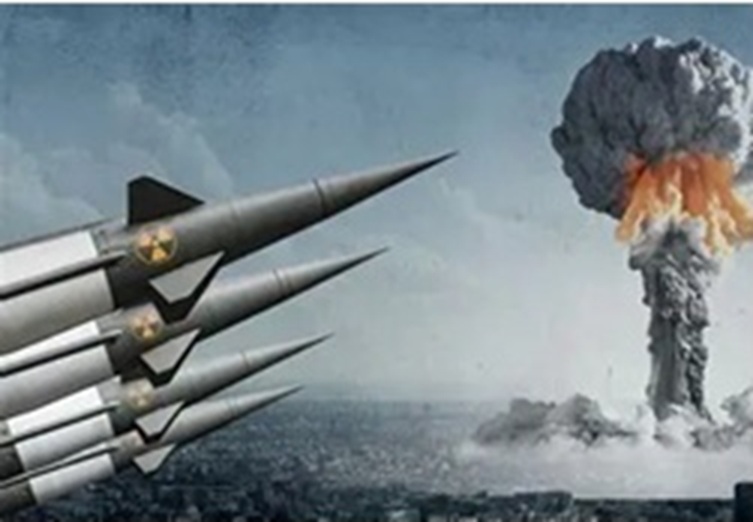
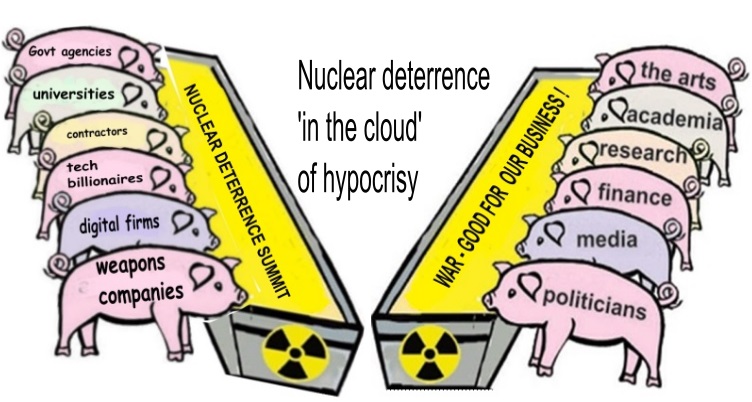
nuclear deterrence is currently an act of power, an act of domination by “those who have” over “those who have not.”
03 Apr 2024, Trends, Pierre Boussel, Researcher, Associate Fellow at the Fondation pour la Recherche Stratégique (FRS), France
The nuclear bomb is one of the few weapons in the world that can claim to have spilled more ink than blood. Thousands of books written on the subject debate the validity of the original concept of ultimate chaos deterring mankind from provoking a global conflict.[1] Its tactical and strategic raison d’être remains unresolved.
The American nuclear bombing of Japan in 1945 and the establishment of a managed nuclear world order (IAEA, NPT, UN Security Council, CTBTO)[2] have not deterred warmongers from launching invasions, starving besieged populations, committing genocide, carrying out terrorist attacks, committing war crimes or provoking humanitarian crises. Israel’s nuclear arsenal did not prevent the Yom Kippur War, the First and the Second Intifada, and the Gaza War. The Uppsala Conflict Data Program estimates that since the Hiroshima tragedy there have been 270 to 300 state and non-state conflicts worldwide.[3]
Nuclear deterrence does not bring peace. It does not prevent frontal clashes and it does not speed up peace settlements. Countries wage war despite threats like Russian President Vladimir Putin’s words, “We will use them if necessary”[4] over Ukraine. At best, conflicts are limited to what the military calls “acceptable damage.”[5] When the Russian army targets the Zaporizhzhia power station and has its bombers modified to carry nuclear warheads, the U.S. limits the firepower of weapons delivered to the Ukrainians. This means that the war will continue as is, with several hundred people killed every day, and not escalate.[6]
Assuming the Worst
The atomic bomb embodies both the desire for hyper-power and the fear of chaos, and there has been no shortage of initiatives to curb its proliferation.[7] The Treaty on the Non-Proliferation of Nuclear Weapons (NPT) came into force in 1970, signed by 191 nations. Arab countries have not been left behind. In the 1960s,[8] Egypt promoted the creation of a Middle East Nuclear-Weapon Free Zone (MENWFZ)[9] to protect the Middle East from nuclear proliferation. This did not prevent Israel from developing its first bombs at a secret site in Dimona (Beer Sheva).
In 1974, the Shah of Iran adopted the Egyptian idea of creating a nuclear weapon-free zone (ZEAN),[10] but it did not materialize. After the Israeli bombing of Iraq’s Osirak reactor,[11] several Arab chancelleries tried to resolve the issue of access to the atom. In 1991, Cairo called for a ban on weapons of mass destruction and demanded that Israel’s arsenal be exposed — in vain. It was as if the West had turned a deaf ear to Arab demands, preferring to entrust the IAEA with organizing disarmament forums and verifying suspected sites.[12] Once again, in vain: the only constant in these meetings has been, in the end, their ineffectiveness.[13]
The West has been ambivalent about nuclear energy. It has not responded to Arab diplomatic proposals and has not been very tough in condemning countries that have been tempted by military nuclear capabilities: Libya, Iraq, Syria, or Iran, whose military program was discovered by the IAEA in 2002-2003. Despite its ambivalence the West does fear insane behavior of a leader who appears ready to bring about the end of the world and considers that low and medium intensity conflicts increase the risk of escalation. The worst-case scenario for the West would be the use of tactical nuclear weapons, i.e., limited power (10 to 25 kilotons) with a ballistic capability of a hundred kilometers.[14] What would happen if the Afghan Taliban acquired tactical nuclear weapons? Would they use them against the local branch of the Islamic State group (IS-K)? How many warheads would have to be launched to defeat radical fighters hiding in deep, inaccessible mountains? What operational effectiveness would be recommended, and for what level of environmental disaster?
The West believes it can manage a war, for example, in Ukraine, because it considers itself to have the insight and maturity to avoid a nuclear conflagration. Anyone else who aspires to this capacity must demonstrate clarity and serenity to qualify for membership in the club of the powerful.
While the West enjoys the power of the atom and poor countries — suspected of being “irrational” or “slippery” — are exhausted by endless asymmetric wars, little attention is paid to India and Pakistan, two major nuclear powers fighting over control of Kashmir. This illustrates the differences in approach between the defenders of deterrence, who believe that the atom fulfills its deterrent mission and prevents the conflict from degenerating, and the detractors of deterrence, pointing out that these two countries have behaved beyond reproach. Meanwhile, Islamabad could be criticized for being unstable because of its alleged involvement in Afghanistan, and India for having mutated from Gandhian pacifism to unabashed nationalism.
The Vexation Strategy
Nuclear deterrence is, above all, vexatious, a notion too often overlooked in studies. Yet it has importance. One can imagine a country, say a poor, landlocked and indebted nation, that develops a weapon of unprecedented power — the ultimate weapon, the one that could replace all others. How would Washington, Moscow, Beijing, or Brussels react if the president of that country refused to share the new technology on the grounds that the superpowers are unreasonable and risk violating the principles of precaution and military proportionality? How would the nuclear giants react if they were deprived of this capability in the name of non-proliferation? Perhaps then the great powers would understand what it means to be offended: to be suspected of irresponsibility and forced to justify oneself and show their credentials in the vein hope of obtaining a new technology.
Access to the atom granted as a reward for good behavior raises the question of eligibility: the ability of a country to manage endogenous factors including terrorism, secessionism, and regional ambitions. This form of nuclear elitism is asserted with so much authority that we forget that the exemplarity on which the powerful pride themselves is shaky. On several occasions, humanity has come within a hair’s breadth of catastrophe. The history of nuclear power is littered with harrowing incidents: misunderstood orders that almost released chaos, technical errors corrected at the last minute (the Petrov affair), poorly applied procedures and even a simple airplane crash. On 17 January 1966, a U.S. Air Force Boeing B-52 collided with its tanker and crashed. Two of its four H-bombs spread radioactive material around the Spanish village of Palomares (250 hectares), where they fortunately fell without exploding. The United States, the world’s leading power, which never fails to show absolute intransigence on the conditions of access to nuclear energy, has lost at least six nuclear bombs.[15]………………………………………………………………………………………………………………………………………………………………………………………………………………………………
The World Atomic Order
Ultimately, the fundamental question is: what regulates access to nuclear energy, and what are the right or wrong reasons for authorizing or prohibiting its use. History tells us that the great despots — Hitler, Pol Pot, and Stalin — engaged in destructive follies that were terribly rational and attracted considerable popular support (Thomas C. Schelling).[31] Caution is therefore called for. It is not only legitimate but necessary, given the specific characteristics of nuclear energy and the devastating uses to which it can be put.[32] There is unanimity on this point.
The problem is that the nuclear world order mechanically provokes defiant reactions, like those of Iran and North Korea, two nations that have deliberately chosen to continue their clandestine nuclear enrichment programs.[33] Not only international authorities (IAEA, UN) have no means to act, but worse still, Pyongyang, for instance, is in the process of reappropriating the concept of deterrence, with no limits other than those set by itself. It has created a de facto counter-system in which it can do as it pleases with minimal risk, keeping superpowers from considering the dismantlement of their nuclear arsenals.
The discretionary power of the major powers to grant nuclear licenses, like a “delegation of authority”, to countries in urgent need of energy, creates a sense of inequality. One example is the nuclear cooperation agreement with the U.S., which operates under Article 123 of the U.S. Atomic Energy Act (AEA),[34] nicknamed the “gold standard”. Washington reserves the right to terminate agreements at the first sign of non-compliance on uranium enrichment. So even when signed, this type of agreement is only partially secure. The same is true of the IAEA, which imposes highly restrictive charters on would-be nuclear-weapon states, while Russia is suspected of developing a space-based nuclear weapon[35] likely to reignite proliferation. Add to this the New Start Treaty expiring in 2026 with no prospect of reducing arsenals, and China, which continues to grow in power. It would not take much to write that we have entered into a re-nuclearization of the strategic chessboard, a new arms race, less spectacular, less media-friendly, but one that takes us further away from the Treaty on the Prohibition of Nuclear Weapons, signed by 92 states in 2017.[36]
At the end of the Second World War, the geopolitics of the blocs was based on the concept of Melian dialogue, which postulates that justice between men is exercised when their “forces are equal.” [37] When this is not the case, “the strong exercise their power and the weak must yield.”[38] This model has been eroded in recent decades. Weaker states (Vietnam, Afghanistan) have defeated superpowers and the uncertainty factor, by definition, remains unresolved. In the 1950s, the Swedish diplomat Dag Hammarskjöld declared that the great organizations dedicated to peace were working “not to create paradise, but to avoid hell.”[39] The uncertainty factor should not be underestimated, but nuclear deterrence is currently an act of power, an act of domination by “those who have” over “those who have not.” Nuclear power is all too often seen as a lever to exert pressure on countries that are being asked to make their energy transition as quickly as possible, but to which control and non-proliferation norms are being imposed — countries that, in most cases, are simply expressing the desire to have access to nuclear energy to support their economic development. All in all, a normal request.
German Chancellor Friedrich Merz has initiated talks with France on strengthening Europe’s nuclear deterrent as he urged the continent to bolster its defences and “repair” strained relations with the US. The discussions, centred on the possibility of Germany joining France’s nuclear umbrella, underline mounting anxiety in Europe over an expected reduction in the US military presence on the continent, as Russia’s full-scale war on Ukraine enters its fifth year.
The most sinister revelation from the article is that NATO’s Secretary-General maintains a “highly classified” contingency plan which allows giving the NATO Supreme Allied Commander broad emergency authority to unilaterally move forces around without a vote of the members:
The Munich Security Conference has kicked off, and not surprisingly the Brussels nomenklatura and its attendant apparatchiks and media flacks are pushing war hysteria. The purpose of this is to make the Ukrainian conflict feel existential to Europeans to jawbone them into parting with their dwindling eurobucks for the sake of bleeding Russia as much as possible.
BRUSSELS — Western countries increasingly believe the world is heading toward a global war, according to results from The POLITICO Poll that detail mounting public alarm about the risk and cost of a new era of conflict.
But while Politico smugly celebrates the convection toward war, the rag laments the unwillingness of the drowning masses to destroy what remains of their serfhood for the sake of funding these cabal-provoked wars:
But The POLITICO Poll also revealed limited willingness among the Western public to make sacrifices to pay for more military spending. While there is widespread support for increasing defense budgets in principle across the U.K., France, Germany and Canada, that support fell sharply when people learned it might mean taking on more government debt, cutting other services or raising taxes.
This leaves European leaders “in a bind”:
So European leaders are left in a bind — unable to rely on the U.S., unable to use that as a reason to invest domestically, and under higher pressure to urgently solve this for a world where conflict feels closer than before.”
Well, the conflict “feels” closer than before only because the European sock-puppet leaders are pushing it there themselves, every day, more and more aggressively.
Most concerning for the elites is that support for militarization is on a down-trend heading out of 2025:
The elites are in panic over how to convince their populaces to fan the flames of war ever higher. They are distraught that the peons are overly concerned with selfish pursuits like self-preservation, sustenance, taking care of their families, paying their mortgages, etc. Conclaves like the Munich Conference are meant to stoke debate over precisely how to more effectively connive the masses sell the necessity of war to the public; the going concensus seems to be to just pile on more hysteria, fake lies about the Russian threat, etc. It’s a reliable standby.
This was supported by fiery calls-to-arms from Ukrainian frontliners:
“You [Europe] need to prepare yourselves before war comes to you. And in this, we Ukrainians are your best partners, because we already live in the future of war” – Oleksandr Falshtynskyi, Chief of Medical Service of the 7th Rapid Response Corps of the Ukrainian Air Assault Forces, during Ukraine House at the Munich Security Conference.
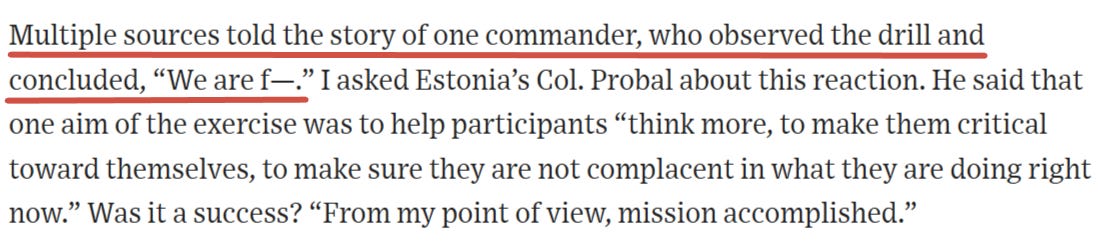
He warns Europe to be ready for the coming war—but is Europe ready? Two recent simulations have shown that to woefully not be the case.
In the first, WSJ reports a single Ukrainian team of 10 drone operators was able to eliminate “two NATO battalions” in a single day without any losses:
Overall, the results were “horrible” for NATO forces, says Mr. Hanniotti, who now works in the private sector as an unmanned systems expert. The adversary forces were “able to eliminate two battalions in a day,” so that “in an exercise sense, basically, they were not able to fight anymore after that.” The NATO side “didn’t even get our drone teams.”
Multiple concurrent Wall Street Journal articles push war hysteria—it must be good for stock prices!
In the article, Germany’s “top military officer” General Carsten Breuer states explicitly that Russia will be ready to wage war on Europe in three years:
Breuer is racing to prepare Germany’s armed forces for war. And for the 61-year-old veteran of conflicts from Kosovo to Afghanistan, the clock is ticking.
Germany’s military-intelligence agency estimates that within the next three years, Russia, whose armies poured into Ukraine in 2022, will have amassed enough weaponry and trained enough troops to be able to start a wider war across Europe. Breuer says a smaller attack could come at any time.
“We have to be ready,” he says.
Besides the obvious fear-mongering, this does appear to indirectly confirm our thesis that Russia is building a large rear reserve force if NATO ‘intelligence’ continues to surmise that Russia “will have amassed enough weaponry and trained […] troops” for WWIII in three years’ time. Clearly, there is a surplus of force regeneration, which flies in the face of the contradictory narrative we’re fed daily that Russia’s losses are now vastly outpacing its recruitment. If that was the case, how could Russia possibly be building a force capable of tackling Europe so soon?
This quote from the article is just rich:
To that end, Breuer has been waging a multi-front campaign to rally Germany’s politicians, business people, soldiers and the general public behind efforts to speed the nation’s rearmament and persuade them that they must be prepared to fight Russia to preserve their democratic freedoms.
So, stoking WWIII to destroy Russia now retreads the same old phony and fatuous “freedums and liburty” ignis fatuus used by neocons time and again since the Iraq war days. Funny, given that it’s Germany now suffering from totalitarian restrictions on their so-called freedoms.
But while the article boasts of Germany raising its commitment level to provoke WWIII by stationing troops in Lithuania, the reality seems to be a bit different. Spiegel reports that Germany is in fact struggling to even find enough recruits to fill the brigade meant for the task:
On 13 February 1960, France detonated a nuclear weapon over the deserts of Algeria. It was the first of what were eventually 17 nuclear detonations across two sites. Four of these took place while Algeria’s fight for independence was still raging. To this day, communities harmed by the development of France’s nuclear weapons arsenal are seeking recognition, compensation and redress.
ICAN joins other organisations in a joint statement on the anniversary of France’s first nuclear detonations in Algeria, “66 Years Since the First French Nuclear Explosion in Algeria … No Truth Without Transparency, No Justice Without Reparation”
The statement recognises efforts to address the legacy of harm from French nuclear testing through parliamentary debates in both Algeria and France. The explosions exposed nearby communities, soldiers and workers to dangerous levels of radiation and left a long-lasting toxic legacy in the environment.
In France, steps are being taken to revise the compensation framework in order to make it fairer for victims of the tests in Algeria and French Polynesia, alongside calls to strengthen transparency and accountability.
In Algeria, the People’s National Assembly addressed this issue for the first time in February 2025 through a parliamentary session that resulted in 13 recommendations calling for enhanced transparency, justice for nuclear victims, the transmission of memory, and the development of research on health and environmental impacts. ICAN France, the Observatoire des armaments and the Heinroch Böll stiftung published The Waste From French Nuclear Tests in Algeria: Radioactivity Under the Sand to provide more information on the environmental legacy of French testing in the region.
The statement further calls on the French government to provide sustained technical and financial support for health monitoring and environmental remediation programs. It calls on the Algerian government to protect public health in affected areas through a national program of monitoring, early screening, and medical care, and to ensure that populations receive accurate information in national and local languages, with particular attention to vulnerable groups. Today, people in Algeria are still living with cancers, contaminated lands, and intergenerational health problems linked to those tests.
France is urged to sign and both countries are encouraged to ratify the Treaty on the Prohibition of Nuclear Weapons (TPNW).
ICAN’s dedicated nuclear testing impacts website hosts stories of those who worked near the test sites in Algeria, as well as more detailed information on the tests carried out by France.
By Bill Gertz – The Washington Times – Wednesday, February 11, 2026
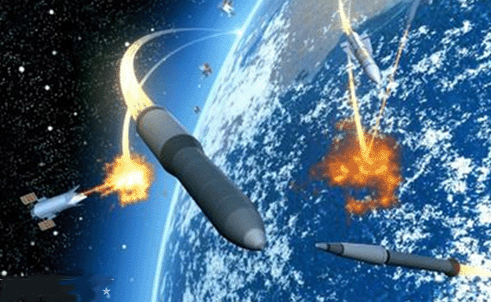
The U.S. Space Force is accelerating the deployment of counterspace weapons under a new Trump administration policy aimed at reasserting and ensuring American dominance over China and Russia in any potential orbital conflict.
The force is deploying three electronic satellite jammers and racing to match the more advanced space forces of China and Russia, which include arsenals of anti-satellite weapons.
Space Force Gen. B. Chance Saltzman, chief of space operations, said Defense Secretary Pete Hegseth recently set the goal for the U.S. military to dominate in space.
“And the Space Force was created to do just that,” Gen. Saltzman told The Washington Times. “The service has and will continue to invest in a full range of counterspace capabilities to deter conflict in space and to win decisively if called upon.
“Continuing to train and equip combat-credible Guardians is essential to maintaining our warfighting readiness,” he said.
Mr. Hegseth said in a speech to workers at the space company Blue Origin last week that the $25 billion being spent on the Golden Dome national missile and drone defense system would produce “cutting-edge, space-based capabilities which we are going to need.”……………….
“That is how we will establish total orbital supremacy,” he said.
Golden Dome systems are expected to support Space Force counterspace arms.
A Space Force spokeswoman declined to provide details on Gen. Saltzman’s plans for counterspace weapons, but at this point, the newest branch of the American military — the force was founded in 2019 under the first Trump administration — has only limited capabilities with counterspace systems. The force will be challenged to match enemy systems…………………….
Funding for counterspace weapons in the recently passed $890.6 billion defense authorization bill is relatively meager and does not appear to support a space dominance policy.
Procurement for counterspace weapons in the current fiscal year is $2 million, and the research, development, testing and evaluation budget for counterspace systems spending is $31.2 million, according to a funding chart in the defense authorization act.
Developing space weapons is a priority for the Pentagon because U.S. space systems, including high-altitude Global Positioning System satellites — used for GPS targeting and navigation in military operations, missile warning satellites and key imagery and communications systems — were not designed for conflict in space…………..
A Pentagon official said a presidential directive requires U.S. space superiority and therefore “American leadership in space is nonnegotiable.”…………………………..
“The Department of War has and will continue to invest in a full range of capabilities — kinetic, non-kinetic, reversible and irreversible — to restore deterrence and, if necessary, prevail in conflict.”………………………………………………
Charles Galbreath, a retired Space Force colonel, said Mr. Hegseth’s comments on space power dominance are “probably some of the most aggressive language I’ve heard ever, openly, about conflict in the space domain.”………………………………………………………..
The orbital playbook
Space Force plans for waging warfare in space are outlined in a March 2025 report, “United States Space Force Space Warfighting: A Framework for Planners.”
The report defined three main types of counterspace operations as control of space using both offensive and defensive action.
“Counterspace operations are conducted across the orbital, link and terrestrial segments of the space architecture,” the report said, creating effects aimed at “space superiority.”……………………
The combat will include “orbital warfare” using fires, movement and maneuver to control space.
Also used will be electromagnetic warfare to defeat enemy space and counterspace threats.
Cyberwarfare will be a major part of space combat, with strikes and other actions aimed at gaining control of space.
Offensive space combat will include orbital strike operations, pursuit and escort of satellites, standoff attacks, interdicting space communications links, and maneuvering killer satellites that can grab and crush enemy systems.
Orbital attacks will use “pursuit operations” with an attacking system maneuvering to an enemy spacecraft before firing weapons. Alternatively, the Space Force will use standoff operations — space-based or ground long-range missiles that attack without a nearby orbital rendezvous.
Space link interdiction will use electromagnetic or cybernetwork attacks……………………………………………
For electronic attacks, high-powered lasers and microwave weapons are being built, and some reports indicate that electromagnetic pulse arms could be used to damage satellite electronics without causing debris.
Emil Michael, undersecretary of defense for research and engineering, stated in a X post that the Pentagon has directed energy weapons………………………………………………………………………………..
Navy drone warship, undersea robot weapon unveiled
By Bill Gertz – The Washington Times – Wednesday, February 11, 2026
U.S. Navy efforts to deploy large numbers of drone weapons advanced this week with the disclosure of a coming autonomous warship and a new undersea drone.
Blue Water Autonomy, a shipbuilding startup, announced the first autonomous warship called the Liberty that the company says will provide advanced warfare capabilities for the Navy as soon as later this year.
The Boston-based technology firm and shipbuilder said construction of its first 190-foot Liberty drone ship will begin next month with the goal of delivering the first vessel to the Navy in 2026.
The ship will be 190-feet long with a range of over 10,000 nautical miles and can carry more than 150 tons of payload capacity, Blue Water said in a press release.
“As the U.S. Navy drives to expand fleet capacity, accelerating the deployment of unmanned systems that complement traditional crewed ships has become a critical effort,” the company said……..
Separately, defense contractor Lockheed Martin this week disclosed its development of a new class of smart, stealthy, multimission autonomous undersea drone.
The Lockheed vessel, called the Lamprey, is capable of launching drone aircraft from the surface and is described by the company as a “do-it-all” submersible, “built to disrupt and deny enemy forces at sea.”
The undersea drone will be used to detect, disrupt, decoy and target enemy forces in support of sea denial missions and “subsea seabed warfare,” Lockheed said on its website.
The Lamprey can be hitched to submarines or warships, will launch aerial drones for surveillance or attacks, and can conduct electronic warfare to disrupt underwater enemy sensors.
Both drone warfare platforms are likely to become part of what the commander of the U.S. Indo-Pacific Command, Adm. Sam Paparo, has called a “hellscape” strategy to deter China.
The strategy, which remains mostly secret, calls for deploying thousands of low-cost armed drones as a deterrent and counter to any potential future Chinese attack on Taiwan or other locations in the region. The “hellscape” could also influence Chinese commanders’ decision-making on whether such attacks could be successful……………………………………….
“The Liberty class reflects our focus on building autonomous ships that are designed from the start for long-duration operations and repeat production,” said Rylan Hamilton, Blue Water Autonomy chief executive. “By adapting a proven hull and reengineering it for unmanned operations, we’re delivering a vessel that can operate for extended periods without crew while being produced at a pace the Navy urgently needs. This is a modern take on an old idea: building capable ships quickly and at scale.”
The drone warship will use artificial intelligence for its automated controls with limited human intervention for months-long deployments.
It was developed entirely with private capital without defense funding as part of push by Navy and Pentagon leaders on defense contractors to privately develop key military technology outside of a problematic procurement process.
By Bill Gertz – The Washington Times – Thursday, February 12, 2026
Current plans for U.S. bomber forces are inadequate for winning a future conflict with China and the Air Force needs 200 new B-21 bombers to bolster the strategic bomber shortfall, according to a new report by a think tank that supports the Air Force.
The larger bomber force is needed to attack Chinese inland sanctuaries should a war break out between the U.S. and China over Taiwan or other regional allies, the report by the Mitchell Institute for Aerospace Studies stated.
The U.S. military today lacks the post-Cold War combat aircraft power for conducting Air Force strikes deep inside enemy lines and denying operational sanctuary to enemies like China and its People’s Liberation Army………………………………………………
“A strong offense is the best defense, and a war-winning U.S. campaign must include strategic attacks against China’s military leadership, command and control, and long-range combat forces that now threaten the U.S. military’s ability to operate effectively in the Western Pacific,” the report said………………………………
“B-21s in sufficient numbers are necessary to seize the operational advantage in a conflict with China,” the report said.
Additionally, the Pentagon should build at least 300 of the new, sixth-generation F-47 jets.
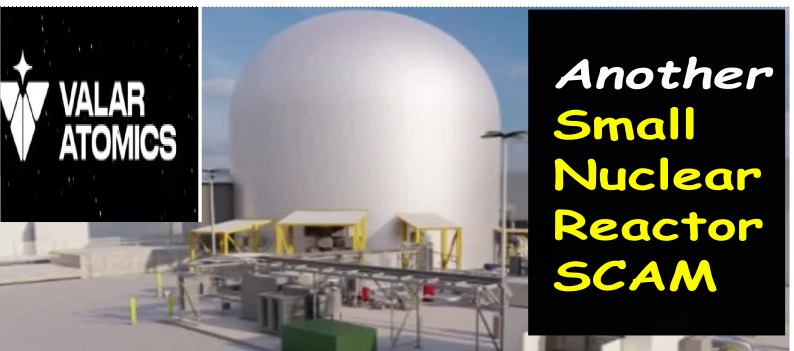
The Department of War (DoW) and the Department of Energy (DoE) are partnering to mark a historic milestone in advancing America’s nuclear energy landscape and strengthening national security.
This groundbreaking collaboration with Valar Atomics is directly aligned with President Trump’s Executive Order to reshape and modernize America’s nuclear energy landscape.
On Sunday, February 15, 2026, a next-generation nuclear reactor will be transported via C-17 from March Air Reserve Base in California to Hill Air Force Base in Utah. The reactor will then be transported to Utah San Rafael Energy Lab (USREL) in Orangeville, Utah, for testing and evaluation…………………………………………
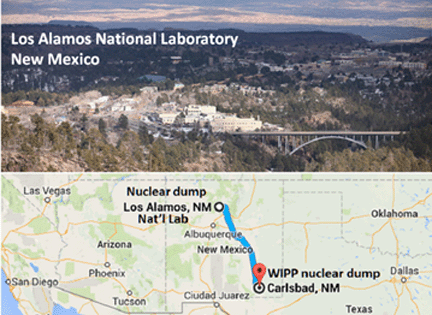
Amongst these actions is an Administrative Compliance Order designed to hasten cleanup of an old radioactive and toxic waste dump that should be the model for Lab cleanup. Nuclear Watch New Mexico strongly supports NMED’s aggressive efforts to compel comprehensive cleanup given Department of Energy obstruction.
This Compliance Order comes at a historically significant time. On February 5 the New Strategic Arms Reduction Treaty expired, leaving the world without any arms control for the first time since the middle 1970s. The following day the Trump Administration accused China of conducting a small nuclear weapons test in 2020, possibly opening the door for matching tests by the United States.
NMED’s Compliance Order comes as LANL’s nuclear weapons production programs are radically expanding for the new nuclear arms race. The directors of the nuclear weapons laboratories, including LANL’s Thom Mason, are openly talking about seizing the opportunity provided by the Trump Administration’s deregulation of nuclear safety regulations to accelerate nuclear warhead production.
As background, in September 2023 NMED released a groundbreaking draft Order mandating the excavation and cleanup of an estimated 198,000 cubic meters of radioactive and toxic wastes at Material Disposal Area C, an old unlined dump that last received wastes in 1974. However, in a legalistic maneuver to evade real cleanup, DOE unilaterally declared that Area C:
“…is associated with active Facility operations and will be Deferred from further corrective action under [NMED’s] Consent Order until
it is no longer associated with active Facility operations.”
The rationale of DOE’s semi-autonomous nuclear weapons agency, the National Nuclear Security Administration (NNSA), is that Area C is within a few hundred yards of the Lab’s main facility for plutonium “pit” bomb core production. LANL is prioritizing that production above everything else while cutting cleanup and nonproliferation programs and completely eliminating renewable energy research. DOE’s and NNSA’s unilateral deferment of Area C until it “is no longer associated with active Facility operations” in effect means that it will never be cleaned up. No future plutonium pit production is to maintain the safety and reliability of the U.S.’ existing nuclear weapons stockpile. Instead, it is all for new design nuclear weapons for the new arms race that the NNSA intends to produce until at least 2050. Further, new-design nuclear weapons could prompt the United States to resume full-scale testing, which would have disastrous international proliferation consequences.
To break up the legalistic log jam around cleanup of Area C, NMED’s new Administrative Compliance Order orders DOE, NNSA, and their contractors to:
1) Provide within 30 days specific justifications for their unilateral “deferment” of an old radioactive and toxic waste dump from cleanup; and
2) Rescind their withdrawal of a 2021 “Corrective Measures Evaluation” (CME) which proposed possible cleanup methods. DOE had claimed that withdrawing the CME had mooted any legal basis for NMED to mandate comprehensive cleanup at LANL.
The Lab’s budget for nuclear weapons programs that caused the need for cleanup has more than doubled over the last decade, with a one billion dollar increase in this year alone. Nevertheless, DOE et al want cleanup on the cheap. Their plan is to “cap and cover” existing wastes, leaving them permanently buried in unlined pit and trenches as a perpetual threat to groundwater.
Ironically, there is no current need for pit production. In 2006 independent experts concluded that plutonium pits have serviceable lifetimes of at least 100 years (their average age now is ~43). Moreover, at least 20,000 existing pits are already stored at the NNSA’s Pantex Plant near Amarillo, TX.
Pit production is the NNSA’s most complex and expensive program ever. It will likely cost more than $60 billion over the next 25 years, exceeding the cost of the original Manhattan Project that designed and built a plutonium pit from scratch. However, the independent Government Accountability Office has repeatedly concluded that the NNSA has no credible cost estimates and no “Integrated Master Schedule” for planned redundant pit production at LANL and the Savannah River Site in South Carolina
In addition, it’s not clear where an estimated 57,500 cubic meters of radioactive transuranic wastes from future pit production will go. DOE is fundamentally changing the cleanup mission of the only existing permanent repository, the Waste Isolation Pilot Plant (WIPP) in southern New Mexico, to become the dumping ground for new nuclear bomb production. However, WIPP is already oversubscribed for all of the radioactive wastes that DOE wants to send to it. Moreover, NMED has previously ordered DOE to prioritize disposal of LANL’s Cold War wastes at WIPP (which it is not doing) and to begin looking for a new out-of-state waste dump, which will be politically controversial.
In all, NNSA’s expanded plutonium pit production is so plagued with problems that the DOE Deputy Secretary ordered a “special assessment” of the program completed by December 8, 2025. However, it is still not publicly available.
LANL and DOE have a long history of deception concerning contamination and cleanup. In 1992 a Lab pamphlet was inserted into the Sunday edition of The New Mexican newspaper which claimed that plutonium from LANL had never been found in the Rio Grande. This was despite the fact that a 1987 study detected Lab plutonium 17 miles south down the Rio Grande in Cochiti Lake, a popular recreational site.
As late as the late 1990s LANL was claiming that groundwater contamination was impossible, going so far as to request a waiver from even having to monitor for it (fortunately denied by NMED). Today we know of a massive hexavalent chromium plume whose size is still not known that has migrated onto San Ildefonso Pueblo lands (Lab maps showed it stopping at exactly the Pueblo border). Plutonium, high explosives and perchlorates have all been detected in groundwater. A 2005 hydrogeological study concluded that “Future contamination at additional locations is expected over a period of decades to centuries as more of the contaminant inventory reaches the water table.”
In 2018 DOE was falsely claiming that cleanup at the Lab was more than half complete. In Nuclear Watch New Mexico’s view, genuine cleanup of LANL has yet to begin. It will start with a final Order by NMED to DOE mandating excavation and treatment of the radioactive and toxic wastes at Area C. Lab-wide comprehensive cleanup is the only sure way to protect New Mexico’ life-sustaining groundwater and will provide hundreds of long-term, high paying jobs.
Jay Coghlan, Director of Nuclear Watch New Mexico, commented: “What is more important to New Mexicans, clean, uncontaminated groundwater or more nuclear weapons for the accelerating global arms race? We salute NMED’s efforts under the leadership of Secretary James Kenney to hold the Lab accountable and make it genuinely clean up. This enforcement action is a crucial step toward reining in Lab contamination. But it is also a global step in forcing the Los Alamos Lab to focus on cleanup instead of the buildup of nuclear weapons for another arms race that threatens us all.”
Russia and the US control 87% of the world’s nuclear warheads. The US has 1,419 deployed strategic warheads, Russia has 1,549.
NewSTART (the Measures for the Further Reduction and Limitation of Strategic Offensive Arms Treaty) is built on the START (Strategic Arms Reduction Treaty) plus earlier agreements that drove large reductions in Cold War nuclear arsenals. Decades of negotiation have massively reduced warheads, with neither Russia or the US testing a nuclear bomb in more than 30 years.
Treaty compliance meant that each country received on-site access to each other’s nuclear weapons military sites, committed to not interfere with satellites and other intelligence collection about nuclear forces, regularly traded data, and committed to use a treaty dispute resolution mechanism – the Bilateral Consultative Commission (BCC). The verification measures in the treaty were robust. Each detail was carefully negotiated by experienced diplomats and military service members.[1]
However, on 4 February 2026, this key nuclear arms control agreement between Russia and the US expired. With it, a new nuclear arms race seems set to begin, allowing the two states to significantly increase their deployed warheads within a matter of months. This is because, given their reserves, both have the capacity to increase the number of operational warheads on each of their missiles and bombers.[2] Inexplicably, Trump seems sanguine at the prospect – “if it expires, it expires”.
“It sounds like a good idea to me”
Following the Russian war of aggression in Ukraine, Putin has placed his nuclear weapons on heightened alert, and plans to deploy warheads to Belarus. That said, Russia seems prepared to continue observing NewSTART deployed warhead numerical limits for one more year if the US does the same.[3] Correspondingly, on 11 Feb 2026, Russian Foreign Minister Sergey Lavrov pledged to observe the expired treaty’s nuclear limits if the US also maintains compliance.[4] Unfortunately, at time of writing, besides an aside by Trump – “it sounds like a good idea to me” – the US hasn’t formally responded to the Russian offer. In this context, it’s perplexing to reflect that observers suggest that this worrying state of affairs may owe less to ideology than to the potentially limited capacity of the Trump administration. In other words, with career diplomats side-lined, it could be that remaining staff may not have either the bandwidth or the stamina to negotiate a complex nuclear arms agreement.[5] Meanwhile, China ‘regrets’ the expiration of the Treaty, urging the US to engage in talks with Russia.[6]
All in all, as the UN Secretary General, Antonio Guterres says, it’s a “grave moment for international peace and security. For the first time in more than half a century, we face a world without any binding limits on the strategic nuclear arsenals of … the two states that possess the overwhelming majority of the global stockpile of nuclear weapons. This dissolution of decades of achievement could not come at a worse time – the risk of a nuclear weapon being used is the highest in decades.”[7]
Meanwhile, the disappearance of NewSTART is likely to have knock on effects, with UK and France facing increased pressure to expand their arsenals – so too, Pakistan and India, not forgetting Israel. Likewise, if South Korea begins nuclear weapons development, Japan seems likely to follow. Plus, with tensions continuing to rise in the Middle East and negotiations intensifying over curbing Iran’s nuclear weapons programme,[8] Saudi Arabia has made no secret of its nuclear weapons ambitions, emphasising the proliferation risks associated with new civil nuclear and weapons proliferation – quite literally, beating ploughshares into swords.[9]
Negotiation Spaces
Trump further complicates matters by insisting that negotiations on any future nuclear arms control agreements include China. However, China has, for the time being, rejected this,[10] suggesting that there’s no precedent for trilateral nuclear control or disarmament negotiations. Though substantive and growing (China is estimated to have 600 nuclear warheads) Xi Jinping’s arsenal is still considerably less than those of the US and Russia.
Negotiating a new treaty – whether bilateral or trilateral – would be a major undertaking even in a more stable political environment, requiring complex technical work on definitions, counting rules and verification. It also needs sustained diplomatic engagement and a degree of trust. None of these conditions are in place, and the idea that a workable new treaty could be concluded quickly seems deeply unrealistic.[11]
The unsettling reality is that, along with NewSTART, other key long-standing arms control treaties fall by the way, including: the Open Sky’s Treaty[12] (allowing unarmed reconnaissance over-flights); the Conventional Armed Forces in Europe Treaty[13] (limiting NATO and Russian tank, troop, and artillery deployment numbers in Europe); and the Intermediate Range Nuclear Force Agreement,[14]
Direction of travel
All things considered, we seem to be entering a new strategic nuclear and tactical conventional weapons phase – uncertain and uncharted. A new unconstrained nuclear and conventional arms race with more weapons, no verification, data transfer or dialogue, and an increased risk of miscalculation.
On January 1, the Israeli occupation revoked the licenses of 37 international and local humanitarian organizations operating in Gaza, and it has now warned they must “must complete the cessation of their activities by March 1, 2026.” These organizations provide essential services to civilians: delivering food aid to the poor, supplying clean drinking water, supporting hospitals with medicines and medical equipment, protecting children and women, and overseeing education and nutrition programs in camps and local communities. The decision to revoke the licenses affects more than just paperwork — it threatens the lives of thousands of civilians who rely on this aid daily to survive one of the most severe humanitarian crises the territory has faced.
The license revocation came at the same time that Donald Trump established the “Board of Peace” tasked with overseeing Gaza’s reconstruction and implementing the second phase of the ceasefire. This international group, which includes no representation of Palestinians themselves, is allegedly responsible for facilitating the delivery of aid and the rebuilding of war-damaged areas. However, the ban on humanitarian organizations creates a significant gap, threatening the continuity of vital relief programs and leaving thousands of Palestinians without real protection amid harsh living conditions.
According to international humanitarian law, all parties in conflict are obliged to allow humanitarian aid to enter and to enable neutral organizations to assist those in need, regardless of political or security considerations. This obligation includes protecting civilians and ensuring the continued delivery of food, medicine, and clean water to affected populations. Under these laws, Israel bears the responsibility to permit these organizations to operate in Gaza and facilitate their activities in a way that does not endanger civilians or staff. Denying access to essential services constitutes a direct violation of international law.
According to testimonies from staff within aid organizations operating in Gaza, such as Oxfam, the restrictions imposed by Israel are seen as a means of pressuring humanitarian organizations to halt the delivery of vital aid. One Oxfam employee based in Gaza, who asked to remain anonymous due to fear of reprisal, explained that these measures are not merely about controlling aid — they aim to criminalize humanitarian work, weaken aid infrastructure, harm civilians, and increase daily suffering.
Staff members from the branch of Médecins Sans Frontières (Doctors Without Borders) based at Al-Aqsa Hospital confirmed to Truthout that the restrictions include detailed demands for employee information and operational locations, as well as strict administrative procedures, making it extremely difficult to continue their work and threatening the stability of food, medicine, and water services relied upon by thousands of civilians daily. In light of these pressures, employees believe that the real objective of these policies is not security, but rather to disrupt humanitarian work and widen the gap in aid delivery……………………………………………..
The Kremlin says Russia will continue to be a responsible nuclear power, despite the expiry of the last nuclear arms control treaty between Moscow and Washington, which experts say risks ushering in a new global arms race.
The New START treaty expires on Thursday, marking the end of more than half a century of limits on the United States and Russia’s strategic nuclear weapons.
“Today the day will end, and it [the treaty] will cease to have any effect,” Kremlin spokesperson Dmitry Peskov told reporters on Thursday. Arms control experts had previously said their assumption was that it expired at the end of Wednesday.
Russia had suggested both sides voluntarily extend the terms of the agreement for one year to provide time to discuss a successor treaty, a proposal which it said US President Donald Trump had never formally answered.
“The agreement is coming to an end. We view this negatively and express our regret,” said Peskov, who said the matter had come up in a call between Russian President Vladimir Putin and Chinese President Xi Jinping a day earlier.
“What happens next depends on how events unfold. In any case, the Russian Federation will maintain its responsible and attentive approach to the issue of strategic stability in the field of nuclear weapons and, of course, as always, will be guided first and foremost by its national interests.”
New START, first signed in Prague in 2010 by then presidents Barack Obama and Dmitry Medvedev, limited each side’s nuclear arsenal to 1,550 deployed strategic warheads – a reduction of nearly 30 percent from the previous limit set in 2002.
Deployed weapons or warheads are those in active service and available for rapid use as opposed to those in storage or awaiting dismantlement.
It also allowed each side to conduct on-site inspections of the other’s nuclear arsenal, although these were suspended during the COVID-19 pandemic and have not resumed since.
‘China will not participate in disarmament negotiations’
China’s Ministry of Foreign Affairs joined a growing international chorus expressing regret over the treaty’s expiry.
“China regrets the expiration of the New START treaty, as the treaty is of great significance to maintaining global strategic stability,” Chinese Foreign Ministry spokesperson Lin Jian said on Thursday.
“The international community is generally concerned that the expiration of the treaty will have a negative impact on the international nuclear arms control system and the global nuclear order.”
Trump has said he wants a better deal that will also bring in China. But Beijing refuses to negotiate with the other two countries because it has only a fraction of their warhead numbers – an estimated 600, compared with about 4,000 each for Russia and the US.
Lin reiterated this point, adding that China would not be joining the bilateral arms‑reduction talks.
“China’s nuclear forces are not on the same level as those of the United States and Russia, and China will not participate in disarmament negotiations at this stage,” Lin said.
Russia and the US together control more than 80 percent of the world’s nuclear warheads.
China’s nuclear arsenal, however, is growing faster than any country’s, by about 100 new warheads a year since 2023, according to the Stockholm International Peace Research Institute (SIPRI).
China is estimated to have at least 600 nuclear warheads, SIPRI says – well below the 800 each at which Russia and the US were capped under New START.
The White House said this week that Trump would decide the way forward on nuclear arms control, which he would “clarify on his own timeline”.
A NATO official, speaking on condition of anonymity, called on the US and Russia to act with “responsibility and restraint” to maintain “global security”.
The official added that Russia and China were both ramping up their nuclear capabilities and that NATO “will continue to take steps necessary” to ensure its own defences.
They reneg on delivering the “goods” sold, but keep the $368 billion!
the Congressional Research report describes an alternative “military division of labour”, under which the US would not sell any Virginia-class submarines to Australia.
Report offers alternative of the US navy retaining boats and operating them out of Australian bases
A new United States congressional report openly contemplates not selling any nuclear submarines to Australia – as promised under the Aukus agreement – because America wants to retain control of the submarines for a potential conflict with China over Taiwan.
The report by the US Congressional Research Service, Congress’s policy research arm, posits an alternative “military division of labour” under which the submarines earmarked for sale to Australia are instead retained under US command to be sailed out of Australian bases.
One of the arguments made against the US selling submarines to Australia is that Australia has refused to commit to supporting America in a conflict with China over Taiwan. Boats under US command could be deployed into that conflict.
The report, released on 26 January, cites statements from the Australian defence minister, Richard Marles, and the chief of navy that Australia would make “no promises … that Australia would support the United States” in the event of war with China over Taiwan.
“Selling three to five Virginia-class SSNs [nuclear-powered general-purpose attack submarines] to Australia would thus convert those SSNs from boats that would be available for use in a US-China crisis or conflict into boats that might not be available for use in a US-China crisis or conflict,” the report argues.
“This could weaken rather than strengthen deterrence and warfighting capability in connection with a US-China crisis or conflict.”
Under the existing Aukus “optimal pathway’, Australia will first buy between three and five Virginia-class nuclear-powered conventionally armed submarines, the first in 2032.
Following that, the first of eight Australian-built Aukus submarines, based on a UK design, is slated to be in the water “in the early 2040s”.
But the Congressional Research report describes an alternative “military division of labour”, under which the US would not sell any Virginia-class submarines to Australia.
The boats not sold to Australia “would instead be retained in US Navy service and operated out of Australia” alongside US and UK attack submarines already planned to rotate through Australian bases.
The report speculated Australia could use the money saved to invest on other defence capabilities, even using those capabilities as a subordinate force in support of US missions.
“Australia, instead of using funds to purchase, build, operate, and maintain its own SSNs, would instead invest those funds in other military capabilities – such as … long-range anti-ship missiles, drones, loitering munitions, B-21 long-range bombers … or systems for defending Australia against attack … so as to create an Australian capacity for performing other missions, including non-SSN military missions for both Australia and the United States.”
The report also raises cybersecurity concerns, noting that “hackers linked to China” are “highly active” in attempting to penetrate Australian government and contractors’ computers.
It argues that sharing nuclear submarine technology with another country “would increase the attack surface, meaning the number of potential digital and physical entry points that China, Russia, or some other country could attempt to penetrate to gain access to that technology”.
The debate over whether the US should sell boats to Australia is also grounded in ongoing concern over low rates of shipbuilding in the US: the country’s shipyards are failing to build enough submarines to supply America’s own navy, let alone build boats for Australia.
For the past 15 years, the US Navy has ordered boats at a rate of two a year, but its shipyards have never met that build rate “and since 2022 has been limited to about 1.1 to 1.2 boats per year, resulting in a growing backlog of boats procured but not yet built”.
The US fleet currently has only three-quarters of the submarines it needs (49 boats of a force-level goal of 66). Shipyards need to build Virginia-class submarines at a rate of two a year to meet America’s own needs, and to lift that to 2.33 boats a year in order to be able to supply submarines to Australia.
Legislation passed by the US Congress prohibits the sale of any submarine to Australia if the US needs it for its own fleet. The US commander-in-chief – the president of the day – must certify that America relinquishing a submarine “will not degrade the United States undersea capabilities”.
The report argues that Australia’s strict nuclear non-proliferation laws could also weaken US submarine force projection under the current Aukus plan.
Australian officials have consistently told US counterparts that, in adherence to Australia’s commitments as a non-nuclear weapon state under the Treaty on the Non-Proliferation of Nuclear Weapons, Australia’s attack submarines can only ever be armed with conventional weapons.
“The Aukus deal is a very attractive one for the Americans because they get a submarine base and dockyard at Australia’s expense in Western Australia, and they do not have any obligation to sell any Virginia-class submarines to us unless their navy can spare them.
“If the US say ‘there are no subs for you Australia’, it is not reneging on the deal: that is the deal, that is what Australia signed up to. That’s why it’s always been a bad deal for Australia.”
“The Australian government seems to be engaged in an exercise of denial: whenever these figures come out they have apologists who say ‘everything’s fine, there’s nothing see here’.
Malcolm Turnbull says government is ‘engaged in an exercise of denial’, as defence minister insists $368bn deal is ‘full steam ahead’
Australia’s submarine agency insists the Aukus agreement is progressing “at pace and on schedule”, but sceptics of the $368bn deal argue the chances of the US ever selling promised Virginia-class submarines to Australia are increasingly remote.
The former prime minister Malcolm Turnbull has said the Australian government is engaged “in an exercise of denial” about the parlous state of Aukus’s progress, while the Greens senator David Shoebridge said the deal was a “pantomime”, hopelessly one-sided in the US’s favour.
A new United States congressional report has openly contemplated the US navy not selling any nuclear submarines to Australia – as promised under Aukus – because the US wants to retain control of the submarines for a potential conflict with China over Taiwan.
The US fleet currently has only three-quarters of the submarines it needs (49 boats of a force-level goal of 66). Shipyards need to build Virginia-class submarines at a rate of two a year to meet the US’s own needs, and to lift that to 2.33 boats a year in order to be able to supply submarines to Australia.
Legislation passed by the US Congress prohibits the sale of any submarine to Australia if the US needs it for its own fleet. The US commander in chief – the president of the day – must certify that the US relinquishing a submarine “will not degrade the United States undersea capabilities”.
Turnbull said US shipbuilding rates had “remained stubbornly set at that low level for a long time, despite many billions of dollars of extra investment”, and that expecting build rates to almost double within a couple of years in order to supply Australia with vessels was unrealistic.
“The Australian government seems to be engaged in an exercise of denial: whenever these figures come out they have apologists who say ‘everything’s fine, there’s nothing see here’.”
The January report by the US Congressional Research Service, Congress’s policy research arm, posits an alternative “military division of labour” under which the submarines earmarked for sale to Australia are instead retained under US command to be sailed out of Australian bases.
The report argues both for and against the US selling three Virginia-class submarines to Australia, beginning in 2032. But it makes the case that, in the event of a “conflict or crisis” with China over Taiwan, submarines under Australian command could not be ordered into operation, whereas US-commanded vessels, operated out of Australian bases, could be immediately deployed. Australia has consistently maintained it could offer no guarantees of supporting the US in a conflict with China.
“This could weaken rather than strengthen deterrence and warfighting capability in connection with a US-China crisis or conflict,” the report says.
The defence minister, Richard Marles, dismissed the report as “commentary” when asked on Thursday, insisting Aukus was “full steam ahead”.
“You’re going to hear a whole lot of commentary at the end of the day from the US Congress,” Marles said.
“We’ve heard the US president make clear the position of the United States in respect of this question, and he has said that we are full steam ahead in respect of this, and it includes the transfer of the Virginias.”
A spokesperson for the Australian Submarine Agency told the Guardian that Aukus remained firmly in the strategic interests of its three partners – Australia, the US and the UK – and that “Australia’s commitment to the Aukus partnership is unwavering”.
“All three Aukus partners are investing significantly in our respective industrial bases to ensure the success of Aukus, to meet respective requirements and timelines, including the delivery of three Virginia-class submarines to Australia by the US.”
The spokesperson said Aukus was progressing “at pace and on schedule”.
“The optimal pathway has been designed to ensure a methodical, safe and secure transition from Australian conventional submarines, drawing on more than 70 years’ experience and expertise of our Aukus partners in the safe and effective operation of naval nuclear propulsion.”
Turnbull: ‘It’s always been a bad deal for Australia’
Politically, in the US the Aukus agreement won approval from a Pentagon review last year, which supported the deal continuing. President Donald Trump – who won’t be the president to decide whether or not to sell US submarines to Australia – told reporters the deal was “full steam ahead”.
But Turnbull, the prime minister whose deal to buy submarines from the French group Naval was torn up by Scott Morrison in favour of Aukus, has long argued the Aukus agreement has always been irretrievably lop-sided in the US’s favour.
“The Aukus deal is a very attractive one for the Americans because they get a submarine base and dockyard at Australia’s expense in Western Australia, and they do not have any obligation to sell any Virginia-class submarines to us unless their navy can spare them.
“If the US say ‘there are no subs for you Australia’, it is not reneging on the deal: that is the deal, that is what Australia signed up to. That’s why it’s always been a bad deal for Australia.”
The congressional research report highlighted, again, the lagging rates of US shipbuilding.
For the past 15 years, the US navy has ordered Virginia-class submarines at a rate of two a year, but its shipyards have never met that build rate “and since 2022 has been limited to about 1.1 to 1.2 boats per year, resulting in a growing backlog of boats procured but not yet built”.
Senator David Shoebridge, the Greens’ defence and foreign affairs spokesperson, said the US’s division of labour proposal exposed the “pantomime” that the Aukus agreement was concerned with Australia’s defence.
“No matter what flag is painted on the side of any nuclear submarines Australia gets, they will be US-controlled and US-directed.
“Critics of Aukus have always assumed that the US will not hand over any nuclear submarines unless Australia guarantees they will use them in a US war with China. This report now confirms this is the dominant view in Washington.”
Shoebridge said the Aukus deal was dangerously compromising Australian sovereignty to US interests, at the cost of billions in public funds.
“The fact that Trump, with his ‘America first’ approach to squeezing and humiliating US allies, is willing to press on with Aukus tells you all you need to know about the one-sided deal. If Trump wants it, we should resist it.”.












 nuclear-news