UN nuclear ban treaty needs 6 more ratifications
The treaty prohibits the development, possession and use of nuclear weapons and was adopted with the support of 122 countries and territories three years ago.
Ireland and three other countries ratified the treaty last month, bringing the total number of ratifications to 44. The latest ratifications coincided with the 75th anniversaries of the atomic bombings of Hiroshima and Nagasaki.
The International Campaign to Abolish Nuclear Weapons, or ICAN, plans to calls on more countries to ratify the treaty in events at the UN headquarters to mark the International Day for the Total Elimination of Nuclear Weapons on October 2 and United Nations Day on October 24.
The treaty will come into effect 90 days after the number of ratifications reaches 50.
Nuclear powers, as well as Japan and other countries protected by the US nuclear umbrella, have not signed it.
Donald Trump confuses the experts with his claims about secret new nuclear weapon
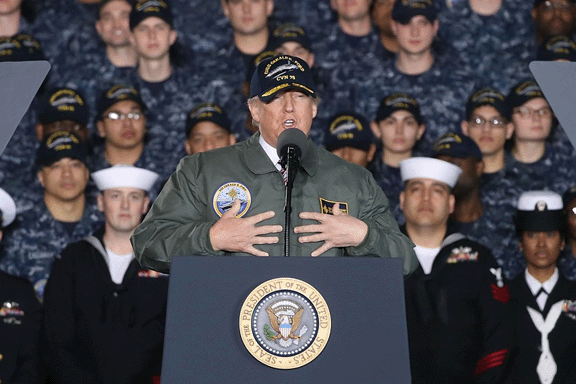 Trump remark about secret new nuclear weapon leaves experts scratching heads, Market Watch Sept. 13, 2020 Trump remark about secret new nuclear weapon leaves experts scratching heads, Market Watch Sept. 13, 2020 By Associated Press, Comment by President Trump recorded by legendary political reporter Bob Woodward fits a pattern for a president who has spoken of literally invisible fighter jets and a ‘super duper’ missile. WASHINGTON (AP) — President Donald Trump is expanding his arsenal of spectacular, but hard to explain, claims about U.S. military might.First, there were invisible airplanes. Then, a “super duper” missile. And now, a secret nuclear weapon. “I have built a nuclear, a weapon, I have built a weapon system that nobody’s ever had in this country before,” Trump said in an interview with journalist Bob Woodward for his book published this week. Some think Trump may have been talking about a nuclear warhead that was modified to reduce its explosive power. Weapons experts are puzzling over Trump’s words. Some think he may have been talking about a nuclear warhead that was modified to reduce its explosive power. Known as the W76-2, this weapon certainly is unknown to the general public — not because of secrecy or mystery but because of its obscurity. Asked by a reporter to clarify his comment, Trump on Thursday said he’d rather not. “There are systems that nobody knows about, including you, and we have some systems that nobody knows about. And, frankly, I think I’m better off keeping it that way,” he said. James Acton, a nuclear expert at the Carnegie Endowment for International Peace, said in an interview Friday that Trump may have been referring to the W76-2 warhead. Although its existence was not a secret, the timing of its first deployment was. The warhead is on the business end of a Trident II D-5 missile carried aboard Navy ballistic missile submarines. “The timing matches up,” Acton said. The Woodward interview was Dec. 5, around the time of the first W76-2 deployment, which was not announced publicly until Feb. 4. The weapon itself is not revolutionary. It’s not even the only low-yield warhead in the U.S. arsenal. It is, however, the first major addition to the strategic nuclear force in recent decades and is a departure from the Obama administration’s policy of lessening dependence on nuclear weapons in pursuit of a nuclear-free world. Joe Biden, Trump’s rival for the White House, has said the new weapon is overkill, suggesting he might shelve it if he wins in November. Acton says Trump may well have been making a garbled reference to some other weapon. “It’s clear that the president likes boasting about military capabilities and doesn’t always have the tightest grasp on the details,” he said………… https://www.marketwatch.com/story/trump-remark-about-secret-new-nuclear-weapon-leaves-experts-scratching-heads-2020-09-13 |
Scottish peace activist calls for timetable for the removal of nuclear weapons and submarines if independence is achieved
FRIDAY, SEPTEMBER 11, 2020 https://morningstaronline.co.uk/article/b/scottish-peace-activist-calls-timetable-removal-nuclear-weapons-and-submarines-if
A LEADING peace activist in Scotland has urged the government to produce a timetable for the removal of British nuclear weapons and submarines from their Scottish base if independence is achieved.
Isobel Lindsay, a long-time Campaign for Nuclear Disarmament campaigner, warned that the Westminster Parliament would attempt to “buy time” and maintain its Trident submarine base at Faslane on the west coast of Scotland in the event of a vote for independence.
Writing in pro-independence newspaper The National, Ms Lindsay said: “It is obvious what the Trident negotiating pitch of the UK
government will be in independence negotiations.
“Buy time, and as soon as they get a concession on that, they know they won’t have to worry. Scotland yields to pressure and they will keep on getting their lease extended.
“This is why a very clear and tight timetable for removal is essential from the start.”
Ms Lindsay said that before the 2014 referendum, a scenario was being prepared using the threat of vetoing Scotland’s EU membership as the bargaining chip for retaining Trident on the Clyde.
“That bargaining chip is no longer there, so there is talk about buying off the Jocks by paying for their lease,” she said.
“I think we know about being bought and sold.”
Faslane and the nuclear-weapons storage facility eight miles away at Coulport have been frequently targeted for protests by disarmament campaigners.
The SNP has said that support for independence is growing in the face of Westminster chaos and incompetence, with a Survation poll today putting support for independence at 53 per cent – the seventh poll in a row showing “Yes” ahead.
Nuclear waste disposal problem National Nuclear Security Administration’s elephant in the desert
|
Post-WIPP Disposal ‘Far and Away’ Biggest TRU Waste Challenge for NNSA Pit Mission, Official Says https://www.exchangemonitor.com/pit-waste-far-away-biggest-challenge-nnsa-pit-mission-official-says/
BY EXCHANGEMONITOR 11 Sept 29, Addressing the elephant in the desert, an official with the National Nuclear Security Administration (NNSA) on Wednesday warned that ongoing nuclear-weapon maintenance will require a transuranic waste disposal site that is open beyond 2050: the current,BEST-CASE AVAILABILITY FOR THE WASTE ISOLATION PILOT PLANT IN NEW MEXICO.
“From an NNSA perspective, with an enduring mission, we are going to continue to have a need to dispose of transuranic waste past 2050,” James McConnell, the Department of Energy agency’s associate administrator for safety, infrastructure, and operations, said Wednesday at the ExchangeMonitor’s virtual RadWaste Summit. “Far and away the biggest challenge for NNSA is to make sure that the disposal system for transuranic waste is robust enough to not become a choke point for our mission,” McConnell said. The Waste Isolation Pilot Plant is DOE’s only deep-underground disposal facility for transuranic waste. In order to operate the facility into the 2050s, the agency needs New Mexico to modify the site’s operating permit. As written, the permit requires the federal government to stop burying waste at the site in 2024, then spend a decade safely closing down the facility. The NNSA plans in 2024 to start casting new war-ready plutonium cores for nuclear warheads at the Los Alamos National Laboratory in New Mexico. It expects to expand production to a combined 80 pits annually at Los Alamos and the Savannah River Site in South Carolina by around 2030. The associated waste stream from the mission will one day make the nuclear weapons agency the largest generator of transuranic waste in the Department of Energy complex. That will not happen until 2038 or so, “so there’s time to figure out what this means, both in terms of management and availability of continued disposal,” McConnell said. Transuranic waste, or TRU waste, is equipment and material contaminated with elements heavier than uranium, typically plutonium. Pits are the fissile cores of nuclear weapons, and the first to be cast later this decade will be for warheads to tip the planned fleet of Ground-Based Strategic Deterrent intercontinental ballistic missiles. After starting production four years from now, the NNSA plans to produce 30 pits a year at Los Alamos starting in 2026, then 80 a year by 2030 by adding another 50 pits annually at the Savannah River Site. Either site could, at least temporarily, handle all 80 pits on its own. In that 80-pit solo configuration, Los Alamos would annually generate a mixture of roughly 400 cubic yards (about 305 cubic meters) of transuranic and mixed transuranic waste. The NNSA projects Savannah River to generate more waste than that to produce just its nominal 50 pits a year: 1,365 cubic yards (or almost 1,045 cubic meters) of transuranic waste annually. Casting 80 pits a year by using both factories would produce about 19,200 cubic yards, or some 14,680 cubic meters, of transuranic waste from 2030 to 2050, according to slides McConnell briefed at the conference. He said the NNSA, together with DOE’s Office of Environmental Management, will begin a collaborative review “in the very short coming weeks” about the future NNSA TRU waste generator sites. |
|
Effective nuclear arms control engagement with China – the View from Beijing
Carnegie–Tsinghua Center for Global Policy 11 Sept 20, Effective nuclear arms control engagement with China will likely require confidence-building measures by the United States and greater support from the international community.
The United States will have to keep its public voice down while offering China concrete proposals to address the two countries’ asymmetric capabilities. If they’re to be taken seriously, these proposals should show a willingness by the United States to limit its own capabilities, particularly in areas of U.S. superiority such as air- and sea-launched missile systems and space-based capabilities.
Given China’s deep skepticism and outsider status in the arms control arena, engagement will require transparency and time to build confidence. One valuable starting point could be a reset of fundamental terms: China may be more eager to discuss “strategic ability” than “arms control.” Identifying cooperative measures for nuclear risk reduction would be a useful topic for initial discussions.
No good reason for USA to start testing nuclear weapons again
|
Could resuming nuclear weapons testing lead to new arms race? https://www.deseret.com/utah/2020/9/10/21431021/nuclear-weapons-testing-donald-trump-downwinders-utah-ben-mcadams
By Dennis Romboy@dennisromboy Sep 10, 2020, SALT LAKE CITY — There’s no good reason for the United States to start testing nuclear weapons again, and if it did, the world would be less safe because other countries would follow suit, the former director of Sandia National Laboratories said Thursday.
“It’s really important to understand that if the U.S. resumes nuclear testing, it will incentivize other nations to resume testing as well,” said Jill Hruby, who headed for two years the lab that ensures the U.S. nuclear arsenal is safe, secure and reliable. “Other existing nuclear powers wouldn’t want to be seen as unable to test or as unable to send a message that their weapons work,” she said. “This is just a longstanding tit for tat set of actions that takes place in this community.” Hruby joined a virtual panel discussion on efforts to prohibit federal funding to restart explosive nuclear weapons testing hosted by Rep. Ben. McAdams. The Utah Democrat blocked funding for test site preparations or weapons tests in an annual defense bill in the House. The Senate voted earlier to set aside $10 million in its version of the defense bill to conduct testing if the Trump administration decided to pursue it. Negotiations to reconcile the two bills won’t begin for months. McAdams said explosive nuclear weapons testing is not only unnecessary but dangerous and irresponsible, noting past underground and above-ground tests exposed Utahns and others to radiation that resulted in deadly illnesses and cancer. “Our country does not need new nuclear weapons testing. We cannot afford to put our citizens in danger and we should not signal to the rest of the world that nuclear nonproliferation is a thing of the past,” he said. Hruby, now a member of the Nuclear Threat Initiative advisory board, said there are scientific reasons to restart testing, including to see how aged weapons perform, validate the behavior of new weapons and collect information on new weapon designs. But, she said, none of them are compelling because they could be explored with computer modeling. “The potential political cost and actual cost for testing is higher than the benefit, in my opinion,” she said. If testing were to resume, it would be for political not technical reasons, Hruby said. Deb Sawyer, of the Utah Campaign to Abolish Nuclear Weapons, said testing would be a giant step backward and encourage more countries to test. “Testing would just open up the gates and say, ‘Go for it,’ and that’s the last thing that we need,” she said. The Trump administration has talked about testing nuclear weapons as Congress considers extending compensation for those still suffering from radiation exposure during years of nuclear tests. Utahns, including Mary Dickson, were repeatedly exposed to radiation from nuclear bomb tests at the Nevada Test Site near Las Vegas. Dickson, a Downwinder and thyroid cancer survivor, said the impacts are far more widespread and severe than people know. She said it’s “morally reprehensible” to consider renewed nuclear weapons testing. “There’s no way we should be risking those lives again,” she said. McAdams said he’s often asked if underground testing, which ended in 1992, would be safe. Longtime community activist Steve Erickson, a consultant and volunteer with Downwinders Inc. for nearly 40 years, said it’s a complicated question but there have been numerous releases of radiation from underground tests. “It’s a dicey proposition,” he said. Erickson said there is no strategic value to resuming nuclear testing. The only reason to test would be to develop and proof new warheads, he said. “The question then becomes what do we need another new weapon for, another nuclear warhead,” Erickson said. “And to what end would we want to perhaps pursue a new arms race?” |
|
In “The Button,” former Defense Secretary William J. Perry and Tom Z. Collina survey the dangers of nuclear escalation.
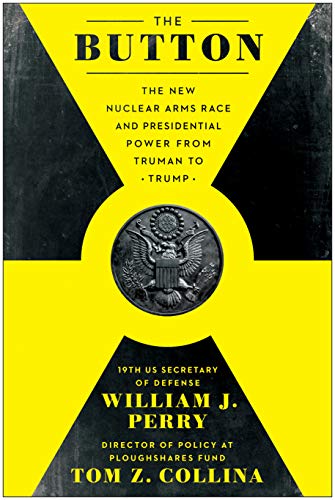 Book Review: The Nuclear Arms Race, Then and Now, Undark, BY MARK WOLVERTON 11 Sept 20, In “The Button,” former Defense Secretary William J. Perry and Tom Z. Collina survey the dangers of nuclear escalation.
IN THE bad old days of the Cold War, both the United States and the USSR maintained thousands of nuclear weapons, ready to be launched at a moment’s notice. Only one person had the authority to unleash America’s nuclear forces: the president of the United States. He could do so at any time, without consulting Congress or the military or anyone else save his own conscience. Although the mechanism for doing so never actually consisted of pushing a button, that became the popular metaphor for setting off doomsday.
|
It was a precarious state of affairs, but there was a certain cold reasoning, or perhaps rationalization, behind it. If the U.S. was attacked, went the argument, there would be no time for careful consideration before nuclear blasts began going off on American soil. Retaliation would have to be immediate. The only way to assure deterrence was to maintain the unquestioned ability for immediate retaliation. So wherever the president went, a military aide followed close behind, carrying the “football,” a special briefcase containing all the secret codes and communication equipment needed to launch World War III at any time. Almost 30 years after the fall of the Soviet Union and the end of the Cold War, little has changed. American and Russian nuclear arsenals, while reduced in numbers due to significant arms control agreements (which have been largely abandoned), still remain on hair-trigger alert, poised to respond to the nonexistent threat of a surprise “bolt from the blue” attack. And the man with the football, the only individual who can order the use of U.S. nuclear weapons, remains the president of the United States: Donald J. Trump. As William J. Perry, former defense secretary in the Clinton administration, and Tom Z. Collina, policy director of the Ploughshares Fund, a nonprofit nuclear disarmament foundation, note in “The Button: The New Nuclear Arms Race and Presidential Power From Truman to Trump,” “the U.S. president can still unilaterally launch a nuclear war in about the same time it takes to order a pizza.” ……….. Casting aside treaties and any logical military necessity, the U.S. and Russia are gearing up for a second nuclear arms race more dangerous than the first, developing new weapons and “modernizing” old ones while extending the potential battlefield into the previously sacrosanct realm of outer space. Yet their rationales remain essentially unchanged from the Cold War, and just as invalid. Rather than a nuclear Pearl Harbor, “The greatest danger of a nuclear exchange during the Cold War came not from a deliberately planned attack, but through bad information, unstable leadership, or false alarms,” Perry and Collina write, chronicling a wide variety of historical examples, some from Perry’s personal experience in the Pentagon. “We have been focused on the wrong threat,” they note, which coupled with the policy of presidential sole authority, makes the U.S. as well as the rest of the world more vulnerable to nuclear catastrophe. “We are preparing for a first strike from Russia that is very unlikely; what is not so unlikely is that we will blunder into a nuclear war. Yet by preparing for the surprise first strike, we actually make the blunder more likely.” And there’s a new wrinkle that didn’t exist during the Cold War: the threat of cyberattacks directed at nuclear weapons command and control systems……….. Perry and Collina depict just such a nightmare scenario in the preface of “The Button,” in which an unnamed U.S. president is interrupted on the golf course by a nuclear attack warning and impulsively orders massive retaliation without waiting for confirmation, only to find out too late that the attack was a false alarm created by a hacking attack on Strategic Command computers. Such a possibility only magnifies the risks of placing nuclear authority in the hands of a single individual who would have only minutes to make the decision to launch. …….. https://undark.org/2020/09/11/book-review-the-button/ |
|
In 1951, Winston Churchill suggested dropping nuclear bombs on Russia
 BOMBS AWAY Winston Churchill suggested dropping nuclear bombs on Russia in 1951.The Sun, Abe Hawken
The then leader of the opposition is said to have wanted his war strategy to involve using nuclear strikes to bomb Russia and China into submission.
He thought the best way to end the conflict was to give Russia an “ultimatum” and if they refused, he would threaten 20 to 30 cities with atom bombs.
Churchill then wanted to warn Russia it was “imperative” the civilian population of each named city was “immediately evacuated”.
He was convinced Russia would refuse their terms so he discussed plans to bomb “one of the targets, and if necessary, additional ones”.
Churchill hoped that by the third attack the Kremlin would eventually meet their terms.
The bombshell plans have come to light in a memorandum written by the New York Times general manager Julius Ochs Adler, according to The Times.
In it, he describes a conversation the pair had during lunch at Churchill’s home in Kent on Sunday, April 29, 1951……….
Richard Toye, head of history of the University of Exeter, found the note in papers belonging to the New York Times Company.
He said Churchill recommended a threat like this in 1949 when the Soviet Union did not have nuclear weapons.
However, he added that it was a revelation he was still contemplating a similar threat two years later.
He told The Times: “One can question his judgment at this point.”…………https://www.thesun.co.uk/news/uknews/12621015/winston-churchill-nuclear-bombs-russia/
What a way to spend tax-payers’money! $13.3 billion to Northrop Grumman for new nuclear missiles
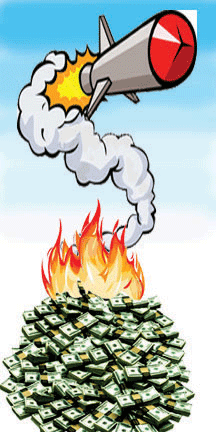 Air Force awards Northrop Grumman $13.3 billion contract for new nuclear missiles, Market Watch Sept. 8, 2020 Air Force awards Northrop Grumman $13.3 billion contract for new nuclear missiles, Market Watch Sept. 8, 2020 By Associated Press Critics call project wasteful, but Esper says nuclear arsenal needs to be modernized Critics call the replacement project wasteful and dangerous. Democrat Joe Biden has not said whether he would, if elected in November, support the project, known officially as the Ground-Based Strategic Deterrent. The project has bipartisan support in Congress. The announcement came just one day after President Donald Trump assailed Pentagon leaders as eager to fight wars to generate profits for defense contractors. Trump at times has lamented the enormous cost of maintaining a big nuclear arsenal, but his defense budgets have supported nuclear modernization. Award of the contract to Northrop Grumman NOC, +1.45% is a big step in a project that is estimated to eventually cost at least $85 billion. …….. Critics, however, say the $13.3 billion sole-source contract for Northrop Grumman is driven more by political inertia than military necessity. “Our nation faces major security challenges, including a global pandemic that has killed almost 200,000 Americans, and we shouldn’t spend our limited resources on new nuclear weapons that we don’t need and make us less safe,” said William J. Perry, who served as defense secretary in the Clinton administration and has written extensively since then on the dangers posed by nuclear weapons. “The highest probability of starting a nuclear war is a mistaken launch caused by a false alarm and a rushed decision to launch nuclear-armed ICBMs,” Perry said in a written statement. “Instead of spending billions of dollars on new nuclear missiles we don’t need, we must focus on preventing accidental nuclear war.” https://www.marketwatch.com/story/air-force-awards-northrop-grumman-133-billion-contract-for-new-nuclear-missiles-2020-09-08 |
|
Donald Trump’s claim to have a new secret new weapon system, blowing a defense secret!
 Trump Claims To Have Built A New, Secret Nuclear Weapons System, Forbes, Nicholas Reimann, 9 Sep 20. Trump Claims To Have Built A New, Secret Nuclear Weapons System, Forbes, Nicholas Reimann, 9 Sep 20.
President Donald Trump claimed to journalist Bob Woodward that he had overseen the creation of a new U.S. nuclear weapons system, saying, “We have stuff that you haven’t ever seen or heard about,”as the two discussed tensions between the United States and North Korea.
KEY FACTSIt’s not clear what Trump was referring to, but Woodward writes in his new book Rage that he later confirmed with sources that the U.S. military indeed had a secret new weapon system, and the sources said they were surprised Trump had disclosed the information, according to The Washington Post. It’s possible that Trump was referring to the W76-2 warhead, according to the defense publication Task & Purpose. That weapon was announced in Feb. 2018 as a relatively “low-cost” addition to the U.S. nuclear arsenal, and has a smaller explosive yield than the atomic bombs dropped on Hiroshima and Nagasaki. Trump made the comments to Woodward during one of 18 on-the-record interviews the famed Watergate journalist had with the president between December and July for his for his upcoming book, which is billed as providing an inside look at the Trump White House. CRITICAL QUOTE“I have built a nuclear — a weapons system that nobody’s ever had in this country before. We have stuff that you haven’t even seen or heard about. We have stuff that Putin and Xi have never heard about before. There’s nobody — what we have is incredible,” Trump said. KEY BACKGROUNDTrump reportedly made the comments when reflecting on how close the U.S. came to war with North Korea in 2017, near the beginning of his presidency……… https://www.forbes.com/sites/nicholasreimann/2020/09/09/trump-claims-to-have-built-a-new-secret-nuclear-weapons-system/#4dcea85f1a1e |
|
|
Treaty for the Prohibition of Nuclear Weapons (TPNW) is getting close to the 50 ratifications needed to bring it into legal force
 Nuclear Ban Treaty Nears 50th Ratification https://www.armscontrol.org/act/2020-09/news-briefs/nuclear-ban-treaty-nears-50th-ratification September 2020Four nations used the occasion of the 75th anniversary of the U.S. atomic bombings of Hiroshima and Nagasaki to announce their ratification of the 2017 Treaty for the Prohibition of Nuclear Weapons (TPNW). The ratifications by Ireland, Nigeria, and Niue, announced on Aug. 6, and Saint Kitts and Nevis, announced on Aug. 9, bring the number of states ratifying the accord to 44. The treaty will enter into force 90 days after the 50th state deposits its instrument of ratification. To date, 82 states have signed the treaty. Nuclear Ban Treaty Nears 50th Ratification https://www.armscontrol.org/act/2020-09/news-briefs/nuclear-ban-treaty-nears-50th-ratification September 2020Four nations used the occasion of the 75th anniversary of the U.S. atomic bombings of Hiroshima and Nagasaki to announce their ratification of the 2017 Treaty for the Prohibition of Nuclear Weapons (TPNW). The ratifications by Ireland, Nigeria, and Niue, announced on Aug. 6, and Saint Kitts and Nevis, announced on Aug. 9, bring the number of states ratifying the accord to 44. The treaty will enter into force 90 days after the 50th state deposits its instrument of ratification. To date, 82 states have signed the treaty.
The TPNW is the first international instrument to comprehensively ban the development, testing, production, stockpiling, stationing, transfer, use, and threat of use of nuclear weapons. All states-parties engaging in these activities are bound to submit and implement a plan to divest themselves completely of nuclear weapons upon ratification. At an Aug. 6 event to mark the new ratifications, Elayne Whyte Gomez of Costa Rica, who presided over the negotiations on the treaty, called for renewed determination to ensure that no other city suffers the same as Hiroshima and Nagasaki. She noted that “the presence in the room of the hibakusha ensured that we wouldn’t leave the room without completing the task.” Tijjani Muhammad-Bande of Nigeria, the current president of the UN General Assembly, called on “all member states to sign and ratify [the TPNW]. We must prevent such destruction from ever happening again.” Treaty supporters hope to secure the additional ratifications necessary to bring the treaty into force by the end of 2020. More states are expected to ratify the treaty next month as the United Nations on Sept. 26 marks the International Day for the Total Elimination of Nuclear Weapons.—DARYL G. KIMBALL |
|
India and China both have a nuclear no-first-use policy- nuclear war between them is less likely
India–China border dispute: the curious incident of a nuclear dog that didn’t bark, Bulletin of the Atomic Scientists, By Ramesh Thakur, Manpreet Sethi, September 7, 2020 On June 15, nuclear-armed China and India fought with fists, rocks, and clubs along the world’s longest un-demarcated and contested boundary. Twenty Indian soldiers were killed; Indian estimates put the Chinese dead at around 40. The two countries remain in a state of military standoff.
Like the case of the dog that didn’t bark, which interested the great fictional detective Sherlock Holmes, the nuclear dimension of the recent border clashes was conspicuous by its invisibility. This may be in part because of the nuclear no-first-use policy expressed in the official nuclear doctrines of both countries. At a time when geopolitical tensions are high in several potential nuclear theaters, the nuclear arms control architecture is crumbling, and a new nuclear arms race is revving, there is a critical need to look for ideas that can prevent potential crises from escalating. Other nuclear powers can learn from China’s and India’s nuclear policies.
The normalization of nuclear threats. Over the last few years, leaders of many of the nuclear weapons states have taken to nuclear bluster. After the outbreak of the Ukraine crisis and annexation of Crimea in 2014, facing hostile Western criticism, Russian President Vladimir Putin pointedly remarked, “Russia is one of the most powerful nuclear nations”—a subtle but clear nuclear warning to the West. In July 2016, asked in Parliament if she would be prepared to authorize a nuclear strike that could kill 100,000 people, British Prime Minister Theresa May unwaveringly answered, “Yes.” And who can forget the tit-for-tat exchange of belligerent rhetoric by US President Donald Trump and North Korean leader Kim Jong-un in 2017 before the blossoming of their bromance in 2018?
In February 2019, after an attack on Indian paramilitary forces at Pulwama led to a clash between the air forces of India and Pakistan, Pakistan’s Prime Minister Imran Khan warned of the possibility of a nuclear war. Indian Prime Minister Narendra Modi, caught in the heat of an election campaign, responded that India’s nukes were not reserved for celebrating the fireworks festival of Diwali. After India revoked Kashmir’s autonomous status that August, Khan reiterated that nuclear war was a real risk. His foreign minister repeated the warning in Geneva later that same year.
This rhetoric, besides being dangerous, has given rise to another problem. The more the leaders of the nuclear armed states revalidate the role of nuclear weapons in their national security, the more they embolden calls of nuclear weapons acquisition in other countries like Germany, Japan, South Korea and Australia.
China and India’s nuclear reticence. This is where China and India, in the midst of a military crisis, provide a striking contrast. Neither side has drawn attention to its nuclear weapons in the 2020 border clashes. Nor have many analysts across the globe expressed alarm that the prolonged state of disquiet between the two could spiral out of control into a nuclear exchange……….
China, India, and no first use. An important dimension, however, that has been underestimated in explaining the two countries’ apparent nuclear sobriety is the similarity in their approach to nuclear weapons and deterrence.
They are the only two of the nine nuclear armed states with the stated commitment to a no-first-use policy, and the force postures to match. …….
In 2014, China and India called for negotiations on a no-first-use convention among the world’s nuclear powers. It might be time for the United States and other countries to give it a serious look. Indeed, the China–India border standoff demonstrates the practical utility of a nuclear policy centered on no-first-use and merits wider international attention. https://thebulletin.org/2020/09/india-china-border-dispute-the-curious-incident-of-a-nuclear-dog-that-didnt-bark/
How to educate American children about nuclear weapons?
|
What’s missing from American schools’ curricula? Nuclear weapons. Bulletin of the Atomic Scientists, By Sara Z. Kutchesfahani, September 3, 2020 This week, students across the United States are heading back to school. While many high schools and universities are still deciding whether classes this semester will happen online, in-person, or in some hybrid combination, one thing is certain: Nuclear weapons are not a standard part of their class curricula.
The answer is fairly simple. Nuclear weapons issues are not a standard part of secondary school education, nor are they widely covered in undergraduate and graduate programs. A 2018 survey of 1,100 high school students in Washington State found that less than 1 percent even knew which countries possessed nuclear weapons. The finding was all the more startling because the students live in a nuclear-armed country themselves, and in an area with a nuclear legacy dating back to the Manhattan Project. While the situation is not as bad at the university level, the number of undergraduate courses that cover nuclear weapons issues is still low. A 2019 study on undergraduate nonproliferation education found that, among 75 of the top-ranked public, private, and military institutions in the country, on average, each institution offered seven such courses over a two-year academic period, or less than two courses per semester. A good way to contextualize that is to compare it to course offerings on climate change—the other most pressing threat to humanity’s survival. The same study found that on that topic, the nation’s three leading public, private, and liberal arts institutions each offered between 19 and 30 courses during just a single academic year (2017–2018). Why does this matter? It matters because the nuclear weapons threat isn’t going away—if anything, it is growing—but the number of people working in the field is shrinking. …. The field is going to need many more bright minds to solve current and future nuclear challenges. Attracting those bright minds starts with building awareness of the issue. And awareness of any issue can be linked to issue exposure. So, if school boards, curriculum writers, and teachers and professors continue to ignore the topic of nuclear weapons and do not include it in class curricula, the public will continue to be unaware of the existential threat these devastating weapons pose to humanity, and the professional field will have difficulty sustaining itself. Nuclear weapons policy is confusing, highly technical, intimidating, shrouded in secrecy, and largely dominated by an awfully small group of men. So those who want to begin exploring the subject may find it exclusive, inaccessible, and hierarchical. But the simple and easy-to-understand fact remains that nuclear war remains a significant global threat……… Here are three relatively easy and practical solutions that teachers and professors can implement this school year—without having to go through too many bureaucratic hurdles. First, check out a new platform that offers a diverse volunteer network of professionals ready to speak with students and teachers about topics, lessons, classes, college, internships, and career advice on nuclear issues. The platform is called NRICHED, and its creators want to empower students with agency to tackle the world’s biggest problems through experiential learning……. Second, consider offering a nuclear security undergraduate class at your institution, and press administrators to recognize its importance. For those whose administrators are hesitant, the Stanton Foundation provides grant support for the development of new nuclear-related courses for undergraduates each academic year…….. Third, enlist the outstanding work of Girl Security, an organization that provides specialized programming for (female) high school students on national security subjects, including nuclear weapons. The Girl Security team helps empower young women with practical training through simulation exercises developed by women national security practitioners. Moreover, they provide girls with placement in a phased mentorship network, pairing them with women national security professionals who are one step ahead of them in their academic and professional advancement……….. https://thebulletin.org/2020/09/whats-missing-from-american-schools-curricula-nuclear-weapons/ |
|
Students unaware of nuclear weapons and the existential threat that they pose
Students Aren’t Learning About Nuclear Weapons. That’s a Major Problem. AT TOP https://www.popularmechanics.com/military/weapons/a33917558/nuclear-weapons-education-in-schools/ Popular Mechanics, BY CAROLINE DELBERT, SEP 4, 2020
- Not enough young people have access to even the option of studying nuclear weapons dynamics, an industry report says.
- Nuclear weapons development continues around the world.
- The current nuclear risk workforce is aging out, with few interested in replacing them.
- At the Bulletin of the Atomic Scientists, innovation advocate Sara Z. Kutchesfahani says the vast majority of U.S. students don’t learn about nuclear weapons in high school, or even in most relevant college coursework. Kutchesfahani says that low level of knowledge, combined with industry factors, means the nuclear workforce itself is about to hit a critical state.
- Kutchesfahani is writing on behalf of an industry thinktank, N Square, a “funders collaborative” that advocates for nuclear threat reduction. She says the lack of flow of new, younger workers into the nuclear sector will create a dangerously unbalanced workforce demographic in an industry that will still need a lot of support for the foreseeable future. Even if nuclear weapons are never used, they must be maintained carefully. If they’re “disarmed” in the future, trained people must handle and dispose of or recycle them.
- In the essay, Kutchesfahani likens nuclear weapons awareness and literacy to the idea of climate change awareness and curricula, because, she says, both are existential threats:
“[I]f school boards, curriculum writers, and teachers and professors continue to ignore the topic of nuclear weapons and do not include it in class curricula, the public will continue to be unaware of the existential threat these devastating weapons pose to humanity, and the professional field will have difficulty sustaining itself.”
Much of nuclear investment in 2020 is in energy—for better or worse, world powers are treating next-generation nuclear power like the next big thing and even using that as a way to underfund investment in wind, solar, hydro, and other sustainable forms of energy.But there has also been a new kind of nuclear warhead developed and now tested in 2020, a low-yield warhead launched from a submarine that, again, is publicly billed as a “deterrent” to other nations’ nuclear aggressions, particularly Russia.
This content is imported from {embed-name}. You may be able to find the same content in another format, or you may be able to find more information, at their web site. - The fact remains that as long as there are nuclear weapons in play on the world stage, the world must realistically discuss them. That’s separate from politics, or even whether advocates are for or against nuclear weapons at all. If someone walked into your home while juggling flaming batons, you’d suddenly wish you had a flaming batons expert to help you decide what to do next.
Two excellent new books on a nuclear-weapons -free world

|
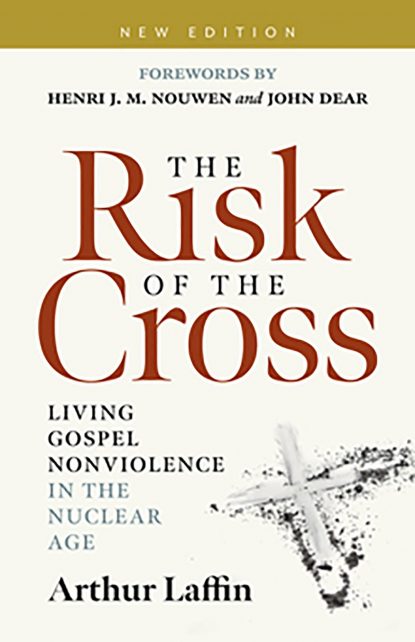
Nuclear anniversary serves as impetus for two excellent books,, Catholic Philly, By Eugene J. Fisher • Catholic News Service • Posted September 4, 2020 The Risk of the Cross: Living Gospel Nonviolence in the Nuclear Age” by Arthur Laffin. Twenty-Third Publications (New London, Connecticut, 2020). 130 pp., $16.95.“A World Free from Nuclear Weapons: The Vatican Conference on Disarmament,” edited by Drew Christiansen, SJ, and Carole Sargent. Georgetown University Press (Washington, 2020). 158 pp., $24.95.
These two books strive, based upon Catholic social teaching, to reach the same noble goals: global and local peace and the destruction of all nuclear weapons. Both note that the huge sums of money devoted to developing and maintaining nuclear weapons deprive our societies of funds that could be used to help those in need. The efforts of scientists in building nuclear weapons could be used to develop a better understanding of how to deal with threats to our health and safety, in local communities and worldwide. The timing of the release of these excellent volumes, some 70 years after Hiroshima and Nagasaki, is of course not accidental. The two books speak to each other and to all of us as Catholics, since a nuclear war would likely destroy our planet. “The Risk of the Cross” updates a book written some 40 years ago, when people like Dorothy Day and the Berrigans, and myself with them, were marching for peace and the Rev. Martin Luther King Jr. and John Lewis for civil rights for African-Americans. All these people lived the “Gospel nonviolence” called for, then and now, in this book…….. https://catholicphilly.com/2020/09/culture/nuclear-anniversary-serves-as-impetus-for-two-excellent-books/ |
|
|
-
Archives
- October 2026 (104)
- September 2026 (339)
- August 2026 (330)
- July 2026 (355)
- June 2026 (287)
- May 2026 (306)
- April 2026 (356)
- March 2026 (251)
- February 2026 (267)
- January 2026 (308)
- December 2025 (358)
- November 2025 (359)
-
Categories
- 1
- 1 NUCLEAR ISSUES
- business and costs
- climate change
- culture and arts
- ENERGY
- environment
- health
- history
- indigenous issues
- Legal
- marketing of nuclear
- media
- opposition to nuclear
- PERSONAL STORIES
- politics
- politics international
- Religion and ethics
- safety
- secrets,lies and civil liberties
- spinbuster
- technology
- Uranium
- wastes
- weapons and war
- Women
- 2 WORLD
- ACTION
- AFRICA
- Atrocities
- AUSTRALIA
- Christina's notes
- Christina's themes
- culture and arts
- Events
- Fuk 2022
- Fuk 2023
- Fukushima 2017
- Fukushima 2018
- fukushima 2019
- Fukushima 2020
- Fukushima 2021
- general
- global warming
- Humour (God we need it)
- Nuclear
- RARE EARTHS
- Reference
- resources – print
- Resources -audiovicual
- Weekly Newsletter
- World
- World Nuclear
- YouTube
-
RSS
Entries RSS
Comments RSS

