Even a “limited” nuclear war would bring nuclear winter: could the world survive this?

Project Force: Could the world survive a nuclear winter?
The consequences of a nuclear war would extend far beyond the blast itself, killing millions of people across the globe. Aljazeera, by Alex Gatopoulos, 2 Jul 2020 Firestorms triggered by burning cities create a huge plume of smoke, soot and ash. The plume rises above the clouds, into the upper atmosphere of the planet, where it will stay, encircling the globe, shielding the Earth from the Sun’s light, cooling the planet.
This is the scenario we could expect following a nuclear clash between nations.
The term nuclear winter was coined in the 1980s as scientists began to realise that the horrors of a nuclear war would not be confined to explosive blasts and radiation.
As climate prediction models become more powerful and sophisticated, scientists have been able to examine more closely what would happen in a nuclear conflict between two antagonists. In the past, most scenarios focused on potentially apocalyptic conflicts between Russia and the United States.
But new models now predict that even a very limited nuclear war would have drastic knock-on effects for global agriculture and dire consequences for life on Earth.
As climate prediction models become more powerful and sophisticated, scientists have been able to examine more closely what would happen in a nuclear conflict between two antagonists. In the past, most scenarios focused on potentially apocalyptic conflicts between Russia and the United States.
But new models now predict that even a very limited nuclear war would have drastic knock-on effects for global agriculture and dire consequences for life on Earth.
First, a blinding flash of light and radiation in the form of heat from the initial explosion would produce temperatures as high as that of the Sun. Wood, plastics, fabrics and flammable liquids would all ignite.
This would almost immediately be followed by the blast wave, moving at several times the speed of sound. A wall of compressed superhot air, the wave would gather up rubble and anything moveable, levelling all buildings within the blast zone and killing everyone in its path for several kilometres.
Within 20 to 30 minutes, a shroud of highly radioactive ash would begin to fall, blanketing both the blast site and the surrounding area, tens of kilometres downwind, and very quickly killing anyone caught outdoors who had somehow managed to survive the initial explosion.
For people outside the blast zone, the situation would also be grim. All electronic equipment would cease to function as the electromagnetic pulse fried every electronic circuit. No phones, internet, computers or cars would work.
Hospitals would be quickly overwhelmed, with the vast majority of the population needing some kind of medical care. Food would disappear as logistical supply trains stopped working. What little there was would be contaminated by the radioactive fallout, along with any water.
In the case of a nuclear conflict between India and Pakistan, for example, it is estimated that between 50 million and 125 million people would die.
What comes afterwards?
Those would be the initial, local effects of a nuclear conflict on a population. But the ensuing nuclear winter would take it to a whole new level.
The vast plumes of dark soot entering the upper atmosphere would spread not just regionally but right around the planet within months. The resulting darkening of the sky would severely affect harvests, even in areas nowhere near the conflict zone.
In one recent simulation, global harvests plummeted between 20 percent and 40 percent for at least a decade. Temperatures dropped dramatically as the climate shifted, triggering widespread drought, a worldwide famine and the death of tens of millions more people.
If these scenarios seem far-fetched, consider that the 1815 volcanic eruption of Tambora in Indonesia ruined harvests as far away as the US with 1816 known as the “Year Without Summer” as temperatures dropped sharply around the planet and the resultant failed harvests triggered severe famine across Europe.
The Tambora eruption lowered the global temperature by 0.7 degrees Celsius. The estimated temperature drop from a “limited” nuclear exchange is reckoned to be anywhere between 2 and 5 degrees Celsius.
The Pakistan vs India scenario
The latest studies show that there does not need to be a large-scale nuclear war to have this effect: A possible nuclear conflict between India and Pakistan is the scenario most of these studies have used as their prime example………
If these scenarios seem far-fetched, consider that the 1815 volcanic eruption of Tambora in Indonesia ruined harvests as far away as the US with 1816 known as the “Year Without Summer” as temperatures dropped sharply around the planet and the resultant failed harvests triggered severe famine across Europe.
The Tambora eruption lowered the global temperature by 0.7 degrees Celsius. The estimated temperature drop from a “limited” nuclear exchange is reckoned to be anywhere between 2 and 5 degrees Celsius.
…….. the greatest damage to the environment would be from the vast amount of superheated ash and soot that would rise from these destroyed cities, swept up by a nuclear firestorm into the upper atmosphere.
Darkness and starvation
The impact of even such a “limited” nuclear conflict would be devastating for the Earth as a whole. With global dimming, harvests would fail across the planet…….
In 2016, the United Nations’ Food and Agriculture Organisation estimated that 815 million people were food-insecure. They would all be put at far greater risk as food supplies rapidly dwindled in the aftermath of such a conflict.
Another major, cascading effect of even a partial nuclear winter would be the depletion of the ozone layer, allowing crops to be further damaged by unfiltered hard ultraviolet solar radiation.
Ozone would be destroyed by the heating of the upper atmosphere as the darker soot-laden layer of air absorbed more solar energy. The effect would last for more than five years, with 20 percent of the ozone lost across the planet and, in some places, as much as 70 percent, leading to significant destruction of plant, marine and animal life on Earth, and resulting in skin cancers, DNA mutation and eye damage in humans and animals alike.
This, coupled with the violent competition for shrinking resources, likely civil unrest due to mass starvation, rapidly shifting weather patterns and financial collapse, would disrupt all human life with no part of the planet left unscathed…….. https://www.aljazeera.com/indepth/features/project-force-world-survive-nuclear-winter-200622132211696.html
U.S. Pentagon lacks the cash to build new nuclear weapons
 We Don’t Have Enough Cash to Build New Nuclear Weapons, Says Air Force https://www.defenseone.com/politics/2020/07/we-dont-have-enough-cash-build-new-nuclear-weapons-says-air-force-chief/166598/ Chief Nukes or conventional weapons, “the current budget does not allow you to do both,” says Gen. Dave Goldfein, suggesting Congress create a separate account.
The Pentagon’s budget is not large enough to buy new nuclear weapons and conventional forces simultaneously, the U.S. Air Force’s top general said Wednesday.
Chief of Staff Gen. Dave Goldfein gave a blunt assessment of the Pentagon’s growing list of bills amid a growing US deficit, on Wednesday, suggesting nuclear expenses have grown so great they may require a separate account of their own.
I think a debate is that this will be the first time that the nation has tried to simultaneously modernize the nuclear enterprise while it’s trying to modernize an aging conventional enterprise,” Goldfein said during a Brookings Institution appearance. “The current budget does not allow you to do both.”
The Trump administration’s $705 billion fiscal 2021 budget request for the Pentagon — which Congress is reviewing — calls for nearly $29 billion in nuclear weapons spending. The money would go toward new stealth bombers, intercontinental ballistic missiles, ballistic missile submarines, a new nuclear cruise missile and upgrades to the global nuclear command, control and communications network. The stealth bomber is the only weapon that could be used for nuclear or conventional strikes. The Energy Department, which oversees nuclear warheads, has requested $15.6 billion in fiscal 2021.
In January 2019, the Congressional Budget Office estimated that the Pentagon’s nuclear weapons spending plan would cost $494 billion between 2019 and 2028, an average of about $50 billion per year.
Pentagon officials today argue they need 3 to 5 percent annual spending increases to fund weapons projects of all kinds, however defense spending is expected to flatten or slightly decline in the coming years regardless who wins November’s presidential election.
“There are either going to be some significant trades made or we’re going to have to find a fund for strategic nuclear deterrence, that we can use to modernize,” Goldfein said.
In recent years, Pentagon officials, including former Defense Secretary Ash Carter, and lawmakers have considered creating a nuclear weapons fund separate from the military services budgets. Todd Harrison, director of defense budget analysis and the Aerospace Security Project at the Center for Strategic and International Studies, questioned the rationale for moving those funds.
“It doesn’t make new money appear,” he said.
During the Obama administration, the Pentagon began the decades-long process of updating its nuclear arsenal with new ICBMs, bombers, submarines and missiles. Some independent estimates say the price tag could reach nearly $1.7 trillion over the next 30 years. How to pay for it is still debated in the Defense Department, but the need for nuclear weapons is not.
“I would just offer that in my mind, I could never advise anybody to unilaterally disarm or give up second strike capability,” Goldfein said. “I do believe we have to have a debate about the way we’re going to fund this essential part of our military going forward.”
Radiation particles leak may have come from Russia’s super nuclear weapons, rather than from commercial reactor
Russia’s nuclear energy body has denied that the radiation originated from its two nuclear power stations in the region. However, it is not only civilian power stations that use nuclear reactors. Tom Moore, a nuclear policy expert and former senior professional staff member of the U.S. Senate Foreign Relations Committee, believes that these military reactors cannot be ruled out:
“CTBTO radionuclide monitoring is intended to discriminate explosive events and to complement seismic monitoring. Not to effectively rule in or rule out a source of radionuclides as being civil or military reactors.”
Possible Cause: Burevestnik Cruise Missile
The first military system under development which comes to mind is the Burevestnik cruise missile. Its name means ‘Storm Bringer’ in Russian, after the Petral sea bird. It is more formally known by the designation 9M730 and NATO code name Skyfall. This is a nuclear-armed cruise missile that is designed to use a nuclear engine to give it virtually unlimited range. Burevestnik is the natural candidate because it is airborne, so any accident would likely release radioactive material into the sky.
This may have previously happened on August 9, 2019. There was a fatal radiation incident at the State Central Navy Testing Range at Nyonoksa. This is near to Severodvinsk in Russia’s arctic north, the same area that the CTBTO has pointed towards this time. Then it was caused by an explosion in a rocket engine. Many analysts believe that this was most likely related to the Burevestnik missile.
Possible Cause: Poseidon Drone-Torpedo
The other weapon in the frame is Poseidon. This is a massive nuclear-powered torpedo that is intended to be launched from specially built submarines. At 60-78 feet long it is about twice the size of a Trident missile. Its designation is believed to be 2m39 and it is known in NATO as Kanyon. Its virtually unlimited range and high autonomy would make it hard to classify. The U.S. government has described it as an intercontinental, nuclear armed, undersea autonomous torpedo. It is a weapon worthy of a Bond villain that would literally go underneath missile defenses. Its threat is slow but inevitable doom to coastal cities such as New York and Los Angeles.
While Poseidon probably doesn’t have very much shielding on its reactor, it is normally underwater, so any radiation leak may not reach the atmosphere. But it would be lifted out of the water after a test launch, so there is room for an incident that could get detected hundreds of miles away in Scandinavia.
Open Source Intelligence On The Suspects
Open source intelligence analysts have been following these weapons. Evgeniy Maksimov noted that flight tests of Burevestnik were probably being conducted. He noted two no-fly zones closed for June 22-27 at a missile test range. But the launch site was far south of where the radiation is believed to originate.
A better candidate may therefore be Poseidon. Vessels believed to be associated with its tests were active in the region at the time. The special support vessel Akademik Aleksandrov was at sea around June 18 to 23, in the area of interest. This ship is suspected of being involved in retrieving Poseidon weapons. Twitter user Frank Bottema found a matching vessel using radar satellite imagery.
We may never know for sure the cause of the heightened radiation levels. But Russia’s denials that it was from a civilian power plant, combined with the ongoing tests, point a finger at the nuclear-powered weapons. This reignites the debate about how safe these projects are, even in peacetime.
Many experts question Trump’s claim on China’s nuclear weapons buildup
- When negotiators from the United States and Russia met in Vienna last week to discuss renewing the last major nuclear arms control treaty that still exists between the two countries, American officials surprised their counterparts with a classified briefing on new and threatening nuclear capabilities — not Russia’s, but China’s.
….. Many outside experts question whether China’s buildup — assessed as bringing greater capability more than greater numbers — is as fast, or as threatening, as the Trump administration insists.
The United States conducted more nuclear tests during the Cold War than the rest of the world combined. Over decades of experimentation, and more than 1,000 tests, its bomb designers learned many tricks of extreme miniaturization as well as how to endow their creations with colossal destructive force. Compared with the atomic bomb that leveled Hiroshima, the nation’s first explosive test of a hydrogen bomb, in 1954, produced a blast 1,000 times as powerful.
Because of that history, many nuclear experts now argue that if Mr. Trump begins a new wave of global testing, it would aid American rivals more than the United States.
For years, some Republicans have urged preparations for a test and poured money into the effort. One instrument now being prepared for the Nevada complex costs $800 million; it would test the behavior of plutonium.
Today, Republicans are still urging more upgrades and speedups, including at the Nevada complex. This month, Senator Tom Cotton, Republican of Arkansas, offered an amendment to a defense bill that would add at least $10 million to “carry out projects related to reducing the time required to execute a nuclear test.”
Top Democrats in the House told the Pentagon and the Energy Department in a recent letter that the idea of a renewal in nuclear testing was “unfathomable,” as well as “shortsighted and dangerous.”
But Mr. Billingslea thinks he succeeded in getting the Russians to think about what is happening in China, not in the Nevada desert. During his meeting last week, the Russians were taking copious notes on China’s buildup, while reviewing classified slides. He insists they want to sit down and talk more later in the summer.
They will do so without the Chinese….https://www.nytimes.com/2020/06/30/us/politics/trump-russia-china-nuclear.html
UK upholding the nuclear non-proliferation regime, supports Iran nuclear deal
Upholding the nuclear non-proliferation regime, Gov.UK
Statement by Ambassador Jonathan Allen, UK Chargé d’Affaires to the UN, at the Security Council meeting on non-proliferation., 30 June 2020.…..The United Kingdom has frequently restated our full commitment to the JCPoA, in line with our collective security interests, which include upholding the nuclear non-proliferation regime and preventing Iran from developing a nuclear weapon.
We have also frequently stated our unequivocal regret and concern at the United States decision to leave the JCPoA and to reimpose sanctions on Iran. We understand the continued impact this has had in Iran and on the Iranian people.
Since May 2018, we have worked tirelessly to preserve the JCPoA. We have fully upheld our commitments and we have gone beyond our obligations to develop INSTEX, which is operational and facilitating transactions.
Mr President, the United Kingdom deeply regrets that since 2019, Iran has taken nuclear measures contrary to its commitments under the JCPoA. These measures seriously undermine the non-proliferation benefits of the agreement. This is the reason that the E3 initiated the JCPoA’s Dispute Resolution Mechanism on the 14th of January as one of the last tools under the agreement to find a diplomatic way forward and bring Iran back into compliance with the Deal. ………
Preservation of the JCPoA will continue to be the guiding principle for the E3 on this agenda. This is because we believe in the absence of a viable alternative, that the agreement provides the best means of achieving our shared objectives on regional security and stability, upholding the nuclear nonproliferation regime and ensuring the continued authority and integrity of the Security Council. https://www.gov.uk/government/speeches/upholding-the-nuclear-non-proliferation-regime
Okinawa Governor says NO to hosting prohibited U.S. nuclear missiles
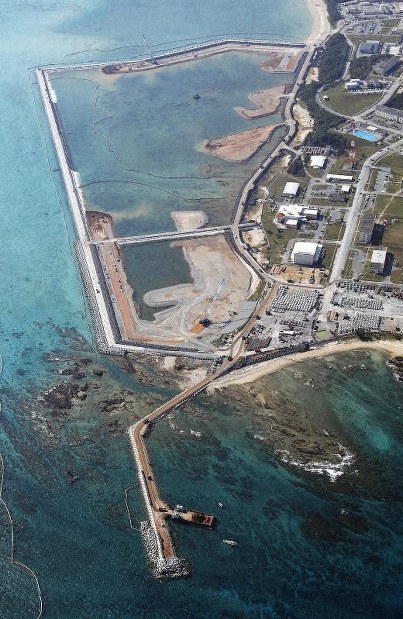 Okinawa Governor Refuses to Host Prohibited U.S. Nuclear Missiles, In Depth News, By Jaya Ramachandran, 29 June 20, GENEVA (IDN) – Governor Denny Tamaki of Okinawa district has rejected the U.S. plans to base on the island missiles capable of threatening China – apparently as part of President Donald Trump’s move to challenge Beijing and upgrade the importance of Taiwan, 500 kilometres away from the island. If a plan for Okinawa to host such missiles were to develop, Tamaki said: “I can easily imagine fierce opposition from Okinawa residents.”Okinawa comprises more than 150 islands in the East China Sea between Taiwan and Japan’s mainland. It’s known for its tropical climate, broad beaches and coral reefs, as well as World War II sites.
Okinawa has been a critical strategic location for the United States Armed Forces since the end of World War II. The island hosts around 26,000 U.S. military personnel, about half of the total complement of the United States Forces Japan, spread among 32 bases and 48 training sites.
The largest island (Okinawa) hosts the Okinawa Prefectural Peace Memorial Museum, commemorating a massive 1945 Allied invasion, and Churaumi Aquarium, home to whale sharks and manta rays.
Missiles the U.S. plans to base on Okinawa are prohibited by the 1987 Intermediate-Range Nuclear Forces (INF) Treaty between the U.S. and the Soviet Union which, after dissolution, reconstituted into the Russian Federation in 1991.
U.S. President Ronald Reagan and the then Soviet General Secretary Mikhail Gorbachev agreed to eliminate and permanently forswear all of their nuclear and conventional ground-launched ballistic and cruise missiles with ranges of 500 to 5,500 kilometres.
It was the first arms-control treaty to abolish an entire category of weapons systems. Besides, two protocols to the agreement established unprecedented procedures for observers from both nations to verify first-hand the other countries destruction of its missiles.
The INF Treaty led to the elimination of 2,692 U.S. and Soviet nuclear and conventional, ground-launched ballistic and cruise missile. The U.S. President Donald Trump formally withdrew from the treaty August 2, 2019, citing Russian noncompliance with the accord. The Pentagon tested two previously prohibited missiles in August and December 2019.
Since the United States withdrew from the Treaty, Australia, Japan, the Philippines, and South Korea have publicly said that they were not asked to nor are they considering serving as hosts for new U.S. ground-launched missiles. Secretary of Defence Mark Esper has previously suggested that he would like to see the deployment of such missiles in Europe and particularly Asia to counter China.
A senior Defence Department official told the Los Angeles Times that the Pentagon is “very attentive to our allies’ concerns, and we recognized their political challenges”. However, the official continued, “everything that’s said in the media is not necessarily what’s said behind closed doors”.
As the Washington-based Arms Control Association reported on June 26, Secretary-General of the North Atlantic Treaty Organization (NATO) Jens Stoltenberg said on June 17 after a NATO Defence Ministerial that the alliance has “no intention to deploy new land-based nuclear missiles in Europe”.
China is firmly opposed to any deployment of such missiles in the Asia-Pacific. “If the U.S. insists on the deployment, it will be a provocation at China’s doorstep,” said Chinese Defence Ministry Spokesperson Senior Colonel Wu Qian on June 24. “China will never sit idle and will take all necessary countermeasures,” he warned…….. https://www.indepthnews.net/index.php/armaments/nuclear-weapons/3648-okinawa-governor-refuses-to-host-prohibited-u-s-nuclear-missiles
The Shoshone people and nuclear bomb testing
 Nuclear tests and the Shoshone people, https://www.reviewjournal.com/opinion/nevada-views-nuclear-tests-and-the-shoshone-people-2063105/ By Ian Zabarte June 27, 2020 -REGARDING Gary Martin’s June 15 Review-Journal article, “Nuke test rumors spur Nevada lawmakers”: As a Shoshone, we always had horses. My grandfather always told me, “Stop kicking up dust.” Now I understand that it was because of the radioactive fallout.
To hide the impacts from nuclear weapons testing, Congress defined Shoshone Indian ponies as “wild horses.” There is no such thing as a wild horse. They are feral horses, but the Wild Horse and Burrow Acts of 1971 gave the Bureau of Land Management the affirmative act to take Shoshone livestock while blaming the Shoshone ranchers for destruction of the range caused by nuclear weapons testing. My livelihood was taken and the Shoshone economy destroyed by the BLM. On the land, radioactive fallout destroyed the delicate high desert flora and fauna, creating huge vulnerabilities where noxious and invasive plant species took hold.
Nuclear weapons testing at the Nevada National Security Site has left a dark legacy of radiation exposure to Americans downwind from the battlefield of the Cold War. Among the victims are the Shoshone people, whom, by no fault of our own, were exposed to radiation in fallout from more than 924 nuclear tests. The Shoshone people never consented to the nuclear weapons testing.
Nuclear testing is a violation of the peace treaty with the Shoshone, the Treaty of Ruby Valley, and the U.S. Constitution, Article 6 Section 2, the treaty supremacy clause. Nothing in the treaty contemplated the secret massacre of Shoshone people with radioactive poison from nuclear weapons testing within our own homelands. My tribe and family are the victims.
The enduring purpose of nuclear technology is the creation of weapons of mass destruction. Their tests within the Shoshone homelands are deliberate acts that destroy the Shoshone people. No Shoshone, not one person, should be sacrificed for the benefit of some Americans and the profit of the military industrial complex.
Nuclear weapons development in Shoshone homelands violates humanitarian law, human rights law and environmental law and is racist. Racism is a crime. It is called genocide, “a crime against humanity.”
To prove intent to commit genocide, we have only to look at the culture of secrecy of the military occupation of Shoshone homelands during and since the Cold War at the test site. The acts committed in nuclear weapons development and testing against the Shoshone people benefit other Americans. The Shoshone people suffer without relief or acknowledgement of our silent sacrifice. Secrecy is not transparent. Secrecy is not democratic and is unconstitutional when the acts are conducted in and upon the Shoshone land and people.
Nevada took hundreds of millions of dollars for characterization studies from the federal government in grants equal to taxes from Shoshone property and gave nothing to the Shoshone. A clear case of taxation without representation to defraud the Shoshone people of our property interests.
What is needed now are hearings on and support for the extension and funding of the Radiation Exposure Compensation Act of 2019. The Shoshone people need DNA testing and funding for tribal community health education on radiation basics and information on appropriate protective behavior to mitigate radiation exposure.
The Shoshone people are committed to the enforcement of law in the service of justice and human dignity. That is human growth and development, not nuclear weapons.
Ian Zabarte is Principal Man for the Western Bands of the Shoshone Nation of Indians.
Instead of funding health, care, U.S. Senate approves big increase to funding nuclear weapons
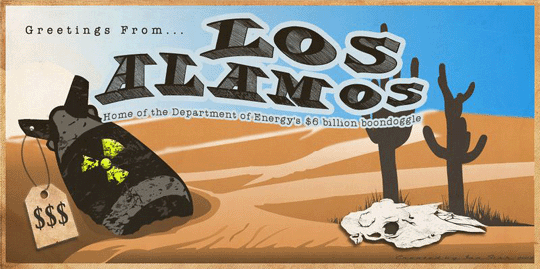
We have allowed our tax dollars to be spent in continued efforts to dominate the world. Instead of taking care of our citizens, we create weapons of mass destruction at great cost to all living things.
This quote from the late Congressman Stewart Udall is still as applicable now as it was in 1993: “There is nothing comparable in our history to the deceit and the lying that took place as a matter of official government policy in order to protect this [nuclear weapons] industry. Nothing was going to stop them and they were willing to kill our own people. … The atomic weapons race and the secrecy surrounding it crushed American democracy. It induced us to conduct government according to lies. It distorted justice. It undermined American morality.
Step up against expansion of LANL’s nuclear mission https://www.santafenewmexican.com/opinion/my_view/step-up-against-expansion-of-lanls-nuclear-mission/article_d8414dbc-b7ce-11ea-aecc-3b8d2fa29a01.html, By Lydia Clark, 28 June 20
-
- The U.S. Senate just approved a 20 percent increase for the fiscal year 2021 defense budget that could go into effect this October. For New Mexico, this is devastating. It gives Los Alamos National Laboratory approximately $837 million for nuclear weapons production.
The U.S. government has far too long ignored the oppression exerted from militaristic efforts to control its citizens and its effects worldwide. This “knee on the neck” of humanity must stop.
We have allowed our tax dollars to be spent in continued efforts to dominate the world. Instead of taking care of our citizens, we create weapons of mass destruction at great cost to all living things. This is not a knee, but an anvil around our necks.
The current plan for 80 plutonium pits (the cores of nuclear weapons) per year at LANL will create another Rocky Flats, the last big plutonium pit factory in the U.S. Colorado is still paying the price environmentally for the Rocky Flats pit production factory. The devastation to workers’ lives from plutonium contamination will never be fully compensated. The contamination of the environment, workers and the public is what this pit factory at LANL creates, not security and safety for our nation.
We, the people, can say “no” to spending our tax dollars in this manner. There is still time to stop this insanity. As we see now and have seen in the past, together we can create change. Businesses and individuals must stand up and demand positive change. Oppose nuclear weapons production, oppose nuclear weapons use. Demand a Sitewide Environmental Impact Statement. It creates transparency. Only this statement will encompass all Northern New Mexico in the far-reaching impacts of a plutonium pit factory at LANL.
This quote from the late Congressman Stewart Udall is still as applicable now as it was in 1993: “There is nothing comparable in our history to the deceit and the lying that took place as a matter of official government policy in order to protect this [nuclear weapons] industry. Nothing was going to stop them and they were willing to kill our own people. … The atomic weapons race and the secrecy surrounding it crushed American democracy. It induced us to conduct government according to lies. It distorted justice. It undermined American morality. Until the cold war, our country stood for something.” — New York Times, June 8, 1993.
I implore the citizens of Santa Fe, Northern New Mexico and the entire state to take action by opposing production of nuclear weapons at LANL, asking for a Sitewide Environmental Impact Statement and demanding sustainable benefits for our city, region and state.
Let us once more stand for something. Equality, social justice, real democracy and compassion. By definition, compassion means a sympathetic consciousness with a desire to alleviate it. Let us stand together in consciousness and show compassion for our environment, our humanity and our future.
Trump administration says it won’t carry out a nuclear weapons test ‘at this time’
 Trump administration says it won’t carry out a nuclear weapons test ‘at this time’, By Kylie Atwood, CNN, June 24, 2020 Washington , The US told Russia that that there is no reason for the Trump administration to carry out a nuclear weapons test “at this time,” during nuclear negotiations in Vienna this week, but reserved the right to conduct one if they see a need to do so.
Now, the nuclear arms race has become even worse
[Andreas Kluth] Nuclear arms race worse than last one Korea Herald, By Bloomberg 21 June 20, As long as the pandemic rages, the world’s leaders are understandably preoccupied with the threat of disease. But there are other dangers to humanity that demand attention. One of the most frightening is nuclear war. Unfortunately, the risk of that happening keeps rising.
The headline numbers are misleading. Yes, the global stockpile of nuclear warheads decreased slightly last year, according to the latest report by the Stockholm International Peace Research Institute. But that’s only because the US and Russia, the two countries that still account for more than 90 percent of global nuclear stocks, dismantled some of their obsolescent warheads.
Even more worryingly, states are reviewing their strategies for using these weapons. Gone is the amoral but logical stability of the Cold War, when two superpowers kept each other and the world in check with a credible threat of “Mutual Assured Destruction.”
Russia, for instance, increasingly sees smaller “tactical” warheads as a possible way to compensate for weaknesses in its other military forces. It’s conceivable that a conflict starting with hybrid warfare — ranging from disinformation campaigns to soldiers in unmarked uniforms — could escalate to a conventional war and a limited nuclear strike, inviting a counter strike and so forth.
There’s also speculation that India could soften its policy, adopted in 1998, never to be the first to use a nuclear weapon. Such thought experiments are no small matter for a country with two hostile and nuclear-armed neighbors, Pakistan and China. Just this week, India and China clashed again over their disputed border in the Himalayas. What North Korea could get up to in a crisis that it itself provokes is anybody’s guess.
Meanwhile, all efforts to limit or reduce nuclear weapons have ground to a halt. A treaty between the US and the Soviet Union that eliminated land-based missiles with short and intermediate ranges collapsed last year, after the US accused Russia of cheating.
And the two old foes aren’t even close to extending their only remaining arms-control agreement, called New START, which expires in February. One reason for that failure was America’s insistence that the third and rising superpower should join the negotiations. But China, which sees itself as merely catching up with the two nuclear kingpins, balks at accepting any limits.
Progress has also stalled in updating the Treaty on the Non-Proliferation of Nuclear Weapons, exactly 50 years after it took effect. It sought to keep additional countries from making bombs by encouraging them to use fissile material (uranium or plutonium) only for civilian purposes such as generating electricity. But five countries have gone nuclear since it was signed. Worse, game theory suggests that it’s rational for more states to follow. Iran could be next.
The only international agreement to ban these evil weapons altogether, the Treaty on the Prohibition of Nuclear Weapons passed by the United Nations in 2017, has the same chance as a snowball in a fission event. No member of the nuclear club intends to ratify it, nor do many other countries……….
Why we must stop investing in nuclear weapons
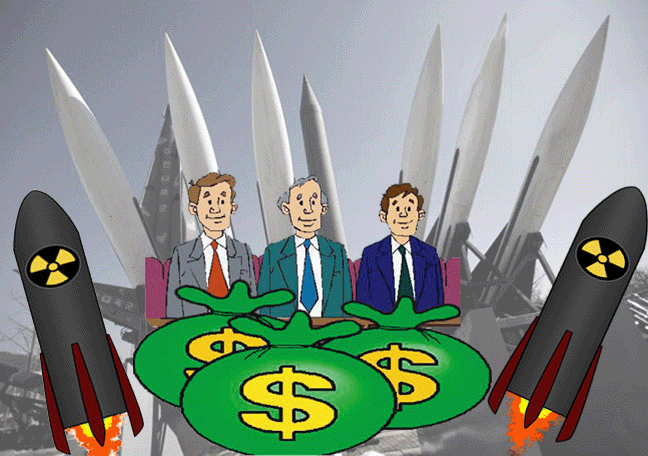
Why we must stop investing in nuclear weapons, By MIMI LANG, THE MORNING CALL |, JUN 15, 2020 One wonders which threats worry us the most. Certainly, the coronavirus tops the list. My own choice for second place is the threat of nuclear weapons and climate change.
The Bulletin of Atomic Scientists established the Doomsday Clock in 1970 to warn us about the dangers of nuclear weapons. The closer to midnight the clock, the closer we are to nuclear disaster. Many of the scientists who warned about nuclear dangers had worked on developing the atom bomb.
The clock has been as far away from midnight as 17 minutes. Right now it’s at 100 seconds, the closest it has ever been.
The reason for decreasing the number to 100 seconds is because the risk of climate disaster has been added to the nuclear disaster threat. As we approach the 75th anniversary of the bombings of Hiroshima and Nagasaki in August of this year, the U.S. nuclear program wastes vast amounts of money to maintain its role with Russia as the purveyor of the most weapons of mass destruction.
An article in The Morning Call on May 16 about updating our nuclear weapons states, “the Trump administration’s plan — inherited from the Obama administration — is to pour hundreds of billions of dollars into replacing every major every element of the nuclear weapons complex.”
So far, 122 countries have signed the document and 37 have ratified it. Once 50 countries have ratified the treaty, it will enter into force. Not surprisingly, the nine countries that possess nuclear weapons have refused to sign the treaty. U.S. allies that do not have nuclear weapons but depend on the U.S. for their defense also refuse to sign.
Members of the local Peace Center, LEPOCO, have worked for years to increase the public’s awareness of the threat nuclear weapons provide to our survival. Each year we have an event remembering Hiroshima and Nagasaki to honor those who have continued to work to abolish nuclear weapons.
Along with other peace groups, we have been active in supporting the efforts of the Ploughshares community, a group of brave activists who have spent years of their lives in jail for trespassing onto the facilities where Trident and other missiles await their opportunity to destroy our world.
A current group of seven Catholic Worker activists called the Kings Bay Ploughshares awaits their sentencing in a few weeks. On April 4, 2018, they entered the Kings Bay Naval Base, poured their blood and hammered on monuments dedicated to nuclear weapons and left signs saying that in the face of the threat that the U.S. nuclear arsenal poses to the world, what they had done was not illegal.
Their actions were intended as “symbolic disarmament” — an act of civil resistance.
While our friends spent over a year in jail awaiting their trial, the U.S. announced the deployment of the W76-2, a new, smaller nuclear warhead than the traditional Trident missile. The first to move out with the new weapon was the USS Tennessee, deploying from Kings Bay Submarine Base in Georgia at the end of 2019.
The warhead is designed to be smaller than the bomb dropped on Hiroshima. Those in favor of the smaller warhead argue that it is needed to counter developments in Russia. Opponents warn of confusion if a submarine has both large and small missiles, forcing an opponent to choose a larger one.
Any investment in furthering our nuclear weapons programs makes our dreams of a nuclear-free world more unlikely. Billions of dollars for nuclear weapons deprive us all of adequate health care, education, housing, living wages, relief from poverty.
Can you make a difference in our country’s nuclear decisions? Consider joining the International Campaign to Abolish Nuclear Weapons. ICAN is a coalition of nongovernmental groups promoting adherence to the United Nations Treaty for the Prohibition of Nuclear Weapons. The organization received the Noble Prize for Peace in 2017.
You can also join the Don’t Bank the Bomb Campaign (www.dontbankthebomb.com) to stop investments in nuclear weapons. Pressure your local officials to support the Treaty on the Prohibition of Nuclear Weapons.
Please join me in imagining the future of the world without nuclear weapons.
Mimi Lang, who lives in Bethlehem, is a member of Lehigh-Pocono Committee of Concern. AT TOP https://www.mcall.com/opinion/mc-opi-nuclear-weapons-lang-20200615-e7sexxxzdneblnvl54kjhs5euu-story.html
Bernie Sanders, and moving the money away from militarism
For many years now, the Congressional Delegate from Colonized Washington D.C., Eleanor Holmes Norton, has introduced a resolution to move funding from nuclear weapons to useful projects. At some point, bills like that one need to rise to the top of our agenda. But Sanders’ amendment is a current priority, because it can be attached this month to a bill that the supposedly partisan and divided and gridlocked U.S. Congress has consistently and harmoniously passed with overwhelming majorities every year since time immemorial.
We need this step now and it is obtainable. Get out there and demand
|
Bernie, Amendments, and Moving the Money, Senator Bernie Sanders has finally done something that some of us thought would give his presidential campaign a big boost four years ago, and again this past year. He’s proposed to introduce legislation to move a significant amount of money from militarism to human and environmental needs (or at least human needs; the details aren’t clear, but moving money out of militarism is an environmental need).Better late than never! Let’s make it happen with an overwhelming show of public support! And let’s make it a first step!
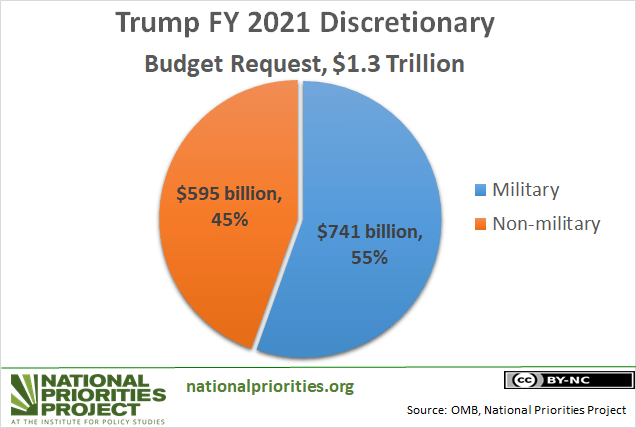
Technically, back in February, Bernie buried in a fact-sheet about how he would pay for everything he wanted to do, an $81 billion annual cut to military spending. While his current proposal is even smaller at $74 billion, it is a straightforward proposal to move the money; it’s not buried in a long document seeking to pay for transformative change almost entirely by taxing the wealthy; it’s already been covered at least by progressive media; it connects with a current burst of extraordinary activism, and Sanders has tweeted this: “Instead of spending $740 billion on the Dept. of Defense, let’s rebuild communities at home devastated by poverty and incarceration. I’ll be filing an amendment to cut the DoD by 10% and reinvest that money in cities and towns that we’ve neglected and abandoned for far too long.” And this: “Instead of spending more money on weapons of mass destruction designed to kill as many people as possible, maybe—just maybe—we should invest in improving lives right here in the United States of America. That’s what my amendment is all about.” One reason for this move by Sanders is almost certainly the current activism demanding that resources be moved from armed policing to useful expenses. The grotesque diversion of local budgets into militarized police and prisons is of course far outstripped in absolute numbers, in proportions, and in the suffering and death created, by Congress’s diversion of the federal discretionary budget into war and preparations for more war — which is of course where the weaponry and warrior training and a lot of the destructive attitudes and the troubled misguided veterans in local policing come from. Trump’s 2021 budget request varies little from past years. It includes 55% of discretionary spending for militarism. That leaves 45% of the money Congress votes on for everything else: environmental protections, energy, education, transportation, diplomacy, housing, agriculture, science, disease pandemics, parks, foreign (non-weapons) aid, etc., etc. The priorities of the U.S. government have been wildly out of touch with both morality and public opinion for decades, and have been moving in the wrong direction even as awareness of the crises facing us has inched upward. It would cost less than 3% of U.S. military spending, according to UN figures, to end starvation on earth, and about 1% to provide the world with clean drinking water. Less than 7% of military spending would wipe out poverty in the United States. Continue reading |
Trump wants costly armed nuclear ice-breakers – where will the money come from ?
U.S. Seeks Armed Nuclear Icebreakers For Arctic Show Of Force, David Hambling
Aerospace & Defense, 14 June 20,
President Trump has called for a ‘ready, capable, and available fleet of polar security icebreakers’ to give America a ‘strong presence’ in the Arctic and Antarctic regions. The call comes in a White House memorandum dated June 9 and envisages armed, nuclear-powered icebreakers engaging in operations for both national security and commercial interests. This is hugely ambitious considering that the U.S. currently has a single, ageing, non-nuclear icebreaker, while Russia is rapidly expanding its huge nuclear icebreaker fleet.
Russia has long seen the waters off their northern coast as a key economic asset, both for oil and gas exploration and as a shipping route, anticipating that the emerging Northern Sea Route will attract trade away from the Suez Canal by trimming 40% off the journey from Europe to Asia. Russia has ramped up its Arctic military presence in recent years with new air bases, ships and land forces to support these interests.
—
India will follow with nuclear weapons testing, if USA resumes testing
If the Donald Trump Resumes U.S. Nuclear Weapons Testing, India Will Follow, Hasan Ehtisham, The National Interest•June 13, 2020
On May 15, according to media reports, the Trump administration conducted serious discussions on whether or not to break the informal ban to carry out a nuclear test explosion. Washington’s intent to resume nuclear testing threatens to elevate already grown strategic tensions with China, Russia, and others. Some analysts comprehended that this is a proper course to influence Russia and China to support Washington’s plan for trilateral talks related to nuclear arms controls and disarmament issues. ……
The head of the Comprehensive Nuclear-Test-Ban Treaty Organisation (CTBTO), Lassina Zerbo, has presaged that any attempt by the United States to recommence nuclear testing would have serious ramifications for global peace and security. While mentioning CTBTO’s close relationship with the U.S. National Laboratories, Zerbo categorically precluded the notion of any requirement for nuclear testing. Chinese Foreign Ministry spokesperson Zhao Lijian has also shown “grave concerns about the report.” He urged the Trump administration to meet its “due obligations and honour its commitment by upholding the purpose and objective of the CTBT.” During the contemporary strategic competition of major powers, an uncertain situation has emerged about any sort of political gains for Washington against Moscow or Shanghai with a nuclear test. The most plausible consequence of a nuclear explosion by the United States at this point will facilitate other countries to resume nuclear testing. Washington will be criticized by other nuclear weapons states for violating the nuclear test moratorium practiced since 1998 by all countries, except North Korea.
Robert Rosner, a professor of physics at the University of Chicago, has evaluated that after the United States others will also resume nuclear testing and “the crucial question is: Who are the others?” In the South Asian strategic scenario, India will be that other country. India, one of the world’s fastest developing nuclear weapons states, has long been waiting for such a mistake, particularly from the United States, so that it could revoke the pledge of nuclear non-testing. It has been unable to do so just because it aspires to become part of the Nuclear Suppliers Group (NSG) and other global regimes. Once the United States resumes nuclear testing, India will find it easier to further demonstrate its nuclear weapon capability.
This latest paradigm shift by the United States allows India to conduct more nuclear testing to assess the design of its thermonuclear weapon which it claimed to have detonated on May 11, 1998, in the Operation Shakti-1. Numerous international experts believe that the results of the thermonuclear test were highly inflated and doubt that the device successfully ignited the second fusion stage of the explosion. The scientist community who coordinated the Operation Shakti-1 in 1998 has concluded that the test was a failure, as the yield of the fusion device never produced the desired results.
Nuclear pundits in India have already materialized a comprehensive and robust nuclear facility to meet any kind of eventuality that could provide India with an opportunity to carry out further nuclear tests. For instance, in 2012, India’s secret nuclear city at Challakere, Karnataka was revealed by independent researchers. Experts have shown apprehensions that the facility will be a major complex of nuclear centrifuges under military control, along with atomic research laboratories, weapons and aircraft testing sites. Once it starts functioning, the facility would enable India to modernize its existing nuclear warheads and the nuclear fuel from domestic reserves will be used for a thermonuclear weapon. India is also working on a uranium enrichment plant from which it will be able to produce about twice as much weapons-grade uranium as New Delhi will need for its operational nuclear weapon programme. That significant excess of the enriched uranium would be used for the development of thermonuclear weapons.
India has already done the necessary homework to manipulate any step the United States may take in the near future. The Defence Research and Development Organisation (DRDO) has signaled the capacity to conduct more nuke tests at short notice. If India alters the status of its moratorium on nuclear testing, then it would not only upset the deterrence balance but most significantly it would start a fresh nuclear arms race in South Asia. Under the pretext of growing Indo-US strategic relations in the region, the U.S. is offering a free ride to India to enhance the nuclear capability by resuming nuclear testing. It is strategically prudent for the U.S. national interest to uphold its commitments regarding the unilateral pledge of nuclear non-testing while ratifying the CTBT. The United States should also press India to continue its moratorium on nuclear weapons testing which was the primary prerequisite for the U.S.-India nuclear deal of 2008. It will reinforce the global standards against nuclear testing and encourage regional stability. https://news.yahoo.com/donald-trump-resumes-u-nuclear-120000804.html
Hasan Ehtisham is the M. Phil Scholar of Defence and Strategic Studies at Quaid-e-Azam University in Islamabad, Pakistan.
Trump’s plan for a nuclear trest – dangerous brinkmanship
 A Nuclear Test Would Blow Up in Trump’s Face
The Trump administration doesn’t understand the brinkmanship concept its nuclear diplomacy is based on. Foreign Policy,
BY SARAH BIDGOOD JUNE 11, 2020,
|
The last 42 months have offered a sobering window into the Trump administration’s philosophy on nuclear arms control. On display is its penchant for withdrawing from agreements rather than engaging in dispute resolution—be they the Joint Comprehensive Plan of Action, the Intermediate-Range Nuclear Forces Treaty, or, most recently, the Open Skies Treaty. While many experts see this approach as ill-conceived and damaging to U.S. national security interests, the administration often frames it as a form of brinkmanship designed to signal resolve in an era of strategic competition. The intended message appears to be that the United States will no longer play ball unless its rivals—Russia and China—agree to abide by Washington’s rules.
The latest example of this tendency comes amid reports that the administration might conduct a “rapid” nuclear test to strengthen its hand in negotiations with China and Russia. Experts around the world have denounced this proposal as dangerous, foolhardy, and “catastrophically stupid.” As they point out, were the United States to test for the first time in nearly three decades, it would open the door for the resumption of widespread explosive testing. At the same time, it would undermine the nuclear taboo, hurt the credibility of the nonproliferation regime, and diminish support for the Comprehensive Nuclear-Test-Ban Treaty (CTBT). While all true, these arguments are unlikely to sway this administration, which has shown little regard for existing norms or the disarmament machinery writ large.
What might give decision-makers pause, though, is the fact that a nuclear test is unlikely to be an effective signal in the current context. It would not help deliver President Donald Trump’s goal of a trilateral arms control agreement, but it would provide ample opportunity for misinterpretation and a response in kind. In the process, it would likely put Washington in a worse negotiating position than when it started, making it not only risky but also pointless to boot………..
In short, if decision-makers in Washington do choose to test, this attempt at brinkmanship will certainly fail to convince Russia or China to sit down at the arms control negotiating table. Instead, it will make it all the more likely that the very outcomes trilateral arms control seems to be intended to prevent come to bear—and soon. The good news, then, is that there is plenty of time to walk this ill-conceived and ineffective plan back from the brink. In this instance, restraint—such as it is—may be the most effective nuclear signal this administration could possibly send. https://foreignpolicy.com/2020/06/11/nuclear-test-arms-control-trump-united-states-brinkmanship/
|
|
1 This Month
22 June – Virtual Event –Climate Change: New Data, New Debate

Monday, June 22, 2026 2:30 p.m. – 3:15 p.m. CT
YouTube. Register here

Protect Sazan Island from the Trump family! https://secure.avaaz.org/campaign/en/protect_sazan_island_from_the_trump_family_loc/?bqFCVab&v=174511&cl=22707147157&_checksum=5e9dde668860e8231c33699735e16a1fbf22ab2cb01da50c999fe8732b9775ef&utm_source=email&utm_medium=blast_email&utm_campaign=174511
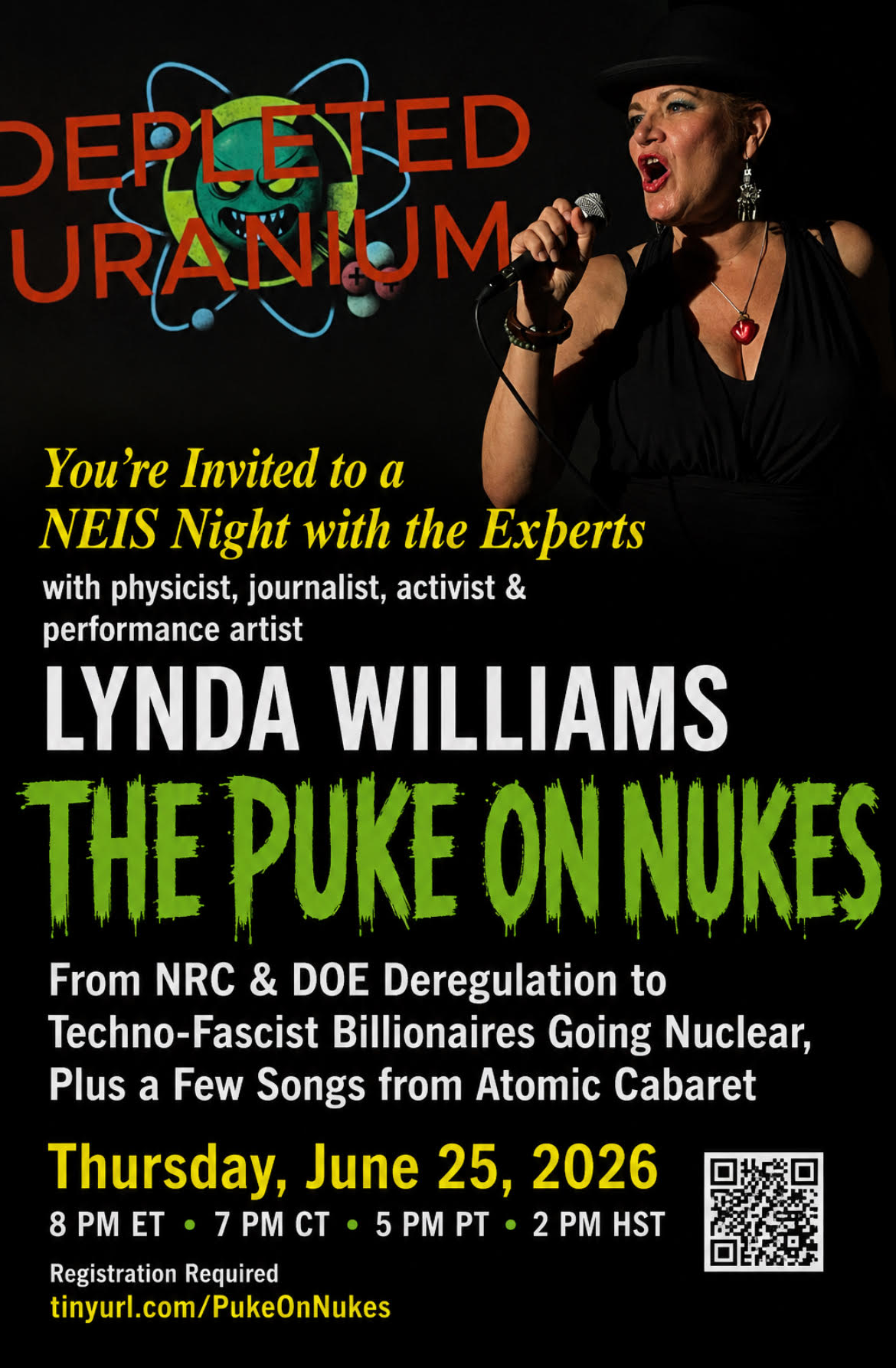
25 June- THE PUKE ON NUKES
Thursday, June 25, 2026
7pm Central Time (8pm ET, 6pm MT, 5pm PT) UTC – 5
From NRC & DOE Deregulation to Techno-Fascist Billionaires Going Nuclear, Plus a Few Songs from Atomic Cabaret REGISTER
26 June – Radiation Trainwreck at the NRC / Join the Protect Better Campaign – https://us02web.zoom.us/meeting/register/4ZlZ5_qLSHGiLSCg8FF6Bg#/registration


Cuba Is Not a Failed State – It Is a Besieged State
PETITION: “Global Appeal to Endorse Palestinian Right of Return of Refugees”
To see nuclear-related stories in greater depth and intensity – go to https://nuclearinformation.wordpress.com
-
Archives
- June 2026 (193)
- May 2026 (306)
- April 2026 (356)
- March 2026 (251)
- February 2026 (268)
- January 2026 (308)
- December 2025 (358)
- November 2025 (359)
- October 2025 (376)
- September 2025 (257)
- August 2025 (319)
- July 2025 (230)
-
Categories
- 1
- 1 NUCLEAR ISSUES
- business and costs
- climate change
- culture and arts
- ENERGY
- environment
- health
- history
- indigenous issues
- Legal
- marketing of nuclear
- media
- opposition to nuclear
- PERSONAL STORIES
- politics
- politics international
- Religion and ethics
- safety
- secrets,lies and civil liberties
- spinbuster
- technology
- Uranium
- wastes
- weapons and war
- Women
- 2 WORLD
- ACTION
- AFRICA
- Atrocities
- AUSTRALIA
- Christina's notes
- Christina's themes
- culture and arts
- Events
- Fuk 2022
- Fuk 2023
- Fukushima 2017
- Fukushima 2018
- fukushima 2019
- Fukushima 2020
- Fukushima 2021
- general
- global warming
- Humour (God we need it)
- Nuclear
- RARE EARTHS
- Reference
- resources – print
- Resources -audiovicual
- Weekly Newsletter
- World
- World Nuclear
- YouTube
-
RSS
Entries RSS
Comments RSS
 nuclear-news