Early atomic bomb research – the ‘demon core’ that killed physicist Harry Daghlian
The Demon Core: How One Man Intervened With His Bare Hands During A Nuclear Accident https://www.iflscience.com/physics/the-demon-core-accident-how-one-man-stopped-a-nuclear-detonation-with-his-bare-hands/ 17 May 21,

Following the end of World War 2 and the devastating impacts of the Hiroshima and Nagasaki nuclear bombings, the Cold War was looming. The immense destruction and power promised by atomic bombs pushed world superpowers into a nuclear research frenzy, with the USA preparing to drop a third on Japan , and the remaining nations creating their own arsenal as a deterrent or defense.
Enter the ‘demon core’. Sitting at a sizeable 6.2 kilograms (13.7 pounds) and 3.5 inches in diameter, this spherical mass of radioactive plutonium (at the time named ‘Rhufus’) was designed in nuclear research to be a fissile core for early iterations of the atomic bomb. Throughout 1945 and 1946, the demon core was experimented on ……
As expected from its’ ominous title, the demon core was not kind to the nuclear physicists involved. Designed as a bomb core, it had just a tiny margin before it would increase radioactivity and become supercritical (once the fission reaction has begun, it increases in rate). Therefore, any external factors that could increase reactivity, for example, compression of the core (which is how the fission bomb detonates), must be carefully monitored around the demon core.
Despite the danger, researchers used the core as an experimental piece on supercriticality, using neutron reflectors to push it to its’ limits. Neutron reflectors are used to surround the core, and as the nuclear fission reaction occurs, they reflect neutrons back at the nuclear material to increase the amount of fission taking place.
In 1945, alone in his laboratory, physicist Harry Daghlian was performing a neutron reflector experiment on the demon core when he mistakenly dropped a brick of reflective tungsten carbide onto the core, pushing it into supercriticality and releasing a deadly burst of neutron radiation. After a 3-week battle with acute radiation sickness, Daghlian succumbed to his wounds, leading to tighter legislation around nuclear research in the Manhattan Project – although it would not be strict enough.
Despite the danger, researchers used the core as an experimental piece on supercriticality, using neutron reflectors to push it to its’ limits. Neutron reflectors are used to surround the core, and as the nuclear fission reaction occurs, they reflect neutrons back at the nuclear material to increase the amount of fission taking place.
In 1945, alone in his laboratory, physicist Harry Daghlian was performing a neutron reflector experiment on the demon core when he mistakenly dropped a brick of reflective tungsten carbide onto the core, pushing it into supercriticality and releasing a deadly burst of neutron radiation. After a 3-week battle with acute radiation sickness, Daghlian succumbed to his wounds, leading to tighter legislation around nuclear research in the Manhattan Project – although it would not be strict enough.
That burst of radiation would kill Slotin within 9 days of exposure. Stood right beside him during the accident, Alvin Graves would also receive a huge dose of radiation but would survive the ordeal and live for another 20 years before death. Owing to Slotin’s quick thinking and body position, which absorbed most of the radiation, the remaining onlookers were shielded from the blast and survived to tell the tale.
Following the accidents, the core would finally gain its name as the demon core, before being recycled down into other fissile cores.
Glascow City Council calls on UK Government to scrap plans to replace nuclear arsenal
Glasgow Evening Times 15th May 2021, GLASGOW City Council is calling on the UK Government to pursue nuclear
disarmament. Councillors have backed a motion which supports the Treaty to
Prohibit Nuclear Weapons – and urges the government to scrap plans to
replace its Trident nuclear arsenal.
It was presented by Councillor Feargal
Dalton, the convener of the Nuclear Free Local Authorities Scotland Forum
(NFLA). A letter will be sent to the UK Government to inform it of the
resolution. Cllr Dalton, who has a military background, said: “There is
no moral justification for nuclear weapons; I never heard one in all my
years in the submarine service.
https://www.glasgowtimes.co.uk/news/19304352.council-calls-trident-replacement-plans-scrapped/
Master of Space: Corporate plans for the militarization & privatization of space
Feb 2, 2021 Sun, Jan 31, 2021: 10:30 am to 12:30 pm Master of Space: Corporate plans for the militarization & privatization of space DESCRIPTION: Bruce Gagnon will reveal the deadly connections between the corporate drive to ‘control and dominate’ space as spelled out in the US Space Command’s 1997 planning document called Vision for 2020. https://thecommunity.com/wp-content/u…
The gold rush is now underway as space technologies have matured to the point where mining the sky for precious resources becomes possible. Corporate forces intend to use the newly formed ‘Space force’ to guard the front gate on and off Earth to ensure that only ‘authorized’ companies and nations would be allowed to access space.
This vision was first spelled out before Congress in the early 1950’s when former Nazi Maj. Gen. Walter Dornberger shared his vision of orbiting battle stations in space to control the pathway on and off our planet. Dornberger had been Hitler’s liaison to V-1 & V-2 rocket scientist Wernher von Braun during WW II. After the war Dornberger, Von Braun and more than 1,000 Nazi leaders were secretly brought to the US to serve in the military industrial complex. Van Braun built the US space program and Dornberger became a V-P of Bell Aerospace in New York. http://www.space4peace.org
BIO: Bruce Gagnon is the Coordinator (and Co-Founder) of the Global Network Against Weapons & Nuclear Power in Space. He is a Vietnam war-era veteran and began his organizing work with the United Farm Workers Union. He lives in Bath, Maine.
Hamas Targets Israeli Oil And Nuclear Facilities With Rocket Attacks
Hamas Targets Israeli Oil And Nuclear Facilities With Rocket Attacks, Oil Price By ZeroHedge – May 14, 2021 Hamas’ militant wing, the Al-Qassam Brigades, announced earlier this week that it is deliberately targeting Israel’s secretive Dimona nuclear reactor site, known as the Shimon Peres Negev Nuclear Research Center, which lies east of the the Gaza Strip far into the Negev Desert.
It was on Wednesday that Qassam Brigade spokesmen said they were “directing a rocket strike involving 15 rockets for Dimona” – and since then it appears rockets have fallen generally in the southerly area – but there’s since been no reports of direct hits anywhere on the complex, or damage to the site……….
“On Tuesday, at least one rocket appeared to score a direct hit, damaging an Ashkelon facility connected to the Trans-Israel pipeline running from the Mediterranean to the Red Sea,” Newsweek observed, and continued:
“The military wing of Palestinian Islamist movement Hamas has targeted Israel’s nuclear facility, key oil facilities and other sites across the country amid a violent escalation between the two sides.”…… https://oilprice.com/Geopolitics/Middle-East/Hamas-Targets-Israeli-Oil-And-Nuclear-Facilities-With-Rocket-Attacks.html
Avoiding an unintentional space war: Lessons from Cold War nuclear diplomacy
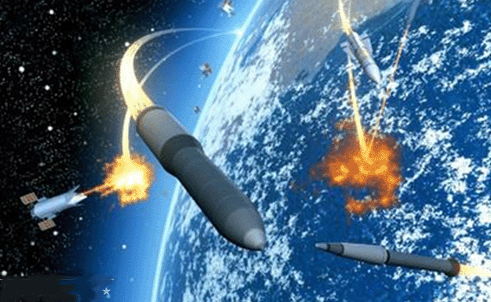
Avoiding an unintentional space war: Lessons from Cold War nuclear diplomacy, Bulletin of the Atomic Scientists By Maxwell Simon, Sam Wilson, May 13, 2021 In July of 2020, senior US and Russian officials held talks about space security and strategic stability, the first such talks between the two countries dedicated to these issues in seven years. The meetings came at a time when the domain of space has been becoming increasingly tense: Just a few weeks earlier, the US Space Command reported that Russia had tested a space-based weapon (US Space Command Public Affairs 2020a); almost a year earlier, the US Director of National Intelligence had reported that Russia and China were fielding new weapons that could put US space capabilities at risk (Coats 2019).
Tensions have not eased since then, and in December 2020, the US Space Command reported that Russia had tested as direct ascent anti-satellite weapon, its second such test of 2020 (US Space Commands Public Affairs 2020b). Meanwhile, both countries are blaming the other for weaponizing space. ….. (subscribers only) https://thebulletin.org/premium/2021-05/avoiding-an-unintentional-space-war-lessons-from-cold-war-nuclear-diplomacy/
In April, Syrian missile landed near Dimona nuclear reactor, interception failed.
Syrian missile lands near Dimona nuclear reactor, interception fails
SA-5 flies from Syria all the way to Negev in the longest-range attack yet by Syria; Patriot missile activated in response. By ANNA AHRONHEIM, UDI SHAHAM, JERUSALEM POST STAFF APRIL 22, 2021 Israel and Syria exchanged missile attacks early on Thursday morning, after Damascus launched an advanced surface-to-air missile that landed in the Negev Desert.
Alarms sounded in Abu Qrenat near Dimona in the South.Syria fired the missile in response to what it claims was an Israeli Air Force bombing near Damascus. Israel frequently strikes Syria to prevent Iranian entrenchment in the country as well as weapons shipments to Hezbollah in Lebanon.Reports from across the country, including central Israel and Jerusalem, spoke of “loud explosions” that “shook the houses.”The IDF activated its air defense systems in an attempt to intercept the missile, but that attempt failed. The military is investigating why its air defenses failed to intercept the SA-5.
Early reports indicated that the explosion was the result of a Patriot missile defense system battery responding to the firing of the missile into Israel. Missile parts were located on Thursday morning in the swimming pool of the Negev community of Ashalim.
“Due to a surface to air missile entering Israeli territory, air defense systems were activated,” a statement by the IDF read, noting that the military was still investigating the incident. The SA-5 reportedly landed close to Dimona, not far from the location of Israel’s reportedly secret nuclear reactor………… https://www.jpost.com/breaking-news/alarms-sound-in-south-of-israel-665953
USA’s unnecessary plutonium pits production to cost $10+ Billion
Cost Estimate for SRS Plutonium Bomb Plant to Soar to $10+ Billion? Causing Trouble for Contractors and Boosters Pushing New Pit Plant and “Money Pit” ICBM “Needing” New Plutonium Pits? https://www.rnanews.eu/cost-estimate-for-srs-plutonium-bomb-plant-to-soar-to-10-billion-causing-trouble-for-contractors-and-127657.html 11 May 21,
Stay tuned for the release by the US DOE’s National Nuclear Security Administration of a “Critical Decsion-1” determination on the proposed SRS Plutonium Bomb Plant. CD-1 would approve the basic project design and present an update cost range. The cost for the bomb plant could soar to $10 billion or more, more than double the earlier estimate of $4.6 billion to convert the partially finished plutonium fuel MOX plant at SRS to pit production.
The CD-1 document package was turned over to NNSA by contractor Savannah River Nuclear Solutions (SRNS) in January 2021. In March, the CEO of SRNS told the South Carolina Nuclear Advisory Council that a decision on CD-1 by NNSA could come in late May or June.
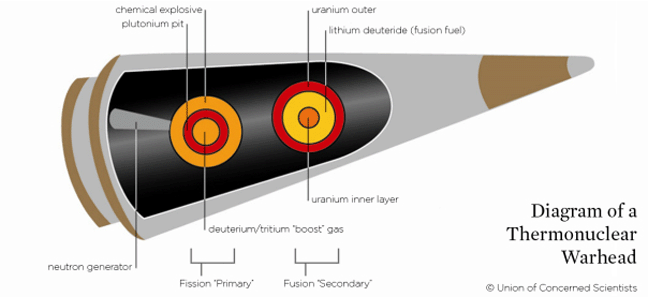
A huge jump in the cost of the SRS Plutonium Bomb Plant will ramp up the pressure on DOE/NNSA/Department of Defense to fund such an expensive facility and the new ICBM, Ground Based Strategic Deterrent (GBSD) – aka the Money Pit Missile – with a lifetime cost over $200 billion. The new ICBM and its W87-1 warhead would require new plutonium pits.
This missile and pits for it are not needed. As it’s part of planning for full-scale nuclear war, it would undermine national security and transfer a vast amount of money from patriotic taxpayers to contractors such as Northrop Grumman, Savannah River Nuclear Solutions and pit-production contractors at Los Alamos National Lab, the other site being considered for expanded pit production. In sum, the GBSD and plans for new pits must be canceled and the CD1 document will be a wake-up call for decision makers.
Meanwhile, Congress is still refusing to investigate possible waste, fraud, abuse and mismanagement of the failed MOX project by NNSA and contractors.
How the heck can they just sweep under the rug the waste of $8 billion on the failed project? Who is Congress protecting and why???
India is operating the world’s most dangerous, fastest-growing, nuclear weapons and missile programs in the world
World’s most dangerous fastest-growing nuclear weapons programme
Nowadays, South Asia is categorized by international analysts as one of the unstable regions of the world, where the chances of nuclear brinkmanship are high because of the longstanding rivalry between Pakistan and India, The Nation, Syed Zain Jaffery, May 11, 2021
‘‘…………………India is operating the world’s most dangerous fastest-growing nuclear weapons and missile programs in the world, which are not only threatening for the region but world peace because of flawed nuclear safety and security standards. Increasing stocks of Indian fissile material and the development of nuclear triad capability – bombers, missiles and nuclear power/capable submarines – have increased the capability of New Delhi in the strategic realm. Contrary to International media claims, the Indian triad consists almost 500 nuclear weapons including thermonuclear weapons and has the capacity to produce over 2,600 nuclear weapons for tactical and strategic use.
Today, the undisclosed plutonium stocks have not been under IAEA’s inspection and left with Indian arms production facilities under the discriminatory nuclear cooperation deal between the United States and India. The civilian Plutonium reserves that are outside the safeguards of the IAEA and designated for strategic purposes are the main cause of concern. In a three-stage plan, India is continuing to expand its unsafeguarded nuclear power program. The installation of several nuclear reactors has also been announced by New Delhi. This capability will generate excessive fissile material, other than the fuel necessary for breeder and naval reactors. Over the next few years, India will be capable to replace China, France and the United Kingdom in terms of its abilities to produce nuclear weapons to become the third behind the US and Russia.
Under the influence of the rising economy of India, like-minded Western analysts are trying to divert the consideration of the international community from the fastest growing Indian nuclear weapons program and threats associated with it to the peaceful neighboring countries. Since 1974, the Indian intentions are clear that it will use any kind of advanced technology, which provided under the rubric of peaceful purposes, for military use and will violate any international law related to nuclear, space and missiles program to exercise hegemony in the region. The Indian policy aims, concerning nuclear weapons, are solely constructed to push its hegemony in the region. Now it is time for the international community to realize the Indian nuclear threat.
https://nation.com.pk/11-May-2021/world-s-most-dangerous-fastest-growing-nuclear-weapons-programme
Tallying up Russia’s nuclear weapons
Nuclear Notebook: How many nuclear weapons does Russia have in 2021? Bulletin of the Atomic Scientists, By Hans M. Kristensen, Matt Korda, March 15, 2021 T his is a very long article. Some introductory bits:
Russia is in the middle of a decades-long modernization of its strategic and nonstrategic nuclear forces to replace Soviet-era weapons with newer systems………
Putin also noted his disappointment with the “deterioration” of the US-Russia arms control regime, and declared that the United States withdrew from the Anti-Ballistic Missile Treaty, the Intermediate-Range Nuclear Forces Treaty, and the Open Skies Treaty under “contrived pretexts.”……..
As of early 2021, we estimate that Russia has a stockpile of nearly 4,500 nuclear warheads assigned for use by long-range strategic launchers and shorter-range tactical nuclear forces……
Russia has significantly reduced the number of warheads deployed on its ballistic missiles to meet the New START limit of no more than 1,550 deployed strategic warheads. Russia achieved the required reduction by the February 5, 2018 deadline, when it declared 1,444 strategic warheads attributed to 527 launchers (Russian Federation Foreign Affairs Ministry 2018)………
Russia (like the United States) could potentially upload several hundreds of extra warheads onto their launchers, but is prevented from doing so by the New START treaty limit, which has been extended for an additional five years to 2026. The treaty provides for important transparency of Russian (and U.S.) strategic nuclear forces: As of December 2020, the United States and Russia have completed a combined 328 on-site inspections and exchanged 21,293 notifications (US State Department, Bureau of Arms Control, Verification and Compliance 2020b). Due to the ongoing Covid-19 pandemic, there have been no on-site Type One or Type Two inspections since April 1st, 2020……….
What is Russia’s nuclear strategy?……….
Russia’s publicly stated policy. In June 2020, President Putin approved an update to the “Basic Principles of State Policy of the Russian Federation on Nuclear Deterrence,” which notes that “The Russian Federation considers nuclear weapons exclusively as a means of deterrence.” The policy clearly lays out four conditions under which Russia could launch nuclear weapons:
“arrival of reliable data on a launch of ballistic missiles attacking the territory of the Russian Federation and/or its allies;
use of nuclear weapons or other types of weapons of mass destruction by an adversary against the Russian Federation and/or its allies;
attack by adversary against critical governmental or military sites of the Russian Federation, disruption of which would undermine nuclear forces response actions;
aggression against the Russian Federation with the use of conventional weapons when the very existence of the state is in jeopardy” (Russian Federation Foreign Affairs Ministry 2020).
Submarines and submarine-launched ballistic missiles
The Russian Navy operates 11 nuclear-powered nuclear-armed ballistic missile submarines (SSBNs) of three classes:……….https://thebulletin.org/premium/2021-03/nuclear-notebook-russian-nuclear-weapons-2021/?utm_source=Newsletter&utm_medium=Email&utm_campaign=Newsletter05102021&utm_content=NuclearRisk_RussiaNotebook_03152021
Standing up to the USA’s militarisation of space

U.S. push for space weaponisation must be challenged, Independent Australia While most of the world supports outlawing space weaponry, the U.S. Government is still pushing to militarise space, writes Karl Grossman.
RETIRED U.S. Army Colonel John Fairlamb stated in a piece in The Hill, the Washington, DC news website:
Fairlamb knows the issue with the weaponisation of space. His background includes being an International Affairs Specialist for the Army Space and Missile Defense Command and Military Assistant to the U.S. Secretary of State for Political-Military Affairs. He is familiar with war first-hand: he was a company commander in Vietnam and holds a doctorate in Comparative Defense Policy Analysis.
In his opinion column headed ‘The U.S. should negotiate a ban on basing weapons in space’, Fairlamb wrote:
Given the implications for strategic stability, and the likelihood that such a decision [to deploy weapons in space] by any nation would set off an expensive space arms race in which any advantage gained would likely be temporary, engaging now to prevent such a debacle seems warranted.
It’s time for arms control planning to address the issues raised by this drift toward militarisation of space. Space is a place where billions of defence dollars can evaporate quickly and result in more threats about which to be concerned. Russia and China have been proposing mechanisms for space arms control at the United Nations for years; it’s time for the U.S. to cooperate in this effort.
Indeed, if weapons are deployed in space – and for decades, including during the Reagan Administration’s “Star Wars” (officially named the Strategic Defense Initiative) push, now likely again with the Trump Administration’s creation of a U.S. Space Force and its mission to “dominate” space – there will be no return.
Space weaponisation ‘cannot be walked back’. And the world is at a crossroads.
Russian Foreign Minister Serge Lavrov two weeks ago called tor talks to create an ‘international legally binding instrument’ to ban the deployment of “any types of weapons” in space.
Lavrov declared:
We consistently believe that only a guaranteed prevention of an arms race in space will make it possible to use it for creative purposes, for the benefit of the entire mankind. We call for negotiations on the development of an international legally binding instrument that would prohibit the deployment of any types of weapons there, as well as the use of force or the threat of force.”
He made the statement on 12 April, the International Day of Human Space Flight, marked this year by the 60th anniversary of Russian Yuri Gagarin’s space flight, the first by a person in space.
The U.S., the United Kingdom and the then Soviet Union joined decades ago in drafting the Outer Space Treaty of 1967 that designated space as a “global commons” for peaceful purposes. The treaty bans the deployment of weapons of mass destruction in space. It’s been signed by most nations on Earth.
Russia and China – along with U.S. neighbour Canada – have led in a move to expand the Outer Space Treaty by outlawing the deployment of any weapons in space.
During the period of Reagan’s “Star Wars” and in years since, the U.S. has been working on developing space weaponry that has included hypervelocity guns and particle beam and laser weapons.
The Prevention of an Arms Race in Outer Space (PAROS) treaty has been pushed by Canada, Russia and China to broaden the Outer Space Treaty.
PAROS has worldwide support. But through a succession of U.S. administrations – Republican and Democrat – the U.S. Government has voted against the PAROS treaty at the Conference on Disarmament of the United Nations. Because conference decisions must be supported by consensus, the U.S. has effectively vetoed the enactment of the PAROS treaty.
The day after Lavrov’s statement, the Chinese Foreign Ministry joined Russia in its plea.
Deputy director of the Chinese Ministry of Foreign Affairs Information Department Zhao Lijian said on 13 April:
“We are calling on the international community to start negotiations and reach agreement on arms control in order to ensure space safety as soon as possible. China has always been in favour of preventing an arms race in space; it has been actively promoting negotiations on a legally binding agreement on space arms control jointly with Russia.”
As for the Biden Administration and space militarisation, spokesperson Jen Psaki tweeted: ‘We look forward to the continuing work of Space Force…’…..
The comments from retired Army Colonel John Fairlamb are quite excellent as he calls for the U.S. to seriously enter into negotiations with Russia and China on PAROS. Both those nations for years have been offering to enter into negotiations at the U.N. to close the door to the barn before the horse gets out. In other words, develop a new treaty that prevents a space arms race before it happens. Sadly, the U.S. due to aerospace industry greed and dreams of space domination has been blocking this much need treaty development process.
Some might see Mr Fairlamb’s comments as representing the U.S. military – as if a sea change was happening inside the Pentagon – on this very important issue.
The comments from retired Army Colonel John Fairlamb are quite excellent as he calls for the U.S. to seriously enter into negotiations with Russia and China on PAROS. Both those nations for years have been offering to enter into negotiations at the U.N. to close the door to the barn before the horse gets out. In other words, develop a new treaty that prevents a space arms race before it happens. Sadly, the U.S. due to aerospace industry greed and dreams of space domination has been blocking this much need treaty development process.
Some might see Mr Fairlamb’s comments as representing the U.S. military – as if a sea change was happening inside the Pentagon – on this very important issue.
Alice Slater, a member of the boards of both the Global Network and the organisation World BEYOND War, said
The U.S. mission to dominate and control the military use of space has been, historically and at present, a major obstacle to achieving nuclear disarmament and a peaceful path to preserve all life on Earth. Reagan rejected Gorbachev’s offer to give up “Star Wars” as a condition for both countries to eliminate all their nuclear weapons. Bush and Obama blocked any discussion in 2008 and 2014 on Russian and Chinese proposals for a space weapons ban in the consensus-bound Committee for Disarmament in Geneva.
At this unique time in history, when it is imperative that nations of the world join in cooperation to share resources to end the global plague assaulting its inhabitants and to avoid catastrophic climate destruction or Earth-shattering nuclear devastation, we are instead squandering our treasure and intellectual capacity on weapons and space warfare. https://independentaustralia.net/politics/politics-display/us-push-for-space-weaponisation-must-be-challenged,15066#.YJcE8NQEv74.twitter
Sleepwalking towards nuclear war – enthusiasm for nuclear rockets and submarines – theme for May21
Small nuclear reactors (SMRs) are being pitched as ”climate salvation”, ”cheap electricity” etc. Of course this is nonsense. But the toxic macho nuclear zealots are confident that SMRs will have a great future in nuclear wars on land, on sea, in space.

SPACE: . Breathless enthusiasm in media coverage of rockets, space exploration . Yet the truth is that space research is tied to the goal of militarising space.
Of course, it is all the better to have the tax-payer fund space research – while quietly forwarding the drive for war inspace.
SUBMARINES. Nuclear zealots have long been working away for nuclear submarines. Aljazeera outlined current developments : Military forces around the world are reinventing the submarine for future conflicts. Attack subs also prowl the oceans. Fast and sleek, they are designed to sink other subs, especially high-value enemy missile submarines. This endless, deadly game of cat and mouse is played out daily under the surface of the world’s oceans as each side hones the skills needed to destroy the other in the event of war.
Submarines have unique features that make them deadly, the chief one being their stealth. Able to travel undetected underwater, they can strike without warning, the most powerful among them containing missile arsenals that could single-handedly destroy a continent.
A new class of Russian submarine, the Khabarovsk, will be fitted to carry the giant superfast autonomous nuclear torpedo, Poseidon, in effect an underwater nuclear-powered drone, capable of speeds of up to 180km/h (112mph) and armed with a huge, multi-megaton nuclear warhead.
Russia is not the only country upgrading its submarines. France, the UK and the US are all developing and building the next class of missile and attack sub.
With enhanced weapons like hypersonic missiles being developed, submarines are growing deadlier with each new generation.
Amidst Pandemic and Economic Sufferings, 2020’S Global Military Spending Reached Highest Level in Decades.
Amidst Pandemic and Economic Sufferings, 2020’S Global Military Spending Reached Highest Level in Decades
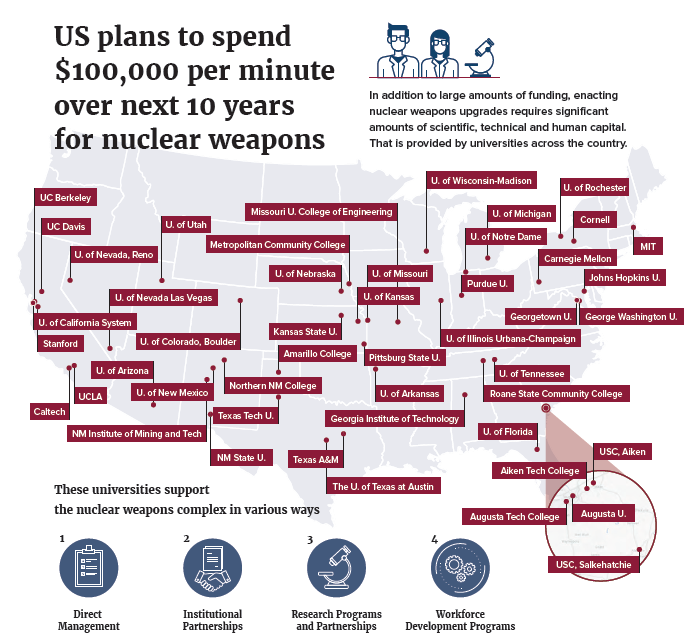
World military expenditure in 2020 is estimated to have been $1981 billion, the highest level since 1988 — and world military expenditure in 2020 was 2.6 per cent higher in real terms than in 2019 and 9.3 per cent higher than in 2011.
Portside, May 6, 2021 Countercurrents Collective Military spending around the world has increased to unprecedented level since 1988 despite economic suffering due to the COVID-19 pandemic, and the U.S. was ahead of all the countries again, finds Trends in World Military Expenditure, 2020, the latest report by the Stockholm International Peace Research Institute (SIPRI).
In 2020, nations were struggling to support their economies through the times of hardships and lockdowns caused by the pandemic. Those efforts apparently did not prevent governments from spending more money on their militaries than ever before in more than three decades, the report said.
The report published on Monday said: World military expenditure in 2020 is estimated to have been $1981 billion, the highest level since 1988 — the earliest year for which SIPRI has a consistent estimate for total global military spending, and world military expenditure in 2020 was 2.6 per cent higher in real terms than in 2019 and 9.3 per cent higher than in 2011.
It said that over the last decade, global military spending increased by almost 10 percent. The increase came in a year when the world’s “gross domestic product (GDP) shrank by 4.4 percent.” The global military burden — world military expenditure as a share of global GDP — rose by 0.2 percentage points in 2020, to 2.4 per cent.
It said the increase caused “the biggest year-on-year rise in the military burden since the global financial and economic crisis in 2009.”
Still, some countries, like South Korea and Chile, preferred to spend some of the planned military funds on pandemic response while others, like Russia and Brazil, spent “considerably less” on defense then planned in 2020.
SPIRI said U.S. leads the list of the largest military spenders by a wide margin. U.S.’s military expenditures amounted to 39% of the global defense spending. U.S. also recorded one of the highest spending growth rates among the top 10 military spenders, surpassed only by Germany and South Korea, which have considerably smaller defense budgets.
China, closest “competitor” of U.S., spent around three times less money on defense and its military spending in 2020 accounted for some 13 percent of the global tally. Beijing did not have to raise its defense spending at the expense of increasing the military burden, since its economy was one of the few still growing in 2020.
SPIRI said U.S. leads the list of the largest military spenders by a wide margin. U.S.’s military expenditures amounted to 39% of the global defense spending. U.S. also recorded one of the highest spending growth rates among the top 10 military spenders, surpassed only by Germany and South Korea, which have considerably smaller defense budgets.
China, closest “competitor” of U.S., spent around three times less money on defense and its military spending in 2020 accounted for some 13 percent of the global tally. Beijing did not have to raise its defense spending at the expense of increasing the military burden, since its economy was one of the few still growing in 2020…………… SPIRI said U.S. leads the list of the largest military spenders by a wide margin. U.S.’s military expenditures amounted to 39% of the global defense spending. U.S. also recorded one of the highest spending growth rates among the top 10 military spenders, surpassed only by Germany and South Korea, which have considerably smaller defense budgets.
China, closest “competitor” of U.S., spent around three times less money on defense and its military spending in 2020 accounted for some 13 percent of the global tally. Beijing did not have to raise its defense spending at the expense of increasing the military burden, since its economy was one of the few still growing in 2020………….. https://portside.org/2021-05-06/amidst-pandemic-and-economic-sufferings-2020s-global-military-spending-reached-highest
The Fateful Choice: Nuclear Arms Race or Nuclear Weapons-Free World
The Fateful Choice: Nuclear Arms Race or Nuclear Weapons-Free World https://historynewsnetwork.org/article/179977 by Lawrence Wittner, 4/25/2021
Dr. Lawrence Wittner (https://www.lawrenceswittner.com/ ) is Professor of History Emeritus at SUNY/Albany and the author of Confronting the Bomb (Stanford University Press).
The recent announcement by the British government that it plans a 40 percent increase in the number of nuclear weapons it possesses highlights the escalation of the exceptionally dangerous and costly nuclear arms race.
After decades of progress in reducing nuclear arsenals through arms control and disarmament agreements, all the nuclear powers are once again busily upgrading their nuclear weapons capabilities. For several years, the U.S. government has been engaged in a massive nuclear “modernization” program, designed to refurbish its production facilities, enhance existing weapons, and build new ones. The Russian government, too, is investing heavily in beefing up its nuclear forces, and in July 2020, President Vladimir Putin announced that the Russian navy would soon be armed with hypersonic nuclear weapons and underwater nuclear drones. Meanwhile, China, India, Pakistan, and North Korea are expanding the size of their nuclear arsenals, while Israel is building a new, secret nuclear weapons facility and France is modernizing its ballistic missiles, cruise missiles, and missile-carrying submarines.
This nuclear buildup coincides with the scrapping of key nuclear arms control and disarmament agreements, including the Intermediate-Range Nuclear Forces Treaty, the Iran nuclear agreement, and the Open Skies Treaty.
Like arms races of the past, the reviving nuclear arms race places the world in immense danger, for when nations engage in military conflict, they are inclined to use the most powerful weapons they have available. How long will it be before a nuclear-armed, aggressive government—or merely one threatened with military defeat or humiliation—resorts to nuclear war?
In addition to creating an enormous danger, a nuclear arms race also comes with a huge financial price—in this case, in the trillions of dollars. Military analysts have estimated that the U.S. government’s nuclear “modernization” program alone will cost about $1.5 trillion.
Of course, the nuclear arms control and disarmament process is not dead—at least not yet. One of U.S. President Joseph Biden’s first actions after taking office was to offer to extend the U.S.-Russia New Start Treaty, which significantly limits the number of U.S. and Russian strategic nuclear weapons. And the Russian government quickly accepted. In addition, efforts are underway to restore the Iran nuclear agreement. Most dramatically, the UN Treaty on the Prohibition of Nuclear Weapons, which was adopted by 122 nations in 2017, secured sufficient ratifications to become international law in January 2021. The provisions of this landmark agreement, if adhered to, would create a nuclear weapons-free world.
Even so, when it comes to freeing the world from the danger of nuclear destruction, the situation is not promising. None of the nuclear powers has signed the Treaty on the Prohibition of Nuclear Weapons. And without their participation, a nuclear-free world will remain an aspiration rather than a reality. In fact, the most powerful nuclear nations remain in a state of high tension with one another, which only enhances the possibility of nuclear war. Assessing the situation at the beginning of 2020 and 2021, a panel appointed by the editors of the Bulletin of the Atomic Scientists placed the hands of their famous “Doomsday Clock” at 100 seconds to midnight, the most dangerous setting in its history.
As a result, a fateful choice lies before the nuclear powers. They can plunge ahead with their nuclear arms race and face the terrible consequences. Or they can take the path of sanity in the nuclear age and join other nations in building a nuclear weapons-free world.
Now is the opportunity for progressives in US Congress to force Biden to defund new nuclear weapons
Here’s How to Force Biden to Cut the Pentagon Budget
Get organized. Ask for meetings with your representatives or their foreign policy staffers. Be fierce; be relentless. Channel the grit of a Pentagon lobbyist. Portside, May 5, 2021 Medea Benjamin and Marcy Winograd ALTERNET
Imagine this scenario:
A month before the vote on the federal budget, progressives in Congress declared, “We’ve studied President Biden’s proposed $753 billion military budget, an increase of $13 billion from Trump’s already inflated budget, and we can’t, in good conscience, support this.”……..
Progressives uniting as a block to resist out-of-control military spending would be a no-nonsense exercise of raw power……… Without progressives on board, President Biden may not be able to secure enough votes to pass a federal budget that would then green light the reconciliation process needed for his broad domestic agenda.
For years, progressives in Congress have complained about the bloated military budget. . In 2020, 93 members in the House and 23 in the Senate voted to cut the Pentagon budget by 10% and invest those funds instead in critical human needs. A House Spending Reduction Caucus, co-chaired by Representatives Barbara Lee and Mark Pocan, emerged with 22 members on board.
Meet the members of the House Defense Spending Reduction Caucus:
Barbara Lee (CA-13); Mark Pocan (WI-2); Bonnie Watson Coleman (NJ-12); Ilhan Omar (MN-5); Raùl Grijalva (AZ-3); Mark DeSaulnier (CA-11); Jan Schakowsky(IL-9); Pramila Jayapal (WA-7); Jared Huffman (CA-2); Alan Lowenthal (CA-47); James P. McGovern (MA-2); Peter Welch (VT-at large); Alexandria Ocasio-Cortez (NY-14); Frank Pallone, Jr (NJ-6).; Rashida Tlaib (MI-13); Ro Khanna (CA-17); Lori Trahan (MA-3); Steve Cohen (TN-9); Ayanna Pressley (MA-7), Anna Eshoo (CA-18).
We also have the Progressive Caucus, the largest Caucus in Congress with almost 100 members in the House and Senate. Caucus Chair Pramila Jayapal is all for cutting military spending. “We’re in the midst of a crisis that has left millions of families unable to afford food, rent, and bills. But at the same time, we’re dumping billions of dollars into a bloated Pentagon budget,” she said. “Don’t increase defense spending. Cut it—and invest that money into our communities.”
Now is the time for these congresspeople to turn their talk into action………..
The polls show most Democrats oppose “nuclear modernization”—a euphemism for a plan that is anything but modern given that 50 countries have signed on to the Treaty on the Prohibition of Nuclear Weapons making nuclear weapons illegal and the Nuclear Non-Proliferation Treaty (NPT) requires the US pursue nuclear disarmament to avoid a catastrophic accident or intentional atomic holocaust.
Now is the time for progressive congressional luminaries such as the Squad’s AOC, Ilhan Omar, Rashida Tlaib, and Ayanna Presley to unite with Congressional Progressive Caucus Chair Pramila Jayapal, as well as Barbara Lee, Mark Pocan and others in the House Spending Reduction Caucus to put their feet down and stand as a block against a bloated military budget.
Will they have the courage to unite behind such a cause? Would they be willing to play hardball and gum up the works on the way to Biden’s progressive domestic agenda?
Odds improve if constituents barrage them with phone calls, emails, and visible protests. Tell them that in the time of a pandemic, it makes no sense to approve a military budget that is 90 times the budget of the Centers for Disease Control and Prevention (CDC). Tell them that the billions saved from “right sizing” the Pentagon could provide critical funds for addressing the climate crisis. Tell them that just as we support putting an end to our endless wars, so, too, we support putting an end to our endless cycle of exponential military spending…………..
Get organized. Ask for meetings with your representatives or their foreign policy staffers. Be fierce; be relentless. Channel the grit of a Pentagon lobbyist.
This is the moment to demand a substantial cut in military spending that defunds new nuclear weapons. https://portside.org/2021-05-05/heres-how-force-biden-cut-pentagon-budget
Climatic and Humanitarian Impacts of Nuclear War. Alan Robock to talk for Friends of Oak Ridge National Laboratory
Nuclear war impacts topic of FORNL talk https://oakridgetoday.com/2021/05/07/nuclear-war-impacts-topic-of-fornl-talk/ MAY 7, 2021, BY CAROLYN H KRAUSE,
The Climatic and Humanitarian Impacts of Nuclear War” is the topic of the monthly meeting of Friends of Oak Ridge National Laboratory. The virtual meeting, which is open to the public, will start at 12 noon on Tuesday, May 18. The Zoom link (meeting ID) can be found by clicking on the lecture title on the home page of the new FORNL website at www.fornl.org and then clicking the link just below the title on the talk’s descriptive page.
The speaker will be Alan Robock, a distinguished professor of climate science in the Department of Environmental Sciences at Rutgers University in New Brunswick, N.J. In describing the theory he will present, he said:
The world as we know it could end any day as a result of an accidental nuclear war between the United States and Russia. The fires produced by attacks on cities and industrial areas would generate smoke that would blow around the world, persist for years and block out sunlight, producing a nuclear winter.
“Because temperatures will plunge below freezing, crops would die and massive starvation could kill most of humanity. Even a nuclear war between new nuclear states, such as India and Pakistan, could produce climate change unprecedented in recorded human history and massive disruptions to the world’s food supply.”
In this talk Robock will show climate and crop model simulations, as well as analogs that support this theory. He will discuss policy changes that can immediately reduce the chance of the scenarios he will describe and that can lead to the abolition of nuclear weapons.
“The myth of nuclear deterrence has allowed nuclear weapons to persist for too long,” he said. Robock will be joined in his talk by a representative from the Physicists Coalition for Nuclear Threat Reduction.
As a result of international negotiations pushed by civil society led by the International Campaign to Abolish Nuclear Weapons (ICAN), which referenced Robock’s work, the United Nations passed the Treaty on the Prohibition of Nuclear Weapons on July 7, 2017. On Dec. 10, 2017, ICAN accepted the Nobel Peace Prize “for its work to draw attention to the catastrophic humanitarian consequences of any use of nuclear weapons and for its groundbreaking efforts to achieve a treaty-based prohibition of such weapons.”
The treaty went into effect on Jan. 22, 2021. Robock will discuss the prospects that humankind might successfully pressure the United States and the other eight nuclear nations to sign this treaty.
Robock has three degrees, including a Ph.D., in meteorology from the University of Wisconsin and the Massachusetts Institute of Technology. He has published more than 400 articles on his research on climate change, including on climate intervention (also called geoengineering), impacts of volcanic eruptions on climate and climatic effects of nuclear war. He was a lead author of the Fifth Assessment Report of the Intergovernmental Panel on Climate Change, which was awarded the Nobel Peace Prize in 2007.
1 This Month





PLEASE OPPOSE HR 8255 AND S.3639 – bills would accelerate satellite deployment, with no environmental review or safeguards – https://ncstd5li.quorum.us/campaign/169331/
To see nuclear-related stories in greater depth and intensity – go to https://nuclearinformation.wordpress.com
-
Archives
- October 2026 (67)
- September 2026 (339)
- August 2026 (330)
- July 2026 (355)
- June 2026 (287)
- May 2026 (306)
- April 2026 (356)
- March 2026 (251)
- February 2026 (267)
- January 2026 (308)
- December 2025 (358)
- November 2025 (359)
-
Categories
- 1
- 1 NUCLEAR ISSUES
- business and costs
- climate change
- culture and arts
- ENERGY
- environment
- health
- history
- indigenous issues
- Legal
- marketing of nuclear
- media
- opposition to nuclear
- PERSONAL STORIES
- politics
- politics international
- Religion and ethics
- safety
- secrets,lies and civil liberties
- spinbuster
- technology
- Uranium
- wastes
- weapons and war
- Women
- 2 WORLD
- ACTION
- AFRICA
- Atrocities
- AUSTRALIA
- Christina's notes
- Christina's themes
- culture and arts
- Events
- Fuk 2022
- Fuk 2023
- Fukushima 2017
- Fukushima 2018
- fukushima 2019
- Fukushima 2020
- Fukushima 2021
- general
- global warming
- Humour (God we need it)
- Nuclear
- RARE EARTHS
- Reference
- resources – print
- Resources -audiovicual
- Weekly Newsletter
- World
- World Nuclear
- YouTube
-
RSS
Entries RSS
Comments RSS

