AUKUS and confronting China throws fuel on the fire of Indo-Pacific tensions. An accelerating arms race will follow.

Australia commits fully to China containment
Canberra is now a fully paid-up member of a China containment front, whether it wants to admit it, or not. In the process, it has yielded sovereignty to the US by committing itself to an interlocking web of military procurement decisions that includes the acquisition of a nuclear-propelled submarine fleet.
New drives to counter China come with a major risk: throwing fuel on the Indo-Pacific arms race SMH, Tony Walker Tony Walker is a Friend of The Conversation.Vice-chancellor’s fellow, La Trobe University September 27, 2021 An accelerating arms race in the Indo-Pacific is all but guaranteed now that China finds itself a target of new security arrangements — AUKUS and the Quad — aimed at containing its power and influence.
This has the makings of a new great game in the region in which rival powers are no longer in the business of pretending things can continue as they are.
The AUKUS agreement, involving Australia, the US and UK to counter China’s rise means a military power balance in the Indo-Pacific will come more sharply into focus.
The region has been re-arming at rates faster than other parts of the world due largely to China’s push to modernise its defence capabilities.
In their latest surveys, the London-based International Institute of Strategic Studies (IISS) and the Stockholm International Peace Research Institute (SIPRI) report no let-up in military spending in the Indo-Pacific. This is despite the pandemic.
SIPRI notes a 47% increase in defence spending in the Indo-Pacific in the past decade, led by China and India.
China can be expected to respond to threats posed by the new security arrangements by further expediting its military program.
It will see the formation of AUKUS as yet another attempt to contain its ambitions — and therefore a challenge to its military capabilities.
The Quad makes clear its ambitions
Unambiguously, AUKUS implies a containment policy.
Likewise, the further elevation of the Quad security grouping into a China containment front will play into an atmosphere of heightened security anxiety in the Indo-Pacific.
The four Quad participants – the US, Japan, India and Australia – have their own reasons and agendas for wanting to push back against China.
After their summit last week in Washington, the Quad leaders used words in their joint statement that might be regarded as unexceptional in isolation.
Together with other developments such as AUKUS, however, the language was pointed, to say the least:
Together, we re-commit to promoting the free, open, rules-based order, rooted in international law and undaunted by coercion, to bolster security in the Indo-Pacific and beyond.
The “beyond” part of the statement was not expanded on, but might be read as a commitment to extend the Quad collaboration globally.
All this has come together at the dawn of a new US administration whose members include several conspicuous China hawks, and at a moment when China has shown itself to be ever-willing to throw its weight around.
Beijing’s crude campaign against Australian exports in an effort to bend Australia’s policy to its will is a prime example. It is doubtful an AUKUS or an invigorated Quad would have emerged without this development.
The Obama administration talked about pivoting to the Asia-Pacific without putting much meat on the bones.
Under President Joe Biden, this shift will be driven by a hardening in American thinking that now recognises time is running out, and may already have expired, in the US ability to constrain China’s rise.
These are profound geopolitical moments whose trajectory is impossible to predict.
Australia commits fully to China containment
Canberra is now a fully paid-up member of a China containment front, whether it wants to admit it, or not. In the process, it has yielded sovereignty to the US by committing itself to an interlocking web of military procurement decisions that includes the acquisition of a nuclear-propelled submarine fleet.
Whether these submarines are supplied by the US or Britain is a bit immaterial since the technology involved originates in America.
The submarines will not be available for the better part of two decades under the most optimistic forecasts. However, in the meantime, Australia could base US or British submarines in its ports or lease American submarines.
Meanwhile, Australia is committing itself to a range of US-supplied hardware aimed at enhancing the inter-operability of its military with the US.
This is the reality of fateful decisions taken by the Morrison government in recent months. Such a commitment involves a certain level of confidence in America remaining a predictable and steadfast superpower, and not one riven by internal disputes.
Australian defence spending likely to rise. What is absolutely certain in all of this is that an Indo-Pacific security environment will now become more, not less, contentious. …………………………………
What other Indo-Pacific nations are doing
Many other Indo-Pacific states can now be expected to review their military acquisition programs with the likelihood of a more combative security environment.
Taiwan, for example, is proposing to spend $US8.69 billion (A$11.9 billion) over the next five years on long-range missiles, and increase its inventory of cruise missiles. It is also adding to its arsenal of heavy artillery.
South Korea is actively adding to its missile capabilities. This includes the testing of a submarine-launched ballistic missile.
Seoul has also hinted it might be considering building its own nuclear-propelled submarines (this was among President Moon Jae-in’s election pledges in 2017). Signs that North Korea may have developed a submarine capable of firing ballistic missiles will be concentrating minds in Seoul.
All this indicates how quickly the strategic environment in the Indo-Pacific is shifting.
Australia — perhaps more so than others — is the prime example of a regional player that has put aside a conventional view of a region in flux. It now sees an environment so threatening that a policy of strategic ambiguity between its custodial partner (the US) and most important trade relationship (China) has been abandoned.
The price tag for this in terms of equipment and likely continuing economic fallout for Australian exporters will not come cheap. https://theconversation.com/new-drives-to-counter-china-come-with-a-major-risk-throwing-fuel-on-the-indo-pacific-arms-race-168734
Why America is ecstatic about Morrison’s AUKUS pact

Why Washington was so ecstatic about Morrison’s AUKUS pact, SMH, 28 Sept 21,
Political and international editor ”………….. For many years, a critical element of American war planning has been to defeat China’s navy by bottling it up in the shallow waters of the South China Sea.
It would do this by blocking choke-points that allow passage in and out. And submarines are the most effective tool for achieving this.
If much of China’s navy is contained in those coastal waters, it’s relatively easy for the US to find and destroy. China’s submarines are at their most vulnerable in the shallow littorals nearest their homeland. It’s easier to shoot fish in a barrel than in a pond.
“US forces and their allies will stand a far greater chance of finding Chinese submarines, hemmed into the South China Sea, than China will of finding America’s in the vast Pacific,” as Rory Medcalf of the ANU’s National Security College puts it.
This helps explain why Beijing has put such effort into asserting control of the South China Sea and, just to its north, the East China Sea. In the event of a crisis, China’s priority is to scramble its submarines well beyond the first island chain into the deep waters of the Pacific where they can operate freely, concealed and lethal.
……………In the event of all-out war, the US wants Tokyo’s 22 subs and Canberra’s six to complement the US fleet of 68. Japan’s have been pencilled in to operate in the north and Australia’s in the south.
This is where AUKUS come in. It includes in-principle agreement from Washington and London to supply Australia with nuclear propulsion technology for a new fleet of eight submarines instead of the planned 12 diesel-electric subs, now ditched.
Why was this greeted rapturously in Washington? “The long-term prospect of eight nuclear-powered RAN subs prowling the Pacific resets the naval balance of power,” says Mike Green of the Centre for Strategic and International Studies in Washington.
…….. Australian officials say it will take almost 20 years to actually get the first Australian-built, nuclear propelled sub into the water. ……. The Australian Strategic Policy Institute’s subs expert, Marcus Hellyer says that the only plausible way that Australia could put a nuclear-powered sub in the water in time to be relevant to the looming US-China contest would be if America handed over some of its ageing Los Angeles class subs. The Pentagon is currently pensioning them off. They’d need to be refurbished. But that’d still be a lot faster, taking years rather than the decades of waiting for the first Australian-made one…..
And AUKUS is about much more than subs. “It’s about areas like cyber and emerging technologies…….https://www.smh.com.au/national/why-washington-was-so-ecstatic-about-morrison-s-aukus-pact-20210927-p58v3c.html
Democrat politicians, who get big donations from weapons corporations, vote against cuts to Pentagon spending
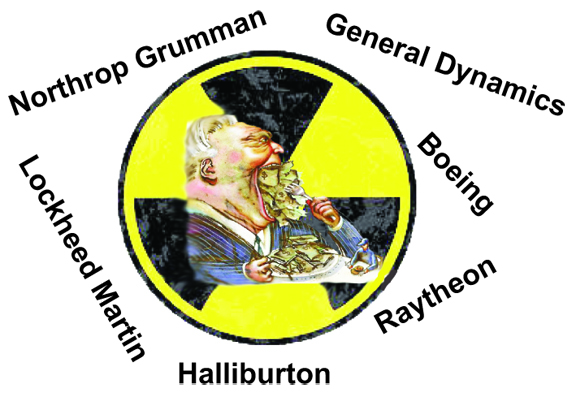
Since fiscal year 2001, military contractors have received over 54% of Pentagon spending, totaling about $8 trillion,” Sludge noted. “Over $2.2 trillion of that went to the five largest weapons firms: Lockheed Martin, Raytheon, General Dynamics, Boeing, and Northrop Grumman. These five firms comprise about 40% of military industry cash given to federal candidates.”
Dems Who Opposed Pentagon Cuts Received Nearly 4x More Donations From Weapons Makers, Common Dreams The latest passage of the NDAA “is particularly strong evidence that Pentagon contractors’ interests easily take precedence over national security and the public interest for too many members of Congress,” said one critic.
Dems Who Opposed Pentagon Cuts Received Nearly 4x More Donations From Weapons Makers, Common Dreams The latest passage of the NDAA “is particularly strong evidence that Pentagon contractors’ interests easily take precedence over national security and the public interest for too many members of Congress,” said one critic.
KENNY STANCIL Common Dreams, September 24, 2021 In a bipartisan 316-113 vote on Thursday night, the U.S. House authorized a $778 billion military budget for fiscal year 2022. Every Republican voted against two amendments to reduce Pentagon spending, but Democrats were split, and a new analysis reveals that lawmakers who rejected the proposed cuts received far more campaign cash from the weapons industry than those who supported the cuts.
One amendment to the National Defense Authorization Act (NDAA), introduced by Rep. Mark Pocan (D-Wis.), would have slashed the overall spending authorization level by 10%, exempting the paychecks and health benefits of military personnel and the Defense Department’s federal civilian workforce.
The measure failed by a tally of 86-332. According to an analysis of OpenSecrets data by the Security Policy Reform Institute (SPRI) and Sludge, the Democrats who voted against the 10% Pentagon budget cut have taken, on average, 3.7 times more campaign money from arms manufacturers since January 2019 than the Democrats who voted for it.
Sludge‘s Donald Shaw and SPRI’s Stephen Semler wrote Friday that “the average amount of defense cash received by Democrats who opposed the amendment was $60,680, while the Democrats who supported it received an average of $16,497” in contributions from the PACs of Defense Department contractors “as well as donations larger than $250 from those companies’ employees.”
“The vote was a step backwards for House progressives,” noted Shaw and Semler, who added that:
Last year, an identical amendment was put forward and it received 93 votes in favor, seven more than it received yesterday. Nine Democrats switched from supporting the 10% reduction last year to opposing it this year: Emanuel Cleaver (Mo.), Dwight Evans (Pa.), Al Green (Texas), Bill Keating (Mass.), Robin Kelly (Ill.), Stephen Lynch (Mass.), Richard Neal (Mass.), Brad Sherman (Calif.), and Bennie Thompson (Miss.).
Earlier this month, the House Armed Services Committee voted in favor of a Republican-sponsored amendment to add $23.9 billion on top of President Joe Biden’s proposed $753 billion military budget for fiscal year 2022—already up from the $740 billion approved for the previous fiscal year under the Trump administration.
A second NDAA amendment, led by Rep. Barbara Lee (D-Calif.), would have restored military spending to the level requested by the president. That proposal for a modest 3% cut to the NDAA’s top-line figure garnered the support of a majority of—but not all—House Democrats and was shot down in a 142-286 vote.
Sludge reported that “the 77 Democrats who opposed the 3% cut have received, on average, $52,211 from the defense sector since January 2019, and the 142 Democrats who supported it have received an average of $35,898.”
Lindsay Koshgarian, program director of the National Priorities Project at the Institute for Policy Studies (IPS), told Common Dreams on Friday that “the passage of the $23.9 billion increase in the House is particularly strong evidence that Pentagon contractors’ interests easily take precedence over national security and the public interest for too many members of Congress.”
As she spoke in support of Pocan’s amendment on Wednesday, Rep. Alexandria Ocasio-Cortez (D-N.Y.) pushed back against the narrative that cutting Pentagon spending would make Americans less safe, emphasizing how easy it would be to find the funds.
“The Pentagon could save almost $58 billion by eliminating obsolete weapons, weapons like Cold War-era bombers and missiles designed and built in the last century that are completely unsuitable for this one,” said Ocasio-Cortez.
“We could find another $18 billion by simply preventing the end-of-year spending sprees that lead to contract money being shoveled out the door every September,” she added, echoing Sen. Bernie Sanders’ (I-Vt.) observation earlier this week that the Pentagon—which has never passed an audit—is “inherently susceptible to fraud.”…………………
The House passage of the NDAA came just over a week after researchers at Brown University’s Costs of War project estimated that as much as half of the $14 trillion that the Pentagon has spent since the U.S. invasion of Afghanistan two decades ago has gone to private military contractors. IPS’ Koshgarian and SPRI’s Semler, meanwhile, have both said that corporations gobbled up more than half.
“Since fiscal year 2001, military contractors have received over 54% of Pentagon spending, totaling about $8 trillion,” Sludge noted. “Over $2.2 trillion of that went to the five largest weapons firms: Lockheed Martin, Raytheon, General Dynamics, Boeing, and Northrop Grumman. These five firms comprise about 40% of military industry cash given to federal candidates.” https://www.commondreams.org/news/2021/09/24/dems-who-opposed-pentagon-cuts-received-nearly-4x-more-donations-weapons-makers
Maralinga – ushered in Australia’s nuclear age

A picture in time: Maralinga, the blinding flash that ushered in Australia’s atomic age. https://www.theguardian.com/australia-news/2021/sep/27/a-picture-in-time-maralinga-when-the-atomic-age-reached-australia
Nuclear tests conducted in South Australia from 1956 resulted in swaths of countryside obliterated and decades of highly contaminated land.
The atomic age reached Maralinga with a blinding flash. At 5pm on 27 September 1956, a 15-kilotonne atomic device was detonated at the site in the western plains of South Australia.
The ensuing blast had as much explosive strength as the weapon which fell on Hiroshima 11 years earlier.
More than a decade after that horror struck Japan, Australia had become tangled up in the UK’s nuclear testing program, which saw swaths of countryside obliterated to further the nuclear arms race.
The atomic test at Maralinga was carried out by the British government as part of Operation Buffalo, run by the UK’s Atomic Weapons Research establishment.
In the moments after the detonation, RAAF personnel flew through the mushroom cloud to carry out tests with little instruction or protective equipment to shield them from the radiation.
For the next seven years, major and minor nuclear tests were carried out at Maralinga. The minor tests led to contamination of the area with plutonium-239, which has a radioactive half-life of 24,000 years.
Prior to the test, very little effort was put into finding and notifying the Anangu Pitjantjatjara people who lived on the land. In addition to the obvious immediate dangers of nuclear fallout in the area, the Indigenous community would endure the long term hazards of poisoned land and water for more than thirty years.
Maralinga was not the first nuclear weapons test conducted on Australian soil. Three years earlier, on 3 October 1952, Britain detonated a nuclear weapon on the Montebello Islands off the coast of Western Australia.
A further two detonations were carried out at Emu Field. Britain moved the testing site to Maralinga after previous locations were deemed to be too remote for nuclear weapons tests.
When Maralinga was eventually closed as a testing site in 1967, the British government began the process of cleaning the 3,200 sq km of contaminated land.
By 1968, the Australian and British governments agreed that Britain has successfully decontaminated the area by covering contaminated debris in concrete and ploughing the plutonium-laden soil into the ground.
In 1984, as the land was slated to be returned to the Tjarutja people, scientists found the land was still highly contaminated.
Nine years later, in 1993, following a royal commission, and after mounting pressure, the British government agreed to pay a portion of the estimated $101m cleanup cost.
It wasn’t until 1994, 38 years after the initial blast, that the Australian government paid $13.5m to the Indigenous people of Maralinga as compensation for what had been done to the land.
‘Humanity remains unacceptably close to nuclear annihilation, says UN chief on International Day

‘Humanity remains unacceptably close to nuclear annihilation, says UN chief on International Day https://news.un.org/en/story/2021/09/1101242 26 September 2021Peace and Security
“Now is the time to eliminate nuclear weapons from our world , and usher in a new era of dialogue, trust and peace”, declared UN Secretary-General António Guterres on Sunday, marking the International Day for the Total Elimination of Nuclear Weapons.
Addressing the threat of nuclear weapons, said Mr, Guterres, has been central to the work of the United Nations since its inception; the first General Assembly resolution in 1946 sought “the elimination from national armaments of atomic weapons and of all other major weapons adaptable to mass destruction.”
The UN chief pointed out that, although the total number of nuclear weapons has been decreasing for decades, some 14,000 are stockpiled around the world, which is facing the highest level of nuclear risk in almost four decades: “States are qualitatively improving their arsenals, and we are seeing worrying signs of a new arms race.” Humanity, continued the UN chief, remains unacceptably close to nuclear annihilation.
Comprehensive ban in ‘state of limbo’
On Thursday, the UN chief called for all countries holding nuclear technology to sign the Comprehensive Nuclear-Test-Ban Treaty (CTBT), which was adopted in 1996, and has been signed by 185 countries.
However, for the CTBT to enter into force, it must be signed and ratified by 44 specific nuclear technology holder countries, eight of which have yet to ratify the Treaty: China, Egypt, India, Iran, Israel, the Democratic People’s Republic of Korea, Pakistan and the United States.
“We have remained in this state of limbo for too long,” he said.
Signs of hope
However, Mr. Guterres said that he sees the decision by Russia and the United States to extend the New START (Strategic Arms Reduction Treaty) and engage in dialogue, as a sign of hope. He added that the Treaty on the Prohibition of Nuclear Weapons, which entered into force in January, also constitutes a welcome step.
The responsibility to build on these developments, said the Secretary-General, falls on Member States. He described the Review Conference of the Parties to the Treaty on the Non-Proliferation of Nuclear Weapons, scheduled to take place in January 2022, as a window of opportunity for all countries to take practical steps to comprehensiely prevent the use of, and eliminate, nuclear weapons.
“Now is the time to lift this cloud for good, eliminate nuclear weapons from our world”, exhorted Mr. Guterres, “and usher in a new era of dialogue, trust and peace for all people”.
Nuclear submarine for Japan? Kono says yes, Kishida says no
Nuclear submarine for Japan? Kono says yes, Kishida says no Nikkei Asia Poll leader believes capability is ‘extremely important’ for country. YUSUKE TAKEUCHI, Nikkei staff writer, September 26, 2021
TOKYO — Following a recent deal by the U.S. and the U.K. to offer Australia classified technology to build nuclear-powered submarines, should fellow Quad member Japan also seek such a capability? The four candidates running for the Liberal Democratic Party presidential race to succeed Prime Minister Yoshihide Suga were asked the question Sunday on Fuji TV.
Poll leader Taro Kono, minister for administrative reform and also in charge of vaccine distribution, gave a thumbs-up. “As a capability, it is very important for Japan to have nuclear submarines,” he said……..
Sanae Takaichi, the former internal affairs minister, also looked favorably upon the idea. “If we think of the worst-case risks in the international environment ahead, I do believe we could have [submarines] that can travel a little longer,” she said, referring to the advantage of nuclear propulsion in that they can stay submerged longer without refueling.
Japan’s Atomic Energy Basic Law stipulates that the use of nuclear power will be limited to peaceful purposes. Takaichi said there was “a need to sort things out” but added she did not believe nuclear-powered submarines to be unconstitutional.
Former LDP policy chief Fumio Kishida, meanwhile, was less receptive to the idea. “When I think about Japan’s national security arrangements, to what extent do we need it?” he asked.
Nuclear-powered submarines are faster and can travel longer compared to the diesel-electric submarines that Japan currently has. But Kishida was alluding to the fact that the Self-Defense Forces’ operations are primarily in areas close to Japan.
To maintain stealth, it will require long hours of work,” he said. “We have to prioritize improving working conditions [of sailors] and secure the personnel.”…….
Seiko Noda, the LDP’s executive acting secretary-general, said: “I have no intention to hold such a capability. I want to make clear that we are a nation with three non-nuclear principles,” she said, pointing to Japan’s long-held position of neither possessing nor manufacturing nuclear weapons, nor permitting their introduction into Japanese territory.
“This is not a situation where we can immediately buy and start to use the submarines,” she said. “We must properly establish a national consensus.” ……. https://asia.nikkei.com/Politics/Nuclear-submarine-for-Japan-Kono-says-yes-Kishida-says-no
Maralinga – ushered in Australia’s nuclear age
A picture in time: Maralinga, the blinding flash that ushered in Australia’s atomic age. https://www.theguardian.com/australia-news/2021/sep/27/a-picture-in-time-maralinga-when-the-atomic-age-reached-australia
Nuclear tests conducted in South Australia from 1956 resulted in swaths of countryside obliterated and decades of highly contaminated land.
The atomic age reached Maralinga with a blinding flash. At 5pm on 27 September 1956, a 15-kilotonne atomic device was detonated at the site in the western plains of South Australia.
The ensuing blast had as much explosive strength as the weapon which fell on Hiroshima 11 years earlier.
More than a decade after that horror struck Japan, Australia had become tangled up in the UK’s nuclear testing program, which saw swaths of countryside obliterated to further the nuclear arms race.
The atomic test at Maralinga was carried out by the British government as part of Operation Buffalo, run by the UK’s Atomic Weapons Research establishment.
In the moments after the detonation, RAAF personnel flew through the mushroom cloud to carry out tests with little instruction or protective equipment to shield them from the radiation.
For the next seven years, major and minor nuclear tests were carried out at Maralinga. The minor tests led to contamination of the area with plutonium-239, which has a radioactive half-life of 24,000 years.
Prior to the test, very little effort was put into finding and notifying the Anangu Pitjantjatjara people who lived on the land. In addition to the obvious immediate dangers of nuclear fallout in the area, the Indigenous community would endure the long term hazards of poisoned land and water for more than thirty years.
Maralinga was not the first nuclear weapons test conducted on Australian soil. Three years earlier, on 3 October 1952, Britain detonated a nuclear weapon on the Montebello Islands off the coast of Western Australia.
A further two detonations were carried out at Emu Field. Britain moved the testing site to Maralinga after previous locations were deemed to be too remote for nuclear weapons tests.
When Maralinga was eventually closed as a testing site in 1967, the British government began the process of cleaning the 3,200 sq km of contaminated land.
By 1968, the Australian and British governments agreed that Britain has successfully decontaminated the area by covering contaminated debris in concrete and ploughing the plutonium-laden soil into the ground.
In 1984, as the land was slated to be returned to the Tjarutja people, scientists found the land was still highly contaminated.
Nine years later, in 1993, following a royal commission, and after mounting pressure, the British government agreed to pay a portion of the estimated $101m cleanup cost.
It wasn’t until 1994, 38 years after the initial blast, that the Australian government paid $13.5m to the Indigenous people of Maralinga as compensation for what had been done to the land.
Pentagon forces out Leonor Tomero, a top official with moderate views (they can’t have that!)
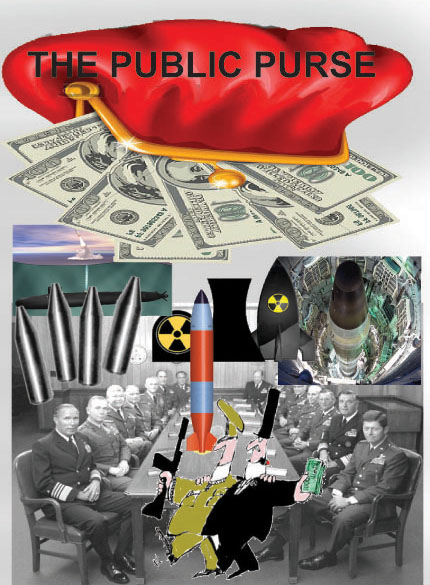
Pentagon hawks circle Biden’s nuclear policy, Politico, By ALEXANDER WARD 09/23/2021 With help from Daniel Lippman The forced dismissal of a top Pentagon nuclear official could mean curtains for President JOE BIDEN’s nuclear agenda.
Biden installed national security officials intent on negotiating new arms control treaties and curtailing nuclear weapons spending. One of them was LEONOR TOMERO, a leading voice for nuclear restraint on Capitol Hill and in the think tank community, who was appointed to oversee the Nuclear Posture Review that will set the administration’s nuclear weapons policy and strategy.
But officials with more traditional views on nuclear weapons, who promote a more hawkish nuclear agenda to include modernizing the land, sea and airborne legs of America’s nuclear arsenal, did not take kindly to Tomero’s progressive ideology, 11 current and former defense officials, as well as others with insight into the debate, told our own LARA SELIGMAN and BRYAN BENDER (with an assist from your host).
“Her appointment was something that people were immediately resistant to,” JEFFREY LEWIS, a professor and nuclear weapons expert at the Middlebury Institute for International Studies and host of the podcast Arms Control Wonk, told POLITICO. “People with very traditional views of nuclear weapons policy did not want someone in charge of the Nuclear Posture Review who might think differently about those issues.”
The Defense Department insists Tomero was nothing more than a casualty of a reorganization, leaving no space for her as her duties were moving to another office……….
Experts now worry that her removal signals the Nuclear Posture Review, or NPR, will not fully consider alternative options for maintaining the U.S. nuclear deterrent that might be less costly or evaluate new ways to carry out nuclear strategy.
“The decision to fire Leonor suggests to me that the first draft of NPR is going to be a continuation of the line of thinking we saw in the Trump administration’s NPR,” Lewis said. “They have put themselves on the course that is a first draft that is 180 degrees to what Biden said on the campaign trail.”
If that’s the case, one staffing change over at DoD might be the death knell for Biden’s hopes of changing U.S. nuclear policy for the foreseeable future.
The United States is currently planning to upgrade the nuclear force to the tune of $634 billion over the next decade, according to a recent analysis by the nonpartisan Congressional Budget Office.
Read Seligman and Bender’s full story here. https://www.politico.com/newsletters/national-security-daily/2021/09/23/pentagon-hawks-circle-bidens-nuclear-policy-494450
Senator Markey calls on Biden administration for answers on removal of top Defense official Ms. Tomero
SENATOR MARKEY ASKS BIDEN ADMINISTRATION FOR ANSWERS ON ELIMINATION OF KEY NUCLEAR POLICY POSITION AS PART OF DEPARTMENT REORGANIZATION https://www.markey.senate.gov/news/press-releases/senator-markey-asks-biden-administration-for-answers-on-elimination-of-key-nuclear-policy-position-as-part-of-department-reorganizationLead civilian official within the Office of the Secretary of Defense (OSD) was responsible for drafting the Nuclear Posture Review Washington (September 24, 2021) – Senator Edward J. Markey (D-Mass.) today wrote to President Joseph R. Biden to express concern about organizational changes at the Department of Defense in the midst of drafting the administration’s Nuclear Posture Review. On September 21, 2021 the Department of Defense announced that it removed the lead civilian official within the Office of the Secretary of Defense (OSD) responsible for drafting the Nuclear Posture Review, part of the Administration’s Integrated National Security Strategy.
“The Department of Defense stated that it eliminated the position of the Deputy Assistant Secretary for Nuclear and Missile Defense Policy, held by Leonor Tomero, as part of a reorganization within the Department. But according to press reports, Department officials may have driven Ms. Tomero from her position for challenging traditional views on the role of U.S. nuclear weapons.
“Congress needs to understand whether ideology played any role in Ms. Tomero’s dismissal. I am also concerned that the sudden departure of a top appointee, charged with presenting you options on the future of the U.S. nuclear weapons enterprise, will result in a draft Nuclear Posture Review that reflects the Cold War era’s overreliance on nuclear weapons, rather than your lifetime of work championing policies that reduce nuclear weapons risks.” A copy of this letter can be found HERE.
In his letter, Senator Markey requests responses to the following questions:
1. Why did the Defense Department eliminate the top civilian position in OSD responsible for the Nuclear Posture Review? Why was the position eliminated in the midst of that Review, as opposed to before it began or when it is completed?
2. Ms. Tomero’s demonstrated expertise in nuclear deterrence policy, arms control, and missile defense made her well-suited to lead and contribute substantively to the Nuclear Posture Review process. Why, given Ms. Tomero’s specific expertise on nuclear policy, was she removed from the Nuclear Posture Review process or why was she not reassigned to a position under the Assistant Secretary of Defense for Space Policy, who will be taking over responsibility for nuclear policy?
3. When did the Department of Defense inform Ms. Tomero that it had eliminated her position as a result of a reorganization? Which Department officials communicated with Ms. Tomero about her dismissal and when? I am particularly interested in any communications that occurred between or among Ms. Tomero, her then-boss Acting Assistant Secretary of Defense for Strategy, Plans, and Capabilities, Melissa Dalton, and Undersecretary of Defense for Policy Colin Kahl. After Ms. Tomero’s dismissal, did any senior Department leader communicate with her about the reason(s) for her dismissal?4. The Defense Department stated that the decision to eliminate the Deputy Assistant Secretary of Defense for Nuclear and Missile Defense Policy was part of a reorganization within OSD Policy. How will the reorganization change the current OSD Policy office structure? Which officials will take over the duties previously performed by the former Deputy Assistant Secretary position?
5. On September 22, 2021, Defense Department Spokesperson John Kirby said that “we have a wide-ranging team of experts working” on the Nuclear Posture Review. Please identify the individuals and organizations consulting on the Nuclear Posture Review, including paid contractors.
6. Mr. Kirby also said: “We’re going to continue to consider and include a wide range of viewpoints in the Nuclear Posture Review, including those from Administration Officials, of military leaders, academics and all others.” How will the Department ensure that the advice of individuals who do not support the default military reliance on nuclear weapons is included in this process?
7. The President’s 2021 Interim National Security Guidance stated that the Administration will “re-establish [its] credibility as a leader in arms control” and “take steps to reduce the role of nuclear weapons in [U.S.] national security strategy. How will you ensure that your guidance is reflected in the options the Department of Defense puts forth?
8. I understand that the Department of Defense expects that by 2022 an independent review will be completed to evaluate the technical feasibility of extending the life of the Minuteman III intercontinental ballistic missile (ICBM). To what extent will that independent review impact the options presented to you in connection with the Nuclear Posture Review and your Fiscal Year 2023 budget request
In July, Senators Edward J. Markey (D-Mass.), Jeffrey A. Merkley (D-Ore.) and Representatives Don Beyer (VA-08) and John Garamendi (CA-03), co-chairs of the Nuclear Weapons and Arms Control Working Group, led 18 of their colleagues in aletter calling on President Biden to actively guide the formation of the Department of Defense-led Nuclear Posture Review. The lawmakers urged the Administration to consider a series of bold actions that would fulfill the President’s pledge to reduce the role of “nuclear weapons in our national security strategy”.
AUKUS, nuclear submarines and the new dangers of weapons proliferation and war
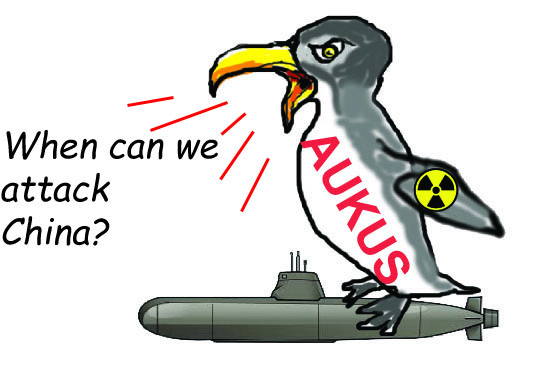
Paul Keating has explained the folly of antagonising China, constantly provoking further militarisation. Regional countries are concerned at the heightened militarisation, and the passage of nuclear submarines through their waters. The use of Highly Enriched Uranium (HEU) fuel brings risks of weapons proliferation. Now the previously nuclear-free zone looks like soon to be bristling with nuclear weapons .

And the big corporations that rule USA policy, UK policy, and now Australian policy, will be rejoicing. Watch as UK’s BAE Systems and USA’s General Dynamics fight it out for the loot from Australian tax-payers.
USA has conned Australia into paying for its super-costly nuclear submarine project

Last week’s AUKUS announcement was nothing more than PR stunt in Australia, with the government merely committing to spend the next 18 months deciding what to buy—which conveniently kicks any actual the decision far enough down the road to avoid the next federal election.
Has PM put Australia on the hook to finance struggling UK, US submarine projects? Michael West Media, By Marcus Reubenstein| September 23, 2021,
“Almost comical”. Experts lambast Scott Morrison’s “crazy” AUKUS deal to buy nuclear submarine tech from parlous UK and US programs. Marcus Reubenstein finds a real prospect Australia will be used to “underwrite” the foundering foreign submarine industry.
Twenty-five years of ongoing maintenance delays for nuclear submarines, chronic shortage of both parts and skilled workers, under capacity at shipyards, and attack class submarines missing from deployments for up to nine months. These sound like potential problems for Australia’s future nuclear submarine fleet but they are actual problems right now confronting the US Navy and its fleet of 70 submarines.
The US is at the cutting edge of nuclear propulsion. It has the largest and most sophisticated submarine fleet in the world, its first nuclear submarine was commissioned 67 years ago, and the US has literally decommissioned twice as many nuclear subs as Australia is planning to buy.
If the US cannot manage to keep its fleet in the water, how can the Morrison government commit up to $100 billion of taxpayer money to secure nuclear submarines and guarantee they will be always operational and ready for deployment?
Professor Hugh White, ANU Professor of Strategic Studies, former Deputy Secretary of Defence and an eminent figure in strategic policy, wrote in The Saturday Paper, “The old plan was to build a conventionally powered version of a nuclear-powered French submarine. It was crazy.”
“The new plan—to buy a nuclear-powered submarine instead—is worse”.
Says White, “There is a reason why only six countries, all of them nuclear-armed, operate nuclear powered subs.”
The sales pitch is underway
Last week’s AUKUS announcement was nothing more than PR stunt in Australia, with the government merely committing to spend the next 18 months deciding what to buy—which conveniently kicks any actual the decision far enough down the road to avoid the next federal election.
The ripples of the announcement, however, reached British shores in double-quick time. Just two days after the AUKUS alliance UK Defence Secretary Ben Wallis announced a $320 million (£170m) grant to be shared between BAE Systems and Rolls Royce to develop technology for Britain’s next generation submarines.
According to Department of Finance figures, In the past twelve months BAE Systems has collected $1.88 billion from Australian taxpayers. The Astute class submarine, touted as one of the two options Australia is considering, is manufactured by BAE Systems.
US Naval analyst, and Forbes Defense columnist, Craig Hooper predicts AUKUS could give the US Navy a big shot in the arm as well. He says a deal with Australia could effectively underwrite major improvements to the US Navy’s outdated submarine maintenance facilities by supporting “America’s decade-long, $US25 billion ($34.6 billion) effort to refit the U.S. Navy’s four aging public shipyards. With yard repair costs already high, America would go to great lengths to welcome any additional bidders for shipyard capability improvements.”
US subs in dry dock In a report published six months ago, the US Congressional Budget Office (CBO) found: “The Navy’s four shipyards have experienced significant delays in completing maintenance on its submarines (all of which are nuclear-powered).” ………. Should Australia go down the nuclear sub path what choice will it have other than to outsource the fleet’s maintenance? …..
Her Majesty’s sub optimal fleet
Britain, touted as the alternative nuclear submarine supplier to Australia, has problems of its own. The Royal Navy operates ten submarines, only four of them were designed and commissioned this century.
Like their American nuclear counterparts there are systemic problems keeping these subs in service……
That report also indicated significant delays to the BAE Systems built Astute hunter-killer submarines, the same class of nuclear submarine being touted for Australian as part of the AUKUS deal………. https://www.michaelwest.com.au/has-pm-put-australia-on-the-hook-to-finance-struggling-uk-us-submarine-projects/
French ambassador says Scott Morrison gave no warning on the nuclear submarine deal
‘Maybe we’re not friends’: French Ambassador claims ScoMo offered no warning about AUKUS deal A powerful French official has slammed Scott Morrison, accusing the Prime Minister of one thing to do with the submarine deal. news.com.au , Helena Burke, 20 Sep 21
The former French Ambassador to Australia has ripped into Scott Morrison for his defence of the AUKUS submarine deal, claiming the Prime Minister lied about warning France about it.
Jean-Pierre Thebault, who had been the French Ambassador in Canberra since 2020, was recalled last week after France expressed outrage at being left out of the new nuclear submarine deal between the US, UK, and Australia.
Speaking to Radio National on Monday, Mr Thebault said France had been completely blindsided by Mr Morrison’s decision to accept the new deal.
“We discover(ed) through the press that the most important person in the Australian government kept us in the dark intentionally until the last minute and was not willing to at least have the decency to enter conversation about the alternative,” Mr Thebault said.
“This is not an Australian attitude towards friends.”
Maybe we’re not friends.”
Mr Morrison had previously rejected that he had not warned France about the new deal, insisting he told French President Emmanuel Macron in June that Australia might scrap its original submarine agreement,,,,
But the French Ambassador insisted France had never been warned about the potential for a new deal which would exclude them. https://www.news.com.au/national/politics/maybe-were-not-friends-french-ambassador-claims-scomo-offered-no-warning-about-aukus-deal/news-story/467293b479eca4741c116ba5ced54751
Former submarines boss blasts ‘hocus pocus’ nuclear deal
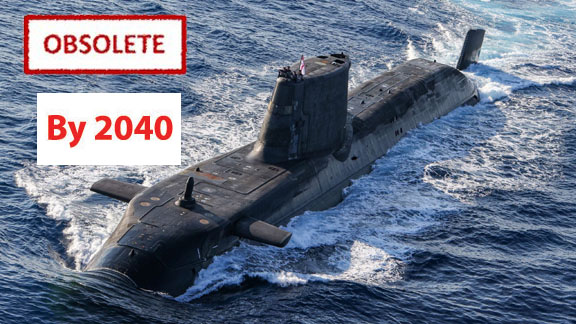
Ohff described the centrepiece of the new AUKUS security pact as effectively “spur of the moment between Biden, Johnson and Morrison”, saying: “In the end we won’t get the subs the Government wants to procure – it’s all hocus pocus.”
In the end, the US military is unlikely to agree to the transfer of technology,” he said.
“It’s almost comical – if it wasn’t so serious.”
Former subs boss blasts ‘hocus pocus’ nuclear deal
A former head of ASC has blasted Australia’s “insane deal” with the US and the UK to build nuclear-powered submarines in Adelaide, deriding a “hocus pocus” announcement he says raises major issues about nuclear and defence capability. https://indaily.com.au/news/2021/09/20/former-subs-boss-blasts-hocus-pocus-nuclear-deal/ Tom Richardson @tomrichardson
Hans Ohff, who was managing director and CEO of the then-Australian Submarine Corporation from 1993 to 2002, says he does not believe the mooted submarine deal will materialise as planned for Australia, saying: “I believe it will be stymied because the US military establishment will not underwrite the tacit agreement made between the US President, the British and Australian PMs.”
Ohff insists “there will be no transfer of technical know-how to Australia”, arguing “the submarine propulsion train – not just the reactor – will be a black box accessible only to the US”.
In an emailed statement sent to InDaily’s Your Views, Ohff, who is also a research fellow at Adelaide University, said it was incumbent on the federal government “to inform the Australian people on the strategic, environmental, commercial, and political ramifications and consequences before deciding on the acquisition of nuclear-powered attack submarines”.
“We need to fully appreciate the issues and complexities associated with the design, assembly, operation and maintenance of nuclear submarines powered with highly enriched… weapons-grade uranium,” he said.
“We need to understand that the acquisition of HEU [Highly Enriched Uranium]-235 fissile material would challenge the spirit if not the letter of the Treaty of Non- Proliferation of Nuclear Weapons.”
Speaking to InDaily, he went further, saying the plan would have “unbelievable consequences, both here and in Europe” as well as “massive consequences for Outer Harbor”.It’s almost comical – if it wasn’t so serious… Prime Minister Morrison and his Defence Minister have blown up the bridge behind them
“There are big issues with putting highly enriched uranium reactors anywhere in Australia, let alone Outer Harbor,” he said.
Continue readingNorth Korea returns to its missile diplomacy
Pushing the nuclear envelope’: North Korea’s missile diplomacy Guardian,
Analysis: Fear and uncertainty of the Obama years could return as Kim Jong-un revives nuclear ambitions Reuters. Justin McCurry in Tokyo, Wed 22 Sep 2021
North Korea’s recent missile launches signal that the regime has reverted to familiar tactics to attract the attention of the US. Although the rest of the world will take little comfort from this return to “normality”, after a six-month pause Pyongyang last weekend launched what it claimed were new long-range cruise missiles capable of hitting Japan, followed hours later by the test launch of two ballistic missiles into the sea, apparently from a train.
Then came the clearest sign since its last nuclear test in 2017 that the North is not about to abandon its project to build a viable deterrent, with satellite images showing it was expanding a uranium enrichment plant at its main Yongbyon nuclear complex……….. (registered readers only) https://www.theguardian.com/world/2021/sep/22/pushing-the-nuclear-envelope-north-koreas-missile-diplomacy
U.S. Militarism’s Toxic Impact on Climate Policy
Biden told the UN General Assembly that “…as we close this period of relentless war, we’re opening a new era of relentless diplomacy.” But his exclusive new military alliance with the U.K. and Australia, and his request for a further increase in military spending to escalate a dangerous arms race with China that the United States started in the first place, reveal just how far Biden has to go to live up to his own rhetoric, on diplomacy as well as on climate change
U.S. Militarism’s Toxic Impact on Climate Policy, Medea Benjamin and Nicolas J. S. Davies LA Progressive 22 Sept 21, President Biden addressed the UN General Assembly on September 21 with a warning that the climate crisis is fast approaching a “point of no return,” and a promise that the United States would rally the world to action. “We will lead not just with the example of our power but, God willing, with the power of our example,” he said.
But the U.S. is not a leader when it comes to saving our planet. Yahoo News recently published a report titled “Why the U.S. Lags Behind Europe on Climate Goals by 10 or 15 years.” The article was a rare acknowledgment in the U.S. corporate media that the United States has not only failed to lead the world on the climate crisis, but has actually been the main culprit blocking timely collective action to head off a global existential crisis.
The anniversary of September 11th and the U.S. defeat in Afghanistan should be ringing alarm bells inside the head of every American, warning us that we have allowed our government to spend trillions of dollars waging war, chasing shadows, selling arms and fueling conflict all over the world, while ignoring real existential dangers to our civilization and all of humanity.
The world’s youth are dismayed by their parents’ failures to tackle the climate crisis. A new survey of 10,000 people between the ages of 16 and 25 in ten countries around the world found that many of them think humanity is doomed and that they have no future.
Three quarters of the young people surveyed said they are afraid of what the future will bring, and 40% say the crisis makes them hesitant to have children. They are also frightened, confused and angered by the failure of governments to respond to the crisis. As the BBC reported, “They feel betrayed, ignored and abandoned by politicians and adults.”
Young people in the U.S. have even more reason to feel betrayed than their European counterparts. America lags far behind Europe on renewable energy. European countries started fulfilling their climate commitments under the Kyoto Protocol in the 1990s and now get 40% of their electricity from renewable sources, while renewables provide only 20% of electric power in America. ………..
the enormous amount of money the U.S. spends on militarism. Since 2001, the United States has allocated $15 trillion (in FY2022 dollars) to its military budget, outspending its 20 closest military competitors combined. The U.S. spends far more of its GDP (the total value of goods produced and services) on the military than any of the other 29 Nato countries—3.7% in 2020 compared to 1.77%. And while the U.S. has been putting intense pressure on NATO countries to spend at least 2% of their GDP on their militaries, only ten of them have done so. Unlike in the U.S., the military establishment in Europe has to contend with significant opposition from liberal politicians and a more educated and mobilized public. ………
On climate change, the infrastructure bill includes only $10 billion per year for conversion to green energy, an important but small step that will not reverse our current course toward a catastrophic future. Investments in a Green New Deal must be bookended by corresponding reductions in the military budget if we are to correct our government’s perverted and destructive priorities in any lasting way. This means standing up to the weapons industry and military contractors, which the Biden administration has so far failed to do.
The reality of America’s 20-year arms race with itself makes complete nonsense of the administration’s claims that the recent arms build-up by China now requires the U.S. to spend even more. China spends only a third of what the U.S. spends, and what is driving China’s increased military spending is its need to defend itself against the ever-growing U.S. war machine that has been “pivoting” to the waters, skies and islands surrounding its shores since the Obama administration.
Biden told the UN General Assembly that “…as we close this period of relentless war, we’re opening a new era of relentless diplomacy.” But his exclusive new military alliance with the U.K. and Australia, and his request for a further increase in military spending to escalate a dangerous arms race with China that the United States started in the first place, reveal just how far Biden has to go to live up to his own rhetoric, on diplomacy as well as on climate change
The United States must go to the UN Climate Summit in Glasgow in November ready to sign on to the kind of radical steps that the UN and less developed countries are calling for. It must make a real commitment to leaving fossil fuels in the ground; quickly convert to a net-zero renewable energy economy; and help developing countries to do the same. As UN Secretary General Antonio Guterres says, the summit in Glasgow “must be the turning point” in the climate crisis.
That will require the United States to seriously reduce the military budget and commit to peaceful, practical diplomacy with China and Russia. Genuinely moving on from our self-inflicted military failures and the militarism that led to them would free up the U.S. to enact programs that address the real existential crisis our planet faces – a crisis against which warships, bombs and missiles are worse than useless. https://www.laprogressive.com/toxic-impact-on-climate-policy/
1 This Month





PLEASE OPPOSE HR 8255 AND S.3639 – bills would accelerate satellite deployment, with no environmental review or safeguards – https://ncstd5li.quorum.us/campaign/169331/
To see nuclear-related stories in greater depth and intensity – go to https://nuclearinformation.wordpress.com
-
Archives
- October 2026 (58)
- September 2026 (339)
- August 2026 (330)
- July 2026 (355)
- June 2026 (287)
- May 2026 (306)
- April 2026 (356)
- March 2026 (251)
- February 2026 (267)
- January 2026 (308)
- December 2025 (358)
- November 2025 (359)
-
Categories
- 1
- 1 NUCLEAR ISSUES
- business and costs
- climate change
- culture and arts
- ENERGY
- environment
- health
- history
- indigenous issues
- Legal
- marketing of nuclear
- media
- opposition to nuclear
- PERSONAL STORIES
- politics
- politics international
- Religion and ethics
- safety
- secrets,lies and civil liberties
- spinbuster
- technology
- Uranium
- wastes
- weapons and war
- Women
- 2 WORLD
- ACTION
- AFRICA
- Atrocities
- AUSTRALIA
- Christina's notes
- Christina's themes
- culture and arts
- Events
- Fuk 2022
- Fuk 2023
- Fukushima 2017
- Fukushima 2018
- fukushima 2019
- Fukushima 2020
- Fukushima 2021
- general
- global warming
- Humour (God we need it)
- Nuclear
- RARE EARTHS
- Reference
- resources – print
- Resources -audiovicual
- Weekly Newsletter
- World
- World Nuclear
- YouTube
-
RSS
Entries RSS
Comments RSS

