Up to 100 U.S. nuclear weapons surround Russia’s border
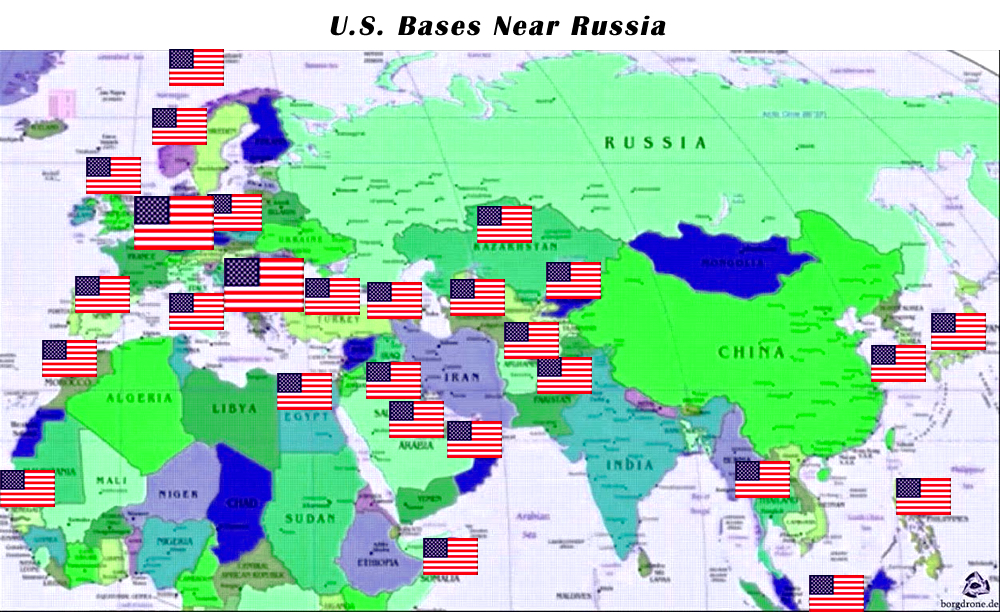
Putin’s worst nightmare MAPPED as ‘up to 100’ US nuclear weapons surround Russia’s border https://www.express.co.uk/news/science/1611678/putin-nuclear-weapons-nato-europe-russia-us
AS MANY as 100 of the US’s nuclear weapons are reportedly stationed surrounding Russia in European NATO territories in a nightmare situation for Vladimir Putin.
By JACOB PAUL, May 17, 2022 While Russia has the largest arsenal of nuclear weapons, at nearly 6,000, none of these are anywhere near the US. But the US reportedly keeps many of its nuclear weapons at sites in Europe. The estimate comes from experts Miles A. Pomper and Vasilii Tuganov, both from the James Martin Center for Nonproliferation Studies. They wrote in a piece for The Conversation: “About half of the roughly 200 US shorter-range weapons are believed to be deployed in five NATO countries in Europe.”
It is thought that the Volkel Airbase in the Netherlands, Kleine Brogel Air Base, in Belgium and Buchel Air base in Germany house the US’s B61-3 and -4 gravity bombs.
The same goes for Ghendi and Aviano bases, both in Italy, and the Incirlik Air Base in Turkey.
Several NATO countries do have their own arsenals too, but this refers specifically to US weapons. The B61 nuclear bomb is the US’ main type of thermonuclear gravity bomb, meaning it is even more destructive than the first-generation atomic bombs. The weapon has been operational with the US military since 1968.
The weapons can be dropped by dual aircraft, which is likely why they are kept at air bases.
And these bombs might not only stay limited to continental Europe.
According to US government budget documents, RAF Lakenheath in Suffolk is set to be upgraded – and some believe that will hand it the ability to store B61-12 nuclear bombs.
But the Ministry of Defence has so-far refused to clarify whether US nuclear weapons would be returning to the UK.
Back in the 1990s, RAF Lakenheath had 33 underground storage vaults, where 110 B61 bombs were stored, according to the Federation of American Scientists (FAS).
The American weapons on NATO territories are thought to be kept in underground vaults of the airbases, with a Permissive Action Link (PAL) code restricting their use to the US.
While there are thought to be 100 US nuclear bombs in NATO territory today, back at the peak of Cold War tensions there were thought to be a staggering 7,300 or so.
But the US does not have a shortage of bases on its own territory, where thousands of weapons are kept.
US strategic bombers are kept at the Minot Air Force base in North Dakota and the Whiteman Air Force base in Missouri .
The US also has ICBM silo fields in its Frances E. Warren Air Force base in Wyoming and its Malmstrom Air Force Base in Montana. There are submarine bases in Kings Bay in Georgia and Kitsap in Washington.
While Russia does possess more weapons than the US in total, the 2011 New Strategic Arms Reduction Treaty limits both sides to 1,600 weapons on standby each.
These weapons include intercontinental ballistic missiles (ICMBs), and submarine-launched ballistic missiles, missiles launched from specialized aircraft.
Many of these have nuclear warheads attached.
Despite being surrounded by US weapons, Russian nuclear warheads can travel at alarming speeds to strike targets large distances away. This includes the recently unveiled Sarmat 2, dubbed Satan 2 by the West.
The ICBM is capable of carrying 10 or more nuclear warheads and can even hit targets in the US and Europe.
Prof Andrew Futter, a nuclear weapons expert from the University of Leicester, warned that if Putin did launch an attack on London, it would have around 15 minutes to prepare.
He told MyLondon: “It wouldn’t give us time to do anything. Government officials might be OK, there is a bunker under Whitehall and some places VIPs can hide.”
U.S., allies may be planning Ukraine proxy war model for Myanmar — Anti-bellum
ReutersMay 17, 2022 Myanmar resistance urges West to provide arms for fight against junta The defence chief of Myanmar’s shadow government has called for international help to arm its resistance forces fighting the ruling military, requesting support similar to that being given to Ukrainians battling invading Russian troops. The people of Ukraine and Myanmar’s anti-government] […]
U.S., allies may be planning Ukraine proxy war model for Myanmar — Anti-bellum
Borrell: EU defense chiefs to approve another half billion Euros to arm Ukraine — Anti-bellum
Interfax-UkraineMay 17, 2022 EU defense ministers to approve another EUR 500 mln for arming Ukraine – Borrell The Council of Ministers of Defense of the European Union at a meeting of the Council for Foreign Affairs, which is taking place on Tuesday in Brussels, will approve a proposal to allocate another EUR 500 million to […]
Borrell: EU defense chiefs to approve another half billion Euros to arm Ukraine — Anti-bellum
What will be the consequences of Finland’s and Sweden’s NATO membership?
The West has no positive vision anymore – its actions are about re-armament, threats, sanctions, demonization, the self-righteous “we-never-did-anything-wrong” and the concomitant projection of its own dark sides upon others, China in particular.
This is not the time to make decisions in a moment of historical hysteria and panic. This is indeed a moment to keep cool.
One can only regret that Sweden and Finland lack the intellectual power to see the larger picture in time and space. NATO has had the time since 1949 to prove that it can make peace. We know now that it can’t. Joining it, therefore, is one big gift to militarism and future warfare.
IT IS FOOLISH FOR FINLAND AND SWEDEN TO JOIN NATO, Popular Resistance By Jan Oberg, The Transnational., May 15, 2022
”……………………………………………………………There are potentially so many – some more likely than others – that they cannot all be listed in a short pointed analysis like this. But let me mention:
- The Swedes and the Finns will become less secure. Why? Because there will be harder confrontation and polarization instead of soft borders and mediating attitudes. In a serious crisis, they will, for all practical purposes, be occupied and told what to do by the US/NATO.
- To the degree that, at some point in the future, the two countries will be asked to host US bases – like Norway and Denmark now – they won’t be able to say ‘No’! Such bases will be Russia’s first-order targets in a war situation.
- From a Russian point of view, of course, their NATO membership is extremely tension-increasing and confrontational. Russia has 8% (US$ 66 billion) of the military expenditures of the 30 NATO members. Now there will be a huge re-armament throughout NATO; Germany alone plans to increase to almost twice as much as Russia’s expenditures. Ukraine will receive about US$ 50 billion. Add a re-armed Sweden and Finland and we shall see Russia rush down to 4% of NATO’s expenditures – and still be called a formidable threat.
- There will be virtually no confidence-building and conflict-resolution mechanisms left in Europe. No discussion will be possible about a new all-European peace and security system. And whether it is understood and respected or not, Russia will feel even more intimidated, isolated and – in a certain situation – become even more desperate. As does, normally, the weaker party in an asymmetric conflict. We are living in very dangerous times and these two countries in NATO will only increase the danger, there is no way it could reduce it.
- If Finland and Sweden so strongly want to be “protected” by the United States and/or NATO, it is completely unnecessary for these two countries to join because, if there is a serious crisis, the US/NATO will under all circumstances come to “protect” or rather use their territories to be closer to the Baltic republics. That’s what the Host Nation Support agreements are about.The only reason to join would be paragraph 5 – but the disadvantage is that paragraph 5 requires that Finland and Sweden will be expected to participate in wars that are not about their defense and perhaps even in future international law-violating wars à la those in Yugoslavia, Iraq and Libya. So, will Finnish and Swedish young people be killed in future NATO-country wars? Are they ready for that?
- It will cost a fortune to convert their military infrastructure to full NATO membership – and when they have joined, they cannot not pay whatever the price will turn out to be. In addition, there will be much less de facto sovereign decision-making possible – here de jure is almost irrelevant. And it was already very self-limited before they joined.
- As NATO members, Finland and Sweden cannot but share the responsibility for nuclear weapons – the deterrence and possible use of them by NATO. It’s also obvious that NATO vessels may bring nuclear weapons into their ports – but they will of course not even ask – they know the arrogant US response is that “we neither confirm nor deny that sort of thing.
- ”This goes against every fibre of the Swedish people – and Sweden’s decision to not develop nuclear weapons dating some 70 years back.
- The days when Sweden and Finland can – in principle, at least – work for alternatives are numbered. That is, for the UN Treaty on nuclear abolition and the UN goals of general and complete disarmament, any alternative policy concepts like common security, human security, a strong UN etc. They won’t be able to serve as mediators – like, say, Austria and Switzerland. No NATO member can pay anything but lip service to such noble goals. NATO is not an organization that encourages alternatives. Instead, it seeks monopoly as well as regional and global dominance.
- Finland and Sweden say yes to militarist thinking, to a ‘peace’ paradigm that is imbued with weapons, armament, offensiveness (long-range + large destructive capacity), deterrence and constant threatening: NATO is human history’s most militaristic organization. Its leader, the United States of America, has been at war 225 out of 243 years since 1776. Every idea about nonviolence, the UN Charter provision of making peace by predominantly peaceful means (Article 1 in the Charter) will be out of the window.
- The political attention, as well as funds, will tend to switch to military matters, away from contributing to solving humanity’s most urgent problems. But – we know it now – the excuse will be Putin’s invasion of Ukraine. Is there any huge change that cannot be justified with reference to that?
- While everybody knows that the Arctic is going to be a region of central security and peace concerns in the near future, this issue has hardly been discussed in relation to the two countries’ NATO membership. However, it doesn’t require much expertise to see that US/NATO access to Sweden and Finland is a clear advantage in the future confrontation with Russia and China there.
- As NATO members, Sweden and Finland not only accept but reinforce decades of hate of the Russian people, everything Russia including Russian-European culture. It will say yes to the West’s reckless, knee-jerk collective (illegal) punishment of everything Russia, the cancellation of Russia on all dimensions.Once upon a time, in contrast, Finland’s President Kekkonen stood for policies of active neutrality, a go-between role and initiating the OSCE. Finland was proud that its people felt that neither the East nor the West was an enemy, various kinds of equidistance prevailing. And that was during the height of the First Cold war when the Warsaw Pact was about 10 times stronger vis-a-vis NATO than Russia is today. How and why? One reason was that policies had an intellectual foundation and leaders a consciousness about what war meant. Not so today.
- The prospect that no NATO advocates talk about is this: In all likelihood, we have only seen the hard beginning of an extremely Cold War with an ever-increasing risk of a Hot War too. It is the stated purpose of the US – and that means NATO – to weaken Russia militarily in Ukraine so it can’t rise ever again and to undermine its economy back home through history’s hardest, time-unlimited and unconditional sanctions – that is, sanctions that will not be lifted in a lifetime or more.
- And, finally, by joining NATO, the two countries will be forced to side with the larger West in the future world order change in which China, the Middle East, Africa and South America as well as huge non-Western regional associations will gain strength.The US priority Number One is China. As NATO members, Sweden and Finland will be unable to walk on two legs in the future, a Western and a Non-Western, and will decline and fall with the West – the US Empire and NATO in particular.
- If you think that’s a too daring and pessimistic scenario, you’re not following developments and trends outside the West itself. Also, please consider that a split and problem-torn US, EU and NATO have just come together for one reason: the negative policy of hating Russia and cover-up for its crystal clear co-responsibility for the conflict that brought us where we now are.
- The West has no positive vision anymore – its actions are about re-armament, threats, sanctions, demonization, the self-righteous “we-never-did-anything-wrong” and the concomitant projection of its own dark sides upon others, China in particular.
- For small countries to put all their eggs in one basket when they do have alternatives and acting without a clue about the next five-to-ten years has always been a recipe for disaster, for war.
- Both NATO and the EU act these days as the passengers did in the restaurant of the elegant, luxurious RMS Titanic.
- There were huge problems which should have been solved for humanity to survive: climate, environment, poverty, inequality, militarism, nukes, etc. They are now forgotten. Economic crisis and disruptions followed, and then came the Corona and took a heavy toll on all kinds of resources and energies. And, finally, now this war in Europe with its underlying NATO-created conflict.
This is not the time to make decisions in a moment of historical hysteria and panic. This is indeed a moment to keep cool.
One can only regret that Sweden and Finland lack the intellectual power to see the larger picture in time and space. NATO has had the time since 1949 to prove that it can make peace. We know now that it can’t. Joining it, therefore, is one big gift to militarism and future warfare. …………………………… https://popularresistance.org/it-is-foolish-for-finland-and-sweden-to-join-nato-and-ignore-both-the-real-causes-and-consequences/
$40 Billion More for the Ukraine War

We love the Ukraine war !!!
$40 Billion More the Ukraine War: A Wakeup Call for Those Who Still Believe in Lesser-Evilism, Anti-War.com, by Ryan Costello , , The US House of Representatives just approved another massive military “aid” package for the Ukraine War. The Biden administration had initially requested $33 billion in new money for the war, but leaders of both parties in Congress, eager to support the war, quickly said this was not enough, and raised the total for this package to $40 billion, a truly staggering total.
The administration had already spent $14 billion before this latest weapons package. The latest spending spree (at a time when many Americans are struggling with crushing debt loads, lack of baby formula and other key supplies, and skyrocketing inflation) brings the total spent in Ukraine in 3 months to $54 billion on the books (not counting all the dark money for the spy agencies). The official annual budget for the War in Afghanistan averaged $46 billion…The sum the US has already spent on this war in a few months is quickly approaching the annual military budget of the entire Russian military.
This money goes to companies like Raytheon, Lockheed Martin, General Dynamics, etc. These merchants of death make up the military industrial complex; they promote the permanent war economy, and have a vested interest in ensuring the US continues to engage in and support devastating wars abroad that destroy whole countries and societies, lead to millions of deaths and untold horrors like what we have seen in Yemen over the past few years.
These same corporate and state ghouls are salivating over the profits to be made in a new cold war with China. In this conflict for global dominance they see a shining opportunity to bleed the taxpayers of this country dry, looking to get blood from a stone in our country where the rich pay and big corporations no real taxes, but the middle class and poor are bled dry, being pushed deeper and deeper into debt-peonage and wage slavery by rising tax rates, shrinking paychecks, and red hot inflation (itself a result of the Federal Reserve’s reckless money printing to bailout the banks numerous times since 2008).
And yet not one of the so-called progressive Democrats could find a spine to stand against this weapons package. Not AOC, not Ilhan Omar, not any of them. This is not so surprising when one considers their spinelessness on Yemen (introducing a War Powers Resolution under Trump, knowing he would veto it, bur refusing to do so now that Biden is president), their posturing around Palestine (where they consistently rotate turns supporting more military funding for Israel), and countless other betrayals and hypocrisies.
Of all the “squad” only Cori Bush has released a statement justifying her vote for the bill. The others have remained silent and refused to respond to requests for comment on why they voted to fund the war machine after so many promises (clearly hollow) to end “the forever war.” Bush’s statement, like the entire legacy of the Squad, is a pathetic excuse for progressive politics. First, she claims that this $40 billion in military funding is about “strengthen[ing] the Ukrainian people’s fight against oppression and tyranny.” She makes no mention of the fact that key US leaders from Hillary Clinton to the Chairman of the Joint Chiefs have made it clear that they want this war to drag out as long as possible to bleed Russia.
In the course of such a prolonged conflict, we can only imagine the cost the people of Ukraine will pay. In short, this bill is both about padding the pockets of the military industrial complex and also about sacrificing Ukraine to weaken Russia as a rival to the US and NATO. As many have noted, the US elite are more than happy to fight Russia to the last Ukrainian.
At the end of her statement, Bush includes a hollow note that “The sheer size of the package given an already inflated Pentagon budget should not go without critique. I remain concerned about the increased risks of direct war and the potential for direct military confrontation.” This is akin to helping someone pour gasoline on a fire, and then saying that one remains concerned about the risk of the fire spreading! This is what we can expect from Bush, the squad, and the entire so-called progressive wing of the democratic party…………………..
The time has come to cast aside illusions about our so-called representatives in Washington, to stop believing in the lie of the Democratic Party as the supposed lesser of two evils, and to redouble our efforts to build up a renewed antiwar movement. Likewise, while a few dozen Republicans voted against the $40 billion, this is no reason for optimism that the Republican Party can be a vehicle for real change. During the Iraq War, once the protests swelled in size, many Democrats made court theater by feigning opposition to the war when Bush was president, only to support continued escalations and drone strikes once Obama was elected. As Howard Zinn notes over and over again in A People’s History of the United States, the two parties are part of one unified system of corporate monopoly rule. They exist to co-opt, mislead, and ultimate destroy movements that seek to change this system of oligarchical control of nearly every aspect of our country.
As long as we remain beholden to the Democrat or Republican Party politics, our movements will be gobbled up, defanged, and spat back out; regurgitated as pliant pawns of the corporate state and the military industrial complex, able to offer only the mildest of criticisms, and utterly impotent and unable to stand against the machinations of the megalomaniacs who run this country and are driving us all towards the brink of WWIII.
Ryan Costello is an organizer in New York City with United Against War and Militarism and a member of the Yemen Peace Vigil https://original.antiwar.com/ryan_costello/2022/05/15/40-billion-more-the-ukraine-war-a-wakeup-call-for-those-who-still-believe-in-lesser-evilism/
Injured troops to be evacuated from Azovstal – Moscow
https://www.rt.com/russia/555560-injured-troops-evacuation-azovstal/— 16 May 22,
Evacuation from the Mariupol stronghold to a Donbass city agreed, Russian military said. Russian and allied troops blocking the Azovstal steelworks in Mariupol will allow injured Ukrainian soldiers to leave the stronghold and go to hospital in Novoazovsk, the Russian defense ministry said on Monday. The evacuation is planned for later on Monday after an agreement was reached, the military said.
According to the Russian ministry, it has suspended hostilities at Azovstal to allow the humanitarian evacuation later in the day.
Novoazovsk is a small city about 40km east of Mariupol, which is controlled by the militia force of the Donetsk People’s Republic. The evacuated troops will apparently remain in the custody of the breakaway republic, which Russia recognized as an independent state before launching its attack against Ukraine in late February.
Azovstal serves as the last bastion of Ukrainian troops in Mariupol, a major port city that saw some of the most intense fighting during Russia’s offensive in Ukraine. The vast facility has an extensive network of underground tunnels and shelters, where Ukrainian fighters are holed up.
Russia decided not to storm the site, saying it would take too many lives of its soldiers, and opted for a prolonged siege instead. Ukrainian troops stationed there, many of whom belong to the controversial nationalist Azov battalion, have been complaining about a shortage of food, medical supplies and ammunition for weeks.
Russia attacked the neighboring state in late February, following Ukraine’s failure to implement the terms of the Minsk agreements, first signed in 2014, and Moscow’s eventual recognition of the Donbass republics of Donetsk and Lugansk.
The German- and French-brokered protocols were designed to give the breakaway regions special status within the Ukrainian state.The Kremlin has since demanded that Ukraine officially declare itself a neutral country that will never join the US-led NATO military bloc. Kiev insists the Russian offensive was completely unprovoked and has denied claims it was planning to retake the two republics by force.
Nuclear Bomb Blast Map Shows What Would Happen if One Detonated Near You
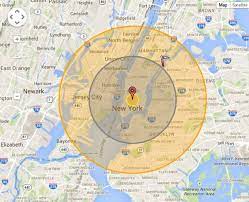
NEWSWEEK, BY ARISTOS GEORGIOU ON 5/16/22
Discussions around the threat of nuclear war have escalated in recent weeks, as Sweden and Finland look set to join NATO—and Russia saying it would not accept their membership.
Commentators have been divided on whether Russian president Vladimir Putin would ever go so far as to use these weapons, with some calling them “empty threats,” while others saying the risk is real if he feels backed into a corner.
But what would happen if a bomb detonated? What would be the immediate impact and how far would the radiation zone extend?
Alex Wellerstein, a historian of nuclear weapons, who is an associate professor at the Stevens Institute of Technology, in Hoboken, New Jersey, created a nuclear bomb simulator to show just that.
The NUKEMAP is designed to show the effect of a nuclear detonation in any given location across the globe. It consists of a map in which users can select a location and model the local impacts of a blast, while accounting for various factors, such as the power of the weapon and whether or not it detonates on (or near) the surface or up in the air.
The simulation estimates the potential number of deaths and injuries resulting from any given blast, as well as a rough model of where any nuclear fallout will spread and the dimensions of the mushroom cloud.
In the simulator description, Wellerstein said the aim of the educational tool was to help people visualize the impact of nuclear weapons in simple terms in order to help them gain an understanding of the scale of these blasts.
“We live in a world where nuclear weapons issues are on the front pages of our newspapers on a regular basis, yet most people still have a very bad sense of what an exploding nuclear weapon can actually do,” Wellerstein said in a statement on the simulator website.
“Some people think they destroy everything in the world all that once, some people think they are not very different from conventional bombs. The reality is somewhere in between: nuclear weapons can cause immense destruction
and huge losses of life, but the effects are still comprehendible on a human scale.”
The creator said enabling people to visualize the effects in arbitrarily picked geographical locations could help them understand what a nuclear weapon would do to places they are familiar with.
“I created NUKEMAP because it’s very hard for anyone—even me—to intuitively understand the sizes of nuclear explosions, much less the differences between different types of nuclear weapons,” Wellerstein told Newsweek. “NUKEMAP is made to make understanding nuclear explosions easy for anyone, since pretty much everyone knows how to use online mapping software these days.”
Modeling nuclear fallout accurately, in particular, is “very difficult,” according to Wellerstein given that there are so many relevant variables, including the type of terrain the explosion is detonated on or over and the weather conditions.
Nuclear fallout is the “short-term” radiation—defined here as the radioactive residues of the explosion that remain active for the next few weeks or months (as opposed to years)—that “fall out” of the mushroom cloud following the bomb’s detonation.
This is slightly different to the immediate radiation that it is produced when a nuclear weapon explodes.
As an example, you can use the model to estimate what would happen to the largest cities in the U.S. if a nuclear bomb as powerful as the infamous “Tsar Bomba” was detonated on them.
The Tsar Bomba, which was developed by the USSR in the mid-1950s and early 1960s, was the most powerful nuclear weapon ever created and tested, with a blast yield equivalent to roughly 50 megatons of TNT. As a comparison, “Little Boy”—the nuclear bomb that the United States dropped on Hiroshima during WWII—had a
blast yield of around 15 kilotons of TNT, which is around 3,300 times less powerful.
Below are some rough estimates for an airburst detonation of the Tsar Bomba at 13,000 feet above the following cities, according to the simulator:
- New York City, New York – 7.6 million fatalities and 4.2 million injuries
- Los Angeles, California – 3.9 million fatalities and 3.7 million injuries
- Chicago, Illinois – 2.7 million fatalities and 2 million injuries
- Houston, Texas – 1.7 million fatalities and 1.7 million injuries
- Phoenix, Arizona – 1.3 million fatalities and 1.2 million injuries
- Philadelphia, Pennsylvania – 2.3 million fatalities and 1.5 million injuries
| Wellerstein stresses that the NUKEMAP model can only provide estimates and is only is good as the data it relies on—which is to say, not perfect. Some factors that could make a difference in the real world when it comes to estimating casualty numbers and the size of a given blast, for example, may not be taken into account in the simulation.Wellerstein told Newsweek that NUKEMAP has experienced a “huge” uptick in traffic since Russia launched its full-scale invasion of Ukraine earlier this year, to the point where he has had to radically upgrade and improve the server that hosts the site in order to handle it…….. https://www.newsweek.com/nuclear-bomb-blast-map-shows-what-would-happen-one-detonated-near-you-nukemap-1706923 |
The horrible dangers of pushing a US proxy war in Ukraine

If there is indeed a shift in strategy to another level of confrontation with Russia, we need to know what we’re getting into.
Responsible Stateccraft APRIL 27, 2022, Anatol Lieven,
To judge by its latest statements, the Biden administration is increasingly committed to using the conflict in Ukraine to wage a proxy war against Russia, with as its goal the weakening or even destruction of the Russian state.
This would mean America adopting a strategy that every U.S. president during the Cold War took great pains to avoid: the sponsorship of war in Europe, bringing with it the acute risk of escalation towards direct military confrontation between Russia and NATO, possibly ending in nuclear catastrophe. The U.S. and NATO refusal to support armed rebellions against Soviet rule in eastern Europe was obviously not based on any kind of recognition of the legitimacy of Communist rule and Soviet domination, but simply on a hard-headed calculation of the appalling risks involved to America, Europe and humanity in general.
……………………………… Lavrov compared the situation in terms of nuclear danger to the Cuban missile crisis. We might do well to remember in this context how very close humanity came to nuclear annihilation in the fall of 1962. At one point, the fate of the world depended on the wisdom and caution of just one Soviet naval officer on board a nuclear attack submarine: Commander (later Admiral) Vassily Arkhipov………..

Two of Lloyd Austin’s remarks are especially worth examining in some detail. The first is that weakening Russia is necessary in order to prevent it repeating its invasion of Ukraine elsewhere. This statement is either meaningless, hypocritical, or both. There is no sign that Russia wants to or indeed could invade any other countries. As far as an attack on NATO is concerned, the miserable performance of the Russian military in Ukraine should have made absolutely clear that this is a fatuous chimera. If Russia cannot capture cities less than 20 miles from Russia’s own border, the idea of an attack on NATO is ludicrous.
As far as Georgia, Moldova and Belarus are concerned, it already holds the positions it needs in these countries. Russia’s military presence in Armenia and Nagorno Karabakh is at the request of the Armenians themselves, and is indeed essential to protect them against Turkey and Azerbaijan. When it comes to combating Islamist extremism in Central Asia and elsewhere, Russia’s interests and those of the West are in fact aligned.
Lloyd Austin also stated that U.S. officials believe that Ukraine can “win” the war with Russia given the right equipment and support from the West. The question is what “winning” means. If it means preserving Ukrainian independence, freedom to join the European Union, and sovereignty over the great majority of Ukrainian territory, then this is a legitimate and necessary goal. Indeed, thanks to Ukrainian courage and Western weaponry, it has already to a great extent been achieved.
Moscow’s original goal of overthrowing the Ukrainian government and subjugating the whole of Ukraine failed utterly. Given the losses that the Russian military has suffered, it seems highly unlikely that Russia can capture any more large Ukrainian cities, let alone conquer the whole of Ukraine.
If however what is meant by victory is Ukrainian reconquest — with Western help — of all the areas lost to Russia and Russian-backed separatists since 2014, then this is a recipe for perpetual war, and monstrous losses and suffering for Ukrainians. The Ukrainian army has fought magnificently in defense of its urban areas, but attacking entrenched Russian defensive positions across open country would be a very different matter.
Moreover, since Russia has annexed Crimea and the vast majority of the Russian people believe that this is Russian national territory, no future Russian government could possibly agree to give it up. A goal of complete Ukrainian victory therefore does indeed imply the destruction of the Russian state — something that Russia’s nuclear arsenal exists to prevent.
There is however a fatal ambiguity involved in such statements. For if what they suggest is a U.S. commitment to help Ukraine to go on fighting until Ukraine has reconquered all of the territory taken by Russia since 2014, including Crimea, then this implies a permanent war with the destruction of the Russian state as its goal; for short of the collapse of the Russian state, no Russian government will surrender Crimea, and for geographical reasons, no Ukrainian victory on the ground can bring this about. Furthermore, while China has so far been very restrained in its support for Russia over Ukraine, Beijing could not possibly tolerate a U.S. strategy aimed at the destruction of the Russian state and the consequent complete isolation of China. https://responsiblestatecraft.org/2022/04/27/the-horrible-dangers-in-pushing-a-us-proxy-war-in-ukraine/
Pentagon-Funded Think Tank Simulates War With China On NBC

https://caitlinjohnstone.com/2022/05/16/pentagon-funded-think-tank-simulates-war-with-china-on-nbc/ 16 May 22
the mass media are now openly teaming up with war machine think tanks to begin seeding the normalization of a hot war with China into the minds of the public
As we’ve discussed previously, citing war machine-funded think tanks as expert analysis without even disclosing their financial conflict of interest is plainly journalistic malpractice. But it happens all the time in the mass media anyway, because the mass media exist to circulate propaganda, not journalism.
This is getting so, so crazy. That the mass media are now openly teaming up with war machine think tanks to begin seeding the normalization of a hot war with China into the minds of the public indicates that the propaganda campaign to manufacture consent for the US-centralized empire’s final Hail Mary grab at unipolar domination is escalating even further. The mass-scale psychological manipulation is getting more and more overt and more and more shameless.
This is headed somewhere very, very bad. Hopefully humanity wakes up in time to stop these lunatics from driving us off a precipice from which there is no return.
NBC’s Meet the Press just aired an absolutely freakish segment in which the influential narrative management firm Center for a New American Security (CNAS) ran war games simulating a direct US hot war with China.
CNAS is funded by the Pentagon and by military-industrial complex corporations Northrop Grumman, Raytheon, and Lockheed Martin, as well as the Taipei Economic and Cultural Representative Office, which Antiwar’s Dave DeCamp has described as the de facto US embassy in Taiwan.
The war game simulates a conflict over Taiwan which we are informed is set in the year 2027, in which China launches strikes on the US military in order to open the way to an invasion of the island. We are not told why there needs to be a specific year inserted into mainstream American consciousness about when we can expect such a conflict, but then we are also not told why NBC is platforming a war machine think tank’s simulation of a military conflict with China at all.
It happens that the Center for a New American Security was the home of the man assigned by the Biden administration to lead the Pentagon task force responsible for re-evaluating the administration’s posture toward China. That man, Ely Ratner, is on record saying that the Trump administration was insufficiently hawkish toward China. Ratner is now the Assistant Secretary of Defense for Indo-Pacific Security Affairs in the Biden administration.
It also happens that the Center for a New American Security has openly boasted about the great many of its other “experts and alumni” who have assumed senior leadership positions within the Biden administration.
It also happens that CNAS co-founder Michele Flournoy, who appeared in the Meet the Press war games segment and was at one time a heavy favorite to become Biden’s Pentagon chief, wrote a Foreign Affairs op-ed in 2020 arguing that the US needed to develop “the capability to credibly threaten to sink all of China’s military vessels, submarines, and merchant ships in the South China Sea within 72 hours.”
It also happens that CNAS CEO Richard Fontaine has been featured all over the mass media pushing empire narratives about Russia and China, telling Bloomberg just the other day that the war in Ukraine could serve the empire’s long-term interests against China.
“The war in Ukraine could end up being bad for the pivot in the short-term, but good in the long-term,” Fontaine said. “If Russia emerges from this conflict as a weakened version of itself and Germany makes good on its defense spending pledges, both trends could allow the US to focus more on the Indo-Pacific in the long run.”
It also happens that CNAS is routinely cited by the mass media as an authoritative source on all things China and Russia, with no mention ever made of the conflict of interest arising from their war machine funding. Just in the last few days here’s a recent NPR interview about NATO expansion with CNAS senior fellow Andrea Kendall-Taylor, a Washington Post quote from CNAS fellow Jacob Stokes about the Chinese threat to Taiwan, a Financial Times quote from CNAS “Indo-Pacific expert” Lisa Curtis (who I’ve previously noted was cited by the mass media for her “expert” opposition to the US Afghanistan withdrawal), and a Foreign Policy citation of the aforementioned Richard Fontaine saying “The aim of U.S. policy toward China should be to ensure that Beijing is either unwilling or unable to overturn the regional and global order.”
As we’ve discussed previously, citing war machine-funded think tanks as expert analysis without even disclosing their financial conflict of interest is plainly journalistic malpractice. But it happens all the time in the mass media anyway, because the mass media exist to circulate propaganda, not journalism.
This is getting so, so crazy. That the mass media are now openly teaming up with war machine think tanks to begin seeding the normalization of a hot war with China into the minds of the public indicates that the propaganda campaign to manufacture consent for the US-centralized empire’s final Hail Mary grab at unipolar domination is escalating even further. The mass-scale psychological manipulation is getting more and more overt and more and more shameless.
This is headed somewhere very, very bad. Hopefully humanity wakes up in time to stop these lunatics from driving us off a precipice from which there is no return.
Drones seized at UK nuclear bases after a ‘swarm’ and reports of ‘red lights’
Drones have been seized by security personnel at nuclear facilities with
one report of a ‘swarm’ at a UK installation, newly released files
show. The unmanned aerial systems were either sighted or secured at sites
across the country amid concerns over the security threat posed by the
technology.
Twenty such reports between 2020 and last year have been
released to Metro.co.uk under the Freedom of Information Act. In two
instances, the drones landed ‘in the area’ and were secured by
personnel. Multiple other reports were made of the aerial vehicles near
facilities or nuclear objects such as reactors, boats and submarines. A
passing detail in another response shows there was a report of a swarm –
where interlinked drones take part in the same operation or attack – at a
nuclear licensed site in the UK. The incident took place between January
2014 and July 2020, according to the Office for Nuclear Regulation, which
gave no further details.
The reports come at a time of heightened tensions
between the West and China and Russia, which have each been linked to
concerted physical and cyber spying operations in the UK. Peter Burt, who
has studied drone use and is part of the Nukewatch monitoring network,
wants the UK authorities to provide a fuller picture of the incidents and
the potential threats posed. Mr Burt told Metro.co.uk:
‘There have
certainly been cases of coordinated swarms of drones spotted flying over
nuclear facilities in other countries, for example in France and the United
States, so this raises questions about the security of our own nuclear
facilities. I think it’s a legitimate question to ask whether similar
incidents have occurred in this country and, if they have, who do we think
is behind them? ‘I have had scant information back from the Ministry of
Defence when I have submitted Freedom of Information Act requests about
this issue and I think there is a clear public interest in more information
being disclosed.’
Metro 15th May 2022
Yes, Israel Has Submarines Armed With Nuclear Weapons (We Think)
1945, Maya Carlin, Middle East Defense Editor with 19FortyFive. 15 May 22
At the beginning of the year, Israel announced its plan to purchase three Dakar-class diesel-electric submarines for $3.4 billion dollars. Israeli media also reported that the cost of these submarines spiked in price during the negotiation process, likely due to the platform’s increased size and advanced capabilities.
. Rumors have circulated that the newly purchased submarines are equipped with a vertical launch system (VLS). When this type of system is installed on nuclear-powered attack submarines, a more significant variation of weapons can be deployed. According to Naval News, “If correct, the Israeli submarine isonly the second modern AIP (air-independent propulsion) equipped submarine in the world designed with this capability.”
Along with an advanced VLS system, this new class of submarines may be capable of launching nuclear weapons. However, these boats are mainly constructed more localized patrols, as these submarines aren’t nuclear powered. The Dolphins are significantly smaller than their counterparts in Russia and the U.S., plus its non-nuclear engines, while advanced, still limit the amount of time they can be underway safely.
While the Dakar-class submarines will no doubt advance Israel’s Naval and deterrence capabilities, its first Dolphin-class boats imported from Germany in the late 90s should not be underestimated – as they took Israel’s nuclear deterrent and most likely placed it underwater.
………………….. clearly, what makes these submarines truly special is what many believe is their nuclear-armed cruise missiles. While sources vary on specifics, many naval experts believe that these submarines are armed with a cruise missile that is nuclear-tipped that has a range of 1,500 kilometers.
The Dolphin-class boats are considered the most advanced and capable submarines on the globe. Additionally, the submarines are also the most expensive machinery that the IDF has acquired in its history. …….https://www.19fortyfive.com/2022/05/yes-israel-has-submarines-armed-with-nuclear-weapons-we-think/ Maya Carlin is a Middle East Defense Editor with 19FortyFive.
Forgetting the apocalypse: why our nuclear fears faded – and why that’s dangerous
The horrors of Hiroshima and Nagasaki made the whole world afraid of the atomic bomb – even those who might launch one. Today that fear has mostly passed out of living memory, and with it we may have lost a crucial safeguard,
Guardian, by Daniel Immerwahr 13 May, 22”…………………. what had happened in Hiroshima, and three days later in Nagasaki, could happen anywhere.
The thought proved impossible to shake, especially as, within the year, on-the-ground accounts emerged. Reports came of flesh bubbling, of melted eyes, of a terrifying sickness afflicting even those who’d avoided the blast. “All the scientists are frightened – frightened for their lives,” a Nobel-winning chemist confessed in 1946. Despite scientists’ hopes that the weapons would be retired, in the coming decades they proliferated, with nuclear states testing ever-more-powerful devices on Pacific atolls, the Algerian desert and the Kazakh steppe.
The fear – the pervasive, enduring fear – that characterised the cold war is hard to appreciate today. It wasn’t only powerless city-dwellers who were terrified (“select and fortify a room in which to shelter”, the UK government grimly advised). Leaders themselves were shaken. It was “insane”, US president John F Kennedy felt, that “two men, sitting on the opposite sides of the world, should be able to decide to bring an end to civilisation”. Yet everyone knowingly lived with that insanity for decades…………..
………. The memory of nuclear war, once vivid, is quietly vanishing. ……..
Except that the threat of nuclear war, as Vladimir Putin is reminding the world, has not gone away.
……….. Yet many of Putin’s adversaries seem either unconvinced or, worse, unbothered by his threats. Boris Johnson has flatly dismissed the idea that Russia may use a nuclear weapon. Three former Nato supreme allied commanders have proposed a no-fly zone over Ukraine. This would almost certainly entail direct military conflict between Nato and Russia, and possibly trigger the world’s first all-out war between nuclear states. Still, social media boils over with calls to action, and a poll found that more than a third of US respondents wanted their military to intervene “even if it risks a nuclear conflict”.
Nuclear norms are fraying elsewhere, too. Nine countries collectively hold some 10,000 warheads, and six of those countries are increasing their inventories. Current and recent leaders such as Kim Jong-un, Narendra Modi and Donald Trump have, like Putin, spoken brazenly of firing their weapons……………..
Leaders have talked tough before. But now their talk seems less tethered to reality. This is the first decade when not a single head of a nuclear state can remember Hiroshima.
Does that matter? We’ve seen in other contexts what happens when our experience of a risk attenuates. In rich countries, the waning memory of preventable diseases has fed the anti-vaccination movement. “People have become complacent,” notes epidemiologist Peter Salk, whose father, Jonas Salk, invented the polio vaccine. Not having lived through a polio epidemic, parents are rejecting vaccines to the point where measles and whooping cough are coming back and many have needlessly died of Covid-19.
That is the danger with nuclear war. Using declassified documents, historians now understand how close we came, multiple times, to seeing the missiles fired. In those heartstopping moments, a visceral understanding of what nuclear war entailed helped keep the launch keys from turning. It’s precisely that visceral understanding that’s missing today. We’re entering an age with nuclear weapons but no nuclear memory. Without fanfare, without even noticing, we may have lost a guardrail keeping us from catastrophe.
……………….The US occupation authorities in Japan had censored details of the bomb’s aftermath. But, without consulting the censors, the American writer John Hersey published in the New Yorker one of the most important long-form works of journalism ever written, a graphic account of the bombing. Born to missionaries in China, Hersey was unusually sympathetic to Asian perspectives. His Hiroshima article rejected the bomber’s-eye view and instead told the stories of six survivors.
For many readers, this was the first time they registered that Hiroshima wasn’t a “Japanese army base”, as US president Harry Truman had described it when announcing the bombing, but a city of civilians – doctors, seamstresses, factory workers – who had watched loved ones die. Nor did they die cleanly, vaporised in the puff of a mushroom cloud. Hersey profiled a Methodist pastor, Kiyoshi Tanimoto, who raced to the aid of his ailing but very much still-living neighbours. As Tanimoto grasped one woman, “her skin slipped off in huge, glove-pieces”. Tanimoto “was so sickened by this that he had to sit down for a minute”, wrote Hersey. “He had to keep consciously repeating to himself, ‘These are human beings.’”
Hersey’s contemporaries understood the significance of these accounts. The New Yorker dedicated its full issue to Hersey’s article, and within an hour sold out its entire newsstand print run of 300,000 (plus another 200,000 copies to subscribers). Knopf published it as a book, which eventually sold millions. The text was reprinted in newspapers from France to China, the Netherlands to Bolivia. The massive ABC radio network broadcast Hersey’s text – with no commercials, music or sound effects – over four consecutive evenings. “No other publication in the American 20th century,” the journalism historian Kathy Roberts Forde has written, “was so widely circulated, republished, discussed, and venerated.”
Tanimoto, boosted to celebrity by Hersey’s reporting, made speaking tours of the US. By the end of 1949, he had visited 256 cities. Like Einstein, he pleaded for world government.
Rising tensions between Washington and Moscow erased the possibility of global government. Still, they didn’t change the fact: across the west, leading thinkers felt nuclear weapons to be so dangerous that they required, in Churchill’s words, remoulding “the relationships of all men of all nations” so that “international bodies by supreme authority may give peace on earth and justice among men”.
……………………………………… Maybe one could dismiss the fallout shelters as theatre and the films as fiction. But then there were the bomb tests – great belches of radioactivity that previewed the otherworldly dangers of nuclear weapons. By 1980, the nuclear powers had run 528 atmospheric tests, raising mushroom clouds everywhere from the Pacific atoll of Kiritimati to the Chinese desert. A widely publicised 1961 study of 61,000 baby teeth collected in St Louis showed that children born after the first hydrogen bombs were tested had markedly higher levels of the carcinogen strontium-90, a byproduct of the tests, despite being some 1,500km away from the closest test site.
Unsurprisingly, nuclear tests stoked resistance. In 1954, a detonation by the US at Bikini Atoll in the Pacific got out of hand, irradiating the inhabited atoll of Rongelap and an unfortunate Japanese tuna fishing boat. When the boat’s sickened crew returned to Japan, pandemonium erupted. Petitions describing Japan as “thrice victimised by nuclear bombs” and calling for a ban collected tens of millions of signatures. Ishiro Honda, a film director who’d seen the Hiroshima damage firsthand, made a wildly popular film about a monster, Gojira, awakened by the nuclear testing. Emitting “high levels of H-bomb radiation”, Gojira attacks a fishing boat and then breathes fire on a Japanese city.
………………….. Hiroshima occupied a similar place in public memory to Auschwitz, the other avatar of the unspeakable. The resemblance ran deep. Both terms identified specific events within the broader violence of the second world war – highlighting the Jews among Hitler’s victims, and the atomic bomb victims among the many Japanese who were bombed – and marked them as morally distinct. Both Hiroshima and Auschwitz had been the site of “holocausts” (indeed, early writers more often used that term to describe atomic war than European genocide). And both Hiroshima and Auschwitz sent forth a new type of personage: the “survivor”, a hallowed individual who had borne witness to a historically unique horror. What Elie Wiesel did to raise the stature of Europe’s survivors, Tanimoto did for Japan’s. In their hands, Hiroshima and Auschwitz shared a message: never forget, never again
.…………The whole idea is to kill the bastards,” said US general Thomas Power, when presented in 1960 with a nuclear plan designed to minimise casualties. “Look. At the end of the war, if there are two Americans and one Russian, we win.” This is the man who led the US Strategic Air Command – responsible for its nuclear bombs and missiles – during the Cuban missile crisis.
Generals like Power, tasked with winning wars, pressed often for pre-emptive strikes……………………..
Today, knowledge of the Holocaust is kept alive by more than 100 museums and memorials, including in such unexpected countries as Cuba, Indonesia and Taiwan. But there is no comparable memory industry outside of Japan to remind people of nuclear war.
The result is a profound generational split, evident in nearly every family in a nuclear state……………
the dispelling of dread has made it hard for many to take nuclear war seriously…………
With nuclear threats far from mind, voters seem more tolerant of reckless politicians. ……..
Nor is it only Trump. The nine nuclear states have had an impressive string of norm-breakers among their recent leaders, including Trump, Vladimir Putin, Narendra Modi, Kim Jong-un and Benjamin Netanyahu. With such erratic men talking wildly and tearing up rulebooks, it’s plausible that one of them might be provoked to break the ultimate norm: don’t start a nuclear war.
………… how guided are leaders by such fears? In the past 20 years, the US has pulled out of the 2015 nuclear deal with Iran and two of the three main treaties restraining its arms race with Russia (the third is in bad shape). Meanwhile, China has been developing aggressive new weapons……… India’s its prime minister, Modi, declared. India has the “mother of nuclear bombs” ……
The cost of the shredded norms and torn-up treaties may be paid in Ukraine. Russia invested heavily in its nuclear arsenal after the cold war; it now has the world’s largest. The worse the war in Ukraine goes, the more Putin might be tempted to reach for a tactical nuclear weapon to signal his resolve.
……………… we can’t drive nuclear war to extinction by ignoring it. Instead, we must dismantle arsenals, strengthen treaties and reinforce antinuclear norms. Right now, we’re doing the opposite. And we’re doing it just at the time when those who have most effectively testified to nuclear war’s horrors – the survivors – are entering their 90s. Our nuclear consciousness is badly atrophied. We’re left with a world full of nuclear weapons but emptying of people who understand their consequences. https://www.theguardian.com/world/2022/may/12/forgetting-the-apocalypse-why-our-nuclear-fears-faded-and-why-thats-dangerous
UN: There is ‘credible’ information Ukrainian forces are torturing Russian POWs
https://www.washingtonexaminer.com/policy/foreign/un-there-is-credible-information-ukrainian-forces-are-torturing-russian-pows
Abigail Adcox, Washington Examiner, Tue, 10 May 2022
There is “credible” information that Russian prisoners of war have been mistreated by Ukrainian forces since the beginning of the Russian invasion in February, a United Nations official said.
The evidence suggests that Russia is not the only country willing to break international norms during war, as the U.N. reports that Ukrainian forces have subjected Russians under their watch to treatment that violates
international law, Matilda Bogner, head of the U.N. Human Rights Monitoring Mission in Ukraine, said Tuesday.
“Ukraine and Russia must promptly and effectively investigate all allegations of torture and ill-treatment of prisoners of war. They must also effectively control and instruct their forces to stop any further violations from occurring.”
Russia is accused of several war crimes, including raping Ukrainian women, targeting and killing innocent civilians, and forcing others to go to Russia against their will.
Comment: Given Ukraine’s long history of prisoner abuse throughout the eight-year war on Donetsk-Lugansk, torture is its standard procedure. Were the UN’s complaints effective then?
Some of the violations were determined by Bogner and other U.N. officials during a visit to towns in the Kyiv and Chernihiv regions that were occupied by Russian armed forces until the end of March.
The group also reported that hundreds of educational or medical facilities have been damaged or destroyed in areas of hostility across the country. At least 50 places of worship have been damaged, more than half of which cannot be used. Bogner said:
“The best way to end the violations that we have been documenting will be to end the hostilities. However, while they are ongoing and for as long as they last, parties must in the conduct of operations take constant care to spare the civilian population.”
“We have received credible information of torture, ill-treatment and incommunicado detention by Ukrainian Armed Forces against prisoners of war from Russian armed forces and affiliated armed groups. We continue to see the publication of videos, which show inhumane treatment, including prisoners from both sides being coerced to make statements, apologies and confessions, and other forms of humiliation.”
The mistreatment from both sides is considered a violation of international humanitarian law, as the U.N. continues to investigate and document egregious violations since Russia invaded Ukraine on Feb. 24.
Ukraine and Russia must promptly and effectively investigate all allegations of torture and ill-treatment of prisoners of war. They must also effectively control and instruct their forces to stop any further violations from occurring,” Bogner said.
Russia is accused of several war crimes, including raping Ukrainian women, targeting and killing innocent civilians, and forcing others to go to Russia against their will.
Some of the violations were determined by Bogner and other U.N. officials during a visit to towns in the Kyiv and Chernihiv regions that were occupied by Russian armed forces until the end of March.
The group also reported that hundreds of educational or medical facilities have been damaged or destroyed in areas of hostility across the country. At least 50 places of worship have been damaged, more than half of which cannot be used.
“The best way to end the violations that we have been documenting will be to end the hostilities,” Bogner said. “However, while they are ongoing and for as long as they last, parties must in the conduct of operations take constant care to spare the civilian population.”
Underwater drones herald sea change in Pacific warfare

US, UK, China and Russia are all developing and deploying underwater drones to gain a subaqueous advantage
Asia Times, By GABRIEL HONRADA, JANUARY 12, 2022,
The drones that have changed the complexion of war from the sky are being replicated at sea, as great powers develop and deploy unmanned underwater vessels (UUVs) to gain a strategic edge in the Pacific and beyond.
The United States, United Kingdom, China and Russia are all developing and deploying the vessels, indicating the “dronification” of future maritime warfare……………………………………….
China is also known to be using underwater drones, with Indonesia seizing three Chinese drones labeled “Shenyang Institute of Automation Chinese Academy of Sciences” near South Sulawesi’s Selayar Island in December 2020…………..
The proliferation of underwater drones in the Pacific region is changing the complexion of underwater warfare, as the region’s maritime environment poses unique operational challenges to underwater operations………………………..
, the South China Sea is an ideal proving ground for underwater drones, as they can perform underwater tasks that may be too dull, demanding, dangerous or even dirty for humans.
Underwater drones can be used for bathymetric mapping, alongside recording the thermal, magnetic, and acoustic properties of specific underwater passages to find blind spots where submarines can travel undetected safely.
As such, this capability is particularly suited for use in the South China Sea, which is among the most challenging bodies of water for submarine navigation due to its shallow waters, numerous underwater peaks and sandbars.
The recent collision of the USS Connecticut submarine with an unmapped seamount in the South China Sea illustrates the danger. In addition, these drones can also find submarine hiding spots to serve as staging areas for underwater operations, or sanctuaries to avoid enemy anti-submarine warfare operations………………………………… https://asiatimes.com/2022/01/underwater-drones-herald-sea-change-in-pacific-warfare/?fbclid=IwAR3H-_1sP9YU3U_lQruGuGiRRBHLFX9kOLdbdvXf1zL8pxXgq
Underwater drones could be the end of nuclear submarines
Swarming systems are small, lightweight, cheap, numerous—and networked together to cooperate like bees from the same hive.
National Interest, by Sebastien Roblin, 14 Sept 2020, Here’s What You Need To Remember: “Think of a flotilla of 20 low cost Chinese ‘trawlers’ all peacefully ‘catching fish’, but actually acting as a mother-ship each for 200 low-cost mass-produced mini-UUVs…This flotilla could be assisted by the fixed seabed and tethered anti-submarine sonar sensors China is already stringing across East Asian seas.”
After a post-Cold War hiatus, navies across the planet are pursuing new anti-submarine capabilities as a submarine arms race accelerates in the Pacific Ocean. Developing technologies like quantum magnetometers and satellite-based optical sensors are leading to forecasts that submarines may be on the verge of losing their stealthy edge by the mid-twenty-first century.
But swarms of cheap drones both above and below the water (unmanned underwater vehicles, or UUVs) may pose the biggest and most proximate threat to submarines.
Swarming drones are distinct from larger, higher capability (and more expensive) long-range autonomous unmanned vehicles like the Large-Diameter HSU-001 submarine, recently displayed by China, or the Extra-Large Displacement Orca being built for the U.S. Navy.
Swarming systems, by contrast, are small, lightweight, cheap, numerous—and networked together to cooperate like bees from the same hive…………….
Submarine analyst Peter Coates observes in a blog post that underwater swarming drones could particularly improve China’s surveillance capabilities………………………………………………………. https://nationalinterest.org/blog/reboot/underwater-drones-could-be-end-submarines-168940?fbclid=IwAR3_Q9AZnBfcQkRBhcw0De-7fp-yXZPFXjl7uUrErNASeoJ3_zh9jSzYTUs
1 This Month





PLEASE OPPOSE HR 8255 AND S.3639 – bills would accelerate satellite deployment, with no environmental review or safeguards – https://ncstd5li.quorum.us/campaign/169331/
To see nuclear-related stories in greater depth and intensity – go to https://nuclearinformation.wordpress.com
-
Archives
- October 2026 (29)
- September 2026 (339)
- August 2026 (330)
- July 2026 (355)
- June 2026 (287)
- May 2026 (306)
- April 2026 (356)
- March 2026 (251)
- February 2026 (267)
- January 2026 (308)
- December 2025 (358)
- November 2025 (359)
-
Categories
- 1
- 1 NUCLEAR ISSUES
- business and costs
- climate change
- culture and arts
- ENERGY
- environment
- health
- history
- indigenous issues
- Legal
- marketing of nuclear
- media
- opposition to nuclear
- PERSONAL STORIES
- politics
- politics international
- Religion and ethics
- safety
- secrets,lies and civil liberties
- spinbuster
- technology
- Uranium
- wastes
- weapons and war
- Women
- 2 WORLD
- ACTION
- AFRICA
- Atrocities
- AUSTRALIA
- Christina's notes
- Christina's themes
- culture and arts
- Events
- Fuk 2022
- Fuk 2023
- Fukushima 2017
- Fukushima 2018
- fukushima 2019
- Fukushima 2020
- Fukushima 2021
- general
- global warming
- Humour (God we need it)
- Nuclear
- RARE EARTHS
- Reference
- resources – print
- Resources -audiovicual
- Weekly Newsletter
- World
- World Nuclear
- YouTube
-
RSS
Entries RSS
Comments RSS

