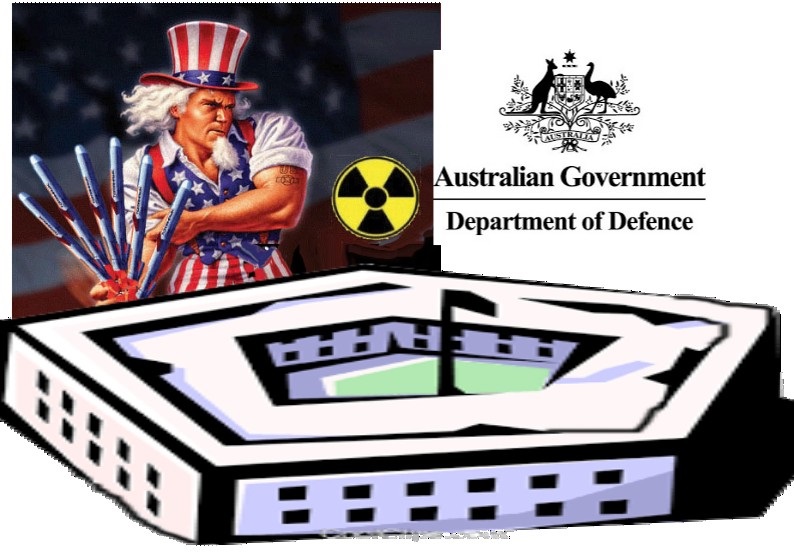
The Pentagon builds a network in our Australian Department of Defence amidst media silence
https://johnmenadue.com/pentagon-takes-over-australias-defence-policies-amidst-media-silence/ By John MenadueOct 29, 2022,
It is more than inter-operability and inter-changeability with the US military. Anthony Albanese and Richard Marles need to break up the American network in our Department of Defence that the Washington Post has exposed.
The Washington Post has found that a retired US Admiral is ‘now a Deputy Secretary of Defense for Australia’.
I wonder how the Admiral handles ASTEO documents- for Australian eyes only?
In the last few days in Pearls and Irritations, Mike Scrafton and Richard Tanter have exposed how retired US Admirals have been employed as highly paid consultants to shape our policies on submarines.
At the same time our media has shown no interest or concern. This is more than ‘foreign influence’. It looks more like foreign control.
As Paul Keating recently put it,‘our strategic sovereignty is being outsourced to another country, the US’.
It was the Washington Post, not our Corporate Media that has given us an insight into the abdication of responsibility of our politicians, public officials and journalists who have been on a Washington drip feed for so long. They have been captured by American interests, particularly the US military and industrial complex that former President Eisenhower warned us about.
Following the first Washington Post exposures, the authors then ran a webinar from which the Post has printed a Q and A.
The webinar includes the following:
“In court papers, the Justice Department and Pentagon officials were very clear about this: They argued that disclosing the documents might subject retired generals, admirals and others to embarrassment and/or harassment, and would be an invasion of their privacy.”
“We have more stories we’re working on – stay tuned. Congress has taken some half-steps in recent years to require the Pentagon to disclose more details about retired generals and admirals working for foreign governments. But the Pentagon hasn’t been very forthcoming. Maybe that will change now.”
Q: “What was something which personally shocked you during your investigation?
From Nate Jones:
“I was surprised to learn Admiral Stephen Johnson is now a deputy Secretary of Defense for Australia.”
From Craig Whitlock:
“I was surprised by how many retired U.S. generals went to work as advisors and consultants to the Saudi Crown Prince AFTER he approved the assassination of Saudi journalist Jamal Khashoggi in 2018. I mean, hello?”
Q: “Do they have to disclose anything about what they do?
From Nate Jones:
“Here is a sample of former national security advisor James Jones’s application. You can see he discloses some things in a page or two.”
From Craig Whitlock:
“The war in Yemen is a good example of a terrible, unintended consequence. The Pentagon and State Dept have authorized more than 300 retired US military personnel to work as contractors or consultants for Saudi Arabia and UAE since 2015. During that time, KSA and UAE have bombed the heck out of Yemen, turning their civil war into a far worse humanitarian disaster. US has enabled that to a significant degree by allowing so many veterans to build up the KSA and UAE armed forces.”
From Craig Whitlock:
“With one exception, there were no instances of retired US personnel seeking to work for nations that the US govt categories as “foreign adversaries” eg., China, North Korea, Iran, Cuba or Venezuela. The lone exception was a retired US Air Force officer who sought – and received – approval to work for a satellite launch company owned by the government of Russia.”
The Washington Post revealed that one of the American consultants was (probably still is) being paid $6000 a day for his consultancy to Prime Minister Morrison, plus whatever he might have been receiving from Peter Dutton, plus presumably a fee for participating in a longer running US Defence project. No doubt he was also on some sort of “compensation” from the US Defence Industry. Presumably he was the mystery source when Dutton persisted in claims that he could get a couple of US submarines much earlier.
The inclusion of the UK in AUKUS was only a cover for the US/Australia deal.
But all the $10m of funding to US Admirals is of lesser concern than the peddling of US interference in our national security debate. We have known all along that the need for the submarines stemmed from concerns in the US defence community years ago about the so-called “submarine gap” in the containment ring around China – which they intended Australia to fill. And we would pay for it!
And all of that has been borne out by the relentless pressure applied recently by US service chiefs and Pentagon officials to promote so shamelessly major new Australian defence procurement in advance of the Smith/Houston review.
While Morrison and Dutton created the astonishing network, it appears that Albanese and Marles have not moved to break it up. They should do so quickly.
This has all the makings of a major can of worms which both major parties will be keen to keep the lid on.
This is not just a national disgrace. It is positively dangerous.
Malcolm Fraser called the US a dangerous ally.
I have written many times about how we are joined at the hip to an ally that is almost always at war. And we keep tagging along in one US defeat after another. The US is now goading China.
Our future is not to be a spear carrier for the US in our region. Our future is learning to live securely in our own region.
China is not going away but the US ultimately will.
Our captured corporate media will not examine the offence to our national dignity that the Washington Post has exposed. Our media has abandoned all pretence of independence and professionalism.
Can our Parliament rouse itself and help restore some trust in our institutions and expose what is going on?
John Menadue is the Founder and Editor in Chief of Pearls and Irritations. He was formerly Secretary of the Department of Prime Minister and Cabinet under Gough Whitlam and Malcolm Fraser, Ambassador to Japan, Secretary of the Department of Immigration and CEO of Qantas.
Steps towards multilateral nuclear disarmament – but media silence
An even more momentous UN vote occurred during the same session, when 124 member states affirmed their support for the Treaty on the Prohibition of Nuclear Weapons (TPNW).

Once again, all the nuclear-armed powers (the US, Russia, Britain, France, China, Israel, India, Pakistan and North Korea) opposed the aim of a nuclear weapons-free world. They were joined for the first time by Finland and Sweden, now pledged to enter Nato together.
Once upon a time, we would have heard Labour voices at Westminster speaking out against Britain’s nuclear weapons and Nato’s war-mongering.
THE “international community” has spoken. Twice in the past three days, a very large majority of United Nations member states have made clear their position on two vital issues of life and death.
Unfortunately, this was not the “international community“ comprising the United States, Britain, other major Western powers and those other countries they can bribe, bully or bamboozle to fall into line.
Hence the shroud of silence that has fallen over most of Britain’s mass media when it comes to reporting two significant votes at the UN.
Last Friday, the general assembly’s first committee decided by 152 to five that Israel should sign up to the Non-Proliferation of Nuclear Weapons Treaty (NPT).
The resolution on “the risk of nuclear proliferation in the Middle East” noted that Israel is the only country in the Middle East — and one of the few among the 193 UN member states — not to accede to the NPT.
Accession to the treaty would oblige Israel to submit its nuclear facilities to Atomic Energy Agency safeguards and not to develop, produce, test or acquire nuclear weapons.
Israel refuses to admit its possession of the atomic bomb and kidnapped, drugged, abducted and imprisoned nuclear scientist Mordechai Vanunu who spilled the beans to the British press 36 years ago.
Freed after 18 years and subsequent short incarcerations, he survives under severe restrictions in Israel.
While some of Israel’s accusers are also serial abusers of human rights, this should not detract from the sheer weight of world opinion against nuclear proliferation.
Only the US, Canada and the US military protectorates of Micronesia and Palau joined Israel in opposing the NPT resolution. Britain, India and most European countries abstained.
An even more momentous UN vote occurred during the same session, when 124 member states affirmed their support for the Treaty on the Prohibition of Nuclear Weapons (TPNW).
Once again, all the nuclear-armed powers (the US, Russia, Britain, France, China, Israel, India, Pakistan and North Korea) opposed the aim of a nuclear weapons-free world. They were joined for the first time by Finland and Sweden, now pledged to enter Nato together.
This backward step is yet another consequence of Russia’s disastrous decision to invade Ukraine, which has strengthened reactionary forces across Europe, Ukraine and — at least for the time being — Russia itself.
On a brighter note, Australia turned towards sanity by abstaining on the TPNW for a change. The US Pentagon is not happy, but Australia’s vigorous peace movement can celebrate this symbolic blow against the US-UK-Oz anti-China military pact.
Naturally, this decision by most of the “international community” to accelerate the drive to multilateral nuclear disarmament has been ignored by the mainstream media in Britain.
There will be no US or EU sanctions against those rogue states — such as themselves — who brazenly flout UN resolutions and international law when it suits them.
Once upon a time, we would have heard Labour voices at Westminster speaking out against Britain’s nuclear weapons and Nato’s war-mongering.
Alas, silence now reigns as the ghosts of Sydney Silverman, Ian Mikardo, Joan Maynard, SO Davies and Emrys Hughes look on in despair.
Criminals in Finland obtain weapons from Ukraine – police
Arms supplied to Kiev have also allegedly been found in Sweden, Denmark and the Netherlands
https://www.rt.com/news/565616-finland-ukraine-weapons-gangs/ 30 Oct 22,
Criminals in Finland have got hold of some of the weapons that were sent to Ukraine by its Western backers amid the conflict with Russia, the Finnish National Bureau of Investigation (NBI) has said.
“We’ve seen signs of these weapons already finding their way to Finland,” NBI detective superintendent Christer Ahlgren told the news outlet Yle on Sunday.
Assault rifles were among the weaponry, Ahlgren said, but declined to provide further details, as the investigation is still ongoing.
Arms trafficking routes from Ukraine to Finland have already been set up, according to the investigator.
“Three of the world’s largest motorcycle gangs — that are part of larger international organizations — are active in Finland. One of these is Bandidos MC, which has a unit in every major Ukrainian city,” he said.
“Criminal organizations have their networks in Finnish commercial ports,” Ahlgren pointed out, adding that security checks that are mandatory for airport staff do not apply to port workers.
Finland is not the only EU country with such problems, as “weapons shipped to Ukraine have also been found in Sweden, Denmark and the Netherlands,” he said.
“Ukraine has received a large volume of weapons and that’s good, but we’re going to be dealing with these arms for decades and pay the price here,” Ahlgren pointed out.
As early as May, US Defense Secretary Lloyd Austin stressed the need for accountability for American arms supplied to Ukraine. Back then, Austin said he had discussed the issue with the Kiev authorities, who gave assurances on accountability.
In June, the EU’s law enforcement agency Europol warned that the Ukraine conflict could lead to a spike in arms and ammo being smuggled into the bloc.
Around the same time, an investigation by RT Russian revealed that various weapons supplied to Kiev by the West were being sold on the dark net.
Moscow has long criticized weapons deliveries to Kiev by the US, EU, UK and some other nations, arguing that they only prolong the conflict and increase the risk of a direct confrontation between Russia and NATO.
Australia changes policy tack – moves in the direction of supporting the UN Treaty on the Prohibition of Nuclear Weapons
Australia drops opposition to treaty banning nuclear weapons at UN vote
After former Coalition government repeatedly sided with US against it, Labor has shifted position to abstain
https://www.theguardian.com/world/2022/oct/29/australia-drops-opposition-to-treaty-banning-nuclear-weapons-at-un-vote— Daniel Hurst, 29 Oct 22,
Australia has dropped its opposition to a landmark treaty banning nuclear weapons in a vote at the United Nations in New York on Saturday.
While Australia was yet to actually join the Treaty on the Prohibition of Nuclear Weapons, the shift in its voting position to “abstain” after five years of “no” is seen by campaigners as a sign of progress given the former Coalition government repeatedly sided with the United States against it.
The foreign affairs minister, Penny Wong, said through a spokesperson that Australia had “a long and proud commitment to the global non-proliferation and disarmament regime” and that the government supported the new treaty’s “ambition of a world without nuclear weapons”.
The previous Coalition government was firmly against the Treaty on the Prohibition of Nuclear Weapons, a relatively new international agreement that imposes a blanket ban on developing, testing, stockpiling, using or threatening to use nuclear weapons – or helping other countries to carry out such activities.
Australia voted against opening negotiations on the proposed new treaty in late 2016 and did not participate in those talks in 2017. Since 2018 it has voted against annual resolutions at the UN general assembly and first committee that called on all countries to join the agreement “at the earliest possible date”.
That changed early on Saturday morning when Australia shifted its voting position to abstain. Indonesia, New Zealand, Malaysia and Ireland were among countries to co-sponsor this year’s supportive UN resolution.
Australia traditionally argued the treaty would not work because none of the nuclear weapons states had joined and because it “ignores the realities of the global security environment”.
It also argued joining would breach the US alliance obligations, with Australia relying on American nuclear forces to deter any nuclear attack on Australia.
But the treaty has gained momentum because of increasing dissatisfaction among activists and non-nuclear states about the outlook for disarmament, given that nuclear weapons states such as the US, Russia and China are in the process of modernising their arsenals.
The treaty currently has 91 signatories, 68 of which have formally ratified it, and it entered into force last year.
The Nobel peace prize-winning International Campaign Against Nuclear Weapons (Ican) had been urging Australia to vote in favour of the UN resolution on Saturday – or at least abstain in order to “end five years of opposition to the TPNW under the previous government”.
Three in four members of the Labor caucus – including Anthony Albanese – have signed an Ican pledge that commits parliamentarians “to work for the signature and ratification of this landmark treaty by our respective countries”.
Labor’s 2021 national platform committed the party to signing and ratifying the treaty “after taking account” of several factors, including the need for an effective verification and enforcement architecture and work to achieve universal support.

These conditions suggest the barriers to actually signing may still be high. But Gem Romuld, the Australia director of Ican, said the government was “heading in the right direction” and engaging positively with the treaty.
Romuld said it “would be completely self-defeating to wait for all nuclear-armed states to get on board” before Australia joined.
“Indeed, no disarmament treaty has achieved universal support and Australia has joined all the other disarmament treaties, even where our ally – the US – has not yet signed on, such as the landmine ban treaty,” Romuld said.
In 2017 the US, the UK and France declared that they “do not intend to sign, ratify or ever become party” to the new treaty, and the Trump administration actively lobbied countries to withdraw.
Wong told the UN general assembly last month that Australia would “redouble our efforts” towards disarmament because Russian president Vladimir Putin’s “weak and desperate nuclear threats underline the danger that nuclear weapons pose to us all”. https://www.theguardian.com/world/2022/oct/29/australia-drops-opposition-to-treaty-banning-nuclear-weapons-at-un-vote—
Cuban missile crisis, 60 years on: new papers reveal how close the world came to nuclear disaster
In 1962, a Soviet submarine commander nearly ordered a nuclear launch, newly translated accounts show, with modern parallels over Ukraine all too clear
Guardian, Julian Borger in Washington 27 Oct 2022
The commander of a nuclear-armed Soviet submarine panicked and came close to launching a nuclear torpedo during the Cuban missile crisis 60 years ago, after being blinded and disoriented by aggressive US tactics, according to newly translated documents.
Many nuclear historians agree that 27 October 1962, known as “Black Saturday”, was the closest the world came to nuclear catastrophe, as US forces enforced a blockade of Cuba to stop deliveries of Soviet missiles. On the same day a U-2 spy plane was shot down over the island, and another went missing over Siberia when the pilot lost his way.
Six decades on from the “world’s most dangerous day”, last week’s revelation that a Russian warplane fired a missile near a British Rivet Joint surveillance plane over the Black Sea has once more heightened concerns that miscalculation or accident could trigger uncontrolled escalation.
In October 1962, the US sent its anti-submarine forces to hunt down Soviet submarines trying to slip through the “quarantine” imposed on Cuba. The most perilous moment came when one of those submarines, B-59, was forced to surface late at night in the Sargasso Sea to recharge its batteries and found itself surrounded by US destroyers and anti-submarine planes circling overhead.
In a newly translated account, one of the senior officers on board, Captain Second Class Vasily Arkhipov, described the scene……………………………………………………………
In his account, Arkhipov played down his role and how close the B-59 submarine commander, Savitsky, came to launching the submarine’s one nuclear-tipped torpedo. However, Svetlana Savranskaya, the director of the National Security Archive’s Russian programmes, interviewed another submarine commander from the same brigade, Ryurik Ketov, who said Savitsky was convinced they were under attack and that the war with the US had started.
The commander panicked, calling for an “urgent dive” and for the number one torpedo with the nuclear warhead to be prepared. However, because the signalling officer was in the way, Savitsky could not immediately get down the narrow stairway through the conning tower, and during those few moments of hesitation, Arkhipov realised that the US forces were signalling rather than attacking, and deliberately firing off to the side of the submarine.
“He called to Savitsky and said: ‘calm down, look they are signalling, not attacking, let’s signal back.’ Savitsky turned back, saw the situation, ordered the signalling officer to signal back,” Savranskaya said. She added that two other officers would have had to confirm any order from Savitsky before the nuclear torpedo could have been launched.
Tom Blanton, the director of the National Security Archive, said the aggressive tactics used by the American submarine hunters contributed to the close shave…………………………………………….
Saved ‘primarily because of luck’
The B-59 incident was just one of a cascade of crises that day. A U-2 went missing over Siberia when the pilot lost his bearings, blinded by the aurora borealis and misled by compass malfunction close to the north pole.
Some F-102 interceptor jets were scrambled to protect the U-2, but the joint chiefs of staff who gave the order for their launch were not aware they had been armed with nuclear missiles as a matter of course once the alert level was raised to Defcon 2.
Minutes later, the joint chiefs heard that another U-2 had been shot down over Cuba and assumed it was a deliberate escalation by Moscow. In fact, the order had been given independently by two Soviet generals in Cuba. The joint chiefs were also unaware that there were 80 nuclear warheads on the missiles already in Cuba when they gave their recommendation for the US to carry out airstrikes and then an invasion of Cuba.
The recommendation was overruled by president John Kennedy, as negotiations with Soviet representatives, some of them in a Washington Chinese restaurant, were making progress, leading ultimately to the withdrawal of Soviet missiles from Cuba while US missiles were pulled back from Turkey.
Tom Collina, the director of policy at the Ploughshares Fund, a disarmament advocacy group, said Black Saturday “reminds us that the reason we’ve gotten out of things like that in the past is primarily because of luck”.
“We had some good management, we had some good thinkers,” Collina, co-author of The Button, a book on the nuclear arms race, said. “But basically, we got lucky in the closest situations where we could have gotten involved in nuclear war.”……………………………..
“The lesson we should have learned in 1962 is that humans are fallible, and we should not combine crises with fallible humans with nuclear weapons,” Collina said. “Yet here we are again.” https://www.theguardian.com/world/2022/oct/27/cuban-missile-crisis-60-years-on-new-papers-reveal-how-close-the-world-came-to-nuclear-disaster
USA upgrades its B61-12 nuclear bombs in Europe
US Accelerates Upgraded Nuke Delivery To Jittery European Allies: Cable, Zero Hedge BY TYLER DURDEN, 28 Oct 22,
On the same day that Russia hailed completion of its ‘successful’ annual nuclear drills, Politico published a bombshell report describing that the US has accelerated plans to maintain upgraded nuclear weapons in Europe.
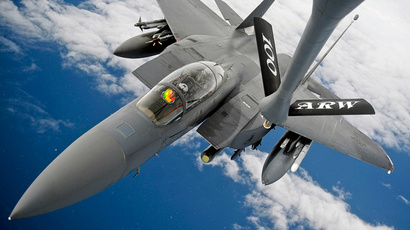
Specifically, US defense officials informed NATO allies earlier this month that Europe will host a B61-12 air-dropped gravity bomb, to be transferred by December. Politico reported Wednesday that a classified cable it has seen confirmed this.
The upgraded bomb was expected to arrive in Europe next spring, but the timeline was accelerated amid Russia’s growing nuclear rhetoric surrounding the war in Ukraine. President Biden recently raised eyebrows in saying nuclear “armageddon” is a real possibility for the first time since the close of the Cold War.
On an official level the Pentagon is disputing that its planned nuclear upgrade for NATO’s Europe arsenal is in any way connected to events in Ukraine, however, Politico cites the following sources:
Two people familiar with the issue of the upcoming shipment to Europe confirmed the accelerated timeframe reported in the diplomatic cable. They asked not to be named due to the sensitivity of the issue.
The cable, which has not previously been made public and was written to be distributed throughout the Pentagon and State Department to give policymakers a rundown of what was discussed among defense ministers at the NATO meeting, clearly indicates that allies are jittery.
The document says that during the meetings, 15 NATO allies raised concerns that the alliance “must not give in to Putin’s nuclear blackmail.”
The cable is further quoted by Politico as follows: “Given the rising volume and scale of Russia’s nuclear rhetoric, a subset of allies requested continued consultations at NATO to ensure continued readiness and consistent messaging.”……………..
The upgraded B61-12 is designed to allow the bomb to be carried by a fuller array of US and allied bombers and fighter jets, while older versions had more limited delivery options. The upgraded version is also said to be more accurate. https://www.zerohedge.com/military/us-accelerates-upgraded-nuke-delivery-jittery-european-allies-cable
‘No need’ for nuclear strikes on Ukraine, Putin says
9 News, By Associated Press Oct 28, 22
Russian President Vladimir Putin has denied having any intentions of using nuclear weapons in Ukraine but described the conflict there as part of alleged efforts by the West to secure its global domination, which he insisted were doomed to fail.
Speaking at a conference of international foreign policy experts, Putin said it’s pointless for Russia to strike Ukraine with nuclear weapons.
“We see no need for that,” Putin said.
“There is no point in that, neither political, nor military.”
Putin said an earlier warning of his readiness to use “all means available to protect Russia” didn’t amount to nuclear sabre-rattling but was merely a response to Western statements about their possible use of nuclear weapons.
He particularly mentioned Liz Truss saying in August that she would be ready to use nuclear weapons if she became Britain’s prime minister, a remark which he said worried the Kremlin.
“What were we supposed to think?” Putin said.
“We saw that as a coordinated position, an attempt to blackmail us.”……………………………………………….
US Defence Secretary Lloyd Austin told reporters today that the US has still not seen anything to indicate that Putin has decided to use a dirty bomb……………………………………………………. more https://www.9news.com.au/world/russia-ukraine-vladimir-putin-says-kremlin-not-intending-to-use-nuclear-weapons/7ab0234c-cadb-41f9-b8c2-05305c1eb464
Biden to scrap Trump missile project but critics attack US ‘nuclear overkill’
Arms control advocates say changes from Trump era outlined in Nuclear Posture Review do not go far enough
Guardian, Julian Borger , 28 Oct 22,
The Biden administration has confirmed it will cancel a submarine-launched nuclear cruise missile programme begun by Donald Trump, as part of its review of nuclear policy.
The administration will also retire a gravity bomb, the B83-1, from its arsenal as part of its Nuclear Posture Review (NPR), but arms control advocates argued the changes from the Trump era did not go far enough.
The administration is retaining another weapon variant introduced by Trump, a low-yield warhead called the W76-2, intended to deter an adversary like Russia using a low-yield weapon. The Democratic party manifesto in 2020 had called the W76-2 “unnecessary, wasteful, and indefensible”……………………..
Jon Wolfsthal, who was special assistant to Barack Obama on arms control and nonproliferation issues, expressed disappointment in the Biden NPR.
“The world is a dangerous place and our allies and we still rely on nuclear deterrence but this document ignores the role the US can play to make nukes less usable, less likely,” Wolfsthal said on Twitter……………………………………
In response to the NPR, Jessica Sleight, partner for policy at Global Zero, a disarmament advocacy group, said: “Contrary to President Biden’s stated intentions to reduce the role of nuclear weapons, this Nuclear Posture Review continues decades of nuclear overkill, doubles down on needless weapons programs, and fails to advance overdue reforms to policy and posture that would make the United States, its allies, and the world safer.” https://www.theguardian.com/world/2022/oct/27/biden-trump-missile-nuclear-posture-review
24 – 30 October UN Disarmament Week – don’t let the world powers normalise “tactical” nuclear weapons – demand abolition of nuclear weapons now!
This Disarmament Week, Women’s International League for Peace and Freedom Demands Nuclear Abolition Now!
The United Nations is marking its annual Disarmament Week from 24 to 30 October 2022. As the week is used to promote awareness of disarmament issues and initiatives, this year WILPF is focusing on amplifying demands for the abolition of nuclear weapons and urging everyone to get involved to prevent any more harm from these weapons of mass destruction.
WILPF International Secretariat 24 October 2022
…………………… current events have elevated the attention being paid to the risks of nuclear weapons and nuclear power, nuclear dangers have persisted in the shadows for decades. Every day, we all live with the possibility of massive nuclear violence, whether by intention, accident, or miscalculation.
The governments of nuclear-armed states, and many of their mainstream media outlets, do not want people to worry. Spreading misinformation about the allegedly “limited” impacts of “tactical” nuclear weapons, they are trying to normalise the threat and risk of nuclear war in order to prevent mass mobilisation against the bomb, as was seen around the world during the 1980s at the height of the Cold War.
But there is no such thing as a small nuclear weapon, and no such thing as a limited nuclear war. If nuclear weapons are used, the humanitarian and environmental consequences will be devastating. And the risks of escalation could mean a nuclear war that leads to climate catastrophe, global famine, and the end of life on Earth as we know it.
We do not have to accept this. People everywhere in the world have a voice and there are actions we can take. Instead of normalising nuclear war, we must stigmatise nuclear weapons.
Most governments have already rejected nuclear weapons, recognising that they are immoral weapons of insecurity and catastrophic harm. These governments negotiated the Treaty on the Prohibition of Nuclear Weapons, which has inspired many local, national, and international activities for nuclear disarmament, ranging from economic divestment to public protest.
What can you do?
This Disarmament Week, when we once again can clearly see the risks posed by nuclear weapons every single day, is a good time to get engaged in the work to abolish nuclear weapons, wherever you are.
You can start by signing this Open Letter From Nobel Peace Prize Laureates and Citizens of the World Against War and Nuclear Weapons, which WILPF’s Disarmament programme Reaching Critical Will, together with the International Physicians for the Prevention of Nuclear War (IPPNW), presented to the UN High Representative for Disarmament Affairs earlier this year.
You can also join the International Campaign to Abolish Nuclear Weapons (ICAN) and its many initiatives working with cities, parliamentarians, schools, and financial institutions to end the reign of terror of nuclear weapons.
Also check out WILPF’s resource page on nuclear weapons and current nuclear threats and risks, which includes key messages for talking with media or friends and family; an FAQ for details; links to resources that you can share to spread the word about the dangers of nuclear weapons; and ideas for how you can get engaged in the work to abolish nuclear weapons and prevent nuclear catastrophes.
This Disarmament Week, and beyond, join WILPF and the global antinuclear movement in demanding Nuclear Abolition Now!
Rocket Lab: Helping the US wage endless wars from space
https://thedailyblog.co.nz/2022/10/25/rocket-lab-helping-the-us-wage-endless-wars-from-space/By John Minto, October 25, 2022
It’s clear local mana whenua were misled by Rocket Lab founder Peter Beck when iwi land at Mahia Peninsula was leased to launch satellites into space.
At the time Peter Beck was clear Rocket Lab would be used for civilian purposes only and would not take up military contracts, despite this being a particularly lucrative path to take.
Fast forward a few years and we find Beck has abandoned any principles he may have had and his company is now majority owned by the US military and is launching satellites for US military purposes.
The government has to sign off on each launch to make sure it is in line with what’s acceptable to this country but it’s clearly a rubber stamp process conducted by Stuart Nash.
Any assurances from Peter Beck or Economic and Regional Development Minister Stuart Nash, who signs off on the launches for the government, that Rocket Lab’s work is for the betterment of mankind are not credible.
Peter Beck sets up straw man arguments saying claims of Rocket Lab weaponizing space are “misinformation” and the company would “not deal in weapons”. “We’re certainly not going to launch weapons or anything that damages the environment or goes and hurts people,” he told Newshub last year.
What nonsense. These are “straw-man” arguments. No-one has claimed the rockets contain weapons but what is absolutely clear is that the US military launches rockets for military purposes and this is what is happening at Mahia.
The NZ Herald reported last year on the capabilities of “Gunsmoke-J satellites”, which have been launched from Mahia for the US military, saying:
The other is the “Gunsmoke-J” satellite being launched for the US Army’s Space and Missile Defence Command (SMDC).
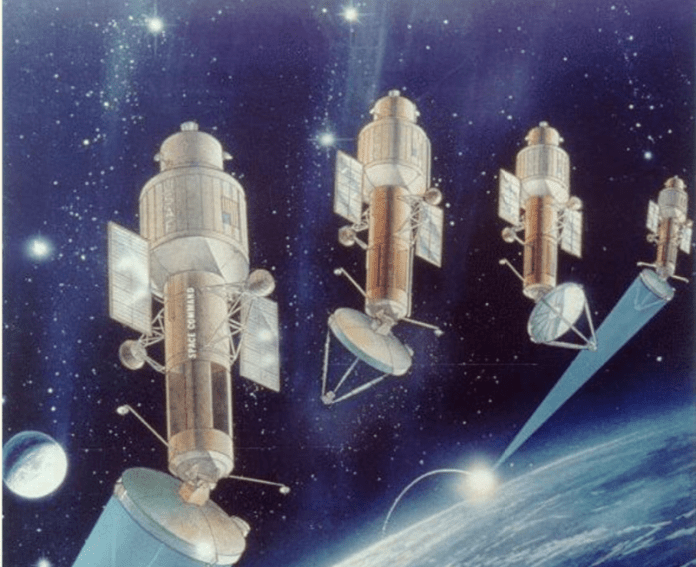
Gunsmoke-J is a prototype for a possible series of nano-satellites that will collect targeting data “in direct support of Army combat operations” according to a US Army fact sheet and a US Department of Defence budget document.
Green MP and party spokesperson for security and intelligence, Teanau Tuiono, is right to speak out:
“Weaponising space is not in our national interest and goes against our international commitments to ensuring peace in space,”
“The government should put in place clear rules that stop our whenua being used to launch rockets on behalf of foreign militaries”
“We should not be a launching pad for satellites for America’s military and intelligence agencies,” Green Party security and intelligence spokesman Teanau Tuiono said.
Rocket Lab is donkey deep with US strategies for “full spectrum dominance of the planet – including space. In doing so Beck and the government have made Mahia a target for conventional or even tactical nuclear weapons if hostilities break out between the US and another world power.
It’s ironic that the government provided start-up funds for Beck to get Rocket Lab off the ground only for Aotearoa New Zealand to find the company has put us to bed with a foreign military and made us target for conventional or nuclear attack.
Mana whenua in Mahia are right to be concerned – and so should the rest of us.
The government is “consulting” at the moment on these issues in their Space Policy Review.
Make a submission for the peaceful use of space here (Deadline 31 October)
Tactical Nuclear Fantasists
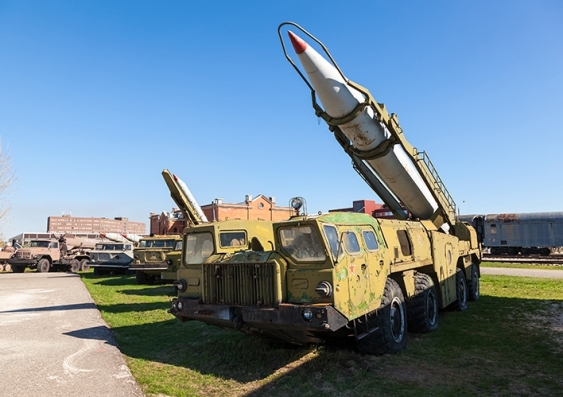
one category of nuclear weapon has continued to mark a grey area, lending a disturbed, even lunatic’s legitimacy to the battlefield deployment of such weapons. The tactical nuclear weapon is deceptively seductive to military planners.
Australian Independent Media, October 27, 2022 by: Dr Binoy Kampmark
Bogeyman politics tends to be flatly unimaginative. The image of the nuclear-mad Russian President, counting his diminishing options, has caught the imagination of press and propaganda outlets across the West. Will Mad Vlad go the distance and deploy a nuclear weapon in Ukraine?
Certainly, his rhetoric suggests the possibility. Vladimir Putin has promised to “make use of all weapon systems available to us” in the event Russia’s territorial integrity is threatened. ………….
The moment the innocents of Hiroshima were incinerated in August 1945, a weapon of mass lethality became a political option, the means to extract concessions and terrify opponents. Even more disturbingly, it also created an incentive on the part of powers to prevent others from getting it, thereby creating an exclusive club equipped with special amenities and privileges.
During a number of teeth-chattering moments of the Cold War, the use of nuclear weapons was contemplated. Historians note Cuba, Berlin and the Middle East. That they were not actually unleashed was a matter of unalloyed dumb luck and faux theory. Over time, this spawned an accepted, if nonsensical literature about the merits of having such lethal means. Precisely because of their potency, such weapons would never be used. Possessing them would be, to use a modern comparison, much like having unconvertible digital currency of huge value, more a matter of impressing your rivals than drawing direct benefit from them.
Having said that, one category of nuclear weapon has continued to mark a grey area, lending a disturbed, even lunatic’s legitimacy to the battlefield deployment of such weapons. The tactical nuclear weapon is deceptively seductive to military planners. Being of lower yield than their strategic, all-killing counterparts, they are seen as, in the words of the Union of Concerned Scientists, “more militarily useful, and less politically objectionable, and thus more likely to be used.” This does little to dampen the awful reality that such weapons can have yields greater than that of the first atomic weapon ever used.
The nature of such weapons is disturbingly nebulous in the military argot. In 2018, James Mattis, as US Secretary of Defense, opined to the House Armed Services Committee that there was no “such thing as a ‘tactical nuclear weapon’. Any nuclear weapon used at any time is a strategic game changer.”
Tactical nuclear weapons can comprise any number of devices with yields ranging from 1 kiloton to 50 kilotons. Alistair Millar, writing for Arms Control Today, mentions a few, including nuclear landmines, nuclear artillery shells, and missile warheads dropped by air or launched by missiles.
The 2018 US Nuclear Posture Review does away with much of the sentiment of the 2010 NPR in stressing the need to improve capabilities against Russia in various areas, including nonstrategic nuclear options. Moscow is specifically blamed for embracing a “limited first use” policy involving low-yield weapons that might “provide coercive advantage in crises and at lower levels of conflict.”……………………..
Ambiguity when it comes to a prospective use of nuclear weapons is considered one of the great flaws of military and political planning. Each party should know what the other proposes to do in certain circumstances, be it in terms of command structure, control and communications. Who has the authority to launch what weapons and when? What are the safeguards to cope with error? ………………….
Opacity is another factor complicating the whole business of how we cope with nonstrategic nuclear weapons. Numbers regarding the world’s tactical nuclear stockpiles remain sketchy………..
Paradoxically, even as such measures as the Treaty on the Prohibition of Nuclear Weapons gather greater popularity, the old members of the nuclear club continue to make mischief, modernising and adjusting their arsenals with little intention of ever abolishing them. The sheer allure of such weapons is unlikely to dissipate till their political dividends diminish. In the Ukraine War, such dividends abound. https://theaimn.com/tactical-nuclear-fantasists/
Russian delegation at UN calls on USA to join initiative to renounce weapons in space
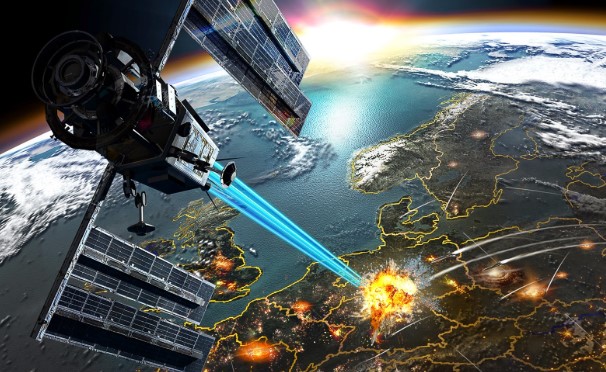
Foreign Ministry Spokeswoman Maria Zakharova’s comment on the US initiative in the UN General Assembly First Committee
The other day, the US delegation submitted to the UN General Assembly First Committee an aide-memoire on proposed UN General Assembly resolution on destructive direct-ascent anti-satellite missile testing. We analysed the text to discover that our apprehensions concerning this US initiative were valid.
As before, we regard the moratorium on testing the above type of anti-satellite weapon (ASW) announced by the White House in April as a purely declarative move. The UN General Assembly statements and draft resolutions are clearly not enough to prevent an arms race in space (PARIS), all the more so for a country that has had experience – at least since 2008 – destroying space objects with ASW.
The United States remains bashfully silent about the most important thing: are they willing to permanently rule out the combat use of this type of weapon? The resolution says nothing about it. There are no commitments regarding the development and production of such systems, or the prospect of ever destroying the Pentagon’s existing anti-satellite capabilities.
Moreover, the possibility of deploying ASW means on the US reusable unmanned space shuttle X-37B, which is capable of staying in orbit for a long time, performing manoeuvres and carrying a payload, cannot be ruled out. By the way, our multiple requests to the United States to clarify the X-37B platform’s goals and objectives have so far remained unanswered.
Military dominance and superiority in outer space being set as clear goals in US doctrinal documents, their view of space as an arena of confrontation and their plans for achieving these goals are quite telling if one wants to understand Washington’s genuine motives. It is no coincidence that the US delegation at the Geneva Conference on Disarmament is doing its utmost to hinder the start of talks on a multilateral instrument which contains reliable international legal guarantees against deploying weapons of any kind in outer space and the renunciation of the use of force or the threat of force against space objects. The Americans are using every pretext to avoid working on the Russian-Chinese draft treaty designed to fulfill PARIS goals………………….
Washington can prove it has serious intentions if it revises its destructive stance and the US delegation that is participating in the Conference on Disarmament joins the efforts to start talks as soon as possible on a legally binding instrument with guarantees of non-deployment of weapons in space, non-use of force or threat of force against space objects.
Specifically, the approach promoted by Russia involves the following commitments:
– not to use space objects as a means of destroying any targets on Earth, in the air or outer space;
– not to create, test or deploy weapons in space to perform any tasks, including for anti-missile defence, anti-satellite activity, or use against targets on Earth or in the air, and to eliminate such systems that the states already possess;
– not to create, test, deploy or use space weapons for anti-missile defence, anti-satellite activity, or use against targets on Earth or in the air;
– not to destroy, damage, or disrupt the normal functioning and not to change the flight paths of space objects owned by other states;
– not to assist or encourage other states, groups of states, international, intergovernmental, or any non-governmental organisations, including non-governmental legal entities that were established, registered or located on the territory under their jurisdiction and/or control, to participate in the above activities.
In addition, the accession of the United States and its allies to the international initiative/political commitment not to be the first to place weapons of any kind in outer space would be a really important confidence-building measure. We are once again calling on Washington to follow the example of more than 30 UN member states and join this initiative, as well as to support the UNGA draft resolution on that matter.
We are ready to substantively and professionally discuss the US initiative in this context of multilateral efforts to arrive at a comprehensive solution to PARIS issues. https://mid.ru/en/foreign_policy/news/1835061/
US, Japan, S Korea vow response if N Korea tests nuclear bomb
US says full military capabilities will be used, including nuclear, to protect its allies South Korea and Japan.
An “unparalleled” scale of response would be warranted if North Korea conducts a seventh test of a nuclear weapon, the United States, Japan and South Korea have warned.
The warning was issued on Wednesday amid concerns by the US and its regional allies that North Korea could be poised to resume nuclear bomb testing for the first time since 2017.
“We agreed that an unparalleled scale of response would be necessary if North Korea pushes ahead with a seventh nuclear test,” South Korean first vice foreign minister Cho Hyun-dong told a news conference in Tokyo.
Cho made his comments alongside Japan’s vice foreign minister Takeo Mori and US Deputy Secretary of State Wendy Sherman.
North Korea has been carrying out weapons tests at an unprecedented pace this year, firing more than two dozen short and medium-range ballistic missiles in recent weeks, including a missile that over-flew Japan.
We urge (North Korea) to refrain from further provocations,” Sherman said, calling the North’s actions “reckless” and deeply destabilising for the region.
Sherman also said that the US will use its full military capabilities, “including nuclear, conventional and missile defence”, to protect its allies Japan and South Korea.
North Korea needs to understand that the US commitment to the security of South Korea and Japan is “iron clad”, she said.
“And we will use the full range of US defence capabilities to defend our allies, including nuclear, conventional and missile defence capabilities,” she said.
US State Department spokesman Ned Price said in a statement that Sherman also reiterated that the US was continuing to “seek serious and sustained dialogue with the DPRK” (Democratic People’s Republic of Korea) – the official name for North Korea.
Cho, during his talks with Sherman, raised concern that a new North Korean nuclear weapons policy adopted in September increases the possibility of its arbitrary use of nuclear weapons.
“This is creating serious tension on the Korean peninsula,” Cho said.
In September, the USS Ronald Reagan and accompanying ships conducted joint military exercises with South Korean forces in response to a North Korean ballistic missile test in what was their first joint military training involving a US aircraft carrier since 2017.
Angered by South Korea’s military activities, Pyongyang last week fired hundreds of artillery shells off its coasts in what it called a grave warning to its neighbour to the south.
Sherman met earlier on Tuesday with Japan’s Mori and reaffirmed the further strengthening of the Japan-US alliance and other shared goals, including the complete denuclearisation of North Korea and their joint response to China’s increasingly assertive actions in the region.
Japanese defence minister Yasukazu Hamada recently said that North Korea is believed to have achieved a miniaturisation of nuclear warheads while significantly advancing its missile capabilities by diversifying its launch technologies, making interceptions more difficult.
Japan has joined South Korea in also warning of a possible nuclear test by North Korea in the near future.
EU ‘dancing on edge of volcano’ with Ukraine – French ex-president
https://www.rt.com/news/565187-eu-ukraine-peace-sarkozy/ 24 Oct 22, Nicolas Sarkozy says the bloc’s policy is driven by “miscalculation, exaltation, anger, superficial reactions”
It’s high time for the EU to abandon its emotionally driven policies on Ukraine and start talking about achieving peace, former French president Nicolas Sarkozy has suggested.
In an interview with Le Journal du Dimanche on Saturday, Sarkozy criticized Brussels for its involvement in the conflict between Russia and Ukraine, which has included sweeping sanctions on Moscow, weapons deliveries to Kiev, and calls for a military solution to the crisis.
“The European Commission is primarily an administrative body. Moreover, I still haven’t understood under which article of the European treaties [the body’s president Ursula] von der Leyen justifies her competence in the field of arms purchases and foreign policy,” he said.
“The only thing the Europeans are hearing now is more and more billions of euros being spent on the purchase of weapons. More weapons, more deaths, more war,” the 67-year-old politician added.
The EU’s policy regarding the conflict in Ukraine is driven by “miscalculation, exaltation, anger, superficial reactions,” and because of this “we’re dancing at the edge of a volcano,” said Sarkozy, who was the president of France between 2007 and 2012.
The bloc was right to condemn Russia and show solidarity with Ukraine, but it also needs to exercise “composure” and work to prevent the escalation of the conflict, he added. “It’s high time for serious initiatives to be taken to start talking about the future and peace.”
Sarkozy also criticized Ukrainian President Vladimir Zelensky for signing a decree earlier this month, which officially made it “impossible” for him to hold talks with his Russian counterpart Vladimir Putin.
Such a stance amounted to “demanding a regime change in Moscow,” the veteran politician pointed out. “I consider this to be a dangerous leap into the unknown, although it’s understandable that it’s difficult for the Ukrainian president to talk to Putin,” he said.
Moscow, which has repeatedly invited Kiev to come to the negotiating table in recent months, has blamed the Ukrainian side for undermining any potential for a peaceful settlement of the crisis. It has also repeatedly condemned the deliveries of weapons to Zelensky’s government by the US, EU, UK and some other countries, arguing that they won’t change the outcome of the conflict, but will prolong the fighting and increase the risk of a direct confrontation between Russia and NATO.
Cities should increase role in effort to abolish nuclear weapons
Mayors for Peace comprises 8,213 cities from 166 countries and regions, including the United States, Russia and other nuclear weapon states.
https://www.asahi.com/ajw/articles/14750556, October 24, 2022
Foreign representatives to the general conference of Mayors for Peace pose for a photograph in Hiroshima on Oct. 20. (The Asahi Shimbun)
While disarmament by nuclear weapon states progresses only at a snail’s pace, Russia has invaded Ukraine and has repeatedly threatened to use nuclear weapons.
The developments have brought home a reality where nuclear arms could be used again in the manner of what was done to Hiroshima and Nagasaki.
In light of the situation, we are left to ask what role could be played by local governments, which are closer to citizens than central governments, in striving for the goal of abolishing nuclear weapons.
Mayors for Peace held its 10th General Conference in Hiroshima on Oct. 19-20.
The international nongovernmental organization was founded 40 years ago in the midst of the Cold War in response to a proposal made by Hiroshima’s mayor at a U.N. meeting.
The Hiroshima Appeal, adopted at the meeting last week, expressed alarm at the risk of nuclear war, which it said has been raised to “the highest level,” and emphasized that “the only absolute viable measure for humanity to take against repeated threats of nuclear weapons is their total elimination.”
The document called on nuclear weapon states to fulfill their disarmament obligations spelled out in the Nuclear Nonproliferation Treaty (NPT) and to ratify the Treaty on the Prohibition of Nuclear Weapons (TPNW), which took effect at the initiative of countries with no nuclear arsenals, in lockstep.
Mayors for Peace comprises 8,213 cities from 166 countries and regions, including the United States, Russia and other nuclear weapon states.
While nuclear weapon states and their allies continue to adhere to the nuclear deterrence theory, the organization has called on local governments to unite across national borders and return to the basic principle that nuclear arms should be abolished. It has played a significant role.
A number of cities, particularly in Europe, have moved to join Mayors for Peace since Russia invaded Ukraine.
In a resolution last year, the U.S. Conference of Mayors called on the U.S. government to welcome the TPNW and take immediate action toward nuclear abolition. Cities that are members of Mayors for Peace played a major part in that process.
Mayors for Peace should expand its activities by capitalizing on the current trend of the growing presence of local governments.
The essential thing is to work hand in hand with civil society in sending out messages.
Mayors for Peace has been supported by pleas from survivors of the atomic bombings of Hiroshima and Nagasaki that the error should never be repeated.
During the meeting in Hiroshima, cases of efforts being made in Japan and abroad were presented. They include how a group of 26 cities in western Tokyo have been working together to archive people’s accounts of their war experiences and to provide peace education.
We hope more local governments will draw on their networks to share and expand their diverse attempts.
Japan, as the only nation that has suffered atomic bombings in war, has a major role to play.
Of all municipalities in the nation and Tokyo’s wards, more than 99 percent, or 1,737, are members of Mayors for Peace.
At a general meeting of Japanese member cities held on the sidelines of the 10th general conference, a written request was approved calling on the government to participate as an observer in the second meeting of the state parties to the TPNW, which is scheduled for next year, and sign and ratify the treaty.
Hiroshima is expected to host the first meeting of a new international group of eminent persons to discuss nuclear disarmament by year-end and a Group of Seven summit next spring.
Prime Minister Fumio Kishida, who will be presiding over both meetings, should take the appeal of Mayors for Peace seriously and discard his stance of continuing to turn his back on the TPNW as soon as possible.
1 This Month




PLEASE OPPOSE HR 8255 AND S.3639 – bills would accelerate satellite deployment, with no environmental review or safeguards – https://ncstd5li.quorum.us/campaign/169331/
To see nuclear-related stories in greater depth and intensity – go to https://nuclearinformation.wordpress.com
-
Archives
- September 2026 (339)
- August 2026 (330)
- July 2026 (355)
- June 2026 (287)
- May 2026 (306)
- April 2026 (356)
- March 2026 (251)
- February 2026 (267)
- January 2026 (308)
- December 2025 (358)
- November 2025 (359)
- October 2025 (375)
-
Categories
- 1
- 1 NUCLEAR ISSUES
- business and costs
- climate change
- culture and arts
- ENERGY
- environment
- health
- history
- indigenous issues
- Legal
- marketing of nuclear
- media
- opposition to nuclear
- PERSONAL STORIES
- politics
- politics international
- Religion and ethics
- safety
- secrets,lies and civil liberties
- spinbuster
- technology
- Uranium
- wastes
- weapons and war
- Women
- 2 WORLD
- ACTION
- AFRICA
- Atrocities
- AUSTRALIA
- Christina's notes
- Christina's themes
- culture and arts
- Events
- Fuk 2022
- Fuk 2023
- Fukushima 2017
- Fukushima 2018
- fukushima 2019
- Fukushima 2020
- Fukushima 2021
- general
- global warming
- Humour (God we need it)
- Nuclear
- RARE EARTHS
- Reference
- resources – print
- Resources -audiovicual
- Weekly Newsletter
- World
- World Nuclear
- YouTube
-
RSS
Entries RSS
Comments RSS

