Trump, Netanyahu down to last card in criminal Iran war
10 March 2026 AIMN Editorial, By Walt Zlotow, West Suburban Peace Coalition Glen Ellyn IL, https://theaimn.net/trump-netanyahu-down-to-last-card-in-criminal-iran-war/
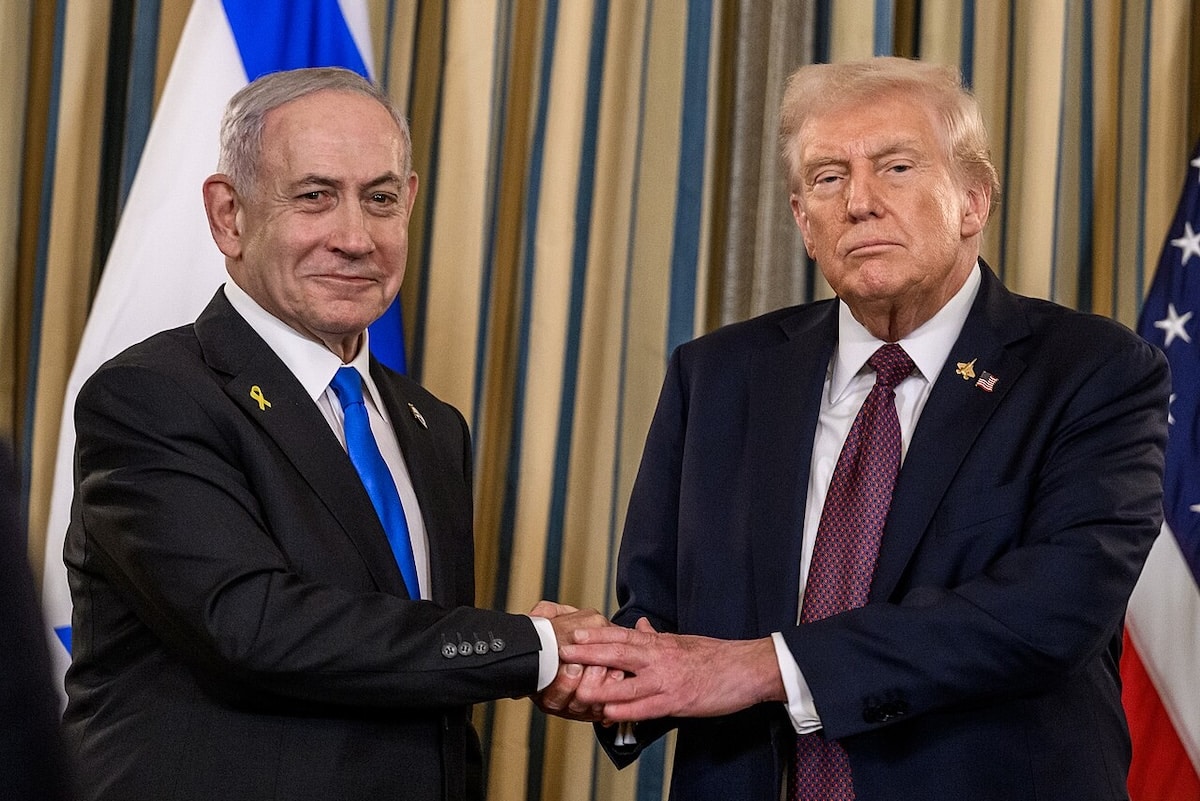
President Trump and Israeli Prime Minister began their second war on Iran in 7 months with just 2 war crime cards to play.
The first card was the US, Israeli version of Blitzkrieg from the air. Kill Iran’s beloved leader the Ayatollah Ali Khamenei, demand surrender, then wait for the 90 million Iranians to capitulate to new masters Trump and Netanyahu. That was projected to take just about 72 hours.
As expected, millions of Iranians came into the streets following Khamenei’s assassination. But not to welcome the grisly invaders bombing them. It was to show near total support to the Islamic government, cheering them on to inflict as much retaliation possible to repel the Trump Netanyahu criminal tag team.
And they are succeeding, causing massive damage to US military facilities in Bahrain, Qatar, Jordan, Kuwait. Saudi Arabia and UAE. All 6 are running out of defensive interceptors provided by Uncle Sam. Why? Trump is giving them all to himself and his war partner Netanyahu. When this is all over, the Gulf States will never again trust America for their defense. They may even tell the US to vamoose the region PDQ.
Iran is also bombing Israel night and day, giving Netanyahu, flying around the region 24/7 to avoid Khamenei’s fate, a taste of what he visited on Palestinians in Gaza for 2 years.
That leaves Trump and Netanyahu with their last war crime card to play. Bomb Iran to smithereens till there is no more Iranian weapons or personnel left with which to retaliate.
Big problem facing America and Israel is size. Both Israel and US military facilities nearby are compact in size making them easy targets, while Iran, the 17th largest country by area, has their tens of thousands of missiles scattered and largely unreachable.
Now that Iran has chosen to fight to the death rather than capitulate as expected, the advantage may be tiltng in their favor. Rumors surfacing Trump is pondering an off ramp to stop the bleeding he has no way of controlling.
Worst case scenario remains that Netanyahu may get so desperate facing unfathomable defeat, he escalates to war crime card 3… nuke Tehran.
Trump hints U.S. will turn to Cuba after Iran: ‘Just a question of time’
Kevin Breuninger, Fri, Mar 6 2026, https://www.cnbc.com/2026/03/05/trump-cuba-iran-regime-change.html
Key Points
- President Donald Trump suggested his administration will turn its sights to Cuba after U.S. military operations in Iran are done.
- It “will be just a question of time before you and a lot of unbelievable people are going to be going back to Cuba, hopefully not to stay,” Trump told a crowd at the White House.
- On Iran, Trump said the U.S. and Israeli militaries are continuing to “totally demolish the enemy.”
President Donald Trump on Thursday suggested his administration will turn its sights to Cuba after U.S. military operations in Iran are finished.
“What’s happening with Cuba is amazing,” Trump said at the White House while participating in a visit of Inter Miami CF, the 2025 Major League Soccer champions.
“We think that we want to fix — finish this one first, but that will be just a question of time before you and a lot of unbelievable people are going to be going back to Cuba, hopefully not to stay,” Trump said to the Miami-heavy audience that included people of Cuban heritage.
The comments show Trump, less than a week into an escalating military conflict in the Middle East, is considering another major foreign policy move.
“We want you back, and we don’t want to lose you. We don’t want to make it so nice that they stay. But some people probably do want to stay. They love Cuba so much,” he said. “That was another one that wasn’t supposed to happen.”
Trump turned his focus to Cuba after providing a boastful update on the war in Iran, where he said the U.S. and Israeli militaries are continuing to “totally demolish the enemy.”
Trump said Secretary of State Marco Rubio has been “doing a fantastic job.”
“And you’ve been doing a fantastic job on a place called Cuba,” Trump added, prompting applause from the room.
Trump’s latest remarks on Cuba follow previous hints, some less subtle than others, that he and his allies have dropped about their plans for the Caribbean island nation.
“Cuba’s next,” Sen. Lindsey Graham, R-S.C., said Sunday on Fox News after the Iran strikes began.
In an interview with Politico earlier Thursday, Trump predicted that after Iran’s regime is toppled, “Cuba’s going to fall, too.”
Trump also took credit for choking Cuba’s economy to force them to the negotiating table, which he had vowed to do after the U.S. military in January attacked Venezuela, a major supplier of oil to Cuba.
“We cut off all oil, all money, or we cut off everything coming in from Venezuela, which was the sole source. And they want to make a deal,” he told Politico.
“We are talking to Cuba,” Trump also said in that interview. “How long have you been hearing about Cuba — Cuba, Cuba — for 50 years?” he added. “And that’s one of the small ones for me.”
Israel planned this war on Iran for 40 years. Everything else is a smoke screen.
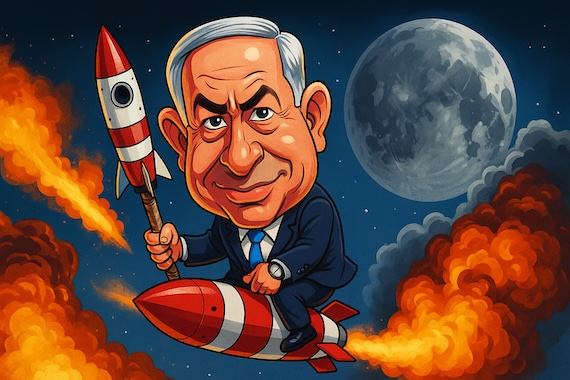
The Israeli prime minister, Benjamin Netanyah……… gloated: “This combined effort allows us to do what I have hoped to achieve for 40 years: to crush the regime of terror completely. That’s my promise and this is what is going to happe
And all the while, Israel’s own arsenal of nuclear weapons, undeclared and therefore unmonitored, has been an open secret.
The embers of resistance – in Gaza, Iraq, Lebanon, Syria, Yemen – have not been snuffed out. With the attack on Iran, they are being fanned into a fire
Jonathan Cook, Mar 06, 2026
It is near impossible to make sense – at least from the justifications on offer – of what US President Donald Trump really hopes to achieve with his and Israel‘s blatantly illegal war of aggression on Iran.
Is it to destroy an Iranian nuclear weapons programme for which there has never been any tangible evidence, and which Trump claimed just a few months ago to have “completely and totally obliterated” in an earlier lawbreaking attack?
Or is it intended to force Tehran back to negotiations on its nuclear energy enrichment programme that were brought prematurely to an end when the US launched its unprovoked attack – talks, we should note, that were made necessary because in 2018, during his first term, Trump tore up the original deal with Iran?
Or is the war supposed to browbeat Iran into greater flexibility, even though Trump blew up the talks at the very moment Oman, the chief mediator, insisted that Tehran had capitulated on almost every one of Washington’s onerous demands and that a deal was “within our reach“?
Or are the air strikes designed to “liberate” Iranians, even though the early victims included at least 165 civilians in a girls’ school, most of them children aged between 7 and 12?
Or is the aim to pressure Iran to give up its ballistic missiles – the only deterrence it has against attack, and which would leave it utterly defenceless against US and Israeli malevolent designs?
Or did Washington believe Tehran was about to strike first, even though Pentagon officials have confided to congressional staff that there was zero intelligence an attack was about to happen?
Or is the goal to decapitate the Iranian regime, as the strikes have already achieved with the assassination of Iran’s supreme leader, Ali Khamenei? If so, to what purpose, given that Khamenei was so opposed to an Iranian nuclear bomb that he issued a religious edict, a fatwa, against its development?
Might Khamenei’s successor – having seen how utterly untrustworthy the US and Israel are, how they operate as rogue states unconstrained by international law – now decide that developing a nuclear bomb is an absolute priority to protect Iran’s sovereignty?
No clear rationale
There is no clear rationale from Washington because the author of this attack is not to be found in either the White House or the Pentagon. This plan was cooked up in Tel Aviv decades ago.
The Israeli prime minister, Benjamin Netanyahu, admitted as much on Sunday. He gloated: “This combined effort allows us to do what I have hoped to achieve for 40 years: to crush the regime of terror completely. That’s my promise and this is what is going to happen.”
Those four decades, let us note, were also the timeframe for an endless series of warnings from Netanyahu and other Israeli leaders that Tehran was only months away from developing a nuclear bomb.
Netanyahu has been peddling this same urgent, nonsensical pretext for attacking Iran all that time. For 40 years, each year has been proclaimed the very last opportunity to stop the “mad mullahs” from obtaining a bomb – a bomb that never materialised.
And all the while, Israel’s own arsenal of nuclear weapons, undeclared and therefore unmonitored, has been an open secret.
Europe helped Israel develop its bomb, while the US turned a blind eye, even as Israeli leaders espoused a suicidal doctrine known as the “Samson Option“, which posited that Israel would rather detonate its nuclear arsenal than suffer a conventional military defeat.
The Samson Option implicitly rejects the idea that any other state in the Middle East can be allowed to acquire a bomb and thereby level the military playing field with Israel.

It is that very premise that, for decades, has guided Israeli policy towards Tehran. Not because Iran has shown an inclination to develop a weapon. Nor because its supposedly “mad mullahs” would be foolish enough to fire them at Israel were they ever to acquire them.
No, it was for other reasons. Because Iran is the largest and most unified state in the region, one with a rich history, a strong cultural identity and a formidable intellectual tradition. Because Iran has repeatedly shown itself – whether under secular or religious leaders – unwilling to submit to western, and Israeli, colonial domination.
And because it is looked to as a source of authority and leadership by Shia religious communities in neighbouring countries – Iraq, Lebanon, Syria, Yemen – that have a history of similarly refusing to bow to Israeli hegemony.
Israel’s fear was that, were Iran to follow North Korea and acquire a nuclear weapon, Israel would be finished as the West’s most useful militarised client state in the oil-rich Middle East.
Stripped of its ability to terrorise its neighbours, stoke sectarian division and help project US imperial power into the region, Israel would lose its rationale. It would become the ultimate white elephant.
Israeli leaders – grown fat on endless military subsidies paid for by US taxpayers and given licence to plunder the Palestinians’ resources – were never going to willingly step off their gravy train.
Which is why Iran has rarely been out of Israel’s sights……………………………………………………………………………………………………………………………………………………………………………………………………………………………………………………….
The last time Iran had a democratic government, in the early 1950s, its secular, socialist prime minister, Mohammad Mossadegh, outraged the West by nationalising Iran’s oil industry for the benefit of Iranians.
The CIA’s Operation Ajax toppled him in 1953 and reinstated the brutal Mohammad Reza Pahlavi as monarch, or Shah, allowing the US and Britain to take back control of Iran’s oil.
The backlash was 26 years coming. Islamic clerics rode an outpouring of popular hatred for the US and Israeli-backed Shah to launch their revolution…………………………………………………………………………………………………………….
Pact with the devil
Washington’s western allies may be privately uncomfortable at being visibly associated with another illegal US-Israeli war. But in supporting more than two years of genocide in Gaza, they already made their pact with the devil. There is no going back now.
Which is why Britain, France, Germany, Canada and Australia all dutifully lined up behind the Trump administration as the mayhem began………………………………………………………………………….
The embers of resistance – in Gaza, Iraq, Lebanon, Syria, Yemen, and potentially in new sites like Bahrain – have not been snuffed out. And now, with the attack on Iran, they are being fanned into a fire with every new crime, every new outrage, every new atrocity. https://jonathancook.substack.com/p/israel-planned-this-war-on-iran-for?utm_source=post-email-title&publication_id=476450&post_id=190093136&utm_campaign=email-post-title&isFreemail=true&r=17yeb&triedRedirect=true&utm_medium=email
.
‘The Military-Industrial Complex Is Winning’: While Bombing Iran, Trump Says Weapons Contractors to Boost Production.
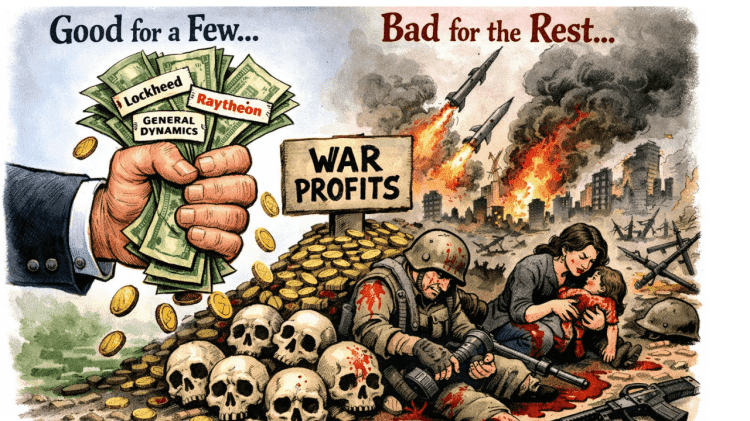
The president and Lockheed Martin said that the expansion began months ago, but his comments followed a White House meeting held amid a US-Israeli assault on Iran and mounting threats against Cuba.
Jessica Corbett, Common Dreams, Mar 06, 2026
After meeting with several chief executives at the White House on Friday—while also bombing Iran with Israel and threatening Cuba—US President Donald Trump said that top military contractors “have agreed to quadruple Production of the ‘Exquisite Class’ Weaponry in that we want to reach, as rapidly as possible, the highest levels of quantity.”
Trump said on his Truth Social platform that he met with the CEOs of BAE Systems, Boeing, Honeywell Aerospace, L3Harris Missile Solutions, Lockheed Martin, Northrop Grumman, and RTX—formerly Raytheon.
“Expansion began three months prior to the meeting, and Plants and Production of many of these Weapons are already underway,” he wrote, adding that another meeting is scheduled in two months.
……………………………………………………………………………………………………………….
It was not immediately clear whether the meeting… resulted in any new agreements to boost production beyond those previously announced by the Pentagon since the beginning of the year.
Those agreements include a multiyear deal to triple PAC-3 production and quadruple THAAD interceptor production with Lockheed. It also included separate multiyear deals with RTX to boost production for the Tomahawk, AMRAAM air-to-air missile, Standard Missile-3 IIA and IB, and Standard Missile-6, with production for certain of those munitions set to double or quadruple, RTX said at the time………………….
Northrop Grumman said in a statement that “we support the president’s focus on speed and investment to deliver military capabilities. With our industry-leading levels of investment and decades of proven performance, we continue to grow production capacity and deliver mission-ready technologies for the nation’s warfighters.”
Using Trump’s preferred name for the Pentagon, an RTX spokesperson said the company “is proud to support the administration’s goals of defending the US and its allies at this critical moment and committed to accelerating the production of five key munitions in accordance with the historic frameworks reached with the War Department last month.”
Defense Secretary Pete Hegseth also joined the meeting, according to White House press secretary Karoline Leavitt. After Hegseth shared Trump’s Truth Social post on the platform X, Lockheed Martin replied, saying that it began working with the Pentagon chief and Feinberg “months ago,” and the company has “agreed to quadruple critical munitions production………………………………………………………….. https://www.commondreams.org/news/trump-defense-contractors
Starmer’s Self-Defence Fudge: The UK’s Growing Involvement in the Iran War

Healey confirmed that the US was using British bases to target Iranian missile sites from RAF Fairford in Gloucestershire and Diego Garcia in the Indian Ocean.
The dangers of closer involvement with the US in this war should be all too clear for Starmer and the Labour Party. In March 2003, as a human rights lawyer, he warned the government of Tony Blair that pre-emptive action against Iraq to disarm the regime of Saddam Hussein of alleged weapons of mass destruction would find itself, from a legal perspective, on thin ice.
10 March 2026 Dr Binoy Kampmark, https://theaimn.net/starmers-self-defence-fudge-the-uks-growing-involvement-in-the-iran-war/
Wars can distract, and for leaders in political purgatory, they can be particularly useful. It remains to be seen whether the UK’s increasing involvement in the illegal war being waged on Iran by Israel and the United States will serve that purpose. Prime Minister Sir Keir Starmer, the great saviour of the British Labour Party in taking them to victory in 2024, is finding himself in sinking desperation. Being less popular than a pandemic, he has much work to do if he is to retain his premiership till and after the next election.
This deepening involvement in the Iran War has been messy. Britain, along with France and Germany, were initially clear in their joint February 28 statement that they had not participated in the strikes on Iran but were “in close contact with our international partners, including the United States, Israel, and partners in the region.” Instead of condemning the pre-emptive attack on Tehran as a crime of aggression in breach of the United Nations Charter and international law, the statement went on to “condemn Iranian attacks on countries in the region in the strongest terms.”
Within a matter of hours, Starmer rebadged his country’s engagement in the conflict as a matter of self-defence under Article 51 of the United Nations Charter, making what can only be regarded as a spurious use of international law – or whatever was left of it. The press release on March 1 again reiterated condemnation for Iran’s “reckless and ongoing discriminate attacks against countries in the region,” taking no account as to why Tehran was engaged in such an avenging task. But international law permitted the UK and its allies “to use or support force in such circumstances where acting in self-defence is the only feasible means to deal with an ongoing armed attack and where the force used is necessary and proportionate.”
It followed from this that the UK had “military assets flying in the region to intercept drones or missiles targeting countries not previously involved in the conflict.” A request from Washington had also meant that his government would “facilitate specific and limited defensive action against missile facilities in Iran which were involved in launching strikes at regional allies.” The statement went on, weakly, to ward off suggestions of any “wider involvement in the broader ongoing conflict between the US, Israel and Iran.”
On March 9, in an oral statement to the House, the UK Secretary of State for Defence John Healey revealed the sheer scale of British involvement. The briefest of references was made to Starmer’s justification along lines of collective self-defence under international law. To put some flesh on the bone, it was important to inflate the threat posed by the Iranian regime, a force of cruel destruction that had “slaughtered protestors in its own streets,” supplied Shahed drones to Russia in its “illegal invasion of Ukraine” and conducted cyber-attacks against Britain and plotted assassinations on it streets.
Healey confirmed that the US was using British bases to target Iranian missile sites from RAF Fairford in Gloucestershire and Diego Garcia in the Indian Ocean. He also outlined various “defensive operations” that had taken place: the destruction of Iranian drones over Jordan by F-35s; the use of Typhoons to shoot “down targets heading towards Qatar”; and “counter-drone units defeating further attacks against coalition bases in Iraq.” Various “defensive air sorties in support of the UAE” were also being conducted. Given this burgeoning list, it is surely a matter of time, given the prolongation of conflict, for Starmer to join the full-blooded effort and hit sites in Iran proper. The pretence to legality will have all but collapsed by that point.
The US President Donald Trump, for his part, has been petulant, scornful of Starmer for not doing more. “This is not Winston Churchill,” he moaned to journalists over the PM’s initial tardiness in permitting the use of British bases to launch strikes on Iran. In a social media post, Trump revealed that the UK, “our once Great Ally, maybe the Greatest of them all, is finally giving serious thought to sending two aircraft carriers to the Middle East.” With a bitchy turn, the President informed the PM that “we don’t need them any longer – But we will remember.” He had “no need for people that join Wars after we’ve already won!”
The dangers of closer involvement with the US in this war should be all too clear for Starmer and the Labour Party. In March 2003, as a human rights lawyer, he warned the government of Tony Blair that pre-emptive action against Iraq to disarm the regime of Saddam Hussein of alleged weapons of mass destruction would find itself, from a legal perspective, on thin ice. “The mere fact that Iraq has a capacity to attack at some specified time in the future is not enough.” No one believed that Iraq was imminently about to attack the UK or its allies, and any claim to self-defence “would sit uncomfortably with the US position that military action is justified to destroy such weapons of mass destruction as Iraq may have, and to bring about a change of leadership.”
Despite these warnings, Blair, with a poodle’s dignity, joined President George W. Bush alongside that other servitor, Australia, to attack Iraq, finding no WMDs and inviting the deserved opprobrium of the international law community. The public inquiry into Britain’s involvement in the war, chaired by John Chilcot, noted that “the circumstances in which it was decided there was a legal basis for UK military action were far from satisfactory.” The phase of planning and preparations for a post-Saddam also proved “wholly inadequate.” But the inquiry report also made an unimpeachable observation troublingly relevant as Britain gets ever more involved in the current crime of aggression: “The US and UK are close allies, but the relationship between the two is unequal.”
Iran signals a ‘fight to the end’ with choice of new ayatollah

Tyler Durden, ZeroHedge, Mon, 09 Mar 2026
Meanwhile, the US struggles to define Israeli-coordinated endgame
Summary:
- Lebanon wants direct peace talks with Israel to end fighting but Israeli rejects it, also amid US skepticism: Axios.
- Trump says too soon to talk about seizing Iran’s oil but does not rule it out, tells NBC.
- Analyst consensus on question of potentially protracted conflict: Iran Signals a Fight to the End With Appointment of Khamenei’s Son
- Senator Graham: “The American Embassy is being evacuated in Riyadh because of sustained attacks by Iran against the Kingdom of Saudi Arabia.”
- Timeline to end Iran war? Trump signals decision will be only after ‘mutual’ decision with Netanyahu.
- Trump Truth Social post calls for Australia to give Iran National Woman’s Soccer team Asylum, but it remains unclear if the whole team is actually requesting it, or if individuals are.
- Iranian official to Al Jazeera: “we are able to continue the war for a long time and there is no room for diplomacy now.”
- G7 ‘closely monitoring’ energy markets, ‘ready’ to take necessary measures, including possible oil stockpile release.
- Younger, reportedly more ‘hardline’ Ayatollah takes command as regime stability continues: Military and political elites have pledged allegiance to Mojtaba Khamenei, who replaces his slain father as supreme leader and is viewed as a figure favored by the IRGC.
- Offramp, or more global shock & pain ahead? Trump after seeing oil prices: Short term oil prices, which will drop rapidly when the destruction of the Iran nuclear threat is over, is a very small price to pay for U.S.A., and World, ONLY FOOLS WOULD THINK DIFFERENTLY!
- Threat of whole regional war ongoing: Turkey says second Iranian ballistic missile shot down by NATO defenses in airspace, but then NATO quickly contradicts – saying no 2nd missile was intercepted.
- Nation-building, nation-smashing, divergent US-Israeli aims? More from Trump”…will work tirelessly to bring Iran back from the brink of destruction, making it economically bigger, better, and stronger than ever before.” But US officials distance themselves from big weekend attacks on Iranian oil.
Iran shuts door on ceasefire talk possibility, accuses US of seeking ‘partition’: as several countries have begun mediation efforts; however Foreign Ministry says: “While military aggression continues, there is little room to talk about anything other than a decisive response.”- CENTCOM confirms 8th US troop death; More Iranian missile/drone hits on Gulf sites, IDF ground operations expand inside Lebanon
Update(1240ET): Iran on Monday is seeking to showcase its continuity and ‘stability’ of government after a week of heavy US-Israeli bombardment failed to produce regime change. Instead, Tehran is vowing to fight back, saying it can keep the war going for as long as needed. Analysts have pointed out Iran needs to inflict a cost on the US and Israel, fearing it will just be attacked again somewhere down the line, even if years from now.
And yet, Trump admin officials have been signaling the American public there won’t be a protracted war. But on this big looming question, The Wall Street Journal is out Monday with the following ominous headline suggesting a lengthy conflict ahead:
Iran Signals a Fight to the End With Appointment of Khamenei’s Son…
The elevation of Mojtaba Khamenei, a conservative long close to Iran’s Islamic Revolutionary Guard Corps, shows that Trump’s efforts so far to cow the regime into surrender have failed. It also appears to have put hard-liners in firm control of the country, with moderate and reformist factions long marginalized. The 56-year old Khamenei is expected to take a confrontational stance toward the West.
His appointment also shows that Iran won’t acquiesce to Trump’s demand that he approve the country’s new top cleric. Trump told Axios last week that “Khamenei’s son is unacceptable to me.”
The younger Khamenei’s ascendance “suggests the continuation of the same old strategy: repression at home and resistance internationally,” said Sanam Vakil, director of the Middle East and North Africa program at Chatham House.
There remains the question of if US and Israeli goals and objectives are truly aligned on the Iran war. Some of Trump’s latest remarks are cause for concern, and highlight the aforementioned question: “Iran was going to destroy Israel and everything else around it. We’ve worked together. We’ve destroyed a country that wanted to destroy Israel,” Trump asserted.
The President indicated that he would keep the ultimate prerogative but while consulting directly with Netanyahu.
“I think it’s mutual, a little bit. We’ve been talking. I’ll make a decision at the right time, but everything’s going to be taken into account.”
Some admin officials are likely looking for a quick exit ramp, which would probably involve a politically expedient moment to declare ‘victory’ and get out. But will the Israelis cooperate when/if that moment comes?……………………………………………………………………………………………………………………………………………………………………………………………………………………………………………………..
As for ‘what’s next’ – escalation or offramp… the following from Bloomberg suggests there could be a gateway to ground troops if things take an escalatory war path: “Trump is weighing the option of deploying special forces on the ground to seize Iran’s near bomb-grade uranium, according to diplomats. He told the Times of Israel that a decision on when to end the war will also involve Benjamin Netanyahu,” Bloomberg reviews of prior weekend reporting.
This as there are claims that Washington and Tel Aviv don’t see eye to eye on ultimate war aims and strategy: “Israel’s strikes on 30 Iranian fuel depots Saturday went far beyond what the U.S. expected when Israel notified it in advance, sparking the first significant disagreement between the allies since the war began eight days ago, according to a U.S. official, Israeli official and a source with knowledge.” But all of this fresh reporting of ‘distance’ between the close allies who are executing Trump’s Operation Epic Fury could by design be meant to create artificial distance between the president and what might prove to be an unpopular war. https://www.sott.net/article/505074-Iran-signals-a-fight-to-the-end-with-choice-of-new-ayatolla
US Argues ‘Emergency’ of Iran War Means Israel Needs 20,000+ More Bombs Without Congressional Approval
This is the first time that the second Trump administration has formally declared an emergency, allowed under the Arms Export Control Act, to bypass Congress to sell arms to Israel. The administration has bypassed the informal approval process in Congress three times to sell arms or send weapons aid to Israel, but previously has not declared an emergency
‘Who cares about Israel’s genocide, apartheid, and aggression?” asked one human rights expert.
Jon Queally, Mar 07, 2026, https://www.commondreams.org/news/us-bombs-for-israel-iran-lebanon
The US State Department is hiding behind the war against Iran that was started by US President Donald Trump last week to justify an emergency order to ship more than 20,000 bombs—estimated at a value of $660 million—to Israel, skirting a pending approval process for the sale by Congress.
In a statement issued quietly on Friday night, the State Department said 12,000 BLU-110A/B general purpose, 1,000-pound bombs had been determined for approval, noting that Secretary of State Marco Rubio has “provided detailed justification that an emergency exists that requires the immediate sale to the Government of Israel of the above defense articles and defense services is in the national security interests of the United States, thereby waiving the Congressional review requirements under Section 36(b) of the Arms Export Control Act.”
Not included in the statement, according to the New York Times, were additional parts of the sale that “include 10,000 bombs of 500 pounds each and 5,000 small-diameter bombs.”
“This is an emergency of the Trump administration’s own creation.” —Rep. Gregory Meeks (D-N.Y.)
According to the Times:
The State Department did not mention these details in the announcement, but two current US officials and a former, Josh Paul, who worked on weapons transfers at the State Department, said they were part of the emergency sale. The current officials spoke on the condition of anonymity to discuss sensitive arms transactions.
This is the first time that the second Trump administration has formally declared an emergency, allowed under the Arms Export Control Act, to bypass Congress to sell arms to Israel. The administration has bypassed the informal approval process in Congress three times to sell arms or send weapons aid to Israel, but previously has not declared an emergency.
The push for the “emergency” arms sale comes as Israel pummels Lebanon with airstrikes, forcing an estimate 500,000 people or more in southern regions outside of Beirut to flee their homes. It also coincides with Israeli forces hitting targets in Iran alongside the US in what experts say is a wholly illegal attack on that country.
Rep. Gregory W. Meeks (D-N.Y.), ranking member of the House Foreign Affairs Committee, denounced the move by the Rubio in a Friday statement.
“Today’s invocation of the Arms Export Control Act’s emergency authority to bypass congressional review for two munitions cases to Israel exposes a stark contradiction at the heart of this administration’s case for war,” said Meeks. “The Trump administration has repeatedly insisted it was fully prepared for this war. Rushing to invoke emergency authority to circumvent Congress tells a different story. This is an emergency of the Trump administration’s own creation.”
Others also questioned the emergency sale, especially given Israel’s record of genocide in Gaza over the last two years and its pivotal role in pushing the Trump administration toward a war of choice with Iran.
Meeks, in his statement, argued that key questions about Trump’s war in Iran remain unanswered.
“What is the endgame? What preparations have been made to protect American citizens in the region? And how much will this war cost the American people?” asked Meeks. “The administration has provided no credible answers. The American people deserve answers, and Congress must demand them.”
‘Punching them while they’re down’: US & Israel bomb Iran’s schools & hospitals, with ‘no stupid rules of engagement’
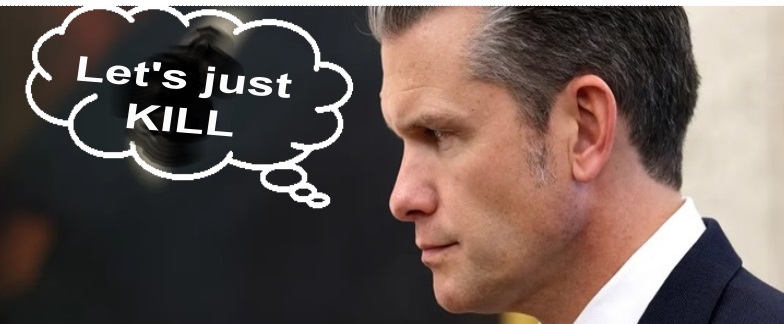
Hegseth bragged that the US is fighting with “no stupid rules of engagement”. By his admission, the Pentagon is purposefully targeting civilian areas, and does not care about the rules of war.
The US & Israel bombed 20 schools & 13 hospitals in Iran in 1 week. War Secretary Pete Hegseth boasted of unleashing “death and destruction” to provoke collapse, with “no stupid rules of engagement”.
Ben Norton, Mar 09, 2026 https://www.geopoliticaleconomy.report/p/us-israel-bomb-iran-schools-hospitals-collapse
The United States and Israel are intentionally devastating civilian areas in Iran, brutally bombing schools, hospitals, and residential neighborhoods, in an attempt not only to destroy the state but also to collapse Iranian society itself.
US Secretary of War Pete Hegseth described the scorched-earth strategy in a Pentagon press briefing on March 4.
“This was never meant to be a fair fight, and it is not a fair fight. We are punching them while they’re down, which is exactly how it should be”, Hegseth boasted.
He added with pride that the US and Israel are raining upon Iran “death and destruction from the sky, all day long”.
Hegseth noted that, in the first four days of the war on Iran (named Operation Epic Fury), the US military employed “twice the air power” that it had used in the “shock and awe” invasion of Iraq in 2003.
In another press briefing on March 2, the US secretary of war condemned international organizations like the United Nations and proclaimed, “America, regardless of what so-called international institutions say, is unleashing the most lethal and precise air power campaign in history”.
Hegseth bragged that the US is fighting with “no stupid rules of engagement”. By his admission, the Pentagon is purposefully targeting civilian areas, and does not care about the rules of war.
US and Israel bomb 20 schools and 13 hospitals in Iran in one week
According to the World Health Organization, the US and Israel bombed at least 13 hospitals and health facilities in Iran in the first five days of the war, which Donald Trump and Benjamin Netanyahu launched on February 28.
Washington and Tel Aviv bombed at least 20 Iranian schools in the first week of the war, according to UNICEF.
They also destroyed a desalination plant, depriving dozens of Iranian villages of water.
The US and Israel killed more than 1,300 Iranians in the first week. Children made up 30% of the victims.
CNN and the New York Times both independently confirmed that the US military bombed an elementary school in the city of Minab in southern Iran on the first day of the war.
The US bombed the school twice, 40 minutes apart, to make sure there were no survivors.
The US military killed at least 168 children and 14 teachers.
War Secretary Hegseth published a map of the areas in Iran that were bombed by the US, and the Minab primary school was clearly in the strike zone.
This is what Hegseth meant when he bragged that the US empire is “punching them while they’re down”, with “no stupid rules of engagement”.
The US-Israeli slaughter is so extreme that even some right-wing media outlets in the West, like the UK’s conservative newspaper The Telegraph, were forced to admit that “Tehran [is] an ‘apocalypse’ of hospitals in flames and children buried beneath rubble”, as the US and Israel intentionally bomb civilian areas.
US and Israel want a failed state and societal collapse in Iran
What Washington and Tel Aviv want to unleash in Iran is not just regime change; it is the destruction of the state and the collapse of Iranian society.
This was openly admitted by some Israeli officials, in a report in the Financial Times.
The FT cited Israeli Defense Minister Israel Katz, who declared that “every leader appointed by the Iranian terror regime . . . will be an unequivocal target for elimination”.
Tel Aviv’s plan is to kill all Iranian leaders, so the country cannot be governed and simply falls into chaos.
This was further confirmed by a former top Israeli intelligence official.
The Financial Times interviewed Danny Citrinowicz, who worked for 25 years in Israel Defense Intelligence (IDI) and was the chief of the Research and Analysis Division’s Iran branch.
Citrinowicz told the FT that what Israel wants is the “total destruction of this regime, of the pillars of this regime, of everything that holds it together”.
The former head of Israeli military intelligence’s Iran analysis said this is how Tel Aviv sees the war (emphasis added):
If we can have a coup, great. If we can have people on the streets, great. If we can have a civil war, great. Israel couldn’t care less about the future . . . [or] the stability of Iran.
In other words, the US and Israel want to repeat in Iran the same kind of war of extermination that they carried out in Gaza, which a UN commission determined to be a campaign of genocide.
US-Israeli war on Iran blatantly violates international law
It goes without saying that the US-Israeli war of aggression against Iran flagrantly violates international law.
The United Nations education agency, UNESCO, emphasized that the bombing of Iranian schools by the US and Israel “constitutes a grave violation of the protection afforded to schools under international humanitarian law”.
Legal experts have clearly stated that the US-Israeli war violates international law. They also noted that Washington was engaged in supposed “negotiations” with Tehran, and Iran was willing to make significant concessions for a deal, when Trump launched this surprise war of aggression, sabotaging the talks.
Stanford University’s elite law school published an interview with an expert on international law, Professor Allen Weiner, who stated, “From an international law perspective, my judgment is that the attack was quite clearly illegal”.
States do have a right to self-defense under international law, Weiner noted. Iran has exercised this right.
The US and Israeli regimes claimed they launched “preemptive” attacks on Iran, but Weiner stressed that this is not valid under international law.
In order to claim self-defense, states may only strike when they have evidence that “they face an imminent threat of attack”, he argued.
This does not apply in this situation, Weiner emphasized. The Stanford law professor explained:
The notion that Iran presents a general security threat to U.S. interests does not constitute a threat of imminent attack. Nor does the possibility that Iran might at some point in the future acquire either nuclear weapons or intercontinental missiles capable of reaching the U.S. homeland amount to a threat of an imminent attack.
US-Israeli war on Iran is based on lies
All of the talking points that the Trump administration has used to try to justify this illegal war have fallen apart.
The Pentagon admitted in a closed-door briefing to Congress that Iran was not going to attack the US and Israel first, and that it only had plans to retaliate in self-defense.
Similarly, the Trump administration claimed that Iran was close to developing nuclear weapons. This was false as well.
The director general of the International Atomic Energy Agency (IAEA), Rafael Grossi, said clearly in an interview on CNN that Iran was not on the verge of having nuclear weapons.
This was another lie promoted by the US government to justify an illegal war.
In US/Israeli war on Iran, all roads point to rise in global nuclear weapons.
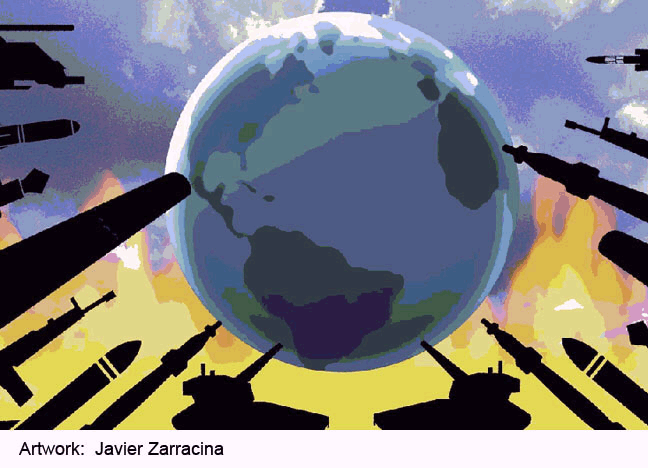
Trump and Netanyahu are already boasting of success. But the war is not going to plan for any of the parties involved
Paul Rogers, 6 March 2026, https://www.opendemocracy.net/en/us-iran-israel-war-lead-to-nuclear-weapons-donald-trump-netanyahu/
One week in, there is little prospect of an early end to the Israeli war with Iran and even less of preventing a regional escalation. Given Binyamin Netanyahu’s success in bringing Donald Trump’s United States on board as Israel’s partner in a widening war, he may feel satisfied with progress so far. In reality, though, the conflict is not going according to plan for any of the three states involved.
Netanyahu’s intended outcome was straightforward regime termination in Tehran, with the assassination of the supreme leader and most of Iran’s senior war leaders. A public uprising would then have followed, ending the power of the theocrats.
Israel and the US could then have brought sufficient force to terminate Iran’s nuclear and ballistic missile program and cut back its conventional forces, starting with the abolition of the Iranian Revolutionary Guard Corps (IRGC).
Finally, the removal of the US’s punishing economic sanctions on Iran would have been agreed, allowing some civil recovery for the country – although this would, of course, have been contingent on the new leaders agreeing to oil and gas deals that would prove punitive for Iran and lucrative for the US, likely ensuring Trump’s continued support for Israel.
The Israeli war aims may have been clear, but it is impossible to say for sure what the White House wanted.
A muddle of reasons and statements of intent for bombing Iran have been given by Trump, his secretary of state, Marco Rubio and self-styled secretary of war, Pete Hegseth, who last year sought to rebrand from the ‘secretary of defense’ title that has been used by successive post-holders since the end of the Second World War. While Washington initially embraced Israel’s desire for total regime termination through an uprising, that aim has disappeared from its recent statements. Now it seems that crushing Iran’s military capabilities, starting with its nuclear ambitions, is the US order of the day.
For Iran’s theocratic leadership, the primary war aim was survival in the face of the massive power of the Israeli/US war machine, which would itself have been quite an achievement. Indeed, Iran’s supreme leader, Ayatollah Khamenei, barely survived the first hour or so of the war before being killed in a missile strike.
The unexpected has since become clear: Khamenei is gone, but Iran’s leadership system is likely to survive for now. His successor will probably be his son, Ayatollah Mojtaba Khamenei, who will quite possibly be as hard-line as his father. Israeli defence minister Israel Katz has declared that whoever is chosen as Iran’s next supreme leader will be “a target for elimination” – a clear indication that for Netanyahu and the Israeli Defence Forces, there is no turning back.
If regime survival is one of the surprises of the conflict, the other is Iran’s continuing ability to fire barrages of armed drones and ballistic missiles, which has been the least expected element of the war so far.
By last July, the IDF and the US believed they had massively damaged Iran’s air defences, with Trump boasting of “spectacular military success” in a press conference. On top of this, the past week has seen the determined and intensive targeting of Iran’s missile systems by the combined power of the IDF and US armed forces. Yet to the genuine surprise of many Western political and military analysts, Iran can still launch its missiles.
Three elements of this survival offer a clue as to what comes next.
One is that the regime in Tehran is likely to continue to survive. Look to Gaza, where Hamas is still active despite the massive destruction that Israel has inflicted over the past two and a half years. This, as I noted in last week’s column, is largely down to its quite extraordinary network of tunnels dug mostly by hand and reinforced with concrete walls. The network, which extends to around the distance from London to Edinburgh, has around 5,700 shafts, as well as electricity, ventilation and communication facilities.
In Iran, the IRGC now looks to have been similarly active in extensively preparing for war. It has built numerous and widely dispersed underground ‘missile cities’ – deep tunnel complexes built into mountains for making and storing armed drones and other weapons – as well as producing undersea armed drones for use against the US Navy, especially if it tries to guide tankers through the Strait of Hormuz.
The second element follows on. There are indications that the IRGC appears to be using its older and least advanced missiles and drones first, aiming to deplete Israeli and US stocks of their anti-missile defences. Quite apart from anything else, this means Israel and the US are depleting their high-cost weaponry to “catch” incoming missiles, while Iran saves its most recently developed drones and ballistic missiles – with greater reach and more power for destruction, as well as improved accuracy and reliability – for later in the war.
Finally, there is the decision to opt for economic warfare against Western interests in many Gulf states. This involves the closure of the Strait of Hormuz, alongside attacks on oil and gas processing plants and distribution systems, as well as tourist infrastructure across the Gulf, with a luxury hotel in Dubai reportedly hit by a retaliatory strike.
This puts states such as Saudi Arabia, Kuwait and the United Arab Emirates in a difficult position as to how to respond. To react forcefully by joining the war against Iran may be the natural response, but this has consequences. It means allying with an Israel that has killed at least 80,000 Palestinian Arabs in Gaza and enacted violence in the occupied West Bank to make life fraught with difficulty and increasingly dangerous.
This war is barely a week old but is having a worldwide impact and, despite Trump’s bluster, is already problematic for the US. The killing of at least 165 people, many of them children, at the Shajareh Tayyebeh Girls School in Minab is just one example of this, while another may be significant in a different way.
On Wednesday, a US Navy submarine torpedoed an Iranian frigate, the IRIS Dena, killing at least 87 crew members. The Dena had recently left a series of exercises organised by the Indian Navy in the Bay of Bengal, and its sinking was reported with great glee by Hegseth, who told reporters: “Yesterday, in the Indian Ocean, an American submarine sunk an Iranian warship that thought it was safe in international waters. Instead, it was sunk by a torpedo. Quiet death. The first sinking of an enemy ship by a torpedo since World War II.”
Earlier in the press conference, Hesgeth had used the same celebratory and boastful tone to discuss what he framed as early US success. “We are only four days into this, and the results have been incredible. Historic, really,” he said. “Only the United States of America could lead this – only us. But when you add the Israeli Defence Forces, a devastatingly capable force, the combination is sheer destruction for our radical Islamist Iranian adversaries. They are toast, and they know it. Or at least, soon enough, they will know it. America is winning – decisively, devastatingly, and without mercy.”
The US war secretary’s speech betrayed the sense of impunity in Trump’s White House, confirming that members of his administration are certain in their own minds that in this war, Israel and the US can do what they like.
The consequences of this war are impossible to say for sure, but all roads appear to lead to increased uptake of nuclear weaponry, leaving the world an even less safe and stable place. If Israel and the US fail to terminate the Iranian regime and if any significant part of the IRGC survives, the very first thing it will do is to go to the ends of the earth to put together a crude nuclear device. Across the wider region, any state that sees two nuclear-armed regimes seeking to destroy a non-nuclear regime will see a need to go nuclear itself.
Pointless sending of UK nuclear submarine HMS Anson to Australia?

Peter Remta, 6 Mar 26
It seems incongruous that with a fleet of nine nuclear
powered submarines the United Kingdom has only one
operational vessel from the fleet which has been sent to
Garden Island in Western Australia instead of using it for
protective deployment around the British Isles
That submarine being HMS Anson still requires some minor
maintenance work for its continued operations which is
being undertaken at Garden Island
It appears that the real reason for Anson being sent to
Australia is for the United Kingdom to demonstrate some
capacity in being able to be an active participant in the
AUKUS agreement but this may be a rather hopeless
exercise in view of the strained relationship with the United
States over the Iran war
The lack of naval capacity of the United Kingdom is best
demonstrated by the fact that the destroyer HMS Dragon
proposed to be send to Cyprus for protection of its naval
1 of 2 base on the island cannot be put to sea due to the
incapacity of undertaking the necessary dockyard work for
it seagoing status
All of this should be borne in mind when planning for the
future development of the AUKUS proposals
It is therefore beyond the wildest dreams to contemplate
the design and subsequent construction of the SSN-
AUKUS submarine
How will the Australian government react to this situation
when AUKUS is a major part of its defence strategy?
A War for Oil: Economist Michael Hudson on U.S. Quest to Control the World’s Oil Trade
We speak with economist Michael Hudson, who details how President Trump opted to attack Iran despite progress at indirect U.S.-Iran negotiations. “The whole reason that America has attacked Iran has nothing to do with its getting an atom bomb,” but instead the aim was U.S. control of oil, says Hudson. The Trump administration may have been after the ability to “turn off the power” to countries that don’t follow U.S. foreign policy, he says.
Transcript……………………………………………………………………………………………………………………………….. https://scheerpost.com/2026/03/04/a-war-for-oil-economist-michael-hudson-on-u-s-quest-to-control-the-worlds-oil-trade/
Golden Dome to Rio Rancho: Public Infrastructure, Private Weapons, Public Consequences

The build out continues without public hearings or environmental review
Elaine Cimino, Substack, Feb 26, 2026
What’s Happening Nationally
The U.S. Department of Defense is accelerating development of a next-generation missile defense architecture referred to as “Golden Dome.” It is framed in national defense strategy as a layered homeland shield designed to counter emerging threats, including hypersonic weapons.
Modern missile defense is not just about ground interceptors. It requires:
- Hypersonic propulsion systems
- Advanced thermal shielding
- Rapid manufacturing capacity
- Space-based tracking and sensor networks
- Scalable industrial production
This is not theoretical. Federal strategy and procurement planning show an expansion of missile tracking systems and accelerated contractor engagement across the defense sector.
When the Pentagon scales a program like this, the supply chain scales with it.
Missile production is not a single building. It is a network of chemical processing, propulsion casting, electronics assembly, static testing, and heavy logistics. When one node expands, infrastructure expands with it. This when the supply chain externalizes costs to communities.
What’s Happening Locally
Project Ranger is an “advanced manufacturing” project.
It is contractually defined as a:
“hypersonic systems test and manufacturing facility.”
3609_PPA_Castelion_LEDA_(10.17.…
At the same time, the City and County approved public funding specifically to expand Paseo del Volcán to benefit this Project.
3609_SandCo_Ranger_LEDA_City_IG…
The agreements also acknowledge that audit and inspection provisions are subject to Department of Defense and national security constraints.
3609_PPA_Castelion_LEDA_(10.17.…
Those are not abstract references. They place this facility squarely within the national defense ecosystem.
Public road expansion + hypersonics manufacturing + DoD-related oversight constraints is not a coincidence. It is infrastructure alignment.
Why That Matters
Defense corridors do not appear overnight. They form through a predictable sequence:
- A federal defense initiative accelerates.
- Contractors expand production capacity.
- Local governments subsidize access roads, land, and utilities.
- Environmental and cumulative impact questions lag behind infrastructure commitments.
That sequence is visible here.
When public funds expand a major corridor to serve a hypersonics manufacturing site, that is not simply “economic development.” It is regional integration into a national defense supply chain.
The Public Interest Questions.
We want transparency, scope, and full disclosure.
A hypersonic test and manufacturing facility
3609_PPA_Castelion_LEDA_(10.17.…
enabled by publicly funded road expansion
3609_SandCo_Ranger_LEDA_City_IG…
raises foreseeable impacts that must be openly evaluated:
- Industrial water demand
- Hazardous materials transport
- Air emissions and plume modeling
- Outbound waste streams
- Long-term infrastructure maintenance costs
- Cumulative regional build-out effects
If the project is positioned within a rapidly expanding missile defense program, then induced growth and scaling pressures are foreseeable.
Treating the road expansion as separate from the facility ignores the integrated purpose described in the agreements.
Bottom Line
The documents do not describe a small standalone factory.
They describe a hypersonics test and manufacturing facility….
Project Ranger is part of a larger defense build-out, whether local officials frame it that way or not. When national missile defense accelerates, local communities become supply-chain territory. Rio Rancho deserves a full accounting of what that means…………………………..
When national missile-defense acceleration intersects with local public subsidies, the burden does not fall on billionaires or defense contractors. It falls on residents:
- Water withdrawals and contamination risk
- Air emissions and particulate exposure
- Hazardous materials transport through residential corridors
- Fire risk in a drought-stressed landscape
- Increased infrastructure maintenance costs
- Rising insurance premiums
- Rising bond obligations
- Rising utility rates
- Decreased property value stability
This is the real “skyrocket” — the cost to households………………………………………………………….. https://elainecimino652909.substack.com/p/golden-dome-to-rio-rancho-public?r=281p2&utm_medium=ios&shareImageVariant=split&triedRedirect=true
Who Bombed Girls’ School in Iran? Reporter Nilo Tabrizy on What We Know About Massacre of 175 People
Democracy Now, 5 Mar 2026
After a strike on a girls’ elementary school in Minab, Iran, killed at least 175 people, nearly all young schoolchildren, online reports spread disinformation about the attack, including claims that the Iranian government itself had bombed the school. Journalist Nilo Tabrizy describes how outside reporters have been able to verify the attack despite Iran’s internet blackout and says attempts are still being made to confirm whether the strike is attributable to the U.S. or to Israel.
Democracy Now! is an independent global news hour that airs on over 1,500 TV and radio stations Monday through Friday. Watch our livestream at democracynow.org Mondays to Fridays 8-9 a.m. ET.
Preemptive War, Permanent Emergency: The Real Cost of Trump’s Iran Strike

Since January 2025, Trump has carried out more than 600 military strikes on foreign targets that include Iran, Yemen, Nigeria and Venezuela, while threatening forceful military takeovers of Greenland, Colombia and Mexico.
Preemptive force has become policy.
Call it what it is: war.
The Rutherford Institute, John & Nisha Whitehead, March 04, 2026
“From the least to the greatest, all are greedy for gain; prophets and priests alike, all practice deceit. They dress the wound of my people as though it were not serious. ‘Peace, peace,’ they say, when there is no peace.”—Jeremiah 6:13–14
“This is insane. Regime change will result in a bloody civil war… Resist this!”—Charlie Kirk (2025)
The military-industrial complex and the American police state have joined forces.
War abroad and war at home are no longer separate enterprises. They have fused.
This did not happen overnight.
Every modern president has stretched the limits of war-making power. Some have shredded those limits altogether.
Each time that boundary is breached, the Constitution recedes a little further.
This is one of those moments.
In a complete about-face from his claims to being a peace president, Donald Trump has authorized yet another preemptive strike—this time against Iran—without a declaration of war from Congress, without meaningful public debate, and without constitutional clarity.
The gravity of that decision cannot be overstated.
While American troops were being ordered into harm’s way, Trump was hosting a $1 million-a-ticket fundraiser for himself at Mar-a-Lago, trotting out his signature dance moves between curtained war briefings.
That spectacle tells you everything you need to know.
That is how we arrived at Operation Epic Fury.
With its Orwellian proclamations of “peace through strength,” Operation Epic Fury is less strategy than spectacle—an egotistical, muscle-flexing distraction by the Trump administration and an overarching attempt to normalize the use of unilateral force by the executive branch without congressional input or authorization.
This was never about peace. It was always about power.
And the Constitution is clear about how this is supposed to work, even if the White House is not.
Article I, Section 8 grants Congress—not the president—the power to declare war. The president under Article II, Section 2 is designated as commander-in-chief with the power to command the military. He is not commander-of-everything.
Yet here we are.
The Trump administration is advancing a global policing doctrine that mirrors the domestic police state: strike first, ask questions later.
Since January 2025, Trump has carried out more than 600 military strikes on foreign targets that include Iran, Yemen, Nigeria and Venezuela, while threatening forceful military takeovers of Greenland, Colombia and Mexico.
Preemptive force has become policy.
Call it what it is: war.
Despite the word games over its war games—the administration insists its actions in Iran do not constitute a war—members of Trump’s Cabinet use the word “war” freely until congressional authorization is mentioned.
And when the administration is asked to explain themselves, the answer is not constitutional deference but open defiance.
Clearly, they have lost sight of who they answer to—and who funds their war chests: we the taxpayers.
Pete Hegseth—the self-righteous blowhard who brags about lethal weapons and has rebranded the Defense Department as the Department of War—dismissed public accountability outright, expressing in no uncertain terms that it’s none of our business: “Why in the world would we tell you, you, the enemy, anybody what we will or will not do in pursuit of an objective. We fight to win. We fight to achieve the objectives the President of the United States has laid out and we will do so unapologetically.”
The Constitution is the “why.”
The American people have a right to debate war before it begins. We have a right to know how our tax dollars are spent. We have a right to insist our representatives authorize the use of force. We have a right to know why our sons and daughters are sent into harm’s way. We have a right to refuse to have our tax dollars used to kill other people’s daughters and sons.
……………As Cato Institute’s Katherine Thompson explains, “War…costs American blood and treasure. The Founders placed the power to initiate it in Congress precisely to ensure those costs are confronted and debated before the country walks into battle.”
War fuels defense contracts, reconstruction deals and intelligence budgets. It sustains a vast military-industrial apparatus whose profits depend on instability.
Nothing about Operation Epic Fury puts America first. It pushes us toward a fiscal cliff.
Within days, the costs were staggering: $300 million for three F-15E jets downed by “friendly” fire. $630 million to transport troops, ships and aircraft to the region in advance of the attacks. More than 50,000 troops deployed to the region. $13 million a day just for two aircraft carriers stationed nearby. $43.8 million for 1,250 Kamikaze drones. $2 million each for Tomahawk missiles. $12.8 million each for anti-ballistic missile interceptors.
Forbes estimates that Trump’s military strikes in Iran have already cost American taxpayers over $1 billion, “with a price tag that could approach $100 billion, depending on how long it can stretch on.” The total economic cost of the conflict “could trigger an economic loss for the U.S. of between $50 billion and $210 billion.”
And that is before accounting for the human cost.
……………………………………………………………………………………………………………………….. This unprovoked attack on Iran is turning the Middle East into a war zone, in turn laying the groundwork for Trump to act on the fantasies he has long entertained about cancelling the mid-term elections.
………………………………………………………………………….War is not peace. Preemptive war is not strength. And an imperial presidency—no matter how loudly it wraps itself in flags—is not constitutional government.
The Founders understood that the gravest threat to liberty would not come from foreign enemies alone, but from the concentration of power in the hands of one man who believed himself indispensable.
A president who can send bombs abroad without consent can silence opposition at home without hesitation.
A government that governs by the rule of emergency eventually ceases to govern by the rule of law.
And a nation that trades liberty for spectacle will wake up to find that it has neither.
…………………………………………………………………….As I make clear in my book Battlefield America: The War on the American People and in its fictional counterpart The Erik Blair Diaries, the question is no longer whether America can police the globe. The question is whether our Republic can survive the weight of the Empire it has become.
We are at the point where we must choose: the spectacle of permanent war, or the survival of the American experiment in freedom.
We cannot have both. https://www.rutherford.org/publications_resources/john_whiteheads_commentary/preemptive_war_permanent_emergency_the_real_cost_of_trumps_iran_strike
Obscene US-Israeli murder of Iranian schoolchildren cannot be whitewashed
Western media is either silent or implicitly blaming Tehran for the strike that killed 168 girl
Eva Karene Bartlett, Substack,, Mar 05, 2026
In Iran, under ongoing US-Israeli attacks, a mass funeral took place today for 168 Iranian schoolgirls aged 7-12, killed by an Israeli airstrike on February 28.
The strike hit the Shajareh Tayyebeh girls’ primary school in Minab, southern Iran, in broad daylight, when the children were at school. Fourteen teachers were also killed in the bombing. The bombing occurred as part of US-Israeli attacks sadistically dubbed ‘Operation Epic Fury’, attacks which have to date targeted schools, hospitals, residential areas and other civilian infrastructure.
It was a scene all too familiar to Palestinians: grief-stricken parents collapsing sobbing at the site of their daughters’ murders, clutching bloodstained backpacks, pulling out schoolbooks and personal items of their slain daughters. Children’s desks covered in debris from the bombing. A child’s shoe in the rubble. Death where life had flourished.
None of this is being conveyed by Western legacy media – only ghoulish gloating over the US-Israeli bombardment of Iran and the murder of Ayatollah Ali Khamenei, Iran’s supreme leader, and his young granddaughter and children.
On March 2, Iranian Foreign Minister Abbas Araghchi posted a photo of the graves being dug on X, noting, “These are graves being dug for more than 160 innocent young girls who were killed in the US-Israeli bombing of a primary school. Their bodies were torn to shreds. This is how “rescue” promised by Mr. Trump looks in reality. From Gaza to Minab, innocents murdered in cold blood.”
At the time of this writing, 69 of the murdered girls remain unidentified.
International media reaction: Silence
If the bombed school had been in Israel or Ukraine, news of it would have been plastered on front pages of Western media for days, with widespread demands for retaliation, or at least for justice and accountability. Back in 2016, Western media alleged Syria or Russian planes had injured Aleppo boy Omran Daqneesh. His photo went viral, for weeks, even years. A CNN news anchor fake-sobbed for the boy.
In 2017, in his Aleppo home, his father told me their home was not hit in an airstrike, but rather terrorists shelled it and used the boy in a cynical, and effective, photo op.
Footage shared on Telegram and on X clearly show horrific scenes of some of the young girls torn apart in the US-Israeli bombing of their school. But just like the untold thousands of Palestinian children killed by Israel, as well as the half a million Iraqi children killed by US sanctions, these Iranian children’s lives don’t merit Western media outrage. Instead, they produce cynical reports that not only lack any semblance of empathy, but suggest that Iran is either lying about or is to blame for the murders.
Take the BBC’s report, which describes the massacre as a “reported” strike on a school, which “Iran has blamed the US and Israel” for. Casting doubt is standard for legacy media whitewashing the US and Israel’s crimes. The US is “looking into reports.” Israel is “not aware.” Just one of those mysterious unknown strikes.
The BBC then overtly blamed the Iranian government as untrustworthy, writing, “Deep mistrust of the Iranian regime, however, makes official reports difficult for many to accept, and some Iranians directly blamed the regime for the attack.”………………………………………….
Most Western media cite The US military’s Central Command (Centcom) as saying it was “looking into reports of the incident,” and the Israeli army as saying it was “not aware of any IDF operations in the area.”Ah yes, the guilty shall investigate themselves. Right.
Even if you set aside the actual culprit of the school bombing, legacy media reports are devoid of any concern for the slaughtered children: no details, no empathy, no mention that they were murdered in the Muslim holy month of Ramadan. The tone would be radically different were the children Israeli, Ukrainian or American. We would see names, ages, stories about them. They would be humanized – if only they were not Iranian (or Palestinian, or Lebanese, or Syrian)………………………………………………… https://evakarenebartlett.substack.com/p/obscene-us-israeli-murder-of-iranian?utm_source=post-email-title&publication_id=3046064&post_id=189965341&utm_campaign=email-post-title&isFreemail=true&r=1ise1&triedRedirect=true&utm_medium=email
1 This Month


Tell the Ukrainian Government to Drop Prosecution of Peace Activist Yurii Sheliazhenko

Petition to revoke the licensing of the Near Surface Nuclear Disposal Facility (NSDF) at Chalk River. https://www.ourcommons.ca/petitions/en/Petition/Details?Petition=e-7247


of the week – STOP SMALL MODULAR REACTORS IN CANADA
To see nuclear-related stories in greater depth and intensity – go to https://nuclearinformation.wordpress.com
-
Archives
- March 2026 (204)
- February 2026 (268)
- January 2026 (308)
- December 2025 (358)
- November 2025 (359)
- October 2025 (376)
- September 2025 (258)
- August 2025 (319)
- July 2025 (230)
- June 2025 (348)
- May 2025 (261)
- April 2025 (305)
-
Categories
- 1
- 1 NUCLEAR ISSUES
- business and costs
- climate change
- culture and arts
- ENERGY
- environment
- health
- history
- indigenous issues
- Legal
- marketing of nuclear
- media
- opposition to nuclear
- PERSONAL STORIES
- politics
- politics international
- Religion and ethics
- safety
- secrets,lies and civil liberties
- spinbuster
- technology
- Uranium
- wastes
- weapons and war
- Women
- 2 WORLD
- ACTION
- AFRICA
- Atrocities
- AUSTRALIA
- Christina's notes
- Christina's themes
- culture and arts
- Events
- Fuk 2022
- Fuk 2023
- Fukushima 2017
- Fukushima 2018
- fukushima 2019
- Fukushima 2020
- Fukushima 2021
- general
- global warming
- Humour (God we need it)
- Nuclear
- RARE EARTHS
- Reference
- resources – print
- Resources -audiovicual
- Weekly Newsletter
- World
- World Nuclear
- YouTube
-
RSS
Entries RSS
Comments RSS
 nuclear-news