Australia to buy long-range HIMARS missile system from United States – at unknown cost (? 2 $billion)
ABC, By defence correspondent Andrew Greene, 5 Jan 2023
Australia’s Army will have an unprecedented long-range strike capability with the purchase of the US-made High Mobility Artillery Rocket (HIMARS) system, which Ukraine has praised for its devastating effectiveness against invading Russian forces.
Key points:
- Defence officials say the use of HIMARS in Ukraine against Russia confirms why it’s needed
- Labor says the overall cost of the missiles is over one billion dollars
- Defence Industry Minister Pat Conroy says it “isn’t useful” to disclose the full cost to “potential adversaries”
The Albanese government has finalised a deal to buy 20 of the truck-mounted rocket launchers by 2026, while signing another deal to acquire the Norwegian-made Naval Strike Missiles (NSM) for Australian warships next year.
Precise costs of the purchases are being kept secret for security reasons, but the government has confirmed to the ABC the overall figure is “between one and two billion dollars”.
Defence Industry Minister Pat Conroy said during an October visit to the United States he held “productive discussions” with the Army and Lockheed Martin on how Australia could start producing the rockets used in HIMARS.
On New Year’s Day, a Ukrainian strike using the US-donated HIMARS system killed dozens, possibly even hundreds of Russian soldiers in the Donetsk region……………………………….
Congress was first notified of a possible sale of the Lockheed Martin-produced HIMARS to Australia seven months ago, while the NSM purchase was flagged by the Morrison government in April last year………………..
Labor says the HIMARS and NSM purchases will together cost over $1 billion, but Mr Conroy says precise details are being kept deliberately hidden.
“We won’t be disclosing the total cost of the two announcements,” he told the ABC.
“The two combined costs is between one and two billion dollars, the reason that we’re not disclosing the specific amount is that gives information to potential adversaries which isn’t useful beaming out there.”
In its notice to Congress in May, the US Defence Security Cooperation Agency estimated the cost of 20 HIMARS and associated munitions and equipment at US$385 million ($561 million). https://www.abc.net.au/news/2023-01-05/australia-america-himars-missile-system/101827334
 | |||
| |||
Ukraine – The Big Push To End The War
https://www.moonofalabama.org/2023/01/ukraine-the-big-push-to-end-the-war 6 Jan 23
Over Christmas I had a short talk with a relative about the war in Ukraine. He asked me who would win and was astonished when I said: “Ukraine has zero chance to win.” That person reads some German mainstream news sites and watches the public TV networks. With those sources of ‘information’ he was made to believe that Ukraine was winning the war.
One may excuse that with him never having been in a military and not being politically engaged. But still there are some basic numbers that let one conclude from the beginning that Russia, the much bigger, richer and more industrialized country, had clearly all advantages. My relative obviously never had had that thought.
The ‘western’ propaganda is still quite strong. However, as I pointed out in March last year propaganda does not change a war and lies do not win it. Its believability is shrinking.
Former Lt.Col. Alex Vershinin, who in June pointed out that industrial warfare is back and the ‘West’ was not ready to wage it, has a new recommendable piece out which analyses the tactics on both sides, looks ahead and concludes that Russia will almost certainly win the war:
Wars of attrition are won through careful husbandry of one’s own resources while destroying the enemy’s. Russia entered the war with vast materiel superiority and a greater industrial base to sustain and replace losses. They have carefully preserved their resources, withdrawing every time the tactical situation turned against them. Ukraine started the war with a smaller resource pool and relied on the Western coalition to sustain its war effort. This dependency pressured Ukraine into a series of tactically successful offensives, which consumed strategic resources that Ukraine will struggle to replace in full, in my view. The real question isn’t whether Ukraine can regain all its territory, but whether it can inflict sufficient losses on Russian mobilized reservists to undermine Russia’s domestic unity, forcing it to the negotiation table on Ukrainian terms, or will Russian’ attrition strategy work to annex an even larger portion of Ukraine.
Russian domestic unity has only grown over the war. As Gilbert Doctorow points out wars make nations. The war does not only unite certain nationalistic parts of Ukraine who still dream of retaking Crimea. It also unites all of Russia. Unlike Ukraine Russia will be strengthened by it.
Casualties are expected in wars and the Russians, with their steady remembrance of the second world war as their Great Patriotic War, know this well. Screw ups also happen and at times some bad leadership decisions puts people into the wrong place where the enemy can and will kill them. That is what happened in Makeyevka (Donetsk) on New Years day 2 minutes after midnight. Some 100 Russian reservists died. The Russian leadership pointed out that they were killed by U.S. HIMARS missiles. The former Indian diplomat M. K. Bhadrakumar judges that this was a U.S. escalation which will likely receive a response:
Before the Bombs Come the Platitudes
By Robert C. Koehler, http://commonwonders.com/before-the-bombs-come-the-platitudes/ 4 January 2023
What is democracy but platitudes and dog whistles? The national direction is quietly predetermined — it’s not up for debate. The president’s role is to sell it to the public; you might say he’s the public-relations director in chief:
“. . . my Administration will seize this decisive decade to advance America’s vital interests, position the United States to outmaneuver our geopolitical competitors, tackle shared challenges, and set our world firmly on a path toward a brighter and more hopeful tomorrow. . . . We will not leave our future vulnerable to the whims of those who do not share our vision for a world that is free, open, prosperous, and secure.”
These are the words of President Biden, in his introduction to the National Security Strategy, which lays out America’s geopolitical plans for the coming decade. Sounds almost plausible, until you ponder the stuff that isn’t up for public discussion, such as, for instance:
The national defense budget, recently set for 2023 at $858 billion and, as ever, larger than the rest of the world’s military budget combined. And, oh yeah, the modernization — the rebuilding — of the nation’s nuclear weapons over the next three decades at an estimated cost of nearly $2 trillion. As Nuclear Watch put it: “It is, in short, a program of nuclear weapons forever.”
And the latter, of course, will go forward despite the fact that in 2017 the countries of the world — well, most of them (the vote in the United Nations was 122-1) — approved the Treaty on the Prohibition of Nuclear Weapons, which flat-out bans the use, development and possession of nuclear weapons. Fifty countries ratified the treaty by January 2021, making it a global reality; two years later, a total of 68 countries have ratified it, with 23 more in the process of doing so. Not only that, as H. Patricia Hynes points out, the mayors of more than 8,000 cities all across the planet are calling for the abolition of nuclear weapons.
I mention this to put Biden’s words in perspective. Does “a brighter and more hopeful tomorrow” ignore the demands of most of the world and include the presence of thousands of nuclear weapons, many still on hair-trigger alert? Does it mean the ever-present possibility of war and the ongoing manufacture and sale of every imaginable weapon of war? Is a near-trillion-dollar annual “defense” budget the primary way we intend to “outmaneuver our geopolitical competitors”?
And here’s another flicker of reality that’s missing from Biden’s words: the non-monetary cost of war, which is to say, the “collateral damage.” For some reason, the president fails to mention how many civilians’ deaths — how many children’s deaths — will be necessary to secure a brighter and more hopeful tomorrow. How many hospitals might it be necessary, for instance, for us to accidentally bomb in coming years, as we bombed the hospital in Kunduz, Afghanistan in 2015, killing 42 people, 24 of whom were patients?
Public relations platitudes do not seem to have room to acknowledge videos of U.S.-inflicted carnage, such as Kathy Kelly’s description of a video of the Kunduz bombing, which showed the president of Doctors Without Borders (a.k.a., Médecins Sans Frontières) walking through the wreckage a short while later and speaking, with “nearly unutterable sadness,” to the family of a child who had just died.
“Doctors had helped the young girl recover,” Kelly writes, “but because war was raging outside the hospital, administrators recommended that the family come the next day. ‘She’s safer here,’ they said.
“The child was among those killed by the U.S. attacks, which recurred at fifteen-minute intervals, for an hour and a half, even though MSF had already issued desperate pleas begging the United States and NATO forces to stop bombing the hospital.”
Those who believe in the necessity of war — such as the president — may well feel shock and sadness when a child, for instance, is unintentionally killed by U.S. military action, but the concept of war comes complete with flowers of regret: It’s the fault of the enemy. And we will not be vulnerable to his whims.
Indeed, the dog whistle in Biden’s brief quote above is the calm acknowledgement of U.S. intention to stand up to the dark forces on the planet, the autocrats, who do not share our vision of freedom for all (except little girls in bombed hospitals). Those who, for whatever reason, believe in the necessity, and even the glory, of war, will feel the pulse of the U.S. military budget coursing through his positive, happy words.
When public relations circumvents reality, an honest discussion is impossible. And Planet Earth is in desperate need of an honest discussion about the elimination of nuclear weapons and, God help us, ultimately transcending war.
As Hynes writes: “If the U.S. could once again replace its masculinist power with creative foreign policy and reach out to Russia and China with the purpose of dismantling nuclear weapons and ending war, life on Earth would have a heightened chance.”
How can this become a country with a creative foreign policy? How can the American public move beyond being spectators and consumers and become actual, literal participants in U.S. foreign policy? Here’s one way: the Merchants of Death War Crimes Tribunal, an online event scheduled for November 10-13, 2023.
As Kelly, one of the organizers, describes it: “The Tribunal intends to collect evidence about crimes against humanity committed by those who develop, store, sell, and use weapons to commit crimes against humanity. Testimony is being sought from people who’ve borne the brunt of modern wars, the survivors of wars in Afghanistan, Iraq, Yemen, Gaza, and Somalia, to name but a few of the places where U.S. weapons have terrified people who’ve meant us no harm.”
Victims of war will be interviewed. Those who wage war, and those who profit from it, will be held accountable to the world. My God, this sounds like real democracy! Is this the level at which truth shatters the platitudes of war?
Number of civilians killed in Donbass revealed
https://www.rt.com/russia/569348-number-civilians-killed-donbass-revealed/ 3 Jan 2023, Over 4,400 people have been killed in the Donetsk People’s Republic alone since the start of the conflict between Moscow and Kiev
A total of 4,405 civilians have been killed on the territory of the Donetsk People’s Republic (DPR) since mid-February 2022, the Joint Center for Control and Coordination (JCCC), a monitoring group tracking attacks on the two Donbass regions, as well as war crimes committed by Ukraine, said on Tuesday. Over the same time period, as many as 132 children became victims of the ongoing conflict, it added.
Only 636 civilians, including 26 children, were killed on a territory controlled by the DPR before the start of the Russian military campaign in Ukraine, the center said, adding that over 3,700 civilians and more than 100 children were killed on the territory seized by the Russian forces and the Donbass militias during the conflict.
Almost 4,000 civilians sustained injuries during the conflict, the center said in a Telegram post. At least 87 people, including four children, were injured after tripping on the anti-personnel ‘Lepestok’ (Petal) land mines, the statement added. The mines are typically scattered around an area through remote mining operations.
The Ukrainian forces launched over 93,500 projectiles at the DPR territory during the conflict, the statement said, adding that the strikes and attacks resulted in the destruction of more than 9,400 residential buildings, 2,285 civilian infrastructure facilities, including 123 hospitals and clinics and 61 critical infrastructure facilities.
Last weekend, the JCCC also published similar data on the neighboring Lugansk People’s Republic (LPR). In 2022, 169 civilians, including 21 children, were killed there, a statement published on January 1 said. The conflict also left 455 civilians in the region injured, it added.
The Ukrainian forces used a total of 11,000 pieces of ammunition in their strikes on LPR territory, including 609 US-made HIMARS missiles, the JCCC said. Both the DPR and LPR joined Russia last fall, together with two other former Ukrainian regions – Kherson and Zaporozhye – as the move was overwhelmingly supported at the regional referendums.
Russia sent troops into Ukraine on February 24, citing Kiev’s failure to implement the Minsk agreements, brokered by Germany and France, and designed to give the regions of Donetsk and Lugansk special status within the Ukrainian state. Former Ukrainian president Pyotr Poroshenko has since admitted that Kiev’s main goal was to use the 2014 ceasefire to buy time and “create powerful armed forces.”
Los Alamos National Laboratory’s record $4.6B budget will still mostly fund nuclear weapons
Sante Fe New Mexican By Scott Wyland Jan 4, 2023
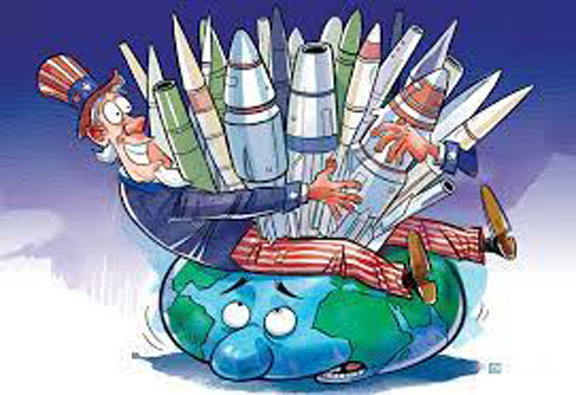
Los Alamos National Laboratory’s record $4.6 billion budget for this fiscal year will give officials an unprecedented amount of money for its nuclear weapons program, which still makes up the bulk of the lab’s spending.
The lab’s hefty funding was part of the U.S. Energy Department’s budget request tucked into the recently passed $1.7 trillion omnibus spending package, which will cover the costs of agencies and programs through this fiscal year, ending in October.
Roughly 70 percent of the lab’s funding is for its nuclear weapons program, which includes research, computer testing and pursuing the goal of producing 30 plutonium bomb cores, or “pits,” per year by 2026.
Plans call for Savannah River Site in South Carolina to make an additional 50 pits by 2035. The combined 80-pit goal was established under the Trump administration and is being carried forth by President Joe Biden……………..
This year’s $858 billion military budget is the largest in memory. And the National Nuclear Security Administration, the Energy Department branch that oversees nuclear weapons, received $22.3 billion, a bump from the $20.7 billion it got last year.
………………….. About $1.6 billion of the lab’s new budget is to modernize plutonium operations to prepare for manufacturing 30 pits, an amount that almost triples the most pits the lab has ever produced in a year.
The plutonium funding is a 60 percent increase from last year’s $1 billion, and about five times the $308 million budgeted three years ago.
In an email, a watchdog group called the lab’s ballooning nuclear weapons budget “a staggering amount of money” that was leveraged through world events, such as the war in Ukraine.
“I think the writing should be on the wall that we have entered a new nuclear arms race,” wrote Geoff Wilson, director of the Center for Defense Information at the Project on Government Oversight. “The nuclear spending floodgates have opened in the name of defending against China and a belligerent Russia, and the labs are defense contractors. This is going to be a boom season for them.”
Producing new pits lays the groundwork to create new warheads, Wilson wrote. He noted the lab is developing the first new warhead since the 1980s, the submarine-launched W93.
What’s worrisome about devising new warheads is the computer simulations now used for testing might be rendered obsolete, leading to explosive nuclear testing — banned since 1992 — being revived, he wrote.
The U.S. has the most powerful arsenal in the world and stands little chance of falling behind adversaries, but amping up its weaponry could drive other countries to do likewise, creating a destabilizing effect globally, Wilson wrote.
“I think everyone should be concerned where this sort of escalation could take us, and whether or not this is really necessary for our security, or just going to fund the defense contractor industry base,” he wrote………………………………………..
the nonweapons programs are a lesser part of the lab’s budget. In several public town halls, lab Director Thom Mason has said the nuclear mission is the primary focus.
One longtime anti-nuclear activist said the race to produce pits at the lab has proved to be more costly and difficult than was initially imagined.
In 2017, the nuclear security agency estimated it would cost about $2 billion total to ramp up pit production, and the costs have already grown to many times that amount, said Greg Mello, executive director of the Los Alamos Study Group.
Mello called the endeavor “a runaway train” that’s unsustainable in the long run and unnecessary.
“It’s a product of successful lobbying,” Mello said. “We don’t need new generations of nuclear weapons.” https://www.santafenewmexican.com/news/local_news/lanls-record-4-6b-budget-will-still-mostly-fund-nuclear-weapons/article_18c59118-8b85-11ed-85d2-dfcab050252f.html
Cold War estimates of deaths in nuclear conflict
Bulletin, By William Burr | January 4, 2023
Apprehension about Russia’s war against Ukraine has produced speculation about the possibility of limited Russian nuclear strikes against targets in that country. Especially worrisome is the danger of a local conflict escalating quickly into a major nuclear exchange between Russia and the United States and other NATO countries. However unlikely that prospect, a large-scale nuclear war involving countries with strategic nuclear forces could cause huge numbers of fatalities and injuries in addition to the losses produced by climactic impacts. A recent study in the journal Nature projects a catastrophic 5 billion deaths.
Once nuclear weapons became a significant element in US military force structures and planning, beginning in the late 1940s, government agencies began estimating nuclear war fatalities. Over the years, fatality estimates—usually classified top secret—were embedded in nuclear war plans, strategic force requirements, strategic balance assessments, and arms control decisions. The estimates, which often left out important effects of nuclear detonations, sometimes conveyed the shifting “balance of strength” between the two superpowers. The magnitude of these numbers sometimes shocked US officials, who eventually sought options intended to make nuclear war less catastrophic.
While a considerable number of important estimates from the 1950s, 1960s, and 1970s have been declassified, government agencies have refused to declassify other fatality numbers, and estimates from the 1980s and beyond remain unavailable. With the war in Ukraine once again raising the prospect of a nuclear war, accurate estimates of such a war’s human impacts are more important than ever. But it is not even clear whether the US government continues to make such estimates.
Cold War calculations. Casualty estimates were part of the war planning effort from the beginning, a recognizable element of ascertaining the impact of nuclear strikes on a given country or set of targets. Estimates made during the late 1940s projected millions of deaths from atomic bombings. By the mid-1950s, with thermonuclear weapons becoming available, deaths in scores of millions became certain. These hydrogen bombs were “area weapons” that could destroy large cities and their surroundings, or large areas around military targets.
With thermonuclear weapons becoming integral to the US arsenal, government officials drew a frightening picture of their effects. In 1959, David Z. Beckler, executive director of President Dwight D. Eisenhower’s Science Advisory Committee, declared that the radioactive fallout from an all-out US-Soviet nuclear war would cause “enormous” numbers of casualties, but they “would represent only a small portion of the total casualties from all causes (blast, thermal radiation, fire, and local fallout).”
……………………………………………………………………………………………………………………. A “political-psychological” burden. While all the estimates were conjectural, some admittedly were underestimates. The authors of a 1969 study prepared for strategic arms control talks estimated scores of millions of fatalities on both sides but acknowledged that they “underestimat[ed] the resulting fatalities.” They based their appraisals on fatalities caused by explosive blast damage and did not include impacts such as radiation and mass fires, which were certain to cause many more deaths…….
The prospect that decisions to use nuclear weapons would cause tremendous death and ruin troubled US officials. As Deputy Secretary of State Elliot Richardson put it years later, there was a “political-psychological” issue: “the imbalance between [the] ability to inflict fatalities and [the] reluctance to accept or cause large numbers of deaths.” Well before then, US presidents and their advisers had become strongly averse to nuclear weapons use, with the “nuclear taboo” stigmatizing these weapons because of the terrible and disproportionate dangers that their combat use would cause.
Huge casualty estimates and the enormous scale of nuclear strikes influenced President Richard Nixon to seek alternatives to apocalyptic attacks, eventually leading to a 1974 directive calling for options to control escalation and limit the scope and intensity of destructiveness. During the following years, the Defense Department tried to break down the operational plan into smaller attack options (Major, Regional, and Selective) to give the president and command authorities less destructive and possibly more credible options. But into the 1980s the options developed by the planning staff continued to require large numbers of nuclear weapons, despite attempts by presidents to scale back the plans.
Presidents Carter and Reagan successively levied explicit requirements for reduced “collateral damage”—civilian casualties—in their targeting policy directives (Presidential Directive 59 and National Security Decision Directive 13, respectively). While target planners prepared still-classified studies on collateral damage, their impact is unknown. It was not until the late 1980s, when the Cold War was winding down, that the White House and Pentagon officials induced target planners to produce attack options that could reduce deaths and destruction. What planners actually did—for example, whether they adjusted target planning to reduce “collateral” damage to civilians—is highly secret. In any event, it’s unclear whether any estimates of casualties were produced………….
Secrets and risks. The horrifying scale of fatalities estimated during the 1950s through the 1970s were classified for years, only becoming available through archival releases during the 1990s and later. With rare exceptions, nuclear casualty estimates from the 1980s or later years are unavailable. Indeed, in some instances, the Defense Department has refused to declassify estimates in reports from the 1960s and 1970s.
………………………………… The dangers of superpower war and nuclear confrontation declined when the Cold War ended, and both the United States and the former Soviet Union/Russia made significant cuts in their strategic forces. In recent years, with tensions increasing and the future of Ukraine and Taiwan in dispute, risks have risen again…………………
The war against Ukraine presents a newer danger. It can only be hoped that the leaders of nuclear weapon states avoid steps that would make Cold War nuclear casualty estimates more than historical curiosities. https://thebulletin.org/2023/01/cold-war-estimates-of-deaths-in-nuclear-conflict/—
North Korea to have “exponential increase” in its nuclear arsenal
Kim Jong-un has vowed to ramp up the production of nuclear warheads and
build a more powerful intercontinental ballistic missile (ICBM), while
singling out South Korea as his country’s “undoubted enemy”, North
Korean state media reported on Sunday. In a sign of deepening animosity
towards the US, South Korea and Japan, Kim called for an “exponential
increase” in the regime’s nuclear arsenal during an address at a plenary
meeting of the ruling Workers’ party that ended on Saturday.
Guardian 1st Jan 2023
More weapons to Ukraine “to bring peace” – says NATO chief.
NATO chief suggests ‘weapons for peace’ in Ukraine https://www.rt.com/news/569161-nato-chief-weapon-deliveries-ukraine-peace/ 30 Dec 22

NATO chief suggests ‘weapons for peace’ in Ukraine. Jens Stoltenberg has told German media that continuing to arm Kiev will help bring the conflict to an end more swiftly.
NATO Secretary General Jens Stoltenberg has said that Western military aid to Ukraine is what is needed to bring peace to the Eastern European country in the shortest time possible.
He claimed that Russia will only agree to peace talks when it faces a situation in which it cannot achieve its goals militarily.
In an interview with German news outlet DPA, parts of which were published on Friday, Stoltenberg said: “It may sound paradoxical, but military support for Ukraine is the quickest way to peace.”
The Western military bloc’s chief claimed that for the conflict to end, Russian President Vladimir Putin has to come to the conclusion that his forces are unable to take over Ukraine. It is only then that the Kremlin would be ready to negotiate a settlement.
On Thursday, Russian Foreign Minister Sergey Lavrov rejected out of hand a ten-point “peace formula” floated by Ukrainian president Zelensky that envisages the withdrawal of Russian troops from Crimea, Donetsk, Lugansk, Zaporozhye and Kherson Regions.
Lavrov told reporters that Moscow will “not talk to anyone” under the conditions previously proposed by Ukrainian president.
He stressed, however, that the Kremlin has not refused in principle to engage in negotiations with Ukraine, adding that Kiev must first recognize the new reality on the ground.
Stoltenberg also defended recent Ukrainian strikes on military targets deep inside Russian territory. He argued that “every country has the right to defend itself,” insisting that the attacks were justified.
When asked whether Ukraine should be given intermediate-range ballistic missiles, Stoltenberg revealed that individual NATO member states and Ukraine are engaged in dialogue regarding specific systems, which he declined to name. He also pointed out that several members of the military bloc have already supplied Kiev with weapon systems that have a longer range, such as US-made M142 HIMARS multiple launch rocket systems and drones.
On Thursday night, US President Joe Biden signed off on a massive $1.7 trillion spending bill, which earmarks $45 billion for “crucial assistance to Ukraine.” Of this amount, $9 billion will go directly toward training and equipping the Ukrainian military.
Russia insists that Western weapon deliveries only serve to prolong the conflict, warning Ukraine’s backers that these shipments could potentially result in an all-out military confrontation between Russia and NATO.
Russia Adds ‘Unrivaled’ Nuclear-Powered Missile Cruisers To Its Arsenal; Putin Says Has No Analogs In The World
https://eurasiantimes.com/russia-adds-unrivaled-nuclear-powered-missile-carriers/ By Ashish Dangwal, January 1, 2023
Russian President Vladimir Putin stated at a naval commissioning ceremony on December 29 that Russia’s latest nuclear-powered missile cruisers have no counterparts anywhere else in the world.
Regarding the Sevmash Shipyard and Rubin Design Bureau’s contributions to the production of the nation’s nuclear submarines, Putin stated that “the latest nuclear-powered missile carriers being designed and built there have no analogs in the world in many characteristics.”
He stated the vessels have advanced underwater acoustics, navigation, and communication systems in addition to high-precision weapons and robotic systems.
The flag hoisting signifies that the ships have been accepted into the Russian Navy. Defense Sergey Shoigu announced at the end of the ceremony that “the ships have been accepted into the Navy.”
The President of Russia also thanked the designers, engineers, and employees of the Sevmash, Zelenodolsk, and Sredne-Nevsky shipyards for their diligent work and timely, high-quality completion of duties.
3,000 civilians dead in Mariupol – Russian officials investigating – and claim that Ukrainian troops are responsible
Over 3,000 bodies of civilians recovered in Mariupol – investigators- https://www.rt.com/russia/569180-mariupol-civilian-deaths-ukraine/ 30 Dec 2022
Russian officials blamed the deaths on Ukrainian troops who are said to have forced residents to remain in the city .
The criminal actions of Ukrainian troops during the battle for Mariupol resulted in thousands of civilian deaths, Russian investigators have claimed. Local authorities have reportedly recovered over 3,000 bodies of people who were allegedly forced by Kiev’s troops to remain in the city while the conflict raged.
The figure was revealed in a statement by Russia’s Investigative Committee on Friday, after committee chief Aleksandr Bastrykin held a meeting in Mariupol with officials investigating alleged Ukrainian crimes.
The port city, located in the Donetsk People’s Republic (DPR), saw intense fighting between February and May, as Ukrainian troops were pushed back and encircled by Russian and DPR forces. Russia created humanitarian corridors to allow civilians to leave the city, but the Ukrainian side would not allow them to use the escape routes, Russian officials claimed.
“With no opportunity to leave the city, civilians moved around in search of food and became living targets for the Ukrainian punishers, who murdered them using various kinds of weapons,” the statement said.
In April alone, the bodies of 51 civilians were found at positions previously held by Ukrainian forces, while the total number of civilians found in the city was over 3,000, according to the prosecutors.
Russia has opened criminal cases targeting the people directly involved in the alleged transgressions as well as those above them in the Ukrainian chain of command. The list includes Gen. Valery Zaluzhny, the head of the country’s armed forces, according to the Investigative Committee. They are being probed for offenses related to the use of banned methods of war, with prosecutors collecting evidence of possible criminal orders to kill civilians and prisoners of war.
Officials remarked that identifying many of the victims was challenging. They suggested that people searching for missing relatives in Mariupol be urged to donate their DNA so that the samples could be compared against a database of samples collected from the recovered bodies.
North Korea says it will boost nuclear warhead production ‘exponentially’, as another missile fired
ABC News 1 Jan 2023, North Korean leader Kim Jong Un has vowed to increase the production of nuclear warheads “exponentially” and build a more powerful intercontinental ballistic missile, state media reports, signalling deepening animosities with the United States, South Korea and others.
Key points:
- Kim Jong Un said his country would be “doubling down” on building military power
- He said this was in response to the “dangerous military moves” of the US and “other hostile forces”
- His statement came hours after North Korea fired another ballistic missile on Sunday
Mr Kim’s statement at a key ruling party meeting was released hours after North Korea fired a ballistic missile toward its eastern waters, entering 2023 with another weapons test following a record number of missile firings last year…………………………………………………………….. more https://www.abc.net.au/news/2023-01-01/north-korea-to-boost-nuclear-warhead-production-exponentially/101820160
MIND OF THE MACHINE Chilling AI predicts what nuclear war would look like with attacks on London, Moscow and Washington
https://www.the-sun.com/news/7027327/artificial-intelligence-nuclear-war-prediction/ Henry Holloway, Dec 31 2022
ARTIFICIAL intelligence has offered a horrifying vision of what the world faces in nuclear armageddon and World War 3.
Responding to prompts such as “nuclear bomb”, “war” and “apocalypse” – the AI tool produced a series of truly grim pictures which could offer a glimpse into the future.
Pictures show devastated cityscapes burning with what could be nuclear fire and grim looking soldiers amongst the ruins.
Mushroom clouds rise over desolate landscapes – including one seen looming beside the US Capitol building in Washington DC.
Strange looking machines rumble in what the AI envisioned could be the weapons of the future
And lone figures walk amongst eerie, unrecognisable hellscapes when the AI was asked who it thinks could be the “last man on earth”.
Huge fireballs are seen descending towards burning cities in what could be a nuclear attack.
Soldiers walk amongst ruined landscapes as aircraft, appearing to be giant quadcopter drones fly overhead.
And when asked about what could happen to London, it produced what appears to be an image of Big Ben and the Houses of Parliament.
And another image shows what could be Oxford or Regent Street utterly deserted as its left in total ruin.
Other images show a horde of hopeless looking people stood amongst the ruins of an unidentified city.
Piles of rubble surround them as they hunker beneath the ruins of what may have once been a skyscraper.
And one chilling image shows the Washington Monument – two of them – with a mushroom cloud rising around them.
Massive vehicles are also seen hauling huge missiles in the AI generated images.
Enormous tank-like machines are also seen in the pictures.
Could this really be what the world will look like during a nuclear apocalypse and World War 3?
The AI system of course just responds to the limited prompts given to it rather than world events, but right now the talk of Armageddon has been compared to the height of the Cold War.
ART OF THE FUTURE
AI system NightCafe Creator was used to produce the images – and its one of many new tools showing the boundaries of computer tech.
It works by simply offering a few words as a prompt before the system then produces a piece of “art”.
The system was invented by Angus Russell and takes its name from the famous Vincent Van Gogh painting the The Night Cafe.
It uses machine learning and a neural network to put together pictures based on the prompts offered to it by humans.
AI generated art has caused controversy as some systems are allowing users to actually sell their pieces.
v
No new nuclear weapons in Europe!
There are new US nuclear weapons which POLITICO announced could be delivered to US host countries – Belgium, Germany, Italy, the Netherlands, and Turkey, as soon as December, replacing the current weapons stationed in those countries.
The B61-12 warhead is a more advanced warhead from the ones currently stationed in countries hosting US nuclear weapons. It has different yields, from 0.3kt to 50kt, but could be even more destructive if detonated underground, increasing its yield to up to 1,250kt, 83 times the size of Hiroshima-sized nuclear weapons.
Under pressure from Washington, Japan rearms
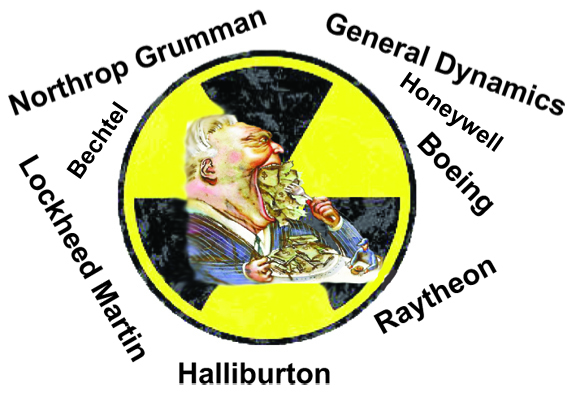
U.S. corporate power is the immediate beneficiary of this sharp turn in policy, built on military threats and economic sanctions.
JAPAN REARMS UNDER WASHINGTON’S PRESSURE, Popular Resistance, By Sara Flounders, Workers World. December 29, 2022
A Wake-Up Call To The Antiwar Movement.
The Dec. 16 announcement by Japan’s Prime Minister Fumio Kishida of a new defense strategy, while doubling military spending by 2027 to implement it, is the largest defense shake-up in decades and a wake-up call to the antiwar movement.
The decision includes openly acquiring offensive weapons and reshaping its military command structure for its expanded armed forces. On Dec. 23, the draft budget was approved by Kishida’s cabinet.
Japan’s dangerous military expansion should set off international alarm bells. This major escalation is taking place based on intense U.S. imperialist pressure. It is the next step in the “Pivot to Asia,” aimed at threatening and surrounding China and attempting to reassert U.S. dominance in the Asia Pacific.
The movements opposing endless U.S. wars must begin to prepare material and draw mass attention to this ominous threat.
The plan to double military spending will add $315 billion to Japan’s defense budget over the next five years and make Japan’s military the world’s third largest, after the U.S. and China. Defense spending will escalate to 2% of gross domestic product, equal to the goal the U.S. sets for its NATO allies. Japan’s economy is the world’s third largest.
The Japanese government plans to buy up to 500 Lockheed Martin Tomahawk missiles and Joint Air-to-Surface Standoff Missiles (JASSM), procure more naval vessels and fighter aircraft, increase cyber warfare capabilities, manufacture its own hypersonic guided missiles and produce its own advanced fighter jets, along with other weapons. The plan shifts from relying solely on missile defense to also embracing “counterstrike” capabilities.
Three key security documents — the National Security Strategy (NSS), as well as the National Defense Strategy (NDS) and the Defense Buildup Program (DBP) — shed some of the postwar constraints on the Japanese military.
Article 9 – a class struggle against military rearmament
Although the U.S. occupation force, after defeating Japan’s military in World War II, imposed a “pacifist” constitution on Japan, for decades now U.S. strategists have pressured Japan’s government to aggressively rearm, and especially to buy U.S.-made weapons, to act as a junior partner to U.S. efforts to dominate the Asia-Pacific region.
Article 9 of the imposed Japanese constitution prohibits Japan from maintaining an army, navy and air force. To get around this, the “Japanese Self-Defense Forces” (JSDF) have since 1952 been treated as a legal extension of the police and prison system. The U.S. occupiers considered the JSDF an essential repressive tool defending capitalist property relations against the workers’ movement.
The decision for aggressive military expansion is in open violation of Japan’s supposedly pacifist constitution……………………………………
Targeting China
Japan’s military expansion fits in with Washington’s aggression aimed at China, the DPRK and Russia. U.S. strategists’ goal is to use the U.S. alliance with Japan, South Korea and Australia, just as it uses the U.S.-led NATO alliance in Europe………………………..
China is Japan’s largest trading partner in both imports and exports. Previous National Strategy Documents said Japan was seeking a “mutually beneficial strategic partnership” with China. Suddenly Japanese strategists started labeling China “the greatest strategic challenge in ensuring the peace and security of Japan.” (U.S. Institute of Peace, Dec. 19)………..
U.S. praise of Japan’s rising militarism
The U.S. media praised Japan’s new security strategy document as a “bold and historic step.” U.S. National Security Advisor Jake Sullivan praised the defense spending hike, which “will strengthen and modernize the U.S.-Japan alliance.” U.S. Secretary of State Antony Blinken called Japan an “indispensable partner” and cheered that the changed security documents reshape the ability to “protect the rules-based order in the Indo-Pacific region and around the world.” (quotes, whitehouse.gov, Dec. 16)
U.S. corporate power is the immediate beneficiary of this sharp turn in policy, built on military threats and economic sanctions………………………………………………………………….
Having goaded Russia into an invasion of Ukraine in a bid to weaken and fragment Russia, the U.S. is next seeking to turn Taiwan into a military quagmire for China. The Biden administration is facilitating Taiwan’s purchase of advanced weaponry from the U.S. and greater diplomatic ties with the island. https://popularresistance.org/japan-rearms-under-washingtons-pressure-%E2%88%92-a-wake-up-call-to-the-antiwar-movement/
1 This Month




PLEASE OPPOSE HR 8255 AND S.3639 – bills would accelerate satellite deployment, with no environmental review or safeguards – https://ncstd5li.quorum.us/campaign/169331/
To see nuclear-related stories in greater depth and intensity – go to https://nuclearinformation.wordpress.com
-
Archives
- September 2026 (339)
- August 2026 (330)
- July 2026 (355)
- June 2026 (287)
- May 2026 (306)
- April 2026 (356)
- March 2026 (251)
- February 2026 (267)
- January 2026 (308)
- December 2025 (358)
- November 2025 (359)
- October 2025 (375)
-
Categories
- 1
- 1 NUCLEAR ISSUES
- business and costs
- climate change
- culture and arts
- ENERGY
- environment
- health
- history
- indigenous issues
- Legal
- marketing of nuclear
- media
- opposition to nuclear
- PERSONAL STORIES
- politics
- politics international
- Religion and ethics
- safety
- secrets,lies and civil liberties
- spinbuster
- technology
- Uranium
- wastes
- weapons and war
- Women
- 2 WORLD
- ACTION
- AFRICA
- Atrocities
- AUSTRALIA
- Christina's notes
- Christina's themes
- culture and arts
- Events
- Fuk 2022
- Fuk 2023
- Fukushima 2017
- Fukushima 2018
- fukushima 2019
- Fukushima 2020
- Fukushima 2021
- general
- global warming
- Humour (God we need it)
- Nuclear
- RARE EARTHS
- Reference
- resources – print
- Resources -audiovicual
- Weekly Newsletter
- World
- World Nuclear
- YouTube
-
RSS
Entries RSS
Comments RSS

