Honouring Britain’s nuclear testing veterans
Britain’s nuclear testing programme veterans to be honoured in £450,000
project. Government will commemorate the ‘incredible service’ of the
veterans who witnessed hundreds of atomic tests and were exposed to
radiation.
Telegraph 3rd Oct 2022
“End War in Ukraine” Say 66 Nations at UN General Assembly
Common Dreams, BY MEDEA BENJAMIN – NICOLAS J. S. DAVIES, 30 Sept 22,
We have spent much of the past week reading and listening to speeches by world leaders at the UN General Assembly in New York. Most of them condemned Russia’s invasion of Ukraine as a violation of the UN Charter and a serious setback for the peaceful world order that is the UN’s founding and defining principle.
But what has not been reported in the United States is that leaders from 66 countries, mostly from the Global South, also used their General Assembly speeches to call urgently for diplomacy to end the war in Ukraine through peaceful negotiations, as the UN Charter requires. We have compiled excerpts from the speeches of all 66 countries to show the breadth and depth of their appeals, and we highlight a few of them here.
African leaders echoed one of the first speakers, Macky Sall, the president of Senegal, who also spoke in his capacity as the current chairman of the African Union when he said, “We call for de-escalation and a cessation of hostilities in Ukraine, as well as for a negotiated solution, to avoid the catastrophic risk of a potentially global conflict.”
The 66 nations that called for peace in Ukraine make up more than a third of the countries in the world, and they represent most of the Earth’s population, including India, China, Indonesia, Bangladesh, Brazil and Mexico.
While NATO and EU countries have rejected peace negotiations, and U.S. and U.K. leaders have actively undermined them, the leaders of five European countries – Hungary, Malta, Portugal, San Marino and the Vatican – joined the calls for peace at the General Assembly.
The peace caucus also includes many of the small countries that have the most to lose from the breakdown of the UN system that recent wars in Ukraine and the Greater Middle East represent, and who have the most to gain by strengthening the UN and enforcing the UN Charter to protect the weak and restrain the powerful.
Philip Pierre, the Prime Minister of Saint Lucia, a small island state in the Caribbean, told the General Assembly,
“Articles 2 and 33 of the UN Charter are unambiguous in binding Member States to refrain from the threat or use of force against the territorial integrity or political independence of any state and to negotiate and settle all international disputes by peaceful means.…We therefore call upon all parties involved to immediately end the conflict in Ukraine, by undertaking immediate negotiations to permanently settle all disputes in accordance with the principles of the United Nations.”
Global South leaders lamented the failure of the UN system, not just in the war in Ukraine but throughout decades of war and economic coercion by the United States and its allies. President Jose Ramos-Horta of Timor-Leste directly challenged the West’s double standards, telling Western countries,
“They should pause for a moment to reflect on the glaring contrast in their response to the wars elsewhere where women and children have died by the thousands from wars and starvation. The response to our beloved Secretary-General’s cries for help in these situations have not met with equal compassion. As countries in the Global South, we see double standards. Our public opinion does not see the Ukraine war the same way it is seen in the North.”
Many leaders called urgently for an end to the war in Ukraine before it escalates into a nuclear war that would kill billions of people and end human civilization as we know it. The Vatican Secretary of State, Cardinal Pietro Parolin, warned,
“…the war in Ukraine not only undermines the nuclear non-proliferation regime, but also presents us with the danger of nuclear devastation, either through escalation or accident. … To avoid a nuclear disaster, it is vital that there be serious engagement to find a peaceful outcome to the conflict.”
Others described the economic impacts already depriving their people of food and basic necessities, and called on all sides, including Ukraine’s Western backers, to return to the negotiating table before the war’s impacts escalate into multiple humanitarian disasters across the Global South…………………………………………………
At the end of the debate on September 26, Csaba Korosi, the president of the General Assembly, acknowledged in his closing statement that ending the war in Ukraine was one of the main messages “reverberating through the Hall” at this year’s General Assembly.
You can read here Korosi’s closing statement and all the calls for peace he was referring to.
And if you want to learn more about the “legions working together in solidarity… to impose the unconditional option of peace on the war lobbies,” as Jean-Claude Gakosso said, you can find out more at https://www.peaceinukraine.org/. https://qoshe.com/common-dreams/medea-benjamin/-end-war-in-ukraine-say-66-nations-at-un-general-assembly/147104931
Zaporizhzhia nuclear plant director general detained by Russian patrol
A Russian patrol has detained the director general of Ukraine’s
Russian-occupied Zaporizhzhia nuclear power plant, the state-owned company
in charge of the plant said on Saturday, and the U.N. nuclear watchdog said
Russia had confirmed the move. Ihor Murashov was detained on his way from
the nuclear plant, Europe’s largest, to the town of Enerhodar at around 4
p.m. (1300 GMT) on Friday, the head of state-owned Energoatom, Petro Kotin,
said in a statement.
Reuters 1st Oct 2022
Uncle Sam’s Long Trail of Wreckage
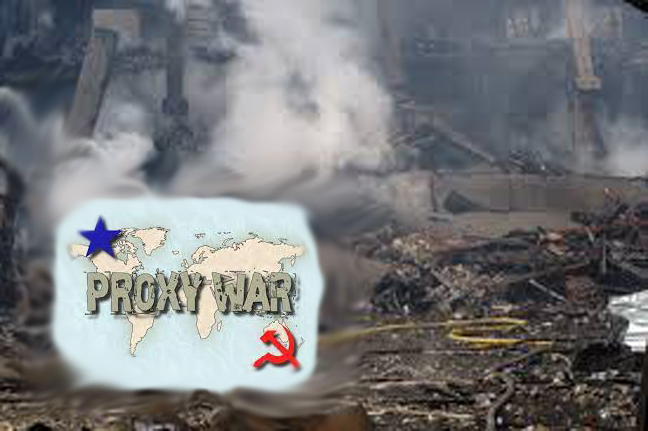
the Biden administration opted to use Ukraine in a Western proxy war against Russia.
Washington and London appear to have sabotaged a possible peace accord between Moscow and Kiev.
The Biden administration is risking nuclear war with Russia to assist a corrupt, authoritarian regime in a country of little importance to the United States.
Until the early 1990s, Ukraine wasn’t even an independent country, much less a U.S. vital interest.
Very few policymakers even concede that Washington’s overseas military adventures often have not turned out as planned.
The American Conservative, Ted Galen Carpenter, Sep 28, 2022, The leaders and most of the news media in the U.S. seem to believe that Washington’s foreign policy over the past several decades has been a success and benefitted both the United States and the world. That assumption wasn’t really true even during the Cold War, although that confrontation eventually resulted in the peaceful demise of America’s nasty totalitarian adversary. There was plenty of collateral damage along the way, with the suffering caused by Washington’s conduct in Vietnam and Afghanistan being the most glaring examples.
The performance of U.S. leaders after the Cold War has been even worse. An array of disruptive, bloody tragedies—most notably those in the Balkans, Afghanistan (again), Iraq, Libya, Syria, and Yemen—mark Uncle Sam’s global trail of wreckage. The Biden administration’s decision to use Ukraine as a pawn in Washington’s power struggle with Russia is fast becoming the latest example.
Very few policymakers even concede that Washington’s overseas military adventures often have not turned out as planned. The news media, which is supposed to serve as the public’s watchdog, have routinely ignored or excused America’s foreign-policy disasters. Instead, when one intervention fails, they simply move on to lobby for the next crusade pushed by U.S. leaders. Consider how few news accounts now deal with the ongoing violence and chaos in places such as Libya, Syria, and Yemen, even though Washington was a major contributor to all of those tragedies.
Paul Poast, a scholar with the Chicago Council on Global Affairs, aptly describes the conflict in Syria as America’s “forgotten war.” “That the war in Syria has become the “forgotten war,” he observes, “points to a more disturbing trend in U.S. foreign policy: The United States is so engaged in wars and interventions around the world that a conflict involving the U.S. military that has killed hundreds of thousands of civilians does not even register with the American public anymore.”………………………………………
The turmoil in Iraq is less severe, but is still damaging the country. Political disputes and mass demonstrations against the current government regularly surface in Iraq. Pro-Iranian militias continue to play a prominent role in the country’s government, and the three-way split among Sunni Arabs, Shiite Arabs, and Kurds is becoming ever more contentious. Political violence among rival factions shows no signs of subsiding, nor does public resentment against the presence of U.S. troops. Washington so lacks trust in its “ally” that officials once threatened to seize the country’s bank reserves if Iraqi leaders continued to press for the withdrawal of U.S. forces.
The level of human tragedy in Libya and Yemen is horrifying. Washington and its NATO allies bear almost exclusive responsibility for the situation in Libya………………………
The latest application of Washington’s meddlesome policy is in Ukraine. U.S. leaders ignored repeated Russian warnings that making Ukraine a NATO member or even an unofficial NATO military asset would cross a line that threatened Russia’s security. When Moscow finally responded to the provocations with an invasion of Ukraine in February 2022, the Biden administration opted to use Ukraine in a Western proxy war against Russia.
The conflict has already done enormous damage to Ukraine’s infrastructure and taken thousands of lives. Worse, Washington and London appear to have sabotaged a possible peace accord between Moscow and Kiev.
The U.S. foreign-policy record over the past three decades could hardly be worse. It is crucial not to let policymakers and their media mouthpieces get away with convenient collective amnesia and imitations of Pontius Pilate. Instead, they need to be held fully accountable for their blunders and deception.
Future U.S. policymakers also need to avoid repeating the faulty performance of their predecessors. To do so, they must make three significant changes to U.S. foreign policy.
First, Washington should utterly renounce nation-building. Trying to remake alien societies by force and impose Western political, economic, and social values is the essence of folly.
Even when the United States has not yet been drawn into a new war to enforce crumbling nation-building goals, as in Bosnia and Kosovo, such armed social experiments are an exercise in futility and frustration. Worse, nation-building missions frequently worsen conditions in the targeted country, and the predictable failure of U.S. objectives even can lead to Washington’s outright humiliation. The debacle in Afghanistan is a stark reminder of that danger.
Second, the United States must avoid the temptation to engage in regime-change wars. Such offensives often are a prelude to disastrous nation-building ventures. That was the case in Iraq, Afghanistan, and Libya. Those wars not only made matters worse for the populations in the three countries, but worsened the security situation for neighboring states and even the United States. In both Iraq and Libya, U.S. actions toppled secular dictators, paving the way for chaos that strengthened the position of Islamic jihadists. Granted, the secular dictators were brutal and sometimes caused problems for the United States, but Washington’s “solution” clearly made matters worse, not better.
Third, U.S. leaders must do a much better job of distinguishing vital national interests from secondary or peripheral ones. Washington’s current policy of using Ukraine as a proxy for a war against Russia is a troubling example of the failure to make such basic distinctions. The Biden administration is risking nuclear war with Russia to assist a corrupt, authoritarian regime in a country of little importance to the United States.
Until the early 1990s, Ukraine wasn’t even an independent country, much less a U.S. vital interest. To accept the risks the Biden administration is incurring is irresponsible and violates the U.S. government’s responsibility to the American people.
Unless these policy changes are made, it is just a matter of time until a new set of officials repeat the disastrous blunders of their predecessors. If they do, the consequences to America and the world will be equally damaging. Indeed, the Ukraine adventure reveals that the consequences could be even worse than the wreckage already wrought by Uncle Sam. https://www.theamericanconservative.com/uncle-sams-long-trail-of-wreckage/
U.S. has not seen acts indicating Russia contemplating nuclear attack
U.S. has not seen acts indicating Russia contemplating nuclear attack
WASHINGTON, Sept 30 (Reuters) – The United States has not yet seen Russia take any action that suggests it is contemplating the use of nuclear weapons amid its invasion of Ukraine, U.S. Secretary of State Antony Blinken said on Friday, despite what he called “loose talk” by Russian President Vladimir Putin about their possible use.
“We are looking very carefully to see if Russia is actually doing anything that suggests that they are contemplating the use of nuclear weapons. To date, we’ve not seen them take these actions,” Blinken told a news conference in Washington with his Canadian counterpart.
“This kind of loose talk about nuclear weapons is the height of irresponsibility and it’s something that we take very seriously,” Blinken said.
Putin on Friday proclaimed Russia’s annexation of a swathe of Ukraine, the biggest annexation in Europe since World War Two. Putin also vowed to press ahead with what he calls a “special military operation” in Ukraine. Russia launched its invasion in February.
In recent weeks, Putin explicitly warned the West that Russia would use all available means to defend Russian territory and accused the West, without offering evidence, of discussing a potential nuclear attack on Russia. Putin on Friday said the United States had set a precedent when it had dropped two atomic bombs on Japan in 1945, but stopped short of issuing new nuclear warnings against Ukraine.
Pentagon spokesperson Brigadier General Patrick Ryder this week said the United States had not seen any changes that would lead it to alter the posture of American nuclear forces.
Putin controls the world’s largest nuclear arsenal, including a new generation of hypersonic weapons and 10 times more tactical nuclear weapons than the West.
Reporting by Simon Lewis and Humeyra Pamuk; Editing by Chizu Nomiyama and Will Dunham
US Senate Approves $12 Billion In New Aid For Ukraine Amid War

Russia-Ukraine War: It comes as Russian President Vladimir Putin plans to declare the annexation of parts of Ukraine occupied by Russian troops on Friday.
NDTV WorldAgence France-Presse September 30, 2022,
It also provides $4.5 billion for Kyiv to keep the country’s finances stable.
The US Senate approved $12 billion in new economic and military aid for Ukraine Thursday as part of a stopgap extension of the federal budget into December.
The measure, agreed by senators of both parties, includes $3 billion for arms, supplies and salaries for Ukraine’s military, and authorizes President Joe Biden to direct the US Defense Department to take $3.7 billion worth of its own weapons and materiel to provide Ukraine.
It also provides $4.5 billion for Kyiv to keep the country’s finances stable and keep the government running, providing services to the Ukrainian people.
It comes as Russian President Vladimir Putin plans to declare the annexation of parts of Ukraine occupied by Russian troops on Friday……………
The Ukraine aid is part of a short-term extension of the federal budget, which is to expire at the end of the fiscal year on September 30 without the parties in Congress having agreed to a full-year allocation for fiscal 2022-23………. https://www.ndtv.com/world-news/us-senate-approves-12-billion-in-new-aid-for-ukraine-amid-war-3390355
The real Winners of Ukraine war – the USA weapons manufacturers! U.S. Announces $1.1 Billion In Aid For Building Ukraine’s Military
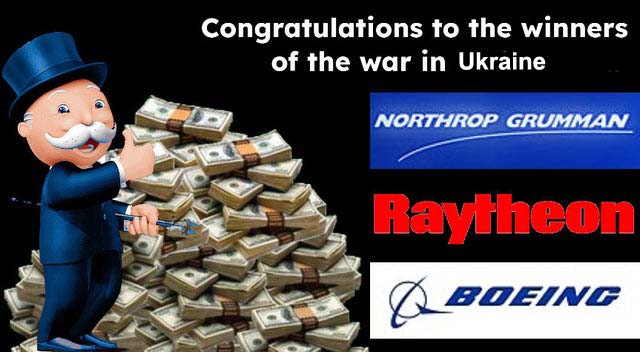
The United States has now committed approximately $16.9 billion in security assistance to Ukraine since January 2021
Radio Free Europe, 29 Sept 22, The United States will provide an additional $1.1 billion in military aid to Ukraine, including funding for about 18 more advanced rocket systems and other weapons to counter drones, the White House announced on September 28.
The package is aimed at helping Ukraine secure its longer-term defense needs under the Ukraine Security Assistance Initiative, which funds the purchase of weapons and equipment. This means it could take a year or more for Ukraine to get the systems.
Most of the other military aid packages announced by the United States have thus far used Pentagon drawdown authority to provide weapons more immediately.
The new package “represents a multi-year investment in critical capabilities to build the enduring strength of Ukraine’s Armed Forces” as they continue to battle the invading Russian Army, the Pentagon said in a statement.
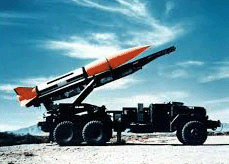
The package includes funding for 18 units of the High-Mobility Artillery Rocket System, known as HIMARS, and 12 Titan systems, which are used to counter drones………………
Also in the package is funding for about 150 armored vehicles, 150 tactical vehicles for towing weapons, trucks and trailers, and a variety of radars, communications, and surveillance equipment.
The United States has now committed approximately $16.9 billion in security assistance to Ukraine since January 2021. https://www.rferl.org/a/ukraine-us-military-aid-1-1-billion/32056533.html
US, UK sabotaged peace deal because they ‘don’t care about Ukraine’: fmr. NATO adviser
https://thegrayzone.com/2022/09/27/us-uk-sabotaged-peace-deal/ AARON MATÉ· SEPTEMBER 27, 2022,
Former Swiss intelligence officer and NATO adviser Jacques Baud on the next phase of the Russia-Ukraine war and new allegations that the US and UK undermined a peace deal that could have ended it.
The West’s aim “is not the victory of Ukraine, It’s the defeat of Russia,” Baud says. “The problem is that nobody cares about Ukraine. We have just instrumentalized Ukraine for the purpose of US strategic interests — not even European interests.”
Guest: Jacques Baud. Former intelligence officer with the Swiss Strategic Intelligence Service who has served in a number of senior security and advisory positions at NATO, the United Nations, and with the Swiss military.
Corrections:
- In his Sept. 21 speech, Putin did not make an explicit threat to use nuclear weapons. He vowed to “make use of all weapon systems available to us,” in the event of “a threat to the territorial integrity of our country and to defend Russia and our people.”
On nuclear weapons, the US did not have a “No First Use” policy. On the 2020 campaign trail, Joe Biden said that he supported the idea of “No First Use.” He abandoned that in his presidential nuclear posture; but that was reversing his campaign stance, not official US policy.
What are tactical nuclear weapons? An international security expert explains and assesses what they mean for the war in Ukraine
I believe Russian use of tactical nuclear weapons in Ukraine would not achieve any military goal. It would contaminate the territory that Russia claims as part of its historic empire and possibly drift into Russia itself. It would increase the likelihood of direct NATO intervention and destroy Russia’s image in the world.
The Conversation, Nina Srinivasan Rathbun, Professor of International Relations, USC Dornsife College of Letters, Arts and Sciences, 28 Sept 22,
Tactical nuclear weapons have burst onto the international stage as Russian President Vladimir Putin, facing battlefield losses in eastern Ukraine, has threatened that Russia will “make use of all weapon systems available to us” if Russia’s territorial integrity is threatened. Putin has characterized the war in Ukraine as an existential battle against the West, which he said wants to weaken, divide and destroy Russia.
U.S. President Joe Biden criticized Putin’s overt nuclear threats against Europe. Meanwhile, NATO Secretary-General Jens Stoltenberg downplayed the threat, saying Putin “knows very well that a nuclear war should never be fought and cannot be won.” This is not the first time Putin has invoked nuclear weapons in an attempt to deter NATO.
I am an international security scholar who has worked on and researched nuclear restraint, nonproliferation and costly signaling theory applied to international relations for two decades. Russia’s large arsenal of tactical nuclear weapons, which are not governed by international treaties, and Putin’s doctrine of threatening their use have raised tensions, but tactical nuclear weapons are not simply another type of battlefield weapon.
Tactical by the numbers
Tactical nuclear weapons, sometimes called battlefield or nonstrategic nuclear weapons, were designed to be used on the battlefield – for example, to counter overwhelming conventional forces like large formations of infantry and armor. They are smaller than strategic nuclear weapons like the warheads carried on intercontinental ballistic missiles.
While experts disagree about precise definitions of tactical nuclear weapons, lower explosive yields, measured in kilotons, and shorter-range delivery vehicles are commonly identified characteristics. Tactical nuclear weapons vary in yields from fractions of 1 kiloton to about 50 kilotons, compared with strategic nuclear weapons, which have yields that range from about 100 kilotons to over a megaton, though much more powerful warheads were developed during the Cold War.
For reference, the atomic bomb dropped on Hiroshima was 15 kilotons, so some tactical nuclear weapons are capable of causing widespread destruction. The largest conventional bomb, the Mother of All Bombs or MOAB, that the U.S. has dropped has a 0.011-kiloton yield.
Delivery systems for tactical nuclear weapons also tend to have shorter ranges, typically under 310 miles (500 kilometers) compared with strategic nuclear weapons, which are typically designed to cross continents.
Because low-yield nuclear weapons’ explosive force is not much greater than that of increasingly powerful conventional weapons, the U.S. military has reduced its reliance on them. Most of its remaining stockpile, about 150 B61 gravity bombs, is deployed in Europe. The U.K. and France have completely eliminated their tactical stockpiles. Pakistan, China, India, Israel and North Korea all have several types of tactical nuclear weaponry.
Russia has retained more tactical nuclear weapons, estimated to be around 2,000, and relied more heavily on them in its nuclear strategy than the U.S. has, mostly due to Russia’s less advanced conventional weaponry and capabilities.
Russia’s tactical nuclear weapons can be deployed by ships, planes and ground forces. Most are deployed on air-to-surface missiles, short-range ballistic missiles, gravity bombs and depth charges delivered by medium-range and tactical bombers, or naval anti-ship and anti-submarine torpedoes. These missiles are mostly held in reserve in central depots in Russia.
Russia has updated its delivery systems to be able to carry either nuclear or conventional bombs. There is heightened concern over these dual capability delivery systems because Russia has used many of these short-range missile systems, particularly the Iskander-M, to bombard Ukraine.
Tactical nuclear weapons are substantially more destructive than their conventional counterparts even at the same explosive energy. Nuclear explosions are more powerful by factors of 10 million to 100 million than chemical explosions, and leave deadly radiation fallout that would contaminate air, soil, water and food supplies, similar to the disastrous Chernobyl nuclear reactor meltdown in 1986. The interactive simulation site NUKEMAP by Alex Wellerstein depicts the multiple effects of nuclear explosions at various yields………………………………
Tactical nuclear weapons are substantially more destructive than their conventional counterparts even at the same explosive energy. Nuclear explosions are more powerful by factors of 10 million to 100 million than chemical explosions, and leave deadly radiation fallout that would contaminate air, soil, water and food supplies, similar to the disastrous Chernobyl nuclear reactor meltdown in 1986. The interactive simulation site NUKEMAP by Alex Wellerstein depicts the multiple effects of nuclear explosions at various yields…………………….
While there is disagreement among experts, Russian and U.S. nuclear strategies focus on deterrence, and so involve large-scale retaliatory nuclear attacks in the face of any first-nuclear weapon use. This means that Russia’s threat to use nuclear weapons as a deterrent to conventional war is threatening an action that would, under nuclear warfare doctrine, invite a retaliatory nuclear strike if aimed at the U.S. or NATO.
Nukes and Ukraine
I believe Russian use of tactical nuclear weapons in Ukraine would not achieve any military goal. It would contaminate the territory that Russia claims as part of its historic empire and possibly drift into Russia itself. It would increase the likelihood of direct NATO intervention and destroy Russia’s image in the world.
Putin aims to deter Ukraine’s continued successes in regaining territory by preemptively annexing regions in the east of the country after holding staged referendums. He could then declare that Russia would use nuclear weapons to defend the new territory as though the existence of the Russian state were threatened. But I believe this claim stretches Russia’s nuclear strategy beyond belief.
Putin has explicitly claimed that his threat to use tactical nuclear weapons is not a bluff precisely because, from a strategic standpoint, using them is not credible. In other words, under any reasonable strategy, using the weapons is unthinkable and so threatening their use is by definition a bluff. https://theconversation.com/what-are-tactical-nuclear-weapons-an-international-security-expert-explains-and-assesses-what-they-mean-for-the-war-in-ukraine-191167
USA government, Pentagon, happy to escalate to a nuclear war – at the behest of Volodymyr Zelensky ?
As I really dislike Rupert Murdoch’s News Corpse, Tucker Carlson, and the whole pro Trump brigade, it pains me to have to promote them in any way. BUT – if they happen to be telling the facts, with a credible interpretation of what is going on in Ukraine – can we afford to just dismiss them, while the “respectable” corporate Western media idolises Zelensky, and promotes the escalation of the war?
The deadly game of nuclear escalation

https://barbadostoday.bb/2022/09/25/btcolumn-the-deadly-game-of-nuclear-escalation/ Article by
Sasha Mehter, 25 Sept 22, by Lenrod Nzulu Baraka
Military mobilisation in Russia has led to thousands of Russians fleeing their country to escape conscription. Russians, perhaps mindful of the 27 million of their countrymen that fell defending the motherland against Nazi aggression, are saying no to the prospects of becoming cannon fodder for another war between Russia and the rest of Europe. Direct flights from Russia to countries that do not require Russians to have visa are already sold out.
Russian mobilisation comes at a time when European and America belligerence is at an all time high. President of the European Commission Ursula von der Leyen has doubled down on Russian sanctions saying that the sanctions were here to stay and that now was a time to show resolve not appeasement. Maybe she is trying hard to shore up the commitment of European nations that are staring down a bleak winter of discontent.
President Biden fresh from his 60 Minute interview in which he bluntly stated that he was willing to send American troops to assist Taiwan if that country was threatened by invading Chinese forces, amplified Ursula von der Leyen’s hawkish rhetoric. With a very straight face President Biden berated Russia for wanting to extinguish Ukraine’s right to exist as a state. I guess he forgot what the American government did to Iraq, Libya, and Yugoslavia.In his speech at the UN President Biden reminded his fellow world leaders that no nation should be allowed to pursue imperialistic ambitions without consequences. He probably winked at the leaders of Israel and Saudi Arabia as he said these words to remind them that his statement did not apply to their nations. The US has used its veto over fifty times to shield Israel from UN resolution condemning Israeli actions against Palestinians. And who could forget the famous fist bump between President Biden and Crown Prince Mohammed bin Salman after President Biden pariah threat.
Undaunted and undeterred by the European Community, NATO, and the US and its allies, President Putin ordered a military mobilisation of 300 000 reservists. In a televised address to his nation President Putin stated that if the territorial integrity of his nation was threatened, he would use every available means to protect Russia and its people. President Putin’s cryptic weathervane comment in connection with his nuclear statement preceding it, suggests that the deadly game of nuclear escalation has started.
The US and NATO bring to the table an impressive array of military and economic weapons many of which have already been deployed against Russia. On its own, Russia will not be able to withstand the American /NATO assault indefinitely. The longer the Ukrainian war drags on the weaker Russia’s position becomes. A major Russian escalation could however turn the tide in Russia’s favor.
The formal annexation of new Ukrainian territory may fit the bill for an escalation that might prove to be decisive. The West will have to decide whether President Putin is bluffing about his nuclear threat as they decide on an appropriate response. Ukrainian attacks against territory formally annexed by Russia will be interpreted as an attack on Russia by Ukraine. The path to total war will be open and Russia will unleash its most potent weapons on Ukraine and secondly on any NATO or American forces that come to Ukraine’s assistance.
Since Russia will be the underdog in an all out dogfight with NATO and the US, Russia will have to rely on its nuclear arsenal either as a deterrent to outright invasion of Russia by NATO and US forces or as a game changing strategy to decimate the opposition. Russia may very well decide to go nuclear for the same reason the US went atomic against the Japanese. Rather than throwing his population into the meat grinder of a conventional war, Putin may go instead for a few precision strikes designed to instill terror in the camp of the enemy. Once that first nuclear button is pushed everything changes and the world that we know will be transformed.
Lenrod Nzulu Baraka is the founder of Afro-Caribbean Spiritual Teaching Center.
The Ukraine war could open the nuclear Pandora’s box
If neither Russia nor the West backs down, the scope and dimension of the conflict will change dramatically
Nato could be forced to intervene directly, for example to protect Ukraine’s nuclear reactors, if Mr Zelenskyy requests it. Ukraine is home to 14 reactors in addition to the Russian-controlled Zaporizhzhia plant in the south-east. In such a scenario, the war would become a European war.
The US, also to help protect the nuclear reactors, might be willing to supply missiles to Ukraine with a range of up to 400 kilometres, long enough to reach Crimea and perhaps even the Russian capital. In which case, according to a Russian expert, Moscow could deploy nuclear weapons.
The National RAGHIDA DERGHAM 25 Sept 22, The war in Ukraine has entered a decisive phase, with Russian President Vladimir Putin ordering referendums in the Donbas last week. The outcome of these referendums, which the West believes Moscow has designated with the purpose of annexing Ukraine’s Russian-controlled regions, will change the rules of the conflict. At the same time, Mr Putin has invoked his government’s nuclear options and declared a partial mobilisation of up to 300,000 conscripts, indicating the expansion of the war in the coming weeks.
It is now clear to anyone who previously thought Mr Putin might take steps to negotiate with Kyiv or back down that he is convinced he can – and is determined to – prevail in Ukraine and will not entertain the idea of a defeat. The Kremlin is not afraid of inviting a western military intervention and has put Nato on edge by talking about victory at any cost, including a nuclear cost.
On the other hand, it is clear that American and European leaders have made their decision in the equation of victory-or-defeat and will not allow Russia to seize Ukraine, no matter the cost. This means that, what appeared impossible a month or two ago is now in the realm of plausibility, meaning direct western intervention in the war, in the event of Russia deploying tactical nukes – which are not strictly “tactical” or “small radius” weapons.
So who will win and who will lose in Ukraine?
First, let’s address the big picture – the US strategy that many believe is to implicate the Russian leadership and its system, if not Russia itself, for calculations related to Washington’s grand strategy vis-a-vis China’s rise. It must be said that no matter the planners’ genius, it requires the target to fall into the trap. Indeed, Moscow did not resist this trap. It even doubled down. Its leadership thought its ultimatums and escalations would force the West to back down and comply with its demands, and therefore, enable a Russian victory in Ukraine. So far, it has lost its bets and continues to follow the path charted for it by the western powers towards an ambush that could prove disastrous for Russia.
Comparisons have been made between Moscow’s intervention in Afghanistan, which eventually led to the break-up of the Soviet Union, and the Ukraine war that could have dire consequences for the Russian Federation. Backing down now could amount to a significant setback for Moscow. Yet, the paradox is that continuing this war carries the same risks, particularly if Russia loses. For this reason, defeat is not a word in its dictionary and not an option for its military, especially after the war exposed the latter’s weaknesses and undermined its prestige.
From Washington’s point of view, defeating Russia helps the American strategy against China. US National Security Council strategists believe that defeating Russia would cause Beijing to lose a strategic partner practically and psychologically. It also means, according to one informed expert, that China would lose its Russian “buffer zone”, forcing it to the frontline in its strategic stand-off with the US………………..
Russia will not allow Ukraine to be shared by the two sides. But nor will Ukrainian President Volodymyr Zelenskyy back down. He sees Moscow’s failure to remove him from power as a decisive moment in the war. He is also confident that Nato will guarantee Kyiv the military edge. Modern warfare is not limited to what goes on in the battlefield; it’s also a technological war, and Mr Zelenskyy is using Nato’s advanced technology to fight Moscow.
Nato could be forced to intervene directly, for example to protect Ukraine’s nuclear reactors, if Mr Zelenskyy requests it. Ukraine is home to 14 reactors in addition to the Russian-controlled Zaporizhzhia plant in the south-east. In such a scenario, the war would become a European war. The US, also to help protect the nuclear reactors, might be willing to supply missiles to Ukraine with a range of up to 400 kilometres, long enough to reach Crimea and perhaps even the Russian capital. In which case, according to a Russian expert, Moscow could deploy nuclear weapons.
The Kremlin is seen to be paving the way towards being able to use these weapons. The referendums in the Donbas, to conclude on Tuesday with the Russian expectation that majorities will vote in favour of joining its federation, will be followed by the annexation of those regions. Subsequently, from September 29-30, after the Russian Duma endorses the results, any assault on those regions would amount to an assault on Russia, giving the Kremlin the right to respond by all means necessary, included nuclear ones.
Put differently, according to another expert, “the buffer zone between Russia and Ukraine will disappear, and the war will enter a new threshold that includes the activation of Russian strategic nuclear instruments based on national laws to defend Russian territories using all available means”.
A Russian military victory, if it were to transpire, may require an escalation that would bring with it much destruction. For this reason, the next two weeks will not only be crucial, but possibly also dangerous. https://www.thenationalnews.com/opinion/comment/2022/09/25/the-ukraine-war-could-open-the-nuclear-pandoras-box/
International Day for the Total Elimination of Nuclear Weapons 2022: History, Significance and Celebration
https://www.news18.com/news/lifestyle/international-day-for-the-total-elimination-of-nuclear-weapons-2022-history-significance-and-celebration-6028441.htmlBy: Lifestyle Desk
The day reminds people of the dangers of nuclear weapons and urges world governments to cooperate and bring about a permanent and complete nuclear disarmament.
nternational Day for the Total Elimination of Nuclear Weapons is observed on September 26 every year. The devastating impact of the 1945 Hiroshima and Nagasaki bombings is well known. This apart, over 2000 nuclear tests have been conducted to date; the last one in 2017, by North Korea. Such tests have caused cancers, birth defects and chronic diseases, among other illnesses in people, and severely damaged the natural world.
Though there has been a reduction in the number of deployed nuclear weapons since the peak of the Cold War, an estimated 12,705 nuclear weapons still exist in the world as of 2022, with the United States and Russia, who appear to be on opposing sides, owning most of them.
History
The United Nations’ (UN) objective to achieve total nuclear disarmament was underlined in the first resolution of the United Nations General Assembly (UNGA) in 1946. Nuclear disarmament was made a priority objective in the first Special Session of the UNGA on disarmament in 1978. The nations which possess nuclear weapons include a doctrine of nuclear deterrence in their security policies.
To raise public awareness about nuclear weapons, the UNGA, in 2009, declared August 29 as the International Day against Nuclear Tests. Then, in December 2013, the UNGA declared September 26 as the International Day for the Total Elimination of Nuclear Weapons to mark the high-level UNGA meeting on nuclear disarmament on September 26 that year.
Celebration
Each year, the UN member states, civil society, parliamentarians, non-governmental organisations, mass media, academia, and individuals celebrate and promote the international day through various educational activities.
Significance
The International Day for the Total Elimination of Nuclear Weapons reminds people of the dangers of nuclear weapons and urges world governments to cooperate and bring about a permanent and complete nuclear disarmament.
Nuclear Disarmament
Even though total nuclear weapons elimination remains a dream for now, the 1987 Christopher Reeve-starring film, ‘Superman IV: The Quest for Peace,’ (1987) shows the title character destroying all of Earth’s nuclear weapons. People, however, not aliens, are needed to establish permanent peace. The International Day for the Total Elimination of Nuclear Weapons rekindles that dream each year.
US-S.Korea to stage joint military drills with nuclear-powered US carrier
https://www3.nhk.or.jp/nhkworld/en/news/20220926_01 26 Sept 22, The United States and South Korea are set to begin joint military exercises in the Sea of Japan on Monday, with the participation of a nuclear-powered US aircraft carrier.
The drills, involving a strike group led by the USS Ronald Reagan, will continue through Thursday.
The US highlighted the carrier’s deployment near the Korean Peninsula as part of its efforts to boost deterrence against North Korea in a meeting of senior foreign and defense officials from Washington and Seoul earlier this month.
The South Korean government stressed that Seoul and Washington will strengthen their joint defense capabilities and reconfirm their strong resolve to neutralize any forms of missile provocations by Pyongyang.
North Korea criticized South Korea for working with the US to beef up deterrence. Pyongyang said on a state-run website on Sunday that plots for war provocations will only create dreadful destruction.
North Korea on the same day launched a short-range ballistic missile toward the Sea of Japan from an area in or around Taechon, North Phyongan Province. The missile is estimated to have landed outside Japan’s exclusive economic zone.
North Korea also appears to be preparing to fire a submarine-launched ballistic missile, or SLBM, in the city of Sinpho in the eastern province of South Hamgyong.
Washington and Seoul remain on alert for possible further missile launches and other provocations by Pyongyang as North Korea is expected to sharply react to the US-South Korea joint drills.
1 This Month
26 April – Chernobyl: Inside the Meltdown airs on National Geographic on Sunday 26th April from 4pm
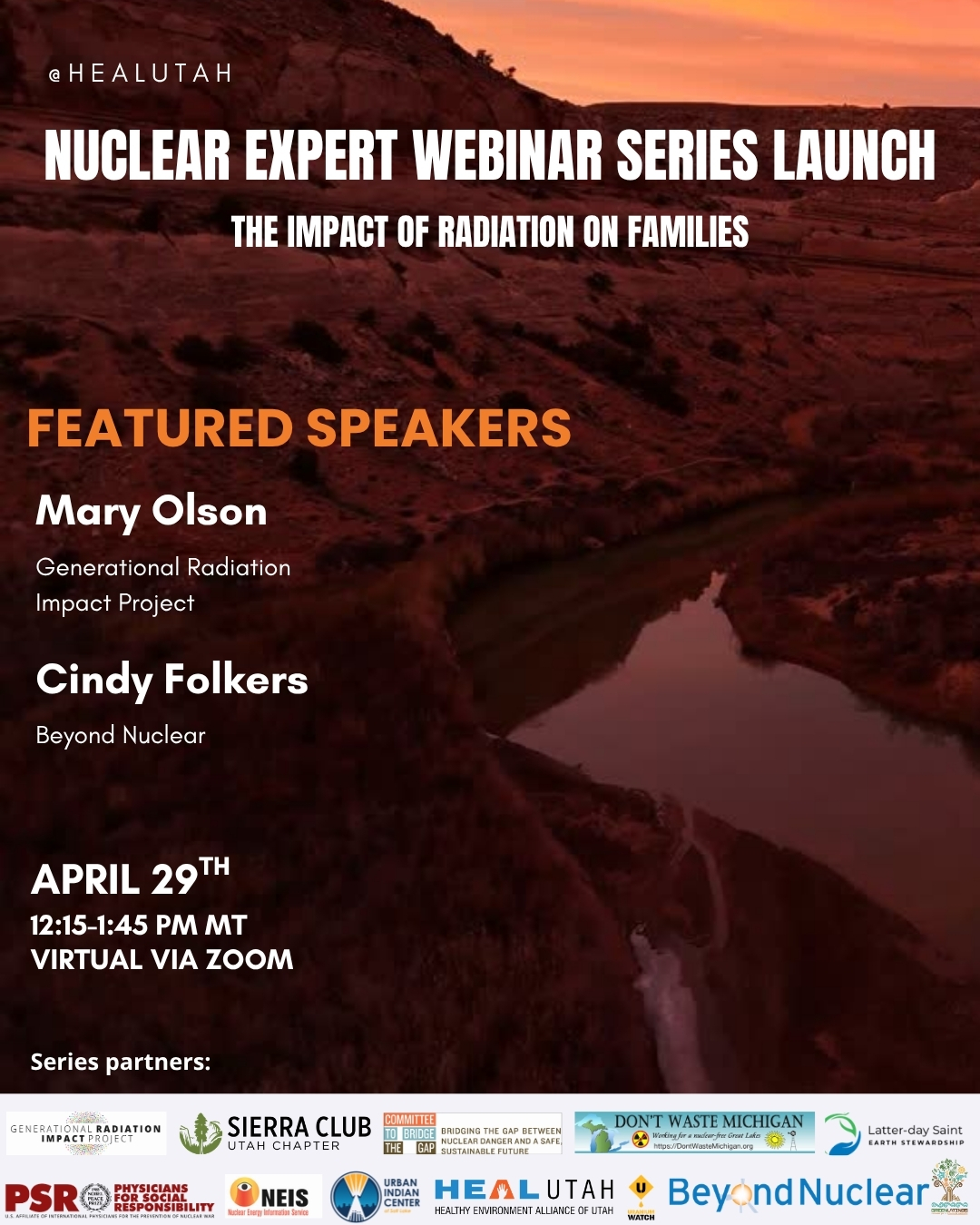
29 April – Nuclear Expert Webinar #1 – Radiation Impacts on Families with Mary Olson and Cindy Folkers
- 12:15 PM MT – 1:45 PM MT
- Location: Virtual – REGISTER TODAY

4 May -West Suburban Peace Coalition to discuss Iran war at May Educational Forum
Monday, May 4, 7:00 – 8:00 PM Central Standard Time
Title: : How Trump’s Narrative Tries to Shape the Reality of the War on Iran.
Contact Walt Zlotow, zlotow@hotmail.com 630 442 3045 for further information
14 May – online event From Bombs to Data Centres: the Face of Nuclear Colonialism

Pine Ridge Uranium is the real threat, not Tehran- Tell Burgum: Stop the Extraction.
Chernobyl: The Lost Tapes – A good documentary on Chernobyl on SBS available On Demand for the next 3 weeks– https://www.sbs.com.au/ondemand/tv-program/chernobyl-the-lost-tapes/2352741955560
To see nuclear-related stories in greater depth and intensity – go to https://nuclearinformation.wordpress.com
-
Archives
- April 2026 (346)
- March 2026 (251)
- February 2026 (268)
- January 2026 (308)
- December 2025 (358)
- November 2025 (359)
- October 2025 (376)
- September 2025 (257)
- August 2025 (319)
- July 2025 (230)
- June 2025 (348)
- May 2025 (261)
-
Categories
- 1
- 1 NUCLEAR ISSUES
- business and costs
- climate change
- culture and arts
- ENERGY
- environment
- health
- history
- indigenous issues
- Legal
- marketing of nuclear
- media
- opposition to nuclear
- PERSONAL STORIES
- politics
- politics international
- Religion and ethics
- safety
- secrets,lies and civil liberties
- spinbuster
- technology
- Uranium
- wastes
- weapons and war
- Women
- 2 WORLD
- ACTION
- AFRICA
- Atrocities
- AUSTRALIA
- Christina's notes
- Christina's themes
- culture and arts
- Events
- Fuk 2022
- Fuk 2023
- Fukushima 2017
- Fukushima 2018
- fukushima 2019
- Fukushima 2020
- Fukushima 2021
- general
- global warming
- Humour (God we need it)
- Nuclear
- RARE EARTHS
- Reference
- resources – print
- Resources -audiovicual
- Weekly Newsletter
- World
- World Nuclear
- YouTube
-
RSS
Entries RSS
Comments RSS
 nuclear-news