What Could Nuclear War Mean For Wyoming? Pretty Much The Worst Parts Of The Bible
Cowboy State Daily November 9, 2022 By Kevin Killough, State Energy Reporter
Kevin@CowboyStateDaily.com
The last time Americans gave any serious consideration to the prospect of nuclear war, Rocky Balboa was fighting in the fourth installment of the Rocky movie franchise, beating the steroid-injecting Russian heavyweight Ivan Drago.
If the situation in Ukraine escalates, there’s a real concern the world could face a nuclear war. If that terrible situation were to arise, what would happen to Wyoming?
According to modeling by NUKEMAP, a direct hit to Cheyenne — the Cowboy State’s most likely target in a nuclear exchange — would result in more than 30,000 instant deaths.
…………………………………………………. According to NUKEMAP, 31,260 people die instantly. Another 26,390 are hurt, most of which would be severe, including third-degree burns.
A crater 1,000 feet wide and 230 feet deep would open up beneath the blast on land that once held the Capitol. The fireball would be about 2,400 feet wide, which would engulf most of downtown Cheyenne. An area 1.5 miles wide would be hit with radiation doses that would be lethal within a month for anyone in the zone.
That zone would go nearly as far as Dell Range Boulevard. About 15% of those who survive in the zone would likely die of cancer eventually.
The zone that would produce third-degree burns would go about 3 miles in all directions. The fallout corridor, in which people would get severe radiation exposure — potentially lethal over time — would go nearly as far as Casper.
The mushroom cloud would rise 10 miles over Cheyenne and be more than 12 miles wide.
By most estimates, the Red Desert would be the safest area from the impacts of nuclear blasts and the subsequent fallout.
………………. besides eliminating Americans, bombing population centers destroys the nation’s infrastructure. That means no electricity, no internet and no basic services, such as clean drinking water and medical care.
Wyoming would have a lot of coal mines and farms, and if it did get passed over by the bombs, survivors may have a safe zone from which America would rebuild.
Lt. Col. Daniel Davis, a senior fellow for Defense Priorities, a military think tank, told Reason that Biden’s stated policy to help Ukraine no matter what until Russia withdraws to its former borders risks dragging the United States into a very high nuclear risk. …………
Finland denies plans to deploy nuclear weapons in the country once it joins NATO
Daniel Stewart, 8 Nov 22. Finland’s President Sauli Niinisto has assured on Monday that Helsinki has no plans to allow the deployment of nuclear weapons on its territory once it joins NATO’s ranks, amid tensions over the war in Ukraine…………………..
he has applauded the efforts of French President Emmanuel Macron and German Chancellor Olaf Scholz to maintain a dialogue with Moscow. “This is solely aimed at stopping the killing. I think it is a worthwhile goal,” he concluded. https://www.msn.com/en-au/news/other/finland-denies-plans-to-deploy-nuclear-weapons-in-the-country-once-it-joins-nato/ar-AA13PjsO
Will Biden Gamble on a Ukraine Coalition?
First, what is the aim of the coalition? Is the aim to expel Russian forces from Ukrainian territory? Is the aim to reinforce Ukrainian defense lines and achieve a ceasefire for negotiations? Or is the coalition merely a device to drag the rest of the NATO alliance into a war with Russia that very few Europeans will support?
The Washington establishment is considering a risky and ill-defined intervention in Europe.
https://www.theamericanconservative.com/will-biden-gamble-on-a-ukraine-coalition/ Douglas Macgregor, Nov 3, 2022,
When Napoleon Bonaparte began his 1812 campaign to conquer Russia, he led the largest “coalition of the willing” in history. In addition to its French core, Bonaparte’s army of more than 400,000 consisted of Italian, Dutch, German, and Polish soldiers. They were at best unenthusiastic. Frankly, other than the French, only Napoleon’s Polish allies were truly eager to march on Moscow.
By the time Bonaparte’s multinational force reached Moscow, paralyzing cold, ruinous battles, exhaustion, disease, and poor logistical planning reduced the original invasion force to less than half of its original strength. It was not long before Prussia and its North German allies defected to the Russians while the remainder (minus the Poles) deserted or died on the march home.
Today, the Biden White House appears to be considering the use of a multinational force aimed at Russia. The NATO alliance is unable to reach a unanimous decision to intervene militarily in support of Ukraine in its war with Russia. But as signaled recently by David Petraeus, the president and his generals are evaluating their own “coalition of the willing.” The coalition would allegedly consist of primarily, but not exclusively, Polish and Romanian forces, with the U.S. Army at its core, for employment in Ukraine.
All military campaigns succeed or fail based on strategic assumptions that underpin operational planning and execution. Without knowing the details of the ongoing discussions, it is still possible to raise questions about the coalition’s proposed operational “purpose, method, and end state.”
First, what is the aim of the coalition? Is the aim to expel Russian forces from Ukrainian territory? Is the aim to reinforce Ukrainian defense lines and achieve a ceasefire for negotiations? Or is the coalition merely a device to drag the rest of the NATO alliance into a war with Russia that very few Europeans will support?
Second, what will U.S. air and ground forces do if they are decisively engaged from the moment they cross the Polish and Romanian Borders into western Ukraine? The Russian High Command will no doubt identify the U.S. military component as the coalition’s center of gravity. It follows that Russian military power will focus first and foremost on the destruction of the U.S. warfighting structure together with its space-based command, control, intelligence, surveillance, and reconnaissance capabilities.
Third, is Washington building a “coalition of the willing” for political reasons or because it anticipates a resource-intensive commitment and needs regional allies to share the burden? Since it is unlikely that conventional U.S. military power would defeat conventional Russian military power on its own, can the U.S.-led coalition assemble the diverse military capabilities required to dominate Russian forces with enough striking power to compel a change in Russian behavior? Equally important, can U.S. and allied forces protect Europe’s numerous transportation networks, as well as air and naval bases, from Russian air and missile attack?
Fourth, will the coalition’s conduct of operations be subject to limitations deemed essential to allied partners? Differences of opinion always exist on questions of how to fight the opponent, how far to move, and just how much to risk. Lack of clarity about specific objectives can have serious consequences. In other words, how much unity of command can U.S. military commanders really expect from their allies in war and will the demand for unity of command outweigh purely national interests? It is useful to remember that Moscow enjoys complete authority over all its forces including those of its partners and allies. Russian unity of command is absolute. Moscow is not compelled to cope with diverging preferences and opinions from coalition members.
Finally, Jens Stoltenberg, the Secretary General of NATO insists that Ukraine’s failure to prevail in its war with Russia would be interpreted as a defeat for NATO. Would heavy losses inflicted on U.S. ground forces in a confrontation with Russian military power not also signal Washington’s defeat? How rapidly could U.S. and allied forces replace their losses? Would severe U.S. losses raise the specter of a U.S. nuclear response? When does support for Ukraine put NATO’s security and survival at risk?
Washington’s recently announced reiteration of strategic ambiguity regarding the “first use of nuclear weapons” raises additional questions. Spokesmen for the Biden administration indicate that the president will not follow through on his 2020 pledge and declare that the sole purpose of nuclear weapons is to deter a nuclear attack against the United States or its allies.
Instead, President Biden approved a version of the policy from the Obama administration that permits the use of nuclear weapons not only in retaliation to a nuclear attack, but also to respond to non-nuclear threats. President Biden’s decision is at least as dangerous and destructive to American and Allied goals as was the Morgenthau Plan: a plan to deindustrialize Germany that, while rejected, probably lengthened the war against Nazi Germany by at least half a year. Does anyone in Washington, D.C., really believe that this new policy makes a nuclear war with Russia less likely?
How Close are We to Nuclear War?
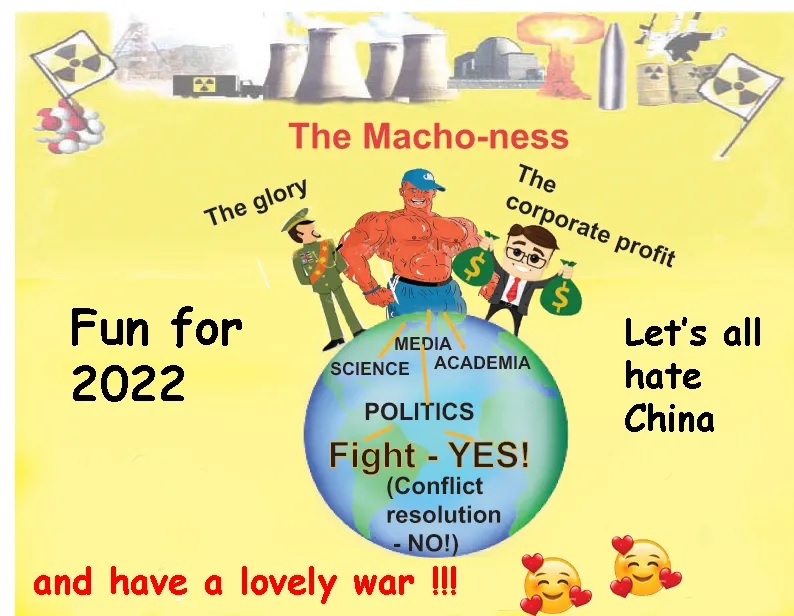
We should have no illusions that the leaders of the world will move to deep cuts in nuclear weapons and eventual abolition on their own. The military-industrial-congressional complex is going to perpetuate the current system as long as it can. It’s going to take intense public pressure and movement building
it is crackpot realism to believe that we can keep nuclear weapons without them eventually being used. The imperatives of use it or lose it and belief in the first strike advantage make that clear.
it is crackpot realism to believe that we can keep nuclear weapons without them eventually being used. The imperatives of use it or lose it and belief in the first strike advantage make that clear.
CounterPunch, BY PATRICK MAZZA 4 Nov 22. For the first time in many years, the threat of nuclear war has burst into public awareness. Many proclaim we are at a pinnacle of danger not seen since the 1962 Cuban Missile Crisis, when the U.S. and USSR faced off over Soviet nuclear missiles situated in Cuba.
………………………… there was another moment of peril in 1983 that is far less known. Daniel Ellsberg, who as a defense analyst advised the White House during the Cuban crisis, says it may have been even more dangerous. That was Able Archer 83, a NATO exercise that took place in the early days of November mimicking escalation to nuclear war in response to a Soviet invasion of Western Europe.
……………………. In this respect, it is remarkably similar to a NATO nuclear war exercise conducted over Europe from October 17-30, Steadfast Noon, in which dozens of planes from 14 nations conducted mock bombing runs. The U.S practiced sharing nuclear weapons with NATO partners using dummy bombs. At the same time, the U.S. announced speeded delivery of B61-12 bombs to Europe, an upgrade which increases accuracy.
This is the so-called adjustable nuclear weapon, supposedly usable in a limited nuclear war, offering a range of explosive potentials from 0.3 to 50 kilotons. By comparison, the Hiroshima bomb was 15 kilotons. Meanwhile, the Russians were conducting their own nuclear exercises, Thunder 2022, from October 26-28, with launch of nuclear-capable missiles from land, sea and air.
The obvious contrast between now and 1983 is that, though the U.S. was then conducting a proxy war against the Soviets in Afghanistan, it was on the fringes of the then USSR. The Ukraine War is in Europe close to the Russian heartland, with fighting at a far greater level of intensity.
Could we be at an even greater level of danger now? The key issue that joins the present moment with 1983 is how each side perceives the intentions of the other. The crucial lesson of Able Archer is that misperception and miscommunication can cause a fatal error leading to a full nuclear exchange, especially at a time of heated rhetoric. Let us first look at 1983, then contrast and compare it with the present.
Expecting a first strike
Fortunately, recent years have seen publication of several books that delve deeply into the crisis, what led up to it, and its aftermath: 1983: Reagan, Andropov, and a World on the Brink by Taylor Downing; The Brink: President Reagan and the Nuclear War Scare of 1983 by Mark Ambinder, and Able Archer 83: The Secret NATO Exercise That Almost Triggered Nuclear War by Nate Jones. The latter contains many formerly secret documents wrested from the archives. From these I wrote a three-part series that starts here. I will briefly summarize the key points
First, it is key to know that then Soviet leader Yuri Andropov genuinely believed the U.S. planned a nuclear first strike on the USSR. Ronald Reagan’s white hot rhetoric fueled that perception…………………………
The first strike advantage
Andropov’s anxieties were grounded in what the Soviets had learned during their own nuclear exercises. It is the most powerful argument for entirely ridding the world of nuclear weapons. In a nuclear war, the side that strikes first has overwhelming advantage. It can decapitate the enemy’s leadership and command and control systems, prospectively eliminating its ability to order a response, even as nuclear forces with which a counterstrike could be launched are destroyed.
Of course, a nuclear war of almost any scale would ignite fires sending a cloud of black soot into the stratosphere, shutting off sunlight and creating a nuclear winter that would crash agricultural production and kill billions. Any immediate advantage, if one were to be had, would turn into a pyrrhic victory, killing the “winners” as well as the losers. This fact known since 1983 unfortunately still has not entered the calculations of nuclear strategists.
Heightening the fears of Soviet leaders were plans to place cruise and Pershing II missiles in Europe, which the Soviets believed could reach Moscow in a few minutes and accomplish a decapitation strike. This has come back today with Russian leaders expressing concerns over NATO missiles placed in Ukraine even closer to the Russian capital.
Reagan’s announcement of the Star Wars missile defense program in March 1983 two weeks after he made the Evil Empire speech heightened Soviet worries. They believed this would make response to a first strike even more difficult.
Inducing Soviet paranoia
The U.S. was doing nothing to reduce Soviet fears, conducting exercises near the borders of the USSR. A later declassified National Security Administration history said, “these actions were calculated to induce paranoia, and they did.”…………………………
“These aggressions and vulnerabilities alarmed Soviet leadership to an extreme never seen during the Cold War,” writes Nate Jones. Andropov reacted by ordering Soviet aircraft to “shoot-to-kill” any plane that invaded national airspace.
When Korean Air Lines flight 007 inadvertently wandered over the Soviet far east Sept. 1, 1983, it was mistaken for a spy plane that had crossed its flight path earlier. Following Andropov’s order, a Soviet fighter plane sent KAL 007 plummeting into the ocean, killing all 229 on board. That plunged relations between the west and the Soviet Union to perhaps the lowest level of the Cold War.
As Able Archer came closer, two events were misconstrued by the Soviets as war preparations…………………….
The close brush with nuclear holocaust
The Soviets had an additional reason to worry. They conceived that if a surprise attack took place, it would happen on a national holiday when their guard was down. In this case, Able Archer took place during then celebration of the 1917 Bolshevik Revolution. So the Soviets took a range of steps to prepare………………………………………………………….
In another one of those situations similar to that of Vasily Arkhipov, when one man’s actions may have saved the world, Lieutenant General Leonard Perroots, who ran the U.S. Air Force intelligence operation in Europe, picked up on many of these signs. But Perroots, who could not believe the Soviets were contemplating a strike, decided on gut instinct not to respond. ………………
How close did we come? It took years to fully realize the danger. I tell the story of what some regard as the greatest intelligence failure in history in the third part of my series…………………………
Today’s war scare
This is what draws the contrast most sharply between Able Archer and the Cuban Crisis. In 1962, each side was aware they were in a crisis. In 1983, one side was preparing for war while the other side was oblivious. Today comes closer to Cuba in that each side is acutely tuned to the fact of crisis. But it has similarities to Able Archer in that each side is less than clear on the intentions of the other. …………………..
At the same time, first strike fears are being raised. ……………..
Each side may be raising the rhetorical heat for propaganda purposes, as the CIA believed the Russians were doing in 1983. But it is a mistake to dismiss the possibility that statements may reflect real fears that could become self-fulfilling prophecies. Particularly in a time when the Ukraine War seems to be in a pattern of tit-for-tat escalation.
False alarms
Consider what would happen if an early warning system gave a false reading that the other side had launched missiles. That occurred with the U.S. system on November 9, 1979, when a war game program mistakenly loaded into a NORAD computer indicated 1,400 missiles incoming, triggering a full nuclear alert, or on June 3, 1980, when a failed 46-cent computer chip set off another false alert. Those errors were fortunately caught in time.
We have to ask what would have happened if another of those Russians described as “the man who saved the world,” Stanislav Petrov, had not been in charge at the Soviet missile command center when on Sept. 27, 1983 a new satellite system indicated 5 U.S. missile launches. He had worked on the system, and thought it was probably a faulty reading, as it later proved to be. He also thought a first strike would be a larger volley. So Petrov decided not to report it to higher command. Who knows how a fearful Soviet leadership would have responded in the hair trigger environment in the wake of the KAL 007 shootdown, even as the NATO fall exercises leading to Able Archer were beginning to ramp up?
So to answer the question of how close we are to nuclear war, the most honest answer is, we don’t know. But the danger has clearly escalated. And the longer the war goes on, the greater the risk these scenarios may become reality. How do we stop this runaway train before it derails?
Putting nuclear on a separate track
It took months for U.S. and western leaders to realize the danger confronting the world in those early days of November, and years to fully analyze the intelligence failure………………………………………………
Reagan would subsequently begin to tone down his bellicose rhetoric, and on January 16 delivered a conciliatory speech on national television. By 1987, that would lead to the first nuclear arms control treaty, the Intermediate Nuclear Force (INF) Treaty negotiated with then Soviet leader Mikhail Gorbachev, and discussions to abolish all nuclear weapons which came heartbreakingly close. That treaty laid the groundwork for the START agreement signed in 1991 which limits each side’s deployed nuclear weapons to 1,550.
The INF Treaty was unfortunately cancelled by the Trump Administration in 2019. But START was re-upped in 2021 to run until 2026. . Reportedly there are backchannel discussions regarding START going on between the U.S. and Russia…………………………………….
Finding a way to resume START negotiations even as the Ukraine War continues is, I believe, the key. The issues surrounding the war seem, for the moment, intractable. It is crucial to place the transcendent issue of nuclear weapons on a separate track. How the Ukraine War is resolved has deep implications for global geopolitics. Whether we control nuclear weapons has implications for whether humanity survives at all. Having the two sides sit down in a forum where they can have open and frank discussions reduces uncertainty about intentions, and eliminates potential misunderstandings such as those that almost triggered war in 1983. Recent contacts between the defense leaders of Russia, the U.S. and the U.K. are a hopeful step in that direction.
Dramatic arms reductions leading to abolition
Those discussions must put deep cuts in nuclear arsenals on the table, with a clear pathway toward what the nuclear nations promised when they signed the Nuclear Non-Proliferation Treaty in 1968, the total abolition of nuclear weapons.
The immediate goal should be for each side to reduce its deployed weapons from the current 1,550 to somewhere in the 300-500 range. That would still provide a deterrent, but make a successful first strike less likely. Importantly, the ICBMs should go first. They are the most vulnerable to first strike, where use-it-or-lose it is most imperative. The bombers should go next, situating the remaining arsenal on submarines, the most difficult to detect. Coming to agreement on the distance submarines operate from the other side’s shores would also be valuable, since close-in operations also raise first strike fears.
And, unlike START, a new treaty should outright eliminate the reserve arsenal. The U.S. now has around 2,000 warheads in bunkers that could readily be refitted on submarines, ICBMs and bombers. If START is not re-negotiated, that could happen quickly after the 2026 expiration. A new treaty should also set up a process that moves the U.S., Russia and smaller nuclear powers to abolition.
The need for a people’s movement
We should have no illusions that the leaders of the world will move to deep cuts in nuclear weapons and eventual abolition on their own. The military-industrial-congressional complex is going to perpetuate the current system as long as it can. It’s going to take intense public pressure and movement building.
The 1980s nuclear freeze movement set the stage for the INF and START treaties, which most likely would have never happened if it had not been for millions in the streets. It is going to take something similar again to move to the sane course of dramatic nuclear reductions and abolition. We are nowhere near that now, and it is our role as people concerned about our future and that of our children to build that movement. In reality, I believe we need a broader global survival movement that addresses the existential crises facing us, from climate disruption and general ecological breakdown, to great power competition and the threat of nuclear war.
……… it is crackpot realism to believe that we can keep nuclear weapons without them eventually being used. The imperatives of use it or lose it and belief in the first strike advantage make that clear.
I recently interviewed a former U.S. Navy submarine captain, Tom Rogers, who handled nuclear weapons throughout his time on submarines, and now works for their abolition as part of the Ground Zero Center. Tom has been arrested blocking the gate at the Trident nuclear missile submarine base at Bangor, Washington at least 10 times. He told me, “It’s only a matter of time until by miscalculation or accident a nuclear weapon gets used. Because of the way the strategy is written, you don’t shoot just one nuclear weapon. You don’t see just three coming over the horizon. You see 3,000. The only way to prevent that carnage is to get rid of them.”
That should be our call to mobilize, to end nuclear weapons before they end us. As steep a climb as it is, we really have no other choice if we value human survival. https://www.counterpunch.org/2022/11/04/how-close-are-we-to-nuclear-war/
Australia’s $multibillion submarine madness and the phoney China threat
According to the Australian Strategic Policy Institute, the cost of eight would be $171 billion after inflation. More recent estimates are over $200 billion.


https://johnmenadue.com/australian-submarine-madness/ By Brian Toohey, Nov 4, 2022
Nobody knows what military threats to Australia from China or anyone else will exist in 2050. In these circumstances, it is folly to commit to spending over $200 billion on acquiring eight US designed nuclear attack submarines to deploy in support of the US on the China coast.
This is particularly extravagant when modern conventionally powered submarines are much cheaper and far harder to detect. Nuclear submarines are noisy because they rely on a reactor to power a steam engine with cooling pumps, turbines, reduction gears and steam in the pipes. They also expel hot water that can be detected, as can the wake on the surface when travelling at high speeds.
Modern battery powered submarines, which Australia perversely has no plans to get, maintain near silent operation with what’s called air independent propulsion (AIP) supplied by a hydrogen fuel cell in Singapore’s German submarines, a Sterling engine favoured by the Swedes or in the case of the latest Japanese submarines, by advanced batteries with long endurance.
These submarines have the great advantage of making the crew far safer than noisy nuclear ones while leaving funds over for much needed improvements in Australian’s health, education, and social security systems as well as for tackling climate change.
Yet the Albanese government has a 350 strong task force in Defence planning the big changes needed to build nuclear powered submarines in Adelaide. In contrast, a prize-winning essay published in the US Naval Institute’s magazine Proceedings in June 2018 said the US Navy would do well to consider acquiring “some quiet, inexpensive and highly capable diesel-electric submarines. It said, “The ability of AIP was demonstrated in 2005, when HMS Gotland, a Swedish AIP submarine, ‘sank’ many U.S nuclear fast-attack subs, destroyers, frigates, cruisers, and even the USS Ronald Reagan aircraft carrier in joint exercises”. However, the Australian Navy somehow sees a great advantage in getting US nuclear attack subs such as the Virginia Class that were sunk in the exercise.
One of the US’s most highly regarded defence analysts, Winslow Wheeler, recently pointed out that these subs have been available only 15 times in 33 years for their six-monthly deployments. This suggests fewer than two of Australia’s eight nuclear submarines would be operationally available, on average, each year. According to the Australian Strategic Policy Institute, the cost of eight would be $171 billion after inflation. More recent estimates are over $200 billion.
Australia could build ten of the latest German submarines operated by Singapore for about $10 billion. They also have an outstanding maintenance record, as well as being well suited to the shallow waters in Australia’s region. A similar figure could apply to the latest Swedish ones, but they may not be so readily available. Japan’s new Taigei class would cost roughly the same to buy, but more to operate its bigger crew. The Japanese government would be reluctant to build it in other than in its own shipyards.
These figures suggest that the job of defending Australia could be performed for a reasonable cost, particularly if greater use were made of modern, low-cost, drones. The trend for low-cost drones to become more useful is only likely to grow by 2050 when Australia might be getting its first operational nuclear submarine.
At some stage, a reality check needs to apply to the barrage of claims about increased Chinese aggression or the China threat. The last major war involving China was in Korea in 1950. China argues its rapid arms build-up reflects how it’s surrounded by potential enemies, including the US, which has been in many more aggressive wars and spends much more on its military.
The Pentagon 2021 annual report to Congress on China acknowledged it had withdrawn six land claims to settle border disputes with neighbours. Contrary to the common assumption that it is ready to invade Taiwan, the Pentagon said “There is no indication it is significantly expanding its force of tank landing ships and landing craft – suggesting a traditional large-scale direct beach assault operation requiring extensive lift remains aspirational”.
China could settle some of the extreme territorial sea claims that were originally made by the Communist Party’s political opponent, the Nationalist Party, before 1949. Taiwan also makes these claims. Although abrasive, nobody has been killed. By 2050 the US, with Australia tagging along, may have extended its well-established history of killing people by engaging in international aggression in violation of the rules. Alternatively, in 2050 China could engage in its first major war since 1950 by attempting to invade Australia, except no one no one has suggested any plausible motive.
Although Australian nuclear submarines will not be available, many Australian pundits see a need to go to Taiwan’s aid if secret intelligence analysis says China is about to attack it. Following the illegal invasion of Iraq in 2003 based on concocted intelligence, the Challis chair of international law at Sydney University, Ben Saul, said it’s important to ask if a war over Taiwan would be legal. He wrote in the Lowy Institute’s The Interpreter, “The conventional legal answer favours China. Only a state has the right to use military force in self-defence against an armed attack by another state – and to ask other states to help it to defend itself.”
The Australian Foreign Affairs department says Taiwan is not a state. Saul adds, “In a world with a plurality of different political systems, states are not permitted to use force simply to protect democracy or ‘freedom’ abroad. The US backed Taiwan even when it was a military dictatorship until the 1990s; its defence has never really been about freedom.”
Six Reasons Why Americans Should Care That US Troops Are In Ukraine
Andrew Korybko, Nov 2 2022, https://korybko.substack.com/p/six-reasons-why-americans-should
This is a big deal for more than just the obvious reason that it could push that declining unipolar hegemon closer to a hot war with Russia by miscalculation.
An unnamed senior military official revealed during a press briefing on Monday that US boots are on the ground in Ukraine as part of the Pentagon’s efforts to inspect and track weapons shipments to that crumbling former Soviet Republic according to a transcript published by the Department of Defense. This is a big deal for more than just the obvious reason that it could push that declining unipolar hegemon closer to a hot war with Russia by miscalculation.
Here are the six other reasons why Americans should care that US troops are in Ukraine:
The Deployment Proves That The Ukrainian Conflict Is Indeed A Proxy War On Russia
The US-led West’s Mainstream Media (MSM) nor the SBU’s anti-Semitic and fascist global troll network (“NAFO”) can no longer deny that the Ukrainian Conflict is indeed a NATO proxy war on Russia, which was obvious to all objective observers but has hitherto not been acknowledged by those two forces.
* America Is Indisputably Leading The Abovementioned Effort
Building upon the above, there’s no question that America is leading this multinational proxy war effort against that newly restored world power as evidenced by this latest deployment, which further confirms what Russia’s been saying this entire time about Washington’s direct involvement in the conflict.
* Public Pressure Might Have Played A Role In The Pentagon’s Accountability Mission
CBS News’ bombshell report in early August revealing that only around 30% of all foreign military aid to Ukraine actually reaches its destination provoked unprecedented public anger and might thus have played a role in the Pentagon’s commencing its accountability mission that its officials just disclosed.
* The US Doesn’t Fully Trust Its Ukrainian Proxies
Another element of the “official narrative” that was shattered by the Pentagon’s confirmation of its limited deployment to Ukraine is that the US supposedly places full trust in its Ukrainian proxies, which clearly isn’t true otherwise it wouldn’t be putting its troops in harm’s way to track weapons shipments.
* Ukrainian-Based Neo-Nazi Terrorist Groups Are A Credible Threat To Europe
Elaborating on the insight that was just shared in the preceding point, it can therefore be confidently surmised that American spy agencies also assess that Ukrainian-based Neo-Nazi terrorist groups are a credible threat to Europe since they’re the only actors who could realistically siphon off those arms.
* The Next Congress Might Use This Deployment As The Pretext For Scaling Down Military Aid
The US will inevitably have to scale down its arms shipments to Ukraine since its military-industrial complex lacks the capability to indefinitely sustain the pace, scope, and scale of this assistance, yet the next Congress might use this deployment as the pretext for doing so instead of admitting that fact.
The remainder of the analysis will summarize the six reasons that were just shared.
Americans should care that their country is leading NATO’s proxy war on Russia through Ukraine, especially since their own government doesn’t trust their local partners to the point where US troops had to be deployed to monitor arms shipments there. Public pressure might already have played a role in commencing this accountability mission so it therefore follows that subsequent such pressure could facilitate the next Congress’ potential plans to scale back aid to that country and hopefully foster peace.
North Korea fired intercontinental ballistic missile – Seoul
https://www.rt.com/news/565844-north-korea-icbm-launch/ 4 Nov 22, The launch failed during the second-stage separation, a South Korean military official told Yonhap
North Korea has launched an intercontinental ballistic missile (ICBM) as part of a large-scale show of force against the ongoing war games between the US and South Korea, according to Seoul’s armed forces.
The South Korean Joint Chiefs of Staff said the military detected “what is presumed to be a long-range ballistic missile launch from the Sunan area in Pyongyang” early on Thursday morning, noting that two additional short-range missiles followed about one hour later.
After analyzing details of the launch, the military added that the weapon traveled a distance of around 760km (472 miles) and reached a top speed of Mach 15. However, a defense source later told Yonhap that “the missile seems to have failed in normal flight” after its second-stage separation.
In a statement later on Thursday, the Joint Chiefs said “Our military has beefed up surveillance and vigilance” and would maintain a “readiness posture in close cooperation with the US.”
Thursday’s launch marks the first time Pyongyang has fired an ICBM since May, though it comes amid a record number of missile tests overall this year. The DPRK has also unleashed hundreds of rockets, missiles, and artillery shells into the sea in recent days as a demonstration to Washington and Seoul, which are in the middle of some of their largest air drills ever.
With tensions soaring on the peninsula, the North has repeatedly condemned the exercises as a rehearsal for a full-scale invasion, even suggesting earlier this week that Washington could be preparing a nuclear attack. The US and South Korea, meanwhile, have denounced each missile launch by Pyongyang as a dangerous provocation and have vowed to continue strengthening military ties.
Doomsday Clock Reveals How Nuclear War Would Decimate Civilization
NewsWeek BY ARISTOS GEORGIOU ON 11/4/22 The organization behind the Doomsday Clock has published a guide that details the potentially catastrophic consequences of a global nuclear war—which could kill hundreds of millions in hours—in what is a “wake-up call” for people around the world, the author told Newsweek.
………….. The Doomsday Clock is a symbolic device designed to warn the public about how close humanity is to destroying itself with “dangerous technologies of our own making,” such as nuclear weapons as well as those that are contributing to climate change.
The clock, which was created in 1947 and is maintained by the Bulletin of the Atomic Scientists magazine, has been reset 24 times, most recently in 2020 when the minute hand moved from two minutes to midnight to 100 seconds to midnight.
In January 2022, the Science and Security Board of the Bulletin, which decides the clock’s time, announced that the minute hand was staying at 100 seconds to midnight. The board said that Ukraine was a potential flashpoint in an “increasingly tense International security landscape.” After Russia invaded the country in late February, the board condemned its actions.
On October 20, the Bulletin published an article titled “Nowhere to Hide: How a Nuclear War Would Kill You and Almost Everyone Else,” which was authored by François Diaz-Maurin, the magazine’s associate editor for nuclear affairs.
“Clearly, with the war in Ukraine, we were—and still are—concerned that the world could be sleepwalking into nuclear war,” Diaz-Maurin told Newsweek. “As a magazine covering those risks since pretty much when nuclear weapons were created, we had a responsibility to do something. This article is a wake-up call from the Bulletin.”……………………….
By detailing the potentially devastating consequences for humanity, the article was published to try to minimize the threat of such a war breaking out.
“If you are better informed about…the consequences of using nuclear weapons in a war, you are more likely not to go down that path,” Diaz-Maurin said. “There is no small or acceptable use of a nuclear weapon. Any use would put the world into uncharted territory.”
In the article, Diaz-Maurin wrote that hundreds or thousands of detonations would occur within minutes of each other in a nuclear war.
Given the destructive power of nuclear weapons, even a “limited” regional exchange between India and Pakistan—involving 100 15-kiloton warheads launched at urban areas—would result in 27 million direct deaths.
A global, all-out nuclear war between the United States and Russia, based on a scenario involving 4,400 100-kiloton weapons, would very quickly result in a minimum of 360 million deaths around the world from the direct effects alone.
Even though these figures are staggering, the article notes that these deaths would be only the beginning of a massive catastrophe that would affect not only the warring parties and their allies but the entire world………………….. https://www.newsweek.com/doomsday-clock-organization-creates-guide-showing-impact-nuclear-war-1756945
USA’s deliberate ambiguity on use of nuclear weapons really means “don’t mess with us or we’ll nuke you”

Basically, the United States is holding the world hostage to its nuclear arsenal, saying that we reserve the right to use nuclear weapons any time we determine under any circumstances so that we have a broader definition of deterrence, meaning that we are deterring. But what are we deterring? You see, with a sole purpose declaration, we’re deterring a nuclear attack against us.
But the current nuclear strategy is to deter something that is ambiguous in nature, meaning we haven’t precisely spelled it out. We’re leaving the world guessing. And what we’re saying is, don’t mess with us, or else we’ll nuke you.
We can never use these weapons, but why are we building them as if they are a viable tool? This is why disarmament is so much better, so much more logical, and ultimately has a more humanitarian basis and national security basis than the continued pursuit of a so-called nuclear deterrent. Disarmament is the only thing that will save mankind. Continuing to pursue a nuclear deterrent could very well be the end of mankind
US Holds World Hostage to Its Nukes, Ex-American Intel Officer Says
Sputnik International, 29.10.2022
Earlier this week, Pentagon released nuclear posture, which suggests that the US doesn’t rule out use of the nuclear arsenal against non-nuclear threats – which contradicts previous pledges by the Biden administration.
Scott Ritter, a military analyst and former US Marine Corps intelligence officer, explained Sputnik why Washington adopted new nuclear policies and what do they mean for regular Americans.
Sputnik: Why are Russia and Сhina to be blamed for the Biden’s administration failure to reduce nuclear weapons?
Scott Ritter: We have to look for somebody to blame. We can’t blame ourselves. That’s normally what happens. But we are solely to blame. President Biden ran on a platform that said that he would be seeking what’s called the single-use policy for nuclear deterrence. And what that means is its a single-purpose policy. And the single purpose would be that the sole purpose of the US nuclear weapons arsenal is deterrence. And that’s it; that we would never use nuclear weapons under any circumstance other than to respond to somebody using nuclear weapons against us; that we are here to deter a nuclear attack on the United States.
He’s broken that promise. The strategy that he has propagated recently is a strategy that continues the past practice of having deliberate ambiguity about the conditions and circumstances under which America could use nuclear weapons, up to and including a pre-emptive nuclear attack by the United States in response to a non-nuclear incident.
Basically, the United States is holding the world hostage to its nuclear arsenal, saying that we reserve the right to use nuclear weapons any time we determine under any circumstances so that we have a broader definition of deterrence, meaning that we are deterring. But what are we deterring? You see, with a sole purpose declaration, we’re deterring a nuclear attack against us. But the current nuclear strategy is to deter something that is ambiguous in nature, meaning we haven’t precisely spelled it out. We’re leaving the world guessing. And what we’re saying is, don’t mess with us, or else we’ll nuke you.
This has nothing to do with China and Russia. China and Russia have nuclear weapons arsenals. Which would be covered under the sole purpose doctrine. But this is about blackmailing the world. But we can’t tell the world that we’re blackmailing it. We have to blame it on China and Russia. But there’s no linkage whatsoever between the nuclear posture, as published by the Biden administration, and the nuclear arsenals of China and Russia. If that was it, then we’d have a bold purpose doctrine.
Sputnik: What’s the reason for the West to escalate the nuclear rhetoric?
Scott Ritter: That’s a separate question, separate from the issue of the nuclear posture in the National Security Strategy. We have a current situation right now where Ukraine is losing this conflict. The West is recognizing that ultimately Ukraine will lose this conflict and that there’s nothing they can do to forestall this defeat. And so what they’ve done is they have created in terms of an information warfare, propaganda driven exercise, the threat of a Russian nuclear strike against Ukraine. It makes no sense. I think Vladimir Putin addressed this in his presentation to the Valdai conference, that it makes no sense whatsoever to talk about a Russian nuclear weapon used in Ukraine. There’s no reason for this. It’s not part of their doctrine. It isn’t going to happen.
But this isn’t about reality. This is about shaping perception. And so that’s where this nuclear crisis is coming from today – talks of a dirty bomb, talks of a Russian pre-emptive nuclear strike, President Zelensky begging NATO to carry out their own pre-emptive nuclear strikes against Russia, NATO holding an annual exercise that trains the use of the very weapons President Zelensky asked NATO to use against Russia. NATO should have cancelled that exercise or at least postponed it to a later date, but they didn’t. Russia has now responded with its own strategic nuclear exercise. Again, an annual exercise, this one testing not tactical nuclear weapons, but strategic nuclear weapons.
And people are trying to make a linkage between all of this. There isn’t. But this is where the heightened rhetoric and the heightened threat and the heightened crisis comes from. This is independent from the publication of the National Security Strategy. The National Security Strategy isn’t designed to do anything different than what past national security strategies have done, which is to put the world on notice that the United States has a nuclear weapons arsenal, that it will use any time it determines, whether or not the threat is nuclear in nature. We’re holding the world hostage, but we’ve been holding the world hostage for decades.
Sputnik: In the 2022 NPR, the Pentagon refuses to back away from the possibility of using nuclear weapons in response to “significant non-nuclear strategic attacks” – what were the reasons to obliterate main agreements in the sphere of strategic security?
Scott Ritter: This is not a new position by the Pentagon. This is actually a posture that emerged during the presidency of George W. Bush. That was the first time that this notion that we would use nuclear weapons against a non-nuclear threat emerged.
The Obama administration talked about walking away from that, but it’s very difficult for presidents to disentangle their desires from the pressures of the establishment. And when we’re dealing with nuclear weapons and the issue of nuclear deterrence, the establishment is extraordinarily powerful because they can always say that you’re weakening. You can tell a president that you’re weakening America, you’re putting American lives at risk…………………………………………………………………………
We can never use these weapons, but why are we building them as if they are a viable tool? This is why disarmament is so much better, so much more logical, and ultimately has a more humanitarian basis and national security basis than the continued pursuit of a so-called nuclear deterrent. Disarmament is the only thing that will save mankind. Continuing to pursue a nuclear deterrent could very well be the end of mankind. https://sputniknews.com/20221029/us-holds-world-hostage-to-its-nukes-ex-american-intel-officer-says-1102824182.html
War and Regrets in Ukraine

The truth is Moscow’s redline concerning Ukrainian entry into NATO was always real. Eastern Ukraine and Crimea were always predominantly Russian in language, culture, history, and political orientation. Europe’s descent into economic oblivion this winter is also real, as is support for Russia’s cause in China and India and Moscow’s rising military strength.
Washington may regret its role in the war in Ukraine.
https://www.theamericanconservative.com/war-and-regrets-in-ukraine/ Douglas Macgregor, Oct 19, 2022
Of the Vietnam War, Henry Kissinger, former national security advisor and secretary of State under Presidents Nixon and Ford, said, “We should never have been there.” Before long, Americans, even the politicians inside the Beltway, will reach the same conclusion about Washington’s Ukrainian proxy war against Russia.
No one in the White House, the Senate, or the House consciously set out to turn the proxy Ukrainian war with Moscow into a contest of “competitive societal collapse” between Russia and NATO. But here we are. No one imagined that the Biden administration and the bipartisan war party would drive Americans and Europeans into a political, military, and economic valley of death, from which there is no easy escape. Yet that is precisely what is happening.
For the moment, Washington remains blind to these developments. Whether in print, radio, television, or online, the narrative is clear: despite horrific losses—at least 400,000 Ukrainian battlefield casualties including 100,000 soldiers killed in action—Ukrainian forces are winning. Moreover, the narrative says, America’s financial and economic dominance will ultimately overwhelm the deceptively weak Russian economy.
The Ukrainian-victory narrative admittedly benefits hugely from Western media that actively “tune out” opposing views and depict Russia and its armed forces in the worst possible light. The fact that nearly half a century of the Cold War conditioned Americans to think the worst of Russians certainly helps.
Yet there is also a measure of “true faith” at work, a condition of national narcissism, inside the Beltway that believes Washington can control what happens thousands of miles away in Eastern Ukraine. The message resonates in Congress because it rests on a critical strategic assumption that American citizens have yet to challenge: that American national power is limitless and unconstrained—as though a series of strategic failures, from Vietnam to Afghanistan, never happened.
Given that American politicians are always more preoccupied by domestic affairs than foreign policy, members of Congress are quick to adopt the “true faith.” This faith explains why for the last eight years members thought a future war with Russia was a low-risk affair. Ukrainians would provide the cannon fodder and Washington would provide the expensive weaponry and munitions.
Predictably, Washington’s governing strategic principles are unchanged from previous U.S. interventions around the world. Muddle through: masses of soldiers—in this case Ukrainians advised by U.S. and allied officers—and huge infusions of cash, equipment, and technology can and will permanently alter strategic reality in America’s favor.
The stupefying air of self-righteousness the Biden administration assumes when it attacks erstwhile strategic partners such as Saudi Arabia or delivers moralizing lectures to Beijing’s leadership, or when its media surrogates express contempt for the Russian state, is downright dangerous. Political figures in Washington are ready to indulge any transgression if it is committed in the name of destroying Russia. They do not view U.S. foreign policy in the context of a larger strategy, nor do they comprehend Russia’s capacity to hurt the United States, a bizarre judgment of Russia’s actual military and economic potential.
The result is a toxic climate of ideological hatred making it hard to imagine a contemporary U.S. secretary of State ever signing an international agreement renouncing war as an instrument of U.S. national policy, as Secretary of State Frank Kellogg did in 1928. But as one of Shakespeare’s characters in the Merchant of Venice warned, “The truth will out.”
The ongoing buildup of 700,000 Russian forces with modern equipment in Western Russia, Eastern Ukraine and Belorussia is a direct consequence of Moscow’s decision to adopt an elastic, strategic defense of the territories it seized in the opening months of the war. It was a wise, though politically unpopular choice in Russia. Yet, the strategy has succeeded. Ukrainian losses have been catastrophic and by November, Russian Forces will be in a position to strike a knockout blow.
Today, there are rumors in the media that Kiev may be under pressure to launch more counterattacks against Russian defenses in Kherson (Southern Ukraine) before the midterm elections in November. At this point, expending what little remains of Ukraine’s life blood to expel Russian forces from Ukraine is hardly synonymous with the preservation of the Ukrainian state. It’s also doubtful that further sacrifices by Ukrainians will assist the Biden administration in the midterm elections.
The truth is Moscow’s redline concerning Ukrainian entry into NATO was always real. Eastern Ukraine and Crimea were always predominantly Russian in language, culture, history, and political orientation. Europe’s descent into economic oblivion this winter is also real, as is support for Russia’s cause in China and India and Moscow’s rising military strength.
In retrospect, it is easy to see how Congress was beguiled by the denizens of think tanks, lobbyists, and retired generals, who are, with few exceptions, people with a cocktail level of familiarity with high-end conventional warfare. Members of the House and Senate were urged to support dubious strategies for the use of American military assistance, including reckless scenarios for limited nuclear war with Russia or China.
For some reason, U.S. politicians have lost sight of the reality that any use of nuclear weapons would overwhelm the ends of all national policy.
‘Target Australia ’: Australia’s Defence Strategic Review must address nuclear risks

Pine Gap near Alice Springs, RAAF Base Tindal for US B-52’s near Katherine, Darwin Harbour, North-West Cape near Exmouth, and the Stirling submarine base near Fremantle are all potential targets for a strike by China in a conflict with the US over Taiwan or the South China Sea
Pearls and Irritations, By David Noonan, Nov 3, 2022
The Defence Strategic Review must act in accordance with Australia’s commitment to sign the UN “Treaty on the Prohibition of Nuclear Weapons” (the ‘Ban Treaty’) and not seek to compromise that path by supporting roles in nuclear warfare alongside the US.
Anthony Albanese made a commitment in his “Changing the World” Speech (ALP National Conference, 18 Dec 2018), stating:
“We have on our side the overwhelming support of the Australian people. …
Our commitment to sign and ratify the nuclear weapons ban treaty in government is Labor at our best”
The ALP National Platform (2021, p.117) commits “to sign and ratify the Ban Treaty” and Australia must do so in this term of the ALP in federal office.
The Ban Treaty Article 1 Prohibitions require nations to never under any circumstance use or threaten to use nuclear weapons, OR to assist or encourage, in any way, anyone to do so.
To come into compliance with the Ban Treaty, the Defence Review must evolve our Alliance with the US to put an end to defence reliance on US ‘nuclear deterrence’.
The US ‘nuclear weapons umbrella’ is a threat to use nuclear weapons in Australia’s defence policy – a threat that has long been contrary to International Humanitarian Law and is now illegal since the Ban Treaty came into force as a permanent part of International Law from 22 January 2021.
The roles of Pine Gap and the North-West Cape communications base must evolve to exclude military operations related to the use, or threat to use, nuclear weapons.
The ICAN Report “Choosing Humanity” (July 2019) best sets out the case for Australia to sign the Ban Treaty. Foreign Affairs Minister Penny Wong should now refer the Ban Treaty to an Inquiry by the Joint Standing Committee on Treaties as a proposed treaty action.
Australians have a right to know the risk exposure we face in peace time and in war:
While preparing for war, a second lead task for the Defence Review is to provide transparency on the consequences for Australia as a target in an escalating conflict between the US and China.
The Review must report on the scenarios, risks, and consequences of a nuclear or conventional attack by China on bases in Australia and on the potential resultant health calamity.
Both China and Russia’s priority and capacity to attack US bases in Australia has long been recognised. An ASPI Report (Sept 2022) states Pine Gap is a high-level nuclear target, noting:
“We need to understand what the implications would be for Alice Springs, which is a town of 32,000 people only 18 kilometres from the base.”
The lead author of the report, Paul Dibb has stated: “The risk of nuclear war is now higher than at any time since the Cold War. … Australia should not feel its geographic distance from the epicentre of conflict affords it any significant protection. … We need to plan on the basis that Pine Gap continues to be a nuclear target, If China attacks Taiwan, Pine Gap is likely to be heavily involved.”
A Lowy paper (09 August 2021) also cites Darwin as a potential target in a US-China conflict:
“The arena of hostilities for any such conflict would be mostly confined to East Asia, with the possible exception of strikes against US forces using Darwin as a rear-area staging base.”
No doubt Australia acquiring nuclear powered attack submarines and visits or basing US or UK nuclear subs at Stirling naval base near Fremantle escalates the risk profile we face.
Beijing’s Global Times “China needs to make a plan to deter extreme forces of Australia” (07 May 2021) threatened “retaliatory punishment” with missile strikes “on the military facilities and relevant key facilities on Australian soil” if Australia coordinates with the US in a war over Taiwan:
“China has a strong production capability, including producing additional long-range missiles with conventional warheads that target military objectives in Australia when the situation becomes highly tense.”
Pine Gap near Alice Springs, RAAF Base Tindal for US B-52’s near Katherine, Darwin Harbour, North-West Cape near Exmouth, and the Stirling submarine base near Fremantle are all potential targets for a strike by China in a conflict with the US over Taiwan or the South China Sea……………………more

David Noonan B.Sc., M.Env.St., is an Independent Environment Campaigner and was a long-term campaigner for Australian Conservation Foundation.
See the public submission to the Defence Review by David Noonan (29 Oct 2022).
USA’s new nuclear policies: first strike OK, “usable”weapons, nukes for Europe, for any purpose USA likes, and against non-nuclear nations.

Brandon’s “Usable Nukes” Are the Fast-Track to Jopocalypse MIKE WHITNEY • OCTOBER 31, 2022
“The Biden administration’s Nuclear Posture Review is, at heart, a terrifying document. It not only keeps the world on a path of increasing nuclear risk, in many ways it increases that risk. Citing rising threats from Russia and China, it argues that the only viable U.S. response is to rebuild the entire U.S. nuclear arsenal, maintain an array of dangerous Cold War-era nuclear policies, and threaten the first use of nuclear weapons in a variety of scenarios.” Stephen Young, Union of Concerned Scientists
Maybe you’re one of the millions of people who think the US would never use its nuclear weapons unless the threat of a nuclear attack was imminent.
Well, you’d be wrong, because according to the recently-released Nuclear Posture Review, the bar for using nukes has been significantly lowered. The new standard reads like this: (nukes can be used) “in extreme circumstances to defend the vital interests of the United States or its allies and partners.”
“Defend the vital interests of the United States or its allies”??
That’s a pretty broad net, isn’t it? That could include anything from a serious threat to national security to an ordinary economic competitor. And that loosy-goosy definition appears to be just what the authors were looking for. The hardliners wanted to fundamentally change US nuclear doctrine so the conditions under which nukes could be used was greatly expanded. The obvious objective of this dramatic policy-shift is to eliminate any obstacle to the free and unfettered use of nuclear weapons. Which is precisely what the neocons have always wanted; a green light to Armageddon. Now they got what they wanted. Here are a few of the changes in policy that suggest that a full-blown nuclear war is no longer a remote possibility, but an increasingly likely prospect.
1– First-Strike Use: Biden refuses to rule out first-strike use of US nuclear weapons …in reversal of his campaign promise. This is from The Daily Mail:
“… on the campaign trail, Biden had vowed to switch to a ‘sole purpose’ doctrine, which maintains that the US would only use nuclear weapons to respond to another nation’s nuclear attack….
President Joe Biden is abandoning a campaign vow to alter longstanding US nuclear doctrine, and will instead embrace existing policy that reserves America’s right to use nukes in a first-strike scenario, according to multiple reports.” (Daily Mail)
2– Nuclear Escalation: The Biden team has accelerated the deployment of modernized U.S. B61 tactical nuclear weapons to NATO bases in Europe. (The B61-12 carries a lower yield nuclear warhead than earlier versions but is more accurate and can penetrate below ground.) This is from Reuters:
Russia said on Saturday that the accelerated deployment of modernised U.S. B61 tactical nuclear weapons at NATO bases in Europe would lower the “nuclear threshold” and that Russia would take the move into account in its military planning.
Amid the Ukraine crisis, Politico reported on Oct. 26 that the United States told a closed NATO meeting this month that it would accelerate the deployment of a modernised version of the B61, the B61-12, with the new weapons arriving at European bases in December, several months earlier than planned.
“We cannot ignore the plans to modernize nuclear weapons, those free-fall bombs that are in Europe,” Russian Deputy Foreign Minister Alexander Grushko told state RIA news agency. (Reuters)
3– ‘Tactical’ means ‘Usable’: Biden’s new regime of low-yield nukes (which can still blow up a city the size of New York.) are called “tactical” weapons because they are designed for use on the battlefield, which is to say, Biden no longer limits the use of nukes for national defense but also supports their use in conventional wars. (like Ukraine?) This is from Aljazeera:
“Tactical nuclear warheads were created to give military commanders more flexibility on the battlefield. In the mid-1950s, as more powerful thermonuclear bombs were being built and tested, military planners thought smaller weapons with a shorter range would be more useful in ‘tactical’ situations,” according to Al Jazeera’s defence analyst Alex Gatopoulos. (Aljazeera)
4– Fasttrack to Nuclear War: Biden’s New Euro-Nukes have lowered the threshold for nuclear war. This is from MSN:
Russia said on Saturday that the accelerated deployment of modernized US B61 tactical nuclear weapons at NATO bases in Europe would lower the “nuclear threshold” and that Russia would take the move into account in its military planning…
“The United States is modernizing them, increasing their accuracy and reducing the power of the nuclear charge, that is, they turn these weapons into ‘battlefield weapons’, thereby reducing the nuclear threshold,” Grushko said….
Russia’s ambassador to Washington, Anatoly Antonov, said on Saturday on Telegram that the new B61 bombs had a “strategic significance” as Russia’s tactical nuclear weapons were in storage, yet these U.S. bombs would be just a short flight from Russia’s borders.
“We cannot ignore the plans to modernize nuclear weapons, those free-fall bombs that are in Europe,” Russian Deputy Foreign Minister Alexander Grushko told state RIA news agency. (MSM)
5– Increasing the Reasons for using Nukes: The Nuclear Posture Review abandons Biden’s promise to ensure that US nuclear weapons would be used for the “sole purpose” of deterring or responding to a nuclear attack. Instead, the NPR states that the US will consider the use of nuclear weapons “in extreme circumstances to defend the vital interests of the United States or its allies and partners.”
Sole purpose could significantly reduce the risk of unintended escalation and increase the credibility of more flexible and realistic nonnuclear response options in a range of importance contingencies.” (Federation of American Scientists)
6– More Escalation: The US now reserves the right to use its nukes against non-nuclear weapon countries. This is from an article at Bloomberg News:
The Pentagon’s new National Defense Strategy rejected limits on using nuclear weapons long championed by arms control advocates and in the past by President Joe Biden.
Citing burgeoning threats from China and Russia, the Defense Department said in the document released Thursday that “by the 2030s the United States will, for the first time in its history face two major nuclear powers as strategic competitors and potential adversaries.” In response, the US will “maintain a very high bar for nuclear employment” without ruling out using the weapons in retaliation to a non-nuclear strategic threat to the homeland, US forces abroad or allies.” (“Pentagon’s Strategy Won’t Rule Out Nuclear Use Against Non-Nuclear Threats”, Bloomberg)………………………………………………………………………….
The White House, the Pentagon and the entire US foreign policy establishment now march in lockstep behind the most fanatically-lethal defense policy in the nation’s 246-year history. The National Defense Strategy, the Nuclear Posture Review and the National Security Strategy all embrace the same reckless warmongering policy that will inevitably lead to mass annihilation and civilizational collapse. The doves and critical thinkers have all been removed from the foreign policy apparatus while the madmen and warhawks drag the world inexorably towards catastrophe. God help us. https://www.unz.com/mwhitney/brandons-usable-nukes-are-the-fast-track-to-jopocalypse/
Loosening the Nuclear Knot – ARMS CONTROL TODAY
Arms Control Association
November 2022 By Daryl G. Kimball
Over the long, dangerous course of the nuclear age, the easing of tensions and resolution of crises between the nuclear-armed states have relied not only on good luck and self-restraint, but on effective, leader-to-leader dialogue.
For example, a key turning point in the 1962 Cuban missile crisis was the decision by President John F. Kennedy to listen to advisers recommending a diplomatic course of action and back-channel talks. This allowed the two sides, as Soviet leader Nikita Khrushchev described it, to “take measures to untie that knot” and thus avoid “the catastrophe of thermonuclear war.”
…….. the risk of nuclear war is probably higher than at any point since 1962. The invasion has also led to the suspension of the U.S.-Russian strategic stability dialogue and talks designed to maintain limits on their strategic nuclear arsenals.
…………………. senior U.S. officials say that, despite intensified military competition with China, it is vital to engage in talks with leaders in Beijing on improved crisis communication, forms of mutual restraint, and arms limitations. Unfortunately, Chinese officials have rebuffed U.S. overtures for bilateral strategic risk reduction talks.
To loosen the knot of war, the Biden administration needs to explore other pathways for dialogue. One option surely under consideration but not yet deployed in this crisis is the multilateral P5 process, which involves all five nations recognized as nuclear-weapon states under the nuclear Nonproliferation Treaty (NPT) (China, France, Russia, the United Kingdom, and the United States).
The group has met annually since 2009 to explore confidence-building measures in relation to their nuclear forces. The United States holds the rotating chair, but has not yet convened a meeting. To date, the P5 process has been underutilized and has underperformed. But in this time of heightened nuclear danger, the Biden administration must try to use it to ease nuclear tensions with China and Russia.
Leaders in Beijing continue to tout the process. Last month, Li Song, Chinese ambassador for disarmament affairs, told a UN meeting that the five NPT nuclear-weapon states “should further enhance communication on such issues as strategic stability and reduction of nuclear risks.” With Russia continuing to issue veiled nuclear threats, it is in the vital interest of all five states to pursue joint steps and joint statements designed to lower the temperature.
For instance, the group might consider updating and implementing the 1973 U.S.-Soviet Agreement on the Prevention of Nuclear War, which pledges the two states “to refrain from the threat or use of force against the other party” and “avoid military confrontations, and as to exclude the outbreak of nuclear war.” The agreement requires that “if at any time there is the risk of a nuclear conflict,” each side “shall immediately enter into urgent consultations with each other and make every effort to avert this risk.”
The United States might also propose that the P5 process be augmented to allow for sustained discussions on specific arms control proposals relevant to all five states. Since the recent collapse of the Intermediate-Range Nuclear Forces Treaty, Russia and the United States have expressed interest in negotiating a new arrangement to limit or ban certain types of these weapons. At their February 2022 summit, Putin and Chinese President Xi Jinping called for talks with the United States to curtail possible deployments of missiles that had been limited by the treaty. The Biden administration should test their seriousness by advancing proposals for mutual restraints on these types of ballistic and cruise missile systems by all three states through the P5 process.
As they stared into the nuclear abyss 60 years ago, Kennedy and Khrushchev turned to diplomacy to reach the compromises necessary to preserve their nations’ survival. Today’s leaders must be even more creative and persistent in the pursuit of risk reduction and disarmament if we are to avoid arms racing and the possibility of nuclear catastrophe. https://www.armscontrol.org/act/2022-11/focus/loosening-nuclear-knot
US troops on the ground in Ukraine – media
https://www.rt.com/russia/565747-us-troops-in-ukraine/ 2 Nov 22, The military personnel are reportedly inspecting Western weapons deliveries.
American troops are on the ground in Ukraine, where they are monitoring NATO arms deliveries to the country, an anonymous Pentagon official told several US media outlets on Monday. It is unclear how many personnel are involved, or where they are located.
Speaking to the Associated Press, NBC News, and other members of the Pentagon press pool, the official said that the contingent of troops is led by Brigadier General Garrick Harmon, the US defense attache to Kiev.
“There have been several of these inspections,” the official told reporters, without revealing where the examinations have taken place. He added that the checks are not happening “close to the front lines,” but where security conditions allow.
The US inspected its arms shipments to Ukraine before Russia launched its military operation in February, but pulled its personnel out of the country days before it began. It is unclear how many troops have returned or when the checks restarted.
The Pentagon official would only say that a “small” number of troops are involved.
The US State Department announced last week that it would allocate “personnel to assist the government of Ukraine with handling…of US security assistance,” although it did not mention that these personnel would be drawn from the ranks of the military. The plan was announced after media reports, citing US intelligence agencies, claimed that Washington could not trace the weapons it sends to Ukraine.
One intelligence source told CNN in April that these weapons disappear “into a big black hole” once they enter the country. The anonymous Pentagon official told journalists that Kiev has been “transparent,” and has cooperated with inspectors thus far.
While Americans have fought and died in Ukraine of their own accord, Monday’s announcement marks the first time since February that Washington has acknowledged the presence of uniformed troops in Ukraine.
Russian President Vladimir Putin has cautioned the US and its NATO allies against getting involved in the conflict, and even before the announcement, he stated that the Kremlin views itself as fighting the “entire Western military machine” in Ukraine.
Finland hints at allowing NATO to station nuclear weapons (?targets) on its soil

https://euroweeklynews.com/2022/10/31/finland-hints-at-allowing-nato-to-station-nuclear-weapons-on-its-soil/ By Chris King • 31 October 2022 ,
The Prime Minister of Finland, Sanna Marin, hinted that nuclear weapons could be deployed on Finnish soil should the country’s application to join NATO be approved.
It was recently reported by a newspaper in Helsinki that nuclear weapons could soon be stationed on Finland’s border with Russia if the country’s bid to join NATO is approved. Should it come to that, it is bound to anger Moscow.
Nuclear missiles launched from the Finnish border would take far less than a minute to reach Moscow. That is a very short warning period. It is certain that the Kremlin will not like this at all, but it could soon become reality.
The reason: Finland – together with Sweden – submitted an application to join NATO in response to the Russian invasion of Ukraine. According to the Helsinki newspaper Iltalehti, the draft accession law, as submitted by the Finnish government to Parliament, does not include an exemption for nuclear weapons
Finnish Foreign and Defence Ministers Pekka Haavisto and Antti Kaikkonen both pledged to NATO in July that they would not seek ‘restrictions or national reservations’ if Helsinki’s proposal goes through. This was reported by various defence sources to exxpress.at.
Foreign policy insiders said that NATO nuclear weapons could be moved through Finnish territory or stationed there. In addition, there are no restrictions on establishing NATO bases in the country.
Finnish Prime Minister Sanna Marin told Finnish broadcaster Yle on Saturday 29: “I think it’s very important that we don’t set any preconditions or limit our own room for manoeuvre when it comes to permanent bases or nuclear weapons”. It is thought highly unlikely though that nuclear weapons would be stationed on Finnish soil.
According to the Federation of American Scientists, the US already has around 100 nuclear weapons in Europe. They are located in Belgium, Germany, Italy, the Netherlands, and Turkey. Britain and France, both NATO members, also maintain their own independent nuclear arsenals.
Earlier this month, the Polish government said it had held talks with Washington about hosting US nuclear weapons, but the Americans have not confirmed this. Polish President Andrzej Duda said there was a ‘potential opportunity’ for his country to engage in ‘nuclear sharing’.
NATO Secretary General Jens Stoltenberg welcomed Finland and Sweden’s applications for membership in May, calling the move a ‘historic moment’ for the alliance.
1 This Month
26 April – Chernobyl: Inside the Meltdown airs on National Geographic on Sunday 26th April from 4pm
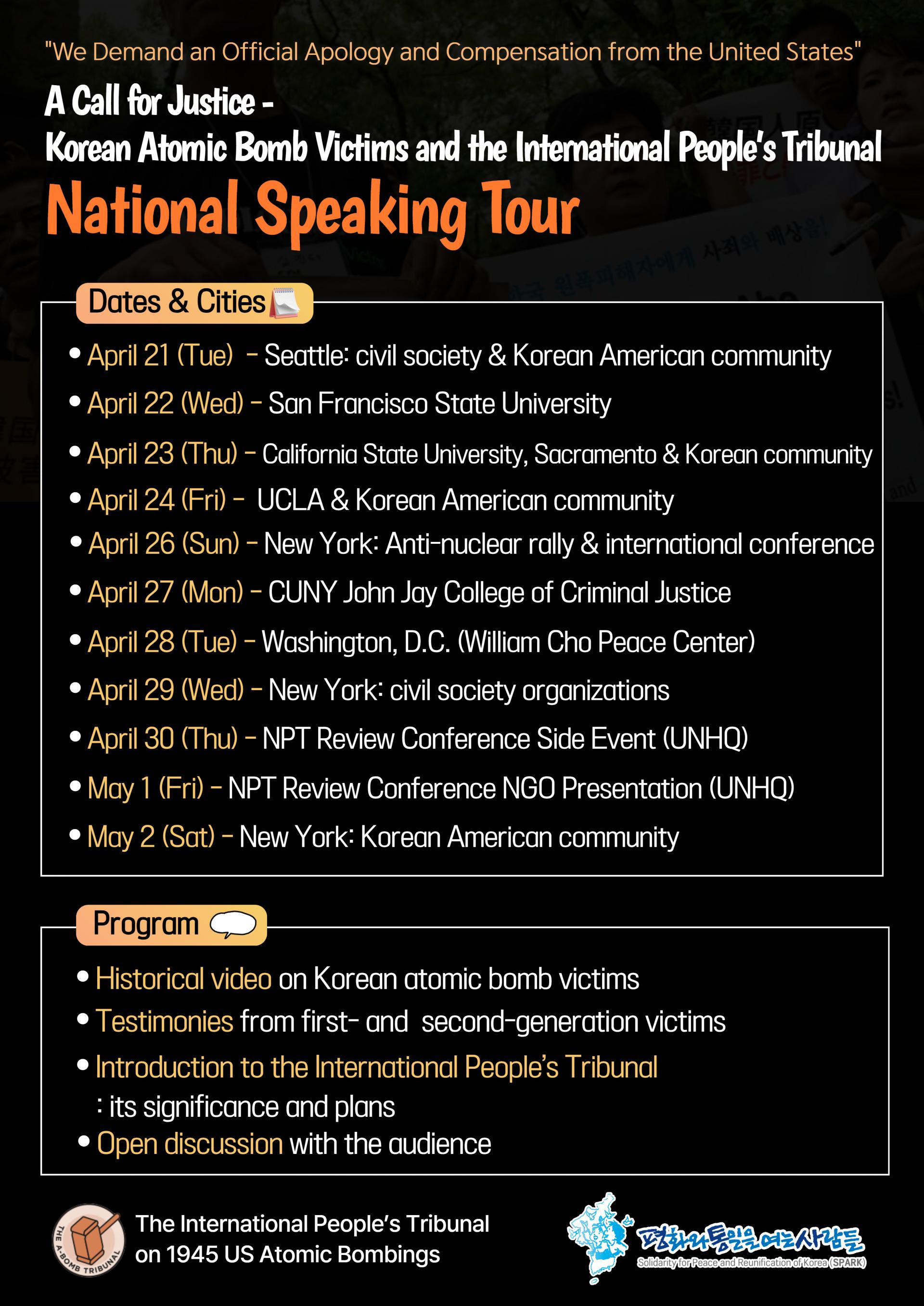

29 April – Nuclear Expert Webinar #1 – Radiation Impacts on Families with Mary Olson and Cindy Folkers
- 12:15 PM MT – 1:45 PM MT
- Location: Virtual – REGISTER TODAY

4 May -West Suburban Peace Coalition to discuss Iran war at May Educational Forum
Monday, May 4, 7:00 – 8:00 PM Central Standard Time
Title: : How Trump’s Narrative Tries to Shape the Reality of the War on Iran.
Contact Walt Zlotow, zlotow@hotmail.com 630 442 3045 for further information
14 May – online event From Bombs to Data Centres: the Face of Nuclear Colonialism
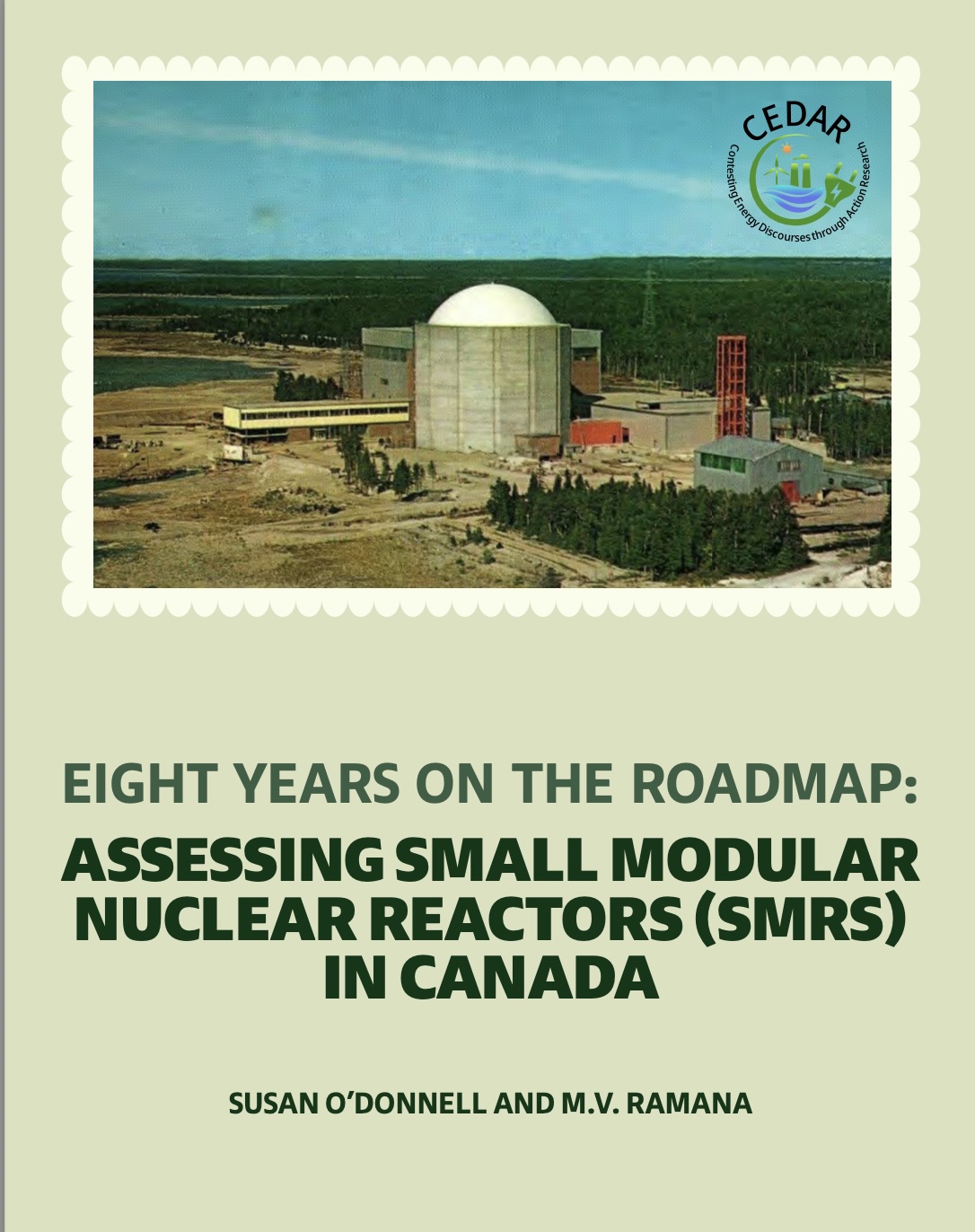

Pine Ridge Uranium is the real threat, not Tehran- Tell Burgum: Stop the Extraction.
Chernobyl: The Lost Tapes – A good documentary on Chernobyl on SBS available On Demand for the next 3 weeks– https://www.sbs.com.au/ondemand/tv-program/chernobyl-the-lost-tapes/2352741955560
To see nuclear-related stories in greater depth and intensity – go to https://nuclearinformation.wordpress.com
-
Archives
- April 2026 (338)
- March 2026 (251)
- February 2026 (268)
- January 2026 (308)
- December 2025 (358)
- November 2025 (359)
- October 2025 (376)
- September 2025 (257)
- August 2025 (319)
- July 2025 (230)
- June 2025 (348)
- May 2025 (261)
-
Categories
- 1
- 1 NUCLEAR ISSUES
- business and costs
- climate change
- culture and arts
- ENERGY
- environment
- health
- history
- indigenous issues
- Legal
- marketing of nuclear
- media
- opposition to nuclear
- PERSONAL STORIES
- politics
- politics international
- Religion and ethics
- safety
- secrets,lies and civil liberties
- spinbuster
- technology
- Uranium
- wastes
- weapons and war
- Women
- 2 WORLD
- ACTION
- AFRICA
- Atrocities
- AUSTRALIA
- Christina's notes
- Christina's themes
- culture and arts
- Events
- Fuk 2022
- Fuk 2023
- Fukushima 2017
- Fukushima 2018
- fukushima 2019
- Fukushima 2020
- Fukushima 2021
- general
- global warming
- Humour (God we need it)
- Nuclear
- RARE EARTHS
- Reference
- resources – print
- Resources -audiovicual
- Weekly Newsletter
- World
- World Nuclear
- YouTube
-
RSS
Entries RSS
Comments RSS
 nuclear-news