Space dangers: Contested orbits and mounting space junk

The 1967 U.N. Outer Space Treaty prohibits ‘weapons of mass destruction’ in space or on ‘celestial bodies’ like the moon. But currently ‘weapons of selective destruction’ fall outside of the OST. Thus a new treaty is urgently needed.
By Bruce Gagnon , http://space4peace.blogspot.com/2023/02/space-dangers-contested-orbits-and.html
Space orbital parking lots are getting dangerously crowded risking cascading collisions ( Kessler Syndrome) which could become so severe that space flight would be impossible due to the orbiting field of debris. If this was to occur much of life on planet Earth would go dark as our daily activities are enabled by space satellites (GPS, Internet banking, weather prediction, cell phones, air traffic control, etc).
In addition, because of the massive escalation of satellite launches, astronomers are complaining that we are losing the night sky.
Elon Musk’s SpaceX makes rockets and satellites to build Starlink, a broadband Internet system that once completed will cover the entire world. SpaceX has so far put 2,500 satellites into orbit and plans for 42,000 satellites in low-Earth orbit (LEO) occupying 80% of this space.
The Pentagon funds and tests Starlink to use its military capabilities. Starlink satellites are being utilized by the Ukrainian military to guide drones, artillery shells, and missiles into Russian positions and at civilian targets.
Very recently Musk has begun to slightly restrict the use of Starlink by the Ukrainian military as he feared that Russia might take action against the constellation.
Anti-satellite weapons (ASAT) have been tested by India, US, Russia and China. ASAT’s need no explosives, at orbital speeds kinetic energy (one thing smashing into the other) does the job.
Virtually all warfare on the planet is now enabled by space technology. Thus filling up the increasingly limited parking spaces in various orbital regions will determine which nation has an advantage.
NATO in 2019 announced a new doctrine calling space a ‘fifth operational domain’. NATO maintains that the US-led bloc will use commercial satellites as a military booster.
The 1967 U.N. Outer Space Treaty prohibits ‘weapons of mass destruction’ in space or on ‘celestial bodies’ like the moon. But currently ‘weapons of selective destruction’ fall outside of the OST. Thus a new treaty is urgently needed.
Russia and China have been leading the effort at the UN to create a new treaty to ban all weapons in space for many years. But the US and Israel have been blocking such a step for peace in space. The official US line through Republican and Democratic administrations is ‘there is no problem in space, and no new treaty is needed’.
During recent years the numbers of satellites orbiting the Earth has grown dramatically. Thousands more satellite launches have been approved by the Federal Communications Commission despite legal action by a coalition of groups (including the Global Network Against Weapons & Nuclear Power in Space).
Each launch releases toxic agents which are destroying the Earth’s ozone layer. In addition, when satellites fall from lower earth orbit and burn-up on reentry they release a deadly stew of electronic particles into our atmosphere.
Russia has issued a warning to the US-NATO that they are ‘exposing civilian space assets to potential attack by utilizing them for military purposes’.
In early February Ukrainian troops fired rockets from a US-made HIMARS system which hit a hospital in Novoaydar, killing 14 Russian-ethnics and injuring 24. Russia claimed that Kiev used western satellites operated by NATO personnel to target the hospital.
In late February China announced that it was preparing to launch close to 13,000 satellites into LEO in a move to counter Musk’s SpaceX network. China stated that they intended to ‘ensure that our country has a place in low orbit and prevent the Starlink constellation from excessively preempting low-orbit resources.
~ Bruce Gagnon is coordinator of the Global Network Against Weapons & Nuclear Power in Space and lives in Brunswick, Maine.
‘Ukrainian kamikaze drone’ crashes down near gas plant just 68 miles from the Kremlin as Putin demands tighter security
- Images appear to depict a UJ-31 ‘loitering munitions’ kamikaze flying bomb
- The drone came down near the village of Kolomna
Daily Mail, By JAMES CALLERY FOR MAILONLINE, 1 March 2023
A drone crashed just 68 miles from the Kremlin today in a suspected ‘failed attack’ by Ukraine.
Russian president Vladimir Putin has ordered officials to tighten control of the border with Ukraine after a spate of drone attacks delivered a new challenge to Moscow more than a year after the invasion of its neighbour.
While Putin did not refer to any specific attacks in a speech in Moscow, his comments came hours after drones targeted several areas in southern and western Russia and authorities closed the airspace over St Petersburg in response to what some reports said was a drone.
Images shared online appear to depict a Ukrainian UJ-31 ‘loitering munitions’ kamikaze flying bomb after it crashed down near a gas plant more than 300 miles from the border.
It came down near the village of Kolomna hours after Russia’s Defence Ministry accused Ukraine of two attempted drone strikes in the south overnight.
Ukraine does not publicly claim responsibility for attacks inside Russia.
If it was behind the Kolomna drone, it would be its closest attempted strike to Moscow since the start of the invasion of Ukraine.
It is also the deepest inside Russian territory any suspected Ukrainian drone has been spotted.
Postings on Russian social media showed the broken grey metal drone in a snowdrift in a woodland area.
Regional governor Andrei Vorobyov said the drone appeared to have been intended to hit a ‘civil infrastructure facility’ but noted that there was no damage.
He said the FSB security agency was handling the situation and there was no threat to residents.
There is a gas compressor plant close to the crash site.
Reports claimed the low-flying drone may have clipped trees.
Earlier, the Russian Defence Ministry accused Ukraine of sending attack drones towards civil infrastructure targets in the southern regions of Adygea and Krasnodar.
It said its electronic anti-drone jamming systems had caused them to miss their targets.
The ministry said: ‘Both drones lost control and deviated from their flight paths.
‘One fell into a field, the other, deviating from its trajectory, did not harm the intended target.’
……………………………………………… While Ukrainian drone strikes on the Russian border regions of Bryansk and Belgorod that lie north of Ukraine’s Sumy region are not unusual, the hits on the Krasnodar and Adygea regions further south are noteworthy.
…………… Ukrainian authorities offered no immediate acknowledgement or comment on the reported strikes.
Last year, Russian authorities repeatedly reported shooting down Ukrainian drones over annexed Crimea. In December, the Russian military said Ukraine used drones to hit two bases for long-range bombers deep inside Russian territory.
Separately, the local government of St Petersburg – Russia’s second-largest city 800 miles north of the border with Ukraine – said early on Tuesday that it was temporarily halting all flight departures and arrivals at the city’s main airport, Pulkovo. It did not give a reason for the move.
Hours earlier, unconfirmed reports on Russia’s Telegram social network referred to the air space over St Petersburg being shut down and to Russian warplane overflights. It was not immediately clear whether this was connected to the alleged rise in drone attacks in Russia’s south……………………… https://www.dailymail.co.uk/news/article-11803571/Ukrainian-kamikaze-drone-crashes-near-gas-plant-just-68-miles-Kremlin.html
Pentagon Prepares for Island Combat in the Pacific as US-China Tensions Rise

Restructuring the Force
With China now identified by the U.S. Department of Defense as the most dangerous, or “pacing” threat to U.S. national security, all of the military services have been instructed to prepare for a U.S.-China conflict. Accordingly, both the U.S. Army and the Marine Corps are restructuring their Asia-oriented forces — those committed to the Pentagon’s Indo-Pacific Command (INDOPACOM) — to be capable of conducting multiple offensive and defensive operations throughout the Western Pacific. This has generally entailed lightening their arms and equipment to allow for easy deployment and acquiring more forward operating bases in the region. Both also seek new mobile missile systems (often called “precision fires”) for attacks on enemy ships and land installations.
The U.S. has been securing new basing facilities and conducting large-scale combat exercises in the Western Pacific.By Michael T. Klare , TRUTHOUT, February 28, 2023
“………………………………………………… the notion of another major amphibious campaign in the Pacific has largely evaporated. Recently, however, the U.S. Army and Marine Corps have begun preparing for precisely such a contest as China has emerged as the principal adversary to U.S. hegemony and neighboring Pacific islands have acquired fresh strategic significance.
Any major U.S. conflict with China, it is widely believed, will largely entail air and naval operations in China’s maritime areas, notably the East and South China Seas and the waters surrounding Taiwan. Such a clash, strategists assume, will involve intense air and sea battles for control of these areas. But, as in World War II, the fighting will also envelop any islands housing the air and naval bases of either side, such as China’s installations on islands in the South China Sea and U.S. bases in Japan, Okinawa and the Philippines. Aside from air and missile attacks on these island facilities, either or both sides may seek to occupy them through amphibious assault, resulting in the sort of brutal combat seen in those same areas during World War II.
These islands are all part of (or enclosed within) what Chinese strategists call the “the first island chain” — the long string of archipelagos stretching from Japan in the north to the Ryukyus and Taiwan in the middle and the Philippines and Borneo in the south, together acting as a sort of barrier to Chinese naval projection into the greater Pacific. (Strategists also speak of a second, outer island chain, consisting of the Mariana Islands and the western Caroline Islands.)
The United States has long maintained a major military presence on islands up and down the first chain, both to project U.S. power into the region and to sustain U.S. combat operations in the event of a war. These include the major concentration of Air Force and Navy forces in Japan, the large Marine Corps contingent on Okinawa and bare-bones facilities in the Philippines. Along with any U.S. ships in the area, these bases would be among the primary targets for Chinese air and missile attacks at the onset of a U.S.-China conflict, followed, conceivably, by amphibious assaults aimed at occupying or demolishing them — which would no doubt provoke an aggressive U.S. response.
Located between the Chinese coastline and the first island chain are several contested island groups — the Spratly Islands in the South China Sea and the Senkaku Islands in the East China Sea — that could also become sites of U.S.-Chinese fighting in the event of a future conflict. The Spratlys are claimed in their entirety by China and in part by Brunei, Malaysia, the Philippines and Vietnam; the Senkakus (called the Diaoyu by the Chinese) are claimed by both China and Japan.
Both island groups have witnessed clashes between Chinese vessels and those of the other claimants in recent years, and the U.S. has vowed to assist its allies in defending their territorial claims against future Chinese harassment. Should China attempt to test this pledge in some significant fashion — say, by seizing islands now occupied by Filipino personnel — U.S. forces might engage in an amphibious operation to repel such an attack. A Chinese attempt to occupy the Senkakus — now administered by Japan — could produce a similar result, especially given President Biden’s recent assertion that the U.S. mutual defense treaty with Japan extends to the Senkakus.
To further complicate the picture, China has established military installations on some of the islands and atolls it claims in the South China Sea, in some cases using sand dredged from the seafloor to expand their size to allow the construction of airstrips. These installations, outfitted with an array of anti-air and anti-ship missiles, pose a potential threat to U.S. and allied warships operating in the area and so would constitute a prime target for amphibious assault in the event of a major U.S.-China conflict.
Restructuring the Force
With China now identified by the U.S. Department of Defense as the most dangerous, or “pacing” threat to U.S. national security, all of the military services have been instructed to prepare for a U.S.-China conflict. Accordingly, both the U.S. Army and the Marine Corps are restructuring their Asia-oriented forces — those committed to the Pentagon’s Indo-Pacific Command (INDOPACOM) — to be capable of conducting multiple offensive and defensive operations throughout the Western Pacific. This has generally entailed lightening their arms and equipment to allow for easy deployment and acquiring more forward operating bases in the region. Both also seek new mobile missile systems (often called “precision fires”) for attacks on enemy ships and land installations…………………………………………………………………………………………………………………………………………………………
Training for Pacific Island Wars
To put all these plans into practice, both military branches have been conducting large-scale combat exercises in the Western Pacific and securing new basing facilities there.
Especially indicative of the Marines’ new thinking is a series of exercises called “Resolute Dragon,” held in conjunction with the Japan Self-Defense Forces (JSDF) over the past two years. Although ostensibly focused on defending Japan’s main islands, the exercises appear to embody a larger strategic sweep, involving joint amphibious operations throughout the region.
During Resolute Dragon 2021, held December 4-17 of that year, some 2,650 Marines and 1,400 soldiers from the JSDF engaged in simulated maritime assault operations. …………………………………
Resolute Dragon 2022, held last October, retained many features of the 2021 version but included an additional twist: while 1,600 U.S. Marines were training alongside JSDF soldiers in Japan, another 1,900 were partnered with Philippines Marine Corps personnel in a parallel exercise,…………….. also involved participation by the JSDF Amphibious Rapid Deployment Brigade and Republic of Korea Marines, suggesting the multinational and region-spanning nature of U.S. planning for future amphibious operations.
………………………………………………. Guam was again the site of a simulated airborne assault one year later,
…………………………………. Acquiring Forward Operating Bases
In addition to these training and restructuring efforts, the Army and Marine Corps are preparing for possible island battles in the Western Pacific by acquiring additional bases in the area.
The first such installation to be established is the Marine Rotational Force (MRF) in Darwin, Australia. Located by the Timor Sea in Australia’s Northern Territory, the MRF facility is closer to the southern Philippines and the South China Sea than to, say, Sydney or Melbourne. As a result of an agreement signed by President Obama during a visit to Australia in 2011, the U.S. presence has grown from just 200 Marines in the first rotation to approximately 2,500 today. While in Australia, these troops engage in a six-month stint of training and exercises, usually in conjunction with Australian military personnel. In the event of a war with China, the Darwin facility could also be used to support combat operations throughout the South China Sea area.
Just recently, on February 2, Secretary of Defense Lloyd Austin signed an agreement with Philippine President Ferdinand Marcos Jr. affording the U.S. military access to four more bases in his country, in addition to four other facilities the Pentagon has been allowed to use under a previous accord.
The acquisition of these bases, along with all the other developments described above, demonstrate just how far the Army and Marine Corps have proceeded in their efforts to prepare for major combat operations in the Western Pacific. Clearly, senior Pentagon officials believe that a war with China is becoming increasingly likely, and that, when and if such a conflagration erupts, it will entail heavy fighting over key islands in that region.
………………………………… With diplomacy making little progress in resolving U.S.-China tensions, both sides are continuing to arm and train their forces for combat over the critical island bases of the Western Pacific. And while these contests may not resemble those of World War II in every respect, the simulated battles enacted in exercises like Forager and Resolute Dragon suggest they will be equally ferocious and bloody. https://truthout.org/articles/pentagon-prepares-for-island-combat-in-the-pacific-as-us-china-tensions-rise/?eType=EmailBlastContent&eId=b8136138-3739-4340-98df-2fe56169438b
The world returns to an era of nuclear angst
Russia’s suspension of its arms control treaty with the US augurs a new period of military deterrence, arms races and instability
EL PAIS, ÓSCAR GUTIÉRREZ, Madrid – FEB 27, 2023
Dmitry Medvedev is currently the deputy chairman of the Security Council of the Russian Federation (SCRF), a consultative body that supports Russian President Vladimir Putin’s decision-making on national security affairs. In April 2010, when the United States and Russia signed the New Strategic Arms Reduction Treaty (New START) in Prague, limiting the nuclear offensive capabilities of both countries, the man in charge in Moscow, at least on paper, was Medvedev, then the president of the country. In late February, Putin suspended the treaty that Obama and Medvedev signed almost 13 years ago. At the New START signing ceremony, Medvedev said, “This will turn a new page for cooperation between our two countries and will create safer conditions for life here and around the world.” Not anymore.
Medvedev is one of the best examples of how nuclear security has changed since the Cold War between the US and Russia. He now fervently supports suspending the treaty he signed in 2010
and said in a Telegram post, “If the US intends to defeat Russia [by providing military support to Ukraine], then we are on the brink of a global conflict. We have the right to defend ourselves with any weapon, including nuclear ones.”
EL PAÍS consulted four arms control and security policy experts on the consequences of Putin’s suspension of the New START treaty. They all concurred that both countries had been complying with limits on warheads, missiles and delivery systems and felt that controlling such weapons would become complicated and potentially lead to a new arms race. Moscow’s move is an attempt to curb Western support for Ukraine, and without New START, there will be more uncertainty, instability and potential nuclear miscalculations. These same words and scenarios defined the Cold War geopolitical tension that dominated US-Russian relations for 40 years after World War II.
“Without the treaty, [the US and Russia] can do whatever they want,” said Olga Oliker, an expert on Russian and Ukrainian security policy for the International Crisis Group. “They can build whatever strategic offensive weapons they feel like and can afford. They won’t be able to verify what the other is or isn’t doing. They will still have intelligence-collecting capabilities but not the inspections, data exchanges and consultations to ensure compliance. Theoretically, they could deceive each other more easily.” Oliker believes the most significant risk in suspending the treaty lies in the potential “misunderstandings” arising from a lack of information.
New START limits the number of immediately deployable nuclear weapons owned by the US and Russia, which account for 90% of the world’s nuclear arsenal. They can only have a maximum of 1,550 deployed warheads and 700 long-range missile delivery systems between ground launchers, submarines and bombers. According to the US State Department, as of September 2022, both countries were below those numbers. It was a drastic reduction compared to the 1991 treaty Ronald Reagan and Mikhail Gorbachev signed. New START also initiated a compliance mechanism that permitted up to 18 inspections a year, regular information exchange and a monitoring commission, all of which are now suspended.
Non-compliance with inspections
Todd Sechser is a professor at the University of Virginia (USA) and a scholar at the Carnegie Endowment for International Peace. “The treaty is important not only because it limits the number of strategic nuclear warheads,” said Sechser, “but because it provides a way for the two countries to build trust. This move undermines that trust.” ……………………………………………………………………….. more https://english.elpais.com/international/2023-02-27/the-world-returns-to-an-era-of-nuclear-angst.html—
Ukraine preparing attack on Crimea – Zelensky
https://www.rt.com/russia/572038-ukraine-zelensky-crimea-attack/ 27 Feb 23, Kiev already has the resolve necessary for the assault, but is still building up its capabilities, the president says.
Ukraine is readying an offensive to try and seize Russia’s Crimean peninsula, President Vladimir Zelensky said on Friday at a press conference. Kiev is forming new units specifically for the task, with servicemen undergoing training abroad, he revealed.
“We’re taking military steps, we are preparing for them. We are mentally prepared already. We prepare technically, with weapons, forces, we form new brigades, we form offensive units of various kinds and types, we are sending people for training not only in Ukraine, you know, but also in other countries,” Zelensky stated.
The president, as well as other top officials, has repeatedly pledged to re-capture all of the former Ukrainian territories from Russia, including Crimea. The peninsula broke away from the country back in 2014 in the aftermath of the Maidan coup in Kiev, joining Russia after a landslide referendum.
Four other formerly-Ukrainian territories, namely the Donetsk and Lugansk People’s Republics, as well as Zaporozhye and Kherson Regions, were incorporated into Russia after the overwhelming majority of their populations voted in favor of the idea last September.
Neither reunification with Crimea, nor the latest incorporations of other regions got Western recognition, with Kiev and its backers considering these lands part of Ukraine.
Russia has repeatedly warned Kiev against plotting an assault on Crimea. Early in February, former Russian president Dmitry Medvedev, who now serves as Deputy Chair of the Security Council, said that any attack on Crimea would be interpreted as a direct attack on the country itself and would be “met with inevitable retaliation using weapons of any kind.”
More Evidence Emerges That US Wanted Russia to Invade

February 24, 2023
In the past year, additional proof has emerged proving the West’s provocation of Russia to give it its “Vietnam” in Ukraine.
Consortium News on Feb. 4, 2022 warned that the U.S. was setting a trap for Russia in Ukraine, as it had in Afghanistan in 1979 and Iraq in 1990, to provoke Russia to invade Ukraine to provide the pretext to launch an economic, information and proxy war designed to weaken Russia and bring down its government — in other words, to give Russia its “Vietnam.” Twenty days later Russia invaded.
One month later, President Joe Biden confirmed that a trap had indeed been set, as reported by Consortium News on March 27, 2022, republished here today. The evidence that the U.S. wanted and needed Russia to invade as cause to launch its economic, information and proxy wars was clear:
- The U.S. backed a coup in 2014, installing an anti-Russian government in Kiev and supporting a war against coup resisters in Donbass.
- The 2015 Minsk Accords to end the Ukrainian civil war were never implemented.
- On the day of the Feb. 24, 2022 invasion Biden told reporters that economic sanctions were never intended to deter Russia, but to show the Russian people who Russian President Vladimir Putin was. In other words the U.S. was not trying to stop the invasion but to overthrow Putin, as Biden confirmed a month later in Warsaw, in order to restore the dominance over Russia the U.S. enjoyed in the 1990s.
The United States and NATO rejected Russian treaty proposals to create a new security architecture in Europe, taking Russia’s security concerns into account. Despite a Russian warning of a technical/military response if the draft treaties were rejected. The U.S. and NATO rejected them nonetheless, knowing and welcoming the consequences. Rather than withdrawing NATO forces from Eastern Europe as the treaty proposals called for, NATO sent more troops.- For 30 years, NATO continued expanding towards Russia, despite promises to the contrary, routinely holding exercises near its border, despite fully understanding Russia’s objections, from Boris Yeltsin to Putin, and knowing it would provoke a hostile reaction. Sen. Joe Biden said as much in 1997.
- The fake Russiagate scandal helped prepare the U.S. population for hostilities against Russia and launched sanctions based on a lie that have never been lifted.
- Despite 100,000 Russian troops on the Russian side of the border, the OSCE reported an increase of shelling by Ukraine of Donbass at the end of February 2022 indicating an impending offensive against ethnic Russian civilians who had suffered eight years for resisting an unconstitutional change of government in 2014. It was tantamount to baiting those Russian forces to cross the border.
- In the past year, additional evidence has emerged proving the West’s provocation:
- U.S. Secretary of Defense Lloyd Austin acknowledged that the U.S. strategy in Ukraine is to “weaken” Russia. To this end, the U.S. has stopped peace efforts, even by Israel, to prolong the conflict.
- Former German Chancellor Angela Merkel, former French President Francois Holland, former British Prime Minister Boris Johnson and former Ukrainian President Petro Poroschenko all admitted in recent months that they never had any intention of implementing the Minsk Accords (endorsed by the U.N. Security Council) and were stringing Russia along to give time for NATO to train and equip the Ukrainian military for the Russian intervention it anticipated.
- Planning for sanctions against Russia began in November 2021, three months before the invasion, according to Ursula von der Leyen, the president of the European Council.
- Planning to destroy the Nord Stream pipelines were begun by the United States in September 2021, five months before the invasion, according to reporting by Seymour Hersh.
- Taken together, all this evidence leaves little doubt that the U.S. was provoking Russia to invade Ukraine in order to implement its plan to bring down the Russian government. That the U.S. plan has so far failed, is another matter.
This was Consortium News‘ report on March 27, 2022:
By Joe Lauria
Special to Consortium News
March 27, 2022
The U.S. got its war in Ukraine. Without it, Washington could not attempt to destroy Russia’s economy, orchestrate worldwide condemnation and lead an insurgency to bleed Russia, all part of an attempt to bring down its government. Joe Biden has now left no doubt that it’s true.
The president of the United States has confirmed what Consortium News and others have been reporting since the beginnings of Russsiagate in 2016, that the ultimate U.S. aim is to overthrow the government of Vladimir Putin.
“For God’s sake, this man cannot remain in power,” Biden said on Saturday at the Royal Castle in Warsaw. The White House and the State Dept. have been scrambling to explain away Biden’s remark.
But it is too late.
…………………………………………………… Biden first gave the game away at his Feb. 24 White House press conference — the first day of the invasion. He was asked why he thought new sanctions would work when the earlier sanctions had not prevented Russia’s invasion. Biden said the sanctions were never designed to prevent Russia’s intervention but to punish it afterward. Therefore the U.S. needed Russia to invade.
………………………….. It was the second time that Biden confirmed that the purpose of the draconian U.S. sanctions on Russia was never to prevent the invasion of Ukraine, which the U.S. desperately needed to activate its plans, but to punish Russia and get its people to rise up against Putin and ultimately restore a Yeltsin-like puppet to Moscow. Without a cause those sanctions could never have been imposed. The cause was Russia’s invasion.
Regime Change in Moscow
Once hidden in studies such as this 2019 RAND study, the desire to overthrow the government in Moscow is now out in the open.
One of the earliest threats came from Carl Gersham, the long-time director of the National Endowment for Democracy (NED). Gershman, wrote in 2013, before the Kiev coup: “Ukraine is the biggest prize.” If it could be pulled away from Russia and into the West, then “Putin may find himself on the losing end not just in the near abroad but within Russia itself.”
David Ignatius wrote in The Washington Post in 1999 that the NED could now practice regime change out in the open, rather than covertly as the C.I.A. had done.
The RAND Corporation on March 18 then published an article titled, “If Regime Change Should Come to Moscow,” the U.S. should be ready for it. Michael McFaul, the hawkish former U.S. ambassador to Russia, has been calling for regime change in Russia for some time…………………………………………………………………………………….
Back in 2017, Consortium News saw Russiagate as a prelude to regime change in Moscow. That year I wrote:
“The Russia-gate story fits neatly into a geopolitical strategy that long predates the 2016 election. Since Wall Street and the U.S. government lost the dominant position in Russia that existed under the pliable President Boris Yeltsin, the strategy has been to put pressure on getting rid of Putin to restore a U.S. friendly leader in Moscow. There is substance to Russia’s concerns about American designs for ‘regime change’ in the Kremlin…………………………………………..
The Invasion Was Necessary
The United States could have easily prevented Russia’s military action. It could have stopped Russia’s intervention in Ukraine’s civil war from happening by doing three things: forcing implementation of the 8-year old Minsk peace accords, dissolving extreme right Ukrainian militias and engaging Russia in serious negotiations about a new security architecture in Europe.
But it didn’t.
The U.S. can still end this war through serious diplomacy with Russia. But it won’t. Blinken has refused to speak with Russian Foreign Minister Sergei Lavrov. Instead, Biden announced on March 16 another $800 million in military aid for Ukraine on the same day it was revealed Russia and Ukraine have been working on a 15-point peace plan. It has never been clearer that the U.S. wanted this war and wants it to continue………………………………………………………………………………………………………….
The Excised Background to the Invasion
It is vital to recall the events of 2014 in Ukraine and what has followed until now because it is routinely whitewashed from Western media coverage. Without that context, it is impossible to understand what is happening in Ukraine.
Both Donetsk and Lugansk had voted for independence from Ukraine in 2014 after a U.S.-backed coup overthrew the democratically elected president Viktor Yanukovych. The new, U.S.-installed Ukrainian government then launched a war against the provinces to crush their resistance to the coup and their bid for independence, a war that is still going on eight years later at the cost of thousands of lives with U.S. support. It is this war that Russia has entered.
Neo-Nazi groups, such as Right Sector and the Azov Battalion, who revere the World War II Ukrainian fascist leader Stepan Bandera, took part in the coup as well as in the ongoing violence against Lugansk and Donetsk.
Despite reporting in the BBC, the NYT, the Daily Telegraph and CNN on the neo-Nazis at the time, their role in the story is now excised by Western media, reducing Putin to a madman hellbent on conquest without reason. As though he woke up one morning and looked at a map to decide what country he would invade next.
The public has been induced to embrace the Western narrative, while being kept in the dark about Washington’s ulterior motives.
The Traps Set for Russia
Six weeks ago, on Feb. 4, I wrote an article, “What a US Trap for Russia in Ukraine Might Look Like,” in which I laid out a scenario in which Ukraine would begin an offensive against ethnic Russian civilians in Donbass, forcing Russia to decide whether to abandon them or to intervene to save them.
If Russia intervened with regular army units, I argued, this would be the “Invasion!” the U.S. needed to attack Russia’s economy, turn the world against Moscow and end Putin’s rule.
In the third week of February, Ukrainian government shelling of Donbass dramatically increased, according to the OSCE, with what appeared to be the new offensive. Russia was forced to make its decision.
It first recognized the Donbass republics of Donetsk and Lugansk, a move it put off for eight years. And then on Feb. 24 President Vladimir Putin announced a military operation in Ukraine to “demilitarize” and “denazify” the country.
Russia stepped into a trap, which grows more perilous by the day as Russia’s military intervention continues with a second trap in sight. From Moscow’s perspective, the stakes were too high not to intervene. And if it can induce Kiev to accept a settlement, it might escape the clutches of the United States.
A Planned Insurgency ………………………………………………………………………………………………………………………………The Economic War
Along with the quagmire, are the raft of profound economic sanctions on Russia designed to collapse its economy and drive Putin from power.
These are the harshest sanctions the U.S. and Europe have ever imposed on any nation. Sanctions against Russia’s Central Bank sanctions are the most serious, as they were intended to destroy the value of the ruble………………………………………………………………………………
The aim is clear: “asphyxiating Russia’s economy”, as French Foreign Minister Jean-Yves Le Drian put it, even if it damages the West.
more https://consortiumnews.com/2023/02/24/more-evidence-emerges-that-us-wanted-russia-to-invade/
Joe Lauria is editor-in-chief of Consortium News and a former U.N. correspondent for The Wall Street Journal, Boston Globe, and numerous other newspapers, including The Montreal Gazette and The Star of Johannesburg. He was an investigative reporter for the Sunday Times of London, a financial reporter for Bloomberg News and began his professional work as a 19-year old stringer for The New York Times. He can be reached at joelauria@consortiumnews.com and followed on Twitter @unjoe

How US and Ukraine’s far-right made pro-peace Zelensky a ‘no peace’ president

the exalted version of Zelensky promoted to NATO state audiences today is a sharp contrast to the pro-peace candidate that Ukrainians overwhelmingly elected four years ago.
it is no wonder that the same US political establishment that sabotaged Zelensky’s peace mandate now holds him up as a hero.
In October 2019, as he took steps to implement Minsk in the face of far-right protests and US hostility, Zelensky assured Ukrainians that he was “the president of peace,” and that “ending this war is of utmost importance to me.” He added: “I, the president, am not ready to sacrifice our people. And that is why I choose diplomacy.”
Elected in 2019 to bring peace to Ukraine, a Zelensky aide now declares that “there is no peace with Russia, and Ukraine must arm itself to the teeth.”
Aaron Maté https://mate.substack.com/p/how-us-and-ukraines-far-right-made?utm_source=post-email-title&publication_id=100118&post_id=105251040&isFreemail=false&utm_medium=email 26 Feb 23,
Volodymyr Zelensky marked the one-year anniversary of Russia’s invasion of Ukraine by rejecting any negotiations with the Kremlin.
“There is nothing to talk about and nobody to talk about over there,” Zelensky declared.
The Ukrainian President delivered the message just two weeks after his French and German counterparts urged him, at a meeting in Paris, “to start considering peace talks with Moscow,” the Wall Street Journal reports.
But as an adviser explained to the New York Times, Zelensky is now “more at peace with himself,” and therefore has no need to entertain the possibility of peace with his neighbor.
He has a clear understanding what Ukraine should do,” the adviser said. “There is no ambiguity: There is no peace with Russia, and Ukraine must arm itself to the teeth.”
Zelensky’s “clear understanding” of the need to reject peace with Russia and turn his country into a NATO arms depot is a resounding victory for the Ukrainian far-right and its US government allies. As I wrote here last year, these two powerful forces, aligned by their converging interests in prolonging the post-2014 war in Ukraine’s Donbas region, sabotaged the peace platform that Zelensky was elected on in April 2019. As Adam Schiff put it, the US has used Ukraine’s civil war “so that we can fight Russia over there, and we don’t have to fight Russia here.”
The commemoration of the first anniversary of Russia’s cross-border invasion to end Schiff’s bipartisan “fight” has yielded more insight into how the US, in concert with its ideological allies in Ukraine’s powerful far-right, helped convert Zelensky from pro-peace candidate to “no peace” president.
In a fawning profile, the Washington Post approvingly recounts how Zelensky shifted from naively “thinking peace with Putin was possible” to now believing that “victory is the only answer.” Although the Post attempts to cast Zelensky’s “transformation” as the result of “Russian President Vladimir Putin’s threat,” the details tell a different story.
The Post describes a summer 2019 exchange between the then-rookie president and the top US diplomat in Ukraine, William Taylor. At the time, Zelensky was “expressing curiosity” about the Steinmeier Formula, a German-led effort to revive the stalled Minsk Accords. Minsk, reached in 2015, called for granting limited autonomy to the rebellious Donbas regions in eastern Ukraine in exchange for their demilitarization. Ukraine’s far-right, the driving force behind the 2014 Maidan coup that triggered the ensuing Donbas war, had opposed Minsk’s implementation at every turn.
Zelensky, Taylor recalls, “hoped” that the Steinmeier initiative “might lead to a deal with the Kremlin.” The Ukrainian president “pointed to a document explaining the formulation, thinking that somewhere in the details of the legalese a workable compromise with Moscow might be found.”
But Washington knew better: no compromise with Moscow could be allowed. “No one knows what it is,” Taylor told Zelensky of the German plan. “Steinmeier doesn’t know what it is… It’s a terrible idea.”
The Steinmeier plan was in fact a simple idea, and a welcome one to anyone interested in bringing peace to Ukraine. For his part, Taylor was never shy about advocating war. In a December 2014 letter to The Washington Post, Taylor denounced an opinion article that had opposed sending US arms to Ukraine and advocated an agreement between NATO and Russia to resolve the Ukrainian crisis. Backers of such steps, Taylor wrote, are “advocating that the West appease Russia.… Now is not the time for appeasement.”
This explains why Taylor was similarly hostile to the “terrible” plan named after former German foreign minister Frank-Walter Steinmeier. The Steinmeier Formula called for holding local elections in the rebel-held Donbas areas under Ukrainian law and international supervision. If OSCE monitors certified the results, then Ukraine would regain control of its eastern border and enact a special status law granting the rebellious Donbas regions limited autonomy.
But this road map, along with a similar initiative from French diplomat Pierre Morel, “got nowhere because of opposition in Ukraine,” former UK diplomat Duncan Allan observed for the UK government-funded think tank Chatham House. When Zelensky tried to revive it in late 2019, Allan added, “[a]nother sharp reaction in Ukraine forced him to back down.” As the New York Times now notes in passing, “a backlash at home — with street protesters in Kyiv accusing him of treason for surrendering land — steered the Ukrainian president to a political formula in which he rejected concessions” with Russia.
Specifically, that “backlash” in Ukraine included not only violent protests but outright threats to Zelensky’s life.
“Zelenskyy said he was ready to lose his ratings, popularity, position,” Right Sector co-founder Dmytro Yarosh, commander of the Ukrainian Volunteer Army and former senior Ukrainian military advisor, said shortly after Zelensky’s May 2019 inauguration. “No he would lose his life. He will hang on some tree on Khreshchatyk – if he betrays Ukraine and those people who died in the [Maidan] Revolution and the [Donbas] War.” (Two years after threatening to hang the president from a tree, Yarosh was given a repeat appointment as an advisor to the Commander-in-Chief of the Ukrainian military. The Ukrainian military subsequently claimed that the appointment was withdrawn).
Despite the internal and external opposition, Zelensky departed a meeting with Putin in December 2019 feeling “hopeful”, the Post reports. “Within weeks, Russia agreed to a broader prisoner exchange and offered Ukraine a $3 billion gas arbitration settlement as well as a new gas transit deal.”
But on top of the far-right backlash at home, Zelensky’s peace initiative faced direct hostility from Ukraine’s patron in Washington. After warning Zelensky against pursuing a “terrible” European-brokered peace plan, William Taylor soon became a hero of Trump’s first impeachment over Ukraine. At the impeachment proceedings, which kicked off in October 2019 just as Zelensky was trying to follow through on his peace mandate, Taylor was summoned to assure Congress and a Russiagate-crazed media class that Trump’s pause on weapons subsidies for the Ukrainian fight against the Russia-backed Donbas rebels endangered “our national security.” (For his services, the New York Times lauded Taylor as “a septuagenarian Vietnam veteran with a chiseled face and reassuring gray hair,” while the Washington Post declared him to be a “meticulous note taker.”)
The prevailing imperative to use Ukraine “to fight Russia over there” (Schiff) meant that Zelensky had no chance to pursue the “terrible” Minsk agreement that Taylor and other influential proxy warriors opposed.
“The reality is that Ukraine depends on political, diplomatic, economic and military support from the West, and particularly from the United States,” Samuel Charap of the Pentagon-tied RAND Corporation wrote in November 2021. Up to that point, “Ukraine has shown little desire” to “[implement] its obligations under the Minsk II agreement,” and the US had “not yet used its influence to push for progress on the Donbas conflict.” If the Ukrainian government could be pushed “toward complying”, Charap noted, that “might actually invite de-escalation from Russia” while saving Ukraine “from calamity.”
But by then, Zelensky had decided to side with the forces that had sabotaged him. According to the Post’s account, citing David Arakhamia, the leader of Zelensky’s faction in parliament: “By early 2021, Zelensky believed that negotiations wouldn’t work and that Ukraine would need to retake the Donetsk and Luhansk regions ‘either through a political or military path.’” As a result, “[t]he Kremlin disengaged.”
Zelensky’s early 2021 decision that “negotiations wouldn’t work” explains why, in early 2022, he shunned all opportunities to prevent Russia’s looming invasion. At the final talks on implement Minsk, a “key obstacle,” the Washington Post reported, “was Kyiv’s opposition to negotiating with the pro-Russian separatists.” When Germany proposed a last-minute deal in which Ukraine would “renounce its NATO aspirations and declare neutrality as part of a wider European security deal,” Zelensky turned it down, according to the Wall Street Journal. After rejecting diplomacy, Zelensky’s government then significantly increased its shelling of the Donbas, a potential step toward trying to “retake the Donetsk and Luhansk regions” via the “military path” that the Washington Post has newly confirmed.
And as the recent disclosures of former Israeli Prime Minister Naftali Bennet underscore, the US went from sabotaging Zelensky’s peace mandate before the Russian invasion to blocking diplomatic efforts in the period since.
As a result, the exalted version of Zelensky promoted to NATO state audiences today is a sharp contrast to the pro-peace candidate that Ukrainians overwhelmingly elected four years ago.
In October 2019, as he took steps to implement Minsk in the face of far-right protests and US hostility, Zelensky assured Ukrainians that he was “the president of peace,” and that “ending this war is of utmost importance to me.” He added: “I, the president, am not ready to sacrifice our people. And that is why I choose diplomacy.”
By now choosing to reject diplomacy, President Zelensky has shown that he is more than willing to sacrifice his people for the sake of his NATO state patrons’ desired proxy war against Russia. Accordingly, one year into the catastrophic Russian invasion that it helped provoke, it is no wonder that the same US political establishment that sabotaged Zelensky’s peace mandate now holds him up as a hero.
Should Algorithms Control Nuclear Launch Codes?

A new State Department proposal asks other nations to agree to limits on the power of military AI.
LAST THURSDAY, THE US State Department outlined a new vision for developing, testing, and verifying military systems—including weapons—that make use of AI.
The Political Declaration on Responsible Military Use of Artificial Intelligence and Autonomy represents an attempt by the US to guide the development of military AI at a crucial time for the technology. The document does not legally bind the US military, but the hope is that allied nations will agree to its principles, creating a kind of global standard for building AI systems responsibly.
Among other things, the declaration states that military AI needs to be developed according to international laws, that nations should be transparent about the principles underlying their technology, and that high standards are implemented for verifying the performance of AI systems. It also says that humans alone should make decisions around the use of nuclear weapons.
When it comes to autonomous weapons systems, US military leaders have often reassured that a human will remain “in the loop” for decisions about use of deadly force. But the official policy, first issued by the DOD in 2012 and updated this year, does not require this to be the case.
Attempts to forge an international ban on autonomous weapons have so far come to naught. The International Red Cross and campaign groups like Stop Killer Robots have pushed for an agreement at the United Nations, but some major powers—the US, Russia, Israel, South Korea, and Australia—have proven unwilling to commit.
One reason is that many within the Pentagon see increased use of AI across the military, including outside of non-weapons systems, as vital—and inevitable. They argue that a ban would slow US progress and handicap its technology relative to adversaries such as China and Russia. The war in Ukraine has shown how rapidly autonomy in the form of cheap, disposable drones, which are becoming more capable thanks to machine learning algorithms that help them perceive and act, can help provide an edge in a conflict.
Earlier this month, I wrote about onetime Google CEO Eric Schmidt’s personal mission to amp up Pentagon AI to ensure the US does not fall behind China. It was just one story to emerge from months spent reporting on efforts to adopt AI in critical military systems, and how that is becoming central to US military strategy—even if many of the technologies involved remain nascent and untested in any crisis.
Lauren Kahn, a research fellow at the Council on Foreign Relations, welcomed the new US declaration as a potential building block for more responsible use of military AI around the world.
A few nations already have weapons that operate without direct human control in limited circumstances, such as missile defenses that need to respond at superhuman speed to be effective. Greater use of AI might mean more scenarios where systems act autonomously, for example when drones are operating out of communications range or in swarms too complex for any human to manage.
Some proclamations around the need for AI in weapons, especially from companies developing the technology, still seem a little farfetched. There have been reports of fully autonomous weapons being used in recent conflicts and of AI assisting in targeted military strikes, but these have not been verified, and in truth many soldiers may be wary of systems that rely on algorithms that are far from infallible.
And yet if autonomous weapons cannot be banned, then their development will continue. That will make it vital to ensure that the AI involved behave as expected—even if the engineering required to fully enact intentions like those in the new US declaration is yet to be perfected.
Thousands rally in Berlin, Paris to call for peace in Ukraine
People in Berlin take part in a protest against the delivery of weapons to Ukraine.
Protesters in Paris and Berlin capitals have rallied to demand peace in Ukraine, a day after the anniversary of Russia’s invasion.
Thousands of people protested in the Germany capital on Saturday to condemn the government’s supply of arms to Ukraine and call for peace talks to end the war.
The organisers were criticised before the protest for downplaying Ukraine’s right to defend its territory from Russian aggression and failing to distance themselves from the far right and far left, where pro-Russia views are common.
One of the organisers, opposition lawmaker Sahra Wagenknecht of the ex-communist Left party, said that there was no place for neo-Nazis at the rally, but that anyone who wanted peace “with an honest heart” was welcome.
While most placards at the protest reflected traditional left-wing positions, some participants bore banners with the slogan “Americans go home” and the logo of a far-right magazine. Some waved Russian flags.
Wagenknecht accused the German government of seeking to “ruin Russia,” and said that Moscow should be made an “offer” in order to resume peace talks.
Another of the organisers, prominent feminist author Alice Schwarzer, said it was time to look beyond left and right.
The two women have also launched a petition which claims to have gathered more than 645,000 signatures.
Protesters jeered whenever she and Wagenknecht mentioned the name of German foreign minister Annalena Baerbock, who has strongly backed the delivery of arms to Ukraine.
Police said that about 13,000 people took part in the rally at Berlin’s iconic Brandenburg Gate, while organisers claimed that 50,000 people participated.
One attendee was Konstantin Schneider, an academic from Berlin, who said he understood that countries in Eastern Europe were afraid of Russia.
“Of course [Russian President Vladimir] Putin is an idiot to attack Ukraine,” he said. “But we still need to find new solutions [to the war] instead of sweepingly saying there’s nothing to negotiate.”
There were several small counter-demonstrations. On Friday, thousands of protesters across Europe marched against Moscow’s invasion of Ukraine…………………………………….
Vladimir Putin says the US-led military alliance in Ukraine seeks defeat and liquidation of Russia
ABC News 27 Feb 23
President Vladimir Putin has cast the confrontation with the West over the Ukraine war as an existential battle for the survival of Russia and the Russian people — and said he was forced to take into account NATO’s nuclear capabilities.
Key points:
- February 24 marked the first anniversary of the Russian invasion of Ukraine
- Mr Putin says he believes the future of Russia is in peril
- The interview was aired on Sunday on Russian state television
A year since ordering the invasion of Ukraine, Mr Putin is increasingly presenting the war as a make-or-break moment in Russian history — and saying that he believes the very future of Russia and its people is in peril…………………………………………
Mr Putin said the tens of billions of dollars’ worth of US and European military assistance to Ukraine showed that Russia was now facing off NATO itself — the Cold War nightmare of both Soviet and Western leaders.
Ukraine says it will not rest until every last Russian soldier is ejected from Ukraine, including from Crimea which Russia annexed in 2014………………….
Russia’s official nuclear doctrine allows for the use of nuclear weapons if they — or other types of weapons of mass destruction — are used against it, or if conventional weapons are used, which endanger “the very existence of the state”………………………………..
Democrats Praise Bush, Want More Small-Business War Profiteers

that’s what being a progressive Democrat means in 2023: backing the imperial war machine to the hilt
Caitlin Johnstone, 25 Feb 23, https://caitlinjohnstone.substack.com/p/democrats-praise-bush-want-more-small
Well it’s another big day for Democrats doing Democraty things.
At a Friday event commemorating the 20th anniversary of the President’s Emergency Plan For AIDS Relief (PEPFAR) hosted by the George W Bush Institute, former House Speaker Nancy Pelosi spoke glowingly of the president who instituted the program in 2003 at the same time he was preparing to launch an invasion which would inflict unfathomable horrors upon our world which continue to unfold to this day.
“I’ll just say this honestly, that the Bush family, it’s because of their humanity, their faith, their generosity of spirit, their compassion,” said Pelosi. “Once again, it’s an honor to be associated with President Bush in this.”
Pelosi then pointed to the former president, who was also joined by former Secretary of State Condoleezza Rice and oligarch Bill Gates, with video appearances by Secretary of State Antony Blinken and Bono of U2 fame.
Also on Friday we witnessed what Glenn Greenwald described as the “most Elizabeth Warren tweet ever,” in which the Massachusetts senator took a bold stand against Big War Profiteering to advocate on behalf of the little guy (by which I mean Small War Profiteering).
“In the 1990s, America had 51 major contractors bidding for defense work,” tweeted Warren from her government account. “Today, there are only five massive companies remaining. Defense contracting should be reworked to break up the massive contracts awarded to the big guys and create opportunities for firms of all sizes.”
Yeah that’s the real problem, Liz. It’s not that the war industry reaps huge profits from global militarism and nonstop warmongering, it’s that the war industry doesn’t include enough plucky small businesses. Won’t somebody please think of the mom and pop war profiteers? They’ve been forced to close their small community military-industrial complex shops by Walmartian “big guys” like Raytheon and Northrop Grumman!
This is almost as embarrassing as Warren’s 2019 push to convert the US war machine to clean energy, saying “We don’t have to choose between a green military and an effective one” on the campaign trail during her run for president.
Because that’s what being a progressive Democrat means in 2023: backing the imperial war machine to the hilt and gushing about how wonderful and compassionate the Bush family is while calling for sustainably powered aircraft carriers and more small businesses in the military-industrial complex. A Ukrainian flag on an electric car. This is as far left as you’re allowed to go in the political landscape of the most powerful nation on earth without being branded a treasonous Kremlin operative.
This is the Democratic Party’s true face. This is the Democrats telling you who they really are. Their whole function is to divert all meaningful leftward movement away from inconvenient areas like demilitarization and economic justice and toward convenient areas like whether there should be solar panels on Abrams tanks. And toward that end they have been very, very successful.
The sooner Americans stop falling for the fake two-party puppet show and begin pushing for real change, the sooner our world can move toward health. These people do not care about you.
China calls for Russia to not go down the ‘nuclear weapons route’
DFAT Australia China Council Scholar Andrew Phelan says that China has called for Russia to ‘leave nuclear power plants’ and not pursue the ‘nuclear weapons route’ in a 12-point peace plan released this afternoon.
“There are a couple of good things about it,” Mr Phelan told Sky News host Caleb Bond.
Scott Ritter: Anyone Who Doesn’t Get How Serious New START Suspension is ‘Doesn’t Appreciate Life’

We’re not allowing Russian inspectors to come and inspect us while demanding that we go inspect Russia.
Unfortunately, we have people today in Washington, D.C., that believe in American nuclear superiority or American nuclear supremacy, and they don’t believe in arms control. And we need to replace them. We need to get rid of them. We need to bring in people who recognize that arms control is the only way to save the human race.”
Leaving aside the “theater of the absurd” and “bluster” of Joe Biden’s rhetoric during his trips to Ukraine and Poland this week, the consequences of the US effort to strategically weaken and destroy Russia are far more serious than anyone in Washington seems to realize, ex-UN weapons inspector and retired US Marine major Scott Ritter fear
“There’s nothing covert about this. It was theater. Theater of the absurd,” Ritter said of Biden’s visit to Kiev on Monday to meet with President Volodymyr Zelensky, speaking to Sputnik’s Wilmer Leon and Garland Nixon on The Critical Hour radio show.
“So absurd that while Biden was there, Zelensky arranged to have air raid sirens sound to make it look as if Biden was under attack….Then Biden goes to Poland, where he issues a speech. I was in the middle of a webinar earlier, so I don’t know the totality of the speech. I saw the beginning of it, but it just seems to be a regurgitation of more of the same – ‘unity against Russia, support for Ukraine’, etc., etc. Bluster, bluster, bluster,” Ritter added.
On Tuesday, Russian President Vladimir Putin announced the suspension of the New Strategic Arms Reduction Treaty (New START) with the US, citing Washington’s efforts to “inflict a strategic defeat” on Russia and help Ukraine launch drone attacks against Russia’s strategic deterrent while “absurdly” calling for more nuclear inspections.
“Meanwhile, the consequences of the American-led effort to attack Russia, to weaken Russia, to destroy Russia, to be honest, are playing out. Putin’s suspending Russian participation in the last remaining arms control treaty between our two nations. And anybody who doesn’t understand how serious this is probably doesn’t appreciate life. Without arms control agreements, there will be a nuclear arms race at a time when technology far outpaces that of the last arms race, which was the unfettered arms race in the late 1960s or early 1970s,” Ritter said.
Ritter knows a thing or two about arms control, serving as an inspector implementing the Intermediate Range Nuclear Forces Treaty – a late Cold War agreement which eliminated an entire class of US and Soviet ground-based nuclear missile systems in the 500-5,500 km range. Today, he fears, radical advances in technology make effective arms control all the more crucial to saving the world from nuclear Armageddon.
“Today, we’re talking about missiles with greater speed, greater accuracy, hypersonic maneuvering warheads that can’t be shot down by missile defense. So, so deadly, so accurate, so fast that any error, any mistake, any miscalculation has to be assumed that it’s going to have dire consequences. So you must respond. In the past, we dodged a bullet because we had time enough for people to say [to the other side] ‘this launch of American missiles against Russia was, in fact, not a launch. It was a mistake.’
Today, if they detect a launch, they have to respond because they don’t have time. They don’t have the luxury of time to say, wait a minute, let’s just wait to get more data.
. With this treaty going away, an arms race will occur and there will be nothing that is capable of putting that genie back in the bottle. And this could be fatal, probably will be fatal to everybody here. So we need to pray that the United States gets over its Ukraine fixation and gets into how do we stop the world from dying in a nuclear holocaust to which we will be singularly responsible for initiating,” Ritter urged.
President Putin and other Russian officials have addressed the lack of response time issue repeatedly in recent years, going back to when Washington decided to deploy Tomahawk-capable anti-missile defense systems in Poland and Romania, and threatened to incorporate Ukraine into NATO and station nuclear-capable missiles there.
“I have already said – they’ll put missile systems in Ukraine, 4-5 minutes’ flight time to Moscow. Where can we move? They have simply driven us into such a state that we have to tell them: stop,” Putin said in December 2021, after Moscow handed Washington and NATO a pair of comprehensive security proposals meant to dramatically reduce tensions between Russia and the Western bloc.
The West rejected the draft treaties in January 2022, reiterating that NATO’s eastward expansion was nonnegotiable. A month later, escalated attacks on the Donbass by Kiev sparked a Russian military operation in Ukraine.
“The problem is the concept of meaningful arms control was developed during the time of the Cold War, when the United States actually respected and feared its opponent, the Soviet Union. When the Soviet Union collapsed, the United States no longer respected or feared Russia. And we used arms control as a means of furthering our strategic advantage,” Ritter explained. “And then when we found arms control treaties to be inconvenient, such as the Anti-Ballistic Missile Treaty, we withdrew from the Intermediate Nuclear Forces Treaty, which I played a major role in. We withdrew from Open Skies, and now we’re cheating on the last remaining treaty, New START. We’re not allowing Russian inspectors to come and inspect us while demanding that we go inspect Russia. And so the Russians have suspended this. This is all a power play by the United States to further what we believe to be our strategic advantage over Russia.”
Today, the former weapons inspector warned, “Russia is no longer a defeated, compliant state. The Russians have nuclear superiority over us today. Their missiles are better than anything we have. We don’t have a missile defense system worthy of the name. And so if there was a nuclear conflict, we would be annihilated. Now the good chance is we would annihilate them, too. Which brings us back to the situation that we existed in the 1960s, where we suddenly realized that this concept of mutually assured destruction wasn’t a bad concept because it sort of put the brakes on nuclear conflict.
Unfortunately, we have people today in Washington, D.C., that believe in American nuclear superiority or American nuclear supremacy, and they don’t believe in arms control. And we need to replace them. We need to get rid of them. We need to bring in people who recognize that arms control is the only way to save the human race.”
Stop or START? — Shouldn’t we ban, rather than limit, nuclear weapons?

Shouldn’t we ban, rather than limit, nuclear weapons?
Stop or START? — Beyond Nuclear International
Does an arms reduction treaty matter when zero nuclear weapons is the only safe number?
By Linda Pentz Gunter
After writing an initial quick reaction piece about Russian president Vladimir Putin’s decision to suspend his country’s participation in the New START Treaty, there has been time for some logic to set in. In other words, I have thought more about this and something doesn’t add up.
What doesn’t make sense is the inherent contradiction of, on the one hand, condemning Putin’s decision to step back from the last treaty that limits the US and Russia’s nuclear weapons arsenals, but on the other, espousing a conviction that there can never be few enough nuclear weapons unless that number is zero.
Why does it matter, then, whether the two nuclear super powers agree to cap their arsenals at “only” 3,000 or so lethal nuclear missiles and warheads each? Given the utter destruction of planet Earth that these would cause if used, an escalation (or even a decrease) seems irrelevant.
Dr. Ira Helfand of International Physicians for the Prevention of Nuclear War put this case all too clearly in a February 22 appearance on Democracy Now! when he told host, Amy Goodman: “The New START treaty, while somewhat useful, is a very limited document and a very inadequate treaty. It still allows the United States and Russia to maintain — and they do — 3,100 strategic nuclear weapons, ranging in size from 100 kilotons to 800 kilotons. That is six to 50 times more powerful than the bombs which destroyed Hiroshima.”
It’s a treaty, Helfand said, that “allows both the United States and Russia to maintain arsenals which are capable of destroying modern civilization six times over.”
So is there any point to START, “New” or otherwise? Surely we need to stop the manufacture, possession, siting (including in other people’s countries), and especially the use of nuclear weapons and get rid of them altogether? And the only instrument equipped to do that is the Treaty on the Prohibition of Nuclear Weapons……………………………….
more https://beyondnuclearinternational.org/2023/02/24/stop-or-start/—
North Korea test-fires four missiles to show ability to launch nuclear attack
Guardian, 24 Feb 23,
Strategic cruise missiles hit a target after travelling 2,000km, says state media, to demonstrate ‘war posture’ of nuclear force.
North Korea test-fired four strategic cruise missiles during a drill designed to demonstrate its ability to conduct a nuclear counterattack against hostile forces, its state media said.
The exercise on Thursday involved an apparently operational strategic cruise missile unit of the Korean people’s army, which fired the four Hwasal-2 missiles in the area of Kim Chaek city, North Hamgyong province, towards the sea off the east coast of the Korean peninsula, the news agency KCNA said. Other units conducted firepower training at hardened sites without live firing.
The four strategic cruise missiles hit a preset target after travelling the “2,000km-long [1,243-mile] elliptical and eight-shaped flight orbits for 10,208 seconds to 10,224 seconds”, the English-language report said.
The drill demonstrated “the war posture of the DPRK nuclear combat force bolstering up in every way its deadly nuclear counterattack capability against the hostile forces”, KCNA said…………………………. more https://www.theguardian.com/world/2023/feb/24/north-korea-test-fires-four-missiles-to-show-ability-to-launch-nuclear-attack
1 This Month
26 April – Chernobyl: Inside the Meltdown airs on National Geographic on Sunday 26th April from 4pm
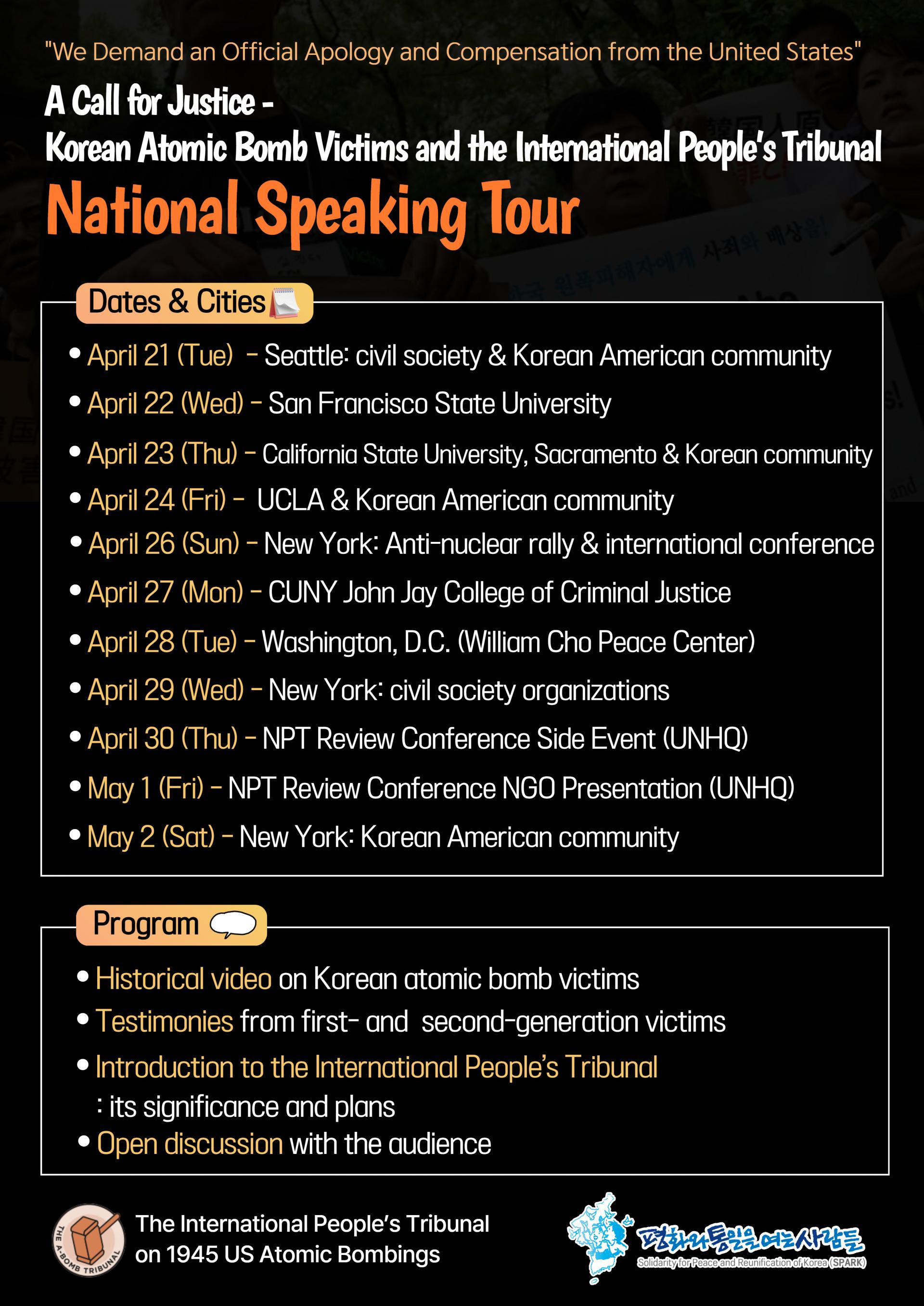

29 April – Nuclear Expert Webinar #1 – Radiation Impacts on Families with Mary Olson and Cindy Folkers
- 12:15 PM MT – 1:45 PM MT
- Location: Virtual – REGISTER TODAY

4 May -West Suburban Peace Coalition to discuss Iran war at May Educational Forum
Monday, May 4, 7:00 – 8:00 PM Central Standard Time
Title: : How Trump’s Narrative Tries to Shape the Reality of the War on Iran.
Contact Walt Zlotow, zlotow@hotmail.com 630 442 3045 for further information
14 May – online event From Bombs to Data Centres: the Face of Nuclear Colonialism
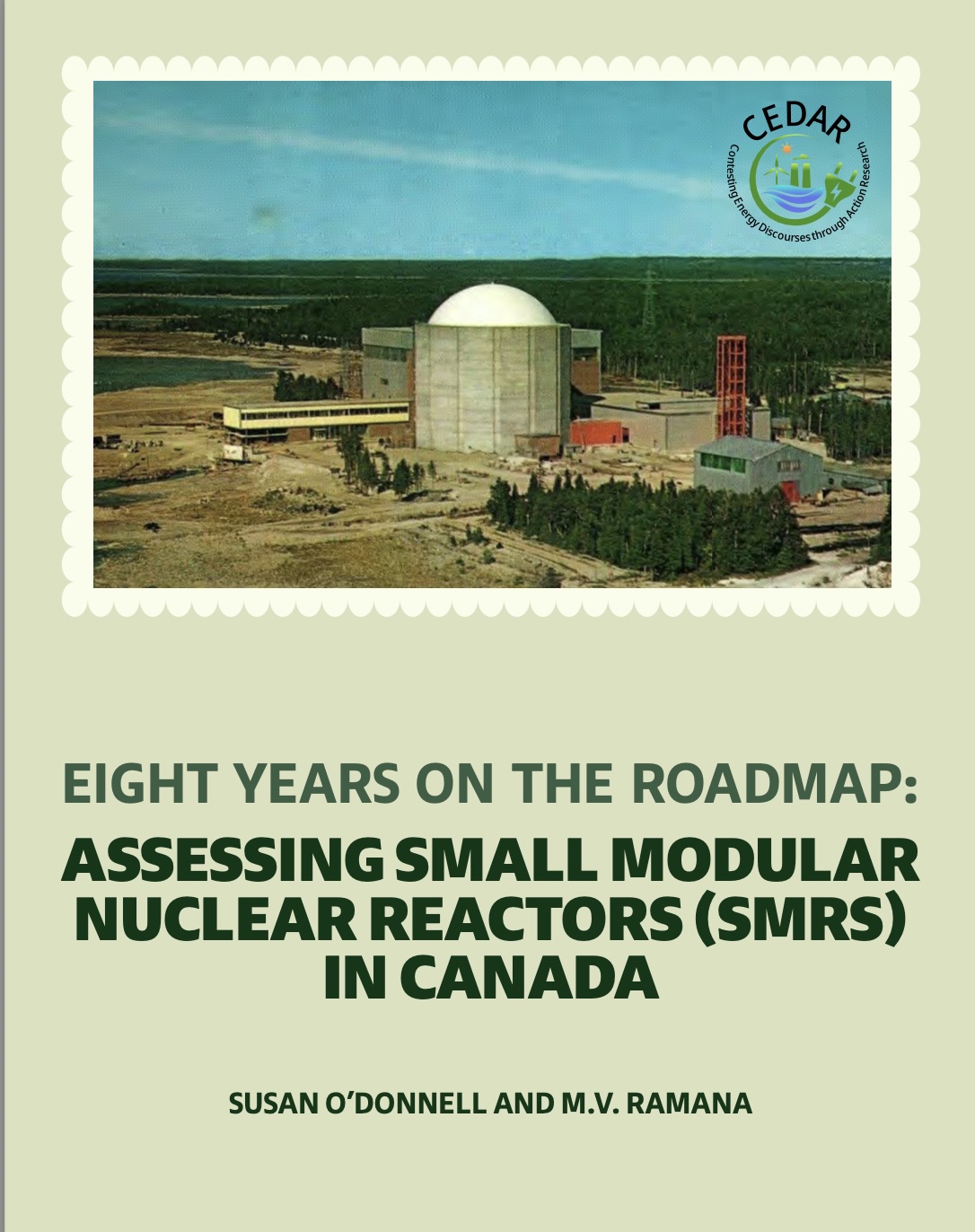

Pine Ridge Uranium is the real threat, not Tehran- Tell Burgum: Stop the Extraction.
Chernobyl: The Lost Tapes – A good documentary on Chernobyl on SBS available On Demand for the next 3 weeks– https://www.sbs.com.au/ondemand/tv-program/chernobyl-the-lost-tapes/2352741955560
To see nuclear-related stories in greater depth and intensity – go to https://nuclearinformation.wordpress.com
-
Archives
- April 2026 (300)
- March 2026 (251)
- February 2026 (268)
- January 2026 (308)
- December 2025 (358)
- November 2025 (359)
- October 2025 (376)
- September 2025 (257)
- August 2025 (319)
- July 2025 (230)
- June 2025 (348)
- May 2025 (261)
-
Categories
- 1
- 1 NUCLEAR ISSUES
- business and costs
- climate change
- culture and arts
- ENERGY
- environment
- health
- history
- indigenous issues
- Legal
- marketing of nuclear
- media
- opposition to nuclear
- PERSONAL STORIES
- politics
- politics international
- Religion and ethics
- safety
- secrets,lies and civil liberties
- spinbuster
- technology
- Uranium
- wastes
- weapons and war
- Women
- 2 WORLD
- ACTION
- AFRICA
- Atrocities
- AUSTRALIA
- Christina's notes
- Christina's themes
- culture and arts
- Events
- Fuk 2022
- Fuk 2023
- Fukushima 2017
- Fukushima 2018
- fukushima 2019
- Fukushima 2020
- Fukushima 2021
- general
- global warming
- Humour (God we need it)
- Nuclear
- RARE EARTHS
- Reference
- resources – print
- Resources -audiovicual
- Weekly Newsletter
- World
- World Nuclear
- YouTube
-
RSS
Entries RSS
Comments RSS
 nuclear-news