Gaza: a pause before the storm
The US and its allies will continue backing Israel’s war on Gaza after a brief truce. But as the case for ‘genocide’ grows stronger, the new multipolar powers will have to confront the old hegemons and their Rules-Based Chaos.
The Cradle, Pepe Escobar, NOV 23, 2023
While the world cries “Israeli genocide,” the Biden White House is gushing over the upcoming Gaza truce it helped broker, as though it’s actually “on the verge” of its “biggest diplomatic victory.”
Behind the self-congratulatory narratives, the US administration is not remotely “wary about Netanyahu’s endgame,” it fully endorses it – genocide included – as agreed at the White House less than three weeks before Al-Aqsa Flood, in a 20 September meeting between Israeli President Benjamin Netanyahu and Joe “The Mummy” Biden’s handlers.
The US/Qatar-brokered “truce,” which is supposed to go into effect this week, is not a ceasefire. It is a PR move to soften Israel’s genocide and boost its morale by securing the release of a few dozen captives. Moreover, the record shows that Israel never respects ceasefires.
Predictably, what really worries the US administration is the “unintended consequence” of the truce, which will “allow journalists broader access to Gaza and the opportunity to further illuminate the devastation there and turn public opinion on Israel.”
Real journalists have been working in Gaza 24/7 since October 7 – dozens of whom have been killed by the Israeli military machine in what Reporters Sans Frontieres calls “one of the deadliest tolls in a century.”
These journalists have spared no effort to go all the way to “illuminate the devastation,” a euphemism for the ongoing genocide, shown in all its gruesome detail for the entire world to see.
Even the UN Relief and Works Agency for Palestine (UNRWA), itself relentlessly attacked by Israel, revealed – somewhat meekly – that this has been “the largest displacement since 1948,” an “exodus” of the Palestinian population, with the younger generation “forced to live through traumas of ancestors or parents.”
As for public opinion all across the Global South/Global Majority, it “turned” long ago on Zionist extremism. But now the Global Minority – populations of the collective west – are watching raptly, horrified, and bitter that in just six weeks, social media has exposed them to what mainstream media hid for decades. There will be no turning back now that this penny has dropped.
A former Apartheid state leads the way
The South African government has paved the path, globally, for the proper reaction to an unfolding genocide: parliament voted to shutter the Israeli embassy, expel the Israeli ambassador, and cut diplomatic ties with Tel Aviv. South Africans do know a thing or two about apartheid.
They, like other critics of Israel, better be extra wary moving forward. Anything can be expected: an outbreak of foreign intel-conducted “terra terra terra” false flags, artificially induced weather calamities, fake “human rights abuse” charges, the collapse of the national currency, the rand, instances of lawfare, assorted Atlanticist apoplexy, sabotage of energy infrastructure. And more.
Several nations should have by now invoked the Genocide Convention – given that Israeli politicians and officials have been bragging, on the record, about razing Gaza and besieging, starving, killing, and mass-transferring its Palestinian population. No geopolitical actor has dared thus far.
South Africa, for its part, had the courage to go where few Muslim and Arab states have ventured. As matters stand, when it comes to much of the Arab world – particularly the US client states – they are still in Rhetorical Swamp territory.
The Qatar-brokered “truce” came at precisely the right time for Washington. It stole the spotlight from the delegation of Islamic/Arab foreign ministers touring selected capitals to promote their plan for a complete Gaza ceasefire in Gaza – plus negotiations for an independent Palestinian state.
This Gaza Contact Group, uniting Saudi Arabia, Egypt, Jordan, Turkey, Indonesia, Nigeria, and Palestine, made their first stop in Beijing, meeting with Chinese Foreign Minister Wang Yi, and then on to Moscow, meeting with Foreign Minister Sergei Lavrov. That was definitely an instance of BRICS 11 already in action – even before they started business on January 1st, 2024, under the Russian presidency.
The meeting with Lavrov in Moscow was held simultaneously with an extraordinary online BRICS session on Palestine, called by the current South African presidency. Iran’s President Ebrahim Raisi, whose country leads the region’s Axis of Resistance and refuses any relations with Israel, supported the South African initiatives and called for BRICS member states to use every political and economic tool available to pressure Tel Aviv.
It was also important to hear from Chinese President Xi Jinping himself that “there can be no security in the Middle East without a just solution to the question of Palestine.”
Xi stressed once again the need for “a two-state solution,” the “restoration of the legitimate national rights of Palestine,” and “the establishment of an independent state of Palestine.” This should all start via an international conference.
None of this is enough at this stage – not this temporary truce, not the promise of a future negotiation. The US administration, itself struggling with an unexpected global backlash, at best, arm-wrestled Tel Aviv to enact a short “pause” in the genocide. This means the carnage continues after a few days. ………………………………………………………..
No mainstream media narrative, no PR move to soften the genocide, no containment of “public opinion turning on Israel” can ever cover the serial war crimes perpetrated by Israel and its allies in Gaza. Perhaps this is just what the Doctor – metaphysical and otherwise – ordered for mankind: an imperative global tragedy, to be witnessed by all, that will also transform us all. https://new.thecradle.co/articles/gaza-a-pause-before-the-storm
US providing Israel with satellite data of aid facilities in Gaza, which Tel Aviv later bombs
SOTT, Erin Banco, Politico, Wed, 22 Nov 2023
The Biden administration has been providing Israel with the location of humanitarian groups in Gaza for weeks to prevent strikes against their facilities. But Israel has continued to hit such sites.
The information included GPS coordinates of a number of medical facilities and information on movements of aid groups in Gaza to the Israeli government for at least a month, according to three people familiar with the communications. All were granted anonymity because they feared speaking publicly would make it more difficult for aid groups to operate in Gaza.
Still, Israel has launched operations against Hamas in or near aid sites, including hospitals, leading to the destruction of buildings and the blocking of fuel and other critical supplies.
………………………………… State Dept.: Hostage deal would ‘unlock’ potential for more Gaza aid
In public statements, U.S. officials have stressed that aid groups are struggling to operate in the Gaza Strip because of Hamas, noting the militant group uses civilians as human shields and operates tunnels underneath hospitals.
But Israel’s continued bombardment of these humanitarian facilities raises more questions about whether Washington has the political sway many in the administration want with Israel. And the divide is particularly stark given that the goal is protecting aid workers — one of the most fundamental tenets of international humanitarian law…………………………………………………………………………………………………. more https://www.sott.net/article/486230-US-providing-Israel-with-satellite-data-of-aid-facilities-in-Gaza-which-Tel-Aviv-later-bombs
Putin Was Declared A War Criminal For *Relocating* The Same Number Of Children Israel Just *Killed*
CAITLIN JOHNSTONE, NOV 24, 2023
It’s probably worth noting at this point in history that the total number of children killed in Gaza has just surpassed the number of children the International Criminal Court indicted Russian president Vladimir Putin for relocating out of a war zone.
A recent estimate by Gaza authorities puts the number of Palestinian children killed by Israel’s bombing campaign over the last seven weeks at just above the six thousand mark. This number comes from the Gaza Media Office, which is only able to make unconfirmed estimates since the Gaza Health Ministry who normally reports such numbers has lost the ability to count the dead effectively due to communications collapse caused by the bombing.
In March of this year — ironically on the 20th anniversary of the US invasion of Iraq — ICC judges issued an arrest warrant charging Putin with war crimes in Ukraine. The allegations? The “unlawful deportation” of some six thousand Ukrainian children to a network of “re-education” camps inside Russia.
As The Grayzone documented at the time, the ICC charges were based on a Yale HRL report which is rife with contradictions, plot holes, and the fairly significant conflict of interest of being funded by the US State Department. The report itself acknowledges that it found “no documentation of child mistreatment,” and that nearly all of the children were returned to their families in a timely manner.
But even if these points were all false and Vladimir Putin did just illegally kidnap six thousand Ukrainian kids to turn them into Russians, would that be worse than murdering them by dropping powerful military explosives on areas known to be packed full of children? Why is one a war crime and the other apparently fine? Russia is no more a party to the ICC’s Rome Statute than Israel is, after all.
A recent United Nations report says that “Since 7 October, when Hamas fighters attacked Israel, 67 per cent of the more than 14,000 people killed in Gaza are estimated to be women and children.” If we assume it’s an even 14,000 and make the obscenely generous assumption that every single one of the men killed by Israel were Hamas combatants, 67 percent puts the total number of civilians killed at 9,380 in just seven weeks of bombing.
In the 21 months of the war in Ukraine, the UN estimates the number of civilians killed at around ten thousand. The total number of children killed? Around 560.
The numbers show that Israel is plainly behaving in a way that is far, far more murderous and criminal in Gaza than Russia is in Ukraine, but we good and faithful members of the international community are meant to desire only the Russian leader’s prosecution at The Hague………………………………….more https://www.caitlinjohnst.one/p/putin-was-declared-a-war-criminal?utm_source=post-email-title&publication_id=82124&post_id=139127737&utm_campaign=email-post-title&isFreemail=true&r=1ise1&utm_medium=email
What Would It Mean to ‘Absorb’ a Nuclear Attack?- nuclear missile silos as a “sponge”

Scientific American , By Ella Weber on November 22, 2023
The missiles on the Fort Berthold Reservation in North Dakota make it a potential target for a nuclear attack. And that doesn’t come close to describing what the reality would be for those on the ground.
This podcast is Part 4 of a five-part series. Listen to Part 1 here, Part 2 here, and Part 3 here. The podcast series is a part of “The New Nuclear Age,” a special report on a $1.5-trillion effort to remake the American nuclear arsenal.…..
Ella Weber: Members of my tribe live with nuclear missiles on the Fort Berthold Reservation. The weapons sit in underground concrete silos that are surrounded by antennas in small, fenced-off areas. The missiles are armed and ready to launch in 60 seconds. This is one reason they are called Minutemen missiles…………………………….
Weber: After learning that the Air Force had not explained to my tribe what the new nuclear missiles were for–which the Air Force intended to deploy for another 60 years on our reservation–I decided to dig deeper.
I wanted to know what role the missiles and their silos play today in U.S. nuclear strategy and what the risks for the tribe were in hosting them—something that the tribe never agreed to in the first place………………….
I wasn’t really clear on what Secretary Jim Mattis meant by the ICBM force providing a “cost-imposing strategy,” so I talked to Leonor Tomero to get some clarity. She used to serve as deputy assistant secretary of defense for nuclear and missile defense policy in the Biden administration in 2021…………
Weber: Leonor explained to me that should the U.S. face a potential nuclear attack, the president would have two choices with regards to the ICBMs: launch them preventively before the missiles possibly got destroyed, or decide to absorb the attack and retaliate later.
Weber (tape): What do you mean by absorbing an attack?
Tomero: I think, you know, it’s, you know, they’re considered a sponge.
Weber (tape): So it’s kind of like making these ICBMs, like, a target ….
Tomero: Yes…
Weber (tape): …. rather than, like, these other major cities or other places…
Tomero: Right.
Weber: In case you don’t know — the role of the ICBM is to force an adversary to use many nuclear weapons if they decided to attack the U.S. The silos are basically meant to divert and absorb the incoming nuclear missiles from important and critical areas in the country, like cities.
But what would that mean for the Fort Berthold reservation?……………………………………………………………………
Frank Von Hippel: Basically the secretary of defense had come in and testified to Congress. When one of the senators asked how many people would such an attack kill, he estimated 15,000 to 25,000. And he said, ‘Well, that would be terrible, but it would be not what you would expect from a major nuclear attack.’
That seemed low to, actually, the senator from New Jersey [Clifford Case]. And he asked for a peer review of the Defense Department calculations, and, and I was then asked to be an unpaid consultant to look into that. And, in fact, I went over to the Pentagon to talk to the people who have done the calculations.
Weber: Frank found something unexpectedly horrifying.
Von Hippel: The Defense Department had assumed that explosions of the warheads over the ICBM silos would be so high that they would not cause fallout. They pointed out they would also not damage the silos.
Weber: Basically, the Department of Defense hadn’t calculated properly. The DOD had made incorrect assumptions about the altitude of nuclear explosions aimed at destroying the silos. Initially, it had thought the nuclear explosions would need to be at an altitude. But–they actually needed to be at ground level.
Von Hippel: The DoD was forced to go back and do new calculations reflecting these points, and they came out about 1,000 times higher: 20 million—on the order of 20 million people killed.
Weber (tape): Wow.
…………………………………. Von Hippel: Well, you know, the, I don’t know who coined this term about the silos being a nuclear sponge, but the local….I think there would be annihilation of the local population around the silos. Wouldn’t just be the fallout—would also be the, the blast effects, and so on. So they would be the worst affected.
Weber (tape): My grandma only lives two and a half miles away from an ICBM silo. What would happen to her and her place?
Von Hippel: I think she would be within the blast radius … and the fire radius…. I don’t know how flammable… her house would be presumably burned after being knocked flat. And then there would be the fallout. These explosions would have to be low enough to hit the set of silos with sufficient overpressure to destroy the missiles inside. It would have to be low enough for, for the dirt to be and debris to be sucked up into the cloud. And then that would bring down some of the radioactivity in a very intense patch around the silo. So … multiple ways in which she might die. I’m sorry.
Weber (tape): I mean, she didn’t make the decision to have them there. So …
Von Hippel: Yeah, I know
Weber: Being treated as expendable isn’t new to Indigenous communities. As far as I could tell, members of the Mandan, Hidatsa and Arikara Nation don’t see themselves as living in a sacrifice zone.
This designation treats certain areas and people as acceptable losses; they bear the brunt of the risks and consequences associated with nuclear weapons and decisions made by others. Maybe if members of the tribe had a better understanding of what the risks were, they could challenge the deployment of these silos on our land…………………………….
Sébastien Philippe: Now I’m going to put the whole image of the entire areas that can be impacted by the fallout, and I can walk you through the color coding, but that’s basically the worst case possible for every single person on the map.
Edmund Baker: Okay. Holy crap. Even Disneyland’s not immune. Disney World’s out. New York—there’s no safe place.
So that batch there, North Dakota, the white sort of color…?
Philippe: Yeah.
Baker: That’s 100 percent fatality in that zone?
Philippe: Times 10. Yeah, ten times what you would need to die—and that’s just from the radioactivity.
Baker: Okay, so that’s not in the EIS, I figure, or is it?
Philippe: Uh, no.
Weber: By the way, Edmund’s talking about an environmental impact statement, or EIS—a two-volume report released by the U.S. Air Force that is meant to analyze, “the potential effects on the human and natural environments from the deployment of the Sentinel intercontinental ballistic missile system.”
This was the report that the Air Force had presented to my reservation—in a different place than it had initially advertised. And in the entire 3,000 pages of the report and its appendices— which cost $33 million to write, by the way — Sébastien had found that the consequences of a nuclear war that could impact my tribe were kind of glossed over.
The EIS mentioned the “casualties” and “grave implications” of such a war but they didn’t really go beyond that.
Here’s Frank again, speaking about the military’s attitudes toward the consequences of war in general.
Von Hippel: They talk about people like your grandmother as being collateral damage. I mean…, they try to desensitize themselves to what the consequences are, what they’re talking about—and, in fact, I remember when I first went over to the Pentagon to talk to people, I learned—the first time I heard this word called “collateral damage,” that is—“We, you know, we didn’t intend to kill your grandmother…. She’s, unfortunately, collateral damage.”…………………………………………………………………………………………………………………………………………….
Weber: If anyone could advise the U.S. on resilience and survivability, it would be us: the MHA Nation. And I have a feeling that keeping ICBM silos operating across our land may not be part of our preferred strategy.
In the next and final episode, I go back to the rez and report what I found to my family and members of the tribe. We sit down and discuss: What happens now?
This show was reported by me, Ella Weber, produced by Sébastien Philippe and Tulika Bose. Script editing by Tulika Bose. Post-production design and mixing by Jeff DelViscio. Thanks to special advisor Ryo Morimoto and Jessica Lambert. Music by Epidemic Sound.
I’m Ella Weber, and this was The Missiles on Our Rez, a special podcast collaboration from Scientific American, Princeton University’s Program on Science and Global Security, Nuclear Princeton, and Columbia Journalism School. https://www.scientificamerican.com/podcast/episode/what-would-it-mean-to-absorb-a-nuclear-attack/
US Official Says Gaza Death Toll Likely Higher Than Being Reported
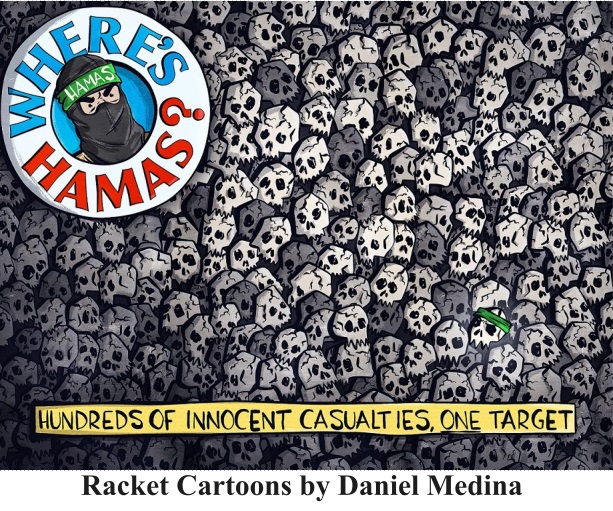
President Biden previously cast doubt on the numbers coming from Gaza’s Health Ministry.
By Dave DeCamp / Antiwar.com, https://scheerpost.com/2023/11/11/us-official-says-gaza-death-toll-likely-higher-than-being-reported/
A senior US official said that the death toll caused by Israel’s assault on Gaza is likely far higher than the over 10,000 number being reported by Gaza’s Health Ministry, The Hill reported on Thursday.
The comments were made by Barbara Leaf, assistant secretary of State for Near Eastern Affairs, and break from President Biden’s claim that the numbers from Gaza’s Health Ministry can’t be trusted.
“In this period of conflict and conditions of war, it is very difficult for any of us to assess what the rate of casualties are,” Leaf told the House Foreign Affairs Committee. “We think they’re very high, frankly, and it could be that they’re even higher than are being cited.”
“We’ll know only after the guns fall silent. We take in sourcing from a variety of folks who are on the ground,” she added. “I can’t stipulate to one figure or another, it’s very possible they’re even higher than is being reported.”
Gaza’s Health Ministry reported on Thursday that at least 10,569 Palestinians have been killed in Gaza since October 7. The total includes 4,324 children. Thousands of Palestinians are also missing and presumed to be under the rubble.
After Biden accused the Palestinians of lying about the death toll, the UN and aid groups that have experience in Gaza backed the numbers coming from Gaza’s Health Ministry, saying they’re reliable. An Israeli security source told the Israeli newspaper Yediot Ahronot that Israel has killed around 20,000 Palestinians, but the number has not been backed up by another source.
While casting doubt on the death toll, the White House has also acknowledged there is a massive civilian casualty rate in the US-backed onslaught. White House National Security Council spokesman John Kirby acknowledged on Monday that the Israeli bombardment has killed “many, many thousands of innocent people.” The US is still providing Israel with unconditional military support, including near-daily weapons shipments.
IAEA urges Countries in Mideast, Israel to join nuclear ban treaty, open facilities for inspection
International Atomic Energy Agency chief says Israeli minister’s nuking Gaza remark ‘unacceptable’
Askin Kiyagan |22.11.2023 –https://www.aa.com.tr/en/middle-east/countries-in-mideast-israel-urged-to-join-nuclear-ban-treaty-open-facilities-for-inspection/3061983
VIENNA
The head of the International Atomic Energy Agency (IAEA) on Wednesday reiterated the call on all countries in the Middle East, including Israel, to join the Treaty on Non-Proliferation of Nuclear Weapons.
Speaking to reporters in the Austrian capital Vienna, Rafael Mariano Grossi urged all countries to join the Treaty on the Non-Proliferation of Nuclear Weapons (NPT), which aims to prevent the spread of nuclear weapons and weapons technology.
In response to a question by Anadolu on the Israeli minister’s nuking Gaza remark, the IAEA chief said it is “unacceptable.”
There is a widely accepted approach around the world that a nuclear war cannot be won, therefore such a war should not happen, said Grossi, adding that irresponsible remarks about the use of nuclear weapons are “completely unacceptable.”
Grossi also reminded that the IAEA General Assembly, the Board of Directors and he have made repeated calls to all countries in the Middle East, including Israel, to join the NPT and open all their nuclear facilities to a comprehensive nuclear inspection.
In an interview in early November, Israel’s Heritage Minister Amichai Eliyahu said: “One of Israel’s options in the war in Gaza is to drop a nuclear bomb on the Strip.”
Later, Palestinian Foreign Minister Riad al-Maliki filed a formal complaint with the IAEA against Israel over its minister’s threat to drop a nuclear bomb on Gaza.
Gaza Massacre could lead to Nuclear War
https://www.commondreams.org/newswire/gaza-massacre-could-lead-to-nuclear-war 21 Nov 23
WASHINGTON – As military veterans who have experienced the deadly threat of nuclear weapons from the Cuban Missile Crisis onward, as well as being distraught and outraged by what is now going on in Gaza, we must warn against the potential of a wider war in the Middle East, one that could even lead to nuclear war.
The massive and relentless Israeli bombing of Gaza has been indiscriminate – if not actually targeting civilians. Over 10,000 Gazan residents have been killed to date, including at least 4,000 children. Many victims remain beneath the rubble. It is almost as if a nuclear bomb had been dropped.
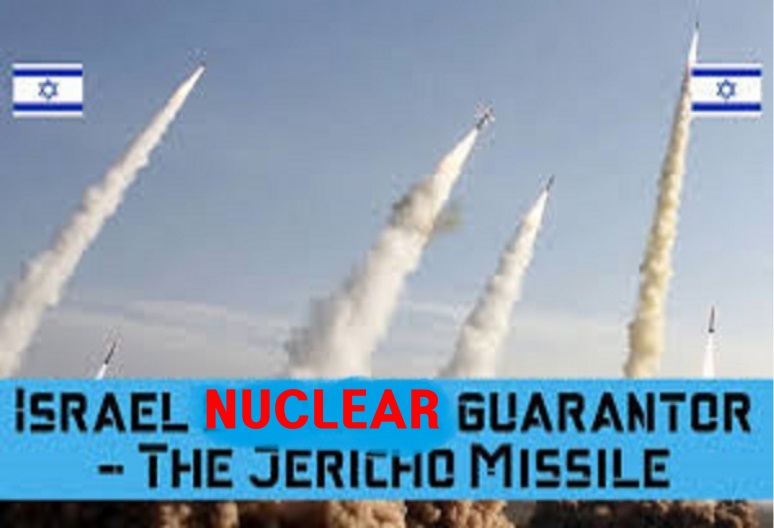
A member of the Israeli Knesset has actually called for dropping a nuclear bomb on Gaza– or as she calls it a “doomsday weapon.” It is an open secret that Israel has possessed nuclear weapons since the 1960’s. Israeli leaders have smugly refused to acknowledge the possession of nuclear weapons, and have signed no nuclear treaties. However, they have implicitly threatened Iran with a nuclear attack. As Daniel Ellsberg pointed out, the US and other nuclear powers use nuclear weapons all the time – it’s like pointing “a gun at someone’s head without pulling the trigger.”
The US has recently deployed massive naval forces and thousands of troops to the eastern Mediterranean, covering Israel’s back while it carries out its genocidal slaughter in Gaza. The implicit US threat against Iran and Hezbollah, an Islamic militia and major political party in the government of Lebanon, has raised tensions in the region.
US and Israeli threats against Iran – coupled with the US withdrawal from the Iran Nuclear Deal (JCPOA) – could actually spur Iran to develop its own nuclear weapons. Pakistan, the only Muslim-majority country with nuclear weapons, has called on Israel to end its massacre in Israel
While nuclear war is not considered a “likely” result of Israel’s assault on Gaza, it is an all too real possibility. The US and Israel are playing with fire. This is another reason why we in Veterans For Peace join with people all over the world who are calling for an immediate ceasefire in Gaza, as well as for an end to Israeli settler and soldier violence against Palestinians in the West Bank. We support Palestinian human rights, including the rights to dignity and self-determination.
As veterans of too many wars, we want to see an end to militarism, which if unchecked, will inevitably lead to nuclear war. We repeat our calls for a ceasefire and negotiations to end the war in Ukraine, and for an end to US war preparations against China. We want a peaceful world – free of racism, colonialism and imperialism – where the sovereign rights of all peoples are respected.
The proliferation of weapons of mass destruction has brought the world to a critical juncture. As Martin Luther King warned, we must choose between “nonviolence and nonexistence.” We call on the US and all nuclear-armed nations to begin urgent diplomacy to rid the world of nuclear weapons. We call for an immediate ceasefire in Gaza, for massive humanitarian aid for the people of Gaza, and for an end to Israel’s inhumane occupation of the Palestinian people.
Veterans For Peace is a global organization of Military Veterans and allies whose collective efforts are to build a culture of peace by using our experiences and lifting our voices. We inform the public of the true causes of war and the enormous costs of wars, with an obligation to heal the wounds of wars. Our network is comprised of over 140 chapters worldwide whose work includes: educating the public, advocating for a dismantling of the war economy, providing services that assist veterans and victims of war, and most significantly, working to end all wars.
 | |||
| |||
Israel expands Gaza operation amid hostage deal talks
November 20, 2023 https://www.news.com.au/world/middle-east/israel-expands-gaza-operation-amid-hostage-deal-talks/news-story/e1a2c133878d59fdfccc446195f410d1
Gaza is bracing for a further expansion of Israeli military operations even as cautious hopes built for a deal to release hostages in exchange for a pause in fighting.
The Israeli army said on Sunday they were taking their fight against Hamas militants to “additional neighbourhoods” of the Gaza Strip, where an aerial and ground offensive has already killed 13,000 people including thousands of children, according to the Hamas-run government.
The bloodiest ever Gaza war started with the shock October 7 Hamas attack that Israeli officials say left 1,200 people dead and saw 240 taken hostage.
Qatari mediators said on Sunday talks on a deal that would free some of the hostages were progressing, held up only by “very minor” practical challenges, though neither details nor a timeline were provided, and Israel and Hamas have said little.
An Israeli strike on the Indonesian Hospital near northern Gaza’s Jabalia refugee camp — the territory’s largest — killed 12 people, including patients, and wounded dozens more, the Gaza health ministry said on Monday.
An AFP journalist saw columns of smoke rising from Jabalia on Sunday, one day after a health official said more than 80 people had been killed in twin strikes there, including on a UN school sheltering displaced people.
Social media videos verified by AFP showed bodies covered in blood and dust on the floor of a building, where mattresses had been wedged under school tables.
Israel’s military has said Jabalia is among the areas of focus as they “target terrorists and strike Hamas infrastructure”.
Without mentioning the strikes, the Israeli army said “an incident in the Jabalia region” was under review.
The bloodiest ever Gaza war started with the shock October 7 Hamas attack that Israeli officials say left 1,200 people dead and saw 240 taken hostage.
‘Act urgently’
The violence in Jabalia was the latest to draw strong condemnation from Arab and other governments.
On Monday foreign ministers from the Palestinian Authority, Egypt, Saudi Arabia, Jordan and Indonesia held meetings on the war in Beijing, where their Chinese counterpart Wang Yi said the world must “act urgently” to stop the “humanitarian disaster” in Gaza.
“The situation in Gaza affects all countries around the world, questioning the human sense of right and wrong and humanity’s bottom line,” Wang told the visiting diplomats.
Six weeks into the war, Israel is facing intense international pressure to justify the bloody toll.
Israeli officials have warned a “window of legitimacy” for the war to rout Hamas may be closing.
Israel on Sunday presented what it said was evidence Hamas gunmen used Gaza’s largest hospital, Al-Shifa, to hide foreign hostages and to mask underground tunnels.
The hospital has been a focal point of global concern after Israeli forces launched a raid of the facility last week, with the World Health Organisation calling it “a death zone”.
Israel has repeatedly claimed that Al-Shifa and tunnels beneath it double as a base for Palestinian militants, a charge Hamas and hospital administrators deny.
The Israeli military released what was said to be CCTV footage from October 7 of two male hostages, from Nepal and Thailand, being brought into the hospital.
“We have not yet located both of these hostages,” army spokesman Daniel Hagari told reporters.
One clip showed a man in shorts and a pale blue shirt being dragged into an entrance hall by five men, at least three of whom were armed.
In a second clip, an injured man in underwear is wheeled in on a gurney by armed men as several others wearing blue hospital scrubs look on.
AFP could not immediately verify the footage.
Israel also accused the Palestinian militant group of executing 19-year-old Israeli soldier Noa Marciano at Al-Shifa and presented images of what it said was a 55-metre (180-feet) tunnel under the hospital.
Over the weekend, hundreds of people fled Al-Shifa hospital on foot as loud explosions were heard around the complex.
Columns of sick and injured were seen leaving with displaced people, doctors and nurses, and the UN said 31 premature babies were evacuated from the facility.
At least 15 bodies, some in advanced stages of decomposition, were strewn along the route, an AFP journalist said.
Al-Shifa head of surgery Marwan Abu Sada told AFP that Israeli troops were still in the hospital and it was surrounded by tanks.
The Israeli army said on Sunday they were taking their fight against Hamas militants to ‘additional neighbourhoods’ of the Gaza Strip.
“I heard at least two explosions since this morning,” he said Sunday. Other doctors said the troops were going from building to building and detonating explosives on the ground floors and hospital basements searching for Hamas tunnels.
Israel has vowed to eradicate Hamas and has refused to heed calls for a ceasefire before all the captives are released.
The bodies of two female hostages, including the soldier, were recovered in Gaza, the Israeli military said last week.
Four abductees have so far been released by Hamas and a fifth rescued by troops. Qatar’s prime minister said efforts to bring hostages “safely back to their homes” in return for a temporary ceasefire was now within reach, raising hopes that Israeli, American or other captives could soon be free.
“I’m now more confident that we are close enough to reach a deal,” said Mohammed bin Abdulrahman Al Thani, adding that only “minor” practical details remained unresolved.
The hostages include infants, teens and pensioners.
Their fate has wracked not just their families but the Israeli public at large. US deputy national security adviser Jon Finer told US media that negotiators were “closer than we have been in quite some time” to securing a deal.
But he cautioned: “The mantra that nothing is agreed until everything is agreed really does apply.” In London, the teary father of missing nine-year-old Emily Hand begged for her to be brought home.
“There’s just a big, big hole in all our hearts that won’t be filled until she comes home again,” he to
We’re long past nuclear deterrence: Bring on mutually assured prevention

BY HARLAN ULLMAN, https://thehill.com/opinion/national-security/4317456-were-long-past-nuclear-deterrence-bring-on-mutually-assured-prevention/ 21 Nov 23
The United States needs a replacement concept for deterrence, the theory that was a child of the Cold War. It no longer is fit for purpose. Why?
For those who believe the Clausewitzian view that the nature of war, not the character, was immutable, the two nuclear bombs destroyed that premise along with Hiroshima and Nagasaki. A principal reason why deterrence is obsolete today was, as the presidents of America, China and Russia agreed, nuclear war must never be fought and can never be won. And thermonuclear weapons that are 1,000 times more powerful make that even clearer.
A war in which there were only losers and no winners produced deterrence. Deterrence rested on maintaining a survivable capability to retaliate and destroy the other after absorbing a first strike. And both sides knew that.
During the Cold War, “MAD,” the ironic acronym for mutually assured destruction, became the shorthand basis for deterrence. At that time, nuclear deterrence was achieved by the threat of mutually assured destruction and retaliation. Deterrence was sufficiently broad that some thought it could be “extended” to non-nuclear war under the mutually assured destruction umbrella. The Cold War ended without a shot or nuclear weapon being fired in anger by the U.S. or USSR
Deterrence was a bipolar condition that applied to the U.S. and USSR. How does deterrence now deal with the soon-to-be three nuclear superpowers? Deterrence assumed retaliation. But what happens if the deterrent notion of retaliation can actually lead to winning by losing?
As North Korea intends to build an intercontinental missile capable of reaching the U.S., this adds another strategic dimension. Whether Iran ultimately develops nuclear weapons or not will also affect this calculus.
The Strategic Posture Review released in October addresses these issues. Its recommendations called for major increases in both U.S. nuclear and strategic forces. But it did not suggest the size or composition of these forces or, most importantly, the costs because of the sticker shock that would create.
Deterrence is also obsolete at the non-nuclear level because of a further tectonic change in the nature of war: winning by losing or by not losing a long-sustained conflict. Vietnam, the October War of 1973 and the war in Gaza are notable examples.
Despite the nuclear imbalance, North Vietnam drove the U.S. out of Vietnam although it lost virtually every battle it fought.
Egypt’s President Anwar Sadat knew that his army could only surprise and not defeat Israel when he started the October 1973 War. He planned on Israel retaliating. But he won back the Sinai peninsula that Israel had captured in June 1967 and still secured a peace treaty. Yet he lost the ground war.
Hamas is following a similar strategy of “winning” by losing, forcing Israeli retaliation even though the costs threaten its temporary eradication along with tens of thousands of Palestinians and the wholesale destruction of Gaza. Protests and unruly demonstrations have been ubiquitous. And surprisingly and tragically, antisemitism has been on the rise in America.
What needs to be done? First, regarding the nuclear aspect of deterrence, a new concept of tri-deterrence must be developed to deal with this superpower triangle. As opposed to mutually assured destruction, a new foundation is needed and it should be based on preventing war and a new “MAP” for mutually assured prevention.
Prevention, not deterrence or retaliation, now matters. Prevention applies tested means to this end. A series of “hot lines” and military-to-military talks, including the stationing of observers at each military headquarters in the three countries must be established. These are additional confidence-building measures to ensure wars by accident do not occur. The U.S. and USSR did this.
Second, arms control discussions must address the prevention of any form of nuclear war and the restoration of three-way trust and confidence. These discussions must include not only arms limitations but also acceptable agreements to balance offensive and defensive weapons and the impact of highly accurate non-nuclear weapons that can have a strategic impact if targeted against nuclear forces.
Third, prevention also applies to traditional forms of war when winning can be accomplished by losing and provoking retaliation, as in Gaza, which may ensure Israel’s geostrategic defeat. This means greater reliance on diplomacy to reduce the grounds for conflict. And the consequences of artificial intelligence that some believe pose a possible existential threat to humanity must be addressed.
How or if the U.S., China and Russia can begin discussions is crucial. Whether a new 21st century 1914 is looming or not, mutually assured prevention can ensure another never reoccurs.
Harlan Ullman Ph.D. is a senior advisor at the Atlantic Council and the prime author of the “shock and awe” military doctrine. His 12th book, “The Fifth Horseman and the New MAD: How Massive Attacks of Disruption Became the Looming Existential Danger to a Divided Nation and the World at Large,” is available on Amazon. He can be reached on Twitter @harlankullman.
A new Palestinian state could never be free as long as its neighbor, Israel, possesses nuclear weapons.
The 2-State Solution’s Nuclear Option
SCHEERPOST, By Scott Ritter / Consortium News, November 20, 2023
“………………………………………………………………………………………………. the United States continues to provide diplomatic cover for Israel’s nuclear weapons, maintaining the fiction of ambiguity despite knowing full well Israel possesses a very robust nuclear arsenal. This posture is becoming more difficult to sustain, given the increasingly aggressive posture assumed by the Israeli government regarding its own policy of ambiguity.
In 2022, during a periodic review by the United Nations of the Non Proliferation Treaty (NPT) , then-Israeli Prime Minister Yair Lapid addressed the Israeli Atomic Energy Commission about Israel’s “defensive and offensive capabilities, and what is referred to in the foreign media as other capabilities. These other capabilities,” Lapid said, clearly alluding to Israel’s nuclear weapons, “keep us alive and will keep us alive as long as we and our children are here.”
As things stand, the threat posed by Israeli nuclear weapons to both regional and global security is as great today as at any time in Israeli history. With the potential of the current Palestinian-Israeli conflict expanding to include Hezbollah and perhaps Iran, Israel for the first time since 1973 faces a genuine existential threat — the kind of threat Israel’s nuclear weapons were built to deter.
An Israeli minister has already alluded to the attractiveness of using nuclear weapons against Hamas in Gaza. But the real threat comes from what happens if Iran is dragged into the war. Here, Israel’s much rumored “Samson Option” could come into play, where Israel uses its nuclear arsenal to destroy as many enemies as possible once the continued survival of Israel is at risk.
Given the present risk posed by Israel’s nuclear arsenal, it is essential that the current Palestinian-Israeli conflict be prevented from expanding. Once the conflict can be ended, the process must begin for a long-term solution that includes a free and independent Palestine. However, a new Palestinian state can never be free if its neighbor, Israel possesses nuclear weapons.
Operating with the understanding that the creation of a Palestinian state would coincide with a renewed push for normalization of relations between Israel and its Arab neighbors, the result vis-à-vis the security of Israel would be a much-improved situation that made Israel’s need for nuclear weapons moot.
South African Example
The question then becomes how Israel can be persuaded to voluntarily give up its nuclear weapons. Fortunately, there is an example from history.
Apartheid South Africa had embarked on a nuclear weapons program in the early 1970s. U.S. intelligence reports show that South Africa formally began its nuclear weapons program in 1973. By 1982, it had developed and built its first nuclear explosive device.
Seven years later, in 1989, South Africa had manufactured six functional nuclear bombs, each capable of delivering an explosive equivalent of 19 kilotons of TNT.
The South African nuclear weapons program mirrored that of the Israeli program in that it was conducted in great secrecy and designed to deter the threat posed by communist-supported black liberation movements operating all along the periphery of the South African nation.
In 1989, South Africa elected a new president, F. W. de Klerk, who quickly realized that the political winds were changing and that the country could very well, in the span of a few years, fall under the control of black nationalists led by Nelson Mandela.
To prevent that, De Klerk took the unprecedented decision to join the NPT as a non-nuclear state and open its nuclear program for inspection and dismantlement. South Africa joined the NPT in 1991; by 1994, all South Africa’s nuclear weapons had been dismantled under international supervision.
Once the Palestinian-Israeli war comes to an end, and if Israel begins negotiating in good faith about the possibility of a free and independent Palestinian state, the United States should lead an effort to get the Israeli government to follow the path taken by F. W. de Klerk by signing the NPT and working with the International Atomic Energy Agency to dismantle the totality of Israel’s nuclear arsenal.
Such a move should be non-negotiable — if the United States is serious about creating the conditions of a long and lasting peace between Israel and Palestine, then it should use all the leverage at its disposal to pressure Israel to voluntarily disarm itself of nuclear weapons.
This is the only viable path to peace between Israel and the Arab and Muslim world that surrounds it.
Nuclear Fusion Won’t Save the Climate But It Might Blow Up the World

the United States’ first full-scale hydrogen bomb was, in fact, a fission explosion that initiated a fusion reaction.
since first tried out in that monstrous Marshall Islands explosion, fusion has been intended as a tool of war. And sadly, so it remains,
Buried deep in the Lawrence Livermore National Laboratory’s website, the government comes clean about what these fusion experiments at the $3.5 billion National Ignition Facility (NIF) are really all about.
above – Edward Teller – inventor of the thermonuclear fusion bomb – (a man consumed by his fear and hatred of Russia)
they require 100 times more energy to charge than the energy they ended up producing.
Resilience, By Joshua Frank, originally published by TomDispatch 23 Jan 23
.”…………………. the New York Times and CNN alerted me that morning, at stake was a new technology that could potentially solve the worst dilemma humanity faces: climate change and the desperate overheating of our planet. Net-energy-gain fusion, a long-sought-after panacea for all that’s wrong with traditional nuclear-fission energy (read: accidents, radioactive waste), had finally been achieved at the Lawrence Livermore National Laboratory in California…………………..
…All in all, the reviews for fusion were positively glowing and it seemed to make instant sense. After all, what could possibly be wrong ……………..
The Big Catch
On a very basic level, fusion is the stuff of stars. Within the Earth’s sun, hydrogen combines with helium to create heat in the form of sunlight. Inside the walls of the Livermore Lab, this natural process was imitated by blasting 192 gigantic lasers into a tube the size of a baby’s toe. Inside that cylinder sat a “hydrogen-encased diamond.” When the laser shot through the small hole, it destroyed that diamond quicker than the blink of an eye. In doing so, it created a bunch of invisible x-rays that compressed a small pellet of deuterium and tritium, which scientists refer to as “heavy hydrogen.
“In a brief moment lasting less than 100 trillionths of a second, 2.05 megajoules of energy — roughly the equivalent of a pound of TNT — bombarded the hydrogen pellet,”explained New York Times reporter Kenneth Chang. “Out flowed a flood of neutron particles — the product of fusion — which carried about 3 megajoules of energy, a factor of 1.5 in energy gain.”
As with so many breakthroughs, there was a catch. First, 3 megajoules isn’t much energy. After all, it takes 360,000 megajoules to create 300 hours of light from a single 100-watt light bulb. So, Livermore’s fusion development isn’t going to electrify a single home, let alone a million homes, anytime soon. And there was another nagging issue with this little fusion creation as well: it took 300 megajoules to power up those 192 lasers. Simply put, at the moment, they require 100 times more energy to charge than the energy they ended up producing.
“The reality is that fusion energy will not be viable at scale anytime within the next decade, a time frame over which carbon emissions must be reduced by 50% to avoid catastrophic warming of more than 1.5°C,” – climate expert Michael Mann
Tritium Trials and Tribulations
The secretive and heavily secured National Ignition Facility where that test took place is the size of a sprawling sports arena. It could, in fact, hold three football fields. Which makes me wonder: how much space would be needed to do fusion on a commercial scale? No good answer is yet available. Then there’s the trouble with that isotope tritium needed to help along the fusion reaction. It’s not easy to come by and costs about as much as diamonds, around $30,000 per gram. Right now, even some of the bigwigs at the Department of Defense are worried that we’re running out of usable tritium.
…………”tritium, with a half-life of 12.3 years, exists naturally only in trace amounts in the upper atmosphere, the product of cosmic ray bombardment.” – writes Daniel Clery in Science.
…………………… the reactors themselves will have to be lined with a lot of lithium, itself an expensive chemical element at $71 a kilogram (copper, by contrast, is around $9.44 a kilogram), to allow the process to work correctly.
Then there’s also a commonly repeated misstatement that fusion doesn’t create significant radioactive waste, a haunting reality for the world’s current fleet of nuclear plants. True, plutonium, which can be used as fuel in atomic weapons, isn’t a natural byproduct of fusion, but tritium is the radioactive form of hydrogen. Its little isotopes are great at permeating metals and finding ways to escape tight enclosures. Obviously, this will pose a significant problem for those who want to continuously breed tritium in a fusion reactor. It also presents a concern for people worried about radioactivity making its way out of such facilities and into the environment.
“Cancer is the main risk from humans ingesting tritium. When tritium decays it spits out a low-energy electron (roughly 18,000 electron volts) that escapes and slams into DNA, a ribosome, or some other biologically important molecule,” David Biello explains in Scientific American. “And, unlike other radionuclides, tritium is usually part of water, so it ends up in all parts of the body and therefore can, in theory, promote any kind of cancer. But that also helps reduce the risk: any tritiated water is typically excreted in less than a month.”
If that sounds problematic, that’s because it is. This country’s above-ground atomic bomb testing in the 1950s and 1960s was responsible for most of the man-made tritium that’s lingering in the environment. And it will be at least 2046, 84 years after the last American atmospheric nuclear detonation in Nevada, before tritium there will no longer pose a problem for the area.
Of course, tritium also escapes from our existing nuclear reactors and is routinely found near such facilities where it occurs “naturally” during the fission process. In fact, after Illinois farmers discovered their wells had been contaminated by the nearby Braidwood nuclear plant, they successfully sued the site’s operator Exelon, which, in 2005, was caught discharging 6.2 million gallons of tritium-laden water into the soil.
In the United States, the Nuclear Regulatory Commission (NRC) allows the industry to monitor for tritium releases at nuclear sites; the industry is politely asked to alert the NRC in a “timely manner” if tritium is either intentionally or accidentally released. But a June 2011 report issued by the Government Accountability Office cast doubt on the NRC’s archaic system for assessing tritium discharges, suggesting that it’s anything but effective. (“Absent such an assessment, we continue to believe that NRC has no assurance that the Groundwater Protection Initiative will lead to prompt detection of underground piping system leaks as nuclear power plants age.”)
Consider all of this a way of saying that, if the NRC isn’t doing an adequate job of monitoring tritium leaks already occurring with regularity at the country’s nuclear plants, how the heck will it do a better job of tracking the stuff at fusion plants in the future? And as I suggest in my new book, Atomic Days: The Untold Story of the Most Toxic Place in America, the NRC is plain awful at just about everything it does.
Instruments of Death
All of that got me wondering: if tritium, vital for the fusion process, is radioactive, and if they aren’t going to be operating those lasers in time to put the brakes on climate change, what’s really going on here?
Maybe some clues lie (as is so often the case) in history. The initial idea for a fusion reaction was proposed by English physicist Arthur Eddington in 1920. More than 30 years later, on November 1, 1952, the first full-scale U.S. test of a thermonuclear device, “Operation Ivy,” took place in the Marshall Islands in the Pacific Ocean. It yielded a mushroom-cloud explosion from a fusion reaction equivalent in its power to 10.4 Megatons of TNT. That was 450 times more powerful than the atomic bomb the U.S. had dropped on the Japanese city of Nagasaki only seven years earlier to end World War II. It created an underwater crater 6,240 feet wide and 164 feet deep…………….
Nicknamed “Ivy Mike,” the bomb was a Teller-Ulam thermonuclear device, named after its creators Edward Teller and Stanislaw Ulam. It was also the United States’ first full-scale hydrogen bomb, an altogether different beast than the two awful nukes dropped on Japan in August 1945. Those bombs utilized fission in their cores to create massive explosions. But Ivy Mike gave a little insight into what was still possible for future weapons of annihilation.
The details of how the Teller-Ulam device works are still classified, but historian of science Alex Wellerstein explained the concept well in the New Yorker:
“The basic idea is, as far as we know, as follows. Take a fission weapon — call it the primary. Take a capsule of fusionable material, cover it with depleted uranium, and call it the secondary. Take both the primary and the secondary and put them inside a radiation case — a box made of very heavy materials. When the primary detonates, radiation flows out of it, filling the case with X rays. This process, which is known as radiation implosion, will, through one mechanism or another… compress the secondary to very high densities, inaugurating fusion reactions on a large scale. These fusion reactions will, in turn, let off neutrons of such a high energy that they can make the normally inert depleted uranium of the secondary’s casing undergo fission.”
Got it? Ivy Mike was, in fact, a fission explosion that initiated a fusion reaction. But ultimately, the science of how those instruments of death work isn’t all that important. The takeaway here is that, since first tried out in that monstrous Marshall Islands explosion, fusion has been intended as a tool of war. And sadly, so it remains, despite all the publicity about its possible use some distant day in relation to climate change. In truth, any fusion breakthroughs are potentially of critical importance not as a remedy for our warming climate but for a future apocalyptic world of war.
Despite all the fantastic media publicity, that’s how the U.S. government has always seen it and that’s why the latest fusion test to create “energy” was executed in the utmost secrecy at the Lawrence Livermore National Laboratory. One thing should be taken for granted: the American government is interested not in using fusion technology to power the energy grid, but in using it to further strengthen this country’s already massive arsenal of atomic weapons.
Consider it an irony, under the circumstances, but in its announcement about the success at Livermore — though this obviously wasn’t what made the headlines — the Department of Energy didn’t skirt around the issue of gains for future atomic weaponry. Jill Hruby, the department’s undersecretary for nuclear security, admitted that, in achieving a fusion ignition, researchers had “opened a new chapter in NNSA’s science-based Stockpile Stewardship Program.” (NNSA stands for the National Nuclear Security Administration.) That “chapter” Hruby was bragging about has a lot more to do with “modernizing” the country’s nuclear weapons capabilities than with using laser fusion to end our reliance on fossil fuels.
“Had we not pursued the hydrogen bomb,” Edward Teller once said, “there is a very real threat that we would now all be speaking Russian. I have no regrets.” Some attitudes die hard.
Buried deep in the Lawrence Livermore National Laboratory’s website, the government comes clean about what these fusion experiments at the $3.5 billion National Ignition Facility (NIF) are really all about:
NIF’s high energy density and inertial confinement fusion experiments, coupled with the increasingly sophisticated simulations available from some of the world’s most powerful supercomputers, increase our understanding of weapon physics, including the properties and survivability of weapons-relevant materials… The high rigor and multidisciplinary nature of NIF experiments play a key role in attracting, training, testing, and retaining new generations of skilled stockpile stewards who will continue the mission to protect America into the future.”
Yes, despite all the media attention to climate change, this is a rare yet intentional admission, surely meant to frighten officials in China and Russia. It leaves little doubt about what this fusion breakthrough means. It’s not about creating future clean energy and never has been. It’s about “protecting” the world’s greatest capitalist superpower. Competitors beware.
Sadly, fusion won’t save the Arctic from melting, but if we don’t put a stop to it, that breakthrough technology could someday melt us all. https://www.resilience.org/stories/2023-01-26/nuclear-fusion-wont-save-the-climate-but-it-might-blow-up-the-world/
‘Burn Gaza now’ – top Israeli MP
Nissim Vaturi has argued his country is “too humane” towards Palestinians
A senior lawmaker in Israel has urged the military to “burn” Gaza and not allow any fuel into the Palestinian enclave unless all hostages held by Hamas are released.
The comments made on Friday by Nissim Vaturi, deputy speaker of the Knesset, are the latest in a string of incendiary remarks by Israeli politicians on the deadly fighting with Hamas.
“All of this preoccupation with whether or not there is internet in Gaza shows that we have learned nothing. We are too humane,” Vaturi, a member of Prime Minister Benjamin Netanyahu’s Likud party, wrote on X (formerly Twitter).
“Burn Gaza now, nothing less! Don’t allow fuel in, don’t allow water in until the hostages are returned!”
Earlier this month, Netanyahu suspended Heritage Minister Amihai Eliyahu from cabinet meetings after he suggested using nuclear weapons against the Palestinian enclave.
Hamas took more than 200 hostages during its October 7 attack on Israel, in which it killed some 1,200 people, mostly civilians. Israel responded by launching a bombing campaign and a ground invasion of Gaza.
Israel has also imposed a near total blockade of the Palestinian enclave, which the UN and human rights groups say has only exacerbated the catastrophic humanitarian situation there.
Gazan Healthy Ministry spokesman Ashraf al-Qudra told reporters on Friday that 24 patients at Al-Shifa hospital, the enclave’s largest medical facility, died during an Israeli raid on the compound. The IDF has accused Hamas of using Al-Shifa and other hospitals for military purposes.
More than 11,000 people have died in Gaza since October 7, according to local officials. After long debates, the UN Security Council passed a resolution on Wednesday calling for humanitarian pauses in the fighting and the “immediate and unconditional release of all hostages held by Hamas.”
‘This Is Not a War, but a Mass Murder Tragedy,’ Says Former US Assistant Secretary of Defense, Charles Freeman
November 18, 2023
Chas Freeman chairs Projects International, Inc.
For more than four decades, Projects International has helped its partner enterprises and clients to create business ventures across borders. It facilitates their establishment of new businesses through the design, negotiation, capitalization, and implementation of greenfield investments, mergers and acquisitions, joint ventures, franchises, one-off transactions, sales and agencies in other countries. The firm operates on five continents.
Ambassador Freeman is a career diplomat (retired) who was Assistant Secretary of Defense for International Security Affairs from 1993-94, earning the highest public service awards of the Department of Defense for his roles in designing a NATO-centered post-Cold War European security system and in reestablishing defense and military relations with China. He served as U. S. Ambassador to Saudi Arabia (during operations Desert Shield and Desert Storm). He was Principal Deputy Assistant Secretary of State for African Affairs during the historic U.S. mediation of Namibian independence from South Africa and Cuban troop withdrawal from Angola. Ambassador Freeman worked as Deputy Chief of Mission and Chargé d’Affaires in the American embassies at both Bangkok (1984-1986) and Beijing (1981-1984). He was Director for Chinese Affairs at the U.S. Department of State from 1979-1981. He was the principal American interpreter during the late President Nixon’s path-breaking visit to China in 1972. In addition to his Middle Eastern, African, East Asian and European diplomatic experience, he had a tour of duty in India.
Amnesty International Calls Israel’s War on Gaza a ‘Graveyard of Children’
By ScheerPost Staff, https://scheerpost.com/2023/11/18/amnesty-international-calls-israels-war-on-gaza-a-graveyard-of-children/
In an appeal to raise funds for Amnesty International, the human rights organization claimed that “Gaza is becoming ‘a graveyard for children,’” citing UN Secretary-General António Guterres’ comments from a press conference on the humanitarian crisis from November 6.
The advertisement goes on to list the myriad reasons why a ceasefire is necessary to stop the bloodshed in Gaza, such as “putting a stop to unlawful attacks by all parties, halting the mounting death toll in Gaza, and enabling aid agencies to get life-saving aid, water and medical supplies into Gaza to address the staggering levels of human suffering.”
The appeal is written below:
Gaza is becoming a “graveyard for children.”
Attacks by the Israeli military are killing or injuring hundreds of girls and boys every day.
More than 2 million Palestinians — half of them children — are trapped, with nowhere safe to hide from Israeli military bombardments, and have little access to food, clean water and medical supplies. Civilian hostages held by Hamas and other armed groups in Gaza remain in danger, and ongoing indiscriminate rocket fire into Israel puts civilians at risk.
The unfolding humanitarian catastrophe makes the need for an immediate ceasefire more and more urgent with every hour.
More than one million people — people like you — have already signed Amnesty’s global petition demanding a ceasefire to end bloodshed. We need to continue to raise our voices.
A ceasefire is crucial and has the potential to achieve many things, including: putting a stop to unlawful attacks by all parties, halting the mounting death toll in Gaza, and enabling aid agencies to get life-saving aid, water and medical supplies into Gaza to address the staggering levels of human suffering.
It would allow hospitals to receive life-saving medicines, fuel and equipment they desperately need, and to repair damaged wards.
It would provide an opportunity to negotiate the release of hostages held in Gaza and enable independent investigations into violations of international humanitarian and human rights law by all parties.
In this crisis and always, Amnesty International is relentlessly focused on protecting civilian lives and ensuring international humanitarian law and human rights law are respected. We have teams on the ground in the Occupied Palestinian Territories and Israel working to expose war crimes and work towards accountability.
We are investigating mass summary killings, indiscriminate and disproportionate attacks, hostage taking and siege tactics. What is happening in Gaza, the wider Occupied Palestinian Territories, and Israel must be documented and those responsible must be held to account.
…like many of us, you might be feeling helpless right now — but I want you to know one powerful way you can make a difference for civilians caught in this escalating conflict is by joining our call for an immediate ceasefire.
Tonight, you and I will go to sleep in the safety of our homes. In Gaza, the bombardment is non-stop, nowhere is safe, and more blood is being shed. And it’s civilians — especially children — who are suffering the most.
| Please, join us today. Sincerely, |
| Elizabeth Rghebi Advocacy Director, Middle East North Africa Amnesty International USA |
Netanyahu Says Israel ‘Not Successful’ in Minimizing Civilian Casualties in Gaza
By Kyle Anzalone / Antiwar.com https://scheerpost.com/2023/11/19/netanyahu-claims-israel-not-successful-in-minimizing-civilian-casualties-in-gaza/
Israeli Prime Minister Benjamin Netanyahu claimed Israel was “trying to [minimize] civilian casualties. But unfortunately, we’re not successful.” The prime minister’s statement comes as the UN warns that the Israeli fuel embargo of Gaza could cause widespread starvation in the besieged enclave.
In an interview with CBS News on Thursday, the Israeli Prime Minister said Tel Aviv was trying to wipe out Hamas with minimal civilian casualties. He stated, “That’s what we’re trying to do: minimal civilian casualties. But unfortunately, we’re not successful.”
Netanyahu went on to blame Hamas for the high civilian death toll in Gaza. “Any civilian death is a tragedy. And we shouldn’t have any because we’re doing everything we can to get the civilians out of harm’s way, while Hamas is doing everything to keep them in harm’s way,” he argued.
The Israeli leader says his forces have taken steps to warn civilians of upcoming strikes. “So, we send leaflets, [we] call them on their cell phones, and we say: ‘leave’. And many have left,” Netanyahu said.
In the first weeks of the Israeli military campaign, Tel Aviv instructed Gazans to move to the southern half of the strip. However, at least some who fled their homes were killed while trying to evacuate. After fleeing, numerous Gaza residents have been unable to locate basic resources and were forced to return to their homes.
On Wednesday, Israel began instructing Palestinians in southern Gaza to evacuate. It is unclear where the people could go.
Since Israel started bombing Gaza six weeks ago, at least 11,000 civilians, including 4,500 children, have been killed. The UN reports, The UN reports “One in every 57 people living in the Gaza Strip has been killed or wounded.” Dozens of journalists and doctors are among the dead. Over 100 UN staff members have been killed.
United Nations High Commissioner for Human Rights, Volker Turk, told the UN Security Council the Israeli bombing and invasion of Gaza has decimated the healthcare infrastructure. “WHO has recorded at least 137 attacks on health care in Gaza, with especially severe impact on Al-Shifa Hospital in recent days, where newborns on life support are dying due to power, oxygen, and water cuts, while many other patients of all ages are at risk – as well as medics, and people sheltering on the hospital grounds,” he said.
Netanyahu attempted to justify the two-day raid on the al-Shifa Hospital by claiming Israel believed it would find hostages in the facility and that Hamas was using the building as a headquarters. He told CBS News there were “strong indications” that Israeli hostages were being held there, and this was “one of the reasons we entered.” However, none were found.
The Israeli Prime Minister went on to say Tel Aviv had “concrete evidence” that there were “terrorist chieftains and terrorists” in the hospital, but that these fled as Israel’s forces advanced. Israeli forces who entered Al-Shifa found a small number of guns and uniforms.
After a Hamas attack in southern Israel on October 7, Tel Aviv cut off all food, aid, water, and fuel into Gaza. The Israeli government has relaxed the embargo and allowed small amounts of food and water into the besieged enclave. However, the lack of fuel has now completely halted all aid shipments. While Netanyahu says he is attempting to take a moral path and save Palestinians’ lives when possible, the international aid agencies warn that there is now a risk of mass starvation in Gaza.
1 This Month
26 September – International Day for the Total Elimination of Nuclear Weapons





PLEASE OPPOSE HR 8255 AND S.3639 – bills would accelerate satellite deployment, with no environmental review or safeguards – https://ncstd5li.quorum.us/campaign/169331/
To see nuclear-related stories in greater depth and intensity – go to https://nuclearinformation.wordpress.com
-
Archives
- September 2026 (313)
- August 2026 (330)
- July 2026 (355)
- June 2026 (287)
- May 2026 (306)
- April 2026 (356)
- March 2026 (251)
- February 2026 (267)
- January 2026 (308)
- December 2025 (358)
- November 2025 (359)
- October 2025 (375)
-
Categories
- 1
- 1 NUCLEAR ISSUES
- business and costs
- climate change
- culture and arts
- ENERGY
- environment
- health
- history
- indigenous issues
- Legal
- marketing of nuclear
- media
- opposition to nuclear
- PERSONAL STORIES
- politics
- politics international
- Religion and ethics
- safety
- secrets,lies and civil liberties
- spinbuster
- technology
- Uranium
- wastes
- weapons and war
- Women
- 2 WORLD
- ACTION
- AFRICA
- Atrocities
- AUSTRALIA
- Christina's notes
- Christina's themes
- culture and arts
- Events
- Fuk 2022
- Fuk 2023
- Fukushima 2017
- Fukushima 2018
- fukushima 2019
- Fukushima 2020
- Fukushima 2021
- general
- global warming
- Humour (God we need it)
- Nuclear
- RARE EARTHS
- Reference
- resources – print
- Resources -audiovicual
- Weekly Newsletter
- World
- World Nuclear
- YouTube
-
RSS
Entries RSS
Comments RSS

