UK launches ‘national endeavour’ to reinforce nuclear deterrent
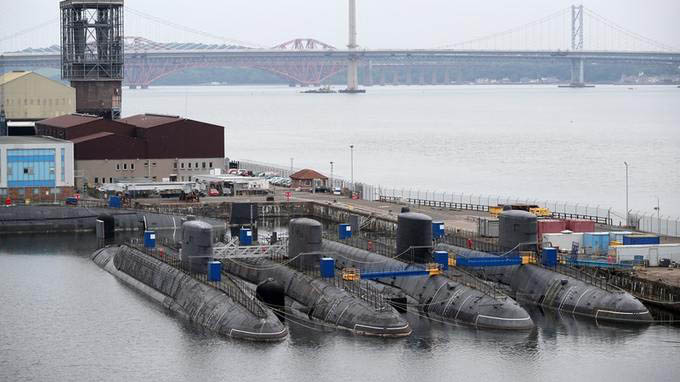
Government and industry will invest £760mn towards critical skills and infrastructure.
Ft.com Sylvia Pfeifer in London, 24 Mar 24
The UK government will launch a “national endeavour” to reinforce the country’s nuclear deterrent, including a promise to invest more than £760mn with industry over the next six years into critical skills and infrastructure.
Rishi Sunak, the prime minister, will on Monday also announce a separate £200mn investment into a “transformation fund” for Barrow-in-Furness, the Cumbrian town where Britain’s nuclear submarines are built by BAE Systems for the Royal Navy. Barrow has suffered from health inequalities, poor housing and some of the most deprived neighbourhoods in the country despite multiple attempts at lasting regeneration.
The investments come as the government prepares to set out how it plans to sustain and modernise the UK’s nuclear deterrent in a new Defence Command Paper. It follows concerns that ageing infrastructure and a lack of investment were undermining the effectiveness of the deterrent, a cornerstone of Britain’s defence posture.
Ministers were forced last month to declare that the deterrent remained “safe, secure and effective” after a nuclear missile test failed when the Trident weapon crashed into the sea near the submarine that fired it. Adding to the embarrassment, defence secretary Grant Shapps was on board HMS Vanguard to witness the test launch which took place in January.
The Defence Command Paper will detail the government’s plans to bring new Dreadnought-class submarines into service in the early 2030s. The Dreadnoughts are due to replace the current Vanguard-class vessels which were commissioned into service in the mid-1990s.
“Safeguarding the future of our nuclear deterrent and nuclear energy industry is a critical national endeavour,” Sunak will say on a visit to Barrow on Monday. “In a more dangerous and contested world, the UK’s continuous at-sea nuclear deterrent is more vital than ever.
And nuclear delivers cheaper, cleaner homegrown energy for consumers.” Investments into Britain’s nuclear capabilities and skills — both defence and civil — are seen as vital if the government is to build a new fleet of atomic power stations to bolster its energy security, as well as deliver on the new Dreadnought programme.
The government is also committed to building a new generation of attack submarines under the trilateral Aukus pact with the US and Australia……………………… more https://www.ft.com/content/a276c351-7e48-4662-a9fe-27363ac24a2b
PATRICK LAWRENCE: Authorized Atrocities

the true rupture lies with those in the West who are sucked into Israel’s utter immorality
Israel’s lawlessness has a history that those in the West share with the apartheid state.
By Patrick Lawrence, Consortium News , 20 Mar 24
It is remarked often enough, including in this space, that Israel’s savagery in its determination to exterminate the Palestinians of Gaza — and we had better brace for what is next on the West Bank of the Jordan — marks a turn for all of humanity.
In its descent into depravity the Zionist state drags the West altogether down with it.
This is true, certainly, but we must put Israel’s criminal conduct, which warrants another Nuremberg trial at this point, in its proper context.
When we do, we find that Israel’s lawlessness has a history, an etymology, and if there is a road to Western salvation it must start with a recognition of a past that those in the West share with the apartheid state.
We can say Israel’s crimes against Gaza’s 2.3 million children, women, and men are unspeakable, in other words, but this would not be right. They are altogether speakable, and it behooves us now to speak of them if we are to grasp where responsibility for this stain upon the human story truly lies.
Pankaj Mishra has just published a thorough and thoroughly remarkable piece on these matters in the London Review of Books.
The Indian author, essayist, and columnist takes up many things in “The Shoah After Gaza,” chiefly the extent to which Zionists have exhausted “the culture of conspicuous Holocaust consumption” — excellent phrase — in defense of a nation that, to quote Primo Levi, “was a mistake in historical terms.”
Here is a passage in Mishra’s piece that is to our present point:
“Israel today is dynamiting the edifice of global norms built after 1945, which has been tottering since the catastrophic and still unpunished war on terror and Vladimir Putin’s revanchist war in Ukraine. The profound rupture we feel today between the past and the present is a rupture in the moral history of the world since the ground zero of 1945 — the history in which the Shoah has been for many years the central event and universal reference.”……………………………………………………………………………….
I confine myself to the postwar decades to allow us to take a good, clear look at that “edifice of global norms” of which Mishra writes.
When we do, we find the West has licensed the Israelis. They bear a pre-authorization by way of many precedents. There is one for more or less every shameful act the Israelis perpetrate against the Palestinian population — this in the West Bank as well as Gaza.
And so we discover — or remind ourselves, depending on how attentive we have been to events — that the post–1945 edifice has looked from the start roughly as it looks now. Israel is at bottom an outcome, not the prime cause of anything.
Insidious Mythology
Certainly the grotesque spectacle of mass murder and wholesale destruction we witness daily has marked a rupture, to stay with Mishra’s term. But to assert that this rupture lies in Israel’s conduct is to sustain an insidious mythology of innocence for the West.
No, the true rupture lies with those in the West who are sucked into Israel’s utter immorality and now come face-to-face with their amoral indifference or, for the best of them, discover the extent of their powerlessness despite their authentic efforts.
As to Israel, I am with Primo Levi as Mishra quotes him. “The Jewish state” had already proven a mistake when he made his much-disputed remark in 1985.
The truth of it has since been demonstrated a hundred times over. Israel has proven a failed experiment, incapable of conducting itself as a legitimate nation-state.
But whose mistake is Israel? It was the West, Britain in the lead, that created Israel by caving to the Zionists at the expense of indigenous Palestinians. This is the reality of power that should weigh most heavily on our shoulders. Israel ‘R’ us.
Britain’s abandonment of the 1920 Mandate brings us to one of the deeper characteristics of our time, our postwar edifice. This is the ever more complete disregard of those in power for the principles, standards and broadly accepted ethics that give form and coherence to a stable civilization and keep its public space clean and well lit.
In our crumbling edifice, everything is done according to its value as an expedient to a desired outcome. This, too, is a kind of depravity. And it is this depravity that produces the depravity we watch as we watch Israel’s effort to destroy an entire people. https://consortiumnews.com/2024/03/20/patrick-lawrence-authorized-atrocities/
A special (nuclear) relationship

Recent US policies have pursued “usable” nukes, for deployment in an increasing range of scenarios, with a bottomless pit of funding available for nuclear modernisation. The time has come to really vigorously oppose this Agreement.
It’s just not possible for the UK to have an independent foreign policy, or defence and security policies, if it remains attached at the hip to the US nuclear programme.
By Kate Hudson https://beyondnuclearinternational.org/2024/03/24/a-special-nuclear-relationship/
A little known US-UK nuclear weapons agreement is up for renewal. It needs to end instead.
The “special relationship” is a longstanding refrain in British politics, used to justify so much that’s bad in UK foreign policy choices.
I recall in 2002 when Tony Blair agreed Britain had to pay a “blood price” to secure its special relationship with the US. We all know how that ended up.
But it wasn’t Blair who paid the blood price – it was 179 British service personnel, killed in an illegal war, and hundreds of thousands of Iraqis, and countless more injured, displaced and traumatised.
Much that feeds war can be notched up to the US/UK special relationship, but it goes far beyond providing diplomatic and military cover and assistance to US enterprises.
That relationship is also responsible for the development of the UK’s nuclear arsenal and its continued possession of these weapons of mass destruction.
The special nuclear relationship is facilitated by the US-UK Mutual Defence Agreement (MDA) – the world’s most extensive nuclear sharing agreement.
Even though it comes up for renewal in parliament every ten years, few seem to know of its existence.
Neither do many know the extent to which it makes us dependent on the US – or indeed that it underpins the wider relationship between the US and UK.
Nuclear weapons
Its full name is the “Agreement between the UK and the USA for cooperation in the Uses of Atomic Energy for Mutual Defence Purposes”.
The agreement initially enabled both countries to exchange classified information to develop their respective nuclear weapon systems.
But at the start, the MDA prohibited the transfer of nuclear weapons. However, an amendment in 1959 allowed for the transfer of nuclear materials and equipment between both countries up to a certain deadline.
This amendment is extended through a renewal of the treaty every ten years, most recently in 2014 without any parliamentary debate or vote.
The British public and parliamentarians initially found out about that extension and ratification when President Obama informed the US Congress. The next renewal is due in parliament later this year, and we are determined that this time it will not go unchallenged.
Renewing such agreements on the nod, without transparency or accountability is never a good thing. When it ties us so tightly to nuclear cooperation with the White House, at a time of increasing nuclear risk, this is an even greater cause for concern.
Usable nukes
Recent US policies have pursued “usable” nukes, for deployment in an increasing range of scenarios, with a bottomless pit of funding available for nuclear modernisation. The time has come to really vigorously oppose this Agreement.
It also puts us at odds with our commitments under the international Non-Proliferation Treaty, which seeks to stem the spread of nuclear technology.
The relationship and activities which are enshrined by the MDA confirms an indefinite commitment by the US and UK to collaborate on nuclear weapons technology and violates both countries’ obligations as signatories to the NPT.
The NPT states that countries should undertake “to pursue negotiations in good faith on effective measures relating to… nuclear disarmament”. Rather than working together to get rid of their nuclear weapons, the UK and US are collaborating to further advance their respective nuclear arsenals.
Indeed, a 2004 legal advice paper by Rabinder Singh QC and Professor Christine Chinkin concluded that it is “strongly arguable that the renewal of the Mutual Defence Agreement is in breach of the nuclear Non-Proliferation Treaty”.
This was so since it implies “continuation and indeed enhancement of the nuclear programme, not progress towards its discontinuation”.
Independent foreign policy
It’s just not possible for the UK to have an independent foreign policy, or defence and security policies, if it remains attached at the hip to the US nuclear programme.
The UK government’s claim that its submarine-based Trident nuclear weapons system is independent is false. It is technically and politically dependent on the US, largely due to the MDA.
Due to the MDA, the UK relies on the US for many aspects of Trident. The UK’s nuclear warhead is a copy of the US one, with some components directly bought from the US.
With the UK’s warheads expected to be non-operational by the late 2030s, a decision on their replacement will be intrinsically linked to the work taking place as part of the MDA.
The UK leases from the US the Trident II D5 missiles it uses and British submarines must regularly visit the US base in Kings Bay, Georgia, for the maintenance and replacement of these missiles.
By having such direct involvement in Britain’s nuclear weapons technology, the US exercises significant leverage over the UK’s foreign and defence policy.
Even the most establishment characters must now be able to see that unquestioning allegiance to the US is out of the question.
So with the MDA coming up for renewal again, now is the time to start asking the questions, raising the protest, and making the case for independence.
It’s time for the special nuclear relationship to end. CND will be ensuring that the issue is raised vigorously within parliament, and calling on all our supporters to lobby their elected representatives to that effect.
Kate Hudson is General Secretary of the Campaign for Nuclear Disarmament in the UK
‘Everyone in the World Needs to See This’: Footage Shows IDF Drone Killing Gazans
“There is no way they could have been considered combatants,” said one writer and analyst. “This is unreal.”
JESSICA CORBETT, Mar 21, 2024, https://www.commondreams.org/news/palestinians-killed-by-israel
Adding to the mountain of evidence that Israel is engaged in a genocidal war on the Gaza Strip, Al Jazeera on Thursday aired footage of what the news outlet reported was an Israeli drone targeting four Palestinians in Khan Younis last month.
Those killed by the unmanned aerial vehicle in the rubble of the southern Gaza city appear to be unarmed teenagers or young men. According to a translation of the coverage, they were not identified in the reporting.
While Al Jazeera deemed footage “too graphic” to be included on its daily live blog covering the war, a clip of it quickly spread on social media, where critics of the Israel Defense Forces operation expressed outrage.
“OUTRAGEOUS even after months of outrages,” declared Palestinian American political analyst Yousef Munayyer. “This video shows an Israeli military drone literally stalking four unarmed civilians posing no threat and eliminating them one after the other!!!”
Tariq Kenney-Shawa, Al-Shabaka’s U.S. policy fellow, said: “This is among the worst footage I’ve seen. Not only were these boys clearly unarmed and present no threat whatsoever, but they were struck multiple times even after stumbling/crawling away. There is no way they could have been considered combatants. This is unreal.”
Note: The following video contains graphic images. [on original]
Assal Rad, an author with a Ph.D. in Middle East history, said: “Have we ever seen so many war crimes take place right before our eyes? Any country still providing weapons and aid to Israel is complicit in these crimes.”
Exiled American whistleblower Edward Snowden asserted that “everyone in the world needs to see this. Note that this footage permits no room for ‘it was a mistake,’ showing repeated, specifically targeted strikes on the unarmed and even wounded.”
“The sort of behavior the ICJ explicitly forbid in the genocide ruling against Israel,” added Snowden, referencing the International Court of Justice’s preliminary order in January for an ongoing case led by South Africa.
Since the ruling, rights groups around the world have accused Israel of ignoring the ICJ order by continuing to bomb and starve people across Gaza. The mounting casualties—at least 31,988 killed and 74,188 wounded—have elevated demands for the U.S. government to end arms transfers to Israel.
The United States gives its Middle East ally $3.8 billion in annual military aid and since the Israeli assault was launched in retaliation for a Hamas-led attack on October 7, the Biden administration has sought $14.3 billion more while bypassing Congress to send more weapons. U.S. President Joe Biden, Secretary of State Antony Blinken, and Secretary of Defense Lloyd Austin face a genocide complicity case in federal court.
While the Biden administration has repeatedly vetoed and opposed cease-fire resolutions at the United Nations Security Council and General Assembly, Nate Evans, a spokesperson for Linda Thomas-Greenfield, the U.S. ambassador to the U.N., confirmed Thursday that the United States plans to unveil a new one on Friday.
The resolution will “unequivocally support ongoing diplomatic efforts aimed at securing an immediate cease-fire in Gaza as part of a hostage deal, which would get hostages released and help enable a surge in humanitarian aid,” Evans told Al Jazeera. “This resolution is an opportunity for the council to speak with one voice to support the diplomacy happening on the ground and pressure Hamas to accept the deal on the table.”
Blinken said Thursday that “there’s a clear consensus around a number of shared priorities. First, the need for an immediate, sustained cease-fire, with the release of hostages. That would create space to surge more humanitarian assistance, to relieve the suffering of many people, and to build something more enduring.”
U.S. Troops Are One Mile From The Chinese Border
the most important news, March 21, 2024 [ The original has several substantial quotations from news media]
The U.S. cannot afford a war with China. The size of our military has been shrinking, and our resources are stretched way too thin. Today, the U.S. has military bases in 80 different countries, and we have troops stationed in 178 different countries. That is insane. No empire in the entire history of humanity has had forces spread all over the planet like this. Our ammunition levels are extremely low due to major conflicts in the Middle East and Ukraine, and every war game that our leaders have conducted has shown us losing a war to protect Taiwan. So we should be trying to avoid sparking a war with China, because we are holding a losing hand.
But our politicians seem determined to provoke one anyway. It is being reported that officials in Taiwan have confirmed that U.S. forces are now permanently stationed “on its islands in the Taiwan Strait”…
Taiwan’s main island is approximately 100 miles from China, but in some places the Kinmen islands and China are “barely more than a mile apart”…
What are our leaders thinking?
This doesn’t make war less likely.
It makes war more likely.
On Wednesday, China sent 32 warplanes toward Taiwan in a 24 hour period…
The Chinese do this sort of thing when they are upset.
And right now they are very, very upset.
And China has been feverishly preparing for the coming war…
When war with China finally erupts, will we be able to handle it?
Of course not.
Our forces are scattered all over the planet, and so many of our resources have already been poured into the war in Ukraine.
Even though there have been efforts to ramp up ammunition production in the U.S., it is being reported that “Russia is producing nearly three times as many artillery munitions as the United States and Europe combined”…
No matter how you feel about the war, that is just embarrassing.
One of the reasons why we won World War II was because the U.S. could simply outproduce everyone else by a wide margin.
But now we just look pathetic.
French President Emmanuel Macron and other western leaders have suggested that NATO troops should be sent into Ukraine if that is what is necessary to keep the Russians from winning.
If that actually happens, U.S. boys and girls will inevitably be sent to die in the trenches of eastern Ukraine too.
In anticipation of a wider war, the Russians are conducting another round of mobilization.
In fact, Russian Defense Minister Sergei Shoigu has just announced “the creation of 2 new ground armies, with 16 new brigades & 14 new divisions”.
Meanwhile, Israeli officials continue to insist that a major ground operation will happen in Rafah no matter what the Biden administration thinks about such a move…
When the IDF goes into Rafah, that could cause the entire region to erupt.
And so U.S. forces may be called on to intervene in the Middle East as well.
Spreading your resources way too thin is a sure way to lose.
Unfortunately, our politicians don’t seem to understand this, and their very foolish decisions will soon lead to absolutely disastrous consequences.
Michael’s new book entitled “Chaos” is available in paperback and for the Kindle on Amazon.com, and you can check out his new Substack newsletter right here. https://themostimportantnews.com/archives/u-s-troops-are-one-mile-from-the-chinese-border
‘We are the masters of the house’: Israeli channels air snuff videos featuring systematic torture of Palestinians
It’s hard to imagine the depths to which Israeli society has sunk. The official tells the Channel 13 reporter that “the feeling is one of pride.”
Israeli TV channels aired a number of reports showing the torture and humiliation of Palestinians in Israeli prisons. The videos are consumed by the Israeli public as entertainment, revealing the sadism of Israeli society.
BY JONATHAN OFIR , https://mondoweiss.net/2024/03/we-are-the-masters-of-the-house-israeli-channels-air-snuff-videos-featuring-systematic-torture-of-palestinians/
Over the past month, mainstream Israeli television channels have aired what can only be described as snuff films. They depict the systematic torture of Palestinians from Gaza in Israeli jails. Such videos have aired on at least three occasions — twice on Channel 14, and once on the public broadcaster, Channel 13. While Channel 14 is considered right-wing, so is about two-thirds of the Israeli public, and the more “mainstream” Channel 13 has shown no qualms about airing similar footage.
The broadcasts follow prison officials into detention centers to document the mistreatment of prisoners, which seems to be something that the officials — and apparently the viewers — find satisfying rather than revolting. The airing of these snuff films is a demonstration of societal sadism.
As Yumna Patel has recently reported, several rights groups have sounded the alarm over the widespread and systemic abuse that Palestinian prisoners face at the hands of the Israeli authorities. These groups’ calls have been unintentionally buttressed by Israeli soldiers’ unapologetic videos of themselves torturing or demeaning Palestinian detainees, which they boastfully post on social media. Now, it seems that the phenomenon has expanded to mainstream Israeli television.
The two aforementioned reports on Channel 14 (threads with subtitles can be found here and here) contained footage of actual interrogation sessions during which torture was used. The Channel 13 report did not, but it exposed some of the worst prison conditions to be broadcast to the public. These conditions include forcing prisoners to live in inhumane conditions and subjecting them to torture and harassment. Here’s the 11-minute video with translated subtitles.
‘The feeling is one of pride’
“Here, we see the cells in which the Nukhba terrorists are held,” the narrator says.
The “Nukhba” refers to elite Hamas-led fighters who carried out the October 7 attack. In the cell, viewers notice metal bunkbeds without mattresses, and instead of a toilet, there is just a hole in the floor. The room is almost completely dark throughout the day, and prisoners have their hands and legs chained together.
We hear attack dogs barking constantly as prisoners are made to kneel while bound and blindfolded, their heads touching the floor.
“This is how it should be,” a guard says. “This is how a Nukhba prisoner should be…what happened on October 7 will never return.”
In another scene, a guard shouts at prisoners as dogs continue to bark incessantly. “Heads down! Heads on the floor!” he yells.
“There are many prisoners here that I personally saw at the [October 7] events,” a prison official says, taking pride in humiliating them. “The difference is that this time, he is afraid, shaking, with his head on the floor…no Allahu Akbar, nothing. You won’t hear a squeak from him.”
“They have no mattresses,” says a warden shift commander. “They have nothing…we control them 100% — their food, their shackling, their sleep…[we] show them we are the masters of the house.” Even without knowing the background to that phrase, to hear him say it is chilling.
“Masters of the house” was the election slogan of Itamar Ben-Gvir, the Jewish Power leader and current Minister of National Security. Ben-Gvir declared war on Palestinian prisoners long before October 7, and this has included shutting down bakeries that supply bread to prisoners — described by Ben-Gvir as an “indulgence” — and drastically limiting prisoners’ water use. So now it’s become much worse.
While one is tempted to believe that all prisoners here are “Nukhba” members, it turns out that many of them aren’t even suspected of that. Rather, they were rounded up in Gaza after October 7, during mass arrests in which hundreds of Gazan men were stripped and paraded in a most sadistic demonstration of power. The mass arrests also included hundreds of women, including pregnant women detained with their babies. Israeli security officials told Haaretz that by their own estimate, “only 10 to 15 percent of the hundreds of the semi-naked and bound Gazan men arrested in the Strip during the recent days are Hamas members or those who identified with the organization.”
Back to the Channel 13 coverage, viewers can hear the nonstop blasting of the Zionist anthem, Am Israel Hai (“the people of Israel live”).
“The prison authorities claim that it is meant to boost the morale of the staff,” the narrator declares. “But it is clear that this is another part of the psychological warfare against the prisoners.”
Torture, in other words.
It’s hard to imagine the depths to which Israeli society has sunk. The official tells the Channel 13 reporter that “the feeling is one of pride.”
The reason such sadism has become formalized as a matter of policy is because this is what the Israeli public demands. The Israeli Democracy Institute released a survey last week showing that two-thirds of Jewish Israelis oppose “the transfer of humanitarian aid to Gaza residents at this time,” even if “via international bodies that are not linked to Hamas or to UNRWA.” For right-wing voters, the opposition to aid jumps from 68% to 80%.
This is not Israel’s Abu Ghraib moment, because when Abu Ghraib was revealed, most Americans were revolted. Israeli society, on the other hand, is thirsting for genocide. No wonder they consume such videos as entertainment on mainstream TV.
Thanks to Tali Shapiro, B.M.@ireallyhatyou, Hilel Biton-Rosen, and Dave Reed.
The International Atomic Energy Agency (IAEA) Cannot Both Police Proliferation and Promote Nuclear Power

“We are playing with fire, and something very, very catastrophic could take place,” lamented Grossi during a September 2022 UN Security Council briefing, referring to the six Zaporizhzhia reactors in Ukraine, the closest ones to the fighting.
And yet, Grossi has also stated: “It’s very simple, the problem in Ukraine and in Russia is they are at war. The problem is not nuclear energy”. But nuclear energy is very much the problem. Wind farms and solar arrays would present no such dangers under similar circumstances.
Counter Punch, BY LINDA PENTZ GUNTER, 2o Mar 24, https://www.counterpunch.org/2024/03/21/the-iaea-cannot-both-police-proliferation-and-promote-nuclear-power/
The UN agency is sounding the alarm about Ukraine’s reactors and Iran’s nuclear intentions, while at the same time promoting the very technology that delivers these risks
On March 21 in Brussels, Belgium, the International Atomic Energy Agency (IAEA) will host what it is billing as the “First ever Nuclear Energy Summit.” The event follows a pledge made by 22 countries last December during the COP28 climate summit in Dubai to triple global nuclear capacity by 2050.
The Brussels summit, co-hosted by the IAEA and the Belgian government, and featuring prominent officials from the US Department of Energy, will bring together world leaders and other officials to “highlight the role of nuclear energy in addressing the global challenges to reduce the use of fossil fuels, enhance energy security and boost economic development,” according to the event’s website.
Ignoring for a moment that tripling anything by 2050 will be far too late to address the climate crisis now upon us, the Brussels summit is troubling as it marks a notable ramping up of aggressive nuclear power marketing by the IAEA, an agency of the United Nations that is mandated “to deter the spread of nuclear weapons”.
This goal is inherently thwarted by the promotion of civil nuclear energy, which effectively hands over the keys to the nuclear weapons castle by affording non-nuclear weapons countries the technology, materials, know-how and personnel to develop nuclear weapons. History has already demonstrated this with the nuclear weapons programs of India, Pakistan, Israel and North Korea, all of which were acquired via the civil nuclear route.
This is precisely the conundrum with Iran, a signatory to the nuclear Non-Proliferation Treaty that affords non-nuclear weapons countries the “inalienable right” to develop a civil nuclear power program. Iran has long claimed to be doing precisely that and yet the IAEA’s director general, Rafael Grossi, sounded the alarm in late February when he noted that Iran appears to have enriched uranium “well beyond the needs for commercial nuclear use.” This should not be a surprise.
Another contradiction lies in the IAEA’s stated mission to work for “the safe, secure and peaceful application of nuclear science and technology”. To achieve this, the agency eagerly advocates for the global expansion of nuclear power while at the same time worrying about the extreme peril of Ukraine’s 15 civil reactors embroiled in the current Russian war in that country.
“We are playing with fire, and something very, very catastrophic could take place,” lamented Grossi during a September 2022 UN Security Council briefing, referring to the six Zaporizhzhia reactors in Ukraine, the closest ones to the fighting.
In late February this year Grossi warned again that an “extremely vulnerable off-site power situation continues to pose significant safety and security challenges for this major nuclear facility”, calling the safety and security situation at the Zaporizhzhia plant “precarious”.
And yet, Grossi has also stated: “It’s very simple, the problem in Ukraine and in Russia is they are at war. The problem is not nuclear energy”. But nuclear energy is very much the problem. Wind farms and solar arrays would present no such dangers under similar circumstances.
At COP28, Grossi trumpeted that “global net zero carbon emissions can only be reached by 2050 with swift, sustained and significant investment in nuclear energy”, entirely ignoring the faster, cheaper and safer contribution renewable energy is already making to that end.
In the same statement Grossi described nuclear power as “resilient and robust” when it is manifestly neither. Nuclear energy’s share of global commercial gross electricity generation hit a four-decade record low in 2022 according to the 2023 World Nuclear Industry Status Report, a downward trend that is unlikely to change.
The IAEA’s triple nuclear energy plan is both a massive over-reach and a reckless and unattainable diversion, given that no new nuclear construction has ever come anywhere close to this pace, even with known and familiar reactor designs. In fact, nuclear power plants have been taking even longer to build in recent years, at even higher cost.
The proposed “new” smaller reactors — not new at all and rejected for decades as too uneconomical — are designs on paper only that have zero chance of delivery in time and in enough numbers to make any impact on the climate crisis.
The IAEA cannot be both nuclear policeman and promoter. In pushing nuclear power across the globe, the IAEA is complicit in a climate crime that wastes time and money on the needless expansion of expensive, slow and dangerous nuclear power. This takes away vital resources from renewable energy and energy efficiency that would rapidly, safely and affordably address the climate crisis, none of which nuclear power can achieve.
Linda Pentz Gunter is the editor and curator of BeyondNuclearInternational.org and the international specialist at Beyond Nuclear.
Canada to stop arms sales to Israel – Foreign Minister
https://www.rt.com/news/594529-canada-ceases-exports-israel/ 20 Mar 24
The parliament has passed a resolution calling for an end to weapons deliveries as the war in Gaza continues.
Canada will halt future arms sales to Israel, Foreign Minister Melanie Joly told the Toronto Star on Tuesday.
The statement came after the parliament passed a resolution on the matter amid a growing push among MPs to condemn Israel’s military operation against the Palestinian militant group Hamas in Gaza, which has entered its sixth month.
Despite the non-binding nature of the document, Joly confirmed that the government will cease the transfer of weapons to Israel. “It is a real thing,” she said, answering a reporter’s question.
The parliamentary motion was part of a larger vote originally put forward by the minority left-leaning New Democrats (NDP), who pitched it as a way to revive peace talks and support the Palestinians. The resolution calling for a ceasefire in Gaza was passed on Monday after MPs agreed to tone down its language and include a demand that Hamas “must lay down its arms.”
The document calls on Ottawa to “cease the further authorization and transfer of arms exports to Israel,” the CBC reported on Tuesday. The original text demanded the suspension “of all trade in military goods and technology with Israel.”
The resolution also calls for “the establishment of the State of Palestine as part of a negotiated two-state solution.”
Israeli Foreign Minister Israel Katz condemned Joly’s remarks on X (formerly Twitter), arguing that the refusal to sell weapons “undermines Israel’s right to self-defense against Hamas terrorists.” He added that “history will judge Canada’s current action harshly.”
Hamas launched a series of raids on Israel on October 7, killing more than 1,100 people and taking more than 200 hostages. Israel’s subsequent military operation in Gaza has killed nearly 32,000 Palestinians, according to the local health authorities.
Despite the mounting international calls for a lasting ceasefire, Israeli Prime Minister Benjamin Netanyahu reiterated on Tuesday that the Israel Defense Forces will continue their advance on Gaza’s southernmost city of Rafah, which he described as a stronghold of the militants. “We do not see a way to eliminate Hamas militarily without destroying these remaining battalions,” he told legislators.
NATO Builds Largest Europe Base Near Black Sea
NewsWeek, Mar 18, 2024
Romania has now begun construction of what will eventually be the NATO alliance’s largest European military base, as the transatlantic bloc seeks to bolster its capabilities in the Black Sea region with an eye on Russian activity there.
The $2.7 billion project will expand the Romanian Air Force 57th Air Base Mihail Kogălniceanu, which is located close to the Black Sea port city of Constanța. The new facility will have a perimeter of almost 20 miles, cover around 11 square miles, and will be home to some 10,000 NATO personnel and their families.
Romania has long been a key hub for NATO operations in the Black Sea region. Thousands of U.S. troops have cycled through the country on training and security missions since the beginning of Russia’s full-scale war on Ukraine. American combat and surveillance aircraft regularly operate from there as part of NATO’s policing operations………………………….
NATO began building its network of four Enhanced Forward Presence multinational battlegroups in the Baltic region following Russia’s annexation of Crimea in 2014.
Comment: 2014 was the year of the US coup in Ukraine.
After the start of the full-scale invasion in February 2022, the alliance reinforced those missions and established four additional battlegroups in Bulgaria, Hungary, Romania and Slovakia.
France is the framework nation for the Romanian battlegroup, with Belgium, Luxembourg, North Macedonia, Poland, Portugal, and the U.S. all contributing forces.
Bucharest is looking towards closer cooperation with its NATO allies — and the U.S. in particular — as the Black Sea becomes an increasingly fraught theater of confrontation between Ukraine and Russia, as well as between Moscow and its Western rivals.
“Romania has already established itself as an anchor of the eastern flank of NATO and the EU,” Prime Minister Marcel Ciolacu told Newsweek in June. https://www.newsweek.com/nato-builds-largest-europe-base-black-sea-romania-1880210
US Air Force tests very expensive third-stage rocket motor for next nuclear missile
The U.S. Air Force and two main contractors on the LGM-35A Sentinel intercontinental ballistic missile program on Saturday tested the solid-rocket motor that will power the nuclear weapon’s third stage.
The test, which also involved Northrop Grumman and Aerojet Rocketdyne, took place in a closed chamber at the Arnold Engineering Development Complex in Tennessee. It followed static fire tests of the first and second stages’ rocket motors in March 2023 and January 2024, respectively.
This third stage that was tested is the smallest of Sentinel’s three-stage propulsion system. The Air Force did not offer further details about the test, nor did it identify whether the event was successful.
“This test is the latest in our ground and flight test program and is designed to help us refine Sentinel’s air vehicle design,” Maj. Gen. John Newberry, commander of the Air Force Nuclear Weapons Center and the service’s program executive officer for strategic systems. “It demonstrates the progress the Air Force is making on modernizing our nation’s strategic land-based nuclear deterrent.”
The Sentinel program is intended to replace the aging LGM-30G Minuteman III ICBM, which has been a key part of the United States’ nuclear triad since the Cold War. The Air Force now has roughly 400 Minuteman III weapons in silos spread out across Wyoming, Montana, North Dakota, Colorado and Nebraska…………………………………………..
The price tag for the Sentinel program has spiked enough to trigger a cost overrun process known as a Nunn-McCurdy breach. Top Air Force leaders have pinned the bulk of the cost growth on its highly complex command and launch segment, which involves securing real estate from hundreds of landowners across the Midwest, building more than 400 launch facilities and 7,500 miles of utility corridors, and laying thousands of miles of fiber-optic networks…………………https://www.defensenews.com/industry/techwatch/2024/03/20/us-air-force-tests-third-stage-rocket-motor-for-next-nuclear-missile/—
Nuclear Deterrence At Sea – France Begins Work On ‘Cutting Edge’ Nuke-Powered Ballistic Missile Submarine
By EurAsian Times Desk -March 21, 2024
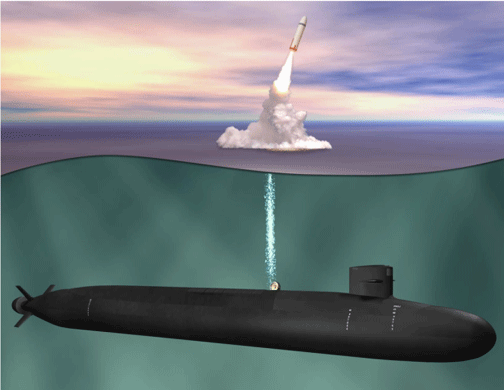
The steel cutting of the first third-generation French SSBN took place at Naval Group’s shipyard in Cherbourg on March 20th. This symbolic gesture marks the start of hull production for these submarines, which will ensure France’s nuclear deterrence posture until the end of the 21st century.
Among the most complex systems, SSBNs are the cornerstones of France’s strategic oceanic force (FOST) and ensure that nuclear deterrence remains at sea.
Launched in February 2021, the SNLE 3G program for the French Navy brings together the armed forces, the French defense procurement agency (Direction Générale de l’Armement – DGA), which is responsible for overall project management, the French Atomic Energy Commission (CEA), for the nuclear boilers, and Naval Group, which is responsible for overall project management of the submarines, in association with TechnicAtome for the nuclear boilers………………………………………………………………………………………………………………………….. https://www.eurasiantimes.com/nuclear-deterrence-at-sea-france-starts-constructing/
Nuclear weapons: France to restart tritium production with EDF
By Paul Messad | Euractiv France, 20 Mar 24
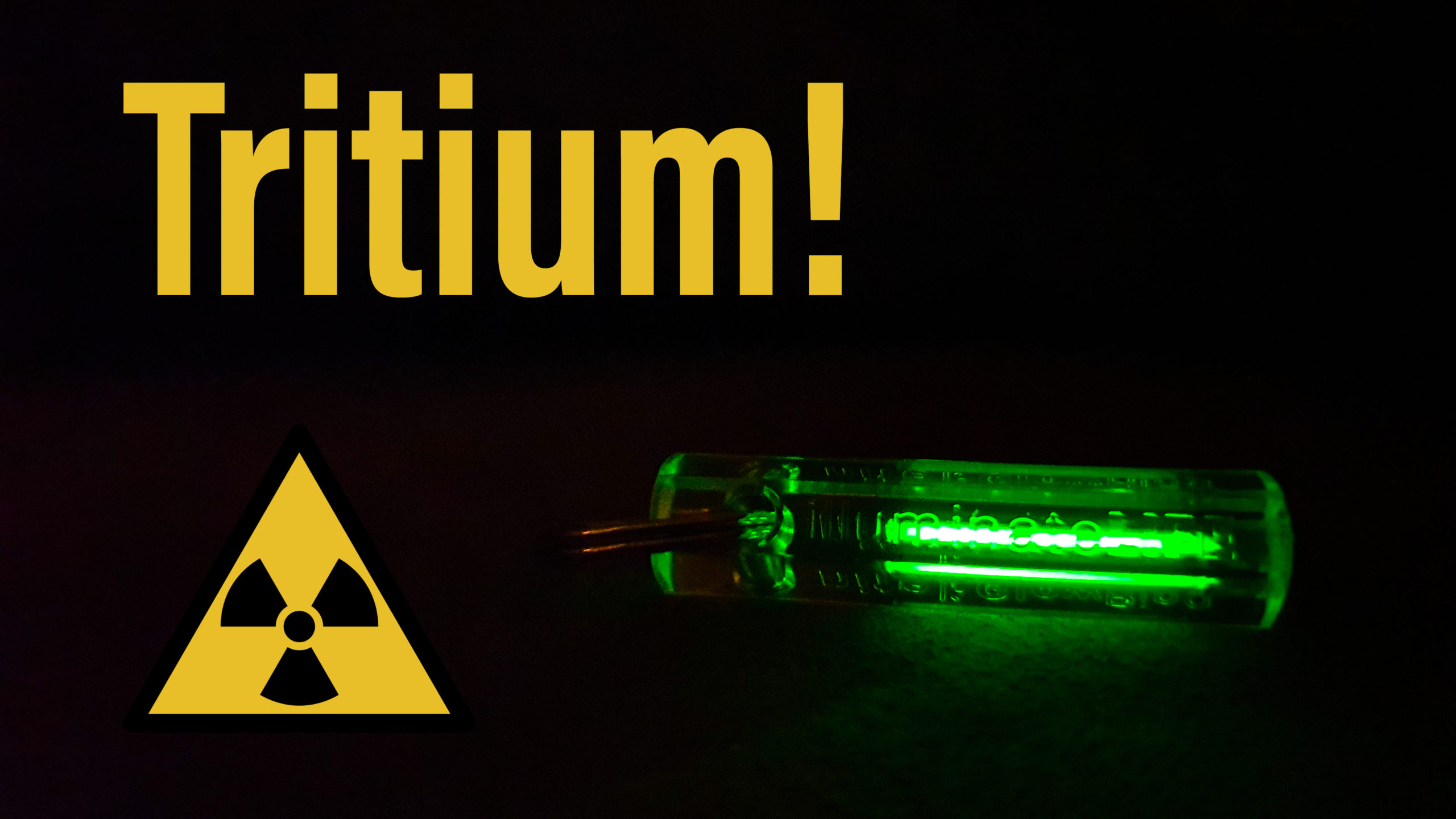
France’s Minister for the Armed Forces, Sébastien Lecornu, announced on Monday (18 March) a new production cycle for tritium, which is essential for the manufacture of nuclear weapons, using state utility EDF’s two civilian reactors.
Lecornu visited the Civaux nuclear power plant in south-west France, which will produce the tritium for the military.
The tritium will be manufactured on the premises of the Commissariat à l’énergie atomique (CEA), the French nuclear scientific and industrial research establishment.
To manufacture tritium, it is necessary to treat lithium-containing material with radiation, by exposing it to the neutron fluxes present inside the core of a reactor.
Tritium, whose gaseous form is practically non-existent, naturally, can be extracted from the irradiated material.
This hydrogen isotope (1 proton, 2 neutrons, and hydrogen-3) is particularly vulnerable to disintegrating spontaneously. As a result, any stockpile is halved in 12 years and disappears almost entirely after a century.
But it is vital for the production of nuclear weapons, particularly hydrogen bombs and neutron bombs, for which it is the main explosive.
The French army and EDF have come up with this “collaboration” to ensure the availability of sufficient stocks of tritium “as part of the continuity and credibility of France’s nuclear deterrent”, according to the annex to the press release.
According to the Federation of American Scientists, France currently has 290 active warheads, the fourth largest, after China with 500, the US with 3,700, and Russia with 4,400…………………………………………………….
Discussions between the French armed forces ministry and EDF on this subject have been underway for more than 25 years, in anticipation of the closure in 2009 of the two reactors intended solely for the production of tritium located in Marcoule, in south-east France, after more than 50 years in operation.
The parties finally selected Civaux, one of France’s most powerful and newest nuclear power stations. It was selected because it was capable of operating for a very long time, Dutheil said……………………
despite the reassurances of the various parties involved, any signed agreement between the French government, CEA, and EDF, will not specify a date – to define the legal and contractual scope of the activities, a press release states.
Dutheil stated, that later this year EDF will submit a dossier to the Autorité de sûreté nucléaire, the French nuclear safety authority, which will examine the feasibility of the project.
As a result of this timetable, the first test irradiation of lithium will not take place until before 2025, when the plant’s reactors are scheduled to be shut down for maintenance.
[Edited by Rajnish Singh] https://www.euractiv.com/section/politics/news/nuclear-weapons-france-to-restart-tritium-production-with-edf/
Israel Will Steal 16% of Gaza’s Land By Establishing ‘Buffer Zone’
Israel is destroying homes and agricultural land to create the zone
by Dave DeCamp March 18, 2024 https://news.antiwar.com/2024/03/18/israel-will-steal-16-of-gazas-land-by-establishing-buffer-zone/
Israel’s plan to create a “buffer zone” inside Gaza along its border with Israel will take 16% of the Strip’s territory, The Wall Street Journal reported, citing an analysis of the operation by Adi Ben Nun, a Hebrew University geography professor.
Israel has begun the process of constructing the zone, which involves demolishing Palestinian homes and agricultural land that are in the way. The buffer will be about 1 kilometer (.6 miles) in width.
Israeli media reported in January that Israel had destroyed 1,100 of the 2,800 buildings in the border areas. In that same month, 21 Israeli soldiers were killed while working to demolish a building after a Hamas rocket detonated explosives IDF soldiers had planted.
The Israeli military insists it needs to create the buffer zone to prevent future October 7-style attacks. But the plan also advances Israel’s seizure of Gaza’s territory, and many ministers in the Israeli government favor re-establishing Jewish settlements in the Strip.
On top of the buffer zone on the border, Israel is also constructing a road that will cut the Gaza Strip in two. Israel claims that it doesn’t seek to occupy Gaza but wants to maintain open-ended security control of the Strip, which is not possible without some form of occupation.
The Biden administration claims it’s opposed to any Israeli plans that will shrink Gaza’s territory. But the US continues to provide Israel with unconditional military aid as it’s enacting a plan to steal 16% of Gaza.
The last stammering of Jewish fascism

In Israel, the Jewish democratic opposition organized anti-Zionist demonstrations, which were not very well attended. Speakers emphasized the betrayal of the Prime Minister, who used the shock of October 7 not to save the hostages, but to realize his colonial dream.
Washington then decided to radically change its policy. Until then, it had considered that it could not afford to let Israel lose. It had therefore supported its crime. Now, it could no longer afford to let the Jewish fascists win. It’s important to understand that Washington didn’t change its mind when it saw the suffering of the Gazans, nor because of a sudden outburst of anti-fascism, but because of the threats of the “revisionist Zionists”. Its positions are dictated exclusively by its desire to maintain its domination of the world. It could not contemplate another defeat for its Israeli allies, this time after those in Syria and Ukraine. But it could even less envisage losing to the “revisionist Zionists”.
Victoria Nuland’s dismissal demonstrates the Biden Administration’s desire to clean up its own house, while doing the same for Israel.
https://www.voltairenet.org/article220564.html VOLTAIRE NETWORK | PARIS (FRANCE) | 12 MARCH 2024, by Thierry Meyssan
Anyone acting in good faith understands that murdering 30,000 innocent people has nothing to do with eliminating Hamas. Operation Iron Glaive appears for what it is: a cover to realize the old dream pursued by Jewish fascists from Jabotinsky to Netanyahu: to expel the Arab population from Palestine. From then on, this mass crime, committed for the first time live on television, turned the world’s political chessboard upside down. Feeling threatened, the Jewish supremacists themselves threatened the United States. Anxious to remain masters of the “free world”, the United States is preparing to topple the Jewish supremacists.
The Biden administration watched with bated breath as Israel reacted to the attack by the Palestinian Resistance, including Hamas, known as the “Flood of Al-Aqsa” (October 7). Operation Iron Glaive began with a massive pounding of Gaza City on a scale unprecedented anywhere in the world, including the World Wars. From October 27 onwards, this was followed by ground intervention, looting and the torture of thousands of Gazan civilians. In five months, 37,534 civilians were killed or disappeared, including 13,430 children and 8,900 women, 364 medical personnel and 132 journalists. [1].
At first, Washington reacted by unwaveringly supporting “Israel’s right to defend itself”, threatening to veto any ceasefire request and supplying as many bombs as necessary for the widespread destruction of the Palestinian enclave. It was unthinkable, in its eyes, to suffer yet another defeat, after those in Syria and Ukraine. However, Americans were watching the horrors live on their cell phones. Many high-ranking State Department officials wrote and spoke of their shame at supporting this butchery. Petitions were circulated. Prominent figures, both Jewish and Muslim, resigned.
In the midst of a presidential election campaign, Joe Biden’s team could no longer stain its hands with blood. It therefore began to put pressure on the Israeli war cabinet to negotiate the release of the hostages and conclude a ceasefire. However, Benjamin Netanyahu’s coalition refused, playing on the trauma of its citizens to ensure that peace would only return once Hamas had been eradicated. Washington eventually realized that the events of October 7 were merely a pretext for Jabotinsky’s followers to do what they had always wanted to do: expel the Arabs from Palestine. He became more insistent, stressing that the Palestinians had a right to live, that the colonization of their land was illegal under international law, and that the Israeli-Palestinian question would be resolved by a “two-state solution” (and not by the binational state envisaged by Resolution 181 of 1947).
Revisionist Zionists” (i.e., followers of Jabotinsky [2]) responded by organizing the “Conference for the Victory of Israel” [3] on January 28, 2024. Headlining the event was Rabbi Uzi Sharbaf, sentenced in Israel to life imprisonment for his racist crimes against Arabs, but pardoned by his friends. Sharbaf did not hesitate to proclaim himself heir to the Lehi and Stern groups who fought against the Allies alongside duce Benito Mussolini.
The message was perfectly received in Washington and London: this tiny group intended to impose its will on the Anglo-Saxons and would not hesitate to attack them if they tried to prevent ethnic cleansing.
The White House immediately issued a ban on fundraising and transfers to them [4]. This ban was extended to all Western banks under the Foreign Account Tax Compliance Act (FATCA).
In addition, on February 8, President Joe Biden signed a Memorandum on the conditions of US arms transfers [5]. Israel has until March 25 to guarantee in writing that it will not violate either International Humanitarian Law (but not International Law itself) or Human Rights (in the sense of the US Constitution).
For their part, the parliaments of the Netherlands and the United Kingdom have begun debating the possibility of ceasing arms trading with Israel.
In Israel, the Jewish democratic opposition organized anti-Zionist demonstrations, which were not very well attended. Speakers emphasized the betrayal of the Prime Minister, who used the shock of October 7 not to save the hostages, but to realize his colonial dream.
The “revisionist Zionists” then launched a media offensive against the United Nations Relief and Works Agency for Palestine Refugees in the Near East (UNRWA). Since 1949, this UN agency has been providing education, food, healthcare and social services to 5.8 million stateless Palestinians in Palestine itself, as well as in Jordan, Lebanon and Syria. It has an annual budget of over $1 billion and employs over 30,000 people. Already in 2018, President Donald Trump had questioned the agency’s assistance to Palestinians and suspended US funding for it. His intention was to force the Palestinian factions back to the negotiating table. Five years on, the aim of the “revisionist Zionists” is very different. By attacking UNRWA, they intend to force Jordan, Lebanon and Syria to expel Palestinian refugees too. To this end, they accused 0.04% of its staff of having taken part in Operation Flood of Al-Aqsa, and blocked their bank accounts in Israel. UNRWA Director Philippe Lazzarini of Switzerland immediately suspended the 12 accused employees and ordered an internal investigation.
Of course, he never received the proof the Israelis claimed to have, but one donor after another, led by the United States and the European Union, suspended funding. Within days in Gaza, and weeks in Jordan, Lebanon and Syria, the United Nations aid system collapsed.
Continue readingUkraine’s losses ‘in the millions’ – retired Polish general
https://www.sott.net/article/489939-Ukraines-losses-in-the-millions-retired-Polish-general 20 Mar 24
Kiev does not have the resources or manpower to continue the fight against Russia, Rajmund Andrzejczak has said
Ukraine’s losses in the conflict with Russia should be counted “in the millions,” the former chief of the Polish General Staff, Rajmund Andrzejczak, has claimed. Kiev “is losing the war” and does not have the resources to sustain the fight against Moscow, he added.
In an interview with the Polsat broadcaster on Monday, the retired general described Ukraine’s battlefield situation as “very dramatic” and insisted that “there are no miracles in war.”
Ukrainian President Vladimir Zelensky’s decision to replace his top general, Valery Zaluzhny, with Aleksandr Syrsky has failed to make a significant difference as the same issues remain for Kiev’s new commander-in-chief, Andrzejczak added.
According to the retired general, Ukraine is suffering deficits in equipment and manpower, with losses taking their toll on its capabilities.
“They are missing over 10 million people. I estimate that the losses should be counted in the millions, not hundreds of thousands. There are no resources in this country, there is no one to fight.”
“The Ukrainians are losing this war,” Andrzejczak stated, pointing to media reports suggesting that Kiev is running out of anti-aircraft missiles to protect itself from Russian strikes.
Echoing warnings from several Western leaders in recent weeks, Andrzejczak called for arms production to be boosted and argued that the West should prepare for a full-scale conflict with Russia within two or three years. Russian President Vladimir Putin has insisted that Moscow has no plans or interest in attacking NATO.
Russian Defense Minister Sergey Shoigu stated last month that Ukraine had lost more than 444,000 troops since the start of the conflict in February 2022. The hostilities have also triggered an exodus of Ukrainian refugees, with almost 6.5 million recorded worldwide, according to UN data.
Officials in Kiev have repeatedly complained that Western arms shipments have been inadequate. Those calls have grown louder as US President Joe Biden’s request to provide an additional $60 billion in aid remains stalled in Congress, due to Republican demands to strengthen American border security.
Kiev is also mulling a new mobilization bill that would lower the minimum draft age for men from 27 to 25, with reported plans to send 500,000 new troops to the frontline.
Against this backdrop, the Russian military last month pushed Kiev out of the strategic Donbass city of Avdeevka, also liberating several nearby settlements. The former stronghold has been on the front line since 2014 and was frequently used by Kiev to shell residential blocks in the nearby city of Donetsk.
1 This Month
26 September – International Day for the Total Elimination of Nuclear Weapons





PLEASE OPPOSE HR 8255 AND S.3639 – bills would accelerate satellite deployment, with no environmental review or safeguards – https://ncstd5li.quorum.us/campaign/169331/
To see nuclear-related stories in greater depth and intensity – go to https://nuclearinformation.wordpress.com
-
Archives
- September 2026 (305)
- August 2026 (330)
- July 2026 (355)
- June 2026 (287)
- May 2026 (306)
- April 2026 (356)
- March 2026 (251)
- February 2026 (267)
- January 2026 (308)
- December 2025 (358)
- November 2025 (359)
- October 2025 (375)
-
Categories
- 1
- 1 NUCLEAR ISSUES
- business and costs
- climate change
- culture and arts
- ENERGY
- environment
- health
- history
- indigenous issues
- Legal
- marketing of nuclear
- media
- opposition to nuclear
- PERSONAL STORIES
- politics
- politics international
- Religion and ethics
- safety
- secrets,lies and civil liberties
- spinbuster
- technology
- Uranium
- wastes
- weapons and war
- Women
- 2 WORLD
- ACTION
- AFRICA
- Atrocities
- AUSTRALIA
- Christina's notes
- Christina's themes
- culture and arts
- Events
- Fuk 2022
- Fuk 2023
- Fukushima 2017
- Fukushima 2018
- fukushima 2019
- Fukushima 2020
- Fukushima 2021
- general
- global warming
- Humour (God we need it)
- Nuclear
- RARE EARTHS
- Reference
- resources – print
- Resources -audiovicual
- Weekly Newsletter
- World
- World Nuclear
- YouTube
-
RSS
Entries RSS
Comments RSS

