Biden Moves Forward Over $1 Billion in Weapons for Israel as Tanks Push Deeper Into Rafah

The weapons package includes tank ammunition, tactical vehicles, and mortar rounds
by Dave DeCamp May 14, 2024 https://news.antiwar.com/2024/05/14/biden-moves-forward-over-1-billion-in-weapons-for-israel-as-tanks-push-deeper-into-rafah/
The Biden administration has notified Congress that it intends to move forward with a weapons package for Israel worth over $1 billion as Israeli tanks are pushing further into the southern Gaza city of Rafah.
The arms package, first reported by The Wall Street Journal, includes $700 million in tank ammunition, $500 million in tactical vehicles, and $60 million in mortar rounds.
The arms could take years to deliver, but the deal demonstrates the US’s long-term commitment to arming Israel despite President Biden’s warning that he could stop supplying certain types of weapons if Israel launches a major attack on “population centers” in Rafah. It also shows Israel that any tank munitions it uses in Rafah will be replenished. Reuters reported on Tuesday that Israeli tanks had entered residential districts in eastern Rafah.

While the US says it put a hold on one shipment of 2,000-pound bombs, National Security Advisor Jake Sullivan said Monday that the US was still committed to Israel and would make sure it received all of the $17 billion in new military aid that was recently approved by Congres. “We are continuing to send military assistance, and we will ensure that Israel receives the full amount provided in the supplemental. We have paused a shipment of 2,000-pound bombs because we do not believe they should be dropped in densely populated cities. We are talking to the Israeli government about this,” he said.
Initial reports about the delayed bomb shipment said a pause was also put on a shipment of 500-pound bombs, but US officials are now only mentioning the 2,000-pound bombs. When asked to clarify if there was a hold on both, the State Department pointed Antiwar.com to the above statement from Sullivan.
Sullivan also made clear that Israel’s push into Rafah still hasn’t crossed Biden’s red line, if one exists at all. “We still believe it would be a mistake to launch a major military operation into the heart of Rafah that would put huge numbers of civilians at risk without a clear strategic gain. The president was clear he would not supply certain offensive weapons for such an operation, were it to occur. It has not yet occurred,” he said.
Before Israel launched its US-approved operation to capture the Rafah border crossing last week, it was estimated that the city was packed with about 1.4 million civilians. The UN said on Tuesday that about 450,000 Palestinians have been driven out of the city so far and are warning that there’s nowhere safe for them to go. The Israeli operation has also cut off aid deliveries through the vital Rafah border crossing, adding to the starvation blockade on the Strip.
Nuclear power and nuclear weapons – two sides of the same coin

In March 2024, Prime Minister Rishi Sunak explicitly linked nuclear weapons production capability with civil nuclear power generation development. This is because nuclear reactors are used to create tritium – the radioactive isotope of hydrogen – necessary for nuclear weapons.
The government has admitted its push for nuclear energy expansion is linked to its strategic military interests
by Peter Wilkinson, 12 May 2024, o https://eastangliabylines.co.uk/nuclear-power-and-nuclear-weapons-two-sides-of-the-same-coin/
The government’s apparent answer to climate change and Russia’s invasion of Ukraine is to triple the amount of nuclear generated electricity in the belief that it generates ‘low carbon’ electricity. But a recent admission by Prime Minister Rishi Sunak suggests there is a strong military component to what looks on the surface to be a civil matter.
The UK review of the energy sector, prompted by the invasion of Ukraine, offered a golden opportunity to address the need to drive down demand for electricity and energy more generally. This could be achieved by retrofitting insulation to the housing stock and buildings, mandating solar panel use for all new homes, investing heavily in renewables, in emerging battery technology and in decentralisation. Instead, the government has focused on a massive expansion of nuclear-generated electricity.
The dual nuclear agenda
Now the reason has finally been openly admitted. Maintaining and improving the supply chain and the knowledge and skills base in the workforce for the UK’s £100bn Trident nuclear weapons renewal programme relies on the civil nuclear sector.
While this claim has been regularly made by anti-nuclear campaigners – and just as regularly denied by minister after minister – it is now openly acknowledged. The Roadmap states quite clearly that it is important to align civil and military nuclear ambitions across government, to strengthen the interconnections between civil and military industries’ research and development, and thereby reduce costs for both the weapons and power sectors.
In March 2024, Prime Minister Rishi Sunak explicitly linked nuclear weapons production capability with civil nuclear power generation development. This is because nuclear reactors are used to create tritium – the radioactive isotope of hydrogen – necessary for nuclear weapons.
The cat which was so carefully and fraudulently hidden for decades is finally out of the bag: ministers now have to acknowledge that the civil nuclear programme owes more to maintaining weapons of mass destruction – weapons that were outlawed by the Treaty on the Prohibition of Nuclear Weapons which entered into force in January 2021 – than it has to do with salvation from the existential crisis that is climate change.
Debunking myths: the truth behind nuclear ambitions
Its brave new world aims for a nuclear sector generating upto 24 Gigawatts of electricity by 2050. That’s comparable to seven new 3.2 Gw capacity Hinkley Point Cs or Sizewell Cs or forty-eight Sizewell A-size reactors at around half a Megawatt output.
The locations for a proposed ‘mix’ of ‘gigawatt-sized reactors’ such as the European Pressurised Reactor (EPR) planned for Sizewell C, and ‘small modular’ and ‘advanced modular’ reactors (SMRs and AMRs respectively) is the subject of the government’s ‘Nuclear Road Map’.
It is, necessarily, largely a work of fiction laced with eulogies to nuclear power and liberally interspersed with admissions of hope over expectations. The truth is that Hinkley Point C is now expected to cost an eye-watering £40+bn from its original £20bn, and Sizewell C has already cost the taxpayer £2.4bn in sweeteners to the private sector.
Commercial SMRs don’t yet exist, and they are not small, unless you consider that Sizewell A falls into that category. AMRs have remained a fantasy for decades and are likely to remain so. Mention them to a nuclear regulator, and you’ll probably get a raised eyebrow in response.
Nuclear revival: promises vs reality
The Sizewell project has yet to be granted multiple construction and operating permits and licences and no final investment decision has been made. Other issues which make Sizewell C a terrible idea include:
- A multi-billion hole existing in its finances
- There is no reliable and guaranteed supply of potable water – of which an average of 2.2 million litres a day are required in the country’s most water-scarce area
- It is situated in a flood zone
- It is in an Area of Outstanding Natural Beauty
- It sits on the fastest-eroding coastline in northern Europe
- An estimated 46 hectares of woodland have already been flattened
- The Environment Agency (EA) has authorised the dumping of 1,590 tonnes of dead and dying fish back into the North Sea each year as a consequence of the Sizewell C cooling water intake (not to mention the 100s of millions of fish, fish larvae and other marine biota)
- In addition, there will be an estimated 171 million sacrificial sand goby, none of which are acknowledged by the EA.
- Radiological discharges from Sizewell C to the sea and air have contested health impacts
EDF ploughs on
The Supreme Court is still considering the merits of a judicial review appeal against the original planning approval. None of these uncertainties and deficiencies have stopped EDF devastating the areas around the development with the sanction of the local planning authority.
The tragedy is that nuclear is now a redundant technology which takes too long to come to our climate-change rescue and is not fit to be in the front-line of defence against climate change. It does not represent a plan of great urgency to meet the accelerating existential threats of climate change.
It has a rapidly narrowing window in which to contribute its electricity to the job of reducing climate change risks. When compared to renewables and conservation measures, nuclear is slow, costly and unreliable in terms of the new technology embodied in the EPR design. The Flamanville project in France, using a Sizewell EPR-type reactor, is still offline, is twelve years late and will cost four times the original budget.
The government has been in thrall to nuclear power for a long time. Perhaps with the admission of its connection to its strategic miliary goals, we can now better understand why that is. But the knowledge only deepens and entrenches the divide between the hawks and the doves.
US Says It Won’t Let Iran Build Nuclear Bomb

Iran International Newsroom, 14 May 24 https://www.iranintl.com/en/202405131207
The US will not allow Iran to build a nuclear bomb, the State Department said on Monday, one day after a senior Iranian official said Tehran would have no option but to change its nuclear doctrine in the face of Israel’s threats.
“[President] Biden and [US Secretary of State Antony] Blinken will not allow Iran to have a nuclear weapon,” State Department deputy spokesperson Vedant Patel said in a press briefing.
He made the remarks in reaction to Sunday comments by Kamal Kharrazi, a senior advisor to Iran’s ruler Ali Khamenei, that the Islamic Republic would be left with no option but to alter its nuclear doctrine if Israel threatened its nuclear facilities or its existence.
“We continue to assess, though, that Iran is not taking any key activities that would be necessary to produce a testable nuclear device,” Patel told Iran International correspondent Samira Gharaei.
Kharazi said on Sunday that Iran does “not possess nuclear weapons, and there is a fatwa from the leader regarding this matter. But what should you do if the enemy threatens you? You will inevitably have to make changes to your doctrine.”
Asked if these comments were a concern for the United States, Patel said, “We don’t believe that the Supreme Leader has yet made a decision to resume the (nuclear) weaponization program that we judge Iran suspended or stopped at the end of 2003.”
“We continue to assess, though, that Iran is not taking any key activities that would be necessary to produce a testable nuclear device,” Patel told Iran International correspondent Samira Gharaei.
Kharazi said on Sunday that Iran does “not possess nuclear weapons, and there is a fatwa from the leader regarding this matter. But what should you do if the enemy threatens you? You will inevitably have to make changes to your doctrine.”
Asked if these comments were a concern for the United States, Patel said, “We don’t believe that the Supreme Leader has yet made a decision to resume the (nuclear) weaponization program that we judge Iran suspended or stopped at the end of 2003.”
When asked about the Biden administration’s strategy toward a “nuclear threshold state” like Iran in the absence of ongoing negotiations, Patel told Iran International, “We have ways of communicating with Iran when it’s in our interest, I’m not going to comment on that.”
In a Monday press conference in Tehran, Iran’s foreign ministry spokesman suggested that Kharrazi’s remarks were not the official position of the Islamic Republic, and that Tehran’s nuclear doctrine has not changed.
“Iran’s official position on Weapons of Mass Destruction has been repeatedly declared by high-ranking Iranian officials, and there has been no change in Iran’s nuclear doctrine,” Nasser Kanaani told reporters in a briefing held on the sidelines of Tehran International Book Fair, citing a fatwa by Ali Khamenei on the prohibition of the production and use of nuclear weapons as the basis for Iran’s position.
However, the fatwa Iranian officials refer to is not an irrevocable principle. Islamic fatwas can change or be reversed at a moment’s notice, experts have pointed out. Also, the alleged Khamenei fatwa is not actually a religious order, it is part of a statement he submitted to an international conference more than a decade ago.
Khamenei may invoke the principle of expediency to overrule his “anti-Nuclear” fatwa. The principle of expediency, as decreed by the founder of the Islamic Republic Ayatollah Khomeini in January 1988, stipulates that the Supreme Leader may even violate the fundamental tenets of the Islamic faith in order to preserve “the Islamic Regime” as the preservation of the Islamic Regime supersedes all else.
Kharrazi on Sunday also raised the issue of Israel’s alleged nuclear arsenal and called for the Jewish state’s nuclear disarmament. “If Israel threatens other counties, they cannot remain silent,” he retorted.
Last week, Kharrazi had stated, “If they dare to strike Iran’s nuclear facilities, our level of deterrence will change. We have experienced deterrence at the conventional level so far. If they intend to strike Iran’s nuclear capabilities, naturally, it could lead to a change in Iran’s nuclear doctrine.”
In recent weeks, Iran has evoked the option of using the nuclear option as a deterrent against the possibility of an Israeli strike against its atomic facilities, amid a new reality in the Middle East after the October 7 Hamas attack.
On Friday, Iranian lawmaker Ahmad Bakhshayesh Ardestani claimed Iran might already possess a nuclear weapon.
He conveyed to the Rouydad 24 website his belief that Iran’s decision to risk attacking Israel in April stemmed from its possession of nuclear weapons.
Ali-Akbar Salehi, who was foreign minister more than a decade ago and is still a key foreign policy voice in the Iranian government, also said last month that Iran has everything it needed to build a nuclear bomb, as tensions rose with Israel amid the Gaza war.
In a televised interview in April, Salehi, was asked if Iran has achieved the capability of developing a nuclear bomb. Avoiding a direct answer he stated, “We have [crossed] all the thresholds of nuclear science and technology.”
Salehi’s statement was preceded by a declaration from a Revolutionary Guard general. In the midst of tensions between the Islamic Republic and Israel, Ahmad Haghtalab, the IRGC commander of the Guard for the Protection and Security of Nuclear Facilities, announced on April 19 that if Israel intends to “use the threat of attacking our nuclear facilities as a tool to pressure Iran, a revision of the nuclear doctrine and policies of the Islamic Republic of Iran and a shift from previously stated considerations is conceivable and likely.”
Since early 2021, when the Biden administration opted for negotiations to restore the Obama-era JCPOA agreement, Iran has vastly expanded its uranium enrichment efforts and is now believed to have amassed enough fissile material for 3-5 nuclear warheads.
Nuclear Weapons at Any Price? Congress Should Say No

Costs are skyrocketing to modernize the U.S. nuclear arsenal. Instead of turning a blind eye, Congress should demand fiscal oversight and make hard decisions balancing costs with deterrence
BY SHARON K. WEINER, 13 May 24, https://www.scientificamerican.com/article/nuclear-weapons-at-any-price-congress-should-say-no/
Bipartisanship seems rare in Congress these days. But one place to consistently find agreement between Democrats and Republicans is support for modernizing the U.S. nuclear arsenal—currently numbering almost 5,000 nuclear warheads, plus the triad of missiles, submarines and bombers to deliver them. Unfortunately, that consensus also seems to extend to turning a blind eye to the exploding costs, which helps explain why the original $1 trillion modernization program proposed in 2010 today has a price tag approaching $2 trillion. That estimate is likely to escalate even further by 2050—the supposed end date for modernization.
Supporting nuclear modernization at any price is neither necessary nor affordable. Instead, Congress needs to improve, and be held accountable for, fiscal oversight of the nuclear arsenal.
Congress should first start by looking at the intercontinental ballistic missiles (ICBMs). In January of this year, the Air Force announced that the price tag for its new ICBM—the Sentinel—had increased by more than 37 percent. This triggered a review mandated by the Nunn-McCurdy Act—a 1982 law that sought to rein in the spiraling cost of military spending. Sentinel’s increased cost—from $96 billion to $130 billion over the next 10 years—is a “critical breach” of the act and should lead to termination of the program. To avoid this, the secretary of defense must explain the cause of the cost growth and restructure the program, which he is expected to do in coming months.
But the Sentinel “critical breach” underplays modernization’s inflation. In 2015 the U.S. Air Force put the price of a new ICBM program at $62 billion and argued that a new missile would be cheaper than maintaining the current Minuteman III ICBMs. A year later an independent Pentagon evaluation had argued that costs could go as high as $150 billion—yet the official estimate put the price at $85 billion. Congress failed to investigate why the budget request was based on the lower figure. So far, no hearings are planned to investigate the Sentinel cost overrun or to consider the options for restructuring or eliminating the program. For perspective, Congress has held two hearings on UFOs in the last two years.
Not to be outdone, the National Nuclear Security Administration (NNSA)—the part of the Department of Energy in charge of making warheads for the nuclear arsenal—announced on April 18 that building the facilities to make plutonium pits for those warheads would cost $28 to $37 billion—a significant jump over the 2018 estimate of $8.6 to 14.8 billion. But that increase doesn’t capture the full picture of the cost inflation that has plagued pit production.
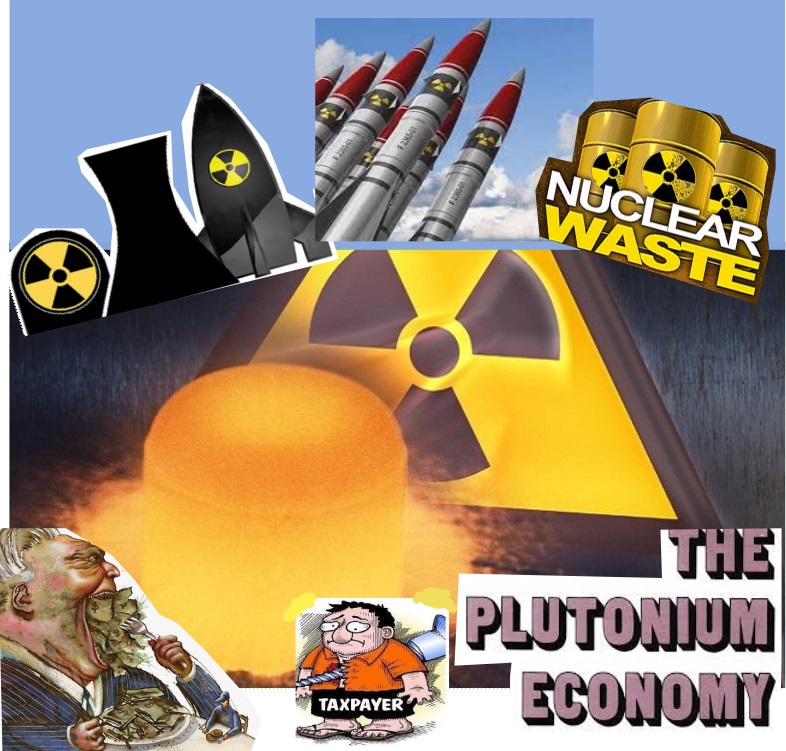
Until 1989, pits were made at Rocky Flats, a U.S. government facility operated by a contractor that was raided by the FBI and subsequently closed after numerous environmental and safety violations. Since that time, only a handful of pits have been made, all at Los Alamos National Laboratory, which itself has a history of safety problems.
In the late 1990s, NNSA began proposing expanded pit production at Los Alamos. In 2001 it proposed a facility to produce 80 pits per year at an estimated cost of $375 million. By 2011 the price tag for pit production had grown to between $3.7 and $5.8 billion—even at that time seen as unrealistically low because the facility’s design had yet to be completed and the estimate was for construction only, not operations and maintenance. By 2014, that plan was abandoned, and a new one was introduced with an estimated cost of $4.3 billion. Soon that too ran over budget and behind schedule. You might notice a pattern here.
At this point, Congress stepped in. But not to investigate the reasons for the cost overruns. Instead, in the 2015 National Defense Authorization Act, Congress simply ordered NNSA to succeed. It decreed that NNSA had to make 80 pits per year by 2027, later extended to 2030. Frustrated with the seeming inability of Los Alamos to make progress, in 2018 pit production was expanded to another NNSA facility: the Savannah River Site in South Carolina. The plan now is to repurpose for pit production a building originally intended to recycle plutonium from dismantled Cold War nuclear weapons to turn it into fuel for nuclear reactors. But that original disarmament project was terminated in 2018 after costs rose from a 2004 estimate of $1.8 billion to $17.2 billion. Congress never held hearings to assess the reasons for this cost escalation, lessons learned or how to prevent similar problems in the future.
If major projects at NASA, the Veterans Administration or almost any other government agency mimicked these problems, Congress would hold hearings and demand explanations. Nuclear modernization deserves the same hard scrutiny.
Congress should require independent cost estimates of the Sentinel program, pit production at both Los Alamos and Savannah River, and any other major nuclear modernization program where the estimated cost exceeds the original baseline by 50 percent or more—a threshold in the Nunn-McCurdy Act. These estimates should be undertaken by an entity that has no fiscal stake in the outcome, and is politically insulated from those who do.
Unlike the Defense Department’s Cost Assessment and Program Evaluation (CAPE) office, which has a track record of independent analysis, the NNSA has struggled to develop a similar oversight capability. The NNSA remains on GAO’s list of federal agencies that are “vulnerable to waste, fraud, abuse, and mismanagement,” or that need broad reform, since the list was first created in 1990. The NNSA has shown, repeatedly, that it cannot change itself.
It’s reasonable, of course, that cost estimates for projects involving uncertainties such as technologies still under development can result in a range of estimates. Routinely rubber-stamping endorsements of the lower figures, however, should stop. Instead the president’s budget submission should adopt the highest credible estimate, accompanied by an explanation of how the program will strive to come in under budget.
Independent cost estimates typically link budgets to services, such as plutonium processing, or material things such as facilities or weapons. In the case of nuclear modernization, though, that’s not sufficient; the link needs to extend to the impact on the strategy of deterrence. Nuclear weapons threaten the lives of billions of people. Does $14 billion worth of pit production provide better deterrence than $37 billion worth? Is a $118 million Sentinel missile more effective at preventing nuclear war than an existing ICBM that costs half as much? It’s only by linking dollars to deterrence that Congress can assess the tradeoffs and move beyond the notion that nuclear modernization is justified regardless of the final price tag.
Israel ‘Has Gone to War Against the Entire Palestinian People’: Sanders
“Any objective observer knows Israel has broken international law, it has broken American law, and, in my view, Israel should not be receiving another nickle in U.S. military aid,” Sanders said.
Common Dreams. OLIVIA ROSANE,13 May 24
Independent Vermont Sen. Bernie Sanders repeated his calls on Sunday for the U.S. to cut off military aid to the far-right government of Israeli Prime Minister Benjamin Netanyahu as it continues its devastating war on Gaza.
Sanders spoke on NBC’s “Meet the Press” in response to a U.S. State Department report released Friday, which found that it was “reasonable to assess” that Israel had used U.S. weapons to violate international humanitarian law in Gaza but that the U.S. was “not able to reach definitive conclusions” as to whether U.S. weapons had been used in any specific incidents.
“Any objective observer knows Israel has broken international law, it has broken American law, and, in my view, Israel should not be receiving another nickle in U.S. military aid,” Sanders said.

Friday’s report came in response to National Security Memorandum 20 (NSM-20), in which President Joe Biden tasked Secretary of State Antony Blinken with obtaining “certain credible and reliable written assurances from foreign governments” that they use U.S. arms in line with international humanitarian law and will not “arbitrarily deny, restrict, or otherwise impede, directly or indirectly, the transport or delivery of United States humanitarian assistance.”
The report, made to Congress, was criticized by human rights organizations who said it mischaracterized both the law and the facts in order to avoid imposing consequences on Israel for waging a war on Gaza that the International Court of Justice has determined could plausibly amount to genocide.
Speaking before Sanders on “Meet the Press,” Blinken denied that the report was an attempt to get out of holding Israel accountable………………………………………………………………………………….
Sanders told NBC that he thought many Republicans and also some Democrats wanted Israel to invade Rafah, but that this was not an opinion shared by the majority of people in the U.S.
“Poll after poll suggests that the American people want an immediate cease-fire. They want massive humanitarian aid to get in,” Sanders said. “The people of our country do not want to be complicit in the starvation of hundreds of thousands of children.” https://www.commondreams.org/news/sanders-israel-war-palestinian-people
Exactly what happens in the seconds after a nuclear bomb is launched
Horror warnings about the impact of a nuclear launch haven’t stopped a select few leaders from threatening to unleash armageddon.
news.com.au, Alex Blair, 12 May 24
12,500.
That is the approximate number of nuclear bombs that exist on our planet today.
Nine countries, the US, India, China, Russia, France, the UK, Pakistan, Israel and North Korea, have become the major players in the most powerful arms race in history.
Officials say the build-up of nuclear weapons arsenals is purely an act of deterrence, but even the slightest of miscues, like the famous 1983 false alarm that almost rang in armageddon, could spark a butterfly effect feared ever since Hiroshima.
The horrific details over what would happen following a nuclear launch have been discussed ad nauseam by humanity’s best minds, who have warned for decades that the destruction of civilisation could be sparked by the press of a button.
But this hasn’t stopped leaders from flexing their might through words. Pundits in Russia have regularly threatened their nation’s nuclear arsenal as Vladimir Putin pushes on with his now two-year “special military campaign”………….
North Korea has similarly flexed its growing nuclear arsenal to the world, boldly defending its right to govern its citizens how the Kim dynasty sees fit, a topic that regularly flares tensions with its closest neighbours and the West.
Despite years of international scrutiny, Kim Jong-un has continued missile tests into 2024, some of which hurtling dangerously close to Japan’s sovereign territory.
Analyst Annie Jacobsen, author of the newly-released book Nuclear War: A Scenario, has broken down the current state of geopolitics and the very real risk nuclear conflict could “end the world as we know it in a matter of hours”.
While there are powerful entities like the UN’s Office for Disarmament Affairs collaborating information over the number of weapons held by the major nuclear players, Jacobsen warns the actual tally could be way off the official estimate.
The CIA will tell you North Korea has 50 nuclear weapons,” she said in a recent appearance on Chris Williamson’s Modern Wisdom podcast.
“But some non-government organisations will tell you that number is as high as 130.”
The world nuke tally peaked in 1986 at a whopping 70,000. From there, nations moved to reduce the amount of planet-destroying armaments. But it only takes one to kick things off.
There is also an issue in where the nuclear material ends up, with plants becoming immediate targets for foreign enemies in the event of conflict.
“Where does all that nuclear material go?” Jacobsen continued. “There’s a plant in Texas call Pentax, that’s where they do that. Not a lot of people know about it. But it is almost certainly on everybody’s nuclear strike target list. Because can you imagine the mayhem that would ensue if you struck that?
“There’s just so many precariously dangerous situations. Anything that touches a nuclear weapon becomes radioactive, both literally and figuratively.”
Endgame
The moment the button is pushed, a lightning speed chain reaction involving “hundreds of thousands” of officials begins.
Jacobsen describes this as “the ticking clock scenario”.
“The way it begins, interestingly, is in space,” she explains.
“That is because the US has spent trillions of dollars in the past few decades to be aware of when anyone launches a missile.” ICBM nukes are specifically designed to cross oceans and strike foreign nations. While they have never been used, the time frame from initial launch to impact is chilling.
“It takes 30 minutes in three phases,” Jacobsen explains, using a hypothetical attack on the US to explain the process.
“The first phase, boost phase, takes five minutes. Midcourse phase, 20 minutes and finally terminal phase, 100 seconds.
“That’s from a launch pad in Russia, 26 minutes and 40 seconds. From Pyongyang, it’s 33 minutes.”
“These satellite systems in space can park above an enemy nation and watch for the hot rocket exhaust on a ballistic missile launch, which it can see in less than a fraction of a second.”
She explains there are systems working around the clock specialised at interpreting the data at lightning speed before ultimately making the most dystopian of calls to the most powerful man on the planet.
“It becomes simply a matter of minutes before the President is notified about this,” she continued. “Within 150 seconds, the systems know whether the missile is directed at us or not.
“Letting the President know that very soon he has to make a decision very soon about a counterattack.”
“We don’t wait to absorb a nuclear blow. We launch. The theory is that whoever is launching at the US will try and take out the nuclear silos so we can’t respond, ’so therefore we must respond’.”………………….
The United States Is Expected to Announce a New $400 Million Package of Weapons for Ukraine
Associated Press | By Lolita C. Baldor and Matthew Lee, May 10, 2024, https://www.military.com/daily-news/2024/05/10/united-states-expected-announce-new-400-million-package-of-weapons-ukraine.html
WASHINGTON — The U.S. is expected to announce a new $400 million package of military aid for Ukraine on Friday, U.S. officials said, as Kyiv struggles to hold off advances by Russian troops in the northeast Kharkiv region.
This is the third tranche of aid for Ukraine since Congress passed supplemental funding in late April after months of gridlock. Ukrainian President Volodymyr Zelenskyy had warned Thursday that his country was facing “a really difficult situation” in the east, but said a new supply of U.S. weapons was coming and “we will be able to stop them.”
According to officials, the package includes High Mobility Artillery Rocket Systems and rockets for them, as well as artillery, air defense and anti-tank munitions, armored vehicles and other weapons and equipment. The officials spoke on condition of anonymity because the aid has not yet been announced. It will be provided through presidential drawdown authority, which pulls systems and munitions from existing U.S. stockpiles so they can be sent quickly to the war front.
Almost immediately after President Joe Biden signed the $95 billion foreign aid package, the Pentagon announced it was sending $1 billion in weapons through that drawdown authority,. And just days later the Biden administration announced a $6 billion package funded through the Ukraine Security Assistance Initiative, which pays for longer-term contracts with the defense industry and means that the weapons could take many months or years to arrive.
Russia has sought to exploit Ukraine’s shortages of ammunition and manpower as the flow of Western supplies since the outbreak of the war petered out while Congress struggled to pass the bill. Moscow has assembled large troop concentrations in the east as well as in the north and has been gaining an edge on the battlefield, Zelenskyy said.
Officials did not say if the latest package includes more of the long-range ballistic missiles — known as the Army Tactical Missile System — that Ukraine has repeatedly requested. The U.S. secretly sent a number of the missiles to Ukraine for the first time this spring and the White House has said it would send more. In one case, Ukraine used them to bomb a Russian military airfield in Crimea.
The new missiles give Ukraine nearly double the striking distance — up to 300 kilometers (190 miles) — than it had with the mid-range version of the weapon that it received from the U.S. in October.
United States nuclear weapons, 2024
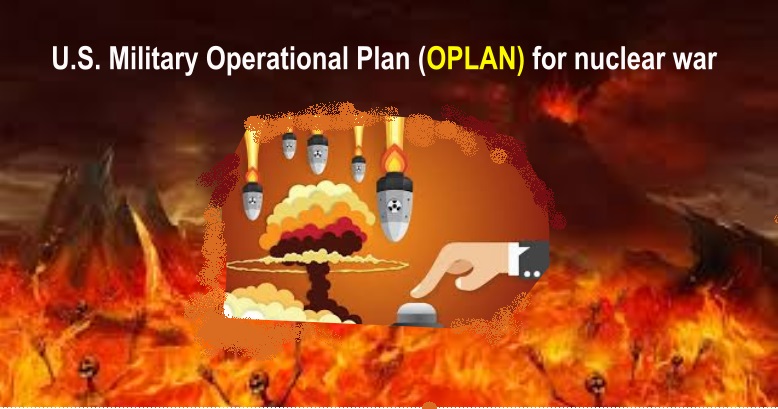
The current strategic nuclear war plan—OPLAN 8010–12—consists of “a family of plans” directed against four identified adversaries: Russia, China, North Korea, and Iran.
Just like previous NPRs, the Biden administration’s NPR said the United States reserved the right to use nuclear weapons under “extreme circumstances to defend the vital interests of the United States or its allies and partners” and rejected policies of nuclear “no-first-use” or “sole purpose” (US Department of Defense 2022a, 9)
Bulletin, By Hans M. Kristensen, Matt Korda, Eliana Johns, Mackenzie Knight | May 7, 2024
The United States has embarked on a wide-ranging nuclear modernization program that will ultimately see every nuclear delivery system replaced with newer versions over the coming decades. In this issue of the Nuclear Notebook, we estimate that the United States maintains a stockpile of approximately 3,708 warheads—an unchanged estimate from the previous year. Of these, only about 1,770 warheads are deployed, while approximately 1,938 are held in reserve. Additionally, approximately 1,336 retired warheads are awaiting dismantlement, giving a total inventory of approximately 5,044 nuclear warheads. Of the approximately 1,770 warheads that are deployed, 400 are on land-based intercontinental ballistic missiles, roughly 970 are on submarine-launched ballistic missiles, 300 are at bomber bases in the United States, and approximately 100 tactical bombs are at European bases. The Nuclear Notebook is researched and written by the staff of the Federation of American Scientists’ Nuclear Information Project: director Hans M. Kristensen, senior research fellow Matt Korda, research associate Eliana Johns, and program associate Mackenzie Knight.
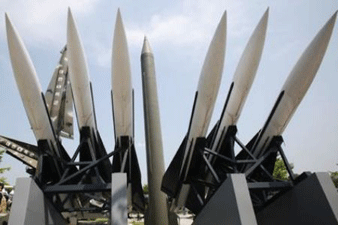
In May 2024, the US Department of Defense maintained an estimated stockpile of approximately 3,708 nuclear warheads for delivery by ballistic missiles and aircraft. Most of the warheads in the stockpile are not deployed but rather stored for potential upload onto missiles and aircraft as necessary. We estimate that approximately 1,770 warheads are currently deployed, of which roughly 1,370 strategic warheads are deployed on ballistic missiles and another 300 at strategic bomber bases in the United States. An additional 100 tactical bombs are deployed at air bases in Europe. The remaining warheads—approximately 1,938—are in storage as a so-called “hedge” against technical or geopolitical surprises. Several hundred of those warheads are scheduled to be retired before 2030 (see Table 1 on original).
While the majority of the United States’ warheads comprises the Department of Defense’s military stockpile, retired warheads under the custody of the Department of Energy awaiting dismantlement constitute a “significant fraction” of the United States’ total warhead inventory (US Department of Energy 2023b). Dismantlement operations include the disassembly of retired weapons into component parts that are then assigned for reuse, storage, surveillance, or for additional disassembly and subsequent disposition (US Department of Energy 2023b, 2–11). The pace of warhead dismantlement has slowed significantly in recent years: While the United States dismantled on average more than 1,000 warheads per year during the 1990s, in 2020 it dismantled only 184 warheads (US State Department 2021). According to the Department of Energy, “[d]ismantlement rates are affected by many factors, including appropriated program funding, logistics, legislation, policy, directives, weapon system complexity, and the availability of qualified personnel, equipment, and facilities” ……………………………………..
…………….. we estimate that the United States possesses approximately 1,336 retired—but still intact—warheads awaiting dismantlement, giving a total estimated US inventory of approximately 5,044 warheads.
Between 2010 and 2018, the US government publicly disclosed the size of the nuclear weapons stockpile; however, in 2019 and 2020, the Trump administration rejected requests from the Federation of American Scientists to declassify the latest stockpile numbers (Aftergood 2019; Kristensen 2019a, 2020b). In 2021, the Biden administration restored the United States’ previous transparency levels by declassifying both numbers for the entire history of the US nuclear arsenal until September 2020—including the missing years of the Trump administration. . This effort revealed that the United States’ nuclear stockpile consisted of 3,750 warheads in September 2020—only 72 warheads fewer than the last number made available in September 2017 before the Trump administration reduced the US government’s transparency efforts (US State Department 2021). We estimate that the stockpile will continue to decline over the next decade as modernization programs consolidate the remaining warheads.
Following the Biden administration’s initial declassification in 2021, it has since denied successive annual requests from the Federation of American Scientists to disclose the stockpile numbers for 2021, 2022, or 2023 (Kristensen 2023d). A decision to no longer declassify these numbers not only contradicts the Biden administration’s own recent practices, but also represents a return to Trump-era levels of nuclear opacity. Such increased nuclear secrecy undermines US calls for Russia and China to increase transparency of their nuclear forces.
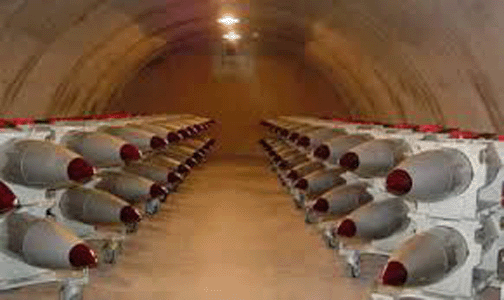
The US nuclear weapons are thought to be stored at an estimated 24 geographical locations in 11 US states and five European countries (Kristensen and Korda 2019, 124). The number of locations will increase over the next decade as nuclear storage capacity is added to three bomber bases. The location with the most nuclear weapons by far is the large Kirtland Underground Munitions and Maintenance Storage Complex south of Albuquerque, New Mexico. Most of the weapons in this location are retired weapons awaiting dismantlement at the Pantex Plant in Texas. The state with the second-largest inventory is Washington, which is home to the Strategic Weapons Facility Pacific and the ballistic missile submarines at Naval Submarine Base Kitsap. The submarines operating from this base carry more deployed nuclear weapons than any other base in the United States.
Implementing the New START treaty
The United States appears to be in compliance with the New Strategic Arms Reduction Treaty (New START) limits. Although Russia “suspended” its participation in New START in February 2023, the United States publicly declared in May 2023 that it had 1,419 warheads attributed to 662 deployed ballistic missiles and heavy bombers as of March 1st, 2023 (US State Department 2023a). The United States initially said that it voluntarily released the numbers “[i]n the interest of transparency and the US commitment to responsible nuclear conduct.” However, the United States did not continue this practice beyond that initial exchange and has not published any aggregate numbers since May 2023 (US State Department 2023a)
The United States contends that Russia’s “suspension” of New START implementation is “legally invalid” (US State Department 2023c). In response, the United States adopted four countermeasures in 2023 that it claimed were fully consistent with international law 1) no longer providing biannual data updates to Russia; 2) withholding from Russia notifications regarding treaty-accountable items (i.e. missiles and launchers) required under the treaty; 3) refraining from facilitating inspection activities on US territory; and 4) not providing Russia with telemetric information on US ICBM and SLBM launches (US State Department 2023c).
The New START warhead numbers reported by the US State Department differ from the estimates presented in this Nuclear Notebook, though there are reasons for this. …………………..
Since the treaty entered into force in February 2011, the biannual aggregate data show the United States has cut its arsenal by a total of 324 strategic launchers, reduced deployed launchers by 220 and the warheads attributed to them by 381 (US State Department 2011). The warhead reduction is modest, only equivalent to about 10 percent of the 3,708 warheads remaining in the US stockpile. ………….
As of March 2023, the United States had 38 launchers and 131 warheads less than the treaty limit for deployed strategic weapons but had 119 deployed launchers more than Russia—a significant gap that is just under the size of an entire US Air Force intercontinental ballistic missile (ICBM) wing. So far Russia has not sought to reduce this gap by deploying more strategic launchers but instead has increased the portion of its missiles that can carry multiple warheads.
The New START treaty has proven useful so far in keeping a lid on both countries’ deployed strategic forces. But it expires in February 2026 and if it is not followed by a new agreement, both the United States and Russia could potentially increase their deployed nuclear arsenals by uploading several hundred of stored reserve warheads onto their launchers.
Nuclear Posture Reviews and nuclear modernization programs
The Biden administration’s 2022 Nuclear Posture Review (NPR) was broadly consistent with the Trump administration’s 2018 NPR…………………………………
Just like previous NPRs, the Biden administration’s NPR said the United States reserved the right to use nuclear weapons under “extreme circumstances to defend the vital interests of the United States or its allies and partners” and rejected policies of nuclear “no-first-use” or “sole purpose” (US Department of Defense 2022a, 9)…………………………………………………………………………………………………………………………………………………
In 2023, multiple governmental advisory commissions published reports intended to influence US nuclear posture. The Congressionally-mandated report on “America’s Strategic Posture,” published in October 2023, included a broad range of recommendations for the United States to prepare to increase the number of deployed warheads, as well as to scale up its production capacity of bombers, air-launched cruise missiles, ballistic missile submarines, non-strategic nuclear forces, and warheads (US Strategic Posture Commission 2023). It also called for the United States to deploy multiple warheads on land-based intercontinental ballistic missiles (ICBMs) and consider adding road-mobile ICBMs to its arsenal…………………………………. the Strategic Posture Commission report’s status as a bipartisan document has been particularly useful for nuclear advocates to push for additional nuclear weapons (Heritage 2023; Hudson Institute 2023; Thropp 2023).
While additional modernization programs are being discussed, the National Nuclear Security Administration, or NNSA, delivered in 2023 more than 200 modernized nuclear weapons (B61–12 bombs and W88 Alt 370 warheads) to the Department of Defense (US Department of Energy 2024).
Nuclear planning and nuclear exercises
In addition to the Nuclear Posture Review, the nuclear arsenal and the role it plays is shaped by plans and exercises that create the strike plans and practice how to carry them out.
The current strategic nuclear war plan—OPLAN 8010–12—consists of “a family of plans” directed against four identified adversaries: Russia, China, North Korea, and Iran. Known as “Strategic Deterrence and Force Employment,” OPLAN 8010–12 first entered into effect in July 2012 in response to operational order Global Citadel. ………………………………………………………………….
…………………………………. changes are evident in the types of increasingly provocative bomber operations over Europe, in some cases very close to the Russian border (Kristensen 2022a). In October 2023, for example, a B-52 bomber from Barksdale AFB in Louisiana participated in NATO’s annual nuclear exercise Steadfast Noon, and in March 2023 a nuclear-capable B-52 cut south only a few kilometers from the Russian sea border and then flew south near Kaliningrad (Kristensen 2023a; NATO 2023).
…………………US strategy has changed in response to deteriorating East-West relations and the new “great power competition” and “strategic competition” strategy promoted by the Trump and Biden administrations, respectively. They also illustrate a growing integration of nuclear and conventional capabilities, as reflected in the new strategic war plan. B-52 Bomber Task Force deployments typically include a mix of nuclear-capable aircraft and aircraft that have been converted to conventional-only missions. With Sweden joining NATO, US strategic bombers now routinely operate over Swedish territory: In August 2022, for example, two B-52s—one version that is nuclear-capable and one that is de-nuclearized—overflew Sweden, the first overflight since it applied for NATO membership in May 2022 (Kristensen 2022c)…………………………………………………………………………………………….
Land-based ballistic missiles
The US Air Force (USAF) operates 400 silo-based Minuteman III ICBMs and keeps “warm” another 50 silos to load stored missiles if necessary, for a total of 450 silos. Land-based missile silos are divided into three wings: the 90th Missile Wing at F. E. Warren Air Force Base in Colorado, Nebraska, and Wyoming; the 91st Missile Wing at Minot Air Force Base in North Dakota; and the 341st Missile Wing at Malmstrom Air Force Base in Montana. Each wing has three squadrons, each with 50 Minuteman III silos collectively controlled by five launch control centers. We estimate there are up to 800 warheads assigned to the ICBM force, of which about half are deployed (see Table 1, on original).
The 400 deployed Minuteman IIIs carry one warhead each, either a 300-kiloton W87/Mk21 or a 335-kiloton W78/Mk12A. ICBMs equipped with the W78/Mk12A, however, could technically be uploaded to carry two or three independently targetable warheads each, for a total of 800 warheads available for the ICBM force……………………………………………………………………………………….
Part of the ongoing ICBM modernization program involves upgrades to the Mk21 reentry vehicles’ arming, fuzing, and firing system at a total cost of nearly $1 billion (US Department of Defense 2023c, 32). The publicly stated purpose of this refurbishment is to extend the vehicles’ service lives, but the effort appears to also involve adding a “burst height compensation” to enhance the targeting effectiveness of the warheads (Postol 2014)………………………………………………………………………………. As part of the Mk21A program, Lockheed Martin was awarded a sole source contract in October 2023 amounting to just under $1 billion for the engineering and manufacturing of the new reentry vehicle (US Department of Defense 2023b). These modernization efforts complement a similar fuze upgrade underway to the Navy’s W76–1/Mk4A warhead.
………………………………………………………………………………………………………………….. The Air Force’s FY24 budget for ICBM Reentry Vehicles Research Development, Test & Evaluation Programs increased significantly from the previous President’s Budget……………………………………………………………………………..
…………………………….Non-governmental experts, including those conducting Department of Defense-sponsored research, have questioned the Pentagon’s procurement process and lack of transparency regarding its decision to pursue the Sentinel option over other potential deployment and basing options (Dalton et al. 2022, 4). Moreover, it is unclear why an enhancement of ICBM capabilities would be necessary for the United States. For instance, any such enhancements would not mitigate the inherent challenges associated with launch-on-warning, risky territorial overflights, or silo vulnerabilities to environmental catastrophes or conventional counterforce strikes (Korda 2021). Additionally, even if adversarial missile defenses improved significantly, the ability to evade missile defenses lies with the payload—not the missile itself. ………………………………………..
……………………………………………….The development of the Sentinel has also been marked by a series of controversial industry contracts, starting with the awarding of a $13.3 billion sole-source contract to Northrop Grumman in 2020 to complete the engineering and manufacturing development stage
…………………………………………..in early 2024, the Air Force notified Congress of a two-year delay in the schedule and an estimated 37-percent increase from the current cost target to at least $125 billion (Tirpak 2024). These amounts do not include the costs for the new Sentinel warhead—the W87–1—which is projected to cost up to $14.8 billion, or the plutonium pit production that the US Air Force and US Strategic Command say is needed to build the warheads (Government Accountability Office 2020).
…………………………………………The schedule and extreme cost overruns for the Sentinel program incurred a critical breach of the Nunn-McCurdy Act, which requires the Secretary of Defense to conduct a root-cause analysis and renewed cost assessment before providing a certification to Congress that verifies the necessity and viability of the program no later than 60 days after a Selected Acquisition
…………………………………………………..Andrew Hunter, Assistant Secretary of the Air Force for Acquisition, Technology, and Logistics clarified that while the cost of the missile itself has increased, challenges with supporting infrastructure is the significant driver of schedule overrun, which also further impacts the overall cost (Tirpak 2024). In addition to an entirely new missile, the Sentinel program includes launch facility replacement and modifications (since the Sentinel may require a larger silo), new missile alert facilities, and new command and control facilities and systems—not to mention new training and curriculum for USAF personnel. Many of these delays are results of staffing shortfalls, clearance delays, IT infrastructure challenges, and trouble with supply chains on the part of Northrop Grumman (Government Accountability Office 2023a, 88)………………………………………………………………………………………………………………………………………………………………………..
Nuclear-powered ballistic missile submarines
The US Navy operates a fleet of 14 Ohio-class ballistic missile submarines (SSBNs), of which eight operate in the Pacific from their base near Bangor, Washington, and six operate in the Atlantic from their base at Kings Bay, Georgia……………………………………………………………………………………………..
Each submarine can carry up to 20 Trident II D5 sea-launched ballistic missiles
……………………………………………………………………………………………………………………Design of the next generation of ballistic missile submarines, known as the Columbia-class, is well underway.
………………………………………..the Navy’s fiscal 2024 budget submission estimated the procurement cost of the first Columbia-class SSBN—the USS District of Columbia (SSBN-826)—at approximately $15.2 billion, followed by $9.3 billion for the second boat (Congressional Research Service 2024, 9). A $5.1 billion development contract was awarded to General Dynamics Electric Boat in September 2017, and construction of the first boat began on October 1, 2020—the first day of FY 2021………………………………………………………..
…………………According to a June 2023 report by the Government Accountability Office, “the program remains behind on producing design products—in particular, work instructions that detail how to build the submarine—because of ongoing challenges using a software-based design tool. These, in turn, contributed to delays in construction of the lead submarine” (Government Accountability Office 2023a, 160). The Navy is working to mitigate additional delays, but these constraints mean that the program is at significant risk of cost overgrowth and is very likely to suffer further setbacks………………………………………………………………………………..
Strategic bombers
The US Air Force currently operates a fleet of 20 B-2A bombers (all of which are nuclear-capable) and 76 B-52 H bombers (46 of which are nuclear-capable)……………………………………………………………Each B-2 can carry up to 16 nuclear bombs (the B61–7, B61–11, B61–12, and B83–1 gravity bombs)…………..An estimated 788 nuclear weapons, including approximately 500 air-launched cruise missiles, are assigned to the bombers, but only about 300 weapons are thought to be deployed at bomber bases (see Table 1). The estimated remaining 488 bomber weapons are thought to be in central storage at the large Kirtland Underground Munitions Maintenance and Storage Complex outside Albuquerque, New Mexico.
The United States is modernizing its nuclear bomber force by upgrading nuclear command-and-control capabilities on existing bombers, developing enhanced nuclear weapons (the B61–12, B61–13, and the new AGM-181 Long-Range Standoff Weapon or LRSO), and designing a new heavy bomber (the B-21 Raider).
Upgrades to the nuclear command-and-control systems that the bombers use to plan and conduct nuclear strikes include the Global Aircrew Strategic Network Terminal (ASNT)…………………………………………………………………………………………………………….
The United States was initially expected to produce approximately 480 B61–12 bombs, but in 2023 it announced that a small number of them instead will be produced as the B61–13, a gravity bomb with a much larger yield (US Department of Defense 2023e………………………………………………………………………………………………………………
The Air Force is also developing a new nuclear air-launched cruise missile known as the AGM-181 LRSO……………………………………………………. The LRSO will arm both the 46 nuclear-capable B-52Hs and the new B-21, the first time a US stealth bomber will carry a nuclear cruise missile. A $250 million contract was awarded to Boeing in March 2019
…………………………………………….It is expected that the Air Force will procure at least 100 (possibly as many as 145) of the B-21, with the latest service costs estimated at approximately $203 billion …………………………………………………………………………………………………………………
Nonstrategic nuclear weapons
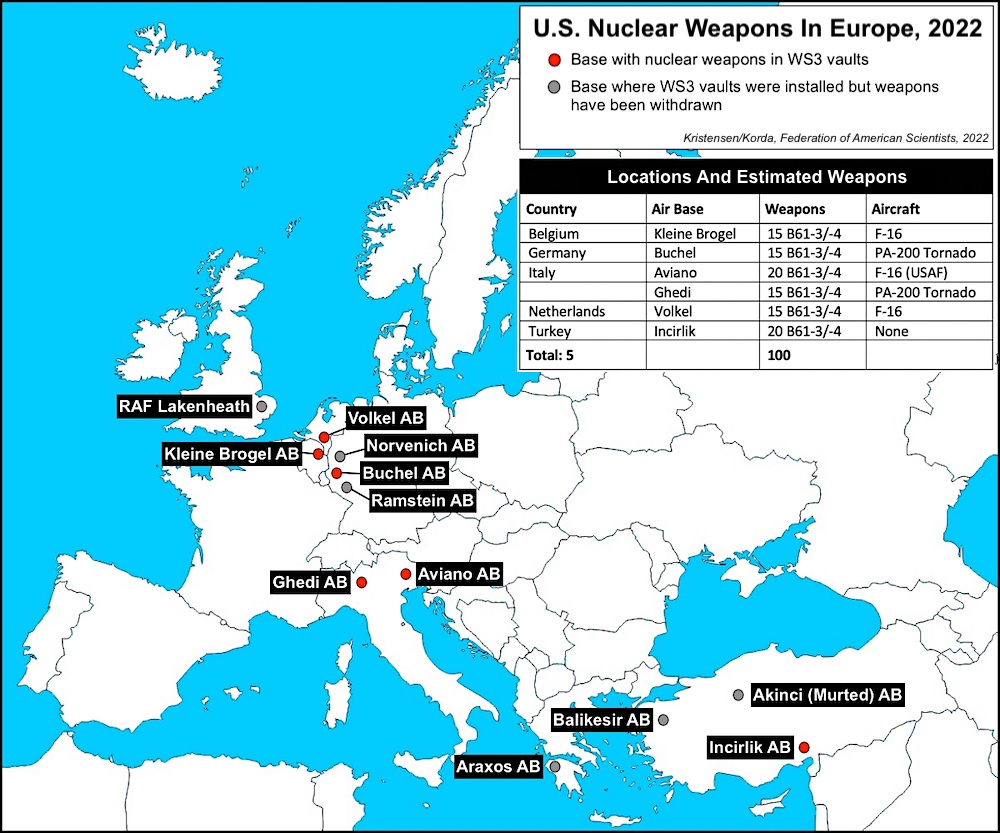
The United States has only one type of nonstrategic nuclear weapon in its stockpile: the B61 gravity bomb. But it exists in several versions: ……………………………………………………. About 100 of these (versions −3 and − 4) are thought to be deployed at six bases in five European countries: Aviano and Ghedi in Italy; Büchel in Germany; Incirlik in Turkey; Kleine Brogel in Belgium; and Volkel in the Netherlands…………………………………………………………………
The Belgian, Dutch, German, and Italian air forces are currently assigned an active nuclear strike role with US nuclear weapons. …………………………………………………………………………………………………………………………..
The United States withdrew nuclear weapons from the United Kingdom around 2007 after storing them at Royal Air Force (RAF) Lakenheath for several decades (Kristensen 2008). But increasing evidence over the past two to three years suggests that the United States may be returning its nuclear mission to UK soil (Korda and Kristensen 2023) (see Figure 3 on original)
……………………………………………………………In addition to the modernization of weapons, aircraft, and bases, NATO also appears to be increasing the profile of the dual-capable aircraft posture. NATO is now publicly announcing its annual Steadfast Noon tactical nuclear weapons exercise. For example, NATO described in 2023 that the exercise involved the participation of 13 countries and 60 aircraft including fighter jets and US B-52 bombers (NATO 2023)………………………………………………………………………………………………
This research was carried out with generous contributions from the New-Land Foundation, the Prospect Hill Foundation, Longview Philanthropy, Ploughshares Fund, and individual donors.
References…………………………………………….. https://thebulletin.org/premium/2024-05/united-states-nuclear-weapons-2024/
France wants to extend its nuclear umbrella to Europe. But is Macron ready to trade Paris for Helsinki?

Bulletin By Carine Guerout, Jason Moyer | May 10, 2024
Europe’s reliance on US nuclear weapons has been at the heart of the transatlantic security relationship, and so has been the protection that the old continent gets from being part of the NATO alliance and its powerful Article 5. Now, the debate about nuclear deterrence for the European Union is back at the forefront, in part due to the prospects of a reticent United States under a possible second Trump presidency and a resurgent Russia increasingly threatening to use nuclear weapons.
NATO, as a nuclear alliance, relies heavily on US nuclear warheads stationed in Europe for its deterrence. The United Kingdom and France are Europe’s only nuclear powers: Although part of NATO, they maintain independent control over their own nuclear arsenals. In the past, the European Union has been reluctant—or incapable—of providing nuclear deterrence. But the uncertain security environment in Europe has recently led the Union to strengthen its previously neglected security pillar—and, with it, caused some political leaders to become more vocal about nuclear weapons.
In recent weeks, France’s President Emmanuel Macron, in his classic disrupting style, has openly called for debate in Europe over using his country’s nuclear capabilities to defend the continent. In Macron’s view the uncertainty over future US engagement in Europe is forcing the European Union to decide whether it needs a nuclear deterrent of its own—and suggests France may help with this. But it is not clear whether France would be willing—and capable—of extending its nuclear umbrella to the rest of the Union. For this to happen, France would need to address multiple issues, starting with explaining whether it would retain full decision-making over its arsenal, exploring the limitations of its current stockpile of nuclear weapons, and weighing the impact such a decision would have on NATO and its relations with the United States and its fellow EU member states.
Macron’s insistence. Since the United Kingdom’s withdrawal from the European Union in 2020‚—popularly known as “Brexit”—France has become the Union’s only country with nuclear weapons. France possesses approximately 290 nuclear weapons (the world’s fourth arsenal in terms of stockpiles warheads behind Russia, the United States, and China). Ever since French President Charles de Gaulle’s famous questioning of US nuclear assurances in 1961— which led France to develop its own nuclear deterrence force—France has historically seen itself as an independent force counterbalancing that of the United States in Europe. This spirit persists today: France still does not participate in NATO’s Nuclear Planning Group and remains one of the Western allies most in favor of nuclear deterrence. France’s independent deterrence strengthens NATO overall because it complicates the calculus of adversaries. Although nuclear deterrence has been a cornerstone of NATO’s deterrence posture, the same cannot be said of the European Union: Many member states remain uncertain about the role of nuclear weapons in defense planning.
The debate over the nuclear readiness of the EU is not new. Traditionally, the holdout to developing a so-called “Eurobomb” has been Germany. In recent years, a growing number of German policy makers have asked the previously unthinkable question of whether it should possess its own nuclear weapons. The German public remains unconvinced, however: Even after the Russian invasion of Ukraine, 90 percent of Germans still reject the idea of their country developing a nuclear weapons program and it seems unlikely the German public will dramatically pivot toward a Eurobomb. Traditionally neutral EU countries such as Ireland, Malta, and Austria are not likely to be willing to support the bomb either: All three are signatories to the Treaty on the Prohibition of Nuclear Weapons (TPNW), also known as the ban treaty, and would likely block any attempt to extend France’s nuclear arsenal to Europe…………………………………………………………………………………………..
Easier said than done. To move forward with his proposal, President Macron will need to answer at least three critical questions about the politics and logistics of a European-level nuclear weapon sharing arrangement. First, France will need to clarify whether it wants to retain full decision-making power over its nuclear arsenal. ……………………………………..
Second, it is not clear how France could realistically provide nuclear deterrence to the entire Union. French nuclear forces have limited capabilities, with a much smaller and less diversified arsenal than that of other major nuclear powers, and its nuclear deterrence has been developed for a strictly defensive purpose. France partially disarmed its nuclear arsenal in the 1990s after the Cold War, reducing its nuclear stockpiles from 600 warheads to just under 300……………………………………………………………
In practice, the idea of a French nuclear umbrella for Europe also raises a third question for Macron: How to embed the French nuclear armament into existing European structures and how this shift would complement NATO’s capabilities in Europe……………………………………………………………………. https://thebulletin.org/2024/05/france-wants-to-extend-its-nuclear-umbrella-to-europe-but-is-macron-ready-to-trade-paris-for-helsinki/
Protest And Dissent Can Absolutely Push The Empire To Retreat On Gaza
CAITLIN JOHNSTONE, MAY 10, 2024, https://www.caitlinjohnst.one/p/protest-and-dissent-can-absolutely?utm_source=post-email-title&publication_id=82124&post_id=144490253&utm_campaign=email-post-title&isFreemail=true&r=1ise1&triedRedirect=true&utm_medium=email
It is entirely possible for the surging anti-genocide protest movement and its accompanying zeitgeist in the general public to push the empire to retreat on Gaza. The imperial murder machine has many strengths, but it also has weaknesses.
The globe-spanning power structure that is loosely centralized around Washington has invested in perception management more heavily than any other empire in history — that’s what you’re seeing with all the mass media propaganda, Silicon Valley algorithm manipulation, oligarch-funded think tanks, and mainstream culture manufacturing in New York and Hollywood. By using mass-scale psychological manipulation via the most sophisticated perception management system that has ever existed, the US-centralized empire is able to manufacture support for its agendas at home and abroad while dissuading the public from protest and revolution.
If too many people realize that their government is psychopathic and their news media and other indoctrination systems have been lying to them about it all their lives, the empire will lose the ability to propagandize them, because propaganda only works if you don’t know it’s happening to you. If too many people wake up from the propaganda matrix it won’t have any effect any longer, and without their propaganda our rulers cannot rule, because that’s the entire control system upon which their rule is premised
The empire therefore needs to tread very carefully when public opinion starts to turn against it, and retreat whenever public trust in imperial institutions would be compromised too severely for the empire to continue on a given path. It simply cannot afford to wake the public up from the propaganda-induced coma it has spent generations lulling them into.
What this means is that the empire can be pressured into retreat simply by spreading enough awareness and sowing enough opposition to its depraved actions. If enough eyes open to the truth of what’s happening in Gaza, there’s no amount of geostrategic middle east agendas or Israel lobby funding that can outweigh the empire’s existential need to prevent a mass-scale awakening from the mainstream imperial worldview and a transition into widespread revolutionary consciousness. The empire would necessarily need to step back before things reached that point, because its very existence depends on it.
The empire has been walking that line this entire time. Whenever you see it doing things like stepping back from regime change invasions of Cuba or Syria or refraining from going as authoritarian as it could go on a given issue, it isn’t because the empire suddenly evolved a conscience. It’s because it hasn’t yet succeeded in manufacturing public consent for such agendas, and imposing them before the public has been manipulated into accepting them would snap them out of the matrix of psychological control. They work so hard to manufacture public consent because they absolutely need it.
So the empire can be pressured on Gaza and on every other issue if enough people put enough energy into spreading awareness of the truth. That’s why the empire managers are freaking out about this new protest movement right now; they understand the absolutely fundamental role that narrative control plays in the existence of imperial power structures, and how much they stand to lose if it is taken away.
Moscow threatens to strike British military facilities following Cameron’s remarks
U.K. foreign secretary’s words confirm London’s growing involvement in military operations on the side of Kyiv, according to the Kremlin.
Politico, BY PIERRE EMMANUEL NGENDAKUMANA, 6 May 24
Russia said on Monday it could strike British military installations and equipment both “inside and beyond” Ukraine if British weapons are used by Kyiv to attack its territory.
“Any British military facilities and equipment on the territory of Ukraine and beyond could be a response to Ukrainian strikes with the use of British weapons on the territory of Russia,” the Russian ministry of foreign affairs said in a statement.
The Kremlin also summoned the British Ambassador to Moscow “to express a strong protest” in connection with recent comments by U.K. Foreign Secretary David Cameron……………………….
Cameron told Reuters last week that Ukraine has the “right” to use British-supplied weapons to strike Russia inside its own territory.
“Russian side views Cameron’s words as evidence of a serious escalation and confirmation of London’s growing involvement in military operations on the side of Kyiv,” according to the Russian foreign affairs ministry……………………
Earlier on Monday, Russia announced it has started preparing for nuclear weapons exercises, accusing Western officials of making “provocative statements and threats” by deepening their support for Ukraine. https://www.politico.eu/article/russia-threaten-strike-british-military-facility-david-camerons-remark-war-ukraine/
NATO escalation in Ukraine threatens nuclear war with Russia
Now, however, Macron says NATO aims not to seek a negotiated peace, but to force the Russian military to assume that NATO may adopt the most aggressive possible policy. This includes possibly launching not only a large-scale land invasion of Russia, but also—since France, Britain and the United States all refuse to rule out initiating the use of nuclear weapons in a war—a pre-emptive nuclear strike on Russian forces in Ukraine or on Russian cities.
It is high time for Biden and his NATO colleagues to tell the people that their pursuit of “victory in Ukraine” means risking nuclear war
Alex Lantier, 6 May 2024 https://www.wsws.org/en/articles/2024/05/07/qtgn-m07.html
There are growing indications that NATO’s war against Russia is entering a new stage of escalation that threatens to lead to the use of nuclear weapons. Top NATO officials are publicly talking about resorting to missile strikes and ground war against Russia, while Russian officials are warning they may launch counter-strikes on NATO countries.
Last week, 100 artillerymen and surveillance specialists of the French Foreign Legion were deployed to the front lines at Slavyansk in Ukraine, according to a report by former US Undersecretary for Defense Stephen Bryen in the Asia Times. Bryen said a further 1,500 French Foreign Legionnaires could soon deploy to Ukraine. He wrote that one consequence of this is “potentially triggering a pan-European war.”
While the French Foreign Ministry denied Bryen’s report, it is in line with President Emmanuel Macron’s previous calls for a ground war with Russia. Macron and other top NATO officials are now reasserting these comments in an aggressive press campaign. Last week, in The Economist, Macron again demanded that NATO be ready to send ground troops to Ukraine:
If the Russians were to break through the front lines, if there were a Ukrainian request—which is not the case today—we would legitimately have to ask ourselves this question.
This weekend, the Italian daily La Repubblica reported on further NATO war plans. It cited secret NATO agreements allegedly defining two “red lines,” Belarus’ entry into the war and a Russian “provocation” targeting Poland, Hungary or the Baltic States. If either of these “red lines” were crossed, NATO would mobilize 100,000 troops across Eastern Europe, from the Baltic states to Romania.
Also, last Thursday, UK Foreign Minister David Cameron went to Kiev, where he said Ukraine has the “absolute right” to use British long-range missiles to bomb Russia.
This weekend, Macron told the French financial newspaper La Tribune that NATO must create total uncertainty about its actions in Russia’s military command:
President Putin has constantly brandished the nuclear threat. Faced with such an adversary, it is such an act of weakness to give a priori limits on one’s own actions! We must on the contrary deny him any idea of what we might do. This is how we can deter him from taking action.
Macron’s statements illustrate the mood of utter recklessness prevailing in ruling circles. During the Cold War, US and Soviet officials installed an emergency hotline between the White House and the Kremlin, fearing that nuclear war could erupt accidentally if one side misread the intentions of the other and believed the opponent had launched a nuclear strike. On September 26, 1983, this nearly occurred, when Soviet early warning systems falsely indicated that US forces had launched nuclear missiles at the Soviet Union.
Now, however, Macron says NATO aims not to seek a negotiated peace, but to force the Russian military to assume that NATO may adopt the most aggressive possible policy. This includes possibly launching not only a large-scale land invasion of Russia, but also—since France, Britain and the United States all refuse to rule out initiating the use of nuclear weapons in a war—a pre-emptive nuclear strike on Russian forces in Ukraine or on Russian cities.
Whether or not French troops are already deployed in Ukraine, the Kremlin is clearly taking these reports seriously. The “strategic ambiguity” Macron said he wanted to build in NATO relations with Russia has been established. Increasingly convinced that NATO may catastrophically escalate the conflict, Russian officials are calling to prepare the most drastic measures in response, creating conditions for a disastrous escalatory spiral in the war.
Yesterday, the Kremlin announced that it would hold military exercises simulating the use of nuclear weapons. Kremlin spokesman Dmitri Peskov called the nuclear exercises a response to an “unprecedented stage in the escalation of tensions initiated by the French president and the British foreign secretary,” including “an intention to send armed contingents to Ukraine—that is, to actually put NATO soldiers in front of Russian troops.”
Extraordinary warnings emerged after the Russian foreign ministry summoned the British and French ambassadors yesterday to protest the statements of Cameron and Macron.
It warned UK Ambassador to Russia Nigel Casey that Cameron’s statements made Britain “a de facto party to the conflict” between Ukraine and Russia, the Guardian wrote. “Casey was told that in response to Ukrainian attacks on Russian territory with British weapons, any British military facilities and equipment on the territory of Ukraine and abroad could be targeted,” the Russian Foreign Ministry said.
Yesterday, on his Telegram channel, former Russian President Dmitri Medvedev bluntly stated that if NATO continues on its course, Russia could bomb Washington, Paris and London amid a “world catastrophe.” Medvedev wrote:
There is some kind of total degradation of the ruling class in the West. This class really does not want to logically connect elementary things. Sending your troops to the territory of Ukraine will entail the direct entry of their countries into the war, to which we will have to respond. And, alas, not only in the territory of Ukraine.
In this case, none of them will be able to hide either on Capitol Hill, or in the Elysée Palace, or in 10 Downing Street. A world catastrophe will come.
On May 4, introducing the International Committee of the Fourth International’s (ICFI) May Day online rally, David North warned of the danger that the NATO war against Russia in Ukraine could escalate into a nuclear world war. Citing US-UK pledges to arm NATO’s Ukrainian puppet regime with long-range missiles that can strike major Russian cities, North said:
But what if Putin, invoking the precedent set by President John F. Kennedy during the Cuban missile crisis in 1962, declares, paraphrasing Kennedy’s warning, that attacks on Russian territory by Ukraine with missiles supplied by NATO “will be regarded as an attack” by NATO upon Russia, “requiring a full retaliatory response” upon NATO countries?
It is high time for Biden and his NATO colleagues to tell the people that their pursuit of “victory in Ukraine” means risking nuclear war and describe in necessary detail what will happen to their countries and the world if the confrontation with Russia goes nuclear.
There was no trace of exaggeration in this warning, which has been confirmed in barely three days.
The strongest possible appeal must be made to workers and youth around the world: If the working class does not intervene against the capitalist governments to stop this escalation, one or another confrontation will ultimately escalate into nuclear war.
The greatest danger is that masses of workers and youth are not fully aware of the urgency of the risk of a catastrophic global war. They must be alerted and mobilized through an international movement of meetings, protests and strikes, aiming to build a mass, socialist anti-war movement in the international working class.
Israel carpet bombs Rafah after Hamas accepts ceasefire proposal, key border crossing with Egypt seized
The Cradle, Tue, 07 May 2024 https://www.sott.net/article/491214-Israel-carpet-bombs-Rafah-after-Hamas-accepts-ceasefire-proposal-key-border-crossing-with-Egypt-seized
An Israeli official said on 7 May that Tel Aviv is carrying out a “limited” operation in Rafah after Israel announced taking control of the southernmost city’s border crossing with Egypt.
This is a “limited operation,” the official told the Times of Israel. “It is being implemented to pressure Hamas” into accepting a ceasefire proposal.
CNN also cited a source saying that the “limited Israeli operation into Rafah is intended to keep pressure on Hamas to agree to a deal.”
Comment: Is this ‘limited operation’, apparently consisting of cowardly airstrikes, because even Israeli officials have admitted that, after their failed ground invasion in Gaza, to attempt the same in Rafah would likely be a ‘disaster‘ for the IDF?
srael announced Tuesday morning that it seized Gaza’s side of the Rafah border crossing.
“IDF forces led by Division 162 began a targeted activity to thwart terrorist targets of the terrorist organization Hamas in East Rafah; As part of the operation, the forces gained operational control over the Rafah crossing on the Gaza side, following intelligence information about terrorists using the crossing for terrorist purposes,” an army spokesman said.
Video footage on social media showed Israeli tanks at the Rafah crossing. The army had begun moving towards the crossing on Monday evening.
The launch of the operation at the crossing was accompanied by heavily intensified Israeli bombardment of Rafah, which has been under continuous Israeli airstrikes for weeks.
The UN warned on 7 May that the Israeli operation at the Rafah crossing poses a threat to aid deliveries into Gaza.
Rafah, Gaza’s southernmost city, is desperately overcrowded with over one million besieged Palestinians, most of whom were displaced from other places of the strip throughout the war. Israel claims the city is Hamas’ final stronghold and its key to victory in the war, and has for months been promising to invade the city.
Hundreds of Palestinians began fleeing the besieged city on 6 May.
The storming of Rafah came a day after Hamas informed Qatari and Egyptian mediators that it had accepted an updated proposal for a truce and prisoner exchange agreement. The resistance group had major issues with a previous Egyptian-drafted initiative that failed to guarantee a permanent ceasefire, an end to the war, and full Israeli withdrawal from Gaza.
The proposal approved by Hamas includes three 42-day phases, the Deputy Head of Hamas in Gaza, Khalil al-Hayya, told Al Jazeera, adding that the proposal would see “the complete withdrawal of Israel from Gaza, the return of the displaced, and a [prisoner-exchange deal].”
“The proposal includes in its second phase the direct announcement of a permanent cessation of military and hostile operations,” the Hamas official said, adding that “the ball is now in the court of the Israeli occupation.”
Sources in Israel told Hebrew Channel 13 on 6 May that Hamas has agreed to a “modified” Egyptian proposal that is “unacceptable” to Israel.
An Israeli official told AP on 4 May that Israel remains committed to attacking Rafah and will not accept a deal that includes an end to the war.
Fusion reactors could create ingredients for a nuclear weapon in weeks.
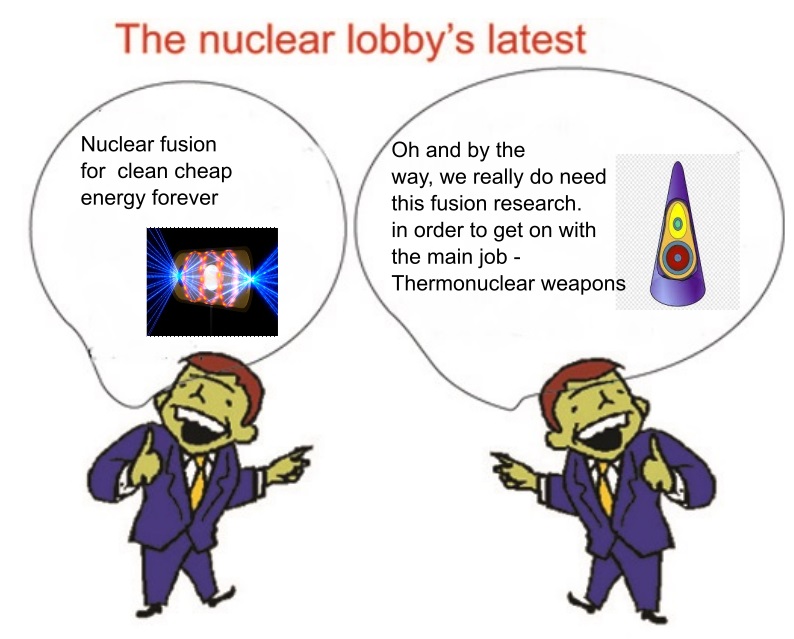
Concern over the risks of enabling nuclear weapons development is usually focused on nuclear fission reactors, but the potential harm from more advanced fusion reactors has been underappreciated
By Alex Wilkins, 8 May 2024
Fusion reactors could allow a country to accelerate its development of nuclear weapons, producing the necessary radioactive ingredients in as little as a few weeks.
Nuclear weapons need specific radioactive isotopes, normally uranium-235 or plutonium-239, that can be easily split and start a chain reaction. This so-called fissile material is rare in nature, but can be produced artificially by a source that produces a lot of neutrons, such as a nuclear fission reactor of the kind in use today.… (Subscribers only) more https://www.newscientist.com/article/2430012-fusion-reactors-could-create-ingredients-for-a-nuclear-weapon-in-weeks/
1 This Month
26 September – International Day for the Total Elimination of Nuclear Weapons





PLEASE OPPOSE HR 8255 AND S.3639 – bills would accelerate satellite deployment, with no environmental review or safeguards – https://ncstd5li.quorum.us/campaign/169331/
To see nuclear-related stories in greater depth and intensity – go to https://nuclearinformation.wordpress.com
-
Archives
- September 2026 (305)
- August 2026 (330)
- July 2026 (355)
- June 2026 (287)
- May 2026 (306)
- April 2026 (356)
- March 2026 (251)
- February 2026 (267)
- January 2026 (308)
- December 2025 (358)
- November 2025 (359)
- October 2025 (375)
-
Categories
- 1
- 1 NUCLEAR ISSUES
- business and costs
- climate change
- culture and arts
- ENERGY
- environment
- health
- history
- indigenous issues
- Legal
- marketing of nuclear
- media
- opposition to nuclear
- PERSONAL STORIES
- politics
- politics international
- Religion and ethics
- safety
- secrets,lies and civil liberties
- spinbuster
- technology
- Uranium
- wastes
- weapons and war
- Women
- 2 WORLD
- ACTION
- AFRICA
- Atrocities
- AUSTRALIA
- Christina's notes
- Christina's themes
- culture and arts
- Events
- Fuk 2022
- Fuk 2023
- Fukushima 2017
- Fukushima 2018
- fukushima 2019
- Fukushima 2020
- Fukushima 2021
- general
- global warming
- Humour (God we need it)
- Nuclear
- RARE EARTHS
- Reference
- resources – print
- Resources -audiovicual
- Weekly Newsletter
- World
- World Nuclear
- YouTube
-
RSS
Entries RSS
Comments RSS

