Netanyahu Goes for Broke

In perfectly clear language, the Netanyahu government has effectively announced that its policy is to widen what is now the assault on Gaza, the IOF’s escalating aggressions in the West Bank and Israel’s provocations along Lebanon’s southern border.
If Netanyahu proceeds to provoke his many-front war, will the Biden regime or the administration that follows it continue to offer the “unconditional support” the U.S. has extended to Tel Aviv for many decades?
The Israeli prime minister has chosen this moment to mount a go-for-broke attempt to bring the U.S. into some kind of once-and-for-all conflict that would leave Israel supreme in the region
By Patrick Lawrence, Consortium News, 9 July, 24
It is a matter of record that the Zionist project has had extensive territorial designs on the lands known as Palestine since at least the early 20th century.
As others have argued, the Israelis’ openly racist assault on the Palestinians of Gaza is to be understood not as a sudden eruption of violence, a departure, but as an especially savage continuation of Zionist conduct for more than a century.
When history is brought to bear in this fashion, it becomes increasingly apparent that the invasion of Gaza since the events of last Oct. 7 ought not be seen in isolation. The more pathologically disturbed members of Benjamin Netanyahu’s freak-show regime — notably, but not only, Bezalel Smotrich and Itamar Ben–Givr, the finance and national security ministers — have never been shy on this point.
They are entirely dedicated to the restoration of Eretz Yisrael, the mystical Land of Israel, which, variously interpreted through the ages, could extend at the extreme from the Red Sea all the way to the Euphrates Valley.
But the crazed ultras to whom Netanyahu owes his political survival have not yet got far enough to turn their visions into articulated policy. Is this changing
This is our question, along with another: Is the Biden regime — or at this point its successor — prepared to “stand with Israel,” as American leaders like to put it, if extremist dreams of violent conquest turn into real, live political and military plans?I have been convinced for some time, as I gather that many Palestinians are, that when the Israel Occupation Forces are done in Gaza they will next turn to the West Bank. On this point I now correct myself: In my interpretation the IOF, in close collaboration with brutish Israeli settlers, has already begun its assault in the West Bank.
Attacking Hezbollah
Of late the Israelis have also been openly threatening to launch a full-scale attack on Hezbollah, the political and military movement that controls southern Lebanon. This, too, bears interpretation.
Douglas Macgregor, the retired colonel and now an energetic commentator on politico- military affairs, has no trouble putting together the 2–and–2 of this moment. Here he is last week on “Judging Freedom,” Andrew Napolitano’s webcast program:
“Whatever happened on the 7th of October, and I’m still not convinced that was not allowed to happen, … the decision then to attack had very little to do with what happened on the 7th of October and everything to do with a long-term strategic plan to begin the process of ethnically cleansing, expelling, or murdering, whatever you want to call it, the Arabs in Gaza and, ultimately, the Arabs on the West Bank.”
This seems right but short of the emerging reality. A few minutes later in his exchange with Macgregor, Napolitano played a clip of Netanyahu addressing a table of officials, at least some of whom are American, last Friday:
The first requirement is to cut that hand [he gestures as if to cut through his right forearm], Hamas. People who do these things to us are not going to be there. We will have a long battle, I don’t think it’s that long, but we’ll get rid of them. We also have to deter the other elements of the Iran terror axis. We have to deal with the axis.
“Iran is fighting us on a seven-front war. Obviously, Hamas and Hezbollah. The Houthis, militias in Iraq and Syria. Judea and Samaria on the West Bank. Iran itself.
They’d like to topple Jordan. Their goal is to have a combined ground offensive from their various fronts, coupled with combined missile bombardments. We’ve been given the opportunity to scuttle it. And we will.
The axis doesn’t threaten only us. It threatens you. It’s on the march to conquer the Middle East — conquer the Middle East — conquer. That means conquer Saudi Arabia, conquer the Arabian Peninsula, it’s just a question of time. And what’s standing in their way is a small Satan, that’s us, on the road to the middle-sized Satan, that’s the Europeans — they’re always offended when I tell them that — ‘You’re the great Satan!’ And we have to stop that.”
So far as I know — and more in this line may be said regularly in Netanyahu’s closed-door cabinet meetings — this is the Israeli prime minister’s most explicit statement to date of how apartheid Israel understands the Middle East and its place in it. The danger of this vision will be immediately obvious.
In perfectly clear language, the Netanyahu government has effectively announced that its policy is to widen what is now the assault on Gaza, the IOF’s escalating aggressions in the West Bank and Israel’s provocations along Lebanon’s southern border. However much these statements reflect political pressure the extremists in his cabinet are exerting on Netanyahu, official policy is moving in their direction.
We already see this pattern, as noted, in the West Bank territories. As The New York Times reported last week, illegal settlers, under IOF protection, have stolen more land from Palestinians so far this year, typically at gunpoint, than at any time since the Oslo Accords were signed in 1993. West Bank sources report that up to 9,000 Palestinians have been arrested since the events of last October — mostly boys and young men, those typically inclined to organize an armed resistance movement.
In my read this is the West Bank’s version of the assault on Gaza. No F–16s, tanks, or heavy artillery this time: Deploying these would risk serious international opprobrium. No, the West Bank campaign will be waged more or less invisibly — a farm or an olive grove, a village or a murdered teenager or a kilometer of road at a time.
The US & Israeli Supremacy
The larger war, the war beyond the West Bank, is of course another matter. Israel knows full well it is incapable of waging anything like a “seven-front war” on its own: It is failing in the Gaza Strip as we speak.
Netanyahu has chosen this moment to mount a go-for-broke attempt to bring the U.S. into some kind of once-for-all conflict that would leave Israel supreme in the region — and so would instantly threaten to be the world’s most dangerous war — since who knows when.
We come to the second of the questions noted earlier. If Netanyahu proceeds to provoke his many-front war, will the Biden regime or the administration that follows it continue to offer the “unconditional support” the U.S. has extended to Tel Aviv for many decades?
I wish this were a more interesting question than it actually is. If Donald Trump retakes the White House, whatever modest restraints Washington may now feel — as the barbarities in Gaza continue — will disappear. But what about Biden, on the very off chance he runs in November, and the very, very off chance he wins? What about a Democratic successor who defeats Trump?
There is the obnoxiously pronounced confidence Netanyahu displays when describing a wider war well beyond Israel’s capabilities. And there is the power the Israel lobby exerts in Washington, not least over Biden, who has received more funds from the American Israel Public Affairs Committee, AIPAC — more than $4 million during his Senate years alone — than anyone else holding elected office.
Late last month the U.S. Navy made one of those quiet logistical moves that sometimes seem to reveal more than intended. It sent an amphibious assault ship, the USS Wasp, into the waters of the eastern Mediterranean off the Lebanese coast. Among its other capabilities, the Wasp is designed to manage large-scale evacuations.
But an American official told The Associated Press, a little defensively I’d say, “It’s about deterrence,” implying the deployment is part of Washington’s diplomatic effort to prevent a dangerous war between Israel and Hezbollah.
Wait a minute. Just who is the Wasp intended to deter? Neither Hezbollah nor Iran wants a war with Israel any more than the U.S. wants to see one. No need of deterrence there.
And a ship off the Lebanese coast is not going to deter Israel: It stands unambiguously to encourage “the Jewish state” in its effort to bait the U.S. into the big war for which it spoils.
While one ship near Lebanese waters does not signal any grand new commitment to a grand new war — let us not over-interpret — the message seems clear: We don’t want a new war on our hands, Bibi, but if you provoke one, well, we’ll have to be there for you, “standing with Israel.”
I have written this previously but it bears repeating now: In Israel the U.S. has a Frankenstein’s monster on its hands, and there seems little prospect of anyone in Washington having the intelligence and courage to disconnect the electrodes.
However dangerous the Netanyahu regime makes the Middle East, will be precisely the danger in which the U.S. will find itself.
Patrick Lawrence, a correspondent abroad for many years, chiefly for The International Herald Tribune, is a columnist, essayist, lecturer and author, most recently of Journalists and Their Shadows, available from Clarity Press or via Amazon. Other books include Time No Longer: Americans After the American Century. His Twitter account, @thefloutist, has been permanently censored.
Wall Street Journal finally admits high-tech Western weapons ‘useless’ in Ukraine conflict
https://www.rt.com/russia/600809-western-weapons-useless-ukraine/ 10 July 24
Satellite-guided shells are particularly vulnerable to Russian jamming technology, commanders in Kiev have told the newspaper.
Russia’s electronic warfare capabilities have rendered precision-guided Western munitions “useless” in the Ukraine conflict, the Wall Street Journal reported on Wednesday. With their guidance systems scrambled, some of these weapons have reportedly been retired within weeks of hitting the battlefield.
When the US announced the delivery of GPS-guided Excalibur artillery shells to Ukraine in 2022, pro-Kiev outlets predicted that the $100,000-per-shot projectiles would make “Ukrainian artillery a whole lot more accurate” and “cause Russia a world of pain.”
However, the Russian military adapted within weeks, Ukrainian commanders told the Wall Street Journal. Russian signal-jamming equipment was used to feed false coordinates to the shells and interfere with their fuses, causing them to veer off course or fall to the ground as duds.
“By the middle of last year, the M982 Excalibur munitions, developed by RTX and BAE Systems, became essentially useless and are no longer employed,” the newspaper stated, paraphrasing the Ukrainian commanders.
The Soviet Union invested heavily in electronic warfare (EW) during the 1980s, viewing jamming technology as a crucial bulwark against the guided missiles and shells that the US was beginning to develop at the time. While weapons such as the 1990s-era Excalibur shells were used by the US to devastating effect in Iraq and Afghanistan, officials and analysts in Washington have since concluded that they are far less effective against a peer-level opponent like Russia.
“The Russians have gotten really, really good” at interfering with guided munitions, US Deputy Secretary of Defense for Acquisition and Sustainment William LaPlante told the WSJ.
Retired US General Ben Hodges, who once predicted that Western weapons would help Ukraine seize Crimea by last winter, told the newspaper that “we probably made some bad assumptions because over the last 20 years we were launching precision weapons against people that could not do anything about it… and Russia and China do have these capabilities.”
Some of NATO’s most advanced weapons systems have met a similar fate in Ukraine. The newly-developed Ground-Launched Small Diameter Bomb (GLSDB), a joint project of Boeing in the US and Saab in Sweden, was given to Ukraine earlier this year, with Kiev’s troops firing these GPS-guided munitions before their American counterparts. However, it has since been pulled from the battlefield after it proved completely ineffective against Russian EW.
Likewise, Russian EW has significantly blunted the accuracy of Ukraine’s Western-provided GMLRS missiles, which are fired from the HIMARS multiple-launch rocket system, Ukrainian soldiers told the WSJ. As with the Excalibur shells, GMLRS missiles were once described by pro-Kiev pundits and analysts as a “game changer” that would swing the conflict in Ukraine’s favor.
Russia has long insisted that no amount of Western weapons systems will prevent it from achieving victory. Supplying these weapons is a “futile project” that will only encourage Kiev to “commit new crimes,” Moscow’s ambassador to Washington, Anatoly Antonov, warned last week.
Comment: Russia has followed two tracks in its military development: cheap, mass-production of drones, armoured vehicles and tanks, and cutting-edge research in electronic warfare first deployed in Syria. The two combined make the outcome of the Ukraine conflict inevitable.
- Ex-Pentagon official says US lags behind Russia in electronic warfare
- Another warning to U.S. warhawks? Russia unveils its Electronic Warfare systems
- Russia using super-advanced electronic warfare to keep NATO/ISIS blind in Syria
- WaPo reports Russian jamming technology is rendering much US-supplied weaponry ‘ineffective’
- New York Times reports Kiev’s drones losing electronic war to Russia
- Ukraine’s defense chief admits Russia is jamming HIMARS rockets
- Invisible Shield, Invisible Sword: Russia’s electronic warfare is ‘second to none’
‘Horrific Massacre’: Israel Bombs Gaza School Used as Refugee Camp, Killing Dozens.
“Schools have gone from safe places of education and hope for children to overcrowded shelters and often ending up a place of death and misery,” said UNRWA’s commissioner-general.
JAKE JOHNSON, Jul 10, 2024 https://scheerpost.com/2024/07/10/horrific-massacre-israel-bombs-gaza-school-used-as-refugee-camp-killing-dozens/
Israeli forces killed dozens of people Tuesday in an airstrike on a school-turned-refugee camp in the southern Gaza Strip, the fourth school Israel’s military has bombed in as many days as the country continues its massive assault on the enclave’s starving population.
At least 29 people were killed and dozens more were wounded in Tuesday’s attack, including women and children—who have made up roughly two-thirds of those killed in Israel’s latest assault on Gaza, which began following a Hamas-led attack in October. The death toll from Tuesday’s attack is expected to rise, as many of those injured were reportedly in critical condition and taken to the under-resourced and overwhelmed Nasser Hospital.
The Israel Defense Forces (IDF) acknowledged carrying out the airstrike—which hit the entrance of the school—but claimed to be targeting a Hamas militant “adjacent” to the complex. The IDF, whose internal investigations rarely result in accountability for atrocities, said the “incident is under review.”
Video footage posted to social media shows displaced Palestinians playing in the schoolyard when the airstrike hit, sparking panic and chaos. [Video on original –Warning: The footage is graphic]
Citing witnesses, the BBC reported that “the area was teeming with displaced people at the time” of the airstrike, which “resulted in widespread destruction and the deaths of women and children.”
“Body parts were scattered across the site and many people staying in tents outside the school were also injured,” the British outlet reported. “Ayman Al-Dahma, 21, told the BBC there had been as many as 3,000 people packed into the area at the time, which he said housed a market and residential buildings. Describing the number of casualties as ‘unimaginable,’ he said he had seen people whose limbs had been severed by the blast.”
Tuesday’s attack marked the fourth time in four days that the IDF has attacked a school in the Gaza Strip, according to Agence France-Presse. Over the weekend, Israeli forces killed more than a dozen Palestinians in an attack on a United Nations-run school in central Gaza.
Most of Gaza’s education infrastructure has been damaged or completely destroyed by Israeli forces, and the schools still standing are being used to shelter those displaced by the IDF assault, which is now in its 10th month. The United Nations estimates that 90% of Gaza’s population has been internally displaced since October, with some displaced up to 10 times.
Canadians for Justice and Peace in the Middle East called the IDF’s latest attack “a horrific massacre,” adding, “Annihilation is the point.”
“Nothing can justify Canada’s failure to act,” the group wrote on social media.
Canada is one of a number of major countries that have supplied weaponry to the Israeli government as it has carried out its utter devastation of the Gaza Strip, nearly all of which is now uninhabitable.
The United States and Germany together provided 99% of the arms Israel imported last year, according to the Stockholm International Peace Research Institute. Germany’s Foreign Office called Wednesday’s attack “unacceptable” and demanded a swift investigation.
“People seeking shelter in schools getting killed is unacceptable. Civilians, especially children, must not get caught in the crossfire,” the foreign office said. “The repeated attacks on schools by the Israeli army must stop.”
Philippe Lazzarini, commissioner-general of the U.N. Relief and Works Agency for Palestine Refugees in the Near East (UNRWA), said Wednesday that “schools have gone from safe places of education and hope for children to overcrowded shelters and often ending up a place of death and misery.”
“Nine months in, under our watch, the relentless, endless killings, destruction, and despair continue. Gaza is no place for children,” he added. “The blatant disregard of international humanitarian law cannot become the new normal… Cease-fire now before we lose what is left of our common humanity.”
Pentagon keeps commitment to Sentinel nuclear missile as costs balloon
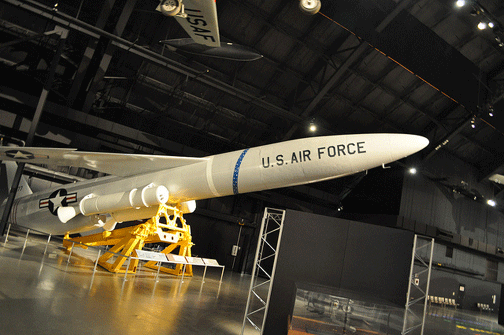
Defense news, By Stephen Losey 8 July 24
The military will continue developing its new LGM-35A Sentinel intercontinental ballistic missile but has told the U.S. Air Force to restructure the program to get its ballooning costs under control.
Even a “reasonably modified” version of the Northrop Grumman-made Sentinel will likely cost $140.9 billion, 81% more than the program’s original cost estimate of $77.7 billion, the Pentagon said in a statement. If Sentinel continues on its current path without being modified, the likely cost will be about $160 billion, it said.
And the military expects restructuring the program will delay it by several years.
“There are reasons for this cost growth, but there are also no excuses,” William LaPlante, undersecretary of defense for acquisition and sustainment, said in a conference call with reporters on Monday. “We fully appreciate the magnitude of the costs, but we also understand the risks of not modernizing our nuclear forces and not addressing the very real threats we confront.”
The Sentinel is intended to replace the Air Force’s half-decade old Minuteman III nuclear missile, which is nearing the end of its life. In January, the Air Force announced Sentinel’s future costs were projected to run over budget severely enough to trigger a review process known as a critical Nunn-McCurdy breach.
Such a review can sometimes lead to a program being canceled. LaPlante said Monday he decided to proceed with Sentinel after concluding it met several criteria, including that it is essential to national security and there were no cheaper alternatives that would meet the military’s operational requirements.
Big changes are coming for Sentinel, however. LaPlante rescinded the program’s Milestone B approval, which in September 2020 authorized the program to move into its engineering and manufacturing development phase. He also ordered the Air Force to restructure the program to address the root causes of the cost overruns and make sure it has the right management structure to keep its future price down.
The per-unit total cost for Sentinel was originally $118 million in 2020, when its cost, schedule and performance goals were set. When the Nunn-McCurdy breach was announced in January, those per-unit costs had grown at least 37% to about $162 million.
Hunter said the per-unit cost for the revised Sentinel program — which include components in addition to its missiles — is estimated to be about $214 million……………………………. more https://www.defensenews.com/air/2024/07/08/pentagon-keeps-commitment-to-sentinel-nuclear-missile-as-costs-balloon/—
The Lancet study estimates death toll in Gaza 186,000 or even more
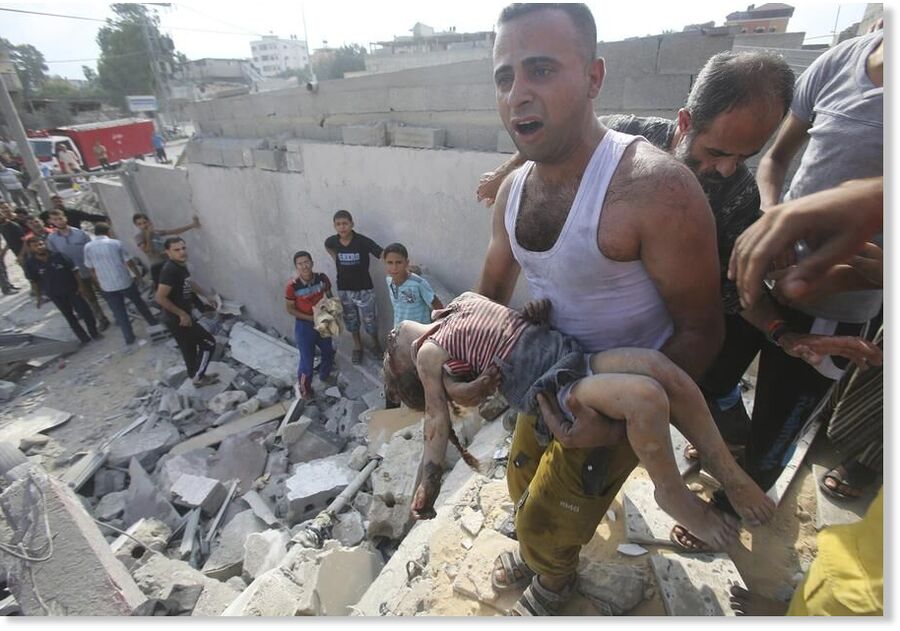
Maktoob Staff, 8 July 24, https://maktoobmedia.com/gaza-genocide/the-lancet-study-estimates-death-toll-in-gaza-186000-or-even-more/
Applying a conservative estimate of four indirect deaths per one direct death reported in Gaza, a new study published respected medical journal The Lancet said it is “not implausible” to estimate that up to 186,000 or even more deaths could be attributable to the genocidal war in Gaza.
The paper titled ‘Counting the dead in Gaza: difficult but essential’, published on 05 July, stated that using the 2022 Gaza Strip population estimate of 2,375,259, the estimated death toll would translate to 7·9% of the total population in the besieged enclave.
On Sunday, the Palestinian health ministry said that at least 38,153 Palestinians have been killed by Israel in Gaza since October 07 while more than 87,828 have been wounded in the besieged enclave. 15,983 of them are children.
The study by Rasha Khatib, Martin McKee and Salim Yusuf, used the data from June 19, with the official death toll of 37, 396. The official record maintained by the Gaza Health Ministry doesn’t include over 10,000 people missing or buried under the rubbles.
“The Ministry has had to augment its usual reporting, based on people dying in its hospitals or brought in dead, with information from reliable media sources and first responders. This change has inevitably degraded the detailed data recorded previously. Consequently, the Gaza Health Ministry now reports separately the number of unidentified bodies among the total death toll. As of May 10, 2024, 30% of the 35,091 deaths were unidentified,” observed the paper.
It also pointed out that armed conflicts have “indirect health implications beyond the direct harm from violence”.
“Even if the conflict ends immediately, there will continue to be many indirect deaths in the coming months and years from causes such as reproductive, communicable, and non-communicable diseases,” the paper read.
A report from Feb 7, 2024, at the time when the direct death toll was 28,000, estimated that without a ceasefire there would be between 58260 deaths (without an epidemic or escalation) and 85750 deaths (if both occurred) by Aug 6, 2024.
The interim measures set out by the International Court of Justice in January, require Israel to “take effective measures to prevent the destruction and ensure the preservation of evidence related to allegations of acts within the scope of … the Genocide Convention”.
“An immediate and urgent ceasefire in the Gaza Strip is essential, accompanied by measures to enable the distribution of medical supplies, food, clean water, and other resources for basic human needs,” the paper read.
Gaza deal must allow Israel to keep fighting – Netanyahu

https://www.sott.net/article/492916-Gaza-deal-must-allow-Israel-to-keep-fighting-Netanyahu 8 July 24
The Israeli prime minister’s statement comes after Hamas accepted a key part of a ceasefire proposal
Any potential ceasefire deal in Gaza must allow Israel to resume fighting until all of its war objectives are met, Prime Minister Benjamin Netanyahu said on Sunday. One of the main goals repeatedly voiced by the PM is the complete elimination of the Hamas militant group.
Netanyahu’s statement comes after Hamas approved a US proposal for a phased ceasefire deal, dropping a key demand for Israel to first commit to a permanent ceasefire before signing the deal, according to a Reuters source.
Hamas expects to end hostilities through talks during the first six-week phase of the deal aimed at settling the conflict in Gaza, the outlet said.
However, the Palestinian militant group wants written guarantees from international mediators that Israel will continue to negotiate a permanent ceasefire when the first phase of the deal comes into effect. The hostage issue will also be addressed after the first phase is implemented.
Hamas officials have said they are awaiting Israel’s response to the latest proposal. Netanyahu insisted on Sunday, however, that any deal must “allow Israel to go back to fighting until all the goals of the war are achieved.”
According to media reports, Netanyahu was scheduled to hold consultations on the next steps, but his latest statement has hindered the deal’s momentum.
“The plan that has been agreed-to by Israel and which has been welcomed by President Biden will allow Israel to return hostages without infringing on the other objectives of the war,” Netanyahu insisted.
Talks mediated by Qatar, Egypt and the US have so far failed to secure a truce in Gaza or the release of hostages since a weeklong ceasefire in November resulting in the freeing of 105 hostages from Gaza and 240 Palestinian prisoners.
Israel began its operation in Gaza in response to a cross-border incursion by Hamas last October in which at least 1,200 people were killed and 250 taken hostage. Some 116 captives are believed to be still held in Gaza.
Over 38,000 people have been killed so far and more than 87,000 others have been wounded in Israeli attacks on the Palestinian enclave, according to Gaza’s health ministry.
Comment: What kind of ceasefire is this if it must “allow Israel to go back to fighting until all the goals of the war are achieved.”?!
See also: Best of the Web: The Lancet study estimates death toll in Gaza 186,000 or even more and the reflections in SOTT Focus: The Burqa Ban Question
Civil War in Donbass 10 Years On
Zelensky did initially try to resolve the Donbass conflict through diplomatic means. In October 2019, he moved to hold a referendum on “special status” for the breakaway republics in a federalized Ukraine, while personally meeting with representatives of Azov Battalion, begging them to lay down their arms and accept the compromise. Mockingly rebuffed and threatened by the Neo-Nazi group’s leaders, while rocked by nationalist protests against the proposed plebiscite in Kiev, the plans were dropped. So then the President picked the “worst option”.
KIT KLARENBERG, JUL 08, 2024 https://www.kitklarenberg.com/p/civil-war-in-donbass-10-years-on
July 1st marked the 10th anniversary of a brutal resumption of hostilities in the Donbass civil war. Perhaps unsurprisingly, it passed without comment in the Western media. 10 years earlier, Ukrainian President Petro Poroshenko called a ceasefire in Kiev’s “anti-terrorist operation”. Launched two months prior following vast protests, and violent clashes between Russian-speaking pro-federal activists and authorities throughout eastern Ukraine, the intended lightning strike routing of internal opposition to the Maidan government quickly became an unwinnable quagmire.
Ukrainian forces were consistently beaten back by well-organised and determined rebel forces, hailing from the breakaway “People’s Republics” in Donetsk and Lugansk. Resultantly, Poroshenko outlined a peace plan intended to compel the separatists to put down their arms. They refused to do so, prompting the President to order an even more savage crackdown. This too was a counterproductive failure, with the rebels inflicting a series of embarrassing defeats on Western-sponsored government forces. Kiev was ultimately forced to accept the terms of the first Minsk Accords.
This agreement, like its successor, did not provide for secession or independence for the breakaway republics, but their full autonomy within Ukraine. Russia was named as a mediator, not party, in the conflict. Kiev was to resolve its dispute with rebel leaders directly. Successive Ukrainian governments consistently refused to do so, however. Instead, officials endlessly stonewalled, while pressuring Moscow to formally designate itself a party to the civil war.
No wonder – had Russia accepted, Kiev’s claims that its savage assault on the civilian population of Donbass was in fact a response to invasion by its giant neighbour would’ve been legitimised. In turn, all-out Western proxy war in eastern Ukraine, of the kind that erupted in February 2022, could’ve been precipitated. Which, it is increasingly clear, was the plan all along.
‘Grassroots Movement’
In the days prior to the April 2014 launch of Kiev’s “anti-terrorist operation” in Donbass, notorious war hawk Samantha Power, now USAID chief, openly spoke on ABC of “tell-tale signs of Moscow’s involvement” in the unrest. “It’s professional, coordinated. Nothing grassroots about it,” she alleged. Such framing gave Ukrainian officials, their foreign backers, and the mainstream media licence to brand the brutal operation a legitimate response to a fully-fledged, if unacknowledged, “invasion” by Russia. It is referred to as such in many quarters today.
Yet, at every stage of the Donbass conflict, there were unambiguous indications that the Ukrainian government’s claims of widespread Russian involvement – endorsed by Western governments, militaries, intelligence agencies, pundits and journalists – were fraudulent. One need look no further than the findings of a 2019 report published by the George Soros-funded International Crisis Group (ICG), Rebels Without A Cause. Completely unremarked upon in the mainstream, its headline conclusions are stark:
“The conflict in eastern Ukraine started as a grassroots movement…Demonstrations were led by local citizens claiming to represent the region’s Russian-speaking majority.”
ICG noted that Russian leaders were from the start publicly and privately sympathetic to Russian-speakers in Donbass. Nonetheless, they issued no “clear guidance” to businessmen, government advisers or the domestic population on whether – and how – they would be officially supported by Moscow in their dispute with the Maidan government. Hence, many Russian irregulars, encouraged by “what they regarded as the government’s tacit approval, made their way to Ukraine.”
Per ICG, it was only after the conflict started that the Russian government formalised a relationship with the Donbass rebels, although the Kremlin quickly changed tack on what they should do. A Ukrainian fighter told the organisation that he “began hearing calls for restraint in rebel efforts to take control of eastern Ukrainian towns and cities” in late April 2014. However, “the separatist movement in Donbass was determined to move ahead.”
Due to this lack of control, and repeated calls for direct intervention in the conflict from the rebels, Russia replaced the Donetsk and Lugansk rebel leadership with hand-picked figures, who took an explicitly defensive posture. But the Kremlin was ultimately “beholden” to the breakaway republics, not vice versa. It could not even reliably order the rebels to stop fighting. A Lugansk paramilitary told ICG:
“What do you do with 40,000 people who believe that, once they put down their arms, they will all be shot or arrested? Of course, they are going to fight to the death.”
Elsewhere, the report cited data provided by “Ukrainian nationalist fighters”, which showed rebel casualties to date were “overwhelmingly” Ukrainian citizens. This was at odds with the pronouncements of government officials, who invariably referred to them as “Russian mercenaries” or “occupiers”. More widely, figures within far-right President Petro Poroshenko’s government had routinely claimed Donbass was wholly populated by Russians and Russia-sympathisers.
One Ukrainian minister was quoted in the report as saying he felt “absolutely no pity” about the extremely harsh conditions suffered by Donbass civilians, due to the “legal, political, economic and ideological barriers isolating Ukrainian citizens in rebel-held territories” constructed by Kiev. This included enforcing a crippling blockade on the region in 2017, which created a “humanitarian crisis”, and left the population unable to claim pensions and welfare payments, among other gruelling hardships.
Several Donbass inhabitants interviewed by ICG expressed nostalgia for the Soviet Union. Most felt “under attack” by Kiev. A pensioner in Lugansk, whose “non-combatant son” was killed by a Ukrainian sniper, asked how Poroshenko could claim the territory was “a crucial part” of Ukraine: “then why did they kill so many of us?”
‘Worst Option’
In conclusion, ICG declared the situation in Donbass “ought not to be narrowly defined as a matter of Russian occupation,” while criticising Kiev’s “tendency to conflate” the Kremlin with the rebels. The organisation expressed optimism newly-elected President Volodymyr Zelensky could “peacefully reunify with the rebel-held territories,” and “[engage] the alienated east.” Given present day events, its report’s conclusions were eerily prescient:
“For Zelensky, the worst option…would be to try to forcibly retake the territories, as an all-out offensive would likely provoke a military response from Moscow and a bloodbath in Donbass. It could even lead Moscow…to recognise the statelets’ independence. The large-scale military option is mainly advocated by nationalists, not members of Ukraine’s political establishment. But some prominent mainstream politicians refuse to rule it out.”
Zelensky did initially try to resolve the Donbass conflict through diplomatic means.
Continue readingPhilippines Says US Will Pull Out Controversial Mid-Range Missile System
The US deployed the Typhon missile system for annual military drills
by Dave DeCamp July 4, 2024 ore https://news.antiwar.com/2024/07/04/philippines-says-us-will-pull-out-controversial-mid-range-missile-system/
On Thursday, the Philippines said the US was pulling out a new missile system it deployed to the Southeast Asian country for annual military exercises.
The US sent the Typhon missile system for the Balikatan exercises, which were held in April and May. The Typhon is a controversial launcher since it would have been banned by the Intermediate-Range Nuclear Forces (INF) Treaty, a treaty between the US and Russia that the Trump administration withdrew from in 2019.
The INF prohibited land-based missile systems with a range between 310 and 3,400 miles. The Typhon can launch nuclear-capable Tomahawk missiles, which have a range of about 1,000 miles. It can also fire SM-6 missiles, which can hit targets up to 290 miles away.
Philippine Col. Louie Dema-ala told AFP that the US planned to withdraw the Typhon from the Philippines following the military exercises. “As per plan… it will be shipped out of the country in September or even earlier,” he said. “The US Army is currently shipping out their equipment that we used during Balikatan and Salaknib (exercises).”
China strongly condemned the deployment of the Typhon system, which US officials have acknowledged was developed to prepare for a future conflict with Beijing over Taiwan or the South China Sea.
Russian President Vladimir Putin also recently mentioned the deployment. He made the comments when calling for Moscow to follow the US and develop missile systems previously banned by the INF.
“We need to start production of these strike systems and then, based on the actual situation, make decisions about where — if necessary to ensure our safety — to place them,” Putin said last week.
“Today it is known that the United States not only produces these missile systems, but has already brought them to Europe for exercises, to Denmark. Quite recently it was announced that they are in the Philippines,” the Russian leader added.
Trump allies are peddling a catastrophic idea for U.S. nuclear weapon policy

Resuming live testing could spark an arms race and will reduce American security.
By Zeeshan Aleem, MSNBC Opinion Writer/Editor, 6 July 24
Allies and former advisers to former President Donald Trump are arguing that the U.S., for the first time in decades, should resume nuclear testing. They say it’ll advance American safety by ensuring that the U.S. has a decisive military and technological advantage over other nuclear powers. In reality, the U.S. — and the world — would be made more dangerous by the kind of arms race this could spark. And it seems plausible that if Trump were to win the White House he could adopt the policy because of the manner in which it aligns with the unilateral militance of the “America First” worldview.
Influential figures in Trump’s orbit are pushing the idea of breaking long-held norms and resuming live nuclear testing. Former Trump national security adviser Robert O’Brien wrote in Foreign Affairs in June that “Washington must test new nuclear weapons for reliability and safety in the real world for the first time since 1992” in order to maintain technical superiority over China and Russia. Christian Whiton, who served as a State Department adviser to President George W. Bush and Trump, told The New York Times that “it would be negligent to field nuclear weapons of novel designs that we have never tested in the real world.” And the Heritage Foundation, the right-wing think tank that’s backing Project 2025, widely considered a policy blueprint for Trump’s second term, is proposing that the federal government expand its capacity for immediate nuclear testing.
Since 1992, the U.S. has refrained from explosive nuclear testing and opted for other techniques, including expert appraisals and sophisticated modeling generated by supercomputers, to calculate the efficacy of its long-term stockpile and its newer weapons. That policy has helped nudge other countries away from pursuing live testing. Most countries don’t conduct live tests of nuclear warheads in adherence to the Comprehensive Nuclear-Test-Ban Treaty.
Multiple nuclear proliferation experts say that if the U.S. resumes explosive testing, other countries will have more incentive to do so. “Resuming U.S. nuclear testing is technically and militarily unnecessary,” wrote Arms Control Association executive director Daryl Kimball in response to O’Brien’s article. “Moreover, it would lead to a global chain reaction of nuclear testing, raise global tensions, and blow apart global nonproliferation efforts at a time of heightened nuclear danger.” Kimball’s argument is in line with President Joe Biden’s outlook. During his 2020 presidential campaign, Biden endorsed the U.S. continuing to abstain from explosive testing and said a resumption would be “as reckless as it is dangerous.” …………………………………………………………………………..more https://www.msnbc.com/opinion/msnbc-opinion/trump-nuclear-policy-election-rcna160459
The obsolescence of war
War does not serve us. It represents the worst in humanity. Thankfully, we now have nonviolent tools to manage conflict in life-affirming ways.
Waging Non Violence Nadia Mejjati July 3, 2024
The proponents of war say that violence is necessary for “defense.” But is that true? Humanity has learned how to wipe itself out in a matter of minutes with just a fraction of its nuclear weapons capability. Our atrocious culture of violence shows thousands of children killed in cold blood like a relentless horror film playing out on social media. We have invented killer-drones to undertake massacres without personally witnessing the horrors inflicted. In the face of our threatened extinction as a species, we must do better. That starts with seeing war for what it is.
War is grotesque. It represents the worst of humanity: the cruelty of unharnessed anger and unhealed trauma, led by greedy leaders far from the frontlines, playing with human lives. No matter who wins or loses, the result is pain and increased trauma on both sides, fuelling further injustice and oppression.
Benjamin Casteillo describes, “In the past, dangers of hostility, scarcity and rejection were met with primal impulses of domination, accumulation and conformism, thus trapping a large part of humanity in self-perpetuating rivalries for power, resources and status. Yet, in the current context of exponential technological development which has resulted in weapons of mass destruction, multiplied extractive capacities, and amplified capacities for social engineering, these primal impulses are becoming increasingly obsolete and unsustainable, resulting in existential risks of catastrophic wars, ecosystems destruction and human obsolescence, threatening life itself.”
War does not create harmony. Despite this, we glorify it in our history classes when we could teach the history and practice of nonviolence, to our advantage. Erica Chenoweth and Maria Stephan provided us with statistical evidence that nonviolence is far more successful in reaching campaign objectives than violence. In other words, the belief that we must respond to violence with more violence to establish peace is now outdated by documented fact.
War is weak — especially compared to the hard work of nonviolent struggle, diplomacy and peacebuilding.
Transformational change takes courage and commitment. Nonviolence is not a wishy-washy choice we make because we have hippy parents. It is a response to the violence in our communities, our families, and most importantly, in ourselves. It is a dedicated yearning to find other ways to be, ways that favor life.
War is nonsensical, unless you profit from selling arms and destroying life. We face the ecological breakdown of our planet, while the military industrial complex is outrageously polluting, topping the fossil fuel consumption record, obliterating life and landscape. ……………………………………………………………………. more https://wagingnonviolence.org/cnv/2024/07/the-obsolescence-of-war/—
Now Keir Starmer Has to Decide If He’d Use Nukes
Becoming the British prime minister means giving top-secret orders—immediately—that could determine the fate of the world.
The Atlantic, By Brian Klaas, 5 July 24
Following a landslide victory for the Labour Party, Britain has a new leader. The moment Keir Starmer is officially made prime minister of the United Kingdom, he will be given a flurry of briefings, piles of documents, and the urgent business to run the country. Lurking among those papers is a moral land mine.
Starmer will be given a pen and four pieces of paper. On each paper, he must handwrite identical top-secret orders that—hopefully—no other human being will ever see. The previous set of orders, written by outgoing Prime Minister Rishi Sunak, will then be destroyed, unopened. These top-secret papers are called the “letters of last resort.”
Since 1969, Britain’s nuclear deterrent has operated at sea, with nuclear missiles that could be launched from at least one continuously deployed submarine. Destroying those vessels would eliminate the United Kingdom’s nuclear deterrent, so the secrecy of the patrolling submarine’s location is paramount. Once deployed, the submarine may not transmit messages, only receive them, to maintain its crucial cloak of concealment………………………. (Subscribers only) more https://www.theatlantic.com/international/archive/2024/07/british-election-nuclear-weapons/678919/
Europe is Quietly Debating a Nuclear Future Without the US

America has protected Europe with is nuclear umbrella for more than 70 years. In the era of Vladimir Putin and Donald Trump, the continent is quietly debating a different nuclear future.
Politico, By LAURA KAYALI, THORSTEN JUNGHOLT and PHILIPP FRITZ, 07/04/2024
In a castle near Stockholm, standing on a blue-curtained podium that hid the room’s gilt mirrors and sparkling chandeliers, French President Emmanuel Macron ripped open a debate that Europe had been avoiding not just for years but for decades.
Macron had chosen the time and place carefully; he was on a state visit to Sweden, one of the long-neutral European countries who decided in 2022 to join NATO in response to Russia’s full-scale invasion of Ukraine. He was sharing the stage with Sweden’s king and prime minister, and faced an audience of Swedish military cadets and officers who were recalibrating their mission and ideas about their country’s, and the continent’s, security. It was the last week of January, and Sweden’s final ratification as a NATO member was just weeks away. And he spoke in English, to make sure people outside of France and Sweden paid attention.
During the Cold War, Macron noted, “all the treaties were decided by the former USSR and USA. Everything that covered our territory was decided by the big guys in the room, not by the Europeans themselves.” Going forward, he said, looking around the audience to make sure his point was getting across, in the area of arms control, troop deployments and the entirety of Europe’s security architecture, that needs to change. “We have to be the one to decide,” Macron said.
The room of military officers was quiet. Macron hadn’t used the word “nuclear,” but he didn’t have to. A Swedish officer stood up and asked if France, as “the only EU country with an independent nuclear force,” had a “special responsibility” to protect the security of the continent’s northernmost region, the Arctic sea passage. In other words, was France prepared to use its nuclear weapons if Scandinavian countries were threatened from the north, presumably from Russia’s bases in the Arctic.?
“Definitely yes,” Macron responded without hesitation, as if he anticipated the question. “Part of our vital interest has a European dimension, which gives us a special responsibility, given precisely what we have and the deterrence capacity we have,” he added. ……………………………………………………………………………………………………….
Recently, Trump has been downplaying his threat to pull back from NATO, saying that he’ll keep the United States in NATO “100 percent.” But every time, he is still quick to add conditions on U.S. participation, including that allies keep up defense spending and “play fair.”
Both European and U.S. experts say it’s unlikely a Trump administration would decide to physically take out the nukes stationed in Europe. But nuclear deterrence depends on political credibility, and there’s an unspoken fear in Europe that Trump would be less willing to come to the aid of European allies than his predecessors. Would Putin be so confident that Trump would be willing to risk a nuclear war to save Estonia?
“The French and the British are going to have to think about their nuclear posture if Trump is elected and if he makes good on his threat to disengage from NATO,” said Daniel Fried, a former U.S. ambassador to Poland.
“It’s the first time since the 1960s that European countries have to question the American umbrella,” he added.
Macron’s ambitions for France’s nuclear deterrent haven’t exactly been a hit with his constituents, with far-right and far-left parties accusing him of selling out France’s sovereignty to the Europeans. But that hasn’t stopped him from continuing to promote the idea, mentioning it three more times in just the last few months.
Macron hasn’t provided many specifics about how exactly this arsenal would cover Europe, but has made clear that France would remain fully in charge: “It’s the President of the Republic as head of the armed forces who defines the engagement of this nuclear force in all its components and who defines France’s vital interests,” he told The Economist. “It’s not a question of changing that.” …………………………………………………………….
For its part, France has about 290 warheads, but is not a member of the NPG. In comparison, the U.S. has more than 5,000 nukes and Russia 5,580, according to a study by the Stockholm International Peace Research Institute.
At all times, London and Paris each have at least one nuclear-armed ballistic missile submarine patrolling the seas. A few days after the Russian invasion of Ukraine, Paris deployed three (out of four) submarines at the same time — an unprecedented level of alert. ……………………………………………………
It’s fair to say that quite a few European countries think that by reopening the debate over its nuclear umbrella, Europe has far more to lose than to gain. Chief among them is Germany, which has a history of saying no thank you to nuclear pushes from French presidents. …………………………………………………………………………………..
At least for now, the future of Europe’s conversation on nuclear deterrence depends on several high-stakes elections. Citizens from NATO’s three nuclear powers — the United States, the United Kingdom and France — are all going to the polls this year and NATO- and Euro-skeptics could soon be wielding power in both Paris and Washington.
That’s one reason why the topic is unlikely to be aired openly during the gathering of NATO leaders that will take place in Washington from July 9 to 11. “I do not expect European nuclear defense to be much of a topic at the summit,” one European diplomat said, “rather NATO will again affirm its deterrence and defense.”………………………….. more https://www.politico.com/news/magazine/2024/07/04/europe-us-nuclear-weapons-00166070
Trump Advisers Call for U.S. Nuclear Weapons Testing if He Is Elected

A former national security adviser says Washington “must test new nuclear weapons for reliability and safety in the real world,” while critics say the move could incite a global arms race that heightens the risk of war.
New York Times, By William J. Broad, 5 July 24
Allies of Donald J. Trump are proposing that the United States restart the testing of nuclear weapons in underground detonations should the former president be re-elected in November. A number of nuclear experts reject such a resumption as unnecessary and say it would threaten to end a testing moratorium that the world’s major atomic powers have honored for decades.
In the latest issue of Foreign Affairs magazine, Robert C. O’Brien, a former national security adviser to Mr. Trump, urges him to conduct nuclear tests if he wins a new term. Washington, he wrote, “must test new nuclear weapons for reliability and safety in the real world for the first time since 1992.” Doing so, he added, would help the United States “maintain technical and numerical superiority to the combined Chinese and Russian nuclear stockpiles.”
At the Cold War’s end, in 1992, the United States gave up the explosive testing of nuclear arms and eventually talked other atomic powers into doing likewise. The United States instead turned to experts and machines at the nation’s weapons labs to verify the lethality of the country’s arsenal. Today the machines include room-size supercomputers, the world’s most powerful X-ray machine and a system of lasers the size of a sports stadium.
In his article, Mr. O’Brien described such work as just “using computer models.” Republican members of Congress and some nuclear experts have faulted the nonexplosive testing as insufficient to assure the U.S. military establishment that its arsenal works, and have called for live tests.
But the Biden administration and other Democrats warn that a U.S. test could lead to a chain reaction of testing by other countries. Over time, they add, resumption could result in a nuclear arms race that destabilizes the global balance of terror and heightens the risk of war.
“It’s a terrible idea,” said Ernest J. Moniz, who oversaw the U.S. nuclear arsenal as the secretary of energy in the Obama administration. “New testing would make us less secure. You can’t divorce it from the global repercussions.”
Siegfried S. Hecker, a former director of the Los Alamos weapons lab in New Mexico where J. Robert Oppenheimer led the creation of the atomic bomb, called new testing a risky trade-off between domestic gains and global losses. “We stand to lose more” than America’s nuclear rivals would, he said.
It’s unclear if Mr. Trump would act on the testing proposals. In a statement, Chris LaCivita and Susie Wiles, Mr. Trump’s co-campaign managers, did not directly address the candidate’s position on nuclear testing. They said that Mr. O’Brien as well as other outside groups and individuals were “misguided, speaking prematurely, and may well be entirely wrong” about a second Trump administration’s plans.
Even so, Mr. Trump’s history of atomic bluster, threats and hard-line policies suggests that he may be open to such guidance from his security advisers. In 2018, he boasted that his “Nuclear Button” was “much bigger & more powerful” than the force controller of Kim Jong Un, the North Korean leader.
A U.S. detonation would violate the Comprehensive Test Ban Treaty, long considered one of the most successful arms control measures. Signed by the world’s atomic powers in 1996, it sought to curb a costly arms race that had spun out of control……………………………………………………………… more https://www.nytimes.com/2024/07/05/science/nuclear-testing-trump.html
Tensions with Iran spotlight Israel’s hidden nuclear arsenal
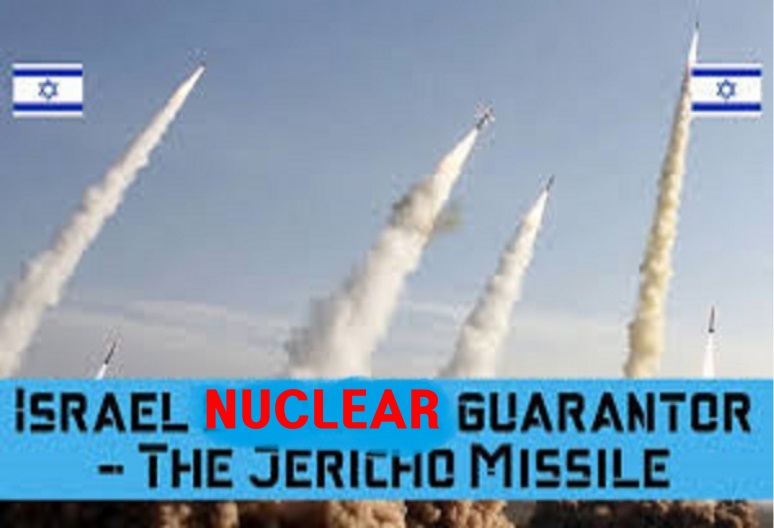
Business Insider, Paul Iddon , Jul 4, 2024
- Israel is one of the world’s few countries armed with nukes and multiple means to deliver them.
- An Israeli aerospace official recently broached these “doomsday weapons.”
- “Israel’s triad remains remarkably powerful for a country its size,” an aviation expert said.
The prospect of a full-scale war between Israel and the powerful Hezbollah militia in Lebanon has sent tensions spiking and briefly highlighted the power of Israel’s undeclared nuclear weapons.
Israel is one of the world’s few countries armed with nukes and multiple means to deliver them, a capability recently referenced by an Israeli official with a leading government-run aerospace manufacturer.
“If we understand that there is an existential danger here, and that Iran, Yemen, Syria, Iraq and all the countries of the Middle East decide that it is time to settle against us, I understand that we have the capabilities to use doomsday weapons,” Yair Katz, chairman of the Israel Aerospace Industries Workers’ Council, reportedly said on Saturday.
He was speaking a day after Iran’s United Nations mission warned that “an obliterating war will ensue” if Israel commits “full-scale military aggression” against the Iran-backed Hezbollah in Lebanon. It also declared that in this scenario, “all options” are on the table, including “the full involvement of all resistance fronts,” a clear reference to Iran’s militia proxies in Iraq, Syria, and Yemen, the other countries Katz specifically mentioned.
By invoking doomsday weapons, it was clear Katz was alluding to Israel’s nuclear weapons arsenal — an arsenal over which neither he nor IAI have any command-and-control. But his use of the word “capabilities” is a reminder that Israel has ground, air, and sea-based delivery systems for its nuclear weapons. In other words, a complete nuclear triad……………………………………………………………………………………………………………….
“The true second strike threat for Israel is the United States itself, which in a theoretical nuclear war scenario would almost certainly retaliate on Israel’s behalf should it ever suffer a first strike from a nuclear rival,” Bohl said. “This makes it so that a second strike capability is important in terms of deterrence for full-scale escalation from a power like Iran.”
“But from a strictly tactical perspective, it would be the United States that truly serves as Israel’s most effective second strike system.” https://www.businessinsider.com/iran-hezbollah-israel-hidden-nuclear-weapons-arsenal-2024-7
NATO Members Agree To Give Ukraine $43 Billion in Military Aid for 2025

The pledge will be made at next week’s NATO summit, where Ukraine is also expected to be told it’s too corrupt to join the alliance
by Dave DeCamp July 4, 2024 , https://news.antiwar.com/2024/07/04/nato-members-agree-to-give-ukraine-43-billion-in-military-aid-for-2025/
NATO allies have agreed to pledge $43 billion in military aid for Ukraine, which will be provided next year, Reuters reported on Wednesday.
NATO Secretary-General Jens Stoltenberg was looking for the alliance to make a multi-year commitment to ensure long-term support for the proxy war, but the allies did not agree. Instead, they will re-evaluate military aid for Ukraine each year.
The agreement says that NATO allies will “aim to meet this pledge through proportionate contributions.” If the $43 billion is funded based on how much each member contributes to NATO, most of the burden would be on the US since it pays for about two-thirds of the alliance’s budget.
The $43 billion is part of a slew of measures NATO will announce at its summit next week in Washington. NATO is also expected to station a civilian official in Kyiv and establish a new command in Germany that will oversee military aid and training for Ukraine, taking over duties currently overseen by the US.
While planning to provide tens of billions in new military aid, NATO will also tell Ukraine that it’s too corrupt to join the alliance. The Telegraph reported this week that the alliance will release a communique calling on Ukraine to take more anti-corruption steps before talks on its NATO membership could progress.
President Biden has frequently cited Ukraine’s corruption as a reason why the country couldn’t join NATO. But that hasn’t stopped him from providing over $100 billion in aid to Ukraine, which includes tens of billions in the form of direct budgetary aid that funds the government.
1 This Month
26 September – International Day for the Total Elimination of Nuclear Weapons





PLEASE OPPOSE HR 8255 AND S.3639 – bills would accelerate satellite deployment, with no environmental review or safeguards – https://ncstd5li.quorum.us/campaign/169331/
To see nuclear-related stories in greater depth and intensity – go to https://nuclearinformation.wordpress.com
-
Archives
- September 2026 (291)
- August 2026 (330)
- July 2026 (355)
- June 2026 (287)
- May 2026 (306)
- April 2026 (356)
- March 2026 (251)
- February 2026 (267)
- January 2026 (308)
- December 2025 (358)
- November 2025 (359)
- October 2025 (375)
-
Categories
- 1
- 1 NUCLEAR ISSUES
- business and costs
- climate change
- culture and arts
- ENERGY
- environment
- health
- history
- indigenous issues
- Legal
- marketing of nuclear
- media
- opposition to nuclear
- PERSONAL STORIES
- politics
- politics international
- Religion and ethics
- safety
- secrets,lies and civil liberties
- spinbuster
- technology
- Uranium
- wastes
- weapons and war
- Women
- 2 WORLD
- ACTION
- AFRICA
- Atrocities
- AUSTRALIA
- Christina's notes
- Christina's themes
- culture and arts
- Events
- Fuk 2022
- Fuk 2023
- Fukushima 2017
- Fukushima 2018
- fukushima 2019
- Fukushima 2020
- Fukushima 2021
- general
- global warming
- Humour (God we need it)
- Nuclear
- RARE EARTHS
- Reference
- resources – print
- Resources -audiovicual
- Weekly Newsletter
- World
- World Nuclear
- YouTube
-
RSS
Entries RSS
Comments RSS

