The International Atomic Energy Agency (IAEA) Cannot Both Police Proliferation and Promote Nuclear Power

“We are playing with fire, and something very, very catastrophic could take place,” lamented Grossi during a September 2022 UN Security Council briefing, referring to the six Zaporizhzhia reactors in Ukraine, the closest ones to the fighting.
And yet, Grossi has also stated: “It’s very simple, the problem in Ukraine and in Russia is they are at war. The problem is not nuclear energy”. But nuclear energy is very much the problem. Wind farms and solar arrays would present no such dangers under similar circumstances.
Counter Punch, BY LINDA PENTZ GUNTER, 2o Mar 24, https://www.counterpunch.org/2024/03/21/the-iaea-cannot-both-police-proliferation-and-promote-nuclear-power/
The UN agency is sounding the alarm about Ukraine’s reactors and Iran’s nuclear intentions, while at the same time promoting the very technology that delivers these risks
On March 21 in Brussels, Belgium, the International Atomic Energy Agency (IAEA) will host what it is billing as the “First ever Nuclear Energy Summit.” The event follows a pledge made by 22 countries last December during the COP28 climate summit in Dubai to triple global nuclear capacity by 2050.
The Brussels summit, co-hosted by the IAEA and the Belgian government, and featuring prominent officials from the US Department of Energy, will bring together world leaders and other officials to “highlight the role of nuclear energy in addressing the global challenges to reduce the use of fossil fuels, enhance energy security and boost economic development,” according to the event’s website.
Ignoring for a moment that tripling anything by 2050 will be far too late to address the climate crisis now upon us, the Brussels summit is troubling as it marks a notable ramping up of aggressive nuclear power marketing by the IAEA, an agency of the United Nations that is mandated “to deter the spread of nuclear weapons”.
This goal is inherently thwarted by the promotion of civil nuclear energy, which effectively hands over the keys to the nuclear weapons castle by affording non-nuclear weapons countries the technology, materials, know-how and personnel to develop nuclear weapons. History has already demonstrated this with the nuclear weapons programs of India, Pakistan, Israel and North Korea, all of which were acquired via the civil nuclear route.
This is precisely the conundrum with Iran, a signatory to the nuclear Non-Proliferation Treaty that affords non-nuclear weapons countries the “inalienable right” to develop a civil nuclear power program. Iran has long claimed to be doing precisely that and yet the IAEA’s director general, Rafael Grossi, sounded the alarm in late February when he noted that Iran appears to have enriched uranium “well beyond the needs for commercial nuclear use.” This should not be a surprise.
Another contradiction lies in the IAEA’s stated mission to work for “the safe, secure and peaceful application of nuclear science and technology”. To achieve this, the agency eagerly advocates for the global expansion of nuclear power while at the same time worrying about the extreme peril of Ukraine’s 15 civil reactors embroiled in the current Russian war in that country.
“We are playing with fire, and something very, very catastrophic could take place,” lamented Grossi during a September 2022 UN Security Council briefing, referring to the six Zaporizhzhia reactors in Ukraine, the closest ones to the fighting.
In late February this year Grossi warned again that an “extremely vulnerable off-site power situation continues to pose significant safety and security challenges for this major nuclear facility”, calling the safety and security situation at the Zaporizhzhia plant “precarious”.
And yet, Grossi has also stated: “It’s very simple, the problem in Ukraine and in Russia is they are at war. The problem is not nuclear energy”. But nuclear energy is very much the problem. Wind farms and solar arrays would present no such dangers under similar circumstances.
At COP28, Grossi trumpeted that “global net zero carbon emissions can only be reached by 2050 with swift, sustained and significant investment in nuclear energy”, entirely ignoring the faster, cheaper and safer contribution renewable energy is already making to that end.
In the same statement Grossi described nuclear power as “resilient and robust” when it is manifestly neither. Nuclear energy’s share of global commercial gross electricity generation hit a four-decade record low in 2022 according to the 2023 World Nuclear Industry Status Report, a downward trend that is unlikely to change.
The IAEA’s triple nuclear energy plan is both a massive over-reach and a reckless and unattainable diversion, given that no new nuclear construction has ever come anywhere close to this pace, even with known and familiar reactor designs. In fact, nuclear power plants have been taking even longer to build in recent years, at even higher cost.
The proposed “new” smaller reactors — not new at all and rejected for decades as too uneconomical — are designs on paper only that have zero chance of delivery in time and in enough numbers to make any impact on the climate crisis.
The IAEA cannot be both nuclear policeman and promoter. In pushing nuclear power across the globe, the IAEA is complicit in a climate crime that wastes time and money on the needless expansion of expensive, slow and dangerous nuclear power. This takes away vital resources from renewable energy and energy efficiency that would rapidly, safely and affordably address the climate crisis, none of which nuclear power can achieve.
Linda Pentz Gunter is the editor and curator of BeyondNuclearInternational.org and the international specialist at Beyond Nuclear.
Canada to stop arms sales to Israel – Foreign Minister
https://www.rt.com/news/594529-canada-ceases-exports-israel/ 20 Mar 24
The parliament has passed a resolution calling for an end to weapons deliveries as the war in Gaza continues.
Canada will halt future arms sales to Israel, Foreign Minister Melanie Joly told the Toronto Star on Tuesday.
The statement came after the parliament passed a resolution on the matter amid a growing push among MPs to condemn Israel’s military operation against the Palestinian militant group Hamas in Gaza, which has entered its sixth month.
Despite the non-binding nature of the document, Joly confirmed that the government will cease the transfer of weapons to Israel. “It is a real thing,” she said, answering a reporter’s question.
The parliamentary motion was part of a larger vote originally put forward by the minority left-leaning New Democrats (NDP), who pitched it as a way to revive peace talks and support the Palestinians. The resolution calling for a ceasefire in Gaza was passed on Monday after MPs agreed to tone down its language and include a demand that Hamas “must lay down its arms.”
The document calls on Ottawa to “cease the further authorization and transfer of arms exports to Israel,” the CBC reported on Tuesday. The original text demanded the suspension “of all trade in military goods and technology with Israel.”
The resolution also calls for “the establishment of the State of Palestine as part of a negotiated two-state solution.”
Israeli Foreign Minister Israel Katz condemned Joly’s remarks on X (formerly Twitter), arguing that the refusal to sell weapons “undermines Israel’s right to self-defense against Hamas terrorists.” He added that “history will judge Canada’s current action harshly.”
Hamas launched a series of raids on Israel on October 7, killing more than 1,100 people and taking more than 200 hostages. Israel’s subsequent military operation in Gaza has killed nearly 32,000 Palestinians, according to the local health authorities.
Despite the mounting international calls for a lasting ceasefire, Israeli Prime Minister Benjamin Netanyahu reiterated on Tuesday that the Israel Defense Forces will continue their advance on Gaza’s southernmost city of Rafah, which he described as a stronghold of the militants. “We do not see a way to eliminate Hamas militarily without destroying these remaining battalions,” he told legislators.
NATO Builds Largest Europe Base Near Black Sea
NewsWeek, Mar 18, 2024
Romania has now begun construction of what will eventually be the NATO alliance’s largest European military base, as the transatlantic bloc seeks to bolster its capabilities in the Black Sea region with an eye on Russian activity there.
The $2.7 billion project will expand the Romanian Air Force 57th Air Base Mihail Kogălniceanu, which is located close to the Black Sea port city of Constanța. The new facility will have a perimeter of almost 20 miles, cover around 11 square miles, and will be home to some 10,000 NATO personnel and their families.
Romania has long been a key hub for NATO operations in the Black Sea region. Thousands of U.S. troops have cycled through the country on training and security missions since the beginning of Russia’s full-scale war on Ukraine. American combat and surveillance aircraft regularly operate from there as part of NATO’s policing operations………………………….
NATO began building its network of four Enhanced Forward Presence multinational battlegroups in the Baltic region following Russia’s annexation of Crimea in 2014.
Comment: 2014 was the year of the US coup in Ukraine.
After the start of the full-scale invasion in February 2022, the alliance reinforced those missions and established four additional battlegroups in Bulgaria, Hungary, Romania and Slovakia.
France is the framework nation for the Romanian battlegroup, with Belgium, Luxembourg, North Macedonia, Poland, Portugal, and the U.S. all contributing forces.
Bucharest is looking towards closer cooperation with its NATO allies — and the U.S. in particular — as the Black Sea becomes an increasingly fraught theater of confrontation between Ukraine and Russia, as well as between Moscow and its Western rivals.
“Romania has already established itself as an anchor of the eastern flank of NATO and the EU,” Prime Minister Marcel Ciolacu told Newsweek in June. https://www.newsweek.com/nato-builds-largest-europe-base-black-sea-romania-1880210
US Air Force tests very expensive third-stage rocket motor for next nuclear missile
The U.S. Air Force and two main contractors on the LGM-35A Sentinel intercontinental ballistic missile program on Saturday tested the solid-rocket motor that will power the nuclear weapon’s third stage.
The test, which also involved Northrop Grumman and Aerojet Rocketdyne, took place in a closed chamber at the Arnold Engineering Development Complex in Tennessee. It followed static fire tests of the first and second stages’ rocket motors in March 2023 and January 2024, respectively.
This third stage that was tested is the smallest of Sentinel’s three-stage propulsion system. The Air Force did not offer further details about the test, nor did it identify whether the event was successful.
“This test is the latest in our ground and flight test program and is designed to help us refine Sentinel’s air vehicle design,” Maj. Gen. John Newberry, commander of the Air Force Nuclear Weapons Center and the service’s program executive officer for strategic systems. “It demonstrates the progress the Air Force is making on modernizing our nation’s strategic land-based nuclear deterrent.”
The Sentinel program is intended to replace the aging LGM-30G Minuteman III ICBM, which has been a key part of the United States’ nuclear triad since the Cold War. The Air Force now has roughly 400 Minuteman III weapons in silos spread out across Wyoming, Montana, North Dakota, Colorado and Nebraska…………………………………………..
The price tag for the Sentinel program has spiked enough to trigger a cost overrun process known as a Nunn-McCurdy breach. Top Air Force leaders have pinned the bulk of the cost growth on its highly complex command and launch segment, which involves securing real estate from hundreds of landowners across the Midwest, building more than 400 launch facilities and 7,500 miles of utility corridors, and laying thousands of miles of fiber-optic networks…………………https://www.defensenews.com/industry/techwatch/2024/03/20/us-air-force-tests-third-stage-rocket-motor-for-next-nuclear-missile/—
Nuclear Deterrence At Sea – France Begins Work On ‘Cutting Edge’ Nuke-Powered Ballistic Missile Submarine
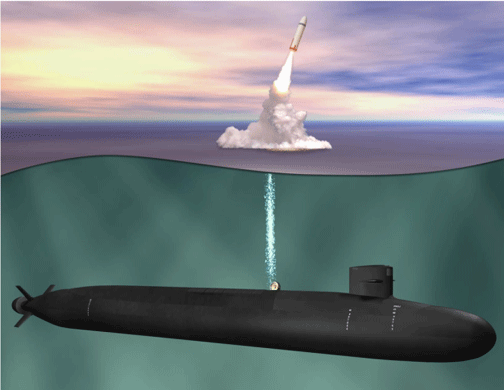
By EurAsian Times Desk -March 21, 2024
The steel cutting of the first third-generation French SSBN took place at Naval Group’s shipyard in Cherbourg on March 20th. This symbolic gesture marks the start of hull production for these submarines, which will ensure France’s nuclear deterrence posture until the end of the 21st century.
Among the most complex systems, SSBNs are the cornerstones of France’s strategic oceanic force (FOST) and ensure that nuclear deterrence remains at sea.
Launched in February 2021, the SNLE 3G program for the French Navy brings together the armed forces, the French defense procurement agency (Direction Générale de l’Armement – DGA), which is responsible for overall project management, the French Atomic Energy Commission (CEA), for the nuclear boilers, and Naval Group, which is responsible for overall project management of the submarines, in association with TechnicAtome for the nuclear boilers………………………………………………………………………………………………………………………….. https://www.eurasiantimes.com/nuclear-deterrence-at-sea-france-starts-constructing/
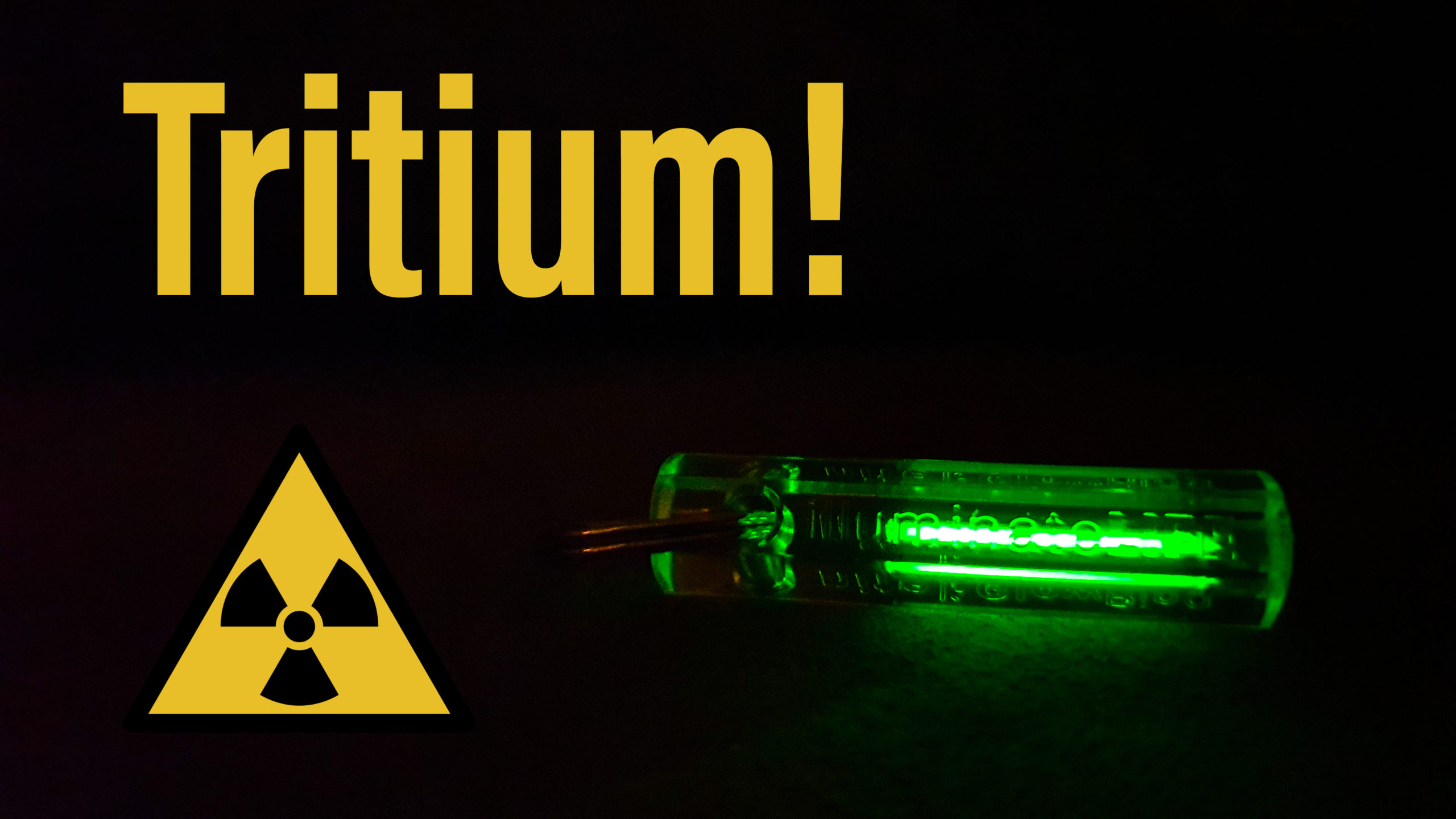
Nuclear weapons: France to restart tritium production with EDF
By Paul Messad | Euractiv France, 20 Mar 24
France’s Minister for the Armed Forces, Sébastien Lecornu, announced on Monday (18 March) a new production cycle for tritium, which is essential for the manufacture of nuclear weapons, using state utility EDF’s two civilian reactors.
Lecornu visited the Civaux nuclear power plant in south-west France, which will produce the tritium for the military.
The tritium will be manufactured on the premises of the Commissariat à l’énergie atomique (CEA), the French nuclear scientific and industrial research establishment.
To manufacture tritium, it is necessary to treat lithium-containing material with radiation, by exposing it to the neutron fluxes present inside the core of a reactor.
Tritium, whose gaseous form is practically non-existent, naturally, can be extracted from the irradiated material.
This hydrogen isotope (1 proton, 2 neutrons, and hydrogen-3) is particularly vulnerable to disintegrating spontaneously. As a result, any stockpile is halved in 12 years and disappears almost entirely after a century.
But it is vital for the production of nuclear weapons, particularly hydrogen bombs and neutron bombs, for which it is the main explosive.
The French army and EDF have come up with this “collaboration” to ensure the availability of sufficient stocks of tritium “as part of the continuity and credibility of France’s nuclear deterrent”, according to the annex to the press release.
According to the Federation of American Scientists, France currently has 290 active warheads, the fourth largest, after China with 500, the US with 3,700, and Russia with 4,400…………………………………………………….
Discussions between the French armed forces ministry and EDF on this subject have been underway for more than 25 years, in anticipation of the closure in 2009 of the two reactors intended solely for the production of tritium located in Marcoule, in south-east France, after more than 50 years in operation.
The parties finally selected Civaux, one of France’s most powerful and newest nuclear power stations. It was selected because it was capable of operating for a very long time, Dutheil said……………………
despite the reassurances of the various parties involved, any signed agreement between the French government, CEA, and EDF, will not specify a date – to define the legal and contractual scope of the activities, a press release states.
Dutheil stated, that later this year EDF will submit a dossier to the Autorité de sûreté nucléaire, the French nuclear safety authority, which will examine the feasibility of the project.
As a result of this timetable, the first test irradiation of lithium will not take place until before 2025, when the plant’s reactors are scheduled to be shut down for maintenance.
[Edited by Rajnish Singh] https://www.euractiv.com/section/politics/news/nuclear-weapons-france-to-restart-tritium-production-with-edf/
Israel Will Steal 16% of Gaza’s Land By Establishing ‘Buffer Zone’
Israel is destroying homes and agricultural land to create the zone
by Dave DeCamp March 18, 2024 https://news.antiwar.com/2024/03/18/israel-will-steal-16-of-gazas-land-by-establishing-buffer-zone/
Israel’s plan to create a “buffer zone” inside Gaza along its border with Israel will take 16% of the Strip’s territory, The Wall Street Journal reported, citing an analysis of the operation by Adi Ben Nun, a Hebrew University geography professor.
Israel has begun the process of constructing the zone, which involves demolishing Palestinian homes and agricultural land that are in the way. The buffer will be about 1 kilometer (.6 miles) in width.
Israeli media reported in January that Israel had destroyed 1,100 of the 2,800 buildings in the border areas. In that same month, 21 Israeli soldiers were killed while working to demolish a building after a Hamas rocket detonated explosives IDF soldiers had planted.
The Israeli military insists it needs to create the buffer zone to prevent future October 7-style attacks. But the plan also advances Israel’s seizure of Gaza’s territory, and many ministers in the Israeli government favor re-establishing Jewish settlements in the Strip.
On top of the buffer zone on the border, Israel is also constructing a road that will cut the Gaza Strip in two. Israel claims that it doesn’t seek to occupy Gaza but wants to maintain open-ended security control of the Strip, which is not possible without some form of occupation.
The Biden administration claims it’s opposed to any Israeli plans that will shrink Gaza’s territory. But the US continues to provide Israel with unconditional military aid as it’s enacting a plan to steal 16% of Gaza.
The last stammering of Jewish fascism

In Israel, the Jewish democratic opposition organized anti-Zionist demonstrations, which were not very well attended. Speakers emphasized the betrayal of the Prime Minister, who used the shock of October 7 not to save the hostages, but to realize his colonial dream.
Washington then decided to radically change its policy. Until then, it had considered that it could not afford to let Israel lose. It had therefore supported its crime. Now, it could no longer afford to let the Jewish fascists win. It’s important to understand that Washington didn’t change its mind when it saw the suffering of the Gazans, nor because of a sudden outburst of anti-fascism, but because of the threats of the “revisionist Zionists”. Its positions are dictated exclusively by its desire to maintain its domination of the world. It could not contemplate another defeat for its Israeli allies, this time after those in Syria and Ukraine. But it could even less envisage losing to the “revisionist Zionists”.
Victoria Nuland’s dismissal demonstrates the Biden Administration’s desire to clean up its own house, while doing the same for Israel.
https://www.voltairenet.org/article220564.html VOLTAIRE NETWORK | PARIS (FRANCE) | 12 MARCH 2024, by Thierry Meyssan
Anyone acting in good faith understands that murdering 30,000 innocent people has nothing to do with eliminating Hamas. Operation Iron Glaive appears for what it is: a cover to realize the old dream pursued by Jewish fascists from Jabotinsky to Netanyahu: to expel the Arab population from Palestine. From then on, this mass crime, committed for the first time live on television, turned the world’s political chessboard upside down. Feeling threatened, the Jewish supremacists themselves threatened the United States. Anxious to remain masters of the “free world”, the United States is preparing to topple the Jewish supremacists.
The Biden administration watched with bated breath as Israel reacted to the attack by the Palestinian Resistance, including Hamas, known as the “Flood of Al-Aqsa” (October 7). Operation Iron Glaive began with a massive pounding of Gaza City on a scale unprecedented anywhere in the world, including the World Wars. From October 27 onwards, this was followed by ground intervention, looting and the torture of thousands of Gazan civilians. In five months, 37,534 civilians were killed or disappeared, including 13,430 children and 8,900 women, 364 medical personnel and 132 journalists. [1].
At first, Washington reacted by unwaveringly supporting “Israel’s right to defend itself”, threatening to veto any ceasefire request and supplying as many bombs as necessary for the widespread destruction of the Palestinian enclave. It was unthinkable, in its eyes, to suffer yet another defeat, after those in Syria and Ukraine. However, Americans were watching the horrors live on their cell phones. Many high-ranking State Department officials wrote and spoke of their shame at supporting this butchery. Petitions were circulated. Prominent figures, both Jewish and Muslim, resigned.
In the midst of a presidential election campaign, Joe Biden’s team could no longer stain its hands with blood. It therefore began to put pressure on the Israeli war cabinet to negotiate the release of the hostages and conclude a ceasefire. However, Benjamin Netanyahu’s coalition refused, playing on the trauma of its citizens to ensure that peace would only return once Hamas had been eradicated. Washington eventually realized that the events of October 7 were merely a pretext for Jabotinsky’s followers to do what they had always wanted to do: expel the Arabs from Palestine. He became more insistent, stressing that the Palestinians had a right to live, that the colonization of their land was illegal under international law, and that the Israeli-Palestinian question would be resolved by a “two-state solution” (and not by the binational state envisaged by Resolution 181 of 1947).
Revisionist Zionists” (i.e., followers of Jabotinsky [2]) responded by organizing the “Conference for the Victory of Israel” [3] on January 28, 2024. Headlining the event was Rabbi Uzi Sharbaf, sentenced in Israel to life imprisonment for his racist crimes against Arabs, but pardoned by his friends. Sharbaf did not hesitate to proclaim himself heir to the Lehi and Stern groups who fought against the Allies alongside duce Benito Mussolini.
The message was perfectly received in Washington and London: this tiny group intended to impose its will on the Anglo-Saxons and would not hesitate to attack them if they tried to prevent ethnic cleansing.
The White House immediately issued a ban on fundraising and transfers to them [4]. This ban was extended to all Western banks under the Foreign Account Tax Compliance Act (FATCA).
In addition, on February 8, President Joe Biden signed a Memorandum on the conditions of US arms transfers [5]. Israel has until March 25 to guarantee in writing that it will not violate either International Humanitarian Law (but not International Law itself) or Human Rights (in the sense of the US Constitution).
For their part, the parliaments of the Netherlands and the United Kingdom have begun debating the possibility of ceasing arms trading with Israel.
In Israel, the Jewish democratic opposition organized anti-Zionist demonstrations, which were not very well attended. Speakers emphasized the betrayal of the Prime Minister, who used the shock of October 7 not to save the hostages, but to realize his colonial dream.
The “revisionist Zionists” then launched a media offensive against the United Nations Relief and Works Agency for Palestine Refugees in the Near East (UNRWA). Since 1949, this UN agency has been providing education, food, healthcare and social services to 5.8 million stateless Palestinians in Palestine itself, as well as in Jordan, Lebanon and Syria. It has an annual budget of over $1 billion and employs over 30,000 people. Already in 2018, President Donald Trump had questioned the agency’s assistance to Palestinians and suspended US funding for it. His intention was to force the Palestinian factions back to the negotiating table. Five years on, the aim of the “revisionist Zionists” is very different. By attacking UNRWA, they intend to force Jordan, Lebanon and Syria to expel Palestinian refugees too. To this end, they accused 0.04% of its staff of having taken part in Operation Flood of Al-Aqsa, and blocked their bank accounts in Israel. UNRWA Director Philippe Lazzarini of Switzerland immediately suspended the 12 accused employees and ordered an internal investigation.
Of course, he never received the proof the Israelis claimed to have, but one donor after another, led by the United States and the European Union, suspended funding. Within days in Gaza, and weeks in Jordan, Lebanon and Syria, the United Nations aid system collapsed.
Continue readingUkraine’s losses ‘in the millions’ – retired Polish general
https://www.sott.net/article/489939-Ukraines-losses-in-the-millions-retired-Polish-general 20 Mar 24
Kiev does not have the resources or manpower to continue the fight against Russia, Rajmund Andrzejczak has said
Ukraine’s losses in the conflict with Russia should be counted “in the millions,” the former chief of the Polish General Staff, Rajmund Andrzejczak, has claimed. Kiev “is losing the war” and does not have the resources to sustain the fight against Moscow, he added.
In an interview with the Polsat broadcaster on Monday, the retired general described Ukraine’s battlefield situation as “very dramatic” and insisted that “there are no miracles in war.”
Ukrainian President Vladimir Zelensky’s decision to replace his top general, Valery Zaluzhny, with Aleksandr Syrsky has failed to make a significant difference as the same issues remain for Kiev’s new commander-in-chief, Andrzejczak added.
According to the retired general, Ukraine is suffering deficits in equipment and manpower, with losses taking their toll on its capabilities.
“They are missing over 10 million people. I estimate that the losses should be counted in the millions, not hundreds of thousands. There are no resources in this country, there is no one to fight.”
“The Ukrainians are losing this war,” Andrzejczak stated, pointing to media reports suggesting that Kiev is running out of anti-aircraft missiles to protect itself from Russian strikes.
Echoing warnings from several Western leaders in recent weeks, Andrzejczak called for arms production to be boosted and argued that the West should prepare for a full-scale conflict with Russia within two or three years. Russian President Vladimir Putin has insisted that Moscow has no plans or interest in attacking NATO.
Russian Defense Minister Sergey Shoigu stated last month that Ukraine had lost more than 444,000 troops since the start of the conflict in February 2022. The hostilities have also triggered an exodus of Ukrainian refugees, with almost 6.5 million recorded worldwide, according to UN data.
Officials in Kiev have repeatedly complained that Western arms shipments have been inadequate. Those calls have grown louder as US President Joe Biden’s request to provide an additional $60 billion in aid remains stalled in Congress, due to Republican demands to strengthen American border security.
Kiev is also mulling a new mobilization bill that would lower the minimum draft age for men from 27 to 25, with reported plans to send 500,000 new troops to the frontline.
Against this backdrop, the Russian military last month pushed Kiev out of the strategic Donbass city of Avdeevka, also liberating several nearby settlements. The former stronghold has been on the front line since 2014 and was frequently used by Kiev to shell residential blocks in the nearby city of Donetsk.
UN Chief: Nuclear Risk Highest in Decades, Calls for Disarmament

The United Nations. https://www.miragenews.com/un-chief-nuclear-risk-highest-in-decades-calls-1197216/–– 18 Mar 24
Almost 80 years after the incineration of the Japanese cities of Hiroshima and Nagasaki, nuclear weapons still represent a clear and present danger to global peace and security, UN Secretary-General António Guterres told the Security Council on Monday.
Calling for disarmament now, he urged States with nuclear arsenals to lead the way across six areas for action that include dialogue and accountability.
“Nuclear weapons are the most destructive weapons ever invented, capable of eliminating all life on earth. Today, these weapons are growing in power, range and stealth. An accidental launch is one mistake, one miscalculation, one rash act away,” he warned.
Doomsday Clock ticking loudly
The meeting on nuclear disarmament and non-proliferation was convened by Japan, Security Council president for March and, as Mr. Guterres noted, the only country that knows better than any other “the brutal cost of nuclear carnage.”
It was being held at a time “when geopolitical tensions and mistrust have escalated the risk of nuclear warfare to its highest point in decades.”
He said the Doomsday Clock – the symbol for humanity’s proximity to self-destruction – “is ticking loudly enough for all to hear”.
Meanwhile, academics and civil society groups, to Pope Francis, youth, and the survivors of Hiroshima and Nagasaki, known as Hibakusha, have been clamouring for peace and an end to the existential threat.
No ‘Oppenheimer’ sequel
Even the Oscar-winning Hollywood film Oppenheimer “brought the harsh reality of nuclear doomsday to vivid life for millions around the world,” he said, adding that “humanity cannot survive a sequel”.
Despite these appeals for the world to step back from the brink, “States possessing nuclear weapons are absent from the table of dialogue,” he said, while “investments in the tools of war are outstripping investments in the tools of peace.”
Mr. Guterres stressed that disarmament is the only path to “vanquish this senseless and suicidal shadow, once and for all.”
Dialogue and confidence-building
He appealed to States armed with nuclear weapons to take the lead in six areas, starting with re-engaging in dialogue to develop transparency and confidence-building measures to prevent any use of a nuclear weapon.
“Second, nuclear saber-rattling must stop,” he said. “Threats to use nuclear weapons in any capacity are unacceptable.”
Nuclear weapon States must also re-affirm moratoria on nuclear testing, which includes pledging to avoid actions that would undermine the 1996 Comprehensive Nuclear-Test-Ban Treaty (CTBT), whose entry-into-force must be priority.
From commitment to action
Furthermore, disarmament commitments must become action, together with accountability, under the Treaty on the Non-Proliferation of Nuclear Weapons (NPT). The landmark accord, signed more than 50 years ago, is the only binding commitment to the goal of disarmament by States which officially stockpile nuclear weapons.
The Secretary-General also highlighted the need for a joint first-use agreement. “Nuclear weapon States must urgently agree that none of them will be the first to use nuclear weapons. As a matter of fact, none should use them in any circumstances,” he said.
Reducing stockpiles
Finally, he called for reductions in the number of nuclear weapons. In this regard, he urged the United States and Russia – the world’s largest nuclear weapons holders – to take the lead and also find a way back to negotiations towards the full implementation of the New START Treaty and agree on its successor.
Mr. Guterres also pointed to the responsibility of non-nuclear weapon States to fulfil their own non-proliferation obligations and to support disarmament efforts.
He said the Security Council also has a leadership role, including “to look beyond today’s divisions, and state clearly that living with the existential threat of nuclear weapons is unacceptable.”
US and Japan seek UN resolution calling on all nations to ban nuclear weapons in outer space
The United States and Japan are sponsoring a U.N. Security Council resolution calling on nations not to deploy or develop nuclear weapons in space
ByEDITH M. LEDERER Associated Press, March 19, 2024,
UNITED NATIONS — The United States and Japan are sponsoring a U.N. Security Council resolution calling on all nations not to deploy or develop nuclear weapons in space, the U.S. ambassador announced Monday.
Linda Thomas-Greenfield told a U.N. Security Council meeting that “any placement of nuclear weapons into orbit around the Earth would be unprecedented, dangerous, and unacceptable.”
The announcement that the U.S. and Japan had circulated a resolution follows White House confirmation last month that Russia has obtained a “troubling” anti-satellite weapon capability, although such a weapon is not operational yet.
Russian President Vladimir Putin declared later that Moscow has no intention of deploying nuclear weapons in space, claiming that the country has only developed space capabilities similar to those of the U.S.
The Outer Space Treaty ratified by about 114 countries including the United States and Russia prohibits the deployment of “nuclear weapons or any other kinds of weapons of mass destruction” in orbit or the stationing of “weapons in outer space in any other manner.”
Japan’s Foreign Minister Yoko Kamikawa, who chaired the council meeting, said that even during “the confrontational environment” of the Cold War, the rivals agreed to ensure that outer space remained peaceful. That prohibition on putting any weapons of mass destruction into orbit must be upheld today, she said.
Thomas-Greenfield said all parties to the treaty must commit to the ban on nuclear and other destructive weapons, “and we must urge all member states who are not yet party to it to accede to it without delay.”
She said the United States looks forward to engaging with the other members of the 15-nation Security Council “to forge consensus around this text.”…………………………………………………………………………………………………….
more https://abcnews.go.com/US/wireStory/us-japan-seek-resolution-calling-nations-ban-nuclear-108261129
How Biden’s budget plunged the Aukus submarines pact into doubt
Alarm in Australia as the US suddenly struggles to fortify its own fleet
Matt Oliver, INDUSTRY EDITOR, 18 March 2024
A year on from the trio’s meeting, the Aukus partnership is suddenly
looking decidedly more fragile. Inside defence circles, there are growing
doubts about America’s ability and willingness to deliver following a
shock proposal from the Biden administration that cuts to the heart of the
deal.
Amid a row at home over government budgets, the White House this
month suggested halving the number of Virginia-class submarines it builds
next year – the very same type it has promised to Australia under Aukus.
That means the US faces a shortfall itself, raising the prospect it may
refuse to sell its existing vessels and leave Canberra in the lurch.
Telegraph 18th March 2024
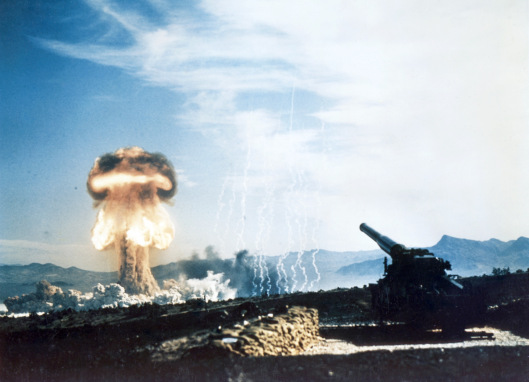
As ‘Oppenheimer’ wins big, we should worry about lowering of nuclear thresholds

Amid rising global volatility and technological uncertainty, it’s imperative for states to explore non-nuclear solutions that emphasize international cooperation, diplomacy and societal resilience. And there’s an opportunity here for the U.K. and the U.S. to lead the way in international law and treaties that respond to non-nuclear strategic threats more effectively.
Just as Oppenheimer challenged Truman on U.S. nuclear strategy, we too must challenge our leaders’ attachment to nukes.
March 18, 2024 By Sophie-Jade Taylor and Graham Stacey Sophie-Jade Taylor is a senior network development and communications manager at the European Leadership Network nonprofit. Retired Air Marshall Sir Graham Stacey is a senior consulting fellow at the European Leadership Network. https://www.politico.eu/article/oppenheimer-win-awards-oscar-bafta-golden-globe-worry-about-lower-nuclear-thresholds/
Last summer, director Christopher Nolan’s “Oppenheimer” captivated the global public, making history as the highest ever grossing biopic. And having already won big at the Golden Globes and the BAFTAs, the film closed awards season by sweeping the Oscars last weekend.
The film brought fresh awareness of the unique, destructive power that J. Robert Oppenheimer’s creation unleashed. The first and only nuclear weapons ever used — the “Little Boy” dropped on Hiroshima and the “Fat Man” on Nagasaki — packed the equivalent of 15,000 and 21,000 tons of TNT respectively, killing over 100,000 people and causing long-term health, psychological, economic and environmental damage.
By comparison, the world’s most powerful nukes today yield over 1.2 megatons of TNT — 60 times more than Oppenheimer’s bombs.
And much like Oppenheimer, General Leslie Groves and then U.S. President Harry S. Truman, today’s leaders once again find themselves facing huge moral and strategic choices at the dawn of a new technological age. The full weight of nuclear devastation lies in the hands of just a select few. Their decisions have profound implications for humanity — and this shouldn’t be left to chance.
Recognizing the unimaginable horror a modern nuclear conflict would unleash, as recently as January 2022, all five leaders of the nuclear weapons states reaffirmed that a nuclear war couldn’t be won and must never be fought.
Yet, we have been witnessing Russian President Vladimir Putin’s irresponsible nuclear saber-rattling around Russia’s full-scale invasion of Ukraine. There have been worrying reports of rock-bottom thresholds for nuclear use — with enemy incursion into territory, the destruction of strategic weapons delivery systems, and even conventional weapons use deemed as posing an existential threat to Russian statehood.
And though Moscow outwardly rejects the policy, such ambiguity seemingly points toward communicating “first strike” capabilities, which rightly should be condemned and carefully assessed.
On the other hand, China continues to push states for political commitments toward the universalization of a No First Use Policy, while also furthering the development of its own arsenal under a worrying lack of transparency — a dilemma that has added complexity to an already intricate and perilous geopolitical chessboard.
Meanwhile, in the West — seemingly without much public discussion or comment — we’ve seen a worrying trend in declarations that states could use nuclear weapons to deter “non-nuclear threats,” again lowering the so-called nuclear threshold in an attempt to provide a quick fix to nuanced challenges.
At this very critical moment, “Oppenheimer” has brought discussions of nuclear weapons back into the public arena. And while the attention will undoubtedly recede, ongoing public engagement on these issues must not. Civic engagement shapes policymaking, and at a time of rising nuclear risks and growing temptation for states to become more reliant on their nuclear weapons, the public deserves a better understanding of when and why a catastrophic weapon may be deployed.
For example, in 2021, the British government stated that while it wouldn’t use nuclear weapons against any non-nuclear weapon state, it remained open to reviewing its policy should any threat from “emerging technologies” with “comparable impact” make nuclear weapon use necessary. Similarly, in 2022, the U.S. declared that the aim of its nuclear arsenal was to deter both nuclear and non-nuclear “strategic-level attacks.” Problematically, however, neither the U.K. nor the U.S. have detailed what “comparable impact” or “strategic-level attack” may mean.
These policies not only lower the nuclear-use threshold and increase global nuclear risks, but they may not even be feasib
While it’s near impossible for a nuclear strike to go undetected, the same isn’t true for emerging technologies such as AI and autonomous systems. By their very design, these technologies are largely democratized and untied to a single government. For instance, the challenge of attribution in cyber is well-documented, and while cyber-attacks have been linked to state-sponsored hacking groups, these groups couldn’t be easily deterred by the threat of a nuclear strike.e, given most contemporary threats against states now sit outside the military realm.
Increasing the already harrowing role of nuclear weapons in foreign policy undermines the moral and legal position of nuclear weapons states. The logic and evidence behind the current U.K. and U.S. policies of relying on nuclear weapons as a panacea must be subject to greater public and parliamentary scrutiny — as should be the case with open democracies who say they have transparent nuclear policies.
Amid rising global volatility and technological uncertainty, it’s imperative for states to explore non-nuclear solutions that emphasize international cooperation, diplomacy and societal resilience. And there’s an opportunity here for the U.K. and the U.S. to lead the way in international law and treaties that respond to non-nuclear strategic threats more effectively.
Instead of resorting to old playbooks, both policymakers and the public must appreciate that emerging technologies require a new mindset in their management and new legal constructs to regulate their proliferation, development and control. Recent international efforts like last November’s Bletchley AI Safety Summit and the agreement to begin a dialogue on AI risks by U.S. President Joe Biden and Chinese President Xi Jinping are important first steps. But much more needs to be done.
Just as Oppenheimer, haunted by his role in the bombings of Hiroshima and Nagasaki, challenged Truman on U.S. nuclear strategy, we too must challenge our leaders’ continued attachment to nukes — weapons that can only destroy — and push toward more diplomacy and resilience-based solutions to today’s complex challenges.
EU to use Russian assets to buy arms for Ukraine – Scholz
The German chancellor has clarified that profits obtained from Moscow’s funds held in the EU will be used to arm Kiev
German Chancellor Olaf Scholz has said that interest accrued from Russian assets frozen in the EU will be used to purchase weapons for Ukraine.
Soon after Russia launched its military operation against Ukraine in February 2022, Western countries froze approximately $300 billion of funds belonging to the Russian Central Bank. Of that sum, the Brussels-based clearinghouse Euroclear holds around €191 billion ($205 billion), which has accrued nearly €4.4 billion in interest over the past year.
Speaking at a joint press conference with French President Emmanuel Macron and Polish Prime Minister Donald Tusk in Berlin on Friday, Chancellor Scholz said: “We will use windfall profits from Russian assets frozen in Europe to financially support the purchase of weapons for Ukraine.
The German leader also announced plans to establish a “new capability coalition for long-range rocket artillery,” with procurement to take place “on the overall world market.”
The German chancellor did not provide specifics, and it remains unclear whether he was referring to an entirely new initiative, or to a “long-range” scheme announced by President Macron in February.
European Commission President Ursula von der Leyen last month suggested using the interest from frozen Russian assets to buy weapons for Ukraine. However, Politico, citing an anonymous EU official, reported on Thursday that Malta, Luxembourg and Hungary had “expressed reservations” about the plan earlier this week.
Moscow has repeatedly warned that any actions taken against its assets would amount to “theft.” It has stressed that seizing the funds or any similar move would violate international law and undermine Western currencies, the global financial system, and the world economy.
Former Prime Minister Turnbull says Australia ‘mugged by reality’ on Aukus deal as US set to halve submarine build

“Australian taxpayers should not be footing the bill for America’s dockyards.
We are on the hook to the tune of $3bn as soon as next year as a downpayment for subs that might never arrive and be useless on delivery,”
Former PM says the reality is the US will not make their submarine deficit worse by giving or selling submarines to Australia
Amy Remeikis, Wed 13 Mar 2024 , https://www.theguardian.com/world/2024/mar/13/turnbull-says-australia-mugged-by-reality-on-aukus-deal-as-us-set-to-halve-submarine-build
Australian taxpayers should not be footing the bill for America’s dockyards.
We are on the hook to the tune of $3bn as soon as next year as a downpayment for subs that might never arrive and be useless on delivery,”
The former prime minister Malcolm Turnbull said Australia has been “mugged by reality” over the Aukus submarine deal after the US announced it will halve the number of submarines it will build next year, throwing the Australia end of the agreement into doubt.
With the US president, Joe Biden, continuing to face a hostile Congress, the Pentagon budget draft request includes construction of just one Virginia-class nuclear submarine for 2025.
Under the Aukus agreement, production is meant to be ramped up to ensure Australia will have access to at least three Virginia-class submarines from the US in the 2030s. That is to fill a “capability gap” before nuclear-powered submarines to be built in Adelaide enter into service from the 2040s.
The prime minister, Anthony Albanese, played down the impact of the US budget announcement, insisting that “our plans are very clear”.
“We have an agreement that was reached with the United States and the UK,” Albanese told reporters in Darwin on Wednesday. “That legislation went through the US Congress last year. That was a product of a lot of hard work.”
The defence minister, Richard Marles, said earlier that the US remained committed to the deal.
“As we approach the one-year anniversary of Aukus, Australia, the United States and United Kingdom remain steadfast in our commitment to the pathway announced last March, which will see Australia acquire conventionally armed, nuclear-powered submarines,” he said.
“All three Aukus partners are working at pace to integrate our industrial bases and to realise this historic initiative between our countries.”
Greens senator David Shoebridge, who has been critical of the Aukus deal from the start, said the US budget announcement was the beginning of the end of Aukus.
“When the US passed the law to set up Aukus, they put in kill switches, one of which allowed the US to not transfer the submarines if doing so would ‘degrade the US undersea capabilities’. Budgeting for one submarine all but guarantees this,” he said on X.
4/ The failure is almost too big to wrap your head around.
We are providing billions of dollars to the US, have given up an independent foreign policy and made Australia a parking lot for US weapons. In exchange, we get nothing.
Nothing but a big target and empty pockets.— David Shoebridge (@DavidShoebridge) March 12, 2024
The US budget does include increased spending on the submarine industrial base, which was a key component of the Aukus pillar one deal, as it laid the groundwork to increase production in the coming years.
But Turnbull, an architect of the French submarine deal which was unceremoniously dumped by the Morrison government in favour of the Aukus deal, said Australia was now at the mercy of the United States for a key part of its defence strategy.
He said that the US needed to increase submarine production to meet its own needs before it was able to transfer boats to Australia, but were now only producing about half as many that were needed for the US navy and were struggling to maintain the boats they held, due to labour shortages.
“What does that mean for Australia? It means because the Morrison government, adopted by Albanese, has basically abandoned our sovereignty in terms of submarines, we are completely dependent on what happens in the United States as to whether we get them now,” he told ABC radio.
“The reality is the Americans are not going to make their submarine deficit worse than it is already by giving or selling submarines to Australia and the Aukus legislation actually sets that out quite specifically.skip past newsletter promotion
“So you know, this is really a case of us being mugged by reality. I mean, there’s a lot of Aukus cheerleaders, and anyone that has any criticism of Aukus is almost described as being unpatriotic. We’ve got to be realistic here.”
The ALP grassroots activist group, Labor Against War, want the Albanese government to freeze Aukus payments to the US so as not to “underwrite the US navy industrial shipyards”.
The national convenor of Labor Against War, Marcus Strom, said Australian taxpayers should not be footing the bill for America’s dockyards.
We are on the hook to the tune of $3bn as soon as next year as a downpayment for subs that might never arrive and be useless on delivery,” he said.
“This Labor government managed to junk Scott Morrison’s tax plan. Why would it be so stupid to continue with his war plan?”
While the Pentagon has sought to assure Australia its submarine production will be back on track by 2028, the looming threat of Donald Trump returning to the White House has raised further concerns the deal will be scuttled.
“On Aukus pillar 1 we are effectively in conflict with the needs of the US navy, and you know as well as I do the American government, when it comes to a choice between the needs of the US navy and the Australian navy, are always going to back their own,” Turnbull said.
Marles has previously denied Aukus will erode Australia’s sovereignty. In a speech to parliament last year, Marles said Australia would “always make sovereign, independent decisions on how our capabilities are employed”.
Additional reporting by Daniel Hurst
1 This Month
Chernobyl: The Lost Tapes – A good documentary on Chernobyl on SBS available On Demand for the next 3 weeks– https://www.sbs.com.au/ondemand/tv-program/chernobyl-the-lost-tapes/2352741955560

of the week–London Campaign for Nuclear Disarmament

Tell the Ukrainian Government to Drop Prosecution of Peace Activist Yurii Sheliazhenko
To see nuclear-related stories in greater depth and intensity – go to https://nuclearinformation.wordpress.com
-
Archives
- April 2026 (127)
- March 2026 (251)
- February 2026 (268)
- January 2026 (308)
- December 2025 (358)
- November 2025 (359)
- October 2025 (376)
- September 2025 (257)
- August 2025 (319)
- July 2025 (230)
- June 2025 (348)
- May 2025 (261)
-
Categories
- 1
- 1 NUCLEAR ISSUES
- business and costs
- climate change
- culture and arts
- ENERGY
- environment
- health
- history
- indigenous issues
- Legal
- marketing of nuclear
- media
- opposition to nuclear
- PERSONAL STORIES
- politics
- politics international
- Religion and ethics
- safety
- secrets,lies and civil liberties
- spinbuster
- technology
- Uranium
- wastes
- weapons and war
- Women
- 2 WORLD
- ACTION
- AFRICA
- Atrocities
- AUSTRALIA
- Christina's notes
- Christina's themes
- culture and arts
- Events
- Fuk 2022
- Fuk 2023
- Fukushima 2017
- Fukushima 2018
- fukushima 2019
- Fukushima 2020
- Fukushima 2021
- general
- global warming
- Humour (God we need it)
- Nuclear
- RARE EARTHS
- Reference
- resources – print
- Resources -audiovicual
- Weekly Newsletter
- World
- World Nuclear
- YouTube
-
RSS
Entries RSS
Comments RSS
 nuclear-news