How to Make a ‘War Reserve’ Nuclear Bomb

Earlier this year, at the annual Nuclear Deterrence Summit in Washington, D.C., there was a palpable sense of excitement at the return to Cold War strategies of shoring up our nuclear arsenal. Today, with what some call the two-peer problem—Russia and China—and the specter of nuclear-armed rogue nations and terrorists, the NSE is racing against what-if targets. The language is aggressive. Opposition is largely mute. Congress has opened the tap. The NSE is hiring, training, building, and spending billions a year.
The dark art of crafting nuclear ‘pits’ was almost lost. Now it’s ramped up into a multibillion dollar industry.
The Progressive Magazine, by Jim Carrier , September 5, 2024
Sometime in the next few months a technician at Los Alamos National Laboratory, using an arc welder, will seal together two half-domes of plutonium, creating a “pit,” a seven-pound ball the size of a grapefruit, which, if tucked into America’s newest nuclear warhead and triggered above Times Square, would destroy most of Manhattan and kill more than 1.2 million people.
The bomb is part of a $1.7 trillion plan to rebuild the U.S. nuclear arsenal. The new pit, and hundreds like it, are being made for the W87-1, a new warhead designed to sit atop the Sentinel, a new intercontinental ballistic missile design that will replace all 400 Minuteman III missiles that have been on alert in silos across the Upper Midwest for the last five decades.
Not since the Manhattan Project, the crash program during World War II to invent the atomic bomb, has so much money and urgent energy been spent by the United States to create a weapon of mass destruction. In a paradox of nuclear madness, production of the W87-1—each one with a yield of around 400 kilotons, twenty times larger than the bombs that destroyed Hiroshima and Nagasaki—is breathing life into the U.S. Nuclear Security Enterprise (NSE), the agency that makes nuclear weapons and runs the planes, missiles, and submarines that deliver them.
The warhead “is reinvigorating and transforming the production complex such that NSE can once again produce all of the components typically required for modern nuclear warheads,” according to the Lawrence Livermore National Laboratory, which designed the W87-1. “This work will give the nation expanded options for maintaining an effective nuclear deterrence posture for decades to come.”
Earlier this year, at the annual Nuclear Deterrence Summit in Washington, D.C., there was a palpable sense of excitement at the return to Cold War strategies of shoring up our nuclear arsenal. Today, with what some call the two-peer problem—Russia and China—and the specter of nuclear-armed rogue nations and terrorists, the NSE is racing against what-if targets. The language is aggressive. Opposition is largely mute. Congress has opened the tap. The NSE is hiring, training, building, and spending billions a year.
At Los Alamos, the urgency can be seen inside Plutonium Facility Building 4, known as PF-4, the only building in the United States where plutonium pits are made. Working around the clock, technicians are dismantling old contaminated glove boxes—the laboratory apparatus that allow technicians using built-in gloves to work with toxic or volatile substances inside a sealed chamber—before a new shift of workers arrives to install shiny new steel glove boxes for work on the new pits…………………….
The process of turning plutonium into a bomb is a dark art—an alchemy invented in 1945 on the same New Mexico mesa. Wizards of physics and math who divined the immense energy locked within its atoms, together with master machinists, created the first atomic bomb, “Trinity,” and its copy, “Fat Man,” which destroyed Nagasaki with the power of twenty kilotons, or 20,000 tons of TNT. These two plutonium bombs produced enough heat and radiation to ignite, or trigger, the kind of fusion fire present in the sun.
One year later, as Baby Boom children were teething, Los Alamos blew up a similar plutonium bomb named “Baker” on Bikini Atoll. Its twenty-one-kiloton underwater eruption captured both the bounty of nuclear power and America’s intent to weaponize it.
During the Cold War, Los Alamos produced ninety-four different nuclear weapons—bigger, smaller, deadlier, more accurate. Many were thermonuclear, or hydrogen bombs, whose design, first revealed to the public by Howard Morland in this magazine in 1979, was theorized during the Manhattan Project. In 1952, Los Alamos, using a plutonium pit as a trigger, detonated its first thermonuclear bomb. That same year, the United States built the Rocky Flats Plant, a plutonium pit factory outside Denver. It produced 1,000 pits a year.
The hands-on, metallurgical master craft of fashioning pits was almost lost, though, when Rocky Flats was raided and closed in 1989 by the FBI for massive environmental crimes—the year the Soviet Union began to collapse, ending the Cold War. The NSE fell into a funk, reduced to cleaning up its messes and “stockpile stewardship.”……………………………………………………………………………………………….
“The reestablishment of pit production capabilities is the largest and most complex infrastructure undertaking at NNSA since shortly after the Manhattan Project,” Jill Hruby, administrator of the National Nuclear Security Administration, told the Strategic Weapons in the 21st Century Symposium on April 18. “Our current total estimated acquisition cost range for pit production is $28-37 billion . . . . I know that’s a lot of money . . . . Los Alamos is on track to diamond stamp the first fully qualified War Reserve pit for the W87-1 this year. We anticipate Los Alamos achieving the capability to produce the thirty pits per year envisioned by the two-site plan in or near 2028, with increased manufacturing rate confidence as we install equipment through 2030.”
he United States will never need to make plutonium again. During the Cold War, nuclear reactors at Hanford, Washington, produced more than sixty tons of plutonium. Some 14,000 pits, made by Rocky Flats, each bearing the War Reserve diamond stamp, are warehoused in Pantex, Texas.
As Los Alamos cranks up its program, pits are brought from Pantex, torn apart, and subjected to pyrochemistry, which removes impurities. The metal is then heated into a hot syrup and poured into molds, creating two halves of a sphere. These are welded together. This process is done in rows of connected glove boxes, the plutonium moving from one to another in an overhead trolley system, and dumbwaiters that raise and lower it.
Today at Los Alamos, hundreds of people work at the plutonium factory, some of them making plutonium heaters for space vehicles. But on the pit side, fewer than ten people in the world are trained or are being trained to perform final pit assembly, which must be done by hand inside a large, walk-in glove box, wearing multiple layers of personal protective equipment to prevent plutonium contamination. These master machinists and welders hold Q clearances and undergo annual physical and mental exams. It can take up to four years to train them.
…………………………………………………………………………… fundamental questions are being raised. Scientists debate whether new pits are really needed when existing pits might last for decades. And the need for the W87-1 and the Sentinel missile itself is being questioned because of rising costs and its vulnerability as a land-based, easily targeted weapon. The Pentagon reported in July that the missile’s estimated cost has risen 81 percent over budget to $141 billion.
In New Mexico, two longtime watchdog organizations, the Los Alamos Study Group and Nuclear Watch New Mexico, list dozens of reasons to not make pits at Los Alamos: waste disposal, radiation deposits, earthquake potential, cost and schedule overruns among them.
“Every dollar spent at LANL [Los Alamos National Laboratory] on this program is wasted,” wrote Greg Mello of the Los Alamos Study Group. “Every drum of waste produced in the process need not have been produced. Every career spent making these pits, or supporting the work, is a career that could have been spent building a sustainable, moral, responsible future. The LANL pit production program is a symptom of pure arrogance, greed, and management failure at the highest levels of government.”
………………………. As America’s nuclear train chugs forward, it is virtually certain that if the Sentinel missiles containing the Los Alamos pits are in their silos by the early 2030s, as planned, they will inflame an arms race that is already underway, while posing—if we’re lucky—nothing more than an apocalyptic threat in a new Cold War. https://progressive.org/magazine/how-to-make-a-war-reserve-nuclear-bomb-carrier-20240905/
Atomic Tragedy? Plutonium Levels Near US Nuclear Site In Los Alamos Similar To Chernobyl – New Study.

https://www.eurasiantimes.com/plutonium-levels-at-los-alamos-comparab/—28 Aug 24
Los Alamos, the birthplace of the American atomic bomb under the Manhattan Project led by Robert Oppenheimer, is now facing a troubling revelation. According to a recent study by Northern Arizona University, plutonium levels in the area are alarmingly high, comparable to those found at the Chernobyl nuclear disaster site.
The Guardian reported that “extreme concentrations” of plutonium were detected in soil, plants, and water around Los Alamos, a location in New Mexico that was once the center of the US nuclear weapons development.
These findings were part of a study led by scientist Michael Ketterer, who noted that the levels of this radioactive material were “among the highest” ever found in a publicly accessible area in the US.
His research indicates that these levels are similar to those observed in Chornobyl, Ukraine, the site of the catastrophic nuclear spill during the Soviet era.
Ketterer expressed shock at the discovery, stating, “This is one of the most shocking things I’ve ever stumbled across in my life.” He highlighted that these radioactive isotopes are “hiding in plain sight,” posing a significant environmental risk.
Historically, from the 1940s until 1963, the Los Alamos National Laboratory disposed of radioactive waste into a nearby canyon, which eventually earned the nickname Acid Canyon due to its severe contamination.
The Atomic Energy Commission and the U.S. Department of Energy later initiated a massive remediation effort costing at least $2 billion, which was said to bring the area into compliance with federal cleanup standards by the 1980s.
The land was subsequently released to Los Alamos County, which developed it into a popular dirt trail for bikers, hikers, and runners.
Despite the high levels of plutonium detected, Ketterer said that the immediate danger to trail users is low. However, he cautioned that the environmental risks remain significant.
Plutonium contamination can potentially infiltrate water supplies, ultimately flowing into the Rio Grande, and may enter the food chain through plants. Additionally, in the event of a wildfire, plutonium could be dispersed widely as ash.
Public health advocates are also urging the government to post signage warning visitors about the contamination, which would allow them to make informed decisions about using the trail.
Department oF Energy Downplays Risks
Tina Cordova of the Tularosa Basin Downwinders Consortium said that the findings serve as a stark reminder of New Mexico’s long-term radioactive challenges.
She pointed out that the persistent presence of plutonium, which has a 24,000-year half-life, underscores a “terrible legacy” left by the Trinity bomb, which was notably inefficient and left behind a substantial amount of unfissioned plutonium.
However, the Department of Energy, in response to concerns, said that the detected plutonium levels at Los Alamos are “very low and well within the safe exposure range.”
Similarly, the US Department of Energy’s Environmental Management Los Alamos Field Office maintains that the concerns raised by Ketterer and Nuclear Watch align with data that has been publicly accessible for years and asserts that the canyon remains safe for unrestricted use.
The Department references a 2018 study that estimates that individuals who frequent the canyon are exposed to less than 0.1 milligrams of radiation annually.
This level is notably lower compared to the average yearly radiation dose of 620 millirems from all sources, as reported by the US Nuclear Regulatory Commission.
This study indicates that the radiation exposure in the canyon is well below the broader average, highlighting the relatively low risk for those using the area for recreational purposes.
However, Ketterer and his colleague Jay Coghlan, director of Nuclear Watch, caution that while the immediate health risks may be minimal, there are ongoing issues regarding the downstream migration of plutonium, its absorption by plants, and the potential spread of contaminated ash from wildfires.
Ketterer described the situation as one that cannot be entirely resolved, likening attempts to clean the area to trying to remove salt from a shag carpet.
He stressed the importance of transparency, suggesting that informing residents and visitors about the contamination is crucial, even if the problem itself cannot be fully rectified.
Meanwhile, the study’s release comes amid the Department of Defense’s announcement to increase plutonium pit production at Los Alamos, a key component in nuclear weapons.
Concurrently, a defense bill recently approved by the US Senate provides expanded funding for those affected by government-related radioactive waste, but it notably excludes the Los Alamos area, a decision that has sparked outrage among local health advocates.
Extreme’ levels of plutonium contamination found in Los Alamos

- Levels are comparable to Chernobyl nuclear disaster in Ukraine: Researcher
- Government says area remains safe
- Researchers say area visitors must be warned
Safia Samee Ali, Aug 28, 2024, https://www.newsnationnow.com/science/extreme-levels-plutonium-contamination-los-alamos/
NewsNation) — High levels of plutonium have been found around Los Alamos, the birthplace of the atomic bomb, raising alarms ahead of plans by the federal government to restart nuclear weapons manufacturing in the same area.
Michael Ketterer, a Northern Arizona University professor emeritus who analyzed soil, water and vegetation samples taken along a popular hiking and biking trail in Acid Canyon, said that there were more extreme concentrations of plutonium found there than at other publicly accessible sites he has ever researched.
Ketterer has compared the levels to those found at the site of the Chernobyl nuclear disaster in Ukraine.
“This is one of the most shocking things I’ve ever stumbled across in my life,” he said.
“It’s just an extreme example of very high concentrations of plutonium in soils and sediments. Really, you know, it’s hiding in plain sight.”
The Department of Energy’s Environmental Management Los Alamos Field Office said that the findings are consistent with department data that has been publicly available for years and that the canyon remains safe for unrestricted use.
But Nuclear Watch, a group Ketterer worked with, said officials need to warn people against coming in contact with water in Acid Canyon.
From 1943 until 1963, liquid and often radioactive waste was dumped down a canyon near Los Alamos National Laboratory, which gave it the name Acid Canyon.
Jay Coghlan, director of Nuclear Watch, said plutonium contamination in the heart of Los Alamos is a concern, particularly as the Energy Department and the National Nuclear Security Administration are slated to begin producing plutonium pits once again in an effort to build up nuclear weaponry.
The federal government began cleaning up Acid Canyon in the late 1960s and eventually transferred the land to Los Alamos County.
Officials determined in the 1980s that conditions within the canyon met DOE standards and were protective of human health and the environment.
The Associated Press contributed to this story.
High Detections of Plutonium in Los Alamos Neighborhood
As We Enter a New Nuclear Arms Race the Last One is Still Not Cleaned Up
https://nukewatch.org/high-detections-of-plutonium-in-los-alamos-neighborhood/ 16 Aug 24
Santa Fe, NM – In April Nuclear Watch New Mexico released a map of plutonium contamination based on Lab data. Today, Dr. Michael Ketterer, Professor Emeritus of Chemistry and Biochemistry, Northern Arizona University, is releasing alarmingly high results from samples taken from a popular walking trail in the Los Alamos Town Site, including detections of some of the earliest plutonium produced by humankind.
On July 2 and 17 Dr. Ketterer, with the assistance of Nuclear Watch New Mexico, collected water, soil and plant samples from Acid Canyon in the Los Alamos Town Site and soil and plant samples in Los Alamos Canyon at the Totavi gas station downstream from the Lab. The samples were prepared and analyzed by mass spectrometry at Northern Arizona University to measure concentrations of plutonium, and to ascertain its sources in the environment. For water samples, concentration is expressed in picocuries[1] per liter (pCi/L) and for soil and plants in picocuries per gram (pCi/g). The provenance of the plutonium was determined through isotopic examination of the ratio of 239Pu atoms to 240Pu atoms, which distinguishes it from global nuclear weapons testing fallout.
Acid Canyon is located in the heart of the Los Alamos Town Site, contiguous to the busy Aquatic Center which also has the trailhead for the popular walk into the Canyon. From 1943 to 1963 radioactive liquid wastes were disposed by piping them over the Canyon wall (plutonium is often processed with nitric acid, hence the Canyon’s name). Acid Canyon ultimately drains via the Los Alamos Canyon through San Ildefonso Pueblo lands to the Rio Grande. Earlier studies have identified Lab plutonium as far as 17 miles south in Cochiti Lake.
The Atomic Energy Commission “cleaned up” Acid Canyon in 1967 and released the land to Los Alamos County without restrictions. The Department of Energy performed some additional remediation and in 1984 certified that Acid Canyon was “in compliance with applicable DOE standards and guidelines for cleanup and that radiological conditions were protective of human health and the environment… No monitoring, maintenance, or site inspections are required.” [2]
Forty years later, Dr. Ketterer’s monitoring and inspections strongly indicate otherwise. His samples showed 239+240Pu activities as high as 86 pCi/L in water, 78 pCi/g in sediments, and 5.7 pCi/g in plant ash. He concluded:
“The 239+240Pu activities in all four water samples exceed the federal Environmental Protection Agency’s relevant gross alpha standard of 50 pCi/L and draw attention to an egregious water contamination problem mandating prompt USEPA and/or State intervention. This warrants immediate postings and efforts by State/local agencies to warn people and their pets away from contacting Acid Canyon water.”
While noting the threat of wildfires, as locals will recall the 2000 Cerro Grande Fire that forced the mandatory evacuations of the Lab and Los Alamos Town Site, Dr. Ketterer added,
“Of particular concern is the possibility of wildfire in Acid Canyon. The activity concentrations of 239+240Pu in Acid Canyon sediments and plant matter, along with the Canyon’s close proximity to residential areas of Los Alamos, represents an alarming potential situation of plutonium releases into the air, should a wildfire engulf the canyon.”
Approximately seven miles downstream from Acid Canyon, Dr. Ketterer found “Significant plant uptake of 239+240Pu near the Totavi Philips 66 station along NM Highway 502.”
Of historic interest, he noted,
“The repeated, consistent pattern of 240Pu/239Pu in the range 0.010 – 0.015, observed in the highly contaminated Acid Canyon sediments, water and vegetation, indicates that the Pu in Acid Canyon is some of the oldest known Pu contamination in the ambient environment – a portion of which likely pre-dates the Trinity Test itself.”
Jay Coghlan, Director of Nuclear Watch, commented,
“Dr. Ketterer’s independent sampling of historic plutonium contamination demonstrates once again that we can’t trust the Department of Energy. This rings especially true as LANL plans to cut cleanup while spending at least $8 billion over the next 5 years to expand the production of plutonium “pit” bomb cores. We demand comprehensive cleanup of past radioactive contaminants and protection from the future radioactive wastes that will be generated by the new nuclear arms race.”
Dr. Michael Ketterer’s methodology, findings and conclusions are available at https://nukewatch.org/wp-content/uploads/2024/08/Ketterer-AcidCanyon-13Aug2024.pdf
Is nuclear waste able to be recycled? Would that solve the nuclear waste problem?
Radioactive Wastes from Nuclear Reactors, Questions and Answers, Gordon Edwards 28 July 24.
Well, you know, the very first reactors did not produce electricity. They were built for the express purpose of creating plutonium for atomic bombs. Plutonium is a uranium derivative. It is one of the hundreds of radioactive byproducts created inside every uranium-fuelled reactor. Plutonium is the stuff from which nuclear weapons are made. Every large nuclear warhead in the world’s arsenals uses plutonium as a trigger.
But plutonium can also be used as a nuclear fuel. That first power reactor that started up in 1951 in Idaho, the first electricity-producing reactor, was called the EBR-1 — it actually suffered a partial meltdown. EBR stands for “Experimental Breeder Reactor” and it was cooled, not with water, but with hot liquid sodium metal.
By the way, another sodium-cooled electricity producing reactor was built right here in California, and it also had a partial meltdown. The dream of the nuclear industry was, and still is, to use plutonium as the fuel of the future, replacing uranium. A breeder reactor is one that can “burn” plutonium fuel and simultaneously produce even more plutonium than it uses. Breeder reactors are usually sodium-cooled.
In fact sodium-cooled reactors have failed commercially all over the world, in the US, France, Britain, Germany, and Japan, but it is still the holy grail of the nuclear industry, the breeder reactor, so watch out.
To use plutonium, you have to extract it from the fiercely radioactive used nuclear fuel. This technology of plutonium extraction is called reprocessing. It must be carried out robotically because of the deadly penetrating radiation from the used fuel.
Most reprocessing involves dissolving used nuclear fuel in boiling nitric acid and chemically separating the plutonium from the rest of the radioactive garbage. This creates huge volumes of dangerous liquid wastes that can spontaneously explode (as in Russia in 1957) or corrode and leak into the ground (as has happened in the USA). A single gallon of this liquid high-level waste is enough to ruin an entire city’s water supply.
In 1977, US President Jimmy Carter banned reprocessing in the USA because of fears of proliferation of nuclear weapons at home and abroad. Three years earlier, in 1974, India tested its first atomic bomb using plutonium from a Canadian research reactor given to India as a gift.
The problem with using plutonium as a fuel is that it is then equally available for making bombs. Any well-equipped group of criminals or terrorists can make its own atomic bombs with a sufficient quantity of plutonium – and it only takes about 8 kilograms to do so. Even the crudest design of a nuclear explosive device is enough to devastate the core of any city.
Plutonium is extremely toxic when inhaled. A few milligrams is enough to kill any human within weeks through massive fibrosis of the lungs.
A few micrograms – a thousand times less– can cause fatal lung cancer with almost 100% certainty. So even small quantities of plutonium can be used by terrorists in a so-called “dirty bomb”. That’s a radioactive dispersal device using conventional explosives. Just a few grams of fine plutonium dust could threaten the lives of thousands if released into the ventilation system of a large office building.
So beware of those who talk about “recycling” used nuclear fuel. What they are really talking about is reprocessing – plutonium extraction – which opens a Pandora’s box of possibilities. The liquid waste and other leftovers are even more environmentally threatening, more costly, and more intractable, than the solid waste. Perpetual isolation is still required. ————
“Nuclear disarmament is a right to life issue” – Catholic Archbishop John C Wester
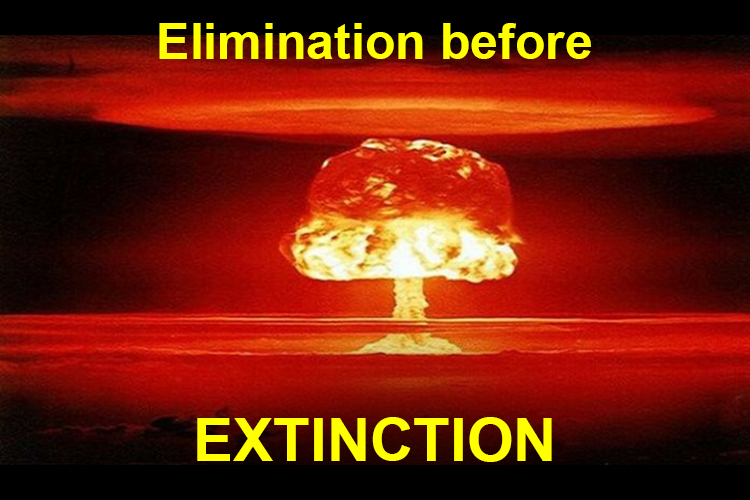
Nuclear weapons were invented here in my Archdiocese. Therefore, I feel a special responsibility to address humanity’s most urgent threat.
“Nuclear disarmament is a right to life issue. No other issue can cause the immediate collapse of civilization. In January 2022 I wrote a pastoral letter in which I traced the Vatican’s evolution from its uneasy conditional acceptance of so-called deterrence to Pope Francis’ declaration that the very possession of nuclear weapons is immoral.
“Therefore, what does this say about expanded plutonium pit production at the Los Alamos Lab? And what does it say about the obscene amounts of money that are being thrown at pit production, often excused as job creation?
“What does this say about the fact that the [NNSA] is pursuing expanded pit production without providing the public the opportunity to review and comment as required by the National Environmental Policy Act? I specifically call upon NNSA to complete a new LANL Site-Wide Environmental Impact Statement.
“In two weeks, I travel to Japan for the 79th atomic bombing anniversaries. The bishops of Santa Fe, Seattle, Hiroshima and Nagasaki have a simple message for world leaders. You utterly failed to begin serious negotiations as required by the 1970 NonProliferation Treaty. In this era, you must demonstrate concrete steps toward multilateral, verifiable nuclear disarmament by the 80th bombing anniversaries a year from now. http://nuclearactive.org/four-archbishops-urge-g7-leaders-to-undertake-concrete-steps-toward-nuclear-disarmament/
“I have a simple message for NNSA and the nuclear weapons labs. You’re very good at creating them. Now show us how smart you are by demonstrating how to get rid of nuclear weapons. Stop this new arms race that threatens all of civilization. Let’s preserve humanity’s potential to manifest God’s divine love toward all beings.
Yongbyon Nuclear Complex: New evidence of increased activity
Night-time lights visible at the Yongbyon radiochemical laboratory suggest that North Korea is covertly importing spent fuel rods for plutonium extraction reprocessing
DAILY NK By Bruce Songhak Chung, 16 July 24
Evidence suggests that North Korea is ramping up production of plutonium and uranium nuclear materials at the radiochemical laboratory and uranium enrichment facility in the Yongbyon nuclear complex, as it has begun full-scale operation of the experimental light water reactor this summer. Recently, major foreign media outlets covering North Korea have debated and verified the reliability of the thermal infrared analysis of the Yongbyon facility presented in a Daily NK column I published in May. This article summarizes thoughts and opinions on this matter, and also examines what is behind the intermittent night lights observed in Yongbyon through night-time luminosity images.
Recent conditions at the Yongbyon reactor and light water reactor area were examined using Maxar’s GeoEye-1 satellite imagery (40 centimeter resolution). In the June 19 satellite photo, heated cooling water from the reactor and light water reactor operation is clearly identified being discharged into the Kuryong River through two pump stations, accompanied by white foam. This marks the 16th cooling water discharge detected this year. As it continues to appear in satellite images since late April, the experimental light water reactor appears to have entered full-scale operation. The South Korean Ministry of National Defense had previously predicted that the Yongbyon light water reactor would enter normal operation in or around the summer months.
Below the second pump station, a yellow substance spread out in a rectangular shape can be seen on the ground. This could be wheat or barley being dried after harvest. In North Korea, mid-June is the peak harvest time for wheat and barley in the fields, followed typically by planting corn as the year’s second crop. Soldiers and workers guarding the Yongbyon nuclear facility appear to be engaging in farming activities in empty spaces within the complex as food rations are insufficient.
Analysis of Yongbyon thermal infrared satellite imagery………………………………………………………………………………………..
Repairs of the boiler room in the Yongbyon thermal power plant ………………………………………………………
Mysterious late night lights at the radiochemical laboratory………………………………………………………….
influential foreign media outlets recently released an assessment about thermal infrared analysis, which is used to determine the operational status of the Yongbyon nuclear facilities. The prominent U.S. North Korea-focused website Beyond Parallel has provided an in-depth analysis of the reliability of thermal infrared data. I read the three articles with great interest. The conclusion of the series of articles evaluated the results of the thermal infrared analysis of North Korea’s Yongbyon nuclear facilities as generally reliable. The outlet explained that after obtaining and comparing Yongbyon facility operation records for over two years held by the U.N., the results largely matched those of the thermal infrared analysis. When high heat was detected in the thermal infrared data, it corresponded with the operation of the Yongbyon facilities. However, the caveat was that facilities operating at low intensity might not be detected due to weak heat emissions. They also recommended drawing comprehensive conclusions by combining thermal infrared analysis with various other data, as there are still imperfections in the analysis. This is valuable advice worth noting.
Please send any comments or questions about this article to dailynkenglish@uni-media.net. https://www.dailynk.com/english/yongbyon-nuclear-complex-new-evidence-of-increased-activity/
–
July 16, 2024
Plutonium found in Indiana Street air filters near Rocky Flats; Boulder Commissioners reconsider trail project

High winds carry plutonium-laden dirt from former weapons plant to filters on Indiana Street, experts say
ARVADA PRESS, by Rylee Dunn, May 30, 2024
A recent discovery of plutonium in air filters on Indiana Street near Rocky Flats has given Boulder County Commissioners pause as they appear to reconsider involvement in the Rocky Mountain Greenway Project trail system.
The Greenway project began in 2016 as an effort to connect three National Wildlife Refuges — Rocky Mountain Arsenal, Two Ponds and Rocky Flats — through an interconnected trail system.
The project calls for the installation of an underpass connecting Rocky Flats to Boulder Open Space through the Rock Creek Corridor and an overpass to connect Westminster trails to the Greenway.
When gale-force winds hit on April 6, chemist and DU Professor Michael Ketterer and retired FBI agent Jon Lipsky — who led the 1989 raid of Rocky Flats that eventually led to the plant being shut down and designated as an EPA Superfund site — set up air filters in three locations nearby to conduct a study on the contaminated soil’s activities in high winds.
Ketterer said he has taken air filter samples near Rocky Flats a handful of times, but that the high wind event of April 6 drew special interest because dirt was visibly moving in the air.
“We both observed large, rapidly moving suspended dust clouds extending from ground level up to heights of hundreds of feet, originating from areas on the (Central Operating Unit of Rocky Flats) and/or contaminated buffer zone,” Ketterer said in an affidavit written after collecting the samples.
Two samples were collected along Indiana Street while high winds were blowing from the west. Ketterer sent the samples to the radiochemistry lab at Northern Arizona University, where scientists used mass spectronomy to study the filters.
“Plutonium was unequivocally detected in the two Indiana Street air filters,” a statement from Ketterer said. “With less than 30 minutes sample collection time, quantities ranging from 47 to 128 milligrams of filter ash were recovered from air filters; plutonium was detected in all six of the individual preparations of ash from the two Indiana Street samples.”
The concern surrounding Ketterer’s findings, he says, is that if the Greenway is constructed, increased foot traffic will spread the contaminated soil to neighboring communities.
“The more that people walk on the refuge, and the more land use that is taking place… undisturbed soil is pretty well protected against wind erosion, but once people and animals start walking on the development, then the erodibility, if you will, of the soil surface is going to greatly increase,” Ketterer said.
He added that this could mean more contaminated soil being transported off the refuge toward neighboring properties.
Radioactive plutonium is a material that is produced by nuclear reactors, and has been known to cause lung, bone and liver cancer in people exposed to it, according to the CDC.
The two isotopes of plutonium Ketterer found near Rocky Flats are 239 and 240, which have a “fingerprint” that confirms they originated at the former nuclear weapons plant.
Now, Ketterer’s findings are giving some governmental agencies pause about the construction of the Greenway Project, which calls for the Federal Highway Administration to install the underpass and overpass.
At an April 4 Boulder County Commissioners meeting, Lipsky warned county leaders of the dangers of building such structures on the site, referencing the Colorado State construction standard that forbids building when more than 0.9 picocuries per gram are found in soil.
Ketterer’s recent samples ranged from 0.15 to 1.19 picocuries of plutonium per gram of soil.
“I have a couple concerns: there is going to be digging, and the standard at Rocky Flats changes dramatically, exponentially, when it goes below three feet,” Lipsky said. “If it goes below six feet, there is no standard, and there’s no consideration for the workers, no consideration for the residents, like Superior, that will be receiving contaminants from this digging.”
Ketterer also gave comment at the April 4 meeting and did not mince words in his caution to commissioners.
“Commissioners, it’s not a marvelous idea to dig up and disturb plutonium-contaminated soils,” Ketterer said. “It’s all very unsettling to me. Not only do the soils near Rocky Flats and the Indiana Street corridor have plutonium in them, but a lot of it is in these discreet particles… I think this whole area is generously sprinkled with that.
“Commissioners,” Ketterer continued, “Rocky Flats is just one of the unsettling places in the U.S. and the world that we should worry about plutonium at — there’s a whole mess of uncontained plutonium at the central operating unit (of Rocky Flats) buried under… and we’re seeing a few breadcrumbs on the surface.”
………………………………………………………. legal action was brought in January when the advocacy group Physicians for Social Responsibility Colorado filed a lawsuit that seeks to block construction of trails in and around Rocky Flats. That litigation is ongoing as of press time…………………………………. https://coloradocommunitymedia.com/2024/05/30/plutonium-found-in-indiana-street-air-filters-near-rocky-flats-boulder-commissioners-reconsider-trail-project/
ALL reactor-produced plutonium is usable in nuclear weapons.
Gordon Edwards 19 May 4
Whenever plutonium is created in a nuclear reactor, it is always mostly plutonium-239. The higher isotopes – plutonium-240, plutonium-241, plutonium-242 – are always present in diminishing order of importance.
A lighter “burnup” (a shorter residence time in the reactor) will reduce the opportunity for the heavier isotopes to be created (by repeated neutron captures), and so the relative percentage of plutonium-239 will be that much greater.
The important thing to know is that ALL reactor-produced plutonium is usable in nuclear weapons, including the even-numbered isotopes.
See www.ccnr.org/plute_for_bombs_GE_2024.pdf
Plutonium-238 is only a very small fraction of the plutonium in used reactor fuel. By itself, plutonium-238 is the only isotope of plutonium that probably cannot be used for bomb-making, simply because it generates too much spontaneous heat for the bomb to be stable (i.e. the concentniopnal explosive=s needed for detonation will likely melt.)
However the presence of very small amounts of plutonium-238, as in any plutonium extracted from used nuclear fuel, is not a serious problem..
NNSA Delays Urgent Research on Plutonium “Pit” Aging But Spends Billions on Nuclear Weapons Bomb Cores

Concerned Citizens for Nuclear Safety, 28 Apr 24 http://nuclearactive.org/
This week, CCNS highlights portions of a recent press release by Nuclear Watch New Mexico, Tri-Valley Communities Against a Radioactive Environment (Tri-Valley CARES), and the Savannah River Site Watch about the National Nuclear Security Administration (NNSA). Their piece suggests NNSA does not have its priorities straight in neither producing up-to-date information on the way plutonium appears to age nor providing this information in a timely manner to the public. The entire press release is posted at http://nuclearactive.org/wp-content/uploads/2024/04/240417-NWNM-SRSW-TVC-Plutonium-Aging-PR.pdf
The press release reads: “Nearly three years after filing a Freedom of Information Act request, the public interest group Savannah River Site Watch has finally received [] the congressionally required Research Program Plan for Plutonium and Pit Aging.
However, the document is 40% blacked out, including references and acronyms.
Plutonium ‘pits’ are the radioactive cores of all U.S. nuclear weapons. The NNSA claims that potential aging effects are justification for a ~$60 billion program to expand production. However, the Plan fails to show that aging is a current problem. To the contrary, it demonstrates that NNSA is delaying urgently needed updated plutonium pit aging research.
“In 2006 independent scientific experts known as the JASONs concluded that plutonium pits last at least 85 years without specifying an end date. The average pit age is now around 40 years. A 2012 follow-on study by the Lawrence Livermore nuclear weapons lab concluded:
’This continuing work shows that no unexpected aging issues are appearing in plutonium that has been accelerated to an equivalent of [approximately] 150 years of age. The results of this work are consistent with, and further reinforce, the Department of Energy Record of Decision to pursue a limited pit manufacturing capability in existing and planned facilities at Los Alamos instead of constructing a new, very large pit manufacturing facility…’
“Since then NNSA has reversed itself. In 2018 the agency decided to pursue the simultaneous production of at least 30 pits per year at the Los Alamos National Laboratory (LANL) in northern New Mexico and at least 50 pits per year at the Savannah River Site (SRS) in South Carolina. Upgrades to plutonium facilities at LANL are slated to cost $8 billion over the next five years. The redundant Savannah River Plutonium Processing Facility in South Carolina will cost up to $25 billion, making it the second most expensive building in human history.
“Hundreds of billions of taxpayers’ dollars and future international nuclear weapons policies are at stake. …
The long path of plutonium: A new map charts contamination at thousands of sites, miles from Los Alamos National Laboratory
Plutonium hotspots appear along tribal lands, hiking trails, city streets and the Rio Grande River, a watchdog group finds
Searchlight New Mexico, by Alicia Inez Guzmán, April 25, 2024
For years, the public had no clear picture of Los Alamos National Laboratory’s plutonium footprint. Had the ubiquitous plutonium at LANL infiltrated the soil? The water? Had it migrated outside the boundary of the laboratory itself?
A series of maps published by Nuclear Watch New Mexico are beginning to answer these questions and chart the troubling extent of plutonium on the hill. One map is included below [on original] , while an interactive version appears on Nuclear Watch New Mexico’s website. The raw data for both comes from Intellus New Mexico, a publicly accessible clearinghouse of some 16 million environmental monitoring records offered in recent decades by LANL, the New Mexico Environment Department and the Department of Energy.
Approximately 58,100 red dots populate each map at 12,730 locations, marking a constellation of points where plutonium — a radioactive element used in nuclear weapons — was found in the groundwater, surface water or soil. What’s alarming is just how far that contamination extends, from Bandelier National Monument to the east and the Santa Fe National Forest to the north, to San Ildefonso tribal lands in the west and the Rio Grande River and Santa Fe County, to the south.
The points, altogether, tell a story about the porous boundary between LANL and its surrounds. So pervasive is the lab’s footprint that plutonium can be found in both trace and notable amounts along hiking trails, near a nursing home, in parks, along major thoroughfares and in the Rio Grande.
Gauging whether or not the levels of plutonium are a health risk is challenging: Many physicians and advocates say no dose of radiation is safe. But when questions about risk arise, one of the few points of reference is the standard used at Rocky Flats in Colorado, where the maximum allowable amount of plutonium in remediated soil was 50 picocuries per gram. Many sites on the Nuclear Watch map have readings below this amount. Colorado’s construction standard, by contrast, is 0.9 picocuries per gram.
Nuclear Watch’s driving question, according to Scott Kovac, its operations and research director, concerned a specific pattern of contamination: Had plutonium migrated from LANL dump sites into regional groundwater? The answer, Kovac believes, is yes.
That conclusion began to form when Nuclear Watch compiled data from between 1992 and 2023 for plutonium contamination below the soil, and plotted each point into the organization’s now-sprawling map. Red dots coalesce at LANL dump sites. They also appear in the finger-like canyons surrounding the Pajarito Plateau, namely in Los Alamos Canyon, “the main contaminant pathway to the Rio Grande,” a Nuclear Watch summary says.
Much of the contamination likely occurred from the 1940s to the 1960s, during the lab’s “Wild West,” in Kovac’s words — a time of little environmental oversight when the surrounding plateaus, canyons and the entire ancestral Pueblo of Tsirege doubled as a dumping ground, laboratory and wasteland………………..
A 1999 environmental impact statement and other documents reveal the extent of that contamination and the many places where LANL buried radioactive waste or dumped effluent, including landfills, canyons, drain lines, firing sites and spill locations.
“Plutonium and uranium have been released into canyons…since the Manhattan Project,” according to another 1999 report, this one focused on the lab’s contribution to radioactive contamination in Cochiti Lake. “In Los Alamos Canyon, these contaminants have been carried by flood flows several tens of kilometers” — more than 12 miles — “downstream into the Rio Grande.”
Airborne plutonium releases were also frequent and largely unchecked until the late 1970s, other reports show. The legacy of contamination has been the subject of some piecemeal remediation efforts on lab property and public lands. But the maps stand as forceful arguments for a “genuine cleanup” that is comprehensive and lasting, said Jay Coghlan, executive director of Nuclear Watch.
“We need to permanently protect precious, irreplaceable groundwater and the Rio Grande while providing high-paying cleanup jobs for decades,” Coghlan wrote Searchlight in an email. Instead, the lab is focusing on a historic expansion to produce plutonium pits for nuclear weapons. “New Mexicans,” he said, “don’t need more nuclear weapons.”
‘A full reckoning’ of detritus
The lab’s campus is undeniably riddled with plutonium, including beneath the deep groundwater aquifer in certain of its technical areas, the map shows. One concentration appears on the campus’s northern flank, around Material Disposal Area C, a 12-acre site that served as the primary dump for plutonium and other radioactive and toxic waste between 1948 and 1973. The unlined dump comprised seven disposal pits and 108 shafts that workers dug directly into the tuff, burying cyanide, mercury, sulfuric acid, beryllium, plutonium and other wastes four to 25 feet deep……………………………………………………………………………………………………….
The lab is juggling this legacy cleanup at the same time that it’s attempting to make 30 plutonium pits per year by 2030, a mission described as the “new Manhattan Project.” Worker shortages and supply-chain bottlenecks have already derailed the timeline; meanwhile, the cleanup of the lab’s Cold War sites is only half complete, the DOE reports. Indeed, as the lab barrels toward a new Cold War, there hasn’t been a full reckoning with the detritus of the last one.
Contamination near Buckman…………………………………………………………………………………………..
Plutonium pit ‘panic’ threatens America’s nuclear ambitions

The Hill, BY BRAD DRESS – 03/06/24
This is the second story in a series about Sentinel, the Air Force’s nuclear missile modernization project. Other stories touch on the challenges in the surrounding communities near Sentinel construction and with the Air Force’s budget issues.
At Los Alamos National Laboratory in New Mexico, where the U.S. built its first nuclear bomb, work on a key component of the next generation of nuclear missiles is already underway.
Workers have begun laying the groundwork for the first production later this year of plutonium “pits” — hollow spheres the size of a half grapefruit, made from the rare chemical element. They fit inside a warhead and create a nuclear explosion when compressed by explosives.
These pits are crucial: As a source of nuclear fuel, they will transform the Air Force’s new, modernized nuclear missiles, called Sentinel, into weapons of mass destruction. Sentinel is scheduled to be fielded in the Western rural U.S. in the 2030s, though that is likely to be delayed.
The pit work will first unfold at the nation’s only fully operational plutonium pit production facility, the Plutonium Facility at Technical Area 55, in a building known as PF-4 at Los Alamos.
Overseeing the production is the Department of Energy’s National Nuclear Security Administration (NNSA), which is pushing to get Los Alamos whirring to life this year to start making plutonium pits, with the hopes of eventually producing 30 per year at the site. The agency also plans to open a brand-new plutonium pit production plant in South Carolina, known as the Savannah River site, to meet an ultimate target goal of 80 pits a year.
But the NNSA hasn’t done large-scale pit production since the early 1990s, creating unease about restarting the process after decades of inactivity. And the agency is plagued by schedule delays, workforce challenges and budget concerns.
Sébastien Philippe, a research scientist at Princeton University who has closely tracked the Sentinel project, said the NNSA is struggling to meet its goals and raised concerns about the lack of a specific cost estimate for pit production.
“At this point, the deadline keeps moving, and the cost keeps growing,” he said.
The pit production is part of a U.S. scramble to modernize its entire triad after delaying such efforts for years due to the war on terrorism. The total modernizing effort is expected to exceed more than a trillion dollars.
Washington will replace its aging Minuteman III Intercontinental Ballistic Missiles and build new submarines and bomber planes capable of carrying nuclear weapons, with the latest 10-year projection cost putting the modernization effort at $750 billion……………………………………………………………..
The NNSA pit production effort has been flagged for several years by a government watchdog group, the Government Accountability Office (GAO). The GAO in a 2020 report said history has “cast doubt on NNSA’s ability to produce the required number of plutonium weapon cores on schedule.”
“We found NNSA’s plans for re-establishing pit production do not follow best practices and run the risk of cost increases and delays,” GAO said in an updated report last year. “The re-establishment of pit production capabilities is one of the most complex and potentially costly efforts presently operated by NNSA.”
The NNSA budget for pit production proposed in Congress for the next fiscal year is around $3 billion. The overall NNSA budget is expected to be boosted by 8 percent to $24 billion, based on congressional budget documents.
Sen. Elizabeth Warren (D-Mass.), a member of the Senate Armed Services Committee, grilled NNSA Administrator Jill Hruby in a 2022 hearing over budget and schedule concerns………………….
n last year’s National Defense Authorization Act, which was signed into law in December, lawmakers inserted several amendments due to concern about NNSA’s work.
Congress noted that reports have flagged the management and oversight of the plutonium modernization program with “serious deficiencies,” and required the NNSA to develop a master schedule and a life-cycle cost estimate. ……………………………………………………..
NNSA facing workforce challenges, lawsuit
…………………………………………………………..With the NNSA restarting pit production after so long, others are concerned about the potential for contamination and leakage from the hazardous practice.
Rocky Flats looms large over the debate. In 1957 and 1969, fires broke out at the facility and nearly created an environmental catastrophe on par with the meltdown in Ukraine’s Chernobyl plant.
The site was also known to have leaked barrels of radioactive waste into nearby fields. The FBI and the Environmental Protection Agency raided Rocky Flats in 1989 over environmental concerns.
The facility stopped production in 1992 and officially shut down in 1994. The Department of Energy took 10 years to clean up the area, which was designated as a hazardous waste site.
And Los Alamos itself has shut down in the past, from 2013-16, over safety concerns at PF-4.
The shaky history has spurred concerns in the communities around Los Alamos, where the “downwinders” — those who were affected by the winds carrying radioactivity after the Trinity test — have long kept a critical eye on NNSA operations.
As part of the new pit production, remaining plutonium after conversion to a new pit will be stored as waste. That waste will be sent to a disposal plant in Carlsbad, N.M.
Los Alamos said the facility has upgraded fire suppression systems and checked nuclear containers to ensure safety in case of an accident. Additionally, plutonium pits are handled inside of sealed compartments, which technicians insert gloves into to prevent harmful exposure.
But Jay Coghlan, executive director of Nuclear Watch New Mexico, wasn’t convinced the safety measures were sufficient.
“Los Alamos has a very checkered nuclear safety track record,” he said, and “production always causes more contamination and more radioactive waste.”
Coghlan sued the NNSA in 2021 for violating the National Environmental Policy Act (NEPA), which requires an environmental review and public input for government projects. He said the NNSA has not conducted a robust town hall or environmental review on the pit production.
“That is not just a paper document. It requires public hearings. It requires NNSA to essentially make its case,” he said. “It requires NNSA to respond to public comment.”……………………………………
Questions linger over Savannah River
At the Savannah River site in South Carolina, the NNSA will have to start up a facility that has never produced plutonium pits……………………………………………………………
The new Savannah site is only half-designed and is estimated to finish construction sometime between 2032 and 2035 — missing the goal of the Air Force, which wants to field its 400 Sentinel missiles in 2030.
At the same time, the budget for the site to complete construction has ballooned from about $3 billion in 2017 to an estimated cost of $11 billion.
Von Hippel, the nuclear policy scientist, and Curtis Asplund, an assistant professor in the department of physics and astronomy at San José State University, said it would be better to focus on small-scale pit production at Los Alamos first.
“Trying to build a second pit production facility at the Savannah River Site in a building designed for another purpose while simultaneously re-equipping Los Alamos’s plutonium facility and crowding it with hundreds of trainees for both facilities is a prescription for a fiasco,” they wrote in an opinion last year………………………………………………….
With the challenges facing the NNSA, critics question if the pits are even needed, given the tens of thousands made during the Cold War period. The pits used today are about 40 years old, and while around 100 years is considered the end of a pit’s life, that’s a best guess…………………………………………….. more https://thehill.com/policy/defense/4510010-plutonium-pits-us-nuclear-ambitions-sentinel/
Dose the US Need New Plutonium Pits?
Maintaining nuclear weapons is both dangerous and expensive.
Inkstick, ALICIA INEZ GUZMÁN, MARCH 4, 2024
Sprinkled across five western states, in silos buried deep underground and protected by reinforced concrete, sit 400 intercontinental ballistic missiles. Each of those missiles is equipped with a single nuclear warhead. And each of those warheads is itself equipped with one hollow, grapefruit-sized plutonium pit, designed to trigger a string of deadly reactions.
All of those missiles are on “hair-trigger alert,” poised for hundreds of targets in Russia — any one of which could raze all of downtown Moscow and cause hundreds of thousands of casualties.
Except — what if it doesn’t? What if, in a nuclear exchange, the pit fizzles because it’s just too old? In that case, would the weapon be a total dud or simply yield but a fraction of its latent power?
Outwardly, at least, that’s the question driving a whole new era of plutonium pit production at Los Alamos National Laboratory (LANL) and the Savannah River Plutonium Processing Facility in South Carolina……………………………………………………
Now, as the nuclear industrial complex awakens from its long slumber, the resumption of plutonium pit production has emerged as a deeply polarizing and political act. Anti-nuclear activists have accused the federal government of exploiting the uncertainty around aging to jumpstart a nearly $60 billion dollar manufacturing program. They assert that the real reason America has resumed the production of pits is for the purpose of introducing a new generation of warheads for a new generation of missiles — the first of which is the Sentinel, one of the most complex and expensive programs in the history of the US Air Force……………………………………………………..
“The issue of plutonium pit aging is a Trojan horse for the nuclear weaponeers enriching themselves through a dangerous new arms race,” said Jay Coghlan, executive director of Nuclear Watch New Mexico, an anti-nuclear group based in Santa Fe. “Future pit production is not about maintaining the existing, extensively tested stockpile. Instead, it’s for deploying multiple new warheads on new intercontinental ballistic missiles.”
……………………………………………..America’s plutonium pits are also estimated to hold their power for a good 85 years, and some estimates give them decades more. Much of the current stockpile is about 40 years old, which suggests there is no looming crisis.
The mystery of pit aging has nonetheless been at the heart of numerous studies conducted over decades at LANL and Lawrence Livermore National Laboratory (LLNL). In 2006, each lab released its findings to JASON, an independent and elite group of scientists that’s been advising the federal government since the Cold War, for review. JASON’s conclusion: “Most plutonium pit types have credible lifetimes of at least 100 years.” Half a dozen years later, researchers at LLNL were able to artificially age plutonium to 150 years. Those plutonium samples, researchers stated at the time “continue to age gracefully.”
But, come 2019, the political tide had changed. With President Donald Trump in office and a receptive Congress backing a plan to reinstate pit production, JASON was not convinced that enough studies on aging had been conducted in recent years. The group urged more studies. It also urged that “pit manufacturing be re-established as expeditiously as possible,” the brief report read………………………………………………………………………………………………….
Too Big to Fail”
The political machinations actually go back even further — to the 2010 concession that President Barack Obama made to a largely Republican bloc of Senators: arms control in exchange for a revival of the nuclear weapons complex.
“The deal was that in return for Senate ratification of the New [Strategic Arms Reduction Treaty], Obama would support a modernization plan that would modernize literally almost every aspect of the entire US nuclear arsenal,” explained Sharon Weiner, an associate professor at the School of International Service at American University.
At the time, the deal was heralded as a rare moment of bipartisan consensus. Today, experts look back on it as the beginning of a new era, a tectonic modernization of America’s nuclear triad — land, sea and air — now projected to cost close to $2 trillion over the next 30 years. That’s roughly the GDP of Canada.
Plutonium pits, of course, represent only a small fraction of the cost. That mind-boggling figure reflects a total reimagining of the nation’s entire nuclear program, complete with brand new ballistic missile submarines, 400 new Sentinel intercontinental ballistic missiles, tactical aircrafts, underground silos and 800 nuclear warheads.
The Sentinel program alone — cost, $131 billion — is a juggernaut. “I think this program has become too big to fail for an entrenched part of the military-industrial-congressional complex,” said Geoff Wilson, an expert on federal defense spending at the Independent watchdog, Project on Government Oversight.
And all of it together is being embraced in response to the same argument — that missiles, warheads, silos, and pits, nearly everything built during the Cold War — are getting too old. In a society defined by obsolescence, the language is potent.
……………………………………………………..A New Cold War
In the unthinkable scenario that a Sentinel is deployed, it would propel like a rocket beyond earth’s atmosphere and into space. As it reached its apogee, the missile would shed all its pieces and the warheads would descend toward their intended targets, half a world away.
For now, though, the Sentinel is barely a reality. The program is so complex and vastly over budget that some in the arms control community are calling for its complete cancellation. Experts question such a missile’s ability to deter China without provoking Russia. Other critics consider the plan to build new weapons as a dangerous return to the policies of the Cold War.
……………………………………even if all the timetables are met, intercontinental ballistic missiles will always be a “danger to the world as long as they are on launch-on-warning alert,” according to Frank N. von Hippel, senior research physicist and professor of public and international affairs emeritus with Princeton University’s Program on Science and Global Security.
The risk of a false alarm is enough reason to “do away with the ICBMs altogether,” as he and others — presidents, retired commanders, and at least one secretary of defense, alike — have long campaigned to do. “An accidental launch is a major contributor to the overall probability of an all out nuclear war.”
That’s because a president would have no more than a few minutes to decide whether a threat is real or false. As President George Bush was famously quoted, that wouldn’t give him enough time to get “off the crapper.”
And once an ICBM is launched, there would be no way to stop it, von Hippel emphasized.
It’s not the weapons so much that are archaic, but the thinking behind them, according to Wilson of the Project on Government Oversight. ICBMs were born in a different age, as was the entire nuclear triad: “a Cold War relic that the military-industrial complex has worked overtime to retroactively justify.”
In the world of today, Wilson is skeptical that ICBMs will actually protect Americans. “Practically, these weapons are strategic dinosaurs.”………………………………………. https://inkstickmedia.com/does-the-us-need-new-plutonium-pits/—
The reawakening of America’s nuclear dinosaurs

“The issue of plutonium pit aging is a Trojan horse for the nuclear weaponeers enriching themselves through a dangerous new arms race,” said Jay Coghlan, executive director of Nuclear Watch New Mexico, an anti-nuclear group based in Santa Fe. “Future pit production is not about maintaining the existing, extensively tested stockpile. Instead, it’s for deploying multiple new warheads on new intercontinental ballistic missiles.”
The risk of a false alarm is enough reason to “do away with the ICBMs altogether,……. “An accidental launch is a major contributor to the overall probability of an all out nuclear war.”
Are America’s plutonium pits too old to perform in the new Cold War? Or are new ones necessary?
by Alicia Inez Guzmán February 28, 2024
Sprinkled across five western states, in silos buried deep underground and protected by reinforced concrete, sit 400 intercontinental ballistic missiles. Each of those missiles is equipped with a single nuclear warhead. And each of those warheads is itself equipped with one hollow, grapefruit-sized plutonium pit, designed to trigger a string of deadly reactions.
All of those missiles are on “hair-trigger alert,” poised for hundreds of targets in Russia — any one of which could raze all of downtown Moscow and cause hundreds of thousands of casualties.
Except — what if it doesn’t? What if, in a nuclear exchange, the pit fizzles because it’s just too old? In that case, would the weapon be a total dud or simply yield but a fraction of its latent power?
Outwardly, at least, that’s the question driving a whole new era of plutonium pit production at Los Alamos National Laboratory (LANL) and the Savannah River Plutonium Processing Facility in South Carolina.
Plutonium is widely known as one the most exotic elements in the periodic table. Trace amounts of it have been identified in the earth’s crust, though all of what’s now used for America’s nuclear weapons is manmade. For decades, these pits were cast with plutonium and other materials at a breakneck pace, installed in warheads and strapped into missiles that were regularly upgraded and modernized in an escalating arms race with the Soviet Union. Plutonium pits were never intended to grow old and senescent.
“We never worried about aging,” said Siegfried Hecker, former director of LANL and one of the world’s leading plutonium experts. “Because bombs were supposed to be out there for a dozen years or so.”
It’s been almost 40 years since America’s Cold War pit factory at Rocky Flats near Denver was raided by FBI agents and closed due to environmental crimes — among them, releases of radioactive effluent into nearby waterways. In that time, pit production went largely dormant, the USSR collapsed, arms reductions treaties were signed, stockpiles reduced and underground testing ceased.
Now, as the nuclear industrial complex awakens from its long slumber, the resumption of plutonium pit production has emerged as a deeply polarizing and political act. Anti-nuclear activists have accused the federal government of exploiting the uncertainty around aging to jumpstart a nearly $60 billion dollar manufacturing program. They assert that the real reason America has resumed the production of pits is for the purpose of introducing a new generation of warheads for a new generation of missiles — the first of which is the Sentinel, one of the most complex and expensive programs in the history of the U.S. Air Force.
The Sentinel ICBM has the capability to carry three separate warheads, each with its own target. Earlier versions of America’s missiles could and did have such capabilities and the option has remained available, but with post-Cold War weapons reductions, the number of warheads per missile was also reduced — one warhead, one intercontinental ballistic missile. As the U.S., Russia and China barrel toward a new Cold War, the U.S. will likely eschew such a convention in a matter of years.
“The issue of plutonium pit aging is a Trojan horse for the nuclear weaponeers enriching themselves through a dangerous new arms race,” said Jay Coghlan, executive director of Nuclear Watch New Mexico, an anti-nuclear group based in Santa Fe. “Future pit production is not about maintaining the existing, extensively tested stockpile. Instead, it’s for deploying multiple new warheads on new intercontinental ballistic missiles.”
But to hear Hecker and his colleagues tell it, the question of pit aging is as scientifically vexing as it is political. Plutonium, to its most studied acolytes, borders almost on the mystical, its properties as capricious as the human body. It can be brittle or soft under some circumstances or turn to powder when heated in air. It can disintegrate at room temperature. It can bombard itself with radiation and mar its own internal lattice structure. It can even heal that damage within fractions of a second, if not over the course of several decades.
According to Glenn Seaborg, former chair of the Atomic Energy Commission and the chemist credited with first synthesizing the element for use in weapons, plutonium is “so unusual as to approach the unbelievable.”
This quality means that even the most knowledgeable experts are reluctant to commit themselves to anything definitive when it comes to a plutonium pit’s long-term prospects. Does it last 50 years? One hundred? Is it comparable to a human body, whose bones weaken and whose mind is vulnerable to dementia? Or is it actually impervious to entropy?
“It is difficult to quantify how much the properties of a plutonium pit will change over time,”…………………………………………………………………………………………..
Too big to fail”
The political machinations actually go back even further — to the 2010 concession that President Barack Obama made to a largely Republican bloc of Senators: arms control in exchange for a revival of the nuclear weapons complex.
………………….
the beginning of a new era, a tectonic modernization of America’s nuclear triad — land, sea and air — now projected to cost close to $2 trillion over the next 30 years. That’s roughly the GDP of Canada.
Plutonium pits, of course, represent only a small fraction of the cost. That mind-boggling figure reflects a total reimagining of the nation’s entire nuclear program, complete with brand new ballistic missile submarines, 400 new Sentinel intercontinental ballistic missiles, tactical aircrafts, underground silos and 800 nuclear warheads.
The Sentinel program alone — cost, $131 billion — is a juggernaut. “I think this program has become too big to fail for an entrenched part of the military-industrial-congressional complex,” said Geoff Wilson, an expert on federal defense spending at the Independent watchdog, Project on Government Oversight.
…………………………………………………………. America’s warheads have also been regularly surveilled since the late 1990s, leading even the most cautious scientists to vouch for their reliability. In 2000, Raymond Jeanloz — a professor of earth and planetary science and astronomy at University of California, Berkeley— found little evidence that defects in those warheads increased significantly with age. His statistical models, based on data culled from LANL and LLNL, showed that such defects, if any, accumulate at the glacial rate of one percent per quarter century…………………….
A new Cold War
In the unthinkable scenario that a Sentinel is deployed, it would propel like a rocket beyond earth’s atmosphere and into space. As it reached its apogee, the missile would shed all its pieces and the warheads would descend toward their intended targets, half a world away.
For now, though, the Sentinel is barely a reality. The program is so complex and vastly over budget that some in the arms control community are calling for its complete cancellation. Experts question such a missile’s ability to deter China without provoking Russia. Other critics consider the plan to build new weapons as a dangerous return to the policies of the Cold War.
As for the plutonium pits, LANL is behind by at least four years; Savannah River by at least six. Indeed, to meet the projected quota demanded for future weapons could take decades.
But even if all the timetables are met, intercontinental ballistic missiles will always be a “danger to the world as long as they are on launch-on-warning alert,” according to Frank N. von Hippel, senior research physicist and professor of public and international affairs emeritus with Princeton University’s Program on Science and Global Security.
The risk of a false alarm is enough reason to “do away with the ICBMs altogether,” as he and others — presidents, retired commanders, and at least one secretary of defense, alike — have long campaigned to do. “An accidental launch is a major contributor to the overall probability of an all out nuclear war.”…………………………. And once an ICBM is launched, there would be no way to stop it
Iran Reduces Near-Weapons-Grade Stockpile, Defying Expectations
Move could signal an effort to de-escalate nuclear tensions with Washington
By Laurence Norman, Feb. 26, 2024
VIENNA—Iran reduced its stockpile of near-weapons-grade nuclear material even as it continued expanding its overall nuclear program, the United Nations’ atomic watchdog said Monday, marking a surprise step that could ease tensions with Washington.
The move comes at a moment when Iran and the U.S. have sought to avoid direct confrontation in the regional conflict that grew out of Hamas’s terrorist attack on Israel on Oct. 7 and Israel’s aggressive response………… (Subscribers only) more https://www.wsj.com/world/middle-east/iran-reduces-near-weapons-grade-stockpile-defying-expectations-ba384777
1 This Month

of the week – Shut Down Drone Warfare!


Tell the Ukrainian Government to Drop Prosecution of Peace Activist Yurii Sheliazhenko

Petition to revoke the licensing of the Near Surface Nuclear Disposal Facility (NSDF) at Chalk River. https://www.ourcommons.ca/petitions/en/Petition/Details?Petition=e-7247
To see nuclear-related stories in greater depth and intensity – go to https://nuclearinformation.wordpress.com
-
Archives
- April 2026 (19)
- March 2026 (251)
- February 2026 (268)
- January 2026 (308)
- December 2025 (358)
- November 2025 (359)
- October 2025 (376)
- September 2025 (257)
- August 2025 (319)
- July 2025 (230)
- June 2025 (348)
- May 2025 (261)
-
Categories
- 1
- 1 NUCLEAR ISSUES
- business and costs
- climate change
- culture and arts
- ENERGY
- environment
- health
- history
- indigenous issues
- Legal
- marketing of nuclear
- media
- opposition to nuclear
- PERSONAL STORIES
- politics
- politics international
- Religion and ethics
- safety
- secrets,lies and civil liberties
- spinbuster
- technology
- Uranium
- wastes
- weapons and war
- Women
- 2 WORLD
- ACTION
- AFRICA
- Atrocities
- AUSTRALIA
- Christina's notes
- Christina's themes
- culture and arts
- Events
- Fuk 2022
- Fuk 2023
- Fukushima 2017
- Fukushima 2018
- fukushima 2019
- Fukushima 2020
- Fukushima 2021
- general
- global warming
- Humour (God we need it)
- Nuclear
- RARE EARTHS
- Reference
- resources – print
- Resources -audiovicual
- Weekly Newsletter
- World
- World Nuclear
- YouTube
-
RSS
Entries RSS
Comments RSS
 nuclear-news