USA govt to delay removing plutonium nuclear waste from the decommissioned Hanford nuclear reservation
Washington State Nuclear Site to Delay Moving Waste Off-Site https://www.usnews.com/news/best-states/washington/articles/2021-05-13/washington-state-nuclear-site-to-delay-moving-waste-off-site
The U.S. Department of Energy and its regulators have proposed extending the deadline to ship waste contaminated with plutonium off the decommissioned Hanford nuclear reservation in Washington state.
By Associated Press|May 13, 2021, RICHLAND, Wash. (AP) — The U.S. Department of Energy and its regulators have proposed extending the deadline to ship waste contaminated with plutonium off the decommissioned Hanford nuclear reservation in Washington state.
The proposal moves the deadline back 20 years — from 2030 to 2050 — to ship the waste to a national repository in New Mexico for permanent disposal, the Tri-City Herald reported Wednesday.
“We realized that the existing milestone dates were unachievable,” said John Price, a manager with the state Department of Ecology, which is a regulator for the nuclear site.
The Hanford nuclear reservation produced plutonium for nuclear weapons during the Cold War and World War II, leaving 56 million gallons (212 million litres) of radioactive waste in underground tanks. The 580-square-mile (1,500-square-kilometer) site is located in Richland, Washington about 200 miles (322 kilometers) southeast of Seattle.
Price also said there were some newly proposed deadlines that the Department of Ecology “enthusiastically” supports, including a commitment by the Department of Energy’s to start shipping some waste as early as 2028.
The federal agency and its regulators — the Department of Ecology and the Environmental Protection Agency — set waste cleanup plans and deadlines for the nuclear site.
The latest proposed deadlines cover suspected transuranic waste, or debris contaminated with plutonium, including about 11,000 containers stored at a Hanford complex.
Waste with artificially-made elements above uranium on the periodic table is also classified as transuranic.
A public meeting to discuss the latest proposed changes and answer questions was scheduled for Thursday.
UK’s Magnox nuclear reprocessing plant to close, leaving world’s largest stockpile of separated civil plutonium

Plutonium Policy, No2NuclearPower, No 132 May 2021, Update Introduction ..The Nuclear Decommissioning Authority (NDA) now expects the Magnox Reprocessing Plant at Sellafield to close this year (2021) – one year later than previously planned. The newer Thermal Oxide Reprocessing Plant (THORP) was shut in November 2018. Reprocessing, which has always been unnecessary, is the chemical separation of plutonium and unused uranium from spent nuclear waste fuel.
When reprocessing ends there will be around 140 tonnes of separated civil plutonium stored at Sellafield – the world’s largest stockpile of separated civil plutonium. (1) In 2008 the NDA launched a consultation on options (2) for dealing with this embarrassing stockpile – it is highly toxic, poses a permanent risk of proliferation, and will cost taxpayers around £73 million a year to store for the next century. (3) Today, after almost a decade and a half of dithering, the UK Government has failed to make any decisions, but still appears to favour the re-use option, which would probably involve transporting weapons useable plutonium or MoX fuel to reactor sites, such as Hinkley Point C and Sizewell B (and C if it is ever built) with an armed escort.
The NDA itself said in 2008 that deciding soon could save money by removing the need to build further plutonium stores. And the Government’s refusal to admit that using the plutonium as fuel for new reactors is not only extremely technically challenging but also probably unaffordable, means funds are being spent developing both re-use and immobilisation options thus maximising the cost of plutonium disposition at the same time maximising the cost of plutonium storage.
The story so far When reprocessing ends in 2021 there will be around 140 tonnes of separated civil plutonium stored at Sellafield. About 23 tonnes of this is foreign-owned, largely but not exclusively by Japanese utilities, and is managed under long-term contracts. (4) The UK’s stockpile of plutonium has been consolidated at Sellafield by transporting material at the former fast reactor site at Dounreay in Caithness down to Cumbria. The NDA says it has been working with the UK government to determine the right approach for putting this nuclear material beyond reach. (5) The options it is considering are all predicated on the development of a Geological Disposal Facility (GDF). Radioactive Waste Management Ltd (RWM) – a subsidiary of the NDA – is assuming that a GDF will be available to receive its first waste in the late 2040s. Then it will take around 90 years to emplace all existing waste before it can begin emplacing other materials such as immobilised plutonium or spent plutonium fuel. And there are no guarantees this timetable will be achieved. In Sweden, for example, which is perhaps one of the countries most advanced in its development of an underground repository, nuclear utilities have warned reactors may have to close early because of delays in the approval of the repository. (6)
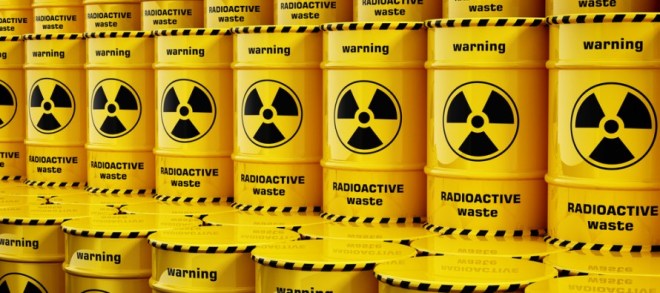
The Options Options considered for dealing with plutonium include using it as a fuel called Mixed Oxide Fuel (MoX) in nuclear reactors (followed by storage as spent fuel pending disposal in a Geological Disposal Facility (GDF)).
Storage Problems Meanwhile plutonium will have to continue to be stored at Sellafield. The NDA’s 2008 report said “If a decision were taken today on a solution for the inventory, there could still be a requirement to provide storage for around 40 years.” (17) Continued long-term storage of civil plutonium is not as easy as it sounds nor is it cheap, and there are many technical challenges. ……………..
The NDA considers some of the older plutonium packages and facilities used in early production to be amongst the highest hazards on the Sellafield site. Therefore, it is aiming to gradually transfer all plutonium to a new store, the Sellafield Product and Residue Store (SPRS) which opened in 2010……..
A proportion of the plutonium canisters at Sellafield are decaying faster than the NDA anticipated. A leak from any package would lead to an ‘intolerable’ risk as defined by the Office for Nuclear Regulation (ONR). The NDA has therefore decided to place the canisters more at risk in extra layers of packaging until SRP is operational. ………..
In 2014, the House of Commons Public Accounts Committee reported that the Government did not have a strategy in place for the plutonium stored at Sellafield. 7 years later, it has still not decided between the two options available to it: readying the plutonium stockpile for long-term storage in a geological disposal facility (that has yet to be constructed); or reusing it as fuel in new nuclear power stations. (25)
Conclusion The Government’s preferred option for the disposition of plutonium still appears to be to use the majority of the stockpile to fabricate Mixed Oxide Fuel for use in Light Water Reactors. This could mean transporting weapons-useable plutonium on our roads or rail network to Sizewell and Hinkley Point. These transports would need to be accompanied by armed police.
This is despite the fact that a plutonium immobilisation plant would be required in any case to immobilise that portion of the plutonium stockpile which is not suitable for use in MoX fuel.
Meanwhile, the Nuclear Decommissioning Authority needs to continue its programme of modernising Sellafield’s plutonium storage facilities, which will involve the construction extensions to the Sellafield Product and Residue Store (SPRS) and retreating and repacking some of the existing canisters which are considered unsuitable for storage in a modern store. This will also involve construction the Sellafield (Product and Residue store) Retreatment Plant (SRP).
Had the Government decided soon after the publication of the NDA’s options report to immobilise the UK plutonium stockpile, as advised by environmentalists and proliferation specialists, it is likely that savings could have been made by removing the requirement for one or both of the plutonium store extensions. Indeed, if a decision is taken soon, it may still be possible to avoid the cost of building the second store extension. of two
In short, Government policy appears to be maximising the cost of plutonium disposition by requiring both a MoX fuel fabrication plant AND a plutonium immobilisation plant, and at the same time maximising the cost of plutonium storage. Under this policy MoX fuel containing weapons useable plutonium would have to be transported under armed guard around the country. https://www.no2nuclearpower.org.uk/wp/wp-content/uploads/2021/05/nuClearNewsNo132.pdf
Sellafield’s plutonium waste has continued to circulate in the Irish Sea
Plutonium Remobilisation in the Irish Sea, No2Nuclear Power No 132 May 2021, Low-level aqueous radioactive waste has been discharged from the Sellafield site into the Irish Sea for more than 50 years. Originally it was thought that soluble radionuclides discharged from Sellafield (such as caesium and tritium) would be diluted and dispersed whereas long lived, transuranic nuclides such as Plutonium, and Americium would leach out of the liquid phase and become preferentially adsorbed to the surface of sedimentary particles in the water column, sink to the seabed and remain permanently bound and immobilised in seabed deposits and therefore isolated from human populations and the environment.
Unfortunately, it has since emerged that a proportion of such sediment associated radioactivity has, and is being actively transported around the Irish Sea while the remainder is temporarily “sequestered” in the seabed but subject to any future disturbance mechanisms such as storm, wave and seismic activity. In addition, a proportion of dissolved nuclides did not necessarily remain dissolved in liquid form in the water column, but could become incorporated into organic particles and deposited into sedimentary environments where they could be temporarily sequestered, but subsequently recycled back into the environment by dredging, trawling storm and seismic activity.
Plans by West Cumbria Mining (WCM) for an under-seabed coal mine off the coast of Cumbria near Whitehaven and the possibility of a Geological Disposal Facility, also under the seabed off the coast of Cumbria have raised concerns that transuranic radionuclides currently sequestered in Irish Sea sediments could be further remobilised as a result of these activities,
A large proportion of the Sellafield-derived radionuclides disposed to sea have become associated with the sediment at two sites close to the waste disposal pipeline: the Irish Sea Mudpatch and the Esk Estuary. The Mudpatch is a belt of fine-grained sediments located about10 km from the waste pipeline.
In 1999 Kershaw et al showed evidence that sediment-bound radionuclides over the previous decade were being redistributed. There was a decrease in the coastal zone around Sellafield and increases in Liverpool Bay and the western Irish Sea. Levels of dissolved 239/240Pu in the water column decreased only slowly since the peak discharge rates in the 1970s and much more slowly than the drop in Sellafield discharges. This suggests that material is moving from contaminated sediments and becoming dissolved in seawater where it is available for transport. Indeed, in the western Irish Sea, evidence has been found that 239/240Pu is being transported from the eastern Irish Sea. There is also evidence of the direct transport of contaminated sediment. (1)
Daisy Ray et al. highlight the fact that “once mobilised, the radionuclides can be transported elsewhere in the Irish Sea … Although waste discharges are continuing to decrease from the Sellafield site, the Mudpatch may continue to supply “historic” Sellafield-derived radionuclides to other locations. Indeed, recent data from Welsh and Scottish coastal areas suggest that the Mudpatch still acts as a source of radionuclides to UK coastal areas.” (2)
The model developed by Aldridge et al. at the Centre for Environment Fisheries and Aquaculture Science (CEFAS) in 2003 strongly suggest that the principal source of 239/240Pu in the Irish Sea was sediments in the eastern Irish Sea contaminated from past discharges, rather than new inputs from Sellafield. (3) Radionuclide re-distribution can occur by two principal mechanisms. Directly, by the transport of contaminated sediment, or indirectly via exchange and transport in dissolved form (dissolution). The latter process operates when tidal, wind or trawling activity re-suspends bed material allowing transfer of radionuclides to the water column. (4)
Ray el al. also suggest that bioturbation – the reworking of soils and sediments by animals or plants – at the Cumbrian Mudpatch will continue to act as a source of “historic” Sellafieldderived radioactivity to the UK Coastal Environment. If this redistribution of historical discharges of radionuclides is happening by natural processes, it can be assumed that the problem could become much more serious as a result of human mining activities under the seabed,
A recent report by Marine Consultant, Tim Deere-Jones concludes that:
It is evident that any subsidence within the WCM designated seabed mining zone will generate some form and degree of seabed morphological distortion. It is equally evident that any such seabed distortion will remobilise previously sequestered seabed sediments, and their associated pollutants, which will subsequently be transported and re-distributed through the regional marine and coastal environments. It is inevitable that such re-mobilisation and re-distribution will expose marine wildlife and human coastal populations and stakeholders to some degree of exposure doses to those pollutants via a number of mechanisms and pathways.” (5) https://www.no2nuclearpower.org.uk/wp/wp-content/uploads/2021/05/nuClearNewsNo132.pdf
Cyberattacks grind Hanford nuclear energy workers’ benefit program to a halt

Cyberattacks grind Hanford nuclear energy workers’ benefit program to a halt, Seattle Times May 10, 2021 By Patrick Malone
Cyber attacks on the U.S. government have abruptly paused processing of benefit applications for workers who were sickened while working on nuclear weapons programs at Hanford and other Department of Energy sites, delaying aid to some dying workers, according to advocates.
Without warning, advocates from the Alliance of Nuclear Workers Advocacy Group received notice late last Friday that effective Monday, a vital component of the Energy Employees Occupational Illness Compensation Program would be offline for two to four months.
The Radiation Dose Reconstruction Program databases’ sudden hiatus could delay approval of new benefits for groups of workers who believe they’ve been exposed to workplace hazards.
Among them are more than 550 workers from Hanford, a mothballed plutonium processing site in Richland, who were potentially exposed to radiation and toxins when they were provided leaky respirators, according to a Seattle Times investigation last year.
Those workers are seeking inclusion in the federal benefits program administered by the Department of Labor. The National Institute of Occupational Safety and Health plays an instrumental role in determining eligibility.
Hanford, born in secrecy during World War II in a rush to develop the first atomic bomb, processed the plutonium fuel for nuclear weapons for four decades, a process that fouled the 580-square-mile site with radioactive waste and toxic vapors that sickened and killed many workers.
Washington’s U.S. Sen. Patty Murray and Rep. Adam Smith, both Democrats, sponsored legislation in response to The Times investigation that would expand benefits to include the Hanford cleanup crew who were given faulty respirators and other nuclear workers across the country who aren’t yet eligible.
Others who could be affected are some 1,378 individual workers across the country currently applying for assistance, and those with recent terminal diagnoses, who normally would be eligible for benefits awarded as quickly as a day after application. Those benefits can be worth hundreds of thousands of dollars.
“Terminally ill workers often do not have 2 to 4 months to live,” Terrie Barrie, ANWAG founder, wrote in a Monday, May 3, letter to NIOSH director to Dr. John Howard. “Will they no longer have the option to have their claim expedited so that they can receive the medical and financial benefits before they die?”
The source and nature of the cyberattacks are unclear, but in a May 4 letter to ANWAG, Howard said that an ongoing review of the energy workers’ compensation databases “identified very significant concerns about the cybersecurity integrity of the Program’s claimant database,” forcing an immediate and secret shutdown of the claims process……………………. https://www.seattletimes.com/seattle-news/times-watchdog/cyberattacks-grind-hanford-nuclear-energy-workers-benefit-program-to-a-halt/
The US Energy Department’s renewed promotion of plutonium-fueled reactors.

Plutonium programs in East Asia and Idaho will challenge the Biden administration, Bulletin of the Atomic Scientists, By Frank N. von Hippel | April 12, 2021 ”’…………. The US Energy Department’s renewed promotion of plutonium-fueled reactors. The US plutonium breeder reactor development program was ended by Congress in 1983. A decade later, the Clinton Administration shut down the Idaho National Laboratory’s Experimental Breeder Reactor II for lack of mission. At the time, I was working in the White House and supported that decision.

The nuclear-energy divisions at the Energy Department’s Argonne and Idaho National Laboratories refused to give up, however. They continued to produce articles promoting sodium-cooled reactors and laboratory studies on “pyroprocessing,” a small-scale technology used to separate plutonium from the fuel of the Experimental Breeder Reactor II .
During the Trump administration, this low-level effort broke out. With the Energy Department’s Office of Nuclear Energy headed by a former Idaho National Lab staffer and help from Idaho’s two Senators, the Energy Department and Congress were persuaded to approve the first steps toward construction at the Idaho National Laboratory of a larger version of the decommissioned Experimental Breeder Reactor II.
The new reactor, misleadingly labeled the “Versatile Test Reactor,” would be built by Bechtel with design support by GE-Hitachi and Bill Gates’ Terrapower. The Energy Department awarded contracts to the Battelle Energy Alliance and to university nuclear-engineering departments in Indiana, Massachusetts, Michigan, and Oregon to develop proposals for how to use the Versatile Test Reactor.

The current estimated cost of the Versatile Test Reactor is $2.6-5.8 billion, and it is to be fueled with plutonium. The Idaho National Laboratory’s hope is to convince Congress to commit to funding its construction in 2021.
The Energy Department also committed $80 million to co-fund the construction of a 345-megawatt-electric (MWe) “Natrium” (Latin for sodium) demonstration liquid-sodium-cooled power reactor proposed by GE-Hitachi and Terrapower which it hopes Congress would increase to $1.6 billion. It also committed $25 million each to Advanced Reactor Concepts and General Atomics to design small sodium-cooled reactors. And it has subsidized Oklo, a $25-million startup company financed by the Koch family, to construct a 1.5 MWe “microreactor” on the Idaho National Laboratory’s site to demonstrate an extravagantly costly power source for remote regions.
In all these reactors, the chain reaction would be sustained by fast neutrons unlike the slow neutrons that sustain the chain reactions in water-cooled reactors. The Energy Department’s Office of Nuclear Energy has justified the need for the Versatile Test Reactor by the fast-neutron reactors whose construction it is supporting. In this way, it has “bootstraping” the Versatile Test Reactor by creating a need for it that would not otherwise exist.
This program also is undermining US nonproliferation policy..………..https://thebulletin.org/2021/04/plutonium-programs-in-east-asia-and-idaho-will-challenge-the-biden-administration/?utm_source=Newsletter&utm_medium=Email&utm_campaign=MondayNewsletter04122021&utm_content=NuclearRisk_EastAsia_04122021
Japan’s hugely costly nuclear reprocessing program.

Plutonium programs in East Asia and Idaho will challenge the Biden administration, Bulletin of the Atomic Scientists, By Frank N. von Hippel | April 12, 2021, ”………………Japan’s hugely costly reprocessing program. The United States has been trying to persuade Japan to abandon reprocessing ever since 1977. At the time, then prime minister Takeo Fukuda described plutonium breeder reactors as a matter of “life and death” for Japan’s energy future and steamrolled the Carter administration into accepting the startup of Japan’s pilot reprocessing plant. Today, Japan is the only non-nuclear-armed state that separates plutonium. Despite the absence of any economic or environmental justification, the policy grinds ahead due to a combination of bureaucratic commitments and the dependence of a rural region on the jobs and tax income associated with the hugely costly program. The dynamics are similar to those that have kept the three huge US nuclear-weapon laboratories flourishing despite the end of the Cold War.
For three decades, Japan has been building, fixing mistakes, and making safety upgrades on a large plutonium recycle complex in Rokkasho Village in the poor prefecture of Aomori on the northern tip of the main island, Honshu. The capital cost of the complex has climbed to $30 billion. Operation of the reprocessing plant is currently planned for 2023.
A facility for fabricating the recovered plutonium into mixed-oxide plutonium-uranium fuel for water-cooled power reactors is under construction on the same site (Figure 3 on original). The cost of operating the complex is projected to average about $3 billion per year. Over the 40-year design life of the plant, it is expected to process about 300 tons of plutonium—enough to make 40,000 Nagasaki bombs. What could possibly go wrong?
Japan’s Atomic Energy Commission reports that, because of the failures and delays of its plutonium useage programs, as of the end of 2019, Japan owned a stock of 45.5 tons of separated plutonium: 9.9 tons in Japan with the remainder in France and the United Kingdom where Japan sent thousands of tons of spent fuel during the 1990s to be reprocessed.
Both the Obama and Trump administrations pressed Tokyo to revise its reprocessing policy, especially after Japan’s decision to decommission its failed prototype breeder reactor in 2016.
Perhaps in response to this pressure, in 2018, Japan’s cabinet declared:
“The Japanese government remains committed to the policy of not possessing plutonium without specific purposes on the premise of peaceful use of plutonium and work[s] to reduce of the size of [its] plutonium stockpile.”
A step toward reductions that is being discussed would be for Japan to pay the United Kingdom to take title to and dispose of the 22 tons of Japanese plutonium stranded there after the UK mixed-oxide fuel fabrication plant was found to be inoperable. Japan’s separated plutonium in France is slowly being returned to Japan in mixed-oxide fuel for use in reactors licensed to use such fuel.
If, as currently planned, Japan operates the Rokkasho Reprocessing Plant at its design capacity of more than seven tons of plutonium separated per year, however, its rate of plutonium separation will greatly exceed Japan’s rate of plutonium use. Four of Japan’s currently operating reactors are licensed to use mixed-oxide fuel but loaded only 40 percent as much mixed-oxide fuel as planned in 2018-19 and none in 2020. Two more reactors that can use mixed-oxide are expected to receive permission to restart in the next few years. In 2010, Japan’s Federation of Electric Power Companies projected that the six reactors would use 2.6 tons of plutonium per year. If the much-delayed Ohma reactor, which is under construction and designed to be able to use a full core of mixed-oxide fuel, comes into operation in 2028 as currently planned, and all these reactors use as much mixed-oxide fuel as possible, Japan’s plutonium usage rate would still ramp up to only 4.3 tons per year in 2033. (At the end of 2020 the Federation of Electric Power Companies announced its hope to increase the number of mixed-oxide-using reactors to 12 by 2030 but did not list the five additional reactors, saying only, “we will release it as soon as it is ready.”)
As of June 2020, construction at Rokkasho on the mixed-oxide fuel fabrication facility that will process the plutonium separated by the Rokkasho Reprocessing Plant was only 12 percent complete. It was still just a hole in the ground containing some concrete work with its likely completion years behind the currently planned 2023 operation date of the reprocessing plant.
Thus, as happened in Russia and the United Kingdom, the Rokkasho Reprocessing Plant could operate indefinitely separating plutonium without the mixed-oxide plant operating. The reprocessing plant includes storage for “working stocks” containing up to 30 tons of unirradiated plutonium. If and when it begins operating, the mixed-oxide fuel fabrication plant will itself have additional working stocks of at least several tons of plutonium. Therefore, even if Japan transfers title to the plutonium it has stranded in the United Kingdom and manages to work down its stock in France, the growth of its stock in Japan could offset those reductions.
The Biden administration should urge Japan’s government to “bite the bullet” and begin the painful but necessary process of unwinding its costly and dangerous plutonium program. A first step would be to change Japan’s radioactive waste law to allow its nuclear utilities to use the planned national deep repository for direct disposal of their spent fuel.
In the meantime, most of Japan’s spent fuel will have to be stored on site in dry casks, as has become standard practice in the United States and most other countries with nuclear power reactors. Because of its safety advantages relative to storage in dense-packed pools, the communities that host Japan’s nuclear power plant are moving toward acceptance of dry-cask storage. During the 2011 Fukushima accident, the water in a dense-packed pool became dangerously low. Had the spent fuel been uncovered and caught on fire, the population requiring relocation could have been ten to hundreds of times larger ………….https://thebulletin.org/2021/04/plutonium-programs-in-east-asia-and-idaho-will-challenge-the-biden-administration/?utm_source=Newsletter&utm_medium=Email&utm_campaign=MondayNewsletter04122021&utm_content=NuclearRisk_EastAsia_04122021
The problem of plutonium programs
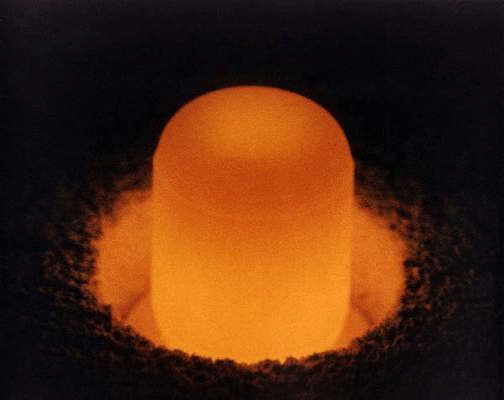
Plutonium programs in East Asia and Idaho will challenge the Biden administration, Bulletin of the Atomic Scientists, By Frank N. von Hippel | April 12, 2021 Among the Biden administration’s nuclear challenges are ongoing civilian plutonium programs in China and Japan. Also, South Korea’s nuclear-energy research and development establishment has been asserting that it should have the same “right” to have a plutonium program as Japan. These challenges have been compounded by a renewed push by the Energy Department’s Idaho National Laboratory to revive a plutonium program that was shut down in the 1980s. These foreign and domestic plutonium programs are all challenges because plutonium is a nuclear-weapon material.
Henry Kissinger’s State Department quickly discovered that the governments of Brazil, Pakistan, South Korea, and Taiwan—all under military control at the time—had contracted for French or German spent-fuel “reprocessing” plants. The United States intervened forcefully and none of these contracts were fully consummated…………………..
…………….A possible path forward. During the Trump administration, the Energy Department fell back into the never-never land of plutonium-fueled reactors from which the United States extracted itself in the 1980s. Fortunately, the big-dollar commitments to the Versatile Test Reactor and the Natrium Reactor have not yet been made, and the Biden administration could use the excuse of budget stringency not to make those commitments.
In South Korea, the Biden administration will have to deal with the completion of the Idaho National Lab–Korea Atomic Energy Research Institute Joint Fuel Cycle Study. Although there will no doubt be obfuscation in the report, the conclusions of the 10-year study should have been obvious from the beginning: reprocessing is hugely costly, creates proliferation risks, and complicates spent fuel disposal. Fortunately, the anti-nuclear-energy Moon administration is unlikely to push for reprocessing. It will be much more interested in the opportunities that the Biden administration can provide to advance the Korean Peninsula denuclearization agenda. It should therefore be politically relatively easy for the Biden Administration to terminate cooperation on pyroprocessing.
China’s reprocessing and fast-neutron reactor program may be driven in part by China’s interest in obtaining more weapon-grade plutonium to build up the size of its nuclear arsenal. If that is the case, China’s incentive to build up could be reduced through nuclear arms control. Specifically, if China is building up its nuclear arsenal out of concern about the adequacy of its nuclear deterrent in the face of an unconstrained US missile-defense buildup, then the United States could examine the possibility of an agreement to limit missile defenses as an alternative to an open-ended, offense-defense arms race. That was the path of wisdom that the United States and Soviet Union chose with their 1972 Anti-Ballistic Missile Treaty.
In Japan, the Biden administration will be faced with the continued unwillingness of the powerful Ministry of Economics, Trade, and Industry to wind down Japan’s dysfunctional plutonium program. But, if a linkage could be made between constraining China’s nuclear buildup and ending Japan’s hugely costly reprocessing program, that might help tip the balance in Japan’s internal debate over reprocessing. https://thebulletin.org/2021/04/plutonium-programs-in-east-asia-and-idaho-will-challenge-the-biden-administration/?utm_source=Newsletter&utm_medium=Email&utm_campaign=MondayNewsletter04122021&utm_content=NuclearRisk_EastAsia_04122021
The United States collaborates on nuclear pyroprocessing with South Korea.
Plutonium programs in East Asia and Idaho will challenge the Biden administration, Bulletin of the Atomic Scientists, By Frank N. von Hippel | April 12, 2021, ”…………………………………The United States collaborates on pyroprocessing with South Korea. The Idaho and Argonne National Laboratories also continue to promote the pyroprocessing of spent fuel. After the Clinton Administration shut down the Experimental Breeder Reactor II in 1994, the laboratory persuaded the Energy Department to continue to fund pyroprocessing as a way to process Experimental Breeder Reactor II spent fuel and blanket assemblies into stable waste forms for disposal in a deep underground repository. The proposal was to complete this effort in 2007. According to a review by Edwin Lyman of the Union of Concerned Scientists, however, as of the end of Fiscal Year 2016, only about 18 percent of the roughly 26 metric tons of assemblies had been processed at a cost of over $200 million into waste forms that are not stable. (Since then, an additional three percent has been processed.)
During the George W. Bush administration, Vice President Cheney accepted Argonne’s argument that pyroprocessing is “proliferation resistant” and the two US national laboratories were allowed to share the technology with the Korea Atomic Energy Research Institute.
At the beginning of the Obama administration, however, a group of safeguards experts from six Energy Department national laboratories, including Argonne and Idaho, concluded that pyroprocessing is not significantly more resistant to proliferation than PUREX, the standard reprocessing technology originally developed by the United States to extract plutonium for its weapons.

In 2014, the US-Republic of Korea Agreement for Cooperation on the Peaceful Uses of Atomic Energy was due to expire, but the negotiations on a successor agreement bogged down over Korea’s insistence that the new agreement include the same right to reprocess spent fuel as the 1988 US-Japan Agreement for Cooperation.
The compromise reached the following year was that the Korea Atomic Energy Research Institute and the Idaho National Laboratory would complete their Joint Fuel Cycle Study on “the technical, economic, and nonproliferation (including safeguards) aspects of spent fuel management and disposition technologies.” If the United States could be convinced that the proliferation risks of pyroprocessing were manageable, the secretary of energy would give consent for South Korea to use the technology on its territory. The final report from the joint study is due this year.
Meanwhile, in 2017, Moon Jae-in was elected president of the Republic of Korea on a platform that included not building any more nuclear power plants in South Korea. Fast-neutron reactors and pyroprocessing obviously do not fit with that policy. This gives the Biden administration an opportunity to end a cooperative nuclear-energy research and development program that is contrary to both US nuclear nonproliferation policy and South Korea’s energy policy. The United States could propose instead a joint collaborative program on safe spent fuel storage and deep underground disposal……………https://thebulletin.org/2021/04/plutonium-programs-in-east-asia-and-idaho-will-challenge-the-biden-administration/?utm_source=Newsletter&utm_medium=Email&utm_campaign=MondayNewsletter04122021&utm_content=NuclearRisk_EastAsia_04122021
China’s ambiguous plutonium policy.

Plutonium programs in East Asia and Idaho will challenge the Biden administration, Bulletin of the Atomic Scientists, By Frank N. von Hippel | April 12, 2021 ”…………………….China’s ambiguous plutonium policy. China is estimated to have produced between 2.3 and 3.5 tons of weapon-grade plutonium before it halted production in 1988. China is also estimated to have doubled the number of its nuclear warheads since the end of the Cold War to about 300, with a public call from one government-owned journal for a further increase to 1000.
That would require more weapon-grade plutonium.
China is, in fact, building a “demonstration” reprocessing plant and two plutonium breeder reactors. Breeder reactors produce weapon-grade plutonium in the uranium “blankets” surrounding their cores. This plutonium ordinarily would be mixed in with the non-weapon-grade plutonium recovered from the core and recycled into new fuel, but could be kept separate and used for weapons.
One troubling development that suggests that China may be reconsidering the civilian character of its plutonium program is that, since 2017, it has halted making the public annual declarations to the International Atomic Energy Agency of its civilian plutonium stocks required by the Guidelines for the Management of Plutonium. China was one of nine countries, including France and the United States, that committed to make those declarations starting in 1997. An International Atomic Energy Agency official has informed me that that the agency “does not request those member states to submit updates and has no role in connection with the implementation of these voluntary commitments.” One of the other states that are parties to the guidelines could, however, ask China why it has stopped submitting updates.
China’s National Nuclear Corporation has been negotiating since 2007 with France’s Orano to purchase technology for a large reprocessing plant like Japan’s that could separate up to eight tons of reactor-grade but weapon-usable plutonium per year. France’s finance minister said in 2018 that the sale could “save” France’s nuclear industry.
Unless the economic competitiveness of breeder reactors proves to be better in China than elsewhere, however, the rate of plutonium separation by the French plant would be vastly in excess of the amount that China could use to start a realistic number of breeder prototypes. Other countries, including France, Japan, Russia, and the United Kingdom, have been down this road before and ended up with huge stocks of reactor-grade plutonium (Figure 1 on original). One would hope that China would learn from rather than emulate their folly.
The Biden administration should engage France on the wisdom of Orano’s continued promotion of plutonium separation worldwide through offers of both reprocessing services and technology.
If China moves ahead with its own large-scale reprocessing program, it will make it more difficult to pressure Japan to end its plutonium program, which both countries clearly understand provides Japan with a nuclear-weapon option.
The Obama administration suggested to Beijing a bilateral multidisciplinary dialogue on pros and cons of civilian reprocessing. The Biden administration could press again for such a private discussion. Perhaps, backing away from reprocessing would become more attractive in both Beijing and Tokyo if they made their decisions in parallel…………..https://thebulletin.org/2021/04/plutonium-programs-in-east-asia-and-idaho-will-challenge-the-biden-administration/?utm_source=Newsletter&utm_medium=Email&utm_campaign=MondayNewsletter04122021&utm_content=NuclearRisk_EastAsia_04122021
Bill Gates backs costly nuclear reactor design fueled by nuclear-weapon-usable plutonium
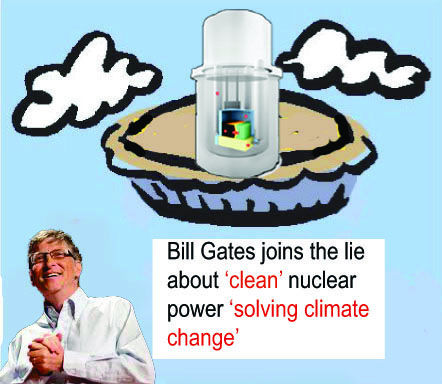
Bill Gates’ bad bet on plutonium-fueled reactors https://thebulletin.org/2021/03/bill-gates-bad-bet-on-plutonium-fueled-reactors/?utm_source=Newsletter&utm_medium=Email&utm_campaign=MondayNewsletter03222021&utm_content=NuclearRisk_Gates_03222021 By Frank N. von Hippel | March 22, 2021
One of Bill Gates’ causes is to replace power plants fueled by coal and natural gas with climate-friendly alternatives. That has led the billionaire philanthropist and Microsoft co-founder to embrace nuclear power, and building nuclear power plants to combat climate change is a prospect worth discussing. But Gates has been persuaded to back a costly reactor design fueled by nuclear-weapon-usable plutonium and shown, through decades of experience, to be expensive, quick to break down, and difficult to repair.
In fact, Gates and his company, Terrapower, are promoting a reactor type that the US and most other countries abandoned four decades ago because of concerns about both nuclear weapons proliferation and cost.
The approximately 400 power reactors that provide about 10 percent of the world’s electric power today are almost all water-cooled and fueled by low-enriched uranium, which is not weapon usable. Half a century ago, however, nuclear engineers were convinced—wrongly, it turned out—that the global resource of low-cost uranium would not be sufficient to support such reactors beyond the year 2000.
Work therefore began on liquid-sodium-cooled “breeder” reactors that would be fueled by plutonium, which, when it undergoes a fission chain reaction, produces neutrons that can transmute the abundant but non-chain-reacting isotope of natural uranium, u-238, into more plutonium than the reactor consumes.
But mining companies and governments found a lot more low-cost uranium than originally projected. The Nuclear Energy Agency recently concluded that the world has uranium reserves more than adequate to support water-cooled reactors for another century.
And while technologically elegant, sodium-cooled reactors proved unable to compete economically with water-cooled reactors, on several levels. Admiral Rickover, who developed the US Navy’s water-cooled propulsion reactors from which today’s power reactors descend, tried sodium-cooled reactors in the 1950s. His conclusion was that they are “expensive to build, complex to operate, susceptible to prolonged shutdown as a result of even minor malfunctions, and difficult and time-consuming to repair.” That captures the experience of all efforts to commercialize breeder reactors. The United States, Germany, the United Kingdom, France, and Japan all abandoned their breeder-reactor efforts after spending the equivalent of $10 billion or more each on the effort.
Today, despite about $100 billion spent on efforts to commercialize them, only two sodium-cooled breeder reactor prototypes are operating—both in Russia. India is building one, and China is building two with Russian help. But it is not clear India and China are looking only to generate electricity with their breeders; they may also be motivated in part by the fact that breeder reactors produce copious amounts of the weapon-grade plutonium desired by their militaries to expand their nuclear-weapon stockpiles.
The proliferation risks of breeder-reactor programs were dramatically demonstrated in 1974, when India carried out its first explosive test of a nuclear-weapon design with plutonium that had been produced with US Atoms for Peace Program assistance for India’s ostensibly peaceful breeder reactor program. The United States, thus alerted, was able to stop four more countries, governed at the time by military juntas (Brazil, Pakistan, South Korea, and Taiwan), from going down the same track—although Pakistan found another route to the bomb via uranium enrichment.
It was India’s 1974 nuclear test that got me involved with this issue as an advisor to the Carter administration. I have been involved ever since, contributing to the plutonium policy debates in the United States, Japan, South Korea and other countries.
In 1977, after a policy review, the Carter administration concluded that plutonium breeder reactors would not be economic for the foreseeable future and called for termination of the US development program. After the estimated cost of the Energy Department’s proposed demonstration breeder reactor increased five-fold, Congress finally agreed in 1983
Gates is obviously not in it for the money. But his reputation for seriousness may have helped recruit Democratic Senators Cory Booker, Dick Durbin, and Sheldon Whitehouse to join the two Republican senators from Idaho in a bipartisan coalition to co-sponsor the Nuclear Energy Innovations Capabilities Act of 2017, which called for the VTR.
I wonder if any of those five Senators knows that the VTR is to be fueled annually by enough plutonium for more than 50 Nagasaki bombs. Or that it is a failed technology. Or that the Idaho National Laboratory is collaborating on plutonium separation technology with the Korea Atomic Energy Research Institute at a time when about half of South Korea’s population wants nuclear weapons to deter North Korea.
Fortunately, it is not too late for the Biden administration and Congress to avoid repeating the mistakes of the past and to zero out the Versatile Test Reactor in the Department of Energy’s next budget appropriations cycle. The money could be spent more effectively on upgrading the safety of our existing reactor fleet and on other climate-friendly energy technologies.
Frank N. von Hippel
Frank N. von Hippel is a co-founder of the Program on Science and Global Security at Princeton University’s School of Public and International…
New research to determine plutonium pollution and its sources
 EurekAlert 19th March 2021, Researchers looking at miniscule levels of plutonium pollution in our soils have made a breakthrough which could help inform future ‘clean up’ operations on land around nuclear power plants, saving time and money.
those responsible for environmental assessment and clean up.
https://www.eurekalert.org/pub_releases/2021-03/lu-npr031721.php
Plutonium used at Japanese reactor will be glassed, stored at Savannah River Site
Plutonium used at Japanese reactor will be glassed, stored at Savannah River Site, Aiken Standard, By Colin Demarest cdemarest@aikenstandard.com, Mar 17, 2021
The National Nuclear Security Administration has decided a cache of plutonium sent from Japan years ago will be processed and disposed of for the foreseeable future at the Savannah River Site, a change of plans with local ramifications.
Up to 350 kilograms of stainless steel-clad plutonium from a Japanese reactor will be rid of using a slew of Savannah River Site facilities, tech and staff, recent federal documents show.
The Fast Critical Assembly fuel – already at the Savannah River Site – will be processed and dissolved at H-Canyon, a one-of-a-kind separations facility built in the 1950s. The material will then go to the tank farms, where millions of gallons of waste is stored.
After that, it will move to the Defense Waste Processing Facility, a mammoth plant that encases nuclear sludge in glass, making it safer to handle and stow long-term. The glass cylinders will ultimately go to an on-site storage building, where they will stay pending the availability of a dedicated depot, like Yucca Mountain in Nevada.
The entire endeavor will take years. And Japan is helping defray the cost.
The plutonium was previously slated to be handled and treated at the Savannah River Site and entombed at the Waste Isolation Pilot Plant in New Mexico, a repository resembling a salt mine. “Direct disposal of the FCA materials” at the Savannah River Site is a “sound option,” said SRS Watch Director Tom Clements, but it drums up some other questions……….. https://www.postandcourier.com/aikenstandard/news/savannah-river-site/plutonium-used-at-japanese-reactor-will-be-glassed-stored-at-savannah-river-site/article_b7b08e4c-8667-11eb-b8cd-8f0fb9c35316.html?fbclid=IwAR1s_w6jcU21h64HZ6z-tzb7uaWt4x-51ECsKd8E3bw6tvGacJn9_9gGmA8
Production of plutonium must cease, for the Nuclear Non Proliferation Treaty to work
For the NPT to work, plutonium has to go https://thebulletin.org/2021/03/for-the-npt-to-work-plutonium-has-to-go/?utm_source=Newsletter&utm_medium=Email&utm_campaign=MondayNewsletter03152021&utm_content=NuclearRisk_NPTwork_03152021
By Victor Gilinsky, Henry Sokolski | March 15, 2021 The Nuclear Nonproliferation Treaty (NPT), whose tenth review conference is coming up in August, is in trouble, and not only because of the crescendo of complaints about the failure of the nuclear-armed states to implement nuclear disarmament. The treaty is threatened with irrelevancy because its controls have not kept up with the times. It was drafted over 50 years ago, when it was widely believed that nuclear energy represented the future and would soon take over the generation of electricity. Not surprisingly, countries put few treaty restrictions on access to technology or materials other than to impose international inspection, and even that was circumscribed. We now have a more realistic view of the dangers of access to fuels that are also nuclear explosives (plutonium and highly enriched uranium) and also of the limited economic utility of these fuels for powering reactors. If we want an effective NPT, we have to eliminate these dangerous materials from civilian nuclear power programs. Dealing with uranium enrichment is complicated because nuclear power plants use enriched uranium fuel, but that should not hold us back from eliminating the danger we can eliminate—plutonium.
As soon as one mentions reinterpreting what the NPT allows, the treaty’s “originalism” crowd immediately pronounces the notion a non-starter. But we already have essentially eliminated an entire article (Article V) of the NPT that covered a technology—“peaceful” nuclear explosives—subsequently deemed both too dangerous and with negligible economic promise. That is exactly the situation with plutonium-fueled nuclear power reactors.
Separated plutonium in national hands leaves too little safety margin against possible use in warheads. At the same time, there is no economic penalty for doing without it. It should not be permitted in commercial use in all member countries. Existing civil stocks, like Japan’s nine tons, should be put under International Atomic Energy Agency (IAEA) supervision until their owners can safely dispose of the material.
This may sound radical, especially given the drumbeat of the US Energy Department and nuclear industry propaganda about a new generation of “advanced reactors” under development, most of them plutonium-fueled. But it is nothing more than President Gerry Ford’s common sense proposal in his 1976 Nuclear Policy Statement. He said we should forego using plutonium until “the world community can effectively overcome the associated risks of proliferation.” We are nowhere within reach of such a condition.
The NPT’s laxity on plutonium stems from the widespread beliefs at the time it was negotiated in the 1960s. Nuclear power plants were then considered destined to take over electricity generation and were thus vital for powering national economies. The US Atomic Energy Commission estimated that “essentially all [US] generating capacity built in the 21st century would be nuclear.” Moreover, and this is key, the Atomic Energy Commission believed uranium was scarce. To stretch nuclear fuel supply, they believed it would be necessary to develop reactors that turned the 99 percent of non-fissionable uranium into plutonium and then use that as fuel—plutonium-fueled fast breeder reactors.
That became doctrine in nuclear bureaucracies throughout the world and the NPT was drawn up to facilitate that result. (Ironically, had the projections been fulfilled, and the world commercial channels been flooded with plutonium, the possibility of effective control would have vanished.) Given nuclear power’s then-imagined critical importance, it’s not surprising that the less advanced NPT signatories insisted on full access to nuclear technology, hence on Article IV of the NPT that famously states all members have “the inalienable right” to it.
It has since turned out that all of the “expert” thinking about plutonium-fueled fast breeder reactors taking over electricity production was wrong. Contrary to the projections of the 1960s, nuclear energy’s prospects are limited, uranium is not scarce, extracting plutonium from irradiated uranium fuel is hugely expensive, and the plutonium-fueled reactors are expensive to build, which eliminated the economic arguments for the so-called plutonium economy. This is now clear to all but messianic believers in nuclear energy.
But the vestiges of this technological archaism continue to animate national bureaucracies that deal with the NPT, including that of the US, and the IAEA, as well. Perhaps the most glaring examples of the residual attachment to plutonium is Japan, which accumulated an enormous stockpile of plutonium and China, which, like Japan, plans to open a large reprocessing plant to separate more for two large fast breeder reactors. The US Energy Department is planning an expensive fast reactor to test fuel (the Versatile Test Reactor) for a mythical future commercial generation of such reactors. These steps legitimate similar actions elsewhere and undermine effective nonproliferation controls.
With the diminished prospects of nuclear power, the amount of this plutonium-related activity is not going to be anything like what the nuclear community once projected. The essential point remains: Amounts of plutonium that are very small in commercial terms can be very large in military terms.
At a more fundamental level, the United States needs to speak clearly to dispel the myth—one that still grips some NPT member countries—that nuclear power is an essential technology without which a country cannot consider itself as advanced. To get into the details would take us too far afield. But, as an indication of current nuclear prospects, consider the collapse of the highly vaunted “nuclear renaissance” at the beginning of this century that was to lead to construction of dozens of plants in the United States. US nuclear operators filed license applications for 31 large units. They ultimately canceled all but two, and those two are years behind schedule and already double the original cost, which led the original contractor, once proud Westinghouse, to file for bankruptcy.
America’s utility sector has been consistent on this score: It is not going to build any additional large nuclear reactors and doesn’t extract plutonium from used nuclear fuel. This message presented at the 2021 NPT Review Conference would help clear the decks for an honest assessment of what is needed for protection against access to nuclear weapons. If plutonium and reprocessing (its separation technology) are generally permissible, and only barred when worries arise in special cases like Iran, the NPT will ultimately undo itself.
None of this is to suggest that the NPT members will be easily persuaded, or perhaps even persuaded at all, of the need to limit what is permissible under the treaty. The entrenched plutonium-fuel firms and laboratories, and their government backers, including those in the United States, will not easily let go of their subsidies. But we need to start.
The long-term problem of “peaceful” plutonium
|
The long-term problem of “peaceful” plutonium https://thebulletin.org/2021/03/the-long-term-problem-of-peaceful-plutonium/?fbclid=IwAR1T1BwrLHnDoN3IBw7SxlR8H8-Hzy-auzsmNuYbPy3IZrzSXrWBW4Zfop8
By Robert Alvarez | March 8, 2021 In the early decades of the atomic age, using the enormous energy in plutonium atoms for the peaceful generation of electricity became a multibillion-dollar quest that shaped US energy research and development policies. In 1970, Glenn Seaborg, the discoverer of plutonium and then-chairman of the US Atomic Energy Commission, declared that “within the lifespan of a single generation this newcomer plutonium born on a humble research budget and cradled in a cigar box will have become the energy giant of the future.” Seaborg and the AEC projected the growth of nuclear-powered electricity would be so great that global supplies of uranium would be exhausted, paving the way for the recovery of plutonium from spent power reactor fuel for the next generation of power plants, which would dot the global landscape. Seaborg estimated by the end of the 20th century, power reactors would cumulatively produce 1,600 metric tons of plutonium with the potential to fuel half the nation’s electrical generation. With this much plutonium flowing through commerce, the possibility that some of it might be diverted for nefarious purposes was not lost on prominent members of the US national security establishment. Losing track of just .0003 percent of the amount estimated by Seaborg would be enough to fuel a Nakasaki-sized nuclear weapon. Opposition by America’s Cold War nuclear policy makers was galvanized following India’s nuclear weapons test in May 1974. India’s bomb was fueled with plutonium produced from “peaceful atom” technology provided by the United States and Canada. Albert Wohlstetter, a prominent American nuclear strategist and cold warrior, concluded that the U.S. pursuit of plutonium fuel could result in “life in an armed nuclear crowd. In response to the Indian test, the Carter administration banned chemical separation of plutonium from irradiated power reactor fuel—the process known as reprocessing—in 1977. The US “plutonium economy” was also dealt a major blow by the 1982 Nuclear Waste Policy Act, which underscored the Carter Administration’s non-proliferation goals by giving priority to the direct geologic disposal of spent nuclear fuel, without reprocessing. President Reagan lifted the ban and President George W. Bush attempted to revive reprocessing, but those efforts collapsed in the United States under the weight of the expense, safety problems, and security risks of a widespread reprocessing program. Since the early 1980s, the US Congress has shown little appetite for resuming support of the commercial development of plutonium as a reactor fuel. In response to the Indian test, the Carter administration banned chemical separation of plutonium from irradiated power reactor fuel—the process known as reprocessing—in 1977. The US “plutonium economy” was also dealt a major blow by the 1982 Nuclear Waste Policy Act, which underscored the Carter Administration’s non-proliferation goals by giving priority to the direct geologic disposal of spent nuclear fuel, without reprocessing. President Reagan lifted the ban and President George W. Bush attempted to revive reprocessing, but those efforts collapsed in the United States under the weight of the expense, safety problems, and security risks of a widespread reprocessing program. Since the early 1980s, the US Congress has shown little appetite for resuming support of the commercial development of plutonium as a reactor fuel. As of the end of 2018, US spent power reactor fuel contained about 824 metric tons of plutonium—the world’s largest single inventory of that element. The intense radiation of used nuclear fuel assemblies makes them essentially impervious to theft or diversion to weapons use. But after 300 years, a great deal of the radiation barrier protecting them will have decayed. The Nuclear Waste Policy Act lays out a process for geologically directly disposing of spent nuclear power fuel in an underground repository, rather than allowing plutonium to be separated from it. Reprocessing “would incur a substantial cost penalty,” concluded an industry study in 2006 and would be far more costly more expensive than direct spent nuclear fuel disposal. “[Re]processing would have to be accompanied by deployment of fast reactor plants. But demonstration fast reactor plants to-date has mostly proved expensive and unreliable, which aggravates [re]processing’s economic handicap.” But nearly 40 years later, geologic disposal of spent power reactor fuel remains uncertain after President Obama’s cancellation in 2010 of the proposed Yucca Mountain repository site in Nevada. By the mid-21st century, the amount of plutonium in spent power reactor fuel could grow to more than 1,400 metric tons. The 300-year clock measuring off the time until the radiation barrier diminishes to the point that this vast amount of weapons-usable plutonium can be readily obtained is still ticking.
|
|
How to dispose of 50 tons of weapons-grade plutonium for 10,000 years?
 The need for a long-term commitment to plutonium disposal. The Energy Department faces the daunting and unprecedented task of geologically disposing of tens of tons of weapons-grade plutonium, so it can never be used again, while ensuring its toxic dangers do not threaten the environment over a time period longer than the existence of human civilization.
|
Can the Energy Department store 50 tons of weapons-grade plutonium for 10,000 years? Bulletin of the Atomic Scientists, By Robert Alvarez | March 8, 2021 The nuclear age is undergoing a paradigm shift. During much of the latter half of the past century, the nuclear enterprise was ascendant; now, it has entered a period of decline and uncertain long-term custodianship. This reversal of fortune is especially apparent in the United States’ efforts to rid itself of its unwanted reserves of plutonium. It’s been more than 75 years since a blinding flash lit up the pre-dawn sky at Alamogordo in the Chihuahua Desert of New Mexico. On July 16, 1945, a single gram of the grapefruit-size sphere of plutonium at the center of the world’s first nuclear explosion released three times the destructive force of the largest conventional bomb used during World War II. [1]
Thereafter, the United States government built a grossly oversized nuclear arsenal and never envisioned having to stop building it. Between 1944 and 1994, the Energy Department and its predecessors produced 99.5 metric tons of plutonium for use in an estimated 70,000 nuclear weapons. (An additional 11 tons were produced or acquired for research and development purposes.) The perverse logic of the nuclear arms race reached a point of ultimate absurdity during the early Reagan presidency, when it was asserted that the winner of a nuclear war would be the one with the most weapons left afterward. Now, 80 percent of the US nuclear arsenal has been discarded, and the United States is still struggling with the strategic mistake of producing so much fissile material to begin with. Currently, a total of 61.2 tons of plutonium is declared excess to the needs of the US government, of which 53.4 tons is designated for nuclear weapons. The Energy Department faces the daunting task of geologically disposing of this huge cache of weapons-grade plutonium, so it can never be used again, while ensuring that its does not threaten the environment over a time period longer than human civilization has existed. Achieving safe plutonium disposal will be a multifaceted challenge requiring both long-term commitments and large financial investments at a time when nuclear modernization programs are also competing for federal funding. But arms control and disarmament will not progress as they should unless the excess plutonium problem is solved. The scope of the problem. Safely ridding the nation of one of the world’s largest excess stockpiles of weapons-grade plutonium will be no minor feat. At issue is the US Energy Department’s 2016 decision to dilute and dispose of, all told, about 48.2 metric tons of plutonium, including 26.2 tons of components, known as “pits,” from several thousand dismantled thermonuclear warheads and 22 metric tons in other forms. These massive quantities of plutonium are destined for the Energy Department’s Waste Isolation Pilot Plant (WIPP), the nation’s only geologic burial site for radiological waste, dug into a deep-underground salt formation near Carlsbad New Mexico. WIPP was opened in 1999, originally for disposal of equipment, clothing, and soil contaminated with dilute amounts of transuranic elements, mostly plutonium, somewhere in the nation’s nuclear weapons complex. If one gram of soil contains as little as 1.587 micrograms of plutonium, the Energy Department is required by federal standards to geologically isolate it from the environment for at least 10,000 years at WIPP. The site is not without its problems. In 2014, a drum burst open deep underground, shooting contamination to the surface and leading to a three-year closure of the facility that cost about $2 billion. During the Cold War, the Energy Department facilities involved in weapons productions recovered residual plutonium from production processes—for example, the lathe turnings produced when spherical plutonium bomb cores were shaped—when the cost of doing so was less than the cost of making new plutonium in production reactors. After the downsizing of its Cold War warhead stockpile, in 1998 the Energy Department reclassified residues from the Rocky Flats Plant— some 3.5 metric tons of weapons-grade plutonium, or enough to fuel some 900 weapons—as waste that should also be disposed of in the WIPP. In fact, as of September 2019, more than two thirds of 5.36 metric tons of plutonium 239 placed in the repository originally had been set aside to make bombs. An additional 5.29 metric tons of this residual plutonium is awaiting disposal, and amount that is separate from and above what is generally considered as excess fissile material from the weapons stockpile. The government has not publicized the formidable challenges of protecting thousands of workers and members of the public during the process necessary to geologically dispose of this enormous stockpile of nuclear explosives. To put it bluntly, if not done with extreme care, plutonium is a waste-disposal nightmare. The isotope used in American nuclear weapons, plutonium 239, has a specific activity (that is, an amount of radiation produced per unit of mass) that is about 200,000 times greater than uranium 238’s, and plutonium 239 has a radioactive half-life of 24,110 years. Alpha particle emissions from plutonium and other transuranic elements are considered to be about 20 times more carcinogenic than x-rays. Particles of plutonium less than a few microns in diameter can penetrate deep in the lungs and lymph nodes and also be deposited, via the bloodstream, in the liver, on bone surfaces, and in other organs. If inhaled, extremely small amounts can lead to cancer. Stringent procedures—many involving large number of workers with specialized skills—are required to ensure that even small amounts of plutonium are properly processed. That processing often must be done by hand, using gloveboxes, to prevent the creation of a critical mass that initiates a nuclear chain reaction and the resulting highly dangerous bursts of energy and radioactivity. While technologies have existed for years to process plutonium, they come out of the Cold War era when safety was secondary to production. Over the years, dozens of workers around the world have been killed or seriously over- exposed from criticality accidents. Various safeguards—including a security system that carefully accounts for all plutonium and protects against theft and diversion—add another costly dimension to handling this nuclear explosive. Plutonium production ends, but problems continue. Years before the collapse of the Soviet Union, the growing cost of plutonium production led to its gradual cessation. By the 1980s, half of every dollar spent to make plutonium at the aged Energy Department nuclear complex went for its burgeoning waste-management and environmental-restoration problems. By 1988, production costs compelled Energy Secretary John Herrington to declare: “We’re awash with plutonium. We have more than we need.” By 1992, the United States had stopped making new nuclear weapons as the industrial base for producing them began to collapse; about 80 percent of the Energy Department’s sprawling nuclear weapons production complex was shuttered a few years later. This left behind a legacy of radioactive waste and human suffering, one that is still unfolding. The Energy Department’s recent baseline cost estimates for waste management and environmental remediation are about $435 billion for the two main plutonium production facilities, the Hanford Reservation in Washington and the Savannah River Site in South Carolina. The single largest portion of the entire US government’s environmental liability in 2019, including the Defense Department, is due to plutonium production at these two sites. In terms of the human legacy, 22,459 sick workers at three major plutonium and fabrication sites have been granted more than $4.2 billion in compensation and medical care…………….
|
|
|
1 This Month
23-25 October – on Zoom – World BEYOND War’s annual global conferenc


Shut down the radiation-damaged Heysham nuclear reactors now
To see nuclear-related stories in greater depth and intensity – go to https://nuclearinformation.wordpress.com

Say No to NASA’s Reckless Nuclear Reactor on the Moon
Say No to NASA’s Reckless Nuclear Reactor on the Moon

-
Archives
- October 2026 (231)
- September 2026 (339)
- August 2026 (330)
- July 2026 (355)
- June 2026 (287)
- May 2026 (306)
- April 2026 (356)
- March 2026 (251)
- February 2026 (267)
- January 2026 (308)
- December 2025 (358)
- November 2025 (359)
-
Categories
- 1
- 1 NUCLEAR ISSUES
- business and costs
- climate change
- culture and arts
- ENERGY
- environment
- health
- history
- indigenous issues
- Legal
- marketing of nuclear
- media
- opposition to nuclear
- PERSONAL STORIES
- politics
- politics international
- Religion and ethics
- safety
- secrets,lies and civil liberties
- spinbuster
- technology
- Uranium
- wastes
- weapons and war
- Women
- 2 WORLD
- ACTION
- AFRICA
- Atrocities
- AUSTRALIA
- Christina's notes
- Christina's themes
- culture and arts
- Events
- Fuk 2022
- Fuk 2023
- Fukushima 2017
- Fukushima 2018
- fukushima 2019
- Fukushima 2020
- Fukushima 2021
- general
- global warming
- Humour (God we need it)
- Nuclear
- RARE EARTHS
- Reference
- resources – print
- Resources -audiovicual
- Weekly Newsletter
- World
- World Nuclear
- YouTube
-
RSS
Entries RSS
Comments RSS

