In UK “deep disposal” is planned for the mounting, costly and forever problem of nuclear wastes
 How To Solve Nuclear Energy’s Biggest Problem https://oilprice.com/Alternative-Energy/Nuclear-
 Power/How-To-Solve-Nuclear-Energys-Biggest-Problem.html By Haley Zaremba – Jan 22, 2020, Nuclear waste is a huge issue and it’s not going away any time soon–in fact, it’s not going away for millions of years. While most types of nuclear waste remain radioactive for mere tens of thousands of years, the half-life of Chlorine-36 is 300,000 years and neptunium-237 boasts a half-life of a whopping 2 million years.
All this radioactivity amounts to a huge amount of maintenance to ensure that our radioactive waste is being properly managed throughout its extraordinarily long shelf life and isn’t endangering anyone. And, it almost goes without saying, all this maintenance comes at a cost. In the United States, nuclear waste carries a particularly hefty cost.
Last year, in a hard-hitting expose on the nuclear industry’s toll on U.S. taxpayers, the Los Angeles Times reported that “almost 40 years after Congress decided the United States, and not private companies, would be responsible for storing radioactive waste, the cost of that effort has grown to $7.5 billion, and it’s about to get even pricier.”
How much pricier? A lot. “With no place of its own to keep the waste, the government now says it expects to pay $35.5 billion to private companies as more and more nuclear plants shut down, unable to compete with cheaper natural gas and renewable energy sources. Storing spent fuel at an operating plant with staff and technology on hand can cost $300,000 a year. The price for a closed facility: more than $8 million, according to the Nuclear Energy Institute.”
With the United States as a poster child of what not to do with your nuclear waste, the United Kingdom is taking a much different tack. The UK is currently undertaking what the country’s Radioactive Waste Management (RWM) department says “will be one of the UK’s largest ever environmental projects.” This nuclear waste storage solution comes in the form of a geological disposal facility (GDF), a waste disposal method that involves burying nuclear waste deep, deep underground in a cocoon of backfill, most commonly comprised of bentonite-based cement. This type of cement is able to absorb shocks and is ideal for containing radioactive particles in case of any failure. The GDF system would also be at such a depth that it would be under the water table, minimizing any risk of contaminating the groundwater.
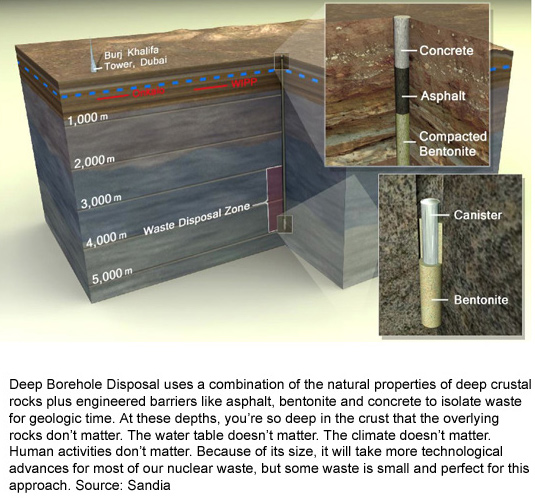
According to reporting from Engineering & Technology, nuclear waste is a mounting issue in Europe and in the UK in particular. “Under European law, all countries that create radioactive waste are obliged to find their own disposal solutions – shipping nuclear waste is not generally permitted except in some legacy agreements. However, when the first countries charged into nuclear energy generation (or nuclear weapons research), disposal of the radioactive waste was not a major consideration. For several of those countries, like the UK, that is now around 70 years ago, and the waste has been ‘stored’ rather than disposed of. It remains a problem.”
In fact, not only does it remain a problem, it is a mounting problem. As nuclear waste has been improperly or shortsightedly managed in the past, the current administration can no longer avoid dealing with the issue. In the past the UK used its Drigg Low-Level Waste Repository on the Cumbrian Coast to treat low and intermediate level waste, but now, thanks to coastal erosion, the facility will soon begin leeching radioactive materials into the sea, although that might not be quite as scary as it sounds.
Back in 2014, the Environment Agency raised concerns that coastal erosion could result in leakage from the site within 100 to 1,000 years, although it was counter-claimed that the levels of radioactivity after such a time would be low enough to be harmless,” Engineering & Technology writes. “This would definitely not be the case for high-level wastes, where radioactivity could remain a hazard into and beyond the next ice age, hence the need for longer-term disposal.”
Where exactly will that longer-term disposal be based? That’s up for debate. And it won’t be an easy thing to decide, as the RWM says that they will need a community to volunteer to be involved in such a costly, lengthy, and potentially unpopular project. And it’s not just an issue for the current inhabitants of potential locations in the UK, but for many generations to come over the next tens of thousands of years of radioactivity
Sloppy safety and waste management at Electricite de France’s nuclear sites

 Improve Nuclear Plant Maintenance Works, Watchdog Says, Francois de Beaupuy, Bloomberg News (Bloomberg) 24 Jan 2020 — Electricite de France SA and its suppliers must improve maintenance operations at nuclear reactors and waste management because they have lost skills and become sloppy in recent years, the French nuclear safety authority said.
The warning reflects a string of incidents related to substandard manufacturing or installation of equipment at EDF and its suppliers. It underscores the difficulties the French nuclear giant faces in extending the lifetime of aging reactors and building new ones, prompting it to announce an action plan to revamp the industry’s skills.
“There’s a need to reinforce skills and some carelessness among some players in the industry,” Bernard Doroszczuk, chairman of Autorite de Surete Nucleaire, said at a press conference near Paris on Thursday. “There’s a lack of rigor in the oversight of safety by operators,” from manufacturing to welding to equipment tests “which must be corrected.”
Discussions are still going on with EDF regarding safety improvements, including ways to prevent or mitigate the impact outside its plants in case of a severe accident such as the meltdown of the radioactive fuel and its vessel, said Sylvie Cadet-Mercier, a commissioner of the regulator. A spokesman for the utility declined to comment…… https://www.bnnbloomberg.ca/edf-must-improve-nuclear-plant-maintenance-works-watchdog-says-1.1378571
California fights NASA over toxic Santa Susana nuclear site
California, NASA Clash Over Cleanup at Nuclear, Rocket Site, https://news.bloombergenvironment.com/environment-and-energy/california-nasa-clash-over-cleanup-at-nuclear-rocket-site
- California says the space agency is not adhering to past agreements
- NASA needs to redraft a cleanup plan, toxics agency says
California’s toxics agency is opposing a revised NASA cleanup plan to remove contamination at a former rocket and energy research site where a partial meltdown happened decades ago, calling the federal agency’s proposal irregular, infeasible, and legally deficient.
It’s the latest fight in a long tussle over the Santa Susana Field Laboratory, a 2,850-acre site in Simi Valley near Los Angeles, where an estimated 17,000 rockets engine tests occurred. The lab, which operated from 1948 to 2006, was also home to 10 nuclear reactors where the Energy Department and what is now the Boeing Co. did energy research.
The site experienced a partial nuclear meltdown in 1959, but evidence wasn’t revealed until 20 years later. Cleanup work has been ongoing since the 1960s.
Cesium-137
The National Aeronautics and Space Administration agreed to a consent order in 2010 with the state Department of Toxic Substances Control requiring soil remediation of the site, which was contaminated with 16 radiologicals like cesium-137, and 116 chemicals.
A final environmental review was completed in 2014, but the space agency issued a separate draft cleanup plan in October based on new data showing more contamination.
The draft plan provides options for how much soil would be excavated. One option, the one that reflects the agreement in original administrative order on consent with the state, calls for excavating 870,000 cubic yards, an increase from the 500,000 cubic yards estimated in the 2014 plan to meet the standard agreed upon with the state. The other options call for removing lesser amounts, down to 176,500 cubic yards. The plan also considers a no-action alternative.
NASA said in the draft supplemental environmental impact statement that it hasn’t chosen a preferred option yet.
In a letter sent to NASA Jan. 8, the Department of Toxic Substances Control asked the space agency to revise its cleanup plans to reflect the original administrative order on consent, known as an AOC.
State Agency Rejects Other Options
“NASA must also be aware that DTSC is not open to considering NASA cleanup alternatives which are non-compliant with the AOC,” the letter said. “DTSC also will not renegotiate the binding AOC soil cleanup commitments to accommodate challenges NASA claims will be posed by the [Santa Susana Field Laboratory] cleanup implementation.”
The letter criticized some of NASA’s options as irregular because they called for decreased cleanup when contamination had ncreased. It called excavating less contaminated soil than called for in the 2010 agreement infeasible.
“NASA has failed to provide a rational explanation or data to support the [DSEIS] irregularities and unexplained reversal,” DTSC wrote, calling the plan “legally deficient.”
In its draft cleanup plan, NASA said it would be hard to find adequate backfill to support vegetation in areas that were excavated.
A NASA spokeswoman said Jan. 14 that the agency was reviewing comments made about the draft plan and valued input from all stakeholders.
“NASA is eager to work with DTSC and the community to implement a cleanup that is based in science, technically achievable, and is protective of the surrounding community and the natural environment,” Jennifer Stanfield wrote in an email.
NASA didn’t immediately respond to a question about other cleanup sites where revisions to agreements were being sought. DTSC couldn’t immediately say if the space agency had sought changes at other state cleanup sites.
Groups Back Cleanup Agreement
Community, environmental, and justice groups say the 2010 plan reached with the state is adequate and that NASA has no authority to decide how much contamination it must remove.
New estimates pointing to more contamination than previously thought also mean NASA should redouble cleanup efforts, Natural Resources Defense Council, Physicians for Social Responsibility Los Angeles, and Committee to Bridge the Gap said in a comment letter to NASA about its draft supplemental environmental impact statement (DSEIS).
“The decision by the Trump Administration NASA to issue this DSEIS sets the stage for abandoning huge amounts of chemically hazardous material and would consign this important land in Southern California, set in the midst of millions of California residents, to never be cleaned up,” the groups wrote.
The new plan wasn’t a surprise. A NASA inspector general report issued in March said the cleanup would take too long and would be too costly and stringent. The Department of Energy is also seeking to reduce its cleanup obligations.
For its part, the toxics agency plans to issue a final environmental impact report this summer that “fully complies with and implements” the 2010 agreement, DTSC spokesman Russ Edmondson said in an email.
To contact the reporter on this story: Emily C. Dooley at edooley@bloombergenvironment.com, To contact the editors responsible for this story: Gregory Henderson at ghenderson@bloombergenvironment.com; Sylvia Carignan at scarignan@bloombergenvironment.com; Renee Schoof at rschoof@bloombergenvironment.com
Australian government plans to transport nuclear wastes 1000s of kilometres, a dangerous plan in view of bushfires
 Transporting nuclear wastes across Australia in the age of bushfires, Independent Australia, By Noel Wauchope | IN 2020, the final decision on a site for Australia’s interim National Radioactive Waste Facility will be announced, said Resources Minister Matt Canavan on 13 December.
He added: I will make a formal announcement early next year on the site-selection process.”
With bushfires raging, it might seem insensitive and non-topical to be worrying now about this coming announcement on a temporary nuclear waste site and the transport of nuclear wastes to it. But this is relevant and all too serious in the light of Australia’s climate crisis.
The U.S. National Academies Press compiled a lengthy and comprehensive report on risks of transporting nuclear wastes — they concluded that among various risks, the most serious and significant is fire:…..
Current bushfire danger areas include much of New South Wales, including the Lucas Heights area, North and coastal East Victoria and in South Australia the lower Eyre and Yorke Peninsulas. If nuclear wastes were to be transported across the continent, whether by land or by sea, from the Lucas Heights nuclear reactor in Sydney to Kimba in South Australia, they’d be travelling through much of these areas. Today, they’d be confronting very long duration, fully engulfing fires.

Do we know what route the nuclear wastes would be taking to Kimba, which is now presumed to be the Government’s choice for the waste dump? Does the Department of Industry Innovation and Science know? Does the Australian Nuclear Science and Technology Organisation (ANSTO) know? Well, they might, but they’re not going to tell us.
We can depend on ANSTO’s consistent line on this :
‘In line with standard operational and security requirements, ANSTO will not comment on the port, routes or timing until after the transport is complete.’
That line is understandable of course, due to security considerations, including the danger of terrorism.
Spent nuclear fuel rods have been transported several times, from Lucas Heights to ports – mainly Port Kembla – in great secrecy and security. The reprocessed wastes are later returned from France or the UK with similar caution. Those secret late-night operations are worrying enough, but their risks seem almost insignificant when compared with the marathon journey envisaged in what is increasingly looking like a crackpot ANSTO scheme for the proposed distant Kimba interim nuclear dump. It is accepted that these temporary dumps are best located as near as practical to the point of production, as in the case of USA’s sites.
Australians, beset by the horror of extreme bushfires, can still perhaps count themselves as lucky in that, compared with wildfire regions in some countries, they do not yet have the compounding horror of radioactive contamination spread along with the ashes and smoke.
Fires in Russia have threatened its secret nuclear areas……
Many in America have long been aware of the transport danger:
The state of Nevada released a report in 2003 concluding that a steel-lead-steel cask would have failed after about six hours in the fire and a solid steel cask would have failed after about 11 to 12.5 hours. There would have been contamination over 32 square miles of the city and the contamination would have killed up to 28,000 people over 50 years.
The State of Wyoming is resisting hosting a nuclear waste dump, largely because of transportation risks as well as economic risks. In the UK, Somerset County Council rejects plans for transport of wastes through Somerset.
In the years 2016–2019, proposals for nuclear waste dumping in South Australia have been discussed by government and media as solely a South Australian concern. The present discussion about Kimba is being portrayed as just a Kimba community concern.
Yet, when the same kind of proposal was put forward in previous years, it was recognised as an issue for other states, too.
Most reporting on Australia’s bushfires has been excellent, with the exception of Murdoch media trying to downplay their seriousness. However, there has been no mention of the proximity of bushfires to Lucas Heights. As happened with the fires in 2018, this seems to be a taboo subject in the Australian media.
While it has never been a good idea to trek the Lucas Heights nuclear waste for thousands of kilometres across the continent – or halfway around it by sea – Australia’s new climate crisis has made it that much more dangerous. Is the bushfire apocalypse just a one-off? Or, more likely, is this nationwide danger the new normal? https://independentaustralia.net/environment/environment-display/transporting-nuclear-wastes-across-australia-in-the-age-of-bushfires,13465
Britain’s £1.2bn cleanup begins, of Berkeley power station, closed 30 years ago
 Nuclear waste removal begins 30 years after power station closure, https://www.bbc.com/news/uk-england-somerset-50866867 5 Jan 2029, Work has begun on removing nuclear waste from Berkeley power station, 30 years after it was decommissioned.The disused Magnox generator, situated on the banks of the River Severn in Gloucestershire, closed in 1989. Nuclear waste removal begins 30 years after power station closure, https://www.bbc.com/news/uk-england-somerset-50866867 5 Jan 2029, Work has begun on removing nuclear waste from Berkeley power station, 30 years after it was decommissioned.The disused Magnox generator, situated on the banks of the River Severn in Gloucestershire, closed in 1989.
It was the world’s first commercial power station and its laboratories and many of its buildings have already been dismantled. Work emptying its vast concrete vaults of the nuclear waste Berkeley generated is only now able to safely begin. But it will not be safe for humans to go inside its reactor cores until 2074. The BBC has been given a rare glimpse of what is stored under the disused site.For the past 50 years parts of the coastline of the west of England have been dominated by nuclear power stations. The 1960s saw the construction of Hinkley A and Hinkley B in Somerset, with both Oldbury and Berkeley built on the banks of the River Severn in the 1950s. Only Hinkley B is still in use but the nuclear waste the stations generated has remained in place. It takes hundreds of years to decompose and has to be stored underground. It will cost an estimated £1.2bn to fully decommission Berkeley. About 200 people are currently working on the site under strict security. Work emptying waste products from the concrete vaults, eight metres (26ft) underground, is a complicated process. They contain used graphite from the fuel elements in the nuclear generating process, material from the cooling ponds and from the laboratories. The removal is expected to take five or six years to complete. Rob Ledger, waste operations director at Berkeley, said: “When the power stations first started generating I don’t think there was much thought put into how the waste was going to be dealt with or retrieved. “It’s taken a while to develop the equipment and the facilities [to do this]. “A mechanical arm moves the debris into position and then a ‘grab’ comes down through an aperture in the vaults and picks up the debris [and] puts it into a tray. “Each debris-filled tray weighs up to 100kg (220lb). “The automated machinery is controlled by computers [and] tips [the waste] into a cast iron container.” The containers will house the waste in an intermediate storage facility until a long-term solution can be found. “Nuclear waste does take a long time to decay… it’s hundreds of years. And that’s why we have to go to these lengths, to store it safely,” said Mr Ledger. Eventually the boxes will be housed deep underground in a long-term storage facility. The location has not yet been decided by the government. There are currently estimated to be almost 95,000 tonnes of nuclear waste in the form of graphite blocks across the UK. But if the Carbon 14 can be extracted from the blocks, they become much safer and easier to deal with. A new process is being explored, by scientists at Bristol University, to ensure not all of the waste will be discarded. They have developed a process that uses reactor core spent contents in a new power form. Carbon 14 from nuclear reactors is infused into wafer-thin diamonds, man-made in a lab at Bristol University. They then become radioactive and form the heart of a battery that would last for many thousands of years. The tiny batteries could be used in pacemakers, hearing aids or sent into space as part of the space programme. The process is being piloted in association with the UK Atomic Energy Authority in Abingdon. It is hoped the decommissioned Gloucestershire site may be redeveloped to manufacture the new batteries, creating jobs in the region. |
|
Germany To Close All Nuclear Plants By 2022
In the wake of the Fukushima disaster in Japan in 2011, Germany ordered the immediate shutdown of eight of its 17 reactors, and plans to phase out nuclear power plants entirely by 2022.
The Philippsburg 2 reactor near the city of Karlsruhe in southwestern Germany has provided energy for 35 years. The Philippsburg 1 reactor—opened in 1979—was taken offline in 2011.
Over the past few years, nuclear power generation in Germany has been declining with the shutdown of its nuclear plants, while electricity production from renewable sources has been rising.
A government-appointed special commission at Europe’s largest economy announced the conclusions of its months-long review and proposed that Germany shut all its 84 coal-fired power plants by 2038.
Germany, where coal, hard coal, and lignite combined currently provide around 35 percent of power generation, has a longer timetable for phasing out coal than the UK and Italy, for example—who plan their coal exit by 2025—not only because of its vast coal industry, but also because Germany will shut down all its nuclear power plants within the next three years.
The closure of all nuclear reactors in Germany by 2022 means that Germany might need to retain half of its coal-fired power generation until 2030 to offset the nuclear phase-out, German Economy and Energy Minister Peter Altmaier said earlier this year.
Germany’s nuclear phase-out enters final stretch
The 2011 Fukushima nuclear disaster in Japan led to widespread anti-atomic-power protests across Germany. Two months after the accident, Chancellor Angela Merkel announced that all plants would be closed over the next decade, making Germany the second country after Italy to shut down all of its atomic energy stations.
The German Federation for the Environment and Nature Conservation (BUND) welcomed the news. A BUND spokesman said the group hoped to see the end of nuclear power being “conjured up again and again as a supposed healing charm and climate savior.”
However, Wolfram König, who heads the German government’s office for the nuclear phase-out, warned that the country still faced the great “challenge” of trying to phase out both coal and atomic energy at the same time.https://www.dw.com/en/germany-shuts-down-atomic-plant-as-nuclear-phase-out-enters-final-stretch/a-51845616
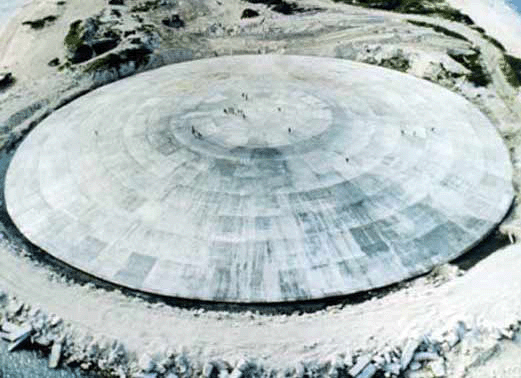
U.S. Congress Demands Investigation Into the U.S.’s Nuclear Coffin, The Runit Dome
|
Congress Demands Investigation Into the U.S.’s Nuclear Coffin, The Runit Dome is leaking radioactive waste into the Pacific Ocean. https://www.popularmechanics.com/military/weapons/a30338371/congress-investigation-runit-dome-nuclear-waste/
Dec 27, 2019
|
|
USA’s Hanford nuclear site could suffer the same fate as Russia’s Mayak – or worse

Comment from Dtlt 21 Dec 19, TRUMP IS CUTTING THE BUDGET TO MONITOR AND TRY TO CLEAN THE HANFORD MESS IN HALF
Massive Nuclear Explosion similar to Kyrshtym by Mayak Can Happen at Hanford if the site is not Monitored and tanks not taken care of.
A Ten Thousand Gallon Tank at Mayak Exploded from Heat Decay. The Heat Deacy was from Strontium 90, Cesium 137, Cobalt 60 and Plutonium Stored in the Underground Tank. The explosion was equivalent to 100 tons of TNT. There are 55 million gallons of the same Radionuclide Mix stored at Hanford, in UnderGround Tanks. They used nitic acid to extract radionuclides at hanford as they did at Kyahym, by Mayak. The nitrates mixed with heat decaying rand hydrogen gas generating radionuclides are very much like the explosive brew that went off in Kyshtym in 1957 and there are 55 million gallons of the explosive brew at Hanford. The heat decay, heat emitting Radionuclides and Hydrogen gas generating explosive mix and the nitrates in the brew are very much at risk for a massive catastrophic chemical-radionuclide explosion . The Kyshtym disaster was a radioactive contamination accident that occurred on 29 September 1957 at Mayak, a plutonium production site in Russia for nuclear weapons and nuclear fuel reprocessing plant of the Soviet Union.

If the exlplosive stew becomes too concentrated and hot, the same thing will Happen there, contaminating a Great Portion of the Pacific NW USA and southe western Canada.
Medvedev, Zhores A. (4 November 1976). “Two Decades of Dissidence”. New Scientist.
Medvedev, Zhores A. (1980). Nuclear disaster in the Urals translated by George Saunders. 1st Vintage Books ed. New York: Vintage Books. ISBN 978-0-394-74445-2. (c1979)
In 1957 the cooling system in one of the tanks containing about 70–80 tons of liquid radioactive waste failed and was not repaired. The temperature in it started to rise, resulting in evaporation and a chemical explosion of the dried waste, consisting mainly of ammonium nitrate and acetates (see ammonium nitrate/fuel oil bomb). The explosion, on 29 September 1957, estimated to have a force of about 70–100 tons of TNT,[10] threw the 160-ton concrete lid into the air.[8] There were no immediate casualties as a result of the explosion, but it released an estimated 20 MCi (800 PBq) of radioactivity. Most of this contamination settled out near the site of the accident and contributed to the pollution of the Techa River, but a plume containing 2 MCi (80 PBq) of radionuclides spread out over hundreds of kilometers. Previously contaminated areas within the affected area include the Techa river, which had previously received 2.75 MCi (100 PBq) of deliberately dumped waste, and Lake Karachay, which had received 120 MCi (4,000 PBq).
In the next 10 to 11 hours, the radioactive cloud moved towards the north-east, reaching 300–350 km (190–220 mi) from the accident. The fallout of the cloud resulted in a long-term contamination of an area of more than 800 to 20,000 km2 (310 to 7,720 sq mi), depending on what contamination level is considered significant, primarily with caesium-137 and strontium-90. This area is usually referred to as the East-Ural Radioactive Trace EURT
A quarter of Russia’s Andreeva Bay’s spent nuclear fuel stack removed, with Norway’s help
Norway helps pay for transporting old Russian navy nuclear waste
A shipment of 14 containers with spent nuclear fuel from Andreeva Bay to Atomflot in Murmansk took place this week. Barents Observer By Thomas Nilsen December 20, 2019
|
“This is the first time we will pay for removing. The ship was fully loaded. 14 containers with spent nuclear fuel,” says project coordinator Per-Einar Fiskebeck to the Barents Observer. The removed waste contained about one million Curie (37.000 TBq) of long lived isotopes. Unloading the 40-years old spent uranium fuel elements from the rundown storage tanks and repacking them to transport containers came with a price-tag of 5 million kroner (€500.000), while the shipment from Andreeva Bay to Murmansk will cost additional 2,5 million kroner (€250.000). This week’s shipment is the fourth this year, but the first one paid by Norway. Per-Einar Fiskebeck, an engineer with the County Governor of Troms & Finnmark, has since the 1990s worked in close cooperation with SevRao, Russia’s regional enterprise in charge of cleaning up the nuclear waste site on the western banks of the Litsa fjord. Here, only 65 kilometers from the border to Norway, the Soviet navy packed away its lethal leftovers. Without too much thought for the costs of future clean up. In Norway, like in Russia, the demand for action came out of fears for possible radioactive leakages that could have potentially negative impact on the important fisheries in the Barents Sea. So far, isotopes contamination has only been discovered in the sediments in the near proximity off the shore and not further out in the bay. Concerns of nuclear accidents and radioactive leakages are also why Norwegian authorities have granted hundres of millions kroner in aid to secure and clean up the site……. In 2017, the first load of containers with spent nuclear fuel left Andreeva Bay towards Murmansk, from where it go by rail to Mayak, Russia’s reprocessing plant north of Chelyabinsk east of the Ural Mountains. So far in 2019, three shipments paid by Russia and one shipment paid by Norway have left Andreeva Bay. “25% of the original amount of spent nuclear fuel is now removed,” says Per-Einar Fiskebeck. With one-fourth of the waste removed in two and a half years doesn’t mean the remaining will be shipped away with the same speed. «The fuel elements lifted out and re-packed so far have been undamaged,” Fiskebeck says. Both tank No. 1 and No. 2 are believed to hold mostly unproblematic elements. He explains how some of the other elements will be a much more challenging task. Tank 3A holds numerous rusty, partly destroyed steel pipes where concrete of poor quality was filled in the space between. Some of those fuel assemblies are stuck in the canisters, while some of the canisters are stuck in the cells. This is high level nuclear waste with radiation levels close to the uranium fuel comparable to the melted fuel rods inside the ill-fated Chernobyl reactor. Risk-assessments give a clear recommendation: Do not try to lift any of the assemblies before you are sure nothing falls out.
A worst case scenario is uranium pellets falling to the bottom, becomes unstable, creating an uncontrolled nuclear fission chain reaction with radionuclides being airborne. Three different kind of containers to handle damaged elements are now under development and testing, a work Fiskebeck estimates will take all of 2020 and 2021. “Risk assessment and environmental safety studies are core to all Norwegian funded projects,” Fiskebeck tells……… Another groundbreaking milestone in the clean up work took place earlier this fall when the retrieval of six abandoned, highly radioactive spent nuclear fuel assemblies from the bottom of Building No. 5 were successfully completed. Building No. 5 is a former pool storage, where several elements fell to the floor following a water-leakages in 1982. Traces of uranium and other radionuclides remained in the sludge at the bottom of the pool. The radiation on site was too high for humans to work safely. “You can’t have humans there. Robotics were needed to do the job,” Per-Einar Fiskebeck explains. Such remote controlled equipment were made and the six elements are now safely transferred to the nearby storage building No. 151 in Andreeva Bay……. https://thebarentsobserver.com/en/ecology/2019/12/norway-helps-pay-transporting-40-years-old-russian-navy-nuclear-waste |
|
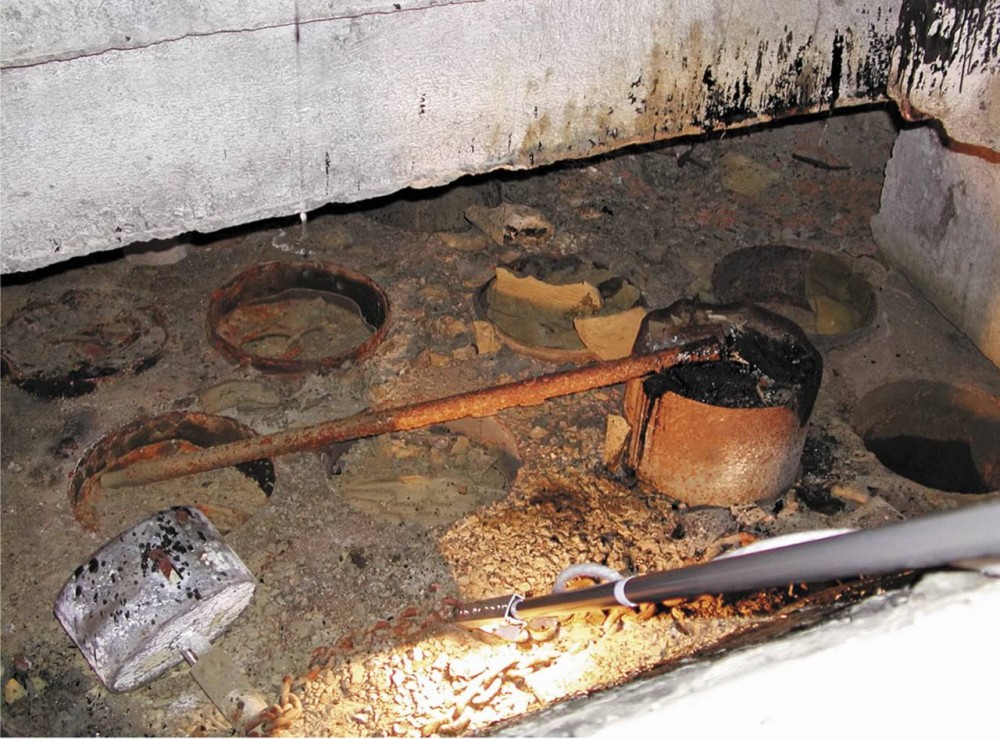
Idaho nuclear waste processing project to close – not commercially viable
Federal officials will shut down an Idaho nuclear waste treatment project after determining it would not be economically feasible to bring in radioactive waste from other states.
The U.S. Department of Energy in documents made public this week said the Advanced Mixed Waste Treatment Project that employs 650 workers will end next year.
A $500 million treatment plant handles transuranic waste that includes work clothing, rags, machine parts and tools that have been contaminated with plutonium and other radioactive elements. The U.S. Nuclear Regulatory Commission says transuranic wastes take much longer to decay and are the most radioactive hazard in high-level waste after 1,000 years.
The Energy Department said that before the cleanup began, Idaho had the largest stockpile of transuranic waste of any of the agency‘s facilities. Court battles between Idaho and the federal government culminated with a 1995 agreement requiring the Energy Department to clean up the Idaho site.
The Idaho treatment plant compacts the transuranic waste, making it easier to ship and put into long-term storage at the Waste Isolation Pilot Plant in New Mexico.
Federal officials earlier this year floated the idea of keeping the $500 million treatment plant running in Idaho with waste from other states. The bulk of that would have been 8,000 cubic meters (6,100 cubic meters) of radioactive waste from a former nuclear weapons production area in Hanford in eastern Washington.
Local officials and politicians generally supported the idea because of the good-paying jobs. The Snake River Alliance, an Idaho-based nuclear watchdog group, said it had concerns the nuclear waste brought to Idaho would never leave.
A 38-page economic analysis the Department of Energy completed in August and released this week found “it does not appear to be cost effective due to packaging and transportation challenges in shipping waste” to Idaho.
“As work at the facility will continue into 2019, no immediate workforce impacts are anticipated,” the agency said in an email to The Associated Press on Friday. The Energy Department “recognizes the contribution of this facility and its employees to DOE‘s cleanup mission and looks forward to applying the knowledge gained and experience of the workforce to other key activities at the Idaho site.”
The agency said it would also consider voluntary separation incentives for workers.
With the Idaho treatment plant scheduled to shut down, it‘s not clear how the transuranic waste at Hanford and other sites will be dealt with.
The Energy Department “will continue to work to ensure a path forward for packaging and certification of TRU (transuranic) waste at Hanford and other sites,” the agency said in the email to the AP.
The Post Register first reported the closure.
Spent mixed-oxide (MOX) fuel to be removed from Ikata nuclear reactor
 Shikoku Electric to remove fuel from Ikata nuclear reactor, a first since MOX work began in 1997, HTTPS://WWW.JAPANTIMES.CO.JP/NEWS/2019/12/13/NATIONAL/SHIKOKU-ELECTRIC-REMOVE-MOX-FUEL-FROM-IKATA-REACTOR/#.XFPOTUGZBIU , EHIME PREF. – Shikoku Electric Power Co. said Thursday that it will suspend operations of the No. 3 reactor at its Ikata nuclear power plant on Dec. 26 for routine checkups and remove spent mixed-oxide (MOX) fuel from the reactor.This will mark the first removal of used MOX fuel, a blend of plutonium extracted from spent nuclear fuel and uranium, from any commercial nuclear power plant in Japan since an initiative on plu-thermal power generation using the mixed fuel was announced in 1997, according to the Shikoku utility. Shikoku Electric to remove fuel from Ikata nuclear reactor, a first since MOX work began in 1997, HTTPS://WWW.JAPANTIMES.CO.JP/NEWS/2019/12/13/NATIONAL/SHIKOKU-ELECTRIC-REMOVE-MOX-FUEL-FROM-IKATA-REACTOR/#.XFPOTUGZBIU , EHIME PREF. – Shikoku Electric Power Co. said Thursday that it will suspend operations of the No. 3 reactor at its Ikata nuclear power plant on Dec. 26 for routine checkups and remove spent mixed-oxide (MOX) fuel from the reactor.This will mark the first removal of used MOX fuel, a blend of plutonium extracted from spent nuclear fuel and uranium, from any commercial nuclear power plant in Japan since an initiative on plu-thermal power generation using the mixed fuel was announced in 1997, according to the Shikoku utility.
The government and power firms are promoting plu-thermal power generation as part of the nuclear fuel cycle featuring the extraction of plutonium from spent nuclear fuel for reuse. In 2010, Shikoku Electric started plu-thermal power generation using 16 MOX fuel assemblies at the No. 3 reactor at the Ikata plant in Ehime Prefecture. The company plans to remove all of them during the reactor checkups through April 27 and will consider reusing the spent MOX fuel, which will likely be stored at the power plant for a while due to the lack of reprocessing facilities. |
|
|
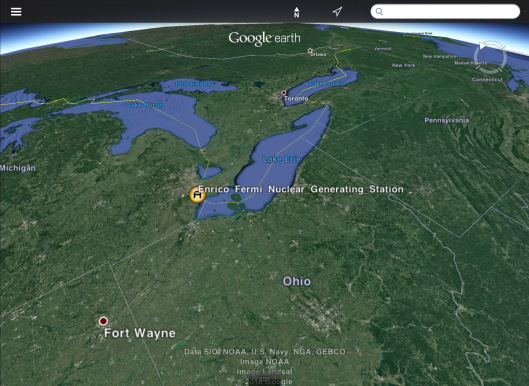
U.S. Congress members call on Trudeau to stop nuclear waste dumping near Great Lakes
|
Upton, Dingell, Kildee and Mitchell Appeal to Trudeau: No Nuclear Waste In the Great Lakes Basin, https://whtc.com/news/articles/2019/dec/10/upton-dingell-kildee-and-mitchell-appel-to-trudeau-no-nuclear-waste-in-the-great-lakes-basin/965368/ When U.S. Representatives Fred Upton and Debbie Dingell joined with a handful of other House members last Friday, Dec. 6, 2019, to decry plans by Canadian officials to put a nuclear waste storage site in the Great Lakes basin, they were hoping to shame Canadian Prime Minister Justin Trudeau into some kind of protective action.
Tuesday, December 10, 2019 But something else happened, Upton explained.
“We’ve got other members now, on a bipartisan basis, coming to us saying, ‘Hey, we want to sign that same letter,'” he said. “So we’re going to be doing another letter, a little bit later this week, that’ll have broader appeal. Because we were sort of under the gun when we learned the news late Friday afternoon.” Upton and Dingell joined two other Michigan representatives, Paul Mitchell and Dan Kildee in signing a letter appealing to Trudeau to oppose any nuclear waste storage plans near the Great Lakes. The complete text of last week’s letter: Dear Prime Minister Trudeau: We write to you out of deep concern regarding reports that Canada is moving closer to selecting a permanent national repository for harmful nuclear waste along the shores of the Great Lakes. Allowing a permanent nuclear waste storage facility anywhere near the Great Lakes basin, for any amount of time, is a risk we cannot afford to take. The recent reporting also has us greatly concerned that the highest levels of radioactive waste would ultimately be stored at the proposed site. We know that there are other Members of Congress representing districts in the Great Lakes basin who are most concerned by this development and will certainly be joining with us in the days ahead. This is a grave concern. These waters have long united us—they should not divide us. In November, the Energy and Commerce Committee favorably advanced H.R. 2699, the Nuclear Waste Policy Amendments Act of 2019, to the House for final consideration and it included an important bipartisan amendment that expresses the Sense of Congress that the governments of the United States and Canada should not allow permanent or long-term storage of spent nuclear fuel or other radioactive waste near the Great Lakes. This amendment was unanimously supported and adopted. We stand in strong opposition to any decision by the Canadian government to select or consider a permanent national repository for nuclear waste storage anywhere near the Great Lakes. This is a treasured natural resource each of our countries share and we urge you to stand with us to protect these waters for future generations. Thank you for your consideration of this important request and we look forward to a timely response. |
2 nuclear reactors in Fukui Prefecture to be shut down
Kansai Electric Power Co. will spend ¥118.7 billion to dismantle the Nos. 1 and 2 units at the Oi nuclear power plant, with work expected to wrap up in the fiscal year ending March 2049.
The units, which each have an output capacity of more than 1 million kilowatts, are the most powerful reactors to be approved for decommissioning by the Nuclear Regulation Authority since a magnitude 9.0 earthquake and subsequent tsunami caused a meltdown at the Fukushima No. 1 plant in March 2011.
Following the disaster, the government placed a 40-year limit on the lifespan of reactors in the country, with a possible 20-year extension if strict safety standards are met.
As both units came online in 1979 and were approaching the 40-year limit, Kansai Electric had a choice of applying for the extension or scrapping them.
In December 2017, the utility announced it would scrap the aging reactors, citing the high cost of implementing additional safety measures. Kansai Electric submitted the decommissioning plan to the authority in November 2018.
The plant’s Nos. 3 and 4 units came online in 1991 and 1993, respectively, and are currently active.
Around 23,000 tons of low-level radioactive waste will be remain following the dismantling process, according to the plan, along with another 13,200 tons of nonradioactive waste.
The plan does not state where the waste will be stored.
1 This Month

of the week – Shut Down Drone Warfare!


Tell the Ukrainian Government to Drop Prosecution of Peace Activist Yurii Sheliazhenko

Petition to revoke the licensing of the Near Surface Nuclear Disposal Facility (NSDF) at Chalk River. https://www.ourcommons.ca/petitions/en/Petition/Details?Petition=e-7247
To see nuclear-related stories in greater depth and intensity – go to https://nuclearinformation.wordpress.com
-
Archives
- April 2026 (114)
- March 2026 (251)
- February 2026 (268)
- January 2026 (308)
- December 2025 (358)
- November 2025 (359)
- October 2025 (376)
- September 2025 (257)
- August 2025 (319)
- July 2025 (230)
- June 2025 (348)
- May 2025 (261)
-
Categories
- 1
- 1 NUCLEAR ISSUES
- business and costs
- climate change
- culture and arts
- ENERGY
- environment
- health
- history
- indigenous issues
- Legal
- marketing of nuclear
- media
- opposition to nuclear
- PERSONAL STORIES
- politics
- politics international
- Religion and ethics
- safety
- secrets,lies and civil liberties
- spinbuster
- technology
- Uranium
- wastes
- weapons and war
- Women
- 2 WORLD
- ACTION
- AFRICA
- Atrocities
- AUSTRALIA
- Christina's notes
- Christina's themes
- culture and arts
- Events
- Fuk 2022
- Fuk 2023
- Fukushima 2017
- Fukushima 2018
- fukushima 2019
- Fukushima 2020
- Fukushima 2021
- general
- global warming
- Humour (God we need it)
- Nuclear
- RARE EARTHS
- Reference
- resources – print
- Resources -audiovicual
- Weekly Newsletter
- World
- World Nuclear
- YouTube
-
RSS
Entries RSS
Comments RSS
 nuclear-news