Opposition in Canada to nuclear waste dump on agricultural land
Opposition gathering to nuclear fuel disposal vault in South Bruce, The Sun Times, 29 May 20
|
NWMO’s other preferred site is also in Ontario, in the Ignace area, northwest of Lake Superior, and feasibility studies are underway for both sites.It would take 10 years to undertake the environmental regulatory approval process. Plans call for construction to begin in 2033 and take about 10 years, with operation starting in 2043, according to the NWMO. South Bruce Mayor Bob Buckle said in January it seemed to him there was little opposition to the project, but that has changed. At an online South Bruce council meeting Tuesday, Teeswater-area beef and sheep farmer Michelle Stein spoke on behalf of a citizen’s group, Nuclear Tanks, No Thanks, which loosely formed in February. Her farm is next to one purchased by NWMO for the project northwest of Teeswater, part of the parcel of land where metal-encased spent fuel rods could be buried for thousands of years. She told council “there’s way too many risks involved with this project and they need to have a referendum to let the community decide. Like we have over 1,500 signatures that were collected before COVID,” before the virus stopped door-knocking, she said by phone Thursday. “Council just it seemed turned to ignore us and do their own thing.” She noted Buckle was elected with 1,380 votes. The group has an information website www.protectsouthbruce-nodgr.org, which includes an online petition with some 1,800 signatures, which prior to the pandemic was intended for people who aren’t local to sign……. Becky Smith, a NWMO spokeswoman said “We’re a farming community. I don’t understand why they’d want to turn us into a mining community, and then bury the world’s most radioactive waste underneath our water table,” A four-week comment period opened Wednesday and ends June 30 about whether a draft report accurately summarizes public concerns and wishes expressed during workshops held between December and February…….. n January, SON held a community vote which turned down a separate nuclear waste vault proposal, for lower- and mid-level nuclear waste, championed by Ontario Power Generation. It was to be built in Bruce County too, near the Bruce Power nuclear plant close to Kincardine. Saugeen First Nation Chief Lester Anoquot said Wednesday he has a letter from NWMO confirming the high-level nuclear waste vault requires First Nation consent. “We’re continuing dialogue. It’s kind of difficult right now, working remotely,” given the COVID-19 pandemic, he said. “It will probably go to a community vote again for acceptance or not. I think the process will mirror the one that was just conducted with the last DGR (deep geological repository) proposal.” The site falls within Saugeen Ojibway Nation’s traditional territory and its support is required for the project to proceed, Belfadhel has said.https://www.owensoundsuntimes.com/news/local-news/opposition-gathering-to-nuclear-fuel-disposal-vault-in-south-bruce |
|
Canadian farming community not happy about taking on nuclear wastes

Teeswater area debating taking on ‘forever’ nuclear waste project, Scott Miller CTV News London 25 May 20, WINGHAM, ONT. — Anja van der Vlies is worried about the future of her 1200 dairy goat operation, if Canada’s most radioactive nuclear waste is buried a couple side roads away from her family’s farm.
“It’s fairly close to where we farm. If I just look at the radius of 10 kilometres from the proposed site, so much food is being prepared here. What’s going to happen to that?”she says.
Right next door, dairy farmer Ron Groen has posted signs around his property sharing his concerns about the proposed project, just north of Teeswater.
“The waste is going to be radioactive for a million years, so basically the waste will be eternally radioactive and our kids, grandkids, 33,000 generations after us living in and around town will have to worry about this problem,” he says.
About 1200 acres of farmland north of Teeswater has been optioned by the Nuclear Waste Management Organization to potentially build Canada’s first permanent nuclear waste facility.
Over five million used nuclear fuel bundles, would be buried 500 metres under these Bruce County farms, if the community agrees to it.
Darren Ireland is one the landowners, whose agreed to option his land for the project.
“For me, it’s about five generations. This area has struggled for years to keep things going. I look at this as something, that we could be looking at for five generations, that’s huge,” he says.
The mayor of the municipality of South Bruce, Robert Buckle, also sees upside to the project…….
Signs opposing the project starting going up around the area around March. A local group has formed to keep nuclear waste out of South Bruce’s soil.
“The sooner we can stop this, the better for our community,” says van der Vlies…….
Two communities remain in the running to house Canada’s most radioactive waste. Ignace, in Northern Ontario, and the Municipality of South Bruce, north of Teeswater. One site will selected, no later, than 2023. https://london.ctvnews.ca/teeswater-area-debating-taking-on-forever-nuclear-waste-project-1.4953737
South Korea risk of power disruption, as nuclear spent fuel builds up, with storage shortage
 Wolseong reactors at risk of shutdown due to spent nuclear fuel storage shortage, Pulse News, By Oh Chan-jong and Choi Mira 2020.05.22 South Korean nuclear reactors responsible for nearly a quarter of the country’s power supply at cheap price could undergo disruption due to shortage of space to store spent nuclear fuel.
Failure to begin construction to add storage facilities within 100 days would lead to total shutdown of the Wolseong 2, 3 and 4 reactors that each can generate 700 megawatts of power, equivalent to the anticipated capacity of a solar farm that the government plans to build in Saemangeum with an investment of 10 trillion won ($8.09 billion). The Wolseong 1 reactor was already unplugged last year…….. https://pulsenews.co.kr/view.php?year=2020&no=525749
President Donald Trump and his administration have no plans to use Yucca Mountain as a nuclear waste repository
 Nuclear waste disposal at Yucca Mountain a no-go for Trump, Energy exec affirms,
- May 21, 2020
President Donald Trump and his administration have no plans to use Yucca Mountain as a nuclear waste repository, according to Mark Menezes, the current under secretary of energy and the president’s pick to be the next No. 2 at the U.S. Department of Energy.
“Let me be very clear about this,” Menezes said Wednesday during his U.S. Senate Energy and Natural Resources Committee nomination hearing. “The president has been very clear on this.”
The under secretary in his remarks applauded and supported Trump – who has vacillated on the matter in the past – “for taking action when so many others have failed to do so.”
The president’s fiscal year 2021 budget blueprint, trillions of dollars, included no money for Yucca Mountain and, instead, emphasized alternative, innovative approaches for the long-term, safe storage of nuclear waste and spent fuel. Previous Trump budget requests included $120 million and $116 million for the mothballed Nevada repository.
Yucca Mountain, relatively near Las Vegas, was identified decades ago as the nation’s potential nuclear storehouse. Congress in 2002 approved of the remote locale. But the project soured under President Barack Obama and has failed to gain significant traction since, much to the disappointment of some South Carolina lawmakers.
U.S. Rep. Jeff Duncan, R-S.C., has described Yucca Mountain as a national solution to a national problem; U.S. Sen. Lindsey Graham, R-S.C., has described it as a “world-class repository.”
Menezes’ Wednesday comments – at the behest of Sen. Catherine Cortez Masto, a Nevada Democrat and staunch opponent of Yucca Mountain – are a dramatic pivot away from comments he made in February before a House energy subcommittee.
What we’re trying to do is to put together a process that will give us a path to permanent storage at Yucca,” Menezes said at the time, describing the president as “frustrated” that “we have not been able to get the resources or the authorization that we need to be able to license Yucca.”
Trump that same month – days prior to the House hearing, in fact – wrote on Twitter: “Nevada, I hear you on Yucca Mountain and my Administration will RESPECT you!”
Cortez Masto on Wednesday said she wanted “to put this to bed” and give Menezes an opportunity to set things straight.
10 buildings to be demolished at Santa Susana Nuclear Field Laboratory
…The Trump administration said on Wednesday it would tear down 10 buildings at the U.S. government’s former Santa Susana Field Laboratory northwest of Los Angeles that was left contaminated by decades of nuclear, rocket fuel and liquid metal testing. The buildings set for demolition were part of a radioactive materials handling facility at the more than 2,800-acre Santa Susana site in the Ventura County foothills, which opened in the late 1940s ordered cleaned up under a court-ordered 2010 consent decree. … https://www.devdiscourse.com/article/international/1060091-reuters-us-domestic-news-summary
Earthquake close to Yucca Mountain’s selected nuclear waste site

Nevada Earthquake Raises More Doubts about Yucca Mountain by John Freeland https://blogs.agu.org/terracentral/2020/05/17/nevada-earthquake-raises-more-doubts-about-yucca-mountain/ 17 May 20, On Friday, May 15, 2020, a magnitude 6.5 earthquake rocked Nevada and portions of California. With the epicenter located about 22 miles west of Tonopah, NV, no serious damage was recorded aside from cracked highway pavement in the mostly remote surroundings, far from population centers.
Reportedly, Nevada has not seen an earthquake of this size since 1954. Worth noting, the earthquake epicenter is about 100 miles away from the Yucca Mountain Nuclear Waste Repository, as depicted on the above aerial image.
The Yucca Mountain Nuclear Repository is, by authority of legislation passed in 1982 and 1987, currently the designated single facility for permanent disposal of high level nuclear waste. A time-line of the related events briefly describes the story of the Yucca Mountain Repository. Locals see the project as a source of jobs but state-wide there is strong opposition. After all, there are no nuclear power generating facilities in Nevada. According to Rep. Ruben Kihuen (D-Nev), “if you generate nuclear waste, you should keep it in your own backyard. Don’t send it to our backyard.”
The safety of Yucca Mountain has been debated for nearly forty years. I’ve previously posted on the topic here and here. An interesting analysis of political and other factors swirling around the project is “How Safe is Yucca Mountain?”As the map to the right (USGS craton map) [on original] shows, the Yucca Mountain site is not in an ideal location in terms of tectonic activity.
Located near the boundary of the “accretionary belt” and the “deformed craton” the region has a history of volcanic activity within the past 2 million years and Nevada is ranked third in the nation for earthquakes. As Dr. Cochran points out in his paper cited above, Nevada was selected largely for political reasons. The federal government already owned the Nevada Test Site property, which had been used for years for weapons testing. It is remote, however, remote areas of the United States are often found out west where there is higher seismicity. Whether we want to or not, we as a nation will have to figure out a solution to permanent nuclear waste disposal with some 90,000 tons now in temporary storage.
So where should it go? North or South Dakota? Eastern Montana? Predicting the long-term future of seismic events appears to be dicey. As Nevada Seismological Laboratory Director Graham Kent puts it “We like to think everything’s the way it is and it doesn’t change that much,” he said. “I think the last few months we’ve learned with the pandemic that that’s not the case.”
Over 100 public interest organisations call on Canadian govt to halt decision on nuclear waste disposal
Groups ask Ottawa to press ‘pause’ on nuclear waste disposal https://www.tbnewswatch.com/local-news/groups-ask-ottawa-to-press-pause-on-nuclear-waste-disposal-2361184 ‘There’s no rules’ for evaluating an underground storage site, spokesperson says. By: Gary Rinne OTTAWA — More than 100 public interest organizations, environmental groups and others are calling on the federal government to suspend all decision-making regarding radioactive nuclear waste disposal.
In a letter to Natural Resources Minister Seamus O’Regan, they describe Canada’s current nuclear waste policy as “deficient,” saying it must be improved in consultation with the public and Indigenous peoples.
Among the signatories are numerous groups in northern Ontario, including Thunder Bay-based Environment North and Keep Nuclear Waste Out of Northwestern Ontario.
The letter follows a February report from the International Atomic Energy Agency which recommended that the government “enhance” its existing radioactive waste management policy.
The IAEA said the policy framework “does not encompass all the needed policy elements nor a detailed strategy” required for long-term nuclear waste management.
The signatories say their request is urgent because the regulator, the Canadian Nuclear Safety Commission, is pressing ahead with licensing decisions on a number of radioactive waste projects.
“Fearing Canada’s deficient radioactive waste framework will imprint itself on decisions affecting the health and safety of future generations and the environment, signees urged Canada to provide leadership, and establish sufficient guidance and federal policy,” they said in a statement Tuesday.
The groups also want Ottawa to establish objectives and principles to underly a nuclear waste policy, and that the government identify “the problems and issues exposed by existing and accumulating radioactive waste.”
The Nuclear Waste Management Organization is currently studying potential future underground nuclear waste storage sites in the Ignace area and South Bruce in southern Ontario.
Brennan Lloyd of North Bay-based Northwatch said NWMO’s search for a future repository is “part and parcel” of concerns about Canada’s overall approach to managing radioactive waste issues.
Nuclear waste disposal isn’t the only pressing matter, Lloyd said, but “we have lots of concerns about the Nuclear Waste Management Organization, their operation…going back to 2002 when the Nuclear Waste Fuels Act allowed the industry to create the NWMO.”
She added that “the lack of a solid set of rules around radioactive waste, we believe, does affect how the NWMO has conducted itself, but even more importantly it may affect the review process if the NWMO ever actually arrives at a site that they can in some way present as having the support of a host community.”
According to Lloyd, there are no rules as to how such a proposal would be evaluated.
She said that in 1996, the federal government presented a Radioactive Waste Policy Framework that’s less than a page long, and it’s problematic that “almost 25 years later, that’s still all we have in the way of real policy, strategy, rules around radioactive waste at the national level.”
Canadian Nuclear Safety Commission staff have recently proposed regulatory documents, Lloyd said, “which are really very general descriptions of how they might go about issuing a licence for various activities. And they really lack rigour.”
She said two of the five regulatory documents the CNSC plans to bring forward next month deal directly with nuclear waste burial.
“One is around how you would assess the long-term performance of a deep geological repository, and one is about how you would characterize a site that was being considered. And both of them are just incredibly weak documents,” Lloyd maintained.
“The dividing line is between ‘shall’ and ‘should.’ The CNSC documents are all ‘should’ or ‘may.’ Which means there’s no rules.”
Lloyd and the other signatories to the letter ask Minister O’Regan to instruct the CNSC to stop developing radioactive waste management and nuclear decommissioning documents until new, overarching policies and strategies are in place.
Massive deregulation of America’s radioactive wastes
 Environmentalists Fault Sending ‘Very Low Level’ Nuclear Waste to Landfills https://www.nbcbayarea.com/investigations/environmentalists-fault-sending-very-low-level-nuclear-waste-to-landfills/2292805/ By Jaxon Van Derbeken,-20 May 20 The federal Nuclear Regulatory Commission has proposed a rule “reinterpretation” that would allow commercial landfills to start taking in low level radioactive waste, in lieu of the four currently licensed disposal facilities nationwide.
Environmentalists were quick to attack the proposed rule change by the U.S. Nuclear Regulatory Commission, saying that under the plan, the public would not be automatically notified when a landfill qualifies for a waiver of the current regulations.
This is the most massive deregulation of radioactive waste in American history,” said Daniel Hirsch, head of an environmental watchdog group and former director of the Program on Environmental and Nuclear Policy. “And they are doing it under the cover of the coronavirus pandemic, when everyone’s attention is rightly focused on other things.”
Under Proposed Rule No. 2020-0065, what the commission considers a “reinterpretation” of existing rules, hundreds of landfills nationwide could submit applications for an exemption of the current rules requiring that all low-level nuclear waste be sent to either Washington state, Utah, Texas or South Carolina.
Environmentalists were quick to attack the proposed rule change by the U.S. Nuclear Regulatory Commission, saying that under the plan, the public would not be automatically notified when a landfill qualifies for a waiver of the current regulations.
“This is the most massive deregulation of radioactive waste in American history,” said Daniel Hirsch, head of an environmental watchdog group and former director of the Program on Environmental and Nuclear Policy. “And they are doing it under the cover of the coronavirus pandemic, when everyone’s attention is rightly focused on other things.”
Under Proposed Rule No. 2020-0065, what the commission considers a “reinterpretation” of existing rules, hundreds of landfills nationwide could submit applications for an exemption of the current rules requiring that all low-level nuclear waste be sent to either Washington state, Utah, Texas or South Carolina.
To qualify for an exemption, a landfill would need to submit an analysis of the types of waste they would receive and that they could meet radiation exposure limits.
Hirsch said that under the proposed regulatory language, private landfills wouldn’t have to notify neighbors.
“You could be living next to a nuclear dump, and never even know it,” he said.
The NRC contends its plan is safe. In a statement, the commission said it intends to relax regulations for disposing of “very low level” waste, such as the concrete from decommissioned nuclear reactors. Such waste, the commission says, poses little risk to the public, while allowing for reduced costs and lower radiation exposure to drivers while they are transporting it.
Critics, like Jeff Ruch, West Coast head of PEER, Public Employees for Environmental Responsibility, say there aren’t nearly enough safeguards.
“If you get the exemption, you could put it in your backyard,” he said. “There’s no tracing process, there’s no monitoring — this, in essence exempts them from any form of regulatory or public health safeguard, and that’s the concern.”
The NRC told us that companies that are disposing of the radioactive materials, along with participating landfills, would share the responsibility of complying with the rules under the exemption system, adding: “We would not allow such disposals if we felt public health and safety and the environment would not be protected.”
Disclosure aside, critics said they are concerned that the restrictions for landfills would not be as strict as the ones in place for the four licensed facilities. Under the proposed rules, residents near newly participating landfills could be exposed to as much as two and half times the level regulatorily allowed around the four licensed disposal sites, Hirsch said.
The commission said that the proposed permitted landfill exposure level would be the same as allowed around decommissioned nuclear plants.
The nuclear industry has yet to weigh in on the proposal, but the deadline for public comment has been extended to July. The five member commission is then expected to take up the matter.
If the plan is approved, it could mean dramatically reduced costs of disposing contaminated soil around San Francisco’s old Hunters Point Naval Shipyard, which is slated for development. Clearing that site could involve hauling away as many as 100,000 truckloads of contaminated soil. Right now, the soil in the area is being retested following allegations of wrongdoing by the previous testing firm, Tetra Tech, that the company denies.
Dismantling of Norway’s nuclear research reactors – up to 25 years, about $billion
Norwegian reactor dismantling to cost almost USD2 billion, WNN , 18 May 2020 The decommissioning of Norway’s shut down research reactors at Halden and Kjeller will cost around NOK20 billion (USD1.96 billion) and take 20-25 years, according to a report commissioned by the Ministry of Trade and Industry. The report by Atkins and Oslo Economics mainly confirms assessments from the Institute for Energy Technology (IFE) and risk management and quality assurance consultants DNV GL that were made in 2019. It estimates that demolition of facilities and restoration of the areas will cost around NOK7 billion. There will also be costs of around NOK13 billion for the treatment of used fuel and the storage of radioactive waste. However, it notes there is “considerable uncertainty” around these costs…….
“There have been limited reactor operations in Norway, but we have complicated facilities and waste that will cost a lot,” said Minister of Industry Iselin Nybø. “The report shows how costly and lengthy that dismantling can be. The proposed measures will help to make the cleanup as efficient as possible.
“We will clean up to protect ourselves from harmful consequences for people and the environment from the radiation from this past industry,” Nybø added. “The investigation is part of the puzzle that is now being put in place to ensure a safe and effective cleanup. It will be considered thoroughly and planned to be addressed by the government in the autumn of 2020.”
Norway’s two research reactors – the nuclear fuel and materials testing reactor at Halden and the JEEP-II neutron scattering facility at Kjeller – were declared permanently shut down in June 2018 and April 2019, respectively. Their ownership and responsibility for them will move to Norwegian Nuclear Decommissioning (NND) from IFE……https://www.world-nuclear-news.org/Articles/Dismantling-of-Norwegian-reactors-to-cost-almost-U
Coalition pursues extra $7.25B for DOE nuclear cleanup, job creation
|
Coalition pursues extra $7.25B for DOE nuclear cleanup, job creation, Aiken Standard, By Colin Demarest cdemarest@aikenstandard.com, May 18, 2020
A bloc of local governments and nuclear industry, labor and community groups are pressing Congress to provide a one-time multibillion-dollar boost to the U.S. Department of Energy Office of Environmental Management, the remediation-focused Savannah River Site landlord. The organizations and officials – including Citizens For Nuclear Technology Awareness Executive Director Jim Marra and Savannah River Site Community Reuse Organization President and CEO Rick McLeod – sent a letter Friday to U.S. House and Senate leadership “strongly” supporting a $7.25 billion funding injection, arguing it “will help reignite the national economy,” help revive small businesses and create thousands of new jobs despite the novel coronavirus crisis…….. https://www.aikenstandard.com/coronavirus/coalition-pursues-extra-7-25b-for-doe-nuclear-cleanup-job-creation/article_9261d03c-991a-11ea-a5c2-87c9bf5d9ecf.html The requested money could, too, speed Environmental Management’s nuclear waste cleanup missions and be used to fix ailing infrastructure – some of which dates back to the Cold War – at sites across the country. That’s a “rare” opportunity, reads the letter, which prominently features the Energy Communities Alliance logo and its chairman’s signature. |
|
Removal of Fort Belvoir’s SM-1 nuclear reactor to proceed after Army finalizes environmental assessment
That is according to USACE Project Manager Brenda Barber, who provided an update by email to SM-1 stakeholders on May 18, 2020.
Following a public comment period, Barber announced that the SM-1 project’s Environmental Assessment (EA) and Finding of No Significant Impact (FNSI) have been finalized and published online:……..
“The team is now focused on completing the Decommissioning Planning in preparation for awarding a decommissioning contract,” Barber stated.
“The project team still anticipates awarding a decommissioning contract by September 2020 with mobilization work on site beginning in early 2021.”……….
Barber noted that the coronavirus (COVID-19) pandemic has not had any immediate significant impact on the project schedule, since most of the work at this administrative phase is being done virtually. The site remains secure and environmental and radiological monitoring and inspections continue.
For information about the project, visit: nab.usace.army.mil/Missions/Environmental/SM-1
Questions and comments can continue to be sent to the project’s corporate communications team by emailing Brenda.M.Barber@usace.army.mil or calling (410) 375-4565 https://forthuntherald.com/removal-of-fort-belvoirs-sm-1-nuclear-reactor-to-proceed-after-finalizing-environmental-assessment/
South Africa’s nuclear waste problem- why plan to increase it?
The nuclear option https://www.businesslive.co.za/bd/opinion/letters/2020-05-17-letter-the-nuclear-option/ 17 MAY 2020, Keith Gottschalk, It is bizarre that a government department is advocating the building of more nuclear power stations with the slogan “a no-regret option”! (“ANC government is determined to pursue nuclear at any cost”, May 12).
Try selling that slogan to the people of Fukushima and Chernobyl.
Raising dangerously radioactive Russian submarines from the bottom of Arctic oceans

Russia plans to raise radioactive wrecks in the Arctic https://bellona.org/news/nuclear-issues/2020-05-russia-plans-to-raise-radioactive-wrecks-in-the-arctic
By 2030, the Russian government will raise seven pieces of radioactive debris – including two nuclear submarines – from the bottom of Arctic oceans, where they were intentionally scuttled during the Soviet era, documents received by Bellona confirm. May 12, 2020 by Charles Digges
By 2030, the Russian government will raise seven pieces of radioactive debris – including two nuclear submarines – from the bottom of Arctic oceans, where they were intentionally scuttled during the Soviet era, documents received by Bellona confirm.
The documents identify this debris as the most dangerous of the items the Soviet Union discarded in polar waters, and say that six of them contain more than 90 percent of the radioactivity to be found on the Arctic seabed.
Of particular importance, the documents say, are the K-159 and K-27 nuclear submarines, the nuclear reactors of which were still full of nuclear fuel when they went down.
Both submarines, say experts, are in a precarious state. In the case of the K-27, which was scuttled intentionally in 1982, the sub’s reactor was sealed with furfural, before it was sunk. But experts say this seal is eroding. The K-159, which sank while it was being towed to decommissioning in 2003, poses similar threats. Some 800 kilograms of spent nuclear fuel remained in its reactor when it went down in some of the most fertile fishing grounds in the Kara Sea.
In both cases, experts fear that a nuclear chain reaction could occur should water leak into the submarines’ reactor compartments.
Russian scientists have kept a close eye on the K-159, launching regular expeditions to monitor for potential radiation leaks. According to their data, should the submarine depressurize, radionuclides could spread over hundreds of kilometers, heavily impacting the local fishing industry.
Anatoly Grigoriev, who heads up the international programs department of Rosatom, Russia’s state nuclear corporation, says that raising the wrecks will cost some €123 million.
“Should the K-159 depressurize, it could cause €120 million of damage per month,” Grigoriev told Bellona at an earlier meeting.
Both submarines, say experts, are in a precarious state. In the case of the K-27, which was scuttled intentionally in 1982, the sub’s reactor was sealed with furfural, before it was sunk. But experts say this seal is eroding. The K-159, which sank while it was being towed to decommissioning in 2003, poses similar threats. Some 800 kilograms of spent nuclear fuel remained in its reactor when it went down in some of the most fertile fishing grounds in the Kara Sea.
In both cases, experts fear that a nuclear chain reaction could occur should water leak into the submarines’ reactor compartments.
Russian scientists have kept a close eye on the K-159, launching regular expeditions to monitor for potential radiation leaks. According to their data, should the submarine depressurize, radionuclides could spread over hundreds of kilometers, heavily impacting the local fishing industry.
Anatoly Grigoriev, who heads up the international programs department of Rosatom, Russia’s state nuclear corporation, says that raising the wrecks will cost some €123 million.
“Should the K-159 depressurize, it could cause €120 million of damage per month,” Grigoriev told Bellona at an earlier meeting.
The majority of this debris was left in the eastern bays of the Kara Sea near the Novaya Zemlya Archipelago. Still, the exact location of some of these sunken objects is still unknown. The whereabouts of the reactor compartment from the K-140 nuclear submarine remains unaccounted for.
And there are other radiation hazards that are farther afield. The K-278, or Komsomolets, nuclear submarine lies at the bottom of the Norwegian Sea.
“A quarter of all the radioactive waste that has been sunk in the oceans belongs to us,” says Sergei Antipov, director of strategic planning and project management at the Nuclear Safety Institute of the Russian Academy of Sciences.
Since the early 2000s, massive projects to decommission Soviet-era nuclear submarines have been ongoing with the assistance of numerous western partners. Moscow has shared information about these radioactive hazards with nations of the G-7 and has worked with the European Bank of Reconstruction and Development and other donors.
This international cooperation has brought significant results. Military bases have been cleared of most radioactive contamination and nearly 200 rusted-out nuclear submarines have been safely dismantled, as a review of the last 25 years of Bellona’s work clearly shows.
Russia, moreover, has the necessary infrastructure to deal with whatever discarded radiation hazards are brought to the surface of Arctic waters. And while Russia lacks the necessary vessels for such undersea rescues, the international partners it has developed while cleaning up other pieces of the Soviet nuclear legacy certainly do.
Next year, Russia assumes the rotating chairmanship of the Arctic Council, and we hope that Moscow will be able to announce upon the first meeting that these projects are underway. Bellona, which is already involved in discussing this important work, has high hopes.
How much radioactive waste is stored on our planet?
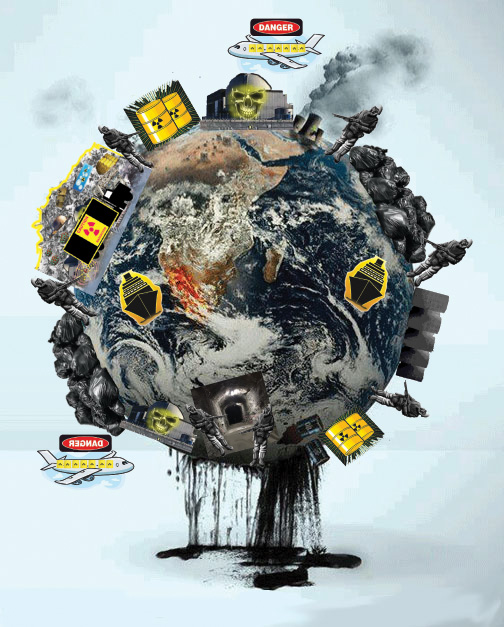 The black boxes of nuclear waste strategy https://wiseinternational.org/nuclear-monitor/882/black-boxes-nuclear-waste-strategy
How much radioactive waste is stored on our planet? According to the world’s first nuclear waste report, we don’t really know. We do know that nearly seven decades of civil and military reactor programmes have led to large stockpiles of waste, and that its volume is growing; we also know that our ignorance is vast, and there appears to be no responsible solution to the problem.
The systems delivering management strategies vary tremendously from one country to another, as do the range of authorities responsible for their management; so establishing volumes, risks and costs is no small task. When we add to this complexity national variations in both terminology and conceptual frameworks, a cross-country comparison becomes a Gordian knot. States don’t just differ in their classification systems ‒ they also follow different regulatory and safety procedures; the same applies to funding schemes, accounting measures, inventory reports and liability strategies. The European Commission is reportedly not able to make sense of the member state reports it receives, due to the extent of the anomalies. The commission has stated that it would consider taking measures to harmonize inventory reporting; it also expressed interest in finding ways to encourage states to secure appropriate financing options to pay for waste management.1 Nuclear Waste Directive implementation failures have led to the launch of infringement procedures against 25 out of 28 member states.2
While Russia offers practially no useful information about its nuclear waste inventory, the data from Belgium and the Netherlands are out of date, and the quality of Slovakia’s reports are so bad that they couldn’t be used for the WNWR report. Together with Euratom and national supervisory bodies, the Commission may wish to look into the codification of reporting methodologies in order to loosen the Gordian knot somewhat. The question of safety is ultimately a matter of implementation, and one of the functions of EU bodies is to indicate where implementation problems lie.
Criteria: the basis for informed decision-making
The World Nuclear Waste Report 2019 – Focus Europe (WNWR) offers criteria by which some of the evident lapses in reporting and departures from minimum obligations can be identified and remedied.3 Continue reading
‘Small Modular Nuclear Reactor’ entrepreneurs trying to revive dangerous ‘plutonium economy’ dream.

It seems that these two SMNR entrepreneurs in New Brunswick, along with other nuclear “players” worldwide, are trying to revitalize the “plutonium economy” — a nuclear industry dream from the distant past that many believed had been laid to rest because of the failure of plutonium-fuelled breeder reactors almost everywhere, including the US, France, Britain and Japan.
The phrase “plutonium economy” refers to a world in which plutonium is the primary nuclear fuel in the future rather than natural or slightly enriched uranium. Plutonium, a derivative of uranium that does not exist in nature but is created inside every nuclear reactor fuelled with uranium, would thereby become an article of commerce.
The proposed SMNR prototype from ARC Nuclear in Saint John is the ARC-100 reactor (100 megawatts of electricity). It is a liquid sodium-cooled SMNR, based on the 1964 EBR-2 reactor – the Experimental Breeder Reactor #2 in Idaho. Its predecessor, the EBR-1 breeder reactor, had a partial meltdown in 1955, and the Fermi-1 breeder reactor near Detroit, also modelled on the EBR-2, had a partial meltdown in 1966.
Admiral Hyman Rickover, who created the US fleet of nuclear-powered submarines, tried a liquid-sodium-cooled reactor only once, in a submarine called the Sea Wolf. He vowed that he would never do it again. In 1956 he told the US Atomic Energy Commission that liquid sodium-cooled reactors are “expensive to build, complex to operate, susceptible to prolonged shutdown as a result of even minor malfunctions, and difficult and time-consuming to repair.”
The ARC-100 is designed with the capability and explicit intention of reusing or recycling irradiated CANDU fuel. In the prototype phase, the proposal is to use irradiated fuel from NB Power’s Point Lepreau Nuclear Generating Station. Lepreau is a CANDU-6 nuclear reactor.
The other newly proposed NB SMNR prototype is the Moltex “Stable Salt Reactor” (SSR) — also a “fast reactor”, cooled by molten salt, that is likewise intended to re-use or recycle irradiated CANDU fuel, again from the Lepreau reactor in the prototype phase.
The “re-use” (or “recycling”) of “spent nuclear fuel”, also called “used nuclear fuel” or “irradiated nuclear fuel,” is industry code for plutonium extraction. The idea is to transition from uranium to plutonium as a nuclear fuel, because uranium supplies will not outlast dwindling oil supplies. Breeder reactors are designed to use plutonium as a fuel and create (“breed”) even more plutonium while doing so.
It is only possible to re-use or recycle existing used nuclear fuel by somehow accessing the unused “fissile material” in the used fuel. This material is mainly plutonium. Accessing this material involves a chemical procedure called “reprocessing” which was banned in the late 1970s by the Carter administration in the US and the first Pierre Elliot Trudeau administration in Canada. South Korea and Taiwan were likewise forbidden (with pressure from the US) to use this chemical extraction process.
Why did both the US and Canada ban this recycling scheme? Two reasons: 1) it is highly dangerous and polluting to “open up” the used nuclear fuel in order to extract the desired plutonium or U-233; and 2) extracting plutonium creates a civilian traffic in highly dangerous materials (plutonium and U-233) that can be used by governments or criminals or terrorists to make powerful nuclear weapons without the need for terribly sophisticated or readily detectable infrastructure.
Argonne Laboratories in the US, and the South Korean government, have been developing (for more than 10 years now) a new wrinkle on the reprocessing operation which they call “pyroprocessing.” This effort is an attempt to overcome the existing prohibitions on reprocessing and to restart the “plutonium economy.”
Both New Brunswick projects are claiming that their proposed nuclear reactor prototypes would be successful economically. To succeed, they must build and export the reactors by the hundreds in future.
On the contrary, however, the use of plutonium fuel is, and always has been, much more expensive than the use of uranium fuel. This is especially true now, when the price of uranium is exceedingly low and showing very little sign of recovering. In Saskatchewan, Cameco has shut down some of its richest uranium mines and has laid off more than a thousand workers, while reducing the pay of those still working by 25 percent. Under these conditions, it is impossible for plutonium-fuelled reactors to compete with uranium-fuelled reactors.
And to make matters worse for the industry, it is well known that even uranium-fuelled reactors cannot compete with the alternatives such as wind and solar or even natural-gas-fired generators. It is an open question why governments are using public funds to subsidize such uneconomical, dangerous and unsustainable nuclear technologies. It’s not their money after all – it’s ours!
Dr. Gordon Edwards, a scientist and nuclear consultant, is the President of the Canadian Coalition for Nuclear Responsibility. He can be reached at: ccnr@web.ca Note from the NB Media Co-op editors: Dr. Edwards visited New Brunswick in March for a series of public talks on the development of so-called Small Modular Nuclear Reactors. The story of his talk in Saint John can be accessed here. The video of the webinar presentation scheduled for Fredericton can be accessed here.
1 This Month


Website of the Week
Now until to February 10, 2026 Radioactive waste storage in France: the debate is finally open! How to participate?
-
Archives
- January 2026 (172)
- December 2025 (358)
- November 2025 (359)
- October 2025 (377)
- September 2025 (258)
- August 2025 (319)
- July 2025 (230)
- June 2025 (348)
- May 2025 (261)
- April 2025 (305)
- March 2025 (319)
- February 2025 (234)
-
Categories
- 1
- 1 NUCLEAR ISSUES
- business and costs
- climate change
- culture and arts
- ENERGY
- environment
- health
- history
- indigenous issues
- Legal
- marketing of nuclear
- media
- opposition to nuclear
- PERSONAL STORIES
- politics
- politics international
- Religion and ethics
- safety
- secrets,lies and civil liberties
- spinbuster
- technology
- Uranium
- wastes
- weapons and war
- Women
- 2 WORLD
- ACTION
- AFRICA
- Atrocities
- AUSTRALIA
- Christina's notes
- Christina's themes
- culture and arts
- Events
- Fuk 2022
- Fuk 2023
- Fukushima 2017
- Fukushima 2018
- fukushima 2019
- Fukushima 2020
- Fukushima 2021
- general
- global warming
- Humour (God we need it)
- Nuclear
- RARE EARTHS
- Reference
- resources – print
- Resources -audiovicual
- Weekly Newsletter
- World
- World Nuclear
- YouTube
-
RSS
Entries RSS
Comments RSS
 nuclear-news