315 nuclear bombs and ongoing suffering: the shameful history of nuclear testing in Australia and the Pacific
315 nuclear bombs and ongoing suffering: the shameful history of nuclear testing in Australia and the Pacific, https://theconversation.com/315-nuclear-bombs-and-ongoing-suffering-the-shameful-history-of-nuclear-testing-in-australia-and-the-pacific-148909, Tilman Ruff, Associate Professor, Education and Learning Unit, Nossal Institute for Global Health, School of Population and Global Health, University of Melbourne, Dimity Hawkins, PhD Candidate, Swinburne University of Technology
November 3, 2020 The Treaty on the Prohibition of Nuclear Weapons received its 50th ratification on October 24, and will therefore come into force in January 2021. A historic development, this new international law will ban the possession, development, testing, use and threat of use of nuclear weapons.Unfortunately the nuclear powers — the United Kingdom, France, the United States, Russia, China, Israel, India, Pakistan and North Korea — haven’t signed on to the treaty. As such, they are not immediately obliged to help victims and remediate contaminated environments, but others party to the treaty do have these obligations. The shifting norms around this will hopefully put ongoing pressure on nuclear testing countries to open records and to cooperate with accountability measures.
For the people of the Pacific region, particularly those who bore the brunt of nuclear weapons testing during the 20th century, it will bring a new opportunity for their voices to be heard on the long-term costs of nuclear violence. The treaty is the first to enshrine enduring commitments to addressing their needs.
From 1946, around 315 nuclear tests were carried out in the Pacific by the US, Britain and France. These nations’ largest ever nuclear tests took place on colonised lands and oceans, from Australia to the Marshall Islands, Kiribati to French Polynesia.
The impacts of these tests are still being felt today.
All nuclear tests cause harm
Studies of nuclear test workers and exposed nearby communities around the world consistently show adverse health effects, especially increased risks of cancer.
The total number of global cancer deaths as a result of atmospheric nuclear test explosions has been estimated at between 2 million and 2.4 million, even though these studies used radiation risk estimates that are now dated and likely underestimated the risk.
The number of additional non-fatal cancer cases caused by test explosions is similar. As confirmed in a large recent study of nuclear industry workers in France, the UK and US, the numbers of radiation-related deaths due to other diseases, such as heart attacks and strokes, is also likely to be similar.
Britain conducted 12 nuclear test explosions in Australia between 1952 and 1957, and hundreds of minor trials of radioactive and toxic materials for bomb development up to 1963. These caused untold health problems for local Aboriginal people who were at the highest risk of radiation. Many of them were not properly evacuated, and some were not informed at all.
We may never know the full impact of these explosions because in many cases, as the Royal Commission report on British Nuclear Tests in Australia found in 1985: “the resources allocated for Aboriginal welfare and safety were ludicrous, amounting to nothing more than a token gesture”. But we can listen to the survivors.
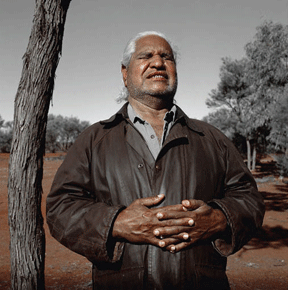 The late Yami Lester directly experienced the impacts of nuclear weapons. A Yankunytjatjara elder from South Australia, Yami was a child when the British tested at Emu Field in October 1953. He recalled the “Black Mist” after the bomb blast:
It wasn’t long after that a black smoke came through. A strange black smoke, it was shiny and oily. A few hours later we all got crook, every one of us. We were all vomiting; we had diarrhoea, skin rashes and sore eyes. I had really sore eyes. They were so sore I couldn’t open them for two or three weeks. Some of the older people, they died. They were too weak to survive all the sickness. The closest clinic was 400 miles away.
His daughter, Karina Lester, is an ambassador for the International Campaign to Abolish Nuclear Weapons in Australia, and continues to be driven by her family’s experience. She writes:
For decades now my family have campaigned and spoken up against the harms of nuclear weapons because of their firsthand experience of the British nuclear tests […] Many Aboriginal people suffered from the British nuclear tests that took place in the 1950s and 1960s and many are still suffering from the impacts today.
More than 16,000 Australian workers were also exposed. A key government-funded study belatedly followed these veterans over an 18-year period from 1982. Despite the difficulties of conducting a study decades later with incomplete data, it found they had 23% higher rates of cancer and 18% more deaths from cancers than the general population.
An additional health impact in Pacific island countries is the toxic disease “ciguatera”, caused by certain microscopic plankton at the base of the marine food chain, which thrive on damaged coral. Their toxins concentrate up the food chain, especially in fish, and cause illness and occasional deaths in people who eat them. In the Marshall Islands, Kiritimati and French Polynesia, outbreaks of the disease among locals have been associated with coral damage caused by nuclear test explosions and the extensive military and shipping infrastructure supporting them.
Pacific survivors of nuclear testing haven’t been focused solely on addressing their own considerable needs for justice and care; they’ve been powerful advocates that no one should suffer as they have ever again, and have worked tirelessly for the eradication of nuclear weapons. It’s no surprise independent Pacific island nations are strong supporters of the new treaty, accounting for ten of the first 50 ratifications.
Negligence and little accountability
Some nations that have undertaken nuclear tests have provided some care and compensation for their nuclear test workers; only the US has made some provisions for people exposed, though only for mainland US residents downwind of the Nevada Test Site. No testing nation has extended any such arrangement beyond its own shores to the colonised and minority peoples it put in harm’s way. Nor has any testing nation made fully publicly available its records of the history, conduct and effects of its nuclear tests on exposed populations and the environment.
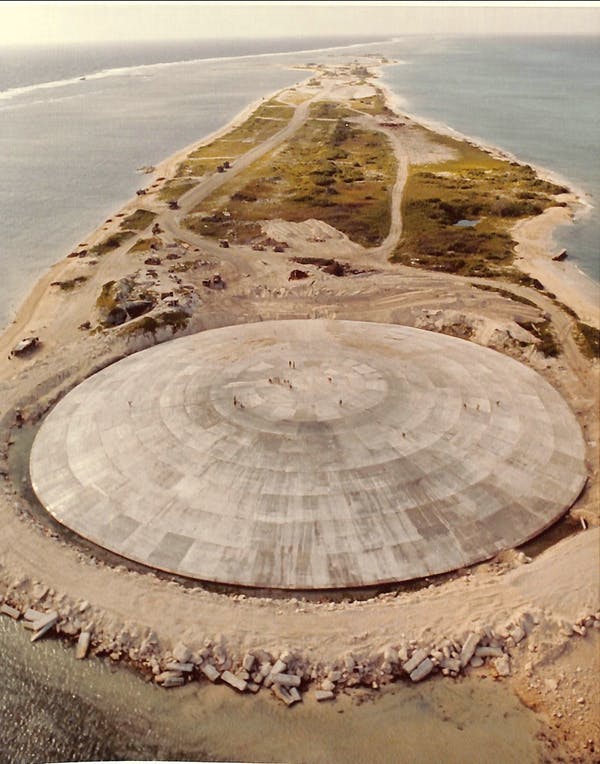
These nations have also been negligent by quickly abandoning former test sites. There has been inadequate clean-up and little or none of the long-term environmental monitoring needed to detect radioactive leakage from underground test sites into groundwater, soil and air. One example among many is the Runit concrete dome in the Marshall Islands, which holds nuclear waste from US testing in the 1940s and 50s. It’s increasingly inundated by rising sea levels, and is leaking radioactive material.
The treaty provides a light in a dark time. It contains the only internationally agreed framework for all nations to verifiably eliminate nuclear weapons.
It’s our fervent hope the treaty will mark the increasingly urgent beginning of the end of nuclear weapons. It is our determined expectation that our country will step up. Australia has not yet ratified the treaty, but the bitter legacy of nuclear testing across our country and region should spur us to join this new global effort.
Nuclear wastes from Sellafield UK to arrive in Germany
A ship carrying six containers of waste from the Sellafield reprocessing plant in England docked in the early morning in Nordenham, news agency dpa reported. From there, it is to be transported by train to the now-closed Biblis nuclear power plant south of Frankfurt, several hundred kilometres (miles) away.
Germany has a strong anti-nuclear movement and waste transports have often drawn large protests. Activists question the safety of the waste containers and storage sites.
Following the Fukushima nuclear disaster in Japan nine years ago, Germany decided to phase out its own nuclear power generation by the end of 2022. The Biblis plant is one of several that was taken offline in 2011, but the site remains in use as a provisional storage facility for nuclear waste.
Germany recently launched a new search for a permanent site to store its most radioactive waste. A final decision is slated for 2031 and the aim is to start using the selected site in 2050.
While Canadian authorities fall for “New Small Nuclear” spin, U.S. consortium rips off Canada’s nuclear waste disaster
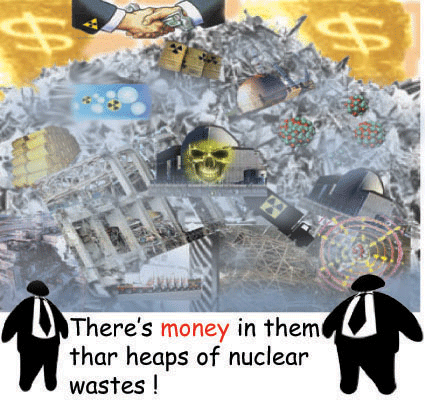
 U.S. corporations profiting from major Canadian nuclear liability, https://rabble.ca/blogs/bloggers/views-
 expressed/2020/10/us-corporations-profiting-major-canadian-nuclear-liability Ole Hendrickson, October 30, 2020
The nearly 70-year history of the federal crown corporation Atomic Energy of Canada Limited (AECL) has left a $16 billion toxic legacy of shuttered reactors, polluted lakes and groundwater, contaminated soils, and hundreds of thousands of cubic metres of radioactive waste.
AECL’s 2018 annual report estimates its undiscounted waste and decommissioning liability at $15.9 billion as of March 31, 2018. Table 5.7 in Canada’s 2019 public accounts estimates AECL’s environmental liabilities at $1.05 billion and “asset retirement obligations” at $6.6 billion.
This $7.7 billion estimate of AECL’s total nuclear liability is heavily discounted. The accounting firm Deloitte does not recommend discounting for environmental liabilities and asset retirement obligations unless the amount of the liability and the amount and timing of cash payments are “reliably determinable.” As explained in a detailed report, neither is true for AECL’s liability.
Prime Minister Stephen Harper thought that the private sector might do a better job of addressing this massive liability than AECL itself. Just before losing power to the Liberals in the 2015 election, his government contracted an American-controlled consortium (creatively called the “Canadian National Energy Alliance”) to manage federal nuclear facilities and reduce the waste liability quickly and cheaply.
According to the main estimates, AECL’s expenditures grew from $326 million in 2014-15 (before the consortium assumed control) to $491 million in 2015-16, $784 million in 2016-17, $827 million in 2017-18 and $829 million in 2018-19. The 2020-21 main estimates for AECL are $1.2 billion.
AECL hands most of this money over to the consortium, whose current members are Texas-based Fluor and Jacobs, and SNC-Lavalin. AECL retains ownership of the waste. A 2017 special examination report of the Auditor General of Canada to AECL’s board of directors says that “approximately $866 million for contractual expenses was paid or payable by the Corporation in the 2016-17 fiscal year.”
Is this “Government-owned, contractor-operated” (GoCo) arrangement providing value for money?
The GoCo contract was supposed to have been reviewed after an initial six-year period. However, AECL — whose president is an American with past ties to consortium members — extended it to a full 10-year period in April 2020, 18 months before its September 2021 renewal date.
The centrepiece of the consortium’s approach — a million-cubic–metre radioactive waste mound on a hillside draining into the Ottawa River – was revealed in May 2016, shortly after the ink dried on the contract. Neither the public, nor Algonquin peoples on whose unceded territory this facility would be built, were consulted.

Technical problems and public opposition have put the “near surface disposal facility” — to be built at AECL’s Chalk River laboratories — years behind schedule. AECL waste management experts who left when the consortium took over have been highly critical, pointing out that an above-ground mound would not contain and isolate the types of radioactive waste that the consortium planned to put in it.
Chalk River, the focal point of Canadian nuclear research since the late 1940s, is where most of AECL’s radioactive waste legacy is found. But AECL also built reactors at four other sites in Manitoba, Ontario and Quebec. All have been shut down for decades — radioactive hulks, yet to be fully decommissioned.
AECL and its American-led consortium have announced quick and cheap plans for Manitoba and Ontario reactors: fill them up with blast furnace slag and concrete, and abandon them in place. Critics say these proposals are seriously flawed, noting that the International Atomic Energy Agency (IAEA) says that “entombment” should only be considered in the event of a serious reactor accident.
Critics say that these sub-standard schemes would pollute major Canadian waterways and could expose workers and future generations to dangerous radiation levels.
The consortium is trying to salvage its Chalk River mound proposal with a promise to reduce the amount of radiation in the wastes it would house. Less radiation would leak into the Ottawa River.
However, management practices during Chalk River’s early years were poor, accidents were frequent and records were lost in a fire. Trying to separate out lower-activity from higher-activity wastes would involve considerable expense and high worker radiation exposures. And if strict limits on the mound’s radioactivity were adhered to, much of the federal waste liability would likely remain unaddressed.
Management of Canada’s radioactive waste by for-profit corporations, combined with a lack of government oversight, creates risks of delays, excessive radiation exposures to workers and the public, and squandering of tax dollars. Critics of AECL’s GoCo contract are asking the federal government to establish a publicly acceptable strategy for addressing its nuclear liability.
In a mission to Canada in late 2019, IAEA reviewers found virtually “no evidence … of a governmental policy or strategy related to radioactive waste management.” The government agreed to their recommendation that this gap be filled, assigning the task to Natural Resources Canada.
But Natural Resources Minister Seamus O’Regan seems preoccupied with promotion of a new generation of mass-produced, “modular” nuclear reactors. Two consortium members — Fluor and SNC-Lavalin — are heavily invested in their own reactor designs. There are plans to build three new demonstration reactors at Chalk River, and talk of building as many as eight. One proposal has already reached the environmental assessment stage.
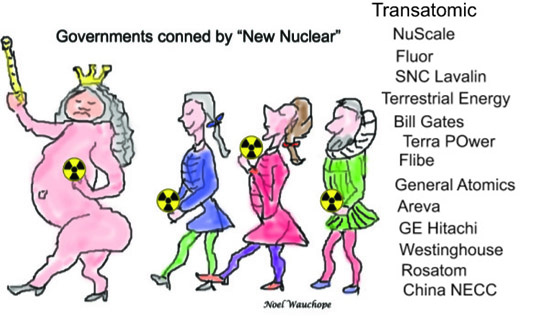
If the Liberal government caves into industry pressure to fund the building of these new reactors — instead of dealing responsibly with its existing waste liability — AECL’s $16 billion radioactive burden on Canadian taxpayers — and risks to workers and the public — will just keep growing.
Ole Hendrickson is a retired forest ecologist and a founding member of the Ottawa River Institute, a non-profit charitable organization based in the Ottawa Valley.
Now climate change, rising seas, swamping Kiribati and the Marshall Islands, victims of nuclear racism
Losing paradise, Atomic racism decimated Kiribati and the Marshall Islands; now climate change is sinking them, Beyond Nuclear https://wordpress.com/read/feeds/72759838/posts/2998141589–1 Nov 20, This is an extract from the Don’t Bank on the Bomb Scotland report “Nuclear Weapons, the Climate and Our Environment”.
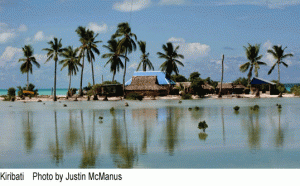 Kiribati. In 1954, the government of Winston Churchill decided that the UK needed to develop a hydrogen bomb (a more sophisticated and destructive type of nuclear weapon). The US and Russia had already developed an H-bomb and Churchill argued that the UK “could not expect to maintain our influence as a world power unless we possessed the most up-to-date nuclear weapons”.
The governments of Australia and New Zealand refused to allow a hydrogen bomb test to be conducted on their territories so the British government searched for an alternative site. Kiritimati Island and Malden Island in the British Gilbert and Ellice Islands Colony in the central Pacific Ocean (now the Republic of Kiribati) were chosen. Nine nuclear weapons tests – including the first hydrogen bomb tests – were carried out there as part of “Operation Grapple” between 1957 and 1958.
Military personnel from the UK, New Zealand and Fiji (then a British colony) and Gilbertese labourers were brought in to work on the operation. Many of the service personnel were ordered to witness the tests in the open, on beaches or on the decks of ships, and were simply told to turn their backs and shut their eyes when the bombs were detonated. There is evidence that Fijian forces were given more dangerous tasks than their British counterparts, putting them at greater risk from radiation exposure. The local Gilbertese were relocated and evacuated to British naval vessels during some of the tests but many were exposed to fallout, along with naval personnel and soldiers.
After Grapple X, the UK’s first megaton hydrogen bomb test in November 1957, dead fish washed ashore and “birds were observed to have their feathers burnt off, to the extent that they could not fly”. The larger Grapple Y test in 1958 spread fallout over Kiritimati Island and destroyed large areas of vegetation.
Despite evidence that military personnel and local people suffered serious health problems as a result of the tests, including blindness, cancers, leukaemia and reproductive difficulties, the British government has consistently denied that they were exposed to dangerous levels of radiation and has resisted claims for compensation.
Like the Marshall Islands, the low-lying Republic of Kiribati is now bearing the brunt of the effects of climate change. Salt water washed in on king tides has contaminated the islands’ scarce freshwater resources. Pits that are used to grow taro plants have been ruined and the healthy subsistence lifestyle of local people is under threat.
It is predicted that rising sea levels will further impact freshwater resources and reduce the amount of agricultural land, while storm damage and erosion will increase. Much of the land will ultimately be submerged. In anticipation of the need to relocate its entire population, the government of Kiribati bought 20km2 of land on Fiji in 2014.
The UK is set to spend £3.4 billion a year on Trident nuclear weapons system between 2019 and 2070. If Trident were scrapped, a portion of the savings could be provide to the Republic of Kiribati in the form of climate finance (see section 1.2.1). Scrapping Trident would also allow money and skills to be redirected towards measures aimed at drastically cutting the UK’s carbon emissions (see section 1.2.2) – action that Pacific island nations are urgently demanding.
The Marshall Islands. The most devasting incident of radioactive contamination took place 8,000 km from the US mainland during the Castle Bravo test in 1954. The US detonated the largest nuclear weapon in its history at Bikini Atoll in the Marshall Islands, causing fallout to spread over an area of more than 11,000km. Residents of nearby atolls, Rongelap and Utirik, were exposed to high levels of radiation, suffering burns, radiation sickness, skin lesions and hair loss as a result.

Castle Bravo was just one of 67 nuclear weapons tests conducted by the US in the Marshall Islands between 1946 and 1958. Forty years after the tests, the cervical cancer mortality rate for women of the Marshall Islands was found to be 60 times greater than the rate for women in the US mainland, while breast and lung cancer rates were five and three times greater respectively. High rates of infant mortality have also been found in the Marshall Islands and a legacy of birth defects and infertility has been documented. Many Marshallese were relocated by the US to make way for the testing.
Some were moved to Rongelap Atoll and relocated yet again after the fallout from Castle Bravo left the area uninhabitable.
Rongelap Atoll was resettled in 1957 after the US government declared that the area was safe. However, many of those who returned developed serious health conditions and the entire population was evacuated by Greenpeace in 1984. An attempt to resettle Bikini Atoll was similarly abandoned in 1978 after it became clear that the area was still unsafe for human habitation.
A 2019 peer-reviewed study found levels of the radioactive isotope caesium-137 in fruits taken from some parts of Bikini and Rongelap to be significantly higher than levels recorded at the sites of the world’s worst nuclear accidents, Chernobyl and Fukushima.
Compounding the injustice of nuclear weapons testing, the Republic of the Marshall Islands is now on the frontline of the climate emergency. The government declared a national climate crisis in 2019, citing the nation’s extreme vulnerability to rising sea levels and the “implications for the security, human rights and wellbeing of the Marshallese people”.
At Runit Island, one of 40 islands in the Enewetak Atoll, rising sea levels are threatening to release radioactive materials into an already contaminated lagoon. In the late 1970s, the US army dumped 90,000 cubic metres of radioactive waste, including plutonium, into a nuclear blast crater and covered it with a concrete cap. Radioactive materials are leaking out of the crater and cracks have appeared on the concrete cap. Encroaching salt water caused by rising sea levels could collapse the structure altogether. The Marshallese government has asked the US for help to prevent an environmental catastrophe but the US maintains that the dome is the Marshall Islands’ responsibility. Hilda Heine, then President of the Republic of the Marshall Islands, said of the dome in 2019: “We don’t want it. We didn’t build it. The garbage inside is not ours. It’s theirs.”
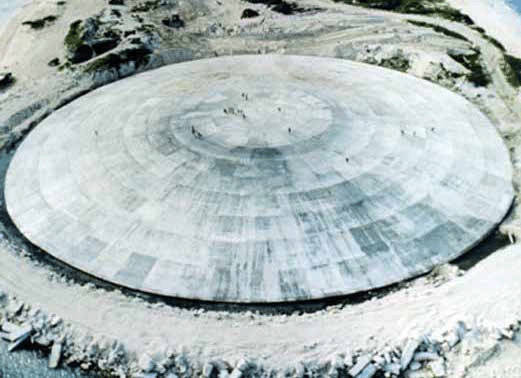
The Runit Island dome offers a stark illustration of the ways in which the injustices of nuclear weapons testing and climate change overlap. Marshall Islanders were left with the toxic legacy of nuclear weapons testing conducted on their territory by another state. The country is now being forced to deal with the effects of a climate crisis that they did not create, including the erosion of the Runit dome.
The nations that contributed most to the crisis are failing to cut their emissions quickly enough to limit further global heating, leaving the Marshallese at the mercy of droughts, cyclones and rising seas. A recent study found that if current rates of greenhouse gas emissions are maintained, the Marshall Islands will be flooded with sea water annually from 2050. The resulting damage to infrastructure and contamination of freshwater supplies will render the islands uninhabitable.
If the US scrapped its nuclear weapons programme, it could give a portion of the billions of dollars that would be saved to the Republic of the Marshall Islands to help the country mitigate and adapt to climate disruption (see section 1.2.1 on international climate finance). The US could also use the freed-up funds to invest in its own Just Transition away from a fossil-fuel powered economy. Read the full report.
Plutonium: How Nuclear Power’s Dream Fuel Became a Nightmare
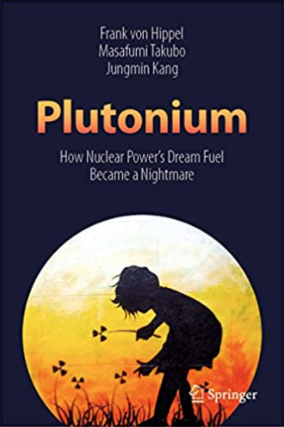 Nailing the Coffin of Civilian Plutonium, Plutonium: How Nuclear Power’s Dream Fuel Became a Nightmare, By Frank von Hippel, Masafumi Takubo, and Jungmin KangSpringer Press, Reviewed by Thomas Countryman, November 2020
Even in the world of speculative investment bubbles, it would be difficult to find a parallel to the business of making plutonium. This “industry” has seen massive investment by private and mostly governmental funds in pursuit of creating the world’s most dangerous material, an investment that has failed to yield a single dollar in returns. Nevertheless, a combination of scientific ambition, bureaucratic inertia, and governmental hubris keeps alive a dream that should have been smothered long ago.
Leave it to three highly experienced specialists to briefly recount the history, clearly explain the physical realities, and precisely pick apart the ever-weakening arguments that have supported reprocessing spent nuclear fuel into a new plutonium-based fuel. Frank von Hippel, Masafumi Takubo, and Jungmin Kang accomplish all of this in Plutonium: How Nuclear Power’s Dream Fuel Became a Nightmare. Its planned translation into Japanese and Korean should help citizens participate in critical upcoming decisions about continuing plutonium projects by governments in Tokyo and Seoul.
The earliest rationale for using plutonium as a nuclear fuel rested on the fact that spent nuclear fuel, the leftover material from civilian nuclear power plants, still contained far more potential energy than had yet been consumed. In the 1970s, uranium was believed to be scarce in the natural environment, and the full utilization of its energy capacity made some engineering, logical, and economic sense. In succeeding decades, the economic rationale has been constantly undermined by the realization that natural uranium is sufficiently plentiful that its price is no longer the primary cost factor in nuclear power generation, by the unanticipated complexity of building advanced reactors optimized to use plutonium as fuel, by the cost of new and necessary safety regulations applicable to all reactors, and most recently by the continued fall in the cost of generating renewable energy.
In the face of these realities, only France, at a substantial economic loss, currently operates a full program for recovering plutonium from spent fuel for use as new nuclear fuel. Russia reprocesses spent fuel and is now testing plutonium in a breeder reactor. Japan has indicated it plans to open one of the world’s largest reprocessing plants in Rokkasho in the next two years, but that two-year time frame has been the boilerplate forecast for each of the past 10 years. India is actively reprocessing civilian spent fuel, and China is constructing a major facility for that purpose. South Korea has announced an end to its nuclear power program, but some officials and experts retain the aspiration to pursue civilian reprocessing.
No other nuclear-powered nation is actively pursuing “closing” the nuclear fuel cycle by reprocessing plutonium for energy generation. The economic and technical realities forced one country after another—Germany, Belgium, Switzerland, the United Kingdom, then the United States—to end their own efforts.
This weak support highlights the merits of the authors’ arguments. They systematically deconstruct the political and technical arguments in favor of such programs. Crucially, they demonstrate the factual inaccuracy of the primary argument advanced by Japanese and South Korean advocates that reprocessing spent fuel will diminish the volume and danger of nuclear waste that must ultimately be stored in geological repositories. They also knock down convincingly the claim that plutonium that is reactor grade, as opposed to weapons grade, is unusable in an explosive device.
Although it may be the prerogative of sovereign states to spend their own money irrationally, the authors focus also on important externalities, in particular the threat to the world’s security and environment from the continued production of plutonium. A commitment to the closed fuel cycle delays the inevitable decision that must be made by Japan and South Korea concerning permanent safe storage of spent fuels, a decision on which the United States also continues to procrastinate. In addition, it leads to unsafe practices concerning the storage of spent fuel rods destined for reprocessing. The authors describe for the first time how close the world was to a greater disaster in 2011, as overcrowded spent fuel cooling ponds could have led to a much greater radiation release following the accident at Japan’s Fukushima Daiichi nuclear plant. The authors explain that moving the spent fuel to interim dry cask storage would avert such catastrophic risks.
Of still greater concern is the risk that even a sliver of the massive plutonium stockpiles could be acquired by terrorists to use in a nuclear explosive device or a panic-inducing radiological dispersion device. Since plutonium was first fabricated 80 years ago, nations have created more than 500 tons of what is arguably the world’s most dangerous material. The International Atomic Energy Agency defines a “significant quantity” of plutonium, or enough to make a nuclear weapon, as eight kilograms, although even a Nagasaki-size blast could be generated with significantly less plutonium. Thus, the 300 tons of plutonium designated for civilian use would be sufficient to create more than 35,000 warheads.
Continuing to accumulate plutonium is not only a terrorism risk, but also a source of tension between states. There is concern in Beijing that Japan holds greater stocks of separated plutonium than China and in Seoul that South Korea holds none. The authors note briefly but tellingly the normally unstated security considerations that in part motivate civilian reprocessing programs: an intention to sustain a latent weapons capacity.
The authors make a convincing case for the international community to act together to end further production of separated plutonium. The effort to negotiate a fissile material cutoff treaty, which would ban production of plutonium for weapons, remains frozen in a glacier at the Conference on Disarmament. Whether or when it moves ahead, there is a separate compelling need to negotiate a ban on civilian separation of plutonium.
Although less than 200 pages, Plutonium is not light reading. Its economic and scientific arguments are compact, thoroughly documented, and clear even to lay people. For policymakers and the public, it provides a clear picture of a dream whose claimed benefits have all evaporated but whose danger remains ominously present.
Thomas Countryman is the chair of the Arms Control Association Board of Directors. He served 35 years in the U.S. Foreign Service, retiring in 2017 as acting undersecretary of state for arms control and international security.
90% of Sellafield’s Discharged Plutonium Wastes are on the “Cumbrian Mud Patch” Below which Lies the Coal Mine Plan —

Graphic from New Report Published in Science of the Total Environment “Controls on anthropogenic radionuclide distribution in the Sellafield-impacted Eastern Irish Sea”? Daisy Ray et al.??https://www.sciencedirect.com/science/article/pii/S0048969720342893 This information has been sent out to press on numerous occasions. So far it has not been picked up.
“our concerns are that no-one is taking
adequate notice of, or responsibility for the impact this mine would have
both on the wastes at Sellafield and also on the reprocessing wastes that
have been discharged over many decades and are now sitting on the Irish Sea
bed directly under the area that West Cumbria Mining propose mine out.A massive void the size of Wastwater lake is proposed under the Cumbrian Mud
Patch, this would lead to likely collapse of the Irish Sea bed. Our own
commissioned report by Tim Deere-Jones has been vindicated with another
report published more recently in Science of the Total Environment which
includes findings from the Centre for Radiochemistry Research -The
University of Manchester and Radiochemistry Unit -The University of
Helsinki, Finland.Findings are that up to 90% of the plutonium discharged
90% of Sellafield’s Discharged Plutonium Wastes are on the “Cumbrian Mud Patch” Below which Lies the Coal Mine Plan —
from Sellafield are likely to be sitting in the silts on the Cumbrian Mud
patch along with a cocktail of other radionuclides. To mine underneath this
area for any reason, let alone for unneeded coal, knowing that this is the
case, is an act of premeditated murder no less than letting off a series of
nuclear bombs.” New Report Published under Creative Commons in Science of
the Total Environment “Controls on anthropogenic radionuclide
distribution in the Sellafield-impacted Eastern Irish Sea” Daisy Ray et
al. https://www.sciencedirect.com/science/article/pii/S0048969720342893
Santa Susana Field Laboratory site- historically radioactively polluted, but risks never being cleaned up
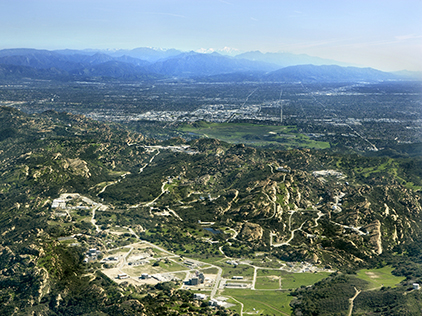
Yes, Santa Susana is a ‘landmark’ — as a historic environmental disaster, https://www.latimes.com/business/story/2020-10-27/hiltzik-santa-susana-environmental-landmark By MICHAEL HILTZIK, BUSINESS COLUMNIST OCT. 27, 2020
Among the points in dispute is what makes it so. To several local Native American tribes, including the Santa Ynez Band of Chumash Indians, the Ventura County site’s cave drawings and rock shelters bespeak a cultural heritage dating back centuries.
The time has come for us to make sure that we hold the polluters accountable for their legacy….We will make sure the site gets cleaned up and we will exercise our legal authority in pursuit of that.
To environmentalists and the site’s neighbors, it’s historic for the extent of its contamination by chemical and nuclear research performed there during the Cold War.
The Santa Susana Field Laboratory site is “one of the most toxic sites in the United States by any kind of definition,” Jared Blumenfeld, head of the California Environmental Protection Agency, told me. “It demands a full cleanup.”
Just such a cleanup should have been started years ago. The three entities controlling portions of the site — Boeing Co., the U.S. Department of Energy and NASA — reached agreements with the state in 2007 and 2010 binding them to restoring the site to “background” standards.
The term means removing contaminated soil and buildings so thoroughly that the area would be as pristine as if the polluting activities had never occurred.
That work was supposed to be completed by 2017. Yet much of it has not even started — and it may be thrown into further doubt by NASA’s nomination of the site to the historic register.
Why the cleanup has been stalled isn’t entirely clear, although one obstacle has been the state’s failure to complete an environmental impact report for the cleanup.
The report is a highly technical document on which public comments are still being collected, according to Meredith Williams, director of the state Department of Toxic Substances Control, which is overseeing the process. Williams says the document is now expected to reach completion next spring or summer.
Instead of establishing the government’s responsibilities conclusively, the 2007 and 2010 agreements became part of the battlefield trod over by state and federal agencies. As recently as Sept. 28, the DTSC crisply informed NASA that its published plans for a reduced cleanup violate the agreement.
The state agency “strongly urge[d]” NASA not to issue a formal announcement of the plans. Four days later, NASA did so anyway.
Santa Susana deserves to be recognized as another example of how powerful interests manage to dodge their responsibilities to clean up after themselves by exploiting legal delays and loopholes, to the detriment of local communities.
It’s on a par with the successful effort of Exide Technologies to avoid paying for the cleanup of pollution it caused around its battery recycling plant in Vernon, which we recently chronicled. That case involved a private firm. This one is even worse, because the entities dodging their responsibilities include agencies of the federal government.
The historical nomination by NASA, says Daniel O. Hirsch, a former environmental faculty member at UC Santa Cruz who has been following the Santa Susana saga for some 40 years and serves as president of the Committee to Bridge the Gap, an anti-nuclear group, could save Boeing, NASA and the Department of Energy hundreds of millions of dollars in cleanup expenses.
“The only people who would lose would be the public,” Hirsch says. “They would continue to face elevated cancer risk from contamination” migrating from the site.
The tribes have said in video statements that a historical designation need not interfere with the cleanup, but such a classification will give them a say in how it proceeds.
To understand the gravity of the situation — and why local residents remain agitated about the delay’s implications for their health — let’s consider the site’s noxious condition.
Over a period of 75 years, the Santa Susana Field Lab hosted what the Natural Resources Defense Council says were “hundreds of nuclear and rocket testing buildings and structures,” emitting radioactive isotopes including plutonium-239.
The soil and water table were contaminated by PCBs, heavy metals, tricholoroethylene “and a witches’ brew of other poisons,” as the NRDC put it.
Nuclear reactors at the lab suffered at least four major accidents between 1959 and 1969, including one partial meltdown, two episodes of fuel damage and a separate release of radioactive gases. The government typically kept these incidents secret for weeks, sometimes longer.
In a 2007 paper, researchers at the University of Michigan found the incidence rate of certain cancers, including thyroid, bladder and blood system cancers, to be more than 60% higher for residents living within two miles of the site in 1988-95 than for those more than five miles away.
The document that NASA filed this summer nominating the site for the National Register of Historic Places glosses over this history as though it never happened.
Absurdly, the nomination states that despite the activities of the government and Boeing, the area is “in a state similar to when the [tribes’] ancestors used and occupied the area.”
This summer, NASA nominated the lab site for inclusion on the national landmark registry, under the name Burro Flats Cultural District, citing its rich tribal history. A 12-acre portion of the site, encompassing the Burro Flats painted cave and a parcel traditionally used by Native Americans to observe the winter and summer solstices, has been on the National Register of Historic Places since 1974. NASA asserts that its archeological research justifies expanding the landmark to encompass the entire laboratory site.
Then, on Oct. 2, the agency formally announced that it was considering a scheme to clean up the site to only a fraction of what is required by the 2007 and 2010 agreements. That flouted the state’s Sept. 28 warning not to do so, lest it result in “necessary actions to enforce” the agreements.
The historical nomination is opposed by the Ventura County Board of Supervisors, the Natural Resources Defense Council and the Committee to Bridge the Gap generally because they see the move as subterfuge through which NASA can slink away from its cleanup responsibilities.
Given this chronicle, it’s hardly surprising that any action by the government inspires skepticism.
“NASA and the DOE have a mixed history, to be polite, and the neighborhood distrusts them immensely,” says Sam Cohen, a legal advisor to the Chumash tribe.
“It’s going to take years to clean up the land,” Cohen says. “We need to be at the table at the beginning or we’re going to be disappointed at the end.”
There are, as it happens, plenty of grounds for distrust. One is that the boundaries of the nominated land correspond exactly to the Santa Susana Field Lab property lines, even though it’s rare that any historical site be chosen with regard to ownership boundaries.
Another is that the proposed designation tracks suspiciously closely to a provision in the 2010 agreement reached by the federal government and the state, exempting from cleanup “Native American artifacts that are formally recognized as Cultural Resources” — which is what NASA is requesting.
These factors and others prompted the NRDC and Committee to Bridge the Gap to warn the state Historical Resources Commission, which must rule on any federal nomination to the historical register, that NASA’s move is “an attempt by the Trump administration to breach the SSFL cleanup agreements.”
Yet the commission bulled ahead, debating the issue at a meeting Aug. 14. At that meeting tribal representatives supported the nomination while a representative of the Ventura County Board of Supervisors, Hirsch and members of Hirsch’s group all spoke against it.
A NASA representative told the commission, however, that the proposed designation wouldn’t affect the cleanup at all. “NASA continues to be committed to a cleanup at Santa Susana Field Lab,” she said. The commission, apparently mollified, endorsed the designation unanimously.
But NASA’s critics noticed that the NASA representative, Rebecca Klein, chose her words carefully. “She said they were committed to ‘a cleanup,’” Hirsch observes. “She didn’t say they were committed to the 2010 agreement.”
NASA told me by email that the cleanup standards embodied in the agreement are not “scientifically and technologically achievable.” The standards cannot be met “even if we backfill all removed soil with the store-bought topsoil many of us use in our own yards and gardens,” agency spokeswoman Shannon Segovia told me. The agency says its proposed cleanup would remove up to 90% of the contamination as the agreement requires but involve removal of 70% less soil.
CalEPA’s Blumenfeld says the decision of how to perform the cleanup isn’t up to NASA. “The 2007 and 2010 agreements are legally binding and don’t leave a lot to the imagination,” he says. “They’re very descriptive and prescriptive to infinitesimal levels of detail.”
He adds that the government’s approach to Santa Susana is oddly bifurcated. The Department of Energy, which is largely responsible for the nuclear cleanup, has been relatively cooperative, having started to dismantle the radioactively contaminated buildings on the site.
NASA, however, “is in the camp of trying to spend as little money as possible to do as little work as possible.” It may see its historical nomination as a tool to undermine the 2010 agreement, “but it’s not going to achieve that,” Blumenfeld says.
As for Boeing, which inherited its share of the cleanup in 1996 when it acquired Rockwell International’s aerospace and defense businesses, also has dragged its feet, but its responsibility is currently subject to court proceedings.
All this leaves unexplained how ironclad legal agreements could be flouted with impunity for a decade or more. In the past, blame has settled upon the Brown administration for failing to pursue the cleanup aggressively.
Blumenfeld says that era is over. He says all the parties should understand that “we’re very serious about implementing the legally binding agreements and about our regulatory authority. … There’s this bizarre time in history that we’re trying to explain no longer exists where NASA feels like they get to set the cleanup standards and Boeing feels they get to set the cleanup standards.”
For years, he says, “there was the sense by the polluters that trying to push back would save money on the cleanup.” Polluters shirking their cleanup responsibilities is nothing new, he adds.
“The time has come for us to make sure that we hold the polluters accountable for their legacy. … We will make sure the site gets cleaned up and we will exercise our legal authority in pursuit of that. That hasn’t been the message that they’ve heard for the previous 10 years, but we’re changing it.”
Will that happen? Let’s hope that we don’t have to wait another 10 years to find out.
Trump government’s dangerous plan to deregulate disposal of radioactive trash
 Trump team pushes nuke dumping http://njtoday.net/2020/10/25/trump-team-pushes-nuke-dumping/, by Staff Report • October 25, 2020 Many Americans alarmed over the deadly coronavirus pandemic, a worsening climate crisis, an economic disaster on par with the Great Depression, or the White House’s surrender of Afghanistan to the Taliban would sleep better if they had assurances the radioactive waste disposal is as secure as it could possibly be… but President Donald Trump is still in charge so there’s no such luck.
The Nuclear Regulatory Commission is finalizing a year-long drive to functionally deregulate disposal of massive amounts of radioactive waste.
NRC’s plan would allow commercial nuclear reactors to dump virtually all their radioactive waste, except spent fuel, in local garbage landfills, which are designed for household trash not rad-waste, according to comments filed by Public Employees for Environmental Responsibility (PEER).
Friday marked the end of public comments for an NRC “interpretative rulemaking” that would, in effect, abrogate longstanding requirements that virtually all such waste must be disposed of in licensed radioactive waste sites meeting detailed safety standards and subject to NRC inspection and enforcement.
Instead, the Trump administration wants to allow the NRC to grant generic exemptions for unlicensed waste handlers.
NRC declares its “intent” that these newly exempt disposal sites would be limited to “very low-level radioactive wastes” – a term undefined by statute – which NRC considers to be “below 25 millirem per year.”
“NRC’s definition would allow public exposure to the equivalent to more than 900 chest X-rays over a lifetime,” explained Lisa McCormick. “This new approach creates a cancer risk twenty times higher than the Environmental Protection Agency’s acceptable risk range, thousands of times the risk goal for Superfund sites, or enough radiation to cause every 500th person exposed to get cancer.”
McCormick, a progressive Democratic activist in New Jersey, says the rule change is “the worst thing to do as dozens of America’s 104 nuclear power plants come to the end of their operation.”
“Once an exempt entity accepts radioactive waste, it enters a regulatory black hole, with no one accountable for it,” stated PEER Pacific Director Jeff Ruch, pointing out that NRC’s plan eliminates the need for radiation monitoring, health physics personnel, design standards, and NRC inspections – all now required of licensed operators. “Unlicensed radioactive waste dumps could operate in ways that endanger communities free from any NRC oversight.”
NRC’s cryptic justification merely indicates that the plan “would provide an efficient means by which the NRC may issue specific exemptions for disposal” but ignores impacts that would –
- Transform many municipal dumps into radioactive repositories, with no safeguards for workers, nearby residents, or adjoining water tables;
-
- Allow unlicensed radioactive waste dumps to expose the public to 2.5 times higher levels of radiation than the NRC now allows for licensed low-level radioactive waste sites, thus creating a strong incentive to send all the radioactive waste to unlicensed dumps; and
- Eliminate the public’s ability to find out radioactive waste is being dumped near them.
At present, the U.S. has 104 commercial nuclear power plants, many of which are beginning, or will soon start, the decommissioning process.
Removing the need for licensed sites to handle the staggering amounts of debris from old reactors would be a major cost savings for that industry.
“One of New Jersey’s oldest nuclear power plants just came off line and it poses a drastic problem for the people and environment” said McCormick.
“NRC’s deregulation will make it nearly impossible to trace recycled radioactive waste flowing through the stream of American commerce,” added Ruch, noting that it may also create a market for the U.S. to import radioactive waste for cheaper disposal. “This plan would plunge the U.S. into the wild, wild West of radioactive waste disposal, on a par with a Third World natio
Hokkaido municipalities gamble on a nuclear future, but at what cost?
Hokkaido municipalities gamble on a nuclear future, but at what cost? https://www.japantimes.co.jp/news/2020/10/24/national/media-national/hokkaido-gambling-casinos/ BY PHILIP BRASOR Since August, two local governments on the western shore of Hokkaido have said they will apply to the central government for a survey that could eventually lead to their municipalities hosting a permanent underground repository for high-level radioactive waste. The fact that these two localities made their announcements about a month apart and are situated not far from each other was enough to attract more than the usual media attention, which revealed not only the straitened financial situations of the two areas, but also the muddled official policy regarding waste produced by the country’s nuclear power plants.
Then again, neither Suttsu nor Kamoenai may make it past the first stage. Yugo Ono, an honorary geology professor at Hokkaido University, told the magazine Aera that Suttsu is located relatively close to a convergence of faults that caused a major earthquake in 2018. And Kamoenai is already considered inappropriate for a repository on a map drawn up by the trade ministry in 2017.
If the Nuclear Waste Management Organization’s process for selecting a site sounds arbitrary, it could reflect the government’s general attitude toward future plans for nuclear power, which is still considered national policy, despite the fact that only three reactors nationwide are online. Presently, spent fuel is being stored in cooling pools at 17 nuclear plants comprising a storage capacity of 21,400 tons. As of March, 75 percent of that capacity was being used, so there is still some time to find a final resting place for the waste. Some of this spent fuel was supposed to be recycled at the Rokkasho Reprocessing Plant in Aomori Prefecture, but, due to numerous setbacks, it doesn’t look as if it’s ever going to open, so the fuel will just become hazardous garbage.
Ono tells Aera that the individual private nuclear plants should, in line with product liability laws, be required to manage their own waste themselves. If they don’t have the capacity, then they should create more. It’s wrong to bury the waste 300 meters underground, which is the plan, because many things can happen over the course of future millennia. The waste should be in a safe place on the surface, where it can be readily monitored.
However, that would require lots of money virtually forever, something the government would prefer not to think about, much less explain. Instead, they’ve made plans that allow them to kick the can down the road for as long as possible.
Australia has nuclear waste problems
Japan plans to dump a million tonnes of radioactive water into the Pacific. But Australia has nuclear waste problems, too The Conversation,October 23, 2020 Tilman Ruff. Associate Professor, Education and Learning Unit, Nossal Institute for Global Health, School of Population and Global Health, University of Melbourne, Margaret Beavis, Tutor Principles of Clinical Practice Melbourne Medical School .
Nuclear waste storage in Australia
This is what happens at our national nuclear facility at Lucas Heights in Sydney. The vast majority of Australia’s nuclear waste is stored on-site in a dedicated facility, managed by those with the best expertise, and monitored 24/7 by the Australian Federal Police.
But the Australian government plans to change this. It wants to transport and temporarily store nuclear waste at a facility at Kimba, in regional South Australia, for an indeterminate period. We believe the Kimba plan involves unnecessary multiple handling, and shifts the nuclear waste problem onto future generations.
The proposed storage facilities in Kimba are less safe than disposal, and this plan is well below world’s best practice.
The infrastructure, staff and expertise to manage and monitor radioactive materials in Lucas Heights were developed over decades, with all the resources and emergency services of Australia’s largest city. These capacities cannot be quickly or easily replicated in the remote rural location of Kimba. What’s more, transporting the waste raises the risk of theft and accident.
And in recent months, the CEO of regulator ARPANSA told a senate inquiry there is capacity to store nuclear waste at Lucas Heights for several more decades. This means there’s ample time to properly plan final disposal of the waste.
The legislation before the Senate will deny interested parties the right to judicial review. The plan also disregards unanimous opposition by Barngarla Traditional Owners.
The Conversation contacted Resources Minister Keith Pitt who insisted the Kimba site will consolidate waste from more than 100 places into a “safe, purpose-built, state-of-the-art facility”. He said a separate, permanent disposal facility will be established for intermediate level waste in a few decades’ time.
Pitt said the government continues to seek involvement of Traditional Owners. He also said the Kimba community voted in favour of the plan. However, the voting process was criticised on a number of grounds, including that it excluded landowners living relatively close to the site, and entirely excluded Barngarla people.
Kicking the can down the road
Both Australia and Japan should look to nations such as Finland, which deals with nuclear waste more responsibly and has studied potential sites for decades. It plans to spend 3.5 billion euros (A$5.8 billion) on a deep geological disposal site.https://theconversation.com/japan-plans-to-dump-a-million-tonnes-of-radioactive-water-into-the-pacific-but-australia-has-nuclear-waste-problems-too-148337
USA Nuclear Regulatory Commission to effectively deregulate massive amounts of radioactive wastes
PEER 21st Oct 2020, The Nuclear Regulatory Commission is finalizing a year-long drive to functionally deregulate disposal of massive amounts of radioactive waste.
NRC’s plan would allow commercial nuclear reactors to dump virtually all their radioactive waste, except spent fuel, in local garbage landfills, which are designed for household trash not rad-waste, according to commentsfiled today by Public Employees for Environmental Responsibility (PEER).
https://www.peer.org/deregulation-rad-waste-disposal-plows-ahead/
How the iconic domes of San Onofre nuclear station will be dismantled

|
|
How and when the twin domes at San Onofre nuclear plant will come down, Key pieces of the reactor vessels will be
removed via underwater operations San Diego Union Tribune. By ROB NIKOLEWSKI, OCT. 23, 2020
They are perhaps the most distinctive features of the San Onofre Nuclear Generating Station — the pair of containment domes from Units 2 and 3, rising nearly 200 feet above the ground on the northern edge of San Diego County that every motorist sees on the drive along Interstate 5.
But in about six years, the twin domes will be gone — obliterated — provided the schedule holds true for dismantling the now-shuttered plant, known as SONGS. Taking down the domes is part of a much larger project that will remove all but just a few structures at the plant, which produced electricity from 1968 to late 2012 and is being decommissioned by the federal government’s Nuclear Regulatory Commission. Southern California Edison operates the facility but the massive job of taking the plant apart — and removing the heavy equipment inside it — is being done by a general contractor named SONGS Decommissioning Solutions. The group is a joint venture of the Los Angeles-based infrastructure and engineering company AECOM and Energy Solutions, a Salt Lake City firm that specializes in disposing of nuclear material. ……….. The costs for dismantling SONGS will come from about $4.5 billion in existing decommissioning trust funds. The money has been collected from ratepayers and invested in dedicated trusts. According to Edison, customers have contributed about one-third of the trust funds while the remaining two-thirds have come from returns on investments made by the company…….. What will be left at SONGS? When the eight-year dismantlement project is completed, all that will remain will be the two dry storage sites; a security building with personnel to look over the waste; a seawall 28 feet high, as measured at average low tide at San Onofre Beach; a walkway connecting two beaches north and south of the plant, and a switchyard with power lines……. The canisters of nuclear waste remain between I-5 and the Pacific because the federal government has not found a place to put all the used-up commercial fuel that has stacked up at some 121 sites in 35 states. There are some 80,000 metric tons of waste from commercial nuclear plants across the country. SONGS accounts for 1,609 metric tons, or about 3.55 million pounds. https://www.sandiegouniontribune.com/business/story/2020-10-23/twin-domes-at-san-onofre-nuclear-plant-expected-to-come-down-in-2026 |
|
Australia’s nuclear hierachy desperate to lead on nuclear waste solution, but it was not to be
HOW SYNROC’S SCIENCE-PUSH FAILED AS THE PANACEA FOR NUCLEAR WASTE, https://www.aumanufacturing.com.au/how-synroc-s-science-push-failed-as-the-panacea-for-nuclear-waste by Peter Roberts, 21 Oct 20, CSIRO’s Synroc synthetic rock method for safely storing radioactive waste is making headlines again (more on that later), but as someone who has been around for a while it all just demonstrates yet again the topsy turvy way we see innovation in Australia.
Synroc was unveiled in 1978 by a team led by Dr Ted Ringwood at the Australian National University, and further developed by CSIRO as the answer to nuclear waste.
After a process of hot isostatic pressing, in which cannisters of waste are compressed at high temperature, Synroc ceramic was created and said to be a massive step forward from today’s techniques of storing high level waste in glass.
But despite decades of trying to commercialise the technology both CSIRO and the Australian Nuclear Science and Technology Organisation have failed to get it adopted commercially – it is simply not seen by customers as that much better than what they were already doing.
The process Synroc went through is typical of the science-push model of innovation in which researchers are seen as being the font of brilliant ideas that only need to be picked up by a grateful private sector.
ANSTO’s Michael Deura said in a statement: “I am pretty excited to see the HIP system in action at ANSTO. This type of innovation will change the industry and how it operates in the longer term.”
And Synroc technical director Gerry Triani said: “This HIP system is a global first for nuclear waste management.”
Not a word in ANSTO’s media release about the three decades plus work and expenditure that has gone into Synroc, and not a word about the meagre uptake of the technology internationally.
Really, you would hope we might learn the lessons of the past.
Japan now has enough plutonium to make about 6,000 atomic bombs
Japan Sticks to Nuclear Fuel Recycling Plan Despite Plutonium Stockpile
Japan now has 45.5 tons of separated plutonium, enough to make about 6,000 atomic bombs. https://thediplomat.com/2020/10/japan-sticks-to-nuclear-fuel-recycling-plan-despite-plutonium-stockpile/
Chief Cabinet Secretary Kato Katsunobu, at a meeting with the governor of Aomori prefecture, home to Japan’s pending nuclear fuel reprocessing plant, reaffirmed that new Prime Minister Suga Yoshihide’s government will pursue the country’s nuclear energy policy.
“The government will firmly promote our nuclear energy policy and fuel cycle programs,” Kato said. He said Japan will make effort to reduce volume and toxicity of high-level nuclear waste, and extract plutonium from spent fuel from a resource conservation point of view.
critics say continuation of spent fuel reprocessing only adds to Japan’s already large plutonium stockpile. Japan also lacks a final repository for high-level nuclear waste.
Wednesday’s meeting came after the Nuclear Regulation Authority granted a safety approval this past summer for the Rokkasho fuel reprocessing plant, operated by Japan Nuclear Fuel Ltd., located in northern Japan, for a planned launch in 2022. The authority also gave a preliminary permit for the Rokkasho MOX fuel production plant, also planned for completion in 2022.
Japan now has 45.5 tons of separated plutonium — 8.9 tons at home, and 36.6 tons in Britain and France, where spent fuel from Japanese nuclear plants has been reprocessed and stored because Japan lacks a plant to produce MOX fuel containing plutonium at home. The amount is enough to make about 6,000 atomic bombs.
Despite security concerns raised by Washington and others, the stockpile is hardly decreasing due to difficulties in achieving a full nuclear fuel recycling program and slow restarts of reactors amid setbacks from the 2011 Fukushima disaster.
Japan reprocesses spent fuel, instead of disposing it as waste, to extract plutonium and uranium to make MOX fuel for reuse, while the U.S. discontinued the costly and challenging program. Allowed under international safeguard rules, Japan is the only non-nuclear weapons state that separates plutonium for peaceful purposes, though the same technology can make atomic bombs.
Japan – nuclear power fine – but no nuclear waste for Aomori Prefecture, please
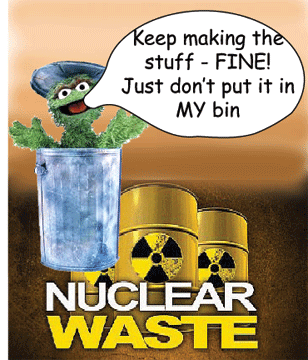 Aomori wants reassurance that it won’t be final nuclear waste site, Japan Times, 21 Oct 20, Aomori Prefecture on Wednesday urged the government to reconfirm its policy of not building in the prefecture a facility for the final disposal of high-level radioactive waste from nuclear power plants across the nation.The request was made during a meeting of a council for discussions on issues related to the country’s nuclear fuel cycle policy between relevant Cabinet ministers and officials of the prefecture, where a spent nuclear fuel reprocessing facility is under construction. It was the first meeting of the council since November 2010.
At the day’s meeting, the Aomori side called on Prime Minister Yoshihide Suga’s Cabinet, launched last month, to maintain the promise not to make the prefecture a final disposal site, upheld by past administrations.
Participants in the meeting, held at the Prime Minister’s Office in Tokyo, included Chief Cabinet Secretary Katsunobu Kato and industry minister Hiroshi Kajiyama from the central government, and Aomori Gov. Shingo Mimura.
“It’s necessary for the state and the operator (of the reprocessing plant) to make the utmost efforts to promote, with support from Aomori, the nuclear fuel cycle policy, including the launch of the plant,” Kato said at the start of the meeting.
Mimura told reporters after the meeting that he asked the central government to abide by the promise and promote the nuclear fuel cycle policy, in which uranium and plutonium are extracted from spent fuel and reprocessed into fuel for use at nuclear power plants.
Mimura indicated that Kato showed the state’s understanding of his requests……..
Aomori has agreed to accept spent nuclear fuel from nuclear plants across the country on the condition that a final disposal facility is not constructed in the prefecture.
The central government regards the nuclear fuel cycle as a pillar of its nuclear energy strategy.
Besides the reprocessing plant, a facility to make mixed oxide, or MOX, fuel from extracted uranium and plutonium is also under construction at the same site in Rokkasho. https://www.japantimes.co.jp/news/2020/10/21/national/japan-aomori-nuclear-waste-disposal/
1 This Month
23-25 October – on Zoom – World BEYOND War’s annual global conferenc

To see nuclear-related stories in greater depth and intensity – go to https://nuclearinformation.wordpress.com

Say No to NASA’s Reckless Nuclear Reactor on the Moon
Say No to NASA’s Reckless Nuclear Reactor on the Moon
-
Archives
- October 2026 (160)
- September 2026 (339)
- August 2026 (330)
- July 2026 (355)
- June 2026 (287)
- May 2026 (306)
- April 2026 (356)
- March 2026 (251)
- February 2026 (267)
- January 2026 (308)
- December 2025 (358)
- November 2025 (359)
-
Categories
- 1
- 1 NUCLEAR ISSUES
- business and costs
- climate change
- culture and arts
- ENERGY
- environment
- health
- history
- indigenous issues
- Legal
- marketing of nuclear
- media
- opposition to nuclear
- PERSONAL STORIES
- politics
- politics international
- Religion and ethics
- safety
- secrets,lies and civil liberties
- spinbuster
- technology
- Uranium
- wastes
- weapons and war
- Women
- 2 WORLD
- ACTION
- AFRICA
- Atrocities
- AUSTRALIA
- Christina's notes
- Christina's themes
- culture and arts
- Events
- Fuk 2022
- Fuk 2023
- Fukushima 2017
- Fukushima 2018
- fukushima 2019
- Fukushima 2020
- Fukushima 2021
- general
- global warming
- Humour (God we need it)
- Nuclear
- RARE EARTHS
- Reference
- resources – print
- Resources -audiovicual
- Weekly Newsletter
- World
- World Nuclear
- YouTube
-
RSS
Entries RSS
Comments RSS

