New comic book investigates the dilemma about France’s nuclear wastes
Mediapart 26th Nov 2020, What to do with nuclear waste? Bury them. Or ? Where the population is reluctant to dispute. For example, in Meuse. But how to convince the last recalcitrant? By watering the municipalities with subsidies. What if they resist? There remains repression. This mind-boggling story is that of a new comic book investigative book: One hundred thousand years.
British MP’s continue to botch in the ever more costly saga of Britain’s “old” nukes and “new” nukes
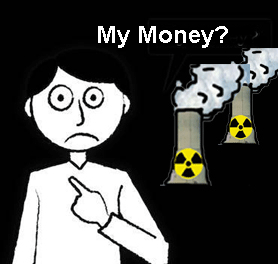 Times 27th Nov 2020, The NDA doesn’t really know because, as it told MPs, it “still does not have full understanding of the condition of the 17 sites”. It’s a point it proved with the meltdown of the £3.8 billion Magnox clean-up contract wrongly awarded to the Cavendish Fluor Partnership in 2014. That fiasco saw a High Court judge rule that the losing bidder, Energy Solutions and its partner, Bechtel, should have won the 14-year contract to bring the plants to a state of “care and maintenance”. The upshot? The government terminated the contract at a cost to the taxpayer of £142 million.
And now it’s back in the hands of the NDA, which is telling MPs that even that bit of work will now cost up to £8.7 billion and take another “12 to 15 years”. As the committee notes: “Past experience with the NDA suggests even these estimates will soon be out of date and costs may increase further”.
Isn’t that the story of everything to do with nuclear? True, you’d expect new-build plants to be better managed than Magnox and less
tricky to decommission than the Sellafield complex. The NDA also rejects the committee’s “suggestions that we may not understand the safety of our sites”. And the taxpayer-fleecing cost of the electricity coming from the £22.5 billion Hinkley Point C is meant to cover the clean-up bill.
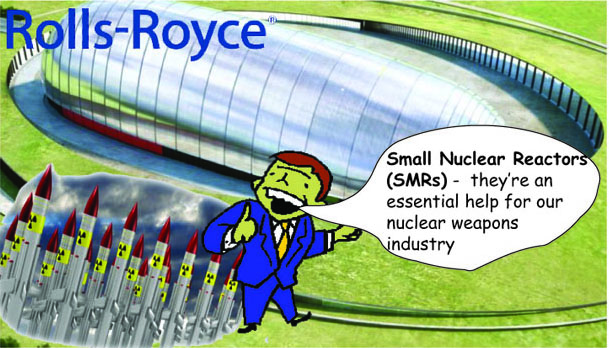 Yet before Boris presses the go button on more nukes, including Rolls-Royce’s modular type, shouldn’t there be a debate about the waste? The government’s big idea is to bribe some local authority into housing a nice toxic dump, prettily dressed up as a “geological disposal facility”. Copeland in Cumbria is the closest to volunteering. But a deal is a long way off and the plan’s been vetoed before by Cumbria county council.
https://www.thetimes.co.uk/edition/business/nuclear-clean-up-bill-needs-scrutiny-h7c3xcz27
NRC approves financially dodgy sale of Indian Point Nuclear Station to Holtec
 Sale of NYC-Area Nuclear Power Plant Gets Federal Approval, https://www.nbcnewyork.com/news/local/sale-of-nyc-area-nuclear-power-plant-gets-federal-approval/2742312/, 23 Nov 20, After the plant shuts down in the spring, the current operator plans to transfer its license to another company to dismantle the reactors and clean up the site along the Hudson River by 2033.
The Nuclear Regulatory Commission has approved sale of the Indian Point nuclear power plant to a dismantling company without granting requests by lawmakers and environmental groups for public hearings.
The NRC announced Monday that it has signed off on its staff’s recommendation last week to approve Entergy Corp.’s sale of the plant north of New York City to New Jersey-based Holtec International. After the plant shuts down in the spring, Entergy plans to transfer its license to Holtec to dismantle the reactors and clean up the site along the Hudson River by 2033.
The NRC agreed to rescind or modify the transfer after it decides whether to grant New York state and the environmental group Riverkeeper’s requests for hearings about their concerns regarding the sale. New York Attorney General Letitia James has called the Holtec deal “very risky,” questioning Holtec’s financing and experience.
During a Zoom conference Friday organized by the Hudson River Sloop Clearwater environmental group, Assistant New York Attorney General Joshua Tallent said he would like to see money for spent radioactive fuel management set aside in a supplemental fund until the decommissioning is done to reduce the chance that taxpayers are stuck with the tab for cost overruns.
Hinkley Point B nuclear power station to be closed down by July 2022
Nuclear power station to close down by 2022, BBC, A nuclear power station in Somerset will be closed down within the next two years.
EDF said Hinkley Point B power station will be decommissioned no later than July 2022……… Once Hinkley Point B stops generating power, EDF will begin defueling the station – the first stage of nuclear decommissioning.,,, https://www.bbc.com/news/uk-england-somerset-55008752
Taiwanese protest plan to dump water from Japan nuclear plant into sea
|
Taiwanese protest plan to dump water from Japan nuclear plant into sea,Focus Taiwan 11/19/2020 Taipei, Nov. 19 (CNA) A group of Taiwanese staged a protest in Taipei on Thursday against a plan by the Japanese government to release more than a million tonnes of water into the ocean from the disabled Fukushima nuclear power plant, starting in 2022.
At the rally in front of the Ministry of Foreign Affairs (MOFA), some 20 supporters of the “Nuclear Go Zero” movement called on the ministry to push back, via diplomatic channels, against the Japanese government’s controversial plan. Tsai Ya-ying (蔡雅瀅), a lawyer affiliated with the Wild at Heart Legal Defense Association in Taiwan, said at the rally that releasing “contaminated” water from the disabled Fukushima Daiichi nuclear power would pose a risk to humans who might eat the many marine species that migrate in the warm current between Taiwan and Japan. Another protester, Tsai Chung-yueh (蔡中岳), deputy CEO of the environmental organization Citizen of the Earth, said contamination of the marine ecology could last for 30-40 years, if the water is dumped into the ocean……. At a regular press briefing Thursday, MOFA spokesperson Joanne Ou (歐江安) said the Japanese government has not yet made a final decision on the issue, and MOFA will seek clarification. She said the protesters have submitted a letter that has been passed on to the Taiwan-Japan Relations Association, which will relay their concerns to the Japanese government via Taiwan’s representative office in Tokyo. “MOFA is also concerned about the issue, as the maritime environment, ecological conservation, and health of our citizens may be at risk,” Ou said. (By Chang Hsiung-feng and Emerson Lim) Enditem/pc https://focustaiwan.tw/society/202011190015 |
|
Hinkley Point B nuclear reactor offline now, and will be shut down earlier than planned
 EDF confirms Hinkley Point B to be shut down earlier than planned
Cracks in reactor’s graphite core leads to decision to begin process no later than July 2022, Jillian Ambrose Energy correspondent, Fri 20 Nov 2020 . EDF Energy has confirmed it will begin shutting down the 45-year-old reactors at Hinkley Point B nuclear power plant in Somerset within the next two years, earlier than scheduled.
The “defuelling” will begin no later than July 2022, according to the French energy group.
The shutdown was scheduled for 2023, but cracks were discovered in the graphite core of the reactor.
…….. The power plant, which has been Britain’s most productive and whose operational life was extended, is offline for further inspections and is scheduled to return to service next year, pending approval from Britain’s nuclear safety watchdog…….
However, the scheduled start date has been delayed to between 2025 and 2026 owing to slow progress in agreeing with the government a guaranteed price for the electricity produced……
Boris Johnson’s 10-point climate plan, which was revealed on Tuesday, promised to advance large-scale nuclear projects and the developments of so-called “mini nuclear reactors” with a £525m support package.
But the plan failed to give the greenlight to EDF Energy’s planned followup to the Hinkley Point C project at the Sizewell site, which the firm hopes to build alongside a Chinese nuclear company.
The NIA said it hoped the government provided a clear path towards new nuclear capacity in an energy white paper, which is expected before Christmas. https://www.theguardian.com/uk-news/2020/nov/19/edf-confirms-hinkley-point-b-to-be-shutdown-earlier-than-planned
First canister of used nuclear fuel loaded into Chernobyl storage facility
This storage dump will last for 100 years. But the wastes inside will lasr for 1000s of years . How crazyb is it to just keep on making this toxic trash?
World Nuclear News 19th Nov 2020, The first canister of used nuclear fuel was yesterday loaded into the
Interim Spent Nuclear Fuel Storage Facility (ISF-2) at the Chernobyl plant
in Ukraine. ISF-2 is the largest dry-type used fuel storage facility in the
world and has an operating life of at least 100 years.
https://www.world-nuclear-news.org/Articles/First-assemblies-loaded-into-new-Chernobyl-used-fu
UK: Both Hinkley Point B and Hunterston B nuclear power stations will close early due to cracks in graphite cores
 Times 20th Nov 2020, The Hinkley Point B nuclear power station will close by July 2022 at the
latest, EDF has announced, triggering renewed calls to invest in
replacement reactors. The Somerset plant started generating in 1976 and was
due to close in 2016 but in 2012 EDF secured an extension until March 2023.
However, the reactor developed cracks in its graphite core, which has
limited its operation. EDF said this summer that the Hunterston B plant in
Scotland, which also has cracks in the core, would close earlier than
planned, in January 2022. Tom Greatrex of the Nuclear Industry Association,
said it was “a reminder of the urgency of investing in new nuclear
capacity to hit net zero”.
The intractible problem of San Onofre’s, and indeed, America’s, nuclear waste

Mosko: Public Safety at Stake in Debate Over Nuclear Waste Storage at San Onofre, https://voiceofoc.org/2020/11/mosko-public-safety-at-stake-in-debate-over-nuclear-waste-storage-at-san-onofre/by SARAH MOSKO 18 Nov 20 SoCal Edison’s  spokesperson, John Dobken, authored an Oct. 20 editorial touting the dry nuclear waste storage system Edison chose when a radiation leak from steam generator malfunction forced permanent closure of the San Onofre Nuclear Generating Station (SONGS) in 2013. Ignoring for the moment the numerous obfuscations and omissions of critical facts, the essence of Dobken’s article is this: Edison wants to divert public attention away from the inadequacies of its dry canister storage system while promising that a deep geological national repository, as mandated in the Nuclear Waste Policy Act of 1982, will magically materialize before their storage canisters fail.
There’s plenty Dobken did not say that the public needs to know.
First off, we are nearly four decades past passage of the Nuclear Waste Policy Act and there is no tangible progress toward creation of a national repository operated by the Department of Energy. The cold hard reality is that no state wants it and, worse still, there is no feasible technology currently available to make a geological repository workable, according to the U.S. Nuclear Waste Technical Review Board. Plans for a geological repository at Yucca Mountain were rejected by Nevada, and subsequent proposals for “interim” storage sites in Texas and New Mexico are opposed by those states too.
Thus, the dream of a national repository remains in limbo for the foreseeable future, and it’s misleading to suggest otherwise. Also misleading is Dobken’s suggestion that, if needed, a failing canister could be transported to “a centralized Department of Energy facility” for repackaging in the future, as no such facility exits anywhere in the United States for this purpose.
Consequently, the plan throughout the country is to leave highly radioactive nuclear waste onsite indefinitely. The relevant 2014 report from the Nuclear Regulatory Commission (NRC) openly states that a repository might never become available. Like all other nuclear plant operators in the United States, Edison is saddled with a storage task never originally intended.
For dry storage, Edison chose thin-walled (just 5/8 inch thick), welded-shut stainless steel canisters which contrast sharply with the 10-19 inch thick-walled and bolted-shut casks many nuclear waste safety advocates in Orange, San Diego, and Los Angeles Counties are advocating for. Unlike the thick casks, SONGS’s canisters are vulnerable to stress corrosion cracking from numerous conditions, such as a salty marine environment like San Onofre. A 2019 Department of Energy report assigned “#1 Priority” to the risk of through-wall cracking in welded, stainless steel canisters in a moist salty environment.
The 73 Holtec canisters at SONGS are warranted for only 25 years, covering only manufacturing defects. This means the warranty excludes environmental conditions like earthquakes, salt air, water intrusion, seagull droppings, and any other corrosive damage to the canisters. Edison has not divulged what the warranty covers on the 51 older Areva canisters, which are already up to 17 years old. Dobken’s statement that the nuclear waste will become less radioactive in 100 years is meaningless in the timescale of the hundreds of thousands of years the waste will remain deadly to humans.
Dobken argues that the fact SONGS’s canisters are welded shut and can never be opened is a plus. This completely ignores the crucial safety requirement in the Nuclear Waste Policy Act that spent nuclear fuel storage containers be designed to be monitored inside and out and the contents retrievable from the containers. Edison purposely chose welded shut canisters, making it impossible to monitor or retrieve the fuel assemblies, which means the canisters can’t lawfully be accepted by the Department of Energy (DOE) for either an interim or permanent storage site.
In listing six other nations that also use welded-shut canisters (Brazil, Mexico, Slovenia, South Africa, Ukraine, United Kingdom), Dobken hopes readers won’t notice these are not countries the United States typically aims to emulate technologically. From that standpoint, a partial list of countries using thick-walled casks is more formidable: Belgium, Finland, France, Germany, Japan, Korea, Netherlands, Russia, Spain, and Switzerland. And, thick casks are used in the United States too, though thin-walled canisters are unfortunately most common.
In arguing that robotic camera technology – which Edison applied to the exterior of a sample of eight of 123 total canisters in 2019 – can be relied upon to detect defects like cracking, Dobken hides the fact that Edison has admitted that this methodology does not meet American standards for an inspection. This is because nuclear storage containers are pressure vessels, thus subject to standards set by the American Association of Mechanical Engineers for safe storage and transport of nuclear pressure vessels which explicitly require use of either magnetic particle or dye penetrant methodology to inspect for defects like cracking (ASME N3).
Edison used neither ASME-approved method simply because they can’t be applied to their canisters which are both too hot, too radioactive and inaccessible in their concrete storage overpacks. Furthermore, a robotic camera can never access the bottoms or inside walls of canisters to look for cracks originating there. Nor can it characterize cracking that might start on the exterior but proceeds laterally rather than straight through the canister wall.
Consequently, many nuclear safety advocates are arguing strenuously for retention of the cooling pools until a specialized dry fuel handling facility (aka “hot cell”) can be constructed onsite. This is because the only means to repackage the radioactive contents of a defective canister into another container is to perform the transfer within a cooling pool or hot cell.
Dobken correctly points out that NRC is nevertheless allowing decommissioned nuclear plants to destroy the cooling pools. This highlights a troublesome relationship between NRC and Edison which the public needs to understand. NRC has granted safety exemptions and waivers in dry storage systems nationwide which has allowed Edison to proceed with a canister system that is unsafe and cannot legally be accepted by DOE into either an interim storage site or permanent repository. Consequently, there is no plan to prevent or stop radioactive releases.
This liaison between NRC and Edison played out during the July 2020 meeting of the California Coastal Commission when NRC representative, Andrea Kock, remained mute as Edison cited the unapproved canister repair technology as justification for destroying the cooling pools. Though community nuclear waste safety advocates ardently cited factual objections, Kock’s silence no doubt helped shape the unanimous vote of the nine commissioners to grant Edison’s request. However, that two commissioners literally uttered “boos” despite casting “yes” votes speaks to doubts about Edison’s plan among the commission’s ranks.
Lastly, Dobken offers no defense for the fact that San Onofre had by far the worst safety record of any nuclear plant in the country during its pre-2012 operation, yet he cries foul any suggestion this should undermine public confidence in how Edison is currently handling dry storage. What’s not mentioned is that, in 2018, it took a conscience-driven whistleblower to expose a near-drop incident where a 54-ton canister loaded with radioactive waste was poised to plummet 18 feet while it was being lowered into its storage overpack. NRC’s subsequent investigation attributed the event to both design flaws and human error and cited Edison with the single most serious violation ever imposed on a spent fuel licensee.
Moreover, it was only because of this incident that Edison bothered to look at the canisters with the contrived robotic camera technology, revealing that essentially all the canisters get scraped/gouged during downloading into storage overpacks.
Dobken makes one point with which everyone agrees: “The public deserves the facts about spent nuclear fuel and its storage.” As the public listens to this debate over safe nuclear waste storage, both sides should be held accountable for underlying motivations. In asking Edison to opt for bolted-shut thick-walled casks with safety features lacking in thin-walled canisters, community safety advocates are seeking safety for their families and communities. Edison, on the other hand, will save untold $millions should the public be swayed to trust in Edison’s promises that their canister system won’t fail and that a national repository will materialize in time to save the day.
Sarah (Steve) Mosko is a local freelance journalist focused on solutions to environmental problems and social injustices.
Hazardous plan for Peel Ports to take over the decommissioning of Britain’s dead nuclear submarines
|
Ferret 17th Nov 2020. The company that runs the port at Hunterston in North Ayrshire wants to useit to break up the radioactive hulks of defunct nuclear submarines, The Ferret can reveal. A plan by Peel Ports, released under freedom of information law, discloses that the firm sees “opportunities” for military submarine decommissioning at Hunterston.
But the idea has brought condemnation from politicians, environmental and community groups. They warn that the transport and dismantling of submarines would be “potentially hazardous” and could cause “significant environmental damage”. The 50-strong group of nuclear free-local authorities (NFLA) in the UK pointed out that prolonged public consultations had resulted in
agreement that decommissioning should only take place at Rosyth and Devonport. “If Peel Ports is lobbying for a change in that policy to undertake this work at Hunterston port, we would be concerned,” said NFLA Scotland’s convenor, SNP Glasgow councillor, Feargal Dalton. There were “complicated and potentially hazardous transport issues of moving
submarines from the east to the west coast of Scotland, and the required level of expertise to do this,” he argued. “It would also require a new consultation process at a time when the last one took years to deliver. I doubt the Ministry of Defence would like to reopen that process – and if they do, we and others will robustly challenge any significant change that increases the hazards to this operation.” https://theferret.scot/hunterston-peel-ports-nuclear-submarines/ |
Surveys to identify nuclear waste disposal site begin in Hokkaido
The town of Toyo in Kochi Prefecture had previously applied for a literature survey in 2007, but later canceled the application before the survey began.
The literature survey, which checks geological literature and data, is the first of three stages of examination in the selection process. Suttsu and Kamoenai will each receive up to ¥2 billion in state subsidies in exchange for underdoing the first-stage survey……..
First-stage surveys began Tuesday in two municipalities in Hokkaido to see whether their locations are suited to hosting a final disposal facility for high-level radioactive waste from nuclear power plants in the nation.
The Nuclear Waste Management Organization of Japan, or NUMO, started the so-called literature surveys in the town of Suttsu and the village of Kamoenai in the northernmost main island, marking the first time such surveys have ever been conducted in the country. On the day, the industry ministry gave the necessary approval for the surveys to be conducted.
The town of Toyo in Kochi Prefecture had previously applied for a literature survey in 2007, but later canceled the application before the survey began.
The literature survey, which checks geological literature and data, is the first of three stages of examination in the selection process. Suttsu and Kamoenai will each receive up to ¥2 billion in state subsidies in exchange for underdoing the first-stage survey……
In response to the start of the first-stage survey, Hokkaido Gov. Naomichi Suzuki released a statement saying that he was “opposed at the moment” to the second-stage survey, reiterating his intention not to give his approval. …….https://www.japantimes.co.jp/news/2020/11/18/national/hokkaido-nuclear-waste-surveys/
The Irish sea – plagued by dumped munitions and radioactive trash
Belfast Telegraph 13th Nov 2020, A report highlighting the dangers of underwater explosions and radioactive
waste has cast doubt on the viability of any Irish Sea bridge. The UK and Ireland Nuclear Free Local Authorities (NFLA) study focused on Beaufort’s Dyke, one of the deepest sections of water in Europe and a training sitefor nuclear submarines. Munitions from both world wars and radioactive waste, when it was permitted in Europe, are known to have been dumped in the stretch of sea.
Long-delayed remediation of a nuclear waste site near Pittsburgh
Residents of the area have expressed concern about potential cancer and other health problems caused by exposure to radioactivity on the site, though no one asked questions or expressed those concerns during the meeting.
The site initially was owned by Nuclear Materials and Equipment Corp., which operated the nuclear fuel plants.
Australian government’s plan for nuclear waste dump on farming land bombs in the Senate
 Pauline Hanson’s One Nation torpedoes Kimba nuclear waste dump in SA, Claire Bickers, Federal Politics Reporter, The Advertiser, November 11, 2020
Pauline Hanson will torpedo the Federal Government’s bid to build a radioactive waste dump in regional South Australia.
The One Nation leader, who aims to win a seat in SA at the next federal election, has confirmed she will not back legislation to build the nuclear waste storage site at Napandee farm, near Kimba.
Without One Nation’s two crucial votes – and Labor, the Greens, and independent senator Rex Patrick not backing the Bill – the government does not have enough votes for it to pass parliament without changes.
Senator Hanson told The Advertiser she had serious concerns about the process to select Napandee, the level of community support, the waste site being built on farming land, and the facility storing intermediate radioactive waste above ground.
“I want to make the right decision, not for the interim, I want to make the right decision for future generations,” Senator Hanson said.
“I’m not going to be badgered or pushed into this.
“It’s about looking after the people of SA, but also the whole of Australia.”
Senator Hanson said One Nation wanted to win a seat in SA at the next election, and she hoped South Australians would take into account her strong stance on the waste site.
One Nation adviser Jennifer Game, who ran as the party’s SA Senate candidate at the 2019 election, has been leading research and consultation on the Kimba site.
“I think the government has rushed the decision to have it there,” Senator Hanson said.
Almost 62 per cent of 734 Kimba residents supported the facility in a postal vote in 2019 but Senator Hanson said locals had indicated to the party that closer to half of the town did not support the facility.
The region’s native title holders, the Barngarla people, were also not given a say in the official vote.
Senator Hanson was concerned other locations that may be suitable were not investigated, such as an old mining site in Leonora, in Western Australia, which may be able to store the waste underground.
“We don’t know what the future is going to hold, we don’t know if war is going to touch our shores,” she said.
“Do we really want a facility that is above ground that could be problems further down the track, if anything happens?”…https://www.adelaidenow.com.au/news/south-australia/pauline-hansons-one-nation-torpedoes-kimba-nuclear-waste-dump-in-sa/news-story/9043c46fa44ecd8a1b4e46be111745f3
Russia shuts down West Russian nuclear reactor
Russia retires Leningrad 2 RBMK, 10 November 2020
The Leningrad 2 nuclear power unit in in Sosnovy Bor in Western Russia was shut down permanently today. The RBMK, which has been in operation for 45 years, is to be replaced by Leningrad II-2, a VVER-1200, which on 6 November received regulatory approval to start pilot operation…… https://www.world-nuclear-news.org/Articles/Russia-retires-Leningrad-2-RBMK
1 This Month

of the week – Shut Down Drone Warfare!


Tell the Ukrainian Government to Drop Prosecution of Peace Activist Yurii Sheliazhenko

Petition to revoke the licensing of the Near Surface Nuclear Disposal Facility (NSDF) at Chalk River. https://www.ourcommons.ca/petitions/en/Petition/Details?Petition=e-7247
To see nuclear-related stories in greater depth and intensity – go to https://nuclearinformation.wordpress.com
-
Archives
- April 2026 (103)
- March 2026 (251)
- February 2026 (268)
- January 2026 (308)
- December 2025 (358)
- November 2025 (359)
- October 2025 (376)
- September 2025 (257)
- August 2025 (319)
- July 2025 (230)
- June 2025 (348)
- May 2025 (261)
-
Categories
- 1
- 1 NUCLEAR ISSUES
- business and costs
- climate change
- culture and arts
- ENERGY
- environment
- health
- history
- indigenous issues
- Legal
- marketing of nuclear
- media
- opposition to nuclear
- PERSONAL STORIES
- politics
- politics international
- Religion and ethics
- safety
- secrets,lies and civil liberties
- spinbuster
- technology
- Uranium
- wastes
- weapons and war
- Women
- 2 WORLD
- ACTION
- AFRICA
- Atrocities
- AUSTRALIA
- Christina's notes
- Christina's themes
- culture and arts
- Events
- Fuk 2022
- Fuk 2023
- Fukushima 2017
- Fukushima 2018
- fukushima 2019
- Fukushima 2020
- Fukushima 2021
- general
- global warming
- Humour (God we need it)
- Nuclear
- RARE EARTHS
- Reference
- resources – print
- Resources -audiovicual
- Weekly Newsletter
- World
- World Nuclear
- YouTube
-
RSS
Entries RSS
Comments RSS
 nuclear-news