America’s nuclear waste non-policy – a treacherous betrayal of future citizens

In “Deep Time: The End of an Engagement” (Issues, Spring 2021), Başak Saraç-Lesavre describes in succinct and painful detail the flawed US policy for managing nuclear waste. She weaves through a series of missteps, false starts, and dead-ends that have stymied steady progress and helped toengender our present state—which she describes as “deadlocked.”
Her description and critique are not meant to showcase political blunders, but to caution that the present stasis is, in effect, a potentially treacherous policy decision. The acceptance of essentially doing nothing and consigning the waste to a decentralized or centralized storage configuration is in fact a decision and a de facto policy.
To make the situation worse, this status quo was not reached mindfully, but is the result of mangled planning, political reboots, and the present lack of a viable end-state option. Although there may be some merit to accepting a truly interim phase of storing nuclear waste prior to an enduring disposal solution, the interim plan must be tied to a final solution.
As decreed in the Nuclear Waste Policy Act, and reinforced by the Blue Ribbon Commission on America’s Nuclear Future, centralized interim storage was to be the bridge to somewhere. But the bridge is now looking like the destination,and it would be naive not to view it as another disincentive to an already anemic will to live up to the initial intent.
Issues (accessed) 17th Aug 2021
UK’s Marine Management Organisation gives the OK for dumping Hinkley radioactive trash in the Bristol Channel
A nuclear power station’s application to deposit hundreds of thousands
of tonnes of sediment as part of works taking place in the Bristol Channel
has been given the go-ahead.
The Marine Management Organisation (MMO), a
government agency which serves to protect and enhance [???] UK marine environment
and sustainable marine activities, has allowed a variation to a marine
licence to Hinkley Point C. This permits the power station to carry out
dredging and disposal of mud at the existing Portishead disposal site in
the Bristol Channel.
North Somerset Times 17th Aug 2021
Reclassifying nuclear wastes, and other ethical and technical problems at Hanford

“DOE sort of granted itself the authority to do that reclassifying,”
“We’re not convinced of any need to reclassify any of the high-level wastes,” said Ecology Department spokesman Randy Bradbury.
“We believe this rule lays the groundwork for the department to abandon significant amounts of radioactive waste in Washington State precipitously close to the Columbia River,”
Reclassifying a significant amount of high-level waste into low-activity waste is key to reaching that 80%, the report said.
Ultimately, this project, originally scheduled to be finished this decade, will likely be completed in the latter half of this century. In other words, it could take 70 to 75 years (mid-1990s to 2069) to deal with the 56 million gallons of radioactive tank waste created by 42 years of manufacturing plutonium.
A plan to turn radioactive waste into glass logs has raised a lot of questions, many of which don’t appear to have public answers. CrossCut, by John Stang, August 16, 2021”……………………..Whistleblower alarm
Red flags have also been raised over the quality of construction of the new treatment facilities.
In 2010, Walt Tamosaitis, a senior manager at a subcontractor designing the pretreatment plant, URS Corp., alerted his superiors and managers at lead contractor Bechtel to a risk of hydrogen gas explosions that could bend and burst pipes in the plant, spraying radioactive fluids. He also pointed out that radioactive sludge could clog the pipes and tanks in the plant, increasing the chance of uncontrolled releases of radiation. And he raised the issue of corrosion causing leaks in the pretreatment plant.
Tamosaitis’ superiors told the Energy Department that the design problems were fixed as of July 1, 2010 — over Tamosaitis’ protests, but in time for Bechtel to collect a $5 million bonus from the department.
For raising the alarm, he was demoted and exiled to an insignificant offsite job, Tamosaitis alleged in a lawsuit against Bechtel. He alleged illegal retaliation, eventually reaching a $4.1 million settlement with the company. Meanwhile, in 2011 and 2012, the Defense Nuclear Facilities Safety Board, a technical advisory body monitoring DOE, plus the Government Accounting Office, confirmed Tamosaitis’ concerns.
In 2015, the Energy Department announced that it would not have the entire complex operational by 2022, the deadline at the time. Department officials pointed to the same issues Tamosaitis had identified in 2010.
Also on hold is construction of the pretreatment plant — a prerequisite to the high-level waste glassification project, which is scheduled to begin production in 2023, according to the current state and federal agreement.
What the future holds
The U.S. Department of Energy has been giving contradictory signals about new plans for dealing with some of the high-level waste.
Continue readingSecrecy, delays, budget problems as USA tries to clean up Hanford, the most radioactively polluted site in the nation.

Hanford has 56 million gallons of radioactive waste in those 177 underground tanks at this remote decommissioned nuclear production site near the Columbia River in Benton County.
Those leak-prone tanks are arguably the most radiologically contaminated place in the Western Hemisphere.
At least 1 million gallons of radioactive liquids have leaked into the ground, seeping into the aquifer 200 feet below and then into the Columbia River, roughly seven miles away. Since the mid-1990s, Hanford’s plans involve mixing the waste in the tanks with benign melted glass and then storing it in glass logs.
Today, the project’s budget is at least $17 billion, and the first glassification plant for low-activity waste is scheduled to start up in late 2023. So far, the federal government has spent $11 billion on the glassification project, according to the Government Accountability Office, the investigative agency of Congress.
That one plant, however, will only handle 40% to 50% of the low-activity wastes, depending on who is doing the estimating. A second low-activity waste plant or a stil-to-be-determined new approach is needed to the remaining wastes.is What will happen to the rest of the waste is still up for debate.
All of the single-shell tanks and the majority of the double-shell tanks are way past their design lives
Cleaning up nuclear waste at Hanford: Secrecy, delays and budget debates
A plan to turn radioactive waste into glass logs has raised a lot of questions, many of which don’t appear to have public answers. CrossCut, by John Stang, August 16, 2021 Stephen Wiesman has worked for about three decades on the Hanford Nuclear Reservation’s project to convert the radioactive waste in its huge underground tanks into safer glass logs.
Although he’s retired now and involved in an advisory capacity, he understands the project — and its ongoing challenges — better than almost anyone.
Wiesman sees this task with a mix of cautious optimism, frustration, sympathy for the people dealing with its complexities, and a deep belief that the tank wastes must be dealt with. “There isn’t an emotion that I haven’t felt,” he said.
The project faces a cluster of challenges: financial, technical and political. And the secrecy around the plans to solve these issues makes it difficult for anyone to gauge whether the most polluted spot in the nation will ever become a benign stain on the landscape of eastern Washington.
Continue readingStrong local opposition to a proposed nuclear waste dump
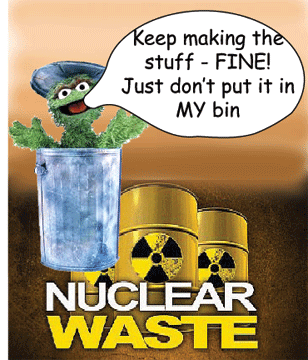
People opposed to the building of a nuclear waste dump have gathered on
Mablethorpe beach in opposition to the move. Around 150 people were at the
beach on Saturday, August 14, to mark their opposition to the proposal –
which would affect the former Theddlethorpe Gas Terminal.
Radioactive Waste Management (RWM) has flagged the site as a potential geological disposal
facility where radioactive waste would be buried deep underground. One of
the organisers of yesterday’s event, who didn’t wish to be named, told
Lincolnshire Live: “There is a lot of anger about what has been done here.
“People have moved to this area because they wanted a quiet, countryside
life and so the idea of having a nuclear waste dump has upset pretty much
all local residents.
“A local estate agent even said that people
immediately started to pull out of house sales when the news about the
proposal first came out. “They think that just to get the spoil out of the
ground will mean about 20 lorries an hour going back and forth, which
doesn’t seem realistic on the roads around here. “We’re waiting to hear
more details at the moment because we’re still in the dark on this, but
we’re going to continue to protest against it.
Lincolnshire Live 15th Aug 2021
https://www.lincolnshirelive.co.uk/news/local-news/people-opposed-nuclear-waste-dump-5789940
Revell River Action Draws Attention to Nuclear Waste Burial Site,
Revell River Action Draws Attention to Nuclear Waste Burial Site, https://wawa-news.com/index.php/2021/08/15/revell-river-action-draws-attention-to-nuclear-waste-burial-site/ Residents concerned about a site near the Revell River being put on the receiving end of all of Canada’s high level radioactive waste have set up a pop-up event at the Ministry of Transportation’s Revell River picnic area, drawing attention to the project and the threat it will pose to the region and the watersheds in Northwestern Ontario.The MTO picnic area, approximately 40 km west of Ignace, is approximately 2 km from the nearest of six drill sites that the Nuclear Waste Management Organization has disclosed.
“These drill sites are at the height of land between the English River – Wabigoon River system and the Turtle River Lake of the Woods system” explained Charles Faust, a volunteer with the group who has studied the area watersheds and waterflow.“One of the many concerns we have with this project is its potential to impact the downstream areas.
The NWMO can point to their computer models and their wishful thinking, but the reality is that this project carries a lot of risk, both during its operation and for the thousands of years afterwards that the radioactive wastes remain highly hazardous.Local residents think that most people in Northwestern Ontario don’t know the details or the risks of the NWMO project, and are unaware of how it could impact them, both before and after the waste is buried in the Revell River area.
“The drill sites are just a couple of kilometres off the highway – just a few kilometres from where we’re standing now at the Revell River picnic area – and most people are unaware of it. The NWMO spends a lot of money promoting their project in a very glossy magazine manner, but have done nothing in terms of signage for the drill sites or alerting people to where they are actually investigating their candidate sites”, commented Brien Polek, a resident of Dryden.I
n addition to signage on the highway drawing attention to the drill sites and the nuclear waste project, the group setting up the pop-up event today today at the Revell River picnic area will provide information to the public from noon until 4 pm. Similar to the information events in Ignace on August 14 and at the Dyment Hall on August 16, the group is encouraging the public to stop by the outdoors events, which they say will be all about information sharing, conversation, and discussion of the NWMO’s project and important concerns.
Volunteers from across the region will be on hand to discuss environmental and soci
nformation sharing, conversation, and discussion of the NWMO’s project and important concerns.
Volunteers from across the region will be on hand to discuss environmental and social concerns with the Nuclear Waste Management Organization’s plan to construct a deep geological repository for all of Canada’s high level radioactive Waste. Those wanting more information in advance about the alliance’s independent critiques of nuclear waste burial and transportation, or any interested in arranging a small meeting (following COVID-19 health directives) are encouraged visit the We the Nuclear Free North website at wethenuclearfreenorth.caSOURCE – We the Nuclear Free North
Conservative British MP opposes ‘nuclear dumping ground’
JILL MORTIMER (Conservative MP for Hartlepool): Plan would turn the town into a ‘nuclear dumping ground’. I am sure that a number of you are already aware of a meeting between Sacha Bedding, Chief Executive of the
Wharton Trust charity, and representatives from the Labour group on Hartlepool Borough Council – I want to take this opportunity to make my position on the proposal to introduce a nuclear waste dump to Hartlepool clear – not on my watch!
I was shocked to hear that these discussions have taken place, and I fully support Ben Houchen – Tees Valley Mayor in
his opposition to such a suggestion. This week myself and Ben have submitted a Freedom of Information request to Hartlepool Borough Council, relating to any correspondence between Staff at Radioactive Waste Management, Staff at The Wharton Trust and the Council, including elected councillors. Whoever is encouraging behind the scenes discussions of something that we believe will have such a devastating impact on the town’s prospects – the people of Hartlepool deserve to know.
Hartlepool Mail 12th Aug 2021
Concern over plan to bury nuclear waste offshore
Hartlepool’s storm in a nuclear teacup. A war of words has broken out in
Hartlepool about early discussions on a possible offshore radioactive waste
storage facility. Material in the Geological Disposal Facility (GDF) would
be stored one kilometre below the surface in concrete containers. The
opening salvo came from a press release by Conservative Tees Valley Mayor
Ben Houchen.
North East Bylines 12th Aug 2021
Nuclear waste – we don’t want that muck here!
‘We don’t want that muck here’: Residents react to nuclear waste row in
Hartlepool. A row exploded between politicians in Hartlepool over the issue
this week. People in Hartlepool have expressed concern about their town
becoming a nuclear waste “dumping ground”, after a row exploded between
politicians over the issue this week.
The decision by Hartlepool council’s
deputy leader, Conservative Mike Young, to defend facilitating meetings
about the potential for a waste disposal facility in the town, was branded
“hugely disappointing” by Tees Valley Mayor Ben Houchen. Mr Houchen is
“concerned” that the admission was only made after he brought the issue to
the attention of the public, and submitted an FOI to the council demanding
information about who has discussed Hartlepool as a potential location.
Teesside Gazette 13th Aug 2021
https://www.gazettelive.co.uk/news/teesside-news/we-dont-want-muck-here-21294512
UK’s Radioactive Waste Management employs ”behavioural science” group to monitor online talk about nuclear waste dump plan
We have been sent a leaked document indicating that Radioactive Waste Management, the government body tasked with “Delivery of a Geological Disposal Facility” have employed a company involved in “behavioural science” to monitor independent conversations of those talking online about the deep nuclear dump plan.
The Cumbrian nuclear safety group have sent this leaked report to Lincolnshire County Council and East Lindsey District Council urging them to follow the example of the most nuclear sympathetic County in the UK, Cumbria, and exclude themselves from the RWM agenda which is to implement one or more geological disposal facilities.
The nuclear safety group argue that the science of deep disposal of nuclear wastes is in its infancy and that instead of spending billions of pounds on behavioural scientists in order to deliver a dangerous deep nuclear dump, all effort should be made on containment at the Sellafield site.
Radiation Free Lakeland 9th Aug 2021
Radioactive Waste Management Employ Behavioural Scientists to ‘keep a friendly eye’ on what people are saying – really?
Canada’s political leaders oblivious to the dangers in making plutonium accessible?
Our political leaders seem oblivious to the dangers to the entire planet that could result from widespread access to plutonium. If Canada can access plutonium, so can any other country. If many countries have access to plutonium, the possession of nuclear weapons must be regarded as a real possibility. In a nuclear-armed world, any conflict anywhere can turn into a nuclear war. The stakes could not be greater
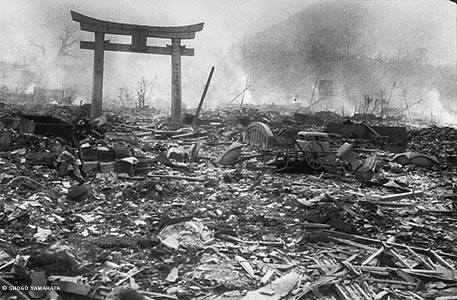
Plutonium: from Nagasaki to New Brunswick, https://nbmediacoop.org/2021/08/09/plutonium-from-nagasaki-to-new-brunswick/ by Gordon Edwards, August 9, 2021 Today, August 9, is the 76th anniversary of the US military’s atomic bombing of the City of Nagasaki in Japan. The nuclear explosive used was plutonium.
The destructive power of plutonium was first revealed on July 16, 1945, when a multicoloured mushroom cloud bloomed over the American desert – the first atomic explosion, top-secret, and much more powerful than expected. Robert Oppenheimer, the man in charge, was awestruck and thought of the words from the Bhagavad-Gita: “I am become Death, the Destroyer of Worlds.”
Three weeks and three days later, on August 9, 1945, the City of Nagasaki was destroyed with a single plutonium bomb.
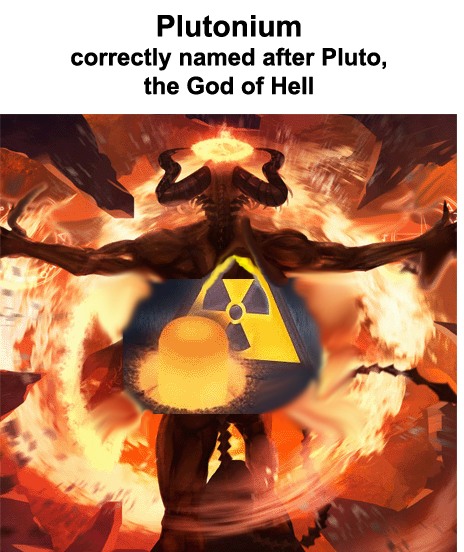
Plutonium is named for Pluto, god of the dead. It is the primary nuclear explosive in the world’s nuclear arsenals. Even the largest nuclear warheads, based on nuclear fusion, require a plutonium “trigger” mechanism. Access to plutonium is key to the construction of such thermonuclear weapons. Removing the plutonium from nuclear warheads renders them impotent.
Plutonium is not found in nature but is created inside every nuclear power reactor,
including the one at Point Lepreau on the Bay of Fundy. Plutonium is a human-made derivative of uranium. A metallic element heavier than uranium, it is created inside the nuclear fuel along with hundreds of lighter, fiercely radioactive by-products – the fragments of uranium atoms that have been split.
The countries that have nuclear weapons – the five permanent members of the UN Security Council (US, UK, France, Russia and China) as well as India, Pakistan, Israel, and North Korea – have all learned how to separate plutonium from used nuclear fuel for use in weapons. This is done by dissolving the solid fuel assemblies in a hot, highly radioactive chemical bath from which the plutonium is extracted using basic scientific procedures. Any technology for extracting plutonium from used fuel is called reprocessing.
Nuclear advocates have long dreamed of using plutonium as a reactor fuel, thereby increasing the options for new reactor designs and magnifying the longevity of the nuclear age. The problem is, once plutonium has been extracted, it can be used either for weapons or for fuel at the discretion of the country possessing it. Policing methods can be circumvented. As Edward Teller has observed: “There is no such thing as a foolproof system because the fool is always greater than the proof.”
That’s how India exploded its first atomic bomb in 1974, by using plutonium created in a Canadian research reactor given as a gift to India and a reprocessing plant provided by the US. Both the reactor and the reprocessing plant had been designated as “peaceful” facilities intended for non-military use. India declared that the bomb it had detonated was a “Peaceful Nuclear Explosive.”
After the Indian blast, it was quickly determined that several other clients of Canadian technology – South Korea, Argentina, Taiwan, and Pakistan – were also in a position to develop a plutonium-based bomb program. Swift and decisive international action forestalled those threats. In particular, South Korea and Taiwan were discouraged by their US ally from pursuing reprocessing.
Shaken by these shocking developments, in 1977 US President Jimmy Carter – the only head of state ever trained as a nuclear engineer – banned the civilian extraction of plutonium in America and tried to have reprocessing banned worldwide, because of the danger that this nuclear bomb material could fall into the hands of criminals, terrorists, or militaristic regimes bent on building their own nuclear explosive devices. As one White House adviser remarked, “We might wake up and find Washington DC gone, and not even know who did it.”
Japan is the only country without nuclear weapons that extracts plutonium from used nuclear fuel, much to the dismay of its neighbours. South Korea is not allowed to do so, despite repeated efforts by South Korea to obtain permission from the US to use a type of reprocessing technology called “pyroprocessing.” Pyroprocessing is currently undergoing experimental tests at a US nuclear laboratory in Idaho.
Now, New Brunswick has been enticed to take the plutonium plunge. The company Moltex Energy, recently established in Saint John from the UK, wants to use plutonium as a nuclear fuel in a type of reactor that is not yet fully conceptualized. The plutonium would be extracted from the thousands of solid irradiated nuclear fuel bundles currently stored at NB Power’s Point Lepreau reactor using a version of the pyroprocessing technology that South Korea has so far been denied.
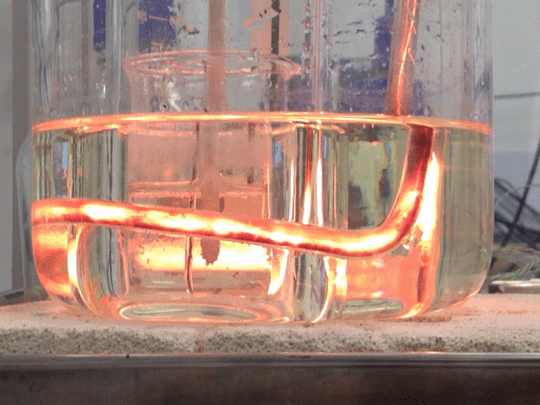
On a site right beside the Bay of Fundy, the highly radioactive metallic fuel bundles would be dissolved in molten salt at a temperature of several hundred degrees. A strong electrical current would be used to strip the plutonium metal and a few other elements (less than one percent of the mass) out of the dissolved fuel.
After the government of Canada gave $50.5 million to support the Moltex project in March this year, nine retired US government advisors – all of them experts in preventing the proliferation of nuclear weapons – wrote to Prime Minister Justin Trudeau in May, urging him to authorize an independent review of the international implications of the proposed New Brunswick plutonium scheme.
These nine experts, who have worked under six different US presidents, both Republican and Democrat, are deeply concerned that Canada’s support for reprocessing and the civilian use of plutonium could seriously undermine delicate and precarious global non-proliferation efforts that have been underway for many decades.
No reply from the Canadian government has so far been received, although Trudeau’s office acknowledged receipt of the letter and said that the matter has been entrusted to Foreign Affairs Minister Marc Garneau and Natural Resources Minister Seamus O’Regan.
Without any word from these two ministers, Moltex posted a response to the US experts’ letter on their corporate web site, disputing some of the claims made in the letter to Trudeau. In particular, Moltex claims that their proposed technology is not usable for nuclear weapons purposes because the plutonium is not pure, but mixed with other contaminants that cannot easily be removed.
The Moltex response has prompted another letter to Trudeau from the US non-proliferation experts, correcting this and several other misleading comments from Moltex and reiterating their call for a fully independent expert review of the non-proliferation aspects of the Moltex proposal.
Our political leaders seem oblivious to the dangers to the entire planet that could result from widespread access to plutonium. If Canada can access plutonium, so can any other country. If many countries have access to plutonium, the possession of nuclear weapons must be regarded as a real possibility. In a nuclear-armed world, any conflict anywhere can turn into a nuclear war. The stakes could not be greater.
Citizens of New Brunswick and all Canadians who realize the importance of this issue can write to our Prime Minister in support of a non-proliferation review of the Moltex proposal, and raise this matter with candidates and at the door during the next federal election campaign. We can all raise awareness of the legacy of Nagasaki and do our best to ensure that New Brunswick is not implicated by going ahead with the Moltex plutonium extraction scheme.
Dr. Gordon Edwards, President of the Canadian Coalition for Nuclear Responsibility, is based in Montreal.
Costs of Ontario’s nuclear program will be the burden of the great-grandchildren of babies born in 2021.
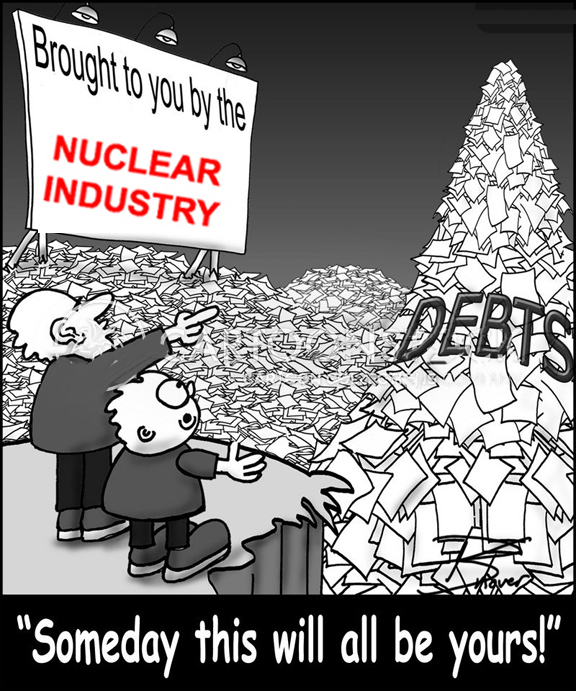
Ontario’s Unfunded Nuclear Decommissioning Liability Is In The $18–$27 Billion CAD Range Clean Technica, By Michael Barnard 8 Aug 21, Ontario’s nuclear program will be a fiscal burden on Ontarian’s to the tune of around $40 billion CAD which will be spent through roughly 2135, finally being paid off by the great-grandchildren of babies born in 2021.
Late last year I worked up the likely amount of public money that would have to be thrown at the nuclear industry in order to successfully and safely decommission the 100 operational reactors and the now shut down ones. Unsurprisingly, the nuclear industry had been very optimistic in its estimates of decommissioning costs and timeframes, when the global empirical averages were trending to a billion USD and 100 years per reactor.
Recently I was asked by an Ontario journalist what I thought the likely situation in Ontario would be, and whether the decommissioning trusts were equally underfunded. I was unsurprised to find that Canada is in the same boat as the US, with highly optimistic schedule and cost projections which belie Canadian empirical experience with the CANDU reactor, and that the fund had nowhere near the money necessary for the job. Let’s run the numbers.
Ontario Power Generation (OPG) is the chunk of the provincial utility that was carved apart in the late 1990s by the Mike Harris Conservatives to handle generation alone. It operates 18 aging CANDU reactors across three sites: Bruce, Pickering, and Darlington.
OPG has a nuclear decommissioning fund of about $5 billion CAD or US$4 billion right now. If the experience of other countries on the actual cost of a billion USD per reactor and an actual timeline of decommissioning of a century holds true, and I see no reason why it doesn’t, that means that there is currently a $17.5 billion CAD gap in Ontario, in addition to the existing $19.3 billion CAD in debt still being serviced from their construction. When the government of the era split up the utility, it moved all of the debt off of the components and into general debt. One of the many appropriate and sensible things that the McGuinty Administration did in the 2000s, in addition to shutting down coal generation entirely, was to move the debt back into the utility and set about servicing it from utility bills.
Most of the reactors at Bruce Nuclear are aging out, with several over 40 years old and the remainder approaching 40. Darlington’s are around 30, so they have a bit of runway. Pickering’s reactors are going to be shut down in 2024 and 2025 and start decommissioning in 2028. While refurbishment could bridge Ontario’s for another 20 years in many cases, that’s expensive and typically won’t pass any economic viability assessment compared to alternatives.
The likelihood is that all reactors in Ontario will reach end of life by 2035, and be replaced by some combination of renewable energy and HVDC transmission from neighboring jurisdictions, with both Manitoba and Quebec having excellent, low-carbon hydroelectric to spare…………
So yes, Ontario’s nuclear program will be a fiscal burden on Ontarians to the tune of around $40 billion CAD which will be spent through roughly 2135, finally being paid off by the great-grandchildren of babies born in 2021.
Nuclear, the gift that keeps on giving. https://cleantechnica.com/2021/08/06/ontarios-unfunded-nuclear-decommissioning-liability-is-in-the-18-27-billion-cad-range/
Stockton Professor: Nuclear Power is “Terrible Neighbor
Stockton Professor: Nuclear Power is “Terrible Neighbor” https://ocnjdaily.com/stockton-professor-nuclear-power-terrible-neighbor/ By MediaWize – August 8, 2021 By DR. JOHN AITKEN Ph.D., Adjunct Professor of Physics, Stockton University
Opponents of the Ocean Wind turbine project spoke in favor of using nuclear power as an alternative to the wind power at the July 27 Michael Shellenberger presentation sponsored by Save Our Shores in Ocean City.
The speaker stated that that while climate change is indeed real, the only solution to reducing carbon emissions is nuclear power, contrary to the position of many environmental organizations.
His proposals to pursue solely nuclear power did not mention its disadvantages and costs. Nuclear power operates carbon free as do solar and wind power, but unlike them, nuclear generates large quantities of dangerous waste that are difficult to dispose of and costly to manage.
Nuclear power can supply an unlimited amount of power but creates an unlimited amount of hazardous nuclear waste requiring storage for at least 300 years. Nuclear power may be a useful servant but it is a terrible neighbor.
Take the example of the Oyster Creek nuclear plant 35 miles north of Atlantic City. After approximately 50 years of service it is being decommissioned due to its inability to compete with cheaper natural gas.
In the 1960s, Lacey Township signed up to host the plant. What they did not realize at the time was that they had signed a deal with devil. The town had traded its own long-term safety for the benefits of good paying jobs and reduced property taxes.
Due to environmental and transportation concerns, nuclear waste storage sites in Nevada or Washington state promised by the federal government never materialized, leaving local plants on their own to store their nuclear waste on site for decades if not centuries.
The costs associated with decommissioning the nuclear site, estimated between $800 million and $1.4 billion, are another legacy left by the plant. The original owner/operator of the plant, Exelon, sold the plant to another company who will execute the decommissioning plan. For the rest of this article I will refer to this decommissioning company as DC.
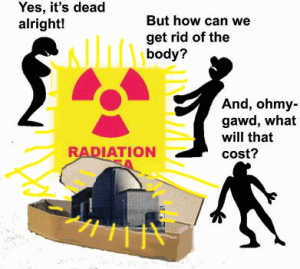
While the project is supported by a decommissioning fund, likely cost overruns will be paid by future generations through their utility bills. The costs cover the removal and deactivation of spent nuclear fuel, control rods, the reactor and associated buildings, which themselves have become radioactive from exposure to radiation.
But now, with decommissioning approaching, the township is paying the piper dearly for the good years. Oyster Creek Nuclear Plant has been shut down. The spent nuclear fuel and radioactive debris from the reactor and the associated buildings will be stored in 68 cylindrical casks, each 22 feet high and 11 feet in diameter, emitting low levels of radiation on the now-defunct site. The casks must remain intact for at least 300 years to allow the radioactivity of the waste inside to decay to handleable levels.
DC is now in charge of the decommissioning project. DC makes no commitment as to how long, decades or even centuries, these casks will have to remain on the Lacey Township site in close proximity to homes and schools.
Nor is there a guarantee that the casks, manufactured by DC, will remain intact during the 300-year storage period. Lacey Township at first sued DC to prevent the storage of these casks on the site. After a long legal battle, Lacey settled the lawsuit with them, acquiescing to the onsite storage on the condition that DC would build and assign another cask for emergency use by the township.
The Lacey Township decision shows it is a virtual prisoner of DC, which now owns the nuclear waste but is also the town’s only hope of restoring the site to radiation-free conditions.
Operating nuclear plants are also a continual hazard to the communities where they are sited. Nuclear plants do not pose a threat of nuclear explosion. Their Achilles heel is the plumbing, which brings water in and out of the reactor vessels.
The water pipes, degraded by the nuclear reactions, develop cracks and eventually leak water with radioactive contaminants. This water can leak into the local water supply and cause cancer or DNA damage to people who drink it.
As shown by the Oyster Creek experience, nuclear power is costly, dangerous and unmanageable. Those in favor of nuclear power should be ready to accept nuclear power stations in their own backyards and relive the Lacey Township experience. Nuclear power makes a terrible neighbor.
Delay in demolition of Three Mile Island Nuclear Station
Three Mile Island Nuclear Plant Demolition Delayed
WKOK Staff | August 8, 2021 MIDDLETOWN – Stateimpact Pennsylvania is reporting…The company responsible for decommissioning the Unit 2 reactor at the Three Mile Island nuclear plant is delaying demolition of the reactor’s two cooling towers, the project director said Wednesday. Frank Helin told the TMI-2 Community Advisory Panel that the towers will come down in 2022 instead of this fall.The decommissioner, TMI-2 Solutions, is a subsidiary of EnergySolutions, a Utah-based company that tries to turn a profit by dismantling inactive nuclear sites under budget. TMI-2 Solutions acquired the reactor’s license from FirstEnergy in December. The company plans to start removing what remains of TMI-2’s damaged core by mid-2022. It expects to complete the entire clean-up process by 2037. EnergySolutions spokesman Mark Walker said the delay in taking down the cooling towers does not affect the rest of the process…………
Eric Epstein, chair of the watchdog group Three Mile Island Alert, said that while he is not concerned about the cooling towers, he believes the reactor building may have more radioactive material than the company is prepared to deal with.
“Our concern is making sure that the plant is finally cleaned up 42 years later,” he said. “We don’t believe the company that owns TMI-2 has the technology, the expertise, or the resources to clean the plant up.” On its website, TMI-2 Solutions says it anticipates the project will cost $1.06 billion. It says the trust fund dedicated to the reactor’s decommissioning contains about $877 million, but that fund growth over time will provide enough money to cover the costs. https://www.wkok.com/three-mile-island-nuclear-plant-demolition-delayed/
The UK and Ireland Nuclear Free Local Authorities (NFLA)and other organisations dismayed at approval for dumping Hinkley radioactive mud into coastal waters
The UK and Ireland Nuclear Free Local Authorities (NFLA) and the
campaigning group Geiger Bay express their deep dismay on the decision over
the weekend by the Marine Management Organisation (MMO) to allow EDF Energy
to dredge mud and sediment from the cleared Hinkley Point C site into a
coastal site close to the North Somerset town of Portishead. (1)
That this controversial decision was issued unusually over a weekend in the middle of
the holiday season, and from initial reading, appears to be a rushed
response after previous delay, adds to that dismay. The NFLA and other
groups raised significant concerns in our submission to the MMO urging them
not to approve this application. Our concerns, like that of local councils
and a wide range of environmental and community groups, appear to have been
simply ignored. Campaigning groups and other environmental groups are now
seeking legal advice on the decision document.
NFLA 3rd Aug 2021
1 This Month

of the week – Shut Down Drone Warfare!


Tell the Ukrainian Government to Drop Prosecution of Peace Activist Yurii Sheliazhenko

Petition to revoke the licensing of the Near Surface Nuclear Disposal Facility (NSDF) at Chalk River. https://www.ourcommons.ca/petitions/en/Petition/Details?Petition=e-7247
To see nuclear-related stories in greater depth and intensity – go to https://nuclearinformation.wordpress.com
-
Archives
- April 2026 (57)
- March 2026 (251)
- February 2026 (268)
- January 2026 (308)
- December 2025 (358)
- November 2025 (359)
- October 2025 (376)
- September 2025 (257)
- August 2025 (319)
- July 2025 (230)
- June 2025 (348)
- May 2025 (261)
-
Categories
- 1
- 1 NUCLEAR ISSUES
- business and costs
- climate change
- culture and arts
- ENERGY
- environment
- health
- history
- indigenous issues
- Legal
- marketing of nuclear
- media
- opposition to nuclear
- PERSONAL STORIES
- politics
- politics international
- Religion and ethics
- safety
- secrets,lies and civil liberties
- spinbuster
- technology
- Uranium
- wastes
- weapons and war
- Women
- 2 WORLD
- ACTION
- AFRICA
- Atrocities
- AUSTRALIA
- Christina's notes
- Christina's themes
- culture and arts
- Events
- Fuk 2022
- Fuk 2023
- Fukushima 2017
- Fukushima 2018
- fukushima 2019
- Fukushima 2020
- Fukushima 2021
- general
- global warming
- Humour (God we need it)
- Nuclear
- RARE EARTHS
- Reference
- resources – print
- Resources -audiovicual
- Weekly Newsletter
- World
- World Nuclear
- YouTube
-
RSS
Entries RSS
Comments RSS
 nuclear-news