Vermont nuclear decommissioning committee drafting advisory opinion on nuclear waste policy
Vermont nuclear decommissioning committee drafting advisory opinion on nuclear waste policy, WAMC Northeast Public Radio | By Pat Bradley December 31, 2021 The Department of Energy is taking suggestions on how to “site Federal facilities for the temporary, consolidated storage of spent nuclear fuel using a consent-based approach.” A committee of the Vermont Nuclear Decommissioning Citizens Advisory Panel is drafting an advisory opinion for the full panel to submit to the DOE.
At its latest meeting, Vermont Nuclear Waste Policy Committee Vice Chair Lissa Weinmann reviewed the status of the draft resolution that will be forwarded to the state’s full Nuclear Decommissioning Citizens Advisory Panel.
“The primary matter right now from what I can see with this language is that there’s a lot of concern that the Nuclear Waste Policy Act very explicitly outlines the requirement that a permanent repository be licensed before a consolidated interim storage facility be named or started,” Weinmann said. “So that is a point here. The DOE has asked for information regarding consent based siting for a consolidated interim storage facility.”
The Vermont Yankee Nuclear Power Plant, which began operating in 1972, shut down on December 29, 2014. According to the Nuclear Regulatory Commission all of the spent nuclear fuel was placed into dry cask storage. Decommissioning of the plant is expected to be completed by 2030.
Some committee members wondered if the national nuclear waste fund should be addressed in the state’s resolution. Citizens Awareness Network Vermont organizer Chris Williams raised concerns about references in the document to financing a waste repository.
“The nuclear waste fund was collected from ratepayers of record for the express purpose of building a repository,” Williams said. “To be without that money or operate without that cash in these times when we’re looking to build a repository would be very problematic. The language just doesn’t work for me.”……………
Advisory opinions on consent based siting must be submitted electronically to the Department of Energy by March 4, 2022. https://www.wamc.org/news/2021-12-31/vermont-nuclear-decommissioning-committee-drafting-advisory-opinion-on-nuclear-waste-policy
Hard to swallow the manipulations going on in nuclear waste decisions on UK’s Geological Disposal Facility
‘GDF flies in face of past decisions on storing nuclear waste’ https://www.newsandstar.co.uk/news/19816090.gdf-flies-face-past-decisions-storing-nuclear-waste/ David Kirkwood, 2 Jan 22,
Penrith ON December 20, I received an email informing me that Allerdale Borough Council leadership had held a meeting on November 24 and voted in favour of progressing the nuclear Geological Disposal Facility in Allerdale.
This statement was released amid the Omicron virus and Christmas festivities simply to bury the controversial news. It flies in the face of the two previous decisions rejecting the burying of nuclear waste material anywhere in Cumbria.
One of the main reasons was that the geology in Cumbria was unsuitable for a repository. Secondly, the most important reason was the population did not want it.
It is obvious why this decision has been reached, quite simply the local government reorganisation was engineered to try and invalidate the previous decisions taken by the soon-to-be-dismantled County Council.
Perhaps, someone from the Radioactive Waste Management can explain why a company called Genr8 North Ltd can be involved with both Allerdale Borough Council and Copeland Borough Council, if as they say they have no commercial interest in a nuclear geological disposal facility being built?
I find this very hard to believe.
This is just an attempt by a few individuals to brainwash the majority into acceptance. I’m certain in years to come the radioactive nuclear waste will be buried in Cumbria irrespective of the wishes of the resident population.
State of New Mexico demands federal investigation into Waste Isolation Pilot Plant (WIPP) and federal nuclear programs.
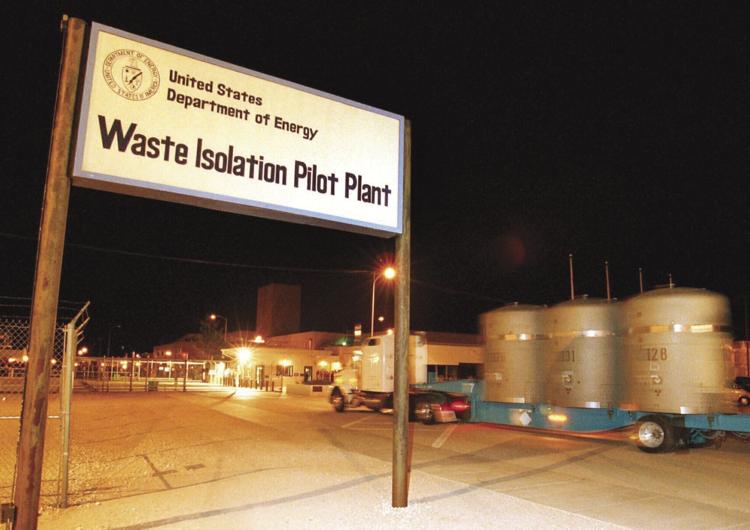
State of New Mexico demands feds investigate WIPP, federal nuclear programs
New Mexico Environment Department joins call from Congress for oversight, Adrian Hedden, Carlsbad Current-Argus , 31 Dec 21,
State concerned out-of-state waste prioritized over New Mexico’s
WIPP officials says waste shipments prioritized by availability
Congressional committee worried for ongoing “challenges” at DOE
Stronger oversight of the Waste Isolation Pilot Plant could be coming as the federal government was called on by New Mexico officials and members of Congress to address alleged problems with the U.S. Department of Energy’s environmental cleanup operations.
New Mexico Secretary of the Environment James Kenney expressed concerns for operations at WIPP in a letter to the federal Government Accountability Office (GAO), calling for the federal office to increase its oversight of the nuclear waste repository near Carlsbad.
Low-level transuranic (TRU) waste from around the country is disposed of at WIPP via burial in an underground salt deposit about 2,000 feet underground. It is owned and operated by the DOE and its Office of Environmental Management (EM) but is permitted and regulated by the New Mexico Environment Department (NMED) headed by Kenney.
In his Dec. 22 letter to the GAO, Kenney said the Office should review nuclear programs in New Mexico, including the prioritization of nuclear waste shipments to WIPP from facilities outside New Mexico.
He said first priority should be given to waste from Los Alamos National Laboratory (LANL) in northern New Mexico as the DOE intends to increase the production of plutonium pits.
“The WIPP is subject to an NMED operating permit and must adhere to the requirements of the permit in order to remain operable in New Mexico and in service to the nation,” Kenney wrote. “Yet, the DOE EM has entered into legally binding settlement agreements with states to prioritize waste shipments to WIPP at the expense of shipments from other states, including New Mexico.
“This is problematic for both the clean-up of legacy waste at LANL and new waste from pit production at LANL.”
Before the DOE entered into such agreements, as it had with the State of Idaho for cleanup at Idaho National Laboratory (INL) in 1995, Kenney said the agency should have first engaged with New Mexico stakeholders he said would bear the impacts of moving out-of-state nuclear waste into their state……………
“The practice of DOE EM solely managing waste shipments to WIPP from around the U.S. without first discussing with New Mexico stakeholders – including NMED as its regulator – now merits immediate congressional oversight,” Kenney wrote…………..
Kenney also voiced reservations about DOE officials allegedly seeking to “expand” the kinds of waste accepted at WIPP.
A recent DOE proposal sought to redefine high-level waste to consider the radiation level as opposed to the current method that considers where the waste was generated, potentially leading to more waste coming to WIPP, Kenney said.
Another concern, Kenney wrote, was a DOE-proposed “dilute and dispose” program that would see high-level plutonium processed to lower its radioactivity so it could meet WIPP requirements for TRU waste. https://www.currentargus.com/story/news/local/2021/12/30/state-new-mexico-demands-feds-investigate-wipp-doe-nuclear-programs/9034953002/
Strong local Council opposition to Hartlepool plan for hosting Britain’s nuclear waste dump .

Talks on multi-billion pound nuclear waste facility in Hartlepool stall amid lack of council support. Talks over Hartlepool potentially becoming home for a multi-billion pound development to store large amounts of nuclear waste underground have stalled.
Presentations on the controversial development for a Geological Disposal Facility were led by leaders of
Hartlepool community organisation The Wharton Trust earlier this year (2020). But the issue is unlikely to go any further after the leader of Hartlepool Borough Council and other political leaders spoke out strongly against it. ………………….
Councillor Shane Moore said: “I want to be absolutely clear with residents that I do not support any proposal to create a site for the disposal of nuclear waste here in Hartlepool and it is disappointing to hear that people are still trying to push this.
“I am not prepared to be the council leader that started the ball rolling to turn my hometown into the nuclear waste dump of the United Kingdom and frankly I don’t care how many pieces of silver are being offered.”
Hartlepool Mail 30th Dec 2021
Long and difficult dismantling of EDF’s graphite technology nuclear reactors to continue
The dismantling of EDF’s graphite technology nuclear reactors, which are
particularly long and difficult to deconstruct, can continue, the Nuclear
Safety Authority (ASN) said on Monday in a press release.
Le Figaro 27th dec 2021
Germany shuts down half of its remaining nuclear plants
Germany shuts down half of its remaining nuclear plants Aljazeera, 31 Dec 21,
Decision to close three facilities comes a year before decades-long use of atomic power winds down for good………
One of the plants – Brokdorf, located about 40 kilometres (25 miles) northwest of Hamburg on the Elbe River – became a particular focus of anti-nuclear protests that were driven by the 1986 Chernobyl catastrophe in the Soviet Union.
The other two plants are Grohnde, about 40km (25 miles) south of Hannover, and Grundremmingen, 80km (50 miles) west of Munich.
……………… the German government said this week that decommissioning all nuclear plants next year and then phasing out the use of coal by 2030 will not affect the country’s energy security or its goal of making Europe’s biggest economy “climate neutral” by 2045.
“By massively increasing renewable energy and accelerating the expansion of the electricity grid we can show that this is possible in Germany,” Economy and Climate Minister Robert Habeck said.
Several of Germany’s neighbours have already ended nuclear power or announced plans to do so, but others are sticking with the technology. This has prompted concerns of a nuclear rift in Europe, with France planning to build new reactors and Germany opting for natural gas as a compromise until enough renewable power is available, and both sides arguing their preferred source of energy be classed as sustainable.
Germany’s remaining three nuclear plants — Emsland, Isar and Neckarwestheim — will be closed by the end of 2022.
While some jobs will be lost, utility company RWE said more than two-thirds of the 600 workers at its Gundremmingen nuclear power station will continue to be involved in post-shutdown operations through to the 2030s. Germany’s nuclear power companies will receive almost $3bn for the early shutdown of their plants.
Environment Minister Steffi Lemke has dismissed suggestions that a new generation of nuclear power plants might prompt Germany to change course yet again.
“Nuclear power plants remain high-risk facilities that produce highly radioactive atomic waste,” she told the Funke media group this week.
A final decision has yet to be taken about where to store tens of thousands of tonnes of nuclear waste produced in German power plants. Experts say some material will remain dangerously radioactive for 35,000 generations. https://www.aljazeera.com/news/2021/12/31/germany-shuts-down-half-of-its-remaining-nuclear-plants
USA reclassifies nuclear waste, with new interpretation, making it easier to move to storage.
The Biden administration has affirmed a Trump administration
interpretation of high-level radioactive waste that is based on the
waste’s radioactivity rather than how it was produced.
The U.S. Department of Energy announcement last week means some radioactive waste
from nuclear weapons production stored in Idaho, Washington and South
Carolina could be reclassified and moved for permanent storage elsewhere.
“After extensive policy and legal assessment, DOE affirmed that the
interpretation is consistent with the law, guided by the best available
science and data, and that the views of members of the public and the
scientific community were considered in its adoption,” the agency said in
a statement to The Associated Press on Wednesday.
The policy has to do with nuclear waste generated from the reprocessing of spent nuclear fuel to
build nuclear bombs. Such waste previously has been characterized as high
level. The new interpretation applies to waste that includes such things as
sludge, slurry, liquid, debris and contaminated equipment. The agency said
making disposal decisions based on radioactivity characteristics rather
than how it became radioactive could allow the Energy Department to focus
on other high-priority cleanup projects, reduce how long radioactive waste
is stored at Energy Department facilities, and increase safety for workers,
communities and the environment. The department noted that the approach is
supported by the Blue Ribbon Commission on America’s Nuclear Future,
formed during the Obama administration.
The department identified three
sites where waste is being stored that will be affected by the new
interpretation.
ABC News 29th Dec 2021
https://abcnews.go.com/Health/wireStory/us-affirms-interpretation-high-level-nuclear-waste-81991323
Finland’s underground nuclear waste facility in construction, seeks licence

On 30 December 2021, Posiva Oy submitted to the Government an operating
licence application referred to in the Nuclear Energy Act for an
encapsulation plant and a disposal facility for spent nuclear fuel.
The facility is currently under construction in Olkiluoto, Eurajoki. Posiva has
been preparing for the disposal of spent nuclear fuel for more than 40
years. Its encapsulation plant is located above ground, and the fuel
repository of underground disposal facility is located in the bedrock at a
depth of approximately 400-430 metres.
Posiva is applying for an operatinglicence for a period from March 2024 to the end of 2070. According to theapplication, most of the spent nuclear fuel of Posiva’s owners, i.e.
Teollisuuden Voima Oyj’s Olkiluoto nuclear power plant and Fortum Power
and Heat Oy’s Loviisa nuclear power plant would be disposed of in
Posiva’s facility between 2024 and 2070. The disposal of all the spent
nuclear fuel of the Posiva owners is expected to be completed until the
late 2120s according to the present nuclear power operation plans.
Ministry of Economic Affairs 30th Dec 2021
https://tem.fi/en/posivas-operating-licence
Dismantling of German nuclear reactor will be expensive, but provide jobs for several decades.
Asked about possible job losses, Gundremmingen mayor Tobias Buehler said
the plant’s employees would be busy with dismantling the reactor after the
shutdown. “And this period of dismantling will certainly take another one
or two decades,” Buehler said. Total costs for the dismantling are
estimated by E.ON at 1.1 billion euros ($1.25 billion) per plant. In 2020,
E.ON made provisions of 9.4 billion euros for the nuclear post-operational
phase, including dismantling the facility, packaging and cleaning up the
radioactive waste. The dismantling is expected to be completed by 2040.
NBC 30th Dec 2021
https://www.nbcnews.com/news/world/germany-pull-plug-3-its-last-6-nuclear-power-plants-n1286771
Germany will pull the plug on 3 of its last 6 nuclear power stations
Germany will pull the plug on three of its last six nuclear power stations
on Friday, another step towards completing its withdrawal from nuclear
power as it turns its focus to renewables.
The government decided to speed
up its phasing out of nuclear power following Japan’s Fukushima reactor
meltdown in 2011 when an earthquake and tsunami destroyed the coastal plant
in the world’s worst nuclear disaster since Chernobyl 25 years earlier.
The reactors of Brokdorf, Grohnde and Gundremmingen C, run by utilities E.ON
(EONGn.DE) and RWE (RWEG.DE), will be shut down on Friday after three and
half decades in operation. The last three nuclear power plants – Isar 2,
Emsland and Neckarwestheim II – will be turned off by the end of 2022.
Reuters 30th Dec 2021
https://www.reuters.com/world/europe/germany-pull-plug-three-its-last-six-nuclear-plants-2021-12-30/
Germany’s Brokdorf nuclear station closes, so activists end their 35 year vigil against it.
Germany’s long anti-nuclear protest ends, DW, 29 Dec 21,
Activists have been protesting in front of the nuclear power plant in Brokdorf, northern Germany for 35 years. But now that the plant is set to be removed from the grid, their vigil is finally over………
Singing peace songs and chatting while standing in a circle, the groups appear well-adjusted to the freezing cold, having met at the power plant’s gate on the sixth day of each month for the last 35 years.
Today, the activists are once again holding a vigil to commemorate the victims of nuclear catastrophes while also demanding the shutdown of the nuclear reactor in their neighborhood.
Today is different, however. This 425th vigil will be the last. Later this month, the Brokdorf nuclear power plant will be shut down as part of Germany’s 2022 nuclear phaseout.
First nuclear reactor after Chernobyl
Amid the growing anti-nuclear movement in the 1980s, hundreds of thousands protested against the construction of the nuclear plant in Brokdorf.
Time and again, the protesters clashed with the police — especially after the nuclear accident in Chernobyl in 1986 saw increased radiation levels in soil and foods across Germany…..
Opening in late 1986, Brokdorf was the first nuclear reactor in the world to go into operation after the Chernobyl disaster.
At that time, Werner and a few allies protested peacefully and decided to continue their protests in the future. They vowed to meet once a month until Brokdorf was shut down…….
Increased cancer risk, and an ice rink
His fears weren’t unjustified. In 2008, a study found that children growing up in close proximity to a German nuclear power plant face a higher risk of developing leukemia.
Yet plants stayed open amid such health threats. One reason might be the decades of high revenues earned by the Brokdorf municipality through a commercial tax on the plant. Local politicians were loath to give up this income…….
Meanwhile, the nuclear power lobby is promoting nuclear energy as an allegedly clean and, most importantly, climate-friendly alternative……….. compared to power from wind and solar energy, the technology costs are much higher, and the construction of nuclear plants takes significantly longer.
Military motives
The fact that states still stick with nuclear power clearly also has another reason, said Andrew Stirling, professor of science and technology policy at the University of Sussex.
“Globally speaking, those countries that are the most truly dedicated to a civil use of nuclear energy either also have nuclear weapons or they are very keen on getting them,” he said.
According to Stirling, the civil use of nuclear energy is often needed for the realization of nuclear weapons programs, a point admitted by nuclear armed France and the US.
Without the engineers and specialists working in the commercial nuclear power sector, it would be impossible to build nuclear-powered submarines, for example, Stirling explained.
“The reports from the USA are absolutely clear. Even if the costs of nuclear energy were twice as high, it would still make sense for them to build reactors because this allows them to keep up their military activities,” he said……….
although Brokdorf will be removed from the grid on December 31, the plant will continue to serve as a temporary storage facility for nuclear waste for decades. There is still no final repository for radioactive waste.
“Therefore, our commitment is not yet over,” said one of the activists. https://www.dw.com/en/germanys-long-anti-nuclear-protest-ends/a-60278006
Secretive transports returning nuclear waste from UK to Australia

Nuclear waste from Britain heading to Lucas Heights, THE AUSTRALIAN, JACQUELIN MAGNAY 30 DECEMBER 21, LONDON@jacquelinmagnay,
Australia is to receive a two-tonne shipment of nuclear waste from Britain that will arrive under tight security and amid high secrecy in the coming months.
The shipment of intermediate-level nuclear waste has been prepared for delivery to the Australian Nuclear Science and Technology Organisation facilities at Lucas Heights, in Sydney’s south.
It will be just the second tranche of intermediate-level nuclear waste returned to the country, and its arrival shines a spotlight on Australia’s lack of a long-term storage plan for nuclear waste classified above low-level material.
The radioactive uranium and plutonium waste has been vitrified in four glass containers and then encased in an outer container made of specialised steel, known as a TN81 cask.
ANSTO says its previous experience in receiving intermediate-level nuclear waste – which occurred in 2015 when a larger shipment was returned from France – will mitigate any risks.

In that shipment, all local roads along the route were shut for more than five hours, and the operation involved the NSW Riot Squad and other police units to contain antinuclear protesters.
In the coming weeks, the nuclear waste will be moved by rail from the decommissioned nuclear plant at Sellafield in Cumbria to the British coast before being loaded onto a ship operated by Nuclear Transport Solutions.
It is expected to travel through Australian waters, including some maritime parks, before berthing.
The cargo is likely to be unloaded at Port Kembla in Wollongong under heavy guard, arriving sometime before the middle of next year.
Wherever the ship berths, the container will be loaded onto a truck for transport through residential and industrial areas, as well as along the Princes Highway through the Royal National Park south of Sydney and on to the Lucas Heights facility.
ANSTO says the final route will be a closely guarded secret and will be decided in consultation with NSW authorities.
NTS confirmed that the return of the intermediate-level waste in the form of vitrified residue to Australia had first been expected to take place last year.
Preparations for the shipment have been carried out since 2014……..
The Australian Radiation Protection and Nuclear Safety Agency has recently certified “the transport package”, and it will allow ANSTO to “temporarily” store the nuclear waste in the Interim Waste Store at Lucas Heights before another temporary storage facility for intermediate waste – currently being considered for Napandee, near the town of Kimba in South Australia – is ready to receive it.
This planned alternative storage solution, which is known as the National Radioactive Waste Management Facility, would bring together all the low-level radioactive waste from 100 different sites around the country and allow temporary storage of intermediate-level waste.
However, the proposed site in Kimba is being contested, with a judicial review requested earlier this month by traditional landowners the Barngarla Determination Aboriginal Corporation.
Longer-term storage plans for the intermediate waste are yet to be considered.
Despite this uncertainty, Australia is committed to receiving the waste after 114 ANSTO spent fuel rods were sent to Dounreay, Scotland, to be reprocessed of plutonium and uranium in 1996.
The processed waste being returned is of an equivalent radioactive level, but in a more condensed form than was originally exported to Scotland, and it has now been transported to the old Sellafield power station.
This means that instead of 52 500-litre drums of cemented waste, the British shipment will comprise four canisters of glass waste of an equivalent level.
It is classified by British authorities as having radioactivity levels greater than four GBq/tonne for alpha emitters and Beta/gamma emitters greater than 12 GBq/tonne – which puts it in the intermediate category.
ANSTO says it has experience in handling and storing such waste, citing the 2015 arrival of 25 tonnes of similar-level nuclear waste from France.
The new shipment will be stored next to that waste……………..
It is unclear if local councils positioned along the expected transport route will be notified when the shipment lands.
Previously, some export transportation of spent nuclear fuel rods from ANSTO to France for reprocessing has been carried out in the middle of the night with tight secrecy and no prior notice. Several councils, including Wollongong through which the nuclear waste will be carried, have called for Australia to sign and ratify the Treaty on the Prohibition of Nuclear Weapons.
Australia can expect to have to receive further shipments of returned waste every six or seven years, including spent fuel elements from the Opal reactor sent to La Hague in France for reprocessing before being returned. https://www.theaustralian.com.au/world/nuclear-waste-from-britain-heading-to-lucas-heights/news-story/e5e8511403cd24de66c79be3d1d96fe6
France’s oldest nuclear power plant, shut in 1985, still highly radioactive

“You can’t see radioactivity, you can’t feel it, so people don’t care”: in Brennilis, nuclear power is no longer operating. Shutdown in 1985, the monts d’Arrée power plant was the first in France to begin dismantling.
The reactor block of the Finistère nuclear power plant in Brennilis remains one of the last vestiges of the gigantic installation, in operation from 1967 to 1985. Despite the decades, its dismantling has not yet been completed. It is in this building, however, that the most radioactive elements of the infrastructure are stored, a prototype of a heavy water reactor cooled with carbon dioxide, never reproduced in France afterwards.
Le Monde 28th Dec 2021
Plutonium found on a beach near Sellafield
While in Cumbria on a visit hosted by Radiation Free Lakeland in 2015,
former United States Nuclear Industry Regulator Arnie Gundersen now nuclear
educator with Fairewinds took samples from the beaches. These samples were
tested back in the US. One of the samples unintentionally collected was
found in Arnie’s coat pocket. It turned out to be plutonium. “Arnie’s
time sampling near Sellafield is part of our worldwide campaign to protect
families and communities from the devasting and lasting impact of radiation
exposure. Currently, we have begun the process of researching and
documenting our Irish Sea data for another peer-reviewed journal
article.”
Radiation Free Lakeland 27th Dec 2021
1 This Month

of the week – Shut Down Drone Warfare!


Tell the Ukrainian Government to Drop Prosecution of Peace Activist Yurii Sheliazhenko

Petition to revoke the licensing of the Near Surface Nuclear Disposal Facility (NSDF) at Chalk River. https://www.ourcommons.ca/petitions/en/Petition/Details?Petition=e-7247
To see nuclear-related stories in greater depth and intensity – go to https://nuclearinformation.wordpress.com
-
Archives
- April 2026 (44)
- March 2026 (251)
- February 2026 (268)
- January 2026 (308)
- December 2025 (358)
- November 2025 (359)
- October 2025 (376)
- September 2025 (257)
- August 2025 (319)
- July 2025 (230)
- June 2025 (348)
- May 2025 (261)
-
Categories
- 1
- 1 NUCLEAR ISSUES
- business and costs
- climate change
- culture and arts
- ENERGY
- environment
- health
- history
- indigenous issues
- Legal
- marketing of nuclear
- media
- opposition to nuclear
- PERSONAL STORIES
- politics
- politics international
- Religion and ethics
- safety
- secrets,lies and civil liberties
- spinbuster
- technology
- Uranium
- wastes
- weapons and war
- Women
- 2 WORLD
- ACTION
- AFRICA
- Atrocities
- AUSTRALIA
- Christina's notes
- Christina's themes
- culture and arts
- Events
- Fuk 2022
- Fuk 2023
- Fukushima 2017
- Fukushima 2018
- fukushima 2019
- Fukushima 2020
- Fukushima 2021
- general
- global warming
- Humour (God we need it)
- Nuclear
- RARE EARTHS
- Reference
- resources – print
- Resources -audiovicual
- Weekly Newsletter
- World
- World Nuclear
- YouTube
-
RSS
Entries RSS
Comments RSS
 nuclear-news