Indigenous groups challenge New Brunswick’s costly radioactive waste legacy
Difficulty, cost of managing radioactive waste underlined by hearings, https://nbmediacoop.org/2022/06/08/indigenous-groups-challenge-new-brunswicks-costly-radioactive-waste-legacy/ by Kim Reeder and Susan O’DonnellJune 8, 2022
The recent re-licencing hearing for New Brunswick’s Point Lepreau nuclear reactor highlighted the difficulty and cost of managing the province’s long-lived legacy of radioactive waste.
Most of the radioactive materials generated by the Lepreau nuclear facility were never found in nature before the discovery of nuclear fission 83 years ago.
The Point Lepreau facility, however, has produced – and will continue to produce – thousands of tons of these toxic radioactive materials in the form of high, intermediate and low-level radioactive waste which must be kept isolated from all living things for a period of time that dwarfs the span of recorded human history.
When the Point Lepreau reactor was first built, the materials used in the core area – the metal, the concrete, even the heavy water that fills the vessel – were ordinary, non-radioactive materials. However, these items have all been transformed into extremely radioactive material during the normal operation of the reactor.
In fact, because these materials are so toxic, once the plant is shut down, NB Power has a plan to let the facility sit for approximately three decades before dismantling it, a strategy referred to as ‘deferred decommissioning’. During this time, referred to as the ‘dormancy’ period, the radioactivity will decrease significantly. However, the radioactivity will still be sufficiently high as to require handling by robotic equipment and careful packaging so as not to deliver a lethal dose of radiation to an unshielded worker or the environment.
The second consideration is that currently, no waste disposal site exists for the Point Lepreau facility itself, which will become thousands of tons of radioactive rubble, classified as intermediate and low-level waste. By deferring decommissioning, NB Power avoids the need to store and monitor the wastes until a disposal facility becomes available. As well, they avoid potential double-handling of wastes to meet unknown future disposal facility requirements.
NB Media Co-op’s Harrison Dressler described in a previous article that during the re-licencing hearing for Point Lepreau, a main focus of the Peskotomuhkati Nation’s intervention reflected their concerns about the lack of adequate planning for the toxic decommissioning waste. The Nation is and always has been opposed to producing and storing radioactive waste on its territory, which includes Point Lepreau.
The Nation does not want the regulator, the Canadian Nuclear Safety Commission (CNSC), to ‘approve’ NB Power’s inadequate plan and financial guarantee for decommissioning Point Lepreau.
The Nation’s expert on the topic, Canadian Coalition for Nuclear Responsibility president Gordon Edwards, compared NB Power’s financial guarantee with an OECD study of dozens of reactors that have already been dismantled. In his report, Edwards notes that NB Power’s financial guarantee is less than 40 percent of what is needed according to the OECD study. Indeed, the total amount NB Power plans to set aside is more than a billion dollars less than what the OECD estimates is likely required.
NB Power’s current decommissioning plan assumes much of the decommissioning waste will be sent off-site to a licensed facility for permanent disposal. Currently no such facilities exist, which is recognized as an industry challenge.
Edwards also found that NB Power has so far made no effort to locate a repository to receive the decommissioning waste, which is solely the responsibility of NB Power and the provincial government. Without a storage site, and without adequate funding, where will it all go?
During the re-licencing hearings in May, both the CNSC and NB Power were questioned by the regulator about the unrealistic nature of their plan, considering the plan assumes there will be a permanent home for this waste – and that no plans are being made for such a facility.
CNSC staff explained that the current plan is all that is required under Canadian law, and NB Power said that because of the deferred decommissioning strategy, they have a long time to figure out a solution to the problem. Experience shows, however, that NB Power and the New Brunswick government are already late in starting the effort, if they indeed do intend to have a site approved in the 2050s. Lepreau is scheduled to be shut down around 2040.
At the CNSC hearing, the Mi’gmawe’l Tplu’taqnn Inc., and Kopit Lodge – representing Elsipogtog First Nation – also raised similar concerns about radioactive waste. The Wolastoq Nations did not participate in the hearing. However, in March 2021, the traditional Wolastoq Grand Council issued a declaration against producing more radioactive waste at Point Lepreau. No Indigenous community in Canada – or elsewhere – has so far declared itself in favour of storing radioactive waste on its traditional territory.
Without a dramatic increase in the financial guarantee that NB Power must accumulate while the reactor is still earning money by selling electricity, and without a concerted effort to develop a concrete long-term strategy for New Brunswick’s radioactive waste legacy, both the Peskotomuhkati Nation and the New Brunswick population will be left with a permanent dump for radioactive waste right on the shore of North America’s Natural Wonder: the Bay of Fundy.
Kim Reeder, a senior policy analyst with the RAVEN project at the University of New Brunswick, coordinated the CNSC intervention for the Passamaquoddy Recognition Group. Susan O’Donnell, the lead researcher for RAVEN, also participated at the CNSC hearing.
Canada’s nuclear waste liabilities total billions of dollars. Is a landfill site near the Ottawa River the best way to extinguish them?

Gordon Edwards, an activist and consultant with the Canadian Coalition for Nuclear Responsibility, accused CNL of obscuring the origin and hazardous nature of much of the waste. He said the worst of it includes cobalt-60 imported into Canada from other countries by private companies. He questioned why taxpayers should pay for its disposal. ‘‘They’re not being up front in telling people where these wastes are coming from,”
This is big business: Ottawa sends AECL more than half a billion dollars annually to pay for remediation efforts alone.

“It’s just piled right on top of a sloping hillside surrounded by wetlands, one kilometer from the Ottawa River,” “It would be hard to come up with a worse technology and site for permanent nuclear waste disposal.”
The Canadian Nuclear Laboratories’ proposed site for disposing radioactive waste has opponents watching with apprehension. Here’s what you need to know about the Near Surface Disposal Facility
GLOBE AND MAIL, MATTHEW MCCLEARN, 6 June 22, DEEP RIVER, ONT. One glance at Building 250 confirms that its demolition will be complicated.
Workers clad in protective gear are busy removing its asbestos cladding, which has been gridded off in orange ink into alphanumerically labelled boxes. The four-story wood structure cannot simply be knocked down with a wrecking ball. Before methodical dismantling can begin, virtually every plank, floor covering and panel must be studied and characterized.
Building 250 is one element of a multi-billion-dollar headache for the federal government. It’s among the oldest buildings at Chalk River Laboratories, 200 kilometers northwest of Ottawa, which long served as Canada’s premier nuclear research facility. Today the facility’s operator, Canadian Nuclear Laboratories (CNL), is addressing the resulting radioactive waste. It has already torn down 111 buildings, but Building 250 is among the most hazardous: it contained radioactive hot cells and suffered fires that spread contaminants throughout.

CNL needs a specially designated place to dispose of this hazardous detritus. This week, the Canadian Nuclear Safety Commission held final hearings for its environmental review of the Near Surface Disposal Facility (NSDF), CNL’s proposed landfill site for radioactive waste on what is now a thickly wooded hillside at Chalk River. Its decision is expected sometime around the end of this year, and no small number of opponents are watching with apprehension.
Continue readingNuclear Contaminated Water From Fukushima Should Never Be Out Of One’s Mind

Nuke Contaminated Water From Fukushima Should Never Be Out Of One’s Mind, https://nation.com.pk/2022/06/07/nuke-contaminated-water-from-fukushima-should-never-be-out-of-ones-mind/ By Zhou Dingxing. Jun 7, 2022, In 2011, the “3/11” earthquake in Japan caused the meltdown of the Fukushima Daiichi Nuclear Power Plant reactor core, unleashing enormous amounts of radioactive material. The operator of the plant, Tokyo Electric Power Company (TEPCO), decided to pour in seawater to cool the reactor and contain the leakage. And because the used seawater became highly contaminated with radioactive material, TEPCO had to put it in storage tanks. A decade on, the nuclear contaminated water generated by the Fukushima Daiichi Nuclear Power Plant are about 150 tons per day in 2021, and will reach the upper limit of the storage tank capacity of 1.37 million tons in the spring of 2023.
According to estimates by the Japan Centre for Economic Research, it will cost 50-70 trillion yen (about $400-550 billion) to scrap and decontaminate the reactor, the bulk of which goes to the treatment of contaminated water. So in April 2021, the Japanese government announced that the problem of increasing amounts of nuclear contaminated wastewater would be addressed by dumping it into the sea. On May 18, 2022, the Japan Atomic Energy Regulatory Commission granted initial approval for TEPCO’s ocean dumping plan.
After the Fukushima nuclear accident, the Japanese government set up the “Nuclear Damage Compensation and Decommissioning Facilitation Corporation” (NDF), which is an official agency with 50.1 percent of TEPCO’s voting rights, in order to prevent TEPCO from going bankrupt. In other words, TEPCO is now under direct jurisdiction and control of the Japanese government. It is not hard to see that both TEPCO and the Japanese government are the masterminds behind the nuclear contaminated water dumping plan, because for them, this is the most expedient, cost-effective and trouble-saving way. Japan would need to spend only 3.4 billion yen (about $27 million) according to this plan. But the threat to nature, the environment and human life as a result of such reckless actions was probably never on their minds.
NUCLEAR CONTAMINATED WATER IS NOT NUCLEAR TREATED WATER
Monitoring data collected in 2012 showed that the concentration of Cesium in the waters near Fukushima was 100,000 becquerels per cubic meter, which is 100 times higher than what was detected in the Black Sea after the Chernobyl nuclear leak. Ten years later in 2021, 500 becquerels of radioactive elements per kilogram of weight could still be detected in the flat scorpionfish caught by Japanese fishermen off the coast of Fukushima Prefecture, or five times higher than Japan’s own standards. In the 11 years since the nuclear disaster, one or two thyroid cancer cases have been reported for every 60,000 children in Fukushima Prefecture, much higher than the normal rate.
The Japanese government and TEPCO have repeatedly claimed that nuclear contaminated water is “safe” to be dumped into the ocean because it would go through the multi-nuclide removal system (Advanced Liquid Processing System, ALPS). But it is only the radioactive substance called “Tritium” that has reached this standard. And what Japan doesn’t say is that, even after treatment, the water still contains other radioactive substances such as Strontium 90 and Carbon 14 that cause genetic mutation in the ecosystem.
Since the release of the ALPS-related report, the Japanese government has not held any briefings or hearings for the public. And in order to justify the dumping plan, the Japanese government contacted citizen and groups to ask them to stop using the words “nuclear contaminated water”, and use “nuclear treated water” instead. Vigorous public relations (PR) efforts have also been carried out to whitewash the plan. In the 2021 budget of the Japanese Reconstruction Agency, PR expenses related to the Fukushima nuclear accident have increased to 2 billion yen (around $16 million), over four times than the previous year figure. The money has been used on professional teams to weaken and remove negative public opinion in Japan and abroad about the nuclear contaminated water through various propaganda programs.
Furthermore, TEPCO’s track records for handling the nuclear accident have been filled with deception and distortion. In 2007, TEPCO admitted that it had tampered with data and concealed potential safety hazards in a total of 199 regular inspections of 13 reactors in its nuclear power plants since 1977, including the cooling system failure in the Fukushima nuclear accident. One week after the 2011 nuclear accident when experts had already made the judgment that the cores of Units 1 to 3 of the Fukushima Daiichi Nuclear Power Plant had melted, the company still refused to announce the truth to the public, and instead chose to use “core damage,” a term that was significantly less alarming. With a past so bad it is hard to make one believe that TEPCO will dump “safe” nuclear contaminated water into the sea.
WAVES OF OPPOSITION AT HOME AND ABROAD
The Japanese government has so far failed to provide sufficient and credible explanations on the legitimacy of the nuclear contaminated water dumping plan, the reliability of nuclear contaminated water data, the effectiveness of the purification devices, and the uncertainty of the environmental impact. To promote the plan under such circumstances has only brought about wide criticism and questions by various communities in Japan and beyond.
Up to 70 percent of the people in Fukushima Prefecture have expressed opposition to the dumping plan. Konno Toshio, former president of Fukushima University, was opposed to advancing the ocean dumping plan without prior understanding at home and abroad, because this plan could affect future generations and must be treated with great caution. The fishery cooperatives and local councils in Miyagi Prefecture, which is adjacent to Fukushima Prefecture, believe that the dumping of nuclear contaminated water into the ocean may affect the safety of local aquatic products and cause significant economic losses to related industries. Already, 180,000 people in Japan have signed the petition to the Japanese government to adopt disposal options other than ocean dumping.
Vladimir Kuznetsov, academician at the Russian Academy of Natural Sciences, said that radioactive substances in the nuclear contaminated water can only be partially filtered, and the treated water still contains extremely dangerous radionuclides, which will pollute marine life and spread to the entire ocean through fish migration. This will gravely harm the global marine environment and cause serious harm to the health of people in the periphery. According to a research model established by GEOMAR Helmholtz Centre for Ocean Research Kiel, half of the Pacific Ocean will be polluted in less than 57 days if nuclear contaminated water is dumped at the speed announced by Japan.
Voices of justice
Japan’s ocean dumping plan of nuclear contaminated water is a serious threat to the marine environment, and it damages marine interests of the neighbors and other littoral countries. It also violates multiple international conventions such as the United Nations Convention on the Law of the Sea, the Convention on Assistance in Nuclear Accidents or Radiation Emergencies, and the Convention on Nuclear Safety as well as principles of the international law. Many countries, including China, have expressed concern over or opposition to it.
The Russian Foreign Ministry issued a statement criticizing the Japanese government for not consulting with or providing any related information to its neighbors when the decision was made, and expressing grave concern over Japan’s dumping of nuclear polluted water into the ocean. The South Korean Foreign Ministry summoned the Japanese ambassador to Seoul to make a serious protest against Japan’s unilateral decision while large crowds gathered in front of the Japanese embassy to protest. The International Atomic Energy Agency (IAEA) has launched an assessment of Japan’s plan.
The spokesperson of the Chinese Ministry of Foreign Affairs has repeatedly pointed out that Japan’s dumping of nuclear contaminated water into the ocean is extremely irresponsible, and demanded that Japan fully consult with neighbouring countries, other stakeholders, and relevant international institutions to find a proper way to dispose of the nuclear contaminated water, before which the dumping into the ocean shall not be initiated.
The ocean is a treasure for all mankind and our home for survival. It is essential for sustainable development and our future. To dump nuclear contaminated water from Fukushima into the ocean is a major issue that bears on the environment for human survival and health, it is not just Japan’s internal affairs. Although keenly aware of the grave harm to the global marine environment caused by the dumping of such water into the sea, Japan has attempted to push through the plan without exhausting all other safe methods. Such an opaque and irresponsible approach is unacceptable, let alone trusted by countries in the region and the larger international community.
–The author is a scholar on international studies
Thin-walled nuclear waste containers – not really very secure

Greg Phillips, Nuclear Fuel Cycle Watch 4 June The biggest piece of BS that jumped out at me [in this pro nuclear article] is the bolded section:
“…Nuclear waste containers have been tested over the last 40 years by running them into concrete bunkers at 80 mph, being dropped onto huge steel spikes, burned in jet fuel fires at thousands of degrees, and sunk deep in water for weeks. These things are as strong as humans can make them.”
ONLY TRANSPORT CONTAINERS HAVE BEEN SUBJECTED TO THE ABOVE TESTS. THE THIN WELDED CONTAINERS PLACED INTO A PROTECTIVE OUTER SHELL OF CONCRETE. THE PRESSURISED THIN INNER CONTAINERS ARE VENTED TO OPEN AIR TO LET HEAT ESCAPE. ANY LEAK FROM A FAILED WELD WILL ESCAPE TO THE ENVIRONMENT.
Excuse the caps, but too many people have been fooled by such pro-nuclear propaganda. Pictured at top is a thin welded canister – a fully laden canister would not survive a drop of a few metres.
Those nuclear waste containers pictured above are like hermit crabs, a hard exterior shell with vulnerable internals. The thin welded canister is placed into the concrete outer shell, which has vents to keep the canister cool. So any weld failure, crack can lead to radioactive contamination into the atmosphere. If the vents of the outer shell get blocked, the temperature of the fuel will rise to 400C+. If the pressurised Helium leaks out the temperature will rise. https://www.facebook.com/groups/1021186047913052
U.S. government must increase the cleanup of Hanford’s very toxic nuclear wastes

In a worst case scenario, cleanup of Hanford might not be completed for another 150 years, or possibly never, Inslee wrote. He pointed out that Hanford’s older single-walled storage tanks are between 58 and 78 years old, which exceeds their designed lifespan of 20 to 30 years. At least two of those tanks are known to be leaking radioactive and other hazardous waste into the ground.
Inslee: Feds need to increase nuclear waste cleanup funds. https://www.bellinghamherald.com/news/business/national-business/article262083272.html By NICHOLAS K. GERANIOS and TED WARREN Associated Press June 03, 2022 Washington Gov. Jay Inslee, who has recently criticized the slow pace of cleaning up the Hanford Nuclear Reservation, toured the former nuclear weapons production site on Thursday and said more federal money is needed to finish the job. Hanford created more than two-thirds of the nation’s plutonium for nuclear weapons, including the atomic bomb dropped on Nagasaki, Japan, at the end of World War II. Left behind was the most contaminated nuclear site in the nation. Inslee wants the Biden administration to request $3.76 billion for Hanford cleanup in fiscal 2024, up from its current request of $2.52 billion for fiscal 2023. The $3.76 billion would help meet legal obligations, including court-ordered cleanup deadlines.
“We need the federal government to step up to the plate and do it’s job,” Inslee said Thursday. “This is an environmental justice issue.” Much of the waste is stored in 177 aging underground tanks, some of which are leaking.
The 580-square mile (1,500 square kilometer) Hanford site is located near Richland in southcentral Washington state. In a May letter to the director of the Office of Management and Budget at the Biden White House, Inslee wrote that Hanford budgets need to be far higher to avoid disaster, meet legal obligations and prevent the cleanup from continuing until as late as 2178, if not longer. “As the earliest possible date for cleanup continues to extend farther into the future, the harms to the surrounding communities and the danger of catastrophic impacts to the Pacific Northwest are occurring right now,” Inslee, a Democrat, said in the May 23 letter to OMB Director Shalanda Young.
In a worst case scenario, cleanup of Hanford might not be completed for another 150 years, or possibly never, Inslee wrote. He pointed out that Hanford’s older single-walled storage tanks are between 58 and 78 years old, which exceeds their designed lifespan of 20 to 30 years. At least two of those tanks are known to be leaking radioactive and other hazardous waste into the ground.
In addition. a tunnel storing highly contaminated equipment partially collapsed five years ago, and the collapse of a second waste storage tunnel was averted at great expense two years later, he wrote. “If the idea of investing in the cleanup today is unpalatable, consider this — whether calamity comes in the form of a release of radiation, groundwater contamination reaching the Columbia River, harmful exposures to workers at the site, or something else, the bill will eventually come due,” Inslee wrote. Relying on DOE data, Inslee said that even if cleanup is sufficiently funded every year, the earliest cleanup would be completed is 2064, but it could stretch to 2178 or later, if it ever is completed.
Each year that Hanford is underfunded adds 18 months to three years to the cleanup timeline as taxpayer dollars end up being spent on maintaining aging facilities and responding to emergency infrastructure failures, he said. “The slower this pace goes, the more it’s going to cost the American taxpayers,” Inslee said Thursday.
In a Senate subcommittee hearing in May, Energy Secretary Jennifer Granholm defended the administration’s latest budget request for Hanford, telling Washington’s Democratic Sen. Patty Murray it had to balance cleanup needs at all DOE sites. About a third of the nation’s defense-related environmental cleanup money goes to Hanford. ___ Geranios reported from Spokane, Washington.
If we bury today the repulsive nuclear wastes, why do we pass it on to others to deal with?
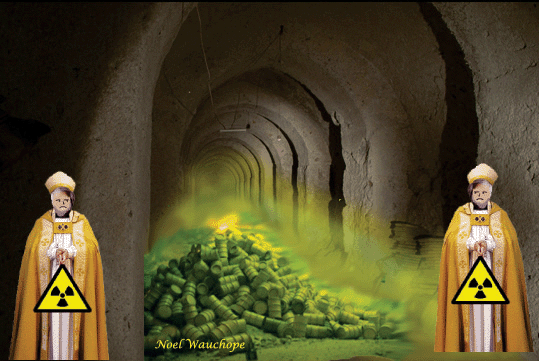
At the recent local elections three of the five candidates for the West
Caithness ward listed on their leaflets building more nuclear reactors at
Dounreay alongside complaints about potholes in the roads as their
priorities. They all got in. None of them took up my suggestion that they
could fill all the potholes in Caithness with nuclear waste.
I suspect none of them had given much thought to nuclear waste at all, which is something
they had in common with the United Kingdom Atomic Energy Authority when
they built Dounreay in the 1950’s.
Unfortunately the waste problem is now
critical, in more ways than one. The Dounreay dome, the reactor protective
casing structure, also known as the sphere and the golf ball, has been a
feature of the north Caithness coast for almost 60 years. The Nuclear
Decommissioning Authority (NDA) has recommended that the DFR be
decontaminated by 2022 (the schedule has slipped) so it can then be
demolished.
In 2007, Dounreay Site Restoration Limited (DSRL), the company
that manages the site, released the results of public consultation on
future uses for the dome. Suggestions included turning it into a hotel,
museum and even a nightclub.
However, because the structure is contaminated
with worrying levels of radioactivity and due to high maintenance costs, it
was decided to demolish it. So, sadly, no glowing raves or very long
radioactive sleeps or trips back into a memory that begins in 1955 and will
never end as the nuclear waste, dome and all, will be buried at a nuclear
dump site at nearby Buldoo.
What language, I wonder, will they put on the
steel door of this addition to the ancient burial mound culture of
Caithness? At an underground facility, a bit like Buldoo, assuringly called
“The Waste Isolation Plant”, the US government buries all kinds of
nasty waste from its nuclear weapons production 600 metres below the rocks
of New Mexico. In 20 years time, when the dump has been stuffed to the
gunnels with nuclear crap, the US government will have to seal the steel
and concrete entrances and place signs saying “Danger Zone!” all around
them.
The problem, as Serhii Plokhy, the author of “Atoms and Ashes: From
Bikini Atoll to Fukushima”, has pointed out, is that the underground
store will still be contaminated in 300,000 years, and no one can predict
what language our descendants will read or speak at that time, or what
messages might convince them not to dig into the New Mexico rocks. In the
1990s nuclear security experts proposed symbols, earthworks and mounds of
rubble designed to convey an appropriate sense of menace to anyone
stumbling on the area.
The intended message the US government wanted to
broadcast was: “This place is not a place of honour. No highly esteemed
deed is commemorated here. Nothing valued is here. What is here was
dangerous and repulsive to us. This message is a warning about danger.”
The hard question Serhii Plokhy, who is also a professor of Ukrainian
history at Harvard University where he also serves as the director of the
Harvard Ukrainian Research Institute, asks is, “If what we bury today in
the New Mexico desert – the waste created by our nuclear ambitions – is
so repulsive to us, why do we pass it on to others to deal with?”
Bella Caledonia 2nd June 2022
Nuclear waste from small modular reactors

Lindsay M. Krall https://orcid.org/0000-0002-6962-7608 Lindsay.Krall@skb.se, Allison M. Macfarlane https://orcid.org/0000-0002-8359-9324, and Rodney C. Ewing https://orcid.org/0000-0001-9472-4031Authors Info & Affiliations
May 31, 2022 Small modular reactors (SMRs), proposed as the future of nuclear energy, have purported cost and safety advantages over existing gigawatt-scale light water reactors (LWRs). However, few studies have assessed the implications of SMRs for the back end of the nuclear fuel cycle. The low-, intermediate-, and high-level waste stream characterization presented here reveals that SMRs will produce more voluminous and chemically/physically reactive waste than LWRs, which will impact options for the management and disposal of this waste. Although the analysis focuses on only three of dozens of proposed SMR designs, the intrinsically higher neutron leakage associated with SMRs suggests that most designs are inferior to LWRs with respect to the generation, management, and final disposal of key radionuclides in nuclear waste.
Abstract
Small modular reactors (SMRs; i.e., nuclear reactors that produce <300 MWelec each) have garnered attention because of claims of inherent safety features and reduced cost. However, remarkably few studies have analyzed the management and disposal of their nuclear waste streams. Here, we compare three distinct SMR designs to an 1,100-MWelec pressurized water reactor in terms of the energy-equivalent volume, (radio-)chemistry, decay heat, and fissile isotope composition of (notional) high-, intermediate-, and low-level waste streams. Results reveal that water-, molten salt–, and sodium-cooled SMR designs will increase the volume of nuclear waste in need of management and disposal by factors of 2 to 30. The excess waste volume is attributed to the use of neutron reflectors and/or of chemically reactive fuels and coolants in SMR designs. That said, volume is not the most important evaluation metric; rather, geologic repository performance is driven by the decay heat power and the (radio-)chemistry of spent nuclear fuel, for which SMRs provide no benefit.
SMRs will not reduce the generation of geochemically mobile 129I, 99Tc, and 79Se fission products, which are important dose contributors for most repository designs. In addition, SMR spent fuel will contain relatively high concentrations of fissile nuclides, which will demand novel approaches to evaluating criticality during storage and disposal. Since waste stream properties are influenced by neutron leakage, a basic physical process that is enhanced in small reactor cores, SMRs will exacerbate the challenges of nuclear waste management and disposal.
In recent years, the number of vendors promoting small modular reactor (SMR) designs, each having an electric power capacity <300 MWelec, has multiplied dramatically (1, 2). Most recently constructed reactors have electric power capacities >1,000 MWelec and utilize water as a coolant. Approximately 30 of the 70 SMR designs listed in the International Atomic Energy Agency (IAEA) Advanced Reactors Information System are considered “advanced” reactors, which call for seldom-used, nonwater coolants (e.g., helium, liquid metal, or molten salt) (3). Developers promise that these technologies will reduce the financial, safety, security, and waste burdens associated with larger nuclear power plants that operate at the gigawatt scale (3). Here, we make a detailed assessment of the impact of SMRs on the management and disposal of nuclear waste relative to that generated by larger commercial reactors of traditional design.
Nuclear technology developers and advocates often employ simple metrics, such as mass or total radiotoxicity, to suggest that advanced reactors will generate “less” spent nuclear fuel (SNF) or high-level waste (HLW) than a gigawatt-scale pressurized water reactor (PWR), the prevalent type of commercial reactor today. For instance, Wigeland et al. (4) suggest that advanced reactors will reduce the mass and long-lived radioactivity of HLW by 94 and ∼80%, respectively. These bulk metrics, however, offer little insight into the resources that will be required to store, package, and dispose of HLW (5). Rather, the safety and the cost of managing a nuclear waste stream depend on its fissile, radiological, physical, and chemical properties (6). Reactor type, size, and fuel cycle each influence the properties of a nuclear waste stream, which in addition to HLW, can be in the form of low- and intermediate-level waste (LILW) (6–8). Although the costs and time line for SMR deployment are discussed in many reports, the impact that these fuel cycles will have on nuclear waste management and disposal is generally neglected (9–11).
Here, we estimate the amount and characterize the nature of SNF and LILW for three distinct SMR designs. From the specifications given in the NuScale integral pressurized water reactor (iPWR) certification application, we analyze basic principles of reactor physics relevant to estimating the volumes and composition of iPWR waste and then, apply a similar methodology to a back-end analysis of sodium- and molten salt–cooled SMRs. Through this bottom-up framework, we find that, compared with existing PWRs, SMRs will increase the volume and complexity of LILW and SNF. This increase of volume and chemical complexity will be an additional burden on waste storage, packaging, and geologic disposal. Also, SMRs offer no apparent benefit in the development of a safety case for a well-functioning geological repository.
1. SMR Neutronics and Design………………
2. Framework for Waste Comparison………….
3. SMR Waste Streams: Volumes and Characteristics………….
…………..
3.3.2. Corroded vessels from molten salt reactors.
Molten salt reactor vessel lifetimes will be limited by the corrosive, high-temperature, and radioactive in-core environment (23, 24). In particular, the chromium content of 316-type stainless steel that constitutes a PWR pressure vessel is susceptible to corrosion in halide salts (25). Nevertheless, some developers, such as ThorCon, plan to adopt this stainless steel rather than to qualify a more corrosion-resistant material for the reactor vessel (25).
Terrestrial Energy may construct their 400-MWth IMSR vessel from Hastelloy N, a nickel-based alloy that has not been code certified for commercial nuclear applications by the American Society of Mechanical Engineers (26, 27). Since this nickel-based alloy suffers from helium embrittlement (27), Terrestrial Energy envisions a 7-y lifetime for their reactor vessel (28). Molten salt reactor vessels will become contaminated by salt-insoluble fission products (28) and will also become neutron-activated through exposure to a thermal neutron flux greater than 1012 neutrons/cm2-s (29). Thus, it is unlikely that a commercially viable decontamination process will enable the recycling of their alloy constituents. Terrestrial Energy’s 400-MWth SMR might generate as much as 1.0 m3/GWth-y of steel or nickel alloy in need of management and disposal as long-lived LILW (Fig. 1, Table 1, and SI Appendix, Fig. S3 and section 2) [on original]…………
4. Management and Disposal of SMR Waste
The excess volume of SMR wastes will bear chemical and physical differences from PWR waste that will impact their management and final disposal. …………………….
5. Conclusions
This analysis of three distinct SMR designs shows that, relative to a gigawatt-scale PWR, these reactors will increase the energy-equivalent volumes of SNF, long-lived LILW, and short-lived LILW by factors of up to 5.5, 30, and 35, respectively. These findings stand in contrast to the waste reduction benefits that advocates have claimed for advanced nuclear technologies. More importantly, SMR waste streams will bear significant (radio-)chemical differences from those of existing reactors. Molten salt– and sodium-cooled SMRs will use highly corrosive and pyrophoric fuels and coolants that, following irradiation, will become highly radioactive. Relatively high concentrations of 239Pu and 235U in low–burnup SMR SNF will render recriticality a significant risk for these chemically unstable waste streams.
SMR waste streams that are susceptible to exothermic chemical reactions or nuclear criticality when in contact with water or other repository materials are unsuitable for direct geologic disposal. Hence, the large volumes of reactive SMR waste will need to be treated, conditioned, and appropriately packaged prior to geological disposal. These processes will introduce significant costs—and likely, radiation exposure and fissile material proliferation pathways—to the back end of the nuclear fuel cycle and entail no apparent benefit for long-term safety.
Although we have analyzed only three of the dozens of proposed SMR designs, these findings are driven by the basic physical reality that, relative to a larger reactor with a similar design and fuel cycle, neutron leakage will be enhanced in the SMR core. Therefore, most SMR designs entail a significant net disadvantage for nuclear waste disposal activities. Given that SMRs are incompatible with existing nuclear waste disposal technologies and concepts, future studies should address whether safe interim storage of reactive SMR waste streams is credible in the context of a continued delay in the development of a geologic repository in the United States.
Supporting Information
Appendix 01 (PDF)
Note
This article is a PNAS Direct Submission. E.J.S. is a guest editor invited by the Editorial Board.
References…………………………….. https://www.pnas.org/doi/10.1073/pnas.2111833119
Palisades atomic reactor’s shutdown for good, leaving high risk radioactive wastes

No More Risk of Reactor Core Meltdown, No More Radioactive Waste Generation, but Significant Waste and Contamination Risks Continue
Beyond Nuclear, Kevin Kamps, COVERT TOWNSHIP, MI and TAKOMA PARK, MD, MAY 21, 2022–“We are thankful that Palisades shut down before it melted down. The 51-year old atomic reactor has the worst embrittled reactor pressure vessel in the U.S., which was at increasing risk of catastrophic failure due to pressurized thermal shock. To accommodate Palisades’ operation, the Nuclear Regulatory Commission (NRC) simply weakened and rolled back the safety standards, multiple times over decades. Palisades also has a severely degraded reactor lid, and worn out steam generators that needed replacement for the second time in the reactor’s history. All three were major pathways to core meltdown, which an NRC commissioned report, CRAC-2 (short for Calculation of Reactor Accident Consequences, also known as the 1982 Sandia Siting Study or as NUREG/CR-2239) estimated would have caused a thousand peak early fatalities (acute radiation poisoning deaths), 7,000 peak early radiation injuries, 10,000 peak cancer deaths (latent cancer fatalities), and $52.6 billion in property damage. When adjusted for inflation alone, property damages would have surmounted $150 billion in Year 2021 dollar figures.
And as Associated Press investigative reporter Jeff Donn wrote in his four-part series “Aging Nukes,” shortly after the Fukushima Daiichi nuclear catastrophe began in Japan in 2011, populations have soared around U.S. atomic reactors, so casualties would now be even higher. Donn cited reactor pressure vessel embrittlement and pressurized thermal shock risk as the top example of NRC regulatory retreat. Thank goodness no such nuclear nightmare unfolded at Palisades during its operations, but Consumers Energy (from 1971 to 2007) and Entergy (from 2007 to 2022) were willing to take those risks on the shoreline of the Great Lakes, drinking water supply for more than 40 million people in eight U.S. states, two Canadian provinces, and a very large number of Native American First Nations downstream and downwind, as well as up the food chain. Now, by definition, once the irradiated nuclear fuel is removed from the core, a reactor meltdown cannot happen at Palisades.
But the likely more than 700 metric tons of forever deadly irradiated (euphemistically called spent or used) nuclear fuel, containing more than 1,800 pressurized water reactor assemblies, and comprising more than 150 million curies of hazardous radioactivity, still represent a very significant risk. The vast majority is still stored in the indoor wet storage pool, at risk of a loss of cooling water leading to a catastrophic radioactivity release to the environment. While transfer of irradiated nuclear fuel into dry cask storage represents an increase in safety, it involves the movement of very heavy loads over the pool, and must be done very carefully. In October 2005, a 107-ton transfer cask containing irradiated nuclear fuel dangerously dangled over the pool for two days, and was nearly dropped from its crane by operator error. Had that happened, the ensuing pool fire could have dwarfed even CRAC-II’s casualties and property damage figures cited above, as Palisades’ pool is not even located in a radiological containment structure. Recently, in its careless rush job to empty a storage pool, Holtec, which plans to takeover at Palisades by the end of June, with NRC’s complicit rubber-stamp, caused a radioactive water spill that doused and dosed a worker at its Oyster Creek, New Jersey decommissioning project. In 2018, Holtec’s flawed dry cask storage design at San Onofre, California nearly caused a 50-ton loaded canister to fall nearly 20-feet. For these and many other reasons, Beyond Nuclear, Don’t Waste Michigan, and Michigan Safe Energy Future have legally challenged Holtec’s takeover of Palisades. But the NRC has refused for 15 months to grant us our day in court. We do call for expedited transfer of irradiated nuclear fuel out of the vulnerable pool, but not into Holtec’s dubious and defective dry casks, but rather into safe and secure Hardened On-Site Storage, in order to protect health and environment for the decades the irradiated nuclear fuel will likely be stuck at Palisades with nowhere to go. But Palisades’ shutdown for good means no more high-level radioactive waste will be generated there, which is a very good thing.
Due to all the risks above, Governor Whitmer and Energy Secretary Granholm’s unwise last-second scheme to bail out Palisades with many hundreds of millions of dollars of taxpayer money, and keep it operating for nine more years, must be stopped. So too is Holtec CEO Krishna Singh’s bait and switch to construct and operate a so-called Small Modular (Nuclear) Reactor at the Palisades site an outrageous, high-risk non-starter.
It is now time to safeguard and secure the high-level radioactive waste stored on-site, to clean up the widespread radioactive contamination of the property before it further threatens Lake Michigan and adjacent groundwater aquifers, and to carry out a just transition for the workforce and host region, into the long overdue clean, safe, and affordable renewable and efficient energy system of the future.”e a so-called Small Modular (Nuclear) Reactor at the Palisades site an outrageous, high-risk non-starter.
Where will Europe store its radioactive waste?
Euronews, By Tim Gallagher with Reuters 27/05/2022 –
A row is brewing in the Balkans as tensions mount over plans for a nuclear waste storage facility.
Croatia’s plan to store radioactive waste near its border with Bosnia is facing mounting opposition from its neighbour due to concerns the plant could have potentially devastating health and environmental impacts.
The site near the River Una, a Danube tributary, was chosen in 2018. In a bid to halt the plan, Bosnia responded by declaring their land closest to the location a nature reserve.
This scheme gained little ground and as the grand opening draws closer, Bosnians are growing increasingly concerned about the possible consequences on their pristine rivers and organic farming industry, not to mention public health.
“We fear the main impact of this devastating proposal will be on people’s lives and on the environment,” says Mario Crnkovic, an ecologist in the town of Novi Grad on the Bosnian side of the border, about one kilometre from the earmarked site.
Croatia has dismissed the concerns, but critics note that the government has yet to publish any health or environmental risk assessment of the proposal.
The area is prone to flooding and subject to regular seismic activity. It’s also still being cleared of landmines left over from the Balkan wars in the 1990s.
Diplomatic incidents over nuclear waste
The Balkans row is not the only diplomatic incident to happen over nuclear waste disposal in recent years.
In 2020 the Belgian government announced they had received recommendations for seven sites for underground disposal of nuclear waste, but didn’t specify where they were.
It wasn’t long before suspicions were aroused in Luxembourg, with the Luxembourgian environment minister, Carole Dieschbourg, stating they would be in the area of Namur, Dinant and Stavelot, close to their border with Belgium.
“That is right on our doorstep,” the minister announced, as she raised potential dangers to locals and accused the Belgian government of contravening the Espoo convention which regulates trans-border environmental impact reporting……………..
Where will nuclear waste be stored in the future?
Russian soldiers taking Chernobyl Nuclear plant by force during their invasion of Ukraine brought the dangers of unsafe nuclear waste to the forefront of the public imagination.
Most operational-storage facilities for nuclear waste are at surface level, with the UK, France, and Spain all making use of these short-term solutions.
However, the consensus for the future is that nuclear waste is best stored in a geological disposal facility (GDF) deep beneath our feet. Here in a space 700 – 1000 metres underground, spent reactors will be safely treated and sealed into rock structures with cement, leaving them to decay over hundreds of thousands of years.
Previous mooted suggestions of sending waste to space or burying it beneath the ocean floor have been abandoned, but there is an ongoing issue of how to warn future generations of the dangers of waste sites.
With no guarantee that today’s languages will be spoken or current iconography will be recognisable in thousands of years, it’s a risk that still-dangerous toxic waste could be accidentally opened up by curious archaeologists of the future.
In the 1980s the US government assembled the Human Interface Taskforce to work out how to prevent such a disastrous occurrence. One of their recommendations was to create fake myths and legends to ward off the curious.
Do communities want GDFs?
This toxic issue doesn’t just cause problems along borders, but often sees locals hotly contest proposals for GDFs near their communities by their own governments.
In the UK the country’s first GDF (which will store the 20th century waste currently stored in Sellafield, Cumbria) has been marketed as a big infrastructure project which will bring jobs and prosperity, leading to a bidding war between several different remote locations.
However, residents are not so keen on the idea of playing host to a poisonous repository, with retirees in the Lincolnshire village of Theddlethorpe proving particularly vocal.
Meanwhile in the sleepy French village of Bure, clashes between protestors and police over a GDF deep inside the clay soil of the region have led to much concern over potential nuclear leakage……………. https://www.euronews.com/green/2022/05/27/croatia-s-plans-for-radioactive-waste-worry-neighbouring-bosnia
USA Energy Department nuclear waste backlog goes as far back as WWII

Federal News Network, Tom Temin@tteminWFED, May 25, 2022 The Energy Department has a backlog of nuclear waste clean up responsibilities, with material dating back to World War II. But continuing turnover in program leadership means things just aren’t happening. For more, Government Accountability Office natural resources and environmental team Director Nathan Anderson spoke with the Federal Drive with Tom Temin.
Interview transcript:
Tom Temin: So what is going on here, the Energy Department says it needs something like a half a trillion dollars to do the cleanup of nuclear waste. Give us the scope of what it is they’re trying to do here in the first place?
Nathan Anderson: Well, you’ve got the dollar figure, right, in terms of the best estimates that we can give to this point. It is looking like almost a half a trillion dollar future financial responsibility of the federal government. I want to take it back a little bit to how we got here. You know, for decades, we were in the Cold War. And we were producing nuclear weapons. And we had sites across the country that were engaged in the Manhattan Project, and ultimately in the arms race that we were involved in until the late 1980s. And then around that time, the switch was flipped, if you will. And all of a sudden, we had to embrace the cleanup responsibilities that came with the end of the Cold War and kind of embracing both environmental and moral responsibilities of cleaning up the waste. And that’s where we’re at now, you know, we’ve been at this for a little more than 30 years, in a way trying to figure out the best way forward in terms of addressing the environmental and human health risks. And also, you know, the financial risks.
Tom Temin: And what is the scope of the issue geographically is there material that needs to be dealt with all over the place?
Nathan Anderson: There are 15 active cleanup sites that the Department of Energy is responsible for addressing. The biggest site in terms of financial risk and scope of waste is probably the Hanford Site out in southwestern Washington. There’s also a massive cleanup operation at the Savannah River Site in South Carolina, there’s a nuclear repository down in New Mexico at the Waste Isolation Pilot Plant. DOE recently kind of completed some of their activities at the Brookhaven Lab in New York. But as I’m kind of going through this list, you can see it really is all across the country, where we have these sites and have these cleanup responsibilities.
Tom Temin: And what does cleanup actually entail? It has to be removed and put somewhere else and buried in concrete or what?
Nathan Anderson: Well, I think one of the best ways to describe this is you’ve got nuclear waste, and radioactive waste that is in a tank, a couple sites around the country. There are 177 underground tanks at the Hanford Site, these tanks are massive, I’ve stood in a mock up of one. They hold, you know, up to a million gallons of waste. You’ve also got contaminated soil and groundwater. Decades ago during the nuclear weapons production mission, not as much as understood about the risks that some of these liquids and some of these contaminants contained, and so some of it was dumped directly into the ground. And that has permeated into the groundwater at certain sites. And then you’ve also got contaminated facilities that need to be demolished and that contamination needs to be dealt with appropriately. So I would say the three big cleanup activities are addressing the waste that’s in the tank. That’s the really nasty stuff, the soil and groundwater that needs to be remediated. And then also the excess facilities that need to be demolished, and that contamination needs to be remediated.
Tom Temin: And does that put the Energy Department in the position of being a buyer of contracted services to actually do this? Are there companies that handle this type of thing?
Nathan Anderson: Yes, it does. DOE is one of the largest contracting departments out there, probably right behind DoD (Department of Defense) in terms of the percentage of money that is put out the contracts. And now you’ve got companies around the country that are technically equipped to do this. And what DOE needs to do is ensure that for the taxpayer, you get the benefits of competition at each one of these sites. And then you also have the kind of like the accountability frameworks that are embedded within the contracts themselves, to make sure that cleanup is happening in a risk informed way. I like to say that contractors can do anything we ask them to do in this country. It’s up to the Department of Energy, and specifically the Office of Environmental Management to make sure that what they are asking the contractors to do is aligned with the risks that some of this waste poses. You recently commented about cement. That’s a perfect example. There are opportunities to take some of this tank waste like out of Hanford and put it in cement rather than glass because it’s very low levels of risk and cement, or grout as a term in the industry is significantly cheaper than the alternatives.
Tom Temin: We’re speaking with Nathan Anderson, a director in the Natural Resources and Environmental Team at the GAO. And the thesis of your report this time around is not really though how big the task is. But the fact that a revolving door of leadership at the Environmental Management Office of DOE is one of the hindrances to steady progress here. Tell us more about what you found.
Nathan Anderson: You’re hitting the nail on the head in terms of what this most recent report does touch on. We’ve just spoken about kind of the size and complexity of the issues. And what you’ll see across government oftentimes when you have a set of issues that are technically challenging and huge in scope, and long lasting and enduring is you have a leader of those federal responsibilities who has either a fixed term appointment, and in many cases, also an elevated level within the department. And that’s what we are leaning towards in this new report is that Congress should take those two actions to address the frequent turnover by having like a fixed term appointment of four to five years, to make sure that you’ve got a strong signal inside and outside government that this is a position that requires stability, and then also, that there should be an undersecretary position within the Department of Energy to again, provide that signal that there needs to be a high level of organizational clout that these are issues that are long lasting, and require stability and commitment from the senior leader within the department.
………………………. Nathan Anderson: We do have a very dedicated cadre of technicians and public servants that serve in the Office of Environmental Management, you know, there have been tremendously capable senior leaders, assistant secretaries at the Department of Energy that are responsible for this mission. But at the end of the day, resources are scarce. At the end of the day, priorities need to be set. Not everything can be done. And what we’re seeing is an increase in cost, substantially increasing costs for the long term mission of environmental cleanup within the Department of Energy. And I think it’s over the last seven or eight years, it’s almost doubled in terms of what we call the environmental liability, that total cost to the government for the cleanup mission. And that is a kind of a strong prompt or a catalyst to say, OK, is the status quo working? I would argue that the status quo needs to change.
………………………. I would say that GAO has identified a handful of options that could really fly down that half a trillion dollar cost estimate that you kind of lead with, there are opportunities and I would submit that while those opportunities are tens of billions of dollars or more, it will require like elevated leadership attention to be able to get there. And yet another reason why a fixed term appointment and an undersecretary position could really help here. https://federalnewsnetwork.com/agency-oversight/2022/05/energy-department-nuclear-waste-backlog-goes-as-far-back-as-wwii/—
US Government Secret Files: Human Experiments With Plutonium Side Effects
by SOFREP, 22 May 22, ” …………………………………… The Manhattan Project………….. The most famous development of the Manhattan Project was when they produced atomic bombs, two of which were the Little Boy Bomb and the Fat Man Bomb, that were dropped on the two cities of Japan, Hiroshima, and Nagasaki. There was also this not-so-famous bomb that was supposed to be the third bomb to be dropped in Japan had they not surrendered, known as the Demon Core (know why it was called as such here.)
Although a huge chunk of the Manhattan Project was dedicated to the development and production of the weapons, a small portion of it was dedicated to studying the health effects of the radioactive materials involved in the project, which was Plutonium.
Human Experiments
…………………. the huge amounts of radioactive materials used in the experiments also led to widespread contamination even outside of the research facilities. They wanted to know exactly the risks and dangers that these researchers were facing, so they began studying the effects of radiation on human bodies.
The plutonium toxicity studies began with rats as the main subject. These were quickly deemed inconclusive, so they decided to move the experiments onto human trials beginning in 1945. They didn’t realize at the time that rats are pretty resistant to radiation. At that time, details about plutonium were not yet disclosed to the public, so they decided that for the secrecy of it, they would not inform anyone outside of scientific circles about the trials, not even the human test subjects.
A total of eighteen human subjects were selected and injected with plutonium without their knowledge from 1945 until 1947, their ages ranging from 4 to 69. One common thing about them was their diagnosis of a terminal illness.
Patient CAL-1
One of the involuntary subjects of the human radiation experiment was a house painter from Ohio in his late 50s named Albert Stevens, or patient CAL-1. At that time, he had checked into the University of California Hospital in San Francisco and was diagnosed with terminal cancer. It was suggested that a gastroscopy be performed to make sure that the diagnosis was accurate, but it never really happened. And so Stevens was chosen for the study because, according to acting chief of radiology Earl Miller, “he was doomed” to die.
Before he underwent the operation that would try to rid him of cancer, Stevens was injected with what would be known as the highest accumulated radiation dose in any human, 131 kBq (3.55 µCi) of plutonium. After that, stool and urine samples were taken from Stevens for analysis. He then underwent an operation to remove his cancer, which included taking out parts of his liver, entire spleen, lymph nodes, part of his pancreas, part of his omentum, and most of his ninth rib.
When some of the materials removed from Stevens were analyzed, they discovered that Stevens was misdiagnosed and did not have cancer in the first place. He was, in fact, suffering from a large gastric ulcer. He and his family were not informed about it and were instead told that his recovery was speedy. ………….. https://sofrep.com/news/us-government-secret-files-human-experiments-with-plutonium-side-effects/
Entergy shuts down Palisades nuclear station ahead of time
Entergy Corp said on Friday it has permanently shut a nuclear power
station in Michigan despite a Biden administration plan to rescue plants
like it because they generate electricity virtually free of carbon
emissions. Entergy closed the 800-Megawatt Palisades plant in Michigan that
had operated for more than 50 years. “After careful monitoring, operators
made the conservative decision to shut down the plant early due to the
performance of a control rod drive seal,” Entergy said in a statement about
the plant.
Reuters 21st May 2022
Seismic Concerns at Los Angeles Nuclear Laboratory and Expanded Plutonium Pit Production
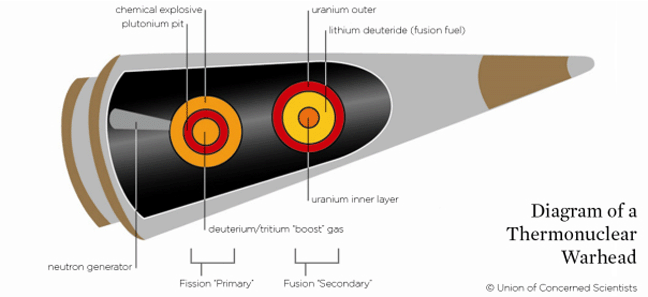
Seismic Concerns at LANL and Expanded Plutonium Pit Production http://nuclearactive.org/, May 19th, 2022, Ongoing Plutonium operations at Los Alamos National Laboratory’s Technical Area 55 are centered in the middle of the 36-square mile national nuclear weapons facility. LANL is the only U.S. facility with the capabilities to fabricate plutonium triggers, or the fissile pits, for nuclear weapons. However, Technical Area 55, or TA-55, is located within the complex Pajarito Fault Zone between two young, north – south running faults called the Guaje Mountain and Rendija Canyon faults. Visual evidence of faulting can be found in the canyons to the north of TA-55. http://nuclearactive.org/gilkeson/ see Seismic Documents.
The U.S. Department of Energy owns LANL. It has plans for expansion of all things plutonium-pit production at the Plutonium Facility and at least five new support buildings at TA-55. CCNS anticipates that DOE will continue its efforts to conceal and ignore the reality of the growing seismic threats of the young faults.
We witnessed similar efforts in the mid-2000s when DOE began to design a new super Walmart-sized Nuclear Facility within TA-55 next door to the Plutonium Facility. DOE was so bold as to dig into the volcanic tuff with heavy equipment to prepare a pad for future construction. http://www.nuclearactive.org/news/030510.html In the end, public opposition and escalating costs forced the cancellation of its plans. http://nuclearactive.org/livestreamed-nuclear-safety-board-hearing-on-february-21st-in-albuquerque/
Fabricating plutonium pits for nuclear weapons involves many steps – some using aqueous processes that result in water contaminated with radiation and hazardous materials. That water is treated across the street from the Plutonium Facility at the Radioactive Liquid Waste Treatment Facility and for decades was discharged through an industrial outfall into Effluent Canyon. Since November 2011, though, the treated water has been evaporated into the air at a mechanical evaporator.
In April, the Environmental Protection Agency renewed the five-year industrial permit for LANL to discharge through Outfall 051 into Effluent Canyon. https://www.epa.gov/nm/los-alamos-national-laboratory-lanl-industrial-wastewater-permit-final-npdes-permit-no-nm0028355
We note that on May 11th, CCNS, Honor Our Pueblo Existence, and the Albuquerque Veterans for Peace, Chapter No. 63, appealed the EPA decision to permit the outfall and five others to the Environmental Appeals Board. https://yosemite.epa.gov/oa/EAB_Web_Docket.nsf/f22b4b245fab46c6852570e6004df1bd/ba987f24df0c356085258837004f3dcd
Then on May 5th, the New Mexico Environment Department approved for the first time a ground water discharge permit for not only for the Radioactive Liquid Waste Treatment Facility, the outfall and Mechanical Evaporator, but for two large solar evaporative tanks, and a new low-level radioactive liquid waste treatment facility. In addition, DOE plans to build a liquid waste treatment facility for the transuranic plutonium liquid waste. https://www.env.nm.gov/public-notices/, go to Los Alamos County, and scroll down to DP-1132 where the draft permit is posted, but not the final permit.
These facilities are all in support of DOE’s plans for expanded plutonium pit production at LANL.
UK Parliament’s Public Accounts Committee sets out the grim facts on costs of decommissioning nuclear reactors
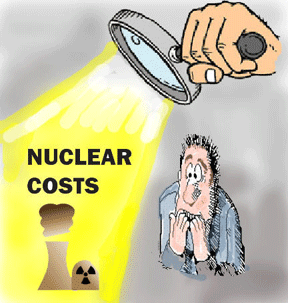
Despite government already having had to provide additional funding of
£10.7 billion, there remains a strong likelihood that more taxpayers’
money will be required to meet the costs of decommissioning the seven
Advanced Gas-cooled Reactor nuclear power stations.
The Nuclear Liabilities Fund, which was set up to meet the decommissioning costs of these stations,
has not kept up with the increased costs of decommissioning or met its
investment targets. In response, government has chosen to top up the Fund
with taxpayers’ money, providing an injection of capital of £5.1 billion
in 2020–21 with a further £5.6 billion expected in 2021–22. HM
Treasury and the Department for Business, Energy & Industrial Strategy have
opted to maintain an investment strategy for the Fund whereby around 80% of
its assets are invested in the National Loans Fund currently earning
minimal returns.
Estimated decommissioning costs on the other hand have
almost doubled since March 2004, estimated at £23.5 billion in March 2021,
and there remains a significant risk that the costs could rise further
putting strain on the Fund.
Public Accounts Committee 20th May 2022
https://publications.parliament.uk/pa/cm5803/cmselect/cmpubacc/118/summary.html
UK nuclear power stations’ decommissioning cost soars to £23.5bn
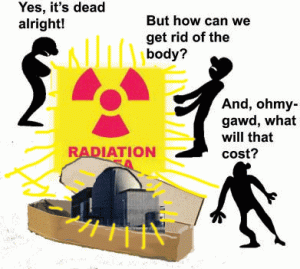
UK nuclear power stations’ decommissioning cost soars to £23.5bn https://www.theguardian.com/environment/2022/may/20/uk-nuclear-power-stations-decommissioning-cost Failures in government’s investment strategy mean taxpayer has contributed £10.7bn in just two yearsm Sandra Laville Environment correspondent Fri 20 May 2022
The cost of decommissioning the UK’s seven ageing nuclear power stations has nearly doubled to £23.5bn and is likely to rise further, the public accounts committee has said.
The soaring costs of safely decommissioning the advanced gas-cooled reactors (AGRs), including Dungeness B, Hunterston B and Hinkley B, are being loaded on to the taxpayer, their report said.
Failures in the government’s investment strategy for the fund, which was set up to pay for the decommissioning, have led to the taxpayer topping it up by an additional £10.7bn in just two years.
The nuclear power stations are owned by EDF Energy and provide much of the UK’s nuclear power-generated electricity, which makes up 16% of the energy mix. But the stations are nearing the end of their lives and are scheduled to stop generating electricity during this decade.
The government has recently agreed that once the stations have been defuelled by EDF, which involves the removal of all the spent fuel from the reactor core and cooling ponds, ownership of the stations will be transferred to the government’s Nuclear Decommissioning Authority (NDA) to complete decommissioning.
“The pace at which the stations can be defuelled could have a big impact on the costs, between £3.1bn and £8bn depending on the time taken,” the inquiry report said. “Successful defuelling will depend on all parties being ready and working together, including the NDA being ready to receive and dismantle the volume of fuel arriving at Sellafield. Any delays in the defuelling process could result in costs increasing substantially.
“The handover agreement does not appear to sufficiently ‘incentivise cost efficiency and ensure a smooth transfer of defuelled stations to the NDA’.”
The public accounts committee also said it had concerns over whether the NDA had the capacity to take on the seven AGR stations in addition to its other responsibilities, which includes decommissioning the older Magnox reactors.
It will cost the UK taxpayer £132bn to decommission all the UK’s civil nuclear sites and the work will not be completed for another 120 years, according to latest estimates.
Boris Johnson has pledged to build eight nuclear power stations in eight years. But the UK has no facility for permanently and safely storing the waste from past, present or future nuclear power stations. Most is currently stored at Sellafield, one of the most complex and hazardous nuclear sites in the world.
Nuclear Waste Services, an arm of the government, is seeking a site to build a geological deposit facility deep underground for all the UK’s nuclear waste.
MPs on the public accounts committee said in their report on Friday the government must learn lessons from the rising costs of decommissioning the seven AGR reactors and be clear how the decommissioning of proposed new nuclear stations would be funded.
The seven stations were sold by the government to EDF in 2009, with the later agreement that the French company would remove the fuel from the stations when they closed, and the Nuclear Decommissioning Authority would take on the decommissioning of the sites. But the cost of decommissioning the seven AGR reactors that began to close last year, plus Sizewell B, has more than doubled from £12.6bn in 2004-05 to £23.5bn in 2020-21, the public accounts committee report said.
“There remain significant uncertainties that will need to be managed to prevent further increases in costs and ease pressures on the fund,” the report said. “The cost of defuelling will depend on the stations not closing significantly earlier than planned and how quickly they can be defuelled once electricity generation ceases.”
The public accounts committee, in a previous report, said the cost of decommissioning the older Magnox reactors – which were the first generation of UK nuclear stations – had increased by billions of pounds because of uncertainty over the condition of the sites and how to tackle the decommissioning.
The PAC report said the closure of seven nuclear stations by 2028 would have a significant impact on energy production, but EDF has said there can be no extensions to the life of the reactors while the UK waits for new generating capacity to come online.
-
Archives
- October 2026 (129)
- September 2026 (339)
- August 2026 (330)
- July 2026 (355)
- June 2026 (287)
- May 2026 (306)
- April 2026 (356)
- March 2026 (251)
- February 2026 (267)
- January 2026 (308)
- December 2025 (358)
- November 2025 (359)
-
Categories
- 1
- 1 NUCLEAR ISSUES
- business and costs
- climate change
- culture and arts
- ENERGY
- environment
- health
- history
- indigenous issues
- Legal
- marketing of nuclear
- media
- opposition to nuclear
- PERSONAL STORIES
- politics
- politics international
- Religion and ethics
- safety
- secrets,lies and civil liberties
- spinbuster
- technology
- Uranium
- wastes
- weapons and war
- Women
- 2 WORLD
- ACTION
- AFRICA
- Atrocities
- AUSTRALIA
- Christina's notes
- Christina's themes
- culture and arts
- Events
- Fuk 2022
- Fuk 2023
- Fukushima 2017
- Fukushima 2018
- fukushima 2019
- Fukushima 2020
- Fukushima 2021
- general
- global warming
- Humour (God we need it)
- Nuclear
- RARE EARTHS
- Reference
- resources – print
- Resources -audiovicual
- Weekly Newsletter
- World
- World Nuclear
- YouTube
-
RSS
Entries RSS
Comments RSS

