Nishnawbe Aski Nation opposes possible site for storage of nuclear waste

Globe and Mail, MARSHA MCLEOD, 11 Aug.22,
Nishnawbe Aski Nation’s chiefs-in-assembly passed a resolution Wednesday “vehemently” opposing the possibility of an underground repository for nuclear waste in Northern Ontario.
The chiefs’ resolution calls on Nishnawbe Aski Nation, or NAN, which represents 49 First Nation communities within Northern Ontario, to take action to stop such a possibility, including through protest and possible legal action.
We’re fighting for our young people. We’re talking hundreds of years from now – that’s who we’re speaking up for,” said Nishnawbe Aski Nation Grand Chief Derek Fox in an interview. “NAN is going to do all it can – and I was mandated by the chiefs to do all we can – to stop this from happening.”
Chiefs, youth leaders and women’s advocates raised concerns during NAN’s annual Keewaywin Conference, which is being held in Timmins, Ont., this week. Some leaders also expressed anger at a lack of consultation of NAN’s communities over the possible site. The chiefs’ resolution speaks to a years-long search by the Nuclear Waste Management Organization, or NWMO, for a site to build a “deep geological repository,” or GDR, which would see Canada’s spent nuclear fuel stored in a facility located at least 500 metres below-ground.
That search has been narrowed to two possible sites: one located between Ignace and Wabigoon Lake Ojibway Nation in Northern Ontario, which is the site of concern to NAN, and another near South Bruce, Ont. A decision between the two sites is expected by the end of 2023, said Bob Watts, NWMO’s vice-president of Indigenous relations and strategic programs.
If the site near Ignace is selected, the township of Ignace, as well as Wabigoon Lake Ojibway Nation, would hold approval power over the project going forward, Mr. Watts confirmed.
Wabigoon Lake is not a member of NAN and the site would sit just south of NAN’s territory – within Treaty 3, but Mr. Fox pointed out that any issue with the site will not just affect Treaty 3, but the entire region.
“All rivers flow north from that area,” he said. “Nuclear waste doesn’t know treaty boundaries. A spill does not know treaty boundaries. A nuclear waste accident is not going to say, okay, well, we only agreed to pollute Treaty 3.”
Any kind of pollution in the rivers, lakes and waterways of the region would have “devastating” effects, he said………………………………….
In discussions ahead of Wednesday’s vote on the resolution, chiefs and other leaders expressed their concerns about the possible location of the site.
“Northern Ontario is not a garbage can,” said Constance Lake First Nation Chief Ramona Sutherland. “We work for seven generations of our people – I don’t want to pass this down to my son, my grandson, and then his sons.”
Neskantaga First Nation Chief Wayne Moonias called the proposal “disturbing,” and added, “the thought of having a nuclear waste site in our area – it’s just not something that we can live with.” https://www.theglobeandmail.com/politics/article-nishnawbe-aski-nation-opposes-possible-site-for-storage-of-nuclear/—
New Mexico’s ’s nuclear waste dump could be open ‘forever’ despite 2024 closure date.
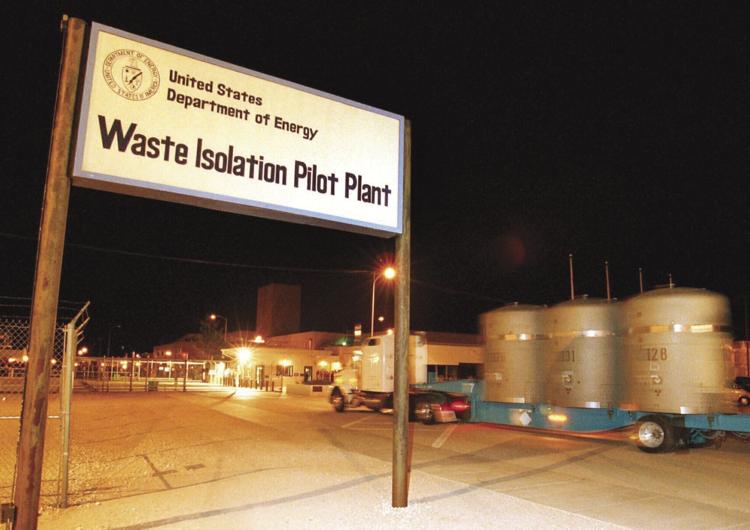
WIPP leaders also want approval for plan to increase waste storage
Source NM, BY: PATRICK LOHMANN – AUGUST 8, 2022
Shipments of nuclear waste to the nation’s only deep geological repository for the hazardous material show no signs of slowing in the coming years, despite the current permit calling for the plant to begin closing in 2024.
The future of shipments to the Waste Isolation Pilot Plant east of Carlsbad was the subject of debate and scrutiny during a meeting among a state legislative committee Friday in Clovis. The site stores waste like clothing, rags, soils and tools contaminated with radioactive elements due to nuclear weapons research and assembly in places like Los Alamos National Laboratory and Idaho National Laboratory.
WIPP leaders are seeking renewal of the 10-year permit that allows the site to continue receiving shipments, plus the state’s approval of an expansion of the plant to store more waste.
But advocates closely watching the plant for decades say such approval could open the door to an unending stream of radioactive waste transported across the country into New Mexico.
So far this fiscal year, WIPP has received 190 shipments. The material arrives from about 10 sites across the country, shipped in large drums on semi-trailers along state roads and interstates. The site has received more than 13,000 such shipments since 1999. When the waste arrives, and if it meets meets WIPP’s safety standards, the material is “emplaced” for permanent disposal in one of eight large panels a half-mile below ground that are sealed when full.
The 1990 federal law that allowed WIPP to be created and an agreement between the state of New Mexico and United States Department of Energy permits the site to permanently hold up to 175,000 cubic meters of the waste.
But WIPP needs more space to fulfill that mission, said Reinhard Knerr, manager of the DOE Carlsbad Field Office. Six of the eight panels are sealed, despite the facility having only disposed of 40% of the 175,000 cubic meters it can receive. …………………………………..
But Don Hancock, who runs the nuclear waste program at the Southwest Research and Information Center, said WIPP leaders are seeking to abandon the principles set out when WIPP began. He also fears the DOE is trying to prime the site to become the nation’s only recipient of this kind of radioactive waste for years to come.
Hancock testified Friday that WIPP was meant to be a site that would permanently dispose of waste only until new repositories would be opened up across the country. The legislation creating WIPP says it would store “up to” 175,000 cubic meters, he noted, and he said lawmakers at the time fully expected that the site could be decommissioned without being filled completely.
But instead, other potential sites across America have been identified but not opened in the intervening years, Hancock said, and an official told him recently at a public meeting that the DOE currently had “no plan” for a waste repository elsewhere.
“WIPP is the only repository. It was supposed to be the first, but not only. Other repositories are necessary for legal reasons, agreements with the state of New Mexico, technical reasons,” Hancock told lawmakers. “But now the Department of Energy is saying they have no plan for any other… waste repository.”
Hancock said the state should use its role to push the Department of Energy to open up other sites elsewhere and should push for specific closure dates when the permit comes up for renewal. He also is asking the state Legislature to push for more transparency from the DOE and more public involvement.
The state is hoping to have a revised permit for WIPP by May of 2023, a state official told the panel.
Hancock said the DOE has no longer even offered a potential closure date for WIPP in any of its recent permit applications. That’s another tell, he said, that shows the DOE no longer has any interest in finding an alternative to WIPP.
The New Mexico Environment Department recently asked the feds to provide a potential closure date. The DOE said it could take as long as 2083 for WIPP to dispose of all current and projected waste being produced across the country.
Hancock, speaking to Source New Mexico after the meeting, said the fact that DOE is being coy about the eventual closure of WIPP should concern generations of New Mexicans.
“When you’re supposed to be from 1999 to 2024 and are now say 1999 to 2083, that looks like forever,” he said. “Because if you go 60 years more, why are you not going to say again, ‘Oh, well, we don’t have any other place. So guess what?’”………………….
A 2020 analysis by the National Academies of Sciences found that all waste that has been generated or is planned to be, will exceed WIPP’s legal capacity by at least 10%. That’s another issue the DOE has not responded to publicly, Hancock said.
The bi-partisan legislative committee, made up of state senators and representatives, ultimately voted to send a letter to the Department of Energy asking questions about shipments and seeking more transparency. https://sourcenm.com/2022/08/08/nms-nuclear-waste-site-could-be-open-forever-despite-2024-closure-date-advocate-warns/
Fukushima water dumping plan triggers fresh anger from South Korea
As water-dumping moves advance, S. Koreans seek firm regional stance, http://global.chinadaily.com.cn/a/202208/09/WS62f1be52a310fd2b29e7119d.html By YANG HAN in Hong Kong |2022-08-09
Japan’s plan to dump radioactive wastewater from the stricken Fukushima nuclear power plant will endanger the lives of people in the Asia-Pacific region, say experts who want to see stepped-up efforts against the ocean disposal from the countries most at risk.
South Koreans have been among those expressing their opposition to the plan, and voices have again been raised after Japan moved a step closer to implementing its planned discharge of the nuclear-contaminated water from next year, following the recent approval of the plan’s details by the nation’s nuclear regulator.
“The discharge of wastewater from Fukushima is an act of contaminating the Pacific Ocean as well as the sea area of South Korea,” said Ahn Jae-hun, energy and climate change director at the Korea Federation for Environment Movement, an advocacy group in Seoul.
“Many people in South Korea believe that Japan’s discharge of the Fukushima wastewater is a wrong policy that threatens the safety of both the sea and humans,” Ahn told China Daily.
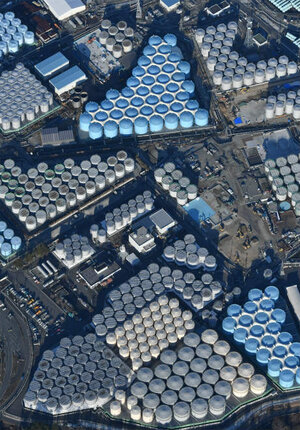
Last month, Japan’s nuclear regulator approved the plan to discharge wastewater into the Pacific Ocean from the Fukushima Daiichi power plant, after it built up a huge amount of radiation-tainted water. The water has been collected and stored in tanks following efforts to cool down the reactors after an earthquake and tsunami struck Japan in 2011.
The dumping plan has drawn fierce opposition from government officials and civic groups in South Korea, one of the world’s major consumers of seafood.
On Aug 1, South Korea’s Minister of Oceans and Fisheries Cho Seunghwan said the government is considering whether to take the issue to the International Tribunal for the Law of the Sea, Yonhap News Agency reported. Cho said the government’s primary plan is to prevent Japan from releasing the contaminated water. “We do not accept the release plan”, he said.
Ahn said radioactive materials can generate long-term effects and it remains unclear how they will affect the marine ecosystem.
Though the South Korean government is considering taking the issue to the international tribunal, Ahn said it will be difficult to quantify the potential damage.
South Korea has said it will conduct a thorough analysis and revision of the impact of Japan’s plan, but the government has not received enough data from Japan to conduct such research, South Korea’s Hankyoreh newspaper reported in June.
After Japan’s nuclear regulator approved the Fukushima discharge plan, South Korean President Yoon Suk-yeol said Tokyo needs to transparently explain and gain consent from neighboring countries before releasing the contaminated water.
Potential impact
Shaun Burnie, a senior nuclear specialist with Greenpeace Germany, said the environmental group is concerned about the potential impact of the water’s release on the wider Asia-Pacific region.
The level of exposure depends on multiple variables including the concentration in seawater and how quickly it concentrates, disperses and dilutes, forms of life, and the type of radionuclide released and how that disperses or concentrates as it moves through the environment, Burnie said.
“The concentrations are of direct relevance to those who may consume them, including marine species like fish and, ultimately, humans,” Burnie told China Daily.
Noting that the Fukushima contaminated water issue comes under the United Nations Convention on the Law of the Sea as it is a form of pollution to international waters, Burnie said there are strong grounds for individual countries to file a legal challenge against Japan’s plan.
Ahn said joint expressions of opposition in the region could force the Japanese government to choose a safe method to deal with the wastewater instead of dumping it into the sea. China is also among the neighboring countries that have voiced opposition to the Fukushima discharge plan.
UK tax-payers face £billions of costs for the indefinite future in the clean-up of closed Hinkley Point B nuclear power station
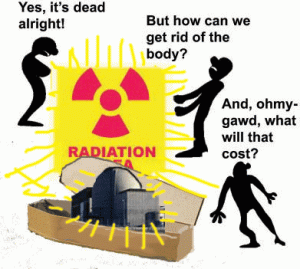
‘End of an error’, say protesters as nuclear plant is shut down. LAST
week’s closure of Hinkley Point B after 46 years was described by
anti-nuclear campaign group Stop Hinkley as ‘the end of an error’. Stop
Hinkley spokesman Roy Pumfrey said Monday (August 1) was not a day to
celebrate the life of Hinkley Point B.
He said Monday was a day to mourn
the production of radioactive waste that would need to be carefully and
expensively managed and monitored for many generations to come. Mr Pumfrey
said: “Some of these timescales for managing the legacy of waste left
over by Hinkley B are truly staggering. EDF’s jamboree on Monday
conveniently ignores the nuclear waste which has been generated over the
past 46 years.
“Under current plans it will be at least another 100 years
before all this dangerous waste is under the ground. “And the costs are
staggering, too. “EDF’s most recent £23.5 billion estimate for
decommissioning advanced gas-cooled reactors (AGRs) suggests it could cost
around £3-4 billion to decommission Hinkley B.
“The taxpayer has been
asked to top up the decommissioning fund by over £10 billion. “Past
experience suggests these costs will continue rising.” Mr Pumfrey said
the UK was left with Hinkley’s legacy of nuclear waste for thousands of
years and even after 46 years, nobody yet knew for sure what would happen
to it other than a ‘vague promise’ to bury it in a geological disposal
facility – a site for which had still not been found.
West Somerset Free Press 7th Aug 2022
Yucca licensing a waste of money and won’t solve nuclear waste issues

What stands in the way of a solution to the high-level nuclear waste
problem in the U.S.? Answer: Yucca Mountain. For 35 years Nevadans have
fought to keep the federal government and commercial nuclear industry from
putting waste in a place that cannot safely contain it.
The only sensible action for Congress to take regarding Yucca Mountain is to end the project
officially. Once Congress does that, the nation can finally move on with a
new commitment to establish a safe and acceptable nuclear waste management
and disposal policy.
In 1987, Congress designated Yucca Mountain as the
sole site to be studied to become the nation’s high-level nuclear waste
repository. Over the strong objections of a majority of Nevadans,
investigations began. After 20 years of conflicting scientific discoveries
and opinions, opposition continued to grow.
In 2008, the Department of
Energy (DOE) submitted a license application to the Nuclear Regulatory
Commission (NRC) for a construction authorization to begin to build a
repository. The next year saw nearly 300 contentions (contentions are
specific arguments by parties opposing a license) submitted by 17 parties
— including the state of Nevada — raising red flags about the safety
and sustainability of the project. Before the project could move forward,
each contention would have to be adjudicated with evidence and witnesses
presented.
With years of litigation on the horizon and Nevada’s federal
delegation finding growing support against Yucca Mountain in Washington, in
2010, the DOE informed the NRC that it was withdrawing the license
application. There was a court challenge that concluded the application
could not be withdrawn, requiring the process to continue if there was
funding available to do so. For the past 12 years there has been no federal
money allocated for Yucca Mountain, so the project lingers.
Las Vegas Sun 7th Aug 2022
https://lasvegassun.com/news/2022/aug/07/yucca-mountain-licensing-is-a-waste-of-money-and-w/
Small nuclear reactors produce more radioactive trash than large ones do- American Academy of Sciences

Despite being hailed as the future of electricity generation in the UK,
small nuclear reactors may actually produce more waste than their larger
counterparts, as our Gossage Gossip columnist explains.
A planned new generation of small nuclear reactors will create more waste than
conventional reactors, according to an authoritative new study.
The projects, called small modular reactors (SMR), are designed to be simpler
and safer than conventional plants in the case of an accident. They are
also expected to be built in factories and shipped to locations across the
world, as opposed to today’s massive reactors, which are built on-site
and typically run billions of pounds over budget. SMR backers maintain they
are a safe way to boost generation of virtually emissions-free electricity.
But the reactors would create far more radioactive waste per unit of
electricity they generate than conventional reactors by a factor of up to
30, according to a study published in the Proceedings of the American
National Academy of Sciences.
Some of these smaller reactors, with molten
salt and sodium-cooled designs, are expected to create waste that needs to
go through additional conditioning to make it safe to store in a
repository.
Allison Macfarlane, a co-author of the study and former head of
the US Nuclear Regulatory Commission, said SMR designers ‘don’t pay
that much attention in general to the waste, because the thing that makes
money for them is the reactor. But it is important to know about the waste
products, and whether they’re going to pose such difficulties in managing
and then disposing of them. Which they are.’
Electrical Review 2nd Aug 2022
A fake ‘community partnership’ on ocean nuclear waste dumping

Nuclear Waste Service have announced their decision to form a community partnership. Their choice of name for the new group is almost as comic as it is misleading.
At present there is only one member who comes from “the affected community.” Even the two council representatives live 30 and 50 miles from the site. As for partnership, NWS pay the chair and the so called independent facilitator. NWS have written the recruitment criteria for potential members.
To be a true partnership their has to be a level of equality but to quote George Orwell “everyone is equal but the pigs are more equal than others.” In truth this cannot be considered either a community based project or a partnership.
Guardians of the East Coast GOTEC 17th July 2022
Hinkley Point B leaves radioactive waste to be expensively managed for many generations to come.
FRENCH-owned EDF Energy has formally switched off Hinkley Point B’s
second reactor, a nuclear power station in the UK that has generated more
electricity than any other during its 46 years of service. The closure of
the plant at Bridgwater, Somerset, on 1 August, has prompted concerns that
the cost of energy in the UK will have to rise.
Hinkley Point B had been
expected to close in March next year, after EDF announced in 2012 that it
would extend the generating life of the plant by seven years from 2016.
However in November 2020, the energy firm said it had made the “proactive
decision” to move the nuclear power plant into the defuelling phase – the
first stage of the nuclear decommissioning process – no later than 15
July 2022.
Local campaigner Roy Pumfrey, said that Monday’s closure
should “not be a day to celebrate the life of [Hinkley Point B]…Rather,
it’s a day to mourn the production of radioactive waste that is going to
have to be carefully and expensively managed and monitored for many
generations to come.”
Chemical Engineer 2nd Aug 2022
https://www.thechemicalengineer.com/news/hinkley-point-b-nuclear-power-station-closes/
Prairie Island Indian Community planning to set up large renewable energy project, keen to be rid of nuclear power plant and nuclear wastes
Prairie Island Indian Community nuclear concern powers net zero carbon emissions plan,
Catharine Richert, Prairie Island Indian Community, Welch, Minn., August 1, 2022 , Growing up on the Prairie Island Indian Community reservation, Calais Lone Elk had a plan — a set of steps burned in her mind and logged with her school to help her find her family in the event of an explosion at the nearby nuclear power plant.
“If you went to school and something happened out here, where do you meet your parents? Where do you reconnect with your family? Because you can’t come back here,” she said. “Those are things that I don’t think are normal.”
Lone Elk is 37 now, and still constantly reviewing her escape plan for an emergency at the nearby power plant.
It sits just 700 yards away from her community of 100 homes, its powerlines lining backyards and main thoroughfares.
For Lone Elk and others living in Prairie Island, concerns about the nuclear power plant’s safety are a source of low-grade daily stress. Despite official assurances, many people believe it’s bad for their health to be living so close.
“We all have a plan, whether we voice it or not. We all have an idea of what we have to do or what we need to do. And we all know that we have to go up-wind of that nuclear plant,” Lone Elk said
But it’s also a physical reminder of the environmental injustices endured by Native people for generations, said tribal council vice president Shelley Buck.
“Since this plant was created, our energy history here has been focused on the power plant and the nuclear waste that is stored right next door to us,” she said.
Today, the Prairie Island Community is seeking to disentangle itself from a power plant it never wanted. It’s created a $46 million plan to produce net zero carbon emissions within the next decade.
Buck said it’s an ambitious step toward being a sovereign nation that’s energy sovereign, too.
“To do a big project like net zero really helps us change that narrative into something positive showing how energy can be used as a positive force,” she said. “By offsetting or eliminating the carbon that we produce, it’s a positive for everybody.”
Why not go big?’
Prairie Island members are descendants of the Mdewakanton Band of Eastern Dakota. They made their home in southern Minnesota, but lost that land in 1851 in the Treaty of Traverse des Sioux.
It wasn’t until 1934 that the land on the banks of the Mississippi just north of Red Wing became a federally recognized reservation.
The Prairie Island power plant was issued its first operating license in 1974, and it was renewed in 2011. Initially, tribal members say the plant was described to them as a steam power plant. It’s one of two nuclear power plants, the second in Monticello, that Xcel says are critical to its plans of producing carbon-free electricity by 2050, and is considered safe by the U.S. Nuclear Regulatory Commission.
In the early 1990s, Xcel Energy asked the Minnesota Pollution Control Agency permission to store nuclear waste there — at least temporarily until a permanent repository at Yucca Mountain opened, a plan that has since stalled due to local opposition.
As a child, Mikhail Childs remembers his father protesting the prospect of storing nuclear waste so close to the reservation.
“Some of the earliest memories I have are of protestors standing in the road, blocking semi-trucks hauling nuclear waste,” he said. “The way [my dad] explained it to me was that all this land we reside on is sacred … We believe that in our creation story, the creation took place just miles down the river.”
But here’s the twist, and it’s an important one: Through all these years of living with a nuclear power plant next door, Prairie Island hasn’t been powered by the energy generated there, said Buck. The community just recently started getting natural gas from Xcel.
It’s a logistical detail that she said prevented the tribal community from being eligible for the Renewable Development Fund, a pot of state money financed by Xcel customers for renewable energy projects for Xcel service areas, she said.
Then in 2020, a legislative change allowed Prairie Island to tap $46 million from the fund for the project.
While the tribe had toyed with doing wind power and other renewable projects in the past, a large amount of funding created the opportunity to do more.
“Why not go big?” said Buck.
One goal, different solutions
And by big, Buck is referring to a plan that aims to eliminate 20 million pounds of carbon annually through a raft of renewable energy and efficiency upgrades. Prairie Island’s Treasure Island Resort and Casino is the largest energy user on the reservation.
The plan involves multiple ways of achieving that goal, said Andrea Thompson, who has been hired by the tribe as the project’s energy program manager. …………………………………..
Their plan involves constructing a 10-to-15 acre solar array that aims to reduce carbon emissions by more than 550,000 pounds annually, phasing out natural gas in favor of geothermal energy and electrification, and promoting zero-emission and energy efficiency residential upgrades………………………….. more https://www.dailymail.co.uk/sciencetech/article-11069613/Global-warming-trigger-nuclear-war-financial-crisis-extinction-level-pandemic-2070.htm
Nuclear waste isn’t an isolated problem with nuclear power…
Until ALL the reactors in America (and globally) are closed, “solving” the nuclear waste problem only helps to keep the reactors operating!
https://acehoffman.blogspot.com/2022/07/nuclear-waste-isnt-isolated-problem.html Ace Hoffman Carlsbad, CA July 31, 2022 Prior to SanO’s shutdown, few SoCal residents, including most activists, worried not so much about the waste, only about shut-down.
We know the waste is a problem, but even for us, here in Southern California, Diablo Canyon Nuclear Power Plant being open is STILL a far more likely cause of our own problems, let alone California’s and America’s. DCNPP should be closed *immediately*, not in two or three years, and should certainly not have its license extended under any circumstance. I would estimate that right now, DCNPP is at least a hundred to a thousand times more likely to be the cause of our having to move, or suffering health effects, than San Onofre’s waste is. An operating reactor is incredibly more dangerous than ten year old spent fuel.
Read up on how far Chernobyl radiation spread in Kate Brown’s Manual for Survival. We can use the problem with San Onofre’s waste to push for closure of DCNPP. Once DCNPP is permanently closed, the entire state will finally (hopefully) be interested in solving the waste problem. Until ALL the reactors in America (and globally) are closed, “solving” the nuclear waste problem only helps to keep the reactors operating!
Nuclear waste scattered throughout the country is a major problem for many reasons, including terrorism, accidental airplane strikes, earthquakes, tsunamis etc. etc.
Transporting nuclear waste multiple times is also a major problem for many reasons, including accidents, terrorism, human error, etc.. It should be moved at most only once, if possible.
Neutralization of the Pu and U isotopes is possible on-site. It’s even a patented process! Read up on it in case you missed my report (see link, below). The industry doesn’t like the idea because they want to reprocess the waste. That’s ALSO why the industry is pushing so hard for one central location.
Moving nuclear waste through highly populated areas is a major problem which the U.S. government is well aware of. That is the reason they wanted to build a direct route from San Onofre to Yucca Mountain.
As a 20% owner of Palo Verde Nuclear Power Plant in Arizona, Southern California Edison (SCE) could either move the waste there (except for the problems mentioned above, plus the fact that AZ doesn’t want our waste, only their own). SCE could at least pull out of PVNPP entirely if AZ won’t take the waste.
There are many bridges, close to or even more than 100 feet high, between San Clemente and the Chocolate Mountains location that Roger J. is recommending. Moving 123 canisters over those bridges is extremely risky since the containers are NOT designed to withstand a drop of that height. It’s unlikely, IMO, that they can even survive the claimed drop heights of a few dozen feet. I drove over the Mianus River Bridge in Connecticut twice daily, when it “suddenly” collapsed, killing three people. Bridge collapses DO happen. And maintenance is shoddy at best. I HEARD the Mianus River Bridge screech in the days before the pin fully sheered off. Residents had been calling the (ir-)responsible state agencies about the noise for weeks prior to the collapse.
Is it environmentally sound to bury a massive stockpile of nuclear waste beneath the ocean floor? Probably not.
In case you were wondering if it was environmentally sound to bury a
massive stockpile of untreated nuclear waste beneath the ocean floor, the
answer that many UK-based experts will likely give you is: probably not.
But according to The Guardian, that’s exactly what the UK government is
planning to do — and experts are begging them to reconsider, arguing that
burying the waste beneath the seabed could devastate marine life in the
short-term, and leave future generations with an even more serious
environmental catastrophe to sort out.
Futurism 30th July 2022
https://futurism.com/the-byte/uk-bury-nuclear-waste-under-ocean-floor
Western states join New Mexico in resisting nuclear waste storage without state consent
Adrian Hedden, Carlsbad Current-Argus, 29 July 22
A group of governors from across the American West signaled their disapproval of storing spent nuclear fuel in their states without their consent, as two companies plan to do so in New Mexico and Texas despite opposition voiced by both states.
In southeast New Mexico, Holtec International proposed building a temporary storage site near Carlsbad and Hobbs known as a consolidated interim storage facility (CISF) to hold up to 100,000 metric tons of high-level nuclear waste transported from reactors around the country………………………………………………………………………………………………….
the governors of Texas and New Mexico – one Republican and one Democrat – stood staunchly opposed to the projects, arguing they could imperil nearby fossil fuel and agriculture operations.
A bipartisan group of congresspeople from Texas and New Mexico also questioned the projects, introducing legislative bills that would bar such activities by the federal government without the state consent.
The Western Governor’s Association recently passed a resolution demanding the federal government require host states to support CISF projects before they can be built.
The resolution, passed June 30, argued no CISFs should be sited, built or operated within a state without written consent from that state’s governor………………………………
Republican Texas Gov. Greg Abbott made similar statements regarding the project in his state, and Texas lawmakers passed a bill last year against the proposals.
“No consolidated facility for nuclear waste, whether interim or permanent, or privately or federally owned and operated, shall be located within the geographic boundaries of a western state or U.S. territory without the written consent of the current Governor in whose state or territory the facility is to be located,” read the resolution from the Western Governors Association.
It also called on the federal government to devise regulations that include state consent when siting and licensing facilities to store nuclear waste.
https://www.currentargus.com/story/news/2022/07/29/western-states-new-mexico-resisting-nuclear-waste-storage-texas-radiation-federal-fuel-energy-holtec/65382940007/
Undersea nuclear waste dump off Cumbria would imperil marine life, experts warn
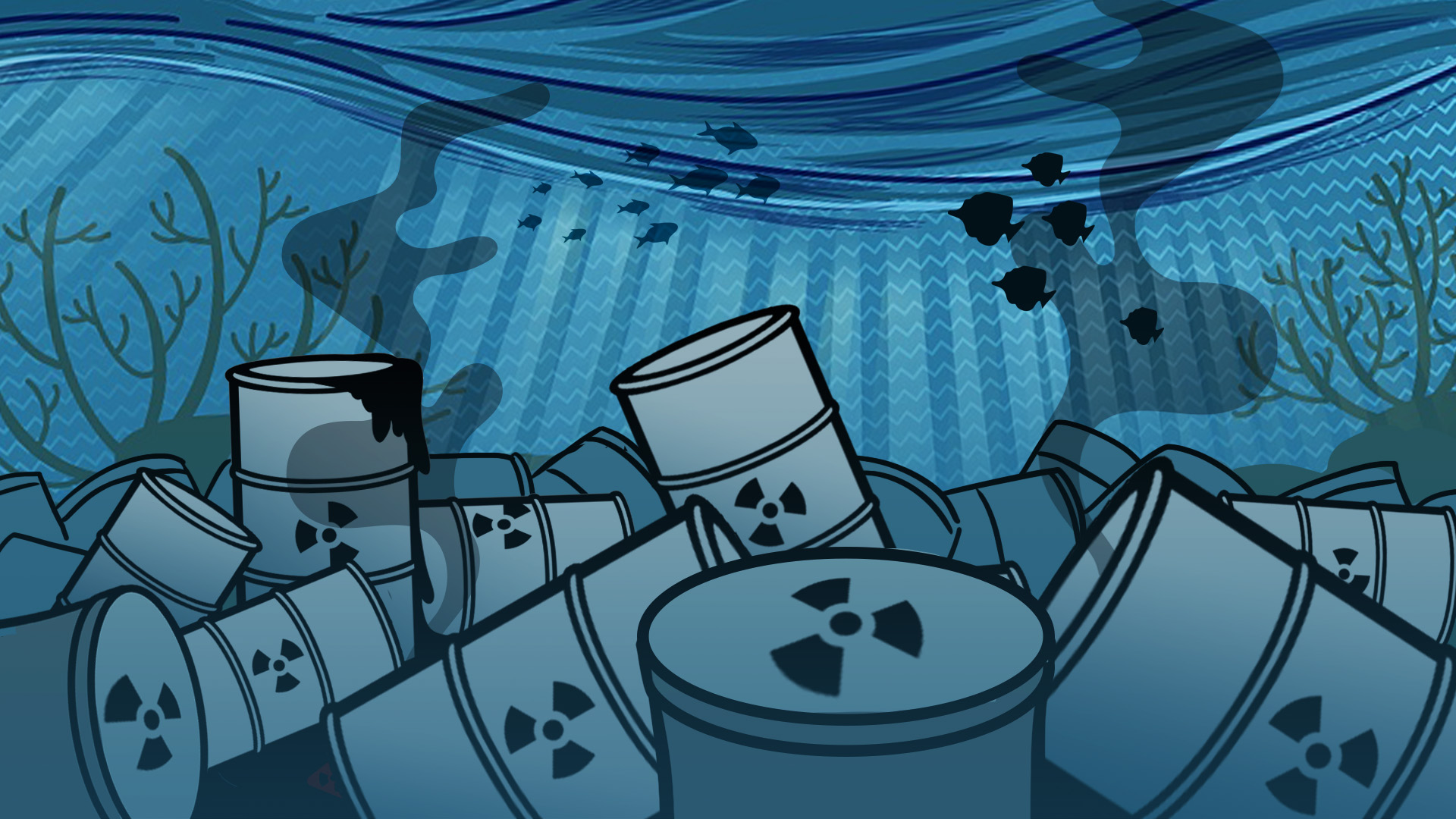
UK looking for storage site for world’s biggest stockpile of untreated waste, including 100 tonnes of plutonium
Guardian, Mattha Busby, Fri 29 Jul 2022
Plans to dispose of radioactive nuclear waste beneath the seabed off the north-west coast of England risk seriously harming marine life including mammals such as dolphins and whales, experts have warned.
Seismic surveys in the Irish Sea near Cumbria get under way on Saturday to explore whether the area is suitable for a proposed facility. The UK government is seeking a location for a deep underground repository to store the world’s largest stockpile of untreated nuclear waste.
Officials have said that a decades-long accumulation of materials including more than 100 tonnes of plutonium – which could create thousands of nuclear bombs – cannot sustainably be stored above ground for ever and they are therefore searching for a site to “keep it safe and secure over the hundreds of thousands of years it will take for the radioactivity to naturally decay”.
In 2019, radioactivity leaked into the soil beneath Sellafield, in Cumbria, which saw a serious leakage in the 1970s and was not built with decommissioning in mind. There are 20 surface facilities that store highly radioactive waste across the UK. About 750,000 cubic metres, equivalent to 70% of the volume of Wembley stadium, is earmarked for “geological disposal”.
But impacts related to noise exposure from seismic gun blasts have been linked to vastly reduced sightings of whales, whose primary sense is acoustic. There is also concern over storing nuclear waste underwater, with just a handful of such sites globally.
The Zoological Society of London’s cetacean strandings investigation programme manager, Rob Deaville, said that seismic blasts can cause habitat avoidance, risk excluding mammals from an area, and raise the risk of decompression sickness. “Potential impacts can also include direct physical effects ranging from temporary or permanent threshold shifts in hearing to direct blast trauma,” he told the Guardian.
There are also concerns that the blasts may drown out mating calls and even cause deaths, after more than 800 dolphins washed ashore in Peru in 2012 after seismic tests. On the Cumbria survey, Deaville added that the area is a known habitat for porpoises, dolphins and other species. “Our teams are very much on standby, in the event we receive increased reports of live/dead strandings over this period.”
In a letter to campaigners shared with the Guardian, an official from the Marine Management Organisation, a public body, acknowledged “the potential disturbance to certain cetacean species” but noted that the plans were largely exempt from regulations.
Critics also suggest it may be impossible to predict the consequences of storing heat-generating nuclear waste beneath the sea in perpetuity.
The chair of Nuclear Free Local Authorities (NFLA), David Blackburn, also leader of the Green party group at Leeds city council, told the Guardian: “The waste would be left in situ for millennia and, no matter how effective the barriers, some of the radioactivity will eventually reach the surface. The rate at which radioactivity would leak from a [geological disposal facility (GDF)] can be poorly predicted and is likely to remain so for an indefinite period.
“Rather than solving a problem for future generations, it could be leaving them a legacy of a nuclear waste dump gradually releasing radioactivity into the environment and cutting off their options for deciding how to deal with this waste.”
The NFLA prefers the idea of a “near surface, near site storage of waste” to allow for monitoring and management, and action in the event of a leakage. “Further scientific research may yield advancements that could mean that radioactive waste can be treated such as to make it less toxic in a shorter time period,” Blackburn added. “Chucking it in a hole in the ground or under the seabed precludes this possibility…………………………….. https://www.theguardian.com/environment/2022/jul/29/undersea-nuclear-waste-dump-off-cumbria-risks-harm-to-marine-life-experts-warn
Nuclear Waste Cleanup: Hanford Site Cleanup Costs Continue to Rise, but Opportunities Exist to Save Tens of Billions of Dollars
https://www.gao.gov/products/gao-22-105809 GAO-22-105809Published: Jul 29, 2022.
Fast Facts
One of the largest, most expensive cleanup projects in the world is at the Department of Energy’s Hanford Site in Washington State. This report describes the status of DOE’s efforts to clean up 54 million gallons of hazardous and radioactive waste stored at the site.
We found that DOE’s plans for addressing the waste assume significant funding increases in the next 10 years.
This report notes that our prior recommendations could save tens of billions of dollars and reduce certain risks if implemented. For example, Congress could consider clarifying DOE’s authority to manage and dispose of some of this waste in a less costly way.
Highlights
What GAO Found
We found that the Department of Energy (DOE) continues to face cost increases and delays in its efforts to address 54 million gallons of radioactive waste stored in tanks at the Hanford Site in Washington State. We also found that Congress and DOE could take steps now that could potentially save tens of billions of dollars in cleanup costs for this waste.
Why GAO Did This Study
The Hanford Site is home to one of the largest and most expensive environmental cleanup projects in the world. After decades of research and production of weapons-grade nuclear materials at the 586-square-mile campus ceased in the late 1980s, DOE began cleanup of hazardous and radioactive waste created as a byproduct of producing nuclear weapons. This waste must be retrieved and treated—or immobilized—before disposal, according to legal requirements and agreements made with federal and state environmental regulators. The Waste Treatment and Immobilization Plant is DOE’s current planned approach to treating Hanford’s tank waste.
Senate Report 117-39 includes a provision for us to continue periodic briefings on the treatment of waste at the Hanford Site. This report describes the status of DOE’s cleanup efforts at the Hanford Site, focusing particularly on the approaches, costs, and alternatives for the tank waste cleanup mission.
For more information, contact Nathan Anderson at (202) 512-3841 or andersonn@gao.gov.
Stiff resistance by fishing unions to Japan’s move to dump Fukushima nuclear wastewater into the ocean.
The impact of Japan’s 2011 earthquake and tsunami still ripples through
the country as the nation continues the decommissioning process of the
wrecked Fukushima Daiichi nuclear power plant. In addition to mass
evacuations of the surrounding area, the plant’s meltdown also uncovered
failings by its operator to take proper precautions, resulting in hefty
fines for four former executives.
The latest move involving the failed
plant has brought fresh criticism as Japan’s nuclear regulators approved
a plan to release water from the plant into the ocean, the government said
on Friday. The water, used to cool reactors in the aftermath of the 2011
nuclear disaster, is being stored in huge tanks in the plant, and amounted
to more than 1.3 million tonnes by July. The regulators deemed it safe to
release the water, which will still contain traces of tritium after
treatment, the foreign ministry said in a statement.
Plant operator Tokyo
Electric Power Company (Tepco) would face additional inspections by
regulators, it added. Tepco plans to filter the contaminated water to
remove harmful isotopes apart from tritium, which is hard to remove. Then
it will be diluted and released to free up plant space and allow
decommissioning to continue. The plan has encountered stiff resistance from
fishing unions in the region, which fear its impact on their livelihoods.
Neighbours China, South Korea and Taiwan have also voiced concern.
Irish Independent 24th July 2022
-
Archives
- October 2026 (129)
- September 2026 (339)
- August 2026 (330)
- July 2026 (355)
- June 2026 (287)
- May 2026 (306)
- April 2026 (356)
- March 2026 (251)
- February 2026 (267)
- January 2026 (308)
- December 2025 (358)
- November 2025 (359)
-
Categories
- 1
- 1 NUCLEAR ISSUES
- business and costs
- climate change
- culture and arts
- ENERGY
- environment
- health
- history
- indigenous issues
- Legal
- marketing of nuclear
- media
- opposition to nuclear
- PERSONAL STORIES
- politics
- politics international
- Religion and ethics
- safety
- secrets,lies and civil liberties
- spinbuster
- technology
- Uranium
- wastes
- weapons and war
- Women
- 2 WORLD
- ACTION
- AFRICA
- Atrocities
- AUSTRALIA
- Christina's notes
- Christina's themes
- culture and arts
- Events
- Fuk 2022
- Fuk 2023
- Fukushima 2017
- Fukushima 2018
- fukushima 2019
- Fukushima 2020
- Fukushima 2021
- general
- global warming
- Humour (God we need it)
- Nuclear
- RARE EARTHS
- Reference
- resources – print
- Resources -audiovicual
- Weekly Newsletter
- World
- World Nuclear
- YouTube
-
RSS
Entries RSS
Comments RSS

