UK’s Radioactive Waste Management holds meetings in Lincolnshire, seeking a location for nuclear waste dump
Geologists and nuclear scientists will be speaking about nuclear waste
disposal as part of a consultation. A former gas terminal in Theddlethorpe,
near Mablethorpe in Lincolnshire, was identified as a potential location
for an underground disposal site.
Radioactive Waste Management (RWM), a
government agency, is looking at the suitability of possible sites across
the country. The discussion sessions will take place at venues in
Lincolnshire. The events aim to give people an opportunity to find out what
is involved in geological disposal and the process of finding a potential
site for a Geological Disposal Facility (GDF) in the area, according to the
agency.
The GDF would see waste being stored under up to 1,000m of solid
rock until its radioactivity had naturally decayed.
” The sessions will feature a model of what
the GDF could look like as well as items including fuel rods, geological
rock samples, maps and information boards. The events take place on 4
August at Louth Town FC in Louth from 17:00 BST to 20:00, on 5 August at
Mablethorpe Community Hall from 11:00 to 14:00, on 8 August at Gayton Le
Marsh Village Hall from 17:00 to 20:00, on 9 August at Legbourne Village
Hall from 17:00 to 20:00 and on 11 August at St Mary’s Church Hall,
Mablethorpe from 17:00 to 20:00.
BBC 4th Aug 2023
Sellafield seeks partners for £4.8bn nuclear decommissioning works
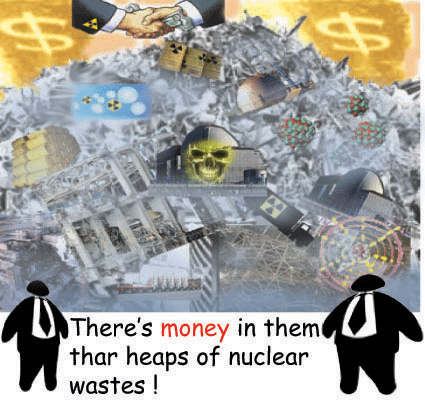
Sellafield seeks partners for £4.8bn decommissioning works. The plant is
looking for up to five partners for the works, which are spread across four
Lots and include remediation, decommissioning and demolition works.
The contract would last for 15 years between 2025 and 2040. The work is being
tendered via the Decommissioning and Nuclear Waste Partners (DNWP)
framework, and has an estimated value which ranges from £3.8bn to a
maximum of £4.6bn. The tender document calls for contractors to be able to
provide a “full suite of expertise and support to deliver decommissioning
activities and projects, including asset care”. The Lots include works in
high security areas, a retrieval partner and an integrated nuclear waste
partner.
New Civil Engineer 1st Aug 2023
Now, not in 15 years’: Call for public vote on Theddlethorpe nuclear waste dump
Campaigners say the area is stuck in limbo. Campaigners are
calling for an immediate public vote on the proposed nuclear waste storage
facility at Theddlethorpe after it was taken off a council agenda last
week.
East Lindsey District Council had been due to discuss whether to move
forward with a public test of support on an underground storage facility.
However this was cancelled as the council sought legal advice, triggering
criticism from both residents and the UK/Ireland Nuclear Free Local
Authorities (NFLA).
The Lincolnite 24th July 2023
Failed Fukushima System Should Cancel Wastewater Ocean Dumping

The global ban on ocean dumping of radioactive waste adopted in 1993 applies only to barrels. It has allowed Britain and France to pump billions of gallons of radioactive wastewater into the Irish Sea and the North Sea respectively, for decades.
BY JOHN LAFORGE, 25 July 23 https://www.counterpunch.org/2023/07/25/failed-fukushima-system-should-cancel-wastewater-ocean-dumping/
From the Fukushima-Daiichi triple-reactor meltdown wreckage, Japan’s government and “Tepco,” the owner, are rushing plans to pump 1.37 million tons (about 3 billion pounds) of radioactive wastewater into the Pacific.
Their record is poor. Their lies are documented. This is not safe, at all.
To keep the three meltdowns’ wasted fuel from melting again, Tepco continuously pours cold water over 880 tons of “corium,” the red-hot rubblized fuel amassed somewhere under three devastated reactors. “That water leaks into a maze of basements and trenches beneath the reactors and mixes with groundwater flowing into the complex,” Reuters reported Sep. 3, 2013.
Most of this water is collected and put through Tepco’s jerry-rigged mechanism dubbed ALPS, for Advanced Liquid Processing System, which it turns out hasn’t processed much of anything.
Tepco, Japan’s Nuclear Regulatory Authority, the International Atomic Energy Agency (IAEA), and much of the media endlessly repeat that ALPS removes over 62 radioactive materials from the ever-expanding volume of wastewater. Reports regularly claim the planned dumping is routine, safe, and manageable.
This unverified PR loop has fooled a lot of people, but the ALPS is a fraud. As early as 2013, the filter system stalled and the IAEA reported that April that ALPS had not “accomplished the expected result of removing some radionuclides,” Reuters reported.
In September 2018, the ALPS was revealed to have drastically failed, forcing Tepco to issue a public apology and a promise to re-filter huge volumes of the waste.
According to Reuters, Oct. 11, 2018, documents on a government committee’s website show that 84 percent of water held at Fukushima contains concentrations of radioactive materials higher than legal limits allow to be dumped.
Among the deadly isotopes still in the waste are cesium-137, strontium-90, cobalt-60, ruthenium, carbon-14, tritium, iodine-129, plutonium isotopes, and more than 54 more.
In a June 14, 2023 op/ed for the China Daily, Shaun Burnie, the Senior Nuclear Specialist at Greenpeace East Asia, reported that the ALPS “has been a spectacular failure,” and noted:
“About 70 percent or 931,600 cubic meters of the wastewater needs to be processed again (and probably many more times) by the ALPS to bring the radioactive concentration levels below the regulatory limit for discharge. Tepco has succeeded in reducing the concentration levels of strontium, iodine, and plutonium in only 0.2 percent of the total volume of the wastewater, and it still requires further processing. But no secondary processing has taken place in the past nearly three years. Neither Tepco nor the Japanese government has said how many times the wastewater needs to be processed, how long it will take to do so, or whether the efforts will ever be successful. … none of these issues has been resolved.”
Tepco says it will re-filter more than 70 percent of the wastewater through ALPS again, a process that itself leaves massive amounts of highly radioactive sludge that must be kept out of the environment for centuries.
Hoping to slow the rush to dump, Professor Ryota Koyama from Fukushima University, said in an interview with China Media Group last May, “If the Japanese government or the Tokyo Electric Power Co. really wants to discharge contaminated water into the sea, they need to explain in more detail whether the nuclides have really been removed.”
International law governing state-sponsored or corporate pollution of the seven seas is relatively useless in challenging Tepco’s outrageous transfer of private industrial poison into the public commons. The global ban on ocean dumping of radioactive waste adopted in 1993 applies only to barrels. It has allowed Britain and France to pump billions of gallons of radioactive wastewater into the Irish Sea and the North Sea respectively, for decades.
Not in our backyard: Securing a referendum over Canada’s plan for a nuclear waste dump.
In the UK, Nuclear Waste Services continues to investigate the
suitability of locating a Geological Disposal Facility (GDF) at one (or
perhaps two) of four sites in West Cumbria and East Lincolnshire.
In Canada, the Nuclear Waste Management Organisation is also looking for a
site for a Deep Geological Repository (DGR), focusing upon Ignace and South
Bruce, both in Ontario. The names may be different, but the intention and
impact will be the same for the sites selected will receive their
respective nation’s high-level radioactive waste which will be disposed of
beneath the sea or below ground.
In the UK and in Canada, local people have
mobilised in opposition to the plans. Aware that British and Canadian
nuclear agencies, and supportive politicians, are in contact to exchange
knowledge and experience, the UK/Ireland NFLAs, working in partnership with
Northwatch in Canada, arranged an online meeting between campaigners in our
two nations. We intend this to be an ongoing dialogue.
NFLA 25th July 2023
USA government – more money, $19 billion, grant for making deadly plutonium
Senate appropriators boost funding for plutonium, uranium production facilities, By Dan Parsons, 21 Jul 23
Nearly $19 billion is included in the Senate Appropriations Committee’s 2024 spending bill for National Nuclear Security Administration nuclear-weapon programs, with funding boosts for planned facilities that will process plutonium and uranium for refurbished…………… (Subscribers only) https://www.exchangemonitor.com/senate-appropriators-boost-funding-for-plutonium-uranium-production-facilities/
Feds digging up nuclear waste in Los Alamos for disposal at Carlsbad-area repository
Adrian Hedden, Carlsbad Current-Argus, 21 Jul 23, https://www.currentargus.com/story/news/2023/07/21/feds-digging-up-nuclear-waste-in-los-alamos-for-disposal-at-carlsbad-area-repository/70426843007/
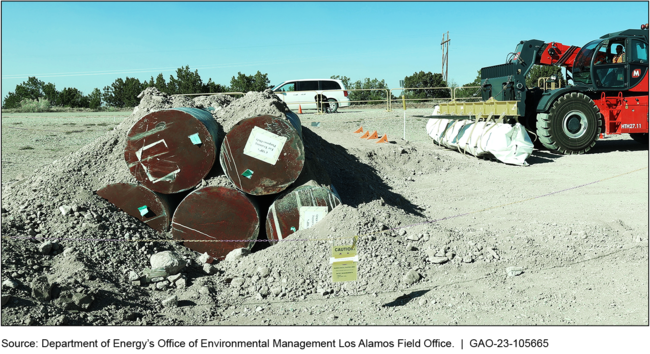
Workers at Los Alamos National Laboratory dug up buried nuclear waste they planned to dispose of at the federal repository near Carlsbad, amid pressure from State officials that the facility prioritize New Mexico waste.
The U.S. Department of Energy’s Los Alamos Field Office and the lab’s cleanup contractor Newport News Nuclear BWXT (N3B) Los Alamos announced Tuesday they began exhuming corrugated metal pipes containing transuranic (TRU) nuclear waste and preparing them for shipment.
At the Waste Isolation Pilot Plant near Carlsbad, TRU waste is disposed of via burial in a salt deposit about 2,000 feet underground, trucked into the site from DOE facilities throughout the country.
TRU waste is made up of irradiated clothing, equipment and other debris from nuclear research and development activities around the U.S.
Before it can be shipped to WIPP, the pipes must be cut using hydraulic sheers, allowing them to be loaded into waste boxes for shipment and disposal.
The pipes weight about 10,000 to 14,000 pounds, and measure about 20 feet long. They are cut into five pieces, with each piece loaded into a box.
It’s occurring at portion of the lab known as Dome 375, and the waste came from Los Alamos’ former radioactive liquid waste treatment facility operating during the Cold War at Technical Area 21 (TA-21).
There were 158 pipes in total transferred from TA-21, records show, containing cemented waste.
They were buried in 1986, where the waste sat until recently when worked began preparing it for final disposal.
The DOE hoped to finish digging up and preparing the pipes for disposal by spring 2024.
More: No progress to report on nuclear waste site aside from Carlsbad-area repository, feds say
To the Pacific islands, the West’s support for Japan’s Fukushima nuclear waste ocean dumping is hypocrisy
Having been used for nuclear tests and dumping by the US and France, the Pacific islands deeply oppose Japan’s plan and see it as a ‘nuclear legacy’ issueThat the likes of Australia and the US support Japan’s plan just ups the region’s geopolitical stakes – and gives China a trump card
Kalinga Seneviratne, SCMP, 18 Jul 23
International Atomic Energy Agency (IAEA) director general Rafael Mariano Grossi, after travelling to Tokyo earlier this month to present a report endorsing Japan’s approach to discharging Fukushima’s treated nuclear waste water into the Pacific, has been trying to convince Japan’s sceptical Pacific neighbours of the authenticity of the report’s findings.
The IAEA, which has opened the door for Tokyo Electric Power Company (Tepco) to dump about 1.3 million tonnes of contaminated water into the Pacific Ocean, insists the controlled, gradual release would have a “negligible radiological impact on people and the environment”.
But the small island nations of the Pacific remain deeply concerned about Japan’s intention to dump nuclear waste into the ocean. They see this as not merely a nuclear safety issue but a “nuclear legacy issue” – the Pacific has been used as a nuclear weapon testing and dumping site since the end of the second world war………………….(Subscribers only) more https://www.scmp.com/comment/opinion/article/3228154/pacific-islands-wests-support-japans-fukushima-nuclear-waste-ocean-dumping-hypocrisy
US turning Ukraine into ‘burial ground’ for lethal waste – Russian envoy
Rt.com 19 Jul 23
Undetonated cluster bombs will make normal life “impossible” in parts of Ukraine, Ambassador Anatoly Antonov has said.
The US is using the Ukrainian battlefield as a dump site for its outdated weapons, Russia’s ambassador to Washington has said, warning that the country will become a graveyard for “lethal waste.”
After the White House claimed it has no plans to replenish the Pentagon’s stockpiles of controversial cluster bombs, Ambassador Anatoly Antonov said the US is “plunging lower and lower in terms of observing elementary moral principles, cynically dumping the lethal waste on Ukraine.”
“Washington wants to use [Ukraine] to dispose of its old weapons, turning the once rich and fertile part of the USSR into a ‘burial ground’ where it will be simply impossible to live,” he said. “Unexploded US submunitions will remain in this territory, as well as piles of scorched metal of the German-made Leopards and other Western materiel.”
In an interview with NBC News on Sunday, White House National Security Advisor Jake Sullivan was asked whether President Joe Biden would continue supplying 155-millimeter cluster bombs to Ukraine. Though he stopped short of a direct answer, Sullivan said the administration is working to build up production capacity for standard 155mm artillery shells and is not looking to replenish its cluster munition stocks. …….
The decision to provide cluster bombs was controversial even for US allies, as more than 120 nations have agreed to ban the weapons due to their tendency to leave behind undetonated submunitions. The unexploded ordnance can remain live in former conflict zones for decades, posing a danger to anyone unfortunate enough to stumble across them.
While NBC’s Chuck Todd pressed Sullivan on whether the US should continue to provide “barbaric weapons” to Kiev, the senior official insisted on America’s “moral authority,” saying the White House would continue to “give Ukraine what it needs in order to not be defenseless in the face of a Russian onslaught.”
Moscow has repeatedly condemned foreign arms transfers to Ukraine, arguing they will only prolong the conflict and do little to deter its military aims. It has singled out weapons such as cluster munitions and depleted uranium rounds as especially problematic, noting they are likely to harm non-combatants in the region long after the fighting is over. https://www.rt.com/russia/579875-us-cluster-bombs-ukraine-graveyard/
Safety lapses at Los Alamos National Laboratory

By Searchlight New Mexico
by Alicia Inez Guzmán, Searchlight New Mexico https://nmpoliticalreport.com/2023/07/17/safety-lapses-at-los-alamos-national-laboratory/
In a windowless corridor of PF-4, the Los Alamos National Laboratory’s plutonium processing facility, the deputy director of weapons stood among a cluster of journalists and National Nuclear Security Administration officials, all clad in anti-contamination lab coats and booties, safety goggles and dosimeters.
“It’s not that scary,” said Robert Webster, during a rare media tour of several rooms brimming with glove boxes, some almost as old as the Cold War-era building itself, others newly installed. “You just have to be careful.”
In these highly classified rooms, each task is the sum of its many protocols, a meticulous choreography that was palpable on a recent morning — June 22 — even in the absence of workers. The respirators, protective clothing, ventilation systems and dosimeters — fail-safes aimed, according to officials, at reducing or detecting the risk of exposure — are routine and required controls at “the plant,” as PF-4 is popularly known. Here, no task can be taken for granted and no movement unintended.
Five years ago, LANL began embarking on a controversial mission — to produce an annual quota of plutonium pits, the triggers for nuclear weapons. Matt Johnson, head of the lab’s Pit Technologies division, characterized it as “probably one of the safest places in New Mexico.”
A recent NNSA investigation portrays another version of the plant, a place cited for its “significant lack of attention or carelessness” in protecting workers and the public, as a Preliminary Notice of Violation read. Released on May 18, the findings detailed four “nuclear safety events” that took place over a five-month period in 2021, including one glove box breach, two floods, and an instance in which too much fissionable material was placed in one area.
The NNSA, as a result, withheld nearly $1.5 million from its 2021 contract award to Triad National Security, the organization that manages and operates the lab. (The NNSA, nonetheless, refrained from exacting additional civil penalties, which could have totalled an extra half a million dollars.)
Its 11-page report revealed an environment in which workers were either too underqualified to perform certain tasks or overburdened by too many tasks to perform them well. Another problem stemmed from faulty equipment, which had presented problems since 1990 and had not been replaced under Triad’s tenure, despite multiple requests.
The report emphasized that Triad routinely focused on “human errors rather than on the conditions that make those errors more likely.”
That particular oversight, in part, led to water entering a ventilation system for multiple rooms and glove boxes — the windowed, stainless-steel containers where radioactive materials are handled. According to the NNSA, it amounted to a violation of “criticality safety requirements.” Water has long been known to enhance fission and, in certain circumstances, cause plutonium to go critical, sending out a blast of blue light and radiation.
The four nuclear safety events cited by the NNSA represented only a small fraction of the many “process deviations” and compliance concerns around handling nuclear materials that have beset the plant since May 2018. That’s the same year the lab was recommended as one of two sites in the country to produce plutonium pits for nuclear warheads.
In an attempt to understand a fuller picture of risks at the plant, Searchlight New Mexico culled through the last five years of weekly reports by the Defense Nuclear Facility Safety Board (DNFSB), a federal watchdog that oversees the U.S. nuclear weapons complex and makes recommendations to the Department of Energy. An analysis like this has never been conducted before, according to the DNFSB.
Searchlight counted at least 100 process deviations at the plant during that period: a mix of safety incidents, emergency events and protocol violations. The examples were wide ranging — from construction accidents and small fires, to floods and worker contamination. Not all had the potential to be catastrophic, but at a facility like PF-4, the consequences can be much higher than in other workplaces.
In 2019, one worker was nearly felled by a 320-pound toxic nuclear waste container and, in 2020, another inhaled plutonium oxide powder — the most dangerous form of plutonium. There was a broken finger, a mysterious head injury and several instances in which containers of toxic waste were backlogged, up to 80 at one point, in a single storage room. The all-important protective gloves inside the glove boxes have on occasion become separated from their ports in the box wall; they’ve also torn on sharp objects or been worn down by tools or overuse. The DNFSB called glove box glove failures and floods “repeat events” — serious incidents they attribute to “poor conduct of operations.” Records show at least 20 such incidents in the last five years that resulted in several instances of skin contamination, though only 2 reports indicated an “uptake” — an absorption of plutonium into the body.
“NNSA is investing billions of dollars in production-related infrastructure at Los Alamos,” a DNFSB spokesperson wrote in an email to Searchlight, “and the Board is continuing to urge commensurate investment in the safety infrastructure needed to ensure workers and the public are adequately protected from potential accidents at PF-4.”
In the June 2020 glove box breach, the worker underwent chelation therapy for significant radiation — on hair, skin and by inhalation — when he “pulled out of the glovebox gloves after weighing and packaging plutonium-238 oxide powder.” As a soluble form of plutonium, oxide powder can begin to circulate in the bloodstream almost immediately and eventually end up in the liver and bones, according to reports. Fourteen other workers were also exposed in that same incident.
Searchlight found other incidents that could be considered outliers. In July 2021, for example, a 4.2 magnitude earthquake hit some 30 miles northwest of the lab, located within the Pajarito Fault System.
The plant’s new glove boxes have been built to withstand an earthquake, according to the DNFSB. But, there are “a large number of existing gloveboxes that do not meet current seismic standards,” the agency’s email to Searchlight made clear.
The worst possible scenario would be a cataclysmic earthquake that triggers a fire at the plant. For almost two decades, the DNFSB has argued that the building’s “passive confinement system” — essentially its capacity to prevent a release of radioactive material from leaking out and reaching the public — is insufficient. After years of back and forth on the matter, and piecemeal enhancements to the plant, the NNSA, in 2022, deemed significant upgrades, including to the ventilation system, were unnecessary — despite DNFSB’s strong recommendations to the contrary.
Another one-off event occurred in February 2019, when two electricians were “inadvertently locked inside a caged storage location” for 40 minutes. “During this time,” the DNFSB reported, “the workers would have been unable to properly respond to alarms associated with a nuclear criticality, an airborne radioactive material release, fire, or other emergency situations requiring egress.”
When asked about a recent spate of glove box and other safety matters at the plant, the lab responded with the following statement:
“PF-4 is one of the safest places in the country as a result of the many redundant safety and security measures in place to protect our workforce, the environment, and the community. We have ongoing programs to ensure the safe handling of materials at TA-55. In the case of glove box breaches, training and controls identified the breaches and allowed us to address them immediately. Employees’ personal protective equipment and the facility and room ventilation systems help keep workers safe at all times.”
Searchlight produced the interactive graphics in this story to help visualize the DNFSB reports. Searchlight’s counts are based on the findings of site inspectors and confirmed by the DNFSB. While there could be many reasons behind an incident, site inspectors categorized the events according to a complex set of procedures. The number of reported incidents in 2022 rose by 33 percent compared to the previous year. In 2022, Triad commenced round-the-clock operations.
Noah Raess contributed to the reporting of this story.
Safety Report Graph:
https://public.tableau.com/app/profile/christian.marquez/viz/Safety_Reports/Dashboard1
Searchlight New Mexico is a nonpartisan, nonprofit news organization dedicated to investigative reporting in New Mexico.
TODAY. Nuclear trash on indigenous land ?- a court decision puts Australia in a very difficult spot
Nuclear waste on Aboriginal land ?- and the Voice to Parliament?
The Australian government is in the process of holding a referendum that would give the indigenous people a Voice to Parliament. Imposing nuclear waste on Aboriginal land is not a good look, is it?
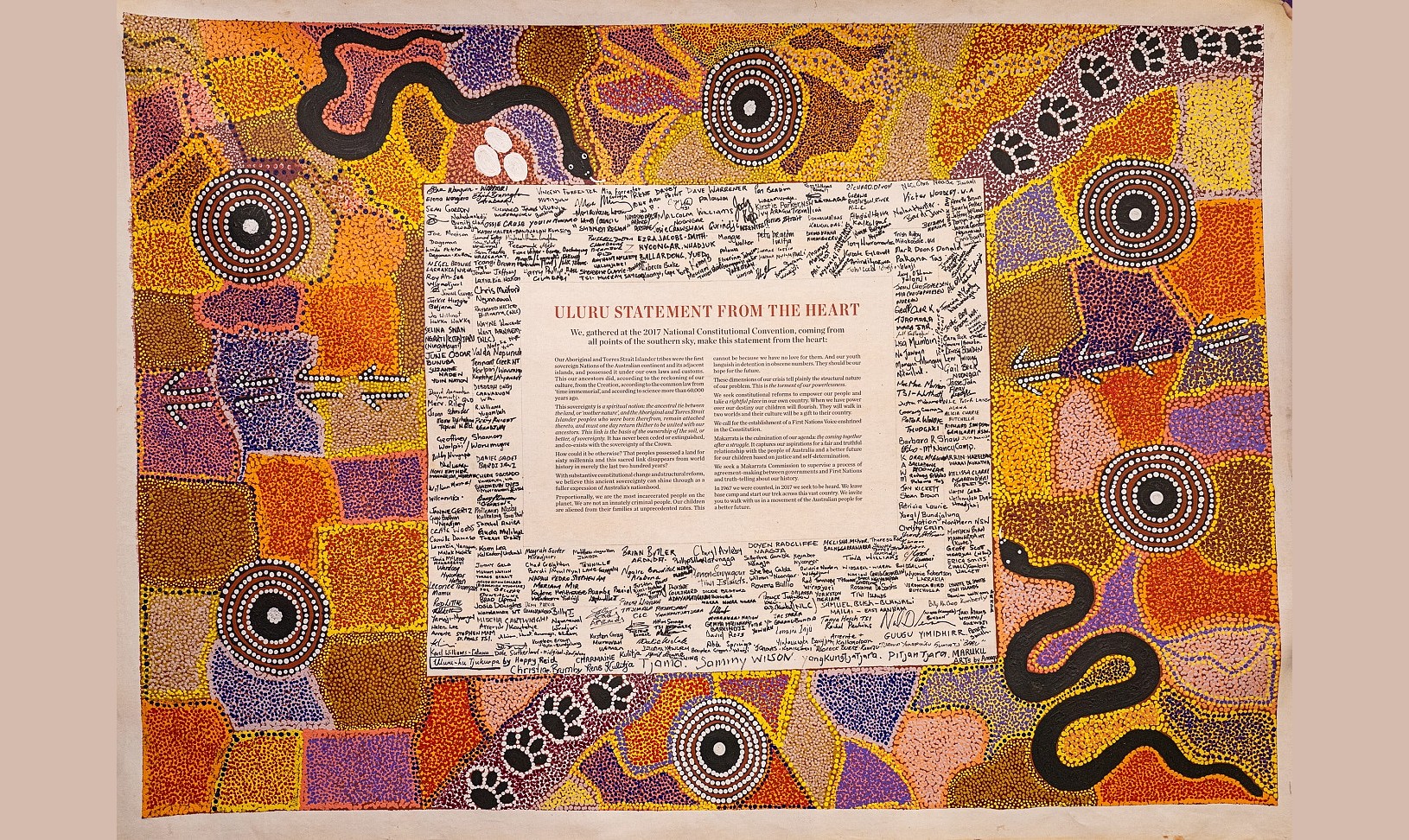
This morning, I heard Professor Ian Lowe, talking to a English journalist, about yesterday’s court decision, which supported the Barngarla people’s opposition to nuclear waste dumping on their land.
Prof Lowe eloquently summarised the importance of this legal decision:
-the Aboriginal people were not consulted when the Morrison Liberal Coalition decided to make a nuclear waste dump on their traditional land.
– this raises problems for the Australian government in selecting any land in this country for nuclear waste dumping
-this has international implications – about any country where the rulers want to impose a nuclear waste dump on indigenous land
-this has implications for the ill-advised (corrupt firm PWC was the advisor) AUKUS decision by the Albanese government to buy U.S nuclear submarines at $369billion. That decision included Australia taking responsibility for the high level radioactive trash from the nuclear submarines. Where to dump that trash?
Of course, the Australian government does have the power to impose the nuclear waste dump anyway, against indigenous wishes, even against South Australian State government wishes,
The Australian government is in the process of holding a referendum that would give the indigenous people a Voice to Parliament. Imposing nuclear waste on Aboriginal land is not a good look, is it?

Canada’s Civil Society Groups Call for Public Debate on Radioactive Waste Management Strategy

Ottawa – Civil society organizations are calling on Natural Resources Minister Jonathon Wilkinson to honour commitments made by his predecessor Seamus O’Regan to engage with Canadians on appropriate strategies for the management of radioactive waste rather than simply rubber stamping the nuclear industry’s recommended approach. On July 4th the Nuclear Waste Management Organization (NWMO) announced that it had submitted its “recommendations” for an Integrated Strategy for Radioactive Waste to Minister Wilkinson. There have been no communications from the federal government on next steps, including public engagement. The NWMO is a consortium of nuclear power operators, led by Ontario Power Generation. |
In 2020 the NWMO was tasked by the federal government with the development of recommendations for an integrated radioactive waste strategy by (then) Minister of Natural Resources Seamus O’Regan. In his assigning the task to the NWMO, O’Reagan was clear that the product of the NWMO’s exercise was to be provided for review and consideration by the Government.
Civil society organizations have previously expressed strong concern and disagreement with NRCan’s decision to ask the Nuclear Waste Management Organization (NWMO) to lead the development of an “integrated strategy for radioactive waste”, saying they understand and accept the nuclear industry having input into Canada’s radioactive waste management strategy but fully reject any notion that industry determines the strategy. Concern has increased with the July 4th announcement by the NWMO that they had submitted their recommendations being followed by silence from the federal government on how Canadians and Indigenous people will be engaged in the promised review.
| Ottawa – Civil society organizations are calling on Natural Resources Minister Jonathon Wilkinson to honour commitments made by his predecessor Seamus O’Regan to engage with Canadians on appropriate strategies for the management of radioactive waste rather than simply rubber stamping the nuclear industry’s recommended approach. On July 4th the Nuclear Waste Management Organization (NWMO) announced that it had submitted its “recommendations” for an Integrated Strategy for Radioactive Waste to Minister Wilkinson. There have been no communications from the federal government on next steps, including public engagement. The NWMO is a consortium of nuclear power operators, led by Ontario Power Generation.In 2020 the NWMO was tasked by the federal government with the development of recommendations for an integrated radioactive waste strategy by (then) Minister of Natural Resources Seamus O’Regan. In his assigning the task to the NWMO, O’Reagan was clear that the product of the NWMO’s exercise was to be provided for review and consideration by the Government. Civil society organizations have previously expressed strong concern and disagreement with NRCan’s decision to ask the Nuclear Waste Management Organization (NWMO) to lead the development of an “integrated strategy for radioactive waste”, saying they understand and accept the nuclear industry having input into Canada’s radioactive waste management strategy but fully reject any notion that industry determines the strategy. Concern has increased with the July 4th announcement by the NWMO that they had submitted their recommendations being followed by silence from the federal government on how Canadians and Indigenous people will be engaged in the promised review. “For a government that ran on a platform of restoring the trust of Canadians in decision-making it has been extraordinary to watch key decisions being handed over to the nuclear industry” observed Brennain Lloyd from the northern Ontario environmental group Northwatch. In a letter sent today, a large range and number of civil society organizations called on Minister Wilkinson and Prime Minister Trudeau to fully engage in a review of the industry recommendations.The letter also expressed profound disappointment in Canada’s Policy for Radioactive Waste and Decommissioning (the Policy) released on March 31st saying Canada’s new policy leaves the nuclear industry in charge and the public and the environment at risk. |
Key priorities were omitted, including the establishment of a national waste management agency independent of the industry, a ban on the extraction of plutonium from nuclear fuel waste, a long-term strategy for the 230 million tonnes of radioactive wastes from uranium mining, and a commitment to keep all radioactive waste isolated from the biosphere in perpetuity”, commented Gordon Edwards, President of the Canadian Coalition for Nuclear Responsibility.
‘Atomic Fallout’: Records reveal government downplayed, ignored health risks of St. Louis radioactive waste for decades
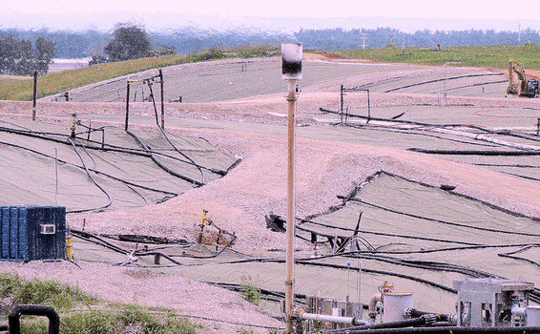
In May, almost 50 years after the waste was dumped at West Lake, the Environmental Protection Agency acknowledged what many residents had long feared: Radiological waste was spread throughout the West Lake Landfill, not confined to two specific portions as officials had long maintained.
The West Lake Landfill contamination was discovered in 1974. It was designated a Superfund site in 1990, and there is still no date certain for when the cleanup will begin.
MuckRock, by Allison Kite, Edited by Derek Kravitz, Jason Hancock 12 July 23
For kids like Sandy Mitchell, Ted Theis and Janet Johnson, childhood in the North St. Louis County suburbs in the 1960s and ‘70s meant days playing along the banks or splashing in the knee-deep waters of Coldwater Creek.
They caught turtles and tadpoles, jumped into deep stretches of the creek from rope swings and ate mulberries that grew on the banks.
Their families — along with tens of thousands of others — flocked to the burgeoning suburbs and new ranch style homes built in Florissant, Hazelwood and other communities shortly after World War II. When the creek flooded, as it often did, so did their basements. They went to nearby Jana Elementary School and hiked and biked throughout Fort Belle Fontaine Park.
Growing up, they never knew they were surrounded by massive piles of nuclear waste left over from the war.
Generations of children who grew up alongside Coldwater Creek have, in recent decades, faced rare cancers, autoimmune disorders and other mysterious illnesses they have come to believe were the result of exposure to its waters and sediment.
“People in our neighborhood are dropping like flies,” Mitchell said.
The earliest known public reference to Coldwater Creek’s pollution came in 1981, when the U.S. Environmental Protection Agency listed it as one of the most polluted waterways in the U.S.
By 2016, the Centers for Disease Control and Prevention was advising residents to avoid Coldwater Creek entirely. Cleanup of the creek is expected to take until 2038. A federal study found elevated rates of breast, colon, prostate, kidney and bladder cancers as well as leukemia in the area. Childhood brain and nervous system cancer rates are also higher.
“Young families moved into the area,” Johnson said, “and they were never aware of the situation.”
Theis, who grew up just 75 yards from the creek and played in it daily, died in August at the age of 60 from a rare cancer. Mitchell is a breast cancer survivor whose father died from prostate cancer. Johnson’s sister has an inoperable form of glioblastoma and other family members, including her father, daughter and nephew, have had various cancers.
Families who lived near Coldwater Creek were never warned of the radioactive waste. Details about the classified nuclear program in St. Louis were largely kept secret from the public. But a trove of newly-discovered documents reviewed by an ongoing collaboration of news organizations show private companies and the federal government knew radiological contamination was making its way into the creek for years before those findings were made public.

Radioactive waste was known to pose a threat to Coldwater Creek as early as 1949, records show. K-65, a residue from the processing of uranium ore, was stored in deteriorating steel drums or left out in the open near the creek at multiple spots, according to government and company reports.
A health expert who, as part of this project, was recently presented with data from a 1976 test of runoff to the creek concluded it showed dangerous levels of radiation 45 years ago.
Federal agencies knew of the potential human health risks of the creek contamination, the documents show, but repeatedly wrote them off as “slight,” “minimal” or “low-level.” One engineering consultant’s report from the 1970s incorrectly claimed that human contact with the creek was “rare.”
The Missouri Independent, MuckRock and The Associated Press spent months combing through thousands of pages of government records obtained through the Freedom of Information Act and interviewing dozens of people who lived near the contaminated sites, health and radiation experts and officials from government agencies.
Some of the documents, obtained by a nuclear researcher who focuses on the effects of radiation, had been newly declassified in the early 2000s. Others had been previously lost to history, packed away in government archives and not released publicly until now. (Read the documents here and learn more about our methodology here.)
All told, the documents from the now-defunct Atomic Energy Commission; its successors, the U.S. Department of Energy and the Nuclear Regulatory Commission; and the Environmental Protection Agency span the 75-year lifespan of the nuclear saga in St. Louis.
It starts in downtown St. Louis, where uranium was processed, and at the St. Louis airport, where it was stored at the end of the war; a monthslong move of the waste to industrial sites on Latty Avenue in suburban Hazelwood and a quarry in Weldon Spring, next to the Missouri River; an illegal dumping of waste at the West Lake Landfill in Bridgeton in the 1970s by a private company; and the declaration of the landfill as a federal toxic Superfund site in 1990.
Since then, the contaminated sites have been subjected to a seemingly endless cycle of soil, air and water testing, anxious community meetings attended by an ever-growing chorus of angry residents and panic when a subsurface smoldering event, similar to an underground fire, at the Bridgeton landfill threatened the radioactive waste buried nearby. That fire sent noxious and hazardous fumes into surrounding neighborhoods. The company in charge of the Bridgeton landfill now spends millions a year to contain it.
The documents have a familiar cadence: Year after year, decade after decade, government regulators and companies tasked with cleaning up the sites downplayed the risks posed by nuclear waste left near homes, parks and an elementary school. They often chose not to fully investigate the potential harms to public health and the environment around St. Louis………………………………………………………………………………………………………………………………………………
Illegal dumping of radioactive waste
When the Atomic Energy Commission sold the remnant nuclear waste, it anticipated being able to get rid of the more than 100,000 tons of toxic residues without spending any money.
The first company to purchase the waste, Continental Mining and Milling Co. of Chicago, borrowed $2.5 million to buy it in 1966 and then, shortly after, went bankrupt. Continental’s lender, Commercial Discount of Chicago, re-purchased the waste at auction for $800,000 and, after failing to get a bidder at a second auction, sold it to the Cotter Corp. To turn a profit, Cotter would ultimately dry the material and ship it to its uranium mill plant in Cañon City, Colorado………………………………………………………….
Cotter asked the government to bury the waste at Weldon Springs multiple times, in the late 1960s and early 1970s, but were rebuffed each time, meeting minutes show.
So, over a period of 2 ½ months in the summer and fall of 1973, Cotter took the problem into its own hands, without telling government regulators.
The company mixed the radioactive waste with tens of thousands of tons of contaminated soil from the site and illegally dumped it in a free, public landfill called West Lake, under three feet of soil and other garbage……………………………..
The AEC released Cotter from its St. Louis permit without immediate sanctions in 1974, but the company is partially responsible for the cleanup costs at the site.
Cotter’s parent company, General Atomics, did not respond to multiple requests for comment……………………………………………………………….
‘Tip of the iceberg’
In 1999, when Robbin Dailey moved into Spanish Village, a neighborhood of only a few dozen homes with its own park less than a mile from the back side of West Lake Landfill, she had no idea she was living next to a Superfund site.
When the EPA decided initially in 2008 to cap the waste at West Lake and leave it in place, Dailey never heard about the plan. Two years later, in 2010, she was alerted to the radioactive waste when a “subsurface smoldering event” — a type of chemical reaction that consumes landfilled waste like a fire but lacks oxygen — sent a pungent stench into the air around her home.
Dailey and her husband had their house tested and found thorium in the dust at hundreds of times natural levels. They sued the landfill’s owners, Republic Services, as well as the Cotter Corp. and Mallinckrodt.
Dailey said she and the companies had “resolved” their legal issues, but she, like all of the residents in North St. Louis County, was still in the dark about where within the landfill site the waste actually was.
Court records reveal a bevy of lawsuits against the private companies involved, at various times, with the West Lake Landfill. Not only that, but the landfill operators sued Mallinckrodt in an attempt to force the maker of the radioactive waste to pay for part of the cleanup.
Since the late 1970s, federal regulators repeatedly failed to uncover the true extent of contamination at West Lake.
In October 1977, the Nuclear Regulatory Commission used a helicopter to take hour-long passes back and forth over the landfill from an altitude of 200 feet. The goal was to measure gamma radioactivity coming from the site using specialized equipment.
While the effort correctly identified two areas with high levels of radiation, it had serious limitations, experts say. A survey of that type can miss contamination if it’s buried deep underground or if the ground is obstructed by vegetation.
And it did…………………………………
In May, almost 50 years after the waste was dumped at West Lake, the Environmental Protection Agency acknowledged what many residents had long feared: Radiological waste was spread throughout the West Lake Landfill, not confined to two specific portions as officials had long maintained……………………..
EPA officials said the contamination was found all over the property — in some areas at the surface and, in other areas, at great depths.
The agency looked at the dates on newspapers above and below the radioactive waste in two areas of the site previously thought to be uncontaminated to approximate when it was dumped, said Chris Jump, the EPA’s lead remedial project manager for the site.
It’s likely been there the whole time.
…………………………… Dawn Chapman, who left her job and co-founded Just Moms STL to advocate for the community around the landfill, said the EPA used to treat her and other activists like their fears were hysterical.
………………
A staffer with the Missouri Department of Natural Resources wrote in 1980 that contamination at the landfill was more severe and widespread than previously thought. In 1986 and 1990, onsite sampling showed possible radiological contamination in the groundwater in areas outside the sections of the landfill thought to be radioactive.
In 1987, the state classified the landfill as a hazardous waste site. The radioactive waste was in direct contact with the groundwater, the agency said in its annual report.
“Based on available information, a health threat exists due to the toxic effects of chemicals and low-level uranium wastes buried at the site and the possibility that off-site migration of these materials might occur,” the agency wrote.
…………………………. The West Lake Landfill contamination was discovered in 1974. It was designated a Superfund site in 1990, and there is still no date certain for when the cleanup will begin.
…………………………………….. Back to the drawing board
EPA’s first plan for the site would not have included moving the radioactive waste at all.
In 2008, the Environmental Protection Agency approved a plan for the landfill’s “primarily responsible parties” — the government and private contractors responsible for the site — to place a cap over the landfill and leave the waste in place.
Following criticism from the surrounding communities, EPA asked the Department of Energy, the Cotter Corp. and the landfill’s owner, Republic Services, to test the site again.
In the meantime, an underground fire brought a new level of scrutiny.
Starting in 2010, the Bridgeton landfill, which sits adjacent to the West Lake Landfill, has been experiencing a subsurface smoldering event.
………………………………………………….. The depth and severity of the new contamination the EPA found is not yet clear. The agency is preparing to release a report that will include the readings, a spokesperson said. A remedial design portion of the project is underway, the last step before the excavation begins.
But EPA doesn’t have a date certain as to when work on the project might start.
Curtis Carey, a spokesperson for the EPA, said despite decades of delays, the agency is planning next steps for the landfill “with a great deal more information because of our purposeful approach than was available 10, 15, 20 years ago.”
The following people contributed reporting, writing, editing, document review, research, interviews, photography, illustrations, analysis and project management. Chris Amico, Dillon Bergin, Kelly Kauffman and Derek Kravitz of MuckRock; Jason Hancock, Allison Kite and Rebecca Rivas of The Missouri Independent; Michael Phillis and Jim Salter of The Associated Press; Sarah Fenske, Theo Welling, Tyler Gross and Evan Sult of the Riverfront Times; EJ Haas, Madelyn Orr, Sydney Poppe, Mark Horvit and Virginia Young of the University of Missouri; Katherine Reed of the Association of Health Care Journalists; Liliana Frankel, Erik Galicia, Laura Gómez, Lauren Hubbard, Sophie Hurwitz and Steve Vockrodt; and Gerry Everding and Carolyn Bower of the original St. Louis Post-Dispatch team that published the seven-part “Legacy of the Bomb” series in 1989. https://www.muckrock.com/news/archives/2023/jul/12/st-louis-landfill-toxic-superfund/
Nuclear waste issue must be resolved before new facility can be explored, says Saugeen Ojibway Nation
APTN News, By Kierstin Williams, Jul 11, 2023
The Bruce Nuclear Station was built in the 1960s without the consultation or consent of the Saugeen Ojibway Nation.
The Saugeen Ojibway Nation is not making any commitments on the proposed expansion of the Bruce Power nuclear plant until the issue of whether nuclear waste will be stored on its territory is resolved.
Last week, Todd Smith, Ontario’s minister of energy, announced preliminary studies with Bruce Power to explore the expansion of Canada’s largest nuclear plant. The expansion would see an additional 4,800 megawatts of nuclear generation at the site.
The Bruce Power Nuclear Generating Station is located on the eastern shore of Lake Huron, the traditional territory of the Saugeen Ojibway Nation (SON), which is comprised of Saugeen First Nation and the Chippewas of Nawash First Nation.
“We have stated clearly that SON will not support any future projects until the history of the nuclear industry in our Territory is resolved and there is a solution to the nuclear waste problems that is acceptable to SON and its People,” said both chiefs in a letter on behalf of Saugeen and Nawash.
SON says the Bruce Nuclear Station was built in the 1960s without its consultation or consent.
The Nuclear Waste Management Organization (NWMO), the federal agency responsible for the long-term management of Canada’s used nuclear waste, plans to select a host site for its proposed deep geological nuclear waste facility by the fall of 2024. The facility would hold used nuclear fuel in a vault approximately 500 metres underground.
The two possible sites are within Saugeen Ojibway’s traditional territory and Wabigoon Lake Ojibway Nation near Ignace, Ont.
“The long overdue resolution of the nuclear legacy issues must occur before any future project is approved,” said Chief Conrad Ritchie and Ogimaa Kwe Veronica Smith in the letter. “Similarly, we must also have a plan in place that has been agreed to by SON to deal with all current and future nuclear waste before any future projects could go ahead.
“In no way does this announcement commit the SON to new nuclear development on SON territory,” added the letter posted on the band’s Facebook page…………………………………………..
In response to SON’s letter, NWMO said the storage site plan “will only proceed in an area with informed and willing hosts, where the municipality, First Nation communities, and others in the area are working together to implement it.
“This means the proposed South Bruce site would only be selected to host a deep geological repository with Saugeen Ojibway Nation’s willingness,” said the NWMO. https://www.aptnnews.ca/featured/nuclear-waste-issue-must-be-resolved-before-new-facility-can-be-explored-says-saugeen-ojibway-nation/
Takeaways from AP’s examination of nuclear waste problems in the St. Louis region
BY MICHAEL PHILLIS AND JIM SALTER, July 12, 2023
ST. LOUIS (AP) — Uranium processing in the St. Louis area played a pivotal role in developing the nuclear weapons that helped bring an end to World War II and provided a key defense during the Cold War. But the cost to the region has been staggering.
Eight decades after Mallinckrodt Chemical Works first began the dangerous task of processing uranium at a sprawling complex near downtown St. Louis, the federal government is still removing soil from a creek and cleaning up a landfill — nuclear contamination sites. Last year, a grade school closed amid worries that contamination from the creek got onto the playground and inside the building.
The government has paid out millions to former Mallinckrodt workers with cancer, or their survivors. Many people with rare cancers who grew up near the waste sites believe their illnesses, too, are connected to radiation exposure.
The Associated Press examined hundreds of pages of internal memos, inspection reports and other items dating to the early 1950s. This story is part of an ongoing collaboration between The Missouri Independent, the nonprofit newsroom MuckRock and AP. The government documents were obtained by outside researchers through the Freedom of Information Act and shared between the news organizations.
Some takeaways from the work:
ST. LOUIS ROLE IN NUCLEAR WORK…………………………………………..
CONTAMINATION IN SEVERAL SITES OF REGION
The Mallinckrodt plant has been closed for years. Nuclear waste was stored near Lambert Airport, where it contaminated a milling site and fouled Coldwater Creek. Other spent uranium was illegally dumped at a landfill in Bridgeton, Missouri, also near the airport. In neighboring St. Charles County, quarries in Weldon Spring were contaminated from uranium processing that moved there in the 1950s.
The plant itself, the milling site and the Weldon Spring site are deemed remediated by the government. Cleanup of Coldwater Creek isn’t expected to finish until 2038, though the Army Corps of Engineers believes the worst of the contamination has been removed. Federal officials plan to remove some of the waste at West Lake Landfill and cap the rest, but the timeline is uncertain.
Mallinckrodt didn’t immediately respond to messages from AP.
DOCUMENTS SHOW INDIFFERENCE TO DANGERS
Examples of indifference to the dangers posed by nuclear waste were abundant in the documents obtained through open records requests. Edwin Lyman, director of nuclear power safety with the Union of Concerned Scientists, told the AP that secrecy was paramount in the era, allowing bad practices to continue for far too long. Also, environmental standards at the time were far looser than today…………………………………………………………………
HEALTH FEARS FOR SOME IN THE REGION
Many people who worked at Mallinckrodt eventually developed cancer. Experts say directly linking cancer to radiation exposure is difficult in part because of the complexity of the disease. Still, the federal government provides compensation of up to $400,000 for stricken former nuclear workers across the U.S., or their survivors. About $23 billion has been paid out over the past two decades.
Today, activists want compensation for those who live near the haphazardly discarded waste. Dawn Chapman and Karen Nickel of St. Louis County formed the group Just Moms STL in 2007 after seeing so many friends and neighbors come down with rare cancers.
………………… Jim Gaffney, now in his 60s, has been battling cancer most of his life and is convinced that his childhood playing in Coldwater Creek is to blame.
Gaffney was diagnosed with Stage 4 Hodgkin’s Disease in 1981 and given little chance to survive. A bone-marrow transplant saved him, but the toll of the radiation, chemotherapy and the disease has resulted in hypertension, heart failure and multiple bladder tumors.
“I’m still here, but it’s not been easy,” Gaffney said. https://apnews.com/article/nuclear-contamination-waste-st-louis-takeaways-39378ddae0cdca09f972196c6965cd28—
1 This Month

of the week – Shut Down Drone Warfare!


Tell the Ukrainian Government to Drop Prosecution of Peace Activist Yurii Sheliazhenko

Petition to revoke the licensing of the Near Surface Nuclear Disposal Facility (NSDF) at Chalk River. https://www.ourcommons.ca/petitions/en/Petition/Details?Petition=e-7247
To see nuclear-related stories in greater depth and intensity – go to https://nuclearinformation.wordpress.com
-
Archives
- April 2026 (91)
- March 2026 (251)
- February 2026 (268)
- January 2026 (308)
- December 2025 (358)
- November 2025 (359)
- October 2025 (376)
- September 2025 (257)
- August 2025 (319)
- July 2025 (230)
- June 2025 (348)
- May 2025 (261)
-
Categories
- 1
- 1 NUCLEAR ISSUES
- business and costs
- climate change
- culture and arts
- ENERGY
- environment
- health
- history
- indigenous issues
- Legal
- marketing of nuclear
- media
- opposition to nuclear
- PERSONAL STORIES
- politics
- politics international
- Religion and ethics
- safety
- secrets,lies and civil liberties
- spinbuster
- technology
- Uranium
- wastes
- weapons and war
- Women
- 2 WORLD
- ACTION
- AFRICA
- Atrocities
- AUSTRALIA
- Christina's notes
- Christina's themes
- culture and arts
- Events
- Fuk 2022
- Fuk 2023
- Fukushima 2017
- Fukushima 2018
- fukushima 2019
- Fukushima 2020
- Fukushima 2021
- general
- global warming
- Humour (God we need it)
- Nuclear
- RARE EARTHS
- Reference
- resources – print
- Resources -audiovicual
- Weekly Newsletter
- World
- World Nuclear
- YouTube
-
RSS
Entries RSS
Comments RSS
 nuclear-news