Cumbrian councils urged to poll public over controversial nuclear dump plan

The Nuclear Free Local Authorities have sent a joint letter to the parish and town councils located in the West Cumbria search areas under consideration for a Geological Disposal Facility urging them to consider polling their parishioners over the controversial plan.
The co-signatories are the NFLAs English Forum Chair, Councillor David Blackburn, Councillor Jill Perry, Green Party Group Leader on Cumberland Council and Jan Bridget, co-founder of Millom against the Nuclear Waste Dump.
Nuclear Waste Services, a division of the taxpayer-funded Nuclear Decommissioning Authority, is engaged in long-term investigations to determine the suitability of locating the GDF on the West Cumbrian coast. The facility would have a surface site to receive regular shipments of high-level radioactive waste from Sellafield and this waste would then be transported along tunnels out under the Irish Sea, before the GDF once filled is sealed.
Two search areas have been designated Mid-Copeland and South Copeland, with their boundaries drawn in conformity with Cumberland Council electoral wards, and NWS has established a Community Partnership in each, which provide some limited oversight to the process. Members of the Community Partnerships include elected members from Cumberland Council, deemed the Relevant Principal Local Authority under the guidance established for the plan, and representatives from each of the parish and town councils encapsulated in the search areas.
The UK Government and NWS are adamant that the final selection of the site will be determined by two factors – the suitability of the geology and the acceptance of the plan by the local host community.
Geological investigations may take up to 15 years to complete, with desktop, aerial and seismic surveys being augmented in the second stage by deep exploratory boreholes for rock sampling. NWS are expected to periodically sense check public perceptions of the plan until in the final stages a Test of Public Support is conducted to determine if local people are willing to see their area taken forward.
The so-signatories are unhappy that there is no mechanism built into the plan to conduct interim opinion polls to identify public feeling over time, and they are disappointed that most local councils have yet to conduct their own polls to determine if their appointed representatives to the Community Partnership are reflecting the opinions of their parishioners. They would like parish and town councils to follow the lead shown by Whicham which took the initiative, independently of NWS, and did so./………………………………………………….
more https://www.nuclearpolicy.info/news/cumbrian-councils-urged-to-poll-public-over-controversial-nuclear-dump-plan/
Extended Licence given for the storage of highly radioactive waste at Chernobyl

Chernobyl gets six-year extension for work on original shelter
07 December 2023, https://www.world-nuclear-news.org/Articles/Chernobyl-s-original-shelter-gets-six-year-extensi
An extension has been agreed for the dismantling of the parts of the original shelter facility most at risk of collapse. The structure was built in 206 days following the 1986 accident at Ukraine’s Chernobyl nuclear power plant.
The licence for the storage of radioactive waste within the shelter has been extended from 2023 to 2029, with a 2025 deadline for the development of a new design for the dismantling of “unstable structures with an unacceptably high probability of collapse”, and a 31 October 2029 deadline for completion of the dismantling.
The Shelter Object – also known as the ‘sarcophagus’ – still contains the molten core of the reactor and an estimated 200 tonnes of highly radioactive material. The stability of the structure has developed into one of the major risk factors at the site. A project to shore up the structure was completed in mid-2008, but at that time the maximum life of the stabilised structures was determined as the end of 2023…………………………………..

The NSC is the largest moveable land-based structure ever built – with a span of 257 metres, a length of 162 metres, a height of 108 metres and a total weight of 36,000 tonnes equipped – and with a lifetime of 100 years has been designed to allow for the eventual dismantling of the ageing makeshift shelter from 1986 and the management of radioactive waste. It has also been designed to withstand temperatures ranging from -43°C to +45°C, a class-three tornado, and an earthquake with a magnitude of 6 on the Richter scale.
Because of its vast dimensions the structure had to be built in two halves which were lifted and successfully joined together in 2015. The process of sliding the entire arched structure from its assembly point into position over unit 4 was completed on 29 November 2016. The original licence, from the State Nuclear Regulatory Inspectorate of Ukraine, for decommissioning was issued in 2019 following fitting out and more than a year of pilot operation and testing of the New Safe Confinement building.
Nuclear tomb plan at Blind River criticized
The Cameco company, which owns, among other things, a uranium refinery in Blind River, is planning the creation of a site burying nuclear waste in this community.
Francis Beaudry, The Times Hub, 6 Dec 23
Environmental organization Northwatch is sounding the alarm over a proposed nuclear waste landfill that could be installed near the community of Blind River, in northern Ontario, in the case of a dismantling of nuclear facilities in the south of the province.
Northwatch criticizes the actions of the Canadian Nuclear Safety Commission (CNSC) and nuclear fuel producer Cameco, which allegedly agreed not to make public plans to dismantle its Port Hope facilities.
These plans, according to the organization, include the creation of an underground nuclear waste disposal site at Blind River.
Cameco operates three uranium fuel manufacturing plants for nuclear power plants in Ontario. Its production and conversion plants are in Port Hope, on the north shore of Lake Ontario, located about an hour east of Toronto.
The company also owns a uranium refinery, which is located in Blind River, on the north shore of Lake Huron.
According to Brennain Lloyd, coordinator project for Northwatch, the preliminary plan for dismantling the Port Hope facilities, which was submitted by Cameco, does not contain enough details.
Brennain Lloyd claims that Cameco neglects the need for consultation in the file of its preliminary decommissioning plan.
They published a four-page summary, lots of photos, a very basic description of their dismantling plans for their three factories, she says.
What they are planning is to dismantle their facilities in Port Hope, and then send the material, which is radioactive, to a nuclear tomb that hasn’t even been built yet. They say they are planning to build this site on the grounds of their Blind River facilities, she explains.
In addition to the proximity of this potential landfill site to the Great Lakes, Ms. Lloyd deplores that the summary does not provide for public consultations.
If the CNSC gives advance approval to this decommissioning plan and in 30 years they put this plan into action, will they tell the population who have fears that they missed their chance and that this plan was approved a long time ago, she questions.
A Cameco spokesperson said by email that there was no timetable for ‘a dismantling of the Port Hope facilities……………………………..
The Canadian Nuclear Safety Commission and the Town of Blind River did not respond to our requests for interviews. https://thetimeshub.in/nuclear-tomb-plan-at-blind-river-criticized/
—
‘Dirty 30’ and its toxic siblings: the most dangerous parts of the Sellafield nuclear site
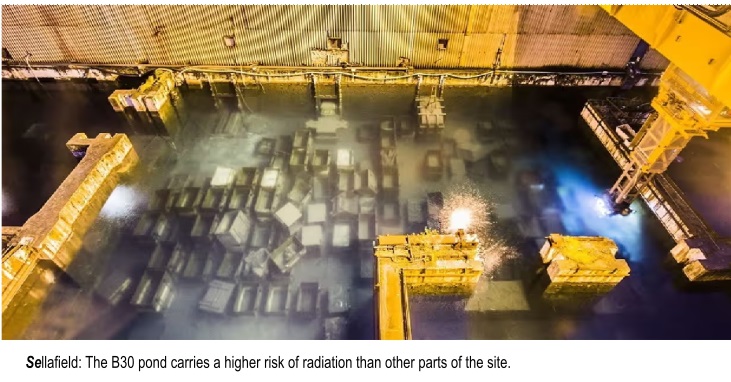
Cracks in ponds holding highly radioactive fuel rods lead to safety fears
https://www.theguardian.com/business/2023/dec/05/dirty-30-dangerous-sellafield-nuclear-site-ponds-safety-fears . by Alex Lawson and Anna Isaac
Radioactive sludge
In the early 1950s, a huge hole was dug into the Cumbrian coast and lined with concrete. Roughly the length of three Olympic swimming pools and known as B30, it was built to hold skip loads of spent nuclear fuel.
Those highly radioactive rods came from the 26 Magnox nuclear reactors that helped keep Britain’s lights on between 1956 and 2015. When B30 was first put to work, it was designed to keep the fuel rods submerged for only three months before reprocessing work was carried out.
But when 1970s miners’ strikes shut down coal power stations and forced greater reliance on nuclear plants, more spent fuel than could be quickly reprocessed was generated. The silos and ponds, built to prevent airborne contamination if the fuel or radioactive sludge dried out, rapidly filled up. Meanwhile, the fuel corroded in the water, breaking down into radioactive sludge.
Debris from elsewhere within Sellafield was later added and the pond was abandoned when new facilities were built in 1986, clouding over and leaving workers on site with little idea what lay beneath its murky waters.
‘A nightmare job with no blueprint’
In 2014, photos of B30 and nearby B29 leaked via an anonymous source to the Ecologist led to concerns over the radioactive risk associated with the poor repair of the ponds.
The two facilities were used until the mid-1970s for short-term storage of spent fuel until it could be reprocessed and used for producing plutonium for the military.
The Ecologist pictures showed hundreds of highly radioactive fuel rods in ponds housed within cracked concrete overgrown with weeds, with seagulls bathing in the water. The images, taken over a period of seven years, led the nuclear safety expert John Large to warn that any breach of the wall would “give rise to a very big radioactive release”.
At the time, the Office for Nuclear Regulation (ONR), the nuclear safety regulator, said that while the old ponds bring “significant challenges”, their appearance “does not mean that operations and activities on those facilities are unsafe”.
It took 15 years and £1.5bn to bring B30 to a point where decommissioning could begin several years ago, with builders limited to working only half an hour a day close to the pool to prevent them from exceeding radiation exposure limits. Remotely operated vehicles, normally used to help with submarine rescues, were originally deployed but quickly failed, often within hours, because of the overpowering radiation. Newer models have since been used to vacuum up nuclear sludge, which is then moved to alternative long-term storage.
Sellafield hopes to have drained the pond by the early 2030s, and demolished it by the 2050s.
A new facility, the sludge packaging plant, has been built to receive radioactive sludge from B30. The nuclear watchdog said there have been some “regulatory challenges along the way … including noncompliance with fire regulations”.
Although the reservoir is still nicknamed “Dirty 30”, it was officially rebranded in 2018 as the First Generation Magnox storage pond.
But one former longstanding employee says that, despite the cracks, the contents of the ponds are gradually improving: “I have seen it at its worst. The water quality was horrendous; you could stand on the roof and look down and not see a single thing in there.
“In the control room, there are a group of lads using PlayStation-like controls for robots to pick up bits the size of a 50p piece and hoover up the sludge. It’s cutting edge.”
He adds: “[Decommissioning Sellafield] is the biggest job in nuclear and there is no blueprint. It’s a dream and a nightmare job. There has been real progress – every skip that comes out makes it safer and reduces the hazard risk.”
Toxic neighbours
B30 sits in a “separation zone” that requires greater security checks, and carries a higher risk of radiation, than the rest of the town-sized site. Although B30 is the most notorious crumbling building on Sellafield’s sprawling estate, it is far from the only problem child.
Nearby is B38, used to store highly radioactive cladding from reactor fuel rods. It was also used heavily during the miners’ strike of 1972, when nuclear plants were relied on to produce extra power, and it proved impossible to process all the waste that was being generated. Two years later, the public’s view of the nuclear industry was sharpened by the launch of the Protect and Survive advice on surviving a nuclear attack.
In B29 lie the toxic remains of Britain’s attempt to become an atomic superpower during the cold war.
Windscale, a former munitions factory, was selected to host the first atomic reactors, known as Pile 1 and Pile 2, after the second world war. They produced plutonium for nuclear weapons, and efforts were rushed through to allow Britain to explode its own atomic bombs by 1952.
The toxic waste from this programme was stored in B29 – which stretched between Piles 1 and 2 – and a massive silo, B41. There have been efforts to secure and remove the waste in B41 in recent years.
There are also grave concerns over leaks from the Magnox swarf storage silo (MSSS), described as “one of the highest-hazard nuclear facilities in the UK”. It was constructed as a radioactive waste store in four stages between 1964 and 1983 and has not been in active use since the 1990s. The waste is stored under water to prevent ignition and to maintain constant temperatures.
The silo was first found to be leaking radioactive water into the ground in the 1970s and there are concerns that work to retrieve the waste, planned over the next three decades, has the “potential to reopen historic leak paths” and introduce new ones, according to the ONR.
Earlier this year, the ONR warned that a leak from the MSSS was likely to continue to 2050, with “potentially significant consequences” if it gathered pace.
The government’s long-term plan is to bury Britain’s nuclear waste deep underground in a geological disposal facility. The project, estimated to cost between £20bn and £53bn, would receive intermediate-level waste from nuclear facilities by 2050 and high-level waste and spent fuel from 2075.
It will echo similar projects in Sweden, France and Finland, which is nearing completion of its storage cave. A government body, Nuclear Waste Services, which is running the project, is in the process of engaging with different communities – two near Sellafield, and another near Mablethorpe on the east coast – in an attempt to win local approval for the plans.
Revealed: Sellafield nuclear site has leak that could pose risk to public
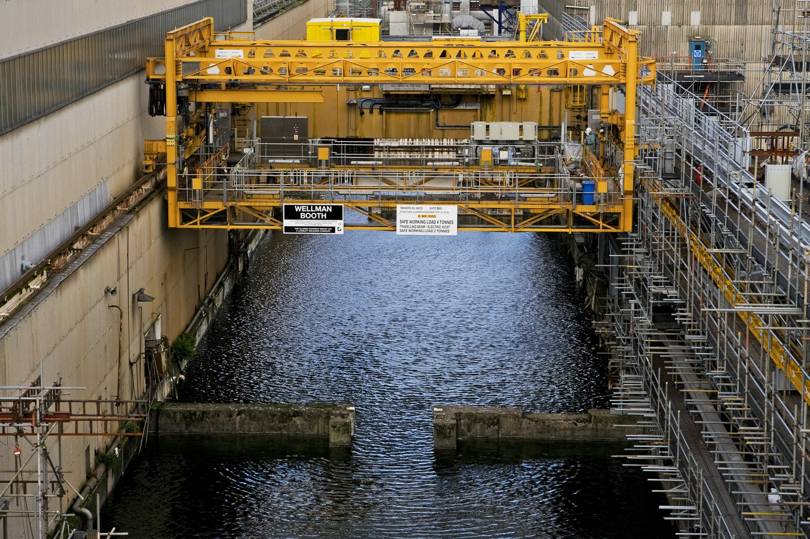
Safety concerns at Europe’s most hazardous plant have caused diplomatic tensions with US, Norway and Ireland
Anna Isaac and Alex Lawson, Guardian, 5 Dec 23
Sellafield, Europe’s most hazardous nuclear site, has a worsening leak from a huge silo of radioactive waste that could pose a risk to the public, the Guardian can reveal.
Concerns over safety at the crumbling building, as well as cracks in a reservoir of toxic sludge known as B30, have caused diplomatic tensions with countries including the US, Norway and Ireland, which fear Sellafield has failed to get a grip of the problems.
The leak of radioactive liquid from one of the “highest nuclear hazards in the UK” – a decaying building at the vast Cumbrian site known as the Magnox swarf storage Silo (MSSS) – is likely to continue to 2050. That could have “potentially significant consequences” if it gathers pace, risking contaminating groundwater, according to an official document.
Cracks have also developed in the concrete and asphalt skin covering the huge pond containing decades of nuclear sludge, part of a catalogue of safety problems at the site.
These concerns have emerged in Nuclear Leaks, a year-long Guardian investigation into problems spanning cyber hacking, radioactive contamination and toxic workplace culture at the vast nuclear dump.
Sellafield, a sprawling 6 sq km (2 sq mile) site on the Cumbrian coast employing 11,000 people, stores and treats nuclear waste from weapons programmes and nuclear power generation, and is the largest such facility in Europe.
A document sent to members of the Sellafield board in November 2022 and seen by the Guardian raised widespread concerns about a degradation of safety across the site, warning of the “cumulative risk” from failings ranging from nuclear safety to asbestos and fire standards.
A scientist on an expert panel that advises the UK government on the health impact of radiation told the Guardian that the risks posed by the leak and other chemical leaks at Sellafield have been “shoved firmly under the rug”.
A fire in 1957 at Windscale, as the site was formerly known, was the UK’s worst nuclear accident to date. An EU report in 2001 warned an accident at Sellafield could be worse than Chornobyl, the site of the 1986 disaster in Ukraine that exposed five million Europeans to radiation. Sellafield contains significantly more radioactive material than Chornobyl.
The report said events that could trigger an atmospheric release of radioactive waste at the plant included explosions and air crashes.
Such is the concern about its safety standards that US officials have warned of its creaking infrastructure in diplomatic cables seen by the Guardian. Among their concerns are leaks from cracks in concrete at toxic ponds and a lack of transparency from the UK authorities about issues at the site. The UK and the US have a decades-long relationship on nuclear technology.
Concerns about how Sellafield is run have also led to tensions with the Irish and Norwegian governments.
Norwegian officials are concerned that an accident at the site could lead to a plume of radioactive particles being carried by prevailing south-westerly winds across the North Sea, with potentially devastating consequences for Norway’s food production and wildlife. A senior Norwegian diplomat told the Guardian that they believed Oslo should offer to help fund the site so that it can be run more safely, rather than “run something so dangerous on a shoestring budget and without transparency”………………………………………………………………………………………………………………….more https://www.theguardian.com/business/2023/dec/05/sellafield-nuclear-site-leak-could-pose-risk-to-public
Sellafield: ‘bottomless pit of hell, money and despair’ at Europe’s most toxic nuclear site

Described as a nuclear Narnia, the site is a source of economic support for Cumbria – and a longstanding international safety concern.
by Anna Isaac and Alex Lawson, 5 Dec 23 https://www.theguardian.com/business/2023/dec/04/sellafield-money-europe-toxic-nuclear-site-cumbria-safety
Ministers who visit Sellafield for the first time are left with no illusions about the challenge at Europe’s most toxic nuclear site.
One former UK secretary of state described it as a “bottomless pit of hell, money and despair”, which sucked up so much cash that it drowned out many other projects the economy could otherwise benefit from.
For workers, it is a place of fascination and fear.
“Entering Sellafield is like arriving in another world: it’s like nuclear Narnia,” according to one senior employee. “Except you don’t go through a cupboard, you go through checkpoints while police patrol with guns.” Others call it nuclear Disneyland.
Sellafield, a huge nuclear dump on the Cumbrian coast in north-west England, covers more than 6 sq km (2 sq miles). It dates to the cold war arms race, and was the original site for the development of nuclear weapons in the UK in 1947, manufacturing plutonium. It was home to the world’s first full-scale commercial nuclear power station, Calder Hall, which was commissioned in 1956 and ceased generating electricity in 2003.

It has been at the centre of disaster and controversy, including the Windscale fire of 1957. The blaze was considered one of the worst nuclear incidents in Europe at the time, and carried a plume of toxic smoke across to the continent. The milk from cows on 200 sq miles of Cumbrian farmland was condemned as radioactive.
Sellafield began receiving radioactive waste for disposal in 1959, and has since taken thousands of tons of material, from spent fuel rods to scrap metal, which is stored in concrete silos, artificial ponds and sealed buildings. A constant programme of work is required to keep its crumbling buildings safe and create new facilities to contain the toxic waste. The site is expected to be in operation until at least 2130.
The estimated cost of running and cleaning up the site have soared. Sellafield is so expensive to maintain that it is considered a fiscal risk by budgetary officials. The latest estimate for cleaning up the Britain’s nuclear sites is £263bn, of which Sellafield is by far the biggest proportion. However, adjustments to its treatments in accounts can move the dial by more than £100bn, more than the UK’s entire annual deficit. The cost of decommissioning the site is a growing liability that does not count towards the calculation of the UK’s net debt.
Sellafield is owned by the Nuclear Decommissioning Authority, a quango sponsored and funded by the Department for Energy Security and Net Zero that is tasked with cleaning 17 sites across the UK.
The site has a workforce of 11,000, with its own railway, road network, laundry services for normal and potentially radioactive garments, and its own police force with more than 80 dogs. It has almost 1,000 buildings.
Sellafield’s impact on the environment has been a longstanding concern. Local animals, including swallows, have been found to carry radioactive traces from the site with them. Debate rages locally over just how toxic the “atomic kittens” – stray cats that inhabit the site – may be. Sellafield says cats are screened for radioactivity before they are rehomed.
The activities at the site are a matter of significant scrutiny to countries including the US, Norway and Ireland, given that Sellafield hosts the largest store of plutonium in the world and takes waste from countries such as Italy and Sweden.
Excellent table here on original, showing current status of the world’s nuclear reactors
Norwegians have long feared the effects of an accident at the site, with modelling suggesting that prevailing south-westerly winds could carry radioactive particles from a large incident at the site across the North Sea, with potentially devastating consequences for its food production and wildlife.
Norway and Ireland were involved in efforts to halt the release of technetium-99, a radioactive metal, into the sea by Sellafield. In 2003, Norway accused Sellafield of ruining its lobster business.
Jobs at Sellafield are often considered to be a golden ticket, according to sources, as the site offers long-term employment with above-average wages in a region with few big employers.
Sellafield is at the heart of the so-called “nuclear coast” in West Cumbria, sandwiched between the Lake District national park and the Irish Sea. At its southern end, BAE Systems in Barrow-in-Furness builds nuclear submarines. Land neighbouring the site has long been earmarked for a new nuclear power station but plans for Moorside collapsed in 2018 when the Japanese conglomerate Toshiba walked away.
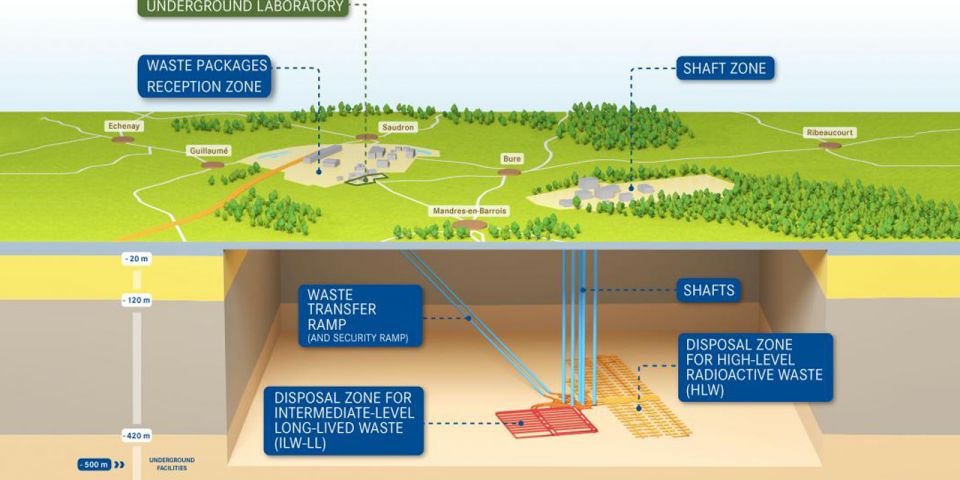
A blank cheque for France’s Industrial Centre for Geological Disposal (Cigéo) does not prove that it is safe.
In September 2022, 32 organizations and 30 residents jointly filed an
appeal contesting the declaration of public utility (DUP) which was granted
to the Cigéo project (deep geological burial project for the most
radioactive waste) by decree on July 7, 2022.
This decision allowed the
National Agency for Radioactive Waste Management (ANDRA) to acquire the
missing land control for surface installations and the plumbness of
underground works, i.e. approximately 3,500 hectares (the equivalent of the
surface area of Lille) and to expropriate if necessary.
More than a year
later, on December 1, 2023, the Council of State rendered its decision.
Despite all the uncertainties and inaccuracies of the impact study of the
Cigéo project, ANDRA has succeeded in painting with scientific virtues the
fact that it is unable to provide precise evaluations, even with a
Declaration of ‘Public Utility (DUP) of 6,000 pages and almost 30 years of
studies.
It was enough for the Agency to affirm that it will do its best to
precisely identify the impacts of its project and to analyze and counter,
as the construction of Cigéo progresses, all their consequences. We do not
understand how such a project was able to obtain a DUP when it lacks so
much precise “basic” information. Let us remember: the declaration of
public utility facilitates land control, or even the start of work on other
so-called “preparatory” developments for Cigéo and allows the
industrial site to be physically anchored in the territory.
But for those
who read this decision a little too quickly, no, Cigéo is still not
“validated”. The project still needs to pass the stages of creation
authorization which, without giving up, we will attack by all means when
the time comes. We will at least have warned current decision-makers and
present generations and left messages for future generations, engraved in
stone in the archives of the Republic and its Councils.
Sortir du Nucleaire 1st Dec 2023
https://www.sortirdunucleaire.org/CIGEO-un-blanc-seing-qui-ne-signifie-pas-son
Nuclear Power: UK’s Financial Challenge Unveiled
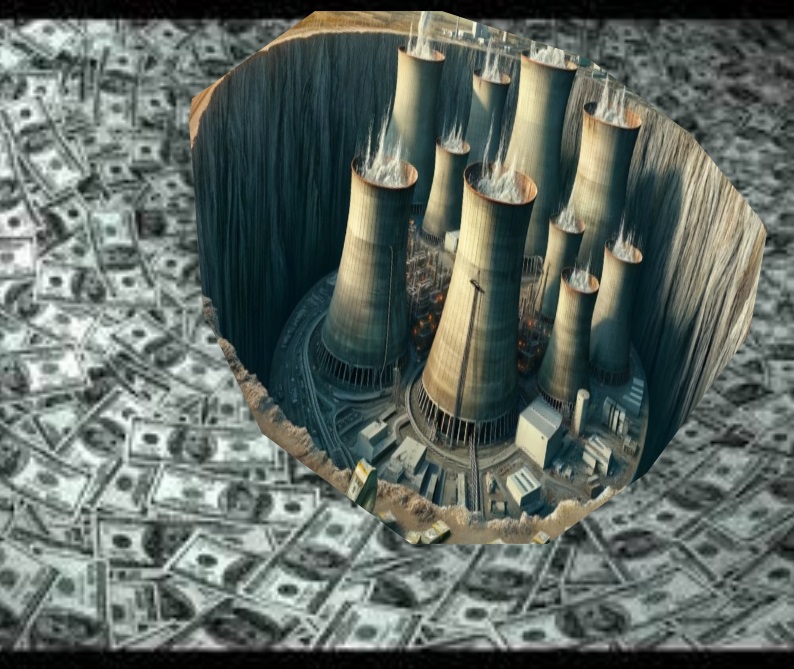
the actual cost might reach as high as £10 billion per reactor, resulting in an astonishing cumulative expense for the decommissioning process. …
this substantial cost could ultimately fall on taxpayers, raising concerns about the financial burden on the public.
Dev X Noah Nguyen, November 21, 2023
The UK’s Commitment to Nuclear Power and Financial Challenges
The United Kingdom’s dedication to nuclear power is becoming a financially challenging commitment as the dismantling expenses for its nuclear generating facilities continue to escalate. These costs have been advantageous for businesses involved in the dismantling process but a noteworthy expenditure for UK taxpayers
Regardless of the substantial costs associated with the new nuclear reactors at Hinkley Site C and the rising price of clean-up initiatives, the nation’s government remains committed to nuclear technology. This unwavering commitment is driven by the belief that nuclear power is crucial for achieving the UK’s long-term energy security and climate change goals. However, critics argue that increased investment in renewable energy sources could provide similar benefits, without the high financial burden and safety concerns associated with nuclear power……………………………………………………
Concerns Regarding Decommissioning Costs and Life Expectancy of Reactors
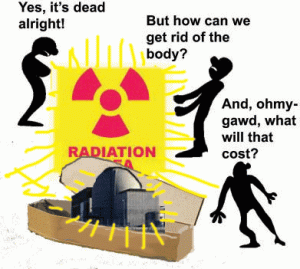
Nearly all of the remaining functional reactors are scheduled for closure by 2028, except Sizewell B, anticipated to stay in operation until 2035. With a life expectancy of roughly 40 years—considerably shorter than the 60 to 80 years frequently claimed by the sector—questions emerge about the demolition costs for the existing 23 reactors and the two under construction at Hinkley Point C.
As these reactors reach the end of their life cycle, it is crucial to plan and allocate resources effectively for their dismantling and waste disposal. The cost of decommissioning and managing nuclear facilities can significantly impact the overall economic feasibility of the energy generated, emphasizing the need for accurate cost estimations and environmentally responsible strategies.
Projected Costs of Dismantling and Importance of Effective Management
By the end of 2022, the UK’s Nuclear Decommissioning Authority (NDA) projected a total dismantling cost of £149 billion. If this figure encompasses Hinkley Site C, it would equate to about £6 billion per reactor. This substantial financial investment highlights the importance of thoroughly managing the decommissioning process to ensure effective resource allocation. With the growing push towards renewable energy sources, proper management and safe dismantling of nuclear reactors have become increasingly significant for the country’s transition towards sustainable energy.
Higher Potential Costs and the Financial Burden on Taxpayers
However, Professor Stephen Thomas from the University of Greenwich’s energy policy department posits that the actual cost might reach as high as £10 billion per reactor, resulting in an astonishing cumulative expense for the decommissioning process. He further elaborates that this substantial cost could ultimately fall on taxpayers, raising concerns about the financial burden on the public. To mitigate such consequences, proper planning and establishing an adequate funding source must be undertaken for a feasible and efficient decommissioning process…………………………………………………………………………………….
What are the concerns regarding the decommissioning costs and life expectancy of nuclear reactors in the UK?
With functional reactors scheduled for closure and shorter life expectancies than often claimed, there are concerns about the demolition costs for the existing reactors and effective management of resources for dismantling and waste disposal. The cost of decommissioning can significantly impact the overall economic feasibility of nuclear-generated energy and necessitates accurate cost estimations and environmentally responsible strategies………….. https://www.devx.com/news/nuclear-power-uks-financial-challenge-unveiled/
Tories, Labour clash over Milton Keynes nuclear waste claims
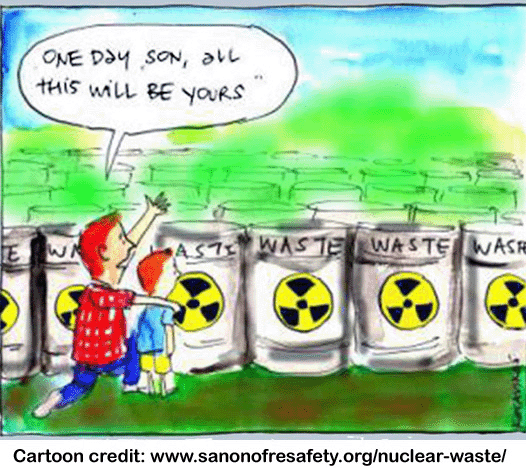
Claims that Milton Keynes is being considered as a site to store nuclear
waste have sparked a war of words between the Labour and Conservative
parties. The Labour Leader of Milton Keynes City Council Peter Marland
claimed that a site in the north of the city had been identified as a
potential dumping ground for nuclear waste.
He said that Nuclear Waste
Services, the body responsible for managing the nuclear waste generated
from UK power stations, has contacted the council about an “interested
party” looking for a site. Nuclear Waste Services has been approached for
comment. In an email seen by the BBC Local Democracy Reporting Service
(LDRS) a council official said they had been contacted by a member of the
government body who “confirmed that they will ‘close out’ with the
interested party, meaning the initial assessment of a site in MK will go no
further”.
Milton Keynes Labour said it had launched a petition to oppose
the “plans” that will be sent to the Secretary of State for Energy
Security and Net Zero, Claire Coutinho.
Bucks Free Press 21st Nov 2023
UK Has £10 Billion Per Nuclear Reactor Decommissioning Bottomless Pit
estimate in late 2022 was that the program was likely to cost £260 billion given the cost trends. That’s £10.4 billion per reactor, an order of magnitude higher than the industry average of three years ago.
Whether £6 billion or £10 billion, these numbers should be giving national energy policy makers pause. After all, those costs are going to be paid in the future in future value dollars that will be inflated. They won’t be getting magically smaller due to discounting, but should be included in cost cases with the discounting rates built in.
Clean Technica, , Michael Barnard
The decommissioning costs for the UK’s nuclear generation are coming home to roost, and they are laying golden eggs for the firms that won the business. For UK citizens, not so much. Despite the very high costs of both the new nuclear reactors at Hinkley Site C, the rapidly rising costs of clean up and the much cheaper alternatives available, the country’s current administration remains committed to the technology. Something is likely to give.
The UK is like the USA and France, a western nuclear military power. They built and operated four nuclear powered submarines with nuclear missiles and two nuclear powered aircraft carriers. That gave them one of the preconditions for success for commercial nuclear electricity generation.
They built all of the 14 shut down and 9 currently operating nuclear generation plants between 1957 and 1995, satisfying the conditions of success of a three to four decade build out to maintain master builders, creation of a nuclear construction industry with skilled, certified and security validated resources, and building a couple of dozen reactors to amortize the national program across.
They built all reactors with a very narrow set of designs, first the Magnox which also created weapons grade plutonium and then the AGR which was a modified Magnox optimized for electricity generation, not plutonium manufacturing. The high similarity and only two designs across all 23 reactors satisfied another criterion for success of a nuclear program…………….
Naturally, the nuclear program was a national strategic priority for the UK with bi-partisan support between the Conservatives and Labour, satisfying another condition of success.
This was a blueprint for a successful nuclear electrical generation program, and why nuclear generation is a poor fit for free market economics.
Despite no longer having the obvious conditions for success for a new nuclear program, the British government got behind the Hinkley Point C construction of two new EPR reactors with their unproven design. That program is years late and 50% over budget as a result. The reactors are GW scale, with 3.2 GW between the two reactors so have one condition for success out of six. The UK government also have planned two EPRs at the Sizewell site, with one of the innumerable Conservative Prime Ministers of the past decade committing £100 million of governmental money in a vain attempt to get any private investors interested. No schedule has been set for construction of those reactors.
But now the reactors are shut down or about to be shut down. Most of the remaining operating reactors will be off the grid by 2028, with only Sizewell B hanging on until 2035. All reactors had roughly a 40 year lifespan, not the 60 to 80 years often claimed by the industry, including the 60 year claim for Hinkley Point C.
How much will it cost to decommission those 23 reactors and the two Hinkley Point C reactors still under construction? The last time I looked at nuclear decommissioning costs and duration was three years ago. At the time, the average was roughly a billion US dollars and a century of duration per site.
Well, the UK’s nuclear program is definitely exceeding that. As of late 2022, the official estimate of the UK’s Nuclear Decommissioning Authority (NDA) was £149 billion. Assuming Hinkley Site C was rolled into that number, that would be a cost of £6 billion per reactor, or more than many nuclear advocates claim new nuclear can be built for.
However, Stephen Thomas, a professor of energy policy at the University of Greenwich and a regular analyst of the nuclear industry with a publication history on energy and nuclear programs with a global reach stretching back to 2004, has a slightly different expectation. He first published on the UK’s NDA in 2005 and has been tracking costs closely since, including with freedom of information requests to get accurate numbers.
His estimate in late 2022 was that the program was likely to cost £260 billion given the cost trends. That’s £10.4 billion per reactor, an order of magnitude higher than the industry average of three years ago.
Whether £6 billion or £10 billion, these numbers should be giving national energy policy makers pause. After all, those costs are going to be paid in the future in future value dollars that will be inflated. They won’t be getting magically smaller due to discounting, but should be included in cost cases with the discounting rates built in.
Given the magnitude of the costs, effectively every MWh generated by the UK fleet of reactors cost substantially more than its official stated cost. The price will be paid, after all.
If there were no alternatives to nuclear generation, then this wouldn’t be a problem compared to global warming. But, of course, this is 2023 and there are proven, effective, efficient and reliable forms of low-carbon electrical generation that do compete with nuclear energy, wind and solar. ……………………………………
The full lifecycle costs of nuclear energy are fairly well established now, and they are much higher than for renewables, transmission and storage. The conditions for success for nuclear programs are well established as well, and there isn’t a single country in the world that has fulfilled them in the 21st Century. Even China has failed, in my assessment as their industrial policy of exporting nuclear reactors of any type foreign buyers might want overrode energy policy requirements to build only a single design.
It’s unclear to me what blend of ideology, tribalism and magical thinking are combining to make countries think that their nuclear programs are unique, and that they will succeed at them when there are clear alternatives. https://cleantechnica.com/2023/11/19/uk-has-e10-billion-per-nuclear-reactor-decommissioning-bottomless-pit/
The Deeper Dig: A plan for what’s left of Vermont Yankee nuclear power plant
Vermont’s only nuclear plant is about two years away from being fully decommissioned.
VT Digger By Emma Cotton and Sam Gale Rosen, November 20, 2023
For decades, Vermont Yankee, a nuclear power plant in Vernon, was the largest producer of electricity for the state.
The plant has been shut down since 2014, and the company that now owns it is in the process of deconstructing it. That company, NorthStar, has recently submitted a plan that describes in detail the final steps of decommissioning, which is projected to be completed ahead of schedule, by 2026.
However, national developments mean that radioactive spent fuel on the site is likely to stay where it is for the foreseeable future.
Host Sam Gale Rosen spoke to VTDigger environmental reporter Emma Cotton, who has been covering the decommissioning process.
Emma:………………………………………………………………………………………………………………………………………… In 2010, Vermont lawmakers voted in favor of denying that 20-year license renewal. They had safety concerns, particularly after the plant had a tritium leak, which is a radioactive substance. That decision became the subject of a federal lawsuit about whether the state or the feds had authority over the plant. But soon enough, that issue was of little consequence. In 2013, citing the economic environment, Entergy announced that it plans to shut Vermont Yankee down
It officially disconnected from the grid and shut down on Dec. 29, 2014. And then the private company NorthStar — which decommissions nuclear plants and other energy facilities like coal plants around the country — they bought Vermont Yankee in 2019, and they are using funds set aside by Entergy to complete this decommissioning work…………………
Vermont’s only nuclear plant is about two years away from being fully decommissioned, at which point the site will look a lot like an open lot, with the exception of 58 spent fuel casks, which will remain there, likely, for a long time……………………………………………………………………………………….
Sam: So they’re on track to have the facility disassembled before 2026. But the other thing you’ve been covering is what happens to the spent fuel, right?
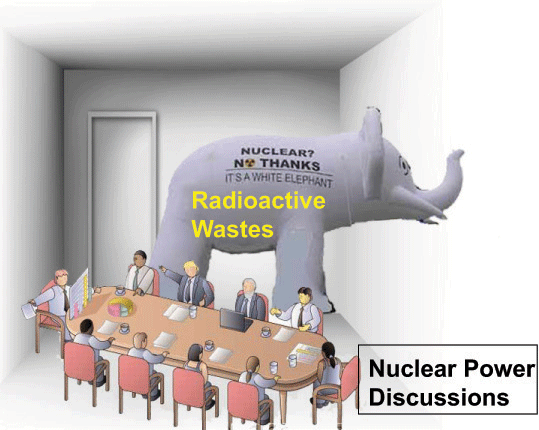
Emma: Yeah, this is kind of the elephant in the room, I think, for Vernon, the town where this is located. So after the fuel rods were used to heat water, they were transferred to cooling towers, and the process of cooling brought their radioactivity down. For a long time nuclear plants around the country were designed to temporarily store spent fuel this way, in cooling pools, and then they would be transferred to one or more federally designated areas for permanent storage.
But the federal government has not found a permanent place to store spent fuel. There has been a lot of conversation about a site in Nevada — Yucca Mountain — but there has been strong local opposition to storing the entire country’s nuclear waste there.
So nuclear plant owners had to find another storage solution. And so they started storing spent fuel in what are called dry casks, which are metal or concrete cylinders that form shells outside of the fuel rods. And according to the NRC, that shell shields people pretty effectively from this highly radioactive spent fuel. So Entergy transferred all of their spent fuel into dry casks, and now there are 58 of those that remain on the site. It’s a 2-acre part of the parcel.
NorthStar does ship some radioactive material to a facility in Texas, but it doesn’t have anywhere to send its spent fuel. So according to Northstar CEO, Scott State, the fuel will remain there until the feds come up with another plan. And that could be a while. So NorthStar will own the spent fuel until it’s removed from the property……………………………………………………………………………………………………………………………………………………. https://vtdigger.org/2023/11/20/the-deeper-dig-a-plan-for-whats-left-of-vermont-yankee-nuclear-power-plant
Behind the Scenes at a U.S. Factory Building New Nuclear Bombs

The workers who make pits face these risks every day
The U.S. is ramping up construction of new “plutonium pits” for nuclear weapons
Scientific American, BY SARAH SCOLES 1 Dec 23 [excellent illustrations]
This article is part of “The New Nuclear Age,” a special report on a $1.5-trillion effort to remake the American nuclear arsenal.
Within every American nuclear weapon sits a bowling-ball-size sphere of the strangest element on the planet. This sphere, called a plutonium pit, is the bomb’s central core. It’s surrounded by conventional explosives. When those explosives blow, the plutonium is compressed, and its atoms begin to split, releasing radiation and heating the material around it. The reaction ignites the sequence of events that makes nuclear weapons nuclear.
In early nuclear bombs, like the ones the U.S. dropped on Japan in World War II, the fission of plutonium or uranium and the fatal energy released were the end of the story. In modern weapons, plutonium fission ignites a second, more powerful stage in which hydrogen atoms undergo nuclear fusion, releasing even more energy. The U.S. hasn’t made these pits in a significant way since the late 1980s.
But that is changing. The country is modernizing its nuclear arsenal, making upgrades to old weapons and building new ones. The effort includes updated missiles, a new weapon design, alterations to existing designs and new pits. To accomplish the last item, the National Nuclear Security Administration has enacted a controversial plan to produce 50 new pits a year at the Savannah River Site in South Carolina and 30 pits a year at Los Alamos National Laboratory in New Mexico, the birthplace of the bomb. The first pits will be designed for a weapon called W87-1, which will tip the new intercontinental ballistic missile, called Sentinel. After that the complex will produce pits for other bomb designs.
Not everyone believes this work is necessary. Pit production foments controversy because it’s costly and potentially risky and because the existing pits might still work for a while. The physics of plutonium is complex, and no one knows when the original pits will expire. The details of how the pits are made and how they work are among America’s most closely guarded secrets. Yet in June 2023 Los Alamos officials invited a group of journalists to tour the facility for the first time in years.
We were there as the lab and the broader National Nuclear Security Administration Complex were embarking on a charm offensive to support the new plutonium work. They have to win over the tax-paying public and recruit some 2,500 new employees for the job. Some of those workers must do high-hazard work that requires expertise the country has largely let slip since the last days of the cold war. ………………………………………………………………………………………………………………..
…………………..The plutonium used for weapons exists only because people made it.
……………………………………………….. …….Plutonium’s genesis was repeated in reactors for decades. In fact, scientists made so much that no new plutonium is required for the new pits at Savannah River and Los Alamos—the current supply can be repurposed, reshaped, reborn.
None of those actions, though, will be simple because plutonium is not simple……………………………………………………………………………………….. Its most famous trick, of course, is its propensity for radioactive decay, through which it transforms itself out of existence.
This tendency is also what makes it so dangerous. Inhaled plutonium decays in the body, releasing alpha particles (helium nuclei) that can wreak havoc. The isotope plutonium 238, used as a heat and power source but not in weapons, exhibits other strange behaviors. “If you spill it in the laboratory, it will move around on its own,” Martz says. The oomph from a plutonium atom’s decay sends it shooting across a surface. “It can get everywhere,” he adds.
Plutonium’s strangeness comes from its arrangement of electrons……………………………………………………………………………………………………………………………………………………………………..
In the excitement of these early scientific discoveries, the point of the work would sometimes get lost: it was all in the service of creating a deadly superweapon. In 1945 the U.S. dropped a uranium fission bomb on Hiroshima and then sent a plutonium bomb—essentially a pit encased in explosives—to devastate Nagasaki. The bombs killed tens of thousands of people immediately and more after the fact. As Manhattan Project physicist I. I. Rabi had feared, according to a quotation in the 2005 book American Prometheus, “the culmination of three centuries of physics” was a weapon of mass destruction.
Soon after the war, production of plutonium pits migrated to a facility outside Boulder, Colo. Called Rocky Flats, it could churn out thousands of pits a year—a level of productivity perhaps enabled by its violation of environmental regulations, which in 1989 resulted in a federal raid and then a permanent shutdown. “The public wasn’t considered at the time,” says Bob Webster, deputy director of weapons at Los Alamos. ………………………………………………………………………………………………………………………………….
How aging affects a pit is the subject of contention, but some things are certain: As the plutonium atoms in a pit decay, their products damage the crystal structure of the plutonium that remains, creating voids and defects. These decays also contaminate the pit with helium, americium, uranium and neptunium, among other things. In 50 years a kilogram of plutonium will amass around 0.2 liter of helium. As pits change, their performance and safety in any conditions—including just sitting on a shelf—become questionable.
Scientists still don’t know the lifetime of a plutonium pit. …………………………………………………….. The National Nuclear Security Administration’s own studies have suggested the pits will last at least 150 years but also that their degradation could result in surprise defects. And scientists may never know exactly what those defects do or how they would affect an explosion because the ostensible point of nuclear weapons is to never use them.
So far restarting American pit production is proving challenging. Los Alamos’s efforts are at least a year behind schedule, and Savannah River’s are more like five years delayed.
The Defense Nuclear Facilities Safety Board and other critics have claimed that PF-4 isn’t resilient enough against the kind of earthquake geologists now know could occur in Los Alamos. Such significant shaking and the fires it could cause, the board alleged at a hearing last year, could result in plutonium contamination that reaches the public.
……………………… Other safety concerns have come up recently, though. In May the National Nuclear Security Administration released an investigation about four 2021 incidents: one criticality safety violation, one breach that resulted in skin contamination for three workers, and two flooding events that sent water toward fissionable materials. The agency determined that the contractor that manages Los Alamos had violated safety, procedural, management and quality-assurance rules.
………………………………………………………………………………………….. On the tour, we are forbidden from setting our notebooks down lest potential contamination stick to them. Should we drop them, a radiological control technician—who has been following us the whole time and scans our hands and feet for radioactivity anytime we leave a room—would measure each page before returning them.
…………………… In some rooms, radioactive waste is packaged and waiting to go to a storage facility, with the dosage one might receive from standing near it written on the ground. We are never allowed to forget that this is a dangerous place.
The workers who make pits face these risks every day………………………………………………………………………………
All of this effort and investment is being made in the hopes that the pits never serve their active purpose. The U.S., like all nuclear nations, stockpiles weapons in a delicate game of deterrence, the idea being that the existence of our equally or more capable weapons will stop others from using theirs. In this strategy, the pits’ true purpose is to sit idly as a threat. But for the strategy to work, the country must be willing to follow through on that threat.
……………………………………. The fear people feel when confronted with plutonium has degraded over time. But the atomic age is renewing, and we will all have to grapple afresh with the coiled terror of these powerful weapons. https://www.scientificamerican.com/article/behind-the-scenes-at-a-u-s-factory-building-new-nuclear-bombs/
Uncharted waters: Navy navigating first-ever dismantling of nuclear-powered carrier
The challenges for the Navy to dispose of the former USS Enterprise have driven the service to stand up a new office to deal both with “The Big E” and the pipeline of Nimitz-class carriers to come.
Breaking Defense, By JUSTIN KATZon November 15, 2023
WASHINGTON — For more than a decade, the US Navy has considered the former Enterprise (CVN-65) no longer operational. In fact, since 2018, the 1,101-foot behemoth has been mostly floating pier side in Newport News, Va., awaiting final dismantlement and disposal.
Ships come and go in the Navy, but their disposal is not usually such a prolonged and complicated affair. They can be used as target practice for what the Navy calls a “SINKEX” or handed over to scrapping and salvaging companies, among other options.
But for a host of reasons, those routes are non-starters for the service’s first nuclear-powered aircraft carrier. Instead, after studying the problem for years, the service has finally settled on a path forward: enlisting commercial industry for a job it has historically done itself, and likely creating a new norm for how all nuclear-powered carriers will be disposed of going forward.
To lead that charge, Breaking Defense has learned the Navy has set up a new office just to focus on the inactivation and disposal of nuclear-powered aircraft carriers…….
Whatever the service ends up doing, both analysts and the Navy have said it will likely set precedents for future carriers facing disposal, and the clock is ticking. The longer it takes, the more likely it is the Pentagon will risk a buildup of older carriers taking up various private and public ports around the country.
Even if everything goes according to the Navy’s preliminary plans, time is not on the service’s side. Public Navy documents show that Enterprise will not begin dismantlement until 2025, and the work will continue through 2029 — meaning even if everything stays on track, the work will be ongoing when the second nuclear-powered aircraft carrier, USS Nimitz (CVN-68), is scheduled to leave the operational fleet in 2026. The USS Eisenhower (CVN-69) will follow suit not long after.
“The Navy has really had a tough time figuring out … what’s the process we’d go about dismantling this thing,” said Bryan Clark, a fellow at the Hudson Institute and retired submariner. “That’s why the Enterprise in particular has been sitting around waiting to be dismantled. And we’re going to have the same problem with the Nimitz.”…………………………………………………………………………………………………………….. more https://breakingdefense.com/2023/11/uncharted-waters-navy-navigating-first-ever-dismantling-of-nuclear-powered-carrier/
Who will clean up America’s nuclear wastes in Greenland?
Maine Voices: Long-buried U.S. nuclear waste would complicate any bid for Greenland https://www.pressherald.com/2019/08/24/maine-voices-long-buried-u-s-nuclear-waste-would-complicate-trumps-bid-for-greenland/
Would the U.S. or Denmark be responsible for cleaning up over 47,000 gallons of Cold War-era radioactive waste?
Collective calls on Pacific leaders to oppose Fukushima nuclear wastewater discharge
The Pacific Collective on Nuclear Issues has denounced once again the dumping of radioactive wastewater from the damaged Fukushima nuclear power plant into the Pacific Ocean, calling on Pacific leaders to suspend Japan’s status as a Pacific Islands Forum (PIF) dialogue partner.
The Collective, composed of civil society groups, non-governmental organizations and movements in the Pacific, issued a statement this week, during which the 52nd Pacific Islands Forum Leaders Meeting was held in the Cook Islands.
The statement condemned the Japanese government and the facility operator, Tokyo Electric Power Company (TEPCO), for insisting on this flawed and dangerous course of action.
“The findings of the independent panel of scientific experts commissioned by the Pacific Islands Forum were unequivocal – the data provided so far, to support Japan’s claim that the treated wastewater is safe, is inconsistent, unsound and therefore far from reliable,” the statement said, adding that “if the Japanese government and TEPCO believe the radioactive wastewater is safe, they should be prepared to safely dispose of it within terrestrial Japan.”
The Collective also declared that such dumping into the Pacific Ocean is a direct violation of human rights.
Aside from being a brazen violation of international law, the Collective said, Japan’s behavior and handling of this matter is an affront to the very sovereignty of Pacific states and unbecoming of a dialogue partner of the PIF.
Founded in 1971, the PIF is the region’s premier political and economic policy organization which comprises 18 members.
The Collective called on the Pacific leaders to reaffirm the long-held position of the Pacific to keep their region nuclear-free and to review diplomatic relations with Japan at the next Pacific Islands Forum Leaders Meeting in 2024.
They also called on the international community not to turn a blind eye to the threat that dumping radioactive wastewater into the Pacific Ocean poses to Pacific peoples, their livelihoods, safety, health and well-being.
Japan conducted the third round of release of nuclear-contaminated wastewater from the crippled Fukushima Daiichi Nuclear Power Plant into the Pacific Ocean earlier this month, despite numerous and repeated objections by governments and communities, environmental groups, NGOs, and anti-nuclear movements in Japan and the Pacific
1 This Month

of the week – Shut Down Drone Warfare!


Tell the Ukrainian Government to Drop Prosecution of Peace Activist Yurii Sheliazhenko

Petition to revoke the licensing of the Near Surface Nuclear Disposal Facility (NSDF) at Chalk River. https://www.ourcommons.ca/petitions/en/Petition/Details?Petition=e-7247
To see nuclear-related stories in greater depth and intensity – go to https://nuclearinformation.wordpress.com
-
Archives
- April 2026 (91)
- March 2026 (251)
- February 2026 (268)
- January 2026 (308)
- December 2025 (358)
- November 2025 (359)
- October 2025 (376)
- September 2025 (257)
- August 2025 (319)
- July 2025 (230)
- June 2025 (348)
- May 2025 (261)
-
Categories
- 1
- 1 NUCLEAR ISSUES
- business and costs
- climate change
- culture and arts
- ENERGY
- environment
- health
- history
- indigenous issues
- Legal
- marketing of nuclear
- media
- opposition to nuclear
- PERSONAL STORIES
- politics
- politics international
- Religion and ethics
- safety
- secrets,lies and civil liberties
- spinbuster
- technology
- Uranium
- wastes
- weapons and war
- Women
- 2 WORLD
- ACTION
- AFRICA
- Atrocities
- AUSTRALIA
- Christina's notes
- Christina's themes
- culture and arts
- Events
- Fuk 2022
- Fuk 2023
- Fukushima 2017
- Fukushima 2018
- fukushima 2019
- Fukushima 2020
- Fukushima 2021
- general
- global warming
- Humour (God we need it)
- Nuclear
- RARE EARTHS
- Reference
- resources – print
- Resources -audiovicual
- Weekly Newsletter
- World
- World Nuclear
- YouTube
-
RSS
Entries RSS
Comments RSS
 nuclear-news