Experts from Japan and China held talks on treated radioactive wastewater
Experts from Japan and China held talks on treated radioactive wastewater
being released from the Fukushima No. 1 nuclear power plant, the Foreign
Ministry in Tokyo said late Saturday, in the first public announcement of
such a meeting.
The two Asian powerhouses have faced off over the issue
since Japan began releasing the water into the Pacific Ocean last August,
with Beijing — a major importer of Japanese seafood — slapping a ban on
all such products immediately after.
Japan Times 31st March 2024
https://www.japantimes.co.jp/news/2024/03/31/japan/politics/fukushima-china-japan-experts
Dounreay decommissioning date ‘never achievable’ says Caithness councillor
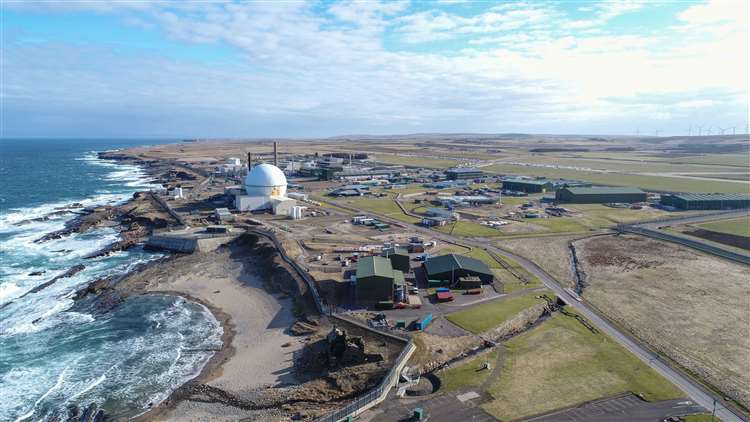
CAITHNESS has been misled for the past 20 years over the
timescale for the decommissioning of Dounreay. The work was due to be
completed by 2033 but that target was “never technically practicable” and
“never achievable”, according to Struan Mackie, the chairman of the
Dounreay Stakeholder Group (DSG).
Mr Mackie, a Thurso and Northwest
Caithness Highland councillor, said: “We all know that the publicised
dates, the milestones communicated to our community, to our politicians and
to our supply chain for the last two decades have not been founded in
reality.
John O’Groat Journal 28th March 2024
Nuclear waste clean-up company to be prosecuted over alleged cyber blunders

Sellafield Ltd accused of lax IT security at Europe’s largest nuclear facility
Jonathan Leake, 28 March 2024 , https://www.telegraph.co.uk/business/2024/03/28/sellafield-nuclear-waste-prosecuted-cybersecurity/
A state-owned company responsible for cleaning up decades of nuclear waste at the Sellafield site in Cumbria is being prosecuted over alleged cybersecurity blunders.
It follows an investigation prompted by fears that the business’s digital defences were breached by hackers acting for hostile states such as Russia and China.
Sellafield is Europe’s largest nuclear facility, serving as a testing ground and waste dump since 1947. It houses a massive range of highly radioactive wastes, including 140 tonnes of plutonium – a key ingredient for nuclear weapons.
The Office for Nuclear Regulation (ONR) has told Sellafield Ltd, the business tasked with clean-up, that it will be prosecuted under the Nuclear Industries Security Regulations 2003.
The charges relate to alleged information technology security offences during a four-year period between 2019 and early 2023.
The announcement coincides with reports today that Richard Meal, who is chief information security officer at the Cumbrian site, is to leave later this year.
It follows the departure of Mark Neate, the director responsible for safety and security, who announced in January that he intended to quit in a move that had been planned for some time.
Sellafield has denied claims the site had suffered serious security breaches and the ONR has supported this. The new charges are thought to relate to alleged failures in compliance – meaning they are more about lax security than actual breaches.
An ONR spokesman said there was no suggestion that public safety had been compromised. Details of the first court hearing will be announced when available.
Sellafield Ltd is owned by the Nuclear Decommissioning Authority, a quango overseen by the Department for Energy Security and Net Zero, which is tasked with cleaning 17 decaying nuclear sites across the UK. Sellafield is the most expensive, costing taxpayers £2.5bn last year.
Some government estimates suggest the total cost of the clean-up will reach £263bn, with Sellafield accounting for the largest portion. The site employs 11,000 people and comprises more than 1,000 buildings, many not designed to house the radioactive material now stored in them.
Sellafield is so expensive that the Office for Budget Responsibility, which monitors threats to the UK Government’s finances, has warned that it and other legacy sites pose a “material source of fiscal risk” to the country.
The ONR investigation is in addition to another by the National Audit Office, Britain’s public spending watchdog, which is probing risks and costs at Sellafield and is due to report this autumn.
A Sellafield spokesman said: “The ONR’s Civil Nuclear Security and Safeguards (CNSS) has notified us of its intention to prosecute the company relating to alleged past nuclear industry security regulations compliance. As the issue is now the subject of active court proceedings, we are unable to comment further.”
It follows separate reports by Radioactive Waste Management Ltd (RWM), another government-owned company, that hackers unsuccessfully attempted to breach its defences using LinkedIn.
RWM, now part of Nuclear Waste Services, is the company tasked with designing the long-awaited Geological Disposal Facility (GDF) project, a vast underground nuclear waste store which would become the final destination for toxic waste now stored at Sellafield.
Nuclear Waste Services is currently seeking a site that would be geologically stable for the millions of years the waste would need to become safe – and which would be acceptable to the local communities hosting it.
Two sites remain in the running, one off the coast of Cumbria and the other off the coast of Lincolnshire, with the choice of site still surrounded in secrecy.
The development is expected to cost taxpayers up to £53bn.
A report filed at Companies House by Nuclear Waste Services said the attempted hacks had failed.
Sellafield nuclear waste dump to be prosecuted for alleged cybersecurity offences
Charges relate to four-year period between 2019 and early 2023, and follow Guardian investigation
Alex Lawson and Anna Isaac, Fri 29 Mar 2024 , https://www.theguardian.com/business/2024/mar/28/sellafield-nuclear-waste-dump-to-be-prosecuted-for-alleged-it-security-offences
The Sellafield nuclear waste dump is to be prosecuted for alleged information technology security offences, the industry watchdog has said.
The Office for Nuclear Regulation (ONR) said on Thursday that it had notified the state-owned Cumbrian nuclear company that it would be prosecuted under industry security regulations.
The prosecution follows the Guardian’s revelations last year of multiple cyber failings at the vast site, part of a year-long investigation into cyber hacking, radioactive contamination and an unhealthy workplace culture at Sellafield.
The ONR said: “These charges relate to alleged information technology security offences during a four-year period between 2019 and early 2023. There is no suggestion that public safety has been compromised as a result of these issues. The decision to begin legal proceedings follows an investigation by ONR, the UK’s independent nuclear regulator.”
Sellafield, which has more than 11,000 staff, was placed into a form of “special measures” for consistent failings on cybersecurity in 2022, according to sources at the ONR and the security services.
Among the Guardian’s revelations in December were that groups linked to Russia and China had penetrated its computer networks, embedding sleeper malware that could lurk and be used to spy or attack systems. At the time Sellafield said it did not have evidence of a successful cyber-attack.
The site has the largest store of plutonium in the world and is a sprawling rubbish dump for nuclear waste from weapons programmes and decades of atomic power generation.
Other findings in the Guardian’s Nuclear Leaks investigation included concerns about external contractors being able to plug memory sticks into its computer system while unsupervised.
The Guardian also revealed that cyber problems have been known by senior figures at the nuclear site for at least a decade, according to a report dated from 2012, which warned there were “critical security vulnerabilities” that needed to be addressed urgently.
Sellafield’s computer servers were deemed so insecure that the problem was nicknamed Voldemort after the Harry Potter villain, according to a government official familiar with the ONR investigation and IT failings at the site, because it was so sensitive and dangerous.
At the time, Sellafield said that “all of our systems and servers have multiple layers of protection”. “Critical networks that enable us to operate safely are isolated from our general IT network, meaning an attack on our IT system would not penetrate these,” it said.
This week, the Guardian revealed that Richard Meal, Sellafield’s chief information security officer, is to leave the site after more than a decade. He will be the second senior leader to leave this year, after the top director responsible for safety and security, Mark Neate, announced in January that he planned to leave.
In January, Sellafield appointed Graeme Slater as its chief digital information officer, responsible for cybersecurity.
The ONR said details of the first court hearing would be announced “when available”.
Britain’s public spending watchdog, the National Audit Office, last month launched an investigation into risks and costs at Sellafield.
A spokesperson at the Department for Energy Security and Net Zero, which funds Sellafield, said: “Safety and security at our former nuclear sites is paramount and we fully support the Office for Nuclear Regulation in its independent role as regulator.
“The regulator has made clear that there is no suggestion that public safety has been compromised at Sellafield. Since the period of this prosecution, we have seen a change of leadership at Sellafield and the ONR has noted a clear commitment to address its concerns.”
Sellafield said: “The Office for Nuclear Regulation’s Civil Nuclear Security and Safeguards has notified us of its intention to prosecute the company relating to alleged past nuclear industry security regulations compliance.
“As the issue is now the subject of active court proceedings, we are unable to comment further.”
New nuclear reactor types will not solve waste and safety issues

26 March 2024 https://www.modernpowersystems.com/news/newsnew-nuclear-reactor-types-will-not-solve-waste-and-safety-issues-11634478
Novel nuclear power plant designs do not resolve the technology’s fundamental challenge of hazardous nuclear waste, a 22 March report commissioned by Germany’s Federal Office for the Safety of Nuclear Waste Management (BASE) has concluded. “None of the alternative reactor types would make a final repository redundant,” the government agency said, according to a report by online news agency Clean Energy Wire.
Despite efforts by producers of Generation IV reactors to “intensively advertise” the concept’s supposed benefits, said BASE, it “could not detect any trends that would make the construction of alternative reactor types at an industrial scale likely in the next years.” On the contrary, the disadvantages and uncertainties from a security perspective would continue to outweigh the technology’s advantages, the study led by the Institute for Applied Ecology (Öko-Institut) found.
New nuclear plant designs, such as small modular reactors (SMR), would not only perpetuate the difficult long-term question of nuclear waste disposal, but also had little to offer for solving short-term climate action problems, BASE added.
The report looked at seven novel reactor types, which according to their producers are more efficient in nuclear fuel use and run more safely and reliably, are economically viable, and cause less radioactive waste. While some of these improvements seem plausible, the report said that central questions regarding safety remain unanswered with all new concepts. “In some areas, there are even disadvantages compared to today’s light water reactors,” which remain the favoured technology in six surveyed countries (USA, Russia, China, South Korea, Poland and Belgium). Alternative reactor types still required “substantial“ research and development, and it would likely still take several decades before they can be deployed at a relevant scale, the researchers added. Promises about new concepts in nuclear technology as a potential boost for climate action therefore had to be considered “not realistic,” they concluded.
While Germany closed down its three last reactors in spring 2023 after a decades-long debate, many other countries continue to rely on nuclear technology or even plan to considerably expand it in a bid to bring down their energy-related greenhouse gas emissions. At the International Atomic Energy Agency’s (IAEA) first ever nuclear energy summit in Brussels earlier March, more than two dozen states called for a revival of the technology, including France, the Netherlands, the USA and Japan. “Without the support of nuclear power, we have no chance to reach our climate targets on time,” International Energy Agency (IEA) chief Fatih Birol said in a report carried by news agency Reuters.
Nuclear power in Europe
The role of nuclear power in Europe’s emissions reduction plans has been a contentious issue for many years, with Germany and France emerging as the main opposing forces between two groups of countries aiming to rely entirely on renewable power or to also use nuclear power in a future climate neutral energy system. While Germany has achieved a substantial expansion of its renewable power capacity and now sources more than half of its electricity that way, the country still faces challenges regarding the required grid modernisation and back-up and storage capacity to complement wind turbines and solar panels. France, on the other hand, has the largest share of nuclear power production of any country but struggles to secure funding for new projects and to comply with cost and construction time plans for existing ones.
Man blames nuclear meltdown for deformities in city more radioactive than Chernobyl

Ozersk – code named City 40 – was the birthplace of the Soviet nuclear weapons programme, now it’s one of the most contaminated places on the planet with residents exposed to high radiation levels.
By Kelly Williams, Assistant News Editor (Live) https://www.dailystar.co.uk/news/world-news/man-blames-nuclear-meltdown-deformities-32405120
A man living in a secret city five times more radioactive than Chernobyl has been left with facial deformities he blames on huge nuclear meltdowns.
Vakil Batirshin has massively swollen lymph nodes said to be caused by radiation-related illness. He lives in Ozersk – code named City 40 in Russia – which was built in total secrecy around the huge Mayak nuclear power plant by the Soviets in 1946.
For the first eight years after City 40 was built, Ozersk residents were forbidden from communicating with the outside world. Like Chernobyl, it was designed as a place to house the scientists working at the plant who – unbeknownst to the world – were leading the Soviet Union’s nuclear weapons programme during the Cold War era.
Locals were told they were “the nuclear shield and saviours of the world,” and everyone on the outside was an enemy.
They also kept it a secret that the extreme exposure to radiation was affecting the health of the city’s inhabitants. They started to get sick and die and the authorities were clandestine about the mortality rate.
However, the city’s graveyard with all its young victims tells the story.
Ozersk, nicknamed “The graveyard of the Earth,” was surrounded by guarded gates and barbed wire fences and did not appear on any maps.
Its inhabitants’ identities were also erased from the Soviet census to guard their secret.
The Mayak nuclear plant went through Russia’s biggest nuclear disaster when the facility allegedly dumped 200million curies worth of radioactive material into the environment around Ozersk.
The residents also suffered the Kyshtym disaster in 1957, the worst nuclear disaster the world had seen before Chernobyl.
Radiation bathed the city when a cooling system exploded at Mayak with the force of 100 tons of dynamite.
One of the nearby lakes has been so heavily contaminated by plutonium that locals have renamed it the “Lake of Death” or “Plutonium Lake”.
In an interview which resurfaced earlier this week on X (formerly Twitter), Vakil Batirshin struggles to speak, his neck is painfully swollen from lymph nodes that have grown to triple their normal size.
His exact diagnosis remains steeped in mystery as doctors say it can be hard to trace any one condition to radiation.
But asked if he has any doubt his symptoms are related to radioactivity, he said: “Well, when I lived in my home village, I didn’t have anything. Everything was great.
“When I came here, it all started.”
Another resident, Gilani Dambaev is riddled with diseases doctors think are linked to a lifetime’s exposure to excessive radiation. He and his family have government-issued cards identifying them as residents of radiation-tainted territory.
He said: “Sometimes they would put up signs warning us not to swim in the river, but they never said why. After work, we would go swimming in the river. The kids would too.”
Although the secret is now out and Ozyorsk resembles “a suburban 1950s American town” according to The Guardian, residents know their water is contaminated, their crops are poisoned, and their children may be sick.
Half a million people in Ozersk and its surrounding area are said to have been exposed to five times as much radiation as those living in the areas of Ukraine affected by the Chernobyl nuclear accident.
But most refused to leave, because while the Soviet population were suffering from famine and living in extreme poverty, the city was regarded as a paradise as authorities gave them private apartments, plenty of food, good schools and healthcare, and a plethora of entertainment and cultural activities.
Even still, residents opt against leaving. The Guardian reported that “it is prestigious to live in Ozersk.”
Residents describe it as a town of “intellectuals”, where they are used to getting “the best of everything for free”.
Living in Mayak’s nuclear shadow and resigned to her fate, one said: “I don’t hope for anything anymore. If we get sick, we get sick.”
Some locals, however, claim that long term dumping by the nuclear plant’s management continues today.
The government has started resettling residents to new homes away from the river, but the process only began in 2008.
‘The graveyard of the Earth’: inside City 40, Russia’s deadly nuclear secret
The city’s residents know the truth, however: that their water is contaminated, their mushrooms and berries are poisoned, and their children may be sick. Ozersk and the surrounding region is one of the most contaminated places on the planet, referred to by some as the “graveyard of the Earth”.
City 40’s inhabitants were told they were “the nuclear shield and saviours of the world”

From the late 1940s, people here started to get sick and die: the victims of long-term exposure to radiation.
‘The graveyard of the Earth’: inside City 40, Russia’s deadly nuclear secret, https://www.theguardian.com/cities/2016/jul/20/graveyard-earth-inside-city-40-ozersk-russia-deadly-secret-nuclear Samira Goetschel, Wed 20 Jul 2016 Ozersk, codenamed City 40, was the birthplace of the Soviet nuclear weapons programme. Now it is one of the most contaminated places on the planet – so why do so many residents still view it as a fenced-in paradise?
“Those in paradise were given a choice: happiness without freedom, or freedom without happiness. There was no third alternative.” (From the dystopian novel We, by Yevgeny Zamyatin, 1924)
Deep in the vast forests of Russia’s Ural mountains lies the forbidden city of Ozersk. Behind guarded gates and barbed wire fences stands a beautiful enigma – a hypnotic place that seems to exist in a different dimension.
Codenamed City 40, Ozersk was the birthplace of the Soviet nuclear weapons programme after the second world war. For decades, this city of 100,000 people did not appear on any maps, and its inhabitants’ identities were erased from the Soviet census.
Today, with its beautiful lakes, perfumed flowers and picturesque tree-lined streets, Ozersk resembles a suburban 1950s American town – like one of those too-perfect places depicted in The Twilight Zone.
Continue readingThe Waste Isolation Pilot Plant (WIPP) Opened 25 Years Ago; It Was Supposed to Close Next Week
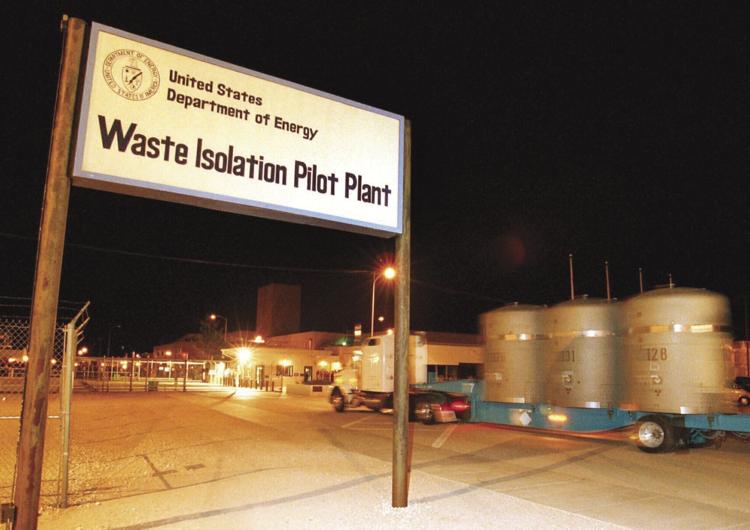
https://nuclearactive.org/ March 21st, 2024
Did you know that on Friday, March 26, 1999, the first shipment of plutonium-contaminated nuclear weapons waste from Los Alamos National Laboratory (LANL) reached the Waste Isolation Pilot Plant (WIPP)?
Earlier that week, on Monday, March 22, 1999, Federal Judge John Garrett Penn lifted a seven-year injunction allowing the shipment of purely radioactive waste to WIPP. The shipment did not contain any hazardous waste. In fact it wasn’t even Department of Energy (DOE) nuclear weapons waste. It was NASA waste from the production of the plutonium batteries for the Cassini space vehicle.
On Tuesday, March 23rd, LANL loaded waste drums into the three TRUPACT shipping containers.
On Wednesday, March 24th, final testing was done and the truck and trailer with three TRUPACTS was ready.
Peaceful protesters with signs had gathered at the intersection of Airport Road and 599 on the south side of Santa Fe. National Guard, police and other security personnel dressed in combat gear lined the intersection for about a block in each direction. Black Hawk helicopters flew over the area. A little snow fell. Nevertheless, tensions were high.
LANL checked the weather conditions and it was determined that the shipment could not leave LANL. To ship, a five-hour clear weather window was required. A dense fog had developed around Santa Rosa, New Mexico and the shipment did not depart from LANL.
LANL tried again, successfully, on Thursday, March 25th. Again peaceful protesters and security personnel were at the intersection.
Early on the morning of Friday, March 26th, the shipment arrived at WIPP to cheers from those waiting to see the truck and trailer. https://www.energy.gov/em/articles/fight-wipp-history-nations-deep-geologic-nuclear-waste-repository
Prior to the arrival of the first shipment at WIPP, DOE had promised the People of New Mexico that it would clean up all the transuranic, or plutonium-contaminated, waste across the nuclear weapons complex,
including LANL, and dispose of it in the underground salt bed at WIPP in 25 years and begin a 10-year closure of the facility. For example: http://nuclearactive.org/elected-officials-question-doe-plans-to-keep-wipp-operating-forever/ (Aug. 11, 2022); http://nuclearactive.org/doe-breaks-its-promises-to-new-mexico-part-i/ (Jan. 12, 2021); and http://nuclearactive.org/doe-breaks-its-promises-to-new-mexico-part-2/ (Jan. 19, 2021).
Next Tuesday, March 26, 2024, is the 25-year deadline. But DOE and WIPP will not make its deadline. In fact, DOE plans to keep WIPP open until 2083, basically forever, for LANL waste from fabricating new and provocative nuclear weapons. …………………………………………………more https://nuclearactive.org/
World Water Day Prompts Submission to Parliamentary Committee on Risks of NWMO’s Nuclear Waste Project to Water
Thunder Bay – A Northern Ontario alliance concerned about a risky project to transport and bury nuclear fuel waste has chosen World Water Day to submit their brief to a parliamentary committee studying freshwater.
We the Nuclear Free North submitted the ten-page brief to the Standing Committee on Environment and Sustainable Development today, outlining the set of risks the Nuclear Waste Management Organization (NWMO) project poses to the lakes, rivers and groundwater of Northern Ontario. The Committee is carrying out a comprehensive study of the role of the federal government in protecting and managing Canada’s freshwater resources in Canada.
The opposition group points to the risks during transportation, processing and burial of the highly radioactive nuclear fuel waste, including from operations at the site of the proposed deep geological repository.
“The NWMO plan is still largely theoretical, but according to their own limited descriptions of the operating period, it is evident that freshwater in the area of the site will be impacted”, explained Wendy O’Connor, one of the report authors.
“Water used for washing down the nuclear waste transportation packages will become contaminated with radionuclides. According to the NWMO’s published details, that water will be sent to a settling pond and then released to natural water bodies in the vicinity of the site, as will the contaminated water that will be pumped from the underground repository”, said O’Connor.
“Despite assurances from the nuclear industry, it remains entirely possible that the nuclear waste itself, deposited underground, will contaminate the deep groundwater in the near or long term – contamination that will eventually reach surface water in the vast watershed”.
The NWMO’s candidate site in Northwestern Ontario is located half-way between Ignace and Dryden. Because it is at the height of land for the Wabigoon and the Turtle River systems, there are concerns about releases to the downstream communities, including Rainy River and Lake of the Woods. The group notes that if and when the radioactive releases occur from the deep geological repository there will be no means to reverse the impacts.
World Water Day, held on 22 March every year since 1993, is an annual United Nations Observance focusing on the importance of freshwater.
“It’s ironic that the UN theme for World Water Day in 2024 is “Water for Peace”, given the level of division and conflict that the NWMO’s proposal has brought to our region”, commented Kathleen Skead, a member of Anishinaabe of Wauzhushk Onigum Nation, one of several downstream Treaty 3 communities.
“Hopefully people will pause today and recognize that water is life and the NWMO’s promise of money is not worth the risk. Water is vital for all forms of life.”
The brief is posted HERE.
| We the Nuclear Free North is an alliance of people and groups opposing a Deep Geological Repository for nuclear waste in Northern Ontario. We oppose the transport, burial and abandonment of this radioactive waste in our northern watersheds. |
Our alliance is honoured to have received the name Tataganobin: looking far ahead into the future. Learn more about who we are, and the origin and meaning of this name.
Canadian Coalition for Nuclear Responsibility – Letter to the Editor.
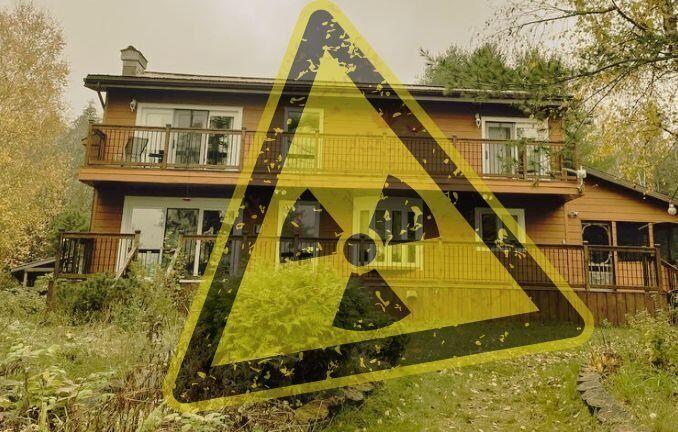
Re: Radiation in Elliot Lake homes (Toronto Star, March 21 2024)
from Gordon Edwards, PhD, President,, Canadian Coalition for Nuclear Responsibility.22 Mar 24
The government will not take responsibility for radioactive contamination of homes in Elliot Lake, built using radioactive waste from uranium mines. Officials claim that “waste rock” is not “radioactive waste”, although the federal Government has always classified
waste rock as a part of the radioactive waste inventory (over 380 million tonnes) from uranium mining.
Excess radiation in Elliot Lake homes, from radon gas and gamma radiation, was subjected to a provincial inquiry in 1977-78. The Elliot Lake miners’union asked me to testify as an expert witness.
Using the government’s own published radon mortality figures, I showed that the “acceptable limit” for exposures in homes could cause a 31 percent increase in the male lung cancer rate for those living in those homes. That means an additional 17 lung cancer deaths per 1000 males exposed, over and above the 54 lung cancer deaths already reported in Ontario per 1000 males. These figures represent lifetime exposures.
Today’s so-called “safe” level referred to in the Star article is the same “acceptable” level of radon used back then.
Based on my testimony, the Panel recommended that radon “standards” be re-examined. It never happened. Instead, the regulator commissioned an independent study by an epidemiologist from McGill, Duncan Thomas. His study confirmed my estimate of radon-induced deaths. The regulator rejected the results of its own expert study.
Excess exposures in Elliot Lake should have been corrected 45 years ago, but was not. Canada’s regulator still refuses to address the problem.
The $1.6 billion radioactive cleanup now underway in Port Hope, involving hundreds of homes contaminated with radon-generating waste, was known to the regulator as early as 1965. But the Port Hope problem was ignored by officialdom and specifically by Canada’s nuclear regulator until the scandal became too much to bear when, in 1975, St Mary’s elementary school was evacuated because the radon levels in the cafeteria were greater than those allowed in Elliot Lake uranium mines.
Gordon Edwards, PhD, President,
Canadian Coalition for Nuclear Responsibility.
Disadvantaged Canadian towns look at the $billions promised by nuclear waste hosting
Offended tribal elders formed the Committee for Future Generations and initiated what they called the 7,000 Generations Walk Against Nuclear Waste, which saw participants trudge nearly 1,000 kilometres from Pinehouse to the legislature in Regina.
No local DGR debate has been harder fought than the 30-month marathon of psychological and ground warfare that unfolded in Saugeen Shores, one of several contestant municipalities in Bruce County, between 2011 and 2014.
Inside the race for Canada’s nuclear waste: 11 towns vie to host deep burial site Canada’s nuclear waste will be deadly for 400,000 years. What town would like the honour of hosting it?CHARLES WILKINS TheGlobe and Mail Feb. 26 2015,
“……..There are 11 rural and wilderness municipalities vying for the DGR, survivors of an original roster of 22. The aspirants include veteran northern encampments such as Hornepayne, Ontario, where, as Brennain Lloyd of the environmental education group Northwatch describes it, there is “a really fierce desire” on the part of at least a few municipal administrators to “bring the nuke dump to town.”
And Schreiber, a struggling railway town on the north shore of Lake Superior. And Ignace, another struggler, in the boreal wilds to the west. And, to the east, Manitouwadge.
And Creighton, Saskatchewan, directly across the Manitoba border from Flin Flon (Creighton is a town described by a former resident as “having had its fiscal balls to the wall for half a century”).
And Blind River, Ontario, on the north shore of Lake Huron, where survival has for years depended on the uncertain flow of traffic along the Trans-Canada Highway.
And Elliot Lake, some 50 kilometres north of Lake Huron, where uranium mining was the sustaining industry during the 1950s and ’60s but which these days survives on the pensions of retirees who moved to the town to take advantage of discount housing left over from the boom years.
“What makes it all so attractive to competing municipalities is, of course, the money,” says Tony McQuail.
While billions of dollars will flow directly through the chosen town over a period of four or five decades, Lloyd suggests that most of the money is likely to end up in the pockets of big-city consultants and other outside beneficiaries.
Mainly, the price tag will buy decades’ worth of infrastructure and construction costs, as well as maintenance, monitoring and employment training. It will also pay for the transportation of the waste to the spanking new DGR, which will, by the time it opens, have been a reality for its “willing host” for a quarter of a century or more.
Finishing just the first phase of the preliminary assessment brings $400,000 of NWMO money to candidate towns, so they can “build sustainability and well-being.” It has been speculated that some towns had no intention of staying in the process beyond the early payout.
While some towns applied to participate of their own volition, others were, according to Lloyd of Northwatch, courted by the NWMO. “What bothers me most about the process,” says Lloyd, “is the ‘siloing’ that the NWMO practises on the municipal politicians they choose to target.
“They approach them not in the context of their communities, where the politicians are immediately answerable to their constituencies, but at municipal conferences and conventions where they’re away from home, isolated, perhaps a little unsure of themselves. They wine and dine them and soft-talk them about the unimaginable benefits that could accrue to their towns should they consider hosting the DGR.
“Then they fly them to Toronto and put them up in the best hotels and take them up to the Bruce Power site, or other nuclear generating stations, and show them what of course appears to be secure and flawless waste storage. The politicians are just snowed—they’re made to feel like important players. They take this dream of hope and prosperity and safe science back to their communities and in effect go to work for the NWMO.”
Other northern councils—at Ear Falls, at Nipigon, at Wawa—have been more divided over the DGR and so were eliminated early, or withdrew, from the process. Similarly, Brockton, near the site of Bruce Power, was cut late in 2014 after its residents elected a largely anti-DGR council. (The NWMO says Brockton’s assessment simply didn’t pan out.)
The aboriginal communities of Pinehouse and English River, Saskatchewan, were dropped from the process when community debate over land and water issues, as well as a growing distrust of the NWMO, became irresolvable.
While Pinehouse was still in the running, three community leaders, including a cousin of the mayor, received money from the NWMO. Offended tribal elders formed the Committee for Future Generations and initiated what they called the 7,000 Generations Walk Against Nuclear Waste, which saw participants trudge nearly 1,000 kilometres from Pinehouse to the legislature in Regina.
No local DGR debate has been harder fought than the 30-month marathon of psychological and ground warfare that unfolded in Saugeen Shores, one of several contestant municipalities in Bruce County, between 2011 and 2014………..http://www.theglobeandmail.com/report-on-business/rob-magazine/inside-the-race-for-canadas-nuclear-waste/article23178848/
Heavy resistance to Canada’s 1st nuclear waste repository, while Nuclear Waste Management Organization (NWMO) says it is safe.
Nuclear Waste Management Organization (NWMO) reaffirms safety of Canada’s 1st nuclear waste repository but there’s still heavy pushback
Preferred site, in either southern or northwestern Ontario, to be chosen by year’s end
Sarah Law · CBC News Mar 18, 2024
The body tasked with selecting the future storage site for Canada’s nuclear waste has reaffirmed its confidence in the project’s safety, but others remain concerned about the potential risks of burying spent nuclear fuel hundreds of metres below the earth’s surface.
By the end of this year, the Nuclear Waste Management Organization (NWMO) is expected to decide on its preferred site for the country’s first deep geological repository for used nuclear fuel.
The potential locations are:
- The Wabigoon Lake Ojibway Nation-Ignace area, about 250 kilometres northwest of Thunder Bay.
- The Saugeen Ojibway Nation-South Bruce area in southern Ontario, about 130 kilometres northwest of London.
Earlier this month, the NWMO released updated “Confidence in Safety” reports, which say both sites are suitable for the safe, long-term storage of spent nuclear fuel.
However, We the Nuclear Free North and the First Nations Land Defence Alliance, for example, remain concerned about what’s known as the Revell site in northwestern Ontario.
The alliance issued a letter to NWMO president and CEO Laurie Swami on March 5, saying: “Our Nations have not been consulted, we have not given our consent, and we stand together in saying ‘no’ to the proposed nuclear waste storage site near Ignace. We call on you to respect our decision.”
……. “They’re both good sites. We think that both of the sites would be safe,” said Paul Gierszewski, technical subject matter expert with the NWMO and lead author of the “Confidence in Safety” reports.
Brennain Lloyd is project co-ordinator with Northwatch, which is part of We the Nuclear Free North. Members of the organization feel less confident about the project’s safety, she said.
“I think this newest report from the NWMO tries to put the best face possible on a project which is absolutely loaded with risk and uncertainty, and uses a lot of language that’s difficult for the public, for non-technical leaders to work through,” Lloyd said.
“There are no resources available in any part of this process for the public to be able to get technical assistance from independent third-party peer reviewers.
While Gierszewski says the 2023 reports expand on the previous year’s findings, Lloyd questions whether they contain new information or airbrushed statements that “paint a better picture.” …………………………………
Demand for in-person meetings
Chief Rudy Turtle of Grassy Narrows First Nation, 250 kilometres northwest of Ignace, said no one from the NWMO has met with him in person to discuss the proposed nuclear waste site.
Grassy Narrows has a particular interest in which Ontario site is chose, given the First Nation’s experiences dealing with contaminated fish in the 1960s and ’70s. Mercury from a Dryden pulp and paper mill was dumped into the English Wabigoon River, upstream from the First Nation. Research indicates past mercury exposure continues to impact the health of people in the community.
In the case of a nuclear waste repository, Turtle said, “Should there be any leak or if the containment fails, there is the possibility that [toxic chemicals] can leak downriver again.”
Turtle would like to see a series of in-person meetings so people can better understand the safety measures being proposed and the potential risks………………………………………..
Chief Michele Solomon of Fort William First Nation said it is unlikely her community’s position against the site will change.
Band council passed a resolution last September calling for the Ontario government to adopt the proximity principle, which means nuclear waste would be stored at the point of generation and not transported elsewhere.
“Anything that has the potential to get into our waterway that would cause harm to the fish or to the animals or to our people … we take that very seriously,” Solomon said.
………………………………………………. https://www.cbc.ca/news/canada/thunder-bay/nuclear-waste-repository-safety-reports-1.7145240
—
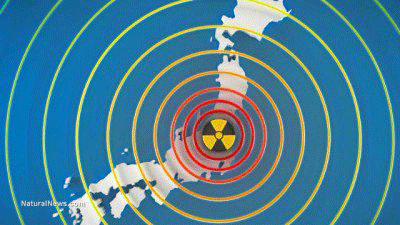
Japan finishes first-year ocean discharge of nuclear-tainted wastewater amid backlash
“All fishermen are against ocean dumping. The contaminated water has flowed into what we fishermen call ‘the sea of treasure’, and the process will last for at least 30 years,“
“There is no good reason to dump radioactive materials into the ocean. There is no reason to just dilute them and flush them away,“
https://thesun.my/world/japan-finishes-first-year-ocean-discharge-of-nuclear-tainted-wastewater-amid-backlash-PD12227910 18 Mar 24,
TOKYO: Despite opposition and concern from at home and abroad, Japan’s crippled Fukushima Daiichi Nuclear Power Plant has finished its initial year of discharging nuclear-contaminated wastewater into the ocean, according to the plant’s operator, said Xinhua.
As per the initial plan, approximately 31,200 tons of wastewater, containing radioactive tritium, was released into the ocean since the discharge started in August 2023, with each round of discharge carried out for about two weeks. Earlier this week, International Atomic Energy Agency Director-General Rafael Grossi emphasised continued efforts in monitoring Japan’s ocean discharge of nuclear-contaminated wastewater from the crippled plant, following his first visit to Fukushima prefecture since the discharge started.
Stressing that the discharge marks merely the initial phase of a long process, Grossi said that “much effort will be required in the lengthy process ahead,“ and reiterated the organisation’s stance on maintaining vigilance throughout the process.
While the Japanese government and TEPCO have asserted the safety and necessity of the discharge, concerns have been raised by neighbouring countries and local stakeholders regarding environmental impacts.
“All fishermen are against ocean dumping. The contaminated water has flowed into what we fishermen call ‘the sea of treasure’, and the process will last for at least 30 years,“ said Haruo Ono, a fisherman in the town of Shinchi in Fukushima.
“There is no good reason to dump radioactive materials into the ocean. There is no reason to just dilute them and flush them away,“ said the man in his 70s.
“Is it really necessary, in the first place, to dump what has been stored in tanks into the sea? How can we say it’s ‘safe’ when the discharged water clearly consists of harmful radioactive substances? I think the government and TEPCO must provide a solid answer,“ said Chiyo Oda, a resident of Fukushima’s Iwaki city.
Concerns were fuelled among the Japanese public over the recent leakage of contaminated water from pipes at the Fukushima plant. – Bernama, Xinhua
100,000 years and counting: how do we tell future generations about highly radioactive nuclear waste repositories?
Sweden and Finland have described KBS-3 as a world-first nuclear-waste management solution.

Critical questions remain about the storage method, however. There have been widely publicised concerns in Sweden about the corrosion of test copper canisters after just a few decades. This is worrying, to say the least, because it’s based on a principle of passive safety. The storage sites will be constructed, the canisters filled and sealed, and then everything will be left in the ground without any human monitoring its safe functioning and with no technological option for retrieving it. Yet, over 100,000 years the prospect of human or non-human intrusion into the site – both accidental or intentional – remains a serious threat.

International attention is increasingly fixated on “impactful” short-term responses to environmental problems – usually limited to the lifespan of two or three future generations of human life. Yet the nature of long-lived nuclear waste requires us to imagine and care for a future well beyond that time horizon, and perhaps even beyond the existence of humanity.
International attention is increasingly fixated on “impactful” short-term responses to environmental problems – usually limited to the lifespan of two or three future generations of human life. Yet the nature of long-lived nuclear waste requires us to imagine and care for a future well beyond that time horizon, and perhaps even beyond the existence of humanity.
March 19, 2024 Thomas Keating. Postdoctoral Researcher, Linköping University, Anna Storm, Professor of Technology and Social Change, Linköping University https://theconversation.com/100-000-years-and-counting-how-do-we-tell-future-generations-about-highly-radioactive-nuclear-waste-repositories-199441
In Europe, increasing efforts on climate change mitigation, a sudden focus on energy independence after Russia’s invasion of Ukraine, and reported breakthroughs in nuclear fusion have sparked renewed interest in the potential of nuclear power. So-called small modular reactors (SMRs) are increasingly under development, and familiar promises about nuclear power’s potential are being revived.
Nuclear power is routinely portrayed by proponents as the source of “limitless” amounts of carbon-free electricity. The rhetorical move from speaking about “renewable energy” to “fossil-free energy” is increasingly evident, and telling.
Yet nuclear energy production requires managing what is known as “spent” nuclear fuel where major problems arise about how best to safeguard these waste materials into the future – especially should nuclear energy production increase. Short-term storage facilities have been in place for decades, but the question of their long-term deposition has caused intense political debates, with a number of projects being delayed or cancelled entirely. In the United States, work on the Yucca Mountain facility has stopped completely leaving the country with 93 nuclear reactors and no long-term storage site for the waste they produce.
Nuclear power plants produce three kinds of radioactive waste:
- Short-lived low- and intermediate-level waste;
- Long-lived low- and intermediate-level waste;
- Long-lived and highly radioactive waste, known as spent nuclear fuel.
The critical challenge for nuclear energy production is the management of long-lived waste, which refers to nuclear materials that take thousands of years to return to a level of radioactivity that is deemed “safe”. According to the US Nuclear Regulatory Commission (NRC), in spent fuel half of the radiation in strontium-90 and cesium-137 can decay in 30 years, while it would take 24,000 years for plutonium-239 to return to a state considered “harmless”. However, exactly what is meant by “safe” and “harmless” in this context is something that remains poorly defined by international nuclear management organisations, and there is surprisingly little international consensus about the time it takes for radioactive waste to return to a state considered “safe” for organic life.
“Permanent” geological repositories
Despite the seeming revival of nuclear energy production today, very few of the countries that produce nuclear energy have defined a long-term strategy for managing highly radioactive spent fuel into the future. Only Finland and Sweden have confirmed plans for so-called “final” or “permanent” geological repositories.
The Swedish government granted approval for a final repository in the village of Forsmark in January 2022, with plans to construct, fill and seal the facility over the next century. This repository is designed to last 100,000 years, which is how long planners say that it will take to return to a level of radioactivity comparable to uranium found in the earth’s bedrock.
Finland is well underway in the construction of its Onkalo high-level nuclear waste repository, which they began building in 2004 with plans to seal their facility by the end of the 21st century.
The technological method that Finland and Sweden plan to use in their permanent repositories is referred to as KBS-3 storage. In this method, spent nuclear fuel is encased in cast iron, which is then placed inside copper canisters, which are then surrounded by clay and bedrock approximately 500 metres below ground. The same or similar methods are being considered by other countries, such as the United Kingdom.
Sweden and Finland have described KBS-3 as a world-first nuclear-waste management solution. It is the product of decades of scientific research and negotiation with stakeholders, in particular with the communities that will eventually live near the buried waste.
Critical questions remain about the storage method, however. There have been widely publicised concerns in Sweden about the corrosion of test copper canisters after just a few decades. This is worrying, to say the least, because it’s based on a principle of passive safety. The storage sites will be constructed, the canisters filled and sealed, and then everything will be left in the ground without any human monitoring its safe functioning and with no technological option for retrieving it. Yet, over 100,000 years the prospect of human or non-human intrusion into the site – both accidental or intentional – remains a serious threat.
The Key Information File
Another major problem is how to communicate the presence of buried nuclear waste to future generations. If spent fuel remains dangerous for 100,000 years, then clearly this is a time frame where languages can disappear and where the existence of humanity cannot be guaranteed. Transferring information about these sites into the future is a sizeable task that demands expertise and collaboration internationally across the social sciences and sciences into practices of nuclear waste memory transfer – what we refer to as nuclear memory communication.
In a project commissioned by the Swedish Nuclear Waste Management Company (SKB), we take up this precise task by writing the “Key Information File” – a document aimed at non-expert readers containing only the most essential information about Sweden’s nuclear waste repository under development.
The Key Information File has been formulated as a summary document that would help future readers understand the dangers posed by buried waste. Its purpose is to guide the reader to where they can find more detailed information about the repository – acting as a “key” to other archives and forms of nuclear memory communication until the site’s closure at the end of the 21st century. What happens to the Key Information File after this time is undecided, yet communicating the information that it contains to future generations is crucial.
The Key Information File we will publish in 2024 is intended to be securely stored at the entrance to the nuclear waste repository in Sweden, as well as at the National Archives in Stockholm. To ensure its durability and survival through time, the plan is for it to be reproduced in different media formats and translated into multiple languages. The initial version is in English and, when finalised, it will be translated into Swedish and other languages that have yet to be decided.
Our aim is for the file to be updated every 10 years to ensure that essential information is correct and that it remains understandable to a wide audience. We also see the need for the file to be incorporated into other intergenerational practices of knowledge transfer in the future – from its inclusion into educational syllabi in schools, to the use of graphic design and artwork to make the document distinctive and memorable, to the formation of international networks of Key Information File writing and storage in countries where, at the time of writing, decisions have not yet been made about how to store highly radioactive long-lived nuclear waste.
Fragility and short-termism: a great irony
In the process of writing the Key Information File, we have discovered many issues surrounding the efficacy of these strategies for communicating memory of nuclear waste repositories into the future. One is the remarkable fragility of programs and institutions – on more than one occasion in recent years, it has taken just one person to retire from a nuclear organisation for the knowledge of an entire programme of memory communication to be halted or even lost.
And if it is difficult to preserve and communicate crucial information even in the short term, what chance do we have over 100,000 years?
International attention is increasingly fixated on “impactful” short-term responses to environmental problems – usually limited to the lifespan of two or three future generations of human life. Yet the nature of long-lived nuclear waste requires us to imagine and care for a future well beyond that time horizon, and perhaps even beyond the existence of humanity.
Responding to these challenges, even partially, requires governments and research funders internationally to provide the capacity for long-term intergenerational research on these and related issues. It also demands care in developing succession plans for retiring experts to ensure their institutional knowledge and expertise is not lost. In Sweden, this could also mean committing long-term funding from the Swedish nuclear waste fund so that not only future technical problems with the waste deposition are tackled, but also future societal problems of memory and information transfer can be addressed by people with appropriate capacity and expertise.
Radioactive waste, baby bottles and Spam: the deep ocean has become a dumping ground

The ocean’s depths are not some remote alien realm, but are in fact intimately entangled with every other part of the planet. We should treat them that way
by James Bradley. Guardian 12 Mar…….
“…………………………………………………………………………………………..The ocean’s depths have also been used as the final resting place for large amounts of nuclear material.
A 2019 study found at least 18,000 radioactive objects scattered across the bottom of the Arctic Ocean, many of them dumped there by the Soviet Union. These objects include vessels such as the K-27, the 110-metre nuclear submarine powered by an experimental liquid-metal-cooled reactor, which was scuttled in 1982 with its reactor still on board (when the explosive charges that were supposed to sink the K-27 failed to fully detonate, it had to be rammed with a tug); the wreck of the K-141 Kursk, which sank in the Barents Sea in 2000 during a naval exercise, killing all 118 on board and bearing its reactor and fuel to the bottom; and the K-159 attack submarine, which sank while being towed near Murmansk in 2003 with 800kg of spent uranium fuel on board. The head of Norway’s Nuclear Safety Authority says it is only a matter of time before these objects begin to release their toxic legacy into the water; others have called the situation a “Chornobyl in slow motion on the sea floor”.
While the Soviet Union dumped more nuclear waste on the sea floor than any other country, it was certainly not alone. Between 1948 and 1982, the British government consigned almost 70,000 tonnes of nuclear waste to the ocean’s depths, and the US, Switzerland, Japan and the Netherlands are just a few of the nations that have used the ocean to dispose of radioactive material, albeit in much smaller quantities. And while international treaties now prohibit the dumping of radioactive material at sea, the British government is exploring plans to dispose of up to 750,000 cubic metres of nuclear waste, including more than 100 tonnes of plutonium, beneath the sea floor off Cumbria. British officials argue this sort of geological disposal offers a way of keeping waste stable and secure over hundreds of thousands of years, although incidents such as the 2014 leak of radioactive material at a waste disposal facility half a kilometre beneath salt beds in New Mexico suggests that like many of the assurances offered by the nuclear industry, this claim should be approached with great caution.
The dumping of nuclear waste in the ocean is only one part of a far larger story of carelessness and greed. Human waste in the form of plastics and other objects is everywhere in the deep ocean, a fact that is made brutally apparent by the Japan Agency for Marine-Earth Science and Technology’s Deep-sea Debris Database, which documents the presence of tyres, fishing nets, sports bags, mannequins, beach balls and baby’s bottles spread across the sea floor at depths of many thousands of metres. In some regions, the number of such objects exceeds 300/sq km.
This tide of garbage has even reached the deepest and most remote parts of the ocean: …………………………………………………………………………………….
Possibly more disturbing, though, is the growing accumulation of microplastics in the ocean depths………………………………………………..
Nor is plastic the only thing that drifts downwards. In 2019 Chinese scientists discovered radioactive carbon-14 from the detonation of nuclear bombs in the 1940s and 50s in the bodies of amphipods living at the bottom of the Mariana Trench, borne into the deep not by ocean circulation, but in the rain of organic matter from above. More recent studies have found radioactive caesium from the Fukushima nuclear disaster in sediment more than 7,000 metres down in the Japan Trench……………………………………………………….. more https://www.theguardian.com/environment/2024/mar/12/radioactive-waste-baby-bottles-and-spam-the-deep-ocean-has-become-a-dumping-ground
1 This Month

of the week – Shut Down Drone Warfare!


Tell the Ukrainian Government to Drop Prosecution of Peace Activist Yurii Sheliazhenko

Petition to revoke the licensing of the Near Surface Nuclear Disposal Facility (NSDF) at Chalk River. https://www.ourcommons.ca/petitions/en/Petition/Details?Petition=e-7247
To see nuclear-related stories in greater depth and intensity – go to https://nuclearinformation.wordpress.com
-
Archives
- April 2026 (79)
- March 2026 (251)
- February 2026 (268)
- January 2026 (308)
- December 2025 (358)
- November 2025 (359)
- October 2025 (376)
- September 2025 (257)
- August 2025 (319)
- July 2025 (230)
- June 2025 (348)
- May 2025 (261)
-
Categories
- 1
- 1 NUCLEAR ISSUES
- business and costs
- climate change
- culture and arts
- ENERGY
- environment
- health
- history
- indigenous issues
- Legal
- marketing of nuclear
- media
- opposition to nuclear
- PERSONAL STORIES
- politics
- politics international
- Religion and ethics
- safety
- secrets,lies and civil liberties
- spinbuster
- technology
- Uranium
- wastes
- weapons and war
- Women
- 2 WORLD
- ACTION
- AFRICA
- Atrocities
- AUSTRALIA
- Christina's notes
- Christina's themes
- culture and arts
- Events
- Fuk 2022
- Fuk 2023
- Fukushima 2017
- Fukushima 2018
- fukushima 2019
- Fukushima 2020
- Fukushima 2021
- general
- global warming
- Humour (God we need it)
- Nuclear
- RARE EARTHS
- Reference
- resources – print
- Resources -audiovicual
- Weekly Newsletter
- World
- World Nuclear
- YouTube
-
RSS
Entries RSS
Comments RSS
 nuclear-news